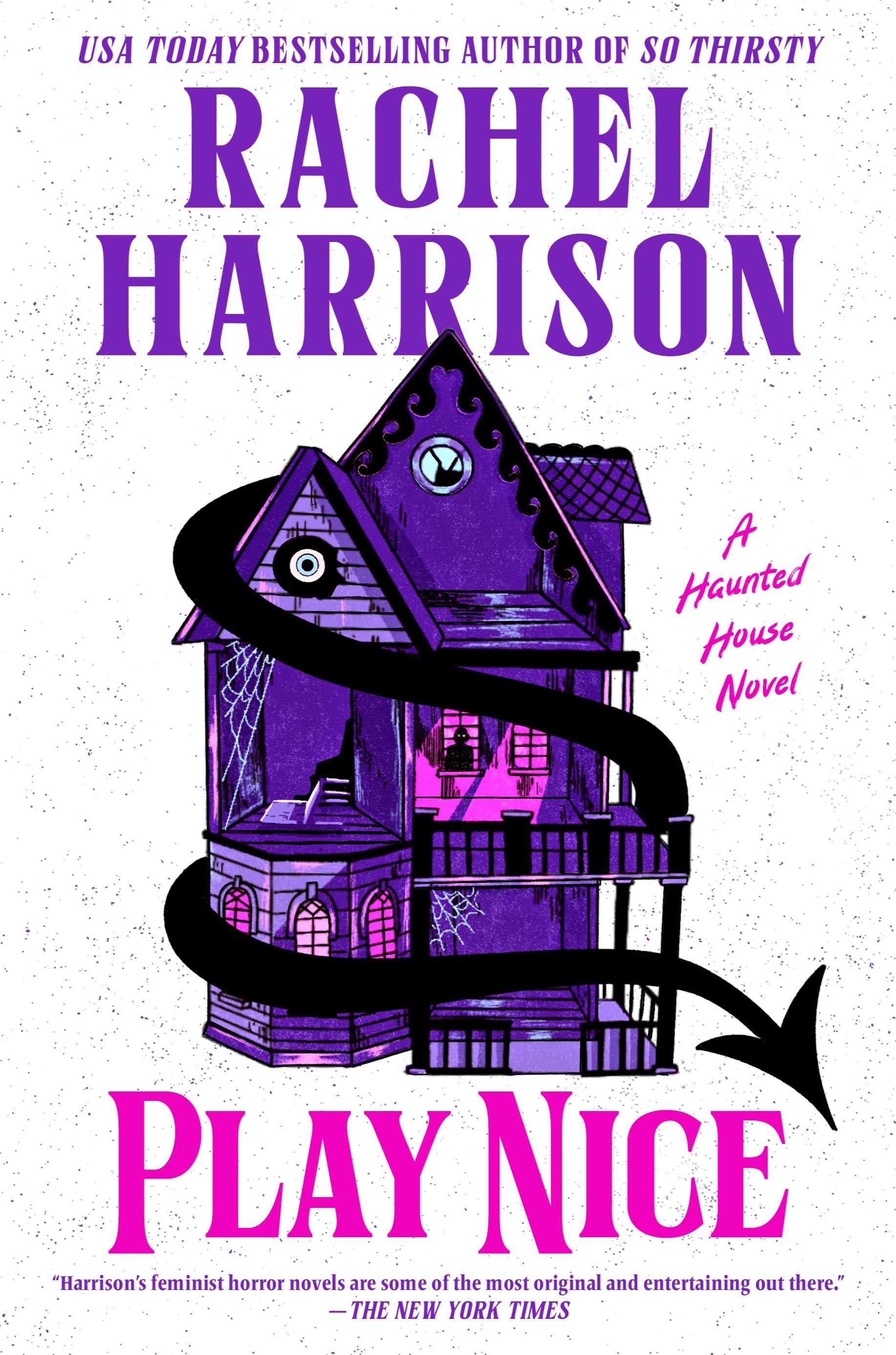
Book Review: Play Nice by Rachel Harrison

Title: Play Nice
Author: Rachel Harrison
Publisher: Berkley
Publication date: September 9, 2025
Length: 336 pages
Genre: Horror
Source: Review copy courtesy of the publisher via NetGalley
Rating:

Rating: 4 out of 5.

A woman must confront the demons of her past when she attempts to fix up her childhood home in this devilishly clever take on the haunted house novel from the USA Today bestselling author.

Clio Louise Barnes leads a picture-perfect life as a stylist and influencer, but beneath the glossy veneer she harbors a not-so glamorous secret: she grew up in a haunted house. Well, not haunted. Possessed. After Clio’s parent’s messy divorce, her mother, Alex, moved Clio and her sisters into a house occupied by a demon. Or so Alex claimed. That’s not what Clio’s sisters remember or what the courts determined when they stripped Alex of custody after she went off the deep end. But Alex was insistent; she even wrote a book about her experience in the house.

After Alex’s sudden death, the supposedly possessed house passes to Clio and her sisters. Where her sisters see childhood trauma, Clio sees an opportunity for house flipping content. Only, as the home makeover process begins, Clio discovers there might be some truth to her mother’s claims. As memories resurface and Clio finally reads her mother’s book, the presence in the house becomes more real, and more sinister, revealing ugly truths that threaten to shake Clio’s beautiful life to its very foundation.

Play Nice is a story of women confronting their demons… literally and figuratively. And just to be clear, while the synopsis and many blurbs refer to this as a haunted house story, this is not actually about a haunted house. No ghosts! However, the house is possessed, and the demon inside it isn’t going anywhere.

Yes, the house scares me. But nothing scares me as much as the idea that I might become one of those tragic, boring would-never people.

Main character Clio is a lot. She’s in her mid-twenties, a highly successful stylist and influencer who revels in her good looks, appeal, and life-of-the-party vibe. She’s highly curated, always down for a good time. Clio’s party lifestyle comes to a screeching halt when her two older sisters call to tell her that Alexandra has died… Alexandra being the mother who was cut out of their lives when Clio was a young child, the abusive, addicted woman who wrote a scandalous book about demons and lost custody completely after endangering the girls one too many times.

Clio’s sisters Leda and Daphne don’t seem particularly affected by news of Alex’s death, but Clio decides that she’s going to the funeral, a woo-woo affair hosted by an occult society in Connecticut. There, she meets with Alex’s sister and is informed that Alex has left the girls their childhood home, which they didn’t even realize she still owned.

The house is a physical disaster, and what’s more, it was the main focus of Alex’s book, which the girls all promised their father they’d never read. Once again, Leda and Daphne want nothing to do with it, but Clio sees the potential for exposure. Home reno and demo reels are huge! She can do a whole series on before and after as she flips the house and makes it gorgeous enough to suit her standards.

Things go sideways almost from the start. The house is, well, kind of gross and dirty. There are mice. And unexplained sounds. But Clio is sure that her plan is worth it. Then she finds a battered old copy of her mother’s book, with handwritten annotations from Alex to Clio. Soon, unwanted memories creep in, presenting very different versions of the events Clio thought she understood. She’s forced to question the main narratives of her life and to wonder: Was Alex really as crazy and abusive as she’s been told all her life? Or could there possibly be a shred of truth in her rantings about demons and possession?

Play Nice goes from creepy to violent to gross-out horror throughout the course of the book, escalating to an incredibly disturbing climax. Meanwhile, the family itself is rocked to its core as old secrets are revealed and certain betrayals and lies come to light.

Clio is hard to like, and is not exactly a reliable narrator. She’s plagued by questionable or repressed memories, and prefers the image of herself that she’s created to any harder looks in the mirror.

I sound bratty and resentful, which is weird, because i swear I’m only one of those things.

She’s used to getting her way, assumes her role as the family favorite is deserved, and causes some of her own problems through her refusal to listen to anyone else.

The sky is blue and cloudless, the sun high and yellow, and the entire world is incapable of telling me no. It makes me feel like a god. Powerful, bored, dangerous.

An underlying theme of Play Nice is the need — craving — for attention. This is clearly what drives Clio’s career and social life. But, as we learn, it’s also vital to the demon.

“… But the demon is real, Clio. You now that now. And it’s dangerous. Its attachment to you is profound.”

Part of me is flattered, because I love attention. We have that in common, the demon and me. I like being the favorite. This part of me feels an allegiance to it. A kinship.

This book has some truly crazy elements, and reading it can be vertigo-inducing, as we slingshot from Clio’s narration to passages from Alex’s book, to scenes of confrontations with her father and sisters that make Clio (and we readers) wonder which version of reality contains the actual truth — if any do.

Play Nice is a disturbing, scary read, leavened by Rachel Harrison’s excellent writing and healthy doses of humor and smart-ass commentary. I’m a big fan of this author’s books, and enjoyed this one, but not as much as some of her others (Such Sharp Teeth, Cackle, Black Sheep) which I consider true favorites.

If you’re open to creepy, icky moments and skin-crawling scary bits, and enjoy reading about highly caustic and dysfunctional families, then Play Nice might be the book for you! Really, I don’t believe you can go wrong with any Rachel Harrison book. I’m already looking forward to whatever she writes next.

Purchase linksAmazon – Bookshop.orgLibro.fm
Disclaimer: When you make a purchase through one of these affiliate links, I may earn a small commission, at no additional cost to you.

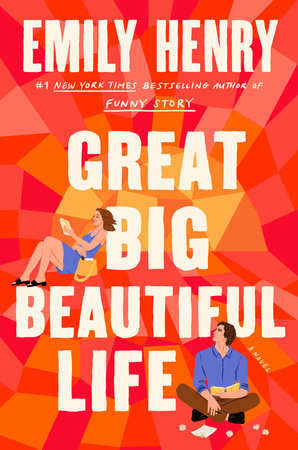
Audiobook Review: Great Big Beautiful Life by Emily Henry

Title: Great Big Beautiful Life
Author: Emily Henry
Narrator: Julia Whelan
Publisher: Berkley
Publication date: April 22, 2025
Print length: 432 pages
Audio length: 12 hours, 2 minutes
Genre: Romance
Source: Purchased
Rating:

Rating: 4.5 out of 5.

Two writers compete for the chance to tell the larger-than-life story of a woman with more than a couple of plot twists up her sleeve in this dazzling and sweeping new novel from Emily Henry.

Alice Scott is an eternal optimist still dreaming of her big writing break. Hayden Anderson is a Pulitzer-prize winning human thundercloud. And they’re both on balmy Little Crescent Island for the same reason: To write the biography of a woman no one has seen in years–or at least to meet with the octogenarian who claims to be the Margaret Ives. Tragic heiress, former tabloid princess, and daughter of one of the most storied (and scandalous) families of the 20th Century.

When Margaret invites them both for a one-month trial period, after which she’ll choose the person who’ll tell her story, there are three things keeping Alice’s head in the game.

One: Alice genuinely likes people, which means people usually like Alice—and she has a whole month to win the legendary woman over.

Two: She’s ready for this job and the chance to impress her perennially unimpressed family with a Serious Publication

Three: Hayden Anderson, who should have no reason to be concerned about losing this book, is glowering at her in a shaken-to-the core way that suggests he sees her as competition.

But the problem is, Margaret is only giving each of them pieces of her story. Pieces they can’t swap to put together because of an ironclad NDA and an inconvenient yearning pulsing between them every time they’re in the same room.

And it’s becoming abundantly clear that their story—just like the tale Margaret’s spinning—could be a mystery, tragedy, or love ballad…depending on who’s telling it.

Emily Henry’s books are quintessential summer reads, and her newest, Great Big Beautiful Life, is no exception. In fact, this book features an historical element that her books typically do not, and at least for this reader, the result is a richer, deeper experience than I’d originally anticipated.

Margaret Ives, the descendant of the powerful, legendary House of Ives, is the last remaining heir to the Ives media empire, which grew from the success of Margaret’s great-grandfather in exploration and mining. By the time Margaret was born, her family controlled the media, had influence everywhere, and was known for its scandals as much as for their wealth and power. But as we’re told, Margaret disappeared from the public view decades earlier, and no one has heard from her since. Still, the public fascination with the Ives family has never truly faded, and speculation continues to bubble up over what really happened to Margaret and her late husband, the wildly popular singer Cosmo Sinclair (dubbed the “Poor Man’s Elvis”).

When writer Alice Scott follows an anonymous tip and locates Margaret, now in her 80s and living alone on a small island off the coast of Georgia, she submits a book proposal and Margaret agrees to hear her out. But when she arrives at Margaret’s door, she finds another author has been invited as well — Hayden Anderson, whose previous book just won a Pulitzer. Alice is dismayed, but Margaret is quick to inform them that they’re both in the running: She’ll meet with each of them, separately and for equal amounts of time, over the next 30 days, after which they’ll each get a chance to make their pitch, and she’ll choose one of them to write her story. Alice isn’t happy with the set-up, but this could be the opportunity of a lifetime, much too good to walk away from. After signing detailed NDAs, Alice and Hayden are in, and they begin their interviews with Margaret.

As the novel progresses, we get chapters focused on Margaret’s story, where we learn her family’s twisty, hidden past — where they started, how their fortune grew, and the fights, scandals, affairs, and mysteries that plagued them ever since.

Meanwhile, Alice and Hayden go from competitors to something like colleagues — unable to share the details of their interviews (those NDAs!!), but still giving one another encouragement and support through their mutual, bizarre process. As they spend time together, their professional respect turns into friendship and attraction, and while they initially resist, their feelings grow in a way that can’t be ignored.

The structure of Great Big Beautiful Life is a lovely balancing act, bringing interest and forward momentum to both Margaret’s story and the contemporary romance between Alice and Hayden. I must admit, however, that the further I got in the book, the more I wanted to stick with Margaret! She’s a fascinating character with a deeply engrossing family story — if only the book about her life were real, I’d absolutely want to read it!

The romance elements are nicely done, although at some point I lost a bit of patience for the will-they-won’t-they dynamic, as well as the somewhat odd insistence that they not sleep together until after the book proposals are done and Margaret makes her choice… because what this actually means is that they become very heavily sexually involved, but refrain from intercourse. Ummm… from my point of view, this is a very silly distinction. But okay…

Alice’s family life and her challenging relationship with her mother comes into play, as does Hayden’s own family background. They have hurdles to overcome if they want a future together, and meanwhile, while they can’t share the details of what Margaret has revealed to them, each has the feeling that she’s not being entirely honest with them. But why agree to a biography and then lie about key elements?

I listened to the audiobook version, narrated by the amazing Julia Whelan — and through her storytelling, the characters and events absolutely shine. She’s an incredibly gifted narrator, and has an uncanny knack for convincing me that I’m listening to individual people, not one person voicing multiple characters. Her depiction of Margaret is especially lovely and powerful.

I really enjoyed Great Big Beautiful Life, and highly recommend it. As I mentioned, I wasn’t quite as invested in Alice and Hayden’s contemporary storyline — it’s a good enough romance, and I enjoyed it, but some of the tension between them felt unnecessary. (However, I did appreciate that the obligatory 3rd act breakup actually made sense and felt like it was based on a realistic, unsolvable problem). For me, Margaret’s story is the true heart and soul of this book, and it’s wonderful. I would happily spend much more time exploring her secrets, her triumphs, and her heartbreaks.

To sum it all up… Great Big Beautiful Life is a wonderful reading and listening experience! Don’t miss it.

Read-alikes:

Great Big Beautiful Life has themes and story arcs that reminded me of a few other terrific books I’ve read — so if this book appeals to you, consider one of these as well:

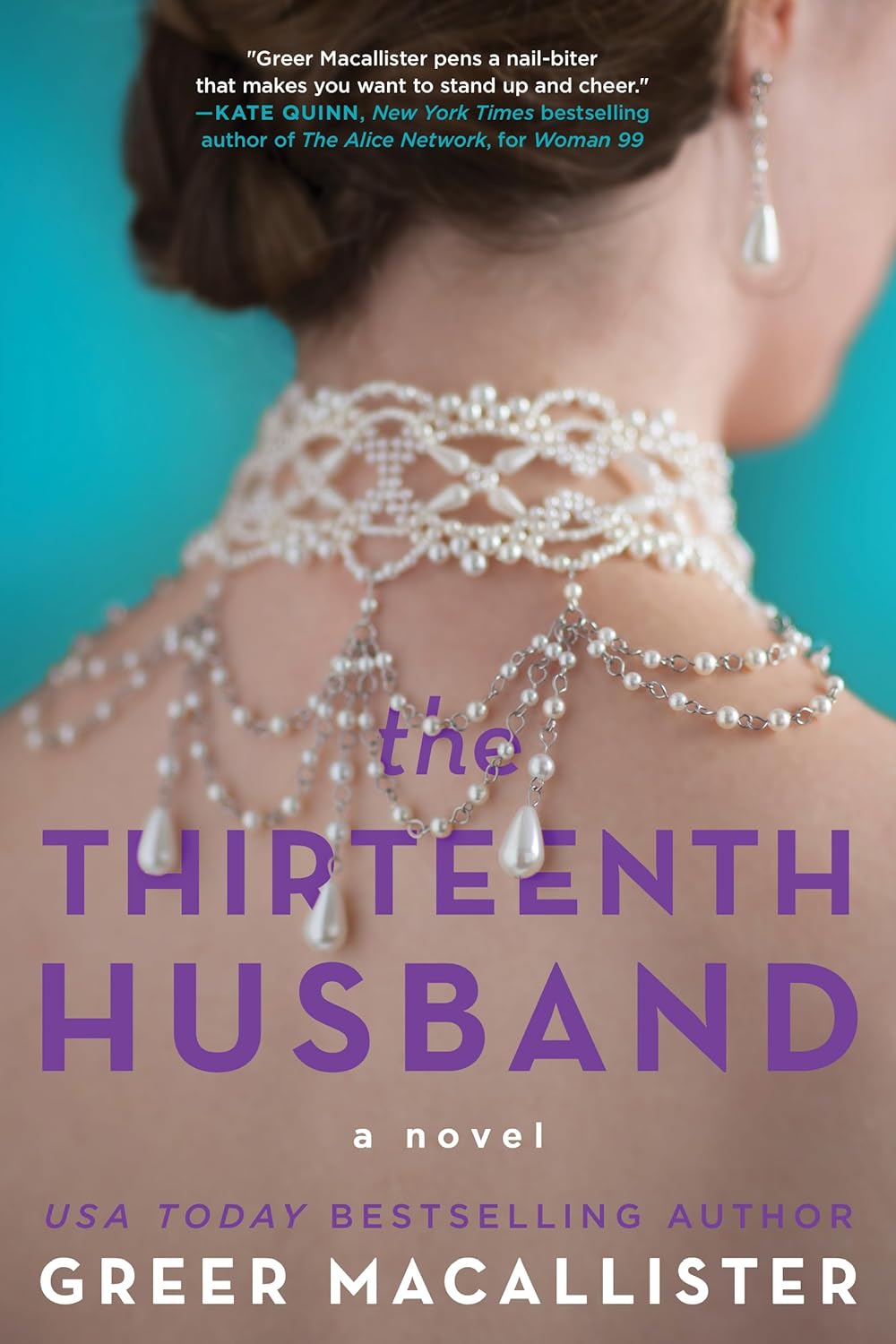
  • If you like the poor-little-rich-girl aspect of the story, try… The Thirteenth Husband by Greer Macallister: Historical fiction about an heiress with an incredible life full of scandals and excitement.
  • If you like the idea of an elderly woman with a secretive past getting two people to vie to discover the truth, try… Drop Dead by Lily Chu: Lighthearted romance featuring writers competing to discover a famously reclusive woman’s secrets, following clues scattered throughout her outrageously lavish estate.
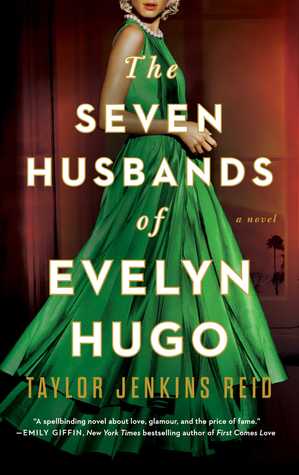
  • If you like a story about celebrities living in the public eye but hiding secrets, try… The Seven Husbands of Evelyn Hugo by Taylor Jenkins Reid: The secret stories behind a Hollywood star’s many marriages, finally revealed in the star’s late-in-life interview with a journalist.

Purchase linksAmazon – Bookshop.org – Libro.fm
Disclaimer: When you make a purchase through one of these affiliate links, I may earn a small commission, at no additional cost to you.
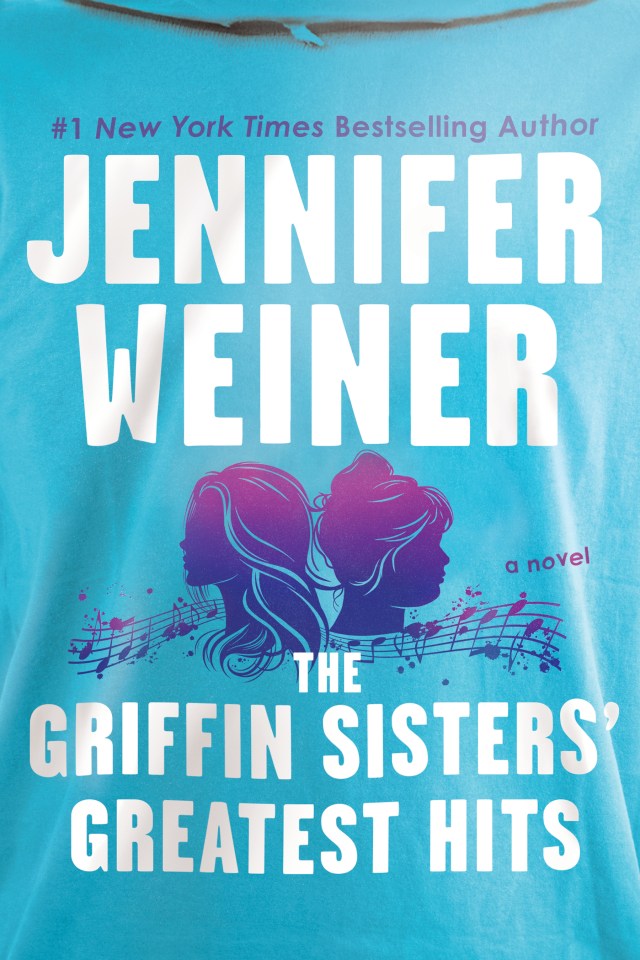
Audiobook Review: The Griffin Sisters’ Greatest Hits by Jennifer Weiner

Title: The Griffin Sisters’ Greatest Hits
Author: Jennifer Weiner
Narrator: Dakota Fanning
Publisher: William Morrow
Publication date: April 8, 2025
Print length: 384 pages
Audio length: 15 hours, 32 minutes
Genre: Contemporary fiction
Source: Purchased
Rating:

Rating: 4.5 out of 5.

Sisters Cassie and Zoe Grossberg were born just a year apart but could not have been more different. Zoe, blessed with charm and beauty, yearned for fame from the moment she could sing into a hairbrush. Cassie was a musical prodigy who never felt at home in her own skin and preferred the safety of the shadows.

On the brink of adulthood in the early 2000s, destiny intervened, catapulting the sisters into the spotlight as the pop sensation the Griffin Sisters, hitting all the touchstones of early aughts fame—SNL, MTV, Rolling Stone magazine—along the way.

But after a whirlwind year in the public eye, the band abruptly broke up.

Two decades later, Zoe’s a housewife; Cassie’s off the grid. The sisters aren’t speaking, and the real reason for the Griffin Sisters’ breakup is still a mystery. Zoe’s teenage daughter, Cherry, who’s determined to be a star in spite of Zoe’s warnings, is on a quest to learn the truth about what happened to the band all those years ago.

As secrets emerge, all three women must face the consequences of their choices: the ones they made and the ones the music industry made for them. Can they forgive each other—and themselves? And will the Griffin Sisters ever make music again?

Jennifer Weiner’s books can be counted on for memorable characters, intricate relationships, and terrific story arcs. The Griffin Sisters’ Greatest Hits delivers all of these.

In this 2025 novel, we’re transported back to the music scene of the early aughts and the rise of the Griffin Sisters, a band whose one album changed lives. Even twenty years after their sudden breakup, devoted fans still love them, and the use of their music in a popular new Netflix series has brought them back into the spotlight once more.

But who are the Griffin Sisters, and where did they go?

As we learn, Cassie and Zoe Griffin were born Cassie and Zoe Grossberg, the daughters of a young, working class Philadelphia couple. Zoe — full of beauty and sparkle — is a delight from birth, but the surprise pregnancy that brings Cassie along less than a year later is not a welcome development for their parents. Their mother struggles to love Cassie the way she loves Zoe, and Cassie’s differences confuse and frustrate her parents.

Everything changes when a preschool teacher notes Cassie’s uncanny musical ability. Although still basically a toddler, Cassie can play the piano by ear, and has a remarkable singing voice as well — although she’s so silent and withdrawn that she’ll only sing with Zoe. And so it goes: Zoe is pretty and popular, and protects Cassie (when she can) from the crueler comments directed at her by other children. Cassie is large, awkward, unsocial, and doesn’t care about clothes, entertainment, or making friends. Music is her only passion, and eventually, she enrolls in a music school in order to pursue a career as a classical pianist.

But Zoe craves the spotlight and stardom. Her perkiness puts her at center stage, even though her singing voice is passable at best. Her knowledge of music is limited to Britney and Cristina and the Spice Girls. She yearns to be a pop princess — and when her bandmates kick her out right before a Battle of the Bands competition, she begs Cassie to perform with her instead. Cassie has no interest, hates being seen, and just wants to be left alone… but she can’t let her sister down. In their performance, Cassie’s gift shines — her voice is transcendent, and while Zoe is the visual appeal, it’s Cassie’s singing and playing that makes their time on stage magical.

So magical, in fact, that a talent agent rushes to their house the next day and whisks them off to a recording label’s headquarters in New York. In the blink of an eye, the teen sisters are signed to a contract and are being prepped for a cross-country tour of radio stations and small venues. To turn the Griffin Sisters in a hit-machine, they need a songwriter, and Russell D’Angelo enters their lives. In his mid-twenties, Russell has a former band, is a talented guitar player, and a genius for writing songs. He and Cassie immediately click and begin creating together, but Zoe is interested in Russell for entirely different reasons. Once he joins the band, it’s only a matter of time before things get complicated.

We know from the opening pages of The Griffin Sisters’ Greatest Hits — the one chapter told from Russell’s point of view — that something terrible happens to tear the band apart at the height of their success. As the book progresses, chapters focused on the band’s rise are interspersed with chapters set in 2024, through which we see just how differently Zoe and Cassie live twenty years later.

In 2024, two decades past their peak stardom, Zoe is a suburban housewife and mother. Yes, she still gets recognized as Zoe Griffin, but those days are long behind her. Zoe’s 18-year-old daughter Cherry has a musical gift of her own and yearns to pursue her own musical career, but Zoe blocks her at every turn, cautioning her about the cruelty of the music industry toward young women.

Meanwhile, Cassie has fled just about as far as she can go — no one has seen her in these past twenty years. She lives alone in Alaska on private acreage, hiding from the world, venturing out as little as possible, and denying herself anything that would give her pleasure, including music.

It takes a good 75% of the book to unravel the mystery of what happened to the Griffin Sisters and explain how Zoe and Cassie ended up with the lives they have now. Thanks to the author’s skillful development of the characters and their complex relationships, there’s never a dull moment as she weaves together the past and present timelines. By the time we get to the answers, we understand deeply both what happened and why, how each character perceived or misunderstood the key events, and how this affected their lives from that point forward.

I’m sure people will compare this lovely novel to Daisy Jones and The Six (a book that I love) — and yes, there are some similarities: A wildly popular band falling apart after only one album together, with plenty of “where are they now?” speculation. But, while the music industry pressures and excesses may feel familiar at times, the stories are quite different. Here, the beating heart of the story is the relationship between Cassie and Zoe, as well as the shifting, new dynamic that occurs once Zoe’s daughter Cherry makes it her mission to reunite the sisters (and the Sisters).

Cassie and Zoe are both flawed but fascinating characters. I’ll admit that it’s very hard to like Zoe, and she behaves terribly in many, many situations, often causing horrible damage. Still, the author is careful to make sure that readers understand Zoe — and while we may hate much of what she does, we also understand the fears and insecurities that drive her actions.

The audiobook, narrated by Dakota Fanning, is a joy to listen to. While on the lengthy side, it’s so well told that I never felt impatient or frustrated. The narration captures the characters’ personalities very well — they feel distinct and recognizable throughout.

I had only two minor quibbles by the end of the book. First, there a moment — very late in the story — where Zoe raises the issue of whether Cassie might be on the neurodivergent spectrum — and honestly, that felt a bit out of the blue. Yes, Cassie has a great deal of difficulty in social and public settings, but I never had a sense that she might be considered neurodivergent. I felt that if that was the case the author wished to make, there needed to be a lot more breadcrumbs throughout the book to support this.

My other quibble has to do with a plot thread left dangling at the conclusion:

Highlight the black area to reveal text — ONLY if you don’t mind a spoiler: Who is Cherry’s father? Zoe admits that she’s not sure — it could be Russell, but it could also be Tommy, the band’s drummer. As the story wraps up, I expected some sort of resolution, or maybe even just a hint that Zoe and Cherry might reach out to Tommy… but the matter just isn’t addressed again.

This issue is not critical to the overall story, which — big picture — is about Zoe and Cassie and whether they can find their way back to one another — but it still annoyed me at the end not to get an answer to this particular question.

Those small issues aside, I truly enjoyed The Griffin Sisters’ Greatest Hits. I loved the band’s backstory, the dynamics between Cassie and Zoe, each of their personal journeys, and even the “now” parts focused on Cherry’s attempts to break out as a musician.

Jennifer Weiner’s books are always a treat, and The Griffin Sisters’ Greatest Hits is no exception. Highly recommended.

Oh… but one last complaint.

I don’t just want to READ about the Griffin Sisters’ songs. I want to hear them!!

Purchase linksAmazon – Bookshop.org – Libro.fm
Disclaimer: When you make a purchase through one of these affiliate links, I may earn a small commission, at no additional cost to you.
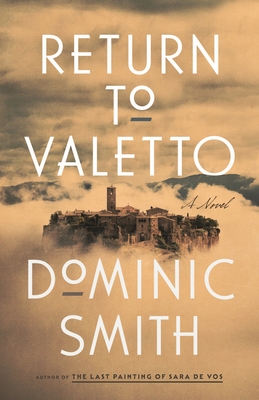
Book Review: Return to Valetto by Dominic Smith

Title: Return to Valetto
Author: Dominic Smith
Publisher: Farrar, Straus and Giroux
Publication date: June 13, 2023
Print length: 336 pages
Genre: Historical/contemporary fiction
Source: Library
Rating:

Rating: 3 out of 5.

A captivating and moving new novel from the international bestselling author of The Last Painting of Sara de Vos.

A nearly abandoned Italian village, the family that stayed, and long-buried secrets from World War II.

On a hilltop in Umbria sits Valetto. Once a thriving village-and a hub of resistance and refuge during World War II-centuries of earthquakes, landslides and the lure of a better life have left it neglected. Only ten residents remain, including the widows Serafino – three eccentric sisters and their steely centenarian mother – who live quietly in their medieval villa. Then their nephew and grandson, Hugh, a historian, returns.

But someone else has arrived before him, laying claim to the cottage where Hugh spent his childhood summers. The unwelcome guest is the captivating and no-nonsense Elisa Tomassi, who asserts that the family patriarch, Aldo Serafino, a resistance fighter whom her own family harboured, gave the cottage to them in gratitude. Like so many threads of history, this revelation unravels a secret – a betrayal, a disappearance and an unspeakable act of violence – that has impacted Valetto across generations. Who will answer for the crimes of the past?

Dominic Smith’s Return to Valetto is a riveting journey into one family’s long-buried story, a page-turning excavation of the ruins of history and our commitment to justice in a fragile world. For fans of Amor Towles, Anthony Doerr and Jess Walter, it is a deeply human and transporting testament to the possibility of love and understanding across gaps of all kinds – even time.

Return to Valetto is a story of family secrets and promises, set in a nearly abandoned hilltop village in the Umbria region of Italy. Valetto is now empty save for the Serafino villa, inhabited by three elderly sisters and their even older mother.

A fourth sister, the youngest, died years earlier, and as the story opens, her son Hugh — a history professor specializing in abandoned towns — arrives on sabbatical. But his arrival is marred by an unwanted presence: A squatter of sorts has taken up residence in the villa’s cottage, which Hugh’s mother had bequeathed to him. The squatter, Elisa, claims that the long-lost patriarch of the Serafino family had gifted it to her family years earlier, after they saved him in the closing days of the war. The sisters scoff at her claim, but Hugh wonders whether there might be a kernel of truth in Elisa’s tale.

As we learn, Aldo Serafino was a partisan fighter during World War II, and was last seen by his family in 1944. They never learned what became of him, but Elisa is able to fill in the blanks. He found shelter with her family, who hid him while partisans were being hunted down — and later, as he lay dying of an infection, they cared for him in his final days. She has a letter to prove his intentions, instructing his wife to give the cottage to the Tomassi family as repayment for their kindness on his behalf. The letter was never sent — and now more than half a century later, no one is willing to believe its validity.

As Hugh spends time with Elisa, he comes to see her sincerity and her devotion to her aged mother. Through this connection, he also finally starts to take an interest in life again, after spending years mourning his late wife. As Hugh and Elisa come closer to the truth about how their families intersected so many years ago, he becomes caught up in a search for truth and justice, with unexpected consequences.

Return to Valetto was my book group’s book of the month, and I can see that we’ll have lots to discuss. At the same time, I never felt any urgency about this book, and remained emotionally distant from it throughout, even at times of major revelations about traumatic events of the past.

The storytelling is slow-paced, full of descriptions and inner thoughts. It’s contemplative and shows an appreciation of history, geography, and the sense of loss and abandonment that informs the characters’ lives, as well as their town and surroundings. Shocking elements of the family’s wartime experiences gradually come to light, but even there, a lack of true drama keeps the reader at arm’s-length.

As for the conflict over the cottage, it fizzles away by the midpoint of the novel and is replaced by more dramatic conflict concerning the former townspeople of Valetto and the roles they played during the war. There are several key turning points, but somehow the narrative never truly feels compelling.

I enjoyed the depiction of the feisty older characters, as well as the descriptions of life in this empty town, and there’s a feast scene that’s just mouth-watering. The book presents several moral dilemmas to contemplate, which are interesting to think about, even while the storytelling itself feels a bit uneventful for large stretches.

I would likely not have picked up Return to Valetto without my book group — but I don’t regret reading it. I usually enjoy historical fiction, but somehow, the pacing and tone of this book work against the drama I believe it was trying to achieve, and many of the historical elements would have benefited from just a bit more exposition to set the scene.

Return to Valetto has many interesting elements in it, but it’s not a book that earns raves from me.

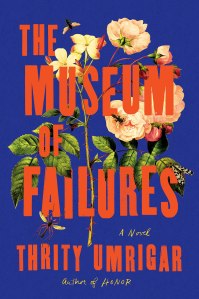
Book Review: The Museum of Failures by Thrity Umrigar

Title: The Museum of Failures
Author: Thrity Umrigar
Publisher: Algonquin Books
Publication date: September 26, 2023
Length: 358 pages
Genre: Contemporary fiction
Source: Purchased
Rating:

Rating: 4.5 out of 5.

An immersive story about family secrets and the power of forgiveness from the bestselling author of Reese’s Book Club pick, Honor

When Remy Wadia left India for the United States, he carried his resentment of his cold and inscrutable mother with him and has kept his distance from her. Years later, he returns to Bombay, planning to adopt a baby from a young pregnant girl—and to see his elderly mother again before it is too late. She is in the hospital, has stopped talking, and seems to have given up on life.

Struck with guilt for not realizing just how ill she had become, Remy devotes himself to helping her recover and return home. But one day in her apartment he comes upon an old photograph that demands explanation. As shocking family secrets surface, Remy finds himself reevaluating his entire childhood and his relationship to his parents, just as he is on the cusp of becoming a parent himself. Can Remy learn to forgive others for their human frailties, or is he too wedded to his sorrow and anger over his parents’ long-ago decisions?

Surprising, devastating, and ultimately a story of redemption and healing still possible between a mother and son,  The Museum of Failures is a tour de force from one of our most elegant storytellers about the mixed bag of love and regret. It is also, above all, a much-needed reminder that forgiveness comes from empathy for others.

The Museum of Failures is an emotional story of family secrets and redemption, with a painful mother-son relationship as its driving force.

Remy was raised in affluence in Bombay by a loving father and cold, unpredictable, cruel mother. After attending college in the US, he stayed, married a lovely woman, and built a life for himself. As the story opens, Remy returns to India for the first time since his father’s death three years earlier. His closest friends have arranged for him and his wife to adopt their unwed niece’s baby. Despite his mixed feelings and negative associations with Bombay, he and Kathy are eager to finally start a family of their own after years of fertility struggles.

Remy is initially repelled by the noise and crowds and intensity of Bombay. His trip appears to be headed for failure when the adoption seems doubtful. To make things worse, Remy’s obligatory visit to see his mother leads to a shocking discovery: She’s been neglected by the caretakers he hired, her living conditions are in disrepair, and she’s in the hospital in serious condition, no longer eating or speaking. Although he’s tried for years to keep as much distance as possible between himself and his mother, his sense of filial duty requires him to care for her during this health crisis and try to help her get better.

As Remy spends time with his mother, she seems to slowly find a new will to live. He discovers cracks in his memories — occasionally snippets of happy moments with a woman he remembers as consistently harsh and unloving. Ultimately, Remy stumbles upon a secret that upends his belief about his upbringing and parents — he discovers that what he remembers and what was actually true are two quite different stories. The family secret is explosive, and changes everything Remy once believed.

The Museum of Failures is a moving story of the damage done within families, the sacrifices parents make, and the lifelong impact of secrets. It’s also a portrait of Remy’s community within Indian society. For a reader previously unfamiliar with the Parsi community, it was a fascinating look at the culture and traditions of this small, tightly-knit segment of the Indian population. Additionally, The Museum of Failures presents a visceral portrait of life in Bombay, from the luxurious dwellings of the wealthy to the neglected and disreputable areas inhabited by the poor and lower castes.

The Museum of Failures is a much more personal story than the author’s previous book, Honor, which takes on oppressive societal structures and cultural differences and the horrible conditions of women’s lives in patriarchal villages. The focus here is on Remy and his family, who in many ways live a very privileged, comfortable life — and yet it’s clear that the pressures of the greater society in which they live have a strong influence on the trauma that pervades their experience.

Ultimately, The Museum of Failures conveys grace and forgiveness through Remy’s journey. The unraveling of secrets allows him to come to terms with his childhood and forge new connections as an adult. The reconciliation with his mother is only possible once the secrets between them are exposed and processed. It’s quite beautiful to see the emotional journey of mother and son, and while many parts of their story are painful, we end on a note of hope.

The Museum of Failures is an emotionally rich story that centers family dynamics within a great societal context. The storytelling feels personal, yet includes beautifully evocative descriptions of the sights, sounds, smells, and flavors of its setting. With well-drawn characters and a skillfully developed plot, this book conveys an intimate story that’s also a page-turner. Highly recommended.

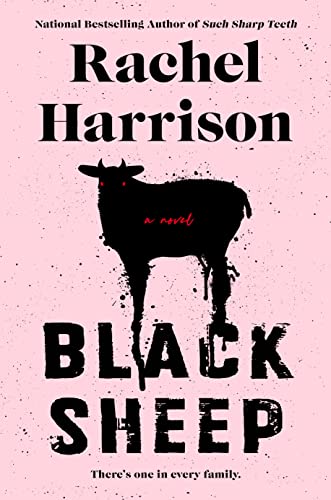
Book Review: Black Sheep by Rachel Harrison

Title: Black Sheep
Author: Rachel Harrison
Publisher: Berkley
Publication date: September 19, 2023
Length: 289 pages
Genre: Paranormal/contemporary fiction
Source: Library
Rating:

Rating: 4.5 out of 5.

A cynical twentysomething must confront her unconventional family’s dark secrets in this fiery, irreverent horror novel from the author of Such Sharp Teeth and Cackle.

Nobody has a “normal” family, but Vesper Wright’s is truly…something else. Vesper left home at eighteen and never looked back—mostly because she was told that leaving the staunchly religious community she grew up in meant she couldn’t return. But then an envelope arrives on her doorstep.

Inside is an invitation to the wedding of Vesper’s beloved cousin Rosie. It’s to be hosted at the family farm. Have they made an exception to the rule? It wouldn’t be the first time Vesper’s been given special treatment. Is the invite a sweet gesture? An olive branch? A trap? Doesn’t matter. Something inside her insists she go to the wedding. Even if it means returning to the toxic environment she escaped. Even if it means reuniting with her mother, Constance, a former horror film star and forever ice queen.

When Vesper’s homecoming exhumes a terrifying secret, she’s forced to reckon with her family’s beliefs and her own crisis of faith in this deliciously sinister novel that explores the way family ties can bind us as we struggle to find our place in the world.

This is my third book by Rachel Harrison, and just confirms what I already knew: This is an author who belongs on my auto-read list. I really enjoyed Cackle and Such Sharp Teeth — and Black Sheep is another terrific expedition into darkness and disturbing developments, but written with such a sharp voice that I still found myself laughing despite the awful events.

It’s going to be hard to talk about Black Sheep, because there’s a big twist that happens pretty early on and turns every expectation on its head… and while some reviewers may reveal what that is, I’m not going to. Suffice to say, I had a screeching-brakes moments of “wait… what???”, and was quietly blown away after that.

Given that, there’s really only the barest of bare bones to share. When Vesper receives the wedding invitation — to the wedding of her best friend and her own former boyfriend/first love — it’s the cap of a very depressing day working at a chain restaurant and then getting fired. What else could go wrong? When Vesper left the family and community six years earlier, it was with the very clear knowledge that she could never return. So who invited her to the wedding, and why?

With everything else in her life basically sucking, Vesper decides to go, and journeys to the remote rural town where she was raised. Her mother’s house is as she remembers — her mother Constance is the queen of slasher horror, and her house is full of terrifying bits of movie memorabilia. Vesper finds herself welcomed back by her friend Rosie and the rest of the family, but little disturbing things keep happening.

As the story progresses, it becomes clear why Vesper left in the first place — and increasingly difficult to not shout at her to run away as fast as she possibly can. But as Vesper discovers, the past doesn’t necessarily want to let her go, and some things can’t be escaped forever.

Black Sheep is creepy and wonderful, and Vesper herself is sharp, world-weary, and sarcastic, torn between memories of loving moments in her past and the scary possibility that her community and its religion are even worse than she remembers:

I was so tired of being told that faith was the answer to everything when it never seemed to solve anything. I wondered what the difference was between being told to have faith and to be quiet. I suspected there wasn’t one.

I highlighted so many great passages while reading Black Sheep — but most are too spoilery to share, so I won’t.

Let’s just leave it like this: Black Sheep is fast, entertaining, dark, and full of great surprises. In a sense, it’s utterly ridiculous, but also, Vesper herself lets us know how bizarre she finds every single thing about her life.

Black Sheep never feels less than riveting. Don’t miss it.

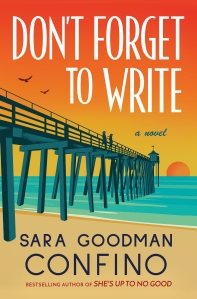
Book Review: Don’t Forget to Write by Sara Goodman Confino

Title: Don’t Forget to Write
Author: Sara Goodman Confino
Publisher: Lake Union Publishing
Publication date: September 1, 2023
Length: 334 pages
Genre: Historical fiction
Source: Prime First Reads (free during August)
Rating:

Rating: 4 out of 5.

In 1960, a young woman discovers a freedom she never knew existed in this exhilarating, funny, and emotional novel by the bestselling author of She’s Up to No Good.

When Marilyn Kleinman is caught making out with the rabbi’s son in front of the whole congregation, her parents ship her off to her great-aunt Ada for the summer. If anyone can save their daughter’s reputation, it’s Philadelphia’s strict premier matchmaker. Either that or Marilyn can kiss college goodbye.

To Marilyn’s surprise, Ada’s not the humorless septuagenarian her mother described. Not with that platinum-blonde hair, Hermès scarf, and Cadillac convertible. She’s sharp, straight-talking, takes her job very seriously, and abides by her own rules…mostly. As the summer unfolds, Ada and Marilyn head for the Jersey shore, where Marilyn helps Ada scope out eligible matches—for anyone but Marilyn, that is.

Because if there’s one thing Marilyn’s learned from Ada, it’s that she doesn’t have to settle. With the school year quickly approaching and her father threatening to disinherit her, Marilyn must make her choice for her future: return to the comfortable life she knows or embrace a risky, unknown path on her own.

What a treat to take a chance on a book I’d never heard of… and end up loving it! I came across Don’t Forget to Write through a promotional email for this month’s free Prime Reading choices. The cover caught my eye, and I once I read the description, I figured… why not?

Set in the summer of 1960, Don’t Forget to Write starts with a bang, as a rebellious 20-year-old — whose father only agreed to send her to college so she could find a husband — decides to make out with the cute son of the rabbi during Saturday morning services… and ends up crashing through a stained glass window with him, mid-kiss, in front of everyone. It’s a scandal — a scandal, I tell you!

While the rabbi and Marilyn’s parents all seem to feel that the only solution is for Marilyn and Daniel to get married, Marilyn has no intention of doing so. She’s grown up seeing her mother’s boredom as a housewife (dinner is often burned because her mother is too busy reading to check on the food), and she’s determined that she will not have that same fate.

Facing parental wrath, Marilyn is forced into the only acceptable alternative: She’ll go spend the summer with her great-aunt Ada, a matchmaker in Philadelphia, with a reputation for strictness and keeping a tight rein on anyone under her control. Upon arrival, Marilyn finds that Ada is a no-nonsense free spirit, and yes, she has very strict rules for Marilyn, but she’s also fierce, outspoken, generous, and a big believer in thinking for oneself.

Before long, the two head for Ada’s home on the island of Avalon on the Jersey Shore, where further adventures await, including glamorous nights out in Atlantic City and sunbathing (with Coppertone!) on the beach while wearing the latest fashionable bikini. Ada is not what Marilyn expected, and under her care, Marilyn starts to bloom into the independent young woman she was meant to be.

Don’t Forget to Write is such an enjoyable read, in so many ways. I loved the depiction of the era — we know the looser vibe of the late 60s is just a little way in the future, but for Marilyn, those freedoms will be too late unless she comes up with her own plans. She’s very much still a hostage to the morals and traditions of the 1950s, when any woman who breaks the mold of wife and mother is judged and scorned.

Avalon is described wonderfully, as is the sense of Atlantic City in its heyday. Ada herself is marvelous — feisty, smart, strong, entrepreneurial, seemingly hard as nails but with quite a loving heart underneath her tough exterior.

The Jewish elements are really engaging as well, and I couldn’t help but laugh at the scenes of scandal in the synagogue! While this takes place before my own time, it definitely mirrors the era in which my parents were young adults, and knowing their stories, I could really relate to some of the scenes and dialogue here.

The relationship between Marilyn and Ada deepens over the course of the book, and is both funny and touching. Marilyn’s growth and the realizations she has about her life and her choices are well-developed, and I really enjoyed seeing her figure out what she wants out of life, what she’s willing to accept, and what she’s prepared to fight for.

The ending may have been a smidge predictable, but that’s okay. Overall, Don’t Forget to Write is an entertaining look at women’s lives in a bygone era, with a terrific mix of nostalgia, summer breezes, and strong characters.

I’m so happy I decided to pick up this book! It’s rare these days that I read something that I know nothing about ahead of time — what fun to just go for it and have it turn out so well!

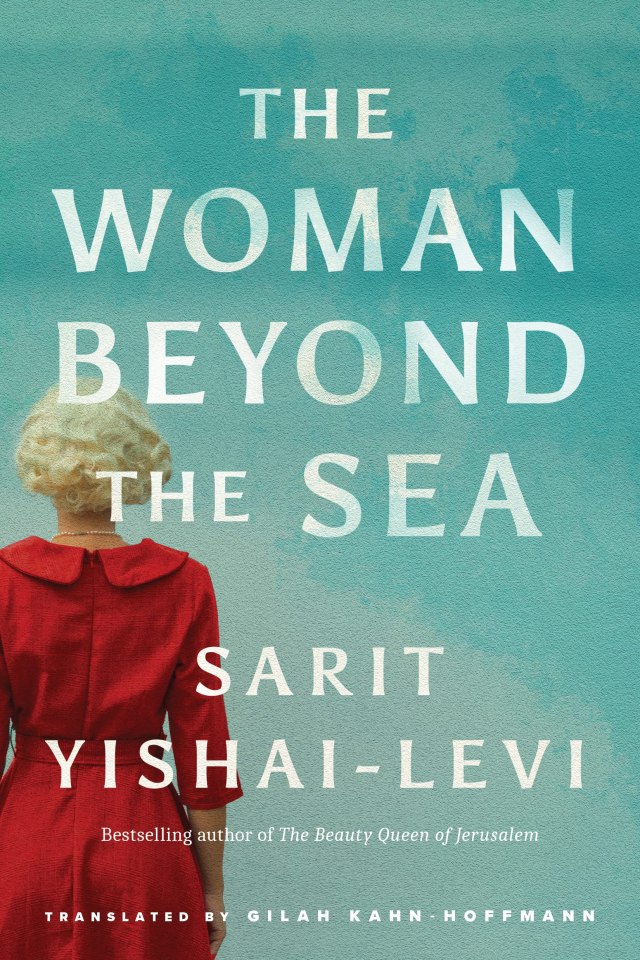
Book Review: The Woman Beyond the Sea by Sarit Yishai-Levi

Title: The Woman Beyond the Sea
Author: Sarit Yishai-Levi
Translated by: Gilah Kahn-Hoffmann
Publisher: Amazon Crossing
Publication date: March 21, 2023 (originally published in Hebrew in 2019)
Print length: 413 pages
Genre: Historical fiction
Source: Purchased

Rating: 3.5 out of 5.

A mesmerizing novel about three generations of women who have lost each other—and the quest to weave them back into a family.

An immersive historical tale spanning the life stories of three women, The Woman Beyond the Sea traces the paths of a daughter, mother, and grandmother who lead entirely separate lives, until finally their stories and their hearts are joined together.

Eliya thinks that she’s finally found true love and passion with her charismatic and demanding husband, an aspiring novelist—until he ends their relationship in a Paris café, spurring her suicide attempt. Seeking to heal herself, Eliya is compelled to piece together the jagged shards of her life and history.

Eliya’s heart-wrenching journey leads her to a profound and unexpected love, renewed family ties, and a reconciliation with her orphaned mother, Lily. Together, the two women embark on a quest to discover the truth about themselves and Lily’s own origins…and the unknown woman who set their stories in motion one Christmas Eve.

Content warning: Suicide, rape, childhood neglect and abandonment

Sarit Yishai-Levi is the author of The Beauty Queen of Jerusalem, an immersive novel about a Sephardic family in 20th century Israel, which has been adapted into an addictive Netflix series (and just when are we getting season 3???).

In her new novel, The Woman Beyond the Sea, we open in the 1970s with Eliya, a woman in her mid-20s who has been used and then dumped by her self-centered husband. Eliya completely falls apart, and her parents Shaul and Lily are at a loss about how to help her.

Lily herself is a strange and troubled woman. Abandoned at a convent as a newborn, she was raised by nuns with no knowledge of her past, no family and no connections. After running away from the convent as a teen, she bounces from one temporary living arrangement to another until she finally meets Shaul, a man who adores her and offers her a future that she never thought she’d have. But Lily, raised without love or family, doesn’t know how to trust or give love, and after experiencing a particularly harsh tragedy, is unable to raise Eliya with a mother’s love.

The cycle of strangled feelings and alienation continue until Eliya is able, after enduring her own psychological crises, to bridge the distance between herself and her mother. After great struggle, Eliya and Lily finally join together to understand Lily’s past and to search for the answers that have always been missing.

The Woman Beyond the Sea is quite intense emotionally, and the two women, Eliya and Lily, are not kind to themselves or to each other. It’s disturbing to see how much hurt they carry internally and the ways they hurt one another.

My reactions to this book are mixed. I loved the setting and the time period, loved seeing Tel Aviv through the characters’ experiences, loved the elements of culture that permeate the characters’ lives.

I didn’t love the writing style — although I wonder if some of this is a translation issue. Originally published in Hebrew, there are phrases and expressions that feel clunky or awkward here in English — but I know just enough Hebrew to pick up occasional moments where certain colloquial expressions in the original language might have felt more natural. (Sadly, I definitely do not have enough Hebrew to read an entire novel!)

Beyond the translation issues, the storytelling itself is not in a style that particularly works for me. Especially in the first half, chapters are painfully long (30 – 60 pages), and the narrative jumps chronologically within a character’s memories — so a character remembering her early married life will interrupt these thoughts to remember something from her school days, and then perhaps interrupt yet again for an earlier memory before coming back to the original set of thoughts. It’s confusing and often hard to follow, and kept me from feeling truly connected to the characters until much later in the book.

There’s a terrific twist and big reveal late in the book that really redeemed the reading experience for me and pulled me in completely. Truly fascinating, although I can’t say a single thing about it without divulging things better not known in advance.

Still, even this high point in the book is offset by some unforgivably cruel shaming and harsh judgments about actions taken to survive and situations outside of a character’s control. Again, I don’t want to reveal details, but I was really angered by the words used by certain characters and found their reactions totally unacceptable and awful.

Overall, there’s a compelling story at the heart of The Woman Beyond the Sea and I always wanted to know more. And yet, the problematic elements and weirdly structured storytelling left me frustrated too often to rate this book higher than 3.5 stars.

A note on content warnings: I don’t typically include these, but felt the topics of suicide and rape need to be called out in advance, for readers who are triggered by or prefer to avoid these topics.

Book Review: All the Murmuring Bones by A. G. Slatter

Title: All the Murmuring Bones
Author: A. G. Slatter
Publisher: Titan Books
Publication date: March 9, 2021
Length: 337 pages
Genre: Fantasy
Source: Purchased
Rating:

Rating: 4 out of 5.

Long ago Miren O’Malley’s family prospered due to a deal struck with the Mer: safety for their ships in return for a child of each generation. But for many years the family have been unable to keep their side of the bargain and have fallen into decline. Miren’s grandmother is determined to restore their glory, even at the price of Miren’s freedom.

A spellbinding tale of dark family secrets, magic and witches, and creatures of myth and the sea; of strong women and the men who seek to control them.

The beautiful writing in this unusual book creates a spell that’s darkly magical yet feels frighteningly real. There are strong fantasy elements, but at its core, All the Murmuring Bones is the story of a young woman desperately seeking a way to break free from the burden of her family’s terrible, ancient bargains.

Miren O’Malley, at age eighteen, lives in the crumbling mansion of Hob’s Hollow located on a cliff overlooking the sea. Once, the O’Malley family was rich and powerful, but that was long ago. Now Miren lives in the decaying ruin with her elderly grandparents and two equally elderly servants. Miren has been raised on tales of mer folk and the people who bargain with them, but how much of that is just family lore?

When Miren’s grandfather dies, her grandmother wastes no time in arranging for Miren to marry a wealthy cousin — he’s not a “real” O’Malley of the original bloodline, but he’s still family, and he has reasons of his own for wanting the marriage. Miren, however, is horrified and wants only to break free. After further loss, the walls seem to be closing in, and Miren finally makes her escape, determined to find the parents who abandoned her so may years ago.

I won’t give away more of the plot, but suffice it to say that Miren’s flight from her angry, vengeful cousin is full of danger and wonder, and she meets strange allies along the way before finally reaching her destination. But even there, more dangers await, and there’s a mystery to unravel that further threatens Miren’s freedom and even her life.

I was, well, spell-bound by this intricate tale of bargains and magicks — the more so because it’s also a tale of family dynamics and manipulations. Miren herself is a terrific character, raised to be obedient, yet unable to just go along with the horrible future she’s being sacrificed to for the sake of the good of the O’Malley family.

There were some elements that I felt needed further explanation, and the drama that unfolds once Miren’s journey finally leads her to her destination isn’t entirely satisfying — but overall, I loved the overarching sense of wonder and dread that mingle together throughout the narrative. I picked up a copy of this book over a year ago — I’m glad I finally read it!

Book Review: The Vibrant Years by Sonali Dev

Title: The Vibrant Years
Author: Sonali Dev
Publisher: Mindy’s Book Studio
Publication date: December 1, 2022
Length: 272 pages
Genre: Contemporary fiction
Source: Kindle freebie
Rating:

Rating: 4 out of 5.

When sixty-five-year-old Bindu Desai inherits a million dollars, she’s astounded―and horrified. The windfall threatens to expose a shameful mistake from her youth. On an impulse, Bindu quickly spends it on something unexpected: a condo in a posh retirement community in Florida.

The impulsive decision blindsides Bindu’s daughter-in-law, Aly. At forty-seven, Aly still shares a home with Bindu even after her divorce from Bindu’s son. But maybe this change is just the push Aly needs to fight for her own dreams.

As Bindu and Aly navigate their new dynamic, Aly’s daughter, Cullie, is faced with losing the business that made her a tech-world star. The only way to save it is to deliver a new idea to her investors―and they want the dating app she pitched them in a panic. Problem is, Cullie has never been on a real date. Naturally, enlisting her single mother and grandmother to help her with the research is the answer.

From USA Today bestselling author Sonali Dev comes a heartfelt novel about three generations of hilarious, unconventional, ambitious women who embark on a shared journey of self-discovery. Join the Desai women as they come together to embrace the hijinks and heartbreak of facing their greatest fears to finally live their most vibrant lives.

Having read and enjoyed Sonali Dev’s Rajes series, which riffs on Jane Austen’s novels while also introduces a large, dynamic Indian American family, I was eager to grab The Vibrant Years when Amazon offered it as a free First Reads book in November. Seeing that this is Mindy Kaling’s first book club selection (Mindy’s Book Studio) made me even more keen to read it.

In The Vibrant Years, we follow three generations of interesting women as they navigate work, love, and family. Bindu inherits money (although she hides the true source from her family) and decides to break out of her steady, modest life as a widow and grandmother and become “vibrant”. She moves into a fancy senior community and becomes the belle of the ball, attracting both eager suitors and the envy and cattiness of what she refers to as “the coven” — the women of the HOA who watch and criticize her every move.

Bindu’s daughter-in-law Aly is a journalist with a local TV station who just can’t seem to get her big break. Despite landing the biggest interview imaginable for the station, her boss wants the more relatable (i.e., whiter) reporter to actually carry out the interview. Aly fights for herself and her career, while also worrying about her daughter and resenting her ex-husband, who never truly supported her professional goals and dreams.

Aly’s daughter Cullie is a tech whiz who, at 25, is the creator of the world’s most successful mental health app, but is now at risk of having her vision compromised by the funder’s pursuit of even more money. Her only hope of saving the app she believes in so strongly is to give the funder something new to profit off of, but her attempt to make a better dating app seems to be headed for failure.

As the story progresses, we get tantalizing hints of Bindu’s hidden past. Something significant happened when she was seventeen — but her enraged parents forced her into a very different life of domesticity and devotion to being a wife and mother rather than risk any hint of shame or scandal. Bindu has never talked about her past, but certain reminders continue to pop up, and it seems like the past won’t remain forgotten for much longer.

The Vibrant Years is perhaps more heartfelt and serious than the synopsis implies, but the promised “hijinks” definitely play a part too. The book neatly balances some truly awful (and hilarious) dating situations with the inner lives of the three main characters, adding humor to heartbreak and loss and self-doubt. (I’m not sure I’ve ever read about dates quite as bad as these… )

Bindu is really the star of the book, a truly “vibrant” woman who gives herself freedom to finally live her own life at age 65. She refuses to be the meek grandmother she seemed destined to remain, but instead puts herself out into the world with bold colors, independent choices, and a fiery defiance that is awesome to behold. There were times in the story when I wished the story of her teen years was told more sequentially, to give us time to really invest in it and see it unfold, but by the end of the book, it’s clear what happened. The revelations are powerful and emotional.

I felt less invested in Aly and Cullie, but still enjoyed their character development, their struggles, and their determination to achieve their goals and also fight for their chances at personal happiness. The dynamics between the three women are not always smooth and peaceful, but their love is unconditional. When’s the last time you read a book about such a loving bond between a mother-in-law and daughter-in-law? I really liked the strong and unconditional connection between all three characters. No matter the challenges, their love and support gets each of them through the worst days and helps them find hope.

Overall, I really enjoyed this family story. Each character is memorable in her own right, and the love between the three is what really makes The Vibrant Years shine.