Book Review: The Heroine’s Journey by Gail Carriger

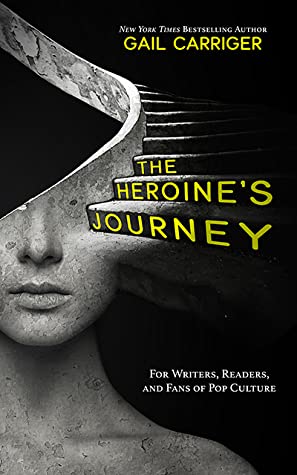
Title: The Heroine’s Journey
Author: Gail Carriger
Publisher: Gail Carriger LLC
Publication date: September 28, 2020
Length: 322 pages
Genre: Non-fiction – literature/writing
Source: Purchased
Rating:

Rating: 4.5 out of 5.

Tired of the hero’s journey?
Frustrated that funny, romantic, and comforting stories aren’t taken seriously?
Sad that the books and movies you love never seem to be critically acclaimed, even when they sell like crazy?

The heroine’s journey is here to help.

Multiple New York Times bestselling author Gail Carriger presents a clear concise analysis of the heroine’s journey, how it differs from the hero’s journey, and how you can use it to improve your writing and your life.

In this book you’ll learn:

* How to spot the heroine’s journey in popular books, movies, and the world around you.
* The source myths and basic characters, tropes, and archetypes of this narrative.
* A step-by-step break down of how to successfully write this journey.

What do Agatha Christie, JK Rowling, and Nora Roberts all have in common?
They all write the heroine’s journey. Read this book to learn all about it.

From Harry Potter to Twilight, from Wonder Woman to Star Wars, you’ll never look at pop culture the same way again.

I’m not a writer… so why am I reading a book about writing? Because it’s by Gail Carriger, that’s why!

Gail Carriger is a favorite writer, and her books own prime shelf real estate in my personal library. I adore her characters, her plots, her world-building, her dialogue, and her silliness. (She’s also unfailingly welcoming and warm at book signings, which can’t be easy…)

In any case — after reading about The Heroine’s Journey through Gail’s social media and newsletters, I was intrigued enough to want to check it out. Lo and behold, it was a fascinating read, even for a non-writer like me!

In The Heroine’s Journey, Gail explains in details how a Heroine’s Journey differs from the much better-known Hero’s Journey. Surprise #1 — the heroine of a Heroine’s Journey does not have to be female! The concept of the hero and heroine, at least as Gail explains, has much more to do with the types of journeys they’re on, the obstacles they encounter, the resources they use, and their ultimate goal, than with a definition based on gender identification.

Through the use of literary and pop culture references, Gail clearly identifies the key elements of a Heroine’s Journey, and explains the tropes, characters, and beats that provide the journey’s framework. She also provides excellent examples of different techniques to use to bring characters to life, get readers involved, and provide a satisfactory payoff for devoted readers.

As an avid reader, and someone who loves genre fiction of all sorts, I found this book so interesting! It really helped me understand why certain types of stories and plots resonate, and taught me a lot about structure and underlying themes as part of understanding a writer’s craft and accomplishments.

And as for the geek in me, I adored the fact that she used Harry Potter throughout the book to explain different facets of the Heroine’s Journey. It’s fine to provide a writerly explanation of different points, but the examples are what really brought the points to life for me.

The Heroine’s Journey is a great read for anyone who enjoys learning about the craft behind the stories we love. I’ll be pushing this book into the hands of a few writer friends of mine too!

Book Review: The Future Is Yours by Dan Frey

Title: The Future Is Yours
Author: Dan Frey
Publisher: Del Rey Books
Publication date: February 9, 2021
Length: 400 pages
Genre: Science fiction
Source: Review copy courtesy of the publisher via NetGalley
Rating:

Rating: 4 out of 5.

Two best friends create a computer that can predict the future. But what they can’t predict is how it will tear their friendship—and society—apart.

If you had the chance to look one year into the future, would you?

For Ben Boyce and Adhi Chaudry, the answer is unequivocally yes. And they’re betting everything that you’ll say yes, too. Welcome to The Future: a computer that connects to the internet one year from now, so you can see who you’ll be dating, where you’ll be working, even whether or not you’ll be alive in the year to come. By forming a startup to deliver this revolutionary technology to the world, Ben and Adhi have made their wildest, most impossible dream a reality. Once Silicon Valley outsiders, they’re now its hottest commodity.

The device can predict everything perfectly—from stock market spikes and sports scores to political scandals and corporate takeovers—allowing them to chase down success and fame while staying one step ahead of the competition. But the future their device foretells is not the bright one they imagined.

Ambition. Greed. Jealousy. And, perhaps, an apocalypse. The question is . . . can they stop it?

Told through emails, texts, transcripts, and blog posts, this bleeding-edge tech thriller chronicles the costs of innovation and asks how far you’d go to protect the ones you love—even from themselves.

If I had the technology of this book back in February 2020, then I could have found out a year ago that I would end up reading The Future Is Yours this week — compulsively, start to finish, taking a break just for the bare necessities. (And work. Because work waits for no woman. Or book. But I digress.)

The Future Is Yours is just so freakin’ cool. Two friends, former college roommates now stuck in the workworld grind, invent a technology that can change the world. Ben is charming, charismatic, and dreams of success. Adhi is brilliant, introverted, and not particularly socially adept. Adhi leaves Stanford before finishing his Ph.D. in Computer Science, frustrated that the dissertation advisors can’t see the possibilities of his complex thoughts on quantum entanglement.

But Ben gets it — sure, maybe he doesn’t get the physics, but he gets the potential, and convinces Adhi that they can make his dream a reality. The dream is seeing the future, using quantum entanglement (no, don’t ask me to explain) to create a connection between a computer in the present and itself in the future, so that someone using the device will be able to access the Internet for information that hasn’t happened yet.

Armed with a dream, Ben and Adhi set out to take Silicon Valley by storm. And while they get laughed out of plenty of rooms, they finally find a VC investor who’s willing to bet on them. From nobodies, they’re suddenly at the helm of The Future, a company that’s getting billion-dollar buyout offers from the likes of Google.

One of the basic principles of The Future is that the future it sees, one year forward, can’t be changed. Everything is connected, everything is already determined. This of course opens up all sorts of debates about free will and human nature, and also leads to The Future’s first scandal — a prototype user who takes his own life after reading about his future death. But did The Future simply report on inevitable events, or did it somehow cause what happened?

Told through memos, emails, texts, hearing transcripts, and other written communications, The Future Is Yours takes us on a journey through Adhi and Ben’s friendship and the crazy trajectory of their company. The deeper they get into The Future, the darker their lives become, and their friendship and closest relationships are all on the line… and if certain dire predictions turn out to be true, the future of human life might be at risk too.

This book is one crazy ride. At first, it feels like putting together a puzzle with pieces missing. We jump straight into Congressional hearings, then go back to Ben and Adhi’s college days, moving forward with the story while also seeing how such an incredibly messed-up situation came into being.

Through their texts and emails, we get to know Adhi and Ben’s personalities, their values, and how they view life, and see how very different they are. Adhi won my heart by virtue of a being a closet pop culture geek, making references to everything from Star Trek to Doctor Who to Twilight (yes, really). Quite awesome.

As I said at the start of this review, I just couldn’t put The Future Is Yours down. It’s fast-paced, exciting, weird, and challenging, not to mention funny and just a wee bit scary in a cautionary tale kind of way. I didn’t really know what to expect when I picked it up — and I think that was a big piece of the fun. A great read for when you want to get away from the real world for a while.

Book Review: Game Changer by Neal Shusterman

Title: Game Changer
Author: Neal Shusterman
Publisher: Quill Tree Books
Publication date: February 9, 2021
Length: 400 pages
Genre: Young adult
Source: Review copy
Rating:

Rating: 4 out of 5.

All it takes is one hit on the football field, and suddenly Ash’s life doesn’t look quite the way he remembers it.

Impossible though it seems, he’s been hit into another dimension—and keeps on bouncing through worlds that are almost-but-not-really his own.

The changes start small, but they quickly spiral out of control as Ash slides into universes where he has everything he’s ever wanted, universes where society is stuck in the past…universes where he finds himself looking at life through entirely different eyes.

And if he isn’t careful, the world he’s learning to see more clearly could blink out of existence…

Ash Bowman is a straight, white, 17-year-old male, a lineman on the high school football team, son of working class parents, a good student, and a good friend. He considers himself pretty woke, not particularly a social activist, but sensitive and caring, and certainly not making the world any worse.

As the book starts, in the middle of a high school football game during a particular hard tackle, Ash has a weird sensation, but it’s over in a moment. Probably just the impact from the tackle, nothing to worry about. It’s not until Ash is driving home and nearly gets hit by a truck in an intersection that he realizes something is wrong. The friend in the passenger seat points out that Ash blew through a stop sign. Impossible, Ash thinks, until he gets to the next intersection and sees the familiar shape of a stop sign — but it’s blue. And to everyone but Ash, that’s completely normal. Stop signs have always been blue.

Ash knows something is wrong, but can’t pinpoint what. But at the next football game, during his next hard tackle, there’s another strange moment, and this time, there’s an even bigger shift in reality. When he heads to the parking lot, instead of his beat-up old car, Ash realizes that he drives a BMW. Rather than living in a poorer part of town, his family now lives in a gated community. Rather than leaving behind his football dreams in high school Ash’s dad is a retired NFL star who now owns a successful business chain, and the family lives in luxury. And once again, Ash is the only person who remembers that the world was once different, although those closest to him seem to have some almost-memories that they can’t quite explain.

With each impact at each game, Ash’s world shifts further and further from his own. He finds changes within himself, as well as in the world around him. Ash suddenly finds himself needing to confront racism, homophobia, and sexism in ways that were never quite as immediate in his original life. And as he learns to control the shifts, he faces a dilemma — does he continue to aim for a better world, or to go back to his own flawed world and try to be a voice for change?

The hows and whys of Game Changer have to do with some sci-fi mumbo jumbo that’s fun but not all that important. It’s not meant to be real quantum physics or anything, just a bit of hand-waving to set up the story and what happens. And that’s okay. The mechanics behind Ash’s world-shifting aren’t what matter here — the heart of the story is about Ash standing in different versions of his life and finally understanding other perspectives from the inside.

Some of these realizations are a little simplistic, as he lives out the concept of walking in someone else’s shoes. Still, it’s interesting to see this character, who’s always considered himself one of the good guys, come to grips with what it’s like to be someone else, what it’s like to lose privilege, and finally get what a friend has been telling him over the years — you can’t explain someone else’s experiences to them if you’re not them.

In some ways, Game Changer reminded me of David Levithan’s Every Day, in which the main character wakes up in a different person’s body each day and has to adapt to living as them, whatever their gender, orientation, race, economic status, or body type. In Game Changer, Ash is always Ash, but with the shifts in worlds, he becomes different versions of himself, and must learn to inhabit that self in the world he finds himself in.

Game Changer is a quick, intriguing read, and I think the target YA demographic will really find it though-provoking and a great jumping-off point for some intense discussions. Definitely worth checking out.

Book Review: The Four Winds by Kristin Hannah

Title: The Four Winds
Author: Kristin Hannah
Publisher: St. Martin’s Press
Publication date: February 2, 2021
Length: 464 pages
Genre: Historical fiction
Source: Review copy courtesy of the publisher via Netgalley
Rating:

Rating: 5 out of 5.

From the #1 New York Times bestselling author of The Nightingale and The Great Alone comes an epic novel of love and heroism and hope, set against the backdrop of one of America’s most defining eras—the Great Depression.

Texas, 1934. Millions are out of work and a drought has broken the Great Plains. Farmers are fighting to keep their land and their livelihoods as the crops are failing, the water is drying up, and dust threatens to bury them all. One of the darkest periods of the Great Depression, the Dust Bowl era, has arrived with a vengeance.

In this uncertain and dangerous time, Elsa Martinelli—like so many of her neighbors—must make an agonizing choice: fight for the land she loves or go west, to California, in search of a better life. The Four Winds is an indelible portrait of America and the American Dream, as seen through the eyes of one indomitable woman whose courage and sacrifice will come to define a generation.

The Four Winds is a powerful, dramatic, and heart-breaking book set during the Great Depression, with an incredibly strong and memorable woman as its lead character and emotional core.

Elsa is the oldest daughter of a wealthy Texas family when we first meet her in 1921. At age 25, she’s considered a spinster. For reasons that are impossible to fathom, her parents have treated her as someone unworthy of love all her life. Their scorn and dismissal have led to Elsa’s internalization of their cruelty — she sees her self as unattractive and uninteresting. Despite her love of reading and interest in education, her parents won’t even consider her request to attend college.

Elsa is doomed to a solitary life, until one day, a rebellious moment leads her to venture out in a pretty dress to go to a speakeasy, and she meets a young man, Rafe, whose interest will change her life. When Elsa’s parents realize that she’s pregnant, they force her to pack a suitcase and drive her to Rafe’s parents’ farm, where they drop her on their doorstep and never look back.

Against all odds, it’s here that Elsa truly finds love and purpose in life — not with her unexpected husband, but in his family’s home. Suddenly, Elsa has family and a place, and learns to embrace the farm, the household, the culture, and the people. Her devotion to her new family only grows once she gives birth to her daughter Loreda. She’s determined to raise her children with love and with a connection to the land, their heritage.

Tragically, the happiness on the farm is not to last. The Dust Bowl years descend, with their punishing drought and horrific dust storms, and Elsa and the Martinellis, like all of their neighbors, are helpless and powerless in the face of this disaster. Over the years, they watch their crops fail, their lands dry up, their livestock starve and die. Many pack up and leave, lured by the promise of opportunity and jobs in California. The Martinellis vow never to leave, but this changes once the children’s health is threatened by the lack of food and the damage caused by constantly breathing in dirt and dust.

Ultimately, Elsa has no choice but to take her children and head west in pursuit of a new, healthier life. At first glance, it looks like they’ve found the promised land. As they drive into California, they see field after field of crops growing, green and healthy. But the dream is elusive for migrants. Overwhelmed by the flood of displaced people from the Dust Bowl states, California wants to shut its borders to “Okies”, and treats the newcomers as little more than vermin.

Elsa and her children learn that they’ve left one type of hell for another. There’s no place to live except in squatters’ camps, amid mud and filth, and no work available except toiling in the fields for minimal pay in terrible conditions. There are more workers than work, so they quickly learn to keep quiet and accept whatever comes their way, because the alternative is to starve.

The cruelty of the treatment of migrants is horrible to read about. Hospitals won’t treat them, even in life-threatening emergencies. They’re not wanted in schools, and are told to keep to their own kind. State relief is only available after living in the state for a year, but even then, the big farmers put pressure on the state to cut off relief to anyone who’s able to “pick” — if they can work, they should be in the fields.

When Elsa gets a lucky break and is able to move her family into a cabin on a growers’ land, it’s finally a roof over their heads, but with strings. To keep the cabin, they have to stay put, but there’s no work until the cotton is ready to pick. If they leave to pick elsewhere, they give up their home and have to go back to squatting. To stay, they get credit at the company store for rent, supplies, and food. The only way to pay back the credit is through picking — even when relief payments come through and Elsa has cash in hand, she can’t use it to get out of debt, since the company store doesn’t allow payment in cash.

Over the years, we witness Elsa’s determination to protect her children and provide for them. Midway through the book, as Loreda enters her teens, she also becomes a point-of-view character, and we have the opportunity to see Elsa through her daughter’s eyes. The mother-daughter relationship isn’t easy, but the love between them is always real and palpable.

Reading The Four Winds repeatedly brought me to tears. Through her evocative writing, Kristin Hannah makes us feel the sorrow and hopelessness of the characters, the desperation to provide a better life for their children, the despair each time a new degradation is revealed. The pain of the Martinelli family is visceral, as they face trauma after trauma.

Still, it’s impossible not to admire Elsa’s courage. She doesn’t give up, because she can’t. Her purpose is to keep her children alive and healthy, and to make sure that some day, they’ll have better opportunities. Eventually, her devotion to her children leads her into the world of social activism and the fight for workers’ rights, but it’s her love of family that drives her into acts of defiance and bravery.

The Four Winds is a beautiful and tragic book about a time in American history that’s not as distant as it might seem. Sadly, the attitudes and prejudices toward the migrant families are all too familiar — it’s the haves versus the have-nots, the consolidation of power by denying others, the lack of recognition of basic human dignity, and a complete lack of compassion for those less fortunate.

I highly recommend The Four Winds. This is a book that kept me awake each night, because I couldn’t get the images and situations out of my mind. Ultimately, the characters (especially Elsa) make the biggest impression, but overall, the story is moving, disturbing, memorable, and important. Don’t miss it.

******************

A final note: Two songs kept coming up for me in relation to The Four Winds. The first is Sixteen Tons, which is about coal miners, but some lines really resonate: “You load sixteen tons and what do you get? Another day older and deeper in debt” and “St. Peter don’t you call me, ’cause I can’t go – I owe my soul to the company store.” The song was originally written by Merle Travis, and has been recorded by lots of artists over the years. Here’s a version by LeAnn Rimes:

The other song which was in my head throughout my entire reading of this powerful book is These Troubled Fields by Nancy Griffith. It’s a beautiful song that I’ve loved for years, and it’s only as I was reading The Four Winds that I realized that her song directly references the Dust Bowl era. Check it out.

Book Review: Ironside (Modern Faerie Tales, #3) by Holly Black

Title: Ironside
Author: Holly Black
Publisher: McElderry Books
Publication date: 2007
Length: 323 pages
Genre: Young adult fantasy
Source: Purchased
Rating:

Rating: 3 out of 5.

In the realm of Faerie, the time has come for Roiben’s coronation. Uneasy in the midst of the malevolent Unseelie Court, pixie Kaye is sure of only one thing — her love for Roiben. But when Kaye, drunk on faerie wine, declares herself to Roiben, he sends her on a seemingly impossible quest. Now Kaye can’t see or speak to Roiben unless she can find the one thing she knows doesn’t exist: a faerie who can tell a lie.

Miserable and convinced she belongs nowhere, Kaye decides to tell her mother the truth — that she is a changeling left in place of the human daughter stolen long ago. Her mother’s shock and horror sends Kaye back to the world of Faerie to find her human counterpart and return her to Ironside. But once back in the faerie courts, Kaye finds herself a pawn in the games of Silarial, queen of the Seelie Court. Silarial wants Roiben’s throne, and she will use Kaye, and any means necessary, to get it. In this game of wits and weapons, can a pixie outplay a queen?

Holly Black spins a seductive tale at once achingly real and chillingly enchanted, set in a dangerous world where pleasure mingles with pain and nothing is exactly as it appears. 

I’m going to keep this post short, because I just don’t find myself having all that much to say about Ironside. But hey, I posted reviews for the first two books in the trilogy (Tithe and Valiant), so I might as well be complete about it!

In Ironside, we go back to the main character from Tithe — Kaye, the pixie raised as a human, who has fallen in love with Lord Roiben, the ruler of the Unseelie Court. He sets her on what seems to be an impossible quest, and meanwhile, is on the brink of war with the Seelie court, which his outnumbered people seem destined to lose.

Alongside her best friend, the mortal Corny, and their new friend Luis (who was introduced in Valiant), Kaye has to try to solve the riddle of her quest and find a way to prevent the war that’s likely to end with Roiben’s death, while also keeping Corny from the endless disasters that seem to pop up wherever he goes.

As in the other books in the trilogy, Ironside is set in New York, where faeries need magical powders of protection to live amidst all the poisonous iron of the human world. This book is not as bleak and grim as the 2nd book. There’s still danger, but the focus is mostly on events involving the faerie courts, and it doesn’t have quite the same sense of urban grittiness.

I’m not mad that I finished the trilogy, but I didn’t love the overarching story as a whole. Some characters are endearing, but the plot didn’t grab me, and key moments felt kind of brief and lacking in substance.

My edition of the trilogy (a three-in-one volume) includes The Lament of Lutie-Loo, a short story (written in 2019) about Kaye’s sprite companion and the visit she makes to Elfhame. I liked this a lot — it’s light and fun, and I think I particularly liked it for the glimpses of beloved characters from the Folk of the Air trilogy.

I’d been curious about these books, and they were on my list of series I wanted to read this year, so I’m glad to have accomplished what I set out to do. This trilogy as a whole didn’t thrill me, but I do love Holly Black’s writing and imagination, and look forward to reading a few more of her books.

Book Review: Valiant (Modern Faerie Tales, #2) by Holly Black

Title: Valiant
Author: Holly Black
Publisher: McElderry Books
Publication date: 2002
Length: 256 pages
Genre: Young adult fantasy
Source: Purchased
Rating:

Rating: 3 out of 5.

Return to New York Times bestselling author Holly Black’s enthralling realm of faerie in the second Modern Faerie Tales novel, where danger and magic come hand-in-hand in the dark underground of New York City.

When seventeen-year-old Valerie runs away to New York, she’s trying to escape a life that has utterly betrayed her. Sporting a new identity, she takes up with a gang of squatters who live in the city’s labyrinthine subway system. But there’s something eerily beguiling about Val’s new friends that sets her on edge.

When Val is talked into tracking down the lair of a mysterious creature, she must strike a bargain to make it out with her life intact. Now drawn into a world she never knew existed, Val finds herself torn between her affection for an honorable monster and her fear of what her new friends are becoming.

While Valiant is the 2nd book in Holly Black’s Modern Faerie Tales trilogy, don’t pick it up expecting to continue where Tithe left off. In Valiant, we meet a completely new cast of characters in a mostly new setting, and it’s only toward the end that there’s some cross-over with the previous book’s characters.

Val is 17 years old when she discovers a major betrayal by the people she trusted the most. Distraught, she takes a train into Manhattan to get away for a few hours — but then can’t bring herself to go back home. She shaves her head and takes to the street, fortunately meeting up with a few other teen runaways who welcome her into their circle. She soon finds herself squatting with them at an abandoned subway platform, where they can be relatively safe, keep warm, and have a regular place to sleep.

Val’s new friends — Lolli, Dave, Luis — have secrets. It turns out that they do odd jobs for the faerie underground in the city, making deliveries of a special potion that helps the Fae stay healthy in a world full of poisonous iron. What Val’s friends have discovered is that when a human uses this potion, especially by injecting it, it gives them all sorts of delicious borrowed power. It’s also highly addictive, and none of them seem able to resist it for long.

Meanwhile, someone is murdering solitary fae, and suspicion falls on Ravus, the bridge toll who creates and distributes the magical potion. Val has grown closer to Ravus, but being in his circle becomes more and more dangerous. There’s adventure and chaos, friendship and betrayal, growing up and going home. There’s a LOT going on this book.

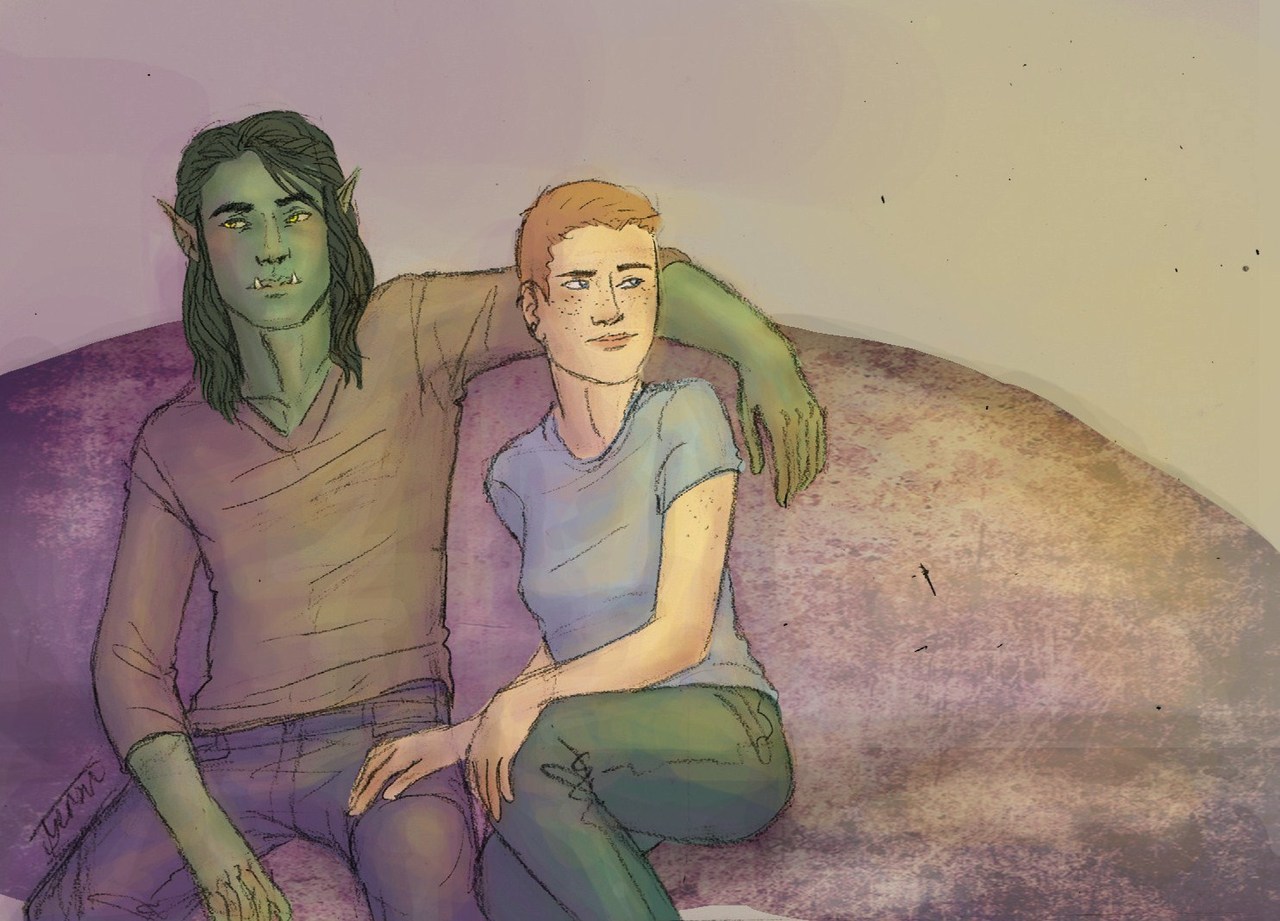
Val & Ravus fan art via https://hollyblack.tumblr.com/

In some ways, Valiant could be seen as a metaphor for the dangers of being a runaway. Remember how people used to talk a lot about how Buffy is really a metaphor for the teen years (high school is hell!)? You could look at Valiant in a similar fashion. There’s a point to be made here: The experiences of Val and her friends are dark and grim and in no way glamorous or magical. The book shows their daily struggle to get enough to eat, find a bathroom to clean up in, sleep where they won’t be robbed or assaulted, and figure out who to trust. Several characters fall quickly into addiction, and the fact that it’s a magical drug doesn’t change the fact that it’s destroying them more and more each day. Through the constant threats and uncertainties, this book makes clear that running away shouldn’t be seen as the answer. Home may be hard, but being on the streets isn’t the “magical” solution either.

At the same time, this is a faerie tale, although a very dark one. It’s bleak and hard, the fae the characters meet are mostly cruel, and the stakes are high — if they survive their lives on the streets, they can still be killed by creatures that want to hurt them just for fun.

This isn’t a pleasant read, but it did keep me interested. I liked Val and Ravus as characters, and I’m interested in seeing how the 3rd book, Ironside, wraps up the plots of Tithe and Valiant. As I mentioned in my review of Tithe, I don’t feel these books are anywhere near the greatness of the Folk of the Air trilogy — but considering that the Modern Faerie Tales books were written about 20 years earlier, it’s nice to be able to compare and see the author’s development of her craft and the worlds she creates.

Onward to #3!

Book Review: The Viscount Who Loved Me (Bridgertons, #2) by Julia Quinn

Title: The Viscount Who Loved Me (Bridgertons, #2)
Author: Julia Quinn
Publisher: Avon
Publication date: 2000
Length: 400 pages
Genre: Historical romance
Source: Purchased
Rating:

Rating: 3.5 out of 5.

1814 promises to be another eventful season, but not, This Author believes, for Anthony Bridgerton, London’s most elusive bachelor, who has shown no indication that he plans to marry. And in all truth, why should he? When it comes to playing the consummate rake, nobody does it better…

–Lady Whistledown’s Society Papers, April 1814

But this time the gossip columnists have it wrong. Anthony Bridgerton hasn’t just decided to marry–he’s even chosen a wife! The only obstacle is his intended’s older sister, Kate Sheffield–the most meddlesome woman ever to grace a London ballroom. The spirited schemer is driving Anthony mad with her determination to stop the betrothal, but when he closes his eyes at night, Kate’s the woman haunting his increasingly erotic dreams…

Contrary to popular belief, Kate is quite sure that reformed rakes do not make the best husbands–and Anthony Bridgerton is the most wicked rogue of them all. Kate’s determined to protect her sister–but she fears her own heart is vulnerable. And when Anthony’s lips touch hers, she’s suddenly afraid she might not be able to resist the reprehensible rake herself…

Reading the Bridgertons series is such a fluffy, escapist treat, despite the fact that I’m not much of a romance reader, and some sections made me roll my eyes so hard that they hurt. But after watching the Netflix series, it’s hard not to want to keep going and read more, more, more.

The setting is Regency-era London. The Bridgertons are a large family, with eight children (named in alphabetical order, which the high society ton find amusing). Lady Bridgerton is a widow, and she’s determined to see all of her children settled into happy marriages. In the first book in the series, The Duke & I, daughter Daphne ends up quite blissfully married (to a Duke, obviously). Now it’s time for the the rest of her children to get paired off as well.

In The Viscount Who Loved Me, the focus shifts to Anthony Bridgerton, the oldest of the Bridgerton children and the head of the family since their father’s death eleven years earlier. Anthony has never truly gotten over losing his father, and through his grief and his devotion to his father, has somehow managed to convince himself that he won’t live longer than his father did. Now at age 29, he’s sure — even while acknowledging to himself that he’s not really being rational — that he’ll be dead within 10 years. Constantly aware of his impending date with death, Anthony has played the rake up to now, but wanting to leave behind his own legacy, has decided that it’s finally time to marry and have children.

One firm rule he’s sworn to keep to is not to marry for love. After all, despite his parents’ love match, love isn’t really a requirement for marriage at that time. He seeks a wife who’s pretty, pleasant, from a good family, and who’ll make a good mother. But love will not be a factor: His deep-seated fear is that if he loves his wife, the knowledge of his premature death will make his life too painful to bear. Again, not rational, but it’s what he believes.

Anthony decides that he’ll marry Edwina Sheffield, considered to be the diamond of the season. Edwina and her older half-sister Kate are both having their first season. They live with Mary, Kate’s stepmother and Edwina’s mother, but have little in the way of financial means since the death of their father. Not being able to afford the expense of two full London seasons, Kate has postponed her own debut until the practically spinster-ish age of 21, when Edwina would also be old enough to be out.

Kate is a wonderful character, devoted to Mary and Edwina, smart, and outspoken. She’s fiercely protective of Edwina, and Edwina has stated that she won’t marry without Kate’s approval of her potential husband. Kate doesn’t play games and doesn’t expect many suitors, especially since her own looks can’t (in her opinion) hold a candle to Edwina’s delicate, classically beautiful appearance. She knows that one of them must come out of the season married, and married well, in order to support the rest of their family, and assumes Edwina has a much better chance.

Because of Anthony’s reputation as a rake, Kate immediately rules him out as a husband for Edwina, especially after hearing him state that it’s okay for a man to maintain a mistress after marriage, so long as he doesn’t love his wife. She thinks badly of him and informs him that she won’t allow him to wed Edwina. The two engage in lots of bickering and heated exchanges, but over the course of their encounters, they both become aware of a spark between them.

I’m sure you can guess where this is headed! Sparks fly, and a potential scandal forces them into marriage, even while neither is wiling to admit their desire and unwanted feelings for one another.

A few random thoughts on things that stuck out to me while reading this book:

  • As in The Duke & I, the male love interest is flawed and carries emotional baggage. Like Simon, Anthony is damaged by the trauma he experienced earlier in his life, and this influences his attitude and emotions regarding love and marriage.
  • We can’t really be mad when the norms of a historical period don’t match our own, but certain things make me bonkers anyway. Like how Anthony at age 18 becomes the Viscount and head of the family, meaning (among other things) that all the Bridgerton properties — their London house and their country estate — belong to him and him alone. I get it, that’s how things worked then, but it makes me mad on Violet’s behalf (the mother of the Bridgertons) that she owns nothing and technically is dependent on Anthony.
  • Also, there’s the tired old sentiment that men who are rakes are daring and dashing and make desirable husbands. Their bad reputations (so long as they have money and social standing) seem to only make them more desirable. Whereas young women must be pure and virginal, and can be ruined by being alone with a man or exchanging a kiss. Stupid double standards.
  • When we first meet Edwina, I expected her to be the standard romance character of the beautiful but shallow girl who everyone falls in love with — so I was happy to discover that there’s a lot more to her. She’s a supportive sister and daughter, she loves to read and study philosophy, and her true desire in a husband is to marry a scholar with whom she can study and learn. How refreshing!
  • I had to laugh at the scene of Anthony and Kate’s scandalous encounter that drives them into marriage. Kate is stung by a bee, and Anthony becomes so frantic about it (an allergic reaction to a bee sting is what killed his father), that he decides to suck the venom from the site of the sting — just above her breast. Okay, I have never heard of someone sucking out a bee’s venom, and it just seemed ridiculous. Of course, the women who stumbled upon them in the midst of this ridiculousness didn’t know what had happened and of course it was highly scandalous behavior… but still, so silly.
  • In the first book, main character Daphne went into marriage with zero knowledge of sex, after a pre-wedding talk with her mother that conveyed absolutely no actual information. Here, Mary does better with “the talk” on the night before Kate’s wedding, but manages to leave Kate with certain impressions that are detrimental to her marriage.

As I mentioned, romance is not a typical genre for me, and so some of the language just makes me laugh. I don’t know how much of this also has to do with the book being written 20 years ago, but I’m guessing that a lot of it is just typical romance language, and the statements made by certain characters are true to the general portrayal of Regency-era gender roles. Some choice bits:

A taste of attitude:

Anthony leaned forward, his chin jutting out in a most menacing manner. “Women should not keep pets if they cannot control them.” “And men should not take women with pets for a walk in the park if they cannot control either,” she shot back.

Bridgerton chuckled. “The only reason to give up one’s mistress is if one happens to love one’s wife. And as I do not intend to choose a wife with whom I might fall in love, I see no reason to deny myself the pleasures of a lovely woman like you.”

“The talk””

“Men and women are very different,” Mary continued, as if that weren’t completely obvious, “and a man—even one who is faithful to his wife, which I’m sure the viscount will be to you—can find his pleasure with almost any woman.”

Which leads directly to Kate’s fears and insecurities:

But she’d been consoling herself with the memory of the desire she had felt—and she thought Anthony had felt—when she was in his arms. Now it seemed that this desire wasn’t even necessarily for her, but rather some primitive urge that every man felt for every woman. And Kate would never know if, when Anthony snuffed the candles and took her to bed, he closed his eyes . . . And pictured another woman’s face.

And then there’s the sexy-times, which I generally find hilarious:

She wouldn’t recognize the first prickles of desire, nor would she understand that slow, swirling heat in the core of her being. And that slow, swirling heat was there. He could see it in her face.

Kate gasped as his hands stole around to her backside and pressed her harshly against his arousal.

“You’ve never seen a naked man before, have you?” he murmured. She shook her head. “Good.” He leaned forward and plucked one of her slippers from her foot. “You’ll never see another.”

His hands slid to the top button of his trousers and unfastened it, but stopped there. She was still fully clothed, and still fully an innocent. She wasn’t yet ready to see the proof of his desire.

Kate’s eyes widened as he left the bed and stripped off the rest of his clothing. His body was perfection, his chest finely muscled, his arms and legs powerful, and his— “Oh, my God,” she gasped. He grinned. “I’ll take that as a compliment.”

I’m not really mocking the book, just noting that romance language never fails to entertain me and make me giggle over scenes that aren’t meant to be funny. I’ve become very fond of the characters in the series (having watched the Netflix series definitely helps), and for sure I’ll be reading more.

That’s two Bridgerton siblings happily married — six more to go!

Book Review: Tithe (Modern Faerie Tales, #1) by Holly Black

Title: Tithe
Author: Holly Black
Publisher: McElderry Books
Publication date: 2002
Length: 272 pages
Genre: Young adult fantasy
Source: Purchased
Rating:

Rating: 3.5 out of 5.

Welcome to the realm of very scary faeries!

Sixteen-year-old Kaye is a modern nomad. Fierce and independent, she travels from city to city with her mother’s rock band until an ominous attack forces Kaye back to her childhood home. There, amid the industrial, blue-collar New Jersey backdrop, Kaye soon finds herself an unwilling pawn in an ancient power struggle between two rival faerie kingdoms – a struggle that could very well mean her death. 

I have been wanting to read the Modern Faerie Tale trilogy ever since reading the author’s more recent Folk of the Air series, which I love to pieces. Tithe, the first book in the trilogy, was first published in 2002, and is Holly Black’s first novel.

Kaye is a 16-year-old girl who lives wherever her mother happens to land, raising herself while her mother focuses on her band. She stopped going to school a couple of years earlier, rather than continuing to go through the process of starting over every time they pick up move somewhere new for the sake of a new gig.

When they need a sudden escape from a dangerous situation, they move back to Kaye’s hometown in New Jersey to live in her grandmother’s house. Kaye is happy to reconnect with her elementary school bestie, Janet, and also hopes to see her imaginary friends again. But are they really imaginary? In her early years, Kaye would tell anyone who would listen about her magical fairy friends, which no one ever believed, earning herself the reputation of being a weird kid.

Some strange things start to recur, and after a bad night out, Kaye runs into a beautiful, otherworldly man in the forest who’s been injured. As she tries to help him, a bond is forged, and she starts to learn more about her own true nature. It turns out that Kaye is a pixie changeling, placed under heavy glamours to appear human and exchanged for the real baby Kaye, who’s been raised in Faerie in Kaye’s place.

Things escalate quickly, and Kaye finds herself pulled into a power struggle between the different Fae courts. She’d like to trust Roiben, but he’s clearly dangerous as well, and Kaye is still learning about her own magic and abilities, as well as worrying about her mortal friends who have inadvertently gotten mixed up with the world of Faerie.

Kaye is a great character, a little jaded and world-weary, but also in awe of the new world that opens before her. She hates the power games and brutality shown by some of the Fae, but she sees beauty in this world as well. The dynamic between Kaye and Roiben is quite fun. (Side note: Kaye and Roiben make brief appearances in the Folk of the Air trilogy, and once I realized that they were the main characters in Tithe, I knew I needed to read it.)

There are some tragic turns and dramatic encounters, and the pacing of the story is quick and engaging. That said, this book was written almost 20 years ago and is a first novel, and both of those elements show. I can’t fault a book for depicting the time in which it was written, but it’s still jarring, here in 2021, to have teens not glued to their cell phones, see them using pay phones, or mention the noise their modem makes while connecting to the internet.

In terms of this being a first novel, it’s well-written and engaging, but having read the Folk of the Air trilogy, Tithe suffers by comparison. Which may just be a round-about way of saying how amazing the Folk of the Air books are — sophisticated plotting and world-building, powerfully depicted characters, intricate relationships… I could go on and on. Reading Tithe after those books, it’s clear that Tithe is much simpler writing, and at the same time, doesn’t do as good a job of explaining the various power dynamics of the Fae courts (which we basically get to know about via one massive information dump).

Holly Black is an incredibly gifted writer, and it’s interesting to see where she started. The world of Tithe is related to the world of the Folk of the Air, and reading Tithe is a great chance to experience Faerie as the author first depicted it.

I will definitely read the other two books in the series (Valiant and Ironside), and then have an unrelated trilogy (Curse Workers) and an unrelated novel (The Coldest Girl in Coldtown) by Holly Black on my TBR shelf.

I do recommend Tithe, especially for fans of the author’s later books.

For more of my reviews of Holly Black books:
The Darkest Part of the Forest
The Good Neighbors (graphic novel trilogy)
The Cruel Prince
The Wicked King/The Queen of Nothing
How the King of Elfhame Learned To Hate Stories

Book Review: We Came Here To Shine by Susie Orman Schnall

Title: We Came Here To Shine
Author: Susie Orman Schnal
Publisher: St. Martin’s Griffin
Publication date: June 16, 2020
Length: 384 pages
Genre: Historical fiction
Source: Purchased
Rating:

Rating: 3 out of 5.

At the iconic 1939 New York World’s Fair, two ambitious young women—a down-on-her-luck actress and an aspiring journalist—form an unlikely friendship as they navigate a world of possibility and find out what they are truly made of during a glorious summer of spectacle and potential…

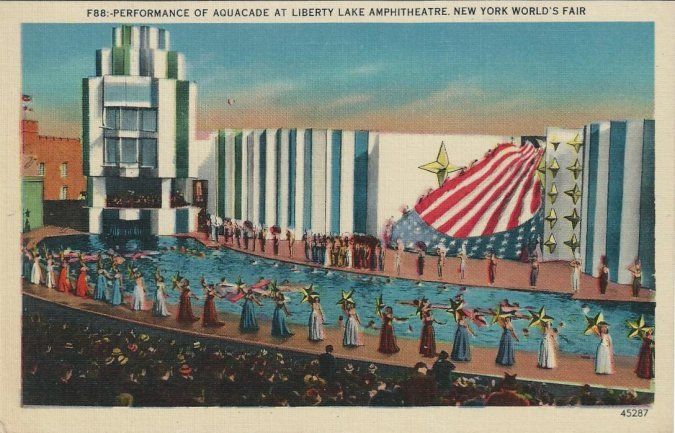
Gorgeous Vivi is about to begin filming her first starring role in a Hollywood picture when the studio head ships her off to New York as a favor to a friend. She’s assigned the leading role in the heralded Aquacade synchronized swimming spectacular at the World’s Fair, a fate she believes will destroy her film career. If she performs well, she’ll have another chance at stardom, but with everything working against her, will her summer lead to opportunity or failure?

Plucky Max dreams of becoming a serious journalist, but when her job at the New York Times doesn’t pan out, she finds herself begrudgingly working for the daily paper of the World’s Fair. As her ideas are continually overlooked by her male counterparts and her career prospects are put in jeopardy, Max must risk everything to change the course of her life.

When Max and Vivi’s worlds collide, they forge an enduring friendship. One that teaches them to go after what matters most during the most meaningful summer of their lives.

We Came Here To Shine takes place at the 1939 New York World’s Fair, bringing the spectacle to life through the experiences of Max and Vivi, two very different women who find themselves drawn together as they each battle sexism and misogyny.

Max is a journalism student at NYU, whose dream is to become a star reporter for the New York Times. As part of the coursework, each member of the class is assigned to a summer internship with a New York publication. Max is crushed when she loses out on her first choice with the Times, and is instead assigned to Today At The Fair, the daily paper produced at the World’s Fair to highlight the days’ events and generate buzz and excitement.

It gets even worse when she and her classmate Charlie show up to work on the first day, only to be told that Charlie will write all the articles, and Max will be responsible for the daily event listings. When she protests, she’s told that women aren’t suited for reporting, and are much better at doing detail work like lists and calendars. Max is furious, especially because she and her classmates are competing for a scholarship that will be awarded based on submission of articles written during the internship. Without the scholarship, Max doesn’t see a way that she can afford the next year’s tuition.

Meanwhile, Vivi is on track as a rising starlet in the Hollywood studio system. After supporting roles in a few films, Vivi is about to start filming a starring role in a new movie — until the studio chief informs her that she’s being replaced, and is instead being loaned out to Billy Rose, the producer of the Aquacade swimming show at the World’s Fair. The Aquacade’s star (in the role of Aquabelle Number One) has been injured, and they need someone to replace her and draw in the crowds. Vivi isn’t a movie star yet, but the producers all agree that the Hollywood cachet will boost ticket sales.

Vivi is dismayed and hurt, but has no choice. She’s under contract to the studio, which means they can do as they want with her. They also dangle a promise that after the summer, they have another starring role all lined up for. Do what they want, and she’ll get that chance. Don’t do it, and the studio will be done with her, ending her Hollywood dreams for good.

There’s a lot to like about We Came Here To Shine, but it fell flat for me in several ways.

First, what I liked:

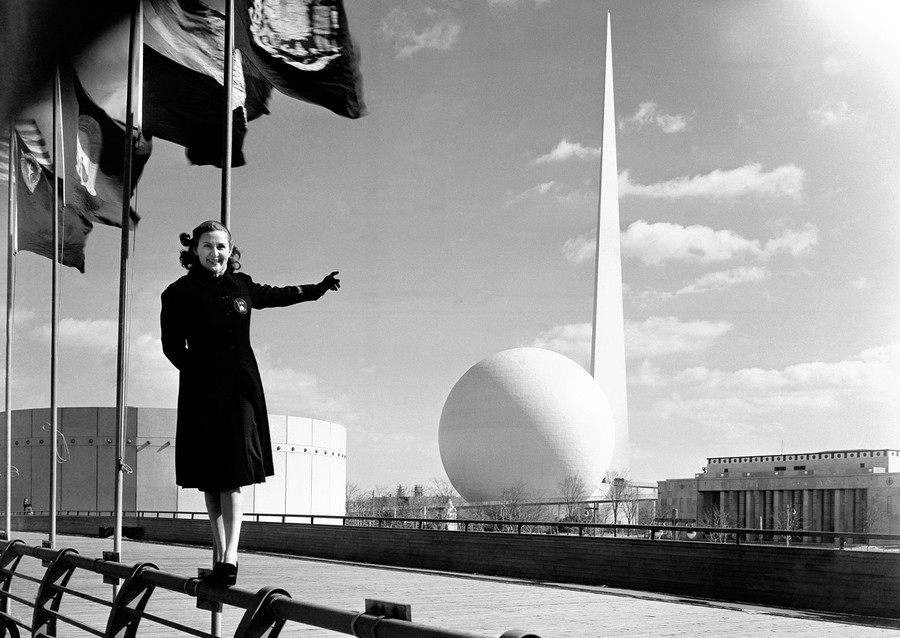
  • Being introduced to the wonders of the Fair, which at that time would have been mind-boggling. New technologies, glorious buildings and gardens, international pavillions, glamorous restaurants, and the Aquacade — the book does a great job of conveying the awe of experiencing the Fair for the first time.
  • I liked Max and Vivi’s friendship and how they supported one another through their lowpoints, helping each other figure out how to get out of terrible situations and take control of their own paths.
  • The sense of the impact of the Depression, as shown by Max’s family life as well as by some of the negative reactions to the Fair around the ticket prices making it beyond the reach of many families.
  • The photos and historical notes included in the book, which really helped me appreciate different attractions mentioned in the story, as well as explaining which of the issues and people are real and which are created by the author.
  • The inclusion of the National Women’s Party (a real organization) as an inspiration for both Max and Vivi.

The bits that didn’t really work for me:

  • For someone who’s described as being top of her class in journalism, the tastes we get of Max’s writing just aren’t impressive. In fact, the pieces she submits for the scholarship competition are sensational without including sources or diving beyond the surface.
  • It doesn’t actually make sense that Vivi would be chosen to take on the high-profile starring role in the Aquacade. She was on her high school swim team, but has never done choreography or synchronized swimming, and is initially given just four days to rehearse before her first performance.
  • Vivi’s family drama, which drove her to Hollywood in the first place, isn’t explained well enough. We know the basics of what happened, but (see below), the presentation left me feeling that I was reading about stock characters, rather than unique people and dynamics.
  • SPOILER: Vivi, with Max’s help, finds a way to get out of her contract and leave the Aquacade and Hollywood in her past. It’s clear that she’s been mistreated, cheated, and controlled by the various powerful men who run the industry and have absolute power over her career, but I couldn’t quite accept that Vivi’s need to take back her life would include giving up her career and switching aspirations quite so suddenly. It reads as if she never really wanted to become an actress in the first place, but that’s not the impression I had at the start of the book.

The biggest issue I had with the book is the writing. The writing style makes the story feel bland, even when there’s something dramatic happening. In fact, this is probably what bothered me the most: Even as certain events unfolded, I felt like I was being told about what happened, rather than actually seeing them happen. Again and again, I felt like I was reading a summary of the big moments — some key parts felt too short or glossed over, and I never got the sense that I was there.

Still, I did enjoy enough aspects of We Came Here To Shine to make me glad I read it. I’ve now spend some time browsing images and videos to get a sense of what being at the Fair was like. To learn more about the Fair, check out https://www.1939nyworldsfair.com/index.htm. Also, here’s a short video highlighting the Aquacade (silent, but still fun to watch.)

We Came Here To Shine is my book group’s pick for January — yet another book that I likely would not have come across otherwise. Despite the problems mentioned above, it’s worth reading to experience the time and place of such a unique and exciting event.

Book Review: Nemesis Games (The Expanse, #5) by James S. A. Corey

Title: Nemesis Games (The Expanse, #5)
Author: James S. A. Corey
Publisher: Orbit
Publication date: May 10, 2016
Length: 532 pages
Genre: Science fiction
Source: Purchased
Rating:

Rating: 5 out of 5.

A thousand worlds have opened, and the greatest land rush in human history has begun. As wave after wave of colonists leave, the power structures of the old solar system begin to buckle.

Ships are disappearing without a trace. Private armies are being secretly formed. The sole remaining protomolecule sample is stolen. Terrorist attacks previously considered impossible bring the inner planets to their knees. The sins of the past are returning to exact a terrible price.

And as a new human order is struggling to be born in blood and fire, James Holden and the crew of the Rocinante must struggle to survive and get back to the only home they have left.

Let me just say up front that this is going to be a short review — not because I didn’t love the book, but because I tore through it so quickly that I didn’t pause to take notes or mark amazing passages or terrific dialogue. Yes, I loved the book, and it definitely merits 5 stars!

The fifth book in the fabulous Expanse series, Nemesis Games has a lot going on. The key things to know are (1) the crew of the Rocinante spend most of the book apart, each going off on their own private journeys while their ship is undergoing major repairs, and (2) a massive terrorist attack by a dangerous Belter faction changes the power dynamics of the solar system, perhaps permanently.

Each of our four main characters gets a chance to shine, although Naomi’s saga is clearly the most dramatic and emotionally powerful. I don’t want to get into spoiler territory, so I’ll be vague, but the attack by the Free Navy (the aggressive Belter faction) is shocking in its scope and impact.

The plotline of Nemesis Games is the basis of the excellent fifth season of The Expanse (now streaming on Amazon Prime), with a few changes here and there. While I’m usually a stickler for reading books before watching movie or TV adaptations, in this case, I’m glad I had the visuals of this season to help me while reading the book. So much of the technology, military aspects, etc are really complex, and having seen the depictions on TV really made the book passages feel more alive to me.

As I said, I’m keeping this review short, so I’ll just wrap up by saying that Nemesis Games and the entire series are highly recommended. The books are long, but they speed by. So far, there are 8 books in the series, with the 9th and final book set to be published sometime this year. I don’t think I’ll be able to get through all of the available books right away, but I do want to keep going! The books are exciting, pulse-pounding reading, and I just have to know what happens next!