Book Review: The Ministry of Time by Kaliane Bradley

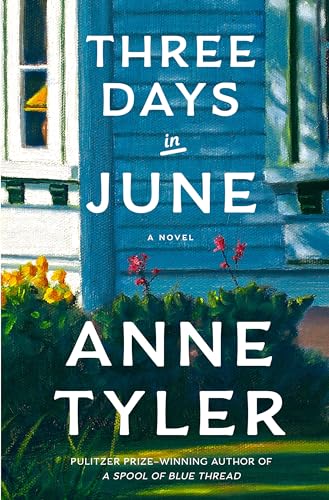
Title: The Ministry of Time
Author: Kaliane Bradley
Publisher: Simon & Schuster
Publication date: May 7, 2024
Length: 352 pages
Genre: Science fiction
Source: Purchased
Rating:

Rating: 3 out of 5.

A time travel romance, a spy thriller, a workplace comedy, and an ingenious exploration of the nature of power and the potential for love to change it all:

In the near future, a civil servant is offered the salary of her dreams and is, shortly afterward, told what project she’ll be working on. A recently established government ministry is gathering “expats” from across history to establish whether time travel is feasible—for the body, but also for the fabric of space-time.

She is tasked with working as a “bridge”: living with, assisting, and monitoring the expat known as “1847” or Commander Graham Gore. As far as history is concerned, Commander Gore died on Sir John Franklin’s doomed 1845 expedition to the Arctic, so he’s a little disoriented to be living with an unmarried woman who regularly shows her calves, surrounded by outlandish concepts such as “washing machines,” “Spotify,” and “the collapse of the British Empire.” But with an appetite for discovery, a seven-a-day cigarette habit, and the support of a charming and chaotic cast of fellow expats, he soon adjusts.

Over the next year, what the bridge initially thought would be, at best, a horrifically uncomfortable roommate dynamic, evolves into something much deeper. By the time the true shape of the Ministry’s project comes to light, the bridge has fallen haphazardly, fervently in love, with consequences she never could have imagined. Forced to confront the choices that brought them together, the bridge must finally reckon with how—and whether she believes—what she does next can change the future.

In The Ministry of Time, five people are yanked out of their lives in past centuries and pulled into 21st century England, to live as “expats” — term the Ministry deems most acceptable for describing these people forced to live in a time not their own.

The 21st century world is similar to our present day, but perhaps a few more decades farther down the road, if the cataclysmic weather events and political strife are indicators. The expats — from the 15th, 18th, 19th, and 20th centuries — are each assigned “bridges”: Ministry agents who live with their assigned expat and help them assimilate into their new worlds.

There’s much at stake: Those who fail to adjust and somehow get a grip on “hereness” — belonging where they are — are likely to get rejected by the current time, almost like an infection being rejected by a body’s antibodies. For the unnamed main character, a woman who jumps at the job offer mainly because of the large salary that goes with it, the task is frustrating and daunting. Her assignment is Graham Gore, a member of the doomed Franklin expedition of the mid-1800s, who’s pulled from the Arctic through a time door, leaving behind the men under his command. Gore is disoriented and belligerent, but with the help of his bridge, begins to learn more about the maddening world he now inhabits.

The Ministry of Time covers interesting ground, with an approach I haven’t seen before in time travel fiction. The book isn’t particularly concerned with the technology of it all. There’s a time door and a device that enables the time travel, but don’t look for explanations — this isn’t that sort of book.

Despite the science fiction trappings, this is instead a work of literary fiction exploring the implications of moving through time, changing the past and the future, and the experiences of belonging, being a refugee, and looking for a home.

As someone who doesn’t normally gravitate toward literary fiction, I must admit that I often found the writing style annoyingly opaque.

Quentin treated me with an impatient familiarity, as if we were both sticky and were leaving streaks on each other.

Throughout the book, I’d come across phrases and passages that made me stop and wonder — is it me, or does this not make any sense? There are words put together in interesting ways, yet I could not find meaning in them.

He blushed with his face on mute.

While sections of the the book felt like a slog, at times I became more invested, particularly in the latter half of the book, when both danger and emotions are heightened and the overall stakes are much more intense. And yet, I couldn’t entirely grasp the implications of the ending, and large chunks of the plot felt a bit half-baked to me. Perhaps this is the non-sci-fi factor: As a fan of science fiction, I expect a certain level of detail — the sci-fi elements need to have enough grounding to feel possible or at least make sense in the context of the world being described. In The Ministry of Time, the time travel is just a fact, the central device that drives the story, and the lack of specificity annoyed me.

By and large, though, it comes back to the writing, which generally did not work for me:

She looked like her organs had been removed and placed in cold storage; worse, like it had happened when she was on her way to what she thought was a birthday party.

There are examples upon examples of descriptions that probably are meant to be clever, but which feel meaningless to me. I read the sentence above multiple times — I still have no idea what the person being described might actually look like in this instance.

The Ministry of Time was one of my more eagerly anticipated reads for winter. Now that I’ve read it, I can’t help feeling let down. I expected something very different than what I got. Overall, while I enjoyed certain elements of the story and was very interested in some of the characters, the storytelling style kept me from truly engaging.

I know this book generated a lot of buzz when it came out and has oodles of fans. I don’t regret reading it, but it won’t be on any of my “best of” lists for 2024.

Book Review: Love You a Latke by Amanda Elliot

Title: Love You a Latke
Author: Amanda Elliot
Publisher: Berkley
Publication date: October 8, 2024
Length: 368 pages
Genre: Contemporary romance
Source: Library
Rating:

Rating: 4.5 out of 5.

Snow is falling, holiday lights are twinkling, and Abby Cohen is pissed. For one thing, her most annoying customer, Seth, has been coming into her café every morning with his sunshiny attitude, determined to break down her carefully constructed emotional walls. And, as the only Jew on the tourism board of her Vermont town, Abby’s been charged with planning their fledgling Hanukkah festival. Unfortunately, the local vendors don’t understand that the story of Hanukkah cannot be told with light-up plastic figures from the Nativity scene, even if the Three Wise Men wear yarmulkes.

Desperate for support, Abby puts out a call for help online and discovers she was wrong about being the only Jew within a hundred miles. There’s one other: Seth.

As it turns out, Seth’s parents have been badgering him to bring a Nice Jewish Girlfriend home to New York City for Hanukkah, and if Abby can survive his incessant, irritatingly handsome smiles, he’ll introduce her to all the vendors she needs to make the festival a success. But over latkes, doughnuts, and winter adventures in Manhattan, Abby begins to realize that her fake boyfriend and his family might just be igniting a flame in her own guarded heart.

Let’s hear it for a Hanukkah romance with heart! Love You a Latke by Amanda Elliot combines holiday cheer with the fake dating trope, then adds in deeper emotion and meaningful moments related to community, identity, and assimilation. Does that sound too serious? Never fear, Love You a Latke is fun and has an overall upbeat tone… and plenty of Hanukkah joy.

Abby runs a coffee shop in a small Vermont town, but worries that the tourist trade has fallen off, which may imperil her business’s future. When the head of the local merchant association basically ropes Abby into planning a Hanukkah festival as a tourist draw (after all, any town might have a Christmas festival — but nowhere in Vermont is there a Hanukkah festival!), Abby reluctantly agrees, but quickly realizes she’ll need help to pull it off. Unfortunately, the only other Jew Abby can find in her area is Seth, the annoyingly cheerful customer who comes into her shop every day.

With no other options, Abby asks Seth for help — and he agrees, but with one condition: He’ll help her connect with all the great food and event vendors he knows in New York, who’ll be sure to be perfect for the festival, and in exchange, she’ll come spend Hanukkah with him and his parents. A fake girlfriend is just what he needs to get his mother to ease up on the matchmaking pressure. Desperate for Seth’s help with the festival, Abby agrees to the fake-dating scheme. How hard could it be?

Over the eight days of Hanukkah, Abby warms to Seth and his parents, and rekindles her connection to her Jewish roots. Due to an incredibly toxic relationship with her parents, Abby fled not only them, but the entire Jewish community with which they seem so inextricably linked. Through her time with Seth, as well as by experiencing myriad Jewish and Hanukkah settings and events in New York, Abby begins to realize that she can reclaim an important element of her past — her Judaism — without falling prey to the harshness and negativity of her upbringing.

Of course, there are also romantic sparks being kindled as Abby and Seth light the menorah each night. Their chemistry is lovely, and while Abby struggles to avoid entanglement for way longer than I’d wished, her resistance is understandable given the pain of her past. When Abby and Seth finally do connect, it makes the waiting absolutely worth it.

A subplot throughout the book is Abby’s involvement in the Hanukkah festival. Even though she is nominally in charge, it’s clear that the woman who assigns the job to Abby really wants to retain control — and her idea of a Hanukkah festival is essentially a Christmas festival, but maybe add in a game of dreydel. Part of Abby’s evolution over the course of Love You a Latke is learning to take a stand, claim her own heritage, and refuse to be marginalized or forced to assimilate. It’s all quite awesome.

I just didn’t want Christmas in my Hanukkah, the same way I didn’t want to dip a grilled cheese in my cinnamon roll latte. Both were delicious, but I didn’t want them together

Love You a Latke deals with serious themes about emotional abuse and the lasting damage it can inflict, but the book is not a downer in any way. As Abby starts coming to terms with her life, her past, and her hopes for the future, and recognizing that her life feels richer once she reconnects with the Jewish community she thought she’d left for good, she blossoms and is able to start creating meaningful friendships and romantic connections. She and Seth are great together, but it’s also wonderful to see her connecting with new friends and feeling open to a more positive way of living her life.

The Jewish elements in Love You a Latke are handled very, very well. I loved seeing the community and the holiday represented in non-typical yet very positive ways. Too often, I’ve seen Jewish characters included in romance novel in a tokenized or stereotypical way, but I feel that’s been changing more recently. Love You a Latke brings the Jewish without ever resorting to tired old cliches, and even shows how a new generation of young adults find ways to connect to their heritage and community in all sorts of modern, fresh ways.

Love You a Latke is just the book I needed in this week leading up to Hanukkah! As I light the menorah for the first night of Hanukkah tonight, I’ll be thinking of Abby and Seth and their celebrations too!

For anyone looking for a sweet holiday romance that has something to say, do check out Love You a Latke! Highly recommended.

Book Review: The Wishing Game by Meg Shaffer

Title: The Wishing Game
Author: Meg Shaffer
Publisher: Ballantine Books
Publication date: May 30, 2023
Print length: 320 pages
Genre: Contemporary fiction
Source: Purchased

Rating: 4.5 out of 5.

Years ago, a reclusive mega-bestselling children’s author quit writing under mysterious circumstances. Suddenly he resurfaces with a brand-new book and a one-of-a-kind competition, offering a prize that will change the winner’s life in this absorbing and whimsical novel.

Make a wish. . . .

Lucy Hart knows better than anyone what it’s like to grow up without parents who loved her. In a childhood marked by neglect and loneliness, Lucy found her solace in books, namely the Clock Island series by Jack Masterson. Now a twenty-six-year-old teacher’s aide, she is able to share her love of reading with bright, young students, especially seven-year-old Christopher Lamb, who was left orphaned after the tragic death of his parents. Lucy would give anything to adopt Christopher, but even the idea of becoming a family seems like an impossible dream without proper funds and stability.

But be careful what you wish for. . . .

Just when Lucy is about to give up, Jack Masterson announces he’s finally written a new book. Even better, he’s holding a contest at his home on the real Clock Island, and Lucy is one of the four lucky contestants chosen to compete to win the one and only copy.

For Lucy, the chance of winning the most sought-after book in the world means everything to her and Christopher. But first she must contend with ruthless book collectors, wily opponents, and the distractingly handsome (and grumpy) Hugo Reese, the illustrator of the Clock Island books. Meanwhile, Jack “the Mastermind” Masterson is plotting the ultimate twist ending that could change all their lives forever.

. . . You might just get it.

For all the adult readers who miss the sense of wonder and delight that a good children’s books series can bring… have I got a book for you!

The Wishing Game by Meg Shaffer is a quest story for kids who believe in wishes… and then grow up. In this sweet, inventive, lovely tale, the reclusive author of the bestselling Clock Island children’s book series announces that he’s written a new book after a six-year gap… but there’s only one copy, and it will be gifted to the person who wins his contest, which is open to only a select few.

Jack chuckled. “The book exists. And there is only one copy of it in the world. I typed it up and hid it away.”

“And you’re seriously going to entrust it to some stranger?”

“No, but I shall whimsically entrust it to some stranger.”

Shades of Willy Wonka, right?

One of author Jack Masterson’s most devoted fans is Lucy Hart, a kindergarten teacher’s aide whose deepest, most heartfelt wish is to adopt Christopher, an orphaned seven-year-old who’s become the light of her life. Reality interferes in the form of finances: Without an apartment of her own, steady income, and a car, Lucy has no chance of getting approved to foster or adopt. Perhaps, the social worker suggests, it would be kinder to tell Christopher that it’s just not going to happen.

Just as Lucy is verging on despair, the news of Jack’s contest breaks. And Lucy has a secret: At age 13, she ran away to Clock Island and met Jack Masterson. Thanks to being able to solve his riddle, she is one of the four people chosen to compete — and if she wins, she’ll own the exclusive rights to his new book, which she can then sell for enough money to make her dreams of a family with Christopher come true.

Without delving too much further into plot details, let me just say that The Wishing Game is heart-warming, enchanting, whimsical, and full of joy. It’s a book for and about adults, but retains the sense of childish wonder that the best children’s books provide. It’s also a gift for those who love and cherish books, and who believe that stories are more than words on a page.

“Why do only brave kids get their wishes granted?” she asked.

“Because only brave children know that wishing is never enough.”

I loved so much about The Wishing Game. The characters are terrific, especially Lucy, Hugo, and Jack. There’s a romantic storyline, but it’s just one part of the whole, and fits well within the overall weave of the tale. Hugo’s artwork sounds amazing, and I wish it were real! Meg Shaffer does a fantastic job of taking fictional works of art — both Hugo’s paintings and Jack’s books — and making them come to life through her vivid descriptions.

The narrative brilliantly weaves together Lucy’s past — especially the very deep childhood wounds she carries — and the future she hopes for, incorporating a child’s wishes and beliefs into the fabric of an adult life. I loved how all the various pieces come together by the end. Realistic? Maybe not, but this is a book about dreams and wishes. It works.

I came to The Wishing Game after reading the author’s more recent novel, The Lost Story. I do still love The Lost Story best, but The Wishing Game is lovely and wonderful in its own special way, and I’m so happy to have made time to read it.

Book Review: City of the Lost (Rockton, #1) by Kelley Armstrong

Title: City of the Lost
Series: Rockton, #1
Author: Kelley Armstrong
Publisher: Minotaur Books
Publication date: May 3, 2016
Length: 412 pages
Genre: Thriller/mystery
Source: Library
Rating:

Rating: 4.5 out of 5.

Casey Duncan is a homicide detective with a secret: when she was in college, she killed a man. She was never caught, but he was the grandson of a mobster and she knows this crime will catch up to her. Casey’s best friend, Diana, is on the run from a violent, abusive ex-husband. When Diana’s husband finds her, and Casey herself is attacked shortly after, Casey knows it’s time for the two of them to disappear again.

Diana has heard of a domestic violence support town made for people like her, a town that takes in people on the run who want to shed their old lives. You must apply to live in Rockton and if you’re accepted, it means walking away entirely from your old life, living off the grid in the wilds of Canada: no cell phones, no Internet, no mail, no computers, very little electricity, and no way of getting in or out without the town council’s approval. As a murderer, Casey isn’t a good candidate, but she has something they want; she’s a homicide detective, and Rockton has just had its first real murder. She and Diana are in. However, soon after arriving, Casey realizes that the identity of a murderer isn’t the only secret Rockton is hiding – in fact, she starts to wonder if she and Diana might be in even more danger in Rockton than they were in their old lives.

An edgy, gripping crime novel from a bestselling urban fantasy writer, City of the Lost boldly announces a major new player in the crime fiction world.

Kelley Armstrong has become an auto-buy author for me, and I’ve been loving her recent series (A Rip Through Time and A Stitch in Time) and stand-alones. I hadn’t had the opportunity to explore her extensive backlist until now… and now that I’ve started, I can’t wait to keep going!

City of the Lost is the first book in the 7-book Rockton series. The premise is certainly unique: There’s a remote town — Rockton, population 200 — located in the wilds of Canada’s Yukon territory. It’s home to those fleeing danger who need complete isolation from the outside world, but it also offers shelter to some with questionable pasts who need a way to hide out and start over. There are no navigable roads in or out — new residents arrive by bush plane, and can only leave the same way. Relocating to Rockton is a serious commitment.

The books opens with a bang:

“I killed a man,” I say to my new therapist.

Detective Casey Duncan has a huge secret that’s been weighing on her for the past twelve years. After a brutally violent attack left Casey with permanent physical and psychological scars, she went to confront the ex-boyfriend whose actions brought about the attack (and who abandoned her to her attackers). During the confrontation, she shot and killed him, although that hadn’t been her intention. While she’s essentially gotten away with the killing, she’s always known that it could catch up to her at any point.

Meanwhile, her best friend Diana has been assaulted yet again by her cruel, abusive ex-husband, and she and Casey fear that they’ll never fully be rid of him. When Diana hears about a town where people can disappear, she proposed that they both go and get the protection they so desperately need. Casey is hesitant, but she realizes that this is the best possible solution for Diana. After an intense screening process, they’re in, but with a catch: The selection process easily unearthed Casey’s secret, but because they need a detective, they’ll let her in — only for a six-month stay.

Casey and Diana’s relocation to Rockton introduces them to a world that’s truly apart from everything they’ve known. And while Diana immediately immerses herself in the social life available to her as one of the small number of women in town, Casey gets right to work under the direction of Sheriff Eric Dalton. Dalton is brusque, demanding, and no-nonsense, and while he initially did not want Casey in his town, he quickly realizes how skilled and valuable she is.

Dalton and the town are in desperate need of Casey’s talents, as dead bodies begin cropping up. At first, it’s assumed that missing Rockton residents have simply wandered off into the woods and perhaps met with accidents, but as gruesome corpses are found, it becomes apparent that a killer is at work. Everyone in town is a potential suspect, and to make matters worse, Casey soon discovers that many of Rockton’s residents are actually more dangerous than she’s been led to believe.

The murder mystery and thriller elements are detailed and complex, with plenty of misleading clues and confusing trails of evidence. For a very small town, Rockton has a lot of characters to introduce, and my one complaint about City of the Lost is that it became difficult at various points to keep all the random people and their backstories straight.

That aside, the drama and tension escalate effectively throughout the story, and I loved seeing the different pieces come together. For me, when I read a mystery series, I enjoy the particular crime to be solved in each book, but what really holds my interest and attention is the character development that connects the books. City of the Lost is only the first book, but I can tell already that the characters are going to keep me coming back for more.

Casey herself is a terrific, imperfect, complex main character, and she has fabulous chemistry with Sheriff Eric Dalton. Even before personal chemistry comes into the mix, they’re amazing as partners, butting heads constantly while also building rock-solid respect for one another as professionals. Seeing them together, for me, is the high point of the story.

Beyond Casey and Eric, there are plenty of side characters who add depth to the story and help create a picture of a full society in this little town. And while the murders do get solved, there is clearly more to uncover in terms of people’s secrets and bigger picture questions about the council that runs Rockton from afar.

City of the Lost is a fantastic way to start a series! After just one book, I can say with certainty that I’m hooked and need more. Fortunately, there are six more books to explore in the main series, and I understand that a spin-off series, Haven’s Rock, includes two books so far, with a third due out in 2025. .

I’m going to try to take my time and not do a series binge… but it’s incredibly tempting to barge straight ahead! I’m looking forward to continuing the Rockton series. Next up: Darkness Absolute.

Book Review: A Letter to the Luminous Deep by Sylvie Cathrall

Title: A Letter to the Luminous Deep
Author: Sylvie Cathrall
Publisher: Orbit
Publication date: April 25, 2024
Length: 432 pages
Genre: Fantasy
Source: Purchased
Rating:

Rating: 3 out of 5.

A charming fantasy set in an underwater world with magical academia and a heartwarming penpal romance, perfect for fans of A Marvellous Light and Emily Wilde’s Encylopaedia of Faeries.

A beautiful discovery outside the window of her underwater home prompts the reclusive E. to begin a correspondence with renowned scholar Henerey Clel. The letters they share are filled with passion, at first for their mutual interests, and then, inevitably, for each other.

Together, they uncover a mystery from the unknown depths, destined to transform the underwater world they both equally fear and love. But by no mere coincidence, a seaquake destroys E.’s home, and she and Henerey vanish.

A year later, E.’s sister Sophy, and Henerey’s brother Vyerin, are left to solve the mystery, piecing together the letters, sketches and field notes left behind—and learn what their siblings’ disappearance might mean for life as they know it.

Inspired, immersive, and full of heart, this charming epistolary tale is an adventure into the depths of a magical sea and the limits of the imagination from a marvelous debut voice.

In the world of A Letter to the Luminous Deep, human life is lived on ships and floating anchorages, on a planet with only one small land mass. Legend has it that one thousand years earlier, a cataclysmic event known as the Dive occurred: Before the Dive, people lived in the sky (on spaceships? orbiting stations?), but the entire civilization suddenly plummeted into the seas below. Relics of the pre-Dive world are still occasionally found, but humanity now lives on the water’s surface — or occasionally, below it.

As the book opens, we’re introduced to E. Cidnosin, a young woman who resides alone in Deep House, the underwater compound built by her late mother. E. prefers the solitude, as it keeps her brain calm and allows her a peaceful life. When she spots an unusual sea creature outside her window, she writes to a renowned scholar, Henerey Clel, to ask for help in identifying it. From that initial contact, the two develop an ongoing correspondence, through which they reveal more and more of themselves and grow to truly connect and care for one another.

Sadly, what we learn early on is that E. and Henerey were presumed dead after an explosion at Deep House. Now, a year later, E.’s sister and Henerey’s brother are trying to piece together what happened by sharing their siblings’ notes, letters, and journals. As they correspond, they form a friendship of their own, and become deeply involved in solving the mystery of E. and Henerey’s fate — and trying to determine if another mystery with worldwide implications might be at play.

I wanted to love A Letter to the Luminous Deep, but realized almost immediately that it wouldn’t work out that way. Epistolary novels are tricky: There are plenty I’ve enjoyed, but they only work if the letters are informative enough to give readers a bigger view of the letter writers’ worlds. That was not the case here. Perhaps the author’s intention was to keep an air of mystery throughout the book, but for me, the result was a lack of information that kept me from engaging with the story.

We get a sense of the world through the letters, but details are dripped out so sparingly that I felt frustrated rather than intrigued. Meanwhile, the characters themselves are hard to connect to. I couldn’t imagine much about E. or Henerey beyond their words on the page, and the lack of definition of elements of their world makes it hard to get a fuller picture of their daily lives and experiences.

With the epistolary format, all content is provided through letters and documents, and the writing style of the characters is highly stylized. Without any other narrative to provide more straightforward language or descriptions, that writing style gets tiresome very quickly.

I will say that the story picks up in the final third, and by the end, there’s a payoff for sticking with it. Still, too much of the book feels like a slog, and at over 400 pages, that makes for a less than satisfying read.

A Letter to the Luminous Deep is apparently the first book in a duology, with book #2, A Letter from the Lonesome Shore, due out in spring 2025. As of now, I can’t seem myself continuing with the story.

Book Review: Diavola by Jennifer Thorne

Title: Diavola
Author: Jennifer Thorne
Publisher: Tor Nightfire
Publication date: March 26, 2024
Length: 296 pages
Genre: Horror
Source: Purchased
Rating:

Rating: 4 out of 5.

Jennifer Thorne skewers all-too-familiar family dynamics in this sly, wickedly funny vacation-Gothic. Beautifully unhinged and deeply satisfying, Diavola is a sharp twist on the classic haunted house story, exploring loneliness, belonging, and the seemingly inescapable bonds of family mythology.

Anna has two rules for the annual Pace family destination vacations: Tread lightly and survive.

It isn’t easy when she’s the only one in the family who doesn’t quite fit in. Her twin brother, Benny, goes with the flow so much he’s practically dissolved, and her older sister, Nicole, is so used to everyone—including her blandly docile husband and two kids—falling in line that Anna often ends up in trouble for simply asking a question. Mom seizes every opportunity to question her life choices, and Dad, when not reminding everyone who paid for this vacation, just wants some peace and quiet.

The gorgeous, remote villa in tiny Monteperso seems like a perfect place to endure so much family togetherness, until things start going off the rails—the strange noises at night, the unsettling warnings from the local villagers, and the dark, violent past of the villa itself.

(Warning: May invoke feelings of irritation, dread, and despair that come with large family gatherings.)

Talk about a family vacation from hell!

The air felt murky when she joined everybody at the table, but it was the usual Pace family murk, bad moods combining to form a full low-pressure weather pattern.

In this creepy, atmostpheric horror novel by Jennifer Thorne (author of the brilliant Lute), a family stay in a Tuscan villa turns nightmarish… and not just because of the forced proximity of a dysfunctional family.

Main character Anna Pace is a constant disappointment to her family. Blamed for everything from the death of her middle school classroom’s pet guinea pig to fooling around with her sister’s prom date (she didn’t, actually) to every other sort of wrong-doing imaginable, Anna is constantly on alert. The idea of spending a week with her family is so stressful that she secretly arrives in Italy two days early to squeeze in some alone time before she has to face the rest of the group.

The family’s idyllic Tuscan luxury rental seems off right from the start. There’s a dead zone around the building where nothing grows. A tower is kept tightly locked, and while Anna thought she saw a window in it, it’s actually totally bricked over. Why is there a goat kept tethered at the end of the lane? And why does Anna spot locals sneaking around with flashlights at night?

Little incidents pile up — slamming doors, spoiled food, onslaughts of mosquitoes — and then escalate into rearranged furniture and injuries caused by unseen hands. The family seems to be in the worst sort of denial. Anna’s father insists that there’s nothing wrong, because he paid for this vacation, dammit!, and they WILL enjoy it. Everyone else falls back on blaming Anna for causing problems.

“I don’t know why you’re trying to stir things up, Anna,” she spat. “I gave up trying to figure that out a long time ago, goodness knows, a long time! There is absolutely nothing wrong with where we’re staying.”

Anna knows deep down that what’s happening at the villa isn’t normal, especially given the side-eye the family gets whenever they venture into the nearby village. She can fell it in the air whenever they go back into the villa, a sense of wrongness and bad intent — and the longer they stay, the worse it gets, especially with the terrible dreams of a menacing woman that begin to haunt Anna’s every moment… even when she’s not asleep.

Oh, this book gets creepier and creepier as it goes along, and the family’s insistence on acting as if everything is okay becomes enough to make you want to pull your hair out. I would have been running away as fast as my legs could carry me as of the second day — and Anna does consider leaving, but it’s the same old family dynamic that keeps her from going:

Everybody would worry about her if she left and it would poison the rest of their vacation and she wouldn’t want to hear about it, but by God, she would. She’d hear about it at every single gathering forevermore.

The toxicity of the family is a huge factor in the horror elements. Yes, there are gruesome, gory incidents, and plenty of disturbing scenes, but the way Anna’s family treats her is one of the most upsetting aspects of this book. She’s the family scapegoat, for no very good reason except that that’s what they’re all used to. No wonder she dreads these family vacations.

Not to downplay the actual horror — the haunting storyline is scary and insidious, and there’s a moment where we readers might think that Anna has finally broken free… but then we see that there’s still quite a bit of the story left, and get a creeping suspicion that the terror isn’t even close to being finished with Anna.

Diavola is a relatively short novel, and if possible, should be read in one or two long reading sessions. Due to limited reading time this past week, I read the first half or so in little fits and starts, and found myself rather disengaged — but I’m convinced the fault was in my approach, not the book itself. Once I sat down for more extended reading over the weekend, I couldn’t put the book down and flew through the second half.

As a story of haunting and possession, Diavola is sinister and frightening. As a tale of awful family dynamics, it’s both relatable and bleak. Black humor lightens some of the worst moments, and yet the overall vibe is menacing all the way through.

There are some gross-out scenes, so be warned if you’re on the squeamish side. Recommended for horror fans who appreciate a gothic vibe in their stories of terrible family vacations.

PS – If nothing else, Diavola should be a lesson to us all to look beyond AirBnb reviews and do a good Google search when staying in ancient villas!

Book Review: Rooftoppers by Katherine Rundell

Title: Rooftoppers
Author: Katherine Rundell
Publisher: Simon & Schuster Books for Young Readers
Publication date: 2013
Length: 279 pages
Genre: Middle grade
Source: Library
Rating:

Rating: 4 out of 5.

Embrace possibility in this luminous novel about a girl in search of her past who discovers a secret rooftop world in Paris.

Everyone thinks that Sophie is an orphan. True, there were no other recorded female survivors from the shipwreck that left baby Sophie floating in the English Channel in a cello case, but Sophie remembers seeing her mother wave for help. Her guardian tells her it is almost impossible that her mother is still alive—but “almost impossible” means “still possible.” And you should never ignore a possible.

So when the Welfare Agency writes to her guardian, threatening to send Sophie to an orphanage, she takes matters into her own hands and flees to Paris to look for her mother, starting with the only clue she has— the address of the cello maker.

Evading the French authorities, she meets Matteo and his network of rooftoppers—urchins who live in the hidden spaces above the city. Together they scour the city in a search for Sophie’s mother—but can they find her before Sophie is caught and sent back to London? Or, more importantly, before she loses hope?

Phillip Pullman, author of the His Dark Materials series, calls Rooftoppers “the work of a writer with an utterly distinctive voice and a wild imagination.”

In this charming story about love, friendship, and believing in possibilities, an orphaned child sets off on an adventure across the rooftops of Paris in search of her long-lost mother.

Never ignore a possible.

Sophie was only one year only — or thereabouts — when she survived a shipwreck, and was found floating in a cello case by a kind man who decided on the spot to give her a home and a family. Charles Maxim raises Sophie with generosity and wisdom, encouraging her wild imagination and bravery, and teaching her to embrace whatever life has to offer, even against the odds.

Charles and Sophie’s life together is threatened by the official government agency which monitors guardianships. Aghast at Sophie’s inappropriate upbringing — including writing poetry on walls, wearing trousers, and learning from life rather than school — they inform Charles that Sophie will need to go to an orphanage.

Meanwhile, Sophie has yearned all her life for the mother she can barely remember — a woman who played the cello, and was presumably lost at sea. Sophie is convinced that her mother is alive — it may not be probable, but it’s at least a little bit possible — and when the authorities seem about to take 12-year-old Sophie away from Charles, the pair hatch a daring plan.

Following a very slender lead, they escape London and make their way to Paris, where the search for Sophie’s mother seems to hit a dead end. Sophie won’t give up though, and soon makes the acquaintance of Matteo and other “rooftoppers”, orphans who make their homes on the roofs of the city. The rooftoppers are tough and cunning and creative, and help Sophie find her way across the roofs as they follow mysterious cello music and chase down further hints and clues.

Rooftoppers is a lovely, sweet book that’s never overly sentimental. Charles and Sophie have a wonderful relationship: He clearly loves Sophie, but never hesitates to support her dream of finding her mother, and meanwhile ensures that she broadens her mind and experiences life to the fullest extent possible.

The adventure is terrific, with some glorious rooftop action sequences. The solving of the mystery may not be terribly realistic, but it’s heart-warming and exciting none the less.

As an adult reader, I found the ending rather abrupt. The book has a beautiful final scene, and perhaps for the book’s target middle grade audience, that will be perfectly satisfying. For me, though, I couldn’t shut out the “and then what?” that immediately came to mind. I liked the ending, but was desperate for an epilogue to tell me where the characters went from there and how it all worked out.

Other than that, I truly enjoyed reading Rooftoppers. It’s a book that I meant to get to years ago, and I’m glad I finally picked it up. Highly recommended for middle grade readers who enjoy a bit of whimsy and adventure — as well as for adults who enjoy beautifully written middle grade fiction.

Book Review: The Comeback Summer by Ali Brady

Title: The Comeback Summer
Author: Ali Brady
Publisher: Berkley
Publication date: May 9, 2023
Length: 475 pages
Genre: Contemporary fiction / romance
Source: Library
Rating:

Rating: 4 out of 5.

Two sisters have one summer to crush their comfort zones and save their grandmother’s legacy in this sweet, sexy, and heartfelt novel by Ali Brady, author of The Beach Trap.

Hannah and Libby need a miracle. The PR agency they inherited from their grandmother is losing clients left and right, and the sisters are devastated at the thought of closing. The situation seems hopeless—until in walks Lou, an eccentric self-help guru who is looking for a new PR agency. Her business could solve all their problems—but there’s a catch. Whoever works with Lou must complete a twelve-week challenge as part of her “Crush Your Comfort Zone” program.

Hannah, whose worst nightmare is making small talk with strangers, is challenged to go on twelve first dates. Libby, who once claimed to have period cramps for four weeks straight to get out of gym class, is challenged to compete in an obstacle course race. The challenges begin with Hannah helping Libby train and Libby managing the dating app on her sister’s behalf. They’re both making good progress—until Hannah’s first love rolls into town, and Libby accidentally falls for a guy she’s supposed to be setting up with her sister.

Things get even more complicated when secrets come to light, making the sisters question the one relationship they’ve always counted on: each other. With their company’s future on the line, they can’t afford to fail. But in trying to make a comeback to honor their grandmother, are they pushing themselves down the wrong path?

The Comeback Summer is so much more than just a story about completing a challenge! This tale of sisters finding their own paths while navigating their relationship and their sense of family obligation is funny, touching, and highly entertaining.

Hannah and Libby have always been close, even more so since their parents divorced while they were still young. When their parents seemed to have mostly checked out of parenting, the girls relied on one another and on their wonderful grandmother Gigi. Gigi was a woman ahead of her time, a powerhouse businesswoman who owned and ran her own PR firm, which she left to the sisters upon her death.

But now, a few years after Gigi’s passing, the company is faltering and the sisters are floundering. Despite their hard work, the firm is losing clients, and without landing some major new accounts, they may lose the business altogether. When a fast-charging podcaster named Lou enters their office, she seems to be the answer to all their business problems — except she’s not quite ready to sign with them on the spot. To land her business, they have to complete her signature challenge — Crushing Your Comfort Zone. Hannah and Libby would rather just give Lou their business pitch, but she insists: They need to commit to her 12-week program, which she’ll monitor over the course of the summer. Only after they finish the challenge will she consider signing with them.

Given the state of their finances, they have no choice but to agree — even though the challenges ahead of them seem daunting. Shy, introverted Hannah — still aching after a traumatic breakup five years earlier — will have to set up a dating app profile and go on twelve dates. Libby — outgoing, energetic, and definitely not into anything more physical then ordering her favorite coffee drink on her way to work — will have to train for, and then compete in, the “Down & Dirty”, a mud-filled obstacle course race to be held at the end of the summer. Both will also be required to keep a “Crush Your Comfort Zone” journal, to explore and challenge the beliefs and approaches that hold them back.

As they move through their challenges, Libby and Hannah are forced to confront their dynamics. As the older sister, Libby has always seen herself as Hannah’s protector, but that has led to both of them getting pigeonholed into roles that seem to no longer be serving them. Libby interferes for Hannah’s own good, rather than trusting Hannah’s agency and instincts. Hannah hides behind Libby’s sociability, letting her do the parts of their work that involve connecting and generating relationships and ideas. Neither quite knows how to break out of their roles without hurting the other, but both start to realize — as they crush their comfort zones — that they way they’ve been living isn’t actually good for either of them.

But wait! Where’s the romance? Yes, there is romance — two romances, to be exact. Hannah’s ex, who broke her heart years earlier, is back in town and wants to reconnect. Hannah has never stopped loving Josh, but Libby is furious. She’s the one who picked up the pieces when Hannah fell apart after the breakup, and she has no intention of letting Josh hurt Hannah again… but is it really her job to still be the protector and make decisions for her sister?

As for Libby, she offers to manage Hannah’s comfort zone challenge by handling the dating app for her — she’ll set up the profile, select matches, and arrange the dates, and Hannah just needs to show up. This is meant to spare Hannah the anxiety that dealing with all this provokes, but it backfires in a major way when Libby finds a connection with one of the men she meets… as Hannah. Libby and Adam flirt and chat via the app, but he thinks he’s talking with Hannah. When Libby realizes that she has feelings for Adam, she’s in quite a bind — admit she’s been pretending to be her sister, let him go, or keep up the charade until it blows up in her face?

The Comeback Summer is yet another highly enjoyable and entertaining read by author duo Ali Brady. What I love about their books is that the women characters’ relationships are at the heart of the stories. Yes, there’s also romance, but those storylines tend to be secondary. What’s really important is the connection between the women. Here, it’s the complicated way in which Hannah and Libby love and need one another, yet also get in one another’s way. The Comeback Summer is at its strongest when it show them growing as individuals and facing the fact that they need to break free from their established roles and change their relationship if they want to lead their best lives.

The Comeback Summer combines emotional connections, sisterly bonds, and a strong sense of fun. Check it out!

I’d never read an Ali Brady book before 2024, and now I’ve read all three! Their next book, Battle of the Bookstores, will be released in June 2025, and I can’t wait to read it!

Book Review: The Wrong Lady Meets Lord Right by Suzanne Allain

Title: The Wrong Lady Meets Lord Right
Author: Suzanne Allain
Publisher: Berkley
Publication date: December 3, 2024
Length: 271 pages
Genre: Historical fiction
Source: Review copy courtesy of the publisher via NetGalley
Rating:

Rating: 4.5 out of 5.

When a young woman trades places with her noble cousin, their innocent ruse leads to true love in this sparkling new Regency-era romantic comedy of manners from the author of Mr. Malcolm’s List.

When Arabella Grant’s wicked aunt dies suddenly, both Arabella and her cousin Lady Isabelle cannot help but feel relieved. She’d made their lives miserable, and now Lady Issie is free to read to her heart’s content, and Bella is free from taunts about her ignoble birth. 

Their newfound freedom is threatened, however, when Issie’s great-aunt commands her to travel to London for a come-out Issie has never wanted. Issie, who is in poor health, is convinced she’ll drop dead like her mother did if she drops into a curtsy before the queen. So when her great-aunt turns out to be nearsighted and can’t tell the noble Lady Isabelle from her commoner cousin Arabella, Issie convinces Bella to take her place. Bella can attend all the exclusive entertainments that her lower birth would typically exclude her from, and Issie can stay in bed, her nose in a book.

Bella agrees to the scheme for her cousin’s sake, but matters turn complicated when she meets the irresistible Lord Brooke. He begins courting her while under the impression she’s the rich and aristocratic Lady Isabelle, who, unlike Bella, is a suitable bride for an eligible young earl. And Bella, who is convinced that she has met “Lord Right,” worries what will happen when she reveals that he’s actually fallen for…the wrong lady.

Suzanne Allain’s last several books have all been delightfully frothy — yet empowering — reads, and The Wrong Lady Meets Lord Right fits right in!

In this charming new Regency novel, two cousins take on a Prince and the Pauper-esque switcheroo, with silly, laugh-out-loud results. When Lady Strickland — a nasty woman if ever there was one — dies suddenly, her entire fortune is left for her daughter Isabelle. Isabelle was treated terribly by her mother all her life, and only the presence of her beloved cousin Arabella brought joy to Issie during her younger years.

Now, freed from Lady Strickland’s tyranny, Issie and Bella look forward to enjoying their freedom — only to be summoned to London by Issie’s aunt, Lady Dutton, as soon as their year of “mourning” has passed. Lady Dutton insists that Issie’s mother intended for her to have a London season and to be presented at court, and intends to make it happen, with herself as chaperone.

Issie is terrified — she’d rather stay home and read her books. Meanwhile, Bella — always treated by Lady Strickland as the unwanted poor relation — expects more of the same in London. However, Lady Dutton is quite nearsighted and can’t tell the two girls apart. Frantic with nerves and feeling unwell from all their travel, Issie begs Bella to take her place at court — and when that works well, pleads with her to continue the ruse for the full season.

Bella loves Issie and would do anything for her, and agrees to play along if that’s what Issie needs. What Bella doesn’t expect is to encounter the charming Lord Brooke, who seems quite smitten with Bella — although he believes that she’s Isabella, known in society as Lady Belle.

Confused yet? The plot is a merry-go-round of mistaken identities, as Bella pretends to be Issie, Issie pretends to be Bella, each meets the man of her dreams, but each man believes he’s in love with the other cousin. All sorts of near-misses and shenanigans ensue, leading to delightful set pieces, a few touching moments of heartache, and (not exactly a spoiler) a very happy ending, once all the mix-ups are sorted out.

Bella is our point-of-view character, and she’s a treat. Raised alongside Issie but never considered an equal (by anyone but Issie), Bella is good-hearted, devoted to her cousin, and clear-eyed about her own future and prospects. She doesn’t expect to enjoy the game of pretend she ends up playing, and it’s entertaining and touching to see her struggle with herself about doing the right thing, especially once she has to weigh honoring promises to her cousin against deceiving the man she cares for.

The class issues are well-presented, and naturally, society’s contempt and intolerance for the lower classes is not a good look. Still, we do meet some decent members of the nobility, amidst the many pretentious and often cruel snobs, and Bella gets some true surprises about her own connections and origins.

The Wrong Lady Meets Lord Right is a fast, funny read, filled with silly capers but also genuine commitment, loyalty, and love. The relationship between Issie and Bella is the heart of the story and is especially enjoyable, and the romantic elements are quite fun too.

I really enjoyed the author’s previous two books, The Ladies Rewrite the Rules and Miss Lattimore’s Letters. After reading The Wrong Lady Meets Lord Right, I’m definitely counting Suzanne Allain as an auto-buy author, and can’t wait to see what she writes next!

Book Review: The Return by Rachel Harrison

Title: The Return
Author: Rachel Harrison
Publisher: Berkley
Publication date: March 24, 2020
Length: 304 pages
Genre: Horror
Source: Purchased
Rating:

Rating: 4 out of 5.

A group of friends reunite after one of them has returned from a mysterious two-year disappearance in this edgy and haunting debut.

Julie is missing, and the missing don’t often return. But Elise knows Julie better than anyone, and she feels in her bones that her best friend is out there, and that one day she’ll come back. She’s right. Two years to the day that Julie went missing, she reappears with no memory of where she’s been or what happened to her.

Along with Molly and Mae, their two close friends from college, the women decide to reunite at a remote inn. But the second Elise sees Julie, she knows something is wrong—she’s emaciated, with sallow skin and odd appetites. And as the weekend unfurls, it becomes impossible to deny that the Julie who vanished two years ago is not the same Julie who came back. But then who—or what—is she?

I first fell for Rachel Harrison’s writing when I read her 2nd published novel, Cackle. Since then, I’ve devoured each new book, and have loved them all. Clever plotting, exceptional character development, and generous helping of gruesome, scary horror all add up to terrifyingly satisfying reads. I’ve been meaning to go back and read her debut novel, The Return, for quite a while… and now I’ve finally done it!

The Return is just as creepy and scary as I expected, and I enjoyed every bit of it, even while feeling grossed out and completely on edge.

At the heart of The Return is a group of four women who have been best friends since their college days. Now scattered and living separate lives, they still represent the truest connections they’ve ever had, despite distance often keeping them apart.

When Julie disappears on a hiking trip, the friends are shocked, but Elise — our main character — is the only one of the remaining three who simply doesn’t accept that Julie might be dead. As more and more time passes, and Julie’s husband eventually holds a memorial service for her, the other two friends, Molly and Mae, urge Elise to seek therapy to deal with her denial and grief. Elise pretends to agree, but in her heart-of-hearts, she feels that Julie, wherever she might be, is still alive.

And then, two years after her disappearance, Julie simply shows up back at the home she shares with her husband. She has no memory of the past two years, and just wants to carry on with her life — and most of all, to reconnect with her best friends. Mae decides that what they need is a girls’ trip — time alone, someplace remote, where they can unplug from the outside world and just focus on being together.

As the four friends arrive at the hotel where they’ll be staying, it’s clear that this place is just weird. Each room is an over-the-top experience, with bizarre, extravagant themed decor. Elise is uncomfortable right from the start, but she tamps down her unease for the sake of the group. Things only get worse once Julie arrives and the other three get their first look at her since her return: She’s emaciated, falling apart, and her teeth are a disaster. But she’s Julie, and they love her, and most of all, they want her to feel how happy they are to be with her again.

As the story unfolds, the group dynamics inform how the friends interact, how much they share and what they choose to hold back. Through Elise’s first-person narrative, we come to understand her unhappiness, how she feels judged by the others, and the role that Julie plays in her life.

At the same time, we see that something is very, very wrong. Is it the hotel itself? Why is the manager so stressed out? What’s that weird smell? Why does Elise think there’s something on the balcony outside her room? And what, exactly, is wrong with Julie? Why does she seem better some days? Why is formerly vegetarian Julie now bingeing on meat? WHAT IS GOING ON?

If all of this sounds like a lot to unpack — well, it is, and yet, it works beautifully. As the book progresses, it becomes clearer that Elise herself is not the most reliable of narrators. We may think she’s being straightforward, but there are a couple of big bombshells that she drops later in the book that make us reevaluate everything she’s told us so far. At the same time, there are clearly some truly icky things happening, and as the book progresses, the gore gets worse and worse.

The Return is fascinating, scary, and unusual. It’s not for the squeamish — but I happened to love it. The mounting horror is just so well constructed — and beyond that, I loved the insights into women’s friendships, how they change and evolve, and how loneliness and dissatisfaction creeps into lives as people grow up and face the world after college.

You can’t erase your past when there are pieces of it scattered inside other people.

I will say too that I love Rachel Harrison’s way with words. Little descriptions that could just be stage-setting made me stop to reread them and savor what they evoke:

It’s a colorless day. The kind of fall day not advertised. The trees shiver in the wind.

Toward the end of the relationship, when my resentment congealed and my love peeled like a sunburn to reveal the sneering face of reality underneath, I called her to confess.

Overall, The Return is a fast, absorbing, chilling read. Not quite on a par with some of her later books (such as Such Sharp Teeth and Black Sheep, which are brilliant!), but a terrific horror read none the less. I’m still trying to wrap my head around everything that happens in this book… and I’m afraid that from now, I will be refusing all opportunities to visit remote, extravagant rural resorts.

Want to know more about Rachel Harrison’s books? Check out my reviews of her other books:

Cackle
Such Sharp Teeth
Black Sheep
So Thirsty