Book Review: The Storyteller by Jodi Picoult

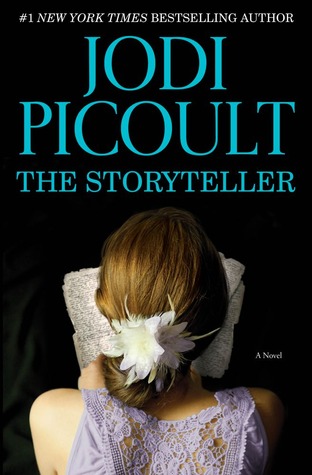
The Storyteller

(Goodreads): Sage Singer befriends an old man who’s particularly beloved in her community. Josef Weber is everyone’s favorite retired teacher and Little League coach. They strike up a friendship at the bakery where Sage works. One day he asks Sage for a favor: to kill him. Shocked, Sage refuses… and then he confesses his darkest secret—he deserves to die, because he was a Nazi SS guard. Complicating the matter? Sage’s grandmother is a Holocaust survivor.

What do you do when evil lives next door? Can someone who’s committed a truly heinous act ever atone for it with subsequent good behavior? Should you offer forgiveness to someone if you aren’t the party who was wronged? And most of all—if Sage even considers his request—is it murder, or justice?

How do I even begin to describe a book as powerful and devastating as The Storyteller? While I knew the basic premise, I had no idea what I was in for when I first started reading it.

At the outset, we meet Sage, a reclusive young woman bearing scars of a tragic accident that cost her her parents. Sage lives alone in a small town in New Hampshire, where she works nights — again, alone — baking a miraculous, marvelous assortment of breads for the small bakery that employs her. Baking is both Sage’s passion and an escape, providing her with distraction and a focus, as well as a good excuse to avoid almost everyone.

It’s silly to anthropomorphize bread, but I love the fact that it needs to sit quietly, to retreat from touch and noise and drama, in order to evolve.

I have to admit, I often feel that way myself.

Sage is forced out of her comfort zone only when she attends a grief support group, where she meets and befriends a newer member, Josef, a sweet old man in his 90s who seems to be just as lonely as Sage. Gradually, the two connect and begin to share bits and pieces of their lives, but Sage’s pleasure in the friendship grinds to a crashing halt when Josef confesses his Nazi past to Sage and asks her to help him die.

Sage is aware that her beloved grandmother Minka is a Holocaust survivor, and remembers catching a brief glimpse of the tattoo on her arm. But Minka has never said a word about her experiences and refuses to answer questions. Sage doesn’t know where to turn. Josef is a well-respected member of the community, a man known as an excellent teacher, kind to all, a man who always did his best to help the town. How can he be a Nazi? In desperation and disgust, Sage tries to connect with law enforcement, and is finally directed to the Federal agency which investigates alleged war criminals, where an agent named Leo Stein takes Sage’s call. Leo encourages Sage to get more information. It’s not enough to know that Josef has claimed to be a former SS agent. In order to take any action, they’ll need to be able to tie him to the historical records through facts, witness reports, or other details that can’t be fabricated.

Why is this book called The Storyteller? Within the novel, we get story upon story. The book opens with a scene that seems like something out of a different world — a tale with a folkloric flavor set in a small Polish village, in which the main character is the baker’s daughter, who feels a growing attraction to a strange young man who’s just arrived in the town, which is also beset by strange animal attacks. It’s not obvious, at first, how this tale, which weaves in between chapters of the contemporary story, actually fits into the main narrative, but it does, and is worth paying attention to.

After the initial section of the book sets up the story of Sage and Josef, we move into the heart of the book, which consists of two more sets of stories. First, we hear from Josef, who tells Sage that he is not Josef Weber after all, but Reiner Hartmann, an SS officer whom Leo is able to find in the historical record. Josef relates the story of his life to Sage, from his childhood in a typical German family to his growing success in Hitler Youth, to enrolling in the SS and becoming a part of the death machine that rolled through Poland. His story includes unflinching looks at the horrors in which he participated, slaughtering men, women, and children in village after village, and finally becoming a lead officer at Auschwitz, overseeing all female prisoners.

Josef’s confession to Sage isn’t enough, though. In order for Leo to take legal action and start the long process that could lead to extradition, deportation, and facing trial for his crimes, they need to be able to tie Josef’s story to something contained in the secret files on Reiner Hartmann, something that couldn’t have been gleaned from the public record. And at this point, Sage takes Leo to meet Minka — and Minka breaks her decades of silence by relating the terrible story of her girlhood, the fate of her family, and her own experiences in Auschwitz.

Minka’s story is the true center of the book, and Minka herself most aptly fits the role of the title, The Storyteller. Minka’s tale is lengthy, detailed, heartbreaking, and horrific. This is the longest section of the book, and is simply devastating to read. I won’t go into detail here; on the one hand, anyone who’s read the stories of Holocaust survivors will recognize some of the common elements here, yet on the other hand, Minka’s narrative is so personal and closely-observed that each loss and each degree of suffering feels like it happened to people we know. Within Minka’s narrative of what she lived through are more bits and pieces of the village tale that’s sprinkled throughout The Storyteller, and we finally discover the link between the book’s characters and the events of the tale.

The central question in The Storyteller is one of forgiveness and atonement. Can someone truly be forgiven for past crimes? Whose job, and whose right, is it to forgive? Can someone who’s committed evil acts ever make up for them? Do 50 years of helping others erase a heinous past? Does it make sense to prosecute a 95-year-old man for the crimes he committed almost seventy years earlier?

I don’t know what this person did you you, and I am not sure I want to. But forgiving isn’t something you do for someone else. It’s something you do for yourself. It’s saying, You’re not important enough to have a stranglehold on me. It’s saying, You don’t get to trap me in the past. I am worthy of a future.

There are no easy answers here. Sage does what she feels to be the right thing by bringing in Leo and cooperating in the investigation, yet she feels a moral obligation toward Josef too. When she looks at him, she sees the horrors he committed, but at the same time she see a lonely, frail old man who loves his dog and mourns his wife of fifty years. Can she feel sorry for him even while feeling repulsed by all she knows? And how does hearing her grandmother’s story affect her ability to listen to the request Josef continues to make of her?

While painting a vivid portrait of a period of history that must not be forgotten, the author is also making an important statement about the power of stories:

Fiction comes in all shapes and sizes. Secrets, lies, stories. We all tell them. Sometimes, because we hope to entertain. Sometimes, because we need to distract.

And sometimes, because we have to.

Jodi Picoult’s fiction tends not to come with easy answers. Of the four or five of her books which I’ve read, all include moral quandaries — people put in difficult or almost impossible positions, where the path forward is murky and ethical questions abound. The same is true of The Storyteller. There’s much food for thought here, and no matter what you think of Josef himself, his request, and Sage’s actions, you’ll definitely find yourself replaying scenes in your mind over and over. I’d imagine that the ending will be controversial for many, and there are certainly plenty of arguments to be made as to why it is or isn’t the right ending, or what the characters should or should not have done.

Ultimately, The Storyteller is a tale of pain and loss, but at the same time, it inspires hope simply by allowing the reader to bear witness to the courage and sacrifice that accompany all the horrors which Minka shares through her story. The Storyteller is not a light or easy read, but it’s an important one, and I applaud the author for creating a work of fiction that explores such a horrible piece of history with grace and honesty.

_________________________________________

The details:

Title: The Storyteller
Author: Jodi Picoult
Publisher: Atria
Publication date: February 26, 2013
Length: 460 pages
Genre: Contemporary fiction
Source: Purchased
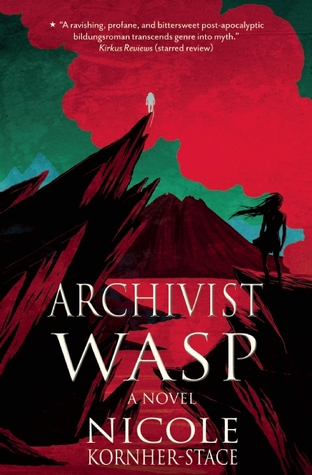
Archivist Wasp: My review… and some other opinions too.

Archivist WaspSynopsis:

(via Goodreads)

Wasp’s job is simple. Hunt ghosts. And every year she has to fight to remain Archivist. Desperate and alone, she strikes a bargain with the ghost of a supersoldier. She will go with him on his underworld hunt for the long-long ghost of his partner and in exchange she will find out more about his pre-apocalyptic world than any Archivist before her. And there is much to know. After all, Archivists are marked from birth to do the holy work of a goddess. They’re chosen. They’re special. Or so they’ve been told for four hundred years.

Archivist Wasp fears she is not the chosen one, that she won’t survive the trip to the underworld, that the brutal life she has escaped might be better than where she is going. There is only one way to find out.

My Thoughts:

I’m at a bit of a loss when it comes to summing up Archivist Wasp. My feelings are really contradictory. There’s quite a bit here that’s interesting and different, but I’m not sure that the plot as a whole holds together convincingly.

The opening chapters place the setting firmly in a primitive type of society, in a poor country village full of superstition and fear. The Archivist is the Chosen One (into every generation…), but each year, she fights upstarts (girls in training to be Archivist — for the Buffy fans out there, think “potentials”) in order to retain her position. The fight is to the death, bloody and terrible, watched and betted on by the townsfolk, all under the watchful eye of the Catchkeep-priest, who controls the upstarts and the Archivist. Catchkeep is the main god of this society, but there are others, such as Carrion Boy and Ember Girl. It’s startling, though, to see certain seemingly anachronistic elements intrude. Weaponry includes not just swords, but guns.

Guns? What’s going on here?

As becomes clear further in the story, this primitive society isn’t from an earlier era, but a later one. Reference is made to the Before, apparently before whatever cataclysmic event hundreds of years earlier erased the modern world as we know it. The world of Archivist Wasp is bleak and dismal — and plagued by a non-stop stream of ghosts. The job of the Archivist, when not fighting for her life, is to capture ghosts in jars, observe them and take field notes on their behavior, and then release them to Catchkeep, severing their links to the world of the living. The ghosts are silvery, small beings, yet some take on a more physical form and wreak havoc. How do you catch a ghost? With blood and salt. Them ghosties love salt, apparently — so much so that villagers are forbidden to keep any in their homes, for fear of attracting unwanted attention.

The action of Archivist Wasp kicks into high gear when Wasp captures a ghost that displays unusual strength, to the point that it can actually communicate with her. It’s the ghost of a soldier, and he wants Wasp’s help in finding the ghost of his former partner. To achieve this, they must travel into the underworld, through hidden portals and against great danger, with Wasp using her special harvesting knife to draw out hidden memories and find out the truth behind what happened to the soldier and his partner.

There’s a lot that’s interesting about this book, but my main stumbling blocks are these:

1 – Uneven pacing. Some chapters were impossible to look away from… but there are parts where the characters seem to just be slogging forward, one journey after another, with not much actually happening.

2 – Confusing world-building. We never do find out what happened to transform the world from what it was to what it is. We can make assumptions, but more details would have been helpful. Likewise, the underworld is a murky dreamscape with rules and properties that seem to change from moment to moment. It was unclear what to expect or why, and this left me with a sense that the stakes were artificial and potentially not really dangerous after all.

3 – Wasp’s community and her motivations. Why do Wasp and the other girls just accept their lot in life? Why does it never occur to them to challenge the system?

4 – The purpose of the Archivist. The actual goal is murky. Are they trying to learn from the ghosts? Banish the ghosts? And what does killing each other achieve? If they’re trying to learn as much as possible, why have only one?

5 – The ghosts. Where do they come from? Why are there so many? What would happen if the Archivist didn’t capture them and just left them to carry on? Why can ghosts wield swords and other weapons, carry physical objects, and inflict harm on living humans?

6 – The religion. I’d like to know more about how the local pantheon came to be and how the belief system was shaped. (I suppose this ties in with #2, the world-building.)

So many unanswered questions.

On the positive side, I liked the story of the super-soldier and his partner, and the tragedy that’s revealed as Wasp uncovers more and more of the ghost’s memories. That story alone would make a great book, and those sections of Archivist Wasp that dealt with this part of the plot are the most compelling.

I also enjoyed the parallels to the myth of Orpheus and Eurydice, although the similarities only go so far. The goal here is to free a ghost who can’t move on, not to return her to the land of the living, but still, the journey to the underworld is full of obstacles and dangers that give the quest a mythic, larger-than-life overtone.

Finally, toward the end of the book, we get more of an explanation about the origin of the Archivist system and the power of the Catchkeep-priest, and it’s a powerful origin story — but for me, it felt like it all came too late. By the time we get some answers, I felt mostly worn out by the story and the inconsistencies, and didn’t have the investment necessary to really care all that much about the outcome.

But Wait! Here are other other opinions:

Rather than just close with what I thought of Archivist Wasp, I thought I’d share some other viewpoints. I read this book because it was my book group’s pick for January, and several members of the group really loved the book. I want to share some of their comments, to give a slightly different take on the book and showcase a little more of the positive. (Comments below are in different colors to denote different commenters; quoted from our book group discussion)

I loved this book. There were some scenes which made me pause. One of my favorite scenes, and there are a number of them, is [spoiler deleted]. It’s so revealing of our own mindsets and how we need to open our minds, perhaps we need to cut the threads that bind us to old, stagnant ideas about our world.

I remember admiring Wasp for her compassion and willingness to help others despite her own awful circumstances. And, for figuring out how to help the other girls in her same situation (or I suppose the same as her past situation before she became the archivist), as well as the townspeople, all of whom were being taken advantage of by the Catchkeep Priest (who was just awful!).

The message of growing up and learning who you are and what you can achieve is important for teen girls to hear.

Wasp’s innate sensibilities and caring for her “charges” despite her own upbringing, or maybe because of it, make her a likable and sympathetic protagonist. She keeps going, trying to do the right thing despite personal consequences and little or no reward. That gives this story great heart; it’s also certainly very creative.

In the end, there did seem to be a message about challenging handed down beliefs and finding your own truth.

And a comment from the author herself:

If Wasp is remembered as a YA heroine, I’d like it to be because she’s a 16-year-old girl protagonist that managed to drive her own story without it hinging on a romance or a love triangle or a prophecy or any of these things that are perceived to be necessary to any and all YA plotlines, howsoever clumsily they have to be shoehorned in because they aren’t necessary. There are teenage girls out there who are a lot like Wasp. I was one. I was friends with others. I want her to do her small part to provide a little representation for them.

Wrapping it all up:

One thing I’ve discovered from my book group discussion (for which the author generously participated in a Q&A) is that Archivist Wasp is in fact the first in a trilogy. I think I might have felt slightly differently about some of the unanswered questions had I known that from the start, as then I might have expected some threads to be left dangling until the next books.

My own reading experience and opinion of the book hasn’t changed, but I do appreciate what I’ve gleaned from the Q&A and my book group friends’ opinions, and can see why this book might strongly appeal to teen readers and to adults who enjoy YA fiction.

_________________________________________

The details:

Title: Archivist Wasp
Author: Nicole Kornher-Stace
Publisher: Big Mouth House
Publication date: April 13, 2015
Length: 268 pages
Genre: Young adult fantasy
Source: Purchased

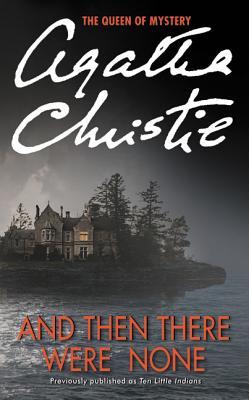
Agatha Christie, where have you been all my life?

I’ve finally read my first Agatha Christie book! What on earth was I waiting for?

and thenSynopsis:

(via Goodreads)

“Ten . . .”
Ten strangers are lured to an isolated island mansion off the Devon coast by a mysterious “U.N. Owen.”

“Nine . . .”
At dinner a recorded message accuses each of them in turn of having a guilty secret, and by the end of the night one of the guests is dead.

“Eight . . .”
Stranded by a violent storm, and haunted by a nursery rhyme counting down one by one . . . one by one they begin to die.

“Seven . . .”
Who among them is the killer and will any of them survive?

First, there were ten – a curious assortment of strangers summoned as weekend guests to a private island off the coast of Devon. Their host, an eccentric millionaire unknown to all of them, is nowhere to be found. All that the guests have in common is a wicked past they’re unwilling to reveal – and a secret that will seal their fate. For each has been marked for murder. One by one they fall prey. Before the weekend is out, there will be none. And only the dead are above suspicion.


My Thoughts:

How do I even begin to review a book like And Then There Were None? It’s a classic mystery, considered one of Christie’s best, for a reason. Having never read her books before, I was excited to see whether the build-up would pay off. Trust me, it did.

I was totally charmed by the clever plotting, the tricky twists, the seeds of doubt that accompanied every apparent clue. The drama of this book is so carefully constructed that even though I looked closely for the tip-off to the solution, I never found it.

The introduction in my edition is an excerpt from Agatha Christie’s autobiography, explaining the challenge of pulling off what she accomplishes in this book:

I wrote the book after a tremendous amount of planning, and I was pleased with what I had made of it. It was clear, straightforward, baffling, and yet had an epilogue in order to explain it. It was well received and reviewed, but the person who was really pleased with it was myself, for I knew better than any critic how difficult it had been.

I really enjoyed And Then There Were None, and I’m glad I chose it as an introduction to Agatha Christie. It’s a very quick read, almost begging to be finished in a day’s worth of binge-reading.

I’m looking forward to reading more of Christie’s books, and I’d love recommendations on any favorites!

_________________________________________

The details:

Title: And Then There Were None
Author: Agatha Christie
Publisher: HarperCollins
Publication date: 1939
Length: 300 pages
Genre: Mystery
Source: Purchased

Book Review: Lock In by John Scalzi

lock inSynopsis:

(via Goodreads)

Not too long from today, a new, highly contagious virus makes its way across the globe. Most who get sick experience nothing worse than flu, fever and headaches. But for the unlucky one percent – and nearly five million souls in the United States alone – the disease causes “Lock In”: Victims fully awake and aware, but unable to move or respond to stimulus. The disease affects young, old, rich, poor, people of every color and creed. The world changes to meet the challenge.

A quarter of a century later, in a world shaped by what’s now known as “Haden’s syndrome,” rookie FBI agent Chris Shane is paired with veteran agent Leslie Vann. The two of them are assigned what appears to be a Haden-related murder at the Watergate Hotel, with a suspect who is an “integrator” – someone who can let the locked in borrow their bodies for a time. If the Integrator was carrying a Haden client, then naming the suspect for the murder becomes that much more complicated.

But “complicated” doesn’t begin to describe it. As Shane and Vann began to unravel the threads of the murder, it becomes clear that the real mystery – and the real crime – is bigger than anyone could have imagined. The world of the locked in is changing, and with the change comes opportunities that the ambitious will seize at any cost. The investigation that began as a murder case takes Shane and Vann from the halls of corporate power to the virtual spaces of the locked in, and to the very heart of an emerging, surprising new human culture. It’s nothing you could have expected.


My Thoughts:

This book is crazy, and I mean that in the best way possible. I absolutely love the world created here, some 25 years or so into the future, where Hadens are now a part of society and the definition of being a person has changed dramatically.

Hadens are those who are in the long-term, seemingly irreversible “lock in” phase of Haden’s syndrome. Their bodies are alive and their minds are fully functional, but they have lost the ability to control or manage their voluntary systems. An entire industry has sprung up around the vast number of Hadens, resulting in the creation of neural networks and “threeps”. Hadens are implanted with a neural network in their brains, which gives them the ability to control a robotic form (known as a “threep”, named for C3PO) that moves in the “normal” world as an avatar of sorts. The body is still the actual person, but the threep is also a manifestation of the person, and conducts business and goes about life just the same as anyone else.

Battles have sprung up over Haden rights, government funding of Haden resources, and the issue of Haden separatism and culture. And what makes this book amazing and so fascinating is that this is all background to the actual plot — which revolves around a dead body, a murder investigation, and a newbie FBI agent, who just happens to be one of the most famous Hadens, thanks to a celebrity father and his early years as a Haden poster-child.

UnlockedOn top of the terrific plot and world-building, the writing is a treat. John Scalzi provides complex technical and medical details, but makes it comprehensible and accessible through the characters’ dialogue. The exposition feels natural, not like a lecture. On top of that, the characters are fully fleshed out, have distinct personalities, and some can be awfully funny, especially main character Chris Shane.

My reading tip is that before reading Lock In, it’s well worth your time to check out the novella that John Scalzi released just prior to the publication of Lock In. It’s called Unlocked: An Oral History of Haden’s Syndrome, and provides background on the onset, diagnosis, treatment, and political ramification of the disease. It’s utterly fascinating, and adds a lot to the understanding of Lock In, letting us jump right into the events of the novel without needing a whole lot of time or pages devoted to backstory.

Final word: Lock In is a bizarre and original science fiction/crime thriller mash-up, and I just loved it. My conclusion is that I haven’t read nearly enough John Scalzi yet in my life, and I need to fix that ASAP.

Oh, and a final, final world: While this book appears to be a stand-alone and I have no reason to think that it’s not, I could easily see an ongoing series revolving around Agents Shane and Vann and their crime-fighting adventures in a post-Haden world. John Scalzi, pretty please?

_________________________________________

The details:

Title: Lock In
Author: John Scalzi
Publisher: Tor Books
Publication date: August 26, 2014
Length: 336 pages
Genre: Science fiction
Source: Purchased

Twilight Reimagined: I said I wouldn’t, but then I did.

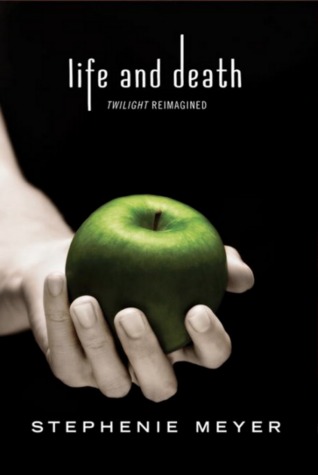
Life and DeathOkay, I’m not exactly eating my words… but I kind of am.

When the news came out last fall that Stephenie Meyer was publishing a gender-swapped version of Twilight, I scoffed. And sneered a bit. And declared that it was just a greedy money grab. And laughed at the idea of the author doing a search-and-replace in her word processor (let’s see, find “Bella”, replace with “Beau”… done!).

I swore that the evil corporate bloodsuckers (ugh, sorry) would not get my money this way!

They didn’t. No money changed hands. But I did read Life and Death after all.

Can you blame me? It was right there on the library shelf, practically daring me to take it home. And I’ll admit it — I was curious.

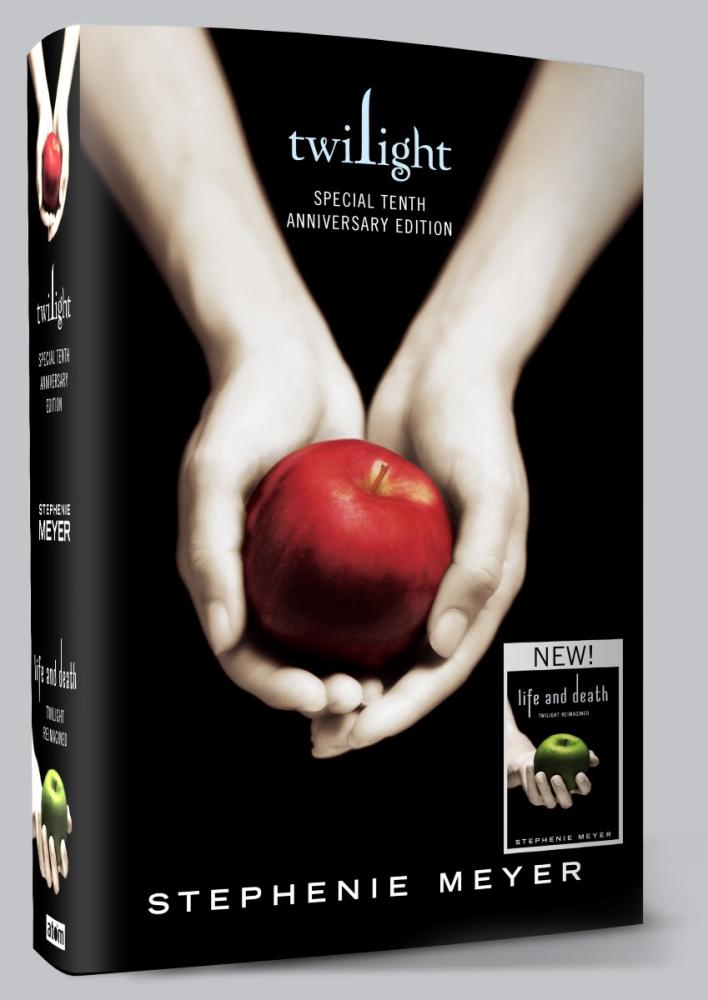
So, first things first. It’s not as evil a scheme as I expected it to be. Twilight might seem like a thing of the past by now — remember the hysteria? The crazed midnight release parties? The insatiable hunger for photos of RobPatz? But it’s actually only been ten years since the release of the first book, and what we have here is a “special tenth anniversary edition” of Twilight, packaged with the reimagined version.

This new anniversary edition is a big, hefty hardcover that’s a flip book. Read from one side, and it’s the original Twilight; read from the other end, and it’s Life and Death. This makes it convenient (-ish) when you get to an interlude that’s familiar but weirdly different, and you want to compare to the original. Insert bookmark, flip upside down, find the Twilight passage… huh. Not so different.twilight-special-tenth-anniversary-edition

Okay, so what’s the deal, and is it worth reading? Your mileage may vary. I think the thing to keep in mind is how you felt when you first read Twilight, before it became the pop culture phenomenon that swallowed up the world. I read the original book not knowing that it was a “thing”, and while I laughed at bits of it, I also couldn’t put the damned book down. It might have been candy, but it was awfully addictive candy.

In Life and Death, the genders of all characters are swapped (other than Charlie and Renee, who remain Charlie and Renee — the author explains why in her introduction, although I think it could have worked with a swap too). Bella is Beau, and Edward is Edythe; and they’re still more or less the same people. Beau is awkward and trips over his own feet a lot. Edythe is (of course) the most perfectly gorgeous person who ever existed, and still drives a shiny silver Volvo.

Little moments are changed. In Port Angeles, rather than Bella being pursued by a group of menacing men on the street, Beau stumbles across a bunch of drug dealers who assume he’s a cop and almost kill him. There’s rather a bit more bro talk among Beau and the guys at school, and we (thankfully) are spared scenes of them trying on tuxes to replace the girls’ dress shopping expedition.

Frankly, the gender swap thing is a tolerably cute gimmick, and it mostly works (although the image of Edythe running through the forest with a gangly Beau clinging to her back made me giggle). I was really only truly irritated at one point, when (in the original), Bella is impatient and needs distraction, so she heads outside to read in the yard with a stack of Jane Austen novels. In Life and Death, Beau brings his favorite Jules Verne… and I got all righteously offended for a good ten minutes. What do you mean, Jules Verne? Males can’t read Jane Austen??? I beg to differ!!!

Beyond that, it’s all mostly fine. If you like the original, you’ll probably enjoy the entertainment of reading this upside-down version of things, although to be honest, I kept forgetting who was supposed to be whom and occasionally forgot to picture Beau as a guy, or had to remind myself that Royal is Rosalie, and that the tracker vampire bad guy at the end is actually female. Whoops. Whatever.

I will say that the most fun aspect (which pretty much makes it worth your time, if you’re at all curious) is that the ending is different. I suppose I should not go into how or why… spoilers, don’t ya know? Suffice it to say that it works out differently, but still goes out with a bang. No loose threads here, so don’t expect any reimagined versions of New Moon, Eclipse, or Breaking Dawn.

And as to all the jokes about a gender swapped Renesmee (which here, I suppose would be something awful like Charnest? Earlie? …ugh…) — well, let’s just say that this ending makes the existence of a super-baby unnecessary.

Summing it all up: If you do feel the need to find out what this Twilight Reimagined business is all about — go ahead! It won’t hurt, I promise. It might even be a little bit fun. As light-weight pop entertainment goes, you could probably do worse.

_________________________________________

The details:

Title: Life and Death: Twilight Reimagined
Author: Stephenie Meyer
Publisher: Little, Brown
Publication date: October 6, 2015
Length: 389 pages
Genre: Young adult
Source: Library

Middle Grade Fiction: Woundabout by Lev Rosen

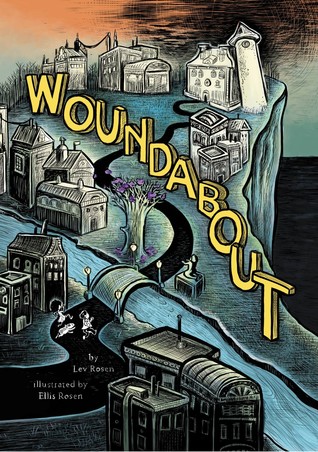
woundabout


Synopsis:

(via Goodreads)

Welcome to Woundabout, where routine rules and change is feared. But transformation is in the wind….

In the wake of tragedy, siblings Connor and Cordelia and their pet capybara are sent to the precariously perched town of Woundabout to live with their eccentric aunt. Woundabout is a place where the mayor has declared that routine rules above all, and no one is allowed to ask questions–because they should already know the answers.

But Connor and Cordelia can’t help their curiosity when they discover a mysterious crank that fits into certain parts of the town, and by winding the crank, places are transformed into something beautiful. When the townspeople see this transformation, they don’t see beauty–they only see change. And change, the mayor says, is something to fear. With the mayor hot on their trail, can Connor and Cordelia find a way to wind Woundabout back to life?


My Thoughts:

I can’t say enough about this wonderful middle grade novel! Woundabout is the touching — yet not heavy — story of orphaned siblings Connor and Cordelia, who go to live with their aunt Marigold in the very weird town of Woundabout after the death of their parents. Woundabout is a strange, strange place, under the firm control of a dictatorial mayor who hates questions and any deviation from routine. The park is brown and dried up, the river barely flows, and wind constantly buffets the cliffs of the town. Connor and Cordelia, still reeling from their loss, have to adjust to their new lives, and decide to figure out the mysteries of Woundabout, both as diversion and to see if they can somehow find a place for themselves.

The writing is wonderful. There’s humor and a light touch, even on the darkest of subjects. I love the portrayal of Connor and Cordelia (ages 11 and 9), who are tightly bonded, yet each have their own personality and interests. There’s a recurring theme in the writing that takes shared moments and shows how each child sees it:

When the meal was finished, as she had promised, Aunt Marigold took the children into the living room, where they sat on either side of her on a big green sofa and looked at the photos in the album on her lap. It was weird seeing their dad at their age. Connor would have said it was like X-ray vision you couldn’t turn off — seeing through buildings to the beams and metal holding them up; Cordelia would have said it was like uploading your photos to your computer and finding a whole group of pictures you didn’t take. But they both knew it was the same thing.

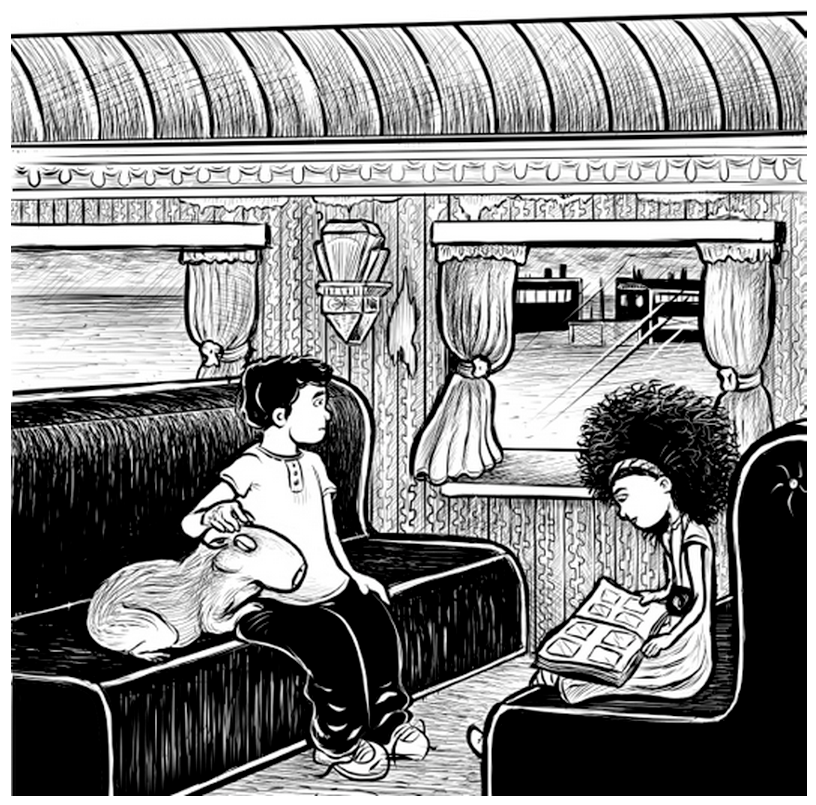
The author and illustrator, who are brothers, are clearly in sync. The marvelous black and white illustrations throughout the book are wonderfully detailed and expressive, and perfectly capture the personalities of the characters and the town.

Woundabout_Siblings_p6

Cordelia and Connor — and Kip, the capybara.

I picked up Woundabout because the author, Lev AC Rosen, has written two excellent books for adults, All Men of Genius and Depth (review), both of which I love and always end up recommending to people. How could I not read his fiction for kids as well?

Woundabout is a terrific read — whether you’re an adult who enjoys reading good children’s books for your own enjoyment, or you’re looking for a book to share with the younger folks in your life, or you want a book to give to a young reader. Woundabout strikes me as a good choice for an adult/child read-aloud, or a great book for an independent reader in the 8 – 12 age range (or so — I hate pinning a label on a book that older and younger kids would enjoy too.)

Check it out… for yourself, or for a kid you’d like to treat to a great read.

_________________________________________

The details:

Title: Woundabout
Author: Lev Rosen
Illustrator: Ellis Rosen
Publisher: Little, Brown Books for Young Readers
Publication date: June 23, 2015
Length: 288 pages
Genre: Middle grade fiction
Source: Library

Take A Peek Book Review: Named of the Dragon by Susanna Kearsley

“Take a Peek” book reviews are short and (possibly) sweet, keeping the commentary brief and providing a little peek at what the book’s about and what I thought.

Named of the Dragon

Synopsis:

(via Goodreads)

Although it goes against her workaholic nature, literary agent Lyn Ravenshaw lets herself be whisked off to Wales for the Christmas holidays by her star client, flamboyant children’s author Bridget Cooper. She suspects Bridget has ulterior motives, but the lure of South Wales with its castles and myths is irresistible. Perhaps a change of scene will bring relief from the nightmares that have plagued her since the death of her child.

Lyn immerses herself in the peace and quiet of the charming Welsh village, but she soon meets an eccentric young widow who’s concerned her baby son is in danger—and inexplicably thinks Lyn is the child’s protector.

Lyn’s dreams become more and more disturbing as she forms a surprisingly warm friendship with a reclusive, brooding playwright, and is pulled into an ancient world of Arthurian legend and dangerous prophecies. Before she can escape her nightmares, she must uncover the secret of her dreams, which is somehow inextricably located in a time long ago and far away…

My Thoughts:

I’m a big fan of Susanna Kearsley’s books, but this one was only a so-so read for me. Named of the Dragon is one of the author’s earlier books (originally published 1998), reissued by Sourcebooks in 2015 with a gorgeous cover to match all the rest of her beautiful volumes. The story itself held my attention, but barely. Set in Wales, it’s the story of a literary agent who agrees to spend Christmas with her top client in order to woo another bestselling author, and ends up getting caught up in a local woman’s domestic crisis. There’s a running theme of Welsh legends and Arthurian symbolism… and no Susanna Kearsley novel would be complete without romance, especially with a brooding, seemingly unreachable and mysterious man.

The Arthurian bits and the dream symbolism struck me as overwrought in this book, and mostly unnecessary to the main focus of the plot. These elements add a hint of the gothic and supernatural, yet come across as densely written and somewhat distracting. Lyn herself did not strike me as a believable character — her professional status seemed unrealistic to me, and the whole setting of the Christmas holiday with her client and her clients’ friends felt a bit forced.

Named of the Dragon is not a bad read in the least, but it doesn’t reach the heights of some of the author’s best works, and perhaps that’s why I experienced it as a letdown.

_________________________________________

The details:

Title: Named of the Dragon
Author: Susanna Kearsley
Publisher: Sourcebooks Landmark
Publication date: Reissued October 6, 2015 (originally published 1998)
Length: 336 pages
Genre: Romance
Source: Purchased

Take A Peek Book Review: The Rest of Us Just Live Here by Patrick Ness

“Take a Peek” book reviews are short and (possibly) sweet, keeping the commentary brief and providing a little peek at what the book’s about and what I thought.

The Rest of Us

Synopsis:

(via Goodreads)

What if you aren’t the Chosen One? The one who’s supposed to fight the zombies, or the soul-eating ghosts, or whatever the heck this new thing is, with the blue lights and the death?

What if you’re like Mikey? Who just wants to graduate and go to prom and maybe finally work up the courage to ask Henna out before someone goes and blows up the high school. Again.

Because sometimes there are problems bigger than this week’s end of the world, and sometimes you just have to find the extraordinary in your ordinary life.

Even if your best friend is worshipped by mountain lions.

Award-winning writer Patrick Ness’s bold and irreverent novel powerfully reminds us that there are many different types of remarkable.


My Thoughts:

I loved quite a bit of this book, but was left with an overall “meh” feeling by the end. I thought the set-up was pretty brilliant. Think of Buffy and her gang of Scoobies. Now think of all the other kids who weren’t running around staking vampires or chasing demons. The characters in The Rest of Us Just Live Here are the equivalent of all the Sunnydale High students who aren’t part of Buffy’s gang — the kids who just want to graduate, enjoy prom, and chill with their friends, despite all the end-of-the-world shenanigans happening in the world of the chosen, special kids.

Everyone knows the indie kids don’t use the internet — have you noticed? They never do, it’s weird, like it never occurs to them, like it’s still 1985 and there’s only card catalogs — so we can’t find them discussing anything online. The vibe seems to be that it’s totally not our business. Historically, non-indie kids were pretty much left alone by the vampires and the soul-eating ghosts, so maybe they have a point.

The main character and his friends and family are all interesting and quirky, with their own challenges and gifts, and they just kind of notice that in the background of their more immediate crises, the “indie” kids (hilariously named Satchel, Dylan, and Finn, Finn, and Finn — there are lots of Finns) are being chased through the woods by zombie deer and bizarre columns of blue light keep appearing in their town.

“Listen to me,” he says, sounding angry. “We’ve got prom, we’ve got graduation, we’ve got the summer. Then everything changes. Are you going to live all that time until we go afraid?”

“Probably.”

“Please don’t.” He’s still weirdly angry. “Not everyone has to the be Chosen One. Not everyone has to be the guy who saves the world. Most people just have to live their lives the best they can, doing the things that are great for them, having great friends, trying to make their lives better, loving people properly. All the while knowing that the world makes no sense but trying to find a way to be happy anyway.”

The Rest of Us Just Live Here shows how all kids (all people, really) are the center of their own worlds, and that even if you’re not the one who saves the world, your problems and issues matter too. There are some really nice elements about loyalty, friendship, and protecting the people you love, but somehow, the book didn’t really come together for me or deliver on its early promise. The writing is clever, funny, and touching, but the end left me feeling a bit unsatisfied.
_________________________________________

The details:

Title: The Rest of Us Just Live Here
Author: Patrick Ness
Publisher: Harper Teen
Publication date: October 6, 2015
Length: 336 pages
Genre: Young adult fiction
Source: Purchased

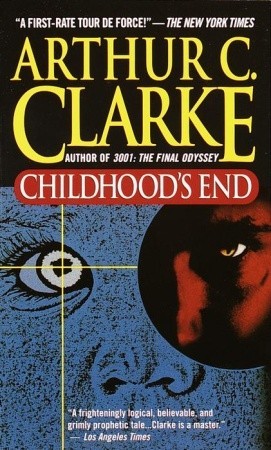
Take A Peek Book Review: Childhood’s End by Arthur C. Clarke

“Take a Peek” book reviews are short and (possibly) sweet, keeping the commentary brief and providing a little peek at what the book’s about and what I thought.

Childhoods End


Synopsis:

(via Goodreads)

The Overlords appeared suddenly over every city–intellectually, technologically, and militarily superior to humankind. Benevolent, they made few demands: unify earth, eliminate poverty, and end war. With little rebellion, humankind agreed, and a golden age began.

But at what cost? With the advent of peace, man ceases to strive for creative greatness, and a malaise settles over the human race. To those who resist, it becomes evident that the Overlords have an agenda of their own. As civilization approaches the crossroads, will the Overlords spell the end for humankind… or the beginning?


My Thoughts:

I’m so glad to have read this sci-fi classic! I recently watched the incredibly well-done TV version of Childhood’s End (a three-part mini-series on Syfy), and couldn’t wait to read the original novel for more insights and explanations.

Where to start? The book differs from the TV show in many ways, but the overall storyline remains more or less the same. In some ways, the book has fewer big, dramatic set-pieces, and we get less involved with certain characters or places. The book is a story of all of Earth and the fate of mankind. It’s fascinating to see the evolving relationship between the humans and Overlords, and what this relationship will mean for the next chapter of life on Earth.

The writing is intelligent and though-provoking. We see the events unfold through many different characters’ perspectives, and come to understand the role of the Overlords as well as the way Earth’s inhabitants grow over the years from fear to acceptance, curiosity to complaisance.

The moment of the Overlords’ arrival, as seen by an astrophysicist, is an early indication this book is really something special:

He felt no regrets as the work of a lifetime was swept away. He had labored to take man to the stars, and, in the moment of success, the stars — the aloof, indifferent stars — had come to him. This was the moment when history held its breath, and the present sheared asunder from the past as an iceberg splits from its frozen, parent cliffs, and goes sailing out to sea in lonely pride. All that the past ages had achieved was as nothing now: only one thought echoed and re-echoed through Reinhold’s brain:

The human race was no longer alone.

If you’re interested in classic science fiction, this is a great place to start. While it was written in 1953, Childhood’s End really does not feel dated. As an aside, at least one small moment where a character expressed dissatisfaction with what passes for the arts in this golden age seems quite prescient:

Do you realize that every day something like five hundred hours of radio and TV pour out over the various channels? If you went without sleep and did nothing else, you could follow less than a twentieth of the entertainment that’s available at the turn of a switch! No wonder that people are becoming passive sponges — absorbing but never creating. Did you know that the average viewing time per person is now three hours a day? Soon people won’t be living their own lives any more. It will be a full-time job keeping up with the various family serials on TV!

Childhood’s End is fascinating, beautifully written, and with so much food for thought and discussion. Highly recommended!

_________________________________________

The details:

Title: Childhood’s End
Author: Arthur C. Clarke
Publisher: Del Rey
Publication date: 1953
Length: 212 pages
Genre: Science fiction
Source: Purchased

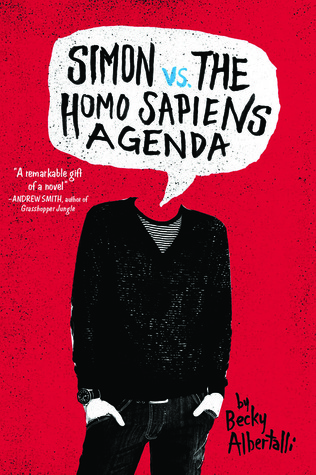
Book Review: Simon vs. the Homo Sapiens Agenda by Becky Albertalli

SimonI dare anyone to read this book and not fall at least a little bit in love with Simon, the main character of this sweet, funny, touching young adult novel.

Simon is a 17-year-old high school junior, a good student, in the school musical (Oliver!), and with a reliable circle of friends, among them his life-long besties Nick and Leah and his new BFF Abby. What Simon hasn’t shared with anyone is that he’s gay. It’s not that he’s unsure — he’s quite, quite certain about his identity. He’s just not quite ready to stop being private and have to deal with the reactions he’s sure to face.

But life gets complicated. On the Tumblr where students from his school share secrets, he’s found a kindred spirit — a kind, smart boy going by the name of Blue, who is also a junior at the same school. Simon and Blue start an intense email correspondence, each using his “secret” gmail account to maintain anonymity. Over the course of the weeks and then months since they began emailing, they’ve opened up to one another to  a remarkable degree. Simon wants to meet; Blue isn’t sure that it’s a good idea.

And then Simon makes the ultimate online error — he checks his email using the computers in the school library and forgets to log back out. Before long, he’s facing a geeky, awkward student named Martin who lets Simon know that he has screenshots of his emails and will let the entire school know that Simon’s gay unless Simon helps him get Abby to go out with him. It’s blackmail, but carried out with a smile. Martin refuses to see that he’s doing something evil, and apart from this unforgivable act, Martin isn’t a terrible person or a bully, which makes it all the more confusing for Simon.

Simon himself is a sweetheart. He’s funny and smart, tries to do the right thing, and has good intentions, although he still manages to hurt some of his friends along the way. Above all, he’s a boy who’s falling in love with someone from the inside out, learning everything about Blue but still not knowing which of the boys he sees at school everyday is the actual man of his dreams.

Simon’s voice in the novel is engaging and full of humor. Even in his moments of doubt or discouragement, he’s funny as hell.

I take a sip of my beer, and it’s — I mean, it’s just astonishingly disgusting. I don’t think I was expecting it to taste like ice cream, but holy fucking hell. People lie and get fake IDs and sneak into bars, and for this? […] Anyway, it really makes you worry about all the hype surrounding sex.

Simon’s email flirtation with Blue is incredibly adorable:

I’m glad I was cute and grammatical. I think you’re cute and grammatical, too.

The truth eventually comes out, and Simon comes out, and all is finally revealed. I don’t want to say more, because seeing it unfold is a big part of the fun.

Beneath all the humor and cute teen escapades are real feelings, beautifully expressed, about family, identity, safety, trust, and friendship. Simon’s journey in Simon vs. the Homo Sapiens Agenda involves sharing himself, really and truly, with the people in his life, and pursuing his truth even when it means taking risks.

It’s a lovely and engaging story, full of flirting and happy moments as well as heartache, and I loved every bit of it. Highly recommended — check it out!

_________________________________________

The details:

Title: Simon vs. the Homo Sapiens Agenda
Author: Becky Albertalli
Publisher: Balzer + Bray
Publication date: April 7, 2015
Length: 303 pages
Genre: Young adult fiction
Source: Purchased