Take A Peek Book Review: Less Than a Treason (Kate Shugak, #21) by Dana Stabenow

“Take a Peek” book reviews are short and (possibly) sweet, keeping the commentary brief and providing a little peek at what the book’s about and what I thought.


Synopsis:

(via Goodreads)

Kate Shugak is a native Aleut working as a private investigator in Alaska. She’s 5 foot 1 inch tall, carries a scar that runs from ear to ear across her throat and owns a half-wolf, half-husky dog named Mutt. Resourceful, strong-willed, defiant, Kate is tougher than your average heroine – and she needs to be to survive the worst the Alaskan wilds can throw at her.

Two thousand people go missing in Alaska every year. They vanish in the middle of mountain footraces, on fishing boats in the Bering Sea, on small planes in the Bush. Now a geologist known for going walkabout with his rock hammer has disappeared from the Suulutaq Mine in the Park. Was it deliberate? An accident? Foul play? Kate Shugak may be the only person who can find out.

But for the fact that Kate, too, is now among the missing…

My Thoughts:

Kate is back! Kate is back! Kate is back!

Yes, I’m excited. And yes, I loved this book!

If you’ve read my blog at all over the last couple of years, then you may know that I developed a full-on obsession for Dana Stabenow’s amazing Kate Shugak series. Kate is tough, devoted, smart, and resilient, and lives in one of the most beautiful places in the world. In the Kate Shugak series, the author serves up mystery after mystery — but really, what pulls me back for book after book is Kate herself, the “Park rats” who make up the tiny community in Niniltna, the troopers and cops and aunties and pilots who form the backbone of Kate’s world, and the richly entangled storytelling that builds up over the course of the series.

We’re now 21 books in (plus the Liam Campbell series of 4 books, which somewhat intersect with the Kate books and add yet another facet to her world). The series is still going strong. I gobbled up the previous 20 books (and the 4 Liams) in something like 18 months, and then was bereft over having to wait for Kate’s return, especially as #20 ended with a super cruel cliffhanger.

Well, now my girl is back! The mystery in #21 is standard Kate fare (mining, ore rights, missing persons); the real treat is in seeing Kate recovering from a traumatic event and reconnecting with all the various people who love her. All the old favorites are here — Bobby, Dinah, Katya, the aunties, and more — and Kate’s love interest Jim is as devoted (and hot) as ever. There are call-backs to earlier episodes, and some hair-raising action scenes, but mostly Less Than a Treason is a delight simply because we see Kate reclaiming her place in her own life and community.

Ah. I love these books, and I love the characters. This one made me so, so very happy, and I adored the ending too. I can only sit here now and hope and pray that Kate Shugak will live on in many, many, many more books. Do you hear me, Dana Stabenow??? I want more Kate, now and forever, amen.

Reading note 01 – The Kate books are full of super fun pop culture, literary, and musical references, and this one is no exception. Watch out for a selection in my Thursday Quotables post this week.

Reading note 02 – In case it’s not perfectly obvious, the books in this series do not — in my humble opinion — work as stand-alones. There’s simply too much world-building, full of rich and varied characters with unique and often complicatedly interconnected backstories, to be able to jump in with book #21! So take my advice, start at the beginning, and enjoy!

Reaidng note 03 — I’ll never get tired of Dana Stabenow’s gorgeous descriptions of Alaskan wildlife and scenery, even though she makes me mad that I’m not there right at this very moment!

_________________________________________

The details:

Title: Less Than a Treason
Author: Dana Stabenow
Publisher: Head of Zeus
Publication date: May 6, 2017
Length: 320 pages
Genre: Mystery
Source: Purchased
Save

Save

Save

Save

Save

Save

Save

Save

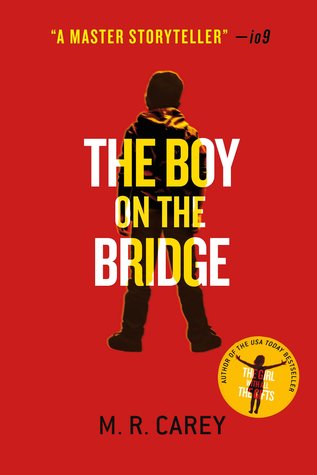
Book Review: The Boy on the Bridge by M. R. Carey

In the 2014 book The Girl With All the Gifts, author M. R. Carey introduced us to a terrifying world in which humanity has been overrun by “hungries” — humans turned into zombies after being infected by a virulent and unstoppable fungus. At an isolated army base in England, a military and medical crew work with a bunch of young hungries, who seem to be a different sort of species, still drawn to flesh for sustenance but able to speak, think, and feel as humans do. (If you haven’t read The Girl With All the Gifts, you need to check it out! My book review is here. The movie is worth seeing too!)

The new release The Boy on the Bridge is a prequel to The Girl With All the Gifts, set about 10 years earlier. Humanity has already been decimated by the Hungry plague, and the remaining humans in England live in a barricaded settlement called the Beacon. The Beacon sends out a team of scientists and soldiers in an armored vehicle, the Rosalind Franklin, to travel the country, collect samples, and search for some sort of cure or treatment for the plague — likely a hopeless cause.

The crew is an uneasy mix of career soldiers and geeky scientists, plus a gifted teen boy, Stephen Greaves, who is considered by most of the crewmembers to be possibly autistic, definitely odd, and generally a burden. The exception to this is Dr. Samrina Khan – Rina — who insisted on bringing Stephen along for the mission, and who acts as a surrogate mother to the boy. Stephen is brilliant, and Rina considers him to be crucial to any chance of making a scientific breakthrough.

We spend the entire book on the journey aboard Rosie, getting to know the crew as they bump along the countryside in very cramped quarters. There are rivalries and resentments, and the enormous pressure of knowing that they may be humanity’s last hope. The team is constantly in danger as well. Beyond taking samples, they venture outside of Rosie’s safety to do cullings along the way — basically, using their firepower to mow down as many hungries as possible.

The scenes of dormant hungries just standing wherever they happen to be, motionless and inert until triggered by movement or smell, are frightening and creepy. The danger is always present, and the reading experience can be almost as claustrophobic as it must be traveling inside Rosie.

I found the book to be slow at first, as it takes a while to get to know the twelve team members as individuals, and the first half or so of the book occasionally feels like one really unpleasant road trip. However, once the team encounters a group of feral children, the tension and the mystery definitely amp up. Who are these children, and where did they come from? What do they want… and can they be stopped? Meanwhile, Stephen and Rina each have secret agendas, and as the plot moves forward, their struggles become the central focus.

I spent much of the book wondering how this story would connect to The Girl With All the Gifts, and by the end, it becomes clear in a way that’s satisfying. The climax is action-packed and dramatic, and I was happy with the resolution presented in the epilogue.

I wouldn’t rate this one as high as the first book, but I did find it an enjoyable, entertaining read. Needless to say, it’s not for the squeamish — but if you enjoy a good twist on a a zombie apocalypse, check out The Boy on the Bridge.

Side note: The title doesn’t make a whole lot of sense to me, and neither does the book’s synopsis as it appears on Goodreads. So ignore those, and just read the book anyway!

_________________________________________

The details:

Title: The Boy on the Bridge
Author: M. R. Carey
Publisher: Orbit
Publication date: May 2, 2017
Length: 392 pages
Genre: Horror
Source: Review copy courtesy of the publisher

Save

Save

Save

Save

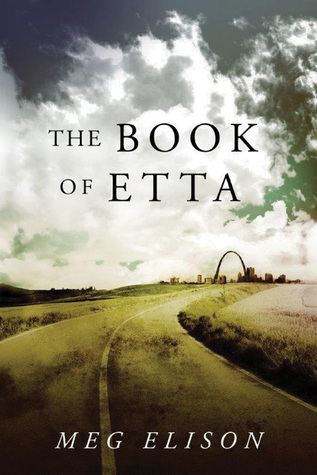
Book Review: The Book of Etta by Meg Elison


In the gripping sequel to the Philip K. Dick Award-winning novel The Book of the Unnamed Midwife, one woman undertakes a desperate journey to rescue the future.

Etta comes from Nowhere, a village of survivors of the great plague that wiped away the world that was. In the world that is, women are scarce and childbearing is dangerous…yet desperately necessary for humankind’s future. Mothers and midwives are sacred, but Etta has a different calling. As a scavenger. Loyal to the village but living on her own terms, Etta roams the desolate territory beyond: salvaging useful relics of the ruined past and braving the threat of brutal slave traders, who are seeking women and girls to sell and subjugate.

When slavers seize those she loves, Etta vows to release and avenge them. But her mission will lead her to the stronghold of the Lion—a tyrant who dominates the innocent with terror and violence. There, with no allies and few weapons besides her wits and will, she will risk both body and spirit not only to save lives but also to liberate a new world’s destiny.

The Book of Etta is an interesting follow-up to The Book of the Unnamed Midwife (review), but I didn’t wholeheartedly love it. It’s incredibly interesting and compelling, but there are ways in which I felt it fell a bit short of its potential.

Etta takes place a couple of hundred years after the plague, and it’s fascinating to see how written and oral histories capture the time before and the new types of societies that have arisen afterward. The people living at the time of Etta live mostly in isolated settlements, relying on the rare traveler or trader for outside news, mainly ignorant of anything happening in the greater world or really anything outside their own communities’ walls.

In Nowhere, Etta’s home, women are either Midwives or Mothers. While there are far more men than women, the men are subservient, working for the good of the women and living in Hives built around a central woman. The books left by the unnamed midwife have become holy scriptures to the people of Nowhere, and make clear that most surviving women live as slaves, in abusive situations, or in hiding.

Nowhere seems ideal in some ways, yet even there, Etta feels stifled. As we learn in The Book of Etta, Etta’s gender identity is fluid and she’s romantically and sexually attracted to women, and there’s really no place in the Nowhere community for someone who doesn’t fit the approved roles, even in a woman-centric society.

When Etta ventures out into the world in her role as a raider, she changes into male clothing and thinks of herself as Eddy. The author switches pronouns when Etta is Eddy, which is actually a pretty neat narrative trick that requires the reader to pay attention, yet gives us immediate clues about Etta/Eddy’s inner life and how she/he views her/his self at any moment. Through Etta/Eddy’s eyes, we see just how bad things can get for women. The worst is Estiel (STL = St. Louis), where a tyrant known as the Lion rules by force and terror, holds all females captive for breeding and sex, and raids outlying areas to take any females he can find, including babies and toddlers. Many women are “cut”, and many are drugged or beaten into submission as part of the Lion’s harem. In other communities, the men and women live separately, with men being allowed into the women’s zone for breeding rituals. Young boys may be catamites, castrated and forced into sexual servitude. Each community shows a different aspect of the horrors of the time. Through Etta/Eddy’s journey, we see what may be a hopeless yearning to find a place where labels and rigidly assigned roles are a thing of the past.

The plot is fast-paced and hard to look away from. And yet, there are certain things that made this book not quite successful for me. The Etta/Eddy distinction is interesting, but we end up spending too much time in Etta’s head, often to the detriment of the story’s continuity. It’s not entirely clear to me why Nowhere’s society would frown on relationships between women the way it does, other than a need to show that even a matriarchal power structure contains its own restrictions and limitations. A segment later in the book centers on a community that it literally underground, living in a series of tunnels and bunkers completely hidden below the earth. It’s quite interesting, but certain aspects of that society — its abundant fertility and the role of its leader and prophet — need more explanation, especially as Alma (the prophet) seems to have abilities that verge on the magical, an odd choice in a dystopian novel.

There are some truly horrifying scenes of abuse and rape. This is not an easy or pleasant book. I was reminded in some parts of Octavia Butler’s outstanding (and brutal) books, The Parable of the Sower and The Parable of the Talents.

The Book of Etta has an open ending, as one chapter of Etta’s world ends and the next has yet to be written. The author is working on book 3, The Book of Flora, which I’m very much looking forward to, as Flora is a fascinating and complex character who enters Etta’s life in this book, and clearly has her own story to be told.

All in all, I’m glad that I read The Book of Etta and plan to continue with the trilogy, even though the writing verges on being preachy from time to time. It’s still an interesting look at a terrible vision of the future, and provides some thought-provoking scenarios about gender and identity.

_________________________________________

The details:

Title: The Book of Etta
Author: Meg Elison
Publisher: 47North
Publication date: February 21, 2017
Length: 316 pages
Genre: Dystopian/post-apocalyptic
Source: Review copy courtesy of the publisher via NetGalley

Save

Save

Save

Save

A Miniature Review of Miniatures by John Scalzi

The ex-planet Pluto has a few choice words about being thrown out of the solar system. A listing of alternate histories tells you all the various ways Hitler has died. A lawyer sues an interplanetary union for dangerous working conditions. And four artificial intelligences explain, in increasingly worrying detail, how they plan not to destroy humanity.

Welcome to Miniatures: The Very Short Fiction of John Scalzi.

These four stories, along with fourteen other pieces, have one thing in common: They’re short, sharp, and to the point—science fiction in miniature, with none of the stories longer than 2,300 words. But in that short space exist entire universes, absurd situations, and the sort of futuristic humor that propelled Scalzi to a Hugo with his novel Redshirts. Not to mention yogurt taking over the world (as it would).

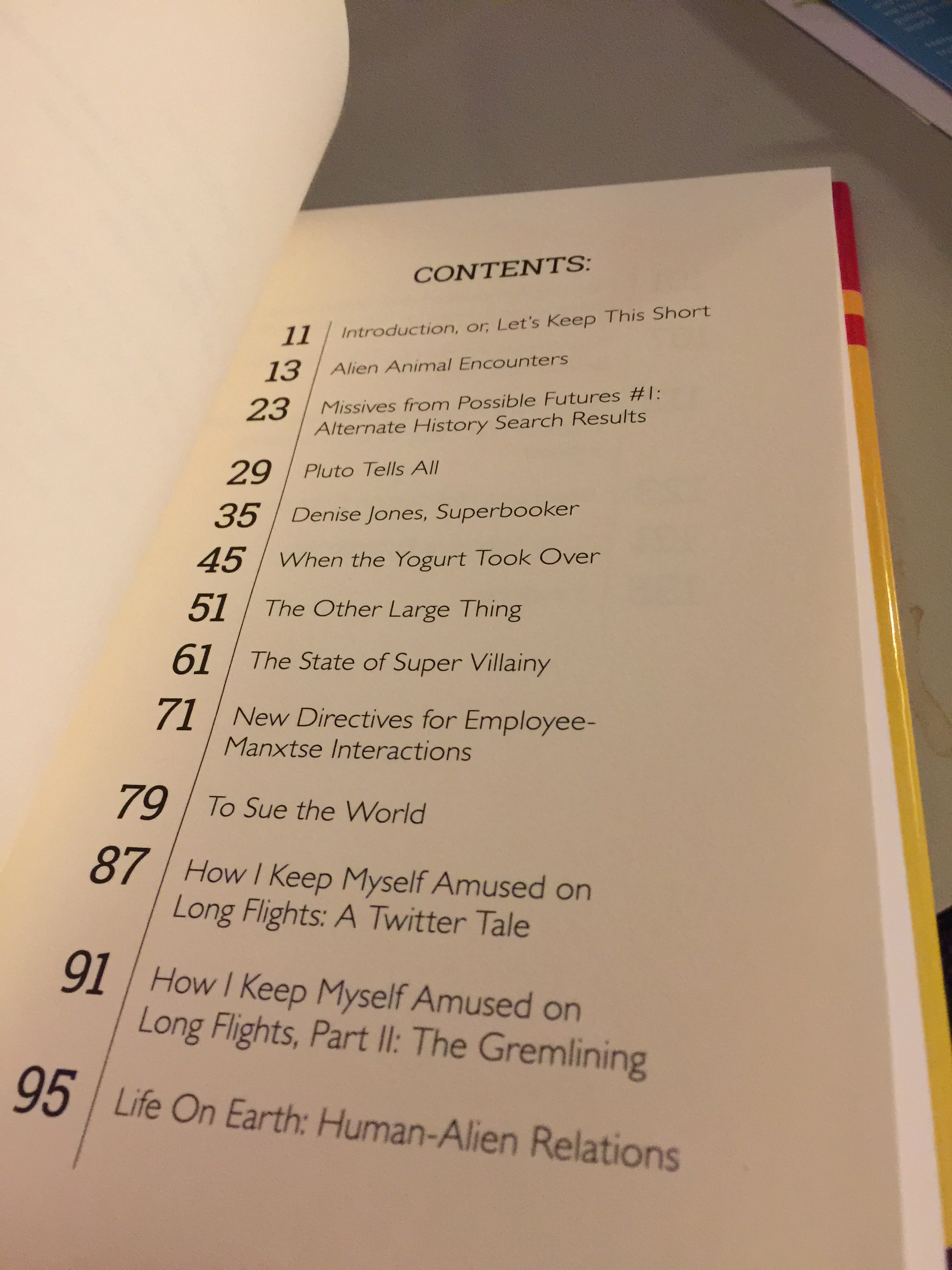
Spanning the years from 1991 to 2016, this collection is a quarter century of Scalzi at his briefest and best, and features four never-before-printed stories, exclusive to this collection: “Morning Announcements at the Lucas Interspecies School for Troubled Youth,” “Your Smart Appliances Talk About You Behind Your Back,” “Important Holidays on Gronghu” and “The AI Are Absolutely Positively Without a Doubt Not Here to End Humanity, Honest.”

Okay, if those story titles don’t already have you laughing til your belly aches, then this may not be the book for you.

For me, it was perfect! John Scalzi’s science fiction never lets me down, and these (very) short pieces are just a treat. Funny, creative, unexpected, and silly, there’s plenty here to tickle and delight (unless you’re a total curmudgeon and have no patience for silliness… in which case, move along. Nothing to see here.)

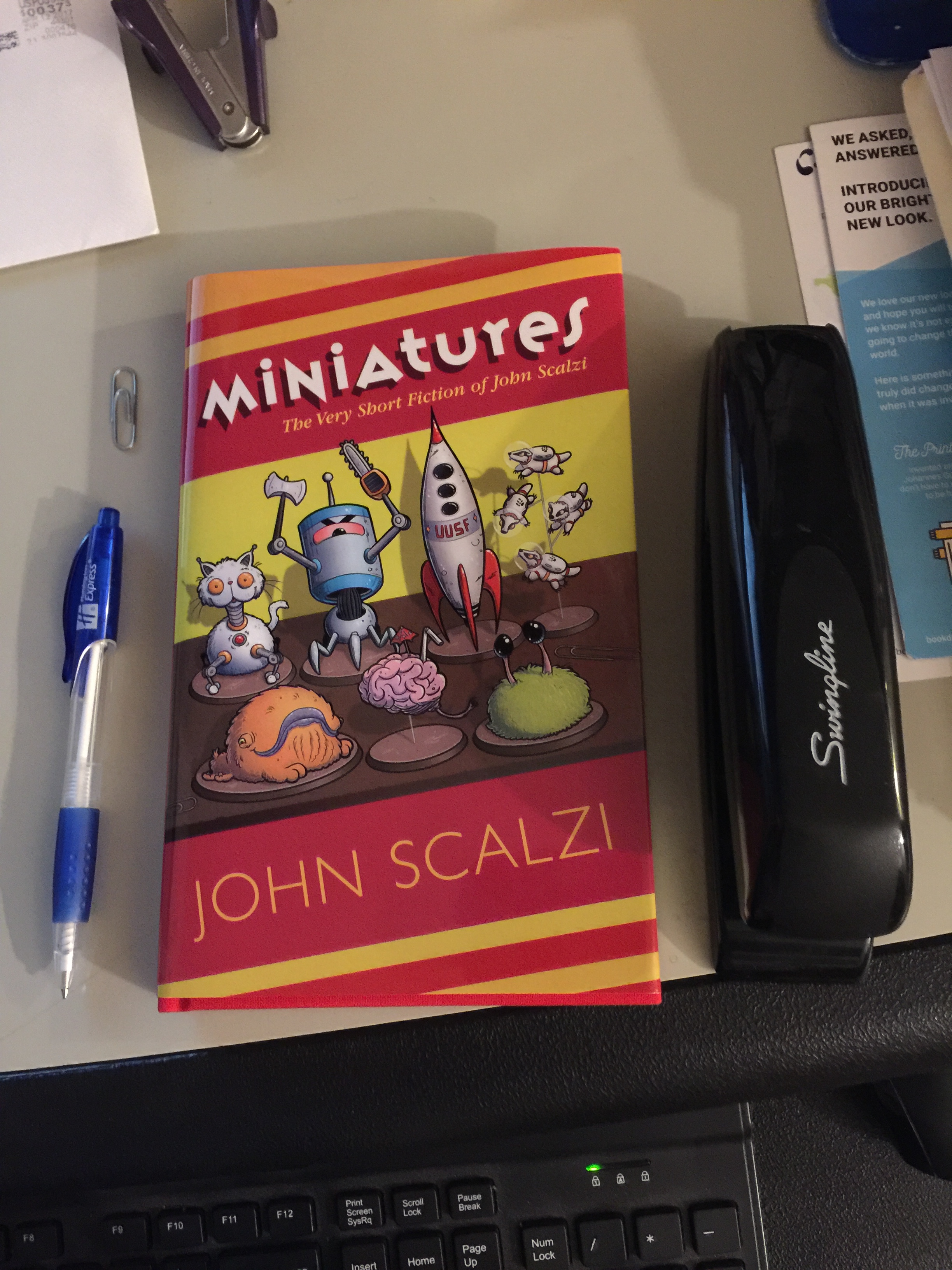
The book itself is adorable, slightly smaller than usual for a hardcover (here’s a photo of my book plus some desk accessories, to give you a sense of scale without forcing me to get up and leave my desk):

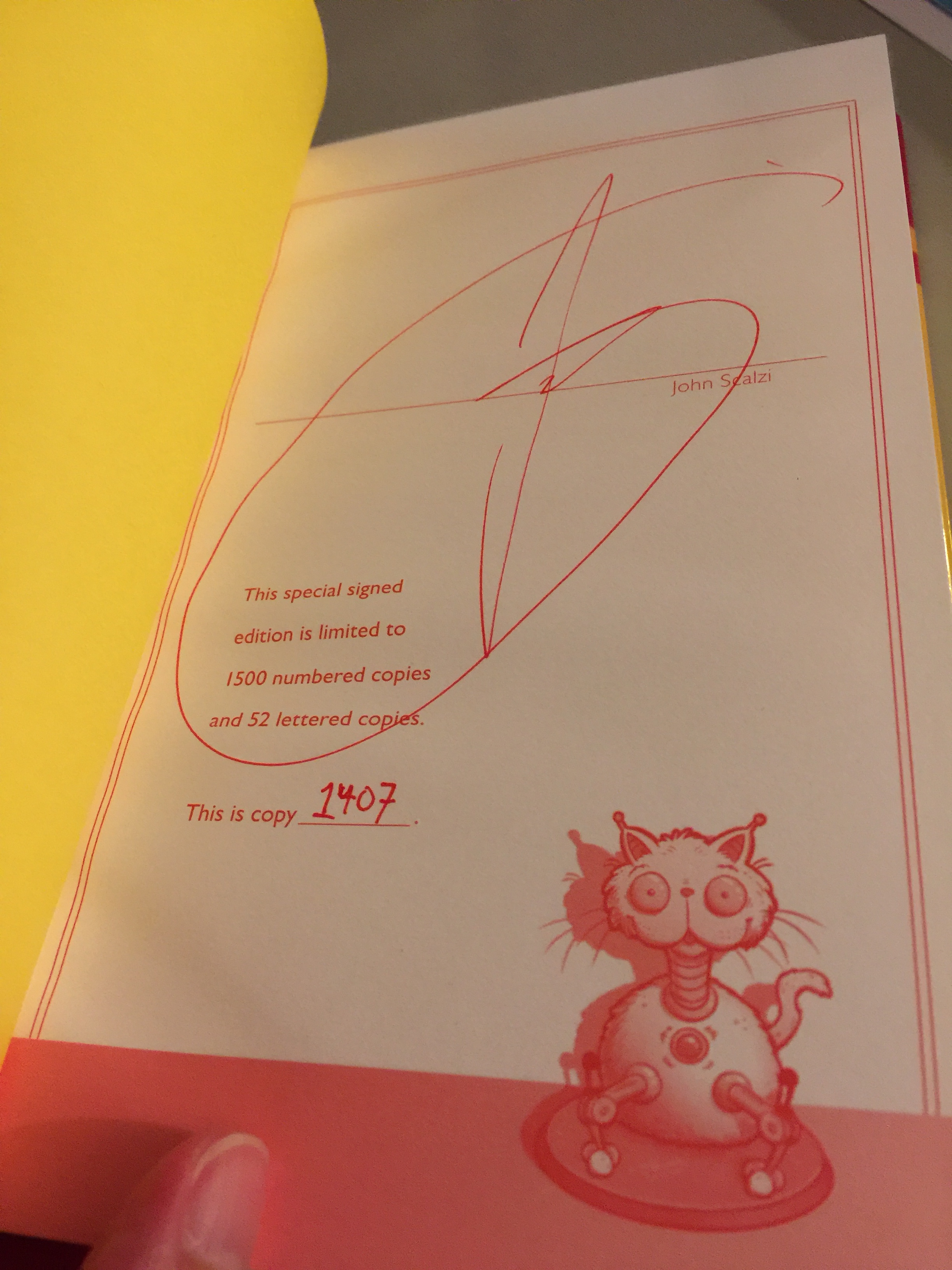
The original hardcover printing was a limited run (and I think may no longer be available), but it is available in e-book format. Here’s the inside of my book, all numbered and everything!

Besides the utter cuteness of the physical book, what about the content?

Fabulous, of course! If I had to pick, I’d say my favorites are a dialogue among different AIs who are definitely not planning to take over the world, a cat’s-eye view of domestic domination, a supermarket workers’ guide to dealing with unusual alien life forms and their customs, and the interview with a celebrity agent for superheroes.

Oh, and let’s not forget the interviews with smart appliances, who spill the dirt on their owners. Makes me quite sure that I never ever need smart machines in my house. I couldn’t take the gossip.

Those are a just a few of the highlights, but really, all of the stories are terrific. What’s more, they’re super short, so this book can be enjoyed in bite-sized pieces or all in one sitting — either way, not a big time commitment.

If you like your sci-fi with a big heaping of funny, you’ll definitely want to treat yourself to this collection. I think I’ll be thumbing through Miniatures pretty regularly, whenever I need a little jolt of silly to brighten my day.

_________________________________________

The details:

Title: Miniatures: The Very Short Fiction of John Scalzi
Author: John Scalzi
Publisher: Subterranean Press
Publication date: December 31, 2016
Length: 142 pages
Genre: Science fiction
Source: Purchased

Save

Save

Save

Save

Save

Save

Save

Save

Book Review: Honestly Ben by Bill Konigsberg

Ben Carver is back to normal. He’s getting all As in his classes at the Natick School. He was just elected captain of the baseball team. He’s even won a big scholarship for college, if he can keep up his grades. All that foolishness with Rafe Goldberg last semester is over now, and he just needs to be a Carver, work hard, and stay focused.

Except…

There’s Hannah, a gorgeous girl who attracts him and distracts him. There’s his mother, whose quiet unhappiness he’s noticing for the first time. School is harder, the pressure higher, the scholarship almost slipping away. And there’s Rafe, funny, kind, dating someone else…and maybe the real normal that Ben needs.

If you’ve read my blog at all in the last couple of years, then you’ve probably seen me rave about Openly Straight (review), Bill Konigsberg’s amazing, touching, funny, sweet story of a gay teen trying to recreate his life on his own terms. In Openly Straight, we see the world through the eyes of Rafe, as he enters private school determined to shed his previous life as THE gay kid — completely out, giving talks, mother head of PFLAG, etc — and just see what it feels like to be one of the crowd. However, things get complicated when Rafe falls in love with his best friend Ben, who is startled to discover his own feelings for Rafe. In a nutshell, Ben doesn’t know Rafe is gay, so he believes that they’re exploring new ideas and options and feelings together, and feels completely betrayed when he learns what Rafe has been hiding from him. Seriously, this book made me laugh and broke my heart and was just so powerful!

But then we were left hanging… what happened next?

Well, thank you, thank you, thank you to the author for creating this beautiful sequel! Honestly Ben picks up just a few weeks after the events of Openly Straight. In Honestly Ben, Ben himself is the narrator, and we start to see more deeply into Ben’s life and world, and to understand what drives him and what scares him.

Ben grew up on a farm in New Hampshire, where working hard and not embarrassing the family are the values drilled into Ben and his brother from a young age. And when Ben starts to shine as a student, he’s not praised, but warned not to get a big head. For all that, Ben does succeed, and lands a scholarship to Natick, the poor boy among rich peers, striving to fit in and to do well enough to earn a scholarship to college. Ben keeps his head down, and tries to be what everyone wants him to be — a decent guy, a good baseball player, a top student — fitting in, but not one to call attention to himself.

Ben’s feelings for Rafe changed everything he understood about himself. In Honestly Ben, he digs deeper. Is he gay? The label doesn’t seem to fit. Bi? He doesn’t think so. He’s never been attracted to boys before, and his fantasies are generally about girls. Is he, as he puts it, just “gay-for-Rafe”? After the initial anger wears off, Ben and Rafe cautiously inch forward with their friendship. Ben is thrilled to reconnect with Rafe, but it’s a struggle for him to understand what this means. At the same time, he’s also facing pressure academically that threatens his scholarship, and he struggles with learning the truth about a former student whom the school idolizes — for all the wrong reasons, as Ben discovers.

The book’s exploration of labels is deftly handled. One of the Natick boys comes out as gender fluid, which takes much courage on  his part, as well as a lot of explaining — but he’s determined to start living his authentic life. As Ben tries to understand himself in the context of a relationship with Rafe, even well-meaners try to push him into claiming an identity he’s not comfortable with. Why does he need to put a label on what he is? He knows who he loves — why isn’t that sufficient?

Ben’s eyes are finally opened by a girl he briefly dates, who gets him to start to understand what he loses by hiding behind a front that doesn’t reveal the real him:

I’ve been doing some reading. This woman talks about vulnerability, and she says that it’s basically the key to everything. Vulnerability is allowing people to see you exactly as you are, which is really hard, because when you’re vulnerable you can get hurt. Most people armor up with bravado or something, but those people are missing out, because without allowing yourself to be vulnerable, it’s tough to have, like, any emotional experience at all.

The characters are just as wonderful as in the previous book. It’s touching to see Ben’s life through his own eyes and to understand the constant pressure he feels to be what he isn’t. The writing is outstanding, conveying both the challenges and the joys of Ben’s ongoing experiences and really capturing the sense of wonder that comes with sex in the context of love.

Obviously, I highly recommend this book! It’s a wonderful look at the inner lives of teens, and for those who read Openly Straight (which, really, you must do), it’s a terrific reunion with characters we absolutely love and care about. Check it out!

_________________________________________

The details:

Title: Honestly Ben
Author: Bill Konigsberg
Publisher: Arthur A. Levine
Publication date: March 28, 2017
Length: 304 pages
Genre: Young adult
Source: Library

Save

Save

Save

Save

Save

Save

Save

Save

Novella: Rolling in the Deep by Mira Grant

When the Imagine Network commissioned a documentary on mermaids, to be filmed from the cruise ship Atargatis, they expected what they had always received before: an assortment of eyewitness reports that proved nothing, some footage that proved even less, and the kind of ratings that only came from peddling imaginary creatures to the masses.

They didn’t expect actual mermaids. They certainly didn’t expect those mermaids to have teeth.

This is the story of the Atargatis, lost at sea with all hands. Some have called it a hoax; others have called it a maritime tragedy. Whatever the truth may be, it will only be found below the bathypelagic zone in the Mariana Trench…and the depths are very good at keeping secrets.

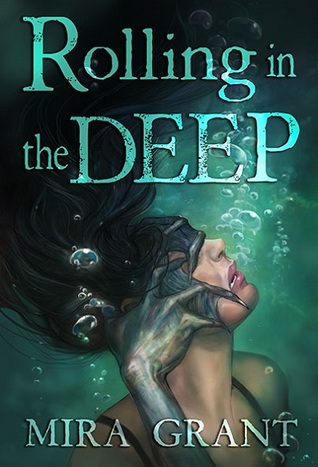
If this is how you like your mermaids:

or this:

… then Rolling in the Deep may not be the reading choice for you. No singing. No flowy red hair or adorable fishy friends. No teen angst or cute Australian accents.

Nope. The mermaids in Rolling in the Deep have claws and lots of sharp teeth, and they seem to especially enjoy biting off faces, then dragging their prey into the darkest ocean depths.

I adored Rolling in the Deep! It’s gross and scary, packing a lot into a little. In a very short time, we get to know the crew of the Atargatis, the film crew and on-screen personality from the TV station, the scientists on the expedition who are supposed to lend credibility to the otherwise potentially cheesy “documentary”, and a troupe of performing mermaids, to add a little sexy flavor in case the exploration comes up empty.

Each section of the story is preceded by an excerpt from a book written to explore the tragedy and mystery of the Atargatis — so we know from page 1 that everyone on board the ship is doomed. The story is pieced together from the footage found on board the ship, which is found drifting off course and completely empty of people — but with enough gore left behind to let the discoverers know that something awful happened. But was it all a hoax, as the Imagine network is often accused of? Or did something beyond human understanding attack the ship and brutally murder all hands?

This book is not for the faint of heart, obviously. It gets bloody pretty quickly. As for me, I thought it was terrific! Just enough gore to make the threat real, and a palpable sense of dread — we know from the start that everyone will die, but the question is how. It’s smart and fast and a terrific read.

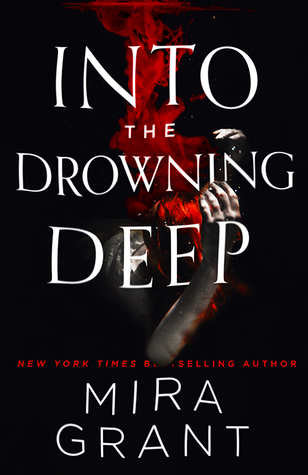
And once I finished and went to check it off on Goodreads, I stumbled across the news that a full-length novel is on the way! Into the Drowning Deep follows up on the events of Rolling in the Deep, and will be published in November 2017. Can it be November now please? I don’t think I can wait.


_________________________________________

The details:

Title: Rolling in the Deep
Author: Mira Grant
Publisher: Subterranean Press
Publication date: April 6, 2015
Length: 123 pages
Genre: Horror
Source: Purchased

Save

Save

Save

Save

Save

Save

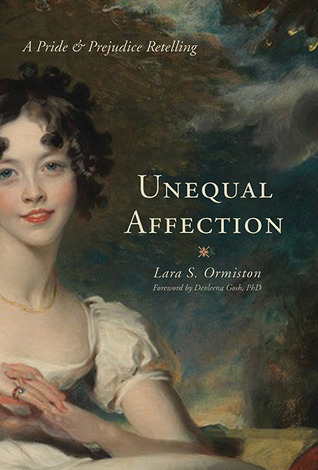
Book Review: Unequal Affection: A Pride and Prejudice Retelling by Lara S. Ormiston

When Elizabeth Bennet first knew Mr. Darcy, she despised him and was sure he felt the same. Angered by his pride and reserve, influenced by the lies of the charming Mr. Wickham, she never troubled herself to believe he was anything other than the worst of men–until, one day, he unexpectedly proposed.Mr. Darcy’s passionate avowal of love causes Elizabeth to reevaluate everything she thought she knew about him. What she knows is that he is rich, handsome, clever, and very much in love with her. She, on the other hand, is poor, and can expect a future of increasing poverty if she does not marry. The incentives for her to accept him are strong, but she is honest enough to tell him that she does not return his affections. He says he can accept that–but will either of them ever be truly happy in a relationship of unequal affection?

Diverging from Jane Austen’s classic novel Pride and Prejudice at the proposal in the Hunsford parsonage, this story explores the kind of man Darcy is, even before his “proper humbling,” and how such a man, so full of pride, so much in love, might have behaved had Elizabeth chosen to accept his original proposal.

While I’m a fan of Pride and Prejudice (and all of Jane Austen’s works), I’ve never read a P&P spin-off or retelling or any of the other hundreds of variations on the story. Somehow, I stumbled across Unequal Affection, and thought the premise was interesting enough to make me want to give it a try. And I’m glad I did.

In a nutshell, what would have happened if Elizabeth Bennet had not refused Mr. Darcy’s initial proposal?

Yes, all the circumstances leading to this moment remain the same as in the original. Elizabeth is stuck on her initial impressions of Darcy, dislikes him, and believes he dislikes her. She’s flabbergasted by his proposal, and insulted by his presentation of it, especially by his statements about how inferior she and her family are to him.

But what if? It’s not unreasonable to think that a young woman in Elizabeth’s situation might actually pause and consider. Here’s a very wealthy, very prominent man, educated and handsome, who says he’s in love with her. He’s offering her a life beyond anything she could imagine. And what’s more, he’s prepared to care for her mother and sisters and provide them with a secure future, rather than the poverty that seems to be lurking just over the horizon.

Now, we know that Elizabeth is an unusual woman for her time. She’s outspoken in her likes and dislikes, and has sworn that she’ll marry for love. But, here is a man who loves her and is offering her a secure life. Is it so farfetched to think she’d at least consider his offer?

In Unequal Affection, she does just that. She asks for time to consider, rather than rejecting him on the spot. She’s stunned to learn of his regard for her, and realizes that she may need to rethink her former opinions of him. From there, the story follows the seven weeks from Darcy’s proposal to the agreed-upon wedding, during which both have time to get to know one another properly and to acknowledge their faulty assumptions and mistreatment of one another.

It’s interesting to see how some familiar scenes play out. Lady Catherine’s visit to Longbourn still takes place, with much the same tone, but with the circumstances rather different. Lydia’s elopement is prevented before it ever happens, because with Darcy as the future brother-in-law, her well-being is now his concern as well. Certain secrets come out much later, so that Wickham’s undermining of Darcy is allowed to continue much longer — but even so, this gives Elizabeth time to start to realize that Wickham’s charm might be a cover for a lack of character.

Overall, Unequal Affection is quite charming and well-written. This clever retelling lets us see familiar events unfold differently, and yet the dialogue and writing style feel very true to the spirit of Jane Austen’s masterpiece. The developing understanding and affection between Elizabeth and Darcy work in light of what we already know about them, and this different path to marriage feels quite natural and plausible.

I was surprised by how much I enjoyed this book. I mean, if the original is perfect, why tinker with it? Author Lara Ormiston proves that there can still be something new to say about a classic, and presents an engaging, compelling tale about favorite characters in a brand new way.

And now, a question: For those of you who have read Austen spin-offs, are there any in particular that you consider outstanding and worth checking out? I’ve read three of the Austen Project books, and have Eligible on tap for future reading. How about any others? Recommendations welcome here!

_________________________________________

The details:

Title: Unequal Affection
Author: Lara S. Ormiston
Publisher: Skyhorse Publishing
Publication date: January 7, 2014
Length: 352 pages
Genre: Fiction
Source: Purchased

Save

Save

Save

Save

Save

Save

Book Review: Six Wakes by Mur Lafferty

A space adventure set on a lone ship where the clones of a murdered crew must find their murderer — before they kill again.

It was not common to awaken in a cloning vat streaked with drying blood.

At least, Maria Arena had never experienced it. She had no memory of how she died. That was also new; before, when she had awakened as a new clone, her first memory was of how she died.

Maria’s vat was in the front of six vats, each one holding the clone of a crew member of the starship Dormire, each clone waiting for its previous incarnation to die so it could awaken. And Maria wasn’t the only one to die recently…

Talk about a powerful opening! The first chapter of this exhilarating sci-fi novel introduces us to the world of Six Wakes with a bang, as six clones wake up in their cloning vats… with their previous bodies, all brutally murdered, floating in zero gravity in front of them. None of the crew members has any memory of what happened. In fact, their last memories are of the reception on Luna as the Dormire was about to launch.

But as they look at their murdered bodies, they discover a startling fact: The bodies are all much older then they expected. While they only remember just joining the ship’s crew, it becomes apparent that they’ve been traveling in space for 25 years. All memories are gone. All ship logs have been purged. The ship’s AI is down. There’s a murderer among them, but even the murderer has no memory of what’s happened.

Wow. Now that’s tension!

In Mur Lafferty’s terrific space adventure, clones have existed within human civilization for hundreds of years. There are a set of strict laws governing clone management and clone rights, which are spelled out in the Codicils that appear at the beginning of the book. In the world of Six Wakes, people’s mindmaps are saved, then loaded into their new cloned bodies — produced to approximate age 21 for peak physical condition — when the old body dies. Clones are sterile; they become their own descendants. Clones essentially live for hundreds of years, from one body to the next.

Let me just pause here for a moment and admire the world-building of this novel. We’re thrust immediately into this brave new world, and it’s fascinating, but the author lays it out in such a way that it’s easy to grasp and get totally immersed. There are so many twists and turns and nuances to be revealed, but we get the set-up and big picture from the start. Amazing.

Meanwhile, on the Dormire, the crew have to solve their own murders, but more urgently, get the ship’s systems working again if they have any chance of survival. They’re intended to be on a 400-year journey to settle a new planet, with hundreds of humans saved in cryo, but they’ll all die if they can’t take control of navigation, get the grav drive working, and bring their AI back on line. Oh, and a piece I just loved — there’s a food printer! Think 3-D printing, but able to create any food desired, based on analysis of crew members’ tastes and programmed to synthesize any food stuff requested. It’s just cool.

The matter of identifying the murderer is crucial, of course. The tension and suspicions run high, and as the story progresses, we learn the truth about each crew member’s past. Each has secrets they’d rather keep hidden, but it’s those secrets that will help them piece together the events leading up to the murders… and hopefully enable them to prevent another round. And since the initial sabotage included destruction of the cloning vats, cloning software, and mindmap backups, if they die again, they’ll really and truly be dead.

At times, Six Wakes made me think a bit of Westworld… but my strongest comparison would have to be to Agatha Christie! Kind of a Murder on the Orient Express vibe, but in space! Everyone is a suspect, and everyone may have his or her own motives. They certainly have plenty of secrets to protect.

It’s just so cool.

Clearly, you have to enjoy science fiction to really get into Six Wakes — although I’d think anyone who enjoys a mystery would love this plot, assuming they accept all the cloning/space/technology pieces of the story.

As for me, I loved it. The story is intricate and requires paying attention to the small details, but the payoff is an amazing read that’s fast-paced, entertaining, and ultra fascinating. I loved the set-up, the human/clone history, the individual crew members’ stories, and the characters themselves, all intriguing in their own ways.

I rarely feel the urge to start a book again from the beginning once I finish it, but I definitely did with this one. I’m dying to go back, start over, and see all the clues I missed the first time around.

I strongly recommend checking out Six Wakes! So much fun. So different. So awesome.

Want to know more about this author? Check out my reviews of two other books by Mur Lafferty:
The Shambling Guide to New York City
Ghost Train to New Orleans

_________________________________________

The details:

Title: Six Wakes
Author: Mur Lafferty
Publisher: Orbit
Publication date: January 31, 2017
Length: 364 pages
Genre: Science fiction
Source: Purchased

Save

Save

Save

Save

Save

Save

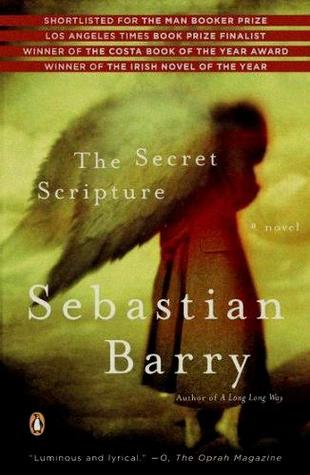
Book Review: The Secret Scripture by Sebastian Barry

When she was a young woman, Roseanne McNulty was one of the most beautiful and beguiling girls in County Sligo, Ireland. Now, she is a patient at Roscommon Regional Mental Hospital, and nearing her hundredth year. As the story of Roseanne’s life unfolds, so does the life of her caregiver, Dr. Grene, who has been asked to evaluate the patients to decide if they can return to society when the hospital closes down. But as Dr. Grene researches her case, he discovers a document that tells a very different version of Roseanne’s life from what she can recall.

Yet another book I might never have picked up were it not for my book group!

The Secret Scripture is a book of secrets and sorrow, told through the journals of 100-year-old Roseanne McNulty, a mental hospital resident, and Dr. Grene, the psychiatrist evaluating her as the institution is about to close. Although he’s treated her for decades, it’s only as the hospital reaches its end that the doctor begins to dig further into Roseanne’s shadowy past.

Roseanne has spent upwards of 60 years in institutions, and the question is not only whether she’s sane now, but whether she was ever truly insane. As Roseanne’s story comes to light, she unveils memories of her early childhood in Sligo during the Irish Civil War of the early 1920s. Roseanne tells a story of a loving father who raises his young daughter with compassion and curiosity — yet the doctor’s research reveals reports of political entanglements that Roseanne apparently knew nothing about.

A key tragedy during these years sets Roseanne up for a hard and lonely life, until she meets the man she falls in love with. But her life with Tom runs into its own set of tragedies, the upshot of which is Roseanne’s lifelong institutionalization.

I won’t say too much more about the plot details, as they’re best discovered as they unfold. The book has a somewhat slow start, but as the pieces come together, the mysteries and the clues gain a greater sense of urgency. The secrets that come out are truly shocking, simply because they convey the horror of simple cruelty and the easy way in which some people can dismantle others’ lives.

I would have if not happily, at least gladly, open-heartedly, fiercely, finely murdered him.

The doctor’s pieces of the narration are a bit frustrating at times. There are segments about his own life and his marriage that seem disconnected from the rest of the story, although taken as a whole, they do make more sense in the greater scheme of things.

The twin narratives show the unreliability of memory, but also the inherent biases of written documentation. After all, even eye-witness reports depend on the objectivity of the one making the report in the first place. Should we trust Roseanne’s memories of her earlier life, or rely more heavily on the documents that the doctor manages to unearth? Or does the truth lie in some middle ground, with bits of each making up the real course of events?

I did find myself a bit confused at times by the historical references from the war, as I’m not terribly familiar with the details of the conflict and had a hard time figuring out who was on which side. Still, the author manages to evoke the time period quite well, with small details of dress and music to add flavor and bring the scenes to life.

Roseanne is a tragic figure, yet one who ultimately endures whatever life throws at her during her long lifetime. While I was horrified by so much of her story and ached for what she experienced, I was left with a hopeful feeling by the end.

What can I tell you further? I once lived among humankind, and found them in their generality to be cruel and cold, and yet could mention the names of three or four that were like angels.

The Secret Scripture is quite a lovely book with an unusual story to tell. The writing and pacing take a bit of patience, especially for about the first third, but if you stick with it, you’ll be rewarded by the building tension and dramatic revelations toward the end. I’m glad my book group picked this one to discuss! It’s always great to encounter a book that I might otherwise have missed completely.

_________________________________________

The details:

Title: The Secret Scripture
Author: Sebastian Barry
Publisher: Penguin
Publication date: April 2, 2008
Length: 300 pages
Genre: Historical fiction
Source: Purchased

Save

Save

Save

Save

Save

Save

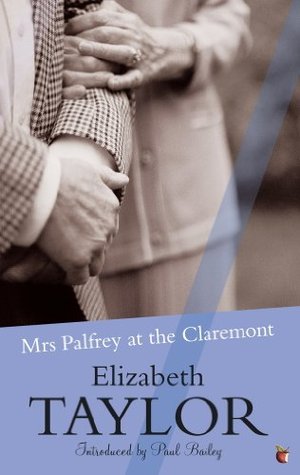
Take A Peek Book Review: Mrs Palfrey at the Claremont by Elizabeth Taylor

“Take a Peek” book reviews are short and (possibly) sweet, keeping the commentary brief and providing a little peek at what the book’s about and what I thought.

Synopsis:

(via Goodreads)

On a rainy Sunday in January, the recently widowed Mrs. Palfrey arrives at the Claremont Hotel where she will spend her remaining days. Her fellow residents are magnificently eccentric and endlessly curious, living off crumbs of affection and snippets of gossip. Together, upper lips stiffened, they fight off their twin enemies—boredom and the Grim Reaper. Then one day Mrs. Palfrey strikes up an unexpected friendship with Ludo, a handsome young writer, and learns that even the old can fall in love.


My Thoughts:

What a lovely book! With beautiful, often sharp, but never mean descriptions, author Elizabeth Taylor presents regal Mrs. Palfrey, a sturdy elderly woman who finds herself alone in the world. Her daughter is rather disinterested, and her lone grandson, whom she’d counted on for regular visits now that she’s moved to London, can’t be bothered. When a sidewalk slip lands her in front of Ludo’s basement apartment, he comes to her rescue and ends up as her stand-in grandson, providing a spark of life in an otherways dreary existence.

The characters are both quirky and sad. Each of the hotel residents has a life they remember fondly as they pass each slow day by sitting in the parlor, waiting for the dinner menu to be posted, and silently criticizing each others’ foibles. I should point out that the synopsis, above and on the back cover, is a little misleading when it describes Mrs. Palfrey as falling in love. That’s not how it struck me at all; the relationship is full of love, but of a different sort. Meanwhile, we see the ups and downs of these people’s lives, trapped together but also quite alone.

While the subject matter strikes a little too close for comfort for me, in relation to recent events with family members, there’s no denying the craft with which the author has created a representation of loneliness and the fear of aging. These characters, hungry for contact with the outside world and desperate for anything new to interrupt the sameness of their days, feel very much true to life and deserving of compassion, even at their most ornery or ridiculous.

Mrs Palfrey at the Claremont is a sweet, touching, short novel, and I look forward to exploring more by this author.

_________________________________________

The details:

Title: Mrs Palfrey at the Claremont
Author: Elizabeth Taylor
Publisher: Algonquin Books
Publication date: 1971
Length: 206 pages
Genre: Contemporary fiction
Source: Library


About the author:

Elizabeth Taylor (née Coles) was a popular English novelist and short story writer. Elizabeth Coles was born in Reading, Berkshire in 1912. She was educated at The Abbey School, Reading, and worked as a governess, as a tutor and as a librarian.

In 1936, she married John William Kendall Taylor , a businessman. She lived in Penn, Buckinghamshire, for almost all her married life.

Her first novel, At Mrs. Lippincote’s, was published in 1945 and was followed by eleven more. Her short stories were published in various magazines and collected in four volumes. She also wrote a children’s book.

Taylor’s work is mainly concerned with the nuances of “everyday” life and situations, which she writes about with dexterity. Her shrewd but affectionate portrayals of middle class and upper middle class English life won her an audience of discriminating readers, as well as loyal friends in the world of letters.