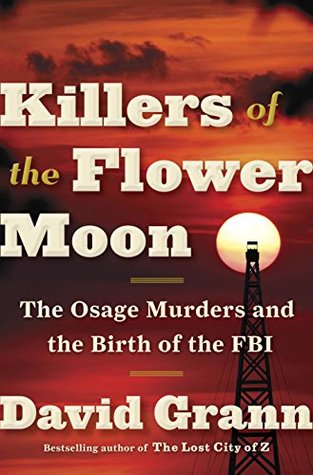
Book Review: Killers of the Flower Moon by David Grann

From New Yorker staff writer David Grann, #1 New York Times best-selling author of The Lost City of Z, a twisting, haunting true-life murder mystery about one of the most monstrous crimes in American history

In the 1920s, the richest people per capita in the world were members of the Osage Indian Nation in Oklahoma. After oil was discovered beneath their land, the Osage rode in chauffeured automobiles, built mansions, and sent their children to study in Europe.

Then, one by one, they began to be killed off. One Osage woman, Mollie Burkhart, watched as her family was murdered. Her older sister was shot. Her mother was then slowly poisoned. And it was just the beginning, as more Osage began to die under mysterious circumstances.

In this last remnant of the Wild West—where oilmen like J. P. Getty made their fortunes and where desperadoes such as Al Spencer, “the Phantom Terror,” roamed – virtually anyone who dared to investigate the killings were themselves murdered. As the death toll surpassed more than twenty-four Osage, the newly created F.B.I. took up the case, in what became one of the organization’s first major homicide investigations. But the bureau was then notoriously corrupt and initially bungled the case. Eventually the young director, J. Edgar Hoover, turned to a former Texas Ranger named Tom White to try unravel the mystery. White put together an undercover team, including one of the only Native American agents in the bureau. They infiltrated the region, struggling to adopt the latest modern techniques of detection. Together with the Osage they began to expose one of the most sinister conspiracies in American history.

In Killers of the Flower Moon, David Grann revisits a shocking series of crimes in which dozens of people were murdered in cold blood. The book is a masterpiece of narrative nonfiction, as each step in the investigation reveals a series of sinister secrets and reversals. But more than that, it is a searing indictment of the callousness and prejudice toward Native Americans that allowed the murderers to operate with impunity for so long. Killers of the Flower Moon is utterly riveting, but also emotionally devastating.

It seems we’ll never run out of shameful chapters from America’s past. In Killers of the Flower Moon, writer David Grann explores the “Reign of Terror” waged against the Osage tribe in Oklahoma during the 1920s. The murder epidemic itself is horrifying, and so too are the years that came before in Osage history. For starters, when the Osage were forced off of their previously held land, they ended up settling in a rocky area of Oklahoma clearly unsuited for farming, feeling that it would be a stable home since the land was worthless and wouldn’t be taken over by white men. The irony, of course, is that under the land were undiscovered oil deposits that would soon turn the Osage into millionaires.

The members of the Osage tribe were allotted “headrights” — basically, a share of the oil and mineral ownership — and these headrights could not be sold, only passed on through family members. At the same time, the government considered the Native Americans incapable of managing their own affairs, and adult Osage who were deemed incompetent (and most were) were required to have white guardians to manage their money.

As we see in Killers of the Flower Moon, there was a lot to be gained by finding ways to either manipulate the Osage through shady business dealings and corrupt guardianships, or more directly, by murder. Mollie Burkhart is the initial focus of the book, and we see as her entire family is wiped out, one at a time, through violent murder or insidious poisonings. Between the crimes themselves and the bungling and corruption of the investigation, Mollie and her tribe lived in terror and with a very real threat hanging over their heads.

Part I of the book explores the crimes, and Part II traces the involvement of the Bureau of Investigation (forerunner of the FBI), as well as the early stages of the Bureau’s investigative approach and its evolution under J. Edgar Hoover. We see the lawmen tasked with investigating the murders, and follow them all the way through to the eventual arrests and convictions of the men involved. In Part III, the author describes his research and what he uncovered in historical archives, through which he finally unearthed evidence that helped some descendants of the victims find a sense of resolution.

The subject matter of Killers of the Flower Moon is fascinating and very, very disturbing. However, I did find myself losing interest at various points, especially in Part II, as the sections about the Bureau and its processes just didn’t grab me as much as the parts focusing on the Osage tribe members and their experiences. I also wished that I’d felt a more personal connection to some of the people involved. While we learn what happened to Mollie and her family, Mollie herself often seems unknowable. Granted, this is history, not a dramatization, but I still wish there was some way to get more of a glimpse beneath the individuals’ surfaces.

I recognize too that my lack of interest or focus in certain parts of the story may say more about me as a reader than about the actual book itself. I can be easily distracted when reading non-fiction, and I might not have always been in the right frame of mind to truly appreciate what I was reading.

That said, I do feel that Killers of the Flower Moon is a powerful and compelling book. It’s astonishing to me that the history of the Osage in Oklahoma isn’t better known, and I’m sure that this book will change that. (I understand that a film version is planned, and will be a Martin Scorsese/Leonardo DiCaprio venture — something to look forward to!)

Even people (like me) who tend not to read a lot of non-fiction will find themselves absorbed by the story once they pick up Killers of the Flower Moon. Highly recommended.

For more on the movie, go here.
To read the New York Times review of the book, go here.

_________________________________________

The details:

Title: Killers of the Flower Moon: The Osage Murders and the Birth of the FBI
Author: David Grann
Publisher: Doubleday
Publication date: April 18, 2017
Length: 320 pages
Genre: Non-fiction/true crime
Source: Library
Save

Save

Save

Save

Save

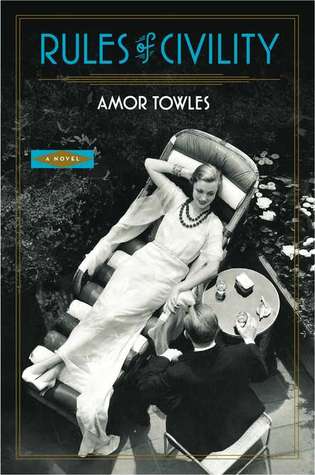
Take A Peek Book Review: Rules of Civility by Amor Towles

“Take a Peek” book reviews are short and (possibly) sweet, keeping the commentary brief and providing a little peek at what the book’s about and what I thought.

Synopsis:

(via Goodreads)

On the last night of 1937, twenty-five-year-old Katey Kontent is in a second-rate Greenwich Village jazz bar with her boardinghouse roommate stretching three dollars as far as it will go when Tinker Grey, a handsome banker with royal blue eyes and a tempered smile, happens to sit at the neighboring table. This chance encounter and its startling consequences propel Katey on a yearlong journey from a Wall Street secretarial pool toward the upper echelons of New York society and the executive suites of Condé Nast–rarefied environs where she will have little to rely upon other than a bracing wit and her own brand of cool nerve.

Wooed in turn by a shy, principled multi-millionaire and an irrepressible Upper East Side ne’er-do-well, befriended by a single-minded widow who is a ahead of her time,and challenged by an imperious mentor, Katey experiences firsthand the poise secured by wealth and station and the failed aspirations that reside just below the surface. Even as she waits for circumstances to bring Tinker back into her life, she begins to realize how our most promising choices inevitably lay the groundwork for our regrets.

My Thoughts:

Why is it that the best books are sometimes the hardest to write about? I truly loved Rules of Civility, but I’m having a hard time trying to figure out how to explain why.

Rules of Civility captures late 1930s New York brilliantly, with dialogue that snaps and a briskness to the tone that conveys the bustle and high spirits of people constantly on the go. Katey is a young woman with ambition, who starts with nothing and yet somehow ends up on top. Over the course of her year, she sees friends rise and fall, mingles in society with the upper crust wealthy elite, and slums it in low-rent jazz clubs and drinking holes. The characters occasionally feel like types we’ve seen before — the spoiled son of money, the striver with a secret, the party girl who always winds up with a free drink or two — but they still sparkle with individuality and practically zip through the ups and downs of the story.

Through it all, there are insights on secrets, ambition, and what truly makes for a happy life. The writing is lovely (although conversation can become hard to follow, as this author seems to have an aversion to quotation marks). Some of the plot twists seems to come out of nowhere, and I found myself repeatedly flipping backward through the book to find the hints and side comments that I’d missed. This is not at all a negative — there’s a lot of nuance hidden amidst the clever repartee and frantic energy of the action, and it makes for an especially engaging read overall.

Highly recommended — and once again, I need to give a shout-out to my awesome book club for picking Rules of Civility for our August read.

_________________________________________

The details:

Title: Rules of Civility
Author: Amor Towles
Publisher: Viking Adult
Publication date: July 26, 2011
Length: 335 pages
Genre: Historical fiction
Source: PurchasedSave

Save

Save

Save

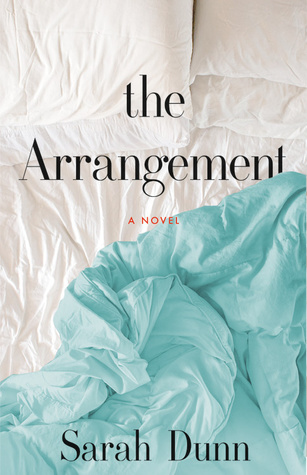
Book Review: The Arrangement by Sarah Dunn

A hilarious and emotionally charged novel about a couple who embark on an open marriage-what could possibly go wrong?

Lucy and Owen, ambitious, thoroughly-therapized New Yorkers, have taken the plunge, trading in their crazy life in a cramped apartment for Beekman, a bucolic Hudson Valley exurb. They’ve got a two hundred year-old house, an autistic son obsessed with the Titanic, and 17 chickens, at last count. It’s the kind of paradise where stay-at-home moms team up to cook the school’s “hot lunch,” dads grill grass-fed burgers, and, as Lucy observes, “chopping kale has become a certain kind of American housewife’s version of chopping wood.”

When friends at a wine-soaked dinner party reveal they’ve made their marriage open, sensible Lucy balks. There’s a part of her, though-the part that worries she’s become too comfortable being invisible-that’s intrigued. Why not try a short marital experiment? Six months, clear ground rules, zero questions asked. When an affair with a man in the city begins to seem more enticing than the happily-ever-after she’s known for the past nine years, Lucy must decide what truly makes her happy-“real life,” or the “experiment?”

The Arrangement wants very badly to be funny and topical, but only partially succeeds. While it’s a quick and quirky read, there are just too many illogical moments for this book to fully hit the mark.

Lucy and Owen love each other, struggle with their special-needs son Wyatt, and are more or less happy living in their little community, where people seem committed to providing their children with an idealized, wholesome quality of life. The idea of open marriage drops into their laps during a drunken dinner with friends, and it seems like with barely any real thought, Lucy and Owen decide to give it a go.

They launch their arrangement with a list of rules written in Sharpie on a legal pad: No talking about The Arrangement. (Yes, there are references to Fight Club). There’s a six-month duration, and then it’s done. No falling in love. Always use condoms. (No Costco condoms, either; make sure they’re good quality.) No prostitutes. No sexting inside the house. It starts as a joke, but within one conversation, they decide to actually do it.

Owen falls quickly into a sexy relationship with a local woman, who at first seems to provide him with just the sexual adventure he’s look for — but who quickly turns into a high-need, demanding girlfriend who’s combining their trysts with household chores like caulking the bathroom. And really, if Owen were going to start doing repairs for a woman, he might as well have stayed home. At the same time, Owen doesn’t really believe that Lucy will follow through on her side of The Arrangement, and has no idea that she’s found her own regular sex partner, who could turn into something more.

Meanwhile, the people of Beekman figure heavily in the background of the story, as we see one unhappy marriage after another, each with its own oddities and hidden secrets. The marital problems of the town seem to escalate throughout the book, as relationships tumble downward, fast.

I’ll admit that I had fun with The Arrangement while I was reading it. It had enough clever and interesting bits to keep me wanting more, and I read it all in about two days. At the same time — and maybe this is just because I don’t match the demographics or lifestyle or geography of the characters — I just couldn’t relate to these people at all.

The main characters are mostly in their 30s, with young children, experiencing life on the other side of wedded bliss. They all seem to be struggling with the reality that hits once marriage and family life is no longer new, when there are bills and groceries and school projects and home repairs to deal with. The initial euphoria is gone, and all of the characters in the book seem to be hitting a form of mid-life crisis at the same time.

Lucy and Owen’s decision makes little to no sense. They each feel weighed down by their lives, and miss the romance and excitement of their earlier years. But it’s a big step to decide to try an open marriage, and the fact that they launch themselves down this path with practically no discussion seems unbelievable.

The antics of the town are too cutesy to take at times, with the emphasis on organic foods and community organizing and non-stop mommy pressure. There’s a blessing of the animals event that becomes a big focus for the entire town later in the book, and it’s clearly intended to be a big comical moment in the story, as each family tries to outdo the rest by bringing more exotic animals than their neighbors. But when the event gets completely out of hand and ends in disaster, it’s so utterly predictable that it loses its comic value.

Likewise, the insistence on shifting focus away from Lucy and Owen to go inside others’ marriages becomes tedious and makes the storytelling seem more scattered than it needs to be. There’s far too much attention paid to the marriage of a 60-ish billionaire and his much younger 3rd wife, and they’re just not that amusing or important to take up that much space.

The Arrangement is a fun, light read, and as I said, I zipped through it. But there’s an inconsistency in the tone; not everything is funny, particularly not seeing a marriage dissolving in a way that could have been prevented had the characters not made ill-considered, bone-headed decisions. The foolish way in which the two main characters risk their marriage and their family life irked me too much to keep me from truly enjoying the story.

_________________________________________

The details:

Title: The Arrangement
Author: Sarah Dunn
Publisher: Little Brown and Company
Publication date: March 21, 2017
Length: 357 pages
Genre: Contemporary fiction
Source: Library

Save

Save

Save

Take A Peek Book Review: Lagoon by Nnedi Okorafor

“Take a Peek” book reviews are short and (possibly) sweet, keeping the commentary brief and providing a little peek at what the book’s about and what I thought.


Synopsis:

(via Goodreads)

It’s up to a famous rapper, a biologist, and a rogue soldier to handle humanity’s first contact with an alien ambassador—and prevent mass extinction—in this novel that blends magical realism with high-stakes action.

After word gets out on the Internet that aliens have landed in the waters outside of the world’s fifth most populous city, chaos ensues. Soon the military, religious leaders, thieves, and crackpots are trying to control the message on YouTube and on the streets. Meanwhile, the earth’s political superpowers are considering a preemptive nuclear launch to eradicate the intruders. All that stands between 17 million anarchic residents and death is an alien ambassador, a biologist, a rapper, a soldier, and a myth that may be the size of a giant spider, or a god revealed.

My Thoughts:

The synopsis above doesn’t quite give the full picture, although it does hint at the craziness and unpredictability of Lagoon. In Lagoon, aliens land in the harbor of Lagos, Nigeria. We see the ensuing action unfold through the viewpoints of the main characters, as well as bystanders, lost children, preachers, prostitutes, and even spiders, bats, and a swordfish. The author’s descriptive, vibrant writing evokes the sounds, sights, and smells of Lagos, and immediately pulls the readers into the vibe of this chaotic city.

At the same time, the plot gets more and more complicated as the story moves forward, which is both an immersive experience and something of a headache. The powers of the aliens and the native gods come into play as they both make indelible changes to the lives of the humans in Lagos — but the interwoven plot points, the unusual magical and alien elements, and the strange experiences of the characters often are a real challenge when it comes to making sense of what’s happening.

Still, I really enjoyed getting to know the characters, seeing the social dynamics at play in Lagos both before and after the alien arrival, and experiencing the extreme oddness of certain scenes. Let’s put it this way — we have characters turning into sea creatures, and that’s not the weirdest thing that happens.

I’ve been wanting to read more of Nnedi Okarafor’s fiction ever since reading Binti earlier this year. She’s a remarkably gifted writer, and I think it’s pretty eye-opening for American readers to see contemporary science fiction set in Africa — quite unusual, and definitely a hugely positive addition to the genre!

_________________________________________

The details:

Title: Lagoon
Author: Nnedi Okorafor
Publisher: Saga Press
Publication date: April 10, 2014
Length: 304 pages
Genre: Science fiction
Source: LibrarySave

Save

Save

Book Review: Good Me, Bad Me by Ali Land

With many thanks to Goodreads — I won this in a giveaway!

HOW FAR DOES THE APPLE REALLY FALL FROM THE TREE?

Good Me Bad Me is dark, compelling, voice-driven psychological suspense by debut author Ali Land:

Milly’s mother is a serial killer. Though Milly loves her mother, the only way to make her stop is to turn her in to the police. Milly is given a fresh start: a new identity, a home with an affluent foster family, and a spot at an exclusive private school.

But Milly has secrets, and life at her new home becomes complicated. As her mother’s trial looms, with Milly as the star witness, Milly starts to wonder how much of her is nature, how much of her is nurture, and whether she is doomed to turn out like her mother after all.

When tensions rise and Milly feels trapped by her shiny new life, she has to decide: Will she be good? Or is she bad? She is, after all, her mother’s daughter.

Good Me, Bad Me is an intense first-person visit inside the mind of a troubled teen. Milly is struggling to figure out who she really is: Can she live a normal life after 15 years with a psychopathic murderer for a mother? Does she truly have a shot at being good?

Milly’s story starts when she turns in her mother after the 9th in a long series of child murders. On the outside, her mother wears a kind and lovely public face, working at a women’s shelter, providing care and comfort to desperate women and their children. In reality, though, she’s an expert at gaining people’s trust, never letting them see below to the hellish, sadistic creature underneath. Milly (whose real name is Annie) has been living alone with her mother since age 4, when her father left and took her older brother with him. Since then, Milly has been both horribly abused and victimized herself, and forced to watch (and sometimes participate) as her mother abducted, tortured, and murdered young children.

Finally free, with her mother behind bars, Milly is taken in by a foster family. Her foster father Mike is also the psychologist who works with Milly to prepare her for her mother’s trial, where she’ll be the star witness, but the home life isn’t all rosy. Saskia, the mother, is a mentally unstable coke addict who’s physically present but emotionally absent. Most problematic for Milly is Phoebe, Mike and Saskia’s teen daughter, who emphatically does not want another foster kid in the house, resents the attention Milly absorbs, and sets out to bully and harass Milly at every turn, especially at school, away from her parents’ eyes.

We see everything from Milly’s point of view — and inside Milly’s head isn’t a very comfortable place to be.

Milly’s narrative of events is continuously peppered with 2nd person comments, as she maintains a one-way dialogue with her mother — the “you” who fills Milly’s thoughts and to whom Milly is constantly trying to justify herself. She doesn’t want to be like her mother, but the darkness keeps threatening to engulf her. We see her struggle to find a place for herself and be normal –but there are also lapses, incidents where Milly lets her inner demons take over as she engages in behaviors that are questionable, at best.

Like Milly, we never see the mother directly over the course of the book’s action. The closest Milly comes is when she testifies in her mother’s trial, during which she’s sheltered from viewing her mother by a screen. She knows she’s there, can sense her presence, but never actually sees her — and this holds true for the reader as well. Milly’s mother’s presence is a constant, even though we never see her directly. Between Milly’s inner dialogue with her mother and her nightmares about her, we feel her shadow over every scene.

I did have a few minor quibbles with the plot and the narrative. While we get enough information over the course of the book to get the basic idea of what Milly’s mother did over all those years and how Milly was victimized, we don’t see any of it directly. I’m not looking to wallow in the muck here, but there’s a bit of vagueness that started to irritate me after a while. A few more details would have been helpful about Milly’s earlier life — did none of her teachers over the years ever notice anything off about this poor abused child? Her scars may not have been visible, but surely some professional might have noticed her emotional damage?

I question too the lack of proper attention Milly received after her mother’s arrest. Mike represents a huge problem for me — he’s her foster parent, and is supposed to care for her, yet is also her court-sanctioned psychologist and is secretly writing a book about her. After all of the years of suffering, it would seem to me that Milly needs much more than she’s given, and the assumption that she can live a normal life with just weekly therapy seems terribly misguided. Without giving too much away, it’s clear that this is not a good foster placement for Milly, but if Mike is the only one providing her mental health care, there’s no way for the situation to improve.

When Milly gets into her inner monologues and dialogues, the writing becomes choppy and disjointed, reflecting her mental state. This is effective, but occasionally veers into Yoda territory: (“Committed, she is.” “Slice we do, a cut here, a snip there.”) Still, the sentence fragments that form Milly’s narration illustrate the way her thoughts push and pull at her constantly:

Your voice in my head. THAT’S MY GIRL, YOU SHOW THEM. THANKFUL NOW, YOU SHOULD BE, FOR THE LESSONS I TAUGHT YOU, ANNIE. Your praise, so rare, when it comes, rips through me like a bush fire swallowing houses and tress, and other teenage girls who are less strong, in its hot, hungry mouth. I meet their stares, the remnants of Izzy’s gum hanging off my chin. Thrown by my defiance, they are, I see it. Fleeting. The twitch around their succulent lips, eyes slightly wider. I shake my head, slow and deliberate. Izzy, the hungrier of the two, takes the bait.

The book builds to a climax that was not at all what I’d expected. It’s disturbing but makes sense, and left me with a huge sense of unease — which is a sign that this thriller accomplished what it set out to do.

Good Me, Bad Me is a tense, suspenseful read that I really couldn’t put down or get out of my thoughts. The inner life of a damaged soul is not a pleasant thing to see. Definitely check out this book if you like psychological depths and twists, but be prepared for sleepless nights.

_________________________________________

The details:

Title: Good Me, Bad Me
Author: Ali Land
Publisher: Flatiron Books
Publication date: September 5, 2017
Length: 304 pages
Genre: Psychological thriller
Source: Goodreads giveaway

Save

Book Review: How To Stop Time by Matt Haig

I am old. That is the first thing to tell you. The thing you are least likely to believe. If you saw me you would probably think I was about forty, but you would be very wrong.

Tom Hazard has a dangerous secret.

He may look like an ordinary 41-year-old, but owing to a rare condition, he’s been alive for centuries. From Elizabethan England to Jazz Age Paris, from New York to the South Seas, Tom has seen a lot, and now craves an ordinary life. Always changing his identity to stay alive, Tom has the perfect cover – working as a history teacher at a London comprehensive. Here he can teach the kids about wars and witch hunts as if he’d never witnessed them first-hand. He can try and tame the past that is fast catching up with him.

The only thing Tom mustn’t do is fall in love.

How to Stop Time is a wild and bittersweet story about losing and finding yourself, about the certainty of change and about the lifetimes it can take to really learn how to live.

This feels like another one of those books where I want the entire review to consist of the following:

Amazing book. Read it.

Really, what more is there to say?

I have been in love with Matt Haig’s writing for a while now, ever since reading The Radleys, The Dead Fathers Club, and even more so since reading the spectacular The Humans. In How To Stop Time, the author shows once again the complexity of the human experience and the universality of a search for meaning.

In How To Stop Time, we meet main character Tom, who appears to be about 40-ish but is in actuality closer to 500. He’s one of a small group of people with a rare condition that slows the aging process — dramatically. They’re not immortal; they age normally up until puberty, and they will die of old age eventually. They can also die of injury just like anyone else, but meanwhile, Tom appears to age about one year for every 15 that he lives. A secret society of similarly afflicted people refers to themselves as albas, short for albatrosses (as the bird is supposedly long-lived) — and, unflatteringly, regular humans are simply mayflies, with lives so short by comparison that they’re barely worth paying attention to.

According to Hendrich, the organizer and enforcer of the albas, eight years is about the maximum someone like Tom can remain in any given identity and location before starting fresh. Otherwise, people start to notice, and gossip and odd looks can lead to severe consequences. Or at least, that’s been the governing truth for centuries. And there’s a certain logic to it. Tom was born in the late 1500s, and saw his own mother tried as a witch when neighbors realized that her teen-aged son remained unnaturally youthful while everyone around him aged normally.

Early on, Tom has his one and only experience with love as well. After leaving his childhood home after his mother’s cruel fate, he eventually falls in love with a lovely young woman named Rose. They eventually marry and have a child — but Tom is forced to leave after some years when once again, his eternal youth raises suspicion and threatens to bring disaster down upon his family.

Since then, Tom wanders the world, assuming fresh identities and homes every 8 – 10 years, but never truly allowing himself to connect or become a part of anything permanent. And while eternal (or long-lasting) youth might sound amazing to anyone dealing with grey hair and wrinkles, the fact is that for Tom, it’s an incredibly lonely life that seems to lack any sort of meaning.

Of course, on the plus side, he’s had  lot of years to learn, grow, and try new things. From being a simple lute player way back when, Tom has become a gifted musician skilled in many instruments, and his ability to impart history as a living, breathing concept is what makes him a fantastic high school teacher. He’s also rubbed elbows with a who’s who of famous folks over the centuries, from Shakespeare to F. Scott Fitzgerald, and can pull up those memories at a moment’s notice.

When Tom begins to connect with another teacher at the school, he has to confront the lonely existence he’s had and to make some decisions. Does he let this woman into his life? Can he be honest with her? What will Hendrich do if he finds out? How far will Hendrich go to make sure that the secrets of the albas remain secret?

How To Stop Time is truly fascinating. I loved the dilemmas presented by being a man out of time, someone who has lived everywhere yet fits in nowhere. Tom is a thoughtful and sympathetic character who keeps going for only one reason, which I won’t reveal here. He suffers physically and emotionally from the constant bombardment of memories from his centuries of life. You can’t help wanting him to be happy, even while acknowledging the huge barriers to that happiness.

The premise is so interesting and absorbing, and I couldn’t put the book down. At the same time, it’s Matt Haig’s extraordinary writing and use of language that makes this book truly soar. I was so caught up in reading that I didn’t stop to mark pages and passages of interest, which makes it hard right now to highlight quotes and give examples of why I loved this book so much.

I do have just one that I managed to find after the fact, and I’ll use it to wrap up this review. From a passage showing Tom’s inner thoughts — completely applicable to regular people with regular lifespans too:

And, just as it only takes a moment to die, it only takes a moment to live. You just close your eyes and let every futile fear slip away. And then, in this new state, free from fear, you ask yourself: who am I? If I could live without doubt what would I do? If I could be kind without the fear of being fucked over? If I could love without fear of being hurt? If I could taste the sweetness of today without thinking of how I will miss that taste tomorrow? If I could not fear the passing of time and the people it will steal? Yes. What would I do? Who would I care for? What battle would I fight? Which paths would I step down? What joys would I allow myself? What internal mysteries would I solve? How, in short, would I live?

Like I said:

Amazing book. Read it.

_________________________________________

The details:

Title: How To Stop Time
Author: Matt Haig
Publisher: Canongate Books
Publication date: July 6, 2017
Length: 325 pages
Genre: Speculative fiction
Source: Purchased

Book Review: Bannerless by Carrie Vaughn

A mysterious murder in a dystopian future leads a novice investigator to question what she’s learned about the foundation of her population-controlled society.

Decades after economic and environmental collapse destroys much of civilization in the United States, the Coast Road region isn’t just surviving but thriving by some accounts, building something new on the ruins of what came before. A culture of population control has developed in which people, organized into households, must earn the children they bear by proving they can take care of them and are awarded symbolic banners to demonstrate this privilege. In the meantime, birth control is mandatory.  Enid of Haven is an Investigator, called on to mediate disputes and examine transgressions against the community. She’s young for the job and hasn’t yet handled a serious case. Now, though, a suspicious death requires her attention. The victim was an outcast, but might someone have taken dislike a step further and murdered him?  In a world defined by the disasters that happened a century before, the past is always present. But this investigation may reveal the cracks in Enid’s world and make her question what she really stands for.

Bannerless is a unique and interesting approach to the dystopian genre. In fact, if you took away the references to “the Fall”, you might almost think you were reading a story of agrarian life in the Middle Ages. Let me explain…

In Bannerless, we follow main character Enid, a resident of the town of Haven whose occupation is investigator. Investigators are both detectives and enforcers, sent from settlement to settlement to look into complaints, solve problems, and if needed, impose sentences. Investigators tend to be feared — when these outsiders show up wearing their official brown tunics, it’s likely to end in repercussions either for individuals, households, or possibly the entire town.

Enid’s village lies among the geographic area known as the Coast Road, sets of smaller and larger settlements who interact for trading, messages, and resources. All follow the same general governing principles. The towns are primarily agrarian, and all members of a community have roles to play. Towns may only produce up to their quotas, so that resources are preserved for for the future. People form households to work together to show productivity, and if they prove that they can support more, they are awarded banners, which give them the right to have a child.

All in all, it sounds like a rather peaceful and healthy way to go about life. Community is all-important. People offer one another help when needed, and when help is provided, there’s a commitment made to repay expended resources when the recipient is able.

As I mentioned, if you didn’t know the setting, you might think this story takes place a few centuries ago. It has that old-fashioned, idyllic feel to it. But we do know that there was a Fall — and while the author doesn’t go into tremendous detail, it becomes clear that civilization fell over the course of years in which the world was devasted by epidemics, followed by substantial climate change that brought life-threatening changes in weather patterns. Enid’s adult life takes place about a century after the Fall, and she still remembers her Aunt Kath, who was the oldest member of Haven and the only one to remember the time before. From Kath, Enid learns about how life used to be, from silly details (like a yearning for plastic wrap) to issues around birth control and reproduction.

In terms of the plot of Bannerless, we follow two timelines in alternating chapters. We see Enid and her investigator partner Tomas, a member of her birth household, as they investigate a suspicious death in the nearby town of Pasadan. This in itself is shocking — while their investigations mainly focus on banner or quota violations, murder is pretty much unheard of. Meanwhile, in every other chapter, we follow the story of Enid from about 10 years earlier, when she followed her lover on his journeys from town to town, and along the way, learns much more about the communities, the ruins of cities, and her own calling.

What’s unusual about Bannerless, and what makes me hesitate to call it “dystopian”, is that the societal structure seems to work. There are no castes or debasing rules or the other types of harsh governance that seem to be the hallmark of the genre. Yes, the story takes place in a post-apocalyptic world, but the people seem to have worked out a system that makes sense for them. The rules about banners and birth control don’t strike me as autocratic or despotic; they go hand in hand with the focus on resources and quotas. The communities bear an awareness of the disasters that led to civilization’s downfall, and they’re determined to avoid the excesses that result in barren lands and starving children.

And while Enid and others occasionally yearn for the resources they’ve heard about through stories about life before the Fall (medical equipment and reliable lab tests, for example), they’ve found a way to manage and preserve what they have, to share and take communal responsibility for one another, and to sustain future generations by conserving current resources.

Yes, the breaking up of households who flout the rules may sound harsh, but there’s a lot of reasonableness too. Of all the various fictional scenarios of life post-disaster, the world of Bannerless sounds pretty okay to me.

The book itself is a quick, engaging read. Don’t expect explosions or intense battles or action scenes. The drama is all about the people, their interactions, and their motives — although this book does a great job of demonstrating how scary it can be to be caught out in the open when a storm is on the way.

According to the author’s page on Goodreads, she’s working on a sequel, and Bannerless is listed as the first in a series. I had no idea while I was reading the book that this would be an ongoing story, and Bannerless works perfectly well as a stand-alone. (I’m glad I didn’t know ahead of time; I tend to avoid starting new series, and I’d hate to think that I might have missed out on a good book because of my series-aversion!)

I’ve enjoyed other books and stories by Carrie Vaughn (although I haven’t read her Kitty Norville series, which seems to be her best-known work), and I will definitely read the 2nd book whenever it comes out.

Interested in this author? Check out my reviews of other books:
After the Golden Age
Martians Abroad
“Raisa Stepanova” (Dangerous Women anthology)

_________________________________________

The details:

Title: Bannerless
Author: Carrie Vaughn
Publisher: John Joseph Adams/Mariner
Publication date: July 11, 2017
Length: 352 pages
Genre: Science fiction
Source: Purchased

Book Review: Abaddon’s Gate (The Expanse, #3) by James S. A. Corey

For generations, the solar system — Mars, the Moon, the Asteroid Belt — was humanity’s great frontier. Until now. The alien artifact working through its program under the clouds of Venus has appeared in Uranus’s orbit, where it has built a massive gate that leads to a starless dark.

Jim Holden and the crew of the Rocinante are part of a vast flotilla of scientific and military ships going out to examine the artifact. But behind the scenes, a complex plot is unfolding, with the destruction of Holden at its core. As the emissaries of the human race try to find whether the gate is an opportunity or a threat, the greatest danger is the one they brought with them.

Holy moly, I love this series.

Abaddon’s Gate is the 3rd book in The Expanse series, which is the basis for the pretty awesome TV series on Syfy (season 3 expected in 2018). (Check out an earlier post of mine about the series, here.)

In book 3, a brand new set of circumstances has opened up for the people of our solar system — Earthers, Martians, and Belters — and what to do about these new circumstances plunges the crew of the Rocinante right back into insane levels of danger.

(I realize this review will likely be gobbledygook for anyone not familiar with the earlier books in the series. Sorry about that.)

Our fearless leader, James Holden, and his ragtag crew have been through all sorts of hell so far, and just when they’ve settled into a rather profitable business as a cargo ship, along comes trouble. The structures built by the protomolecule have opened up a portal of some sort beyond Uranus’s orbit (no jokes please — we’re all adults, right?), and the fleets of the three main powers have all assembled nearby the portal — called the Ring — to make sure no one gets an advantage over the others.

And of course, it’s Holden and the Rocinante who ends up hurtling through the Ring into what they call the Slow Zone — a space between, a still zone lined with thousands of gates to other worlds, some open, some closed. And here’s where the trouble really begins. Because none of the ships or their nations trust one another, they all end up going after Holden… and things go very, very badly.

Abaddon’s Gate is another big, huge book in a series composed of big, huge books. I’ll admit that the first third or so at times felt like a bit of a slog. Other than Holden and his crew, there are almost no familiar characters from the previous books, which means that the reader has a whole new set of complicated relationships, motivations, and power struggles to sort through. It feels overwhelming at first.

Trust me, it’s worth it. Once I got a bit further in, I was hooked. Some of the new characters blend in with others we’ve known — more soldiers, technicians, etc — but there are certainly some stellar, memorable new characters, among them the priest Anna and the heroic Belter officer Bull. The action is unrelenting, and it’s fascinating to see the unimagined dangers facing all the ships and humans as they enter a zone where the rules of physics as they know them no longer apply.

I highly recommend this series — books and TV — to anyone who loves a good space opera. It’s got outstanding characters, complex plotting, and mind-blowing world-building. What more could you want?

I can’t wait to start the 4th book, Cibola Burn.

_________________________________________

The details:

Title: Abaddon’s Gate (The Expanse, #3)
Author: James S. A. Corey
Publisher: Orbit
Publication date: June 4, 2013
Length: 539 pages
Genre: Science fiction
Source: Purchased

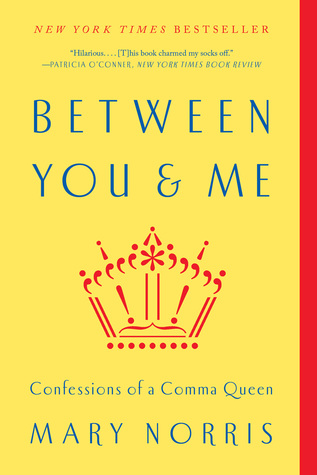
Take A Peek (audio) Book Review: Between You and Me: Confessions of a Comma Queen by Mary Norris

“Take a Peek” book reviews are short and (possibly) sweet, keeping the commentary brief and providing a little peek at what the book’s about and what I thought.

Synopsis:

(via Goodreads)

Mary Norris has spent more than three decades in The New Yorker‘s copy department, maintaining its celebrated high standards. Now she brings her vast experience, good cheer, and finely sharpened pencils to help the rest of us in a boisterous language book as full of life as it is of practical advice.

Between You & Me features Norris’s laugh-out-loud descriptions of some of the most common and vexing problems in spelling, punctuation, and usage—comma faults, danglers, “who” vs. “whom,” “that” vs. “which,” compound words, gender-neutral language—and her clear explanations of how to handle them. Down-to-earth and always open-minded, she draws on examples from Charles Dickens, Emily Dickinson, Henry James, and the Lord’s Prayer, as well as from The Honeymooners, The Simpsons, David Foster Wallace, and Gillian Flynn. She takes us to see a copy of Noah Webster’s groundbreaking Blue-Back Speller, on a quest to find out who put the hyphen in Moby-Dick, on a pilgrimage to the world’s only pencil-sharpener museum, and inside the hallowed halls of The New Yorker and her work with such celebrated writers as Pauline Kael, Philip Roth, and George Saunders.

Readers—and writers—will find in Norris neither a scold nor a softie but a wise and witty new friend in love with language and alive to the glories of its use in America, even in the age of autocorrect and spell-check. As Norris writes, “The dictionary is a wonderful thing, but you can’t let it push you around.”


My Thoughts:

What fun! Mary Norris’s excellent memoir/grammar book is funny, clever, informative, and endlessly entertaining. She recounts her early days at The New Yorker, learning the rules of copy editing one pencil mark at a time. She has chapters dedicated to the finer nuances of punctuation, a fascinating chapter on vulgarity and swear words in print, and an homage to her obsession with pencils.

I listened to the audiobook, which has pros and cons. On the pro side, Mary Norris herself is the narrator. She has a distinctive voice, very sharp and clear, and you can sense the humor underlying every sentence she utters. On the con side, some of the punctuation chapters were especially difficult to follow, and I think I would have enjoyed them more if I’d at least had a print copy on hand for reference.

Between You & Me is perfect for word geeks and bibliophiles everywhere. I think I need to grab a hard copy to keep on hand for the next time I need to clarify some commas or hyphens, or finally settle on whether to use “which” or “that”.

_________________________________________

The details:

Title: Between You & Me: Confessions of a Comma Queen
Author: Mary Norris
Publisher: W. W. Norton Company
Publication date: August 4, 2016
Print length: 240 pages
Audiobook length: 8 hours, 10 minutes
Genre: Non-fiction
Source: Audible

Save

Save

Save

Save

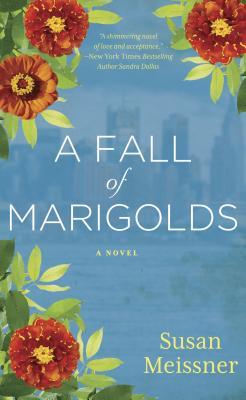
Take A Peek Book Review: A Fall of Marigolds by Susan Meissner

“Take a Peek” book reviews are short and (possibly) sweet, keeping the commentary brief and providing a little peek at what the book’s about and what I thought.

Synopsis:

(via Goodreads)

A beautiful scarf, passed down through the generations, connects two women who learn that the weight of the world is made bearable by the love we give away….

September 1911. On Ellis Island in New York Harbor, nurse Clara Wood cannot face returning to Manhattan, where the man she loved fell to his death in the Triangle Shirtwaist Fire. Then, while caring for a fevered immigrant whose own loss mirrors hers, she becomes intrigued by a name embroidered onto the scarf he carries …and finds herself caught in a dilemma that compels her to confront the truth about the assumptions she’s made. Will what she learns devastate her or free her?

September 2011. On Manhattan’s Upper West Side, widow Taryn Michaels has convinced herself that she is living fully, working in a charming specialty fabric store and raising her daughter alone. Then a long-lost photograph appears in a national magazine, and she is forced to relive the terrible day her husband died in the collapse of the World Trade Towers …the same day a stranger reached out and saved her. Will a chance reconnection and a century-old scarf open Taryn’s eyes to the larger forces at work in her life?

My Thoughts:

While A Fall of Marigolds held my attention, I couldn’t quite love this book. For one thing, I’m really getting tired of the split timeline narrative that seems to be everywhere these days, especially when the two timelines are connected by some artifact of one sort or another — a painting, a diary, a doll, etc. It’s a plot device that’s becoming all too prevalent in historical fiction when the author wants a contemporary hook. In A Fall of Marigolds, it’s a colorful scarf that features in both the 1911 and 2011 stories, but the linkage between the two feels forced at times.

It’s too bad, because I might have enjoyed the book more if it had just told one story or the other. Either is compelling, and the book does contain some very dramatic and emotional moments. 9/11 is still part of our collective psyches, and it’s impossible to read Taryn’s part of the story, which includes her eyewitness experience of watching the towers fall, and not be overwhelmed by memories and feelings.

Likewise, the story of the nurses of Ellis Island and their work with infectious immigrants, as well as the story of the Triangle Shirtwaist Fire, is powerful and moving. But the lives of the fictional characters can’t really measure up to the terror and power of the real events. Clara’s experiences, and her fixation on the man who died in the fire in particular, seem rather lightweight when looking at the broader extent of the tragedy. Her story is enlivened by her interactions with the immigrant she nurses through scarlet fever and her dilemma regarding his own losses and secrets, but I couldn’t buy the essential premise of her part of the story and Clara’s view on love and destiny.

The entire plot of A Fall of Marigolds seems to rest quite a bit on the characters coming to terms with events outside of their control. For both Taryn and Clara, they’re left to sort out whether things were meant to happen, or whether their own actions were somehow to blame for outcomes that could otherwise have been avoided. Clara’s need to figure out whether her love for the man she barely knew was real is vital to her, but her fixation on the loss of what might have been begins to feel overblown as the story progresses. On the other hand, Taryn’s guilt over surviving and the loss of her husband feel quite real, and her story gets a pay-off that is bittersweet yet satisfying.

Parts of this book are quite good, but as a whole, there’s some essential element missing. And as I said, the overall structure doesn’t work for me in general — I really would not have started this book, knowing it was a “two-women-from-two-different-eras-linked-by-one-special-thing” kind of story, were it not a book group pick. I’m glad to have read it, but knowing now that most of this author’s works have a similar two-timeline structure, I don’t think I’ll be seeking out more of her books.

_________________________________________

The details:

Title: A Fall of Marigolds
Author: Susan Meissner
Publisher: NAL
Publication date: January 1, 2014
Length: 394 pages
Genre: Contemporary/historical fiction
Source: Purchased

Save

Save

Save