Book Review: Winter Solstice by Rosamunde Pilcher

Title: Winter Solstice
Author: Rosamunde Pilcher
Publisher: Dutton
Publication date: 2000
Length: 520 pages
Genre: Contemporary fiction
Source: Purchased
Rating:

Rating: 5 out of 5.

In Winter Solstice Rosamunde Pilcher brings her readers into the lives of five very different people….

Elfrida Phipps, once of London’s stage, moved to the English village of Dibton in hopes of making a new life for herself. Gradually she settled into the comfortable familiarity of village life — shopkeepers knowing her tastes, neighbors calling her by name — still she finds herself lonely.

Oscar Blundell gave up his life as a musician in order to marry Gloria. They have a beautiful daughter, Francesca, and it is only because of their little girl that Oscar views his sacrificed career as worthwhile.

Carrie returns from Austria at the end of an ill-fated affair with a married man to find her mother and sister sharing a home and squabbling endlessly. With Christmas approaching, Carrie agrees to look after her sister’s awkward and quiet teenage daughter, Lucy, so that her mother might enjoy a romantic fling in America.

Sam Howard is trying to pull his life back together after his wife has left him for another. He is without home and without roots, all he has is his job. Business takes him to northern Scotland, where he falls in love with the lush, craggy landscape and set his sights on a house.

It is the strange rippling effects of a tragedy that will bring these five characters together in a large, neglected estate house near the Scottish fishing town of Creagan.

It is in this house, on the shortest day of the year, that the lives of five people will come together and be forever changed. Rosamunde Pilcher’s long-awaited return to the page will warm the hearts of readers both old and new. Winter Solstice is a novel of love, loyalty and rebirth.

What a perfect book to start off a new year! I suppose it would have been even better to read Winter Solstice in the weeks leading up to Christmas and the solstice… but now I know in case I ever want to re-read it.

Winter Solstice is a big, heartwarming book, originally published in 2000, but with such a lovely, unhurried air that it feels like a throwback to an earlier era. In Winter Solstice, the author introduces us to a large cast of characters and then takes her time to let us get to know them before weaving all their stories together.

First and foremost is Elfrida Phipps, a former actress in her early 60s, who’ll be the first to inform you that her acting career was nothing splashy. After losing the man she loves after a long illness, Elfrida is ready to move into her retirement years. She leaves London and buys herself a cozy cottage in the village of Dibton, where she settles into small-town life and becomes part of the community.

In Dibton, she’s welcomed by Oscar and Gloria Blundell, who lives in a gorgeous home with their young daughter Francesca. Elfrida especially enjoys her conversations with Oscar, the church organist and a lifelong music lover and teacher, as well as her newfound friendship with Francesca.

Meanwhile, Elfrida’s cousin Carrie is heartbroken after the end of her long-term relationship with a married man. She returns home to London to find her mother and sister endlessly squabbling, leaving her 14-year-old niece Lucy stuck in the middle and yet sadly ignored.

Rounding out the cast of main characters, we also meet Sam, a businessman who’s returning home from New York to the UK to take up a prestigious new position with a wool-manufacturing conglomerate, at loose ends and unsure of anything but his work life.

The characters’ paths come together in the small Scottish town of Creagan where, for various reasons, they end up spending the weeks leading up to Christmas. As they settle in, they find shelter, friendship, and new possibilities. I really don’t want to say much more about the plot. This is a rather gentle story, so there aren’t any cliffhangers or mysteries — and yet, discovering how all the characters’ lives intersect and move forward is one of the joys of reading this lovely book.

There’s something beautiful and timeless about the writing in Winter Solstice. Nothing is rushed; the story moves forward through small steps, as we see moments in people’s lives, reflections on what’s come before, and an understanding of each person’s dreams, frustrations, and needs.

The descriptions of the land, the sea, and the general surroundings are simple and lovely:

And over the shallow hills of the distant headland inched the first sliver of an orange sun. The curved rim of dazzling light touched the shifting sea, smudged shadows on the undulations of the sand, and drained darkness from the sky, so that gradually it was no longer sapphire-blue, but faded to aquamarine.

The characters spend time together, but also alone. There’s a deep sense of appreciation as they find themselves in a moment of peace, away from the hustle of day to day life, able to live in the moment and simply let themselves experience the people and places around them.

This is a long novel, and I was afraid at first that it would be slow or even (gasp!) boring. No need to worry! The plot does take a leisurely approach, but I was never uninterested or wishing for the pace to pick up. The writing style gives us time to really get to know the characters, and it’s this approach that enables us to truly appreciate how they later connect and form new, meaningful relationships.

Prior to the this, the only book by Rosamunde Pilcher that I’d read was The Shell Seekers — so long ago that I couldn’t tell you a thing about the plot at this point. I doubt I ever would have come across Winter Solstice if not for a recommendation by an author who chatted with my book group last year. I’m so grateful that she recommended it!

Winter Solstice represents comfort, friendship, community, and goodness, without ever verging into saccharine-sweetness. The characters are lovely but imperfect, and there’s plenty of sadness mixed in with the joy. I thoroughly enjoyed this novel, and recommend it highly.

Question: Have you read Rosamunde Pilcher’s novels? Do you have a favorite to recommend?

Purchase linksAmazon – Audible audiobook – Bookshop.orgLibro.fm
Disclaimer: When you make a purchase through one of these affiliate links, I may earn a small commission, at no additional cost to you.
Audiobook Review: Shakespeare: The Man who Pays the Rent by Judi Dench and Brendan O’Hea

Title: Shakespeare: The Man who Pays the Rent
Author: Judi Dench and Brendan O’Hea
Narrators: Brendan O’Hea and Barbara Flynn, with Judi Dench
Publisher: St. Martin’s Press
Publication date: April 23, 2024
Print length: 400 pages
Audio length: 12 hours 5 minutes
Genre: Non-fiction / memoir / literature
Source: Library
Rating:

Rating: 5 out of 5.

Discover the work of the greatest writer in the English language as you’ve never encountered it before by ordering internationally renowned actor Dame Judi Dench’s SHAKESPEARE: The Man Who Pays The Rent—a witty, insightful journey through the plays and tales of our beloved Shakespeare.

Taking a curtain call with a live snake in her wig…

Cavorting naked through the Warwickshire countryside painted green…

Acting opposite a child with a pumpkin on his head…

These are just a few of the things Dame Judi Dench has done in the name of Shakespeare.

For the very first time, Judi opens up about every Shakespearean role she has played throughout her seven-decade career, from Lady Macbeth and Titania to Ophelia and Cleopatra. In a series of intimate conversations with actor & director Brendan O’Hea, she guides us through Shakespeare’s plays with incisive clarity, revealing the secrets of her rehearsal process and inviting us to share in her triumphs, disasters, and backstage shenanigans.

Interspersed with vignettes on audiences, critics, company spirit and rehearsal room etiquette, she serves up priceless revelations on everything from the craft of speaking in verse to her personal interpretations of some of Shakespeare’s most famous scenes, all brightened by her mischievous sense of humour, striking level of honesty and a peppering of hilarious anecdotes, many of which have remained under lock and key until now.

Instructive and witty, provocative and inspiring, this is ultimately Judi’s love letter to Shakespeare, or rather, The Man Who Pays The Rent.

This audiobook makes my list of one of my most enjoyable listens of 2025! In this remarkable book, Dame Judi Dench discusses her many roles in Shakespeare productions, going back to her very first professional roles and taking us through her experiences in the decades that followed. What becomes immediately apparent is her great love for Shakespeare, and even more astounding, her in-depth, detailed recall and understanding of the great lines and moments she’s performed over the years.

This book started as a series of recorded conversations between Judi Dench and Shakespearean actor and director Brendan O’Hea, with whom Ms. Dench has worked with many times over the years. The conversations took place over a period of four years, with the duo originally intending to donate the recordings to the archives of the Globe. But over time, the authors realized that there might be content here to appeal to a broader audience, and thus we have this book.

In it, the authors discuss all of Dame Judi’s roles, going play by play and character by character. It’s extraordinary to witness her vivid descriptions of the costumes, sets, and fellow actors, as well as the tone of the production and the specifics of working with different directors. Beyond the story of her experiences acting are deeper reflections on the content of the plays themselves, with vastly insightful thoughts on Shakespeare’s writing, what he includes or doesn’t include in the play, and why these plays still have meaning for today’s audiences and readers.

There’s so much to learn here! I’ve taken Shakespeare courses (long, long ago), but don’t remember learning nearly as much in that context as I did here, especially in terms of what is conveyed by whether lines are written in iambic pentameter or blank verse or prose. She discusses where breaths fall and how lines are delivered, pacing of speech and in-the-moment decisions about intonation and emphasis. It’s fascinating.

Equally fascinating are the tidbits about different productions and the reactions of critics to seemingly small details. I also picked up plenty of little trivia items along the way. For example, I don’t think I ever knew that in Shakespeare’s time, it was illegal to perform a wedding on-stage in a theatrical production — which is why weddings in Shakespeare’s plays take place offstage or aren’t shown in full.

The audiobook experience is terrific. While Brendan O’Hea reads his part of the conversations, narrator Barbara Flynn stands in for Judi Dench. I was disappointed at first not to be hearing Judi Dench throughout, but Barbara Flynn does such a great job that she melts into the part she’s playing, and I often forgot that I wasn’t listening to the actor herself. However, Judi Dench does the reading for the Shakespearean lines that start each chapter, and there’s a really amusing little extra at the end of the audiobook which is a recording of an additional conversation between her and Brendan. It’s very, very funny.

While the audiobook conveys the content in full, and is an amazing way to appreciate the lines from the plays throughout, it’s worth mentioning that the hard copy of the book includes sketches by Judi Dench herself. I’d recommend at least borrowing a library edition of the hard copy to follow along as you enjoy the audiobook. For me, I was loving the audio so much that I just had to have a print edition of my own, and made myself a little holiday gift of the hardcover version.

Not only did I love the stories and insights, but I also gained knowledge about plays I hadn’t read or encountered before. Reading this book has inspired me to read (and then try to find film versions) of more Shakespeare plays.

Shakespeare: The Man Who Pays the Rent is a phenomenal audiobook experience. For anyone who loves Shakespeare and the history of theater, I’d say it’s a must read and/or must listen! And beyond the academic aspects, it’s lovely to hear Judi Dench’s reminiscences and personal stories about her life in theater and what it’s all meant to her.

Definitely a 5-star experience. Don’t miss it.

Purchase linksAmazon – Audible – Bookshop.org – Libro.fm
Disclaimer: When you make a purchase through one of these affiliate links, I may earn a small commission, at no additional cost to you.
Save

Book Review: The Stolen Queen by Fiona Davis

Title: The Stolen Queen
Author: Fiona Davis
Publisher: Dutton
Publication date: January 7, 2025
Length: 352 pages
Genre: Historical fiction
Source: Library
Rating:

Rating: 4 out of 5.

From New York Times bestselling author Fiona Davis, an utterly addictive new novel that will transport you from New York City’s most glamorous party to the labyrinth streets of Cairo and back.

Egypt, 1936: When anthropology student Charlotte Cross is offered a coveted spot on an archaeological dig in Egypt’s Valley of the Kings, she leaps at the opportunity. But after an unbearable tragedy strikes, Charlotte knows her future will never be the same.

New York City, 1978: Eighteen-year-old Annie Jenkins is thrilled when she lands an opportunity to work for iconic former Vogue fashion editor Diana Vreeland, who’s in the midst of organizing the famous Met Gala, hosted at the museum and known across the city as the “party of the year.” Though Annie soon realizes she’ll have her work cut out for her, scrambling to meet Diana’s capricious demands and exacting standards.

Meanwhile, Charlotte, now leading a quiet life as the associate curator of the Met’s celebrated Department of Egyptian Art, wants little to do with the upcoming gala. She’s consumed with her research on Hathorkare—a rare female pharaoh dismissed by most other Egyptologists as unimportant.

That is, until the night of the gala. When one of the Egyptian art collection’s most valuable artifacts goes missing . . . and there are signs Hathorkare’s legendary curse might be reawakening.

As Annie and Charlotte team up to search for the missing antiquity, a desperate hunch leads the unlikely duo to one place Charlotte swore she’d never return: Egypt. But if they’re to have any hope of finding the artifact, Charlotte will need to confront the demons of her past—which may mean leading them both directly into danger.

I seem to say this a lot: Thanks to my book group, I’ve read yet another book that I might not otherwise have picked up… and I’m so glad I did!

In The Stolen Queen, author Fiona Davis presents a dual-timeline story, alternating between events in Egypt in 1937 and in New York in 1978. The connection is Charlotte Cross, a curator at the Metropolitan Museum of Art specializing in Egyptian artifacts. In 1937, as a young student, she worked on an archaeological team in the Valley of the Kings, where she helped discover a previously unknown tomb. But tragedy struck, and she vowed never to return to Egypt.

Now, in 1978, she has a steady career at the Met, and pursues her passion project — an investigation into the woman pharaoh Hathorkare, whom most historians ignore or consider unimportant. Charlotte has uncovered evidence that disputes the generally held beliefs about Hathorkare, and just needs approval to move ahead with publication.

The other main character is Annie, a 19-year-old who works hard at menial jobs to support herself and her immature, selfish mother while dreaming of a future in fashion. When a chance encounter puts her into the orbit of Diana Vreeland, her dreams appear to be within reach — until a disaster at the Met Gala seems to entirely ruin her hopes.

When a priceless Egyptian artifact is stolen and Charlotte and Annie end up in the path of the thief, they join forces to track down the missing item. Charlotte is finally forced to confront her past as the search leads them to Egypt. Together, they not only trace clues to the theft, but uncover deeper secrets that have a huge impact on Charlotte’s life and change everything she thought she knew about her own past.

I picked up this book with some trepidation. I wasn’t entirely sure that I was in the mood for historical fiction, and was afraid (for whatever reason) that the story would be dry. I’m happy to report that my fears were unfounded! Once I started reading, I was hooked.

Both timelines are handled very well. The 1937 storyline gives us a strong foundation for who Charlotte is as a person, and is crucial for understanding the woman we meet in the later timeline. We get a very good sense of the status of women in the field of archaeology, as well as a vivid picture of the challenges and triumphs of life on a dig. The descriptions of working in Egypt — the heat, the sights and sounds and smells — bring the period and the setting to vibrant life.

In the 1978 timeline, we initially encounter a very different Charlotte, but as the book progresses, we can make the connection between who she once was and who she is now, as a 60-year-old woman with respected status in her field and a personal life that seems to teeter back and forth between being satisfying or just a holding pattern. The tragedy from Charlotte’s past is never forgotten, but also never spoken of — and as we learn, there are unresolved pieces that even Charlotte doesn’t fully understand.

I did question the inclusion of the Diana Vreeland storyline. I suppose if you’re writing a novel set at the Met, including the Met Gala adds glamour and excitement — but of all the various story threads, this is the one that interested me the least and seemed least successful. This is Annie’s entry into Charlotte’s life, but other than that, much of the Met Gala plot felt unnecessary to me.

My other quibble with the book is Charlotte’s focus on the curse associated with Hathorkare. As a scholar and an archaeologist, Charlotte’s belief in the curse and her suspicion that it was responsible for some of the tragedies in her life just isn’t credible. I couldn’t prevent a bit of eye-rolling whenever the subject of the curse cropped up.

On the other hand, I enjoyed the scenes in Egypt and the investigation that occurs there, as well as the development of the research into Hathorkare’s tomb and her history. Some events feel a bit too convenient or coincidental, but ultimately, I was able to overlook these as the overarching story kept me engaged throughout.

Themes of lost and found family tie the various elements of the plot together, as does the examination of women’s professional opportunities and how those have changed (or not) over the decades.

Through the characters’ discussions, we also gain insights into the ongoing debate about where antiquities belong. Does preservation or the ability to share with a greater public override the claims of the country of origin, even if that country doesn’t have the means to adequately preserve, protect, or display the antiquities? There aren’t any easy answers, but I appreciate the thoughtful way the issues are discussed in this book.

The Stolen Queen is the first book I’ve read by Fiona Davis, although I have a few others on my TBR list. If you have recommendations, please let me know!

Overall, I’m very glad to have read The Stolen Queen. It had me hooked right from the start. I loved the characters, the historical elements, and the several mysteries that are central to the plot. Definitely recommended for fans of historical fiction — and needless to say, recommended for book groups!

Purchase linksAmazon – Audible audiobook – Bookshop.orgLibro.fm
Disclaimer: When you make a purchase through one of these affiliate links, I may earn a small commission, at no additional cost to you.

Book Review: A Damsel in Distress by P. G. Wodehouse

Title: A Damsel in Distress
Author: P. G. Wodehouse
Publisher: Various (public domain)
Publication date: 1919
Length: 216 pages
Genre: Classic fiction
Source: Purchased
Rating:

Rating: 4.5 out of 5.

When Maud Marsh flings herself into George Bevan’s cab in Piccadilly, he starts believing in damsels in distress. George traces his mysterious traveling companion to Belpher Castle, home of Lord Marshmoreton, where things become severely muddled. Maud’s aunt, Lady Caroline Byng, wants Maud to marry Reggie, her stepson. Maud, meanwhile, is known to be in love with an unknown American she met in Wales. So when George turns up speaking American, a nasty case of mistaken identity breaks out. In fact, the scene is set for the perfect Wodehouse comedy of errors.

What a silly, happy book this is!

I’ve read a couple of the author’s Jeeves books — delightfully funny — and when I stumbled across A Damsel in Distress, I simply couldn’t resist picking it up… especially since it fits neatly into a reading challenge I’m trying to complete.

In A Damsel in Distress, American composer George Bevan is basically minding his own business after a production of his latest musical theater show when a woman barges into his cab in the middle of London, begging him to hide her. When a stout man catches up and demands that he reveal the woman in his cab — which he refuses to do — a chain of events is started that ends with George falling in love, the woman making her own clever escape, and her pursuer in the custody of police. And that’s only the beginning of the chaos that follows!

We follow several threads related to mismatched love interests, upstairs/downstairs shenanigans and schemes, and mistaken identity. Comedic set-pieces galore offer silly escapades and plenty of embarrassment for certain character, while the various entangled love stories go off in unexpected directions.

As always, Wodehouse’s writing is deliciously funny — as when George can either climb up a rope made of knotted bedsheets or be caught in a socially awkward position:

From above came Albert’s hoarse whisper. “Look alive!” This was precisely what George wanted to do for at least another fifty years or so; and it seemed to him as he stood there in the starlight, gingerly fingering this flimsy linen thing, that if he were to suspend his hundred and eighty pounds of bone and sinew at the end of it over the black gulf outside the balcony he would look alive for about five seconds, and after that goodness only knew how he would look.

There are too many wonderful quotes to choose from — here are a couple more:

Maud was of the class whose education consists mainly of a training in the delicate ignoring of delicate situations.

I don’t know what your experience has been, but mine is that proposing’s a thing that simply isn’t within the scope of a man who isn’t moderately woozled.

I thoroughly enjoyed reading A Damsel in Distress. The aristocratic snobbery, silly slang, and goofy hijinks all add up to a very entertaining read. Highly recommended for when you’re in the mood for a light, funny read.

After finishing the book, I was curious to see if it had ever been adapted as a movie… and what do you know? There’s a 1937 black-and-white movie musical version starring Fred Astaire and Joan Fontaine, and featuring George Burns and Gracie Allen! I’m definitely going to need to find where to stream this. Has anyone seen it?

Interested in the book?

Purchase linksAmazon – Audible audiobook – Bookshop.orgLibro.fm
Disclaimer: When you make a purchase through one of these affiliate links, I may earn a small commission, at no additional cost to you.
Book Review: Through Gates of Garnet and Gold (Wayward Children, #11) by Seanan McGuire

Title: Through Gates of Garnet and Gold
Series: Wayward Children, #11
Author: Seanan McGuire
Publisher: Tor
Publication date: January 6, 2026
Length: 160 pages
Genre: Fantasy
Source: Review copy courtesy of the publisher via NetGalley

Rating: 4 out of 5.

A fan-favorite character returns in this action-packed instalment of the Hugo Award-winning Wayward Children series.

After Nancy was cast out of the Halls of the Dead and forced to enroll at Eleanor West’s School for Wayward Children, she never believed she’d find her door again, and when she did, she didn’t look back. She disappeared from the school to resume her place in the Halls, never intending to return.

Years have passed. A darkness has descended on the Halls, and the living statues who populate them are dying at the hands of the already dead. The Lord and Lady who rule the land are helpless to stop the slaughter, forcing Nancy to leave the Halls again, this time on purpose, as she attempts to seek much-needed help from her former schoolmates.

But who would volunteer to quest in a world where the dead roam freely?

And why are the dead so intent on adding to their number?

In Through Gates of Garnet and Gold, the 11th book in Seanan McGuire’s Wayward Children series, we go back to the beginning — sort of — by reconnecting with Nancy, the main character from the very first book, Every Heart a Doorway.

In the world of the Wayward Children, there are doors that lead to other worlds, and children who feel out of place are the ones who tend to find them. But each door comes with a simple warning: Be Sure. Those who are sure may find themselves a new home beyond their doors, a place where they finally fit.

Anyway, wanting isn’t the point. It’s the certainty. The absolute conviction that you’re willing to give up everything you know, everything you have, if you can just go somewhere that you’ll be understood.

When doubts or second thoughts creep in, that’s when children find themselves booted back to their home worlds, no more suited for life where they started from than they ever were. And that’s where Eleanor West’s Home for Wayward Children comes in, providing a refuge and a found family for children who’ve found and then lost their true homes… and in many cases, are simply biding their time until their door comes back to take them home again.

In Nancy’s case, certainty was never an issue. She’s sure. She knows she belongs in the Halls of the Dead, where the Lord and Lady cherish their living statues — people, like Nancy, who find the absolute stillness of this world a balm and a comfort. Nancy never wants to leave, until the silence and motionlessness of the halls are broken by a violent attack of the unquiet dead. Voracious spirits attack, devouring any life they can find. As the living statues are imperiled, the Lord and Lady send Nancy to seek help. To save her home, she agrees to leave it, and finds herself back at the Home for Wayward Children once again.

Rallying a small group of her friends, they return to save the day, but their quest isn’t as straightforward as they’d hoped. They must find the cause of this disturbance and put it right — but as they do so, Nancy learns more about this world she considers home, and more than she really wanted to know about its rulers and their care for their subjects.

I enjoyed this reunion with Nancy, who’s always been a favorite of mine. I’ve always loved the descriptions of her desire for stillness. It may sound crazy to you or me, but the writing in this series truly allows us inside Nancy’s mind, so we can understand what she needs even while knowing that it would be awful for most people.

Other familiar characters come along on the quest. I won’t divulge too many details, but I will point out that this book is not at all a good entry point into the series. You really do need to know what’s come before in order to grasp the significance of certain characters’ actions.

Somehow, Through Gates of Garnet and Gold didn’t quite deliver the brilliance of the last book (Adrift in Currents Clean and Clear) or others that I consider the best of the bunch. Perhaps that’s because this is a return to a world and characters we’ve already seen, rather than an introduction to some new fantastical world. The plot is interesting enough, but lacked a major punch. I was involved, but not on the edge of my seat.

The ending, while wrapping up this particular quest, opens the door (so to speak) to more questions and new developments. I hate the idea of having to wait a year for the next book!

Fans of the Wayward Children series will absolutely want to check out Through Gates of Garnet and Gold. It’s an engaging entry into a series that always offers surprises and delights. I wouldn’t say it’s the best of the series… but it’s still very, very good.

Purchase linksAmazon – Audible — Bookshop.org – Libro.fm
Disclaimer: When you make a purchase through one of these affiliate links, I may earn a small commission, at no additional cost to you.
Book Review: The Correspondent by Virginia Evans

Title: The Correspondent
Author: Virginia Evans
Publisher: Crown
Publication date: April 29, 2025
Length: 291 pages
Genre: Contemporary fiction
Source: Purchased
Rating:

Rating: 4.5 out of 5.

Sybil Van Antwerp has throughout her life used letters to make sense of the world and her place in it. Most mornings, around half past ten, Sybil sits down to write letters—to her brother, to her best friend, to the president of the university who will not allow her to audit a class she desperately wants to take, to Joan Didion and Larry McMurtry to tell them what she thinks of their latest books, and to one person to whom she writes often yet never sends the letter.

Sybil expects her world to go on as it always has—a mother, grandmother, wife, divorcee, distinguished lawyer, she has lived a very full life. But when letters from someone in her past force her to examine one of the most painful periods of her life, she realizes that the letter she has been writing over the years needs to be read and that she cannot move forward until she finds it in her heart to offer forgiveness.

Filled with knowledge that only comes from a life fully lived, The Correspondent is a gem of a novel about the power of finding solace in literature and connection with people we might never meet in person. It is about the hubris of youth and the wisdom of old age, and the mistakes and acts of kindness that occur during a lifetime. Sybil Van Antwerp’s life of letters might be “a very small thing,” but she also might be one of the most memorable characters you will ever find.

The Correspondent is a lovely book about looking back at a life, understanding the past, making amends, and finding connections. It’s about a lot, actually — but isn’t life like that?

This epistolary novel takes place solely through the letters Sybil Van Antwerp writes and receives. Covering a span of ten years, we follow Sybil through her seventies, as she looks back on a life full of professional achievement, family joys and sorrows, good friends, and lots of literature. Through it all, she’s been a letter writer, sitting at her desk each day to write by hand on lovely paper. She writes to friends and family members, but also to a college dean, customer service representatives, obnoxious garden club members, and her favorite authors.

Sybil’s letters, one by one, provide readers with insight into the complicated inner life of a woman who, at first, seems like yet another somewhat cranky older woman character. But there’s so much more to discover: There’s a deep vein of grief that runs through all her letters, and as we learn, there are regrets from her past that she wishes to fix, if she can. Her family dynamics can be fraught, as we see in her often contentious relationship with her daughter, yet she displays a remarkable amount of kindness toward others in need, whether the son of a good friend with whom she corresponds throughout his difficult teen years or the high school student who reaches out for a school research project.

Themes of reconciliation and forgiveness add depth to the novel. Sybil affects others’ lives in big and small ways. A situation that seems threatening turns into an opportunity for making amends. Someone with whom Sybil interacts in a business capacity ends up having his life changed thanks to Sybil’s assistance.

And yet, we also see Sybil’s pain over a terrible loss, her ruminations on how and why her marriage ended, and her sorrow over her failures regarding her relationship with her daughter. Through her letters, Sybil communicates with others, but also investigates her own experiences. As we learn early on, Sybil has a condition that will lead to blindness, and while she doesn’t engage in self-pity, we see how deeply she fears the loss of vision, especially as a lifelong passionate reader who knows her time with books and writing may come to an end.

Lest this all sound quite dire, I must point out that The Correspondent has wonderful moments of joy and laughter as well. Sybil is courted by two very different men, and her descriptions of her experiences are sweet and funny. I loved her letters to authors. We might at first consider Sybil naive in her belief that a famous author might read her letters or remember her — but Sybil’s philosophy is to write to whomever she’s interested in communicating with, and who knows? She may actually get a response. There are several results of her letter-writing that absolutely delighted me — I won’t get into details, because these episodes are just too wonderful to spoil.

I’m so glad that I picked up The Correspondent. It’s a quick read that pulls on the heartstrings without becoming overly sentimental. There’s a deep sense of goodness here. Sybil isn’t perfect and hasn’t lived a perfect life. Through her letters, we understand her, and see what a difference one imperfect person can make.

Purchase linksAmazon – AudibleBookshop.orgLibro.fm
Disclaimer: When you make a purchase through one of these affiliate links, I may earn a small commission, at no additional cost to you.
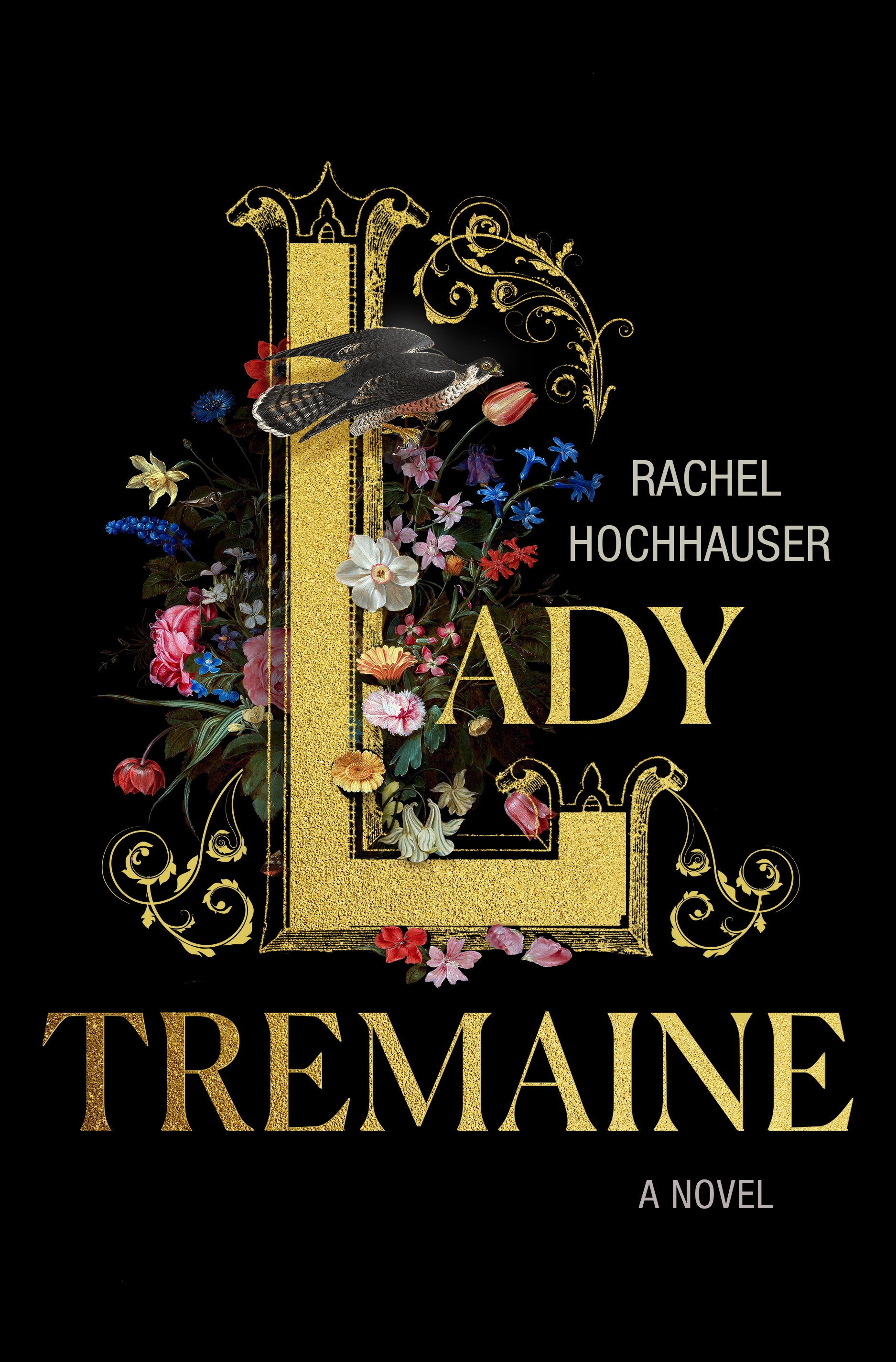
Audiobook Review: Next Time Will Be Our Turn by Jesse Q. Sutanto

Title: Next Time Will Be Our Turn
Author: Jesse Q. Sutanto
Narrators: Emily Woo Zeller and Louisa Zhu
Publisher: Berkley
Publication date: November 11, 2025
Print length: 352 pages
Audio length: 11 hours 19 minutes
Genre: Contemporary / historical fiction
Source: Library (audiobook); ARC via NetGalley (ebook)
Rating:

Rating: 5 out of 5.

A grandmother tells her granddaughter about her twisty, often surprising, journey to who she is now in this sweeping love story by USA Today bestselling author Jesse Q. Sutanto.

Izzy Chen is dreading her family’s annual Chinese New Year celebration, where they all come together at a Michelin-starred restaurant to flaunt their status and successes in hopes to one up each other. So when her seventy-three-year-old glamorous and formidable grandmother walks in with a stunning woman on her arm and kisses her in front of everyone, it shakes Izzy to her core. She’d always considered herself the black sheep of the family for harboring similar feelings to the ones her Nainai just displayed.

Seeing herself in her teenage granddaughter’s struggles with identity and acceptance, Magnolia Chen tells Izzy her own story, of how as a teen she was sent by her Indo-Chinese parents from Jakarta to Los Angeles for her education and fell in love with someone completely forbidden to her by both culture and gender norms—Ellery, an American college student who became Magnolia’s best friend and the love of her life. Stretching across decades and continents, Magnolia’s star-crossed love story reveals how life can take unexpected turns but ultimately lead you to exactly who you’re meant to be.

If you are only familiar with Jesse Q. Sutanto through her uproariously funny Aunties and Vera Wong series (as I was), you may not be prepared for the emotional, beautiful journey that is Next Time Will Be Our Turn. This lovely book surprised me in all the best ways, and is one of the most moving books I’ve had the pleasure to read this year.

The story is framed through a sixteen-year-old Chinese-Indonesian girl’s experiences at her huge family’s Chinese New Year part in Jakarta. Izzy considers herself an outcast — she doesn’t fit it amongst her boisterous aunts, uncles, and cousins; would rather read in a corner than socialize or draw attention to herself; and knows that if anyone knew the truth about her interest in girls — in a society that’s very much rooted in traditional marriage — she’d be even more of a black sheep than she already is.

The party is shocked into silence when Izzy’s glamorous, successful businesswoman grandmother enters the party on the arm of a statuesque white woman… and proceeds to kiss her in a way that’s clearly non-platonic. Izzy is thrown for a loop, drowning in confusion and her own tumult of emotions. Later, her grandmother Magnolia meets her outside her home for a late-night walk, and proceeds to tell Izzy her own story.

And what a story it is! Magnolia takes us back to her youth when, at age 16, her parents send her to LA to join her older sister Iris at community college. Magnolia knows exactly the future that’s expected of her: Go to America, get a college degree, then return to Indonesia and marry a successful young man who’ll then be a successor to the family business (a medical practice), while Magnolia fulfills her role as a good, respectable, accomplished wife and bears lots of children. But something inside Magnolia itches at the idea of following this path. Her sister Iris certainly isn’t doing what’s expected of her — she’s loud, rebellious, impatient, and seemingly has no interest in making life easy for her little sister. She’d rather be with her American friends and pursue a career, not think about landing a good husband just to please her parents.

Everything changes for Magnolia when, on her very first day on campus, she meets Ellery — whom she describes (to Izzy’s shock) as the love of her life. Ellery is beautiful, tall, American… and warm and funny, and open to life in a way that Magnolia hasn’t seen before. The two becomes immediate friends. Magnolia doesn’t know what to make of her feelings for Ellery — back home, girls often had “girl crushes”, so that’s all this is… right? Ellery herself has a girlfriend, and what she offers Magnolia is friendship, but the intensity between the two makes it clear that there’s much more beneath the surface.

What follows is an incredibly moving story spanning decades, as Magnolia is torn — over and over again — between family expectations, societal demands, and her heart’s deepest wishes. She and Ellery go through periods of painful separation, but their deep connection is never broken. When Magnolia eventually returns to Jakarta and follows the path set out for her, she settles into a life that doesn’t fulfill her, but sees no other real options, until a reconciliation with her sister Iris brings the two closer together than they’d ever been. Iris helps Magnolia realize that she yearns for more than a life as a trophy wife, and helps her start to make her dreams come true.

As Magnolia tells her story to Izzy, she covers the years of longing and absence, the memories of Ellery that never left her, and the beautiful story of her love for Iris. Much isn’t entirely straightforward — because yes, Izzy is at first horrified to hear Magnolia describe some woman she’s never heard of as the love of her grandmother’s life. What about her grandfather? It’s complicated, to say the least.

We get interludes throughout where Izzy responds to Magnolia, but this is truly Magnolia’s story. With a well-developed narrative voice, Magnolia shares the confusion of her teens, the hopes and fears of her early adulthood, and the sometimes bitter realities of what it means to be a woman in Indonesia. As she shares her secrets, her emotions are plain to see. She’s trying to knock Izzy out of her own sense of despair and hopelessness, and it works: By telling her own story, with nothing prettied up or hidden, Magnolia shows Izzy that there are in fact other options and other ways to live a life.

I need to pause here and give a huge shout-out to the audiobook narrators, especially Emily Woo Zeller, who is simply magnificent as the voice of Magnolia. As I mentioned, this is really Magnolia’s story. The narrator accomplishes the tricky feat of making the listener feel like we really are hearing a grandmother tell her story to her granddaughter — but at the same time, her voice shifts enough while narrating Magnolia’s younger years that we also feel that we’re hearing her authentic voice at that age.

The book itself lends itself perfectly to the audiobook experience, because almost the entire narrative is a woman telling her story out loud. And at various places, she interjects with comments to Izzy — so she may be describing a romantic scene with her future husband, and will pause to tell Izzy to stop freaking out, and yes, she’ll spare her the intimate details!

I really don’t think I can say enough good things about Next Time Will Be Our Turn. Having only read this author’s comedic works, I did not expect the depth of this story or the emotional impact. I laughed throughout at Magnolia’s wry, sharp delivery — but believe me, there were so many tears too. This book left me both uplifted and heartbroken, and I loved every moment.

I know the Aunties and Vera Wong books are hugely popular — but I do hope the author continues to also write books in the spirit and feel of Next Time Will Be Our Turn.

It’s a beautiful book. Don’t miss it.

Purchase linksAmazon – Audible – Bookshop.org – Libro.fm
Disclaimer: When you make a purchase through one of these affiliate links, I may earn a small commission, at no additional cost to you.
Save

Book Review: Snake-Eater by T. Kingfisher

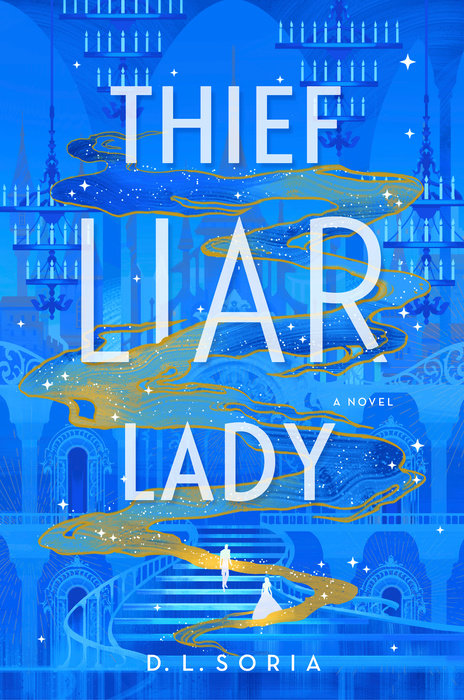
Title: Snake-Eater
Author: T. Kingfisher
Publisher: 47North
Publication date: November 11, 2025
Length: 267 pages
Genre: Fantasy
Source: Purchased
Rating:

Rating: 4 out of 5.

From New York Times bestselling and Hugo Award–winning author T. Kingfisher comes an enthralling contemporary fantasy seeped in horror about a woman trying to escape her past by moving to the remote US desert—only to find herself beholden to the wrath of a vengeful god.

With only a few dollars to her name and her beloved dog Copper by her side, Selena flees her past in the city to claim her late aunt’s house in the desert town of Quartz Creek. The scorpions and spiders are better than what she left behind.

Because in Quartz Creek, there’s a strange beauty to everything, from the landscape to new friends, and more blue sky than Selena’s ever seen. But something lurks beneath the surface. Like the desert gods and spirits lingering outside Selena’s house at night, keeping watch. Mostly benevolent, says her neighbor Grandma Billy. That doesn’t ease the prickly sense that one of them watches too closely and wants something from Selena she can’t begin to imagine. And when Selena’s search for answers leads her to journal entries that her aunt left behind, she discovers a sinister truth about her new home: It’s the haunting grounds of an ancient god known simply as “Snake-Eater,” who her late aunt made a promise to that remains unfulfilled.

Snake-Eater has taken a liking to Selena, an obsession of sorts that turns sinister. And now that Selena is the new owner of his home, he’s hell-bent on collecting everything he’s owed.

With Snake-Eater, author T. Kingfisher journeys into the realm of folk horror and fantasy, presenting one woman’s struggle to reclaim her life in a desert setting full of spirits and gods… and a bunch of terrific human (and canine) characters too.

Selena arrives in the remote desert town of Quartz Creek with just a few dollars to her name, accompanied by her very good dog Copper. She’s come in search of her aunt Amelia, but discovers upon arrival that Amelia has died the year before. The local postmaster/mayor/police officer Jenny encourages Selena to at least spend the night before deciding to leave — and since Selena can’t afford the return train ticket, and Amelia’s house is sitting empty, she agrees.

But the longer Selena stays in this odd little town in the middle of nowhere, the more settled she becomes. She insists she hasn’t decided to stay — but meanwhile, she becomes close with her nearest neighbor, Grandma Billy, learns to tend Amelia’s garden, attends the community potlucks at Father Aguirre’s church, and figures out how to earn a few bucks here and there, enough to buy Copper’s dog food. And meanwhile, the locals are warm and welcoming, and seem to want Selena to stay,

Selena leaves behind a relationship with a man who gaslit her into believing herself incapable of social interactions. Through insidious comments and continual undermining, Walter had Selena convinced that she was bad with people and could only interact by using carefully memorized scripts. As she settles into life in Quartz Creek, she comes to realize how deeply the gaslighting affected her, and painfully starts to unlearn what she’d come to believe about herself.

Quartz Creek has its own set of oddities and mysteries, especially the locals’ seemingly casual acceptance of the existence of gods and spirits. Even the Catholic priest acknowledges that places can have powerful non-human “people” who affect the lives of those who live there, for good or bad. Selena is startled by the strange figure she sees in her garden, and even more alarmed to hear Grandma Billy casually inform him that it’s a god of the squash plants. Selena is inclined to think that this must be a sign of Grandma Billy declining with age — but no; all the other folks of Quartz Creek back up Grandma Billy’s version. Gods live among them, just as humans and dogs and a stray peacock do.

Selena’s life is complicated by Snake-Eater, a god of roadrunners who appears to have transferred his obsession with Amelia to her niece Selena. And when Selena objects to the god’s attention, he gets very nasty indeed. She and her closest allies, Grandma Billy and Father Aguirre, must venture into the desert to free her from Snake-Eater if she’s to have any hope of living a good life in her newfound community.

What a great story! I adored the desert vibe. The author evokes the heat, the dirt, the plant and animal life, and makes all of this feel real and gritty. It’s easy to see why Selena would want to stay in this harsh but beautiful environment. The community itself is delightful. The people of Quartz Creek are an odd bunch, but they’re committed to their town and one another, and have figured out how to make it work. What’s more, there’s a beautiful sense of love and acceptance. Many of these people have unusual histories, but it doesn’t matter: The community comes together, again and again, and their connection makes them strong.

Selena’s story is so sad to start with. She’s a smart, likable woman whose partner undermined her to such a degree that when we first meet her, we’re tempted to believe the lie that she’s socially awkward and inept as well. Why does she practice scripts in her head? Why can’t she just talk to people? But as we see, Walter’s emotional abuse takes the form of seemingly supportive “help”, shredding Selena’s confidence through comments meant to keep her dependent on him. As Selena spends time in Quartz Creek, she’s able to slowly overcome the doubts that had been trained into her, and learn to trust herself and her new relationships. It’s a joy to see.

As always, T. Kingfisher spins a compelling story full of memorable characters, entertaining set-pieces, and fabulous writing. Snake-Eater is yet another terrific read from an author who never disappoints. Highly recommended.

Purchase linksAmazon – AudibleBookshop.org
Disclaimer: When you make a purchase through one of these affiliate links, I may earn a small commission, at no additional cost to you.
Novella review: Kirkyards & Kindness (A Rip Through Time, #4.5) by Kelley Armstrong

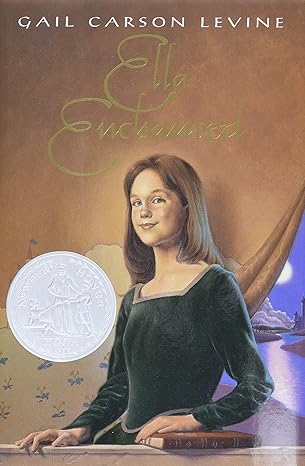
Title: Kirkyards & Kindness
Series: A Rip Through Time, #4.5
Author: Kelley Armstrong
Publisher: KLA Fricke Inc
Publication date: December 2, 2025
Length: 158 pages
Genre: Historical fiction / mystery
Source: Purchased
Rating:

Rating: 4 out of 5.

Mallory Mitchell and Dr. Duncan Gray take a break from investigating murder to find the most famous dog in Victorian Scotland.

A year ago, twenty-first-century detective Mallory found herself in 1869 Edinburgh, in the body of Catriona Mitchell, a housemade working for Dr. Duncan Gray, pioneer in forensic science. Shortly after she arrived, she made the unfortunate acquaintence of Catriona’s former criminal mentor, Davina, an entanglement that nearly got Mallory killed. Now she’s about to meet Davina again.

Greyfriars Bobby has disappeared. The little terrier is already a legend, and Davina has made a tidy living showing him off on graveyard tours…while picking the pockets of her guests. When the elderly dog vanishes, Davina calls in a favor from her old student. Mallory agrees to help find Bobby in return for the one thing she’s been unable to get from Davina—the mysterious Catriona’s life story.

Kirkyards & Kindness is a sweet little novella that allows readers to spend time in the world of the A Rip Through Time series — without the heavy doses of murder and mayhem that take place in the full-length novels.

Quick explanation of the series: 21st century detective Mallory ends up falling through time into Victorian Edinburgh, where she inhabits the body of a beautiful but nasty housemaid. There, she works with her employer, undertaker/scientist Duncan Gray, to solve crimes while also adapting to life in this very different era and attempting to introduce forensics to Victorian crime scenes.

In Kirkyards & Kindness, Mallory and Duncan are called upon to find a missing dog — the famous Greyfriars Bobby, beloved by locals and tourists alike. The person who hires them is an old associate of the person whose body Mallory inhabits. In exchange for finding Bobby, Mallory will finally have a chance to learn important information about Catriona’s unknown past.

The mystery has a rather jaunty tone, as Mallory and Duncan traverse Edinburgh in search of witnesses and clues. While a crime is discovered and addressed, there are also some rather sweet moments, and it all comes together with a satisfyingly happy resolution.

The novellas in the series are by necessity “extras”, in that they don’t resolve any of the central storylines of the overarching series. Mallory’s future, some abiding unresolved questions, her future with Duncan — all remain to be addressed in the main books of the series. But for reader of the A Rip Through Time books, these novellas are a nice little treat that bridges the waiting time between novels, and it’s always enjoyable to spend time with these characters and enjoy their unique predicaments.

Greyfriars Bobby was a real dog! Bobby was the beloved companion of a police constable in the 1850s. After the death of his owner, Bobby refused to leave his grave, and became a permanent, much loved resident of the Greyfriars Kirkyard. A statue in Bobby’s memory was erected in 1873, and is a popular tourist photo op in Edinburgh to this day.

For more about Greyfriars Bobby: https://www.historic-uk.com/HistoryUK/HistoryofScotland/Greyfriars-Bobby/

Interested in this series? Here are my reviews for the previous books:
A Rip Through Time
The Poisoner’s Ring
Disturbing the Dead
Schemes & Scandals (novella)
Death at a Highland Wedding

Up next:

An Ordinary Sort of Evil (A Rip Through time, #5) — May 2026

Audiobook Review: Anne of Avenue A (For the Love of Austen, #3) by Audrey Bellezza and Emily Harding

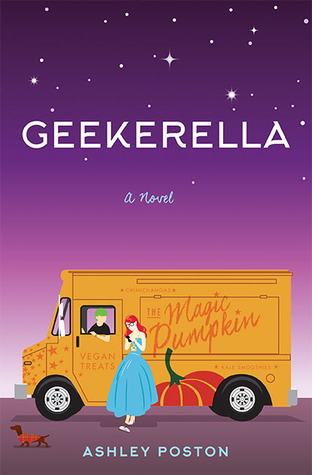
Title: Anne of Avenue A
Series: For the Love of Austen, #3
Author: Audrey Bellezza and Emily Harding
Narrators: Brittany Pressley and Teddy Hamilton
Publisher: Gallery Books
Publication date: October 28, 2025
Print length: 336 pages
Audio length: 8 hours 5 minutes
Genre: Contemporary romance
Source: Library
Rating:

Rating: 4 out of 5.

Jane Austen’s Persuasion meets the Big Apple in this swoon-worthy holiday romance from the authors of the “charming” (Kristy Woodson Harvey, New York Times bestselling author) Elizabeth of East Hampton and Emma of 83rd Street.

Eight years ago, Anne Elliot broke Freddie Wentworth’s heart when she refused to give up her five-year plan for the sake of adventure. But despite big dreams, Anne, now thirty, is still living at home with hardly a plan in sight. Anne tries to be optimistic—she knows better than anyone that regret will get you nowhere—but that goes out when the window when, thanks to her father’s bad spending habits, her childhood apartment in is rented out to the very man still living in her head rent-free.

Freddie Wentworth never thought he would see Anne Elliot again after she dumped him for accepting a job overseas. He spent years trying to forget her, and he’s been mostly successful. So when a job opportunity takes him back to New York, he’s shocked to find out that Anne is not only his new neighbor, but also the former resident of his new Greenwich Village penthouse.

Nearly a decade after Anne and Freddie’s fateful romance, the only thing they still have in common is a desire to leave their relationship firmly in the past. But between a disastrous off-Broadway show and a drunken Thanksgiving dinner, nosey neighbors, and flirtatious friends, Anne and Freddie suddenly find their lives more intertwined than ever before. When old feelings start rising to the surface, they must decide whether to put their hearts on the line or walk away all over again.

Welcome back to the world of For the Love of Austen, a delightful series of contemporary retellings of Jane Austen classics by author duo Audrey Bellezza and Emily Harding. In this third installment, the authors tackle Persuasion, transposing it to a modern-day New York setting, and finding a way to make this tale of regret and second chances feel fresh and believable.

Anne Elliot and Freddie Wentworth dated throughout their college years at NYU and thought they’d be together forever, until a late-in-the-game discovery that their future plans didn’t match up led to a devastating break-up. Now, eight years later, Freddie has returned to New York — and inadvertently buys the apartment that Anne has just been forced to move out of thanks to her father’s financial messiness. Neither Anne nor Freddie has ever truly gotten over their breakup, and running into one another in the building is shocking, to say the least.

As they reunite in Anne of Avenue A, both are older and wiser, with professional accomplishments under their belts, yet both are also at a crossroads in terms of what to do next with their careers. As they slowly reconnect and learn to trust again, they have to balance what they want in their own lives against the risk of considering a future together. It’s quite delicious to see them start to warm up and spend time together, especially as they realize that the feelings they’ve never been able to fully let go of are shared by the other person.

I love that the authors present the basics of the Austen storyline without following it point by point. Yes, this modern-day version of Anne was also persuaded to refuse Freddie for practical reasons — but the advice she follows does actually make sense, and Anne’s reasoning is solid (if unromantic). She and Freddie hadn’t discussed their long term plans or the post-graduate programs they’d applied to. Anne may not have known exactly what she wanted to do career-wise, but following Freddie on his adventures was a risk she didn’t feel she could take. And while Freddie would have given up his own plans to stay with Anne, she knew she couldn’t ask that of him, and ended the relationship instead.

The supporting characters are lots of fun — mainly some quirky characters from the building, plus assorted family members. The male leads from the previous two books are back as well, since Freddie is close friends with Will Darcy and George Knightly — this gives us a nice opportunity to see what the couples from the other books are up to now, and it’s great to see Emma, Lizzie, and Anne spending time together and becoming friends.

Many familiar Persuasion beats are included. I was very curious about how the dramatic fall-from-the-Cobb scene might be included in Anne of Avenue A… and it’s decidedly nondramatic here, with a silly New York slice-of-life twist to it that prevents it from bringing down the generally upbeat vibe. I’m consistently entertained throughout this series by spotting the Austen moments and how they’ve been reshaped to fit the modern world.

You might be wondering if Anne of Avenue A could possibly find a way to fit in some of the best Persuasion lines… and the answer is yes!

“You pierce my soul. I am half agony, half hope.”

If these words make you swoon, well… you may be amused by how the authors incorporate these words into their story, and you certainly won’t be unsatisfied!

As with the previous two audiobooks, the narrators do a terrific job presenting chapters from Anne and Freddie’s perspectives. Brittany Pressley is especially delightful to listen to in these books, and she’s truly up there on my list of favorite audiobook narrators. Teddy Hamilton’s delivery doesn’t always quite work for me, but I suppose I’ve gotten used to him at this point. Overall, the audiobook experience moves quickly and feels lively and engaging.

Three books in, I know by now to expect that there will be at least one or two open door sex scenes. As I’ve said in my other reviews for this series, I really don’t need to see Austen characters having explicit sex! It feels weirdly intrusive… but I’ll also acknowledge that I prefer a closed door approach in general when it comes to romance novels, so my objection here is not only related to this particular series.

My minor quibble with the story is that Anne finds a new career in the blink of an eye, and it seems like a lovely opportunity for her… but I wasn’t convinced that her new business made sense in terms of what we’d come to know about her interests. Also, from a practical standpoint, I didn’t quite buy that she was able to become an equal business partner in her new venture without (seemingly) any financial investment — rather than, say, coming on board as an employee — but who am I to argue with a woman’s professional success in a romance novel?

Overall, I really enjoyed Anne of Avenue A. The stakes are perhaps a little lower than in the other books, but I still found it engaging, warm, and full of Austen-esque spark.

I’ve been seeing the For the Love of Austen books being referred to as a trilogy, and I’m hoping that’s because there are three books SO FAR, and not because they’re stopping at just three! Here’s hoping that retellings of Sense and Sensibility, Northanger Abbey, and Mansfield Park are in the works!

Previous books in this series:
Emma of 83rd Street
Elizabeth of East Hampton

Purchase linksAmazon – Audible – Bookshop.org – Libro.fm
Disclaimer: When you make a purchase through one of these affiliate links, I may earn a small commission, at no additional cost to you.
Save