The Monday Check-In ~ 9/17/2018

cooltext1850356879 My Monday tradition, including a look back and a look ahead — what I read last week, what new books came my way, and what books are keeping me busy right now. Plus a smattering of other stuff too.

What did I read during the last week?

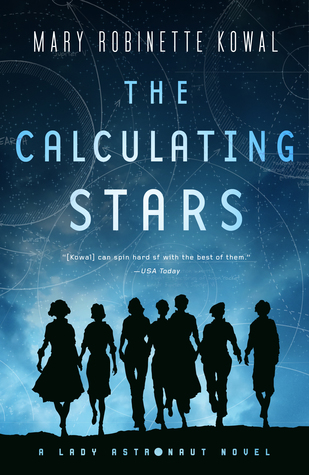
The Calculating Stars by Mary Robinette Kowal: Definitely a favorite for 2018! Read my love-fest of a review, here.

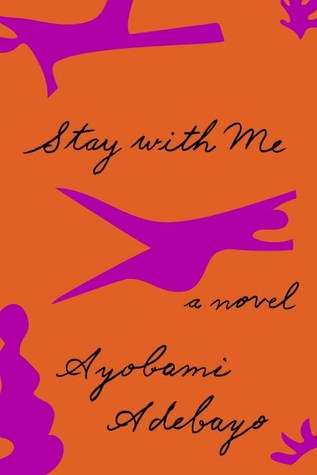
Stay With Me by Ayobami Adebayo: My book group read for September. My review is here.

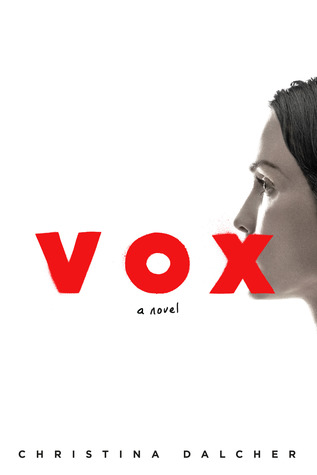
Vox by Christina Dalcher: A look at a US society in which women’s voice have literally been silenced. My review is here.

In audiobooks:

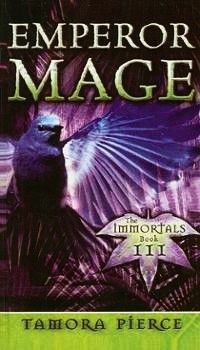
Emperor Mage by Tamora Pierce: Book #3 in The Immortals series. Excellent addition to the world of Tortall!

Pop culture goodness:

Has anyone else watched Forever on Amazon yet? It’s weird and funny and totally surprising. Maya Rudolph is just as good as you’d expect. I’ve watched half of the available episodes, and recommend checking it out! (It’s pretty low commitment for a binge-watch, just eight half-hour episodes).

Fresh Catch:

I added even more Kindle books to my never-ending TBR list, thanks to various price drops that popped up this week. Here’s a peek at my newest acquisitions:

What will I be reading during the coming week?

Currently in my hands:

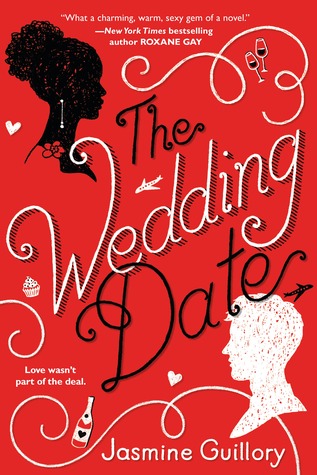
The Wedding Date by Jasmine Guillory: After some heavier reads, a little light-and-fluffy romance might really hit the spot.

Now playing via audiobook:

The Realms of the Gods (The Immortals, #4) by Tamora Pierce: Finishing up the Immortals quartet!

Ongoing reads:

Book group reads:

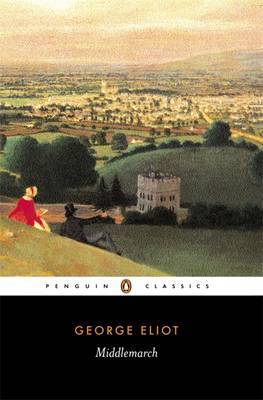
  • Classic read: My book group’s current classic read is Middlemarch by George Eliot.  We’re reading and discussing two chapters per week. Slow but steady!
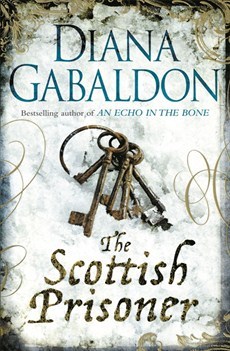
  • The Scottish Prisoner by Diana Gabaldon. Continuing our group read of the Lord John works, it’s lovely to revisit The Scottish Prisoner, which stars Lord John Grey and everyone’s favorite Scottish laird, Jamie Fraser. Want to join in? Ask me how!

So many books, so little time…

boy1Save

Save

Save

Save

Save

Save

Save

Save

Save

Save

Save

Save

Save

Save

Save

Save

Save

Save

Save

Save

Save

Save

Save

Save

Save

Save

Save

Save

Save

Save

Save

Save

Save

Save

Save

Save

Save

Save

Save

Save

Save

Save

Save

Save

Save

Save

Save

Save

Save

Save

Save

Save

Save

Save

Save

Save

Save

Save

Save

Save

Save

Save

Save

Save

Save

Save

Save

Save

Save

Save

Save

Save

Save

Save

Save

Save

Save

Save

Save

Save

Save

Save

Save

Save

Save

Save

Save

Save

Save

Save

Save

Save

Save

Save

Save

Save

Save

Save

Save

Save

Save

Save

Save

Save

Save

Save

Save

Save

Save

Save

Save

Save

Save

Take A Peek Book Review: Stay With Me by Ayobami Adebayo

“Take a Peek” book reviews are short and (possibly) sweet, keeping the commentary brief and providing a little peek at what the book’s about and what I thought.


Synopsis:

(via Goodreads)

Yejide and Akin have been married since they met and fell in love at university. Though many expected Akin to take several wives, he and Yejide have always agreed: polygamy is not for them. But four years into their marriage–after consulting fertility doctors and healers, trying strange teas and unlikely cures–Yejide is still not pregnant. She assumes she still has time–until her family arrives on her doorstep with a young woman they introduce as Akin’s second wife. Furious, shocked, and livid with jealousy, Yejide knows the only way to save her marriage is to get pregnant, which, finally, she does, but at a cost far greater than she could have dared to imagine. An electrifying novel of enormous emotional power, Stay With Me asks how much we can sacrifice for the sake of family.

My Thoughts:

Stay With Me is a powerful look at the tragedies that befall a young Nigerian woman for whom the pressure to provide children becomes the dominating force in her life. Yejide’s mother was one of her father’s many wives, and polygamy is still prevalent in her culture. Although she and her husband married for love and agreed to have a monogamous relationship, the absolute focus on reproduction and providing an heir eventually causes her husband to accept a second wife, which begins a downward spiral for Yejide.

The books is so much more than simply Yejide’s struggle to have children. It’s about marriage and family, the cost of lies, and the role of women in a society that places men’s needs first. Stay With Me provides a glimpse into a culture that’s probably unknown to most Western readers, and weaves folklore into the narrative in clever and meaningful ways. The violence and upheavals of Nigeria’s political climate provide a backdrop to the story of family and loyalty. Stay With Me is a quick read, but provides a lot of food for thought.

Yet another great book club pick! I can’t wait to discuss it with my group.

Read more about Stay With Me:

New York Times review
NPR
The Guardian review
Chicago Tribune review

_________________________________________

The details:

Title: Stay With Me
Author: Ayobami Adebayo
Publisher: Knopf Publishing Goup
Publication date: August 22, 2017
Length: 260 pages
Genre: Contemporary fiction
Source: Library

**Save

Save

Save

Save

Save

Save

Save

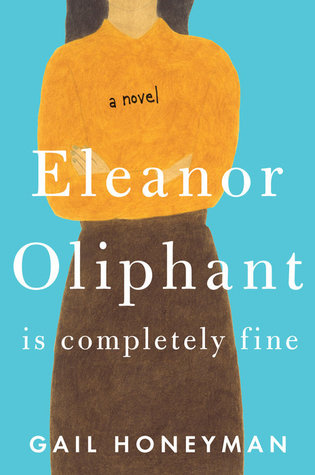
Take A Peek Book Review: Eleanor Oliphant Is Completely Fine by Gail Honeyman

“Take a Peek” book reviews are short and (possibly) sweet, keeping the commentary brief and providing a little peek at what the book’s about and what I thought.


Synopsis:

(via Goodreads)

No one’s ever told Eleanor that life should be better than fine.

Meet Eleanor Oliphant: She struggles with appropriate social skills and tends to say exactly what she’s thinking. Nothing is missing in her carefully timetabled life of avoiding social interactions, where weekends are punctuated by frozen pizza, vodka, and phone chats with Mummy.

But everything changes when Eleanor meets Raymond, the bumbling and deeply unhygienic IT guy from her office. When she and Raymond together save Sammy, an elderly gentleman who has fallen on the sidewalk, the three become the kinds of friends who rescue one another from the lives of isolation they have each been living. And it is Raymond’s big heart that will ultimately help Eleanor find the way to repair her own profoundly damaged one.

Soon to be a major motion picture produced by Reese Witherspoon, Eleanor Oliphant Is Completely Fine is the smart, warm, and uplifting story of an out-of-the-ordinary heroine whose deadpan weirdness and unconscious wit make for an irresistible journey as she realizes. . .

The only way to survive is to open your heart.

My Thoughts:

I had very wrong expectations when I started this book. Based on the synopsis, I was expecting something quirky, potentially funny, maybe reminiscent of The Rosie Project or something similar. I was shocked to discover just how misleading the synopsis is.

Yes, Eleanor has extreme social awkwardness. She lives a desperately lonely life and expects nothing else. But she’s not merely awkward or an odd duck waiting for her chance to shine — she’s the survivor of terrible childhood trauma that informs every moment of her life and keeps her trapped in her contact-free, isolated life.

Don’t get me wrong — Eleanor Oliphant is a terrific book. It’s deeply moving and horribly sad. Eleanor herself is a memorable lead character, lovable despite her coldness and judgmental nature. We understand early on that there’s something terrible lurking beneath the icy, unfeeling exterior. As we get to know Eleanor better, it’s easier to understand what has made her the way she is, and to cheer her on as she takes the necessary small steps toward recovery.

Eleanor Oliphant Is Completely Fine is a lovely, powerful book. Once again, I’m grateful to my book group for picking such a great book to discuss. I’ve had this book on my TBR list for a while now, but having a set date on the calendar is what finally made me pick it up… and once I started, I just couldn’t put it down until I finished it.

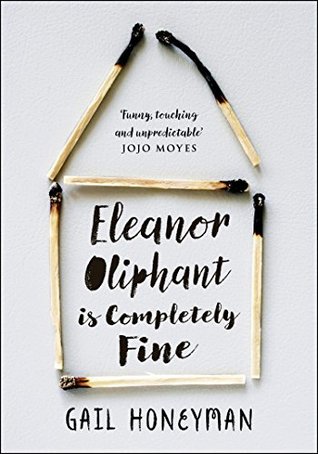
A final note: I bought my copy via Book Depository. The UK version has a very different cover, which I believe gives a truer sense of the book:

_________________________________________

The details:

Title: Eleanor Oliphant Is Completely Fine
Author: Gail Honeyman
Publisher: Pamela Dorman Books
Publication date: May 9, 2017
Length: 327 pages
Genre: Contemporary fiction
Source: Purchased

**Save

Save

Save

Save

Save

Save

Save

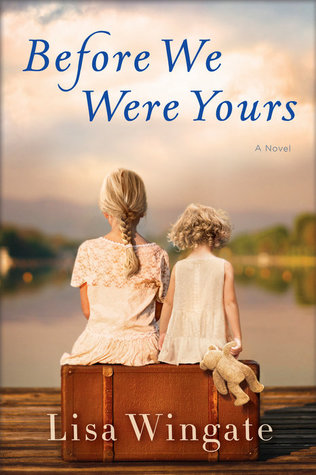
Book Review: Before We Were Yours by Lisa Wingate


Two families, generations apart, are forever changed by a heartbreaking injustice in this poignant novel, inspired by a true story, for readers of Orphan Train and The Nightingale.

Memphis, 1939. Twelve-year-old Rill Foss and her four younger siblings live a magical life aboard their family’s Mississippi River shantyboat. But when their father must rush their mother to the hospital one stormy night, Rill is left in charge—until strangers arrive in force. Wrenched from all that is familiar and thrown into a Tennessee Children’s Home Society orphanage, the Foss children are assured that they will soon be returned to their parents—but they quickly realize that the truth is much darker. At the mercy of the facility’s cruel director, Rill fights to keep her sisters and brother together—in a world of danger and uncertainty.

Aiken, South Carolina, present day. Born into wealth and privilege, Avery Stafford seems to have it all: a successful career as a federal prosecutor, a handsome fiancé, and a lavish wedding on the horizon. But when Avery returns home to help her father weather a health crisis, a chance encounter leaves her with uncomfortable questions—and compels her to take a journey through her family’s long-hidden history, on a path that will ultimately lead either to devastation or redemption.

Based on one of America’s most notorious real-life scandals—in which Georgia Tann, director of a Memphis-based adoption organization, kidnapped and sold poor children to wealthy families all over the country—Wingate’s riveting, wrenching, and ultimately uplifting tale reminds us how, even though the paths we take can lead to many places, the heart never forgets where we belong.

The story of Before We Were Yours is all the more shocking and heart-breaking when you realize that while the main characters are fictional, the tragedy depicted is all too real.

In this powerful work of historical fiction, we follow the story of 12-year-old Rill, a girl growing up poor but happy on a riverboat with her parents and four younger siblings. But when the children become separated from their parents due to complications of labor and an emergency trip to the hospital, their lives become dark and dangerous. Stolen away by the notorious Georgia Tann, the children are taken to a children’s home, where they’re starved, neglected, and abused before ultimately being adopted out, one by one, to wealthy families who are willing to pay.

In alternating chapters, we follow a modern-day story, as Avery Stafford comes home to South Carolina to support her ill father, a politician from a powerful family. Avery stumbles upon a woman in a nursing home, May Crandall, who seems to have some sort of connection to Avery’s family. What starts as a curiosity for Avery turns into a quest to unravel the mystery of May’s strange tie to Avery’s grandmother, now suffering early stages of dementia. As Avery digs deeper, she begins to see that her family’s hidden past may have intersected with the schemes of Georgia Tann, and Avery must decide if it’s wiser to uncover the truth or let the past stay in the past.

While Avery’s search for answers is interesting, it’s the story of Rill and her sisters and brother that’s truly stunning. The children grow up free and open to adventure, never minding that they’re looked down upon as “river rats”. On board their boat and with their parents, they live in a kingdom of their own. Reading about how this family is torn apart is shocking — it’s amazing how much cruelty was inflicted upon these young children, especially as the story drives home the fact that this happened to thousands of chlidren over a period of more than 20 years.

The mystery of how Avery’s grandmother is connect to May is not revealed until close to the end of the book, and while there are hints along the way, the answer isn’t entirely obvious. Meanwhile, while we see how Rill grew up and changed from the river girl to a woman with a family of her own and a new life, the journey she makes isn’t easy and is no fairy tale. Not all the loose ends are tied up, which is fitting, given that in the historical records of the Georgia Tann scandal, many families never did find their missing children, and many hundreds are believed to have died under the “care” of this awful, twisted adoption industry.

Before We Were Yours is a compelling read, although I was less engaged during the contemporary chapters, particularly when the focus shifted from Avery’s search into family history to dwell more upon Avery’s romantic life and her career choices. Other than that, I found it a quick, fascinating, and terribly sad read.

This was a book group pick, and I’m so glad it was! As with all of my book group’s books, I can’t wait to hear from my bookish friends and to exchange reactions, ideas, and questions.

If you’ve read Before We Were Yours, I’d love to hear your thoughts too!

_________________________________________

The details:

Title: Before We Were Yours
Author: Lisa Wingate
Publisher: Ballantine
Publication date: June 6, 2017
Length: 342 pages
Genre: Historical fiction
Source: Library

**Save

Save

Save

Save

Save

Save

Save

Audiobook Review: The Chilbury Ladies’ Choir by Jennifer Ryan


The village of Chilbury in Kent is about to ring in some changes.

This is a delightful novel of wartime gumption and village spirit that will make your heart sing out.

Kent, 1940.

In the idyllic village of Chilbury change is afoot. Hearts are breaking as sons and husbands leave to fight, and when the Vicar decides to close the choir until the men return, all seems lost.

But coming together in song is just what the women of Chilbury need in these dark hours, and they are ready to sing. With a little fighting spirit and the arrival of a new musical resident, the charismatic Miss Primrose Trent, the choir is reborn.

Some see the choir as a chance to forget their troubles, others the chance to shine. Though for one villager, the choir is the perfect cover to destroy Chilbury’s new-found harmony.

Uplifting and profoundly moving, THE CHILBURY LADIES’ CHOIR explores how a village can endure the onslaught of war, how monumental history affects small lives and how survival is as much about friendship as it is about courage.

What an uplifting, engaging, utterly delightful read (and listen)!

The Chilbury Ladies Choir is set in the small English village of Chilbury in 1940, as the ladies of the town try to find purpose and solace while the men are at war. When the official church choir is closed down due to a lack of men, spirits sink even further, until the women decide to sing on their own. Stemming from there, relationships are strengthened as the women find a new source of courage. By standing up together, they realize they can make a difference, and each, in her own way, starts to move beyond the boundaries of her former life and take a chance on something new.

Told through journal entries, newspaper clippings, and letters, we get to know the main characters through their own voices, which is a wonderful touch. Young Kitty Winthrop, age 13 (almost 14! as she likes to point out) is an aspiring singer with a childish crush on an older boy, which she allows to dominate her romantic dreams. Kitty’s sister Venetia, age 18, is the town beauty who likes nothing better than flirting and toying with attractive men, making them fall in love with her and then pushing them aside once they do. However, when Venetia meets the mysterious Mr. Sleator, an artist who moves to Chilbury along with many other evacuees, she sense something more in him than merely this week’s fling. For Mrs. Tilling, a woman widowed years earlier whose only son is now fighting in the war, the ladies’ choir offers a chance to create beauty and harmony, and helps her come out of her shy shell and become a leading force in the community. And then there’s Mrs. Paltrey, a midwife with a heart of stone, who schemes to make it rich no matter what, and no matter whose lives may be shattered along the way.

It’s moving and fascinating to see how these and other characters grow and change over the course of the book. Venetia in particular is an absorbing character. Shallow and self-centered when we first meet her, she grows into a woman of substance over the months we know her, as she falls in love, suffers great loss, and emerges as a hero at a time of devastation. Likewise, Kitty, while still a young woman, learns to appreciate those around her and see people more realistically, while also realizing that even someone of her young age can make a difference.

These characters’ stories, as well as those of other women of the village, weave together to create a portrait of community and courage. We don’t go to war; we stay behind and see how this small village is affected by the war, and how all are changed by it, for good or for ill.

I loved the audiobook version, which features a cast of voice actors to represent the main narrative voices of the story. Hearing the women’s stories told in their own words, each with a voice that felt specific to that character’s true self, was a really special way to appreciate the story. In this particular case, I highly encourage giving the audio a try — it’s a wonderful experience. As an added bonus, in key points in the story, we hear choral music in the background which ties in with what the Chilbury Ladies’ Choir is singing in that moment. It’s not overdone, certainly not enough to interrupt the flow or get annoying. Instead, at crucial moments, when a song is particularly meaningful in relation to the events being portrayed, we hear a lovely women’s choir providing an added bit of atmostphere.

The Chilbury Ladies’ Choir was a book group pick, and yet another one that I might have skipped over if not for the group. When it was first selected I was skeptical: The title made me think that it would be a very church-y sort of book, perhaps a little saccharine and cloying. Well, once again I’m glad to not have judged a book by its title! The choir itself is the framework of the story, but really, the book is about so much more. It’s a portrait of the courage and strength a community can find by supporting one another through the worst of times, and shows how each woman emerges as a better version of herself when given the opportunity to step forward and stand up.

Highly recommended!

_________________________________________

The details:

Title: The Chilbury Ladies’ Choir
Author: Jennifer Ryan
Narrated by:  Gabrielle Glaister, Laura Kirman, Imogen Wilde, Adjoa Andoh, Tom Clegg, Mike Grady
Publisher: Crown
Publication date: February 14, 2017
Length (print): 384 pages
Length (audio): 11 hours, 34 minutes
Genre: Historical fiction
Source: Purchased**Save

Save

Save

Save

Save

Save

Save

Audiobook Review: The Midwife of Venice by Roberta Rich


Hannah Levi is known throughout sixteenth-century Venice for her skill in midwifery. When a Christian count appears at Hannah’s door in the Jewish ghetto imploring her to attend his labouring wife, who is nearing death, Hannah is forced to make a dangerous decision. Not only is it illegal for Jews to render medical treatment to Christians, it’s also punishable by torture and death. Moreover, as her Rabbi angrily points out, if the mother or child should die, the entire ghetto population will be in peril.

But Hannah’s compassion for another woman’s misery overrides her concern for self-preservation. The Rabbi once forced her to withhold care from her shunned sister, Jessica, with terrible consequences. Hannah cannot turn away from a labouring woman again. Moreover, she cannot turn down the enormous fee offered by the Conte. Despite the Rabbi’s protests, she knows that this money can release her husband, Isaac, a merchant who was recently taken captive on Malta as a slave. There is nothing Hannah wants more than to see the handsome face of the loving man who married her despite her lack of dowry, and who continues to love her despite her barrenness. She must save Isaac.

Meanwhile, far away in Malta, Isaac is worried about Hannah’s safety, having heard tales of the terrifying plague ravaging Venice. But his own life is in terrible danger. He is auctioned as a slave to the head of the local convent, Sister Assunta, who is bent on converting him to Christianity. When he won’t give up his faith, he’s traded to the brutish lout Joseph, who is renowned for working his slaves to death. Isaac soon learns that Joseph is heartsick over a local beauty who won’t give him the time of day. Isaac uses his gifts of literacy and a poetic imagination—not to mention long-pent-up desire—to earn his day-to-day survival by penning love letters on behalf of his captor and a paying illiterate public.

Back in Venice, Hannah packs her “”birthing spoons”—secret rudimentary forceps she invented to help with difficult births—and sets off with the Conte and his treacherous brother. Can she save the mother? Can she save the baby, on whose tiny shoulders the Conte’s legacy rests? And can she also save herself, and Isaac, and their own hopes for a future, without endangering the lives of everyone in the ghetto?

My Thoughts:

I found the plotlines revolving around Hannah’s midwife practice very compelling. It was fascinating to learn more about the role of midwives at that time (1575). Of course, we know that childbirth was a hazardous undertaking for women prior to the advent of modern medicine, but seeing it up close through Hannah’s experiences really drives home how risky it was and how closely death would hover for both mother and child. On top of the risks of childbirth, in The Midwife of Venice we get a stark portrayal of the status of Jews in Venice. The anti-Semitism of the time is commonplace, ordinary, and frightening. The threat of the inquisitors arresting Jews in violation of the law is an ever-present danger. When Hannah agrees to deliver a Christian nobleman’s baby, she’s putting the entire ghetto at risk, because if a Jewish woman can be blamed for causing the mother or baby to die, it’s likely that the people of Venice will invade the ghetto and slaughter the Jews.

Woven throughout Hannah’s story are chapters focusing on her husband Isaac, held prisoner on Malta with a ridiculous and unattainable sum set as his ransom. His efforts to earn his own freedom come to nothing, and the best he can do is try to stay alive until he can either escape or get rescued.

While the story as a whole held my interest, there are some oddities in the narrative that kept it from being more than just an okay read (listen) for me. It was often hard to tell how much time had passed from one chapter to another, so that a messenger might bring Isaac word of something that had happened in Venice — word that would presumably take weeks or longer to travel that distance — while only days had passed in Hannah’s part of the story. I wish the sections dealing with Hannah and her estranged sister Jessica had been better developed; their relationship is very layered and complex, yet it seemed to be dealt with much too quickly. Some of the action sequences happened much too quickly as well, leading me to believe that the author isn’t quite skilled enough in this type of writing: She’s very good at creating mood and characters, but putting together scenes of suspense or physical danger doesn’t seem to be a strength.

On the whole, there are some believability issues as well. Characters change course and act in ways that seem illogical and not in keeping with what we know about them. There are story beats that seem to come from nowhere, keeping the drama high, but almost without connection to the scenes that came before. A few moments of high drama keep the tension ratcheted up, but at the same time, at least one in particular seems to have no impact on the plot whatsoever, so why even include it?

Overall, The Midwife of Venice presents a very interesting story and setting, but the execution isn’t as good as I would have hoped. As for the audiobook, I didn’t particularly care for the narrator. She does a good job with the Italian phrases and names, but the depiction of the rougher folks of Malta was off — there were times when I thought the people in the crowd scenes sounded like New Yorkers! Also, the audiobook experience makes certain repetitions more glaring — why, for example, is it necessary to begin every chapter by identifying not only the location of the chapter (helpful to know whether we’re in Venice or Malta), but the year? It’s 1575 in every single chapter, so why repeat it in EVERY SINGLE CHAPTER?

The Midwife of Venice was my book group’s pick for March, and I’ve enjoyed hearing others’ thoughts on the book. I understand this is the first in a trilogy. Because of my issues with The Midwife of Venice, I’m not planning to read the follow-up books — but I’m interested enough in the outcome for the characters to be glad that one of my book group friends is reading the whole trilogy and has promised to let us know how it all turns out!

_________________________________________

The details:

Title: The Midwife of Venice
Author: Roberta Rich
Narrated by: Antoinette LaVecchia
Publisher: Anchor Canada
Publication date: January 1, 2011
Length (print): 336 pages
Length (audio): 9 hours, 7 minutes
Genre: Historical fiction
Source: Purchased


**Save

Save

Save

Save

Save

Save

Save

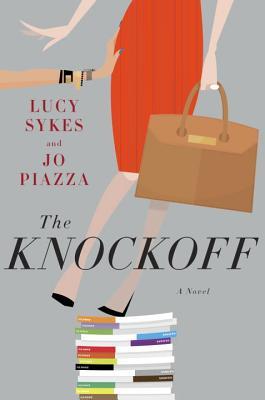
Audiobook Review: The Knockoff by Lucy Sykes & Jo Piazza


An outrageously stylish, wickedly funny novel of fashion in the digital age, The Knockoff is the story of Imogen Tate, editor in chief of Glossy magazine, who finds her twentysomething former assistant Eve Morton plotting to knock Imogen off her pedestal, take over her job, and reduce the magazine, famous for its lavish 768-page September issue, into an app.

When Imogen returns to work at Glossy after six months away, she can barely recognize her own magazine. Eve, fresh out of Harvard Business School, has fired “the gray hairs,” put the managing editor in a supply closet, stopped using the landlines, and hired a bevy of manicured and questionably attired underlings who text and tweet their way through meetings. Imogen, darling of the fashion world, may have Alexander Wang and Diane von Furstenberg on speed dial, but she can’t tell Facebook from Foursquare and once got her iPhone stuck in Japanese for two days. Under Eve’s reign, Glossy is rapidly becoming a digital sweatshop—hackathons rage all night, girls who sleep get fired, and “fun” means mandatory, company-wide coordinated dances to Beyoncé. Wildly out of her depth, Imogen faces a choice—pack up her Smythson notebooks and quit, or channel her inner geek and take on Eve to save both the magazine and her career. A glittering, uproarious, sharply drawn story filled with thinly veiled fashion personalities, The Knockoff is an insider’s look at the ever-changing world of fashion and a fabulous romp for our Internet-addicted age.

If not for my book group, I probably would never have considered this book. The Knockoff checks a lot of boxes for topics I usually avoid: the fashion world, corporate life, women being catty, descriptions of what people are wearing, focus on millennials… Still, in the spirit of being a good book group-ie, I plunged right in. Surprise! I ended up having a lot more fun with this book than I could possibly have imagined.

The story is fairly straightforward: Imogen Tate has been the editor-in-chief of Glossy for years, connected with all the top names in the fashion world, guaranteed a front-row seat at Fashion Week, and considered one of the biggest names in the world of fashion media. But after a six-month medical leave, she returns to work to find that nothing is as she left it. Her former assistant Eve is now basically running out the show, throwing out the physical magazine in favorite of an app whose raison d’etre is their BUY IT NOW tagline on every single item in every single photo shoot. Suddenly, Glossy is Glossy.com, staffed by interchangeable millennial 20-somethings who are all looking for their breakthrough into tech gold.

Imogen is immediately out of her depth, helpless with anything related to technology, and being made to feel like a dinosaur. (Literally. Eve has a toy dinosaur on her desk with “Imogen” printed on the side.) But Imogen isn’t without allies and resources, and she sets out to become relevant, going from hopelessly inept twitterer to Instagram idol practically in the blink of an eye.

What I liked:

The characters and the dialogue are bubbly fun. The writing is snappy and witty, moving quickly from scene to scene. The story is mostly told from Imogen’s point-of-view, but we get occasional sections narrated by Eve or by Imogen’s new assistant Ashley, and their voices are distinct and finely honed.

Imogen is a strong lead character, and I loved seeing a woman at the helm of a business, with all the respect and acclaim she deserves. It’s also rewarding to see a powerful businesswoman with a home life. She works hard, but she’s also got a great, supportive husband, and is a devoted mom to two young children. The other thing that’s great about Imogen is that she’s NICE. She’s not the cookie cutter mean boss, the woman who has to be a bitch to get ahead. Imogen believes in treating people kindly and with respect, no matter their role, and it pays off for her tremendously, both in terms of actual results and in the good will generated.

I can’t say that I “liked” Eve — but I think the authors did a great job with her character. She’s completely insufferable, but she’s supposed to be. As written, Eve is simply an awful person, shouting “GO GO GO” at her staff, forcing them to attend spin classes with her and admire her every move, and ready to fire people at a moment’s notice for really no reason at all. She’s abrasive and totally oblivious to the horrible impression she makes on fashion world movers and shakers — she’s all about her Harvard MBA, and can’t see beyond her adorable selfies for more than a moment. So while I despised Eve, kudos to the authors for creating such a thoroughly unlikable character!

Side characters are quite well-drawn as well, from the anxious, eager-to-please young women who follow Eve’s every move, dreaming of their own big breakthroughs, to the supermodels who are Imogen’s friends and the tech gurus whom Imogen finds surprisingly agreeable, each has interesting quirks and personalities. I got a big kick out of Imogen’s nanny Tilly, who becomes Imogen’s emergency social media advisor, teaching her how to hashtag like a boss.

What I didn’t like so much:

Certain parts of the premise just didn’t ring true for me. Imogen is 42 years old. 42! That’s not ancient! There’s no way that a 42-year-old should have to have her assistants print her emails before she reads them. She may not have rocked social media previously, but I simply found it incredible that a woman in business, in her early 40s, would be that incapable of using and understanding technology.

Imogen is out on medical leave for six months, and returns to find her business completely revamped — and no one let her know ahead of time? Is it realistic that over the course of half a year a well-established magazine would completely throw out its business model and turn itself into an app? Didn’t feel that way to me.

The focus on Eve’s wedding toward the end creates the climactic moments of the story, but honestly, the wedding shenanigans seemed overblown to me and beyond the point of credulity. It’s hard to believe that the wedding would have created that level of buzz or attracted the who’s-who of attendees — although Eve’s wedding plans, from choosing only size 2 bridesmaids to dictating guests’ outfits, are kind of hilarious in their awfulness. As the madness piles up, it goes beyond funny to overdone… but yeah, not entirely unfunny either.

Okay, and I have to point out — back in the Glossy office, where is HR in all this? Don’t Imogen and Eve have bosses? How can Eve be managing the staff and the company the way she does for so many months with no intervention? I call poppycock. It’s just not realistic for this size corporation to have absolutely no oversight in place. I was more than a little horrified to read about Eve’s management practices (if you can even call it that). The company should have been swimming in lawsuits.

A note on the narration:

Katherine Kellgren is a terrific narrator. She gives Imogen a posh London accent, then switches gears to portray Eve’s mean girl American drawl and Ashley’s millennial-speak. I often find narrators distracting when they over-do their versions of the opposite gender, but in this case, the narrator’s male voices were well-done without sounding fake.

The voice for Eve was strident and shouty — but that’s Eve. We’re supposed to be that irritated by her.

Wrapping it all up:

The Knockoff was an unexpectedly fun listen. It’s definitely not my usual subject matter, but the mix of humor and personalities really worked. Yes, I had quibbles about the plot, but this is meant to be entertainment, not a true study of the state of corporate America. Imogen’s personal journey is a hoot to witness, and I couldn’t help but cheer for her (while gleefully waiting for Eve’s downfall). The ending is wickedly satisfying, and there’s really never a dull moment. It’s not a particularly deep read, but The Knockoff sure is enjoyable.

_________________________________________

The details:

Title: The Knockoff
Author: Lucy Sykes & Jo Piazza
Narrator: Katherine Kellgren
Publisher: Doubleday
Publication date: May 19, 2015
Length (print): 352 pages
Length (audiobook): 12 hours, 10 minutes
Genre: Contemporary fiction
Source: Library

Save

Save

Save

Save

Save

Save

Save

Save

Save

Save

Save

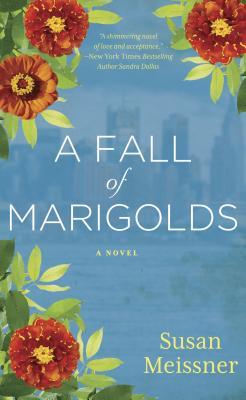
Take A Peek Book Review: A Fall of Marigolds by Susan Meissner

“Take a Peek” book reviews are short and (possibly) sweet, keeping the commentary brief and providing a little peek at what the book’s about and what I thought.

Synopsis:

(via Goodreads)

A beautiful scarf, passed down through the generations, connects two women who learn that the weight of the world is made bearable by the love we give away….

September 1911. On Ellis Island in New York Harbor, nurse Clara Wood cannot face returning to Manhattan, where the man she loved fell to his death in the Triangle Shirtwaist Fire. Then, while caring for a fevered immigrant whose own loss mirrors hers, she becomes intrigued by a name embroidered onto the scarf he carries …and finds herself caught in a dilemma that compels her to confront the truth about the assumptions she’s made. Will what she learns devastate her or free her?

September 2011. On Manhattan’s Upper West Side, widow Taryn Michaels has convinced herself that she is living fully, working in a charming specialty fabric store and raising her daughter alone. Then a long-lost photograph appears in a national magazine, and she is forced to relive the terrible day her husband died in the collapse of the World Trade Towers …the same day a stranger reached out and saved her. Will a chance reconnection and a century-old scarf open Taryn’s eyes to the larger forces at work in her life?

My Thoughts:

While A Fall of Marigolds held my attention, I couldn’t quite love this book. For one thing, I’m really getting tired of the split timeline narrative that seems to be everywhere these days, especially when the two timelines are connected by some artifact of one sort or another — a painting, a diary, a doll, etc. It’s a plot device that’s becoming all too prevalent in historical fiction when the author wants a contemporary hook. In A Fall of Marigolds, it’s a colorful scarf that features in both the 1911 and 2011 stories, but the linkage between the two feels forced at times.

It’s too bad, because I might have enjoyed the book more if it had just told one story or the other. Either is compelling, and the book does contain some very dramatic and emotional moments. 9/11 is still part of our collective psyches, and it’s impossible to read Taryn’s part of the story, which includes her eyewitness experience of watching the towers fall, and not be overwhelmed by memories and feelings.

Likewise, the story of the nurses of Ellis Island and their work with infectious immigrants, as well as the story of the Triangle Shirtwaist Fire, is powerful and moving. But the lives of the fictional characters can’t really measure up to the terror and power of the real events. Clara’s experiences, and her fixation on the man who died in the fire in particular, seem rather lightweight when looking at the broader extent of the tragedy. Her story is enlivened by her interactions with the immigrant she nurses through scarlet fever and her dilemma regarding his own losses and secrets, but I couldn’t buy the essential premise of her part of the story and Clara’s view on love and destiny.

The entire plot of A Fall of Marigolds seems to rest quite a bit on the characters coming to terms with events outside of their control. For both Taryn and Clara, they’re left to sort out whether things were meant to happen, or whether their own actions were somehow to blame for outcomes that could otherwise have been avoided. Clara’s need to figure out whether her love for the man she barely knew was real is vital to her, but her fixation on the loss of what might have been begins to feel overblown as the story progresses. On the other hand, Taryn’s guilt over surviving and the loss of her husband feel quite real, and her story gets a pay-off that is bittersweet yet satisfying.

Parts of this book are quite good, but as a whole, there’s some essential element missing. And as I said, the overall structure doesn’t work for me in general — I really would not have started this book, knowing it was a “two-women-from-two-different-eras-linked-by-one-special-thing” kind of story, were it not a book group pick. I’m glad to have read it, but knowing now that most of this author’s works have a similar two-timeline structure, I don’t think I’ll be seeking out more of her books.

_________________________________________

The details:

Title: A Fall of Marigolds
Author: Susan Meissner
Publisher: NAL
Publication date: January 1, 2014
Length: 394 pages
Genre: Contemporary/historical fiction
Source: Purchased

Save

Save

Save
Book Review: The Secret Scripture by Sebastian Barry

When she was a young woman, Roseanne McNulty was one of the most beautiful and beguiling girls in County Sligo, Ireland. Now, she is a patient at Roscommon Regional Mental Hospital, and nearing her hundredth year. As the story of Roseanne’s life unfolds, so does the life of her caregiver, Dr. Grene, who has been asked to evaluate the patients to decide if they can return to society when the hospital closes down. But as Dr. Grene researches her case, he discovers a document that tells a very different version of Roseanne’s life from what she can recall.

Yet another book I might never have picked up were it not for my book group!

The Secret Scripture is a book of secrets and sorrow, told through the journals of 100-year-old Roseanne McNulty, a mental hospital resident, and Dr. Grene, the psychiatrist evaluating her as the institution is about to close. Although he’s treated her for decades, it’s only as the hospital reaches its end that the doctor begins to dig further into Roseanne’s shadowy past.

Roseanne has spent upwards of 60 years in institutions, and the question is not only whether she’s sane now, but whether she was ever truly insane. As Roseanne’s story comes to light, she unveils memories of her early childhood in Sligo during the Irish Civil War of the early 1920s. Roseanne tells a story of a loving father who raises his young daughter with compassion and curiosity — yet the doctor’s research reveals reports of political entanglements that Roseanne apparently knew nothing about.

A key tragedy during these years sets Roseanne up for a hard and lonely life, until she meets the man she falls in love with. But her life with Tom runs into its own set of tragedies, the upshot of which is Roseanne’s lifelong institutionalization.

I won’t say too much more about the plot details, as they’re best discovered as they unfold. The book has a somewhat slow start, but as the pieces come together, the mysteries and the clues gain a greater sense of urgency. The secrets that come out are truly shocking, simply because they convey the horror of simple cruelty and the easy way in which some people can dismantle others’ lives.

I would have if not happily, at least gladly, open-heartedly, fiercely, finely murdered him.

The doctor’s pieces of the narration are a bit frustrating at times. There are segments about his own life and his marriage that seem disconnected from the rest of the story, although taken as a whole, they do make more sense in the greater scheme of things.

The twin narratives show the unreliability of memory, but also the inherent biases of written documentation. After all, even eye-witness reports depend on the objectivity of the one making the report in the first place. Should we trust Roseanne’s memories of her earlier life, or rely more heavily on the documents that the doctor manages to unearth? Or does the truth lie in some middle ground, with bits of each making up the real course of events?

I did find myself a bit confused at times by the historical references from the war, as I’m not terribly familiar with the details of the conflict and had a hard time figuring out who was on which side. Still, the author manages to evoke the time period quite well, with small details of dress and music to add flavor and bring the scenes to life.

Roseanne is a tragic figure, yet one who ultimately endures whatever life throws at her during her long lifetime. While I was horrified by so much of her story and ached for what she experienced, I was left with a hopeful feeling by the end.

What can I tell you further? I once lived among humankind, and found them in their generality to be cruel and cold, and yet could mention the names of three or four that were like angels.

The Secret Scripture is quite a lovely book with an unusual story to tell. The writing and pacing take a bit of patience, especially for about the first third, but if you stick with it, you’ll be rewarded by the building tension and dramatic revelations toward the end. I’m glad my book group picked this one to discuss! It’s always great to encounter a book that I might otherwise have missed completely.

_________________________________________

The details:

Title: The Secret Scripture
Author: Sebastian Barry
Publisher: Penguin
Publication date: April 2, 2008
Length: 300 pages
Genre: Historical fiction
Source: Purchased

Save

Save
Save
Save

Save

Save
Take A Peek Book Review: Devil’s Cub by Georgette Heyer

“Take a Peek” book reviews are short and (possibly) sweet, keeping the commentary brief and providing a little peek at what the book’s about and what I thought.

devils-cub-2

Synopsis:

(via Goodreads)

Dominic Alistair, Marquis of Vidal is a bad lot, a rake and seducer, reckless, heedless, and possessed of a murderous temper. He is known by friend and foe alike as the “Devil’s Cub.” Yet as the handsome and wealthy heir to a Dukedom, he is considered a good prospect on the marriage market. Vidal currently has his eye on the young, lovely, and unintelligent Sophia Challoner, and Sophia’s greedy mother is more than happy to encourage his dubious attentions.

When lovely, saucy Mary Challoner had practiced her bold deception upon the hot-blooded, fiery-tempered young Marquis of Vidal–substituting herself for her young sister he had thought to carry off to France–she had little notion he would grimly hold her to her part of the bargain. Now he had left her, and she was alone, a stranger in a strange land, prey to the intrigues of glittering, heartless, 18th century Paris.

Only one person could rescue her–the Marquis himself. But how could she ever trust this man? How could she even hope to overcome the contempt in which he held her? And how could even the sudden flowering of her love ever bridge the terrible gap between them?

My Thoughts:

Until Devil’s Cub, I’d never read a Georgette Heyer novel before, despite knowing several readers (of excellent taste, in my humble opinion) who absolutely adore her work. Georgette Heyer was such a prolific writer that I had no idea where to even start, but fortunately, my book club decided to go with something on the “classic romantic” side for our February book of the month and came up with Devil’s Cub, so I was spared the dilemma of having to choose.

The description really says it all. There’s a Marquis — such a scoundrel! But devilishly handsome. A sweet, decent young woman. A flighty sister. Oodles of lovers’ quarrels and misunderstandings. Elopements and escapes by carriage. Reputations and ruining on the line!

Devil’s Cub is a galloping piece of entertainment with never a dull moment, as social niceties are observed and broken, all in the name of love and honor. The characters are quite endearing. Mary has a backbone and makes for a great heroine, and although the Marquis’s use of threats to get his way rubs my modern sensibilities the wrong way, he’s exactly the sort of decadent lord with a heart of gold that would have been popular in the romantic fiction of the time.

This was a very fun read, light and entertaining, and a diverting little showpiece of social norms and scandals during the Regency era. Devil’s Cub is actually a sequel of sorts to These Old Shades, but it works perfectly fine as a stand-alone (although I do want to read that one as well, as soon as the library has a copy available).

I’m not going out on a Georgette Heyer binge right this second, but I do want to read more of her books. Any suggestions? Any must-reads? Let me know!

Meanwhile, as always, I’m so thankful to be part of an amazing book club that gives me incentive to read books outside my usual reading habits.

_________________________________________

The details:

Title: Devil’s Cub
Author: Georgette Heyer
Publisher: Sourcebooks Casablanca
Publication date: Originally published 1932
Length: 323 pages
Genre: Historical romance
Source: Library

Save

Save
Save

Save

Save

Save

Save