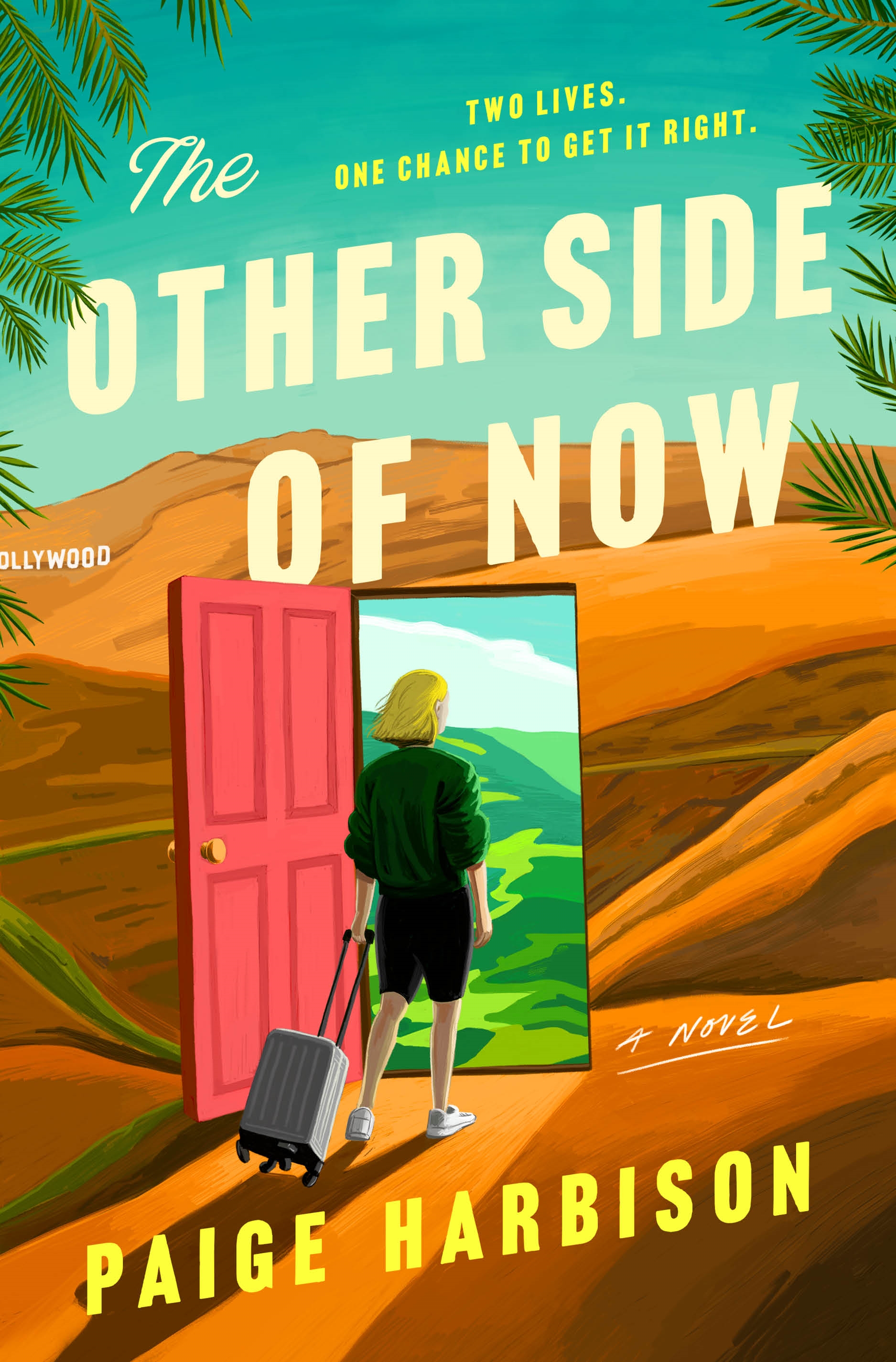
Book Review: The Other Side of Now by Paige Harbison

Title: The Other Side of Now
Author: Paige Harbison
Publisher: St. Martin’s Press
Publication date: June 3, 2025
Length: 320 pages
Genre: Contemporary fiction
Source: Review copy courtesy of the publisher via NetGalley
Rating:

Rating: 4 out of 5.

A hilarious and heartfelt novel about how loves and lives are never truly lost, for fans of Rebecca Serle and Taylor Jenkins Reid.

With a leading role on a hit TV show and a relationship with Hollywood’s latest heartthrob, Meg Bryan appears to have everything she ever wanted. But underneath the layers of makeup and hairspray, her happiness is as fake as her stage name, Lana Lord. Following a small breakdown at her thirtieth birthday party, she books an impromptu trip where she knows the grass is greener: Ireland. Specifically, the quaint little village where she and her best friend Aimee always dreamt of moving—a dream that fell apart when an accident claimed Aimee’s life a decade ago.

When Meg arrives, the people in town are so nice, treating her not as a stranger, but a friend. Except for the (extremely hot) bartender giving her the cold shoulder. Meg writes it all off as jetlag until she looks in the mirror. Her hair is no longer bleached within an inch of its life, her skin has a few natural fine lines, and her nose looks like… well, her old nose. Her real nose.

Her phone reveals hundreds of pictures of her life in this little town: with an adorable dog she doesn’t know; with the bartender who might be her (ex?) boyfriend; and at a retail job unrelated to acting. Eventually, she comes to accept that she somehow made a quantum slide into an alternate version of her life. But the most shocking realization of all? In this life, her best friend Aimee is alive and well…but wants nothing to do with Meg.

Despite her bewilderment, Meg is clear-eyed about one thing: this is a once-in-a-lifetime chance to reconnect with her friend and repair what she broke. She finagles an opportunity to act in the play Aimee is writing and directing and as the project unfolds, Meg realizes that events as she remembers them may not be the only truth, and that an impossible choice looms before her.

What a great surprise! Something about the title and cover of this book caught my eye, and I requested an ARC on a whim, knowing nothing about it. The Other Side of Now turned out to be an engaging, sweet, funny look at friendship and second chances. Sure, there’s some hand-wavey alternate reality business going on, but so long as you’re not looking for concrete explanations, it’s an enjoyable journey into a woman’s incredible chance to fix some of the mistakes she’s made.

Meg Bryan (don’t laugh! She’s had to suffer enough Meg Ryan jokes throughout her life!) is the 30-year-old star (known as Lana Lord) of TV’s smash hit Brilliance (which, frankly, sounds pretty awful). She has stardom, success, and a live-in relationship with the latest Marvel star (and his abs)… and she never has a day where she feels like she can be true to herself. Or eat bread.

At the end of her rope after a miserable birthday party, Meg impetuously books a flight to Ireland, to spend a week in the small town of Avalon — home to the performing arts college she’d once hoped to attend. Way back when, she and her best friend Aimee dreamed of attending Avalon together, but when Aimee didn’t get in, Meg stayed home to attend college in Florida with her. After Aimee’s tragic death a few years later, Meg ran off to LA to forget her past and start over, and never looked back.

But now, arriving in Avalon, Meg suspects something strange is going on. The sweet little rental cottage she’s booked for the week is filled with familiar items, there’s a dog who seems to know her, and when she catches a glimpse of her own reflection, she sees her pre-Hollywood face — pre-cosmetic surgery, pre-hair coloring, pre-severe dieting. It’s who she still thinks of as her true self.

I feel a real sense of fondness for the girl in the mirror. She didn’t deserve to be changed. She didn’t deserve to be whittled into something more palatable for social media. She’s a good person who deserves carbs and sugar and whatever else makes her happy.

Even more disconcerting, when she ventures out to the local pub, a perky woman acts like they’re besties, and the very attractive bartender seems to both care for her and be mad at her. Everyone in the town knows her — but she doesn’t know them.

Eventually, Meg admits to herself that she seems to have landed in an alternate version of her own life, where she did actually attend college in Avalon and then stayed to create a life there. Even more incredible, Aimee is there too, alive and well, married and a mother — but apparently, Meg and Aimee haven’t spoken in years. Something happened, and Megan has no idea what, but she’s desperate to reconnect and try for a second chance with the friend she’s been too devastated to even mourn properly.

The set-up here is quite delicious. Meg remembers her Hollywood life, but when she tries to prove to her Avalon friend Kiera that she’s not who everyone thinks she is, she can’t. Lana Lord doesn’t exist. There’s a show called Brilliance, but someone else is the star. Aimee has lived in Avalon all along, and so has Meg. Meg has a job, a home, and an on-again/off-again love life, and it’s all wonderful… but Meg also knows that she’s somehow been dropped into a life that isn’t really her own. The more attached she becomes to this other version of her reality, the more she wants to stay forever… but she has a sneaking suspicion that it won’t last, and that she’d better make the most of this strange opportunity to be with Aimee once again.

The Other Side of Now has some very funny moments, but it has depth too. Meg seemingly had everything she’d wanted — success and fame — but clearly was terribly unhappy beneath it all. Unresolved and suppressed grief has kept Meg from truly feeling. By landing in this alternate reality, Meg finally has the chance to face her emotions, feel the pain of her loss, and come to terms with how very far she is from feeling happiness or satisfaction in her “real” life.

I enjoyed Meg as a character, and Kiera is a total hoot. Seeing Meg and Aimee work through conflict that neither of them fully understands is quite powerful, and I also loved seeing Meg struggling to figure out life in a town that she’s supposedly lived in for a long time. There are plenty of silly moments, but also quite lovely instances of connection and simple joys.

As I mentioned, this isn’t a sci-fi book, and there’s no firm answer as to the why and how of it all. To enjoy this book, we have to accept the premise and let it flow. I found it really moving, and also very entertaining — and really like Meg’s thoughts on the snippets of memories of a different life that pop up for her unexpectedly:

What if her soul knows? What if all our souls know things? What if that’s what instinct is? What if that really is the explanation for gut feelings, intuition, déjà vu, kismet, and everything else? What if it’s our souls, remembering or knowing the truths of all our other lives?

The Other Side of Now does have romance in it as well, but it’s a subplot that’s more background than foreground. The friendship with Aimee, and the loss and grief from Meg’s real life, are what truly define her experiences and fill the story with depth and emotional impact.

If you’re looking for a fast-moving summer read that’s full of whimsy and friendship, but has a serious side too, definitely consider The Other Side of Now!

Purchase linksAmazon – Bookshop.org – Libro.fm
Disclaimer: When you make a purchase through one of these affiliate links, I may earn a small commission, at no additional cost to you.
**Save

Save

Save

Save

Save

Save

Save

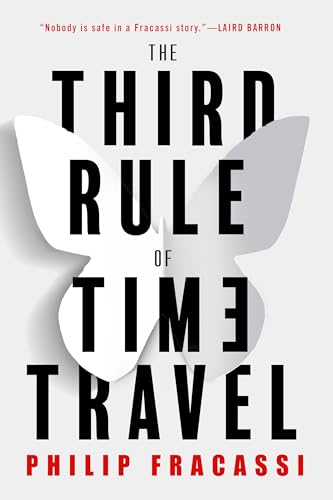
Book Review: The Third Rule of Time Travel by Philip Fracassi

Title: The Third Rule of Time Travel
Author: Philip Fracassi
Publisher: Orbit
Publication date: March 18, 2025
Length: 325 pages
Genre: Science fiction
Source: Review copy courtesy of the publisher via NetGalley
Rating:

Rating: 3.5 out of 5.

Rule One: Travel can only occur to a point within your lifetime.
Rule Two: You can only travel for ninety seconds.
Rule Three: You can only observe.
The rules cannot be broken.

In this riveting science fiction novel from acclaimed author Philip Fracassi, a scientist has unlocked the mysteries of time travel. This is not the story you think you know. And the rules are only the beginning.

Scientist Beth Darlow has discovered the unimaginable. She’s built a machine that allows human consciousness to travel through time—to any point in the traveler’s lifetime—and relive moments of their life. An impossible breakthrough, but it’s not perfect: the traveler has no way to interact with the past. They can only observe.

After Beth’s husband, Colson, the co-creator of the machine, dies in a tragic car accident, Beth is left to raise Isabella—their only daughter—and continue the work they started. Mired in grief and threatened by her ruthless CEO, Beth pushes herself to the limit to prove the value of her technology.

Then the impossible happens. Simply viewing personal history should not alter the present, but with each new observation she makes, her own timeline begins to warp.

As her reality constantly shifts, Beth must solve the puzzles of her past, even if it means forsaking her future.

The Third Rule of Time Travel is a fast-paced, compelling story about (obviously) time travel, altered realities, consequences, and corporate greed. You won’t want to stop once you start… but when you do take the inevitable pause, there’s room enough for some doubts and quibbles to slide in.

Beth Darlow and her late husband Colson have done the seemingly impossible. They’ve created a time travel machine, but it’s not like something out of H. G. Wells or Doctor Who. The “traveler” doesn’t actually — physically — go anywhere at all. Instead, using negative energy, the traveler’s consciousness is sent through a wormhole into their own past. The destination can’t be set in advance; the machine targets a random point in the traveler’s life, where they relive the event they’ve already experienced. It’s like they become a visitor to themselves — they see what’s going on from behind their own eyes, but they’re a second consciousness present in the moment.

The traveling has absolute rules — the traveler is powerless to actually change anything or interact with the moment they’re visiting, and they can only visit for 90 seconds, which is all the machine can sustain. What would happen if they’re not pulled back within 90 seconds? Beth’s not really sure… but the guess is, it would be disastrous for the traveler, and could result in their consciousness never returning to their body.

Years earlier, Beth and Colson sold their machine to the Langan Corporation in order to get the funding investment needed to continue their work. Jim Langan, the CEO, treats them like his prize pet scientists and keeps the money flowing — but something seems to be going wrong at Langan. Fewer and fewer cars are in the employee parking lot, security is even tighter than ever, and long-time colleagues seem to be disappearing as projects are cancelled and departments close. When Jim starts pressuring Beth to move faster and to show the machine to a hand-picked reporter, Beth balks at the idea, but she really has no choice. Forced to travel more often than is safe, Beth’s experiences leave her emotionally battered… and worse, seem to have had consequences that no one expected.

The action in The Third Rule of Time Travel is nonstop, making for a propulsive reading experience. The story is fascinating, and the author does a great job of weaving together Beth’s professional and personal lives. She’s a hard-charging, brilliant scientist, but she’s also devoted to her young daughter and is a loving mother, although getting home from the lab in time for dinner and bedtime with Isabella is a challenge.

As the continued traveling starts to unravel Beth’s life, causing her emotional distress, physical exhaustion, and questions about pieces that seem to have gone missing, the stakes get higher and higher. Traveling via the machine is supposed to be purely observational… but after each round of travel, Beth feels as though something isn’t right. Could the machine have done something unimaginable — could visiting the past have changed Beth’s present?

I mostly enjoyed this book, and really couldn’t stand having to put it down and take breaks for, you know, life and stuff. Still, I had some quibbles, especially later in the book, that make me drop my star rating a bit:

  • The purpose of the machine doesn’t really make sense. Maybe as a first step toward achieving actual time travel, but I fail to see the point of witnessing random past moments for 90 seconds. Call me a skeptic — I didn’t buy how the machine is treated as the most significant scientific achievement of all time.
  • When I read books like this, at some point the science-y bits go over my head and I just have to accept that things like negative energy and quantum entanglement and wormholes make sense as depicted. Even so, the book’s approach to altered realities, with a hint of higher powers and cosmic woo-woo, rang a bit false. Some elements just don’t quite fit together.
  • Certain characters play a role and are never mentioned again; some scenes aren’t quite explained.
  • The CEO, the clear villain of the piece, is so mustache-twirlingly evil by the end that it’s a bit comical. He even gets to do some villain monologuing, and it feels quite over the top.
  • I didn’t buy the ending. Can’t say why, without getting into spoilers, but it all felt a bit neat and convenient..

Okay, that’s a whole bunch of quibbles; hence my 3.5 stars. I enjoyed myself while reading The Third Rule of Time Travel, but my doubts about some of the plot elements kept me at a distance, and the final third or so of the book felt less credible the further along it went.

Still, as someone who’s read a lot of variations on the time travel theme, I was interested in this different approach, and felt invested in the characters’ lives and dilemmas — and couldn’t peel my eyes away once the unintended consequences started to pile up. Readers who enjoy speculative sci-fi — and the brain twistiness of thinking about alternate realities — will likely find plenty to puzzle over and savor with The Third Rule of Time Travel.

Purchase linksAmazon – Bookshop.org
This post contains affiliate links. If you click and buy, we may earn a small commission at no extra cost to you.

Book Review: Rabbits by Terry Miles

Title: Rabbits
Author: Terry Miles
Publisher: Del Rey
Publication date: June 8, 2021
Length: 448 pages
Genre: Science fiction
Source: Review copy courtesy of the publisher via NetGalley
Rating:

Rating: 2.5 out of 5.

Conspiracies abound in this surreal and yet all-too-real technothriller in which a deadly underground alternate reality game might just be altering reality itself, set in the same world as the popular Rabbits podcast.

It’s an average work day. You’ve been wrapped up in a task, and you check the clock when you come up for air–4:44 pm. You go to check your email, and 44 unread messages have built up. With a shock, you realize it is April 4th–4/4. And when you get in your car to drive home, your odometer reads 44,444. Coincidence? Or have you just seen the edge of a rabbit hole?

Rabbits is a mysterious alternate reality game so vast it uses our global reality as its canvas. Since the game first started in 1959, ten iterations have appeared and nine winners have been declared. Their identities are unknown. So is their reward, which is whispered to be NSA or CIA recruitment, vast wealth, immortality, or perhaps even the key to unlocking the secrets of the universe itself. But the deeper you get, the more deadly the game becomes. Players have died in the past–and the body count is rising.

And now the eleventh round is about to begin. Enter K–a Rabbits obsessive who has been trying to find a way into the game for years. That path opens when K is approached by billionaire Alan Scarpio, the alleged winner of the sixth iteration. Scarpio says that something has gone wrong with the game and that K needs to fix it before Eleven starts or the whole world will pay the price.

Five days later, Scarpio is declared missing. Two weeks after that, K blows the deadline and Eleven begins. And suddenly, the fate of the entire universe is at stake.

I’m not sure I’m actually up to the task of righting a Rabbits review, but I’ll give it a shot!

Rabbits is both the name of this novel and the name of the game within the novel. Rabbits — the game — is secretive and mysterious. No one knows for sure if it actually exists, who created it, how you play, who has played, or how you win. Yet there are countless online discussion groups devoted to Rabbits, as well as countless die-hard gamers who live and breathe for the opportunity to find out more and maybe even get to play.

K, the main character of the book, holds regular workshops on Rabbits in a Seattle arcade, where he reveals rare recordings and shares the lore of the game. It’s all based on rumors and hearsay and dark web conspiracies, but K is more successful than most. Gifted since birth with the ability to see and recognize patterns and connections, he’s highly skilled when it comes to recognizing the anomalies and seeming coincidences that are so crucial to Rabbits.

K also presents as being somewhat imbalanced, losing time, having strange freakouts, and becoming so obsessed with clues and the game that he forgets to eat or sleep. As the book opens, K receives a strange warning from a tech billionaire rumored to be a winner of an earlier iteration of the game. He states that there’s something wrong with the game, that it’s up to K to fix it, and that if he doesn’t, the world may be doomed. No pressure though!

We follow K and his maybe-girlfriend Chloe through a baffling series of symbols, puzzles, and patterns as they work to solve the riddle of Rabbits and, hopefully, to keep the multiverse from imploding. Reading Rabbits, I couldn’t help thinking that it’s sort of a Da Vinci Code kind of mystery wrapped up in gamer-speak, with a techno-thriller pace and edge to it all.

Rabbits is incredibly confusing, and to be honest, I don’t think I could actually tell you what Rabbits — the game — actually is or how someone wins. The book is convoluted as heck, although I can’t say it doesn’t have enjoyable moments. The mindfuckery is leavened by funny dialogue and pop culture references — in between all the parts that left me scratching my head and utterly bewildered. More often than not, I found myself incredibly impatient with all the twists and turns, and I just couldn’t suspend disbelief enough to buy into the idea that these hidden clues could actually make sense to a real person.

I think maybe I’m just not the right audience for Rabbits. The book is long, and while there are some fun passages and escapades, overall it didn’t make a whole lot of sense to me. I will say, though, that it’s made me hypersensitive right now to patterns and coincidences… like why do I always happen to be glancing at a clock when it’s 9:20?

Maybe it’s the game. Maybe I’m playing and I don’t even know it!

Final note: Rabbits is also the name of a podcast created by the novel’s author, Terry Miles. I haven’t listened to it, and understand from the book’s marketing that it’s not necessary to have listened to the podcast to read the book — but it’s also about the game Rabbits. The podcast can be found at: https://www.rabbitspodcast.com/

**********

Through affiliate programs, I may earn commissions from purchases made when you click through these links, at no cost to you.

Buy now at AmazonBook DepositoryBookshop.org

Book Review: Game Changer by Neal Shusterman

Title: Game Changer
Author: Neal Shusterman
Publisher: Quill Tree Books
Publication date: February 9, 2021
Length: 400 pages
Genre: Young adult
Source: Review copy
Rating:

Rating: 4 out of 5.

All it takes is one hit on the football field, and suddenly Ash’s life doesn’t look quite the way he remembers it.

Impossible though it seems, he’s been hit into another dimension—and keeps on bouncing through worlds that are almost-but-not-really his own.

The changes start small, but they quickly spiral out of control as Ash slides into universes where he has everything he’s ever wanted, universes where society is stuck in the past…universes where he finds himself looking at life through entirely different eyes.

And if he isn’t careful, the world he’s learning to see more clearly could blink out of existence…

Ash Bowman is a straight, white, 17-year-old male, a lineman on the high school football team, son of working class parents, a good student, and a good friend. He considers himself pretty woke, not particularly a social activist, but sensitive and caring, and certainly not making the world any worse.

As the book starts, in the middle of a high school football game during a particular hard tackle, Ash has a weird sensation, but it’s over in a moment. Probably just the impact from the tackle, nothing to worry about. It’s not until Ash is driving home and nearly gets hit by a truck in an intersection that he realizes something is wrong. The friend in the passenger seat points out that Ash blew through a stop sign. Impossible, Ash thinks, until he gets to the next intersection and sees the familiar shape of a stop sign — but it’s blue. And to everyone but Ash, that’s completely normal. Stop signs have always been blue.

Ash knows something is wrong, but can’t pinpoint what. But at the next football game, during his next hard tackle, there’s another strange moment, and this time, there’s an even bigger shift in reality. When he heads to the parking lot, instead of his beat-up old car, Ash realizes that he drives a BMW. Rather than living in a poorer part of town, his family now lives in a gated community. Rather than leaving behind his football dreams in high school Ash’s dad is a retired NFL star who now owns a successful business chain, and the family lives in luxury. And once again, Ash is the only person who remembers that the world was once different, although those closest to him seem to have some almost-memories that they can’t quite explain.

With each impact at each game, Ash’s world shifts further and further from his own. He finds changes within himself, as well as in the world around him. Ash suddenly finds himself needing to confront racism, homophobia, and sexism in ways that were never quite as immediate in his original life. And as he learns to control the shifts, he faces a dilemma — does he continue to aim for a better world, or to go back to his own flawed world and try to be a voice for change?

The hows and whys of Game Changer have to do with some sci-fi mumbo jumbo that’s fun but not all that important. It’s not meant to be real quantum physics or anything, just a bit of hand-waving to set up the story and what happens. And that’s okay. The mechanics behind Ash’s world-shifting aren’t what matter here — the heart of the story is about Ash standing in different versions of his life and finally understanding other perspectives from the inside.

Some of these realizations are a little simplistic, as he lives out the concept of walking in someone else’s shoes. Still, it’s interesting to see this character, who’s always considered himself one of the good guys, come to grips with what it’s like to be someone else, what it’s like to lose privilege, and finally get what a friend has been telling him over the years — you can’t explain someone else’s experiences to them if you’re not them.

In some ways, Game Changer reminded me of David Levithan’s Every Day, in which the main character wakes up in a different person’s body each day and has to adapt to living as them, whatever their gender, orientation, race, economic status, or body type. In Game Changer, Ash is always Ash, but with the shifts in worlds, he becomes different versions of himself, and must learn to inhabit that self in the world he finds himself in.

Game Changer is a quick, intriguing read, and I think the target YA demographic will really find it though-provoking and a great jumping-off point for some intense discussions. Definitely worth checking out.

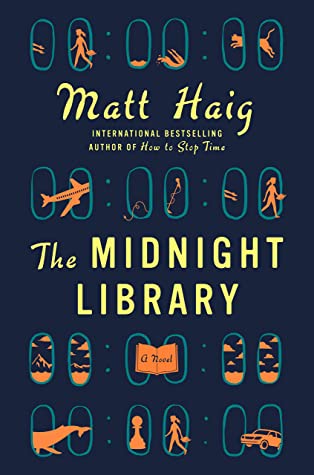
Book Review: The Midnight Library by Matt Haig

Title: The Midnight Library
Author: Matt Haig
Publisher: Viking
Publication date: September 29, 2020
Length: 288 pages
Genre: Contemporary fiction
Source: Purchased
Rating:

Rating: 5 out of 5.

Somewhere out beyond the edge of the universe there is a library that contains an infinite number of books, each one the story of another reality. One tells the story of your life as it is, along with another book for the other life you could have lived if you had made a different choice at any point in your life. While we all wonder how our lives might have been, what if you had the chance to go to the library and see for yourself? Would any of these other lives truly be better?

In The Midnight Library, Matt Haig’s enchanting new novel, Nora Seed finds herself faced with this decision. Faced with the possibility of changing her life for a new one, following a different career, undoing old breakups, realizing her dreams of becoming a glaciologist; she must search within herself as she travels through the Midnight Library to decide what is truly fulfilling in life, and what makes it worth living in the first place.

At age 35, Nora Seed makes a choice that should be fatal. Estranged from her best friend and from her brother, let go from an unfulfilling job, with a broken engagement in her past, she’s finally pushed too far when she learns that her beloved cat has died. Nora’s life once seemed full of promise, but now, she sees nothing ahead of herself but more loneliness and bleakness. So she decides to end her life.

But in the moments between life and death, Nora ends up in the Midnight Library, a seemingly magical place where choices are endless. In this infinite library, each volume on the shelves represents a different path her life might have taken. Nora is full of regrets for all the missed opportunities and seemingly wrong decisions she’s made during her lifetime, and in fact, one of the key books in the library is the Book of Regrets, capturing everything in Nora’s life that she wishes she could have done differently.

Under the guidance of Mrs. Elm, her former school librarian who represented kindness and safety at a difficult time in her life, Nora chooses different volumes of her life to try again. In each, she inhabits the life she might have had if she’d chosen differently. From sticking with the swimming career that could have led her to the Olympics, to signing the recording contract with the band that might have launched her into international stardom, to a life pursuing her academic career in philosophy while also raising a daughter with a man she loves, Nora gets to experience alternate realities and how she might feel in each different version of her life.

As in real life, there are no easy answers. While Nora seeks the right life, each ends up with flaws. If only she could find the one that’s perfect for her, she’d be able to stay in it… but with each, there comes a point where she returns to the library to try again.

Over the course of the book, Nora learns to let go of regret. She also learns the importance of perspective — that what she sees isn’t necessarily true for the people she’s interacting with, and that each person’s life can have far greater impact than they realize.

The Midnight Library is so meaningful, and so beautifully written. There are life lessons throughout, but never in a way that feels preachy or patronizing. Nora’s experiences feel real, and in each version of her life, it becomes clearer and clearer that the right life doesn’t equate to perfect happiness, as no life can be nothing but happy. Ultimately, it’s about choosing to live, to find purpose, and to find connection. As Nora progresses, we’re able to journey with her and discover some truths that make perfect sense, yet are rarely said.

I really loved this book, and will be pushing it into the hands of several bookish friends. Highly recommended — it’s uplifting and life-affirming, and left me feeling hopeful and renewed.

For more by this terrific author, check out my reviews of:
The Humans
How To Stop Time
The Dead Fathers Club

Book Review: The Hollow Places by T. Kingfisher

Title: The Hollow Places
Author: T. Kingfisher
Publisher: Gallery/Saga Press
Publication date: October 6, 2020
Length: 352 pages
Genre: Horror
Source: Review copy courtesy of the publisher via NetGalley

Rating: 4.5 out of 5.

A young woman discovers a strange portal in her uncle’s house, leading to madness and terror in this gripping new novel from the author of the “innovative, unexpected, and absolutely chilling” (Mira Grant, Nebula Award–winning author) The Twisted Ones.

Pray they are hungry.

Kara finds these words in the mysterious bunker that she’s discovered behind a hole in the wall of her uncle’s house. Freshly divorced and living back at home, Kara now becomes obsessed with these cryptic words and starts exploring the peculiar bunker—only to discover that it holds portals to countless alternate realities. But these places are haunted by creatures that seem to hear thoughts…and the more you fear them, the stronger they become.

With her distinctive “delightfully fresh and subversive” (SF Bluestocking) prose and the strange, sinister wonder found in Guillermo del Toro’s Pan’s LabyrinthThe Hollow Places is another compelling and white-knuckled horror novel that you won’t be able to put down.

One word review: Creepy.

Five word review: Scary. Snarky. Weird. Nightmarish. Un-put-downable.

But let me expand a little…

In The Hollow Places, Kara (known as Carrot by her uncle and close friends) is recently divorced and without a place to live. Her uncle Earl runs a totally awesome-sounding small-town museum (Glory to God Museum of Natural Wonders, Curiosities and Taxidermy). It’s a mish-mosh place full of (yes) taxidermied animals, fossils, relics, weirdness, and whatever people choose to send him. Earl is a sweetheart of a man, a total believer in whatever strangeness he comes across, but also kind-hearted and accepting and unconditionally loving when it comes to Kara.

Earl invites Kara to come live in the spare room at the back of the museum and help him with cataloguing and inventory. With so many positive memories of her time with Earl during her childhood, Kara is happy to accept. The taxidermy in the museum feels like being surrounded by old friends (and does not creep her out in the slightest, like it would for me!).

When Earl has to leave for a few weeks to get knee surgery, that’s when the weirdness starts. One day, Kara discovers a hole in a section of the drywall, which she attributes to clumsy tourists. Enlisting the help of Simon, the friendly and slightly odd barista next door, she plans to repair the hole… until they look inside it and see not the expected boards and plaster, but a corridor.

And it’s a corridor that should be impossible. Kara knows the layout of the building perfectly, and there just isn’t room for a long hallway like this. Naturally, they decide to explore, and end up in a bunker that opens onto an island in a river… in another world.

The world they discover is immediately disconcerting. There are willow trees everywhere, and the river is filled with small humped islands that appear to all contain bunkers. The sand has weird funnel-shaped holes, and there’s something just completely otherworldly and alien about this place.

The more they explore, the more horrors they discover, and they soon realize that they may not be able to get back to their own world.

I won’t go into too much more detail about the terror of this willow world, or what happens next, but it’s SCARY AF and gave me nightmares, for real. And despite the nightmares, I loved this book.

T. Kingfisher’s writing is funny and snarky, even when the circumstances are creepy and horrible. I love how Kara looks at the world, and some of the descriptions are laugh-out-loud hilarious, even in the midst of the terror.

Kara is a freelance graphic designer, and her worldview is amazing. Even while dealing with her disillusionment over her failed marriage and her jerk of an ex, she’s funny:

Dammit, I can’t believe I spent so much of my life on a man who would unironically post the line “Today is a gift, that’s why we call it the present.” And in Papyrus, too.

Simon is really fun too, and I love how he throws himself into the adventure with Kara, even while reminding them both how bad an idea this could be.

Come on, let’s go back to the coffee shop and I’ll make us Irish coffees and we’ll discuss this like people who don’t die in the first five minutes of a horror movie.

Even as hideous danger looms, Kara is still Kara:

It sounded slow. If I got to my feet and grabbed my cane, I could hobble away, and then we could have the slowest chase scene ever.

I read a good portion of this book in the middle of the night when I couldn’t sleep, and that pretty much guaranteed that I’d never be able to sleep again! Well, at least not that night.

The writing and the pacing are terrific, and the plot is weird and terrifying. The willow world is baffling and yet horrible, and there are certain descriptions that made me feel that I would drop dead of complete and utter fright if I found myself in Kara’s place.

I would be remiss if I didn’t mention that besides the awesomeness of Kara, Simon, and Uncle Earl, and of course the museum itself, there’s also a Very Good Cat named Beau who is all sorts of amazing in the most cat-like ways possible. I’m guessing the author is an animal lover, because her previous book, The Twisted Ones, had a Very Good Dog as an important character. (Rest assured, Beau is just fine by the end of this book. Beau is a bad-ass.)

The Hollow Places is a crazy disturbing read, but I mean that in the best possible way. A perfect read for the creepy-reading month of October!