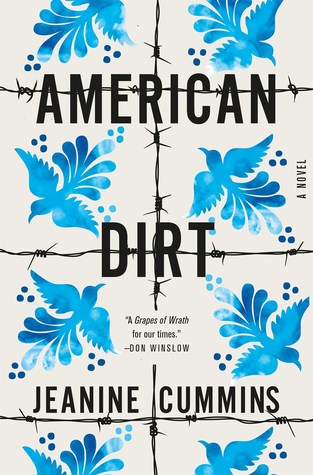
Book Review: American Dirt by Jeanine Cummins

Title: American Dirt
Author: Jeanine Cummins
Publisher: Flatiron Books
Publication date: January 21, 2020
Length: 400 pages
Genre: Contemporary fiction
Source: Received as a gift
Rating:

Rating: 3 out of 5.

También de este lado hay sueños. On this side, too, there are dreams.

Lydia Quixano Pérez lives in the Mexican city of Acapulco. She runs a bookstore. She has a son, Luca, the love of her life, and a wonderful husband who is a journalist. And while there are cracks beginning to show in Acapulco because of the drug cartels, her life is, by and large, fairly comfortable.

Even though she knows they’ll never sell, Lydia stocks some of her all-time favorite books in her store. And then one day a man enters the shop to browse and comes up to the register with a few books he would like to buy—two of them her favorites. Javier is erudite. He is charming. And, unbeknownst to Lydia, he is the jefe of the newest drug cartel that has gruesomely taken over the city. When Lydia’s husband’s tell-all profile of Javier is published, none of their lives will ever be the same.

Forced to flee, Lydia and eight-year-old Luca soon find themselves miles and worlds away from their comfortable middle-class existence. Instantly transformed into migrants, Lydia and Luca ride la bestia—trains that make their way north toward the United States, which is the only place Javier’s reach doesn’t extend. As they join the countless people trying to reach el norte, Lydia soon sees that everyone is running from something. But what exactly are they running to?

It’s impossible to read American Dirt without awareness of the controversy surrounding this book seeping into the reading experience. Which is okay — it’s controversial for a reason, and I actually had no intention of reading this book, until a family member gave it to me as a gift. So, with hesitation, I jumped in.

American Dirt is a story of pain and violence. Lydia’s life is permanently ravaged when a cartel murder squad invades her family’s backyard celebration. Purely by chance, Lydia and her eight-year-old son Luca survive, while sixteen other members of her family, including her husband, are killed. Recognizing their immediate danger, Lydia flees with Luca, knowing that the cartel won’t stop hunting them and that their only chance at safety is to head north to the US and try to cross the border.

As the book progresses, we learn more about the escalating violence in Acapulco as well as across all of Mexico, as the cartels exert more and more power. Lydia’s husband is a reporter who specializes in profiling cartel violence. Lydia herself runs a bookstore, where she ends up befriending a seemingly kind, intellectual man… who turns out to be none other than the head of the cartel ruling Acapulco. When Sebastian’s expose of Javier runs, it sets off a course of tragedy and violence that leads directly to the massacre of their family.

Lydia and Luca’s journey is harrowing, as they join the crowds of migrants riding La Bestia, the network of freight trains that run through Mexico, which migrants risk life and limb to ride atop in the hopes of making it north. Along the way, they face physical danger from the train itself as well as severe threats from police and cartel soldiers who round up migrants and inflict torture, death, and demands for ransom as part of their standard operating procedures.

Is this a good book? Not really, no. It’s dramatic for sure, and a compelling read, but it’s hard for me to actually praise it. Despite problems (more on those in a second), it’s a fast read that’s hard to put down once started. Yet the book really is more melodrama than anything else, indulging in nonstop violence and horrific situations, and presenting a portrait of Mexico as a place with not one ounce of safety or happiness.

The friendship (almost romantic) with Javier is unnecessary and feel soap opera-worthy. What are the odds that the wife of the journalist who exposes him would also be this man’s good friend and close confidante?. Why does Lydia, a woman grieving her slaughtered family, need to be also burdened by what-ifs about putting trust in Javier’s friendship?

Teen sisters Soledad and Rebeca become traveling companions for Lydia and Luca. We’re hit over the hit repeatedly with how remarkably beautiful the girls are — and, the book makes clear, how their beauty singles them out to become targets of rapists, again and again and again throughout the book. Why is their beauty relevant? Don’t women not at this pinnacle of beauty also get raped? Not in American Dirt.

The coyote who takes Lydia, Luca, and a group of others across the border is, of course, one of the good ones. He’s a coyote with a soul. Despite his tough talk and enforcement of rules, one tragedy one this journey in particular is enough to transform him and change him permanently. Really? As if he’s never lost anyone on a crossing before?

These are just a few examples, but I found the whole story to be over the top and voyeuristic. I could go on (why does it matter that Luca is a geography protege?), but I’ll turn instead to my other annoyances with this book, namely the writing.

First, the point of view shifts from paragraph to paragraph between Luca and Lydia, with no sense of why, and it’s confusing and distracting. Lydia will be thinking about something, and it’s not until midway through the following paragraph that a reference to Mami alerts us that we’re now seeing Luca’s perspective. Other character’s points-of-view are randomly included, seemingly so that the author can offer us first-person narratives of terrible experiences that Lydia wasn’t present for.

Also, the writing itself and the author’s descriptions are often over the top or simply incomprehensible. A few examples, but I could really open up the book practically at random and find more:

She loved that boy with her whole heart, but my God, there were days when she couldn’t fully breathe until she’d left him at the schoolyard gate. That’s all over now; she would staple him to her, sew him into her skin, affix her body permanently to his now, if she could. She’d grow her hair into his scalp, would become his conjoined twin-mother.

Her face is splotchy but dry, and there are dark circles beneath her eyes. Her expression is one Luca has never seen before, and he fears it might be permanent. It’s as if seven fisherman have cast their hooks into her from different directions and they’re all pulling at once. One from the eyebrow, one from the lip, another at the nose, one from the cheek. Mami is contorted.

In the half-light left over from Soledad’s corona, Rebeca glimmers like a secret sun.

Your mileage may vary, but repeatedly throughout the book, I had to pause to try to turn the author’s imagery into a picture in my mind that actually made sense. It didn’t always work.

I’m not directly addressing the controversy about the author, I realize, and that’s simply because it’s been covered elsewhere in depth. For more, I recommend:
The Seattle Review of Books: “The Dirt on American Dirt”
Tropics of Meta: Pendeja, You Ain’t Steinbeck
Vulture: “Why Is Everyone Arguing About the Novel American Dirt?”
New York Times: “American Dirt is Proof the Publishing Industry is Broken”

I with the author had explained more about her sources or the research that went into writing this book. The migrant experience is a compelling and important topic, but I don’t feel that American Dirt is the right book for really learning about it.

It does, however, make me want to seek out more authentic accounts by #ownvoices authors. I know there’s a lot to learn — I just don’t think American Dirt is the book to learn from.

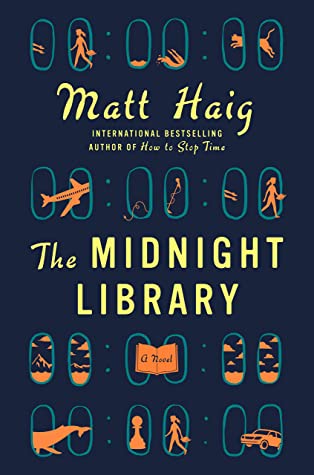
Book Review: The Midnight Library by Matt Haig

Title: The Midnight Library
Author: Matt Haig
Publisher: Viking
Publication date: September 29, 2020
Length: 288 pages
Genre: Contemporary fiction
Source: Purchased
Rating:

Rating: 5 out of 5.

Somewhere out beyond the edge of the universe there is a library that contains an infinite number of books, each one the story of another reality. One tells the story of your life as it is, along with another book for the other life you could have lived if you had made a different choice at any point in your life. While we all wonder how our lives might have been, what if you had the chance to go to the library and see for yourself? Would any of these other lives truly be better?

In The Midnight Library, Matt Haig’s enchanting new novel, Nora Seed finds herself faced with this decision. Faced with the possibility of changing her life for a new one, following a different career, undoing old breakups, realizing her dreams of becoming a glaciologist; she must search within herself as she travels through the Midnight Library to decide what is truly fulfilling in life, and what makes it worth living in the first place.

At age 35, Nora Seed makes a choice that should be fatal. Estranged from her best friend and from her brother, let go from an unfulfilling job, with a broken engagement in her past, she’s finally pushed too far when she learns that her beloved cat has died. Nora’s life once seemed full of promise, but now, she sees nothing ahead of herself but more loneliness and bleakness. So she decides to end her life.

But in the moments between life and death, Nora ends up in the Midnight Library, a seemingly magical place where choices are endless. In this infinite library, each volume on the shelves represents a different path her life might have taken. Nora is full of regrets for all the missed opportunities and seemingly wrong decisions she’s made during her lifetime, and in fact, one of the key books in the library is the Book of Regrets, capturing everything in Nora’s life that she wishes she could have done differently.

Under the guidance of Mrs. Elm, her former school librarian who represented kindness and safety at a difficult time in her life, Nora chooses different volumes of her life to try again. In each, she inhabits the life she might have had if she’d chosen differently. From sticking with the swimming career that could have led her to the Olympics, to signing the recording contract with the band that might have launched her into international stardom, to a life pursuing her academic career in philosophy while also raising a daughter with a man she loves, Nora gets to experience alternate realities and how she might feel in each different version of her life.

As in real life, there are no easy answers. While Nora seeks the right life, each ends up with flaws. If only she could find the one that’s perfect for her, she’d be able to stay in it… but with each, there comes a point where she returns to the library to try again.

Over the course of the book, Nora learns to let go of regret. She also learns the importance of perspective — that what she sees isn’t necessarily true for the people she’s interacting with, and that each person’s life can have far greater impact than they realize.

The Midnight Library is so meaningful, and so beautifully written. There are life lessons throughout, but never in a way that feels preachy or patronizing. Nora’s experiences feel real, and in each version of her life, it becomes clearer and clearer that the right life doesn’t equate to perfect happiness, as no life can be nothing but happy. Ultimately, it’s about choosing to live, to find purpose, and to find connection. As Nora progresses, we’re able to journey with her and discover some truths that make perfect sense, yet are rarely said.

I really loved this book, and will be pushing it into the hands of several bookish friends. Highly recommended — it’s uplifting and life-affirming, and left me feeling hopeful and renewed.

For more by this terrific author, check out my reviews of:
The Humans
How To Stop Time
The Dead Fathers Club

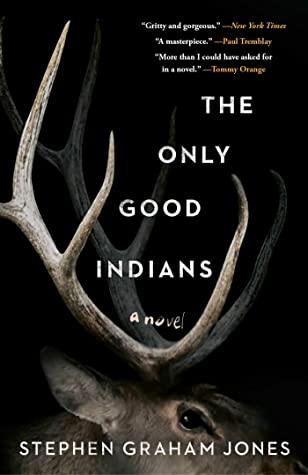
Book Review: The Only Good Indians by Stephen Graham Jones

Title: The Only Good Indians
Author: Stephen Graham Jones
Publisher: Gallery / Saga Press
Publication date: July 14, 2020
Length: 310 pages
Genre: Horror
Source: Library
Rating:

Rating: 4 out of 5.

A tale of revenge, cultural identity, and the cost of breaking from tradition in this latest novel from the Jordan Peele of horror literature, Stephen Graham Jones.

Seamlessly blending classic horror and a dramatic narrative with sharp social commentary, The Only Good Indians follows four American Indian men after a disturbing event from their youth puts them in a desperate struggle for their lives. Tracked by an entity bent on revenge, these childhood friends are helpless as the culture and traditions they left behind catch up to them in a violent, vengeful way.

Best friends Ricky, Lewis, Cassidy, and Gabe grew up together on a Blackfeet reservation. Then, in their 20s, they went their separate ways, after an even they refer to as the Thanksgiving Classic. One week before Thanksgiving, the friends went hunting in forbidden territory and illegally brought down many elk, before getting caught by the game warden and being forced to throw away all the meat they’d claimed as their prize.

Now, ten years later, strange events begin to occur. First, Ricky is killed in what the newspapers call a bar fight, but it’s much more involved than that. Next, Lewis appears to have a mental breakdown, in which he seems to be hallucinating visions of an elk in his living room and experiencing violent episodes that he may or may not be responsible for.

Up to this point, I wasn’t sure whether the characters were actually having supernatural experiences or if Lewis in particular was having some sort of psychotic break. But, it soon becomes clear that this is not all in their minds. Cassidy and Gabe are also soon the victim of a vengeful spirit coming back to punish the men for their part in slaughtering a vulnerable member of the herd.

The Only Good Indians is both a terrifying horror tale and a sad, straightforward look into the lives of Native Americans on their reservation as well as the lives of those who leave. (I can hear Gabe laughing right now — to him, “Native American” is an affectation of the younger generation. He considers himself Indian.)

It’s really questionable whether any of these men deserve what happens, and there are certainly some innocent victims as well — although to the elk spirit, I suppose none of the two-leggeds who hunt the herds are actually innocent. We get inside the spirit’s head as well as the main characters, and it’s all quite sad and disturbing.

One of the best characters in the book, in my opinion, is Gabe’s daughter Denorah, a middle school basketball star who takes over for the final section of the book, and is pretty astounding with her skill and courage.

I don’t feel like I’m capturing how powerful this book is, yet I don’t want to disclose too many details. The writing is evocative, sometime funny, and the characters are sharp, well-drawn, and memorable. Be warned that there are some very violent and gruesome aspects to the story, so if you shy away from books with blood and guts, this might not be a good choice for you.

Tammy at Books, Bones & Buffy wrote one of the best reviews of this book that I’ve seen, and I think she says it all better than I do! Check out her review (here), which is what convinced me that I needed to read this book.

I’m so glad my library hold finally came through! I’ll definitely want to read more by this talented author.

I never considered elk scary before… but I’ll never look at them the same way again.

For more, check out this NPR interview with the author:

Visit the author’s website at https://www.demontheory.net/

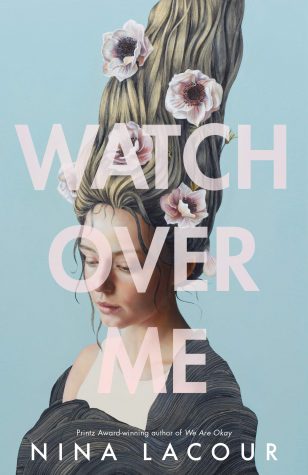
Book Review: Watch Over Me by Nina LaCour

Title: Watch Over Me
Author: Nina LaCour
Publisher: Dutton Books for Young Readers
Publication date: September 15, 2020
Length: 272 pages
Genre: Young adult
Source: Purchased
Rating:

Rating: 5 out of 5.

Nina LaCour delivers another emotional knockout with Watch Over Me, the eagerly anticipated follow-up to the Printz Award-winning We Are Okay.

Mila is used to being alone. Maybe that’s why she said yes to the opportunity: living in this remote place, among the flowers and the fog and the crash of waves far below.

But she hadn’t known about the ghosts.

Newly graduated from high school, Mila has aged out of the foster care system. So when she’s offered a job and a place to stay at a farm on an isolated part of the Northern California Coast, she immediately accepts. Maybe she will finally find a new home, a real home. The farm is a refuge, but also haunted by the past traumas its young residents have come to escape. And Mila’s own terrible memories are starting to rise to the surface.

Watch Over Me is another stunner from Printz Award-Winning author Nina LaCour, whose empathetic, lyrical prose is at the heart of this modern ghost story of resilience and rebirth. 

This book was not what I was expecting. It’s so much more.

Watch Over Me is a gorgeously written story of survival, found families, and coming to peace with one’s past. It’s a story of suffering and recovery, of facing one’s fears and choosing a way forward.

Mila, at age eighteen, has finished high school, and after living with kind foster parents who are eager to start over with a new baby to care for, she needs a place to put down roots at the start of her life as a young adult. She’s thrilled to be offered a place at The Farm, a refuge run by a warm couple named Terry and Julia, who take in abandoned and hopeless children and give them a safe place to grow.

Mila will be one of three interns, young adults who teach school for the younger children and who work as part of the farm’s collective, cooking, cleaning, and taking the farm’s flowers and produce to the weekly farmers market. Meanwhile, she’ll be living in a small no-frills cabin heated by a wood-burning stove, sharing meals with the family in the big house, and participating in the simple, isolated life that the group enjoys, far from the nearest town.

Though she tries to fit in, Mila is constantly worried about her place. She has secrets from her past, and while she tries to reassure herself that she is good, she’s fearful that the family will turn her away if they know the truth about what she’s done. Still, she bonds quickly with Lee, the 9-year-old boy who she’ll be teaching. She recognizes that he’s been hurt in his past, and by sharing some of her own pain, she hopes to help him open up and start to be less afraid.

And one more thing: There are ghosts. Each night, shimmering ghostly children play on the fields of the farm, visible to all the farm’s residents. No one seems particularly freaked out by them — they’re just part of what makes the place unique.

As Mila settles in, memories of her past creep back in, slowly at first, then threatening to overwhelm her. The story of what she’s been through is horrible, and it quickly becomes clear that this is a girl who no one protected, and who was endangered by the person who should have put Mila’s safety first.

I won’t explain how the ghosts fit into the story, but the more I read, the more captivated I was by the farm, its people, and how Mila’s past comes to haunt her present. I loved the characters and the relationships, but most of all loved Mila, with her doubts and uncertainties and fears — but also because of her big heart and capacity for love, and how badly she needs a place to belong.

Watch Over Me is unsettling and beautiful, and I’m pretty sure I’ll want to go back to it and read it all over again, just to let it all sink in. Highly recommended.

The beautiful inside front page

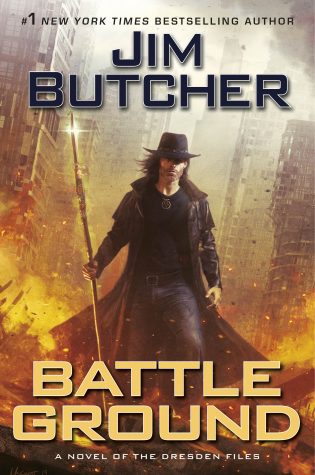
Quick Take: Battle Ground (Dresden Files, #17) by Jim Butcher

Title: Battle Ground (Dresden Files, #17)
Author: Jim Butcher
Publisher: Ace
Publication date: September 29, 2020
Length: 432 pages
Genre: Urban fantasy
Source: Library
Rating:

Rating: 2.5 out of 5.

THINGS ARE ABOUT TO GET SERIOUS FOR HARRY DRESDEN, CHICAGO’S ONLY PROFESSIONAL WIZARD, in the next entry in the #1 New York Times bestselling Dresden Files.

Harry has faced terrible odds before. He has a long history of fighting enemies above his weight class. The Red Court of vampires. The fallen angels of the Order of the Blackened Denarius. The Outsiders.

But this time it’s different. A being more powerful and dangerous on an order of magnitude beyond what the world has seen in a millennium is coming. And she’s bringing an army. The Last Titan has declared war on the city of Chicago, and has come to subjugate humanity, obliterating any who stand in her way.

Harry’s mission is simple but impossible: Save the city by killing a Titan. And the attempt will change Harry’s life, Chicago, and the mortal world forever.

Considering I’m up to volume 17 in the Dresden Files series, it’s safe to say that I’m a fan. And yet, I can’t give Battle Ground more than 2.5 stars.

Battle Ground is basically part two of the story begun in Peace Talks, the 16th book, published just three months earlier. I guess if they’d been combined, it would have made for one super massive book, so the publisher decided to break it in two — there’s really no other reason I can think of for not telling the entire story in one volume (and might have been a good opportunity to cut out some of the endless battle scenes…)

As you’d guess from the title, Battle Ground is all about a massive battle that threatens the destruction of Chicago, and from there, all of humankind. Our hero, Harry Dresden, charges in on the side of good alongside every ally he’s ever made, plus some former/future adversaries who’ve declared a truce for now in order to attempt to defeat the even worse bad guys.

Zzzzz…. oh, sorry, my eyes keep glazing over when I think about what a slog this book was.

If you like big, booming battles with lots of firepower, explosions, magical energy, and devastation of a major metropolis, you’ll probably love Battle Ground. As for me, a book that’s basically one long, extended battle for at least 80% of its length does not make for great reading.

I read the Dresden books for the characters, the escapades, the life-or-death struggles… but not never-ending action sequences where it’s almost impossible to tell who’s who or what awful creature has which awful powers, to be brought down by which even more awful weaponry. Sorry, but chapter after chapter after chapter of Harry throwing his power around, being outmatched, and then somehow soldiering on just doesn’t make for great reading.

There are some significant developments, including a major, heart-breaking loss, as well as the groundwork for what will likely be significant changes to come. And hey, 17 books in, of course I’ll keep going with the series. This particular book, though, just was not a stellar read for me.

Still, even though few and far between, there are still some great bits of Harry being a wise-ass that snapped me back to life in the midst of the more tedious firepower and spell-slinging, so I’ll close by sharing a few choice bits:

Then he made a fist and, carefully, bumped knuckles with me. The shock of it threatened to dislocate my shoulder again, but being all manly I didn’t make any high-pitched noises or anything. And you can’t prove otherwise.

“We didn’t see them until they got there! The foe has sneakily snucked a sneak attack behind our lines, like a sneaky sneak!”

I spun back to the enemy, brought my shield up—and stood tall. “You!” I said, relishing the moment. “Shall not! Pass!”

I’d never been in an epic mythology fight quite this epic before.

Don’t care how Titanic you are. No one expects an orbital-drop grizzly.

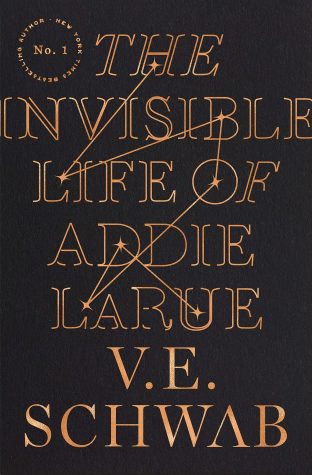
Book Review: The Invisible Life of Addie LaRue by V. E. Schwab

Title: The Invisible Life of Addie LaRue
Author: V. E. Schwab
Publisher: Tor
Publication date: October 6, 2020
Length: 442 pages
Genre: Fantasy
Source: Purchased
Rating:

Rating: 5 out of 5.

A Life No One Will Remember. A Story You Will Never Forget.

France, 1714: in a moment of desperation, a young woman makes a Faustian bargain to live forever and is cursed to be forgotten by everyone she meets.

Thus begins the extraordinary life of Addie LaRue, and a dazzling adventure that will play out across centuries and continents, across history and art, as a young woman learns how far she will go to leave her mark on the world.

But everything changes when, after nearly 300 years, Addie stumbles across a young man in a hidden bookstore and he remembers her name. 

At age 23, Adeline is old to be getting married — and really, she doesn’t want to be married at all. She cherishes her freedom and wants so much more out of life, but when the decision is taken out of her hands, she runs away and calls on the gods for help. Her help comes from a god of darkness, who grants her freedom and immortality in exchange for her soul, whenever she’s had enough of life.

Addie accepts this deal, but soon learns that there’s a trick in what she bargained for. She wanted absolute freedom, to belong to no one but herself, and that’s what she’s been given. But in belonging to no one, all connections have been severed, and from that moment onward, it’s as if Addie never existed. Her own parents don’t know her, and her history has been erased. When she encounters someone, whether for the first or 100th time, they forget her as soon as she’s out of sight.

Thus, Addie is doomed to wander alone, never able to make an impression, never to form relationships, never to have a home. She can’t even find a bed for the night without resorting to trickery — she may pay for a room at an inn, but as soon as the door closes, the landlord has forgotten her, and she’s soon kicked out, taken for an intruder.

Meanwhile, over the course of the centuries that pass, her dark god reappears to offer temptation, enticing her to give up her miserable existence and give herself up to him, once and for all.

Addie is determined and stubborn, and despite the many moments of sorrow and despair, there’s also glory. From a village girl destined for a hard life and an early death, she’s morphed into a world traveler, a muse, and a fearless explorer, seeking out all the beauty she can find, pursuing connections with people even while knowing she’ll be starting over again each day.

Until suddenly, it all changes. One day, she meets a young man in a bookstore, and when she goes back, her remembers her. How is this possible? Who is he, and why does he seem to be immune to the curse that follows her wherever she goes?

It wouldn’t be fair to say more, but I will say that this book is beautiful and unexpected, full of sadness and wonder. It’s a moving love story, but even more, a lovely testament to one woman’s courage and determination to live life to its fullest.

I loved Addie as a character — how fierce she is, and how she manages to survive and to find joy despite the curse that’s intended to leaver her always alone and always suffering. She manages to turn her solitude into a life that few would be able to tolerate, but still, she’s not sorry to have had all those years and the experience they bring.

The premise put me in mind of a book I read a few years ago, The Sudden Appearance of Hope by Claire North, also about someone whom no one can remember — but while that book ultimately frustrated me, The Invisible Life of Addie LaRue swept me up in its fantasy and the gorgeous writing.

This is easily one of my top reads of 2020. Highly recommended!

Book Review: To Have and To Hoax by Martha Waters

Title: To Have and To Hoax
Author: Martha Waters
Publisher: Atria
Publication date: April 7, 2020
Length: 367 pages
Genre: Historical fiction/romance
Source: Review copy courtesy of the publisher via NetGalley
Rating:

Rating: 3.5 out of 5.

In this fresh and hilarious historical rom-com, an estranged husband and wife in Regency England feign accidents and illness in an attempt to gain attention—and maybe just win each other back in the process.

Five years ago, Lady Violet Grey and Lord James Audley met, fell in love, and got married. Four years ago, they had a fight to end all fights, and have barely spoken since.

Their once-passionate love match has been reduced to one of cold, detached politeness. But when Violet receives a letter that James has been thrown from his horse and rendered unconscious at their country estate, she races to be by his side—only to discover him alive and well at a tavern, and completely unaware of her concern. She’s outraged. He’s confused. And the distance between them has never been more apparent.

Wanting to teach her estranged husband a lesson, Violet decides to feign an illness of her own. James quickly sees through it, but he decides to play along in an ever-escalating game of manipulation, featuring actors masquerading as doctors, threats of Swiss sanitariums, faux mistresses—and a lot of flirtation between a husband and wife who might not hate each other as much as they thought. Will the two be able to overcome four years of hurt or will they continue to deny the spark between them?

With charm, wit, and heart in spades, To Have and to Hoax is a fresh and eminently entertaining romantic comedy—perfect for fans of Jasmine Guillory and Julia Quinn. 

Needing a light-hearted read this week, I turned to an ARC that’s been on my to-read list since earlier this year. To Have and To Hoax by Martha Waters perfectly fit my mood, giving me a nice little break from reality by means of a Regency romance and a battle of wits.

Violet and James were a true love match, falling in love at first sight during Violet’s first season out in society, and marrying within four weeks of meeting. They enjoyed a loving, passionate first year together, and when they quarreled, they fought hard and then made up even harder.

But one year into their marriage, there was an argument that struck to the very core of their relationship and their trust in one another. In the four years since, Violet and James have lived in stony silence, neither willing to forgive or ask forgiveness, avoiding each other as much as possible.

This cold war stand-off is disturbed when Violet receives word that James has been gravely injured — although James has no idea that his friend has sent for Violet. When they meet, and Violet sees that James is both recovered and surprised that she’d been notified, years of anger boil to the surface.

In a game of one-up-manship, Violet decides to feign illness and make James suffer. He, in turn, sees through her game and treats her as an invalid, confining her to a sick room and making her miserable. When she suspects that he he knows the truth, he escalates matters by publicly flirting with another woman, yet Violet manages to turn even that scandalous situation to her own advantage.

Through it all, it’s absolutely clear that Violet and James still love one another, and just need a breakthrough (or a good shaking) to finally talk about their grievances and put them behind for good. There are plenty of fights, heavy doses of flirtation and teasing, a few good dances, proddings from friends, and some rather naughty encounters too.

It’s all great fun. Chapters alternate between Violet and James’s points of view, so we’re treated to both sides of the great divide between them and can see just how badly they’ve misunderstood and reacted to one another — but we also become aware well before the characters do that the love and passion between Violet and James are still there beneath the surface, just waiting to come out.

As a historical romance, To Have and To Hoax is very entertaining, and I was mostly convinced by the Regency society norms, manners, and settings. There are a few moments where more modern terminology jarred me out of the story (for example, a moment when Violet has thoughts about men’s “emotional intelligence”), but overall, I enjoyed this read.

A follow-up book featuring two secondary characters from To Have and To Hoax is due out in 2021 (To Love and To Loathe), and I will certainly want to read that too. Meanwhile, for a light romantic reading escape, check out To Have and To Hoax.

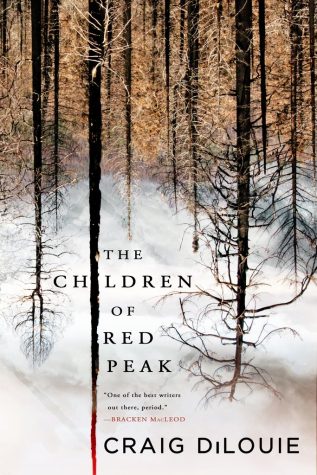
Book Review: The Children of Red Peak by Craig DiLouie

Title: The Children of Red Peak
Author: Craig DiLouie
Publisher: Redhook
Publication date: November 17, 2020
Length: 384 pages
Genre: Horror
Source: Review copy courtesy of the publisher via NetGalley
Rating:

Rating: 4 out of 5.

Bram Stoker Award-nominated author Craig DiLouie brings a new twist to the cult horror story in a heart-pounding novel of psychological suspense.

David Young, Deacon Price, and Beth Harris live with a dark secret. As children, they survived a religious group’s horrific last days at the isolated mountain Red Peak. Years later, the trauma of what they experienced never feels far behind.

When a fellow survivor commits suicide, they finally reunite and share their stories. Long-repressed memories surface, defying understanding and belief. Why did their families go down such a dark road? What really happened on that final night?

The answers lie buried at Red Peak. But truth has a price, and escaping a second time may demand the ultimate sacrifice.

Reading The Children of Red Peak gave me serious chills — but I’m not sure whether this story needed the horror/supernatural element to have that effect. How can a story about childhood survivors of a death cult be anything but horrifying?

In The Children of Red Peak, we meet the three main characters — David, Beth, and Deacon, at the funeral of their childhood friend, Emily. Emily has committed suicide, leaving a note that says simply “I couldn’t fight it anymore”.

Fifteen years earlier, these four people, plus David’s older sister Angela, were the sole survivors of a brutal yet mysterious mass suicide out in the desert at a location known as Red Peak. A religious congregation, led by their pastor, endured weeks of starvation, hard labor, and mutilations before finally drinking poison (and murdering those who balked) — all with the goal of gaining eternal life in heaven, leaving behind the rest of the world to suffer the end times.

The survivors were all teens at the time, and after their rescue and extended psychological treatment, they eventually went their separate ways and made lives for themselves. But none are truly happy, and none can really explain what happened on that terrible day at Red Peak.

Through chapters that alternate between Beth, David, and Deacon’s perspectives, we learn about their varied current lives — Beth is a psychologist, Deacon an up-and-coming rock star, and David a cult exit counselor. We also see the characters start to allow their memories to resurface, so we get the backstory of the Family of the Living Spirit, its road to ruin, and the events of the final day in bits and pieces, until they eventually add up to a disturbing, terrible whole.

While there is a mysterious supernatural (religious?) element that comes into play, for me the true impact of this book lies in the description of the Family of the Living Spirit’s trajectory toward destruction. When we’re introduced to this community, they are a peaceful, religious, spiritual group living off the land on a small farm, devoted to the worship of the Living Spirit, but also living a joyful, celebratory life.

It’s only when the pastor discovers a miracle in the desert that the group’s emphasis on gaining eternal life kicks into high gear. With growing fervor for the apocalypse and their crossing over, the congregation evolves quickly into a doomsday cult. Choices are removed, blind obedience is emphasized, and increasingly destructive behaviors are held up as testaments to faith. It’s horrible, especially as we see these events through the eyes of people who were children at the time.

I’m not sure that I loved the climax and conclusion of The Children of Red Peak. The story of the cult and its destructive power is the true horror — for me, the addition of a supernatural element seems almost beside the point. Yes, it’s all very scary and horrifying, but even if this story were just about the delusions and failings of a group of brainwashed people, it would be just as scary and horrifying.

Maybe even more so?

The ending gives us a way out, so to speak. It allows for the possibility that the group’s beliefs might actually have had some sort of fulfillment, in its own awful way. And truly, there are no excuses. Whether the events were the work of a supernatural or divine being, it still resulted in suffering, death, and the permanent psychological damage done to the children who survived.

The Children of Red Peak is thought-provoking and utterly devastating. I came to really care about the characters, and found the entire story and the characters’ various endings heart-breaking and tragic.

This is a powerful read, and I just wish I had someone to talk about it with! Craig DiLouie is a gifted writer, and I will gladly read whatever he writes next.

For more by this author, check out my reviews of:
One of Us
Our War

Book Review: The Red Lotus by Chris Bohjalian

Title: The Red Lotus
Author: Chris Bohjalian
Publisher: Doubleday
Publication date: March 17, 2020
Length: 400 pages
Genre: Thriller
Source: Review copy courtesy of the publisher via NetGalley
Rating:

Rating: 4 out of 5.

From the #1 New York Times bestselling author of Midwives and The Flight Attendant comes a twisting story of love and deceit: an American man vanishes on a rural road in Vietnam, and his girlfriend, an emergency room doctor trained to ask questions, follows a path that leads her home to the very hospital where they met.

The first time Alexis saw Austin, it was a Saturday night. Not in a bar, but in the emergency room where Alexis sutured a bullet wound in Austin’s arm. Six months later, on the brink of falling in love, they travel to Vietnam on a bike tour so that Austin can show her his passion for cycling and he can pay his respects to the place where his father and uncle fought in the war. But as Alexis sips white wine and waits at the hotel for him to return from his solo ride, two men emerge from the tall grass and Austin vanishes into thin air. The only clue he leaves behind is a bright yellow energy gel dropped on the road.

As Alexis grapples with this bewildering loss, and deals with the FBI, Austin’s prickly family, and her colleagues at the hospital, Alexis uncovers a series of strange lies that force her to wonder: Where did Austin go? Why did he really bring her to Vietnam? And how much danger has he left her in?

Set amidst the adrenaline-fueled world of the emergency room, The Red Lotus is a global thriller about those who dedicate their lives to saving people, and those who peddle death to the highest bidder.

The Red Lotus is a thriller that moves between Vietnam and New York, ratcheting up the tension until it’s impossible to put down.

We open with our main character Alexis, an ER doctor, waiting anxiously at a luxurious hotel for her boyfriend Austin to return from a solo bike ride across difficult terrain in Vietnam. He’s late, and getting later. Eventually, she reports him missing to their bike tour guides, the local police, and the American consulate, which dispatches the resident FBI representative to assist with the search.

After many hours, Austin’s body is finally found. He’s apparently been killed in a hit and run on a steep mountain road.

But we know there’s more to the story, having read a chapter from Austin’s point of view, in which he’s stopped on the road, taken blindfolded to an undisclosed location, and interrogated. Forcefully. Austin is clearly involved in something sketchy, and just as clearly, he’s in way over his head.

After identifying Austin’s body, Alexis sadly returns alone to New York, but certain inconsistencies nag at her. His injuries can’t all be accounted for as due to a hit and run accident. And why did he lie to her about his father and uncle’s service records in Vietnam? She should probably let it go, but one of her skills as an ER doctor is pattern recognition — spotting key facts and connecting the dots to find out what’s really going on. For her own peace of mind, Alexis has to know the truth about Austin and the real reason he insisted on their trip to Vietnam.

I really don’t want to give away anything more about the plot. There are many different point of view characters, and the intricacies and clues pile up quickly.

Early on, we’re aware that there’s something awful going on behind the scenes involving medical research and murky, disturbing science. How this involves Alexis and Austin is one of the driving mysteries of The Red Lotus.

Even as early as about a third of the way into the story, I just couldn’t stop reading. I had to know if my guesses were right (and some were! yay, me!), how the crazy plotlines would unravel or come together, and whether Alexis herself would end up in mortal danger (she does).

Chris Bohjalian is a master storyteller, and his books never fail to surprise me with their intricate plots and compelling characters. I loved how seemingly secondary characters in this book still got their own backstories and, in the case of the PI Alexis hires, a rich life story full of challenges, love, and loss.

Maybe I just didn’t read the synopsis thoroughly before picking up this book, but I was expecting something more focused on the aftermath of the Vietnam War — and while that does come into play, the true pulse-pounding aspect of the story is along the lines of a medical thriller.

As I said, there’s not much more I can say without giving out major spoilers, so I’ll stop! The Red Lotus is a fascinating, disturbing read, and I just couldn’t look away.

If you enjoy medical thrillers with an international setting and a brave, intelligent lead character, check this one out!

Book Review: Plain Bad Heroines by Emily M. Danforth

Title: Plain Bad Heroines
Author: Emily M. Danforth
Publisher: William Morrow
Publication date: October 20, 2020
Length: 608 pages
Genre: Horror
Source: Purchased
Rating:

Rating: 4 out of 5.

The award-winning author of The Miseducation of Cameron Post makes her adult debut with this highly imaginative and original horror-comedy centered around a cursed New England boarding school for girls—a wickedly whimsical celebration of the art of storytelling, sapphic love, and the rebellious female spirit.

Our story begins in 1902, at The Brookhants School for Girls. Flo and Clara, two impressionable students, are obsessed with each other and with a daring young writer named Mary MacLane, the author of a scandalous bestselling memoir. To show their devotion to Mary, the girls establish their own private club and call it The Plain Bad Heroine Society. They meet in secret in a nearby apple orchard, the setting of their wildest happiness and, ultimately, of their macabre deaths. This is where their bodies are later discovered with a copy of Mary’s book splayed beside them, the victims of a swarm of stinging, angry yellow jackets. Less than five years later, The Brookhants School for Girls closes its doors forever—but not before three more people mysteriously die on the property, each in a most troubling way.

Over a century later, the now abandoned and crumbling Brookhants is back in the news when wunderkind writer, Merritt Emmons, publishes a breakout book celebrating the queer, feminist history surrounding the “haunted and cursed” Gilded-Age institution. Her bestselling book inspires a controversial horror film adaptation starring celebrity actor and lesbian it girl Harper Harper playing the ill-fated heroine Flo, opposite B-list actress and former child star Audrey Wells as Clara. But as Brookhants opens its gates once again, and our three modern heroines arrive on set to begin filming, past and present become grimly entangled—or perhaps just grimly exploited—and soon it’s impossible to tell where the curse leaves off and Hollywood begins.

A story within a story within a story and featuring black-and-white period illustrations, Plain Bad Heroines is a devilishly haunting, modern masterwork of metafiction that manages to combine the ghostly sensibility of Sarah Waters with the dark imagination of Marisha Pessl and the sharp humor and incisive social commentary of Curtis Sittenfeld into one laugh-out-loud funny, spellbinding, and wonderfully luxuriant read.

This 600+ page book almost defies description, but I’ll give it a shot!

“I wish some one would write a book about a plan bad heroine so that I might feel in real sympathy with her.” – Mary MacLane

Plain Bad Heroines is a story-within-a-story book, with interlocking characters and motifs that center on the (supposedly) cursed and/or haunted grounds of the Brookhants School for Girls — an early 20th century institution for the education of society girls, located on a wooded estate in upper-crust Rhode Island.

Mary MacLane

In 1902, students Clara and Flo are inspired by the writings of (real-life) Mary MacLane and form a secret society, the Plain Bad Heroines, to celebrate her work and her life. Clara and Flo are in love, but after a disastrous trip home and a ride back to school with her judgmental cousin, Clara storms off into the woods to meet up with Flo, only for both girls to meet a ghastly end by being attacked by swarms of yellow jackets.

In our own timeline, the events from 1902 gain new notoriety after Merritt Emmons publishes The Happenings at Brookhants at the age of sixteen. Now years later, the book is being made into a film by an edgy director, with superstar “celesbian” Harper Harper committed to star as Flo. Merritt is on board as a producer, and she’s not pleased when Audrey Wood, a B-list actor who bombed her audition in a major way, is cast as Clara.

As the production cast and crew settle in to film on location at Brookhants, weird things start to happen, and there’s much more going on than can be easily explained. Is the place truly haunted? Or is this Hollywood manipulation at its most devious?

The plot weaves backward and forward in time, cutting between the modern-day movie storyline and the complicated relationships between Harper, Merritt, and Audrey, and the timeline that includes the aftermath of Clara and Flo’s deaths and the impact on Libbie, the school headmistress, and her lover, Alex (Alexandra).

There’s so much more to both pieces of the story than is readily apparent, and the author carefully layers on more and more hints and explanations, constantly deepening the story and shifting its direction and meaning.

Plain Bad Heroines is proudly, unabashedly queer, and its (plain, bad) heroines make no attempts to follow anyone’s rules but their own. They love as they please, and take inspiration from Mary MacLane’s own bold pronouncements when they need courage. The relationships are intricate and shifting, in both timelines, and the character refuse to be cookie-cutter types — author Emily M. Danforth does an amazing job of managing such a large cast and making sure each individual character has a life and personality of her own.

This book is BIG, and it takes concentration, but I could not stop reading once I started. The writing style is clever and filled with footnotes and commentary that are snarky and funny and informative. There are also dire and tragic happenings — and this IS a horror story too, with plenty of creepy, spine-tingling moments.

Black and white illustrations throughout the book add to the overall mood and make reading this book feel like an experience.

Yellow jackets are scary anyway, but now, having read Plain Bad Heroines, I’m pretty sure I’m terrified of them. Read the book — you’ll see what I mean.

I really only have two complaints about Plain Bad Heroines, and the first is not with the story itself but with the layout. Whoever picked the typeface for this book should have paid more attention to the asterisks that lead to the footnotes — I almost never saw them (they’re tiny), and had to constantly go back and search the page to see where the footnotes connect to.

My second complaint is a larger one, which is that I wasn’t completely satisfied with the ending. It leaves a bunch of unanswered questions, and I’m a little frustrated that certain elements didn’t get more clarity and resolution.

Still, this is overall a marvelous and unique book, and I laughed and shivered my way through it. The final scene takes place at the Cannes Festival premiere of The Happenings at Brookhants, and all I could think was, damn! I wish this was a real movie, because it would be fascinating to see how it all worked out.

Plain Bad Heroines is a terrific read. Don’t miss it!

To learn more about the real Mary MacLane, visit The Mary MacLane Project.