Book Review: Close Your Eyes, Hold Hands by Chris Bohjalian

Book Review: Close Your Eyes, Hold Hands by Chris Bohjalian

Close Your Eyes, Hold HandsBestselling author Chris Bohjalian channels a 16-year-old girl in his newest novel, Close Your Eyes, Hold Hands. Narrated by Emily Shephard, the book is set in post-disaster Vermont. A nuclear power plant has exploded in the northeast sector of the state, leaving thousands homeless, a big swath of land (the Exclusion Zone) contaminated and uninhabitable, and resulting in 19 deaths — including the deaths of Emily’s parents. Even worse, Emily’s father was an engineer at the plant, and the common belief is that he was drunk on the day of the disaster. Not only is Emily left on her own, but she’s constantly barraged by the scathing comments of strangers about how Bill Shephard is to blame for it all, so Emily runs away and seeks anonymity in the closest city, Burlington.

There, Emily drifts from teen shelter to the streets, landing for a while in the miserable apartment of Poacher, who supplies her with painkillers and pimps her out to earn her keep, when he’s not sending her out with other members of the posse to steal various and sundry items. Emily operates under an assumed name, spends her time mostly high, cuts herself in secret, and picks up truckers by the interstate for a quick buck, until she meets 9-year-old Cameron, a runaway from a string of bad foster homes, and decides to protect Cameron at all costs.

Emily narrates her tale from some time after the events, and her narration jumps around quite a bit in time. We get snapshots of her pre-disaster life, living with unstable parents who drink too much, running a bit wild, constantly underachieving in school. Emily describes herself as having poor decision-making skills and impulse-control, and really, even before the explosion, her life was heading downhill. Emily’s one true passion is writing. She keeps journals and is an aspiring poet, and admires no one more than Emily Dickinson. If the plant hadn’t melted down, would Emily have gotten her act together? Possibly… but we’ll never know.

Instead, Emily sheds her innocence quickly in the six weeks from nuclear meltdown to her loss of virginity in her first paid sexual encounter. Emily is on her own, on the streets, with no one to look out for her — and because of her fear of admitting who she really is, she’s cut off from any possible aid from official relief agencies.

The narration of Close Your Eyes, Hold Hands is one long spiral downward. The time jumps become jumbled, and while the intended effect might have been a stream-of-conciousness flow, it’s often more like listening to someone ramble. Emily’s inner turmoil and dire straits are immediately apparent, and the impact of the disaster is clear and awful.

Yet somehow, I never truly felt an emotional connection to Emily. Her storytelling style is distant — she’s recounting events from after the fact, and we don’t really find out why or what’s going on in this “after” until quite late in the story. Everything feels abrupt: We hear about an incident at Poacher’s, and only later get more information about how she ended up there. We hear about taking care of Cameron, but don’t get the full picture of why or how this came about until further into the book. The jumbled events leave little to become involved with, as the loose narrative structure never really allows momentum or suspense to build.

My other issue with this book is that Emily’s voice fades in and out quite a bit. I could never quite put out of my mind that this is a grown man’s version of what a teenage girl might sound like, and to my ears, anyway, the language was just a tiny bit off somehow, the slang and expressions lacking the ring of authenticity to convince me that this was really a 16-year-old speaking to me.

On the other hand, there is quite a bit here that packs a punch. The bare bones of the disaster itself are disturbing, and the post-disaster landscape and the suffering of the survivors is bleak indeed.

Close Your Eyes, Hold Hands is harsh and sad and frightening. This isn’t some far-distant post-apocalyptic American nightmare: this is today, here, now. It’s a scenario that’s scarily possible — a what-if imagining that’s not at all difficult to envision. Emily is a mess, and rightly so. She makes some terrible decisions, but this isn’t a situation that anyone could possibly be prepared for.

While the writing style and organization of the book didn’t always work for me, I still couldn’t look away or stop reading. Whether or not I easily bought into Emily as a person, I had no problem picturing the nightmare of a nuclear disaster happening in an oblivious America. Don’t read this book expecting sunshine and happy endings; the sadness and despair will stick with you long after you close the covers.

_________________________________________

The details:

Title: Close Your Eyes, Hold Hands
Author: Chris Bohjalian
Publisher: Doubleday
Publication date: July 8, 2014
Length: 288 pages
Genre: Contemporary fiction
Source: Review copy courtesy of Doubleday via NetGalley


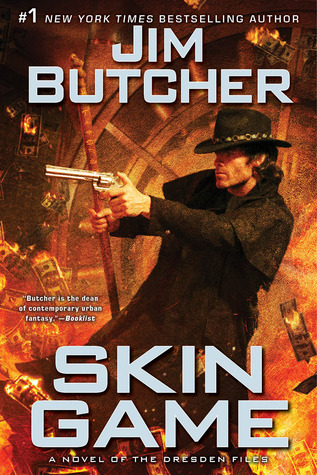
Book Review: Skin Game by Jim Butcher

Book Review: Skin Game by Jim Butcher

Skin Game (The Dresden Files, #15)

Harry Dresden is back!

Chicago’s only professional wizard (or at least, the only one listed in the yellow pages) returns in the 15th installment of Jim Butcher’s fast-paced urban fantasy series, the Dresden Files.

Synopsis (Goodreads):

Harry Dresden, Chicago’s only professional wizard, is about to have a very bad day….

Because as Winter Knight to the Queen of Air and Darkness, Harry never knows what the scheming Mab might want him to do. Usually, it’s something awful.

He doesn’t know the half of it….

Mab has just traded Harry’s skills to pay off one of her debts. And now he must help a group of supernatural villains—led by one of Harry’s most dreaded and despised enemies, Nicodemus Archleone—to break into the highest-security vault in town so that they can then access the highest-security vault in the Nevernever.

It’s a smash-and-grab job to recover the literal Holy Grail from the vaults of the greatest treasure hoard in the supernatural world—which belongs to the one and only Hades, Lord of the freaking Underworld and generally unpleasant character. Worse, Dresden suspects that there is another game afoot that no one is talking about. And he’s dead certain that Nicodemus has no intention of allowing any of his crew to survive the experience. Especially Harry.

Dresden’s always been tricky, but he’s going to have to up his backstabbing game to survive this mess—assuming his own allies don’t end up killing him before his enemies get the chance….

Clearly, at book 15, this is not a good entry point for Dresden newbies. Sure, you might be able to figure out what’s going on — but I doubt it. By this point in the series, the relationships are complex, there’s a lot of backstory, and the mythology and world-building are so intricate, with so many interwoven storylines and a huge cast of characters, that there’s not much that would make a whole lot of sense coming in cold.

For Dresden fans, however, Skin Game is a delight. Picking up soon after the jaw-dropping events in Cold Days, Skin Game sees Harry thrust right back into action, thrown into a seemingly no-win situation in which he’s forced to help an archenemy carry out a crazy dangerous plan with potentially devastating consequences. Still, Harry has no viable way to refuse, and thus embarks on a whirlwind three-day escapade alongside a team of colleagues who mostly can’t be trusted. Harry’s life is at stake every moment, his friends and loved one are all at risk, he gets broken and bruised — a lot — and above all, Harry has to figure out how to make his way through without endangering everything he holds dear and without turning into what he most fears.

Why do I love Harry Dresden? He’s smart, he’s brave, he’s a total wiseass, and he’s just really, really funny. Jim Butcher’s writing crackles with energy and humor, even in the midst of bloody action sequences. Harry may get hurt, but he’s never completely down for the count. And even in the midst of grave peril, he manages to get off some of the best one-liners and pop-culture references in fiction today.

My only complaint about Skin Game: No Thomas, and not enough Molly*. Other than that, we’re treated to a compelling plot, exciting action, forward motion in Harry’s ongoing personal drama, and an adventure story that’s simply impossible to stop reading.

Plus, we get to meet a Greek god, so there’s that.

All in all, Skin Game is a very successful addition to the Dresden body of work. Ongoing readers of the series have to read this one, period.

Some series stick around way past the point where there’s anything fresh or interesting to say. Not Dresden. I hope Jim Butcher plans to continue writing about Harry for years to come. If he does, I promise, I’ll be there to read the books. All the books. Forever.

And a final word:

Parkour!!**

_________________________________________

The details:

Title: Skin Game
Author: Jim Butcher
Publisher: Roc
Publication date: May 27, 2014
Length: 454 pages
Genre: Urban fantasy
Source: Library

* Oh, wait. One more complaint: We have to wait another year for book #16.

**with special credit and a big smile to my Goodreads friend Emily for reminding me of one of my favorite repeated utterances in Skin Game.


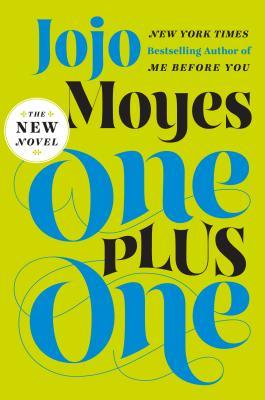
Book Review: One Plus One by Jojo Moyes

Book Review: One Plus One by Jojo Moyes

One Plus OneThis is either the happiest sad book I’ve ever read, or the saddest happy book. Either way, it brought me to tears while making me laugh… and either way, I simply loved it.

In One Plus One, we meet single mom Jess Thomas, in her late twenties, working as many jobs as possible to support her two kids, and just not getting by. The bills are stacking up, and there are always more. Plus, stepson Nicky is getting bullied and beaten up and daughter Tanzie is a math genius who should be in private school — but private school is simply out of reach financially.

There were lots of awful things about the father of your children leaving: the money issues, the suppressed anger on behalf of your children, the way most of your coupled-up friends now treated you as if you were some kind of potential husband stealer. But worse than that, worse than the endless, bloody exhausting financial and energy-sapping struggle, was that being a parent on your own when you were totally out of your depth was actually the loneliest place on earth.

And then there’s Ed Nicholls, software success story with oodles of money who makes a seriously bad decision while breaking up with a crush from his college days and ends up embroiled in an insider trading investigation that could cost him everything.

Worlds collide. Jess cleans Ed’s house and has never been more than the unseen cleaner to him — but when his world starts falling apart, he happens to come across Jess and her kids stranded on the side of the road, and in a burst of do-gooder repentance, decides to offer to drive them to Scotland for a math Olympiad competition that may provide Tanzie with the funds to get to the school she needs.

And thus ensues one of the funniest, most uncomfortable, and unluckiest road trips in literary road trip history. Car sickness, food poisoning, big drooly dogs, and cows in the road all play a part in Ed and Jess’s big adventure. Yet along the way, some miraculous things occur. Jess has time with her kids, for the first time in years, in which she has nothing else to do and nowhere else to be. Nicky starts to smile again. Tanzie has a shot at the maths future she so craves. And Ed and Jess go from prickly antagonism to spiky friendship to maybe something more.

Jess is a ridiculously optimistic person who just doesn’t give up, even when her kids are falling apart and she’s down to her last few pounds. She believes that things will get better. She believes that good people eventually wind up getting the good fortune they deserve.

She wondered whether being able to sound cheerful about things that made her want to kick something was her superpower.

But when one thing after another goes wrong and she sees her children getting a raw deal — again — even Jess’s unfailingly sunny outlook starts to wear thin. Ed certainly knows better. He knows that bad stuff happens, like it or not, and that momentary weakness can lead to ruin. The question is, can he and Jess somehow change their fates and find a way toward happier times?

As Tanzie muses:

The law of probability combined with the law of large numbers states that to beat the odds, sometimes you have to repeat an event an increasing number of times in order to get you to the outcome you desire. The more you do, the closer you get. Or, as I explain it to Mum, basically, sometimes you just have to keep going.

The chemistry between Ed and Jess is delightful, going from silent dislike to grudging acceptance to a reluctant attraction and then some. These two smart, lonely, often disappointed people manage to forge a connection during their few short days stuffed in a car together, and between their hurt and their sense of humor, a spark starts to catch:

Mr. Nicholls nodded toward the candle and the plates. And then he looked up at Jess and he was no longer scowling. “This is actually the best pie and chips I’ve ever eaten in a weird bed-and-breakfast somewhere I’ve never heard of on the north Yorkshire moors.”

One Plus One moves effortlessly between points-of-view, so that we hear from Jess, Ed, Nicky, and Tanzie. Each has a unique and compelling voice; each voices his or her slightly different take on matters without feeling forced or artificial. The author skillfully weaves together these characters into one cohesive whole. There’s momentum and there’s real emotion. While many of the escapades along the way are kind of goofy, underlying it all is a story of good people caught up in situations in which it feels like the whole world is against them. How do you stay good when you can never catch a break? When no matter what, things don’t work out?

There aren’t easy answers here for any of the characters, but somehow, by putting them all together, one plus one does add up to so much more than it should. The group dynamics are fabulous, and each character in this lovely novel feels like a real person. The reader can’t help but feel invested in them, individually and as a part of their interwoven relationships.

I’ve read one book by Jojo Moyes previously, her historical novel The Girl You Left Behind (reviewed here last September). I may be the last person on the planet who hasn’t read the author’s bestseller Me Before You, and I plan to remedy that as soon as possible. Jojo Moyes is absolutely gifted at writing that gets to the heart and soul of her characters, bringing them to life in a way that lets readers feel as though they’re meeting real people, not fictional creations. One Plus One is a contemporary novel that conveys warmth and connection through characters who are sympathetic and likeable. You want Jess and Ed to succeed, and you want Nicky and Tanzie to be happy.  Not every novel can make you care quite so much. One Plus One is a quiet book in many ways, but one that I recommend wholeheartedly.

_________________________________________

The details:

Title: One Plus One
Author: Jojo Moyes
Publisher: Pamela Dorman Books
Publication date: July 1, 2014
Length: 384 pages
Genre: Contemporary fiction
Source: Review copy courtesy of Pamela Dorman Books via NetGalley

Book Review: Goodnight June by Sarah Jio

Book Review: Goodnight June by Sarah Jio

Goodnight JuneWhat does this cover remind you of?

If you immediately started reciting “In the great green room there was a telephone and a red balloon and a picture of the cow jumping over the moon…”, then you’re definitely in tune with the central motif of Goodnight June.

Goodnight June is a contemporary novel about a young woman finding her way and reconnecting with her family’s past. June Anderson, age 34, is a high-powered New York banker who specializes in foreclosing on small businesses. She’s perfected the art of ruthless dedication to the bank’s best interests and is eminently successful — yet she’s also lonely, sad, and on the verge of physical disaster thanks to skyrocketing blood pressure. When June learns that her great-aunt Ruby has passed away and left her her beloved Seattle children’s bookstore, June heads west to settle the estate, dispose of the assets, and make her way back to her intense New York job as quickly as possible.

But then something happens. As June reenters the world of Bluebird Books, she starts to remember the years spent there with Ruby, and bit by bit, the bookstore and her family memories draw her in and demand her attention.

Everyone has a happy place, the scene that comes into view when you close your eyes and let your mind transport you to the dot on the globe where life is cozy, safe, warm. For me, that place is the bookstore, with its emerald green walls and the big picture windows that, at night, frame the stars twinkling above. The embers in the fireplace burn the color of a setting orange sun, and I’m wrapped in a quilt, seated in a big wingback chair reading a book.

Slowly, June discovers clues to her aunt’s secret life, starting with what may be the literary find of the century: Ruby was apparently best of friends with children’s author Margaret Wise Brown, and the two carried on a deep, emotional, soul-baring correspondence for many years. Before her death, Ruby had hidden letters in various books around the store, creating a scavenger hunt leading June on a journey of discovery and revelation.

As June is drawn into her aunt’s past, she meets the gorgeous restaurant owner next door, rediscovers her love of children’s books, and begins to consider making peace with her estranged sister. And out of all this grows June’s determination to save the bookstore from the bankers who want to shut it down — by publicizing Ruby’s role in inspiring author “Brownie” to write her masterpiece, Goodnight Moon.

I’m a sucker for books about bookstores, and from that perspective, Goodnight June was quite fun to read. Through June’s childhood memories, as well as the reminiscences of various community members who come together to save Bluebird Books, we hear over and over again the impact that reading can have on a child:

I think of what he said a moment ago, about wishing he could love reading again, and I remember something Ruby said to parents who claimed their children wouldn’t read, and to bored-looking teenagers sulking through the door with their younger siblings:

“All is takes is one book.”

On the other hand, none of the various story threads concerning June’s experiences, her family relationships, and her love life offer much to sink one’s teeth into. I found all of the personal aspects of the plot entertaining yet entirely predictable. Love with the cute guy next door? Check. Misunderstandings about an ex? Check. Tragic reconciliation with an estranged sibling? Check. Red herrings in the search for an unknown family member? Check. I can’t say that there was much of anything in this book that was a surprise, so that while it was a pleasant read that kept my interest, it didn’t require much thought or engagement. Even the places that were clearly designed to wring tears or provoke an emotional response were telegraphed far in advance — so unfortunately, my eyes remained dry and my heartstrings remained unplucked.

The fictional correspondence with Margaret Wise Brown was interesting to the extent that it presented some of the better known aspects of the author’s life, but in many ways were hard to believe, particularly as they’re designed to support the plot thread of the book which credits Ruby with providing “Brownie” with not only the inspiration for Goodnight Moon, but even some of the key phrases and imagery. Somehow, this didn’t feel creative to me. Rather than feeling like a tribute to the great contributions of Margaret Wise Brown, in some ways Goodnight June actually felt like it was diminishing her work by giving a fictional character that much influence over a real-life work of art.

All this to say that while I enjoyed reading Goodnight June as light entertainment, it didn’t feel particularly fresh or exciting, and I did have a problem with key pieces of the premise. But, thumbs up for showcasing the vital importance of children’s books and children’s bookstores! The pieces of Goodnight June that focus on the role of books in children’s lives were for me the most moving. Unfortunately, the storyline about the actual characters was too predictable to truly appeal to me.

_________________________________________

The details:

Title: Goodnight June
Author: Sarah Jio
Publisher: Plume
Publication date: May 27, 2014
Length: 320 pages
Genre: Contemporary fiction
Source: Review copy courtesy of Plume via NetGalley

Book Review: Ghost Train to New Orleans by Mur Lafferty

Book Review: Ghost Train to New Orleans by Mur Lafferty

The Ghost Train to New Orleans (The Shambling Guides, #2)Ghost Train to New Orleans is the second book in the Shambling Guides series — and if you enjoyed the first book, you’ll want to read this one as well.

The series, which starts with The Shambling Guide to New York (reviewed here), tells the story of Zoe Norris, a nice ordinary travel writer who takes a job working for a publisher that specializes in travel guides for the non-human set. Be warned: The proper term for these folks is “coterie” — definitely do not refer to them as monsters! Among Zoe’s colleagues are vampires, zombies, incubi and succubi, goddesses and dragons… and it seems that every time Zoe turns a corner, she discovers some new type of coterie, much to her amazement.

In Ghost Train to New Orleans, Zoe and her team head off to the Big Easy (via the titular Ghost Train — which is in fact quite literally a ghost train). Their mission is to write their next travel book — but first, they need to survive. Among the big revelations here is the fact that Zoe is no mere human: She’s a rare human coterie known as a citytalker — and again, take that term literally. Zoe has the ability to form a psychic (or spiritual) bond with a city, so that the city can speak to her. The problem is, Zoe has has no training on how to use her gift, and could badly use a mentor before she gets into her usual heaps of trouble.

The tongue-in-cheek narration that provides a lot of the series’ charm is back in book 2:

She liked her coworkers, mostly, but was always acutely aware that many saw her as a meal they weren’t allowed to touch.

Also back is the vast array of scary creatures who might possibly want to help Zoe, but who are just as likely to put her in mortal danger. Added to that, Zoe’s boyfriend is on the verge of zombiehood, her closest ally, a water sprite, is missing, and her previous mentor has formed a seemingly permanent melding with the city of New York, and it’s clear to see that Zoe needs to stay on her toes.

In Ghost Train to New Orleans, the mythology of the series is further developed, with new and different supernatural beings, a lot of historical backstory for citytalkers like Zoe, and some new rules regarding ghosts, possessions, demons, and more. New Orleans itself adds a nice flavor, and it’s quite fun to see city landmarks woven into the fabric of the coterie world. Likewise, the author quite inventively works Hurricane Katrina into the supernatural narrative in a way that feels organic to the story, so that the damage to New Orleans is integral to the ability of the city to communicate with Zoe — and factors into just how the city treats Zoe once they’ve connected.

The narrative zooms along from one action sequence to another, and Zoe’s perspective is as wry and snarky as always. Even when lives are at stake, the tone is zippy and energetic, and never veers too long into serious or weighty territory without a well-placed smart-ass comment or two to steer things back into the quirky groove.

I did notice quite a few instances of awkward phrasings and wording errors (for example, the use of “ascent” in a place where only “descent” actually makes sense), and had to wonder whether it was the writing or the editing that was problematic — was there a rush to publication that resulted in these types of seemingly careless errors? I normally wouldn’t make too much of this sort of thing, but it happens enough in Ghost Train to actually be distracting, and therefore is worth noting.

Putting that aside, Ghost Train to New Orleans is a good follow-up installment, and succeeds at maintaining the through-story while introducing new elements and laying the groundwork for future adventures. Some answers are provided, but even more new dilemmas and mysteries are introduced, and that’s just the right mix for a 2nd book in what appears to be an open-ended, ongoing series. I’m intrigued enough — and having enough fun — that I’ll be back for more. I didn’t see anything on the author’s website confirming a 3rd book, but based on the wrap-up of Ghost Train, it’s clear that there are more travels in store for Zoe and her team… and I’d guess lots more trouble (and scary new coterie) as well.

_________________________________________

The details:

Title: Ghost Train to New Orleans
Author: Mur Lafferty
Publisher: Orbit
Publication date: March 4, 2014
Length: 352 pages
Genre: Urban fantasy
Source: Library


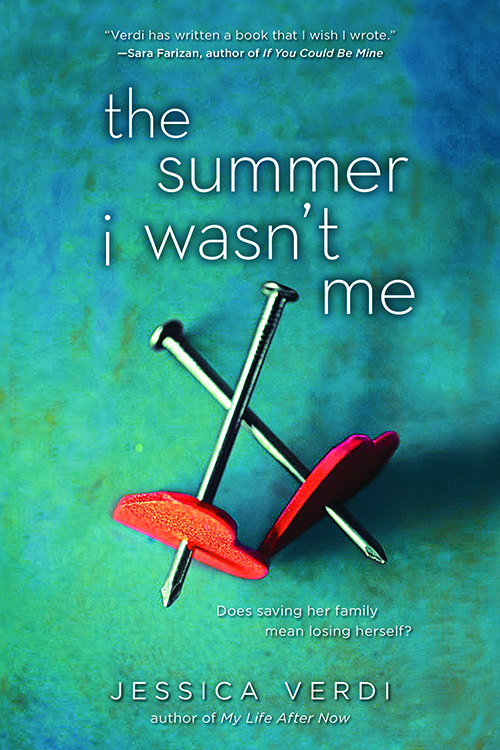
Blog Tour, Author Q&A, & Giveaway: The Summer I Wasn’t Me by Jessica Verdi

Thank you, Sourcebooks Fire, for inviting me to be a part of the blog tour celebrating the release of The Summer I Wasn’t Me!

(And psssst — don’t miss the link for the giveaway at the bottom of the page!)
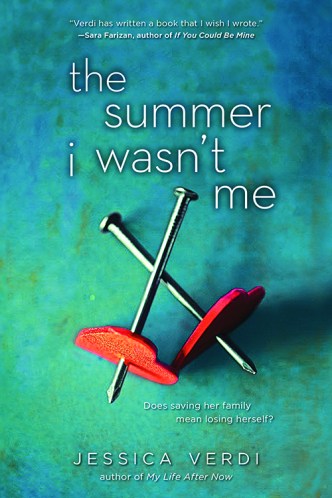
summeriwasn't

The Summer I Wasn’t Me
By Jessica Verdi
Sourcebooks Fire
Release date: April 1, 2014

Lexi has a secret…

Ever since her mom found out she was in love with a girl, seventeen-year-old Lexi’s afraid that what’s left of her family is going to fall apart for good.

You are on the road to truth. Help is on the way.

The road signs leading to New Horizons summer camp promise a new life for Lexi—she swears she can change. She can learn to like boys. But denying her feelings is harder than she thinks. And when she falls heads over heels for one of her fellow campers, Lexi will have to risk her mother’s approval for the one person who might love her no matter what.

I’m thrilled to be participating in the blog tour for this terrific young adult novel! Author Jessica Verdi was kind enough to answer my rambling questions for a Q&A:

What inspired you to write this particular story?

When I was toying with ideas for the topic of my second novel, this story really called out to me. I’ve always been fascinated by these so-called conversion camps, places where religious leaders claim they can turn gay kids straight. There is no doubt in my mind that they’re claiming to do the impossible, and that telling LGBTQ kids there’s something wrong with them is nothing short of abuse, but the root behind these camps actually, in a twisted way, stems from a good place. The parents who send their kids to these programs truly believe their children are on the wrong path in life and that they will go to hell if they don’t make a change. These parents are desperate to “save” their kids, in their own misguided way. This is something that has long intrigued me, and a world I knew I wanted to explore in the book.

But it all came together for me when, funnily enough, I was listening to Lady Gaga’s song “Hair.” The chorus of that song goes, “I just want to be myself and I want you to love me for who I am.” And I started thinking about all the kids who aren’t loved for who they are, and that made me so sad. And I knew I had to tell Lexi’s story.

How did you come up with the concept for New Horizons?

Sadly, New Horizons isn’t a concept I came up with on my own. These camps do exist, and have for quite some time. Every single “exercise” or “technique” they use in the book (the role playing, the Father Wound discussions, the gender teachings…) is a real method that came from my research. California and New Jersey have recently outlawed the use of reparative therapy on youths, but there are still 48 states (in our own country alone) to go.

What message would you hope your readers would take from this story?

On a very basic level, I hope Lexi’s story will help readers to know that they are perfect the way they are. And if someone is telling you otherwise (whether they’re criticizing your sexuality, your appearance, your disability, your hobbies and interests, or anything else) they’re the ones who have to take a long, hard look at themselves, and maybe start to make some new choices, not you.

A few about writing:

When did you first realize you wanted to be a writer?

It actually took me a little while before I knew I wanted to be a writer. When I was 27 (5 years ago) I got the idea for a novel. I was pursuing an acting career in New York at the time, and once I started putting the story in my head down on paper, it all clicked for me—this was the way I was really meant to be using my creativity. There’s something so personal and free about writing that you don’t get in acting. When you’re an actor, you have to audition for roles, you have to wait for someone to cast you in something in order for you to even get permission to start. But when you’re writing, you can still be creative, a storyteller, an entertainer, but you get to do it on your own terms.

How did you get started?

After I finished that first novel, I knew it wasn’t quite good enough and I needed to learn more, so I applied for graduate school. In 2010 I started the MFA program in Writing for Children at The New School, and by graduation in 2012 I had an agent and a book deal!

What advice would you give teens who are interested in writing?

Just do it. I think we all get better with each book we write, and the only way to really develop your skills is to just keep writing and writing. I was also once given a great piece of advice that I’ll pass on here: Finish what you start. You often don’t know what a story really is until you get to the end of the first draft and can step away from it, look at it, and see the pieces fall together. Then you go back and revise, and it almost always ends up working better (and usually much differently) than you could have imagined when you started. But you won’t really know until you get to the end, so keep going! If it’s a project you’re really interested in and excited about, don’t give up at page 40 when it gets hard. You might be giving up on something amazing.

And on a lighter note:

What book(s) influenced you the most as a teen?

I’ll never forget the first time I read Wicked by Gregory Maguire. I was in high school, and thought it was a masterpiece (I still do). The writing is stunning, the story is dark and political and raw, and I was so inspired by how Maguire was able to take something so concretely ingrained in the collective consciousness and turn it into something new, making us all question what we thought we knew about Oz all along. I think everyone should read this book—and no, seeing the musical won’t suffice. Sure, the songs are great, but the story has been so drastically altered it barely resembles the book.

Which part of the New Horizons dress code would you have the most trouble with?

Hahaha great question! Um, all of it? 🙂 I’m not a huge fan of pink, and nightgowns are just the worst. But most of all, I’d hate someone telling me what I have to wear. Uniforms, dress codes, black tie events… those things have never exactly gelled well with me. Like Lexi, I like having freedom in how I present myself to the world.

What’s your Monopoly strategy?

Play eagerly for ten minutes and then get super bored and wish someone would just win already so the game can end. Hahaha

Thank you, Jessica, for taking the time to answer my questions!

♦♦♦♦♦♦♦♦♦♦

My thoughts:

The Summer I Wasn’t Me takes a surprisingly nuanced approach to a topic that could easily have been handled in a judgmental or even scornful way.

After all, who here thinks a “degayifying” camp is a good idea? The thought of sending a bunch of teens to spend a summer “learning” to be straight, learning how to deny their own feelings and sublimate everything they want into a bizarrely old-fashioned view of “normal” is really abhorrent (well, certainly to me it is).

And yet, in The Summer I Wasn’t Me, it’s not that simple.

Main character Lexi has a very good reason for wanting to attend New Horizons. For her, it’s a last-ditch chance to reconnect with her mother and salvage what’s left of her family. After her father’s death, Lexi watched and suffered as her mother drowned in grief, and discovering that Lexi is gay has sent her over the edge. Misguided or not, Lexi firmly believes that if she can turn herself into the daughter her mother needs, they can be close again and rebuild their relationship.

But as we progress up the mountain, hints that this place is not quite as natural as it first seemed begin to emerge. The tree branches above us have been pruned back from the road. The narrow strip of grass that buffers the road from the tree line has been cropped. Flowers sprout in patterns too perfect to be accidental.

Someone has gone to a lot of trouble to manipulate the raw landscape into some preconceived idea of what nature should look like. Goosebumps trickle across the back of my neck as I realize that’s exactly what they’re going to do to me too.

Others have their own reasons for being at New Horizons as well. Carolyn came out to her family a while ago, and her parents are totally supportive — but after getting her heart not just broken but positively mauled by the girl she loved, Carolyn is convinced that if she allows herself to become involved only with boys, she’ll never risk getting hurt that way ever again. For Matthew, who is happily involved in a great relationship with a boy and completely comfortable in his own skin, attending New Horizons is part of an ultimatum from his father: Complete the program, or don’t bother coming home.

The camp program itself is awful, with its emphasis on traditional gender roles so over the top that girls are required to dress in pink and boys in blue. A camper’s gayness is attributed to the fact that her mother dresses in a “mannish” style and her father didn’t assert himself enough as the head of the household, resulting in the girl’s “confusion” about what men and women are supposed to be.

But as author Jessica Verdi shows, it’s too simplistic to laugh at the teens who come to New Horizons, either hoping to change their lives or being forced into going through the program. They all have wounds to heal, they all have something at stake, and they’re all trying to make the best of a bad situation.

I loved the view into Lexi’s psyche, as we see her struggles and come to understand why this girl from a small Southern town would feel the need to at least try to be straight — even while knowing deep-down that she’ll be lying to herself and everyone around her if she succeeds. Lexi is smart and caring, yearning for love yet also desperate to do whatever it takes to help her mother, even if it means completely denying herself.

The further we get into the book, the more we come to understand the characters, their needs, and how they ended up in this place. Even for those we might feel are misguided, it’s hard not to empathize and to feel indignant on their behalf.

The only discordant note for me in The Summer I Wasn’t Me is the introduction of a plot thread concerning corruption and sexual coercion among the camp administration. In my opinion, this just muddies the waters. While an interesting twist, it felt a bit tangential to the main point of the story. The emphasis of the book is on the teens participating in the program and what they get out of it — which may not have anything to do with what the program is designed to do. I felt that the point about the futility of the program and the needless humiliations it imposes is made strongly just by means of seeing how the summer is managed and the types of activities that the campers are required to engage in; it’s not necessary to have a sexual predator involved in order to show that the camp is a bad idea and does not have a chance of achieving its goals.

But that’s a minor quibble in a book that overall is spot-on in its message and absolutely full of heart.

I found The Summer I Wasn’t Me to be moving, well-constructed and nicely paced, with fully fleshed-out characters facing unique and varied challenges. I came to care for them all a great deal, and the subject matter is dealt with honestly and compassionately. I certainly recommend this book highly, for adult and teen readers, and hope that it will have great success in inspiring conversations and sensitivity amongst its readers. Most of all, I hope this fine book lands in the hands of a teen who really needs it, to see that life is full of options and that love and acceptance starts with loving and accepting oneself.


Giveaway time!

To enter the giveaway for a copy of The Summer I Wasn’t Me, click on the link below:

a Rafflecopter giveaway

____________________________________________

About the Author:

jessica verdiJessica Verdi lives in Brooklyn, NY, and received her MFA in Writing for Children from The New School. She loves seltzer, Tabasco sauce, TV, vegetarian soup, flip-flops, tattoos, and her dog. Jessica is also the author of My Life After Now.
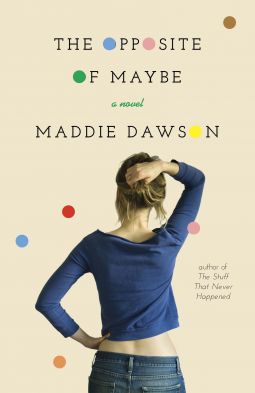
Book Review: The Opposite of Maybe by Maddie Dawson

Book Review: The Opposite of Maybe by Maddie Dawson

Rosie and Jonathan are “that” couple — you know, the ones whose lives are massively entertaining to their friends because they just never seem to do things the normal way. While all the rest of their friends were busy getting married, buying houses, and having kids, Rosie and Jonathan stuck to their free-spirited artistic ways, keeping things loose, not needing the standard-issue adult lives that everyone else has. Their escapades become the stuff of legends — when the circle of friends gets together for drinks, nothing makes the crowd laugh more than reminiscing over Rosie and Jonathan stories and the crazy shenanigans that ensue.

But at age 44 and after 15 years together, Rosie isn’t so sure that the free and easy life is really a choice any more — maybe it’s just a mask for an inability to grow up? Rosie was a poet and Jonathan a potter when they met, but now Rosie mixes in teaching community college ESL classes with her writing, and Jonathan has completely given up pottery-making for his newest obsession, collecting antique teacups. (Seriously, teacups.) When Jonathan is contacted by another collector and offered the opportunity to partner on a new teacup museum (seriously, a teacup museum), he’s ready to uproot their lives in Connecticut and move to San Diego in pursuit of his dream… and expects Rosie to share the excitement.

It’s not quite so clear for Rosie, though. For starters, her eccentric, cranky grandmother. Soapie is eighty-eight, falls down a lot, and seems to be losing her edge. Soapie raised Rosie since the age of three, when Rosie’s mother died in a freak accident. Rosie can’t stop worrying about Soapie — even though Soapie insists she’s fine and wishes Rosie would stop fussing. Finally, Jonathan convinces Rosie to move to San Diego, and despite years in agreement that they didn’t need to get married like everyone else, he even proposes and gets Rosie to believe things can work. But then, a last-minute teacup emergency (seriously, a teacup emergency!) means the cancellation of wedding plans, and Rosie finally snaps, sending Jonathan off to San Diego on his own, and moves back into Soapie’s large house, envisioning some quiet time to lick her wounds and act as her grandmother’s caretaker.

And Rosie really is wounded, despairing over what her life amounts to:

If a film crew followed her around, what would they see? Nothing. She might as well be dying, for all she’s accomplished. She never had a family, she never owned a house, she never even bought a brand-new car, had a disastrous love affair with an inappropriate person, or even dyed her hair some ghastly shade of red. How does this happen, that you get to be forty-four and you don’t have anything — not even an ill-advised tattoo — to show for it?

The hitch in Rosie’s short-term plan is that Soapie doesn’t really need her. There’s a charming gardener named Tony who’s already moved in and is doing a great job of keeping Soapie on her feet and looked after, and Soapie’s long-time love George is by her side every evening, drinking and dancing and being a perfect courtly (and, as Soapie puts it, “ardent”) suitor (after visiting his wife Louise, suffering from advanced Alzheimer’s, each afternoon at the nursing home). Before long, this odd foursome has formed a family unit of sorts, and Rosie’s eyes are opened to new and fresh possibilities.

Oh, and minor detail? What Rosie takes for early menopause turns out to be a very unexpected pregnancy… and Jonathan most adamantly does not want to be a father. And then there’s sweet Tony, who adores pregnant women, babies, children, people in general, and pretty much everything about life. Rosie wants to give Jonathan a chance to redeem himself, to become a part of their baby’s life, and to prove his commitment to their relationship — but at what cost? Why is Rosie the one who always has to give things up? Soapie insists that Rosie needs to find her “joie de vivre” — and just maybe, the baby, the new crazy family she’s found, and even Tony can help her find that spark again, but is it the right path for her?

The Opposite of Maybe is a refreshingly charming look at adult life and adult dilemmas. Rosie is a terrific character: a woman who’s spent far too long accepting that her life is the way it should be, rather than questioning whether it’s enough. She’s smart and funny, full of passion, and when she finally gets a backbone, she’s actually quite remarkable. Tony is just a big sweetie — younger than Rosie, sexy (of course), struggling to establish a routine with his 5-year-old son in the wake of a divorce, and one lovely, loving guy. Soapie, too, is a treat, verging perhaps on the stereotype of the crazy, tough old lady with a heart of gold, but with her own secrets and a zest for life that is undiminished by the insults of old age and failing health.

It’s lovely to see the shifting definitions of family as portrayed in The Opposite of Maybe. Clearly, a blood tie is not the be-all and end-all. Jonathan may be the baby’s biological father, but he’s so clearly not daddy material. As Soapie, George, Rosie, and Tony open their home to all the friends and strays who populate their lives, they’re surrounded by chaos, fun, and connections that help to root Rosie more firmly in their Connecticut home.

The writing is clever and quirky, and I really got a kick out of the dialogue, particularly between Rosie and Tony, who make each other laugh even while driving each other crazy. (Tony has the habit of misusing words and mangling the English language, which after a while one suspects is done deliberately just to get a rise out of English-teacher Rosie).

The author portrays the indignities of being pregnant at 44 with both compassion and hilarity: In one scene, Rosie is befriended by a nice young mother and taken to see the local playground where the mommies congregate. When she tells her new friend her age, the woman replies, “Wow, that is seriously so brave of you! Forty-four! I just hope I’m still having sex when I’m that age!” Thud. Not only that, but she also kindly adds as she’s leaving, “This is like the place where everybody comes between naps. Sometimes the grandmothers come, too, ha ha! You’ll like them.”

My only quibble with The Opposite of Maybe is the character of Jonathan. He’s a hapless, well-meaning guy who can’t see beyond the end of his own nose (or his teacups) — and after a while, I simply could not see why Rosie would persist in trying to make things work with him. Even when he commits to trying to be the man Rosie needs, he’s just so clearly NOT, and Rosie is far too smart to go along for as long as she does, thinking that Jonathan can change and that the life she wants is possible with him. It’s a staple of romantic fiction that the female lead doesn’t see what’s so obvious to the reader — the dull guy who needs convincing is just NEVER Mr. Right in this kind of story, and the wrong-on-paper guy with the heart of gold usually is oh-so-right. Given that, the outcome of the love story here is all too certain from the get-go. Jonathan just isn’t the guy for Rosie, and keeping him in the role of the primary man in her life feels like an artificial means of stretching out the romantic complications and uncertainties.

Still, I found The Opposite of Maybe a completely delightful and engaging read. There are moments of real sorrow and emotion, as well as humor and joy that feel deserved and organic. Fast-paced and entertaining, I gobbled this book up in about 24 hours, and just didn’t want to put it down before the end. If you enjoy reading about flawed but lovable adults facing real-life choices, with writing that’s zippy and full of fun, don’t miss The Opposite of Maybe.

_________________________________________

The details:

Title: The Opposite of Maybe
Author: Maddie Dawson
Publisher: Broadway Books
Publication date: April 8, 2014
Length: 400 pages
Genre: Adult contemporary fiction
Source: Review copy courtesy of Broadway Books via NetGalley

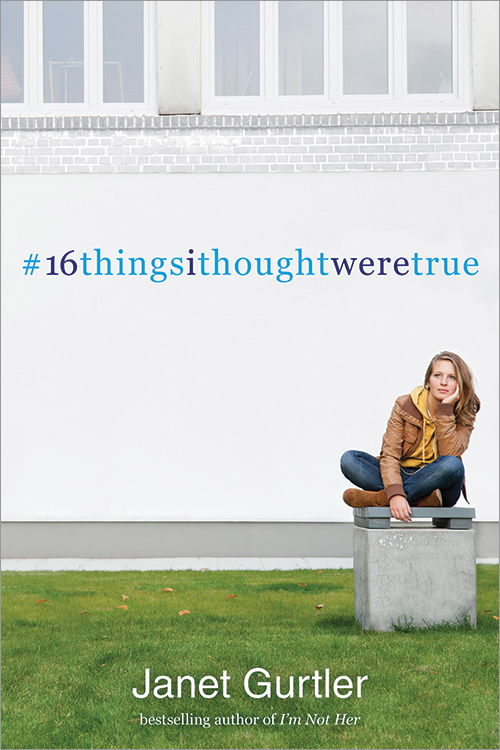
Blog Tour, Author Q&A, & Review: 16 Things I Thought Were True by Janet Gurtler

Thank you, Sourcebooks, for inviting me to be a part of the blog tour celebrating the release of 16 Things I Thought Were True!

16things

16 Things I Thought Were True
By Janet Gurtler
Sourcebooks Fire
Release date: March 4, 2014

Heart attacks happen to other people #thingsIthoughtweretrue
When Morgan’s mom gets sick, it’s hard not to panic. Without her mother, she would have no one—until she finds out the dad who walked out on her as a baby isn’t as far away as she thought…

Adam is a stuck-up, uptight jerk #thingsIthoughtweretrue
Now that they have a summer job together, Morgan’s getting to know the real Adam, and he’s actually pretty sweet…in a nerdy-hot kind of way. He even offers to go with her to find her dad. Road trip, anyone?

5000 Twitter followers are all the friends I need #thingsIthoughtweretrue
With Adam in the back seat, a hyper chatterbox named Amy behind the wheel, and plenty of Cheetos to fuel their trip, Morgan feels ready for anything. She’s not expecting a flat tire, a missed ferry, a fake girlfriend…and that these two people she barely knew before the summer started will become the people she can’t imagine living without.

I’m thrilled to be participating in the blog tour for this terrific young adult novel! Author Janet Gurtler was kind enough to play along for a brief Q&A:

Did you have an “Amy” in your life as a teen?

I didn’t really have an Amy in my life as a teen, but I met an Amy when I was traveling a while ago. She was this great kid, a teen girl, who had no filter and she was so adorable and cracked me up and I knew I had to fictionalize her.  Amy was really fun to write.

What can you tell us about your best friend from your teen years? How did you meet? What qualities made him/her so special?
Well, I moved in grade 7 and then again in grade 11 so I had a few different best friends. My best friend in high school was a girl named Rosalyn. We met at high school, but became close when we started working together (kind of like Amy and Morgan) We used to laugh. Oh how we could laugh. We were both kind of insecure dorky kids who wanted to be much more popular than we were. We had unrequited crushes on boys together too. I mostly loved her loyalty and the way we could gab for hours about anything. And the laughing!

Morgan spends so much of this book glued to her phone and tracking her Twitter followers. Do you think teens in earlier generations had anything equivalent? Did you?

Oh man, if I was a teen in today’s world I would have LOVED social media. I was really quite shy, though I tried hard to hide it and I think it’s much easier to be a little bolder online.  I don’t really feel like I had anything like that. I was a teen in the 80’s so that was before cell phones were even around!!!

What was your inspiration for 16 Things?
Mainly I wanted to tell the story of a girl who was finding more comfort from her online world than the real world.  I wanted to show how being overexposed online could send someone into hiding, and ironically one of the best places to hide….is online.

Did you always know you wanted to write? How did you get started?
I’ve loved writing since I was in the sixth grade. It’s always been my passion and the way I love to express myself.  I started writing books after my son was born. I’d always wanted to do that (write a book) and I did it while he napped. And then I was hooked. He’s 13 now!

What advice would you give to girls today who are interested in writing?

Keep writing! Read a lot and write a lot. Write stories, and journals and letters and whatever else you want to write. And the reading. That’s important too, because it teaches you what resonates with you and what you might feel best about writing.

What are you working on now? What will we see next from you?

I am currently writing my sixth Sourcebooks Fire book! It’s called THE TRUTH ABOUT US. It’s more of a YA romance, about a girl and a boy she’s forbidden to be with. She comes from a family with money and is forced to work at a soup kitchen for the summer  (for her bad behavior) and he is a guest at the soup kitchen.  Of course, no one wants them to be together.

And just for fun: If you were going on a road trip and you were in charge of snacks, what are the must-haves?

Caramel popcorn. Diet coke. And chewing gum. And then we’re good to go!!!!

Thank you, Janet, for taking the time to answer my questions!

♦♦♦♦♦♦♦♦♦♦

My thoughts:

16 Things I Thought Were True is a funny, engaging young adult novel that throws in a wrenching twist toward the end that was a real punch in the guts for me. A book that starts out with a girl obsessing over her number of Twitter followers while cringing at the thought of the awful viral video her friend posted — of her dancing in her underwear — sounds pretty light and fluffy, doesn’t it?

As they say, don’t judge a book by its cover… or in this case, by its use of hashtags.

Morgan’s story seems straightforward: As her mother prepares for heart surgery, she finally reveals to Morgan the name of her biological father, whom Morgan believes to have abandoned her before she was even born. Meanwhile, Morgan is deeply embarrassed by her online notoriety, and faces social ostracism by the teens she works with at the amusement park over summer break. But two of her coworkers seem to see more in her than she does herself: Bubbly, quirky Amy, who talks non-stop and seems to never get embarrassed about anything, and nerdy cute Adam, a manager at work who’s the same age as Morgan… and who’s actually kinda hot once she takes a closer look.

With Amy and Adam pushing and pulling, Morgan puts into motion a plan to find her bio-dad and confront him for walking out on her all those years ago. Thus ensues an epic road trip, filled with junk food, a flat tire, whales, scary cows, and sweet old ladies who (inexplicably) are staying at the same hostel. Amy and Adam push Morgan to rethink the things she always believed, face and share some hard truths, open up a bit, and do the things she’s been afraid to do. Oh, and also? Maybe put down the phone once in a while, stop worrying about her number of followers, and dare to be the kind of person she wants to be in real life, not just with her anonymous internet friends.

Amy is probably the loveliest character I’ve encountered in fiction in quite some time. Her constantly chipper, no-filters personality seems potentially annoying at first, but you just can’t help falling in love with her bubbliness and her absolute commitment to embracing everything life throws in her path. Don’t we all wish we had a friend like Amy? She’s simply adorable. Adam ends up being quite a great guy as well, not just in terms of boyfriend-worthiness, but also as a decent person, a caring individual, and a devoted friend.

The ending seemed to come out of nowhere and totally caught me by surprise. Wow. I won’t say more about it, except that it’s powerful and unforgettable.

What I initially thought might be just a teen romp with cautionary warnings about living life online ends up being a story with a more serious message about true friendship, being honest with yourself and with others, and looking beyond the surface to find the real value of the people in your life. I truly enjoyed Morgan’s journey throughout 16 Things I Thought Were True, and look forward to reading more by this author.

____________________________________________

About the Author:

jgurtlerJanet Gurtler lives in Calgary Alberta, near the Canadian Rockies, with her husband and son and a chubby Chihuahua named Bruce. She does not live in an Igloo or play hockey, but she does love maple syrup and says “eh” a lot. (From the author’s website: http://www.janet-gurtler.com)

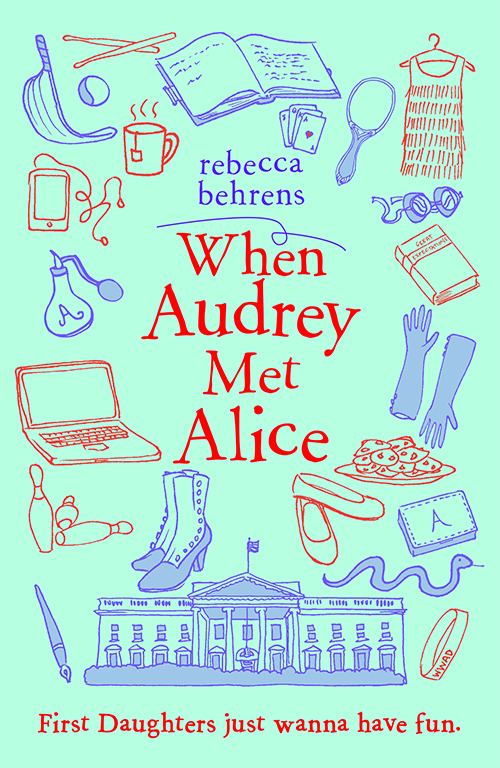
Blog Tour, Guest Post, & Review: When Audrey Met Alice by Rebecca Behrens

Thank you, Sourcebooks, for inviting me to part of the blog tour celebrating the release of When Audrey Met Alice!

image002

WHEN AUDREY MET ALICE
By Rebecca Behrens
Sourcebooks Jabberwocky
February 2014
Ages 9 -12

First daughters just want to have fun.

Thirteen-year-old First Daughter Audrey Rhodes is convinced that living in the White House is like being permanently grounded. While her parents are off saving the world, Audrey Rhodes spends most of her time pining for friends back home, sulking about security restrictions, and suppressing the crush she’s developing on Quint, her only DC friend. After the Secret Service cancels the party she planned, Audrey is ready to give up and become a White House hermit.  What good is having your own bowling alley if you don’t have anyone to play with?

Audrey is ready to give up and spend the next four years totally friendless—until she discovers Alice Roosevelt’s hidden diary beneath the floorboards and starts asking herself…What Would Alice Do? But not everyone is on board with Audrey’s attempts to be more like Alice—especially not her mother’s super-stern Chief of Staff. Will meeting Alice bring Audrey happiness—like the freedom to attend the school trip and possibly a First Boyfriend—or a host of new problems?

The former First Daughter’s outrageous antics give Audrey a ton of ideas for having fun…and get her into more trouble than she can handle. A fun, smart middle grade debut that brings a fascinating historical character to vibrant life and showcases relatable tween issues like fitting in, first crushes, and finding your own way, the White House hijinks of these First Daughters is a story readers won’t want to miss!

I’m thrilled to be participating in the blog tour for this terrific new book aimed at middle grade readers! Author Rebecca Behrens was kind enough to share her thoughts on a question I posed:

What would Alice find most confusing about the lives of girls in the 21st century?

Here’s Rebecca’s response:

Photo from Wikipedia: Roosevelt family in 1903 with Quentin on the left, TR, Ted, Jr., “Archie”, Alice, Kermit, Edith, and Ethel.

It’s only been a little over a century since Alice Roosevelt moved into the White House and became perhaps the most famous girl of the turn of the century. But how times have changed! What would Alice find most confusing about the lives of girls in the 21st century?

Alice lived at a time when girls weren’t allowed to go out with dates, and they had to have chaperones even at dances. According to Alice, “There were always watchful eyes to check on one. Woe betide the girl who emerged from the conservatory at a dance with her hair slightly disheveled. As one’s hair tended to fall down at the best of times it was frightfully difficult trying to keep up appearances.” Alice would be surprised by the dating girls do today—but I think she’d consider it a great thing. From an early age, Alice was fixated on finding a husband, because that was her ticket out of her parents’ home and into the world. If she watched a show like Girls, I think she’d be amazed (and occasionally shocked) at the romantic lives of young women. But she would love how young women can live independently, and how much agency they have in their romantic lives.

Athletics for young women weren’t common in Alice’s youth. She had fun roughhousing with her siblings, swimming, and she reportedly did some yoga—but girls didn’t play on soccer teams or run track. I think Alice would be shocked by all of the athletic opportunities for girls today. Considering what a vivacious person she was—and competitive—Alice would want to start competing, too.

Alice roosevelt color 3.jpg

Photo from Wikipedia: Alice Lee Roosevelt, hand-tinted photograph taken approximately 1903

Considering how strict and modest social standards for clothing were at the turn of the century, Alice would probably find some recent fashion trends bizarre. “Buttoned-up” was the style, literally—Alice wasn’t allowed to visit a friend’s home anymore after that girl emerged from a car with a couple buttons undone! Jeggings and flip flops would seem very revealing and casual to Alice. Clothes in Alice’s time were meant to be lasting and beautiful. Alice wouldn’t know what to think about ironic fashion choices, like trucker hats or grandpa sweaters—anything that wasn’t meant to last and impress would seem like a waste of money. But I think Alice would always understand when someone uses clothing to make a statement, like Miley Cyrus or Lady Gaga. After all, Alice herself was an early fashion icon—the most popular dress color when she lived in the White House was “Alice Blue,” after the shade of her eyes—and she loved the attention that brought.

Alice once said of her beloved Auntie Bye that if Bye had been a man, she would have been president, not her brother Theodore. At the turn of the century, there were very limited opportunities for women in politics and government—women couldn’t even vote yet! I think Alice would be surprised and thrilled about the number of female lawmakers today.

Finally, when Alice was a teenager, part of her fame came from her sharp wit and her willingness to be outspoken. Most of her peers were seen and not heard. I think Alice would find the many ways that girls can make their voices heard today—online and off—a little confusing, and a lot refreshing.

My thoughts:

When Audrey Met Alice is such a delight! The author does a wonderful job of weaving together a modern girl’s life and the diary of Alice Roosevelt, making both pieces of the story equally engaging and charming. Audrey is a bright, friendly 8th-grader who loves her parents, but she’s isolated from peers and even from her mom and dad once they move into “1600”. Hurray for progress — it’s Audrey’s mom who is President, and her dad — in addition to “First Gent” responsibilities — is a scientist whose research is intense and time-consuming. It’s hard to find time to just chill as a family when you’re busy running the country and trying to cure cancer — but that means that Audrey is left to wander the halls and miss her old life. Sure, the kids at her new school seem friendly at first — but do they like her for herself, or do they just want the glamor of hanging out with the First Daughter?

When Audrey stumbles across a hidden diary belonging to Teddy Roosevelt’s outspoken daughter Alice, Audrey finds inspiration both for improving her own life — and for getting into even further mischief. Alice wants to help her father and be a part of his world, but she also craves adventure and excitement, and she’s not one to listen just because she’s told to behave a certain way. As Audrey reads in Alice’s diary:

… my father simply said, “I can either run the country or I can control Alice, but I can’t possibly do both.”

Audrey’s scrapes may seem tame in comparison to some of Alice’s more out-there escapades (such as wearing a green garter snake around her neck at state dinners or being photographed betting on horses at a time when girls did not do such things), but then again, Alice didn’t have non-stop Secret Service protection, sneaky paparazzi, and ubiquitous social media scrutiny to contend with.

Alice preaches the mantra of “To Thine Own Self Be True”, and proclaims that she is someone who wants to “eat up the world”. As the book progresses, Audrey starts to think in terms of WWAD? — What Would Alice Do? — and becomes determined to find a way to be a good daughter and at the same time make a difference and be true to herself.

My review in short? I loved this book! Audrey is an easy-to-relate-to main character. She has the same hopes, fears, and worries as a typical girl her age — but as the President’s daughter, she has to deal with middle-school drama with Secret Service agents at her side and state protocol officials looking over her shoulder. Audrey narrates with humor and self-awareness; she’s not faultless, and she knows when she messes up — but she means well, and it’s fun to see her apply her WWAD philosophy in ways that are surprising, funny, and with decidedly unpredictable outcomes.

I highly recommend When Audrey Met Alice. I think this would be a terrific read for middle school and young high school students. It’s well-written and a lot of fun — and might even inspire a girl or two to think more about the power of girls to change the world!

____________________________________________

For more information, visit the Sourcebooks page for When Audrey Met Alice, where you’ll find additional resources about the real Alice Roosevelt, including downloadable material for kids and for educators,

About the Author:

Rebecca Behrens grew up in Wisconsin, studied in Chicago, and now lives with her husband in New York City, where she works as a production editor for children’s books. She loves writing and reading about girls full of moxie and places full of history. When Audrey Met Alice is her first book. Visit her online at www.rebeccabehrens.com.