TV Time: The Summit makes no sense.

The Summit – Season 1 Key Art ©2024 CBS Broadcasting, Inc. All Rights Reserved.

CBS’s newest reality competition show The Summit has now aired three episodes. I’ve watched them all… and I’m firmly convinced that this show makes no sense.

The premise? A group of 16 Americans is transported to New Zealand and told that they have 14 days to reach the summit of that big mountain over yonder. The contestants all look shocked and awed.

Big question right off the bat: What did they think they’d be doing? Seriously, I want to know — they all auditioned for a show… knowing what? I think the fact that they’re expected to climb a mountain is pretty crucial.

The rules of the show are explained in small bits and pieces, but what we (and presumably, the contestants) know at the start is as follows: They’ll be ascending the mountain as a group. They’re each carrying 1/16th of one million dollars — in cash — in their backpacks. If they reach the summit by the 14th day, they keep the money. If they don’t reach it, or if they arrive late, they get nothing. And if someone quits (which, as we learn in the first episode, includes medical evacuation), their share of the money goes with them.

It therefore seems in everyone’s best interest to make sure everyone succeeds, right?

Clearly, not everyone is prepared for this adventure. There are a few strong, outdoorsy, athletic types, but also some less fit folks who’ve never hiked or had an outdoor adventure before. A group of moms bond quickly, a few bros seem to break out early, and some out-of-shape people struggle from the beginning.

The group is also warned before they start their trek that the “mountain’s keeper” will be watching. It’s made to sound vaguely mumbo-jumbo-ish — no one has any idea what this means.

Pretty much from the first step, certain players are already scheming, and it’s not clear why. Why are some players looking for divisions and trying to create alliances? Nothing we’ve heard so far indicates that that’s necessary. Aren’t they all just trying to reach the top? Doesn’t it make sense to support one another and root for the entire team to succeed?

Almost immediately, there’s trouble. The initial walk, even without an ascent, is harder than it looks, and there are slower people at the back of the pack who are chatting and acting like they’re out for a stroll. As soon as they start the first ascent, it’s clear that many of these people aren’t really up for this. It’s a struggle, and certain players need a lot of help, with one even giving their backpack to a stronger climber just to make it up the hill.

A major obstacle lies in wait — a difficult rope bridge that must be crossed in pairs. As the duos go across, the Mountain’s Keeper* shows up. This turns out to be a black helicopter with tinted windows, so it appears to be otherworldly in some way — we never catch a glimpse of people flying the thing. It hovers over the landing spot on the far side of the bridge and drops a bag with instructions: The group is behind where they need to be to make it to their first checkpoint before nightfall, and they have a choice. They can help the last player across (who happens the be the oldest and least fit player, and is also solo because one person has already been medivac’d out), or they can choose to leave him, save the time it would take to bring him across, and hopefully pick up the pace.

The group votes to bring the player across, in a show of empathy that may come back to bite them, and they don’t make the checkpoint. The show’s host meets them on the mountain to inform them — in a scolding/disappointed tone — that they’re out of time for the day and must make a “bivvy camp” — sleeping outdoors, no tents, and with just the dried food in their packs. What’s more, he reminds them, it’s only day one, and they’re already behind. At this rate, they won’t reach the summit in 14 days.

*The Mountain’s Keeper is a weird and creepy concept. Sometimes, it shows up to drop a bag with instructions and tools to carry out a task, but sometimes is just comes to hover menacingly. When someone with a fear of heights is struggling up a flimsy rope hanging from a cliff, the Mountain’s Keeper flies up near him and is just there, until that person gets moving again.

The group struggles on the next day, eventually reaching their first checkpoint — a much nicer camp, with pre-built all-weather tents, a fire, and plenty of delicious food and drinks. They’re all excited, but the host — continuing his role as party-pooper-deluxe — arrives to explain that everything has a cost, including the checkpoints. At each checkpoint along the climb, the group must decide to send one person off the mountain (i.e., vote them out) and “steal” their money. The person who gets voted out must cede the money from their backpack, which then gets divided up amongst the remaining players and added to the stash they’re carrying.

Okay… so keeping in mind that the goal is to reach the summit within 14 days or they all get nothing, as well as the endless reminders that they’re already behind where they should be, wouldn’t it make sense to start cutting the slowest players? The group has to stay together — it would make no difference if the most fit people forged on ahead and reached the summit early. They either make it as a group, or they all fail.

But no, apparently my logic isn’t the group’s logic. Instead, this becomes a game of alliances, just like every other reality competition on TV. Let’s break up the people who are loyal to each other! Let’s cut someone whose negativity is annoying! And in a later episode, let’s cut one of the strongest people because… reasons?

By the 3rd checkpoint and vote-out, the group has clearly split into factions, and there’s a lot of talk about getting out the big dogs, the ones who are strongest and tend to take the lead. But why? The 3rd person voted out had just done an excellent job of reading the map (different people take the leader role each day, with varying levels of success and/or getting the group lost) — but apparently doing a good job as leader made him a target. Again, why? Isn’t it in the group’s best interest to keep the capable people, who help the entire group succeed?

Apparently the logic in taking out the stronger people is that the weaker folks want to target the strong folks first, to keep the strong folks from picking off the weaker folks one by one. Okay… but if you’re left with the people who are struggling to keep up and who hold the pace back, how will they ever reach the summit?

There’s also the awkwardness of the voting process itself. No secret ballots on The Summit — the host shows up, sits with everyone around the campfire, and asks what names have been coming up. Once a couple of names have been mentioned, he asks people to raise their hands if they want person A voted out, then raise your hands if you want person B to be gone. That’s it. It’s public, and the only people up for votes are those whose names get mentioned in that moment. There isn’t an option for a quiet sub-group to sneak in another candidate, and with the voting done by show of hands, it makes it unlikely that people would be willing to stick their necks out or not go along once they see which way the majority is trending.

Beyond the craziness of the alliance/vote-out system, there’s the overall sense that this show has a very questionable approach to safety. First of all, I don’t think people who are not prepared, trained, or in condition for a climb should be climbing. I can only imagine real-life mountaineers tearing out their hair while watching this show.

Second, a decision-point came up that I found shocking, and I’m guessing this type of scenario will continue to pop up in one form or another. At one point, the Mountain’s Keeper dropped another bag, this time with an offer (as well as a scolding). The group is behind yet again. They can choose to send two people (presumably, the slowest) by helicopter to the next camping point, while the rest continue to hike and hopefully make up a bit of time. There’s a price, of course: If they choose this option, the group will have no food that night. Two people (the rational ones, in my opinion) vote against this option: They’ve burning through calories like crazy, and they can’t risk giving up food. But everyone else votes to send the two slowest by helicopter, and seem to feel the others lack empathy, which will definitely be held against them.

So why am I shocked? Because this isn’t safe! You have a group of 12 people (? maybe ? — I’ve lost count by this point) who need to get up the next day and hike another 5 – 10 miles over harsh, steep terrain before getting any more food. How are they supposed to have the strength to do that? The climb is dangerous enough as is, and now they’re supposed to do it in a weakened state? Who approved this nonsense? This isn’t Survivor, where players (a) know in advance that starving is part of the game, (b) are in a relatively safe setting and (c) have instant medical care available. Sure, The Summit has cameras and crew alongside the players, so we can assume medical staff as well — but how does that help if a hungry player gets dizzy, keels over, and tumbles down the mountain?

Ugh. I’m annoyed now that I’ve watching three 90-minute episodes of this nonsense. Sure, a part of me is curious to see what happens next… but it’s also so ridiculous a premise that I don’t think I can actually stand to watch a moment more.

I started watching The Summit with no prior knowledge, simply based on having seen the promos and the fact that it airs right after Survivor. After watching these three episodes, I was curious to see if there were any reviews out there, and in Googling the show, discovered that this was originally an Australian TV show that’s aired two seasons so far. There’s also a British version in development, and apparently a Norwegian version was shut down mid-production after one contestant suffered cardiac arrest and died during the filming.

Reading more about the Australian seasons gives me a pretty good idea of how the rest of this American season will go, and reinforces my inclination to just give it up. The scheming and manipulation don’t sit well with me. Before I started the show, I was drawn to the idea of seeing people rise to meet the physical and emotional challenges of the climb — but as it’s playing out, it’s just one more reality competition show about alliances and blindsides. Even with an awesome mountain as the goal, too much of this feels like a “been there, done that” setup. I don’t think I’ll give it any more of my time.

Want to know more? I couldn’t find a ton of reviews from newspapers or entertainment outlets, which leads me to guess that most just didn’t think it was worth bothering with. Here’s the review from USA Today — which I read after writing this post, but we happen to be very much aligned!

Tell me — is anyone else watching The Summit? Does anyone have another perspective to share?
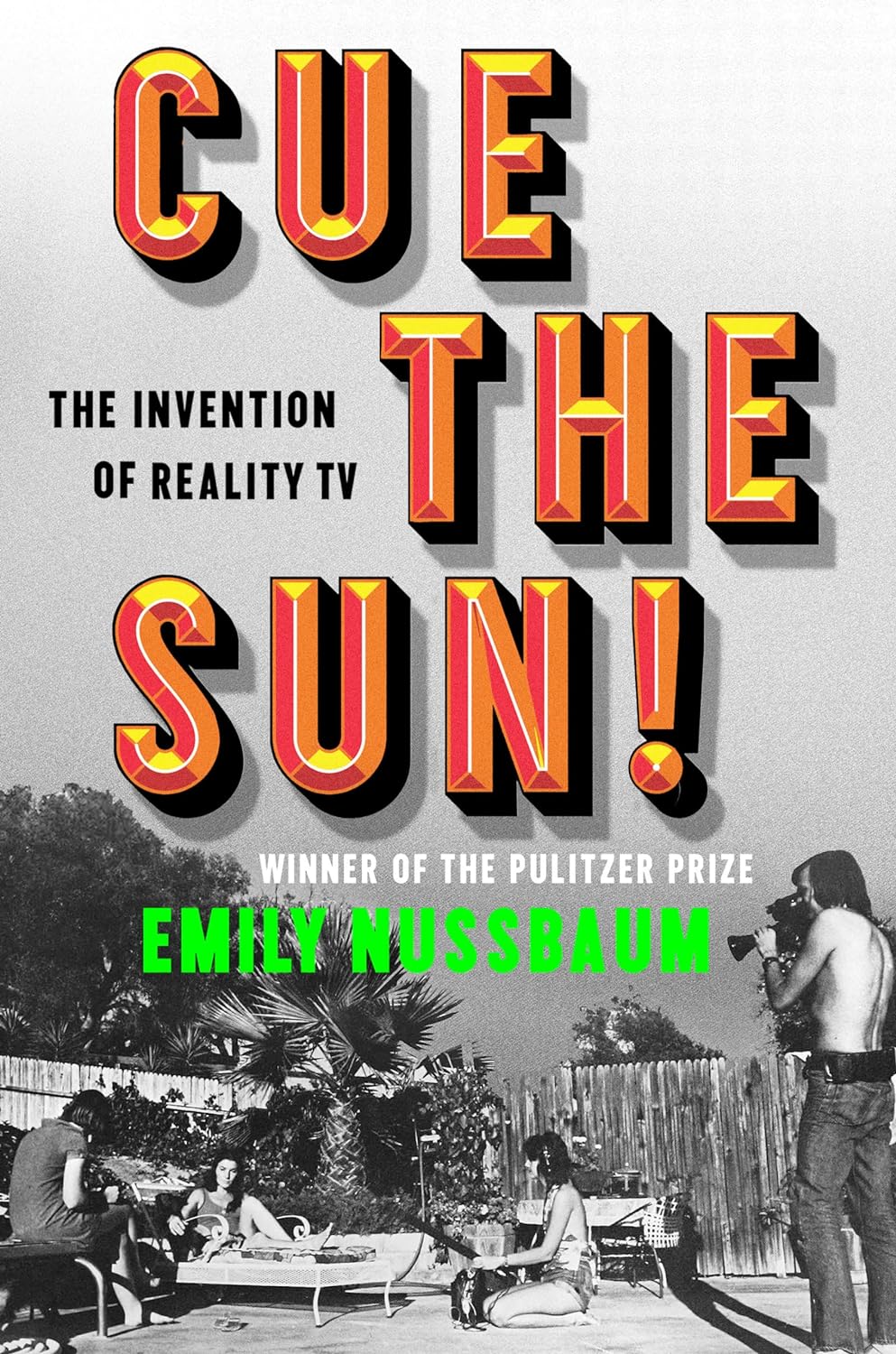
Book Review: Cue the Sun! The Invention of Reality TV by Emily Nussbaum

Title: Cue the Sun! The Invention of Reality TV
Author: Emily Nussbaum
Publisher: Random House
Publication date: June 25, 2024
Length: 464 pages
Genre: Non-fiction – pop culture/entertainment
Source: Library
Rating:

Rating: 4 out of 5.

Who invented reality TV, the world’s most dangerous pop-culture genre, and why can’t we look away from it? In this revelatory, deeply reported account of the rise of “dirty documentary,” Emily Nussbaum unearths the surprising origin story of the genre that ate the world, as told through the lively voices of the people who created it. At once gimlet-eyed and empathetic, Cue The Sun! explores the morally charged, funny, and sometimes tragic consequences of the hunt for something real inside something fake.

Nussbaum traces four paths of reality innovation—game shows, prank shows, soap operas, and clip shows—that united in the Survivor format, sparking a tumultuous Hollywood gold-rush. Along the way, we meet tricksters and innovators—from the icy Allen Funt to the shambolic Chuck Barris; Cops auteur John Langley; Bachelor mastermind Mike Fleiss; and Jon Murray, the visionary behind The Real World—along with dozens of crew members and ordinary people whose lives became fodder for the reality revolution. We learn about the tools of the trade—like Candid Camera’s brilliant “reveal” and the notorious Frankenbite, a deceptive editor’s best friend—and the moral outrage that reality shows provoked. But Cue The Sun! also celebrates what made the genre so powerful: a jolt of authentic emotion.

Through broad-ranging reporting, Nussbaum examines seven tumultuous decades, exploring the celebreality boom, reality TV as a strike-breaker, the queer roots of Bravo, and the dark truth behind The Apprentice. A shrewd observer who cares about television, she is the ideal voice for the first substantive cultural history of the genre that has, for better or worse, made America what it is today.

When I first heard about Cue the Sun! (which references a line from The Truman Show, in case you’re wondering), I figured I’d pick it up and just read the chapter about Survivor. But lo and behold, once I had this book in my hands, I couldn’t resist starting at the beginning and reading straight through to the end.

Author Emily Nussbaum masterfully traces the history of reality TV, from its early days catching ordinary people on camera — making real people points of fascination, but also, often mockery or scorn. We may think of shows like Candid Camera as some sweet piece of nostalgic fluff, but what I learned from this book is how subversive — and frequently nasty — these hidden camera pranks could be. Today, we accept that cameras are everywhere, but just imagine how shocking the idea was at the time!

Cue the Sun! covers reality TV history through all its various permutations, from clips shows (like America’s Funniest Home Videos) to game shows (The Newlywed Game), real-life crime (Cops), and talent competitions (The Gong Show).

Survivor was the true game-changer, when reality competitions blew up seemingly overnight. It’s fascinating to read about the creation of Survivor and the evolution of the first season. Now, everyone who plays Survivor knows how to play Survivor… but then, the contestants were largely making it up as they went along.

After Survivor, reality was huger than ever, with mega-hits such as the Bachelor franchise, Real Housewives and Kardashians, American Idol and countless other competitions dominating the airwaves. Cue the Sun! lays out how one phase led to another, and shows the wheeling and dealing, the seediness and invasiveness, as well as the creativity and innovation behind the scenes of it all.

The book also makes plain what anyone who watches reality TV knows — the cameras may catch people in the moment, but the producers manipulate what viewers see, both via editing after the fact and through questions, prompts, coaching and instruction as the action unfolds during filming. Even though it’s obvious that this is how these shows get made, the intensity and pervasiveness of the manipulation, as shown in Cue the Sun!, can feel very unsettling to read about. As the book points out, over and over again, we’re not watching actual reality — what we see is a curated, filtered, carefully assembled product that mimics some form of reality.

The final chapter of Cue the Sun! gets pretty dark, as it focuses on The Apprentice. It’s fascinating and disturbing to read about the creation and development of the show, and how the show is largely responsible for the public platform that led all the way to the Presidential race of 2016 and beyond.

That was the taboo truth about The Apprentice, in the end—the quality that made it more impressive, not less. Anyone could rebrand a mediocre businessman, some small-timer in need of a glow-up. But taking a failed tycoon who was a heavily in hock and too risky for almost any bank to lend to, a crude, impulsive, bigoted, multiply-bankrupt ignoramus, a sexual predator so reckless he openly harassed women on his show, then finding a way to make him look attractive enough to elect as the president of the United States? That was a coup, even if no one could brag about it.

Throughout the book, it’s interesting to see how the participants and players on reality shows have changed. At the genre’s beginning, it spotlighted real people’s lives as captured on camera. As the genre evolved into game play, constant surveillance, confessionals, and more, real people eagerly auditioned for reality TV, knowing that reality TV celebrity is now a career path. The author includes interviews from many reality contestants — some went back to “real” (ordinary, non-Hollywood lives) after their moments in the spotlight, but many pursued either further on-camera reality options, worked behind the scenes on other shows, or spent time on the fan circuit.

Cue the Sun! is a fascinating read. I don’t watch an enormous amount of reality TV (I’ve never watched The Bachelor or any of the “celebreality” shows currently on the air), but as a fan of Survivor and The Amazing Race, I found it so eye-opening to see where this TV trend began and how it’s developed over time.

Reading note: Don’t be put off by the page count! There’s about 50 pages or so of notes, bibliography, and an index at the end. I found Cue the Sun! a fast, absorbing read.

Want to know more? Check out these reviews:

Getting ready for the Fall 2024 Classics Club Spin!

It’s time for another Classics Club Spin!

Hosted by The Classics Club blog, the Classics Club Spin is a reading adventure where participants come up with a list of classics they’d like to read, number them 1 to 20, and then read the book that corresponds to the “spin” number that comes up. This will be my 11th time participating — although for the Classics Club, it’s spin #39!

Here are the dates and guidelines from the host blog:

On Sunday 20th October 2024 we’ll post a number from 1 through 20. The challenge is to read whatever book falls under that number on your Spin List by the 18th December, 2024.

We’ll check in here on the 18th December to see who made it the whole way and finished their spin book!

What’s Next?

  • Go to your blog.
  • Pick twenty books that you’ve got left to read from your Classics Club List.
  • Post that list, numbered 1-20, on your blog before Sunday 20th October 2024.
  • We’ll announce a number from 1-20. 
  • Read that book by 18th December.

It’s always exciting when a new spin is announced! I’ve updated my list, and can’t wait to see where the spin lands.

Here we go!

Here’s my list of 20 classics for the next Classics Club Spin:

  1. Frenchman’s Creek by Daphne DuMaurier
  2. The Ghost and Mrs. Muir by R. A. Dick
  3. An Old-Fashioned Girl by Louisa May Alcott
  4. Dracula by Bram Stoker
  5. Peony by Pearl Buck
  6. White Fang by Jack London
  7. Black Beauty by Anna Sewell
  8. The Tenant of Wildfell Hall by Anne Bronte
  9. The Mysterious Affair at Styles by Agatha Christie
  10. I Capture the Castle by Dodie Smith
  11. My Family and Other Animals by  Gerald Durrell
  12. In Cold Blood by Truman Capote
  13. Tevye the Dairyman and Motl the Cantor’s Son by Sholom Aleichem
  14. The Painted Veil by W. Somerset Maugham
  15. Frankenstein by Mary Shelley
  16. The Grapes of Wrath by John Steinbeck
  17. East of Eden by John Steinbeck
  18. The Mayor of Casterbridge by Thomas Hardy
  19. The Left Hand of Darkness by Ursula K. Le Guin
  20. My Brilliant Career by Miles Franklin

Wish me luck! I’ll be back on October 20th to reveal my spin result!

My previous Classics Club spins:

Spring 2022 (CCSpin29): The Black Moth by Georgette Heyer
Summer 2022 (CCSpin30): Cannery Row by John Steinbeck
Fall 2022 (CCSpin31): A Connecticut Yankee in King Arthur’s Court by Mark Twain
Winter 2022/2023 (CCSpin32): O Pioneers! by Willa Cather
Spring 2023 (CCSpin33): Picnic at Hanging Rock by Joan Lindsay
Summer 2023 (CCSpin34): Herland by Charlotte Perkins Gilman
Fall 2023 (CCSpin35): Cranford by Elizabeth Gaskell
Winter 2024 (CCSpin36): A Night to Remember by Walter Lord
Spring 2024 (CCSpin37): Howards End by E. M. Forster
Summer 2024 (CCSpin38): The Sound of Waves by Yukio Mishima

Top 5 Tuesday: Top 5 non-human characters

Top 5 Tuesday is a weekly meme hosted by Meeghan Reads — check out the next batch of upcoming topics here.

This week’s topic is Top 5 non-human characters, and the prompt is: So many books have non-human characters — animals or supernatural creatures… maybe even a park bench. Who are your favourite non-human characters?

It’s hard to narrow these down to just five, since there are so many to choose from! Here are five I love:

  1. Mosscap (robot) — A Psalm for the Wild-Built by Becky Chambers: I love everything about Mosscap (full name: Splendid Speckled Mosscap), and this book and its sequel are just so wonderful.
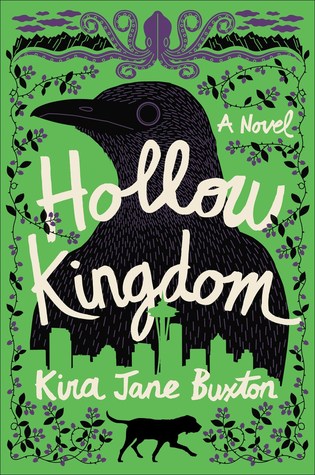
  2. S.T. (crow) — Hollow Kingdom by Kira Jane Buxton: A crow narrating a post-apocalyptic story with plenty of attitude. Awesome.
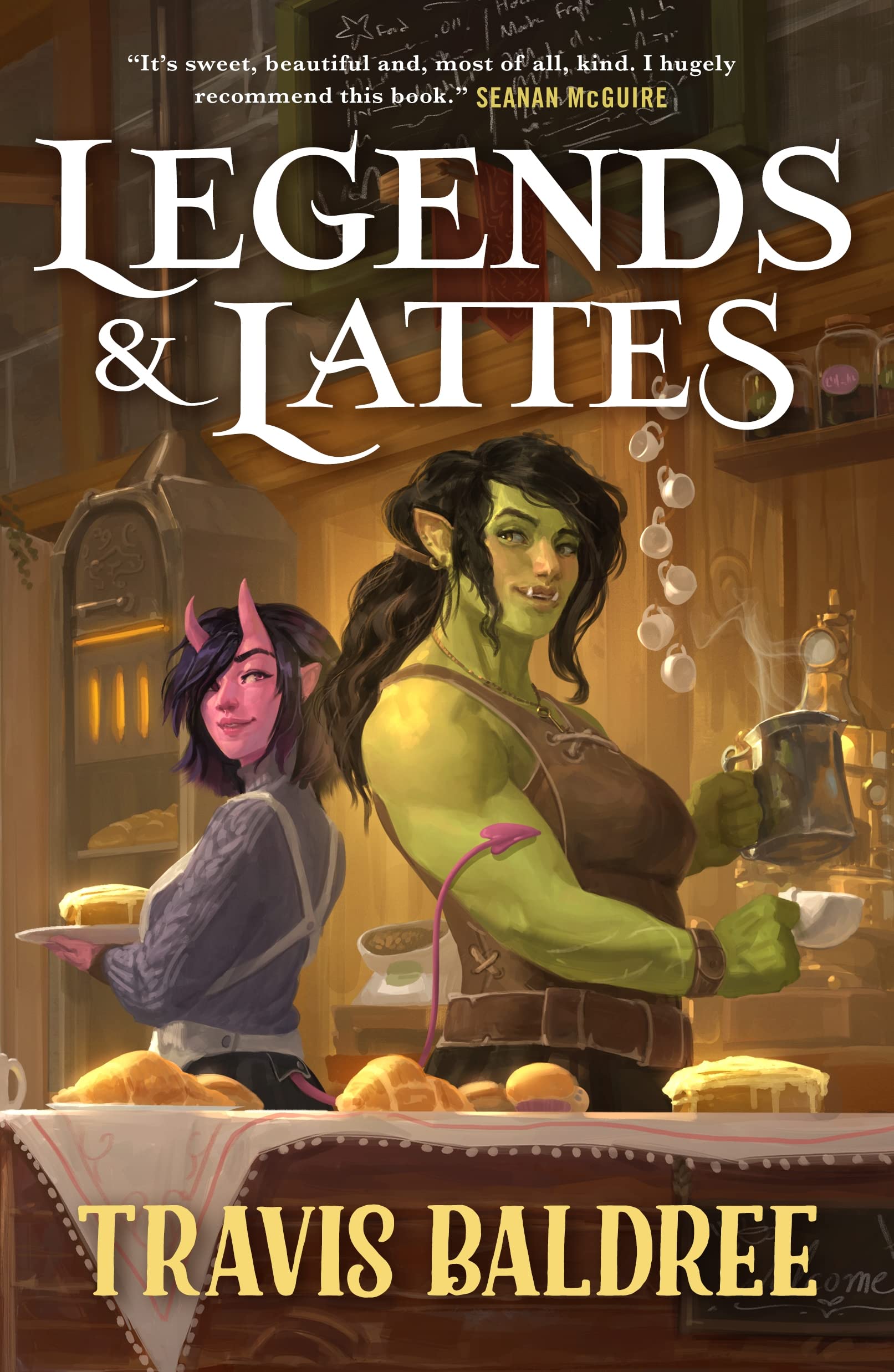
  3. Viv (orc) — Legends & Lattes by Travis Baldree: An orc, retired from her fighting days, who dreams about a peaceful life with good coffee.
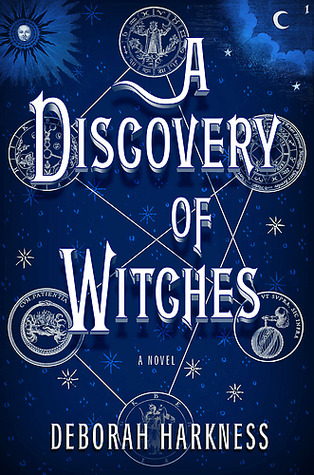
  4. Matthew de Clermont (vampire) — All Souls series by Deborah Harkness: There are any number of great vampires in fiction, but Matthew is so suave and smart that he consistently makes my list of favorites.
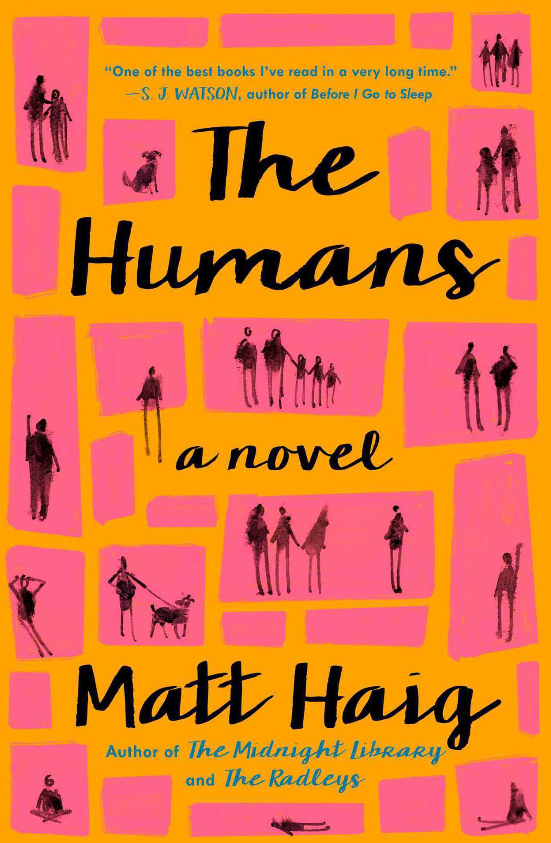
  5. Alien (unnamed) — The Humans by Matt Haig: This non-human visitor to our world takes the form of an earthling and learns important truths about being human. Such a great book.

I feel like this list just scratches the surface — I haven’t even included my favorite dogs of fiction! Dogs, cats, horses, and more… they’ll have to wait for another list!

What (or who) are your favorite non-human characters in fiction?

The Monday Check-In ~ 10/14/2024

cooltext1850356879

My Monday tradition, including a look back and a look ahead — what I read last week, what new books came my way, and what books are keeping me busy right now. Plus a smattering of other stuff too.

Life.

It’s been another busy week, with a couple of special highlights — dinner out with a friend I hadn’t seen in a long time, and then a quick, one-night visit from my daughter as she passed through the area for a friend’s wedding. I wish I had more time with her… but I’ll take what I can get!

Pango Books

Just a reminder — if you’re new to Pango Books, you can get a discount using my code! (This is good for first time users only, and works for any books you buy.) Use the code LISA252194 to get $5 off an order of $10 or more. Visit Pango Books to get started!

I’m also selling books on Pango — you can see my seller listings here.

What did I read during the last week?

Not much, actually. I was on the go a lot more than usual and had very little reading time… and spent a few days trying to get through a book (chosen for a reading challenge) that I ended up DNFing, which was frustrating.

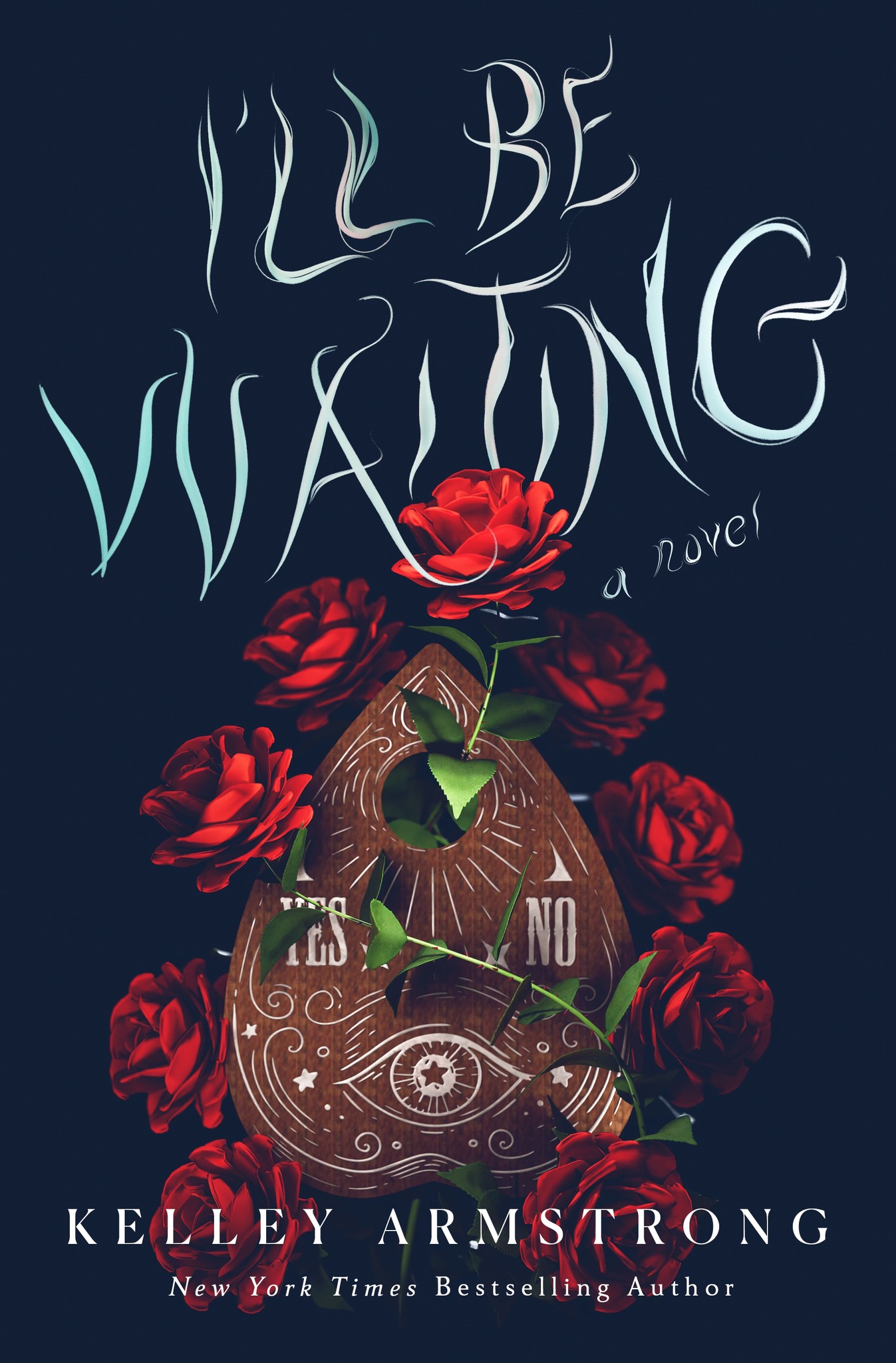
I’ll Be Waiting by Kelley Armstrong: I read this the previous week, but just posted my review (here). Short version: I loved it!

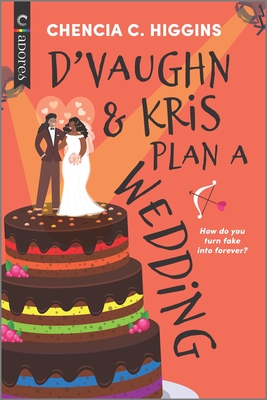
D’Vaughn & Kris Plan a Wedding by Chencia C. Higgins: DNFd at 30%. I feel like I wasted precious reading time! The premise sounded like it would be cute, but I didn’t connect to the writing, the characters, or the plot, and finally realized that I wasn’t enjoying the book enough to continue.

The Happy Ever After Playlist by Abby Jimenez: The 2nd book in the Friend Zone trilogy. Terrific audiobook, with heart, humor, and a great love story. My review is here.

Pop culture & TV:

I know it’s pretty cheesy, but once again I find myself sucked into watching Dancing with the Stars. I just can’t seem to look away.

On Netflix, I finally got a chance to finish up the 3rd and final season of Sweet Tooth. As a whole, I really liked it — and I think I might have liked it even more if I’d waited and binged all three seasons straight through. I watched each season as it dropped, and for this last season, watched in bits and pieces over several weeks, and definitely think my experience suffered a bit from a lack of continuity.

Fresh Catch:

No new books this week.

What will I be reading during the coming week?

Currently in my hands:

Cue the Sun! The Invention of Reality TV by Emily Nussbaum: Hey, look! I’m reading non-fiction! This book is so interesting — I’m close to the end and really loving it.

Assuming I find time to finish today or tomorrow, I plan to get back to my stack of ARCs, starting with:

The Love Elixir of Augusta Stern by Lynda Cohen Loigman: I’ve enjoyed this author’s previous books, and this new release feels like a good choice for October.

Now playing via audiobook:

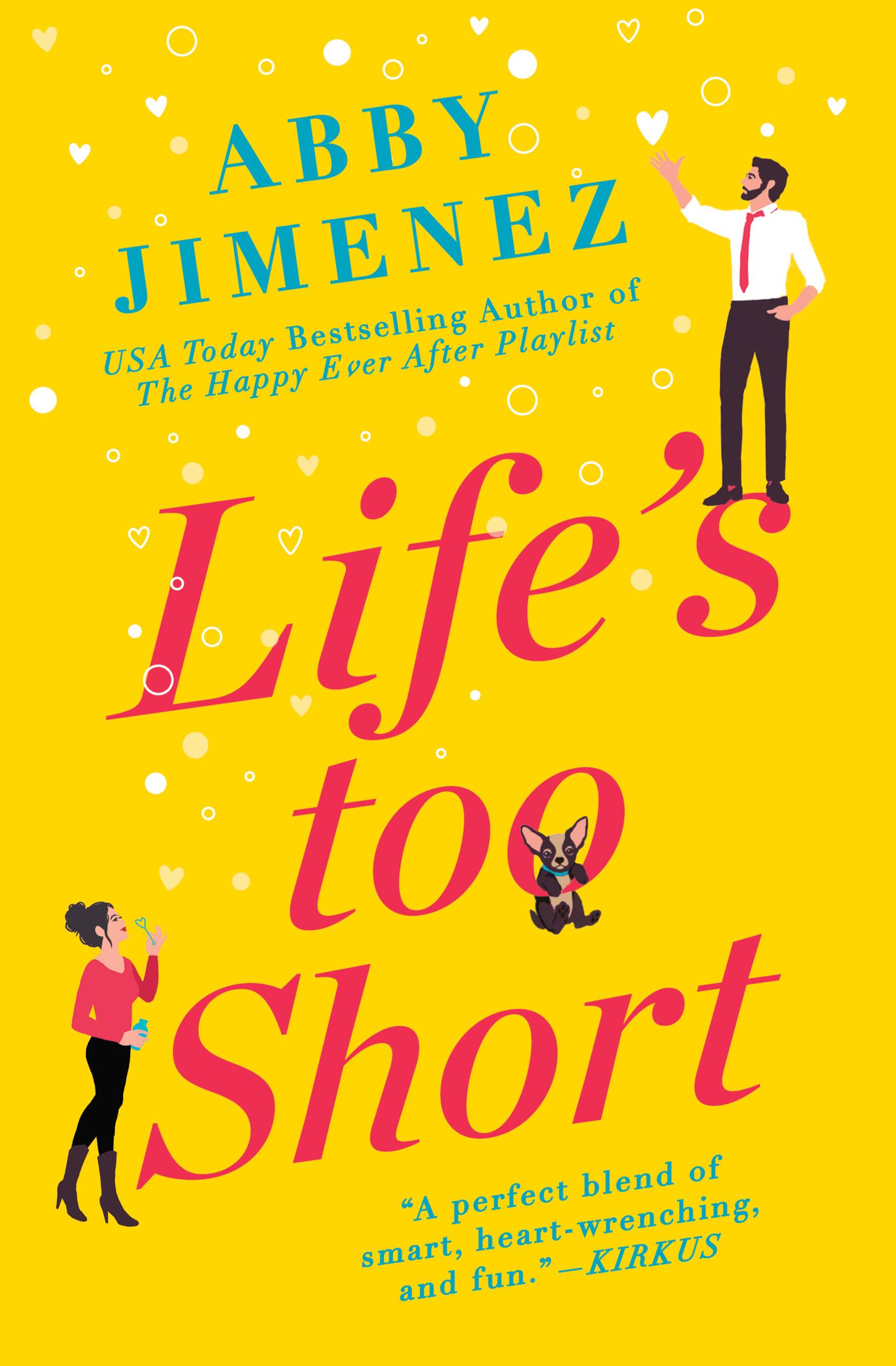
Life’s Too Short by Abby Jimenez: The 3rd book in the Friend Zone trilogy. I can’t help it — I just had to start this one immediately after finishing #2.

Ongoing reads:

My longer-term reading commitments:

  • Damn Rebel Bitches: The Women of the ’45 by Maggie Craig: Over at Outlander Book Club, we’re doing a group read of this non-fiction book, discussing one chapter each Friday. Progress: 88%. Coming up this week: Chapter 24, “Rebellion She Wrote”
  • Right Ho, Jeeves by P. G. Wodehouse: My book group’s classic read! Hilarious. Progress: 54%. Coming up this week: Chapters 15 and 16.
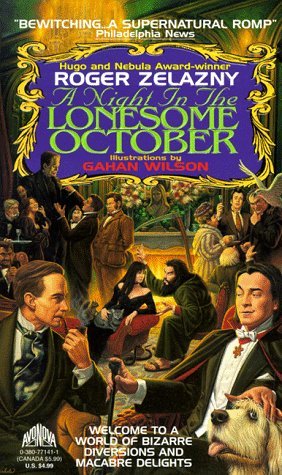
  • A Night in the Lonesome October by Roger Zelazny: My annual October tradition. The book has a chapter per day for each day of the month. Progress: 18%

What will you be reading this week?

So many books, so little time…

boy1

Audiobook Review: The Happy Ever After Playlist (The Friend Zone, #2) by Abby Jimenez

Title: The Happy Ever After Playlist
Series: The Friend Zone, #1
Author: Abby Jimenez
Narrators: Zachary Webber and Erin Mallon
Publisher: Forever
Publication date: April 14, 2020
Print length: 401 pages
Audio length: 9 hours 17 minutes
Genre: Contemporary romance
Source: Library
Rating:

Rating: 4 out of 5.

From the USA Today bestselling author of The Friend Zone comes a fresh romantic comedy full of “fierce humor and fiercer heart” about one trouble-making dog who brings together two perfect strangers. (Casey McQuiston, New York Times bestselling author of Red, White & Royal Blue)

Two years after losing her fiancé, Sloan Monroe still can’t seem to get her life back on track. But one trouble-making pup with a “take me home” look in his eyes is about to change everything. With her new pet by her side, Sloan finally starts to feel more like herself. Then, after weeks of unanswered texts, Tucker’s owner reaches out. He’s a musician on tour in Australia. And bottom line: He wants Tucker back.

Well, Sloan’s not about to give up her dog without a fight. But what if this Jason guy really loves Tucker? As their flirty texts turn into long calls, Sloan can’t deny a connection. Jason is hot and nice and funny. There’s no telling what could happen when they meet in person. The question is: With his music career on the rise, how long will Jason really stick around? And is it possible for Sloan to survive another heartbreak?

Dear Romance Writers:

PLEASE STOP MAKING CHARACTERS BREAK UP WITH THE PERSON THEY LOVE FOR THEIR OWN GOOD WITHOUT TELLING THEM WHY.

Phew. Glad I got that off my chest.

Moving on with my review… which includes unavoidable spoilers for The Friend Zone, so proceed with caution.

The Happy Ever After Playlist picks up two years after the events of The Friend Zone, moving the best friend from book #1 to center stage.

Sloan may not seem to be a prime candidate for a romance lead — her story in The Friend Zone (spoiler alert!) was a tragic one. Just one week before her wedding, Sloan’s fiancé was hit by a drunk driver while riding his motorcycle and eventually died.

As The Happy Ever After Playlist opens, Sloan thinks of her life as being in the “in between”. Since Brandon’s death, she’s stopped cooking, stopped painting original pieces (focusing instead on Etsy commissions for pieces such as astronaut cats), and basically just gets by. If not for best friend Kristen and her husband Josh, Sloan would barely even eat.

All that changes when Sloan heads to the cemetery to visit Brandon’s grave, and nearly hits a dog wandering on the road… who then jumps into her car through her sunroof. What’s Sloan to do? She takes him home, tries in vain to contact his owner, and after a couple of weeks, has settled into a happier sort of life with Tucker as company — until Tucker’s owner Jason finally returns Sloan’s many calls.

He’s a musician, has been working in Australia, but is now headed home and wants his dog back. After some initial resistance, Sloan agrees, but only if Jason proves he’s worthy. As Jason and Sloan banter via text and then phone calls, a spark of life comes back to Sloan. She’s having fun, she’s enjoying getting to know this random person, and (after seeing his picture), she thinks she might actually be open to meeting him… although only if they call it an appointment, not a date.

Needless to say, Sloan and Jason have amazing chemistry, and within days, are inseparable. As Sloan works through her complicated feelings about allowing herself to be open to attraction and possibly romance, Jason is beyond perfect, making clear his desire and interest, but only at her own pace and comfort level.

Things become even more complicated once Sloan shows Kristen a picture of Jason… and Kristen freaks out. Does Sloan even know who she’s kinda-sorta dating? That’s Jackson Waters, the recording artist behind the cover of The Wreck of the Edmund Fitzgerald**, the song Sloan listened to on repeat during the worst of her days of grief. Jason is poised for stardom, about to leave on tour, with a major record label promoting him and propelling him into the spotlight. But how can Jason leave when things are just getting started with Sloan, and how can Sloan fit into the high-pressure world of a world-famous rock star?

**And believe me, it makes me mad that the Jackson Waters version of this song (and its accompanying claymation music video) does not actually exist!!

The Happy Ever After Playlist is engaging right from the start, although in some ways, it feels like two (or possibly three) different stories smushed into one. At the beginning, it seems to be about Sloan allowing love back into her life, and that’s quite lovely to see. Her cautious first steps toward happiness turn into a running leap, once she and Jason start to connect on a deeper level. They realize almost instantly that what’s between them is the real thing.

Midway through the book, the storyline turns much more into the celebrity romance trope — how can an ordinary person fit into the world of fame and paparazzi and constant scrutiny, much less endless months on the road?

Jason and Sloan are worth rooting for, but it drives me mad (see my declaration at the start of this review) when one romantic partner makes a decision (usually a break-up) for what they perceive to be the good of the other person, without even telling them why or giving them the opportunity to discuss it. Of course, in a romance, this is the 3rd act big blowup when all seems lost, but we know (because romance) that it will all work out, and that there will likely be some amazing, over-the-top big moment to bring it all to a happy ever after. (There is).

I really did enjoy The Happy Ever After Playlist as a whole, but certain fights and then the breakup made me a little batty. If ever a situation calls for couples’ counseling, or at least a neutral third party, this is it. These two characters do not do a great job of talking to one another in crucial moments. Yay, they work it all out eventually, but the pain and suffering before they get there could have been avoided through actual communication.

As in The Friend Zone, the men in this second book are once again very manly indeed. Hunting, home improvement skills, and general outdoorsy-ness abound. Jason is a sensitive singer/songwriter/guitarist, but he’s also great with his hands (in all ways), can fix anything, and goes camping on remote islands for the fun of it.

Overall, The Happy Ever After Playlist is a great audiobook listen. Despite the plot points that bugged me, I never wanted to stop once I started listening, and the narrators do an excellent job bringing the characters to life and conveying their banter, humor, fights, and sorrows.

I will absolutely finish the trilogy, although based on the peek I took at the 3rd book’s synopsis, it seems to only have a very tangential connection to the first and second books. Still, I know what I’ll be listening to next!

Up next: Life’s Too Short

Book Review: I’ll Be Waiting by Kelley Armstrong

Title: I’ll Be Waiting
Author: Kelley Armstong
Publisher: St. Martin’s Press
Publication date: October 1, 2024
Length: 336 pages
Genre: Horror
Source: Review copy courtesy of the publisher via NetGalley
Rating:

Rating: 5 out of 5.

From New York Times Bestselling author Kelley Armstrong comes a spellbinding new tale of supernatural horror involving a haunted-house, seances, lost loved ones, and a sinister spirit out for blood…

Nicola Laughton never expected to see adulthood, being diagnosed with Cystic Fibrosis as a child. Then medical advances let her live into her thirties and she met Anton, who taught her to dream of a future… together. Months after they married, Anton died in a horrible car accident, but lived long enough to utter five words to her, “I’ll be waiting for you.”

That final private moment became public when someone from the crash scene took it to the press—the terminally ill woman holding her dying husband as he promised to wait for her on the other side. Worse, that person claimed it wasn’t Anton who said the words but his ghost, hovering over his body.

Since their story went public, Nicola has been hounded by spiritualists promising closure. In the hopes of stopping her downward spiral, friends and family find a reputable medium—a professor of parapsychology. For the séance, they rent the Lake Erie beach house that Anton’s family once owned.

The medium barely has time to begin his work before things start happening. Locked doors mysteriously open. Clouds of insects engulf the house. Nicola hears footsteps and voices and the creak of an old dumbwaiter…in an empty shaft. Throughout it all she’s haunted by nightmares of her past. Because, unbeknownst to the others, this isn’t her first time contacting the dead. And Nicola isn’t her real name.

That’s when she finds the first body….

In this atmospheric, thrilling new ghost story, Kelley Armstrong’s full talents are on display to thrill, chill and leave the reader guessing how Nicola escapes with her life–if she can.

Kelley Armstrong has quickly become a favorite author over the past few years, thanks to terrific series such as A Rip Through Time and A Stitch in Time. I also loved her first foray into contemporary romance, Finding Mr. Write. So it’s no surprise that I’ll Be Waiting, a stand-alone horror novel, pulled me in right from the start and never let me go.

The synopsis above says a lot — perhaps too much — about the plot of I’ll Be Waiting, so I’ll stick to a brief rehash. The basics: Main character Nicola (“Nic”) spends all her life knowing she’s on borrowed time. She’s already exceeded the life expectancy for someone with CF (cystic fibrosis). As the book opens, she’s happily married to a lovely man, Anton, and they’re bantering about future travel plans when a random car accident kills him — but not before he shares last words with Nic: I’ll be waiting for you.

Flashforward eight months, and Nic is still mired in grief, which she lives through by seeking medium after medium, hoping for one final connection with Anton. She knows most are frauds, and knows she should let this obsession go, but she can’t. Worried friends and family stage an intervention of sorts: They’ve found a parapsychologist who applies a scientific approach to contacting the other side, and they want Nicola to agree to make this attempt to reach Anton her last, no matter the outcome.

Everyone knew I loved Anton. They just didn’t know how much. I want the same for my grief. They can know I’m still hurting… just not how much.

As a small group gathers at a lakeside house for the seance, unexplained noises and phenomena begin to occur. Is it yet more fakery? Could it really be Anton? Or is it something or someone else from the other side, with a much darker agenda?

I’ll Be Waiting explores the power of love and grief through Nicola’s experiences. She’s a fascinating main character, living with a chronic illness and suffering through the media interest Anton’s death has provoked. (She’s often described in the press as a terminally ill widow, which is offensive to Nic on so many levels). Through Nic, we get a portrayal of what daily life with CF is like, but also get inside her head to know how thoughts and expectations of death have always been a part of her life. Part of why she can’t let go of the attempts to reach Anton is the very fact that he died first: it was always supposed to be her.

As Nicola spends time at the lake house and experiences unexplained noises, pushes from unseen hands, and other strange occurrences, she also spends more and more time with vivid dreams from her own past. As a teen, something awful happened — awful enough that her parents abruptly moved her across the country and allowed her to change her name in order to escape it all. Now, memories of that time are coming fast and furious, and Nic is left to try to connect the pieces between those events and her possible visitations from Anton.

The suspense builds, with twists and turns that are hinted at, then land with huge, shocking impact. Sure, the first creaking floorboards would probably have sent me running for the hills, but Nic is a woman with a mission, and she refuses to be scared off until she sees this seance through. The tension in the house ratchets higher and higher, as Nicola is forced to question everything — the spirit (spirits?) who seem to be making their presence known, as well as the trustworthiness of the people she’s counting on to see her through this experience.

Somewhere around the 50% point, I sat down with I’ll Be Waiting to read a few more chapters… and didn’t move again until I’d finished. It’s no exaggeration to say this book is impossible to put down. The ghost story and suspense elements are absolutely gripping, but the book is so much more than a horror story. It’s Nicola’s inner life — her memories of her great love and her unending suffering through her grief and loss — that make this book so compelling and so powerful.

I’ll Be Waiting is both beautiful and completely chilling. There are some major jump-scare horror moments, but it’s the story of Nicola and Anton that I think will truly stay with me. This book is masterful storytelling with heart and strong emotional impact. Highly recommended.

Top 5 Tuesday: Top 5 Hugo winners

It’s another fun topic for Top 5 Tuesday! This weekly meme is hosted by Meeghan Reads — check out the next batch of upcoming topics here.

This week’s topic is Top 5 award-winning books, and the prompt is: You can pick a specific award or just any book you’ve read that’s ever won an award. What are your faves?

I love following genre-specific awards, and the Hugo picks are always exciting. Here are my top 5 Hugo award winners from recent years:

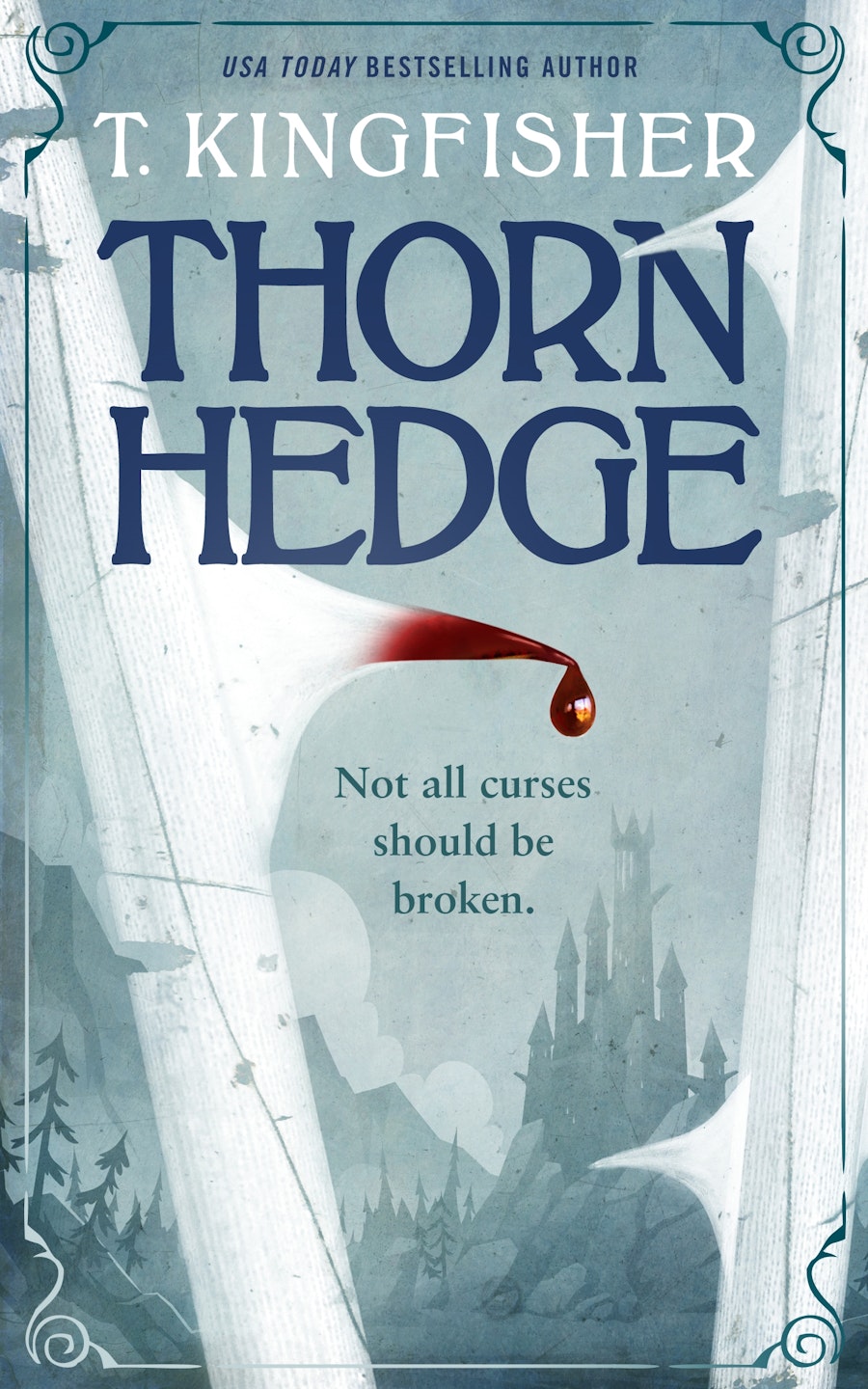
  1. Thornhedge by T. Kingfisher — Best Novella, 2023
  2. A Psalm for the Wild-Built by Becky Chambers — Best Novella, 2022
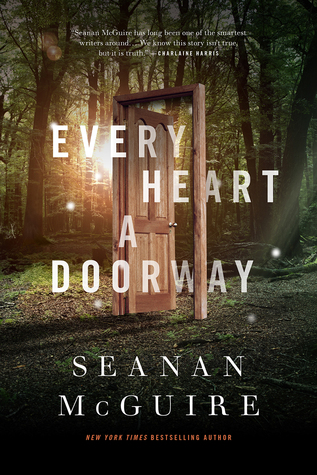
  3. Wayward Children by Seanan McGuire — Best Series, 2022 (first book: Every Heart a Doorway)
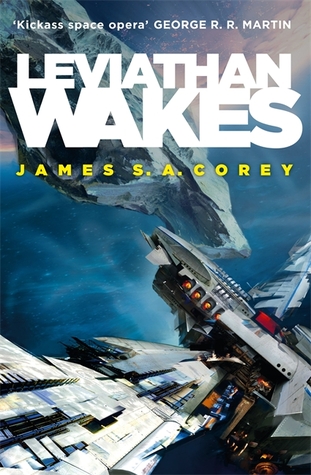
  4. The Expanse by James S. A. Corey — Best Series, 2020 (first book: Leviathan Wakes)
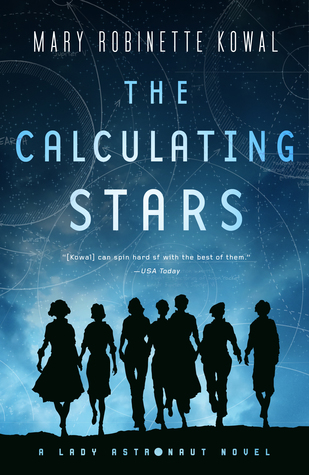
  5. The Calculating Stars by Mary Robinette Kowal — Best Novel, 2019

Of course, there are plenty more Hugo winners and nominees that I’ve loved… not to mention all the ones I still want to read!

Click here to see the complete Hugo history. So many books for my TBR!

What book awards do you follow? Do you have any favorite award-winners to recommend?

The Monday Check-In ~ 10/07/2024

cooltext1850356879

My Monday tradition, including a look back and a look ahead — what I read last week, what new books came my way, and what books are keeping me busy right now. Plus a smattering of other stuff too.

Life.

Happy New Year to all who celebrate Rosh Hashanah! Wishing everyone a sweet, healthy, peaceful year to come.

I loved having a couple of days off from work last week. I spend one day visiting friends I hadn’t seen in a while, and another catching up on errands I never seem to have time for on weekends.

Meanwhile, we’ve been having a heatwave here in San Francisco. I went for walks at the beach to bask in our unusually sunny weather, then cooled off in the shade on my back porch with iced coffee and a good book or two. So nice!

Pango Books

I’m a Pango Ambassador! That means I get to share a discount code with my fellow booklovers. Use the code LISA252194 to get $5 off an order of $10 or more (applies to new Pango users only). Visit Pango Books to get started!

I’m also selling books on Pango — you can see my seller listings here.

What did I read during the last week?

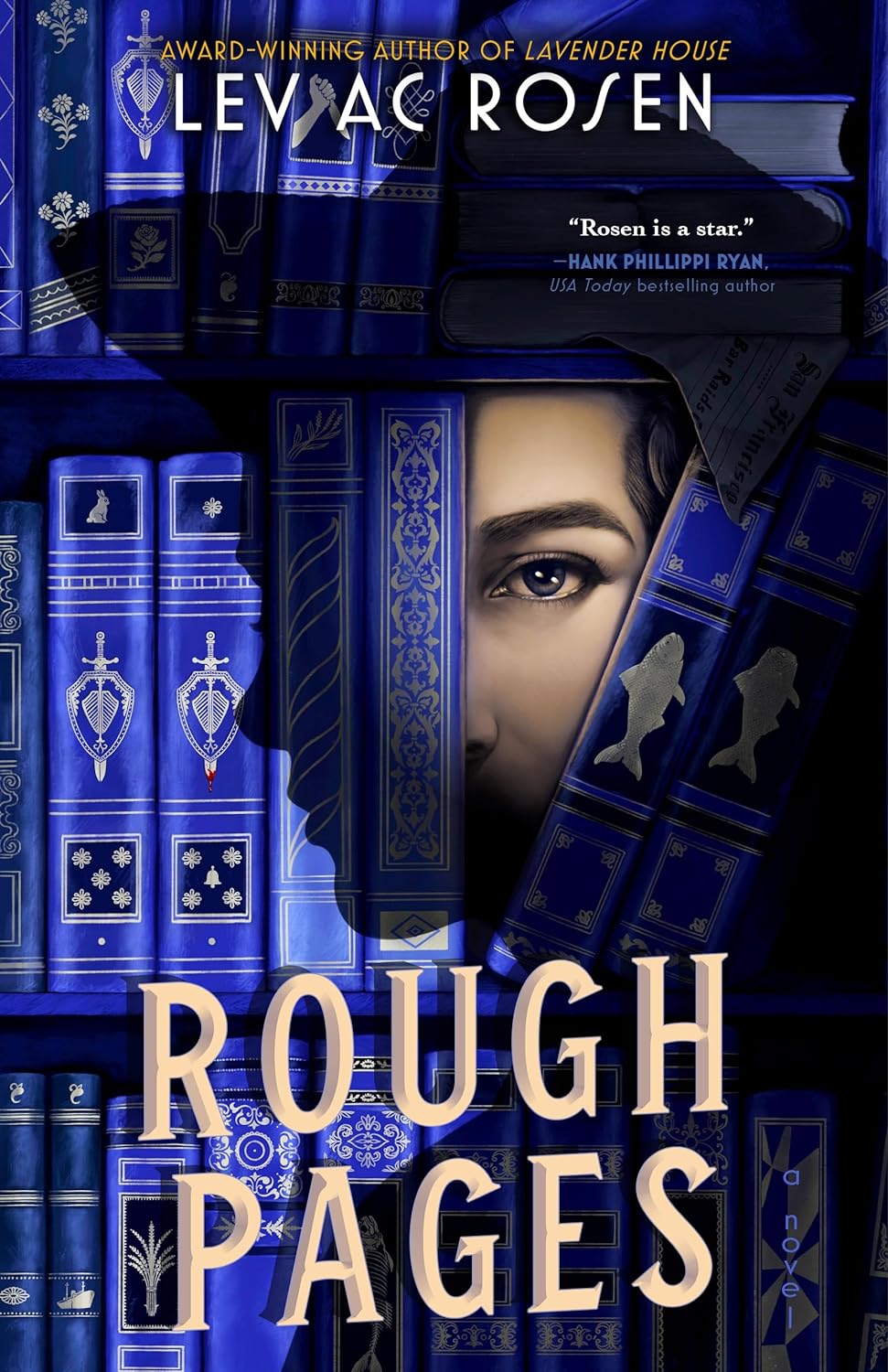
Rough Pages by Lev AC Rosen: Terrific noir tale about a gay detective in 1950s San Francisco. My review is here.

Drop Dead by Lily Chu: Really fun audiobook about rival journalists unraveling a literary mystery. My review is here.

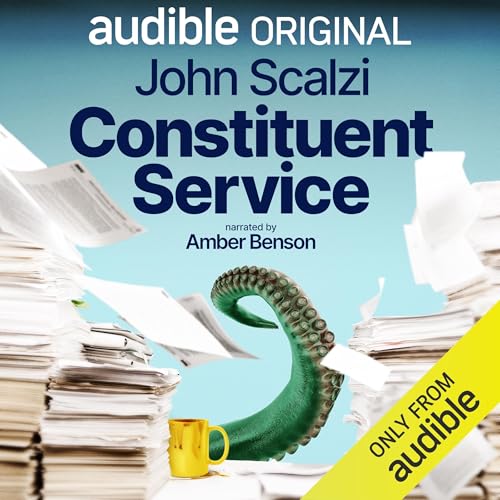
Constituent Service by John Scalzi: A fun (free) Audible Original, narrated by Amber Benson. A quick, laugh-out-loud listen.

I’ll Be Waiting by Kelley Armstrong: Excellent horror story, with lots of unexpected twists and scares. Stay tuned — I’ll have a review up later in the week.

In other bookish news, my book group had a Zoom chat with author Jennifer Ryan to discuss her newest novel, The Underground Library. Jennifer was warm and friendly and so interesting! We all really enjoyed it.

Pop culture & TV:

I watched the final episode of Lord of the Rings: The Rings of Power, season 2. Overall, it’s been a good season, but I think the show tried to cram too much into the finale. There were characters included whom we hadn’t seen in weeks — I couldn’t even remember why some of them mattered! Still, it’s renewed my interest in the world of LOTR and makes me want to dig a little deeper while waiting for season 3 (although a renewal has not yet been confirmed).

Next up: I’m excited to watch season 3 of Heartstopper!

Fresh Catch:

I won a Goodreads giveaway! I haven’t received the book yet, but it’s always a thrill to get the email notification. I won a copy of We Would Never by Tova Mirvis. Looks good!

What will I be reading during the coming week?

Currently in my hands:

D’Vaughn & Kris Plan a Wedding by Chencia C. Higgins: I needed an LGBTQ+ romance for a reading challenge, and my daughter recommended this one! Just getting started.

Now playing via audiobook:

The Happy Ever After Playlist by Abby Jimenez: The 2nd book in the Friend Zone trilogy. I’ve only listened to the first chapter so far, but since the story focuses on an important character from the first book, I’m eager to dive in and see what happens next.

Ongoing reads:

My longer-term reading commitments:

  • Damn Rebel Bitches: The Women of the ’45 by Maggie Craig: Over at Outlander Book Club, we’re doing a group read of this non-fiction book, discussing one chapter each Friday. Progress: 82%. Coming up this week: Chapter 23, “Burn this Letter”
  • Right Ho, Jeeves by P. G. Wodehouse: My book group’s classic read! Hilarious. Progress: 48%. Coming up this week: Chapters 13 and 14.
  • A Night in the Lonesome October by Roger Zelazny: My annual October tradition. The book has a chapter per day for each day of the month. Progress: 7%

What will you be reading this week?

So many books, so little time…

boy1

Audiobook Review: Drop Dead by Lily Chu

Title: Drop Dead
Author: Lily Chu
Narrators: Phillipa Soo & John Cho
Publisher: Audible Originals
Publication date: August 1, 2024
Print length: n/a
Audio length: 11 hours 25 minutes
Genre: Contemporary fiction
Source: Audible download
Rating:

Rating: 4 out of 5.

One mysterious mansion. Two rival journalists. Three weeks to uncover the story—and love—of a lifetime. Don’t miss this unforgettable romantic comedy performed by Phillipa Soo and John Cho!

Obituary writer Nadine Barbault doesn’t mind being called “Lady Death.” It suits the ice queen persona she’s cultivated to survive the fast-paced Toronto Herald. So when Nadine learns that famous (and reclusive) author Dot Voline has died, she doesn’t hesitate to run the obituary … only to discover that Dot is very much alive.

Nadine’s screw-up has brought Wesley Chen of the rival Spear no end of joy—she’s been a thorn in his extremely ambitious side for years. But the renewed interest in Dot also surfaces chatter about a mysterious past scandal. Intrigued, Wes goes to the source to learn more—only to discover Nadine had the exact same idea … and the infuriating woman isn’t willing to respect dibs. Typical.

At first, Dot refuses to speak to either of the squabbling pair, but then they receive an unusual request—work together, and Dot will share everything. The offer seems too good to be true … and of course, it is: in a bitter twist of irony, Dot dies for real before she can finish recounting her story. Not all is lost, however. The estate’s executor allows Wes and Nadine access to Dot’s sprawling wonderland of a mansion for three weeks to find their answer. That’s three weeks of working together … three weeks of endless sweltering in tight spaces … three weeks of learning there could be something more between them than a desire to win at any cost.

And maybe, just maybe, under the rubble of all those could-have-beens they’ll uncover more than the secret of Dot Voline’s long-ago scandal—and Lady Death will finally embrace what she’s wanted from life all along.

Lily Chu’s Audible Originals have become an annual treat for me. Drop Dead is her fourth audiobook, and once again, it’s a hit!

Smart and entertaining, Drop Dead features main characters who are ambitious rivals forced to work together to solve an irresistible mystery. Nadine and Wes met years ago in college, and since their very first journalism class together, they’ve been fierce competitors.

But now, ten years later, neither has quite the stellar career they’d expected. Nadine was a hotshot political reporter at The Herald, until death threats rattled her enough to make her ask for a safer beat, at least until she gets her nerve back. She’s the recently appointed obituary editor, mainly working from pre-written copy about noteworthy people. It’s not exciting… but it does keep the trolls away.

Meanwhile, Wes longs to join the investigative team over at The Spear, but instead, he’s passed over in favor of an obnoxious bro-type, and writes lifestyle pieces on topics such as perfect picnic pairings. It’s… nice, but definitely not what he wants to do.

After Nadine mistakenly publishes an obit for Dot Voline, a leading light in Canada’s literary world, her credibility is shot and she’s reassigned into an even less challenging position. She’s determined to redeem herself and tries to get an interview with Dot by showing up at her mansion’s gate, only to find Wes there, eager to capitalize on Nadine’s mistake and perhaps find a great story of his own.

Because amidst the furor over the obituary for an author who isn’t actually dead, there’s a tantalizing hint of something more — a few comments on the original obituary wondered why there was no mention of the old scandal tied to Dot’s first book. But neither Nadine nor Wes can find any online references to a scandal, and both sense that this could be the key to a breakout investigative piece with the potential to revitalize their careers.

Dot Valine is in her later years, clearly not well, but without having lost a bit of her eccentricity and flair. She eventually invites them in after a series of challenges and grants them small interviews, always hinting at something more to come. Her mansion is huge and over-the-top, with treasures and collectibles and oddities around every corner. Nadine and Wes plan to take advantage of every moment Dot will grant them, but sadly, after just a few weeks, they’re informed by her nephew that Dot has passed away — for real this time.

Still, their quest for a story isn’t over. Dot has stipulated that they can continue to have access to her home to try to get to the truth. The clock is ticking — the nephew can only give them three weeks, and then the mansion will be sold. To take full advantage of their limited time, Nadine and Wes decide to move into the mansion and work around the clock. Sure, neither loves the idea of having to spend so much time together, but it’s their only shot at uncovering the story that Dot so clearly wanted told.

What ensues is a good old-fashioned treasure hunt, practically a locked room mystery. No, they’re not literally locked in — but to fulfill their quest, they spend every moment in Dot’s mansion, poring through boxes of old papers, closets full of ballgowns, shelves of knickknacks and antiques and old books. They don’t know what they’re looking for, but they hope they’ll recognize what’s important once they find it.

The search is clever and the mystery around Dot’s secrets is intriguing. We don’t truly know what she’s hiding at the start. There are hints of an old political scandal, but nothing in Dot’s online presence or traceable history connects her in any way to politics. Still, she’s a larger than life character, and each new piece of writing that Nadine and Wes discover shows yet another facet of Dot’s personality.

As for Wes and Nadine’s rivalry and surface-level dislike, it’s obviously only a matter of time before the dynamic changes. Because as combative as they are toward one another, there’s also a grudging respect — after all, they were always the top two, battling for number one — as well as an even more reluctant attraction. Working together nonstop in such close proximity, they’re finally forced to hash out their differences and acknowledge that they’re enjoying this joint quest. Eventually, a budding friendship turns into more, and a surprisingly sweet romance begins to blossom.

Drop Dead gets off to a somewhat slow start, as we learn about Nadine and Wes’s stalled careers and challenging family dynamics. Once Dot Voline enters the picture, the plot comes into sharper focus. The search for Dot’s secrets is the driving storyline of this book, with the romantic elements built around the main mystery plotline.

Both elements work well. The deeper Wes and Nadine get into the dusty recesses of Dot’s mansion, the more fun their quest becomes. Clues come in unexpected forms, and seemingly stray notes or old clippings tantalize — Dot has intentionally sprinkled these clues throughout her home without leaving a road map to find them. As the pair unearth more clues, they become even more determined to see Dot’s quest through to the end and bring to light the story she wanted shared upon her death.

The love story is also engaging. Intimate scenes occur off the page, but we do see the flirtation and chemistry build, and it’s clear that the sparks are emotional as well as physical. I really appreciated how the author manages the characters’ realizations about their dynamics, as well as the way they hash out their past differences and figure out how to work together.

Finally, I’ll mention that for Nadine especially, Dot had an important lesson to teach. Through her time with Dot herself and then with the mementos Dot leaves for her to find, Nadine learns to start looking beyond the basics of a bio to understand a person’s impact, and finds purpose in writing stories that truly show who people are and why they matter. This aspect of Drop Dead is heart-warming without becoming saccharine — Nadine’s personal journey over the course of the story is delightful to see.

As with Lily Chu’s previous audiobooks, Drop Dead is narrated by the very talented Phillipa Soo, this time joined by co-narrator John Cho. They’re wonderful at voicing the characters and showing their humor and intelligence, as well as the great banter between them.

Drop Dead is currently available only through Audible. Her three previous novels were released the same way, and then released in paperback about a year later. I’ve loved each of Lily Chu’s audiobooks — The Comeback and The Stand-In are still my favorites, but Drop Dead is terrific as well. Don’t miss it!