At A Glance: Billy Lynn’s Long Halftime Walk by Ben Fountain

Book Review: Billy Lynn’s Long Halftime Walk by Ben Fountain
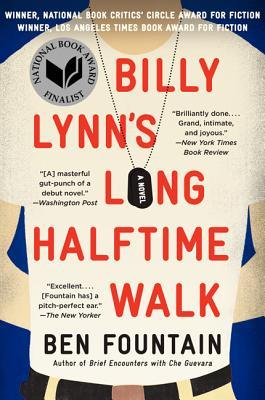
Billy Lynn's Long Halftime Walk

Synopsis via Goodreads:

A finalist for the National Book Award!

Three minutes and forty-three seconds of intense warfare with Iraqi insurgents has transformed the eight surviving men of Bravo Squad into America’s most sought-after heroes. Now they’re on a media-intensive nationwide tour to reinvigorate support for the war. On this rainy Thanksgiving, the Bravos are guests of the Dallas Cowboys, slated to be part of the halftime show alongside Destiny’s Child.

Among the Bravos is Specialist Billy Lynn. Surrounded by patriots sporting flag pins on their lapels and Support Our Troops bumper stickers, he is thrust into the company of the Cowboys’ owner and his coterie of wealthy colleagues; a born-again Cowboys cheerleader; a veteran Hollywood producer; and supersized players eager for a vicarious taste of war. Over the course of this day, Billy will drink and brawl, yearn for home and mourn those missing, face a heart-wrenching decision, and discover pure love and a bitter wisdom far beyond his years.

My thoughts:

This is a hard book to sum up or describe. While Billy Lynn takes place over the course of one day, Billy’s reflections take us into his memories of his service in Iraq as well as to the previous two weeks spent touring the US. Billy is smart and surprisingly mature for age 19 — although perhaps not really so surprising, given what he’s been through. The Bravos have survived an intense battle but have suffered terrible loss as well — and thanks to embedded journalists and video footage fresh from the battlefield, they’ve become instant celebrities and poster boys for the American war effort. Everywhere they go, they’re mobbed by grateful citizens who want to shake their hands, praise their courage, and find out if America is really winning the war.

Meanwhile, Billy and his fellow soldiers are a bit shell-shocked by their losses, their battlefield experiences, and their insta-fame. Thrust back into the heart of the US for a two-week whirlwind “Victory Tour”, the guys are bombarded by the sheer absurdity of it all, as the publicity machine moves them forward and a Hollywood producer tries to spin their story into big fat paychecks. And when they’re all done being paraded around like trophies? It’s back to Iraq for another eleven months, and who knows whether any of them will make it home again?

The writing is intense, often aggressive, and high energy, and yet full of moments of beauty as well:

The transect of sky through the open dome is the color and texture of rumbled pewter, an ominous boil of bruised sepias and ditchwater grays that foretells all kinds of weather-related misery.

Or in a scene at a press conference:

He means to say more, but the room erupts in thunderous applause. Billy is stunned, then worried that they have missed the point, then he’s sure they’ve missed the point but is too unconfident of his communication skills to try to force a clarification down their throats. They’re happy, so he will leave it at that. The flash cameras are really going now, and like so much of his nineteen years’ experience of life it has become mainly something to get through, then the applause dies down and he’s asked if he’ll be thinking of his friend Seargeant Breem during the playing of the national anthem today, and he says yes just to to keep it upbeat and on track, Yes, I sure will, which sounds obscene to his ears, and he wonders by what process virtually any discussion about the war seems to profane these ultimate matters of life and death. As if to talk of such things properly we need a mode of speech near the equal of prayer, otherwise just shut, shut your yap and sit on it, silence being truer to the experience than the star-spangled spasm, the bittersweet sob, the redeeming hug, or whatever this fucking closure is that everybody’s always talking about. They want it to be easy and it’s just not going to be.

In various places throughout the book, words may be scattered across the page or repeated until they lose all meaning, and the chapter in which the men of Bravo are in the VIP clubhouse at the stadium during the singing of the national anthem is truly a work of art.

Billy Lynn’s Long Halftime Walk has been nominated for countless awards and has received all sorts of critical praise. Who am I to disagree? This is a moving, clever, and provocative look at what is truly sacrificed when a nation goes to war, and a piercing exploration of so-called American values. This is a book that requires the reader to think, and the thoughts it provokes are not pretty. Seeing these young men being sent overseas to die — and it’s made very clear that their deaths are the most likely outcome — demonstrates all over again that money pulls the strings, that media provides a glossy and inspirational story of heroism, but that the soldiers are thrust into situations in which they can not possibly succeed, and in which their own death or mutilation is a constant but too-real threat.

Sadly, in every war and in every generation, a new crop of books emerges to remind us all over again of the waste and horror of it all. Billy Lynn’s Long Halftime Walk belongs on the shelf right next to Catch-22 by Joseph Heller and The Things They Carried by Tim O’Brien, among others. Billy Lynn is a literary achievement with a powerful punch, and deserves every bit of the attention it has received.

__________________________________________

The details:

Title: Billy Lynn’s Long Halftime Walk
Author: Ben Fountain
Publisher: Ecco
Publication date: 2012
Genre: Contemporary fiction
Source: Purchased


Flashback Friday: Vamped

Flashback Friday is my own little weekly tradition, in which I pick a book from my reading past to highlight — and you’re invited to join in!

Here are the Flashback Friday book selection guidelines:

  1. Has to be something you’ve read yourself
  2. Has to still be available, preferably still in print
  3. Must have been originally published 5 or more years ago

Other than that, the sky’s the limit! Join me, please, and let us all know: what are the books you’ve read that you always rave about? What books from your past do you wish EVERYONE would read? Pick something from five years ago, or go all the way back to the Canterbury Tales if you want. It’s Flashback Friday time!

My pick for this week’s Flashback Friday:

Vamped

Vamped by David Sosnowski

(published 2004)

From Goodreads:

Martin Kowalski is an eighty-year-old man stuck in a twenty-year-old body. He works the graveyard shift. He has a poster of Bela Lugosi on his wall and a box of uneaten Count Chocula in his pantry. He drinks stem-cell-derived blood from cleverly packaged and marketed juice boxes. He is, in short, a vampire. But since his wildly successful scheme to turn as many mortals as possible into vampires — “vamp” them rather than kill them — resulted in a new immortal majority, Marty finds little of interest to fill his countless days.

From the deeply imaginative mind of David Sosnowski — who gave us the critically acclaimed junkie-angel classic Rapture — bursts this neo-vampire novel studded with pint-size vampires known as “screamers” (children who were vamped and are none too happy about it); priest vampires who helped convert their flock into lifetime members of the Church; stripper vampires who lap-danced their way into customers’ veins; and one very small, very outspoken human girl.

When Marty decides to end his endless life of soul-crushing ennui — call it vampire affluenza — a three-foot blond obstacle is thrown in his path: Isuzu Trooper Cassidy, a refugee from a human hunting preserve. At first he thinks “midnight snack,” but before the sun comes up, Isuzu is the one snacking on his prized cereal collection as she charms him into staying undead long enough to raise her in a world rife with danger and almost entirely populated by vampires yearning for the taste of real human blood.

Most of my Flashback Friday books have been rather serious ones, all in all. Vamped is decidedly not.

Sorry, humans, but in the world of Vamped, the vampires have won. Pretty much no humans live “in the wild” in this world, although a few tasty specimens are kept for hunting and sporting purposes. Instead, vamps live off of synthesized blood in a world they control… and for Marty, at least, it’s all rather boring. Life eternal equals life of no change, and it’s hard to find a reason to keep going. But when Marty finds a tiny human creature on the loose, his world is turned upside-down. Although it may sound like Vamped verges on becoming a sweet, gooey, sentimental, little-girl-saves-grumpy-guy kind of story, it’s actually a whole lot darker and funnier than that. There’s danger lurking around every corner, and Marty has to be both brave and inventive if he has any chance whatsoever of keeping Isuzu alive.

While the vampire genre is so overdone these days, Vamped has some fresh elements that make it a very fun read and a real stand-out among the crowded vampire bookshelves. (I myself was particularly tickled by the concept of Alaska becoming a vampire vacation fantasyland — what could be better than a place where the sun disappears for months at a time?) I’m surprised that more people haven’t heard of this book. I’d place it in my vampire book collection right alongside Christopher Moore’s outrageously awesome Bloodsucking Fiends, You Suck, and Bite Me. I’ve mostly run out of patience with the topic of vampires in general — but I’ll always make an exception for a vampire book that can make me laugh.

♥♥♥♥♥♥♥♥

Do you host a blog hop or book blog meme? Do you participate in a meme that you really, really love? I’m building a Book Blog Meme Directory, and need your help! If you know of a great meme to include — or if you host one yourself — please drop me a note on my Contact page and I’ll be sure to add your info!

Thursday Quotables: Billy Lynn’s Long Halftime Walk

quotation-marks4

Welcome back to Thursday Quotables! This weekly feature is the place to highlight a great quote, line, or passage discovered during your reading each week.  Whether it’s something funny, startling, gut-wrenching, or just really beautifully written, Thursday Quotables is where my favorite lines of the week will be, and you’re invited to join in!


Kathryn was waiting at the car. She was crying, and laughing at herself for crying, outdone by the sheer unmitigated suck of it all. Later he would recall the scrabbling action in her hug, as if she were sliding down a cliff face and clawing for purchase. She shut the door behind him and stepped back, then tossed off a windmilling cartoon salute. Billy could not have been more spent if he’d just run a marathon. It felt like organ failure, like his face was melting, but the car was backing down the driveway and the worst was over.

Billy Lynn's Long Halftime Walk

Source: Billy Lynn’s Long Halftime Walk
Author: Ben Fountain
HarperCollins, 2012

What lines made you laugh, cry, or gasp this week? Do tell!

If you’d like to participate, it’s really simple:

  • Write a Thursday Quotables post on your blog. Try to pick something from whatever you’re reading now. And please be sure to include a link back to Bookshelf Fantasies in your post (http://www.bookshelffantasies.com), if you’d be so kind!
  • Comment on this post with the link to your own Thursday Quotables post. Or… have a quote to share but not a blog post? Leave your quote in the comments!
  • Have fun!

Say hello to Claire Beauchamp Randall Fraser!

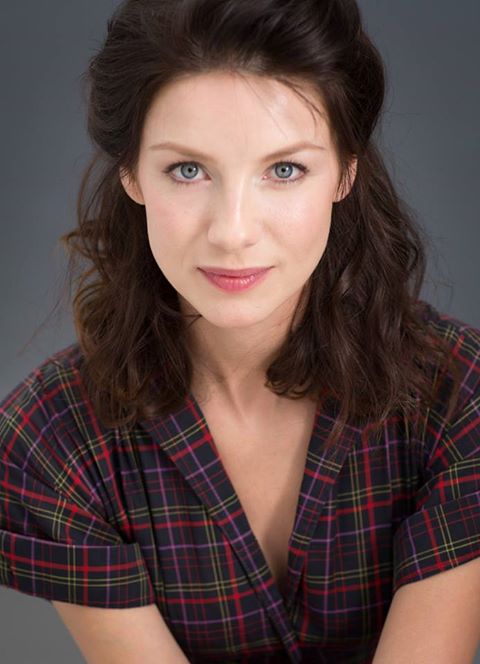
Big news in Outlander world today! After driving fans everywhere absolutely bonkers with all the waiting, Starz has just announced the casting of Claire in its upcoming Outlander TV series.

Say hello to Caitriona Balfe, our new Claire!

CF

I’ll have to take Diana Gabaldon’s word for it in terms of Caitriona’s acting abilities (quote from DG’s Facebook page:

yes, I saw her audition videos with Sam (they were _great_!)

… but she certainly has the right look! Beautiful, isn’t she? Who else is getting really excited about the series?

Outlander fans, what do you think?

Wishlist Wednesday: Longbourn by Jo Baker

Welcome to Wishlist Wednesday!

The concept is to post about one book from our wish lists that we can’t wait to read. Want to play? Here’s how:

  • Follow Pen to Paper as host of the meme.
  • Do a post about one book from your wishlist and why you want to read it.
  • Add your blog to the linky at the bottom of the post at Pen to Paper.
  • Put a link back to Pen to Paper somewhere in your post.
  • Visit the other blogs and enjoy!

My wishlist book this week is:

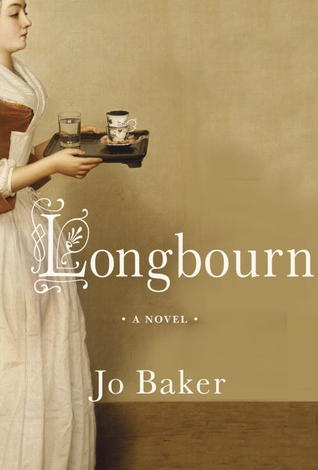
Longbourn

Longbourn by Jo Baker
(release date October 8, 2013)

From Goodreads:

Pride and Prejudice was only half the story •
 
If Elizabeth Bennet had the washing of her own petticoats, Sarah often thought, she’d most likely be a sight more careful with them.
 
In this irresistibly imagined belowstairs answer to Pride and Prejudice, the servants take center stage. Sarah, the orphaned housemaid, spends her days scrubbing the laundry, polishing the floors, and emptying the chamber pots for the Bennet household. But there is just as much romance, heartbreak, and intrigue downstairs at Longbourn as there is upstairs. When a mysterious new footman arrives, the orderly realm of the servants’ hall threatens to be completely, perhaps irrevocably, upended.

Jo Baker dares to take us beyond the drawing rooms of Jane Austen’s classic—into the often overlooked domain of the stern housekeeper and the starry-eyed kitchen maid, into the gritty daily particulars faced by the lower classes in Regency England during the Napoleonic Wars—and, in doing so, creates a vivid, fascinating, fully realized world that is wholly her own.

Why do I want to read this?

I’m a Pride and Prejudice fan, although I do usually try to avoid re-tellings, which mostly strike me as attempts to cash in without being terribly original. (Notable exceptions, for me, are Pride and Prejudice and Zombies and Death Comes to Pemberley — and in movies, Bride and Prejudice!) From the description, I’d say that Longbourn sounds a bit Downton Abbey-ish, with the focus on the happenings below stairs and how those crazy Bennet sisters create chaos for their mostly silent servants.

This strikes me as being a fresh approach to a familiar story, and I have high hopes for it! I’ve just received an ARC, which I plan to get to in the next few weeks, and I’m hoping Longbourn will be as fun and entertaining as it sounds.

What’s on your wishlist this week?

So what are you doing on Thursdays and Fridays? Come join me for my regular weekly features, Thursday Quotables and Flashback Friday! You can find out more here — come share the book love!

♥♥♥♥♥♥♥♥

Do you host a blog hop or book blog meme? Do you participate in a meme that you really, really love? I’m building a Book Blog Meme Directory, and need your help! If you know of a great meme to include — or if you host one yourself — please drop me a note on my Contact page and I’ll be sure to add your info!

A Bloggy Dilemma: Your opinion, please!

Many of you know that I started working on a Book Blog Meme Directory (see it here!) earlier this summer, and it’s growing and flourishing. I’m really excited about it, and have gotten some very nice words of feedback and encouragement. (Thank you!)

book heart2

Here’s my dilemma:

Several people have given me suggestions and referred me to memes that they’d like me to include — but the people providing this information are participants, not the hosts. In some cases, when I’ve reached out to the meme hosts, I’ve gotten nice replies and enthusiastic “yes, include me!” emails. But in other cases, I’ve gotten no replies at all.

What to do?

Here’s my question, and I’d love some input: Do you think it’s okay for me to add book blog memes to my directory based on participants’ info, or should I wait until I manage to get in touch with the meme host? Should I even bother tracking down the meme host, or just go ahead and update the directory with whatever info I’ve already been sent? If I try to contact a meme host and get no reply, should I assume they’re not interested? Or perhaps their spam filters ate my email?

On the one hand, I don’t want to list someone if they’re not okay with it. On the other hand, it’s not for a nefarious purpose — in fact, they’ll probably get some fresh new visitors to their blogs! I’ve gotten different responses from the few people I’ve asked about this issue so far, so I’m throwing it out there to the blogging world! Tell me what you think, and why… and I’ll be ever so grateful!

Besides seeing your poll responses, I’d really love to hear more. Can you tell me why you feel the way you do? Are there issues or concerns that I may have missed? Or am I overthinking this completely? Please leave me a comment!

Top Ten Tuesday: Top Ten Books I’d Love To See As Movies or TV Shows

fireworks2Top Ten Tuesday is a meme hosted by The Broke and the Bookish, featuring a different top 10 theme each week.

This week’s theme is Top Ten Books I’d Love To See As a Movie or TV Show (set in a perfect world… in which movies don’t butcher the books we love). It seems that every book gets gobbled up by Hollywood these days, so it’s a challenge to come up with ten that aren’t movies and most likely never will be movies… but heck yeah, I’d love to see a really wonderful and faithful movie adaptation of each one! Of course, as one of the pins I keep seeing on Pinterest says, in order to please me, the movie version would have to be 17 hours long and not leave out a single detail.

My top 10 choices for books that I’d love to see made into movies (but it’ll probably never happen) are:

1) The Sparrow by Mary Doria Russell: This book makes just about every one of my top 10 lists for one reason or another — and that’s because I love it so. I know it’s been optioned for film many a time (including a pick-up by Brad Pitt years ago), but it’s just never worked out. I think the author has now regained the movie rights and has worked on a screenplay, but it does seem unlikely that this beautiful book will ever make it to the big screen.

2) The Last Werewolf by Glen Duncan: The writing in this gory, violent book is intense and highly literate, and the entire book is at once a bloodfest and a cerebral, existential examination of life. I can’t imagine all of that translating well into a 2-hour movie and retaining any of its truly unique flavor.

3) Beauty Queens by Libba Bray. This book just cracked me up, and I think it would make an awesome movie! Teen beauty queens stranded on a desert island and having to figure out how to survive — while keeping their talent sharp just in case? Fantastic.

4) Codex Alera by Jim Butcher. The Codex Alera series is high fantasy with big splashes of humor, political infighting, and even some good love stories. I think it would make an epic TV series à la Games of Thrones.

5) A Discovery of Witches by Deborah Harkness. I’m not sure that a movie could truly capture the significance of the ancient documents and secret alchemical manuscripts — but I am sure that with the right casting, Matthew’s hotness would at least be true to the books.

6) The Parasol Protectorate series by Gail Carriger. Wouldn’t you just love to see the dirigibles, the lethal parasols, and the hats? I think this series would be amazing as either a series of movies or as an ongoing TV show. The costumes alone would make it spectacular!

7) The Blue Sword by Robin McKinley. This young adult masterpiece feels so cinematic to me, with dramatic sand dunes, horse chases, sword fights, and plenty of swoony love scenes as well. Please?

8) The Dovekeepers by Alice Hoffman. Hoffman’s retelling of the Masada story focuses on the women, and I could see it as a stunning showcase for four strong, talented actresses. Plus, beautiful scenery and tons of action sequences!

9) Breathers by S. G. Browne. Yes, I know zombies are everywhere these days, but this book manages to make zombies funny, sympathetic, and touching. I could see it working as a movie, provided that audiences aren’t completely burned out on the subject by now.

10) The Golden Compass by Philip Pullman. Okay, technically speaking, this one shouldn’t count, as there’s already been a movie. But what I want is a GOOD version of this book, one that really captures all the dynamics and nuances, not just a surface-level treatment that tries too hard to be accessible to children. Perhaps a six-part BBC mini-series that includes all three books? One can only hope.

Of course, if I really get going with books that need BETTER movie versions, there’d be no stopping me. And I suppose that would make its own great top 10 topic: the top 10 books that already have movie versions — but which deserve better!

What’s on your list this week?

If you enjoyed this post, please consider following Bookshelf Fantasies! And don’t forget to check out our regular weekly features, Thursday Quotables and Flashback Friday. Happy reading!

♥♥♥♥♥♥♥♥

Do you host a blog hop or book blog meme? Do you participate in a meme that you really, really love? I’m building a Book Blog Meme Directory, and need your help! If you know of a great meme to include — or if you host one yourself — please drop me a note on my Contact page and I’ll be sure to add your info!


The Monday Agenda 9/9/2013

MondayAgendaNot a lofty, ambitious to-be-read list consisting of 100+ book titles. Just a simple plan for the upcoming week — what I’m reading now, what I plan to read next, and what I’m hoping to squeeze in among the nooks and crannies.

After a busy week of travel through Alaska (gorgeous!), I’m back and ready to dig into my ever-growing pile of books!

How did I do with last week’s agenda?

Bring Up the Bodies (Thomas Cromwell, #2)The Shining (The Shining, #1)The Unlikely Pilgrimage of Harold FryBilly Lynn's Long Halftime Walk

Bring Up The Bodies by Hilary Mantel: Done! I read this all in one intense day of travel, and was just blown away. My review is here.

The Shining by Stephen King: Done! Re-reading this book after 20 years, I was reminded all over again of how great Stephen King is at what he does. I’m so glad I read this one again — now I feel ready for the release of Doctor Sleep later this month! Further thoughts to follow.

The Unlikely Pilgrimage of Harold Fry by Rachel Joyce: Done! My review is here.

Billy Lynn’s Long Halftime Walk by Ben Fountain: Just started, have read about 50 pages… and I think it’s going to be great.

The Last Battle by C. S. Lewis: Now that I’m back, my son and I are picking up where we left off.

Plus, I posted a review of a book I’d read earlier. If you missed it, check out my review of Tumble & Fall by Alexandra Coutts — a surprisingly lovely book about living through the last week of life on earth.

Fresh Catch:

Despite being on vacation, I managed to pick up two books at a used book store, plus a couple of Kindle deals:

The Lady ElizabethIn Cold BloodThe Husband's SecretThe Rithmatist (Rithmatist #1)

What’s on my reading agenda for the coming week?

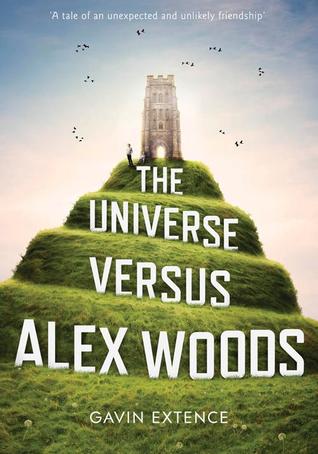
Billy Lynn's Long Halftime WalkThe Book of Lost Things (Mister Max #1)The Girl You Left BehindThe Universe Versus Alex Woods

First up, I need to finish Billy Lynn’s Long Halftime Walk, which I’m really enjoying so far.

Next, I plan to read a review copy of Mister Max: The Book of Lost Things by Cynthia Voigt. (For some reason, I keep thinking of this as Mad Max and visualizing a young Mel Gibson. No connection, I know, but there you have it.)

After that, I have a few more ARCs to get through, starting with either The Girl You Left Behind by Jojo Moyes or The Universe Versus Alex Woods by Gavin Extence.

Plus, I’m very eagerly awaiting the arrival of this new release later this week:

Fangirl

So many book, so little time…

That’s my agenda. What’s yours? Add your comments to share your bookish agenda for the week.

boy1

Book Review: The Unlikely Pilgrimage of Harold Fry by Rachel Joyce

Book Review: The Unlikely Pilgrimage of Harold Fry by Rachel Joyce

The Unlikely Pilgrimage of Harold FryIn this sentimental novel, retired brewery salesman Harold Fry lives a quiet life of routine and avoidance in a strained but long-lasting marriage with his wife Maureen — until a letter arrives out of the blue and changes everything. The letter is from a woman named Queenie Hennessy, a former coworker whom Harold has not seen or heard from in twenty years. Queenie writes to inform Harold that she is dying of cancer, and Harold — moved to tears — decides to write back.

But something odd happens along the way to the mailbox. Harold starts to feel that his response is inadequate, and so continues walking to the next mailbox, and then the next, while he thinks about what to say. After a random encounter with a young women working at a gas station, Harold becomes convinced that if he only has faith, he can make Queenie survive. And what better way to demonstrate his faith than to walk to see Queenie — in a town five hundred miles away. Harold sets out in his trousers, shirt, tie, and yachting shoes, with no maps and no cell phone, and starts his unlikely pilgrimage.

Harold is singularly unprepared and unqualified for such an adventure, and yet he perseveres:

Harold’s heel stung and his back ached, and now the soles of his feet were beginning to burn. Even the smallest flint caused him pain; he had to keep stopping to remove a shoe and shake it empty. From time to time, he also found that his legs buckled for no apparent reason, as if they had been jellied, causing him to stumble. His fingers were throbbing but maybe that was because they were not used to being swung back and forth in a downward direction. And yet, despite all this, he felt intensely alive. A lawn mower started up in the distance and he laughed out loud.

As he walks, he contemplates his life. His marriage to Maureen started out full of love and excitement, but the two have by now withered into a pair of cross-tempered people living around each other, not with each other. Harold thinks about his unremarkable career and his failures as a father and husband. At the heart of his problems with Maureen, it seems, is the prickly, uncomfortable relationship between Harold and their only son, David. We receive only hints at first, but over the course of the novel, we piece together more and more bits of information about David’s troubled youth and his ultimate estrangement from his parents, for which Maureen bitterly blames Harold.

Meanwhile, Harold walks, encountering strangers on the road and in the many towns through which he passes. People show him kindness, and in turn, Harold offers what he can, which is mainly his attention and a sympathetic ear. Little by little, he starts to revise his opinion of himself and his interpretation of the key events in his life. Harold starts to realize that he can make a difference, both by giving and by receiving, and his spontaneous, poorly-planned trek to see Queenie becomes more of a spiritual quest, and eventually, a movement that captures the popular imagination of the entire country.

It’s not until the final chapters that we find out why Queenie matters so much and what exactly happened to destroy Harold and Maureen’s previously happy life together. Let me tell you, when the secret of their past is finally revealed, it’s a doozy. (Unfortunately for me, I read this book on a plane — and there may have been some surreptitious wiping of tears going on…)

I found Harold Fry to be a thoroughly readable novel, sweeping me along from chapter to chapter through the various landmarks and roadways of Harold’s journey. Harold and Maureen are both good people who have suffered loss and deprivation, and it’s hard not to root for them. Harold’s pilgrimage is quixotic and seemingly random — after all, what makes him think that his walk can make the slightest bit of difference in a woman’s fight against terminal cancer? Yet, Harold is committed to his sense that he’s made a pledge and that, in seeing it through, he’s keeping Queenie alive.

Here’s my slight quibble with the book: Harold’s walk really makes no sense. If it’s so important for him to see Queenie, why not hop in a car or a train? (In fact, quite a few people suggest this to him along the way.) It does become clear that Harold himself is gaining a tremendous amount from his pilgrim’s journey, finding an inner peace and certainty that he’d lacked all these years. He believes that Queenie will wait for him, but he sure doesn’t make it easy, making detours, getting lost, and refusing comforts that might speed him along his way. It’s almost as if he doesn’t really want to reach his goal — the journey becomes the point, not the arrival. But as the key motivating factor in the main character’s actions, the cause and effect — walking = Queenie lives — doesn’t hold up to much poking. Likewise, Harold’s entire decision to walk is based on one brief (and imperfectly understood) conversation, and his certainty about his quest occurs so quickly that we as readers don’t have the opportunity to fully buy into his mission or even truly understand his rationale for doing it.

Still, logical or not, it’s the pilgrimage itself that matters. It’s part meditation, part atonement for a life full of missed connections and poorly communicated desires and emotions, and a very blatant metaphor for a man embarking on the road to change. Harold is aware that people may not understand, may even mock or think him too old for what he’s trying to do, but what counts is how Harold experiences the journey. Harold Fry is a man who sets out to make a difference, and somehow manages to prove that you’re never too old to start fresh and make a change.

It must be said, too, that for those of a more classical/literary bent, The Unlikely Pilgrimage of Harold Fry can be read as a modern version of the hero’s journey. The plot kicks off with a call to adventure, Harold experiences challenges and temptations, meets helpers and mentors, and goes through stages of revelation, transformation, and atonement before he is able to return to his regular life. If you’re so inclined, it’s an interesting exercise to match up elements of Harold’s pilgrimage with the hero’s journey and see how well it fits.

I had some misgivings, as I’ve said, about the fundamental purpose and thought process behind Harold’s pilgrimage — but that doesn’t mean that I wasn’t moved by it. We see a man doing what should be impossible, and that’s a wonderful thing. The relationship between Harold and Maureen feels very real, and Harold’s encounters along the road are funny and poignant, each offering a snippet of another life touched and perhaps changed by this ordinary man’s choices and actions.

Harold Fry is well-written and quick-paced, so that it was easy to polish it off during one concentrated day of reading. There’s plenty of food for thought here, and I was intrigued especially by the novel’s portrait of a marriage’s deterioration, which seemed spot-on in its depiction of the small hurts, misunderstandings, and judgments that if left uncorrected, can cause permanent damage.

I was afraid that this book would be mawkish or trite, but despite veering dangerously close to Hallmark-card sentiments in a few spots, overall The Unlikely Pilgrimage of Harold Fry is a thought-provoking, sweet but sad look at a life and at second chances.

__________________________________________

The details:

Title: The Unlikely Pilgrimage of Harold Fry
Author: Rachel Joyce
Publisher: Random House
Publication date: 2012
Genre: Contemporary fiction
Source: Purchased

Book Review: Bring Up The Bodies by Hilary Mantel

Book Review: Bring Up The Bodies by Hilary Mantel

Bring Up the Bodies (Thomas Cromwell, #2)Bring Up The Bodies is the second book in Hilary Mantel’s trilogy focusing on Thomas Cromwell, self-made man, advisor to King Henry VIII, and arguably the most powerful man in England during a brief period of the Tudor reign. The first book, Wolf Hall,  covers Cromwell’s rise to power and his role in Henry’s divorce of Katherine of Aragon and marriage to Anne Boleyn. Bring Up The Bodies traces Queen Anne’s fall from favor and her ultimate destruction, as viewed through the lens of Cromwell’s own role in the dramatic and controversial events.

This is ground well-covered through a myriad of history books, historical novels, and dramatizations, yet author Hilary Mantel finds a fresh angle. By using Thomas Cromwell as the point-of-view perspective for the story, we get a peek into the mind of one of England’s most enigmatic historical figures and at the same time see the court machinations through the eyes of someone who wields great power and yet is constantly an outsider due to low birth. As a result, we view Henry and Anne from a distance, and can only marvel at the deceit, treachery, and political maneuvers that form the daily texture of life in the Tudor palace. Bring Up The Bodies captures the events of the time and presents the ups and downs, the legal and political details, and the impact on the kingdom and its people in a way that breathes new life into the drama of these events.

Hilary Mantel’s writing is spectacular, as it was in Wolf Hall, with its own quirky rhythms and phrasings, and a use of language that is unparalleled in most modern fiction. Simple lines like:

The susurration, tapesty-muffled, of polyglot conversation.

… simply take my breath away. Quiet descriptions are powerfully conveyed in language that demands to be noticed:

And now night falls on Austin Friars. Snap of bolts, click of key in lock, rattle of strong chain across wicket, and the great bar fallen across the main gate. The boy Dick Purser lets out the watchdogs. They pounce and race, they snap at the moonlight, they flop under the fruit trees, heads on paws and ears twitching. When the house is quiet — when all his houses are quiet — then dead people walk about on the stairs.

Once again, it took me a few chapters to adapt to the author’s use of pronouns. Throughout the book, the word “he” almost always refers to Cromwell, even if the preceding reference is to someone else. Occasionally, but not always, the author will make it a bit clearer, using phrasing such as “He, Thomas Cromwell, shrugs.”

I could open to any page in this magnificent book and find an example of outstanding writing… so I’ll indulge and quote one more that captures, for me, the author’s unique style:

All summer has been like this, a riot of dismemberment, fur and feather flying; the beating off and the whipping in of hounds, the coddling of tired horses, the nursing, by the gentlemen, of contusions, sprains and blisters. And for a few days at least, the sun has shone on Henry.

I can’t say enough good things about Bring Up The Bodies — which, like its predecessor Wolf Hall, won the Man Booker Prize and many other accolades and awards. I absolutely want to read the third book in the trilogy, which I believe is expected to be published in 2015. Bring Up The Bodies is proof that even familiar subject matter can be new and exciting in the hands of a talented writer with a compelling vision.

I read Bring Up The Bodies all in one day, while enduring about 12 hours of travel time through three airports and two flights. It was an intense reading experience, but I’m glad I had the opportunity to consume this book without interruption. Whether or not you have enough hours to devote to a straight read-through or prefer to enjoy Hilary Mantel’s writing in smaller bites, if you appreciate beautiful language and a compelling plot, I think you’ll find Wolf Hall and Bring Up The Bodies well worth your time.

__________________________________________

The details:

Title: Bring Up The Bodies
Author: Hilary Mantel
Publisher: Picador
Publication date: 2012
Genre: Historical fiction
Source: Purchased