Book Review: The Beheading Game by Rebecca Lehmann

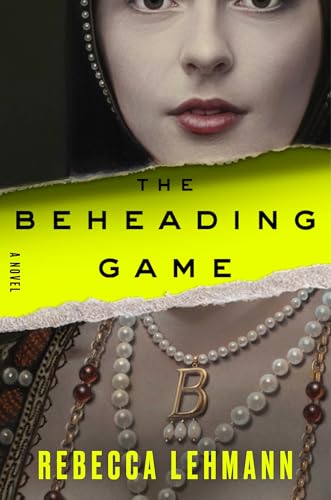
Title: The Beheading Game
Author: Rebecca Lehmann
Publisher: Crown
Publication date: March 26, 2026
Length: 320 pages
Genre: Historical fiction / alternate history
Source: Purchased
Rating:

Rating: 3.5 out of 5.

Disgraced. Beheaded. And out for revenge…

We all know what happened to Henry VIII’s second wife, Anne Boleyn. But what if she woke up the day after her execution and took it upon herself to seek justice?

“Nobody was surprised at Anne’s conviction. The world loves to put a woman in her place.”

The Beheading Game begins in the hours after Anne Boleyn’s beheading, when she wakes to find herself unceremoniously in an arrow chest, her head wrapped in linen at her knees. Discarded by King Henry VIII for not being able to give him a male heir, reviled by Cromwell for being too smart for her own good, and executed based on trumped-up charges, Anne escapes the tower, sews her head back on, and sets out on a quest for vengeance.

Traveling in the guise of a commoner, with the help of a prostitute, Anne navigates the London streets she never before walked and soon realizes how little she knew about life in the real world. If Kelly Link had teamed up with Hilary Mantel, the result might be The Beheading Game. An epic journey through the wilds of British royal history and a prescient reminder that “mouthy” women have always been punished, The Beheading Game finally allows one of history’s most maligned women a chance to tell her side of the story.

The Beheading Game has one of the most out-there approaches to telling the story of Anne Boleyn. In a nutshell: We all know that Anne was beheaded… but what if somehow she managed to survive? Not by avoiding the execution itself, but by managing to function (somewhat) normally afterward?

The Beheading Game opens soon after Anne’s execution, as she comes to awareness of herself, finds herself in a box, and realizes that the thing she’s feeling bumping the back of her head is her knee. She’s been beheaded, true, but she’s somehow still there. Getting herself out of the box, holding her head in front of her so she can see, she escapes the Tower, finds a boat to get herself across the Thames, and then proceeds to figure out what the hell is going on, and what her options are.

Holding her head the whole time is awkward, so Anne’s first order of business is to steal a sewing basket and reattach her head to her neck. Miraculously (or magically), her neck seals itself back together around her stitches, and she can once again breathe, eat, and drink. Covering the very obvious scar with a piece of silk belonging to her daughter Elizabeth (which she’d kept with her for her execution), Anne sets out to make her way through the poor sections of London. Her goal? Kill Henry before he can marry Jane Seymour, in order to make sure Elizabeth’s claim to the throne remains intact.

Anne’s privileged life as Queen does her little good in this new situation, as she’s wholly incapable of speaking civilly to ordinary people or fending for herself. Fortunately, she encounters a sympathetic prostitute named Alice who buys Anne’s story of being a noblewoman on the run from an abusive husband (true, after all!). Alice agrees to help Anne get back to the palace, and the two venture through dangerous streets and past suspicious guards to get Anne closer to her goal.

All this is the quest/adventure side of the story, fantastical in its own way, as the beheaded queen walks incognito through crowds of commoners, keeping her scar covered and attempting (not particularly successfully) to blend in. Magical elements and creatures come into play as well, as Anne receives assistance from unexpected sources.

At the same time, the story is told through Anne’s point of view, and so as her journey unfolds, we also hear her version of her early days, her courtship with Henry, her role in his divorce from Katherine, her string of miscarriages, and how the king ultimately chose to discard her in favor of a more pliable woman who (he hoped) might give him sons.

It’s fascinating to get this view of Anne’s life — to see her intelligence, her belief that Henry valued her opinions as well as her body, and her misplaced sense of permanence once she becomes Queen.

Why should she hide the light of her intelligence? Perhaps Henry’s greatest betrayal had been when he stopped loving her for her intellect and started hating her for it, when he started telling her to hold her tongue, not to speak out of turn, when he told her that she had one job, to make him a male heir, and until she did that she should shut her mouth, when he stopped visiting her in her chambers, stopped talking to her, stopped laughing at her witticisms, when he said to her, upon her anger over his affairs, “You must shut your eyes and endure as well as more worthy persons, and you ought to know that it is in my power to humble you again in a moment more than I have exalted you.” She had thought he was a different sort of man, a man who could recognize and receive her for her mind and spirit, not just for her body and the heirs it could produce. But she could see that she was wrong.

For me, the most engaging elements of this book were the sections devoted to Anne’s reminiscences — her memories of the glorious early days with Henry, the painful arguments and distance from him that came later, and of course, the bitter betrayal of being not only cast aside, but put to death, for the crime of being a woman whose husband no longer wanted her.

Of course, a beheaded and reanimated Anne Boleyn isn’t necessarily a reliable narrator. She’s angry, bitter, regretful, and frustrated. Even while realizing that her independent and outspoken nature contributed to her loss of favor with Henry and the dislike so many at court felt for her, she’s still quite adamant when it comes to her opinions about Katherine, the legitimacy of Henry’s first marriage, and much more.

The magical elements offer an entertaining hook, and the idea of a reanimated Anne Boleyn is truly bonkers. Still, I didn’t quite buy her dawning social justice awareness regarding royalty and nobility, or her ability to actually interact in any way with commoners. I also didn’t love the book’s ending, which dramatically rewrites history.

Overall, though, The Beheading Game is lively, unusual, and full of interesting twists, while also providing an interesting perspective on the actual Anne Boleyn’s life and death. Recommended for those with an interest in Tudors… so long as you don’t mind a bit of magical creativity added to to your historical fiction.

Reader’s note: Reading The Beheading Game left me hungry for a rewatch of The Tudors (and/or the musical Six). So I thought I’d close with a look at a few film and stage versions of Anne Boleyn:
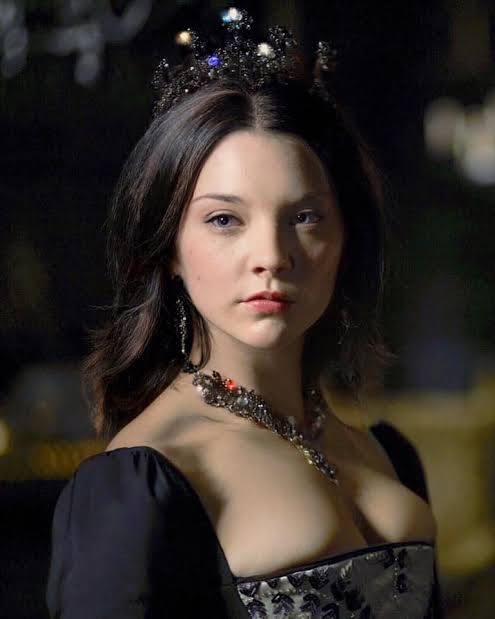

  • The Tudors (Natalie Dormer)
  • Six! The Musical
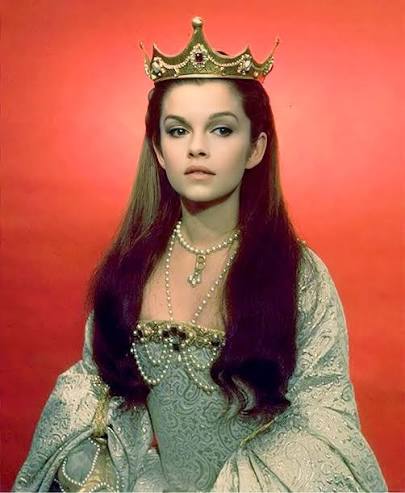
  • Anne of the Thousand Days (Genevieve Bujold)
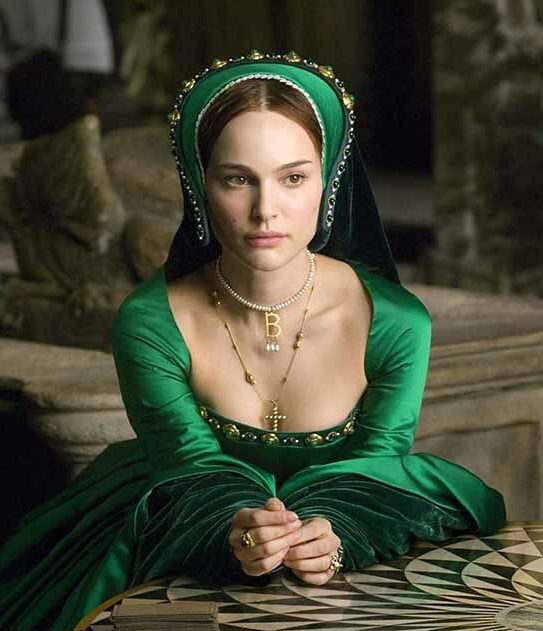
  • The Other Boleyn Sister (Natalie Portman)

For other reading about Anne Boleyn, I found this list, which has a few titles I’ve read already, and one or two I may want to explore (including Alison Weir’s historical novel Anne Boleyn: A King’s Obsession). Do you have any books about Anne Boleyn to recommend?

Purchase links: Amazon – Bookshop.org – Libro.fm
Disclaimer: When you make a purchase through one of these affiliate links, I may earn a small commission, at no additional cost to you.
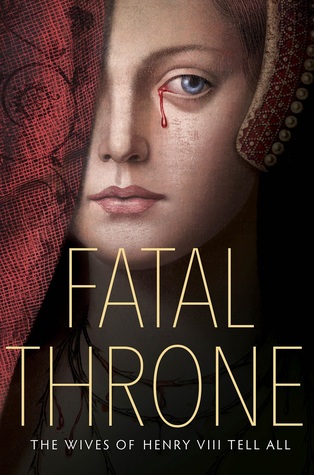
Book Review: Fatal Throne


The tragic lives of Henry VIII and his six wives are reimagined by seven acclaimed and bestselling authors in this riveting novel, perfect for fans of Wolf Hall and Netflix’s The Crown. 

He was King Henry VIII, a charismatic and extravagant ruler obsessed with both his power as king and with siring a male heir.

They were his queens–six ill-fated women, each bound for divorce, or beheading, or death.

Watch spellbound as each of Henry’s wives attempts to survive their unpredictable king and his power-hungry court. See the sword flash as fiery Anne Boleyn is beheaded for adultery. Follow Jane Seymour as she rises from bullied court maiden to beloved queen, only to die after giving birth. Feel Catherine Howard’s terror as old lovers resurface and whisper vicious rumors to Henry’s influential advisors. Experience the heartache of mothers as they lose son after son, heir after heir.

Told in stirring first-person accounts, Fatal Throne is at once provocative and heartbreaking, an epic tale that is also an intimate look at the royalty of the most perilous times in English history.

Who’s Who:

* M. T. Anderson – Henry VIII
* Candace Fleming – Katharine of Aragon
* Stephanie Hemphill – Anne Boleyn
* Lisa Ann Sandell – Jane Seymour
* Jennifer Donnelly – Anna of Cleves
* Linda Sue Park – Catherine Howard
* Deborah Hopkinson – Kateryn Parr

Let’s be clear about something right from the start: This is young adult fiction, written by a collection of YA authors and aimed at a teen reader audience. So, claiming in the blurb that this is a book for fans of Wolf Hall? Not exactly a true statement.

Fatal Throne is broken up into six first-person narratives, one for each queen and written by a different author, interspersed with Henry’s viewpoints on and reactions to each of his queens. The stories are kept brief and dramatic, following the highs and lows of each marriage, each leading inevitably to a disaster of one sort or another.

While each queen is written by a different author, there’s a certain sameness to the tone. Without knowing it ahead of time, I wouldn’t have necessarily been able to tell that there were different writers for each piece of the story.

As for the stories themselves, they’re fast-paced and interesting, but I can’t say that they reveal anything particularly new or different. Here’s where I feel it’s important to again stress the intended audience. For YA readers who are unfamiliar with anything but the basics of these historical figures’ lives, the presentation of the queen’s lives through their own voices could be a very compelling way to get immersed in their stories and learn more about the women behind the throne.

But for anyone who’s already read either non-fiction or historical fiction accounts of Henry VIII and his six wives, Fatal Throne is merely a retread of very familiar events, people, and historical speculation.

Of the six queens, the presentation of Anna of Cleves here is perhaps the most interesting, showcasing her inner strength and her ultimate triumph in regaining control over her own life. The others are, of course, all tragic in their own ways. Catherine Howard is a touch more sympathetic than I’ve seen in other portrayals — here, she’s a silly 16-year-old who simply doesn’t grasp the significance of her own actions or where they could lead. Anne Boleyn, as always, is a fascinating woman, although some of her rough edges are smoothed out just a bit in Fatal Throne.

I did end up enjoying the book for its quick pace and dramatic approach to the storytelling, but in terms of true depth, an examination of the historical records, or new insights, there are plenty of other books I’d sooner recommend. That said, this could be a good entry point for a YA reader without prior familiarity with the subject matter.

_________________________________________

The details:

Title: Fatal Throne
Author: See synopsis for list
Publisher: Schwartz & Wade
Publication date: May 1, 2018
Length: 416 pages
Genre: YA historical fiction
Source: Library

**Save

Save

Save

Save

Save

Save

Save

Book Review: Bring Up The Bodies by Hilary Mantel

Book Review: Bring Up The Bodies by Hilary Mantel

Bring Up the Bodies (Thomas Cromwell, #2)Bring Up The Bodies is the second book in Hilary Mantel’s trilogy focusing on Thomas Cromwell, self-made man, advisor to King Henry VIII, and arguably the most powerful man in England during a brief period of the Tudor reign. The first book, Wolf Hall,  covers Cromwell’s rise to power and his role in Henry’s divorce of Katherine of Aragon and marriage to Anne Boleyn. Bring Up The Bodies traces Queen Anne’s fall from favor and her ultimate destruction, as viewed through the lens of Cromwell’s own role in the dramatic and controversial events.

This is ground well-covered through a myriad of history books, historical novels, and dramatizations, yet author Hilary Mantel finds a fresh angle. By using Thomas Cromwell as the point-of-view perspective for the story, we get a peek into the mind of one of England’s most enigmatic historical figures and at the same time see the court machinations through the eyes of someone who wields great power and yet is constantly an outsider due to low birth. As a result, we view Henry and Anne from a distance, and can only marvel at the deceit, treachery, and political maneuvers that form the daily texture of life in the Tudor palace. Bring Up The Bodies captures the events of the time and presents the ups and downs, the legal and political details, and the impact on the kingdom and its people in a way that breathes new life into the drama of these events.

Hilary Mantel’s writing is spectacular, as it was in Wolf Hall, with its own quirky rhythms and phrasings, and a use of language that is unparalleled in most modern fiction. Simple lines like:

The susurration, tapesty-muffled, of polyglot conversation.

… simply take my breath away. Quiet descriptions are powerfully conveyed in language that demands to be noticed:

And now night falls on Austin Friars. Snap of bolts, click of key in lock, rattle of strong chain across wicket, and the great bar fallen across the main gate. The boy Dick Purser lets out the watchdogs. They pounce and race, they snap at the moonlight, they flop under the fruit trees, heads on paws and ears twitching. When the house is quiet — when all his houses are quiet — then dead people walk about on the stairs.

Once again, it took me a few chapters to adapt to the author’s use of pronouns. Throughout the book, the word “he” almost always refers to Cromwell, even if the preceding reference is to someone else. Occasionally, but not always, the author will make it a bit clearer, using phrasing such as “He, Thomas Cromwell, shrugs.”

I could open to any page in this magnificent book and find an example of outstanding writing… so I’ll indulge and quote one more that captures, for me, the author’s unique style:

All summer has been like this, a riot of dismemberment, fur and feather flying; the beating off and the whipping in of hounds, the coddling of tired horses, the nursing, by the gentlemen, of contusions, sprains and blisters. And for a few days at least, the sun has shone on Henry.

I can’t say enough good things about Bring Up The Bodies — which, like its predecessor Wolf Hall, won the Man Booker Prize and many other accolades and awards. I absolutely want to read the third book in the trilogy, which I believe is expected to be published in 2015. Bring Up The Bodies is proof that even familiar subject matter can be new and exciting in the hands of a talented writer with a compelling vision.

I read Bring Up The Bodies all in one day, while enduring about 12 hours of travel time through three airports and two flights. It was an intense reading experience, but I’m glad I had the opportunity to consume this book without interruption. Whether or not you have enough hours to devote to a straight read-through or prefer to enjoy Hilary Mantel’s writing in smaller bites, if you appreciate beautiful language and a compelling plot, I think you’ll find Wolf Hall and Bring Up The Bodies well worth your time.

__________________________________________

The details:

Title: Bring Up The Bodies
Author: Hilary Mantel
Publisher: Picador
Publication date: 2012
Genre: Historical fiction
Source: Purchased