Flashback Friday: The All-of-a-Kind Family series

Flashback Friday is my own little weekly tradition, in which I pick a book from my reading past to highlight — and you’re invited to join in!

Here are the Flashback Friday book selection guidelines:

  1. Has to be something you’ve read yourself
  2. Has to still be available, preferably still in print
  3. Must have been originally published 5 or more years ago

Other than that, the sky’s the limit! Join me, please, and let us all know: what are the books you’ve read that you always rave about? What books from your past do you wish EVERYONE would read? Pick something from five years ago, or go all the way back to the Canterbury Tales if you want. It’s Flashback Friday time!

My pick for this week’s Flashback Friday:

All-of-a-Kind Family (All-of-a-Kind Family, #1)

All-of-A-Kind Family by Sydney Taylor

(published 1951)

Synopsis:

There’s something to be said for a book that makes you wish you’d been part of a poor immigrant family living in New York’s lower east side on the eve of World War I. Sydney Taylor’s time-honored classic does just that. Life is rich for the five mischievous girls in the family. They find adventure in visiting the library, going to market with Mama, even dusting the front room. Young readers who have never shared a bedroom with four siblings, with no television in sight, will vicariously experience the simple, old-fashioned pleasures of talk, make-believe, and pilfered penny candy. The family’s Jewish faith strengthens their ties to each other, while providing still more excitement and opportunity for mischief. Readers unfamiliar with Judaism will learn with the girls during each beautifully depicted holiday. This lively family, subject of four more “all-of-a- kind” books, is full of unique characters, all deftly illustrated by Helen John. Taylor based the stories on her own childhood family, and the true-life quality of her writing gives this classic its page-turning appeal.

There are five books in Sydney Taylor’s lovely, heart-warming, classic series:

  • All-of-a-Kind Family (1951)
  • More All-of-a-Kind Family (1954)
  • All-of-a-Kind Family Uptown (1958)
  • All-of-a-Kind Family Downtown (1972)
  • Ella of All-of-a-Kind Family (1978)

Through these books, we meet the five sisters and their parents, and get a sweet and savory view of life on the Lower East Side of New York in the early 1900s. The girls live in close quarters, bicker and play, make up stories and get into trouble, and learn important (but not overly preachy) lessons along the way.  The very first chapter in the first book is about the hugely important weekly trip to the library — and between the lovely library lady and the emphasis on having great books to read, it’s a great way to start! Another chapter is about dusting (!!) — and it really is the stuff of legends, for kids who grew up with these books. In order keep dusting fun (I can’t believe I’m writing this…), the girls’ mother hides buttons that they can only find by cleaning super-carefully.

And now I’m praising a book that has us thinking housework is delightful. So not me. But I digress.

library aoakf

The library scene from All-of-a-Kind Family, illustrated by Helen John

The All-of-a-Kind Family books are memorable for the wonderful and distinctive characters, the upbeat look at life in a relatively poor immigrant neighborhood, the non-sentimental view of some of the era’s hardships, and the positive portrayal of life in an American Jewish family. With penny candy stores, Coney Island, pickles, Fourth of July celebrations, and later, very circumspect parties and dating rituals, the books are at once of historical interest and human interest. I think, as a kid reading these books, I didn’t think about the history too much — I was too busy siding with the different girls in their squabbles and plans, worrying about them getting caught when they got into mischief, and wishing I lived in a house full of girls.

So talk about a flashback! The All-of-a-Kind Family series was a huge part of my childhood. My sister and I pored over these books as kids, reenacting key scenes (the button search was a special favorite!) and in general maintaining a fascination with the five sisters. (Ella, we agreed, was glamorous; Henny, on the other hand, was a big trouble-maker — although looking back from the adult perspective, she also probably had the most gumption of the lot!)

Later on, I found myself returning to these books. As a summer camp counselor, I would read a chapter a night to my girls, who despite being almost too cool during the day, really craved the connection these stories offered at bedtime. And still later, the All-of-a-Kind Family books were read-aloud favorites for my daughter and me.

In a way, these books are like a Jewish parallel to the Little House books by Laura Ingalls Wilder. In each, we see a family’s challenges over the course of many years and many books, set in a particular point in America’s history — but written in such a way that kids today won’t feel like they’re being taught, as they’ll be too busy being entertained by the characters’ antics and adventures. In both series as well, the fictional characters are directly based on the authors’ own lives, and perhaps that ring of authenticity is what helps bring these books, with their detailed descriptions of daily life and routines, into such rich and resounding life.

Did you read the All-of-a-Kind Family books as a kid?

And have you ever, for even a second, believed that dusting is fun?

Happy Friday, and enjoy your flashbacks!

♥♥♥♥♥♥♥♥

Do you host a book blog meme? Do you participate in a meme that you really, really love? I’m building a Book Blog Meme Directory, and need your help! If you know of a great meme to include — or if you host one yourself — please drop me a note on my Contact page and I’ll be sure to add your info!

Thursday Quotables: How To Be a Good Wife

quotation-marks4

Welcome back to Thursday Quotables! This weekly feature is the place to highlight a great quote, line, or passage discovered during your reading each week.  Whether it’s something funny, startling, gut-wrenching, or just really beautifully written, Thursday Quotables is where my favorite lines of the week will be, and you’re invited to join in!

This week’s Thursday Quotable:

Today, somehow, I am a smoker.

I did not know this about myself. As far as I remember, I have never smoked before.

How To Be a Good Wife

Source: How To Be A Good Wife
Author: Emma Chapman
St. Martin’s Press, 2013

What a terrific start to a book about memories and mysteries. If the main character doesn’t know that she’s a smoker, what else doesn’t she know? These opening lines were enough to get me hooked.

What lines made you laugh, cry, or gasp this week? Do tell!

If you’d like to participate, it’s really simple:

  • Write a Thursday Quotables post on your blog. Try to pick something from whatever you’re reading now. And please be sure to include a link back to Bookshelf Fantasies in your post (http://www.bookshelffantasies.com), if you’d be so kind!
  • Click below (next to the cute froggy face) to link up your post! And be sure to visit other linked blogs to view their Thursday Quotables too.
  • Have a quote to share but not a blog post? Leave your quote in the comments.
  • Have fun!

Wishing & Waiting on Wednesday

Nothing like a Wednesday for thinking about the books we want to read! My Wishing & Waiting on Wednesday post is linking up with two fabulous book memes, Wishlist Wednesday (hosted by Pen to Paper) and Waiting on Wednesday (hosted by Breaking the Spine).

This week, I’m excited about an upcoming YA release:

Roomies

Roomies by Sara Zarr & Tara Altebrando
(release date December 24, 2013)

Synopsis:

The countdown to college has begun.

When Elizabeth receives her freshman-year roommate assignment at the beginning of summer, she shoots off an email to coordinate the basics: TV, microwave, mini-fridge. She can’t wait to escape her New Jersey beach town, and her mom, and start life over in California.
The first note to Lauren in San Francisco comes as a surprise; she had requested a single. But if Lauren’s learned anything from being the oldest of six, it’s that you can’t always get what you want, especially when what you want is privacy.
Soon the girls are emailing back and forth, sharing secrets even though they’ve never met. With family relationships and childhood friendships strained by change, it suddenly seems that the only people Elizabeth and Lauren can rely on are the complicated new boys in their lives…and each other.
With humor and heart, Sara Zarr, National Book Award finalist for Story of a Girl, and Tara Altebrando, acclaimed author of The Pursuit of Happiness, join forces for a novel about that time after high school, when everything feels like it’s ending just as it’s beginning.

This sounds like a lot of fun, doesn’t it?

Freshman year of college is such a major transitional time, and it’s always interesting to me to see how it’s portrayed in fiction. (Recent great examples include Fangirl by Rainbow Rowell and Just One Day by Gayle Forman).

True confession time: My freshman roommate experience was NOT a good one — so maybe it’s time to read about one that starts off on a more positive note!

What are you wishing for this Wednesday?

So what are you doing on Thursdays and Fridays? Come join me for my regular weekly features, Thursday Quotables and Flashback Friday! You can find out more here — come share the book love!

♥♥♥♥♥♥♥♥

Do you host a book blog meme? Do you participate in a meme that you really, really love? I’m building a Book Blog Meme Directory, and need your help! If you know of a great meme to include — or if you host one yourself — please drop me a note on my Contact page and I’ll be sure to add your info!

Top Ten (OK, make that 5) Tuesday: What’s In A Name?

fireworks2

Top Ten Tuesday is a meme hosted by The Broke and the Bookish, featuring a different top 10 theme each week. This week’s topic is Top Ten Character Names I Love or Top Ten Unusual Character Names.

I especially get a kick out of long, weird, or silly names. I had a hard time coming up with ten different characters, but then I decided to shift my focus a bit to fictional worlds with amazing character names — and also decided not to worry about counting to ten. 

Here are five favorite worlds, and some of the amazing names you’ll find there:

1) The worlds of Gail Carriger are filled with truly terrific character names:

From The Parasol Protectorate series:

  • Ivy Hisselpenny
  • Major Channing Channing of the Chesterfield Channings
  • Felicity Loontwill

And from the Finishing School series:

  • Sophronia Temminnick
  • Mrs. Barnaclegoose
  • Dimity Ann Plumleigh-Teignmott
  • Agatha Woosmoss
  • Lord Dingleproops
  • And the adorable Bumbersnoot!

2) From the twisted mind of Christopher Moore, we have:

  • Biff (from Lamb: The Gospel According to Biff, Christ’s Childhood Pal)
  • Abby Normal (You Suck and Bite Me)
  • Minty Fresh (Coyote Blue and A Dirty Job)
  • Steve (The Lust Lizard of Melancholy Cove; Steve is the title character!)

3) In the Harry Potter universe, I love the names that are fun to say:

  • Bellatrix Lestrange
  • Severus Snape (and actually, fun to sing, especially if you’re a fan of Potter Puppet Pals)
  • Minerva McGonagall
  • Filius Flitwick
  • Aberforth Dumbledore

Stop me! I could go on and on with this one…

4) From A Song of Ice and Fire by George R. R. Martin:

This one is really more of a title, I suppose, but I just love every time she announces herself and the title has gotten even longer. The one, the only:

  • Daenerys Stormborn of House Targaryen, the Unburnt, Mother of Dragons, Khaleesi, Queen of the Seven Kingdoms of Westeros, Breaker of Shackles, Queen of Meereen. And so on. (There’s probably more that I’ve left out!)

5) And just because. Because no list is complete without an Outlander salute:

  • James Alexander Malcolm McKenzie Fraser

Okay, I recognize that this is not at all a top 10 list… more like a top 5 list with a bunch of details… but this is what I came up with!

What fabulous character names do you love? Got any particular long, glorious names that I should know about? And do you know of any more titles for Daenerys?  Please share!

If you enjoyed this post, please consider following Bookshelf Fantasies! And don’t forget to check out our regular weekly features, Thursday Quotables and Flashback Friday. Happy reading!

♥♥♥♥♥♥♥♥

Do you host a book blog meme? Do you participate in a meme that you really, really love? I’m building a Book Blog Meme Directory, and need your help! If you know of a great meme to include — or if you host one yourself — please drop me a note on my Contact page and I’ll be sure to add your info!

 

Recently Read: The Incrementalists by Steven Brust and Skyler White

The Incrementalists by Steven Brust and Skyler White

The Incrementalists

The Incrementalists—a secret society of two hundred people with an unbroken lineage reaching back forty thousand years. They cheat death, share lives and memories, and communicate with one another across nations, races, and time. They have an epic history, an almost magical memory, and a very modest mission: to make the world better, just a little bit at a time. Their ongoing argument about how to do this is older than most of their individual memories.

Phil, whose personality has stayed stable through more incarnations than anyone else’s, has loved Celeste—and argued with her—for most of the last four hundred years. But now Celeste, recently dead, embittered, and very unstable, has changed the rules—not incrementally, and not for the better. Now the heart of the group must gather in Las Vegas to save the Incrementalists, and maybe the world.

My reaction:

I’ve been fascinated by the concept behind The Incrementalists since I first stumbled across a “coming soon” mention of it several months ago. In fact, back in July, this was one of my Wishlist Wednesday selections, and I was really excited to finally get my hands on a copy.

So did it live up to my expectations?

Yes and no.

I’m reminded of the line from Julius Caesar (oh, shush, stop rolling your eyes at me just because I’m quoting Shakespeare!): “The fault, dear Brutus, is not in our stars but in ourselves…”

In the case of The Incrementalists, I think the fact that this book didn’t entirely work for me is less about the book itself than about me.

Me, me, me… and now I sound incredibly self-centered. It’s all about me!

But seriously… I think I expected much more of a paranormal thriller of some sort. Secret societies! Shared memories! Cheating death! But that’s not really what The Incrementalists is.

Instead, it’s a smart, intellectual science fiction brain-teaser centered almost entirely around something called The Garden, an “exo-brain” or virtual world that all Incrementalists can access mentally. It’s a non-material space in which Incrementalists can store (or “seed”) their memories, then invite other members of the group to “graze” their “seeds”. When an Incrementalist’s body dies, the others choose a new “Second” to receive the deceased’s “stub” — his or her essence, which will then basically fight the recipient’s personality for dominance until the weaker personality is integrated into the stronger. In this way, the personalities live on in an unbroken chain for hundreds or even thousands of years, being “spiked” into new bodies whenever needed.

The terminology of the Incrementalists includes terms like “switches”, “pivots”, and “sugar spoons”, and just boggled my mind after a while. While the plot is fast-paced and included some really clever and unusual characters, I often felt that I was missing something.

More about me — I consider myself a fairly smart reader and it’s not often that I feel that I can’t keep up. The Incrementalists made me feel like a cave-dweller at times. As the virtual worlds — and virtual chase scenes — became more and more complex, I increasingly felt like I was losing the plot thread and didn’t understand what was going on.

Which was frustrating. Because I like The Incrementalists quite a bit, and especially liked main characters Phil and Ren. Their story and their growing relationship was marvelous and tricky and intellectual and challenging. And yet, I finished the book feeling like I’d only understood a portion of the details, and while I got the big picture, I couldn’t tell you exactly why it had worked out the way it did, or even what specifically had transpired.

To sum it all up: For someone who enjoys virtual worlds, artificial intelligence and constructs, symbols and multiple realities, this would probably be a great choice. It’s certainly not your run-of-the-mill thriller, and it definitely will send your brain into overdrive. I do think The Incrementalists is quite a good book. I just think that perhaps I wasn’t the right reader for it.

__________________________________________

The details:

Title: The Incrementalists
Author: Steven Brust and Skyler White
Publisher: Tor/Forge
Publication date: 2013
Genre: Science Fiction
Source: Review copy courtesy of Tor/Forge via NetGalley

The Monday Agenda 10/21/2013

MondayAgendaNot a lofty, ambitious to-be-read list consisting of 100+ book titles. Just a simple plan for the upcoming week — what I’m reading now, what I plan to read next, and what I’m hoping to squeeze in among the nooks and crannies.

How did I do with last week’s agenda?

What with one thing and another, it’s been a pretty slow (but fun) reading week:

Longbournbad housesincrementalists

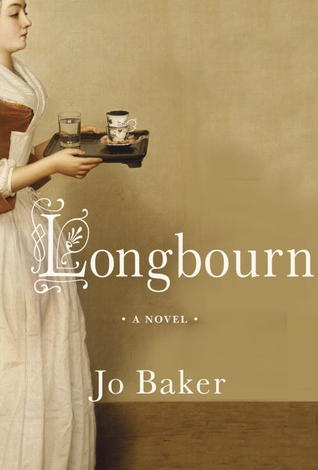
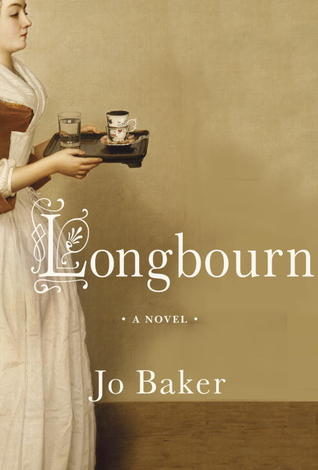
Longbourn by Jo Baker: Done! I loved this inside-out look at the world of Pride and Prejudice, as told from the perspective of the Bennets’ servants. My review is here.

Bad Houses by Sara Ryan and Carla Speed McNeil: Done! A quick and engaging graphic novel. My preview of this upcoming new release is here.

The Incrementalists by Steven Brust and Skyler White: Still reading — about 70 pages to go. A lot of the virtual reality stuff is going pretty much over my head, but it’s still interesting and puzzling enough for me to keep going and see if I can make it all make sense.

The Expeditioners by S. S. Taylor: My read-aloud book with my son — going great! I think we have another week or two to go.

Fresh Catch:

I’m still trying to be good and stick to the plan of finishing off all my current (and a teeny bit late) review books before digging into all the new books begging to be read. Meanwhile, two of my requests came in at the library this week:

The Rosie ProjectRASL

Two very different books, but I’m looking forward to both!

What’s on my reading agenda for the coming week?

Still sticking with my commitment to focus on review copies, this week I’ll be reading:

incrementalistsgood wife
Reality BoyParasite (Parasitology, #1)

First, I’ll be trying to finish up with The Incrementalists. And after that, I have a few more books lined up that I’m excited about:

  • How To Be a Good Wife by Emma Chapman
  • Reality Boy by A. S. King
  • Parasite by Mira Grant

I realize that I’m being overly ambitious and probably completely unrealistic in thinking that I’ll make it through four books this week… but hey, a reader can dream, can’t she?

So many book, so little time…

That’s my agenda. What’s yours? Add your comments to share your bookish agenda for the week.

boy1

Book Review: Longbourn by Jo Baker

Book Review: Longbourn by Jo Baker

longbournThose Bennet girls! What a delight to be around them! But do you think the servants found them all quite so lovely? In Longbourn, we find out.

Longbourn is Pride and Prejudice turned upside down… or rather, as viewed from below-stairs. I think every blurb I’ve seen about Longbourn so far has described it as “Downton Abbey meets Pride and Prejudice“, and that’s a fairly good place to start.

In Longbourn, maidservant Sarah is our main point-of-view character. Sarah has been in service to the Bennet family since she was a small girl, and while we readers of P&P all probably share a rather rosy view of the Bennet’s idyllic country life, it’s not quite as pretty when presented by Sarah. Through Sarah, we see what it really takes to run a household of that nature — laundry days, incessant scrubbing, tending to the girls’ bodily needs, turning pig fat into soap. Author Jo Baker doesn’t shy away from the nastier bits, and there are plenty.

It’s all very well to admire Elizabeth Bennet for her pluck and adventurous streak, but as Sarah ruminates:

If Elizabeth had the washing of her own petticoats, Sarah often thought, she’d most likely be a sight more careful with them.

In P&P, all is managed. Dirty clothes are taken care of. We never hear about chamber pots or dirty dishes, sweaty clothing or soiled sheets. In Longbourn, these are all the stuff of daily life. Through the effluvia of the Bennet household, the serving staff get to know the family intimately, and while it’s agreed that they are a decent sort to work for, it’s still shocking as a P&P fan to realize the utter cluelessness that the girls have regarding what a servant’s life is really like.

Even wonderful Elizabeth — so beloved by all of us! — comes across as unaware at best or insensitive at worst, as her interactions with Sarah make clear that Sarah’s life is of no concern. Not that Elizabeth has harsh feelings toward Sarah — just that it doesn’t really occur to her that Sarah has feelings or issues of her own to deal with.

Besides the household muck and mire, we see the country in quite different terms than in P&P as well. Yes, the important families and estates have their dinners and balls… but in the town, there are people going hungry, young men are enlisted to fight in pointlessly brutal foreign wars, and meanwhile the local garrison of the militia strut around like heroes while conducting their dirty business elsewhere. We may think of pretty BBC productions when we think of the Regency era, but in Longbourn, that pretty illusion is shattered. Make no mistake, this was not an easy time to live in without family money and connections, and the lives of the working class are not to be envied. Even for Mr. and Mrs. Hill, long established as head of the Longbourn staff and considered to hold a very desirable place in the household, it’s clear that this is not a comfortable or secure life.

The lives of the servants are harsh and yet full of vitality. They are not shielded by manners and customs from the realities of their world. Matters such as fashion and reputation and whispers and inheritances are of small matter to people whose future security rests entirely on the whims of those they serve, who can be turned out at any moment into a world in which decent work is scarce, and whose ability to even secure a position is completely dependent on the willingness of a former employer to provide a reference. Seen through the servants’ eyes, the possible tarnishing of a young lady’s reputation is small potatoes compared to the specter of starvation and homelessness.

Interestingly, for me Longbourn is at its strongest when it goes “off-book” entirely. The third section of Longbourn goes outside of the confines of the P&P world and explores the lives, secrets, and histories of the Longbourn characters in a way that’s completely unrelated to P&P. I loved this part of the book the most. The characters really feel alive to me here, and perhaps they need this extra freedom from the original story in order to become fully formed, with purposes and hidden desires of their own.

Jo Baker clearly knows P&P inside and out, and as she explains in the author’s note: “When a meal is served in Pride and Prejudice, it has been prepared in Longbourn. When the Bennet girls enter a ball in Austen’s novel, they leave the carriage waiting in this one.” It’s fascinating to page back through P&P at random and find all of these points of intersection — the meals, the guests arriving at the door, the gowns fetched and fluffed — and seeing the work involved on the part of the Longbourn servants to make all of these things happen.

The writing in Longbourn is simply splendid, both in passages exposing the darker side of the pretty pictures we’re used to from Austen’s world and in simple sentences that convey quite a bit about the Bennets and the servants alike:

Some of my favorites:

Jane and Elizabeth confided with each other in anxious virginal huddles, whispering over letters, scandalized by the gossip that was now leaking back to them.

And another:

Life was, Mrs. Hill had come to understand, a trial by endurance, which everybody, eventually, failed.

And one more:

The house was all up and down and front and back, and nothing sideways to it at all.

Sarah is the main character, but we also read sections told from the perspectives of footman James, Mr. and Mrs. Hill, and the small serving-girl Polly. Sarah is a strong, smart, determined, and utterly wonderful main character, and James too becomes completely fascinating as we get to know him better. Early on in the book, the shifting voices are a bit jarring, but as Longbourn progresses and we get to know each one on their own, the story is enhanced by allowing readers to see  unfolding events through different eyes — especially as each character often has access to a different piece of the puzzle, and so a fuller picture emerges as we witness multiple views of the people and actions involved.

Jo Baker is very faithful to the overall characterizations of the Bennets and their associates, although Mr. Bennet comes off in a less favorable light, and surprisingly, Mrs. Bennet and Mr. Collins are both much more sympathetic. In fact, I doubt that I’ll ever allow myself to feel my usual scorn for Mrs. Bennet, now that Jo Baker has given me a quite plausible (and sad) explanation for how she ended up the way she is.

Overall, I’d say that there’s a lot to love about Longbourn. P&P afficionados will be pleased by the respect shown by the author toward Austen’s original text — and yet she also doesn’t hesitate to pull back the curtains and show us what else might be going on in this familiar world.

Longbourn certainly stands on its own outside of the shadow of Pride and Prejudice. In fact, I could see the story of Sarah and the serving class making a fine novel without needing the framework of P&P — although undoubtedly the connection to P&P will help tremendously with the marketing and publicity for Longbourn.

While I enjoyed the brief glimpses of the Bennets (and even Mr. Darcy, who makes only fleeting appearances in this book), Longbourn‘s main characters are compelling and their struggles and challenges held me captive. I didn’t need to see Elizabeth and Jane and the Bingleys — I had Sarah and James, and they’re pretty spectacular.

__________________________________________

The details:

Title: Longbourn
Author: Jo Baker
Publisher: Knopf
Publication date: 2013
Genre: Historical fiction
Source: Review copy courtesy of Knopf via Edelweiss

Bloggy Drama: Or, Wait! That’s Not What I Meant!

mark-25527_150I haven’t been able to shake a recent incident that relates to blogging, so I thought I’d write about it and see if anyone can help me find some new insights.

In a nutshell:

Within the last couple of weeks, I received an email from a blogger who I’d never encountered before (and whose blog I wasn’t familiar with). She was writing to say that she was thinking of starting a regular feature with the same name as something that I do, and wanted to know my thoughts. In fact, she asked if it would be okay with me.

I responded, and thanked her for contacting me. Since she’d asked (I said), I told her that I’d prefer if she didn’t do the exact same thing as I did, and said that since I head-37512_150did have this feature up and running, I’d love to have her join in. I mentioned my preferences, and added something that others have told me when I’ve reached out for an opinion: It’s your blog, so in the end you should do what works best for you.

I also — and perhaps here’s where I went wrong — mentioned that I have a book blog meme directory page. My impression was that she was interested in starting up a meme, and so I basically said, hey, if you’re interested, check this out — there are a lot of bloggers doing some pretty cool stuff, in case you want to see what’s already out there.

I closed with thanks — again — for contacting me.

And that was it. Do you see a problem yet? In case there’s any doubt, let me just say that I was sincere in saying that I thought it was nice of her to contact me — and since she’d asked my opinion, I didn’t see anything wrong with giving one. My intentions were all good, I swear.

And then…

I got an email back, and it was fairly awful. I was told that my email was condescending, that she’d been blogging for a lot longer than I had, that she was not impressed at all, that I didn’t seem to have as many followers as (it was implied) she does, and that she’d heard of all of the memes in my directory except mine. Furthermore, she told me, she hadn’t really needed to contact me to begin with and now she wishes she hadn’t.

smiley-150651_150I felt terrible. And completely misunderstood. And kind of attacked. And at the same time a teensy bit thankful that I’d made it almost to a year and a half as a blogger before getting an email that made me feel this lousy.

So, I wrote back. I told her that perhaps my intentions hadn’t been conveyed in my email — maybe my tone hadn’t carried through — and that I was sorry to have caused offense. I assured her that I did not feel condescending nor had I intended to sound that way, and also expressed confusion over what I had said that would be interpreted that way. I stated, again, that I respect her (and everybody’s) right to do whatever they want with their own blogs. I wrapped up by saying I wished her well and to please consider my email a peace offering.

… which she accepted, because I got a nicer email back which made me feel better, and left me feeling that the conflict had been resolved and the issue put to bed.

So why is it still eating away at me?

I recognize that perhaps I need a thicker skin. I take criticism personally. And I hate the idea of causing offense, particularly when absolutely none was intended. smiley-150662_150

I ran the string of emails by a trusted friend, who’s one of my go-to people when I need some honest critiquing. She didn’t see anything wrong with my original email, although she did point out that perhaps by suggesting the other blogger check out the meme directory, she might have taken it as me saying that she was a newbie or didn’t know what she was doing.

Okay, fair enough. I will say that I get contacted by people with questions about the directory several times a week. Sometimes the questions will be along the lines of “I’m thinking of starting a meme! How do I get listed?” and I’ll suggest that they look to see what’s already being done and how the listings appear, so they can try to come up with a fresh angle or a slightly different focus. And when I do refer people to the directory, I usually hear “thanks!” in reply.

But, okay, for someone who’s been blogging for a few years, maybe that came across as condescending.

Other than that, I guess I just don’t know exactly where I went wrong. It’s ironic, in a way, since in my work life, I often coach younger or less experienced workers on email etiquette, and we frequently discuss how tone doesn’t always come across in emails as intended. So short of using a smiley emoticon at the end of every sentence, I don’t know how I could have said what I said and made it clearer that I meant it all in a friendly spirit.

I’m probably belaboring the point and getting carried away… See what I mean? I take things personally and then have a hard time letting go.

head-37513_150But I think the reason this bothers me so much is that I place a huge value on kindness and respect. (Ask my kids — it’s kind of a mantra for me). If someone wants to say something mean to me, I guess I can just absorb it and move on. But it really upsets me to think that I came across as disrespectful or unkind to someone without realizing it.

So… where did I go wrong? Should I just have replied to the original email by saying “thanks” and “no worries, it’s all good”? I suppose I could have, but I was asked for my opinion, which is why I gave it. Was giving the referral to the meme directory the wrong thing to do? All of the above? None of the above?

To be clear, I’m not faulting the other person involved at all. The whole reason I’m writing this post in the first place — rather than working on an overdue book review! — is to better understand my role in all of this.

I’d love to know what you all think. Have you ever been in a situation as a blogger where an email or a comment of yours has been misconstrued? What would you have done in my situation? Do you think I should have taken a different approach? Do you think I’m worrying too much about it all? Feel free to tell me I’m being oversensitive and obsessive!

Thanks for listening! I promise that I’ve moved on… but I’d love to hear some comments.

Coming Soon in Graphic Novels: Bad Houses by Sara Ryan and Carla Speed McNeil

Bad Houses by Sara Ryan and Carla Speed McNeil

Bad HousesSynopsis:

Lives intersect in the most unexpected ways when teenagers Anne and Lewis cross paths at an estate sale in sleepy Failin, Oregon. Failin was once a thriving logging community. Now the town’s businesses are crumbling, its citizens bitter and disaffected. Anne and Lewis refuse to succumb to the fate of the older generation as they discover – together – the secrets of their hometown and their own families. Bad Houses is a coming-of-age tale about love, trust, hoarding, and dead people’s stuff from award-winning creators Sara Ryan (Empress of the World) and Carla Speed McNeil (Finder).

Bad Houses is an interesting, unusual graphic novel about sad lives in a run-down, has-been town. Failin, Oregon is on a long, downhill slide, with shuttered stores and abandoned industries. Anne and Lewis represent the next generation, seeing the lives that have come before by means of estate sales and other people’s stuff. As they grow closer and learn more about their own families’ histories and mysteries, they try to find a way not to repeat their parents’ pasts, but to create a more hopeful future for themselves.

The story is warm and affecting, and often incredibly sad. The town itself just reeks of melancholy and failure, and it’s no wonder that the people still living there seem so downtrodden and disillusioned. Bad Houses is, among other things, a meditation on things — the objects that fill up our lives, which we imbue with meaning, yet which ultimately have little or no intrinsic value beyond the emotional attachments we form. We come to understand a character who is a serious hoarder; her attachment to physical representations of the loss in her life is the explanation for why her home is so dangerously cluttered. It’s no wonder that her daughter craves nothing more than empty spaces — an absolutely clean slate where life can be lived in the present without being under the constant threat of being buried by the past.

The black-and-white illustrations in Bad Houses are clean and sparse, with well-drawn and well-defined characters. Anne is especially cute, with funky hair and clothes, and it’s fun to see her adapt to new situations by changing her look as well.

I recommend Bad Houses for anyone who enjoys a creative approach to storytelling and a narrative that gives its characters room to breathe and grow.

__________________________________________

The details:

Title: Bad Houses
Author: Sara Ryan and Carla Speed McNeil
Publisher: Dark Horse Books
Publication date: November 12, 2013
Genre: Graphic novel
Source: Review copy courtesy of Dark Horse Books via NetGalley

Flashback Friday: Brave New World

Flashback Friday is my own little weekly tradition, in which I pick a book from my reading past to highlight — and you’re invited to join in!

Here are the Flashback Friday book selection guidelines:

  1. Has to be something you’ve read yourself
  2. Has to still be available, preferably still in print
  3. Must have been originally published 5 or more years ago

Other than that, the sky’s the limit! Join me, please, and let us all know: what are the books you’ve read that you always rave about? What books from your past do you wish EVERYONE would read? Pick something from five years ago, or go all the way back to the Canterbury Tales if you want. It’s Flashback Friday time!

My pick for this week’s Flashback Friday:

Brave New World by Aldous Huxley

(published 1932)

Synopsis:

Far in the future, the World Controllers have finally created the ideal society. In laboratories worldwide, genetic science has brought the human race to perfection. From the Alpha-Plus mandarin class to the Epsilon-Minus Semi-Morons, designed to perform menial tasks, man is bred and educated to be blissfully content with his pre-destined role.

But, in the Central London Hatchery and Conditioning Centre, Bernard Marx is unhappy. Harbouring an unnatural desire for solitude, feeling only distaste for the endless pleasures of compulsory promiscuity, Bernard has an ill-defined longing to break free. A visit to one of the few remaining Savage Reservations where the old, imperfect life still continues, may be the cure for his distress…

A fantasy of the future that sheds a blazing critical light on the present–considered to be Aldous Huxley’ s most enduring masterpiece.

Brave New World has been a fixture on high school reading lists for decades now, alongside 1984, Animal Farm, and Lord of the Flies. Does it stand the test of time? I certainly think so. I reread Brave New World about five years ago, and was startled to see how prescient Aldous Huxley was about everything from assisted reproductive technologies to the rampant consumerism prominent in leisure and entertainment activities today. Brave New World is about a dystopian society — but written at a time when the concept was new and shocking, a true cautionary tale.

The class structure and predefined roles, the learning systems and government control, the Savage Reservations and birth control mandates, all are futuristic and yet scarily recognizable. As with so many “required reading” standards, I don’t think I fully appreciated Brave New World when I read it for school. Reading it again as an adult, I was struck by the tight narrative flow, elegant descriptions of a fully-formed social structure, and plot turns that manage to surprise even though dystopian settings are everywhere these days.

Did you read Brave New World in school? How do you think it holds up after all these years?

PS – I amused myself by looking for different versions of the Brave New World cover. The nine above are just a small portion of what I found!


♥♥♥♥♥♥♥♥

Do you host a book blog meme? Do you participate in a meme that you really, really love? I’m building a Book Blog Meme Directory, and need your help! If you know of a great meme to include — or if you host one yourself — please drop me a note on my Contact page and I’ll be sure to add your info!