Wishing & Waiting on Wednesday: The Girl With All The Gifts

There’s nothing like a Wednesday for thinking about the books we want to read! My Wishing & Waiting on Wednesday post is linking up with two fabulous book memes, Wishlist Wednesday (hosted by Pen to Paper) and Waiting on Wednesday (hosted by Breaking the Spine).

My pick for this week is:

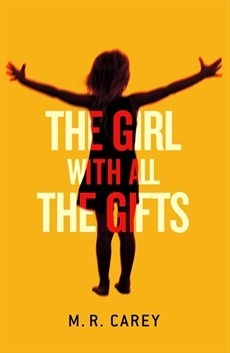
The Girl with All the Gifts

The Girl With All The Gifts by M. R. Carey
(to be released June 10, 2014)

Synopsis via Goodreads:

Melanie is a very special girl. Dr Caldwell calls her ‘our little genius’. Every morning, Melanie waits in her cell to be collected for class. When they come for her, Sergeant keeps his gun pointing at her while two of his people strap her into the wheelchair. She thinks they don’t like her. She jokes that she won’t bite, but they don’t laugh. Melanie loves school. She loves learning about spelling and sums and the world outside the classroom and the children’s cells. She tells her favourite teacher all the things she’ll do when she grows up. Melanie doesn’t know why this makes Miss Justineau look sad.

Intriguing? Oh, yeah. Not to mention the fact that this author (writing as Mike Carey) writes The Unwritten graphic novels, which I’ve been wanting to get to as well.

Fortunately, I was just approved for an ARC of The Girl With All The Gifts, and I’m really looking forward to reading it.

What are you wishing for this Wednesday?

Looking for some bookish fun on Thursdays and Fridays? Come join me for my regular weekly features, Thursday Quotables and Flashback Friday! You can find out more here — come share the book love!

♥♥♥♥♥♥♥♥

Do you host a book blog meme? Do you participate in a meme that you really, really love? I’m building a Book Blog Meme Directory, and need your help! If you know of a great meme to include — or if you host one yourself — please drop me a note on my Contact page and I’ll be sure to add your info!

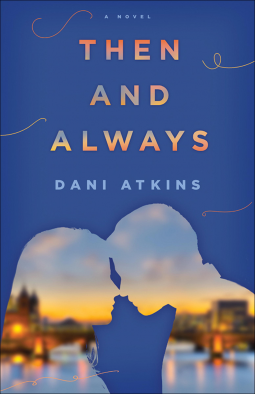
Book Review: Then and Always by Dani Atkins

Book Review: Then and Always by Dani Atkins

 Before I launch into my review of Then and Always, I need to make a small disclaimer: I am not usually a sobber. I don’t get weepy. I’m a pretty hard-eyed cynic, as a matter of fact. So why was I a drippy mess — in my workplace, no less — after reading this book? Read on…

In Then and Always, we meet 23-year-old Rachel Wiltshire, whose life has been filled with loss and grief since the freak accident that took the life of her best friend Jimmy five years earlier. But when Rachel returns to her hometown for a friend’s wedding and passes out suddenly, she wakes to a very different sort of life.

Suddenly, Rachel’s life is not the one she knows. She wakes up in the hospital to see her concerned friends huddled nearby… including a very much alive Jimmy. Not only that, her scars are gone, she’s engaged to her gorgeous boyfriend from high school, and she has the job she’s always wanted working as a magazine writer. The problem is, Rachel doesn’t remember any of the events from the past five years, and she’s convinced that she had some other life.

Does she have amnesia? Is she mentally ill? How can what she remembers be real, when everyone around her insists she’s been here with them in this “new” life all along? And really, why would she even want to go back, when the new version of her life is so much better?

It’s an intriguing set-up, and for the most part, it’s quite absorbing. The fast-paced narrative moves us forward through Rachel’s first days in her new life and allows us to experience the confusion of a world that’s familiar yet completely foreign right alongside Rachel. Her joy at finding Jimmy by her side is lovely, and it’s understandable that she’d feel hesitant toward her loving fiancé Matt, since she doesn’t remember their relationship or even the fact of their engagement.

We’re left to wonder along with Rachel just what’s going on. She did suffer a head trauma, so the amnesia theory is pretty persuasive. At one point, Rachel floats the idea of parallel worlds to Jimmy — and he simply laughs at her. This is not, after all, a science fiction novel, and as Jimmy makes clear, there will be no mysterious wormholes behind these strange events, but rather, a real-world answer that may (or may not) explain Rachel’s confusion.

Still, there are some stray clues that seem to contradict the amnesia theory. Rachel catches fleeting smells that are out of place and hears sounds that aren’t really there. A breakdown of some sort, perhaps? The author introduces these small moments as no more than hints, but ultimately, they are worth paying attention to.

Within the last chapter or so of the book, I found myself getting angry when it seemed that no real answer was in sight. Rachel’s dilemmas in terms of her life path were coming to a resolution, but no explanation of her split worlds had been provided. Just as I was getting to ready to rant about the weak finish… it all made sense. Ultimately, there’s an ending that’s fitting and powerful — and while I can’t say it made me happy (see above re: tears), it worked.

Had I not glanced back at the book description online and seen it listed as “women’s fiction” (whatever that means…), I might have gone off in a few wild directions with my speculations and suppositions. Sinister conspiracy theories, quantum physics, maybe a TARDIS? In the end, Then and Always sticks to a set-up and conclusion that work within their context — and so while I always love a thrilling game of cat-and-mouse or a good gaslighting, this is not that kind of book.

The book blurb for Then and Always reads:

For fans of One Day, What Alice Forgot, and the hit film Sliding Doors, comes an absorbing and surprising debut novel about a young woman who, after an accident, gets a second chance at life . . . just not in one she remembers.

Take that with a grain of salt, and you’ll do fine. I think I went into reading this book with slightly warped expectations because of the blurb — but once I got into the flow of the book, I left my expectations behind and just enjoyed the story. There’s just enough romance, some sweet moments focused on family, and the kind of friendships that last from childhood into adulthood. Nicely written, sentimental without being mawkish, Then and Always is sure to please readers who enjoy a story that has happy moments but still manages to wring the tears out of you by the end.

 As for me, the hard-eyed cynic: I finished reading Then and Always while sitting in my office with a cup of coffee, enjoying a momentary lull. Big mistake. That ending! It snuck up on me and smacked me over the head. There may have been a bit of blubbering going on… So word to the wise: Maybe read Then and Always in the privacy of your own home, where you won’t have to explain away your tear-streaked face and puffy eyes.

_________________________________________

The details:

Title: Then and Always
Author: Dani Atkins
Publisher: Ballantine Books
Publication date: May 20, 2014
Length: 320 pages
Genre: Adult contemporary fiction
Source: Review copy courtesy of Ballantine Books via NetGalley

Author Q&A: Meet Erin Lindsay McCabe, author of I Shall Be Near To You

By now, anyone who reads my blog has seen me raving about the outstanding debut novel I Shall Be Near To You by Erin Lindsay McCabe. Today, I’m thrilled to welcome Erin to Bookshelf Fantasies, where she very kindly (and patiently) takes the time to answer my over-abundance of questions:

IShallBeNearWhat first inspired you to write this book?

The original inspiration for I Shall Be Near To You was the collected letters of Sarah Rosetta Wakeman, who disguised as a man and served in the 153rd New York State Volunteers for two years. I found An Uncommon Soldier, the book of her letters, in 1998 while looking for a primary source upon which to write the final paper for the US Women’s History class I was taking. I had no idea women had fought in the Civil War until I came across that book. When I saw Rosetta’s picture and then read her letters, I was just taken with her—her feisty spirit, her tenderness, her determination. Of course, I didn’t know then that I was going to eventually write a book inspired by her. I just thought her story, and the stories of the other women who fought, was fascinating and I had so many questions that weren’t answered by the historical records available.

How long did the writing process take for I Shall Be Near To You?

I started writing the book in the Spring of 2007. It took me two years to write a complete draft, and then I spent another year revising it in my MFA program. Then I worked with two different agents over the next two years, revising it more. The book sold in December 2012, and then of course there were more edits after that! So, I guess I worked on it for 6 years all told, plus the 10 years I spent wishing I could figure out what to do with the real Rosetta’s story other than write a college paper about her.

Was Rosetta a real historical figure? Were there many women who did what Rosetta did in the Civil War?

Yes, Sarah Rosetta Wakeman was a real woman. She is one of about 250 documented women who disguised as men and enlisted in both the Union and Confederate armies. Their service is beautifully surveyed in the book They Fought Like Demons. And of course, estimates are that there were even more women who were just never found out—perhaps as many as 400-1000 total.

What was it about Rebel Rose and Clara Barton that made you want to include them in the story, rather than sticking solely to fictional characters?

I’ve gotten some criticism for including real characters—that it seems too coincidental that the fictional Rosetta would have run into these women. But one of the moments the real Rosetta wrote about in her letters home was her experience guarding both a female soldier who was imprisoned after leading her men into battle for “not doing according to regulation” and two female Rebel spies. I was so curious about what that must have been like—to be guarding women who were imprisoned for doing what she herself was doing—but it’s just mentioned in passing in Rosetta’s letters. So I knew I wanted to explore that more in a fictionalized context. I also really wanted to include women in the novel who represented the variety of ways women served during the war. I loved the idea of showing Clara Barton doing something that is considered very feminine (nursing wounded soldiers) but doing it in a context that was very unconventional at the time. She was the first official female combat nurse but she had to fight for the right to be on the battlefields. I had also discovered when I visited Antietam, that the memorial commemorating Clara Barton’s service at Antietam is placed right near where the 97th New York State Volunteers (the fictional Rosetta’s regiment) encamped the night before the battle and Clara Barton served in battlefield hospitals near The Cornfield where the 97th fought. So it seemed entirely plausible to me that as Rosetta searches the hospitals after the battle, she might come across Clara Barton. And then, finally, Clara Barton is known to have nursed a wounded female soldier named Mary Galloway after Antietam.

What would someone like Rosetta have experienced after the war? Admiration, scorn, something else?

That’s one of the questions I really pondered as I wrote the book, and the larger question of how any soldier goes back to civilian life after having experienced the horrors of battle. Unfortunately, there’s so little known about the female soldiers during their time in the military, and even less is known about what they did after. A few (Jennie Hodgers, Otto ) are known to have continued living as men. Some (Sarah Emma Edmonds, Martha Parks Lindley, Mary Galloway) went back to living as women, marrying and having children. Most of the rest just disappeared from the historical record. My sense is that most of them didn’t talk about their experience, and when they did, it was within the confines of their family. A few did, in later years, apply for veteran’s benefits and receive them, thanks to the support of their comrades who seemed to hold the women in high regard.

I really admired the amount of detail included about life in the army camps and what a foot soldier’s daily routine might have looked like. How did you compile all of this information?

It was a challenge! A lot of my information came straight out of soldiers’ letters. For instance, in one letter the real Rosetta says that the skirmish drill was “the prettiest drill ever was drill” so then I knew I had to find out about how to do a skirmish drill. I consulted an officer’s handbook and also a soldier’s handbook to get details about the actual drills, the way orders might be called out, the kinds of food and supplies soldiers might carry, and so on. I talked to the battlefield historian at Antietam about what kinds of duties the soldiers had after the battle ended. But one of my frustrations was that the kinds of things I was most interested in (the everyday, day-in and day-out life of a soldier) were not the kinds of things that made it into the history books, which so often focus on the generals and strategies and the movements of the troops. So it was really about finding the details I needed hidden away in first-hand accounts. Fortunately the soldiers often wrote about the food they ate or the duties they had. I also gleaned many of the battlefield and wound descriptions from soldiers’ letters. I was initially surprised at how many of the soldiers just completely glossed over those kinds of details, but I was equally surprised by how gruesome their descriptions were when they chose to include them. And finally, I attended a reenactment, which really helped me with the details about camp life and also with what a group of muskets firing all at once sounded like, what the smoke from the cannons looked like, and so on.

What were your main priorities and/or challenges in researching the book?

I think my first two priorities were to tell a story that I would want to read myself and to write a story that would pay tribute to and honor the women and men who served during the Civil War. After that, the biggest challenge was getting the historical details right without making the book feel research-y. It was really important to me that the book be as accurate as possible—I didn’t want there to be any reason for a reader to discount the story of the women who fought because I hadn’t done my research well enough. I think there is probably something on every single page that is researched—whether it’s a detail about farm life, or a word that I had to double-check to make sure was in usage, to a song the soldiers might sing, to what the scenery looked like. It sounds daunting when I think about it now, but as I was working on it, it was just part of the process, and the research really fed my creativity. There were some things I never got cut-and-dried answers for despite my best attempts—like how fast news might travel or how quickly a letter could be sent—and sometimes I spent hours and hours trying to figure out a tiny detail (did the upper bridge at Antietam have two arches or three?) that doesn’t probably matter to most readers, but that I knew would matter to anyone who spent time at Antietam. The research about the battles themselves, particularly the movement of the troops, was a huge challenge. Trying to figure out where exactly my soldiers would be on the battlefield and at what point was hard. I pored over battlefield maps and photos trying to get it right. And then writing the battle scenes themselves was very difficult emotionally, but it was incredibly important to me that readers would get a sense of what it was like to be there in the thick of the battle—because so many women were!

And a few questions for Erin about her writing career:

When did you first realize you wanted to be a writer?

I’m really not sure! I have always loved writing—the physical act of my pen moving across paper. I was that annoying kid in high school who thought writing essays was fun. And I remember thinking when I was pretty young—in elementary or junior high school—that I wanted to write a novel, but I just didn’t know what about.

What did your early writing days look like?

I started keeping a diary when I was seven, and in junior high I had about a hundred pen pals (that’s not an exaggeration). I was always writing little stories or sock puppet plays or designing magazines (all the articles written by yours truly). In junior high I started trying to write poetry, and in college I tried writing some short stories, but they always kept getting longer and longer. I started dabbling with writing a novel a few years before I wrote I Shall Be Near To You, kind of on a dare from my husband. It turned out to be a wonderful thing because I discovered I could actually write a cohesive story that was novel-length (though it wasn’t all that good) and I learned a lot about what my writing process is like. When I got to the middle of I Shall Be Near To You and it felt like it was all falling apart, I was able to remember I had felt the same way before (and I feel the same way again, working on my current project), which is oddly comforting.

Do you have a background in history? Is the Civil War a period of special interest?

When I look back at what I read as a kid, it often had a historical bent to it though I wasn’t all that interested in history as it was taught in school—dates, facts, battles, generals, politicians. Studying literature in college though, I really began to see the overlap between what authors write about and what’s happening in history. That’s when I became a history minor. I’m just so interested in the stories of real people’s daily lives and what life was like in the past. I’ve had a fascination with the Civil War since watching Ken Burns’ Civil War documentary as a 13 year old, and I think that’s one thing that documentary really does well—you get a sense of what individuals experienced. Though I wouldn’t call myself a history buff, in the sense that there’s one period of time that I am a real expert in, I am always drawn to the Victorian and Edwardian periods, probably because a) there’s horses and b) it’s the time right before and at the beginning of the suffrage movement. I’m really interested in how women coped with having so little political, economic, and social freedom.

Do you intend to make historical fiction your specialty, or will we see future books in other genres?

Historical fiction is what I gravitate toward, but I’m not ruling out exploring other genres.

What are you working on now/next?

Right now I’m working on another historical novel—this one is inspired by the adopted daughter of a female serial killer. I’m maybe half to two thirds done with a first draft of it, so I’m right in the middle of the phase where I feel like the whole thing is falling apart.

What is your writing routine like? Do you have a particular spot or time that you prefer for writing?

I try to write at least five days a week and I try to hit a daily goal of 1000 words. I used to always write in the morning after walking my dog, before I went off to teach. And for much of the time I was working on I Shall Be Near To You, I wrote late at night after my husband was asleep. I like having a good chunk of time (two to three hours) so that I feel like I can really dig in. Now my routine is much more scattered because I have a three-year old son. I used to write during his naps, but now that he’s stopped napping I’ve had to figure out a new routine. I’m still working on that—right now I have a babysitter come twice a week in the morning and then sometimes my son and I meet my husband at the coffee shop after he gets off work and when they leave I stay and work for a couple hours. I’m finding it harder and harder to write late at night, because I just get too sleepy (and sleep-writing, while very amusing to re-read in the morning, is not very productive)! But I do still write after everyone else is asleep.

Anything about you as a person you’d like to share? Favorite foods, movies, music?

I think anyone who knows me knows that I love all things potato. Also anything sugary and chocolatey and buttery. I adore female musicians—I listened to so much Neko Case and Gillian Welch while writing I Shall Be Near To You. But I also love Regina Spektor, Tori Amos, Sarah Maclachlan, The Yeah Yeah Yeahs, Sleater Kinney, Sharon Jones, Adele, Liz Phair, Tracy Chapman, Amy Winehouse, Lily Allen… In general I like music that has something deeper to say about the human experience, that is layered instrumentally and lyrically, that has a moment of poetic realization or surprise to it, when the musician reveals something with their words or with the music that you didn’t realize before or weren’t expecting—Weezer, System of a Down, The Decemberists, Interpol, Iron & Wine, REM, TV on the Radio, Morphine all come to mind. My husband says my iPod is a 1990s time capsule, and looking at this list I realize he’s probably right! He also says that to figure out which song on an album is my favorite, just find the slowest, saddest one. And I’m a sucker for anything with a banjo or a fiddle or bagpipes in it. As for movies, I’ll pretty much watch any costume drama (recently, I really liked the new version of Wuthering Heights, and this little movie called Meek’s Cutoff, and the new Jane Eyre). I love a love story, especially a quirky one (Princess Bride, Amelie, Moulin Rouge, Silver Linings Playbook). I was blown away by Winter’s Bone. I don’t watch too many new movies these days, but that last movie I saw in the theater was Baz Luhrman’s The Great Gatsby. I think I giggled through the whole thing, it tickled me so much.

What were your favorite books as a child?

The Little House on the Prairie books for sure. Anne of Green Gables. I was a voracious reader—I read a lot of the classics, things like Heidi, Jane Eyre, Little Women, The Secret Garden, The Little Princess, Chronicles of Narnia—and then I read stuff like Nancy Drew, The Saddle Club, tons of Lurlene MacDaniel books (I loved when a book made me cry), and anything with horses in it (My Friend Flicka, Misty of Chincoteague, The Black Stallion books). I have great memories of my dad reading The Adventures of Tom Sawyer and Huck Finn to my brother and me. He did really good voices for the characters and he always quit reading for the night at a cliffhanger.

What books have you read recently that you loved?

When I’m actively writing, I have a hard time reading fiction, partially because I’m doing non-fiction reading for research, partially because I so often have to choose between either writing or reading, and partially because I get worried if I read certain books, I’ll be unduly influenced by them. That said, I read a bunch of books this Fall and Winter that I really liked—Burial Rites, The Kept, Bittersweet (which I read as an ARC, it’s out this 5/12), Quiet Dell, The Maid’s Version. But I think the book that I loved the most was Boleto. I guess it’s a western and a coming of age story, but it’s so much more than that. It’s quiet and beautiful and poignant and the main character is endearing and heartbreaking. It’s a slim little thing, but it feels deep and it’s just so well-written. I envy and admire the way Alison Hagy has managed to write about horses without being sentimental or cheesy.


 Thank you, Erin, for your insights and your time!

To learn more about Erin Lindsay McCabe and her writing, visit her website at http://erinlindsaymccabe.com.

See previous Bookshelf Fantasies posts about I Shall Be Near To You:
Guest Review: I Shall Be Near To You
Five Reasons Why You Should Read I Shall Be Near To You… ASAP!

 

The Monday Agenda 5/12/2014

MondayAgendaNot a lofty, ambitious to-be-read list consisting of 100+ book titles. Just a simple plan for the upcoming week — what I’m reading now, what I plan to read next, and what I’m hoping to squeeze in among the nooks and crannies.

How did I do with last week’s agenda?

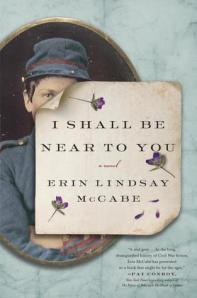
IShallBeNearLast week, I continued with my spotlight focus on  I Shall Be Near To You by Erin Lindsay McCabe.  My friend Mary wrote a guest review (see it here), and then I chimed in with my list of five reasons that everyone should read this book — like, NOW. Stay tuned: An author Q&A will be coming up this week!


The Break-Up Artist
The Break-Up Artist by Philip Siegal: Done! My review is here.

Savage GirlSavage Girl by Jean Zimmerman: After reading 20%, I had to put this one on my DNF shelf. The concept seemed interesting… but nothing was happening, and I just couldn’t take any more. If anyone else has read it and wants to convince me to give it another go, be my guest!

13th childThe kiddo and I are happily reading our way through Thirteenth Child by Patricia C. Wrede, and loving it!

Fresh Catch:

A variety of goodies arrived this week, some bought, some borrowed:

Trouble Covet

MistbornSpike

Plus this, which isn’t a book, but which makes my geeky little heart happy:

Vmars

Elsewhere on the blog:

I whined a bit about trilogies… and apparently, based on comments here and via Twitter, I guess I’m not alone!

What’s on my reading agenda for the coming week?

Then and Always: A NovelWe Were LiarsThe Girls at the Kingfisher Club

This week, I’m looking forward to:

Then and Always by Dani Atkins. I’ve read about half so far, and I’m really liking it!

Next up: We Were Liars by by E. Lockhart.

And if there’s time: The Girls At The Kingfisher Club by Genevieve Valentine. A flapper-era retelling of the Twelve Dancing Princesses fairy tale? Yes, please!

And also in the works:

echoThe Outlander Book Club’s re-read of An Echo in the Bone by Diana Gabaldon continues! Coming up this week: Chapters 84 – 88. Want to join in? Contact me and I’ll provide all the details!

Oh, and this was announced:

Image

Basically, I’ll take any excuse for posting an Outlander picture! Thank you, Starz, for announcing the premiere date. I know where I’ll be August 9th! (Image via Starz)

What a week!

So many book, so little time…

That’s my agenda. What’s yours? Add your comments to share your bookish agenda for the week.

boy1

The Trouble with Trilogies

I have a problem with trilogies. But not just trilogies.

Sequels, series, you name it. Anything that’s to be continued is just trouble for me right now.

Why?

Because after a certain point, I just don’t care. If I have to wait a year to find out what happens next, most of the time, I simply won’t still be interested enough to bother with it.

Why are there so many trilogies in the YA fiction world now? Why is it practically the norm to turn every potentially good story into a series? Whatever happened to a beginning, middle and end all in one book?

I loved The Diviners by Libba Bray. I preordered book 2, which was supposed to be out this summer. Lo and behold, the release has been delayed until 2015. Guess what? By the time Lair of Dreams comes out, I don’t know that I’ll feel like bothering any more. Sure, I loved the characters and the setting of the first book. The plot was different and interesting and made me want to know more. But I was also mostly satisfied with how it ended, and in fact my only quibble about the book was the fact that it was clearly building up to an ongoing story, even though the main plot of The Diviners did have a pretty great wrap-up.

Another example: I just DNF’d a book that concludes a YA trilogy that I’d enjoyed so far, by an author whose writing I admire very much. But yeah… I read the first two books, and I liked them a lot. But time has gone by, and I don’t feel a burning need to know more about the story, and when I read the first couple of chapters, I realized I’d be totally fine with not reading the book. Just. Didn’t. Care.

So what’s this mini-rant all about? I guess I’m just fed up with stories being stretched into three (or more) books when they could be told in one. The trilogy I just walked away from could have made one really good book, and I can think of a few others where the same would be true. Is it just publishers wanting to sell more books? Does a series have a glamor to it that a stand-alone doesn’t?

Look, I do read series. Take Outlander or A Song of Ice and Fire, for instance. These books are huge, and the worlds they contain are vast, and each book is an event. Or, for example, some of the great ongoing urban fantasy series, such as the Dresden Files books or the Mercy Thompson series. Each book in these is a new chapter, a new adventure, in a carefully created world that continues to grow and expand. I love all of the above — and will keep reading them until the authors are done, or until an asteroid wipes out life on Earth, or something equally cataclysmic occurs.

The problem with so many of the series out there, particularly (but not exclusively) in YA, is that a lot of them feel like filler. With many of the YA trilogies I’ve read over the years, the story is stretched and padded and chopped in order to make three books out of a story that, with some good editing and tightening up, could have been one great book. I’m tired of the “to be continued” ending that exists just to keep us coming back for more (or, to put it more cynically, exists just to keep us taking out our credit cards).

Not that my complaint is about the money, really: It’s about the storytelling. Tell me a great story, make me care, introduce me to amazing characters, and have a compelling story arc. With an ending.

Like I said, some series are great and deserve every page and every volume. But sadly, there are a lot that miss the mark by a long shot.

So, yeah, today I walked way from book 3 in a trilogy that I actually thought had a pretty good start.

If it’s been a year and I haven’t thought about the earlier books in all that time, even if I liked them when I read them, then chances are when the big finale finally rolls around, I won’t be around for it. Because I just won’t care any more.

Just something to think about.

Five Reasons Why You Should Read I Shall Be Near To You… ASAP!
My spotlight book this week is I Shall Be Near To You by Erin Lindsay McCabe. Earlier this week, my wonderful guest reviewer Mary shared her thoughts on this beautiful novel. (Click here for Mary’s review.) Later on, I’ll be featuring a Q&A with the author. For today, I’m here to tell you why you NEED to read this book!

IShallBeNear

Here are my top five reasons why this may be the book for you:

1) Strong female character: Simply put, Rosetta Wakefield is one awesome woman. A young bride who decides that she will not sit home while the man she loves marches off to war, Rosetta takes her future into her own hands. Ignoring family disapproval and potential shame, not waiting for her husband’s agreement, Rosetta sets a course for herself and doesn’t look back. She joins the Union army, drills with the troops, pushes past overwhelming fear, and marches into battle — and simply won’t take no for an answer. Sure, there are fictional fantasy characters who use fancy martial arts, or stakes, or bows and arrows to face down bad guys. But Rosetta is a real-world heroine, based on historical records, who arms herself with her mind and her will to fight, steels herself with her love for her husband, and dares everything in order to achieve her own ends.

2) Bringing history to life: If you’re like me, you learned about the Civil War, about the battles of Bull Run and Antietam, in history class during middle school or high school. Maybe you had to learn the details, or write an essay on the strategic importance of certain battles. Maybe you had to memorize the dates or the names of the generals. Boring, right? Put all that aside, and read I Shall Be Near To You. I don’t think I’ve read another book that brings the battlefield’s sights, sounds, and smells to life quite so viscerally. As seen through Rosetta’s eyes, war truly is hell. It’s bloody and confusing and terrifying, consisting of little more than marching into almost certain death because that’s what the troops have been ordered to do. There’s no place to hide, no refuge, and no rhyme or reason to the chaos and horror.

3) An intense, passionate love story: Rosetta and Jeremiah are childhood sweethearts whose love is sincere, deep, and committed. Rosetta can’t be anywhere but by Jeremiah’s side, and despite his worries about what’s proper and safe for his wife, Jeremiah loves Rosetta too much to send her away. Their stolen moments are deeply emotional, deeply sexual, and absolutely pure in their mutual love and devotion.

4) Nitty-gritty, nuts-and-bolts details: What would enlisted troops eat in between battles? Where did the food come from? Or more essential questions: How could a woman hide in plain sight among an army of men? What about bathroom needs and other bodily functions? Ever notice how some of those “sweeping”, “epic” romances or historical novels gloss over the less-pleasant realities of day-to-day life? It’s all gowns and swords and drama… but not here. In I Shall Be Near To You, Rosetta’s adventure is believable because it is so deeply grounded in real life. Yes, there are obstacles. Yes, there are all sorts of things that Rosetta has to figure out in order to manage in a male environment without detection. The author gives us enough to make us feel just how much Rosetta has to overcome in order to achieve her goals — and just how much she has to sacrifice and put up with in order to stay by Jeremiah’s side.

5) Writing that’s just right: Rosetta is a young woman with some education but not a lot, raised on a farm and taught the essentials, but she’s never been a fine, sophisticated lady — and her speech is pitch-perfect in reflecting just who she is. Speaking plainly but not without her own sense of poetry, Rosetta is forthright to the point of almost impropriety, speaking out when nice young girls should demur to their men or their mothers-in-law or to practically anyone else. Rosetta speaks in colloquialisms, but it’s not overdone or cloying. Instead, her narration tells us just who she is simply by the words she uses and how she describes her life, her dreams, and the man she loves. It’s not fancy, but it consistently rings true, and Rosetta conveys such a depth of emotions in her plain words that it’s like being hit by a lightning bolt at times.

That’s five. Need more?

At just over 300 pages, I Shall Be Near To You tells a tightly crafted tale that wastes no energy and never goes astray. I walked away from this book with a greater understanding of love and loss, the terrors of warfare, and the simple joys of being with the right person and sharing a dream.

It’s beautiful. It’s powerful. Read this book.

Flashback Friday: The Feast of Love

ffbutton2Flashback Friday is a weekly tradition started here at Bookshelf Fantasies, focusing on showing some love for the older books in our lives and on our shelves. If you’d like to join in, just pick a book published at least five years ago, post your Flashback Friday pick on your blog, and let us all know about that special book from your reading past and why it matters to you. Don’t forget to link up!

This week on Flashback Friday:

The Feast of Love

The Feast of Love by Charles Baxter
(published 2000)

 Synopsis (Goodreads):

Late one night, Charlie Baxter wakes with a start from a bad dream and decides to take a walk through his Ann Arbor neighborhood. After catching sight of two lovers entangled together on the fifty-yard line of the football field, he comes upon Bradley W. Smith, a friend and a fellow insomniac, who convinces Charlie to listen to the first of many tales that will become a luminous narrative of love in its sublime, agonizing, and eternal complexity.

We meet Kathryn, Bradley’s first wife, who leaves her husband for another woman, and Diana, Bradley’s second wife, whose cold, secretive nature makes her more suitable as a mistress than as a spouse. We meet Chloé and Oscar, whose dreams for their future together are more traditional than their multiple body piercings and wild public displays of affection might suggest. We meet Esther and Harry Ginsberg, Bradley’s neighbors, whose love for their lost son persists despite his hatred of them. Bradley, ex-husband, employer, and friend, on his journey toward conjugual happiness. The community of souls found in The Feast of Love is unforgettable – as is the perfect symphony their harmonized voices create.

The Feast of Love is one of those books that I might not have discovered were it not for a book group (now defunct, may it rest in peace) composed of a really interesting mix of folks with lots of different preferences and reading habits. I don’t remember who picked this one, but I do remember that it was one of the most outstanding book group picks over the course of the three or four years that the group was active.

In The Feast of Love, the stories of the different couples weave together with a lovely, odd rhythm that’s almost dreamlike in the telling. It took me a while to unravel whose story this really was, but that didn’t matter. Over the course of this beautiful book, the characters come to life, and it’s a community of sorts that’s built by slowly unveiling the unexpected connections between them all.

The writing is wonderful, and the love stories, both triumphant and tragic, are unforgettable.

What flashback book is on your mind this week?

Note from your friendly Bookshelf Fantasies host: To join in the Flashback Friday fun:

  • Grab the Flashback Friday button
  • Post your own Flashback Friday entry on your blog (and mention Bookshelf Fantasies as the host of the meme, if you please!)
  • Leave your link in the comments below
  • Check out other FF posts… and discover some terrific hidden gems to add to your TBR piles!

♥♥♥♥♥♥♥♥

Do you host a book blog meme? Do you participate in a meme that you really, really love? I’m building a Book Blog Meme Directory, and need your help! If you know of a great meme to include — or if you host one yourself — please drop me a note on my Contact page and I’ll be sure to add your info!

Why is August 9th circled in red on my calendar???

Here’s why:

Image

Thank you, Starz, for giving Outlander fans the great news!

Thursday Quotables: The Break-Up Artist

quotation-marks4

Welcome back to Thursday Quotables! This weekly feature is the place to highlight a great quote, line, or passage discovered during your reading each week.  Whether it’s something funny, startling, gut-wrenching, or just really beautifully written, Thursday Quotables is where my favorite lines of the week will be, and you’re invited to join in!

break-up artist

The Break-Up Artist by Philip Siegel
(published April 29, 2014)

Why do none of the movies girls at my school love have happy endings? One half of the couple either dies or moves away. But they can’t get enough of those films. Titanic, Shakespeare in Love, Atonement, The Notebook, A Walk to Remember, every other Nicholas Sparks film known to man. My classmates want a relationship, yet they idolize movies where couples never wind up happy. I don’t get it.

You and me both…

What lines made you laugh, cry, or gasp this week? Do tell!

If you’d like to participate in Thursday Quotables, it’s really simple:

  • Write a Thursday Quotables post on your blog. Try to pick something from whatever you’re reading now. And please be sure to include a link back to Bookshelf Fantasies in your post (http://www.bookshelffantasies.com), if you’d be so kind!
  • Leave your link in the comments — or, if you have a quote to share but not a blog post, you can leave your quote in the comments too!
  • Visit other linked blogs to view their Thursday Quotables, and have fun!

Guest Review: I Shall Be Near To You by Erin Lindsay McCabe

Please join me in welcoming my wonderful friend Mary, who consistently recommends superb books to me. Mary is the one who first encouraged me to read I Shall Be Near To You, and so I thought it only fitting to invite her to write a review.

***Guest Review: I Shall Be Near To You by Erin Lindsay McCabe***

***Reviewed by Mary***

IShallBeNear

“His arms pull me tight against his chest and I bury my face in his shoulder. He shakes and it is dark enough I can still say I ain’t ever seen him cry. My heart goes to cracking wide open, but at least I am alive to feel it. I am a different kind of woman now, a wife who knows what this war really is. At least I am part of this war, part of the things Jeremiah’s done here, things that will always be hiding somewhere in his heart.”

New York, 1862. Rosetta marries her childhood sweetheart just before he leaves to enlist with the Union Army. Jeremiah is naive and optimistic about the war, thinking he’ll be gone a short while and return with money enough for them to buy their own farm. Even so, Rosetta doesn’t want him to go. Without Jeremiah, she has to play the role of wife, cooking, mending, making soap, when she’d rather be outside tending the animals or helping with the harvest. Rosetta is stubborn and spirited, and it isn’t long before she hacks off her braid, dresses in Jeremiah’s old clothes and follows her husband to war.

Rosetta is a force, a fighting wife, a woman brave enough to follow her husband into hell. Their love is both fierce and tender, and their connection to one another endures long stretches of boredom, constant hunger, and short bursts of battle-born terror. Neither of them truly understood what war would be, and the author, with well-placed poetic imagery and necessary grit, conveys the realities of a soldier’s life.


“I aim careful in the dying light and fire two rounds…the first don’t hit a thing, but the second shot makes a space in the line advancing. Something heavy settles in my belly when the stain blooms on that soldier’s chest, the hole in the line, the tear in the fabric of some other family.”


Rosetta’s voice is strong and straightforward; her struggles and fears are authentic and entirely relatable. The supporting characters are well-drawn, compelling, easy to get attached to. There is just the right amount of historic detail to capture the essence of the time period without inundating the reader with “research.” The way the story is told, the structure and pacing, seems effortless (though I am sure it wasn’t), and thankfully, there is no epilogue to stitch up every last detail. In short, this is as close to perfect as it can get. If you love historical fiction – if you love great fiction – read this book. But read it slowly. Savour your time with these unforgettable characters and their heart-wrenching story. 

And…when you read the last page, close the book and still find yourself unable to let go of the story, read these interesting links:

The title of the book was inspired by a real letter from Union soldier Sullivan Ballou to his wife Sarah. Read it here.

The author’s playlist. Music can strike an emotional chord with me, and I love that the author included the songs she listened to while writing. These echo the mood of the book so well. Make sure you listen to “My Father’s Father” when you have finished the book. So, so moving.

An interview with the author. I love hearing about the process of getting this book revised and published. It was obviously a labor of love.

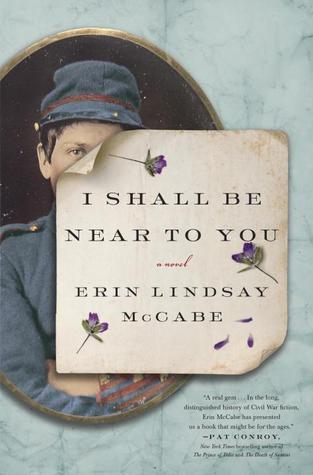
The original photo from the cover.Were you, like me, curious about the soldier pictured on the front of the novel? I wanted to see his (her?) whole face, and I was surprised to discover that the soldier was actually a Confederate.

A Savage Day in American History. A little more information about the Battle of Antietam.


About the reviewer:

MaryMary is a life-long reader and self-professed book-nerd. She carries a book with her wherever she goes, and if she isn’t reading, she’s either sleeping or dead.

Want to read more of Mary’s reviews? You can find her here on Goodreads — just tell her Bookshelf Fantasies sent you!

Stay tuned:

I Shall Be Near To You is my spotlight book this week, and there are more related blog posts to come!