Breed: Lingering questions (spoilers!)

Yesterday, I posted my review of Breed by Chase Novak. On Goodreads, I gave Breed 3 out of 5 stars, largely because I felt there were a lot of extraneous characters and plot points that didn’t go anywhere.

I try not to read other people’s reviews until I’ve written my own, so that I don’t (voluntarily or involuntarily) second-guess my own reactions or opinions. So last night, after finishing my review, I looked up the New York Times review of Breed, where I learned this little nugget of information: Chase Novak (aka Scott Spencer) is planning a sequel, called Brood.

I’m of two minds about this. One, there was no indication in Breed that this was the first of two (or more?) novels. Therefore, I’d expected a book that wrapped up satisfyingly and didn’t leave me hanging. Granted, in many horror books (take Rosemary’s Baby for instance), part of the horror is the fact that not everything is resolved — maybe the immediate problem has been addressed, but — my gods! — what about the future? You really should feel at least a little creeped out at the end of a good horror novel.

On the other hand, knowing that Breed will have a sequel, I feel much better about some of the implied outcomes and the various loose ends. Hurray — it’s not sloppiness or intentional vagueness! We’ll find out more!

So, what do I want to know in a sequel to Breed? (Warning: here’s where the spoilers creep in!)

  • Alice and Adam — how soon will they start to change? What exactly happens to all these kids once they hit puberty?
  • Bernard — how does he matter to the story?
  • What’s the deal with the triplets’ birthmarks on their hands?
  • Is the horror here purely genetic? What was in those injections and vials?
  • Is there a supernatural element involved? The scenes in Slovenia feature place names that included the words “castle” and “dragon” — is this a hint that there is more going on that just a medical mystery? Eastern European nation, dragon imagery, big slavering dogs, crying nuns… anyone else thinking what I’m thinking?
  • Obvious question: Is there a cure? Dr. Kis couldn’t find one, but does that mean that it doesn’t exist?

For those of you who have read Breed: What else do you want to know? What plot points do you want to see addressed in the sequel? Any predictions as to where it’s all heading? Share your thoughts, please!

A punch in the heart: Books that take your breath away

Do you ever feel physically drained after reading a book? Have you ever read a book so intense that you feel like you’ve been bruised and beaten? And I don’t necessarily mean that in a bad way: it’s just that I have such a visceral reaction to certain books that I end up feeling like I can barely draw a breath.

And yet, books that pack such a tremendous punch often end up being my favorites.

Take my reading experience of the past week. Knowing that I’d be attending a speaking event featuring author Mary Doria Russell, I decided to re-read her first novel The Sparrow. The Sparrow has been one of my best-loved books ever since I first encountered it. I first read The Sparrow in 2005, after picking it up in a used book store.  Why I originally decided to read it, I don’t know. I think I’d heard of the book before, but certainly it wasn’t one that had been recommended to me by anyone I knew. And yet, something about it drew me, and once I started reading, I couldn’t put it down. I’ve since read The Sparrow several times, on my own and with a book group, and each time, I find something new to love in it, some new ideas to mull over, some new emotional response to the moral dilemmas it presents.

I’m sure I annoyed my friends and family to an even higher degree than usual this week, as I kept finding passages to read aloud, or burst out with outrage or sorrow over something that had befallen one of the characters. It’s amusing, in a way, that I’d react so strongly to something I’ve read before. Clearly, the book holds no surprises for me at this point, and yet the joys and sorrows of the characters still affect me as if they were happening to real people whom I care about.

I want to protect Emilio Sandoz. I’d love to be friends with Anne Edwards and get invited to one of her fabulous dinner parties. I’d like to spend time with Sofia Mendes and get her to loosen up a bit — maybe having a woman friend would be healthy for her. I’d love to hang out with D. W. Yarbrough and get the benefit of his words of wisdom. I could go on and on, but you see the point. The Sparrow is not some huge, 1000+ page doorstop of a book, but within its pages, the author has created not only an entire fictional world, but a cast of characters whom I feel I know. And when bad things happen to them — and they do, as it’s made clear from the very first page — it hurts. On the other hand, when these characters encounter beauty and joy — and again, they do — I want to celebrate with them and share in the glory of the moment.

I suppose the reason I’m even sitting down to write this is to preserve in some way my  moments in the world contained within The Sparrow. I finished reading it late last night, and I just don’t feel quite ready to dive into something else and leave behind the mood and the emotions evoked by this book.

I know there have been a handful of other books in my reading life that have affected me as strongly (or nearly as strongly). What about you? What books have you read that have made a dent in your heart? What books ensnare your emotions and don’t let go? I find that while these type of books may be difficult to get through, they’re ultimately the ones that I love the best. Share your thoughts, please!

A photo montage in honor of The Diviners

I just loved the world of Libba Bray’s The Diviners, and went searching for images to bring 1920s Manhattan to life. Here are some of my favorite finds so far:

Positutely the bee’s knees!

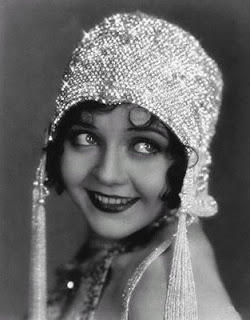
This picture instantly brought Evie to mind for me. Yes, I know Evie is a blonde, but let’s get beyond hair color. What I love about this girl is the sparkle in her eyes, the lovely smile, the sense that this is a girl who’s confident, knows how to have fun, and has a killer sense of humor.

Could one of these lovelies be Theta?

A photo from the Ziegfeld Follies — daring for the time, revealing yet covered up.

Ziegfeld girl, 1919, fifteen years old

Cotton Club, Harlem

Harlem’s Cotton Club, where Memphis and Gabriel would have spent many an evening.

A rally Mabel’s parents might have attended

Street scene in New York, 1920

And lots more flappers, taking life by storm:

Actress Mary Pickford — maybe more of a look for Mabel?

The iconic Louise Brooks


As I find more fabulous flappers, I’ll be sure to add to this collection. And if you come across any terrific photos that remind you of The Diviners, be sure to share your link in the comments. Will I appreciate it? You bet-ski!

Bookshelf fanatics, unite!

I’ve been torturing myself lately over systems of shelving books, now that I have brand spanking new bookcases in my house. How to organize? What goes where? I’ve been forced into an arrangement that’s pretty much no method at all — the bookcases with shelves placed closely together are now housing all sorts of mass market paperbacks, and the bookcases with more widely spaced shelves get my hardcovers and trade paperbacks.

Within those sections, all hell breaks loose. I have science fiction cozied up to urban fantasy. Horror is co-mingling with mysteries. One bookcase is pretty much devoted to young adult and children’s fiction, but even there, chaos abounds. Some books are shelved by author, some by theme, some just because that’s where there was a space. Then there’s my favorites bookcase, where Harry Potter books pretty much have a shelf to themselves, Outlander and all of Diana Gabaldon’s other books get their own shelf too, and everything else is just a big mish-mosh. Christopher Moore’s oeuvre sits shoulder-to-shoulder with Stephen King’s recent tomes, Under The Dome and 11/22/63. Mary Doria Russell’s books sit alongside George R. R. Martin. Every time I look at my shelves and think, “There’s got to be a better way,” I get a little scared and overwhelmed and find other things to do. (Organizing sweaters? Sweeping up dust bunnies? Sorting paper clips? Sounds swell!)

So I was heartened to read this piece by Geraldine Brooks, author of some books on my aforementioned favorites shelves. Now instead of just organizing by title, author, genre, color, or size, there’s a whole new set of considerations! How would Christopher Moore feel about being seated next to Stephen King? (I’m guessing they’d have a great time together, actually). I love that people I admire spend time worrying about where to put their books too. See, famous authors are really just like you and me! (but with more bestsellers to their credit, of course)

Just for kicks, I Googled “organizing bookshelves” to see if any other clever, erudite folks had something interesting to say on the subject. Alas, the majority of hits were for home decorating sites and self-improvement publications, telling how to get rid of unwanted clutter, how to make your bookshelves aesthetically pleading, and how to cull all those annoying classics left over from your youth. (I’m projecting a bit here…) Because gods forbid a visitor comes into your home and is shocked by messy books! What might they think?

As I was about to abandon my Google quest of the day, I did stumble across this funny, lovely how-to guide at TheBarking.com, offering twelve approaches for organizing bookshelves, among them:

You could organize the books in order to create an overall aesthetic impression. For instance, you could group according to spine color or size, or arrange the books graphically and, thus, create a literary mosaic of sorts. This is an interesting potential variation—and does have a certain appeal—but is only really feasible in circumstances in which the books are not actually intended to be read.

Clearly, I have my work cut out for me. The beauty of it all is that there’s no rush. I can take books down, put them back, shuffle and swap to my heart’s content. And then, when I’ve had enough, grab something good off the shelf, curl up in a big chair, and get in a smidgin of quality reading time. Bliss.

What’s black and red and read all over?

Some of the most striking book covers on my shelves, that’s what.

There’s something about that black and red combination that is so sharp and so eye-catching — maybe that’s why we’re seeing more and more of the black and red look in bookstores these days. I suppose you could credit this one for really popularizing the color combo:

This is not a Twilight post! I’m talking about the color scheme here.

Then publishers decided to Twilight-ify some of the classics, as if adding shiny black and red covers would suddenly make teens salivate over Emily Bronte:

Let’s ignore the “Bella & Edward’s favorite book” caption at upper right, shall we?

They’ve even done it to Austen:

“The Love That Started It All”. Please…

Well, I do have to admit that the black and red look is quite catchy… and perhaps a bit sinister. Does this version imply that there will be blood in Pride & Prejudice? (Gotta love that ampersand, by the way.) Teens who pick this one up expecting sparkles and red eyes may be a tad disappointed.

As I was reshelving books this past week, I pulled out some of my favorite red and black covers from my own collection. Excuse the shoddy camera work — that just proves that these are really mine. Here are some from my shelves that I think are most effective:

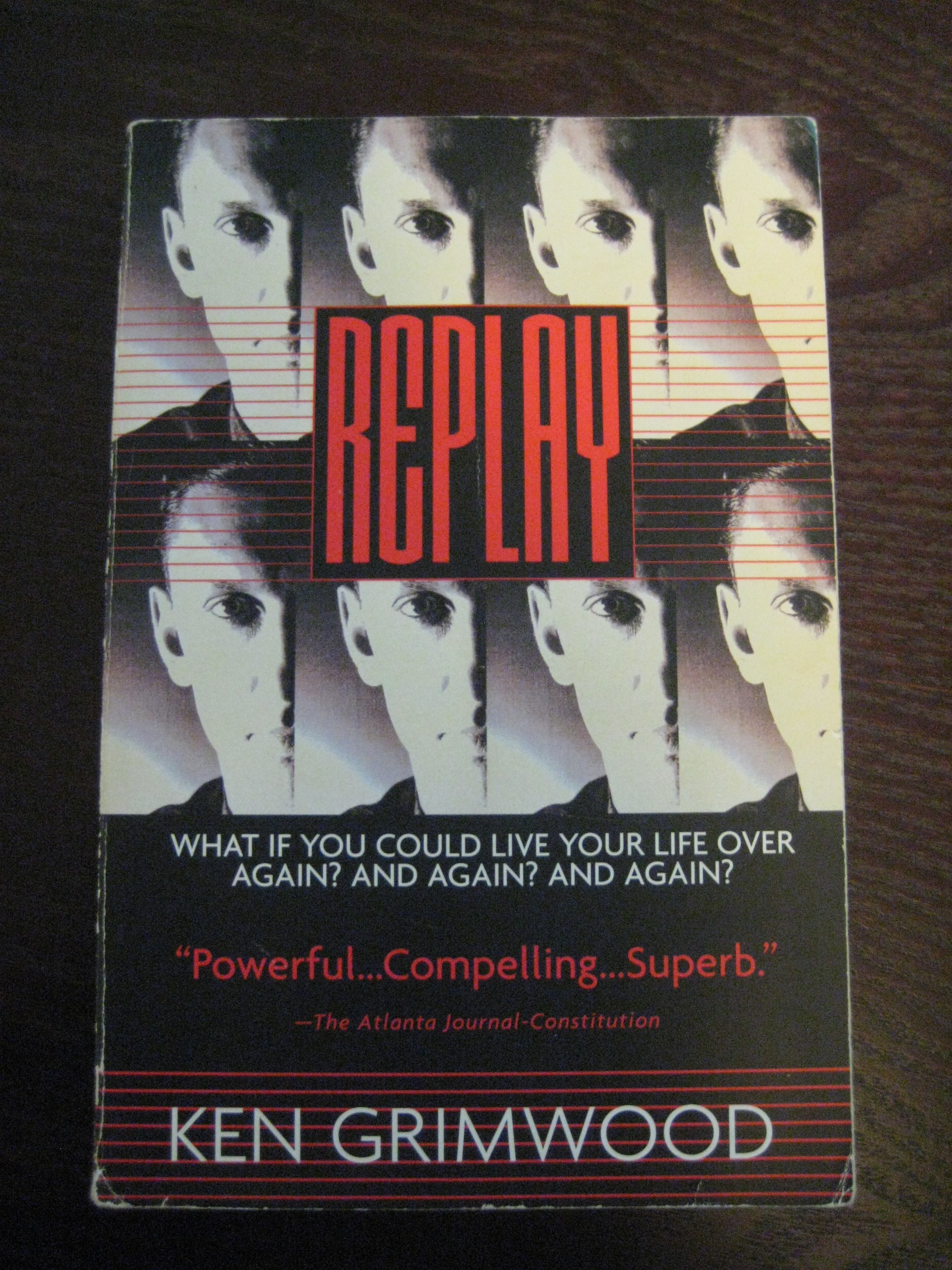
Replay by Ken Grimwood

A wonderful, awful, disturbing book of timey-wimey weirdness, as a man replays his life over and over again. If you had the ability to change your life, would you? The black and red cover with the repeating half-photo gives me a bit of the chills.

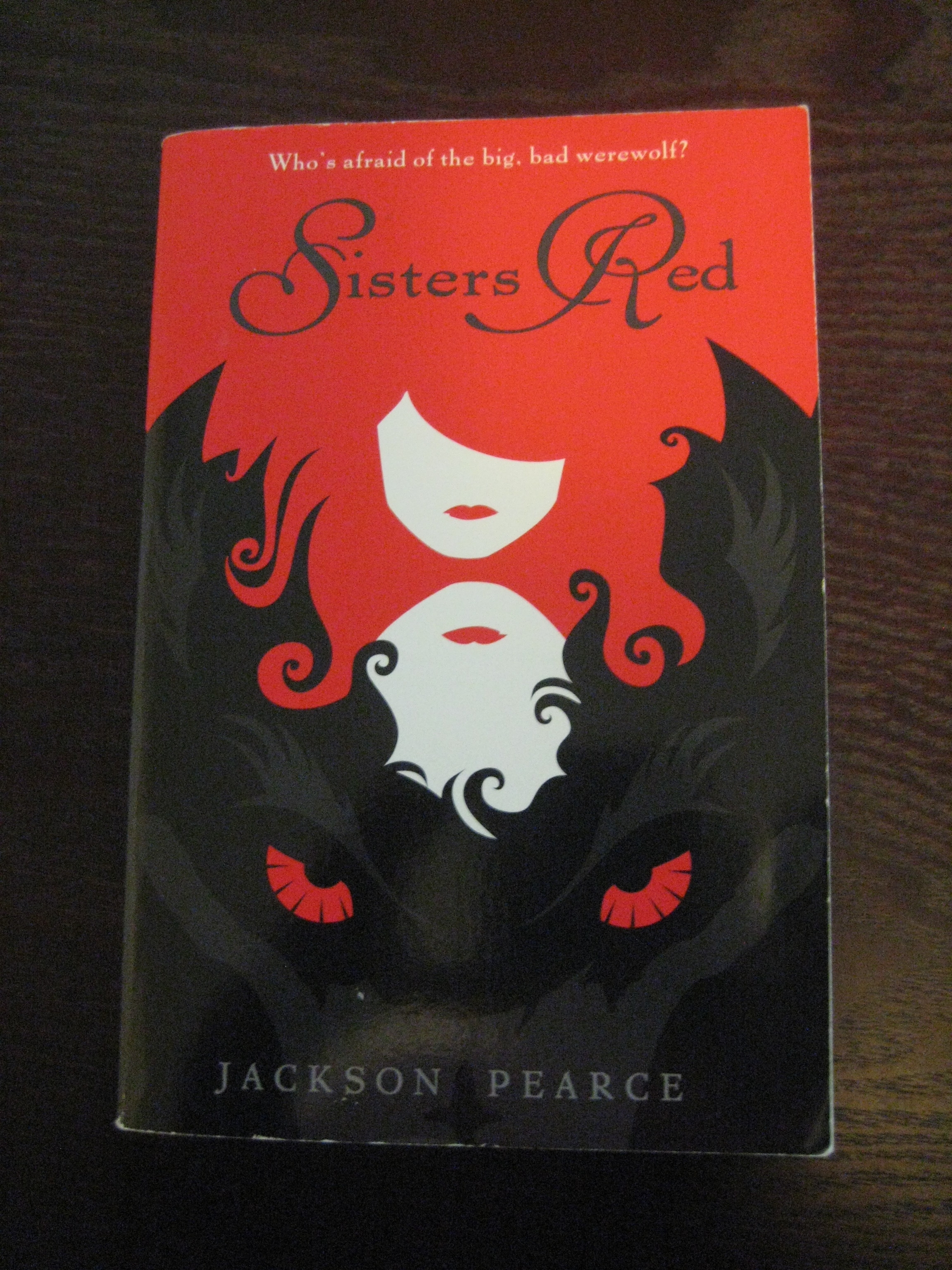
Sisters Red by Jackson Pearce

This YA book is a retelling of Little Red Riding Hood, with a Buffy-style heroine who kicks butt, brings down the monsters, and tries to make a better life for her sister.

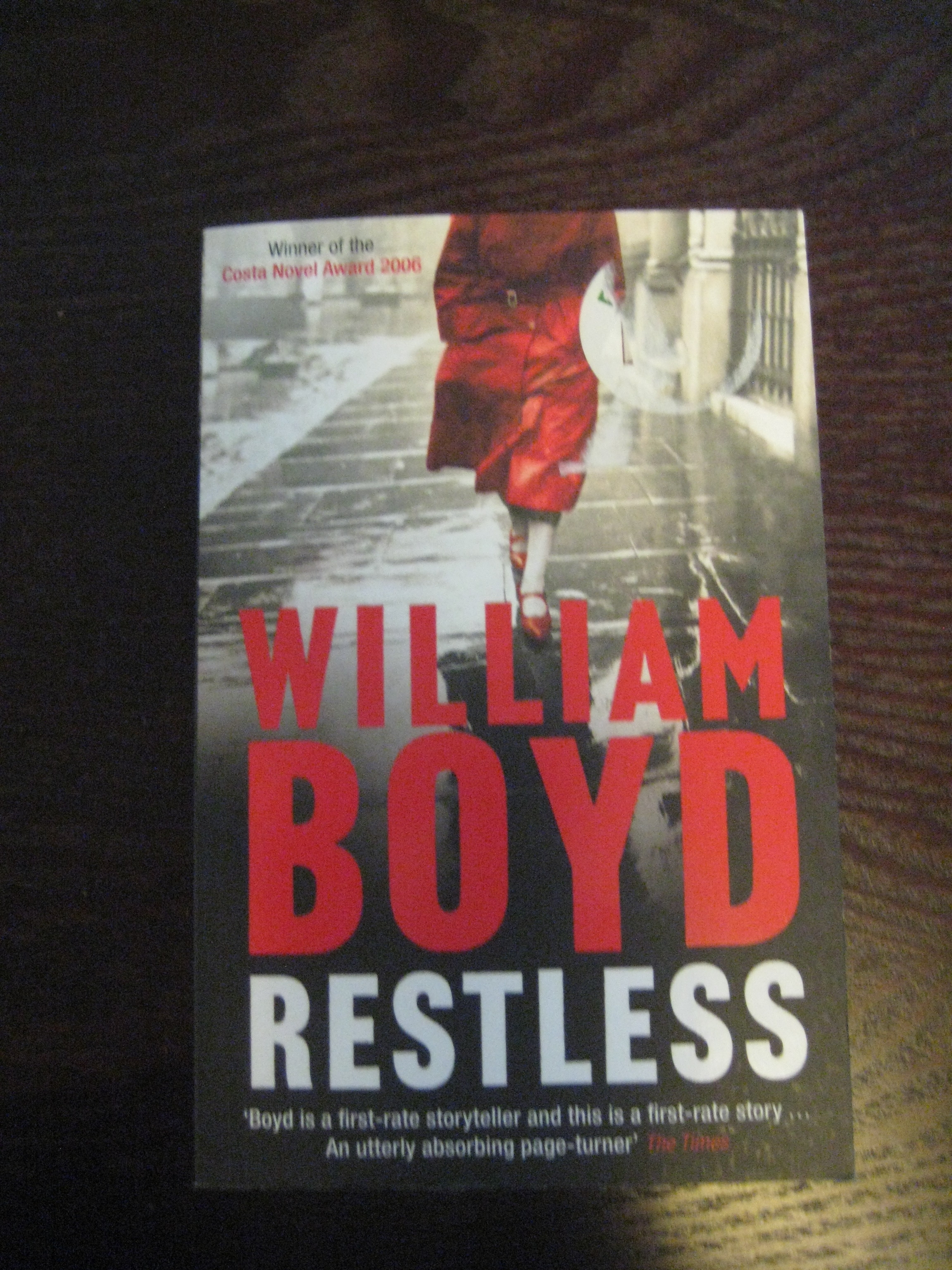
Restless by William Boyd

I will admit to not having read Restless, but it sounds fascinating — and I do like the cover. Stark and a bit mysterious.

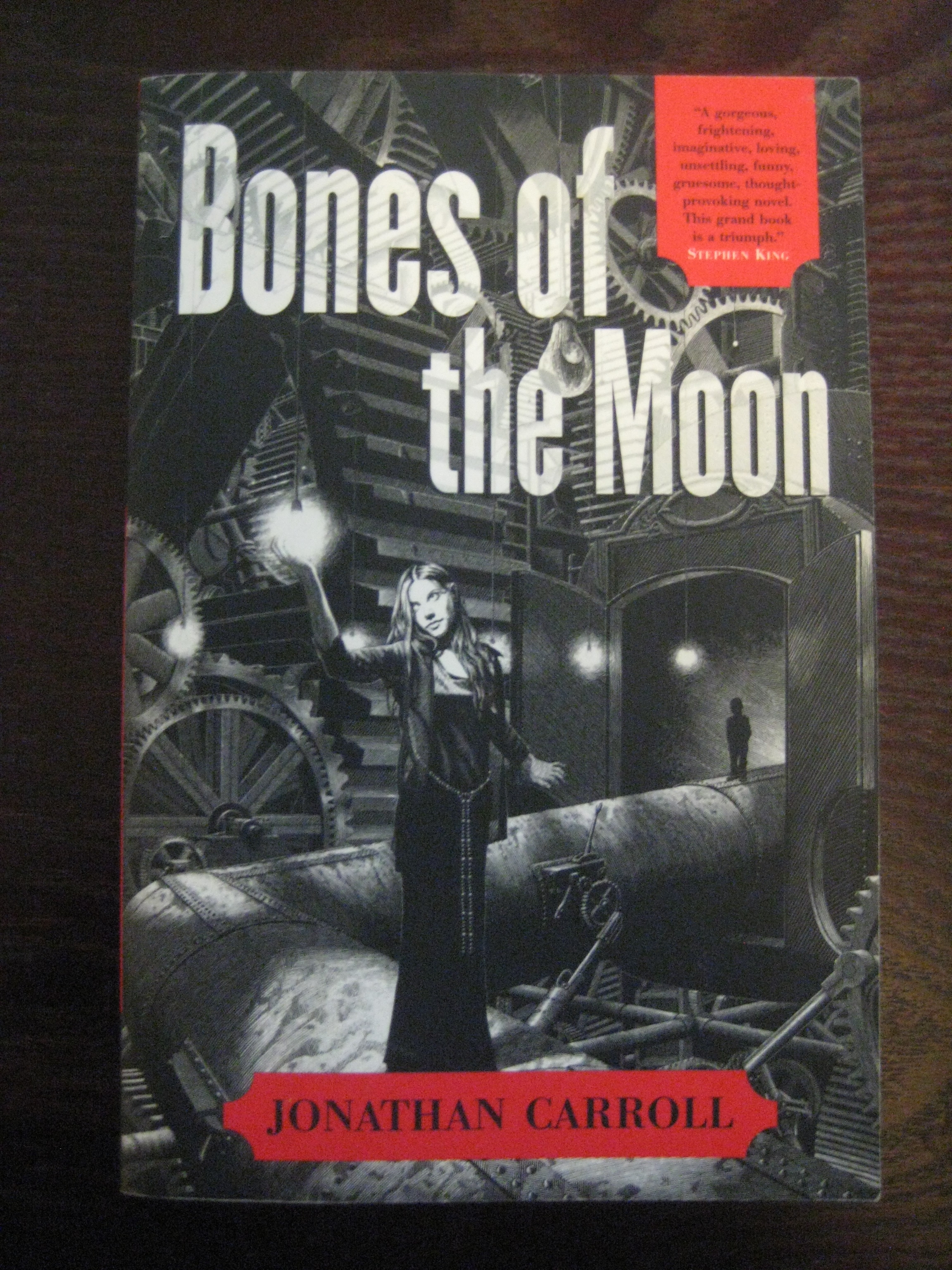
Bones of the Moon by Jonathan Carroll

Such an odd book, mind-bending at times. I’m still not sure whether it worked for me, but one thing’s certain — I do love the cover.

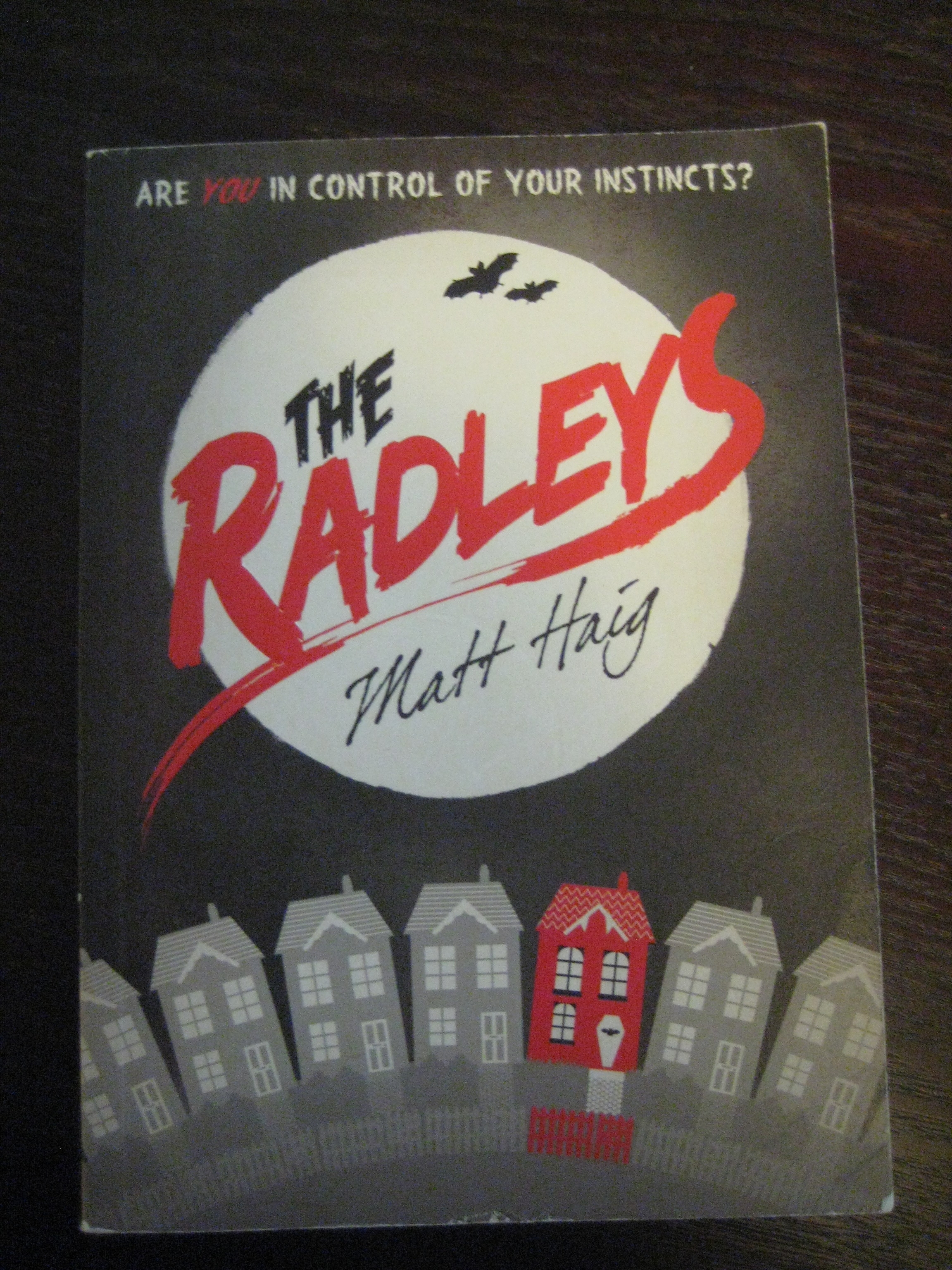
The Radleys, a genre-defying story of vampires living in the suburbs, got a comic-esque cover aimed toward the YA audience in the UK (above), but I actually prefer the US version, which conveys more of a sense of something sinister lurking behind the domestic facade:

The Radleys, with the US version, marketed as adult fiction

Sadly, my more camera was not up to completing its task, so although this book lives on my shelves, I could not get a decent picture of it and had to resort to importing an online version:

The Monsters of Templeton by Lauren Groff

This story of dark secrets in a small town is well-served by the sharp cover art that combines a gothic feel with modern images.

Another that I’ve read, but only as an e-book:

When She Woke by Hillary Jordan

This modern retelling of The Scarlet Letter is hauntingly well-done, and I really love the sharpness of the cover portrait.

Finally, I just came across this image of new editions of classic works by Stephen King:

I think I’ll be dreaming about these tonight. Wouldn’t they look terrific on my shelves?

That’s all I’ve got. How about you? What black and red beauties have caught your eye lately?

The joys of a great author event

Last night, I had the pleasure of attending an author event featuring Chris Cleave, author of Incendiary, Little Bee, and most recently, Gold. I drove home afterward in an outstanding mood, because start to finish, the event was delightful.

The author was warm, charming, funny, and intelligent. He read a passage from Gold that takes place relatively early in the narrative, and brought it to life with verve and humor. He talked through his writing process, how he settled on Gold’s subject matter, how he researched it (including subjecting himself to a rigorous bicycle training regimen – a very funny part of his talk), and what he viewed as the central questions of the novel. The author spoke with great insight on the subjects of competition, ambition, and friendship, the drive to be the best at something where in order to success, everyone else has to fail, and the “hidden world” of high-level athletes.

It was simply fascinating. I gained some fresh insights into a book that I’d already read and enjoyed. Questions were welcomed. I asked – rather inarticulately, I’m afraid – about the “win at all costs” mentality that he’d been discussing versus the message so prevalent today that everyone’s a winner, we’re all special! He gave a great answer, both from his perspective as a writer on the subject and as a parent of young children as well.

Simply a great event. So why am I writing about it? Because I came away from it thinking about how, no matter how much we as readers may glean from a book, there’s always more to learn. The best author events, in my opinion, are the ones that go beyond book signings or readings. Hearing an author speak about his or her writing process and motivation, elaborate on the big questions he/she was trying to explore in the book, or how a particular character was conceived, adds exponentially to my enjoyment of the book itself. Just when I think I’ve gotten a book all figured out, I have a new angle to consider!

What author appearances have you attended and enjoyed? Have you ever reconsidered your opinion of a book after hearing the author speak? Does the quality of your interactions with an author affect your views of the book itself? Share your experiences and thoughts, please!

Various & sundry stuff on an overcast Sunday morning (including a book review at no extra charge!)

The sky is gray, we received an overseas phone call at 6:45 am (really, people, learn about time zones!), and I’m a little too draggy to put on sweats and shoes and go for an invigorating walk by the sea, as is my wont most weekend mornings. So instead, I’m hiding away in my office nook/basement computer room, hoping that my family won’t complain too much if I ignore them temporarily while I write and muse about… whatever.

First up, I finished reading Stiff by Mary Roach! I stayed up until 12:30 last night (had I known about the upcoming 6:45 am wake-up call, I might more wisely have chosen to go to bed), and can proudly say that I know a lot more about cadavers than I did a few days ago. So herewith…

Book Review: Stiff by Mary Roach

Mary Roach is to science what Christopher Moore is to religious history. Both are knowledgeable writers with a deep understanding of their subject matter — yet they manage to make these subjects absolutely hilarious. (Granted, the comparison isn’t entirely apt, but any chance to make a Lamb reference works for me).

In Stiff, Roach investigates what happens to human bodies after death. She gives a comprehensive look at what happens to bodies donated to science, and devotes chapters to the use of cadavers in automotive testing, ballistics testing, and more. Further chapters cover the purported healing powers of mummy parts, the question of whether decapitated heads remain alive and aware for brief moments post-beheading, methods of preserving bodies (embalming and plastination), and covers the unsavory history of anatomists and body snatchers.

The author certainly does not shy away from disgusting details, and she’s there first-hand to tour a decomposition study as well as to witness the harvesting of organs for donation. Her research is thorough, and she clearly is not afraid to ask the questions ordinary people might wonder about but would feel undignified asking.

Mary Roach has a way with words that never fails to entertain, even while covering incredibly morbid  topics. And yet, it’s clear that she has the utmost respect for the scientists and researchers whose work she describes, as well as for the deceased and their families.

Her chapter on organ donation is especially lovely and inspiring, as was her description of the newer standards in medical school anatomy classes, in which students are encouraged and expected to show gratitude toward their cadavers and find ways to honor them, as in this passage describing a memorial service held by anatomy students at UCSF for their year’s cadavers:

One young woman’s tribute describes unwrapping her cadaver’s hands and being brought up short by the realization that the nails were painted pink. “The pictures in the anatomy atlas did not show nail polish,” she wrote. “Did you choose the color? Did you think that I would see it? I wanted to tell you about the inside of your hands. I want you to know you are always there when I see patients. When I palpate an abdomen, yours are the organs I imagine. When I listen to a heart, I recall holding your heart.”

I learned a lot from reading Stiff — on a subject that I never would have thought I’d want to explore. My only quibble is that perhaps it went on a bit too long. Sure, it was fascinating, and in Roach’s talented hands, quite entertaining as well. Still, by the end, I had definitely had enough and was ready to be done. I would recommend this book to anyone interested in a behind-the-scenes look at science, told from the perspective of someone just like us, someone who’s not a scientist but just wants to know what happens. Mary Roach has a way with words that’s funny, sarcastic, and hard to predict; read her work and you’ll find yourself laughing at things you just can’t believe you’d laugh at. I loved her more recent Packing for Mars, and I’m very glad to finally have gone back and read Stiff as well.

And furthermore:

My plans for today including continuing my incredibly satisfying project of building Ikea bookshelves and installing them in what is currently a spare room — I’m hoping the designation “library” will catch on. Let’s respect the books, people! I have high hopes for my new little reading nook, and even my kid is getting into the project. He’s quite handy with a hammer and screwdriver, and has been asking all morning if he can help put the shelves in. (My answer: Shelves, yes. Books, no. The placing of books on the shelves has taken on a practically religious significance for me, and I plan to meditate on careful placement for quite some time).

The Sunday book review section didn’t have all that much that grabbed me this week, although it did mention a new collection of stories in tribute to Ray Bradbury which sounds quite good. Margaret Atwood and Neil Gaiman have contributed stories, among other terrific writers, so methinks this will be a good one to pick up and read in small pieces.

Now that I’ve finished Stiff, and after reading Jaycee Dugard’s powerful memoir earlier this week, I’m ready to dive back into fiction! As usual, I have a stack of library books begging for some love and attention, and I can’t wait to dig in!

Finally, I’ll just add that my son and I are really enjoying Chomp by Carl Hiassen as a read-together bedtime story. I’d never read any of his kids books before, but based on our experiences with Chomp so far, we’ll be reading a lot more of his books in the future. Chomp is funny and exciting, with lots of elements to appeal to a 10-year-old boy (and his mom). I’ll be back with a review once we’re done.

Happy weekend! And for those who celebrate the Jewish new year, l’shanah tovah! May you have a sweet and healthy new year — filled with lots of great reading, I hope!

Random book news of the day

I’m having a hard time settling on just one topic today. Maybe I’m just too tired — my ten-year-old woke me up at 3:15 am after a bad dream, asked me to sit with him while he went back to sleep (which he did almost immediately), then I tossed and turned for about an hour or so. Whine, whine, whine… poor me. At any rate, I’ve just been killing time bopping around the web, and here are some cool, random, or unusual tidbits I’ve stumbled across:

  • Did you have any idea that The Time Traveler’s Wife had not already been released as an e-book? This is one of my all-time favorite books, and I know it was a huge bestseller, so I find this rather puzzling. However, according to the Associated Press, the e-book version will finally be released on October 10th — about nine years since the book was first released in hardcover.
  • Carlos Santana is writing a book! Not, thank heavens, a cutesy kids book, like some celebs have done. (“Look, I’m a writer!” Yikes). Santana’s memoir is due out sometime in 2014, and will be published by Little Brown & Co., the same publishing company that brought us Life by Keith Richards.
  • A new study shows that 55% of the people buying YA novels are not, in fact, young adults. Or maybe they are young adults, but not “young adults” as in the target demographic for young adult fiction — which would be teens. Boy, that convoluted sentence makes my teeth hurt. In any case, over half of the buyers of YA fiction are over age 18, and most are in their 30s and 40s. (Guilty!) Does this surprise anyone? Based on wholly unscientific data — which is that lots of my grown-up friends and fellow bloggers adore YA — this doesn’t seem particularly shocking. If you’re interested, you can read more about the study here.
  • The 57th edition of the Guiness Book of World Records has just been released. Because we really, really need to know just how tall the world’s tallest mohawk is. (Answer: 3 feet, and it’s been growing for 15 years).
  • A book returned 78 years past its due date would have cost the borrower over $6,000 in fines, had an amnesty program not been in effect. You can read more about the Chicago Public Library’s amnesty program here; here’s a snippet which I found charming:

The rare edition of Oscar Wilde’s “The Picture of Dorian Gray” had been checked out in 1934. According to Reuters news agency, Harlean Hoffman Vision found the book in her late mother’s possessions and wanted to bring it back, but she wanted to make sure she wouldn’t go to jail for having had it so long. “She kept saying, ‘You’re not going to arrest me?’ and we said, ‘No, we’re so happy you brought it back,’” Ruth Lednicer, the library’s marketing director, said. The library’s fine amnesty – dubbed “Once in a Blue Moon Amnesty” – began on Aug. 20 and ended Sept. 7. The value of the 101,301 items returned was estimated at $2 million. Several of the recovered items were checked out in the 1970s and 1980s, the Chicago Tribune newspaper reported.

  • Oops, maybe I shouldn’t have made fun of celebs who write children’s books. Jessica Lange’s book for kids, It Is About A Little Bird, is due out in 2013. Stop thinking about Constance on American Horror Story! I’m sure the book will be wholesome and lovely and not in the least bit creepy.
  • Apparently reviewers granted the privilege of getting advance copies of J. K. Rowling’s upcoming new release (and guaranteed international bestseller) The Casual Vacancy are subject to restrictions so strict that they’re not even allowed to talk about the fact that restrictions exist. Not exactly shocking, given the uber-security surrounding the Harry Potter releases. I know we’re all going to be reading this book. The question is, will we like it? Check back with me in early October!
  • And finally… according to this LA Times piece, you can get that embarrassing copy of 50 Shades of Grey off your bookshelf! Mail your copy to O/R Publishing, and the first fifty respondents will be sent a copy of 50 Shades of Louisa May as a replacement. Now that’s what I call a good deal! (said with a slight smirk and a just-barely-audible snort)

My web browser has crashed twice, causing me heart palpitations over potentially lost pearls of wisdom. This must be a sign from the gods of sleep that my time at the keyboard has come to a close.

Good night, all… and may your dreams be filled with cushiony armchairs and excellent reading.

My top 5 favorite timey-wimey books

It’s September 1st, and you know what that means, right? It’s the return of the Doctor! (And if you’re asking, “Doctor who?”, the answer is — yes!). The BBC’s Doctor Who returns for a much-anticipated 7th season tonight, and Whovians everywhere are dusting off their bowties and sonic screwdrivers in preparation for another fantastic journey through time and space.

“People assume that time is a strict progression of cause to effect, but actually from a non-linear, non-subjective viewpoint – it’s more like a big ball of wibbly wobbly… timey wimey… stuff” – The Doctor

Inspired by the Doctor, step inside my TARDIS (that’s Time and Relative Dimension in Space, for the uninitiated) for a tour of my favorite timey-wimey books — books that deal with time travel, time slips, or just plain old time-related weirdness.

1) The Time Traveler’s Wife by Audrey Niffenegger

I was just swept away by this mind-bending journey through a relationship between a woman who is fixed in time and a man who is not. Claire meets Henry when she is six years old; Henry meets Claire when she is 21. Early on, they discuss their temporal relationship in comparison to a Mobius strip, and it’s an apt metaphor. Older Henry visits child Claire; young Henry visits older Claire. In the midst of all the comings and goings, they find true love. At once tragic and beautiful, this book will make your head spin as you try to puzzle out whether the words “before” and “after” have any meaning whatsoever. This was one of the very few books that I began reading a second time immediately upon reaching the end the first time through, just to see how the pieces fit together knowing what was still to come.

2) Kindred by Octavia Butler

As Kindred opens in the mid-1970s, Dana is an African American woman in her 20s, happily married to a white man and living a contented life. She is yanked back through time to the ante-bellum South, where time and again she must intervene to save the life of her ancestor Rufus, son of a slave-owner. Dana’s experiences are shocking, raw, and brutal, and the effect upon her and her marriage is indelible. Kindred is less about time travel than about slavery, power, and freedom. It is a shocking book, and packs a powerful punch. Not to be missed.

3) Replay by Ken Grimwood

Replay is not about time travel, but the timey-wimey weirdness is here just the same. At age 43, unfulfilled and bored, Jeff Winston has a heart attack and dies… but wakes up again in his 18-year-old body, with his whole life ahead of him again, and with all the memories of his previous life. Is this a chance to right old wrongs? to set a new path for himself? to make an impact on the world? Jeff relives his life, but with alterations along the way, all the way through to age 43, when he dies again… and so on, and so on, and so on. Each time around, Jeff comes back to himself just a bit later, and each time around he thinks he’s found the way to get it right — but of course, life isn’t something you can plan for or make turn out just the way you want. Replay is hard to explain, but marvelous to read.

4) Somewhere in Time by Richard Matheson

Until a couple of years ago, I actually had no idea this was a book. I fell in love with the lush romance of the Christopher Reeve/Jane Seymour movies years ago, and was astonished to find the book at a used book sale. And by Richard Matheson, no less — someone who really knows how to tell a story. Richard is a modern man who falls in love with a woman in a photo from decades earlier, and using the power of his mind, finds a way to travel back in time to be with her. Passionate and intense, this is yet another interesting spin on a journey through time. (For more details, you can see my Goodreads review here).

5) 11/22/63 by Stephen King

I love Stephen King, am fascinated by the Kennedy assassination and all the associated conspiracy theories, and adore reading about time travel. Clearly, this massive novel was right up my alley! Given the opportunity to travel back through time and avert a national tragedy, would you? Should you? 11/22/63 is a combination of time travel, historical fiction, and romance, and it works. As I say in my review, I recommend this book wholeheartedly.

I’m leaving out some other great ones, not because I don’t love them — I do! I really do! — but because time’s a-wasting, and I must move on. So I’ll wrap this up with a list of a few other favorite books full of timey-wimey goodness. Let me know what time-related books you’ve enjoyed!

More time-travel, time-slip, and time oddities:

Outlander (and sequels) by Diana Gabaldon (which I didn’t include in my top 5 despite my mad love for them, just because I’m always raving about these books to the point of sounding like a broken record. Read these books! There, ’nuff said.)

Harry Potter and the Prisoner of Azkaban by J. K. Rowling — the book that introduced my children to the brain-twisting concept of time travel!

Miss Peregrine’s Home For Peculiar Children by Ransom Riggs
The Revisionists by Thomas Mullen
The Future of Us by Jay Asher
The Rose Garden by Susanna Kearsley
Lightning by Dean Koontz
The Sound of Thunder (short story) by Ray Bradbury

It’s Friday! It’s Friday!

Upon waking up this morning and feeling very giddy about the fact that Friday has finally arrived after an excruciatingly long workweek, my first thoughts naturally turned to books. I wondered — have I ever read a book with the word Friday in its title?

I couldn’t come up with any off the top of my head, but a quick perusal of my Goodreads shelves reveals that I have, indeed, read exactly one Friday book, entitled… wait for it… Friday. Herewith, a salute to Friday books:

Friday by Robert A. Heinlein (1982)

My one and only Friday book, read so long ago, in the dark days of the 1980s, that I can barely remember the plot — although I do recall enjoying it quite a bit. I was on a mini-Heinlein bender in those days, and read this one right after discovering I Will Fear No Evil and Stranger In A Strange Land.

The description on Amazon is lamentably brief and not terribly helpful:

Engineered from the finest genes, and trained to be a secret courier in a future world, Friday operates over a near-future Earth, where chaos reigns. Working at Boss’s whimsical behest she travels from far north to deep south, finding quick, expeditious solutions as one calamity after another threatens to explode in her face….

Still, I seem to remember that it was quite fun to read, brimming with typical Heinlein wit and humor. Maybe not his finest, but I think fans of ’80s sci-fi will have a good time with Friday.

A quick search reveals a few other promising Friday titles:

The Friday Night Knitting Club by Kate Jacobs (2007)

From Booklist:

Georgia Walker’s entire life is wrapped up in running her knitting store, Walker and Daughter, and caring for her 12-year-old daughter, Dakota. With the help of Anita, a lively widow in her seventies, Georgia starts the Friday Night Knitting Club, which draws loyal customers and a few oddballs. Darwin Chiu, a feminist grad student, believes knitting is downright old-fashioned, but she’s drawn to the club as her young marriage threatens to unravel. Lucie, 42, a television producer, is about to become a mother for the first time–without a man in her life. Brash book editor KC finds her career has stalled unexpectedly, while brilliant Peri works at Walker and Daughter by day and designs handbags at night. Georgia gets her own taste of upheaval when Dakota’s father reappears, hoping for a second chance. The yarn picks up steam as it draws to a conclusion, and an unexpected tragedy makes it impossible to put down. Jacobs’ winning first novel is bound to have appeal among book clubs.

Oh, and it’s a series. A series about knitting. Okaaaaaay…

Moving on, a non-fiction title that I know has a lot of fans and followers:

Friday Night Lights: A Town, A Team, And A Dream by H. G. Bissinger (1990)

I didn’t read the book; I didn’t watch the TV series. I understand both were great.

From Amazon:

Secular religions are fascinating in the devotion and zealousness they breed, and in Texas, high school football has its own rabid hold over the faithful. H.G. Bissinger, a Pulitzer Prize-winning journalist, enters into the spirit of one of its most fervent shrines: Odessa, a city in decline in the desert of West Texas, where the Permian High School Panthers have managed to compile the winningest record in state annals. Indeed, as this breathtaking examination of the town, the team, its coaches, and its young players chronicles, the team, for better and for worse, is the town; the communal health and self-image of the latter is directly linked to the on-field success of the former. The 1988 season, the one Friday Night Lights recounts, was not one of the Panthers’ best. The game’s effect on the community–and the players–was explosive. Written with great style and passion, Friday Night Lights offers an American snapshot in deep focus; the picture is not always pretty, but the image is hard to forget.

After reading The Blind Side by Michael Lewis (before it was a movie, thank you very much!), I got a lot of mileage out of shocking the people who know me well by announcing that I actually read a football book. I really should read Friday Night Lights, although I’m afraid my friends will start to worry if I read two sports book in my lifetime.

Friday’s Child by Georgette Heyer (1944)

From Amazon:

When the incomparable Miss Milbourne spurns the impetuous Lord Sherington’s marriage proposal (she laughs at him—laughs!) he vows to marry the next female he encounters, who happens to be the young, penniless Miss Hero Wantage, who has adored him all her life. Whisking her off to London, Sherry discovers there is no end to the scrapes his young, green bride can get into, and she discovers the excitement and glamorous social scene of the ton. Not until a deep misunderstanding erupts and Sherry almost loses his bride, does he plumb the depths of his own heart, and surprises himself with the love he finds there.

I’ve never read anything by Georgette Heyer, but I know she has legions of adoring fans. For me personally, I think this would go on the “some day when I really have nothing else to read” pile, but I know there are a lot of avid readers who’d want to gobble this one up right away.

Black Friday by James Patterson (1986)

From Publishers Weekly:

While Patterson’s thriller is slightly out-of-date with its Cold War setting, it remains dramatically contemporary in its vision of a stock market thrown into chaos when a group of saboteurs blows up several Wall Street institutions. Arch Carroll, head of the CIA’s antiterrorist division, and Caitlin Dylan, director of enforcement for the SEC, team up professionally, and later romantically, to locate the Wall Street terrorists before they strike again. Arch travels to Paris and back, as he finds himself on the trail of former colonel David Hudson and his ragtag band of vengeance-seeking Vietnam veterans.

So not for me. But hey, it takes all types, right?

Freaky Friday by Mary Rodgers (1972)

From Amazon:

Annabel thinks her mom has the best life. If she were a grown-up, she could do whatever she wanted Then one morning she wakes up to find she’s turned into her mother . . . and she soon discovers it’s not as easy as it looks.

I can’t believe that I’ve never read this! I’ve seen the Jodie Foster and Lindsay Lohan versions of the movie, both cute in their own ways. I wonder if this book holds up, or if would seem hideously old-fashioned for kids today?

Friday Nights by Joanna Trollope (2008)

From Publishers Weekly:

When a British retiree invites two young single mothers from the neighborhood to her flat, a Friday night tradition begins. As their klatch widens, Trollope’s memorable characters do more than just represent varying female predicaments: they develop as rich individuals who come to triumph over their pasts. Paula has a wary relationship with the married man who fathered their son, Toby: she must move on, yet stay in touch for Toby’s sake. Struggling Lindsay was widowed before she gave birth, while her sister, Jules, is a careless aspiring nightclub DJ with a wild streak. Independent, put-together Blaise contrasts starkly with her often bedraggled business partner, Karen, who barely manages her role as mother and breadwinner. And then there is Eleanor, the catalyst for the gatherings, a no-nonsense older woman who, though full of wisdom and spunk, keeps her thoughts to herself unless asked. When a new man enters Paula’s life, Trollope (Second Honeymoon) masterfully shows how work and romance can tip the scales in female friendships. The result is a careful and compelling examination of one man’s insidious effect on a group of female friends, as memorable as it is readable.

Sounds a little Jane Austen Book Club-y, but I’ve read other novels by Joanna Trollope and found her writing sharp, insightful, and sensitive.

And my final addition for this salute to Fridays:

Friday The Rabbi Slept Late by Harry Kemelman (1964)

From Goodreads:

Rabbi David Small, the new leader of Barnard’s Crossing’s Jewish community, can’t even enjoy his Sabbath without things getting stirred up in a most unorthodox manner: It seems a young nanny has been found strangled, less than a hundred yards from the Temple’s parking lot — and all the evidence points to the Rabbi.

Add to that the not-so-quiet rumblings of his disgruntled congregation, and you might say our inimitable hero needs a miracle from a Higher Source to save him….

It gave me a nostalgic little giggle to see this book pop up in my search. I remember seeing my parents read this and others in the series when I was a kid. A mystery series with a rabbi as the hero? Sounded kind of goofy to me at the time, but based on reader reviews, these books are both award-winning and well-loved by their readers.

So there you have it: Science fiction, thriller, sports, contemporary fiction, Regency-era historical romance, children’s fiction, and a crime-solving rabbi — something for everyone.

Enjoy your Fridays, whatever you may choose to read!

And hey, if you’ve got an exciting book underway for the long weekend, do tell — leave a comment and let us all know what you’re reading this Labor Day weekend.