My week in graphic novels

Last week, after finishing a couple of heftier and long-awaited novels, I made my own personal proclamation: It’s Graphic Novel Week!

Seven days and seven books later, here’s what I read and what I thought:

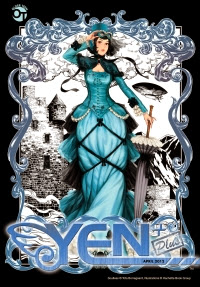
First up was Soulless: The Manga, Volume 2 by Gail Carriger (author) and Rem (artist). This manga version of Changeless, the 2nd book in the wonderful Parasol Protectorate series of novels, is a rather delightful affair, even for someone like me who doesn’t typically care for manga-style illustration. While I occasionally found the artwork a bit too cartoon-y, there are moments and scenes that are just wonderfully conveyed, including the Scottish settings, the steampunk gadgets and gewgaws, the fashion (and rather atrocious hats), and some of the interplay between main characters. I would never recommend the manga version as a sole introduction to Gail Carriger’s work, but for anyone who’s read and enjoyed the series, these manga volumes are a nice, amusing side dish.
Next was the continuing stories spun off from my beloved Buffy the Vampire Slayer TV series. As anyone who was a fan knows, the TV series ended after seven seasons, but Buffy lives on! Under the auspices of creator Joss Whedon, Buffy’s story continued in comic form through season 8, which wrapped up in 2011, and in the newer (and ongoing) season 9. This past week, I had the pleasure of reading the 2nd volume in season 9, On Your Own, as well as the 2nd volume in the spin-off Angel & Faith series, Daddy Issues. Reading these comic series are like visiting with old friends. The gang (or most of the gang) is back! We get to hang out with Buffy, Willow, Spike, Xander, Dawn, and more. The series remains true to the characters as they existed in the TV series, but with a natural growth and progression through the ensuing action. While the season 8 plotline was a bit more convoluted than was truly necessary for good storytelling, the season 9 plot so far is engrossing, surprising, and yes, even touching. Meanwhile, I’m finding myself much more interested in the Angel and Faith spin-off than I thought I’d be, as the two team up to atone for past sins, right some wrongs, deal with visits from important figures from their pasts, and put some bad guys in their places. Both of these volumes were quick but engaging reads, and I can’t wait to see what happens next.

After that, I moved on to the world of Fables by Bill Willingham. While the Fables series has been around since 2002, I was not introduced to Fables until earlier this year — at which point I fell madly in love and gobbled up the entire series as quickly as I could. Which left me completely bereft once I realized I was all caught up and had to simply sit and wait for the next volume to be released. (Side note: Fables, Volume 18: Cubs in Toyland is due out in January 2013!). Luckily for me, two new side projects were released in fairest-1November: Werewolves of the Heartland, a stand-alone volume centered on Bigby Wolf — only my very favorite character from the Fables ‘verse! — and volume one of a new ongoing series, Fairest, which focuses on some of the female Fables. Both of these, while enjoyable, were more or less filler for me. Werewolves of the Heartland follows Bigby on an adventure alluded to in the main Fables series, in which Bigby sets off in search of a new safe location for the Fables in exile. I won’t get into too much of the plot, but it’s nice to see Bigby in action again — although for the most part, it just left me hungry to return to the main series. (January, hurry up!) Fairest was fun, but I’ll have to see where the series goes as a whole. Volume 1 focuses on Briar Rose (aka Sleeping Beauty), Ali Baba, and the Ice Queen. Interesting and entertaining, but again, it mostly just whets my appetite for the main body of the series. Still, for a Fables fan, these are good choices for the in-between months.

wrinkle-graphicA Wrinkle In Time (or more accurately, according to the book jacket, Madeleine L’Engle’s A Wrinkle In Time: The Graphic Novel by Hope Larson) was my next choice. This was such an interesting reading experience. It’s been many years since I’ve read the original novel, yet it made such an indelible impression upon me that I approached the graphic novel with some misgivings, wondering how on earth it could succeed in capturing the essence of Madeleine L’Engle’s masterpiece. Fortunately, the graphic novel does a wonderful job of conveying the spirit of the novel, with simple but expressive illustrations that portray the characters’ emotions and struggles quite well. Meg in particular comes across in a manner so true to the novel — full of doubts and insecurities, driven by love for her family, confronting her anger and frustrations on a daily basis, and trying to become her own person while caring for those she loves. My only hesitation about this edition is that, in a way, it moves too fast. The journey to find Meg’s father and all the events surrounding it happen quickly, and I wonder whether a person reading the graphic novel without having read the original would get the same level of emotional impact. I enjoyed it a great deal, but it’s no replacement for the “real thing”.

Finally — and I’m still recovering from this one — I read the latest volume in the Locke & Key series by Joe Hill. Volume 5, Clockworks, continues right where the previous volume left off, with the Locke children in terrible danger and with no adults available or able to help. In volume 5, we get two very important pieces of Key House history — the origin of the keys in 1775, and the fateful events of 1988 involving the children’s father and his friends at the end of their senior year of high school. Both historical pieces are powerful and disturbing, and finally answer some questions that are essential to understanding the mystery and terror of the story. Locke & Key is scary, suspenseful, creepy, tragic, and un-put-down-able. This series just blows me away. Joe Hill is a master storyteller, and the illustrations are crisp, frightening, gory, and just generally wonderful. Highly, highly recommended.

And there you have it! Seven days, seven graphic novels, one very satisfied reader! Let’s do this again soon, shall we? Meanwhile, back to reading books without pictures… sigh.

Save
Happy Hanukkah to me! A celebration – with books.

Earlier this week, I wrote a blog post as part of the Top Ten Tuesday blog hop, about the top 10 books I’d like to receive as gifts this holiday season (or any holiday season, or ever, really). I bemoaned the fact that no one in my family or circle of friends buys me books, for reasons too sad to get into again (but you can read my post here, if you’d like).

But really, it wasn’t entirely fair for me to make this statement, as my wonderful and amazing daughter is the exception to the rule. A brief moment of mommy bragginess: My daughter, age 22, is smart, funny, caring, and a reader; she’s the light of my life, and everything a mother could want in a daughter. We make each other laugh; we share the same taste in books, movies, TV shows… you name it.

And so, darling daughter — currently spending a year in Alaska as an Americorps volunteer — sent the family a package in time for Hanukkah, which we opened tonight after latkes were eaten, candles were lit, songs were sung. And in that package was a book for me! And guess what? It was:

  1. A book that I didn’t already own
  2. A book that I hadn’t already read
  3. A book that I hadn’t even known existed
  4. A BOOK THAT I LOVE!

Success! My girl is amazing. She got me… drumroll, please… the brand-new graphic novel of A Wrinkle In Time! A Wrinkle In Time is only one of my very favorite children’s books, and now THERE’S A GRAPHIC NOVEL! (Please excuse my excessive use of caps lock — I’m a tad overexcited at the moment).

You know when someone gives you a present, and you open it up and it’s not really something you’re all that into, but you smile and say “wow!” and “oh my god” and other inane things intended to show happiness with something you could really do without? This was not one of those times. Darling daughter picked out the perfect something — something that I’ll enjoy, something I’m excited to receive, and most important to me, something that shows that she really knows me.

I can’t wait to read my new book. I love my daughter. Basically, I’m a happy camper.

See? The way to a booklover’s heart is through her bookshelves. ‘Tis the season to give and receive good books. And, oh yeah, one more time: I love my daughter.

Great (But Wrong) Expectations

https://i0.wp.com/www-deadline-com.vimg.net/wp-content/uploads/2011/11/doc-novel-mary-doria-russell-hardcover-cover-art__111122010805.jpgI had the very weird experience this past week of reading a book and realizing, close to the end, that this book was not about what I thought it was about after all.
The fault is my own. While I’m an avid reader of book reviews, I do tend to shy away from reviews of books that I know I plan to read. I’m a spoiler-phobe, you see. I’ve often started reading a review, only to get a few paragraphs in and realize, “ooh, this sounds like a book for me!” and immediately stop reading the review. I just don’t want to know anything in advance, thank you very much.

And so, after inexplicably waiting a year past the publication date, I finally read Doc by Mary Doria Russell this past week – and while I loved it and thought it was fascinating (and will write a review in the next couple of days), it wasn’t the book I expected it to be.

Mary Doria Russell is the author of The Sparrow, a book I love passionately. She’s basically one of my “free pass” authors – so good, and with such a winning streak with me, that I’ll automatically read anything she writes, whether or not the subject matter is in one of my usual areas of interest.

Such was the case with Doc. A Western, for me? Written by any other author, the answer would be no. But in this case, I just had to read it.

I admit to being rather ignorant of the Western genre, and my knowledge of historical figures from the “Wild West” era is woefully shallow. So yes, I’d heard of Doc Holliday, Wyatt Earp, and the OK Corral, but couldn’t tell you much of anything about them. Doc Holliday – some sort of gunslinger? An outlaw, maybe? Good on a horse? I’ve never even watched “Tombstone”. Shows you how much I knew about the historical events and people in Doc before I picked up the book.

And of course, being this unprepared, I expected to read more or less a biography of Doc Holliday, culminating in the big gunfight at the OK Corral. It wasn’t until I was about 50 or 60 pages from the end that I realized, “Wait a minute! There’s no way she can fit that in! Whaaaaaaaaaat is going on?”

Silly me. Had I read reviews – or really paid attention to the opening paragraph of the book – I would have known what to expect. Here’s how the book opens:

He began to die when he was twenty-one, but tuberculosis is slow and sly and subtle. The disease took fifteen years to hollow out his lungs so completely they could no longer keep him alive. In all that time, he was allowed a single season of something like happiness.

See? She says it right there: “a single season of something like happiness”! But somehow or another, I didn’t really process this information up front, and so ended up expecting something much different than what I got.

The book was excellent, and I’m thrilled to have finally read it. But, I’m quite certain that my reading experience would have been much different if my expectations had been set properly from the start. Instead of viewing many of the incidents in the plot as prelude to a big, gun-slinging climax, I would have realized that what I was reading was, in fact, a beautiful snapshot of a year in the life of an extremely interesting man and the people around him. The incidents I viewed as preludes were really what mattered – the personal exchanges, the small and big moments that made Doc who he was. It was only when I realized where the book was going and what its scope was, and recalibrated my expectations, that I was able to do a course correction for myself. I can only imagine how frustrated I might have been otherwise, expecting an ending that was never intended to be a part of this particular story.  As is, I wish I had read the entire book with this new knowledge, as I believe I would have appreciated it in a much different – and richer – way.

Has this ever happened to you? How do your expectations of a book affect your reading experience? Is it better to know nothing at all before starting a new book or to have some idea of the overall plot before you begin?

Please share your thoughts!

News for bookslovers: Oddities and goodies

All sorts of good book news came our way this past week. In case you were snoozing and missed something, consider this your friend public service announcement from the land of book obsessives:

In book-to-TV news:

  • The BBC announced that it will be producing a TV adaptation of Susannah Clark’s wonderful Jonathan Strange and Mr. Norrell. So far, it sounds like this will be a six-episode mini-series airing in the UK sometime in 2013… let’s hope it crosses the pond to the US soon thereafter. You can read more about this delightful news here.
  • Coming next summer on CBS: Stephen King’s Under The Dome! This was one of my favorite books read in 2011 — big, creepy, and scary in an all-too-human sort of way. I can’t wait to see how this translates to TV. Read about it here.

In sheer insanity news:

  • Because apparently it’s not enough to have read and loved the Harry Potter series… Amazon is selling a $1,000 gift set about the Harry Potter movies. Sure, why not milk this cow for all it’s worth? If you’re thinking, “So worth it! Where do I get one?”, click here to read more. As of today, Amazon is offering this item at a 40% discount… so for just $600, all this can be yours:

hp set

Author updates:

  • Herman Wouk has published a new novel — at age 97! The Lawgiver, an epistolary novel about screenwriters working on a movie about Moses, is Wouk’s 18th book, and, he says, not his last. According to this article in the New York Times, he’s already begun his next writing project.
  • In early November, Philip Roth announced his retirement from writing. His last book, Nemesis, was published in 2010.

And in other bookish news:

  • British author Nick Hornby will be writing the screenplay for the movie adaption of Cheryl Strayed’s memoir Wild. I haven’t read the book yet, and I always enjoy Nick Hornby, so… wait for the movie version?
  • Remember the Janie series from your distant or not-too-distant teen days? Starting with The Face On The Milk Carton, published 20 years ago, Caroline B. Cooney’s engrossingly addictive series focuses on a teen girl named Janie, leading a happy suburban life, who accidentally discovers that she may in fact have been kidnapped as a child. If you walked away from the final book in the series wishing for more, your wishes are about to come true! Janie Face To Face will be published in January, and promises to reveal (according to the Amazon blurb) “if Janie and Reeve’s love has endured, and whether or not the person who brought Janie and her family so much emotional pain and suffering is brought to justice.”
  • Did y’all see this awesome creation from EpicReads? It’s a YA fiction map to the US, with a book for each of the fifty states. Pretty amazing — check it out. You may even want to hang up a copy, or use it as a checklist, or — just thinking here — put it up on the wall and throw darts at it in order to pick your next book. I’ve read 10 out of 50, and can definitely see a bunch more that I’d like to add to my TBR list. Fun!
  • And finally, on a hopeful note, NPR Books reports that this is looking to be a good holiday season for independent bookstores. Which reminds me, I have more shopping to do…

Cheers, all! If you have any other interesting tidbits from the world of books, please share in the comments!

Fresh Catch: This week’s exciting new book arrivals

Two books I’ve been eagerly awaiting arrived this week, and I’m just pleased as punch. (Can punch be pleased? Is that punch as in Hawaiian? Or like what comes from a closed fist? Or should that be with a capital P, as in the puppet who abuses puppet Judy? I think I don’t understand this expression after all. But I digress).

Book #1:

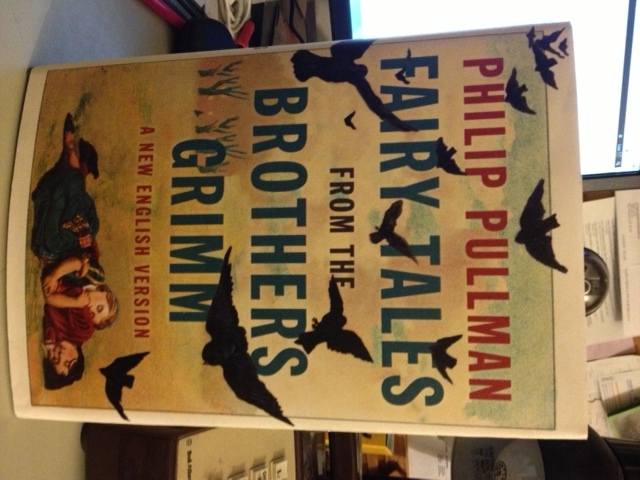
I’ve been waiting for this one since August (I even blogged about it, here, in a fit of intense anticipation), and here it is! Fairy Tales From The Brothers Grimm, by Philip Pullman, is a collection of Pullman’s 50 favorites, including tried-and-true standards such as “Snow White”, “Rumpelstiltskin”, “Little Red Riding Hood”, and “Cinderella”. I can’t wait to read these, but I must confess that I’m even more intrigued by the titles of some of the lesser-known stories in the collection. Has anyone ever heard of “Thousandfurs” or “The Donkey Cabbage”? How about “The Devil with the Three Golden Hairs”, “The Girl with No Hands”, or “The Nixie of the Millpond”? Listen, I adored Pullman’s His Dark Materials trilogy and I’d be willing to read just about anything he sets his pen to… add to that my love of fairy tales, and this collection seems like a sure bet to me.

Of course, I do have to proceed with caution, as I am admittedly terrible at reading short stories, and no matter how interested I may be in a collection, I almost never make it all the way through. I have a plan, however! I believe I’ll tackle this lovely new book in small bites — let’s say, oh, maybe 2 or 3 stories per week? I think the solution to my unavoidable impatience with story collections is to find a work-around so that I don’t end up frustrated by thoughts of all the novels I could be reading instead. So, if I take this one slow and steady, mixing in fairy tales betwixt and between all my other reading, I should be able to stick with it and get all the enjoyment from Pullman’s new collection that it seems to promise.

Book #2:

Sounds the trumpets! Wave the flags! Send up some fireworks, for Pete’s sake! (Wait, who’s Pete? Never mind…) It’s the newest book from Diana Gabaldon! Yes, Diana Gabaldon Herself, creator of the Outlander series, which I love beyond all reason. But if you live in the US, don’t go looking for this book in your local bookstore — it won’t be there. First things first — the basic facts:

A Trail of Fire, by Diana Gabaldon, is a collection of four novellas, one brand-new and three which were included in already published anthologies. For various reasons related to copyrights, the three already published stories can’t be re-released in the US just yet as they still belong to the anthologies, which is why, if you really want to get your hands on this collection, you’ll have to look outside your usual US sources.**

**So far, I know US readers who have successfully ordered A Trail of Fire from Amazon UK and from The Book Depository. The Poisoned Pen bookstore in Arizona has signed copies available for mail order as well (with a hefty price tag).

The contents of A Trail of Fire are:

1) “A Leaf on the Wind of All Hallows” — published in the US in 2010 in the Songs of Love and Death anthology edited by George R. R. Martin and Gardner Dozois. (Note to Firefly fans: This is not a Serenity cross-over, and Wash is not a character in this story. Just to clear up any potential confusion.) “A Leaf on the Wind of All Hallows” tells the story of Roger MacKenzie’s parents and their tragic fates during WWII, hinted at in the Outlander books but never fully explained prior to this story. This is essential reading for fans of the series, best read after Echo In The Bone.

2) “The Custom of the Army” — published in the US in 2010 as part of the Warriors anthology edited by George R. R. Martin and Gardner Dozois. This story focuses on Lord John Grey, a supporting character in many of the Outlander books and lead character in a spin-off series. “The Custom of the Army” is set in 1759 and largely concerns the Battle of Quebec, plus much military intrigue.

3) “Lord John and the Plague of Zombies” — published in the US in the anthology Down These Strange Streets, again courtesy of George R. R. Martin and Gardner Dozois. This is another Lord John story, dealing with his lordship’s first posting to Jamaica at the head of a squadron detailed to deal with a slave rebellion, who end up with much more sinister forces to contend with. In terms of series chronology, the events in this story occur before the events in Voyager.

4) The new one! “The Space Between” has not previously been available, and will not be published in the US until 2013, when it will be included in the forthcoming anthology The Mad Scientist’s Guide to World Domination. “The Space Between” takes place in 1778, after the events in Echo In The Bone, is set in France, and has as its main characters several side characters from the Outlander series, including Michael Murray, Marsali’s sister Joan, and the Comte St. Germain. I don’t know anything else about it… but I will soon!

At the risk of sounding like an insane fan, I will admit to already owning the anthologies containing stories 1 – 3, but after much debate (me vs. me), decided to go ahead and purchase A Trail of Fire for two reasons: One, to get my hands on “The Space Between” (obviously!) without having to wait until next March, and two, because it just looks like a beautiful book. Yes, I do sometimes judge books by their covers. When I truly give my heart to a book or series, I get a great deal of pleasure from having nice-looking copies on my shelves. A Trail of Fire will look simply smashing with all its “colleagues” — I have a space reserved for it right next to The Scottish Prisoner.


Breed: Lingering questions (spoilers!)

Yesterday, I posted my review of Breed by Chase Novak. On Goodreads, I gave Breed 3 out of 5 stars, largely because I felt there were a lot of extraneous characters and plot points that didn’t go anywhere.

I try not to read other people’s reviews until I’ve written my own, so that I don’t (voluntarily or involuntarily) second-guess my own reactions or opinions. So last night, after finishing my review, I looked up the New York Times review of Breed, where I learned this little nugget of information: Chase Novak (aka Scott Spencer) is planning a sequel, called Brood.

I’m of two minds about this. One, there was no indication in Breed that this was the first of two (or more?) novels. Therefore, I’d expected a book that wrapped up satisfyingly and didn’t leave me hanging. Granted, in many horror books (take Rosemary’s Baby for instance), part of the horror is the fact that not everything is resolved — maybe the immediate problem has been addressed, but — my gods! — what about the future? You really should feel at least a little creeped out at the end of a good horror novel.

On the other hand, knowing that Breed will have a sequel, I feel much better about some of the implied outcomes and the various loose ends. Hurray — it’s not sloppiness or intentional vagueness! We’ll find out more!

So, what do I want to know in a sequel to Breed? (Warning: here’s where the spoilers creep in!)

  • Alice and Adam — how soon will they start to change? What exactly happens to all these kids once they hit puberty?
  • Bernard — how does he matter to the story?
  • What’s the deal with the triplets’ birthmarks on their hands?
  • Is the horror here purely genetic? What was in those injections and vials?
  • Is there a supernatural element involved? The scenes in Slovenia feature place names that included the words “castle” and “dragon” — is this a hint that there is more going on that just a medical mystery? Eastern European nation, dragon imagery, big slavering dogs, crying nuns… anyone else thinking what I’m thinking?
  • Obvious question: Is there a cure? Dr. Kis couldn’t find one, but does that mean that it doesn’t exist?

For those of you who have read Breed: What else do you want to know? What plot points do you want to see addressed in the sequel? Any predictions as to where it’s all heading? Share your thoughts, please!

A punch in the heart: Books that take your breath away

Do you ever feel physically drained after reading a book? Have you ever read a book so intense that you feel like you’ve been bruised and beaten? And I don’t necessarily mean that in a bad way: it’s just that I have such a visceral reaction to certain books that I end up feeling like I can barely draw a breath.

And yet, books that pack such a tremendous punch often end up being my favorites.

Take my reading experience of the past week. Knowing that I’d be attending a speaking event featuring author Mary Doria Russell, I decided to re-read her first novel The Sparrow. The Sparrow has been one of my best-loved books ever since I first encountered it. I first read The Sparrow in 2005, after picking it up in a used book store.  Why I originally decided to read it, I don’t know. I think I’d heard of the book before, but certainly it wasn’t one that had been recommended to me by anyone I knew. And yet, something about it drew me, and once I started reading, I couldn’t put it down. I’ve since read The Sparrow several times, on my own and with a book group, and each time, I find something new to love in it, some new ideas to mull over, some new emotional response to the moral dilemmas it presents.

I’m sure I annoyed my friends and family to an even higher degree than usual this week, as I kept finding passages to read aloud, or burst out with outrage or sorrow over something that had befallen one of the characters. It’s amusing, in a way, that I’d react so strongly to something I’ve read before. Clearly, the book holds no surprises for me at this point, and yet the joys and sorrows of the characters still affect me as if they were happening to real people whom I care about.

I want to protect Emilio Sandoz. I’d love to be friends with Anne Edwards and get invited to one of her fabulous dinner parties. I’d like to spend time with Sofia Mendes and get her to loosen up a bit — maybe having a woman friend would be healthy for her. I’d love to hang out with D. W. Yarbrough and get the benefit of his words of wisdom. I could go on and on, but you see the point. The Sparrow is not some huge, 1000+ page doorstop of a book, but within its pages, the author has created not only an entire fictional world, but a cast of characters whom I feel I know. And when bad things happen to them — and they do, as it’s made clear from the very first page — it hurts. On the other hand, when these characters encounter beauty and joy — and again, they do — I want to celebrate with them and share in the glory of the moment.

I suppose the reason I’m even sitting down to write this is to preserve in some way my  moments in the world contained within The Sparrow. I finished reading it late last night, and I just don’t feel quite ready to dive into something else and leave behind the mood and the emotions evoked by this book.

I know there have been a handful of other books in my reading life that have affected me as strongly (or nearly as strongly). What about you? What books have you read that have made a dent in your heart? What books ensnare your emotions and don’t let go? I find that while these type of books may be difficult to get through, they’re ultimately the ones that I love the best. Share your thoughts, please!

A photo montage in honor of The Diviners

I just loved the world of Libba Bray’s The Diviners, and went searching for images to bring 1920s Manhattan to life. Here are some of my favorite finds so far:

Positutely the bee’s knees!

This picture instantly brought Evie to mind for me. Yes, I know Evie is a blonde, but let’s get beyond hair color. What I love about this girl is the sparkle in her eyes, the lovely smile, the sense that this is a girl who’s confident, knows how to have fun, and has a killer sense of humor.

Could one of these lovelies be Theta?

A photo from the Ziegfeld Follies — daring for the time, revealing yet covered up.

Ziegfeld girl, 1919, fifteen years old

Cotton Club, Harlem

Harlem’s Cotton Club, where Memphis and Gabriel would have spent many an evening.

A rally Mabel’s parents might have attended

Street scene in New York, 1920

And lots more flappers, taking life by storm:

Actress Mary Pickford — maybe more of a look for Mabel?

The iconic Louise Brooks


As I find more fabulous flappers, I’ll be sure to add to this collection. And if you come across any terrific photos that remind you of The Diviners, be sure to share your link in the comments. Will I appreciate it? You bet-ski!

Bookshelf fanatics, unite!

I’ve been torturing myself lately over systems of shelving books, now that I have brand spanking new bookcases in my house. How to organize? What goes where? I’ve been forced into an arrangement that’s pretty much no method at all — the bookcases with shelves placed closely together are now housing all sorts of mass market paperbacks, and the bookcases with more widely spaced shelves get my hardcovers and trade paperbacks.

Within those sections, all hell breaks loose. I have science fiction cozied up to urban fantasy. Horror is co-mingling with mysteries. One bookcase is pretty much devoted to young adult and children’s fiction, but even there, chaos abounds. Some books are shelved by author, some by theme, some just because that’s where there was a space. Then there’s my favorites bookcase, where Harry Potter books pretty much have a shelf to themselves, Outlander and all of Diana Gabaldon’s other books get their own shelf too, and everything else is just a big mish-mosh. Christopher Moore’s oeuvre sits shoulder-to-shoulder with Stephen King’s recent tomes, Under The Dome and 11/22/63. Mary Doria Russell’s books sit alongside George R. R. Martin. Every time I look at my shelves and think, “There’s got to be a better way,” I get a little scared and overwhelmed and find other things to do. (Organizing sweaters? Sweeping up dust bunnies? Sorting paper clips? Sounds swell!)

So I was heartened to read this piece by Geraldine Brooks, author of some books on my aforementioned favorites shelves. Now instead of just organizing by title, author, genre, color, or size, there’s a whole new set of considerations! How would Christopher Moore feel about being seated next to Stephen King? (I’m guessing they’d have a great time together, actually). I love that people I admire spend time worrying about where to put their books too. See, famous authors are really just like you and me! (but with more bestsellers to their credit, of course)

Just for kicks, I Googled “organizing bookshelves” to see if any other clever, erudite folks had something interesting to say on the subject. Alas, the majority of hits were for home decorating sites and self-improvement publications, telling how to get rid of unwanted clutter, how to make your bookshelves aesthetically pleading, and how to cull all those annoying classics left over from your youth. (I’m projecting a bit here…) Because gods forbid a visitor comes into your home and is shocked by messy books! What might they think?

As I was about to abandon my Google quest of the day, I did stumble across this funny, lovely how-to guide at TheBarking.com, offering twelve approaches for organizing bookshelves, among them:

You could organize the books in order to create an overall aesthetic impression. For instance, you could group according to spine color or size, or arrange the books graphically and, thus, create a literary mosaic of sorts. This is an interesting potential variation—and does have a certain appeal—but is only really feasible in circumstances in which the books are not actually intended to be read.

Clearly, I have my work cut out for me. The beauty of it all is that there’s no rush. I can take books down, put them back, shuffle and swap to my heart’s content. And then, when I’ve had enough, grab something good off the shelf, curl up in a big chair, and get in a smidgin of quality reading time. Bliss.

What’s black and red and read all over?

Some of the most striking book covers on my shelves, that’s what.

There’s something about that black and red combination that is so sharp and so eye-catching — maybe that’s why we’re seeing more and more of the black and red look in bookstores these days. I suppose you could credit this one for really popularizing the color combo:

This is not a Twilight post! I’m talking about the color scheme here.

Then publishers decided to Twilight-ify some of the classics, as if adding shiny black and red covers would suddenly make teens salivate over Emily Bronte:

Let’s ignore the “Bella & Edward’s favorite book” caption at upper right, shall we?

They’ve even done it to Austen:

“The Love That Started It All”. Please…

Well, I do have to admit that the black and red look is quite catchy… and perhaps a bit sinister. Does this version imply that there will be blood in Pride & Prejudice? (Gotta love that ampersand, by the way.) Teens who pick this one up expecting sparkles and red eyes may be a tad disappointed.

As I was reshelving books this past week, I pulled out some of my favorite red and black covers from my own collection. Excuse the shoddy camera work — that just proves that these are really mine. Here are some from my shelves that I think are most effective:

Replay by Ken Grimwood

A wonderful, awful, disturbing book of timey-wimey weirdness, as a man replays his life over and over again. If you had the ability to change your life, would you? The black and red cover with the repeating half-photo gives me a bit of the chills.

Sisters Red by Jackson Pearce

This YA book is a retelling of Little Red Riding Hood, with a Buffy-style heroine who kicks butt, brings down the monsters, and tries to make a better life for her sister.

Restless by William Boyd

I will admit to not having read Restless, but it sounds fascinating — and I do like the cover. Stark and a bit mysterious.

Bones of the Moon by Jonathan Carroll

Such an odd book, mind-bending at times. I’m still not sure whether it worked for me, but one thing’s certain — I do love the cover.

The Radleys, a genre-defying story of vampires living in the suburbs, got a comic-esque cover aimed toward the YA audience in the UK (above), but I actually prefer the US version, which conveys more of a sense of something sinister lurking behind the domestic facade:

The Radleys, with the US version, marketed as adult fiction

Sadly, my more camera was not up to completing its task, so although this book lives on my shelves, I could not get a decent picture of it and had to resort to importing an online version:

The Monsters of Templeton by Lauren Groff

This story of dark secrets in a small town is well-served by the sharp cover art that combines a gothic feel with modern images.

Another that I’ve read, but only as an e-book:

When She Woke by Hillary Jordan

This modern retelling of The Scarlet Letter is hauntingly well-done, and I really love the sharpness of the cover portrait.

Finally, I just came across this image of new editions of classic works by Stephen King:

I think I’ll be dreaming about these tonight. Wouldn’t they look terrific on my shelves?

That’s all I’ve got. How about you? What black and red beauties have caught your eye lately?