
Book Review: A Spear of Summer Grass by Deanna Raybourn

Book Review: A Spear of Summer Grass by Deanna Raybourn

Is this an awesome cover or what? I know, I know, don’t judge a book by its… but hey, this really is lovely. I love the white flapper dress, the image of a woman outside of her natural element, and the gorgeous African landscape. Aren’t you just dying to know what it’s all about? This is definitely what I would consider a successful cover — it draws you in, piques your interest, and makes you want to know more.

A Spear of Summer Grass opens in Paris, 1923, with a young woman in a great deal of trouble. Delilah Drummond thrives on scandal. The quintessential flapper, she’s the life of the party, basking in male attention, always the center of the action, never known to turn down a drink, a cigarette, or a lover. But when the latest uproar refuses to die down and Delilah’s escapades threaten to embarrass not just her hard-partying mother but her moneybags grandfather, drastic action is needed, and Delilah is packed off to her stepfather’s Kenyan estate to cool her heels and wait for the media vultures to move on to the new scandal du jour.

Delilah is not one to go quietly — anywhere — and as she settles into life in Africa, she makes waves among the colonial government officials as well as among the upper class white settlers in her social mix. Yet at the same time, Delilah is charmed by the wildness and danger of her African surroundings and throws herself into the responsibilities of being mistress of an estate, treating the Kikuyu and Masai tribespeople with friendship and dignity.

Not that Delilah has abandoned her wild ways. She attracts the eyes of every adult male in the vicinity, and proceeds to wrap each and every one around her little finger, keeping them as objects of flirtation and sometimes more, but never letting anyone close enough to actually touch her heart. Only one man, enigmatic hunter Ryder White, seems immune to her wiles, and it’s this man who both captivates Delilah and is perhaps an equal for her strong-willed nature.

Delilah and Ryder have a bit of a Scarlett and Rhett vibe going for them. She’s used to being the belle of the ball, accustomed to having every man fall all over her to please and pamper her, hoping for just a bit of her attention and favor. Ryder is somewhat of a scoundrel; he’s respectable enough, but he goes his own way, society’s opinion be damned. They attract, repel, and frustrate each other. The physical attraction is certainly strong, and Ryder is perhaps the one man who can hold his own against Delilah. The outcome of the will-they, won’t-they dynamic is never really in question — it’s clear that these two are made for one another — but the getting there is tumultuous, to say the least.

There’s a lot to really like about A Spear of Summer Grass. The African landscapes and wildlife are described in lush detail. You can practically hear the wind through the savannah and smell the wildness in the air. It’s easy to see how the various characters, often against their will, get caught up in their lives in Kenya and can’t pull themselves away. I enjoyed Delilah’s transformation from spoiled party princess to something more, a woman of character. Delilah’s past is hinted at from the start, but over the course of the book we come to understand the suffering she endured as a result of world war, the losses that caused her to wall off her heart from any hint of vulnerability, and the slow evolution she undergoes as she starts, finally, to live and feel once again.

Ryder is, of course, a typical manly man with a heart of gold, quick to punish wrongdoers but dedicated to protecting the weak, whether people or animals, and righting wrongs wherever he sees them. Of course, he’s incredibly handsome in a rugged, Indiana Jones-ish way, and that doesn’t hurt in the least.

The author does a skillful job of portraying the flavor of expatriate life in colonial Kenya, showcasing the decadent lifestyle of the rich, white settlers, their loose morality, and their unwise indifference to the non-white majority of the country. The scandals, gossip, drinking, and sexual looseness all work perfectly to create a sense of a society adrift and out of touch with the world around them. Visually, there are some remarkable small moments, such as Delilah’s fine silks and delicate shoes falling victim to the blood and dust of Africa — details that convey deliciously the feeling of life lived on the edge of the wild.

What worked less well for me was the inevitability of the romance between Delilah and Ryder. The battle of wills notwithstanding, it’s obvious from the start that Delilah and Ryder are going to end up together, and there was nothing about their developing relationship that didn’t feel like something I’ve seen before. In fact — although this might be contrary to how these things usually go in popular fiction — I think A Spear of Summer Grass might have been a stronger story without the romantic subplot. In and of herself, Delilah is an interesting, strong-willed, trouble-making heroine, and I would have been perfectly content reading a novel that focused on her personal journey without the complication of her lovers and admirers.

That said, I did absolutely enjoy reading A Spear of Summer Grass, so much so that I stayed up past midnight to finish it and had dreams full of safaris and African skies. After finishing this book, I discovered that the author has also published a prequel, Far in the Wilds, as an ebook, and yes, of course I’m going to read it!

Review copy courtesy of Harlequin MIRA via Netgalley.

A Monster Calls: Review and reflection

Book Review: A Monster Calls by Patrick Ness

What can I say about a book like this? Beautiful and awful are two words that come to mind, but neither do justice to the power of A Monster Calls.

A Monster Calls is the story of Conor O’Malley, a 13-year-old so isolated by suffering that he’s become practically invisible to the world around him. Conor’s mother has cancer, and despite her cheery reassurances, the latest round of chemo does not seem to be going well. Conor’s father departed years ago for a new life with a new wife and baby in America, and Conor lives alone with his mother in a small English town, where he attends school in a fog of despair and loneliness.

At night, though, the nightmares start. Until one night, Conor is visited by a monster — a giant creature formed from the yew tree that Conor can see from his bedroom window. The monster seems like a creature from hell, bent on destruction and threatening to eat Conor — but what it wants is a story. The monster tells Conor its conditions: The monster will tell Conor three different stories, and then it will be Conor’s turn to tell the monster a story, but it must be the truth. Conor knows which story the monster wants from him, and it’s the one thing he absolutely does not want to give voice to.

The monster isn’t all that it seems, and as the story-telling proceeds, the monster becomes the voice of reason and honesty for Conor. Through the monster, Conor is forced to confront his own rage and sorrow, the fact that belief in something — anything — matters, and the subjective nature of terms like “good” and “evil”.

The illustrations in A Monster Calls are stark and glorious. Jim Kay’s black and white inks are stunning — scary and bleak, portraying the monster as otherworldly and frightening, yet also as something natural that seems to belong in the mundane world of garden sheds, grandfather clocks, and schoolyards.

I don’t know that I can really articulate my feelings about this book without going off on a personal tangent. I know that I have certain emotional triggers in books, and A Monster Calls hits all of  the most powerful ones for me.

When I was eleven, my mother was diagnosed with breast cancer. After four years of struggle, illness, and suffering, she died at the young age of forty-four. I was fifteen at the time, and although many years have passed and for the most part I don’t actively think about those years any longer, the emotions still lurk below the surface, never far away. Reading A Monster Calls brought my experiences from those years right back to me.

Conor is overwhelmed by rage — a rage that literally destroys whatever is in its path. All-consuming too is his guilt, a guilt that fuels his nightmares and drives him further and further from the people around him. He goes through the motions of a normal kid’s life, but it’s as if he’s an alien in the midst of humans. His experiences and inner life are so separate, so “other”, that it’s no wonder the kids at his school seem to see right through him. He’s scared for his mother, but he’s also scared for himself. He wants to keep her with him, but he wants her to stop suffering. He’s angry, he’s sad, and he just has no idea what to do with all of the emotions that threaten to engulf him at any second.

I get it. The scariness of watching the parent you count on turn into someone who needs protection. The helplessness of seeing a good and kind person suffer — and seeing that person worry more about her child’s well-being than her own. Being on the receiving end of well-intentioned reassurances that cannot possibly come true. It’s awful and it’s painful and it’s a reminder, especially to a child, of just how little in life can be controlled.

So yes, I read A Monster Calls and could barely breathe by the end. Reading Conor’s story was an instant and visceral reminder of my own experiences during the terrible years of my mother’s illness. The book feels real and true. It’s not a soapy melodrama, but an honest look at the messy emotions that are bundled up in loss and grief.

In spare but lovely prose, Patrick Ness captures all of this and more, and the illustrations are stunningly perfect. A Monster Calls is an award winning children’s book, geared for ages 12 and up, but it’s certainly something that adults should seek out as well.

My 10-year-old, having seen me absorbed by this book all week, has asked if I’d read it to him when I finished. I think he’s mostly fascinated by the artwork — understandably so. I hate to turn down a request for a book. As someone who always read “up” (grabbing whatever books my older sister was reading whenever she wasn’t looking), I don’t usually pay too much attention to recommended age ranges for reading materials. And yet, I don’t think my kiddo is really ready for something like this yet. It’s one thing to read about loss and grief in a fantasy setting such as Harry Potter — quite another to read about a boy going through a horrible loss in a real, recognizable world. I do think I’d like him to read A Monster Calls eventually — but perhaps in a few years, when he’s ready to read it on his own and really be prepared to think and reflect about Conor’s experiences.

According to the Author’s Note, the characters and premise of this story were created by the author Siobhan Dowd, who herself died from cancer before she was able to bring the concept to fruition. Patrick Ness was asked to take her initial concepts and turn them into a book, and he has done so in way that feels like both a beautiful achievement on its own and a lovely tribute to Siobhan Dowd. A Monster Calls is quite an accomplishment on so many levels, and all I can say is that it shouldn’t be missed.

Book Review: Attachments by Rainbow Rowell

Book Review: Attachments by Rainbow Rowell

Attachments is a love story, albeit one that’s a bit outside the usual boy-meets-girl mold. In this version of 20th century love, boy doesn’t meet girl, exactly — he snoops through her email files instead.

Lincoln is a midwestern loner in his late twenties, so badly burned by getting dumped by his first love during their freshman year of college that he’s just never tried again. Lincoln lives with his mom, works the graveyard shift in the IT department of a newspaper, and has a social life that consists primarily of Saturday night Dungeons & Dragons sessions. When Lincoln is assigned to work internet security, his job mainly entails reviewing emails flagged for violating company policy and sending warning memos to the offenders. But mostly, he sits around with not much to do, killing time in his lonely workspace and having dinner in the break room with Doris, the 60-something-year-old vending machine lady — who, incidentally, has a better love life than Lincoln does.

But as soon as Lincoln reads the first flagged email between Beth, a movie reviewer, and Jennifer, a copy editor, he’s captivated. He knows he should warn them and move on, but instead, he gets caught up in their daily chit-chat, their ruminations on life, their ongoing relationship woes, and most of all, their easy yet deep friendship. At some point, there’s no return: There’s no way for Lincoln to suddenly tell them to stop sending personal emails without revealing that he’s been reading their emails for months, and so it goes on. On the one hand, Lincoln gets more and more deeply involved and begins to really fall for Beth — but on the other hand, Lincoln starts to really despise himself for what he can no longer consider anything but creepy snooping.

There are surprises in store. We hear about Lincoln only from his own perspective, and he really does not think well of himself. So when Beth starts emailing Jennifer about the cute guy at work, it takes a few beats to realize that they’re discussing Lincoln. Wait, he’s cute? He’s big and handsome, kind of like the Brawny paper towel guy? You’d never know it, considering how little Lincoln thinks of himself.

Beth’s got self-image issues too. She’s been involved with a gorgeous guitar player for years — but most of the time, he barely knows she’s there. She wants to get married, but mostly he just wants to perform and listen to music. Beth’s sisters are married, her friends seem to all be married or on their way to the altar, she thinks her upper arms are hideous, and she has a sad collection of bridesmaids dresses that taunt her from the closet.

This is, ultimately, a very romantic book, and so it’s clear early on that Beth and Lincoln are destined to finally connect. How they get there and what they go through is where all the fun lies. Attachments is a quick, quirky read. The Beth-and-Jennifer parts of the story are told via their emails, and really, these two women are people you’d just love to hang out with. They’re funny, they’re snarky, and they’re really there for each other, with an honesty that only best friends can truly afford. Lincoln’s chapters are the meat of the book, and their narrative flow is both sad and humorous. You can’t help but root for Lincoln as he takes baby steps toward manning up and moving forward — look, he went out to a bar! Look, he arranged a weekend outing! Look, he started going to the gym and bought some new clothes!

Attachments starts out in late 1999, with the world starting to seriously worry about Y2K and whether technology will grind to a halt. There ‘s a charm to the millenial internet jargon, the coding frenzies, the gradual introduction of email privacy (or lack thereof). This book was written in 2011, and I’m not entirely sure that I think the nostalgic look back at 1999/2000 is really necessary to the storyline — although I suppose things couldn’t happen this way today, with our firewalls, spam filters, and tech-savvy social media obsessions. There’s a certain sweet innocence to the emails between Beth and Jennifer, blithely talking about their personal lives with no thoughts about anyone reading their words, forwarding their emails, or posting embarrassing quotes on their Facebook walls.

Office settings are rare in contemporary fiction as anything but backdrop — the places the main characters go when they’re not on stage in their homes or other more action-packed or glamorous settings. In Attachments, the office is a bit of a social melting pot, where Lincoln is finally dragged out of his cocoon and forced to acknowledge himself as a person who needs and wants other people.

I decided to read Attachments after reading Eleanor & Park, the new (and amazing) young adult novel by Rainbow Rowell. I loved the author’s voice and approach to her characters so much that I decided to seek out anything else she’d written, and as it turned out, Attachments was her first and only other novel. If not for Eleanor & Park, I doubt I would have come across Attachments… but I’m so glad that I did.

Attachments is sweet, romantic, funny, and warm-hearted, and surprised me by being much more affecting than I’d anticipated. It’s a great love story, well-suited to a lonely world in which people connect best via their devices and screens. At its heart, Attachments is about real, live, human connection — how rare it is to find it, and how special it can be. Check it out! It’s a quick, satisfying read that’ll leave you with a smile on your face.

Rainbow Rowell has a new book, Fangirl, due out in the fall. You can bet I’ll read it!

If you liked this post, please consider following Bookshelf Fantasies!

Book Review: The River of No Return by Bee Ridgway

Book Review: The River of No Return by Bee Ridgway

Lord Nicholas Falcott, Marquess of Blackdown, facing certain death on the the battlefield, suddenly and inexplicably jumps from his own time in 1815 into the future — 2003, to be precise. There, he is greeted and inducted into the Guild, a society whose purpose is to assist time jumpers like Nicholas with adapting to their new worlds. The Guild has only four rules:

There Is No Return.
There Is No Return.
Tell No One.
Uphold the Rules.

Yes, that is, in fact, four different rules. Number one refers to time, and number two refers to location. After spending a year in “future school”, during which Nick learns the basics of 21st century life, catches up on decades’ worth of TV viewing, learns to speak a more modern version of English, and has the sharp edges of his upper-crust snobbery sanded down, he is packed off to life in America, never to return to the United Kingdom and the land of his ancestors. And for ten years, that’s pretty much okay. Bankrolled by the Guild, Nick settles into a life as a wealthy playboy in New York with a little Vermont getaway for when he wants peace and quiet.

But when the Guild recalls Nick to London for a meeting, it turns out that rules are made to be broken — at least, if you’re in the inner circle and in the know. For ten years, Nick took it as a given that it was impossible to travel back through time. Turns out — well, not so much. Time travel is possible, if you know how, and Nick is taught the biggest lesson of all: Time is a river, and trained members of the Guild can use the currents of the river to travel to precise points in the past and future. The mission of the Guild is to protect the river, and Nick has been brought into the inner circle to learn a well-guarded secret: A splinter group called the Ofan are trying to tamper with time, and must be stopped. The Guild needs Nick to go back to his original time, infiltrate the Ofan, and do whatever it takes to prevent catastrophe.

Nick has a secret too: He’s never quite forgotten the dark-eyed girl from his youth who once comforted him in a moment of sorrow. Thrust back into his own past, Nick once again encounters the beautiful, tragic Julia Percy, now grown up and in need of his help. Nick cannot deny the growing passion and deep-seated love he feels for Julia, but events and secrets threaten to keep them apart. And Julia has secrets of her own, secrets that may rock Nick’s world if he can manage to unravel the clues.

Enough with the synopsis, don’t you think? I certainly don’t want to reveal too much and ruin the fun. And fun it is! I loved The River of No Return. From the first pages, I couldn’t wait to find out more. Who is Nick Falcott? Who is Julia Percy? What does the Guild want from them? Is there more to the secrets of time manipulation than they’ve been told? And how can they get at the truth? With each new chapter, more pieces of the puzzle are assembled, but the plot twists and turns in so many deliciously unpredictable ways that when the big reveals finally come, they’re still a complete surprise.

Nicholas and Julia are well-defined, sympathetic, strong characters. Nick is handsome, rugged, a soldier, an aristocrat — but also quite happy to put on his 21st century jeans, kick back, and enjoy the freedoms of the modern era, particularly the lack of social constraints based on gender and class. Julia is an orphaned girl raised in relative isolation by a doting grandfather, but this seemingly meek woman has a backbone and a will of her own, and when she finally starts to realize her own strengths and gifts, she’s a force to be reckoned with. Together, Nick and Julia are magical. Their passion is intense and smoldering, and you can feel from their very first kiss that their connection will not be denied.

The River of No Return has so many elements that really make a book sing for me. It’s part historical fiction, part time travel fantasy, with heaping doses of mystery and romance as well. I was reminded in tone, though not really in content, of Deborah Harkness’s books, A Discovery of Witches and Shadow of Night — not that The River of No Return has supernatural characters, but rather because of the well-researched historical detail intertwined with a modern love story and mystery, the drama of two lovers having to struggle against sinister forces that they don’t fully understand, and the passionate link between two people who probably have no business being in each other’s lives at all.

The writing in The River of No Return is both elegant and fast-paced. As the characters inhabit different eras, their language and surroundings change as well, and it’s vastly entertaining to see them adjust and readjust to the customs, manners, and dress of each world. I loved, too, the characters’ obvious delight in the various sights and smells of the the different times. Nick has a visceral, overpowering reaction to his reentry into the 19th century:

Before opening his eyes he breathed, and immediately he was weeping. The air was sweet, sweeter than any air he had breathed in ten years, and it smelled so powerfully of home that Nick began to sink to his knees.

In less dramatic moments, it’s a treat to see the time travelers and the Naturals (basically, the Muggles of the time-travel world) react with pleasure or confusion as they encounter anachronistic artifacts and articles, such as a photograph, a Rubik’s cube, and a jacket with a zipper — all in the wrong place and the wrong time. It’s all put together with skill and flair, so that the story elements never feel too far-fetched or fantastical. Instead, in The River of No Return, the author creates a world that feels very much like our own, in which there are secret forces at play that affect everything but remain undetected by all but a chosen few.

My only quibble — and it’s a product of how much I enjoyed this book — is that by the time I got to within 100 pages of the end of The River of No Return, I started to have that sinking feeling I get when I realize that there’s no possible way to fully wrap up this story in the pages that remain. And sadly, that turned out to be the case here. While there’s no mention of a sequel on the book jacket or on the author’s website, there are loose ends and further conflicts that remain unresolved at the end of the book. Not to say that The River of No Return ends badly; on the contrary, I loved the ending, and especially loved the promise of what must come next in the characters’ lives. Still, I’d also love to know that there will, in fact, be a sequel. I’m hooked, and I want more!

Do I recommend The River of No Return? Absolutely. Fans of Deborah Harkness and Diana Gabaldon should definitely pick up this terrific novel — and really, so should just about anyone who appreciates good writing, an engrossing plot, and sharply developed characters. Be warned: I lost sleep over The River of No Return, and you probably will as well. Once you start, it’s hard to walk away. I enjoyed this centuries-spanning novel of romance, intrigue, and time travel, and would love to see it become a big success.

Check it out! And then stop by again and let me know what you think. Let’s discuss!

Review copy courtesy of Dutton Publishing.

Book Review: The Love Song of Jonny Valentine by Teddy Wayne

Book Review: The Love Song of Jonny Valentine by Teddy Wayne

Sound familiar? Child pop star soars to insane levels of fame after being discovered on YouTube. Paparazzi follow him wherever he goes. His hair style has its own name. Tween girls sigh and scream over him, and he just loves his fans SO much.

Welcome to the world of Jonny Valentine, the 11-year-old sensation at the heart of The Love Song of Jonny Valentine. Jonny catapulted to Bieber-like levels of celebrity after breaking onto the tween pop scene two years earlier. Now on his second tour, album sales are flat and the gate is unpredictable, the label execs are noncommittal, and manager/mom Jane is coming undone. Amidst all the chaos, Jonny eagerly awaits puberty, searches for the father that abandoned him years earlier, and relies on tutors and bodyguards for any semblance of normalcy and connection.

If it weren’t all so sad, it would be laughable to hear an 11-year-old spouting lines like this:

It was easy for her to say I should try to fall asleep when she wasn’t the one who’d just performed for two hours in front of a capacity crowd of 17,157 fans and had to take a meeting with the label tomorrow back in L.A., who was probably going to voice their concerns that the new album hadn’t meaningfully charted yet, which meant it never would, since sales momentum rarely reverses at this stage in the game unless there’s a major publicity coup.

Jonny is clearly a boy with talent, but is mega-stardom the way to go? He’s got a clear, sweet singing voice with dynamic range and some killer dance moves. Could he take a slower, more reasoned path to success? Study his craft, take lessons, continue with school, hang out with friends? Well, sure, but in today’s celebrity-obsessed culture, quicker and bigger is better, and Jane isn’t satisfied unless Jonny is absolutely tops.

Teddy Wayne’s skewering of pop idol mania is spot-on. Jonny knows to pick a chubby girl to bring up on stage, because if he picks a “hot” girl, all the not-so-hot girls will feel marginalized. He goes on a staged “date” with another tween star at the suggestion of his label, during which they pose for a candid “gotcha” photo by a pre-arranged cameraman. Jonny’s lyrics are bland paeans to the girl of his dreams, which can safely appeal to every girl without making him seem unavailable. When a back-up dancer misses a beat, Jane is ready to fire him for distracting Jonny in a concert, resulting in the pathetic sight of a grown-up pleading for his job with a child — while the child sits in his bean bag chair with his video game controller in his hand, both a powerful executive and a kid who can’t deal with adult problems.

The Love Song of Jonny Valentine is both a funny, pointed critique of the culture of fame and a sad narrative of a lost childhood. Told in the first person by Jonny, the narrative veers from a boy’s eye-view of video games and snacks to a hyper-aware discussion of fan bases, market penetration, carb counts, and media saturation. It’s hard not to feel sorry for Jonny, who really might be happier going to school and having friends his own age. Yes, he’s already made enough money to last a lifetime and his face appears on T-shirts, backpacks, and cell phone cases — but he’s also an isolated little man-child, sleeping alone in hotel room after hotel room, sneaking into his mother’s sleeping pill stash, worrying about the “chub” around his waist, and relying on his security chief for companionship and some semblance of responsible adult influence.

I found this book both highly entertaining and quite disturbing in its ability to capture the essence of a society obsessed with fame and all its trappings. Jonny has a rare off-script moment in an interview when he’s caught off-guard. Instead of his perpetually positive and inoffensive answers, he responds to a question about why people are so eager to read about celebrity scandals:

“[But] when things go bad for us, it really makes them happier about their own lives,” I said. “And when they make fun of my mother, it makes them feel better about how they raise their own normal kids. So even when they think they love you for not being like a normal person, underneath it they actually hate you, because that’s the part that hates themselves for not being special, and for knowing they couldn’t handle the pressure of being famous anyway.”

By the end, Jonny seems determined to play the game. Maybe he can’t have a normal life, but he’s determined to control the weird, hyper-public life that is his own. Will his star power last, or will he be another soon-forgotten overnight sensation known years later as a punchline to a joke? Only time will tell.

Check out The Love Song of Jonny Valentine. It’s sharp, funny, heart-breakingly pathetic, and eminently readable. And next time you read about the newest teen pop sensation, stop and wonder: What’s the price of fame? And who is really responsible for the cult of personality and paparazzi? Beneath the witty writing and fast-paced narrative, there’s real food for thought here.

Book Review: Lady of Ashes by Christine Trent

Book Review: Lady of Ashes By Christine Trent

Lady of Ashes

Violet Morgan is a respectable wife in Victorian London, who also happens to be London’s only female undertaker. Married to a puzzling man who inherited his family’s business, Violet is the one who truly has a passion for making sure the deceased are treated with honor, that their families are supported and guided, and that each funeral is arranged and managed in accordance with the deceased’s station in society. Mustn’t skimp on funeral plumes, glass carriages, or professional mourners!

As the Civil War erupts across the pond, the ripples extend to the United Kingdom as political interests and financial scheming impact all levels of London society, from Windsor Palace all the way to Morgan Undertaking. Violet’s husband and brother-in-law become entangled in seemingly nefarious dealings, and as her husband starts to come unhinged, Violet must find a way to maintain her dignity and her business reputation despite the disintegration of her marriage.

Lady of Ashes is crammed full of plot, so much so that it feels a bit overstuffed. In and of itself, Violet’s establishment in the male-dominated undertaking profession would have been quite interesting. However, the books constantly shifts focus, bringing in US and British politics, the foibles of the monarchy, an orphaned waif, a romantic plot line, and a murder mystery. Ultimately, it’s really just too much.

Which is a shame, as there is much to enjoy in Lady of Ashes. Violet is an interesting character, strong and assertive and committed to her profession at a time when society — and the Queen — made clear that a woman’s place is in the home. Seeing Violet navigate her way against the current, stand up for herself, and carry out her undertaking duties with compassion and grace is quite compelling, and if that had remained the chief focus of the book, I think it would have worked much better.

Instead, a great deal of space is devoted to the politic maneuvering of the US ambassadors to the court of Queen Victoria, the high seas dramas involving blockade runners and naval ships, and the marriage of Victoria and Albert. Even Violet’s story is not smooth, as we jump from her marital woes to a train wreck to her adoption of an orphan without much in the way of transition, and each new development in the narrative feels like an abrupt change in the point of the storyline.

Still, I did come away from Lady of Ashes with some interesting new tidbits of historical data. For example, who knew that embalming became more widely practiced in the US during the Civil War, when the bodies of battlefield casualties had to be preserved for their long train journeys home for burial? I also learned a great deal about royal funeral rites, societal rules regarding mourning fashion, and plumbing and foundation problems in Victorian London. The author has clearly done a ton of research for this book, and provides a comprehensive bibliography of historical sources for further reading.

Do I recommend Lady of Ashes? Yes, but with reservations. Violet is a terrific character, and the portrayal of funerary rites in Victorian England is morbidly intriguing. Much of Lady of Ashes is quite fascinating, but overall, I believe it would have been a better book with a tighter focus. As it is, there’s just too much crammed into the plot for it to feel cohesive, and sadly, the end result is that the story feels scattered.


Book Review: Down The Mysterly River by Bill Willingham

Book Review: Down The Mysterly River by Bill Willingham; illustrated by Mark Buckingham

Down the Mysterly River is the first children’s book written by storyteller extraordinaire Bill Willingham, the man we can thank for the beyond-words-awesomeness of the Fables comic book series. Joined by illustrator Mark Buckingham, Bill Willingham has created an adventure story that’s also meta-fiction about the world of story creators, their creations, and the naysayers who try to make creative works conform to “modern” ideas of what’s in and what’s out, what’s fashionable in fiction, and what’s too old-school to be tolerated.

The story begins with Max the Wolf:

Max the Wolf was a wolf in exactly the same way that foothills are made up of real feet and a tiger shark is part tiger, which is to say, not at all.

Max is a twelve-year-old Boy Scout of the Wolf Patrol pack, who is always prepared… but is still discombobulated when he wakes up in a strange land with no idea how he got there. Besides his Boy Scout skills, Max is a gifted detective, and so he sets about solving the mystery of where he is, and more importantly, why he’s there in the first place. Max soon encounters three strange traveling companions: Banderbrock the warrior badger, Walden the brown bear, and McTavish the Monster, who is not an actual monster but rather a fiercely feral barn cat. Strangest of all is the fact that these animals can talk to Max. None of them can explain it, and none of them has any memory of how they landed in this particular place.

There’s no time to ponder, because the chase is on! A mysterious group of cloaked fighters, known as the Blue Cutters, is on their tail, and this menacing bunch means business. Their goal is to catch any and all new arrivals and to “cut” them with their powerful blue swords, so as to give them a more pleasing and appropriate shape. Once cut, the new version is unrecognizable to all, and in fact, believes him or herself to always have been as he or she is now. Naturally, Max and his gang want to avoid the Blue Cutters at all costs, and so set out to seek shelter far down the Mysterly River, where they’ve heard a sanctuary for their kind can be found.

Because I’m a Fables fan, I had to grab this book and give it a try. I originally thought it would be a fun read-aloud to share with my 10-year-old, but after reading it in fits and starts, he lost interest and *cough* gave me permission to finish it on my own. As a result, my reaction to this book has two parts:

First, as a book for children, I’m  not sure that I’d consider it a total success. The adventure scenes are exciting and sometimes even frightening, and the writing is funny and engaging. My son liked a lot of it — but the overarching “meta” context eventually became too much for my son, who gave me a blank stare and a big “huh” whenever we came across clues about this aspect of the book. I think he might have ended up liking it quite a bit if he’d stuck with it, but in point of fact, he just got tired of it after a while. I think Down the Mysterly River might be a better choice for slightly older kids. While it’s listed as recommended for ages 10 and up, I think older and more experienced readers might get the bigger story more easily and appreciate it at the higher level, not just as an adventure tale.

My second reaction, though, is that for me, I had a great time reading this book. The cleverness of the dialogue, the funny twists of phrasing, the unique characters — all combine to make a story that’s fun to read, and smart enough to engage adult readers who enjoy fantasy settings, wide brushstrokes of the improbable, and a sly commentary on writers, editors, critics, and the book world at large.

Q&A with the kiddo: A kid’s-eye view of Stranded by Jeff Probst

Book Review: Stranded by Jeff Probst and Chris Tebbetts

From Amazon:

A family vacation becomes a game of survival!
It was supposed to be a vacation–and a chance to get to know each other better. But when a massive storm sets in without warning, four kids are shipwrecked alone on a rocky jungle island in the middle of the South Pacific. No adults. No instructions. Nobody to rely on but themselves. Can they make it home alive?

A week ago, the biggest challenge Vanessa, Buzz, Carter, and Jane had was learning to live as a new blended family. Now the four siblings must find a way to work together if they’re going to make it off the island. But first they’ve got to learn to survive one another.

Proudly presenting Q&A with the kiddo, courtesy of my 10-year-old son, in which I ask my kiddo to describe a book he’s enjoyed recently and he gives his opinions, more or less unfiltered by mom.

Without further ado:

Q: What book do you want to talk about?

A: Stranded

Q: What was it about?

A: It’s about these kids who get stranded on an island. They were on a boat and there was a boat wreck. The adults were gone, so there were just four kids on an island surviving for themselves.

Q: Who was your favorite character?

A: Carter and Jane. They’re the most adventurous and outdoorsy and fun and not scared.

Q: What was the best part?

A: My favorite part is when they get sucked in [by strong currents in] the water. They’re in the water and they finally pop out and Carter catches Jane and they swim back to shore.

Q: Would you recommend this book?

A: Yes. I’d recommend it for adventurous kids and kids who like stories with cliffhangers.

Q: Do you want to read the rest of the series?

A: Yes! I want to read the next book when it comes out.

Q: Do you have anything else to say about this book?

A: It’s funny, it’s fun to read. You should read it or it’s your loss.

Mom’s two cents:

My kiddo and I are big fans of Survivor on TV, and so when I heard that Survivor host Jeff Probst was writing a book series for kids, I knew we had to get it! My son read Stranded on his own, and thought the reading level was perfect. He like the book so much that he pretty much insisted that I read it as soon as he finished. Stranded is really a lot of fun, with a good solid lesson in there as well (although without any preachiness or heavy-handedness). The four children in the book are step-siblings who are being treated to a sailing adventure while their parents are on their honeymoon. While my son mostly focused on the adventure aspects of the story, I liked the portrayal of two sets of brothers and sisters forced to figure out how to redefine their family and accept one another’s quirks, talents, and weaknesses. When the two adults on board are separated from the kids during a sudden storm at sea, they have to rely on themselves, their bonds, and their skills and knowledge to figure out how to survive — and hopefully, how to get themselves rescued.

The blended family aspect provides a nice layer of complication to the high-adrenaline disaster and adventure story. Stranded is the first in a trilogy, and ends — as my son mentions — with a big cliffhanger. We’ll both be back for the next installment!

Stranded is a good choice for middle grade readers, especially those just gaining comfort with reading chapter books on their own. It’s not very long, but it’s certainly engaging and exciting. Any time my kiddo asks for “5 more minutes!!” while he’s reading, I know we have a hit on our hands.

My only complaint? Nowhere in the book does anyone say, “The tribe has spoken.” Maybe in the next book? One can only hope.

Stranded 2: Trial By Fire will be released in June.


Book Review: The Uninvited Guests by Sadie Jones

Book Review: The Uninvited Guests by Sadie Jones

To say that The Uninvited Guests was not what I expected is an understatement. Based on the cover (gorgeous, right?) and the four pages of blurbs at the front of the books, six of which compare the book to Downton Abbey, I thought I’d be reading a comedy of manners or a genteel but gently critical view of the Upstairs, Downstairs dynamics of early 20th century classism. Instead, what I experienced was a bizarre tale of a wealthy family on the brink of financial disaster that — BOOM — suddenly became a ghost story full of decay, mad hauntings and vengeful spirits, and a house that literally falls to pieces overnight.
At the heart of The Uninvited Guests is the Torrington family, about to celebrate daughter Emerald’s 20th birthday. (Think of Emerald as the Mary Crawley of the piece, if you will). Mother Charlotte is remarried to the reliable, loving Edward Swift, who in turn is resented by Emerald and her brother Clovis. Alas, the manor house bought decades earlier by their late father Horace is on the verge of financial collapse, and so Edward travels away from home for a night in a last-ditch effort to save the family estate by securing a loan from an unpleasant business acquaintance.

Invited guests — a wealthy neighbor and some dear friends — come to Sterne for the birthday celebration, but unfortunately, so do quite a few uninvited guests, victims of a train derailment somewhere nearby, now stranded and in need of shelter until the railroad can make other arrangements. As the family attempts to carry on with the birthday feast, they neglect their unwanted guests until guilt and unanticipated chaos further disrupt the evening. As events spiral out of control, baser, crueler natures emerge. As the night turns wilder and wilder, the house itself is slowly destroyed from the inside, as filth, rot, rain, and mud overtake it inch by inch, and the family must come together to defeat the elements, both natural and supernatural.

I suppose you could read The Uninvited Guests as an allegory for the rot at the heart of the class system, or an indictment of the type of stiff-upper-lip social demands that keep children at arm’s length from parents and demand propriety at the expense of feeling. I see all that in this book, and yet it just doesn’t work for me. The characters are not sympathetic or even particularly well-defined, the events veer all over the place, and the supernatural elements come and go in ways that feel forced and out place. The weirdly cheerful and sunshine-filled ending was quite dissonant with the rest of the story, and I didn’t feel like this awkward, cold family earned the easy resolution that came their way.

The Uninvited Guests is full of interesting language choices and passages of quite lovely writing. Still, I found the whole to be disjointed and rather unsatisfying.

Ending thoughts: I will acknowledge that perhaps it’s me, not the book. The endless blurbs for this book are completely glowing, and my city’s public library system has chosen The Uninvited Guests as its city-wide read this month. Perhaps I missed something that everyone else saw in it. In any case, all I can offer is my own opinion: While I was never bored, and was even intrigued by certain developments, on the whole, this book just did not work for me.

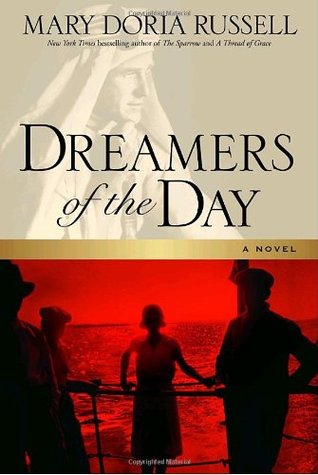
Book Review: Dreamers of the Day by Mary Doria Russell

Book Review: Dreamers of the Day by Mary Doria Russell

Dreamers of the Day

All men dream: but not equally. Those who dream by night in the dusty recesses of their minds wake in the day to find that it was vanity: but the dreamers of the day are dangerous men, for they may act their dreams with open eyes, to make it possible. This I did. – T. E. Lawrence, Seven Pillars of Wisdom

In Mary Doria Russell’s superb Dreamers of the Day, we meet T. E. Lawrence (that would be Lawrence of Arabia — yes, think Peter O’Toole in swirling white robes) and Winston Churchill in Cairo of 1921, as they and other movers and shakers carve up the post-Ottoman Empire Middle East into the geography we know today. But these luminaries are not the protagonists of Dreamers of the Day. Instead, this quiet and lovely novel centers on plain-Jane Agnes Shanklin, a 40-ish spinster from Cleveland who sets out on her life’s one grand adventure and meets the the men who changed — and made — history.

Agnes is quite alone in the world following the loss of her entire family — including her beloved sister Lily —  to a deadly influenza epidemic. Finding herself an heiress and finally free from her mother’s criticisms and repressive expectations, Agnes decides to set sail for the lands in which her sister Lily had worked as a missionary. Accompanied only by her beloved dachshund Rosie, and bedecked in brand-new finery courtesy of a hip young shopgirl, Agnes embarks on a first-class vacation to Cairo.

After reading this book, I have an uncontrollable urge to watch this movie. Now.

After reading this book, I have an uncontrollable urge to watch this movie. Now.

By happenstance, she is booked at the luxury hotel where Lawrence, Churchill, and the rest of the 1921 Cairo Conference are meeting, and is soon drawn into their circle of dinner guests and acquaintances, her path eased by Lawrence’s high regard for the deceased Lily. At the same time, Agnes is wooed by the enigmatic but attractive Karl, an attentive German man who showers Agnes with attention — but is he really interested in Agnes’s charms, or is there something else he’s after?

In a way, Dreamers of the Day is two intriguing stories in one. First, it’s a history lesson wrapped up in fiction. I learned so much from this book about how the modern Middle East came into being and how so many problems can be traced back to decisions made by men with very particular agendas. Second, it’s the story of a woman who goes from wallflower to a woman of strength and purpose. Agnes is a marvelous lead character. She has a refreshingly honest view of the world around her and her place in it, and as she gains the courage to take charge of her own life and start ignoring the forces keeping her down, it’s lovely to see her blossom.

I should know by now to trust Mary Doria Russell, author of the incomparable The Sparrow and the devastating A Thread of Grace. When her most recent novel, Doc, was released, I thought I’d pass it by. After all, what interest do I have in Westerns? I finally read it, a year after its publication, and was blown away by the beauty of the writing, the honor and nobility of the main character, and the clarity and vividness of this window into a world that I really knew next to nothing about. Likewise for Dreamers of the Day: I initially held off on reading this, not feeling all that compelled by a book that I’d heard was about a dusty old meeting in Cairo. And here I am, having read the book, feeling inspired, uplifted, and educated by it. Dreamers of the Day has a subtle, peaceful aura; the storyline is not filled with pulse-pounding chase scenes or explosions; lives are not immediately at risk. And yet, Agnes’s growing confidence as she interacts with that era’s political rock stars is fascinating reading, and I never once grew bored or impatient.

I’m so pleased to have finally read Dreamers of the Day. First of all, I can now say that I’m a Mary Doria Russell “completist”, having read all of her published works (and eagerly awaiting the next)! But most of all, I’m happy to have experienced Dreamers of the Day in its own right. This fascinating look at history and the people who shape it is well worth reading, and I absolutely recommend it.

Finally, I can’t help but include a couple of choice quotes from Dreamers of the Day:

Maybe that’s the way to tell the dangerous men from the good ones. A dreamer of the day is dangerous when he believes that others are less: less than their own best selves and certainly less than he is. They exist to follow and flatter him, and to serve his purposes.

A true prophet, I suppose, is like a good parent. A true prophet see others, not himself. He helps them define their own half-formed dreams, and puts himself at their service. He is not diminished as they become more. He offers courage in one hand and generosity in the other.

And some words of wisdom that I just adore:

When it comes down to it, I don’t have much in the way of advice to offer you, but here it is:

Read to children.

Vote.

And never buy anything from a man who’s selling fear.

Save