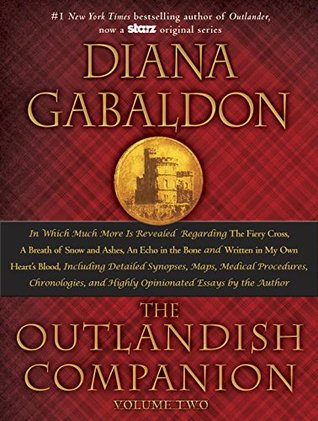
The Outlandish Companion, Volume II: A Reading & Listening Guide

OCIIThe Outlandish Companion, volume II, is a reference book. Does it surprise you to hear that it was also one of the most enjoyable reading and listening experiences I’ve had in months?

First, some background: As anyone who even occasionally visits my blog surely knows by now, I’m a pretty dedicated fan of Diana Gabaldon’s Outlander series. In 1999, Diana published The Outlandish Companion, a reference guide covering the first four books in the Outlander series (Outlander, Dragonfly in Amber, Voyager, and Drums of Autumn). And pretty much ever since, fans have been clamoring for a second volume to cover the rest of the books.

In March 2015, Diana Gabaldon published a new and revised edition of The Outlandish Companion, volume I, updated to include some additional commentary, especially regarding the Starz TV series. [Blogger note: I’m working a bit backwards here, I know. I’ll post a separate piece about volume I in the next week or so.] And in October of 2015, we finally got The Outlandish Companion, Volume II, and what a treat is is!
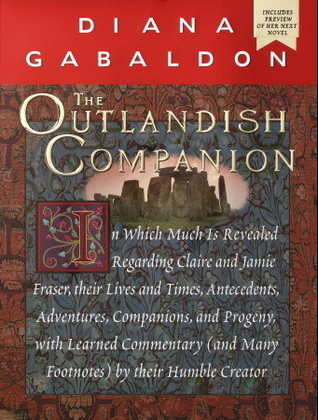
OC

The 1999 edition

I bought myself a hardcover edition of OCII as soon as it came out, but hadn’t done much with it beyond opening it at random and flipping through. When I saw that the audiobook had been released, it seemed like the perfect way for me to enjoy the contents of OCII in a laid-back, kind of mellow sort of way.

What you get in the audiobook, which you don’t get in the hard copy, is the voice of Herself, our beloved author Diana Gabaldon. I actually can’t stress this enough: Large portions of the audiobook are narrated by Diana, and I’ll explain a bit further on why this really matters… and really, why this alone is worth the price of the audiobook, even if you already own the physical book.
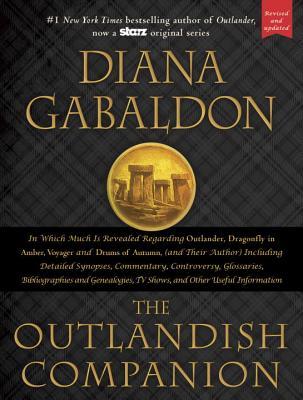
Revised edition of OCI, 2015

Revised edition of OCI, 2015

An added bonus for those who’ve listened to the audiobooks of the Outlander series and the spin-off Lord John books is the participation of the books’ narrators. Davina Porter — marvelous Davina Porter — narrates all of the Outlander book synopses in OCII, and Jeff Woodman, who does such a fantastic job as the honorable and wryly funny Lord John Grey, narrates the synopses for all of the Lord John pieces.

Without further ado, what follows is an overview of what’s in the book, what I especially enjoyed, and a few tips and comments for anyone thinking about listening to the audiobook, either instead of or in addition to getting a copy of the physical book.


What’s inside:

Introduction

Yes, this matters! Diana’s introduction is as funny and smart as you’d expect, explaining how the revised OCI and the new OCII came about. It’s also a great intro to her style throughout the book, which is liberally sprinkled with footnotes, often humorous and tongue-in-cheek, and sure to include at least a few nuggets of odd but interesting little known facts.

Part One: Chronology

Identifying and explaining the chronology of all the parts in the story — so if you’re wondering what to read when, and just where all those novellas fit in, this will tell you.

Part Two: Synopses:

This is the longest part of the book — in my hardcover edition, the synopses start on page 15 and end on page 245. On the audiobook, we’re talking hours and hours. (Sorry, I can’t be more specific… but if I had to guess, at last 8 – 10 hours out of the whole.)

The synopses for the four Outlander books — The Fiery Cross, A Breath of Snow and Ashes, An Echo in the Bone, and Written in My Own Heart’s Blood  — are lengthy and incredibly detailed. The books’ plots are thoroughly summarized, start to finish, with plenty of passages directly from the original texts.

Lengths of synopses (hardcover edition):

The Fiery Cross: 30 pages
A Breath of Snow and Ashes: 66 pages
An Echo In the Bone: 30 pages
Written In My Own Heart’s Blood: 80 pages

Reading tip: If you’re midway through the series, or perhaps took a break in between volumes, these synopses are so detailed that you could easily read these as prep before moving on to the next novel. Although, in my humble opinion, it’s never a waste of time to do a re-read of the books themselves!

After the four Outlander books, we come to the synopses of the Lord John books and novellas. These are much less detailed, with simple plot overviews, not much in the way of spoilers, and no details on the mysteries or their solutions. This section is useful as a refresher, but doesn’t provide enough information if you’re looking for a full-blown recap.

Part Three: Cast of Characters

As the introductory paragraph states:

This list includes all the characters from the second four novels and from the Lord John books, with brief notes as to which book each character is introduced in, who they are, their role in the story, and whether they’re fictional or real historical persons.

This is simply invaluable. Arranged alphabetically, this 118-page section is a must-have for series readers, providing instant access to the who’s who necessary to keep straight the huge number of people who come and go in the books.

Part Four: Sex and Violence (subtitle: Spanking, Beating, Flogging, and Other Interesting Topics Involving Physical Interactions of a Non-Consensual Sort)

Now here’s where it gets truly interesting! Up to now, the OCII is largely reference material. Finally, in Part Four, we get Diana’s insight into her characters and their actions, and it is absolutely fascinating.  She spends quite a bit of time on some of the more controversial elements in the books — the spanking scene in Outlander, the occurrence of rape in the plot and whether it’s too much, the historical context of rape in the Highlands, Black Jack Randall’s sadism — and for those with an opinion on any of these, or who’ve read or participated in any of the heated debates that seem to crop up among readers, it’s enlightening to hear the author’s take on the issues and understand the thought processes behind her writing of these elements.

Part Five: History and Historical Fiction: Organizing the Past

If I had to pick one section to recommend above all others as a resource for writers, this would be it. Whether or not you read the Outlander books, I think this marvelous section would be inspiring to anyone who ever dreamed of writing their own novel.

Diana is incredibly generous with her insights and personal revelations here. She discusses the challenges and pleasures of historical research, and just what’s involved in writing historical fiction, using documentary evidence to enhance and ground her fiction. Not only that, but she also shares her own organization and tracking methods for her research — everything from how she organizes her bookshelves to her computer files’ naming systems.

If I were a writer (and I’m not), I think I’d be incredibly uplifted by Diana’s no-nonsense approach to writing. You want to write? Then write. Don’t delay because you haven’t finished your research yet, or because you need a dedicated space, or until your kids are out of the house, or any of a thousand other reasons. She repeatedly stresses that she began writing Outlander for practice, just to see if she could. I’m simplifying things quite a bit here, but the bottom line is that this is a section that should be read and shared and appreciated. (Also, see Part Seven)

Part Six: A Comprehensive Scottish Language Glossary and Pronunciation Guide – by Adhamh O Broin

Comprehensive is right! 77 pages worth of Scottish phrases, with a guide to pronunciation, origin, use in the books, and meaning, written by the esteemed Adhamh O Broin, who is the official Gaelic (Gaidhlig) consultant for the Outlander TV series.

Part Seven: Writing, and Other Games You Play By Yourself

Along with Part Five, this is simply indispensable knowledge and advice for writers. Diana talks about her own writing processes, and digs deeply into “Mind Games” — the many ways that people’s minds get in the way of their writing. If you’re even thinking about maybe someday starting to write, read this section. Not kidding.

But wait, there’s more! A fabulous part of this section of the book is “A Coda in Three-Two Time” (Annotated). “A Coda in Three-Two Time” is an amazing section of Written In My Own Heart’s Blood, showcasing the wedding night experiences of three couples. It’s intimate, sexy, personal, and even funny — and here, Diana’s annotates the scene to explain the linguistic and stylistic elements behind the writing. The thought and craft that go into the creation of “Coda” is beautiful to learn about.

Also in Part Seven is a section called “One Word Speaks Volumes”, in which Diana explains that she has one word that for her sums up the theme of each novel. From Outlander (love) to The Fiery Cross (community) to A Breath of Snow and Ashes (loyalty) and beyond, the meaning behind the theme is explained and supported. As with so much in the OCII, it’s fascinating.

Finally, Part Seven includes Recipes — I’m not sure exactly why this fits in the writing section, but here it is. Diana shares some favorites recipes, with explanations about her family’s experiences with the dishes included and detailed instructions on cooking and serving them.

Part Eight: The Invisible Talent

As Diana states in the introduction to this section:

“Talent” is what publicists, producers, and agents call the people who provide the visible face of entertainment — actors, for the most part. But anyone who is even temporarily appearing in his or own persona is “talent” — even me. But what about the people who give so much to the TV show and the world of Outlander, who normally don’t show their faces and talk about what they do?

I asked a few of the many, many talented people who create the world of the TV show (and other aspects of the ever increasing world of Outlander) to give us a brief glimpse of what they do and how they do it.

Included are essays by four behind-the-scenes, exceptionally talented individuals:

Terry Dresbach, the show’s brilliantly gifted costume designer, writes about just what it takes to design and produce costumes for a production of this magnitude, and includes several of her sketches for outfits for Claire and Jamie.

[Listening note: The narrator for this section (whose name I didn’t catch) does a fine job, except she mispronounces a couple of character names — most notably, Jamie’s last name! It’s FRASER, not FRASIER. Seems like something that should have been corrected during the production.]

Bear McCreary, the show’s composer, talks about his love of Scottish music (especially bagpipes!) and the reasons for the types of music we hear throughout the episodes. While some of his information is rather technical, it’s presented in such a way that even a non-musical person like me could understand and appreciate it.

Dr. Claire MacKay: Dr. MacKay is an herbalist with expertise in the historical use of herbal medicine. She provides a really interesting overview of the history of herbal medicine in the  Highlands, as well as explaining nine herbs from Claire’s medicine kit, their traditional and modern uses, and their use in the Outlander books.

Theresa Carle-Sanders, author of the upcoming cookbook Outlander Kitchen, writes about “The Diet and Cookery of Eighteenth-Century Highlanders”, explaining not just what types of foods were eaten, but what this diet meant in terms of health, mobility, and class distinctions.

Part Nine: Maps and Floor Plans

Oh, what a treat! If you’re like me, you’ve spent a lot of mental energy trying to figure out just what’s where, and now we know! Included are floor plans for Lallybroch and the Big House on Fraser’s Ridge, as well as maps of the Lallybroch estate and the layout of the Fraser’s Ridge houses and cabins. Also included are maps of the American Colonies circa 1775, the British Isles, the city of Philadelphia, and the battlefields of Culloden and Saratoga.

Part Ten: The Methadone List

Diana’s fans are familiar with the concept of “The Methadone List”. Outlander is, after all, an addiction for its devoted readers — yet even the most devoted sometimes need to read something else. Diana shares this list in response to the question she’s always asked about what ELSE to read. “The Methadone List” is a list of some of her favorite books and writers, with brief plot descriptions and in some cases, excerpts from the books themselves.

Part Eleven: Bibliography

No explanation needed, right?

End papers: Several pages of photos conclude the OCII, include pictures of Castle Leod (seat of Clan MacKenzie) and a few behind-the-scenes photos from the TV production. The front and back inside covers are a detailed family tree (which you can download here as a PDF).

Listening tips:

Thanks to the audiobook, I spent much more time on the OCII than I might have if I’d only stuck to the physical copy. The hardcover edition is a beautiful physical specimen, but I don’t think it would have occurred to me to treat it as something to read from start to finish. By listening to the audiobook, I had the opportunity to slow down, pay attention, and really absorb all of the wonderful information contained in the book.

Highlights: What ended up really making this an extraordinary listen for me was the the narration by Diana Gabaldon herself. And I’ll tell you, I was skeptical at the start. Diana is not a professional audiobook narrator. For one thing, she is FAST. (Big tip: Use .75 speed if you can to listen to Diana’s sections — listening at regular speed is the equivalent of listening to any other audiobook at 1.5x!). It was an adjustment to get used to her speed and speech patterns, but once I got into the groove, I loved it! She shares so much of herself here, and hearing her deliver the content makes it an especially personal experience. Plus, in case you’ve never heard Diana Gabaldon give a talk before — she’s really funny. Listening to Diana narrate her own book lets us hear her emphases and inflections, and it becomes clear just what she finds funny about her content and where she’s being ironic or tongue-in-cheek.

As I mentioned earlier, getting another opportunity to listen to Davina Porter and Jeff Woodman is delightful. I’ve listened to the audiobooks of the entire Outlander series and Lord John books, and spending time with the narrators again here is like hanging out with old friends.

What’s missing: It may go without saying, but listeners should be aware that there are some elements of a reference book that just can’t be provided via audio. The OCII audiobook does not include the character guide, Scottish language glossary, maps and floor plans, or bibliography. And obviously, no illustrations.

Further tips:

Recipes and Methadone List — you can listen to these sections with the audiobook, but if you actually want to make use of them, whether to try the recipes or to track down books to read, you’ll need to refer to the hard copy.

Key advice:

The audiobook is a brilliant way to get a rich experience from the OCII — but it’s incomplete without the physical book at hand. My strongest advice for fans: Get them both.

If you’re a true fan of the Outlander series, then this is an essential and worthwhile investment! I know I’ll be referring to this book over and over again, whether it’s to look up a random character, check out a battlefield, or get some inspiration for my non-Outlander reading.

Blogger’s note: As I mentioned, I’m going about this backwards! Having listened to the OCII audiobook, I’m now going back and listening to the OCI audiobook as well. This is the longest piece I’ve ever posted, and I’m exhausted!! — but if I have the energy, I’ll write up a reading and listening guide to OCI once I finish.

_________________________________________

The details:

Title: The Outlandish Companion, Volume II
Author: Diana Gabaldon
Publisher: Delacorte Press
Publication date: October 27, 2015
Printed book length: 656 pages
Audiobook length: 21 hours, 17 minutes
Genre: Reference
Source: Purchased
Middle Grade Fiction: Woundabout by Lev Rosen

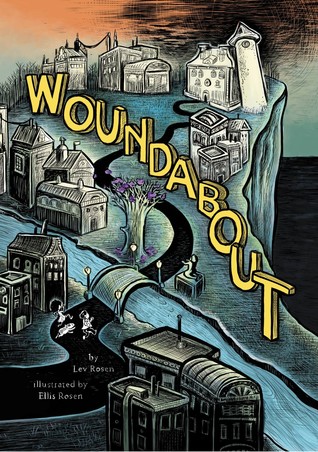
woundabout


Synopsis:

(via Goodreads)

Welcome to Woundabout, where routine rules and change is feared. But transformation is in the wind….

In the wake of tragedy, siblings Connor and Cordelia and their pet capybara are sent to the precariously perched town of Woundabout to live with their eccentric aunt. Woundabout is a place where the mayor has declared that routine rules above all, and no one is allowed to ask questions–because they should already know the answers.

But Connor and Cordelia can’t help their curiosity when they discover a mysterious crank that fits into certain parts of the town, and by winding the crank, places are transformed into something beautiful. When the townspeople see this transformation, they don’t see beauty–they only see change. And change, the mayor says, is something to fear. With the mayor hot on their trail, can Connor and Cordelia find a way to wind Woundabout back to life?


My Thoughts:

I can’t say enough about this wonderful middle grade novel! Woundabout is the touching — yet not heavy — story of orphaned siblings Connor and Cordelia, who go to live with their aunt Marigold in the very weird town of Woundabout after the death of their parents. Woundabout is a strange, strange place, under the firm control of a dictatorial mayor who hates questions and any deviation from routine. The park is brown and dried up, the river barely flows, and wind constantly buffets the cliffs of the town. Connor and Cordelia, still reeling from their loss, have to adjust to their new lives, and decide to figure out the mysteries of Woundabout, both as diversion and to see if they can somehow find a place for themselves.

The writing is wonderful. There’s humor and a light touch, even on the darkest of subjects. I love the portrayal of Connor and Cordelia (ages 11 and 9), who are tightly bonded, yet each have their own personality and interests. There’s a recurring theme in the writing that takes shared moments and shows how each child sees it:

When the meal was finished, as she had promised, Aunt Marigold took the children into the living room, where they sat on either side of her on a big green sofa and looked at the photos in the album on her lap. It was weird seeing their dad at their age. Connor would have said it was like X-ray vision you couldn’t turn off — seeing through buildings to the beams and metal holding them up; Cordelia would have said it was like uploading your photos to your computer and finding a whole group of pictures you didn’t take. But they both knew it was the same thing.

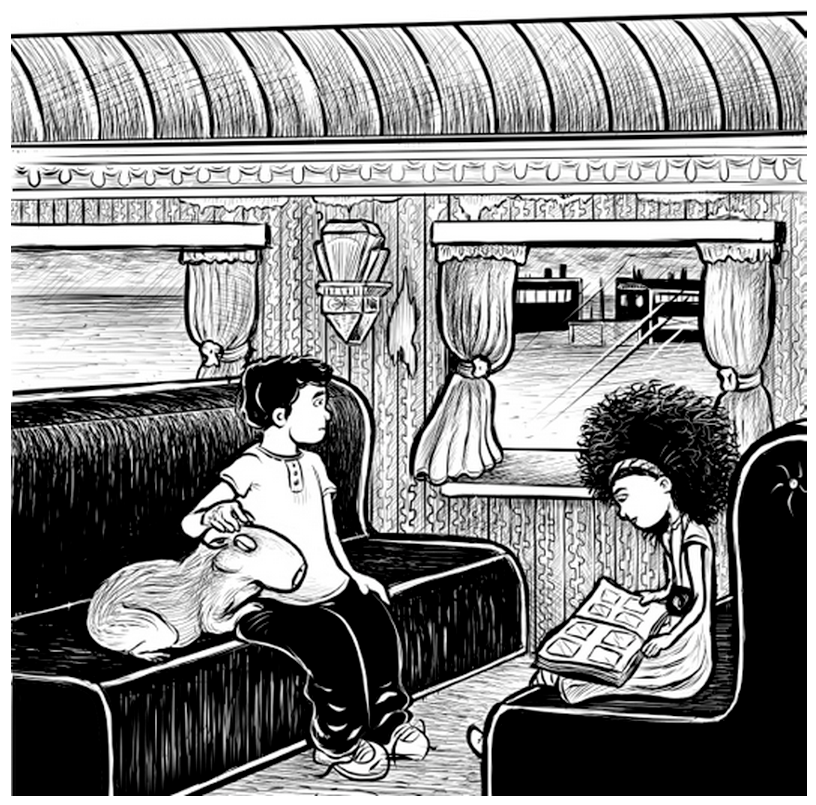
The author and illustrator, who are brothers, are clearly in sync. The marvelous black and white illustrations throughout the book are wonderfully detailed and expressive, and perfectly capture the personalities of the characters and the town.

Woundabout_Siblings_p6

Cordelia and Connor — and Kip, the capybara.

I picked up Woundabout because the author, Lev AC Rosen, has written two excellent books for adults, All Men of Genius and Depth (review), both of which I love and always end up recommending to people. How could I not read his fiction for kids as well?

Woundabout is a terrific read — whether you’re an adult who enjoys reading good children’s books for your own enjoyment, or you’re looking for a book to share with the younger folks in your life, or you want a book to give to a young reader. Woundabout strikes me as a good choice for an adult/child read-aloud, or a great book for an independent reader in the 8 – 12 age range (or so — I hate pinning a label on a book that older and younger kids would enjoy too.)

Check it out… for yourself, or for a kid you’d like to treat to a great read.

_________________________________________

The details:

Title: Woundabout
Author: Lev Rosen
Illustrator: Ellis Rosen
Publisher: Little, Brown Books for Young Readers
Publication date: June 23, 2015
Length: 288 pages
Genre: Middle grade fiction
Source: Library

Book Review: The Readers of Broken Wheel Recommend by Katarina Bivald

Readers of Broken largeI’m guessing that anyone who writes or reads book blogs has a special warm and fuzzy place in their heart for books about bookstores. If that sounds like you, then you’ll need to make room for one more! The Readers of Broken Wheel Recommend fits snugly alongside other “books about books”, and is a lovely example of a book that true booklovers will want to hug.

The town of Broken Wheel, Iowa is… well… broken. Hard times have driven out most businesses and bankrupted family farms. Main Street is full of boarded-up, empty shops, and the only school in town has long since closed. All this changes when Swedish tourist Sara Lindqvist shows up. Sara had been corresponding regularly with town elder Amy Harris for years, meeting first through their shared love of books, but developing a friendship and trust through their letters that culminates in Amy inviting Sara for a visit. Sadly, Sara arrives in Broken Wheel on the day of Amy’s funeral, but the townsfolk seem curiously insistent that she stay, as Amy would have wished.

Sara moves into Amy’s home, and is astounded to find that no one in Broken Wheel will let her pay for anything. At a loss as to how to repay their kindness, Sara realizes two important things: First, that Amy has thousands of books in her house. And second, that the people of Broken Wheel don’t seem to be readers… which shocks bookworm Sara to the core of her book-loving soul. So Sara comes up with an idea of how to repay Broken Wheel. She’ll clean up an abandoned storefront owned by Amy, set up a bookshop with Amy’s books (and using her own money to fill in the gaps), and will spread the joy of books and reading to all the lonely and disappointed souls of Broken Wheel.

Listen, if you’re a booklover, I’ve probably already convinced you that this is a book you need to read! Need more? I’ll keep going.

What did I enjoy about The Readers of Broken Wheel Recommend? Let’s see.

Characters: The town of Broken Wheel is full of odd and quirky characters, and they come splendidly to life in this book. Sara herself is a shy, lonely young woman who really has nothing to go back to Sweden for. She’s not used to being sought out or admired, and being the sudden center of attention is a dramatic eye-opener for her. There’s Grace, descended from a line of Graces, who totes a rifle and sees herself as the town outsider, without admitting to herself just how deeply invested in the town she is. There’s Andy, who runs the only bar in town with his “special friend”, the outrageously attractive Carl. There’s George, a recovering alcoholic who finally starts finding hope again through Sara, her books, and the interconnectedness of the town. Caroline, a starchy, proper churchlady, comes surprisingly alive again once exposed to Sara’s books and the interest of a younger man. There are plenty more, but I’ll let you have the pleasure of discovering them on your own.

Of course, with books, you could have greater confidence that it would all end well. You worked through the disappointments and the complications, always conscious, deep down, that Elizabeth would get her Mr. Darcy in the end. With life, you couldn’t have the same faith. But sooner or later, she reminded herself, surely someone you could imagine was your Mr. Darcy would turn up.

Though that was assuming you were one of the main characters.

Writing: Debut author Katarina Bivald has a light and humorous touch, capturing people’s inner struggles and worries yet conveying even the sadness with a sense of honesty and hope. I love the way she captures the souls of people who love books — for example, this bit from one of Amy’s letters:

I can’t for the life of me explain why I have the bad sense to prefer people [over books]. If you went purely by numbers, then books would win hands down. I’ve loved maybe a handful of people in my entire life, compared with tens or maybe even hundreds of books (and here I’m counting only those books I’ve really loved, the kind that make you happy just to look at them, that make you smile regardless of what else is happening in your life, that you always turn back to like an old friend and can remember exactly where you first “met” them — I’m sure you know just what I’m talking about). But that handful of people you love… they’re surely worth just as much as all of those books.

The bookstore: Sara decides that the standard bookstore signage — fiction, non-fiction, etc. — just won’t cut it if she really wants to reach the people of Broken Wheel. Sara ends up setting up her bookstore with sections such as “Sex, Violence, and Weapons”, “Short But Sweet”, “For Friday Nights and Lazy Sundays”, “Gay Erotica” (more or less on a dare, but with surprising results), and “Warning: Unhappy Endings”.

If more bookshop owners had taken the responsibility to hang warning signs, her life would have been easier. Cigarette packets came with warnings, so why not tragic books? There was wording on bottles of beer warning against drinking and driving, but not a single word about the consequences of reading books without tissues to hand.

Love: In a way, Readers is a love story — the story of how an entire town fell in love with a newcomer in their midst, and how she fell right back in love with all of them. Beyond that, there are romances and relationships, not candy-coated or overly sentimental, but simply people with hopes and dreams, with disappointments and heartaches in their pasts, who find one another — for friendship, companionship, love, or lust — in all sorts of unusual ways that end up feeling just so right.

“If you don’t marry her, she’ll have to leave. And she got me a book!”

Plot: The plot of Readers is fairly simple, but that doesn’t mean it’s not engaging. There are no huge surprises here — outsider arrives, changes the people around her, gives them new lease on life, etc — but it’s still charming to see it all unfold.

The author just gets readers: A major theme of Readers is how books change lives, in big and little ways. People end up with books that they might never have thought of trying, but there’s always something that rubs off, some way that a person ends up changed or enriched or bothered, that leaves a person just slightly different from how they were before reading that book. It’s such fun to see how Sara finds people just the right book to touch them, and then to realize how some of those same books have affected me in ways similar and different.

“Can you smell it? The scent of new books. Unread adventures. Friends you haven’t met yet, hours of magical escapism awaiting you.”

Plus, this priceless sentiment from Sara struck an absolute nerve with me and perfectly sums up why I don’t commit to reading challenges:

If you were someone who spent the vast majority of your time with books, then at the very least you should have read the Nobel Prize winners and the classics, as well as all those books people talked about but had never actually read, as Mark Twain might have put it. She had thrown herself into one ambitious reading project after another, but things had rarely gone according to plan. It was boring to think of books as something you should read just because others had, and besides, she was much too easily distracted. There were far too many books out there to stick to any sort of theme.

I’ve seen this book described as perfect for people who loved The Storied Life of A. J. Fikry (review) and The Guernsey Literary and Potato Peel Pie Society — and considering that I loved both of those and love Readers, I think it’s an apt description!

The Readers of Broken Wheel Recommend is a quiet, sweet, quirky, and thoughtful book about people, community, books, and the way they all come together. Absolutely recommended for anyone who is passionate about books — who enjoys reading about books almost as much as actually reading books.

_________________________________________

The details:

Title: The Readers of Broken Wheel Recommend
Author: Katarina Bivald
Publisher: Sourcebooks Landmark
Publication date: January 19, 2016
Length: 400 pages
Genre: Contemporary fiction
Source: Review copy courtesy of Sourcebooks Landmark

Take A Peek Book Review: Named of the Dragon by Susanna Kearsley

“Take a Peek” book reviews are short and (possibly) sweet, keeping the commentary brief and providing a little peek at what the book’s about and what I thought.

Named of the Dragon

Synopsis:

(via Goodreads)

Although it goes against her workaholic nature, literary agent Lyn Ravenshaw lets herself be whisked off to Wales for the Christmas holidays by her star client, flamboyant children’s author Bridget Cooper. She suspects Bridget has ulterior motives, but the lure of South Wales with its castles and myths is irresistible. Perhaps a change of scene will bring relief from the nightmares that have plagued her since the death of her child.

Lyn immerses herself in the peace and quiet of the charming Welsh village, but she soon meets an eccentric young widow who’s concerned her baby son is in danger—and inexplicably thinks Lyn is the child’s protector.

Lyn’s dreams become more and more disturbing as she forms a surprisingly warm friendship with a reclusive, brooding playwright, and is pulled into an ancient world of Arthurian legend and dangerous prophecies. Before she can escape her nightmares, she must uncover the secret of her dreams, which is somehow inextricably located in a time long ago and far away…

My Thoughts:

I’m a big fan of Susanna Kearsley’s books, but this one was only a so-so read for me. Named of the Dragon is one of the author’s earlier books (originally published 1998), reissued by Sourcebooks in 2015 with a gorgeous cover to match all the rest of her beautiful volumes. The story itself held my attention, but barely. Set in Wales, it’s the story of a literary agent who agrees to spend Christmas with her top client in order to woo another bestselling author, and ends up getting caught up in a local woman’s domestic crisis. There’s a running theme of Welsh legends and Arthurian symbolism… and no Susanna Kearsley novel would be complete without romance, especially with a brooding, seemingly unreachable and mysterious man.

The Arthurian bits and the dream symbolism struck me as overwrought in this book, and mostly unnecessary to the main focus of the plot. These elements add a hint of the gothic and supernatural, yet come across as densely written and somewhat distracting. Lyn herself did not strike me as a believable character — her professional status seemed unrealistic to me, and the whole setting of the Christmas holiday with her client and her clients’ friends felt a bit forced.

Named of the Dragon is not a bad read in the least, but it doesn’t reach the heights of some of the author’s best works, and perhaps that’s why I experienced it as a letdown.

_________________________________________

The details:

Title: Named of the Dragon
Author: Susanna Kearsley
Publisher: Sourcebooks Landmark
Publication date: Reissued October 6, 2015 (originally published 1998)
Length: 336 pages
Genre: Romance
Source: Purchased

Take A Peek Book Review: The Rest of Us Just Live Here by Patrick Ness

“Take a Peek” book reviews are short and (possibly) sweet, keeping the commentary brief and providing a little peek at what the book’s about and what I thought.

The Rest of Us

Synopsis:

(via Goodreads)

What if you aren’t the Chosen One? The one who’s supposed to fight the zombies, or the soul-eating ghosts, or whatever the heck this new thing is, with the blue lights and the death?

What if you’re like Mikey? Who just wants to graduate and go to prom and maybe finally work up the courage to ask Henna out before someone goes and blows up the high school. Again.

Because sometimes there are problems bigger than this week’s end of the world, and sometimes you just have to find the extraordinary in your ordinary life.

Even if your best friend is worshipped by mountain lions.

Award-winning writer Patrick Ness’s bold and irreverent novel powerfully reminds us that there are many different types of remarkable.


My Thoughts:

I loved quite a bit of this book, but was left with an overall “meh” feeling by the end. I thought the set-up was pretty brilliant. Think of Buffy and her gang of Scoobies. Now think of all the other kids who weren’t running around staking vampires or chasing demons. The characters in The Rest of Us Just Live Here are the equivalent of all the Sunnydale High students who aren’t part of Buffy’s gang — the kids who just want to graduate, enjoy prom, and chill with their friends, despite all the end-of-the-world shenanigans happening in the world of the chosen, special kids.

Everyone knows the indie kids don’t use the internet — have you noticed? They never do, it’s weird, like it never occurs to them, like it’s still 1985 and there’s only card catalogs — so we can’t find them discussing anything online. The vibe seems to be that it’s totally not our business. Historically, non-indie kids were pretty much left alone by the vampires and the soul-eating ghosts, so maybe they have a point.

The main character and his friends and family are all interesting and quirky, with their own challenges and gifts, and they just kind of notice that in the background of their more immediate crises, the “indie” kids (hilariously named Satchel, Dylan, and Finn, Finn, and Finn — there are lots of Finns) are being chased through the woods by zombie deer and bizarre columns of blue light keep appearing in their town.

“Listen to me,” he says, sounding angry. “We’ve got prom, we’ve got graduation, we’ve got the summer. Then everything changes. Are you going to live all that time until we go afraid?”

“Probably.”

“Please don’t.” He’s still weirdly angry. “Not everyone has to the be Chosen One. Not everyone has to be the guy who saves the world. Most people just have to live their lives the best they can, doing the things that are great for them, having great friends, trying to make their lives better, loving people properly. All the while knowing that the world makes no sense but trying to find a way to be happy anyway.”

The Rest of Us Just Live Here shows how all kids (all people, really) are the center of their own worlds, and that even if you’re not the one who saves the world, your problems and issues matter too. There are some really nice elements about loyalty, friendship, and protecting the people you love, but somehow, the book didn’t really come together for me or deliver on its early promise. The writing is clever, funny, and touching, but the end left me feeling a bit unsatisfied.
_________________________________________

The details:

Title: The Rest of Us Just Live Here
Author: Patrick Ness
Publisher: Harper Teen
Publication date: October 6, 2015
Length: 336 pages
Genre: Young adult fiction
Source: Purchased

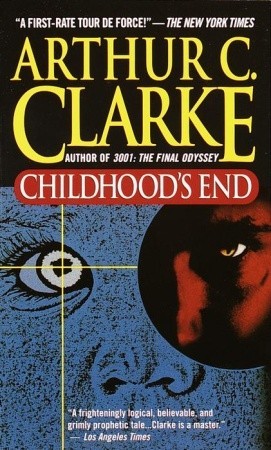
Take A Peek Book Review: Childhood’s End by Arthur C. Clarke

“Take a Peek” book reviews are short and (possibly) sweet, keeping the commentary brief and providing a little peek at what the book’s about and what I thought.

Childhoods End


Synopsis:

(via Goodreads)

The Overlords appeared suddenly over every city–intellectually, technologically, and militarily superior to humankind. Benevolent, they made few demands: unify earth, eliminate poverty, and end war. With little rebellion, humankind agreed, and a golden age began.

But at what cost? With the advent of peace, man ceases to strive for creative greatness, and a malaise settles over the human race. To those who resist, it becomes evident that the Overlords have an agenda of their own. As civilization approaches the crossroads, will the Overlords spell the end for humankind… or the beginning?


My Thoughts:

I’m so glad to have read this sci-fi classic! I recently watched the incredibly well-done TV version of Childhood’s End (a three-part mini-series on Syfy), and couldn’t wait to read the original novel for more insights and explanations.

Where to start? The book differs from the TV show in many ways, but the overall storyline remains more or less the same. In some ways, the book has fewer big, dramatic set-pieces, and we get less involved with certain characters or places. The book is a story of all of Earth and the fate of mankind. It’s fascinating to see the evolving relationship between the humans and Overlords, and what this relationship will mean for the next chapter of life on Earth.

The writing is intelligent and though-provoking. We see the events unfold through many different characters’ perspectives, and come to understand the role of the Overlords as well as the way Earth’s inhabitants grow over the years from fear to acceptance, curiosity to complaisance.

The moment of the Overlords’ arrival, as seen by an astrophysicist, is an early indication this book is really something special:

He felt no regrets as the work of a lifetime was swept away. He had labored to take man to the stars, and, in the moment of success, the stars — the aloof, indifferent stars — had come to him. This was the moment when history held its breath, and the present sheared asunder from the past as an iceberg splits from its frozen, parent cliffs, and goes sailing out to sea in lonely pride. All that the past ages had achieved was as nothing now: only one thought echoed and re-echoed through Reinhold’s brain:

The human race was no longer alone.

If you’re interested in classic science fiction, this is a great place to start. While it was written in 1953, Childhood’s End really does not feel dated. As an aside, at least one small moment where a character expressed dissatisfaction with what passes for the arts in this golden age seems quite prescient:

Do you realize that every day something like five hundred hours of radio and TV pour out over the various channels? If you went without sleep and did nothing else, you could follow less than a twentieth of the entertainment that’s available at the turn of a switch! No wonder that people are becoming passive sponges — absorbing but never creating. Did you know that the average viewing time per person is now three hours a day? Soon people won’t be living their own lives any more. It will be a full-time job keeping up with the various family serials on TV!

Childhood’s End is fascinating, beautifully written, and with so much food for thought and discussion. Highly recommended!

_________________________________________

The details:

Title: Childhood’s End
Author: Arthur C. Clarke
Publisher: Del Rey
Publication date: 1953
Length: 212 pages
Genre: Science fiction
Source: Purchased

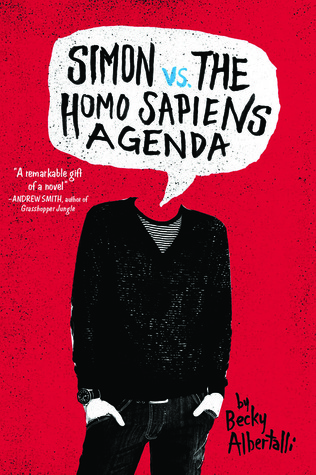
Book Review: Simon vs. the Homo Sapiens Agenda by Becky Albertalli

SimonI dare anyone to read this book and not fall at least a little bit in love with Simon, the main character of this sweet, funny, touching young adult novel.

Simon is a 17-year-old high school junior, a good student, in the school musical (Oliver!), and with a reliable circle of friends, among them his life-long besties Nick and Leah and his new BFF Abby. What Simon hasn’t shared with anyone is that he’s gay. It’s not that he’s unsure — he’s quite, quite certain about his identity. He’s just not quite ready to stop being private and have to deal with the reactions he’s sure to face.

But life gets complicated. On the Tumblr where students from his school share secrets, he’s found a kindred spirit — a kind, smart boy going by the name of Blue, who is also a junior at the same school. Simon and Blue start an intense email correspondence, each using his “secret” gmail account to maintain anonymity. Over the course of the weeks and then months since they began emailing, they’ve opened up to one another to  a remarkable degree. Simon wants to meet; Blue isn’t sure that it’s a good idea.

And then Simon makes the ultimate online error — he checks his email using the computers in the school library and forgets to log back out. Before long, he’s facing a geeky, awkward student named Martin who lets Simon know that he has screenshots of his emails and will let the entire school know that Simon’s gay unless Simon helps him get Abby to go out with him. It’s blackmail, but carried out with a smile. Martin refuses to see that he’s doing something evil, and apart from this unforgivable act, Martin isn’t a terrible person or a bully, which makes it all the more confusing for Simon.

Simon himself is a sweetheart. He’s funny and smart, tries to do the right thing, and has good intentions, although he still manages to hurt some of his friends along the way. Above all, he’s a boy who’s falling in love with someone from the inside out, learning everything about Blue but still not knowing which of the boys he sees at school everyday is the actual man of his dreams.

Simon’s voice in the novel is engaging and full of humor. Even in his moments of doubt or discouragement, he’s funny as hell.

I take a sip of my beer, and it’s — I mean, it’s just astonishingly disgusting. I don’t think I was expecting it to taste like ice cream, but holy fucking hell. People lie and get fake IDs and sneak into bars, and for this? […] Anyway, it really makes you worry about all the hype surrounding sex.

Simon’s email flirtation with Blue is incredibly adorable:

I’m glad I was cute and grammatical. I think you’re cute and grammatical, too.

The truth eventually comes out, and Simon comes out, and all is finally revealed. I don’t want to say more, because seeing it unfold is a big part of the fun.

Beneath all the humor and cute teen escapades are real feelings, beautifully expressed, about family, identity, safety, trust, and friendship. Simon’s journey in Simon vs. the Homo Sapiens Agenda involves sharing himself, really and truly, with the people in his life, and pursuing his truth even when it means taking risks.

It’s a lovely and engaging story, full of flirting and happy moments as well as heartache, and I loved every bit of it. Highly recommended — check it out!

_________________________________________

The details:

Title: Simon vs. the Homo Sapiens Agenda
Author: Becky Albertalli
Publisher: Balzer + Bray
Publication date: April 7, 2015
Length: 303 pages
Genre: Young adult fiction
Source: Purchased


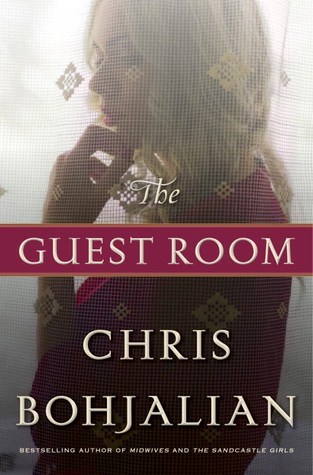
Book Review: The Guest Room by Chris Bohjalian

Guest RoomThe Guest Room by Chris Bohjalian is a dark, disturbing look into the world of sex trafficking, as well as a meditation on love, marriage, and the tests a relationship can withstand.

Richard Chapman — 40 years old, a well-off investment banker with a beautiful Westchester home, a lovely wife, and terrific 9-year-old daughter — has the best of intentions when he agrees to host a bachelor party for his younger brother at his home. His brother is a careless, selfish sort with a bunch of equally immature friends, but Richard figures having the party at his house is better than ending up in a strip club. And sure, everyone espects that there will be a stripper showing up — but what they don’t expect is two beautiful, young strippers who seem willing, for a price, to do much more than strip. And they definitely don’t expect the two intimidating guys who seem to be the girls’ handlers, bodyguards… or something even shadier.

Things get out of control, and quickly. And before the night is through, one of the strippers has stabbed one of the guards in the throat, the other guard has been shot, and the girls have run off, leaving behind a group of shocked and terrified men, a house that’s a bloody mess, and at least one husband with a lot of explaining to do.

Richard’s world is immediately turned upside down. He has to explain to his wife that while he was tempted by the offer of sex (and in fact, went upstairs with one of the girls), he did not actually have sex with her. He has to face the fact that the girls involved may have been minors. He has to deal with the immediate tabloid headlines about orgies in the suburbs and the subsequent damage to his reputation. And on top of all this, he can’t get the girl named Alexandra out of his mind. He went upstairs with her, even took off his clothes, but was somehow so touched by her youth and vulnerability that all he wanted to do was protect her.

At the same time, each chapter ends with a segment told from Alexandra’s point of view. Alexandra is not her real name, but it’s the name she’s used for the past five years, ever since she was lured away at age 14 from her small town in Armenia by the promise of ballet lessons in Moscow. What she got in Moscow was not ballet, but rape, imprisonment, and forced sexual slavery. Deprived of all access the to outside world, Alexandra was brutalized and forced into a life as (as she puts it) a “courtesan” and a “sex toy”. She and other girls her age are kept locked up, kept pretty, and trained to please the endless stream of wealthy and powerful men whom they service. There’s no other word for it — it’s horrifying.

The intersection of Richard’s world and Alexandra’s world blows both of their lives apart. Richard’s marriage is in crisis, his daughter is disgusted, his home feels violated, and he’s been placed on leave by his banking firm, which wishes to distance themselves from the lurid, sordid details that the press is delighting in sharing. Richard’s brother’s friends are being shady, and while Richard is not in legal trouble, he has plenty of reason to worry about his future.

Meanwhile, Alexandra and the other girl, Sonja, are on the run, but without resources — no place to turn for help, no ID or credit cards, nothing but the clothes on their backs, the cash in their pockets, and the guns they’ve taken from the dead guards. They know that they can’t stay in New York, with the Russian gangsters who own them wanting them dead, but they have no experience being free or making their own way, and have no one they can trust.

To say that this book is upsetting is an understatement. I couldn’t put it down or look away, but it left me feeling so bleak and full of despair. The fact that Alexandra’s story is fictional doesn’t mean that these sorts of things aren’t taking place in the real world. The Guest Room provides a peek into the world of sexual slavery, and it’s grim and dirty and depressing as hell.

Which is not to say that The Guest Room is not a good read. It’s actually completely engrossing, and once I started, I couldn’t stop reading. The main characters are all so well-developed that we get to really understand them as complex people, not cookie-cutter characters. Richard screws up, but he’s still a good person. He loves his wife and child, and wants to do the right thing, and still, inadvertently, brings all sorts of horror and chaos into their previously perfect lives. Richard’s wife Kristin is humiliated and hurt, but she also loves her husband and values their life together. She doesn’t always do what’s expected, and the author avoids the more clichéd roads with Kristin by showing the deeply thought-out choices that she makes.

Alexandra is a tragic, fascinating character. Seeing the world through her eyes in the parts she narrates, we get to understand what hopelessness truly is. Her voice is distinct and feels very real, and it’s incredibly disturbing to enter into Alexandra’s intensely awful existence and understand why she thinks and behaves as she does.

The Guest Room is powerful, upsetting, and impossible to put down. Chris Bohjalian is a masterful writer who seems to be at home in any genre. This book is a crime thriller, but it’s also a character study and even, in an odd way, a story about what makes a good marriage. I can’t say that it’s a pleasant read, but it’s certainly a great one.

_________________________________________

The details:

Title: The Guest Room
Author: Chris Bohjalian
Publisher: Doubleday
Publication date: January 5, 2016
Length: 336 pages
Genre: Contemporary fiction/thriller
Source: Review copy courtesy of the publisher via NetGalley

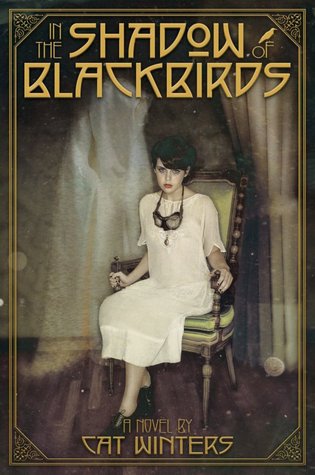
Take A Peek Book Review: In the Shadow of Blackbirds by Cat Winters

“Take a Peek” book reviews are short and (possibly) sweet, keeping the commentary brief and providing a little peek at what the book’s about and what I thought.

In the Shadow of Blackbirds


Synopsis:

(via Goodreads)

In 1918, the world seems on the verge of apocalypse. Americans roam the streets in gauze masks to ward off the deadly Spanish influenza, and the government ships young men to the front lines of a brutal war, creating an atmosphere of fear and confusion. Sixteen-year-old Mary Shelley Black watches as desperate mourners flock to séances and spirit photographers for comfort, but she herself has never believed in ghosts. During her bleakest moment, however, she’s forced to rethink her entire way of looking at life and death, for her first love—a boy who died in battle—returns in spirit form. But what does he want from her?

Featuring haunting archival early-twentieth-century photographs, this is a tense, romantic story set in a past that is eerily like our own time.


My Thoughts:

Bravo to Cat Winters for creating a chilling yet realistic world in her debut novel! In the Shadow of Blackbirds is set in a time of absolute horror in the United States, as the awful combination of a brutal war and a deadly flu pandemic makes death feel like a constant presence. The author does a masterful job of creating the feel of the time period, with paranoia and terror rampant in the cities and streets, and with no safe place to hide.

Surely, though, I must have stolen into the future and landed in an H. G. Wells-style world — a horrific, fantastical society in which people’s faces contained only eyes, millions of healthy young adults and children dropped dead from the flu, boys got transported out of the country to be blown to bits, and the government arrested citizens for speaking the wrong words. Such a place couldn’t be real. And it couldn’t be the United States of America, “the land of the free and the home of the brave.”

But it was.

I was on a train in my own country, in a year the devil designed.

1918.

Mary Shelley is a smart, courageous young woman who sees her whole world turned upside down as her father is imprisoned for treason after daring to speak out against war. As she flees Portland to take shelter with her aunt in San Diego, she seeks word of the boy she loves, only to be told that he’s died a hero’s death in the war. But as Stephen visits her in her dreams and then in waking moments, she realizes that her skepticism about spiritualism may be challenged by a voice trying to reach her from the other side.

This book conveys so much without ever feeling like a history lesson. Through Mary Shelley’s experiences, we see the impact of the war on the homefront, the sickeningly high death toll of the influenza epidemic and the futility of the home remedies used to ward off disease (garlic-flavored chewing gum, bathing in onion water — ugh), the horrible condition of the injured, maimed soldiers home from the battlefields, and the desperation of the bereaved that makes them easy prey for charlatans claiming to be able to channel their dead loved ones.

The plot is tautly woven and fast-paced, but never at the expense of character development. We learn so much about Mary Shelley’s character and her relationship with Stephen through their letters sprinkled throughout the book, as well as by seeing Mary Shelley’s determination to figure out the secrets surrounding Stephen’s messages and help him find peace.

I highly recommend In the Shadow of Blackbirds for anyone who enjoys historical fiction — as well as for anyone who enjoys a good, suspenseful tale, grounded in reality but with a hint of the supernatural. Cat Winters is an extremely talented author, and I can’t wait to read more of her work!

_________________________________________

The details:

Title: In the Shadow of Blackbirds
Author: Cat Winters
Publisher: Amulet Books
Publication date: April 2, 2013
Length: 387 pages
Genre: Young adult/historical fiction
Source: Library

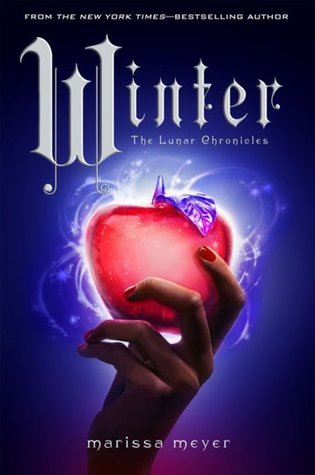
Book Review: Winter by Marissa Meyer

WinterAt long last, I’ve read the final volume in Marissa Meyer’s stunning Lunar Chronicles series! By now, all the die-hard fans have probably gobbled it up, maybe more than once. Being a fan but not quite as die-hard, I waited for my library to finally gets its copies and make one available to me… and I’ve spent the entire past week reading this big, long-awaited book.

I won’t bother with a recap or synopsis. If you’re still reading this review, it’s likely because you’ve either read Winter already or have read at least part of the series and want to know how it turns out.

Well, maybe a teensy bit of a recap. Here’s what you need to know: Winter is the 4th novel in the series (with a novella, Fairest, the most recently published, prior to Winter). The overarching storyline is about a mistreated cyborg mechanic named Cinder, her crush on the Prince (later Emperor) of the Commonwealth, Kai, and the struggle against the evil Queen Levana of Luna.

Woven throughout the four books are reimaginings of fairy tale characters: Cinder is Cinderella, Scarlet is Red Riding Hood, Cress is Rapunzel, and Winter is Snow White. Each gets to headline her own book, but Cinder is the ultimate hero, and hers is the through-story that ties it all together.

I binge-read the earlier books at the beginning of 2015, and adored them. However, it was a little tough getting into Winter at first, after a gap of so many months, and I had to rely on online recaps to feel up to speed enough to be able to move forward.

So what did I think of Winter?

First, the good:

All the action and world-building that we’ve come to love in this series continues in Winter, which plunges us immediately back into the battle for world domination. Cinder and her gang are the underdogs, trying to find a way to take down Levana, who seems to have every advantage possible. She has incredibly powerful mind-control abilities (the Lunar gift), and can make almost anyone within her reach do anything she wants, including self-mutilation, harming a loved one, and worse. How can you fight against power like that?

It’s pretty great to see Cinder’s transformation from unloved outcast to worthy leader. She’s fighting the good fight, standing up for the little guy, trying to take the throne not for her own glory, but for the freedom of the people. All the familiar friends are by her side, doing their parts for the greater good, all at great personal risk to themselves. Winter is a nice addition to the cast of characters, although… well, I’ll get into my “althoughs” below.

The ending is just as satisfying as you’d expect. This is a YA series based on fairy tales, and there’s just no way it’s not going to work out to a happily-ever-after. It’s the getting there that’s such fun.

What I didn’t love quite so much:

Oh, where to start? It’s hard to criticize a series that I mostly loved. I mean, really, it’s just so incredibly rich, detailed, and inventive. That said, there are a few things that felt a bit off to me.

WARNING: LIGHT SPOILERS AHEAD!

  • Artemisia: Is it just me, or did everyone else immediately think “oh hey, it’s the Capitol from The Hunger Games!”? A glittery, extravagantly beautiful city, filled with the privileged upper class, who are pampered, silly, and frivolous, wearing ridiculous fashions, utterly reliant on the underfed, overworked laborers from the outer districts in order to keep up their wealth and resources.
  • Length: Each book in the series has been longer than the one before. Cinder is 390 pages; Scarlet, 452; Cress, 550 — and Winter is a whopping 824. Yes, it’s the wrap-up to the entire series, and perhaps deserves to be big. But, there are scenes and chapters that could have been cut or whittled down, and the book would have been fine. It felt a little overstuffed to me.
  • Winter and Jacin: Look, I like them both — it just feels a bit late in the game to get invested in yet another couple.
  • Cast of characters: What can I say? The story sometimes loses focus because of the need to involve every single character in the story. The series is really and truly Cinder’s story, and while the others may be wonderful, by Winter, many of them are serving mostly a supporting function. We continue seeing them all because they’re a part of the series, but honestly, Scarlet didn’t seem all that important here, and while I understand that she had to be included, she’s just one of many who didn’t seem particularly necessary.

Finally, my two big issues:

  • Romance: I get it, these are fairy tales, and fairy tales need a happily ever after. But does every single character need to be coupled off? Is each love story so truly perfect and meant to be? It’s too much. Each of the four power couples is just so, so, so devoted and right and madly, truly, self-sacrificingly in love from the bottom of their perfect hearts.
  • Teens and politics: The incongruities get harder and harder to ignore, the further along we go in the series. Kai is the son of the Emperor when we first meet him, a teen heartthrob, adorable, a bit unruly, the boy every girl in the Commonwealth swoons over. Okay, fine. When his father dies, Kai becomes Emperor. Still fine. But there’s something off when we see Kai bouncing between the role of world leader and adorable boy crush. The better he gets at ruling and making the hard decisions needed to protect his people, the weirder it becomes to see him interacting with Cinder and the others — a politician hanging out with a gang of teen rebels. This little exchange made me laugh and wince at the same time:

(Again, spoilers!)

Levana sighed. “Why, Selene? Why do you want to take everything from me?”

Cinder narrowed her eyes. “You’re the one who tried to kill me, remember? You’re the one sitting on my throne. You’re the one who married my boyfriend!”

Wrapping it all up:

This may make it sound like I didn’t enjoy Winter, and that’s just not the case. I did enjoy it, quite a bit in fact. The writing is fresh and fun, mixing humorous moments with absolutely horrific scenes and pulse-pounding action.

The author takes a moment that was making me uncomfortable — showing the true face of Levana, scarred and burned, that lurks beneath the outward glamour she shows the world. At first, it felt as though her looks alone were being shown as making her worthy of contempt, but fortunately, that’s not what we end up getting:

Cinder hated her own mind for labeling the queen as grotesque. She had once been a victim, as Cinder had once been a victim. And how many had labeled Cinder’s own metal limbs as grotesque, unnatural, disgusting?

No. Levana was a monster, but it wasn’t because of the face she’d kept hidden all these years. Her monstrosities were buried much deeper than that.

Sometimes even a little throwaway moment is so well-written that it shines:

She wiped her nose with the back of her hand. She was not pretty when she cried, and Winter liked this about her.

So really, what’s the deal?

I liked Winter. I really did. Somehow, the plot felt a bit overcomplicated and jumbled, and the large cast of characters kept the focus scattered rather than firmly on Cinder, which would have created greater dramatic tension. The book is clearly a must-read for anyone who’s been reading the series, and it’s a much more satisfying series ender than a few others I can think of (like Mockingjay or Breaking Dawn). The book didn’t need to be 800+ pages long, and I missed some of the awkward quirkiness and self-doubt that made Cinder so special earlier on in the series. Still, I’m glad to have read it, and overall, I still give high marks to the series as a whole.

Reading tip:

Truly, my best advice for someone thinking about getting involved with this series is to read Cinder, decide if you want to continue, and then read straight through. I think one of the reasons Winter fell a little short of my hopes is that I had about a 10-month gap in between the rest of the series and this book. The Lunar Chronicles is a series that demands to be binge-read. I’d lost all momentum by the time I read Winter, but I think if I’d read it right after Cress and Fairest, I might still have been so swept up in the energy of the story that the little irritants I mentioned wouldn’t even have caught my notice.

Interested in the series? Check out my post about binge-reading the earlier books, here.

_________________________________________

The details:

Title: Winter
Author: Marissa Meyer
Publisher: Feiwel & Friends
Publication date: November 10, 2015
Length: 824 pages
Genre: Young adult/science fiction/fairy tale reimagining
Source: Library