Book Review: Redshirts by John Scalzi

Book Review: Redshirts by John Scalzi

If this book doesn’t bring out your inner nerd, then you clearly lack the nerd gene, end of story. Reading Redshirts, I couldn’t help but wish that I’d watched more Star Trek episodes in my youth — despite clearly recalling that I never did enjoy the original Star Trek all that much.

Redshirts is funny and surprisingly touching, and certainly the most original writing I’ve read all year. (Yes, I know it’s only January 6th; I still mean it as a compliment).

It’s the year 2456, and being a crew member of the Universal Union’s flagship Intrepid is not a career move with a whole lot of job security. Junior crew members seem to die on a regular basis, particularly whenever they accompany senior officers on away missions. Their deaths are gruesome, horrible, bloody, and sadly unavoidable. In fact, the crew have taken to hiding whenever the senior officers are about, in order to avoid encounters that may lead to death, or they rely on unproven ideas such as that only one crew member ever dies in the company of a certain officer — so if one person has already met their death on a given mission, the rest will be safe if only they manage to stick with the officer. Life kind of sucks, and death seems to be lurking right around the corner.

When Ensign Andrew Dahl is assigned to the Intrepid, it seems like a plum assignment — until he and his friends, also new to the ship, notice just how weird thing onboard truly are. People die in ridiculous ways (Borgovian Land Worms! Ice Sharks! Killer robots with harpoons!). At key times, pieces of previously unknown information just seem to appear in their minds. Everyone freaks out about away teams. An elaborate tracking system warns certain crew members when a senior officer is en route, at which point those in the know take convenient coffee breaks. When a scientific problem seems impossible, a mysterious machine called The Box is ready to spit out a solution within the designated time frame, usually only minutes before cataclysmic disaster is sure to strike.

Dahl and his four colleagues are doing their best to avoid away missions, but it’s only a matter of time before they get caught in one of the death-inducing assignments… and really, they’d rather not get blown up or eaten. As they start putting clues together, they encounter Jenkins, a former science team member now hiding out in the ship’s cargo tunnels. Jenkins has a crazy theory — but given events on the Intrepid, his craziness might just be the only explanation that fits.

Jenkins’s theory? The reality of the Intrepid is being warped by events occurring during episodes of a sci-fi television series from the early 21st century. He gives an ominous warning: “Avoid the Narrative.” As Dahl and friends dig deeper, they come up with a desperate plan to rewrite their own reality by changing the TV series they seem to be living. Will it work? I won’t ruin the fun by revealing anything further, but suffice it to say that this wacky space odyssey takes on all the tropes of space opera TV serials and does them up to the nth degree.

John Scalzi’s writing is smart, funny, and full of insider jokes and references sure to warm the hearts of fanboys and fangirls everywhere. As the characters try to make sense of the rudimentary technology and information systems available in 2012, we’re treated to gems such as this:

Kerensky grabbed the phone and read the article sullenly. “This doesn’t prove anything,” he said. “We don’t know how accurate any of this information is. For all we know, this” — he scrolled up on the phone screen to find a label — “this Wikipedia information database here is complied by complete idiots.”

Little moments throughout the book led to irrepressible giggling on my part. The plot itself is so clever and mind-bending that I could only stop and admire how crazily convoluted it had all become, and yet with its own internal logic that literally defies the laws of physics as the heroes figure out a solution to their reality-challenged existence.

Redshirts ends with three codas, and they are a nice touch indeed, adding a human element to the story’s wrap-up that is sweet, sentimental, and completely fitting.

If you enjoy science fiction, have a basement full of Star Trek memorabilia, or ever became hooked on a TV show that features warp speed and space battles, you simply must read Redshirts. I haven’t had this much fun since finishing my Big Bang Theory viewing marathon. Geek heaven!

This book is my first encounter with John Scalzi’s writing, but I’d love to read more. Have you read other books by John Scalzi? Which book do you recommend as a starting place?

Book Review: Lola and the Boy Next Door by Stephanie Perkins

Book Review: Lola and the Boy Next Door by Stephanie Perkins

Author Stephanie Perkins has done it again! Her first novel, Anna and the French Kiss (reviewed here), is a refreshingly sunny story of contemporary teens finding their way toward first love. Nothing explodes, the world doesn’t end, there are no technological breakdowns or repressive forms of government. What a nice change for readers of YA fiction! Instead, in Stephanie Perkins’s novels, we’re treated to teens facing real-life problems, negotiating the perils of growing up and finding their way, struggling with big and little decisions, and figuring out what’s really important to them. In other words, characters who feel true and convincing, and who earn the investment a reader feels by the end of the book.

In Lola and the Boy Next Door, we meet the delightfully quirky Lola, a 17-year-old San Francisco native, growing up in the Castro district in the Victorian home she shares with her two dads. Lola believes in self-expression through costuming, and arrays herself in a never-ending rainbow of vintage dresses, multi-hued wigs, glitter and make-up, boots and raincoats, as she tries on different personae and presentations. Lola has learned to tolerate the slings and arrows of her more conformist-minded classmates, and bounces through her life with a couple of close friends and her supportive but very protective parents.

Lola is dating Max, a 22-year-old rock musician whose bad boy outside masks a more sensitive inner core. Max is surprisingly agreeable to the strictures imposed by Lola’s dads: mandatory attendance at the weekly grilling otherwise known as Sunday brunch, non-negotiable hourly phone calls during all dates and outings. This, however, does not prevent Lola from losing her virginity to Max during their supposedly “safe” sanctioned dates. After all, Lola thinks Max is “the one”. She’s in love, and all is well…

… Until the day that Lola’s former neighbors move back into the Victorian next door. The Bells moved away two years earlier in pursuit of daughter Calliope’s figure skating career, taking with them Calliope’s twin brother Cricket (the titular boy next door). Cricket and Lola had been inseparable for one wonderful summer, until a series of miscommunications and the family’s sudden move ripped the two apart and left Lola with a major hole in her heart.

Now Cricket is back, and Lola has to figure out whether she can let him back into her life. (Hint: the title pretty much lets us know that she does.) Lola and Cricket are rather adorable. Their bedroom windows face one another, and they have nightly conversations across the narrow gap between their houses. Cricket is sweet, smart, and head over heels for Lola. Lola wants to be friends… but can she really be happy with Max when Cricket is waiting in the wings?

All this sounds much shallower than it actually is. Both Lola and Cricket have inner doubts and demons to face. Lola’s birth mother Norah was a troubled teen who found herself with an unwanted pregnancy and gave the baby to her brother and his partner to raise. Norah pops back into their lives whenever she’s down and out, which is often, and is an ongoing source of embarrassment and self-questioning for Lola. Cricket has discovered some unsavory truths about his family’s past which make him doubt his own talents. On top of that, Cricket lives in his sister’s shadow, supporting her and cheering for her, but destined to have his life uprooted based on Calliope’s needs.

Lola has to make some big decisions, and I give Stephanie Perkins a lot of credit for not making these decisions easy or free of fall-out. Lola doesn’t want to hurt anyone, but it’s inevitable that she will. She doesn’t want to let down her fathers, but she ends up breaking their rules unintentionally. Even when Lola does what she needs to do, she doesn’t immediately bounce back and move on. We see a real teen dealing with real emotions, and even when it’s hard, it feels true.

As an added bonus, Anna and St. Clair from Anna and the French Kiss are supporting characters in Lola and the Boy Next Door, and it’s quite fun to see them moving forward with their life plans (although they do kind of feel like an “old married couple” in this story, despite only being a year older than they were in their own book). Additionally, I personally got a big kick out of the San Francisco setting. It’s always fun to read fiction set in my town, and I loved the descriptions of the neighborhoods and various landmarks that figured into Lola’s story.

I enjoyed Lola and the Boy Next Door very much. Even though the title pretty much tells you how Lola’s story will end up, it’s the journey that’s so much fun. Lola is a terrific main character — not flawless, but fresh, honest, and individual, with her heart in the right place even if it takes her a bit of trying to figure out her actions. Stephanie Perkins’s writing is lively and the dialogue sparkles. I’m looking forward to reading more by this talented YA author: Her next book, Isla and the Happily Ever After, is due out in May of this year.

Book Review: This One Is Mine by Maria Semple

Book Review: This One Is Mine by Maria Semple

It’s truly surprising to me how very much I disliked This One Is Mine, considering how much I loved Maria Semple’s second novel, Where’d You Go, Bernadette (reviewed here in 2012). Maria Semple, a former TV writer for shows including Arrested Development and Mad About You, has a flair for humor and quirky use of words. These elements are apparent in This One Is Mine, but the story itself is so loaded with unlikable characters making nonsensical decisions that I read the book with feelings of detachment and apathy.

This One Is Mine centers around two lead female characters. Violet, formerly a successful TV writer (hmmm… a stand-in for the author?), is now a stay-at-home mom to a mostly invisible toddler. And what a home! Violet is married to hotshot music executive David Parry, and they live their life in an architecturally significant mansion, with private in-home yoga lessons, cars to die for, and a nanny whom the couple — despite their self-image as super-PC and sensitive — refer to by the nickname of LadyGo, due to her rudimentary use of the English language in sentences such as “Somebody ask and lady go, I’m a friend of the band. Lady who plan the party? Lady go mad.”

Violet may be an at-home mother, but she’s rarely at home. She is unhappy, constantly on the verge of tears, and always flying off in pursuit of some activity that involves driving around LA and avoiding sights that might make her cry. Why no one has noticed that she needs therapy and medication, I have no idea. During a random drive through the city, Violet encounters a down-at-heels, dirty, drug-addicted bass player and launches without a second thought into what may be the world’s most unlikely and ill-advised affair. Teddy is, to put it mildly, kind of gross, not just physically, but in attitude as well. In their brief early encounters, Teddy manages to use every racial slur possible and engages in incredibly unsexy sex talk — yet Violet is smitten, to the point of obsession and at risk of throwing away everything else of value in her life.

Sally, our other point of focus, is David’s younger sister, a single woman in her thirties who desperately wants what Violet seems to have — a successful husband, a beautiful home, a life of ease and celebrity. Sally latches onto Jeremy White, a sports handicapper on the verge of stardom, seeing him as her golden ticket. As his career rises, Sally willfully (or, you might say, stupidly) overlooks his assortment of quirks and oddities in order to fulfill her dream of the good life. And we’re not just talking odd habits. The warning signs around Jeremy are pretty much there for all to see, in gigantic blinking red letters, but Sally’s relentless pursuit of her ideal life doesn’t allow her to see them.

Naturally, nothing works out for anybody. Violet’s affair implodes. Sally gets her man, but at what price? The book culminates in a few very unbelievable turn of events, as characters make one stupid decision after another. Coincidences mount, terrible outcomes ensue. The characters learn lessons and become better people for it. Um, really?

This One Is Mine is full of unhappy people, who seem to thrust happiness away with both hands as they grab at people and circumstances which can only end up as the worst possible choices. Healthy attitudes and though-processes don’t exist in this world. David is actually the only likeable character present, as we get a sense of his compassion, his devotion to both his wife and sister, and his ability to forgive. Other than David, we spend much too much of the book watching unbalanced people make terrible decisions and ruin their own and other people’s lives.

Where’d You Go, Bernadette had its share of quirky and not-so-likeable people, but they were balanced by the book’s satirical tone, as well as by having teen-aged Bee as a relatable point-of-view character. As a reader, I cared about Bee’s well-being, and saw the other character’s through that lens. Even the most selfish or clueless characters ultimately revealed a deeper core.

Not so in This One Is Mine. Neither Violet nor Sally are sympathetic characters, and I couldn’t find a point of entry for caring about either of them. The selfishness of their world views, the unending spending, the world of the ultra-rich — all served to further distance me from the drama. In the end, I found it hard to have patience with the characters or the book as a whole, as reading This One Is Mine largely consists of watching the two main characters selfishly mistreat the people in their lives. The ending was much too neat for my taste, as Violet and Sally end up chastened yet improved by their ordeals, bonding through calamity, and ultimately stronger for it all. None of it worked for me.

Flashback Friday: The Sound of Waves by Yukio Mishima

It’s time, once again, for Flashback Friday…

Flashback Friday is a chance to dig deep in the darkest nooks of our bookshelves and pull out the good stuff from way back. As a reader, a blogger, and a consumer, I tend to focus on new, new, new… but what about the old favorites, the hidden gems? On Flashback Fridays, I want to hit the pause button for a moment and concentrate on older books that are deserving of attention.

If you’d like to join in, here are the Flashback Friday book selection guidelines:

  1. Has to be something you’ve read yourself
  2. Has to still be available, preferably still in print
  3. Must have been originally published 5 or more years ago

Other than that, the sky’s the limit! Join me, please, and let us all know: what are the books you’ve read that you always rave about? What books from your past do you wish EVERYONE would read? Pick something from five years ago, or go all the way back to the Canterbury Tales if you want. It’s Flashback Friday time!

My pick for this week’s Flashback Friday:

The Sound of Waves by Yukio Mishima

(published 1954)

I first read this novel by Yukio Mishima as part of a world lit class way back when. What I remember most is that I’d read one tragic, depressing book after another for this particular class. When we finally got to The Sound of Waves, I read it with my breath held anticipating some horrible event soon to befall the main characters… and then breathed a sigh of relief when I finally realized that this is, overall, a very happy love story.

I was unable to find more than a very brief synopsis on any of the major book sites (this one is from Amazon):

Set in a remote fishing village in Japan, The Sound of Waves is a timeless story of first love. A young fisherman is entranced at the sight of the beautiful daughter of the wealthiest man in the village. They fall in love, but must then endure the calumny and gossip of the villagers.

I don’t remember many of the details, but I do remember loving this book. Over the years, I’ve given away most of my old college lit books, but The Sound of Waves is one that I’ve kept. I’d say that’s it’s probably about time for me to reread this one and see if it still makes me smile.

So, what’s your favorite blast from the past? Leave a tip for your fellow booklovers, and share the wealth. It’s time to dust off our old favorites and get them back into circulation! 

Note from your friendly Bookshelf Fantasies host: To join in the Flashback Friday bloghop, post about a book you love on your blog, and share your link below. Don’t have a blog post to share? Then share your favorite oldie-but-goodie in the comments section. Jump in!

Wishlist Wednesday

And now, for this week’s Wishlist Wednesday… the first of 2013!

The concept is to post about one book from our wish lists that we can’t wait to read. Want to play? Here’s how:

  • Follow Pen to Paper as host of the meme.
  • Please consider adding the blog hop button to your blog somewhere, so others can find it easily and join in too! Help spread the word! The code will be at the bottom of the post under the linky.
  • Pick a book from your wishlist that you are dying to get to put on your shelves.
  • Do a post telling your readers about the book and why it’s on your wishlist.
  • Add your blog to the linky at the bottom of the post at Pen to Paper.
  • Put a link back to Pen to Paper somewhere in your post.
  • Visit the other blogs and enjoy!

My Wishlist Wednesday book is:

Dark Places by Gillian Flynn

From Amazon:

Libby Day was seven when her mother and two sisters were murdered in “The Satan Sacrifice of Kinnakee, Kansas.” As her family lay dying, little Libby fled their tiny farmhouse into the freezing January snow. She lost some fingers and toes, but she survived — and famously testified that her fifteen-year-old brother, Ben, was the killer. Twenty-five years later, Ben sits in prison, and troubled Libby lives off the dregs of a trust created by well-wishers who’ve long forgotten her.The Kill Club is a macabre secret society obsessed with notorious crimes. When they locate Libby and pump her for details–proof they hope may free Ben–Libby hatches a plan to profit off her tragic history. For a fee, she’ll reconnect with the players from that night and report her findings to the club . . . and maybe she’ll admit her testimony wasn’t so solid after all.As Libby’s search takes her from shabby Missouri strip clubs to abandoned Oklahoma tourist towns, the narrative flashes back to January 2, 1985. The events of that day are relayed through the eyes of Libby’s doomed family members–including Ben, a loner whose rage over his shiftless father and their failing farm have driven him into a disturbing friendship with the new girl in town. Piece by piece, the unimaginable truth emerges, and Libby finds herself right back where she started–on the run from a killer.

Why do I want to read this?

I don’t usually gravitate toward thrillers or crime dramas, but having read Gone Girl (reviewed here), I’m pretty much willing to assume that anything written by Gillian Flynn will be scary, compelling, and unpredictable. Gone Girl was one of those books that everyone was talking about in 2012 — and which definitely lived up to the hype. I’m really interested to see how the author’s earlier works compare to her break-out hit, and hope to get my hands on a copy of Dark Places in the near future.

Quick note to Wishlist Wednesday bloggers: Come on back to Bookshelf Fantasies for Flashback Friday! Join me in celebrating the older gems hidden away on our bookshelves. See the introductory post for more details, and come back this Friday to add your flashback favorites!

Top Ten Tuesday: Top Ten Books I Resolve To Read In 2013

Top Ten Tuesday is a meme hosted by The Broke and the Bookish, featuring a different top 10 theme each week. This week’s topic is:

Top Ten Books I Resolve To Read in 2013

I’ve done a few blog posts already about my reading intentions for 2013, including my reading resolutions and my participation in a reading challenge focused on reading books languishing on the ubiquitous “TBR” (to-be-read) shelf. Bearing those in mind, but thinking also about what I just really, really want to read in 2012, here goes:

The ten books I absolutely, positively want to read in 2013 are:

1. The Round House by Louise Erdrich

2. Etiquette & Espionage by Gail Carriger

3. Written In My Own Heart’s Blood by Diana Gabaldon (This is the only one either not yet published or without a definite release date, but the author’s website says “fall 2013” — good enough for me!)

4. Tempest Reborn by Nicole Peeler

5. Dreamers of the Day by Mary Doria Russell

6. The Child’s Child by Barbara Vine

7. The Crane’s Dance by Meg Howrey

8. Other Kingdoms by Richard Matheson

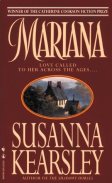
9. Mariana by Susanna Kearsley

10. Frost Burned by Patricia Briggs

Granted, some of these aren’t much of a stretch for me. Three are new entries in series that I already read, and one is the beginning of a new series by an author I adore. Others are by authors who have written at least one other book that I’ve read and enjoyed. Still, given that I intend to read LOTS and LOTS of books in 2013, I think I can safely commit to including these ten.

What are you excited to read in 2013?

HAPPY NEW YEAR! May your reading year be filled with joy!

Book Review: Sailor Twain by Mark Siegel

Book Review: Sailor Twain by Mark Siegel

sailor twain

Graphic novel Sailor Twain is a gorgeous tale of mermaids, riverboats, secrets, and myths, set in New York in the 1880s.  The action in Sailor Twain takes place aboard the Lorelei, a stately paddle-wheeler carrying upper class passengers up and down the Hudson River.

Captain Twain is a well-respected, upright gentleman and erstwhile poet who earns a living on the river in order to save money needed for a possible cure for his disabled wife Pearl. The Lorelei is owned by the Lafayette family, who struck it rich through their paddle-wheeling empire. Older brother Jacques-Henri plays host to Astors, Vanderbilts and other mansion-dwelling New Yorkers, until his behavior turns odd and he mysteriously disappears. Younger brother Dieudonné takes over the reins of the family business, and proceeds to scandalize the crew of the Lorelei with a never-ending string of illicit romantic liaisons, largely with the bored and neglected trophy wives of the captains of industry.

Captain Twain looks on with detachment until, late one night, he finds a wounded mermaid clinging to the side of the Lorelei. He brings her aboard ship and hides her away in his cabin while he tends to her wounds, but soon becomes enamored with the mermaid to the point of obsession. A secretive writer, C. G. Beaverton, may hold the key to understanding the mysteries surrounding the Lorelei and its crew, but will the answers come in time to help the captain?

The black and white drawings of Sailor Twain, interspersed with newspaper clippings and nautical maps, create an atmosphere throughout the book that is both starkly beautiful and highly evocative. The author does a tremendous job of recreating an historical point in time through the smallest of details, and the steamship itself is a thing of beauty. Looking at the drawings of the Lorelei, you can practically hear the chiming of the champagne glasses and the laughter of the pampered guests.

The story itself is engaging and romantic. Clues build upon clues as the Captain and Lafayette venture through parallel struggles to understand the nets in which they’ve become ensnared and to find possible solutions. There’s an aching beauty throughout, and we know from the prologue that tragedy will inevitably come for these characters.

Between the artwork and the haunting storyline, there’s a lot to love about Sailor Twain. This book will please booklovers who enjoy a dash of mythology with their historical settings, and deserves to be listed as one of the year’s best graphic novels.

The Monday agenda

Not a lofty, ambitious to-be-read list consisting of 100+ book titles. Just a simple plan for the upcoming week — what I’m reading now, what I plan to read next, and what I’m hoping to squeeze in among the nooks and crannies.

It’s New Year’s Eve morning, last day of 2012! Heading out of town tomorow for a few days in the snow with family before work, school, and real-life kick back in. Meanwhile, there are books to read! Onward with the reading agenda.

From last week:

Cold Days by Jim Butcher: Done! Terrific new addition to the Dresden Files series. My review is here.

Sailor Twain by Mark Siegel: Done! Review still to come.

I did not get a chance to flip leisurely through my two new coffee table books (My Ideal Bookshelf and Buffy: The Making of a Slayer), so I’ll look forward to savoring them in the New Year.

And this week’s new agenda:

I have two library books left on the pile before I dig back into my collection at home, in keeping with my #1 resolution — maintain a healthy balance between reading library/new books and books on my shelves. So, first I’ll finish up the library books:

Lola and the Boy Next Door by Stephanie Perkins: A YA novel by the author of the very charming Anna and the French Kiss.

This One Is Mine by Maria Semple: The earlier novel by the author of Where’d You Go, Bernadette, which I enjoyed tremendously. (My review is here).

After that, I’ll dive into something I already own — either The Round House by Louise Erdrich or one of the Susanna Kearsley novels I’ve been waiting to read.

So many book, so little time…

That’s my agenda. What’s yours? Add your comments to share your bookish agenda for the week. HAPPY NEW YEAR!

2013: My bookish resolutions for the New Year

Forget working out more (or at all…), eating healthier, and doing good deeds. (Oh, shush, I’ll try to do those things too).

My extra special New Year’s resolutions are all about reading. It’s a new year, a new opportunity to make some pledges to myself, and perhaps try a new approach or two when it comes to my reading life.

My resolutions for 2013:

  1. Maintain a healthy ratio of old to new: I have piles and piles of unread books in my house, at least 20 unread books on my Kindle, and yet I still gravitate toward grabbing the newest releases, checking new titles out from the library, and ignoring what I already have. Well, it has to stop! Stop, I tell you! My resolution for 2013 is to aim for at least a 2:1 ratio. For every new book, whether purchased or borrowed from the library, I will read at least two that are already in my collection. I think this will be my biggest challenge, to be honest, and I thought of settling for even a 1:1 ratio… but hey, let’s aim high.
  2. No new series! I simply will not start any new series in 2013 — with the following exceptions (because, of course, any good rule has exceptions):
    1. New series by authors I love are allowed. Because I simply must read Gail Carriger’s Finishing School books as soon as they’re released. (Etiquette & Espionage is due out in February. Hurray!)
    2. It’s okay to start a new series if the entire series has already been published. For example, I read the Codex Alera series by Jim Butcher all the way through, books 1 – 6, once the 6th and final book had been released.
    3. It’s also okay to start a new series if the final volume will be released in 2013. A friend has been urging me to read Patrick Rothfuss’s Kingkiller Chronicle series, but I’m holding off until there’s a release date set for the final book.
    4. Obviously, if new books come out that are part of a series I already read, they’re totally fair game.
  3. Patronize local books stores. I’ve made a conscious effort in recent years to rely more and more on the library for new reads, and then supplement my shelves with amazing finds at the library’s annual used book sales. But I’m as guilty as the next person in terms of relying on Amazon for cheap prices and quick delivery. I’ll never totally stop buying from Amazon, but I will try to funnel more of my book dollars toward the wonderful people who work so hard to keep independent bookstores alive in our communities.
  4. Housekeeping. It’s time to do some culling. Yes, there are a lot of books on my shelves that I intend to get to eventually. But, facing facts, I admit that there are some that have been there long enough that if I really wanted to read them, I would have done it already. Impulse buys, unfortunate duplicates, books that sounded more appealing than they ended up… they need to go. I resolve to do some serious sorting and put together a bag or two (or three) of books to donate for the next library sale.
  5. The same goes for kids’ books in my house. My son, world champion reluctant reader, has shelves full of books that he’s never going to read. Every time his school has a book fair or his teacher hands out Scholastic book order flyers, he begs me to buy stuff and swears that this time, he’s really, really, really going to read them. I’m a sap and never say no when it comes to books, but of course, it turns out just how you’d expect. So, another culling is in order. I resolve to go through my son’s shelves — with him — take out the books that he has no interest in or that he’s already outgrown, and donate them to a good cause.
  6. Try something new! I’m a fiction reader, head to toe and deep down in my bones. But it’s nice to stretch one’s wings, expand one’s mind, branch out a little bit. So I resolve to read at least 3 – 5 non-fiction books in 2013, preferable from a few different areas. History, biography, social commentary, science — I’ve actually got some terrific-looking books on my shelves already, and it’s times I paid them some attention. I’m such a fiction junkie that this may be one of my hardest resolutions to keep, but I intend to at least make the effort.
  7. Face facts. I don’t like short stories. I’ve never particularly liked short stories. So maybe it’s time to face facts and stop trying to force myself to read them. Every time I go to the used book sales, I come home with at least a few volumes of either fairy tales, science fiction stories, or horror stories. And no matter how much I like the author, I just never feel motivated enough to pick up a story collection rather than a novel. So my resolution for 2013 in this regard is to let myself off the hook and admit that it’s just not going to happen.

They say that resolutions are made to be broken. Remember those 15 pounds we all vowed to lose last year? Or the year we were all going to become fluent in Spanish?

Well, I’m determined to give all of my bookish resolutions a fair try. Some may stick, some may not. But here’s to 2013! May it be full of good cheer, good health, and good reading for all!

Book Review: Cold Days by Jim Butcher

Book Review: Cold Days by Jim Butcher

Harry Dresden is back! And — dare I say it? — better than ever.

(Spoilers for earlier Dresden books ahead, so proceed at your own risk.)

In this 14th novel of the Dresden Files, Harry is back from the quasi-dead, but there’s no time to rest and recuperate. As the new Winter Knight, Harry has to survive Queen Mab’s rather deadly version of physical therapy before setting out to obey Mab’s commands, reunite with his friends, avoid menacing fairies, and – oh, yeah – save Chicago and perhaps the world from a looming apocalypse.

Every time I pick up a Dresden Files book, I’m reminded all over again of how much I enjoy this series, what a way with words Jim Butcher has, and just what a bad-ass Harry Dresden really is. Some series linger on way past their expiration date (I’m looking at you, Sookie), when clearly there’s really not much else to do or say with the characters. Not so in the Dresden Files. Cold Days continues the ongoing story and enriches it, drawing on past stories and mythology, adding layer upon layer of complexity to the challenges facing Harry, and moving the story in some creative and unexpected directions.

Cold Days deals very much with Harry’s new role in the Winter Court, but to understand the action, it’s important to have read the previous books. Familiarity with book 4, Summer Knight, is especially helpful. Harry’s strongest allies, including his brother Thomas, apprentice Molly, will-they-or-won’t-they love interest Karrin Murphy, and big doggie Mouse are all back at his side, fighting against new super-scary villains and fighting in alliance with some surprising new partners.

I really won’t say too much more about the plot, a) because it goes a mile a minute and covers a tremendous amount of ground in the course of 500 pages, and b) because you’re really better off experiencing it on your own.

I wasn’t really sold on the previous volume in the series, Ghost Story, but the one before that, Changes, was blow-your-socks-off great. To a large extent, the events of Changes are much more important to the on-going narrative than those of Ghost Story, and lead nicely into the central action of Cold Days. I would rate Cold Days as among the best in the Dresden Files series. By the end of Cold Days, Jim Butcher has set some new players into action, rearranged the power structures, given new roles to familiar characters, and left Harry facing a potential threat to his own well-being, a looming menace to the world at large, and some weighty decisions to make concerning his personal life.

If you’re a fan of the series, you will absolutely want to read Cold Days. If you’ve read bits and pieces of The Dresden Files, or maybe only watched the sadly short-lived TV series, let me tell you that it’s worth continuing with the books to get to the really stellar volumes such as Changes and Cold Days.

And if you’ve never read any of the Dresden Files books? Well, what are you waiting for? Jump in, start at the beginning, and enjoy! But clear any other books off your reading calendar — once you start The Dresden Files, you won’t want to stop.