Q&A with the kiddo: A kid’s-eye view of The Magician’s Nephew by C. S. Lewis

Book Review: The Magician’s Nephew by C. S. Lewis

The Magician's Nephew (The Chronicles of Narnia, #6)

Proudly presenting Q&A with the kiddo, courtesy of my 10-year-old son, in which I ask my kiddo to describe a book he’s enjoyed recently and he gives his opinions, more or less unfiltered by mom.

Without further ado:

Q: What book do you want to talk about?

A: The Magician’s Nephew

Q: What was it about?

A: It was about these kids . They were friends, and the boy’s uncle was a magician, and they got sent to another world. They went into two different worlds. In one there was an evil queen who took over and then tried to take over Earth. Then they teleported into soon-to-be Narnia. There was a lion that was singing and made Narnia. His name was Aslan. Everything they buried turned into a tree. He gave speech to the chosen animals and the especially chosen of the chosen animals were in the high council. The boy and the girl eventually get back to their own world.

Q: Who was your favorite character?

A: Fledge, who is basically a Pegasus, a horse with wings. And King Frank, because his name is weird.

Q: What was the best part?

A: My favorite part was when they planted toffee candy and it grew into a toffee tree. I wonder if you dropped a part of a refrigerator on the ground, would there be a refrigerator tree?

Q: Would you recommend this book?

A: Yes. I’d recommend it for people who like Harry Potter, adventure stories, and talking animals.

Q: Do you want to read the rest of the series?

A: Yes! I want to read the rest of the  Narnia books.

Mom’s two cents:

Somehow, I made it through childhood without ever reading any of the Narnia books. Even as an adult — and a big fan of fantasy writing — I never got around to Narnia until my daughter was old enough for The Lion, The Witch, and The Wardrobe, which we read together many years ago. Neither of us ended up pursuing the rest of the series, and it wasn’t until last month when my son came up with the idea of checking out Narnia that I came back to these books.*

*Although there have been several Narnia movies released in the last few years, neither of us has seen them, so we approached reading the books from scratch.

I decided that we should read the books not in publication order, but in the order which author C. S. Lewis later said was his preferred reading chronology — which meant starting with The Magician’s Nephew.

So what did I think? This rather slight book was actually quite fun. The story is rather simple: Neighbors Polly and Digory, looking for adventure, stumble upon the secret room of Digory’s uncle Alexander, who has been working to become a skilled magician all his life. Through Alexander, the children come into possession of magical rings which transport them from their own world into other worlds. They have the misfortune of awakening an evil witch, who follows them home to London for starters, then onward to a brand new planet just in time to see the mighty lion Aslan create all life in this beautiful new world. Digory is responsible for bringing evil into this new world, via the witch, and so must make amends by performing a special quest for Aslan in order to prove his worth.

It’s all quite lovely, with bits of humor and silly adventure, as well as much heavier moments of pondering the nature of good and evil. I liked very much how the story lays the foundation for The Lion, The Witch, and The Wardrobe. I think one of the reasons I avoided reading the Narnia series all these years is because of the religious allegory woven into the story. For The Magician’s Nephew, at least, I chose to willfully ignore those parts (the creation myth, the Garden of Eden, the fruit of the tree of knowledge, etc) and just focus on the fantasy — in essence, try to read it from the same perspective as my son.

As a book to read together, The Magician’s Nephew worked very well, and we both enjoyed the story quite a bit. We laughed at the funnier parts, we peeked ahead when a chapter ended with a cliffhanger. I asked my son whether he would have wanted to read this one on his own. His response was that while he liked the story quite a bit, he didn’t think he would have wanted to deal with the “old-fashioned” words that he was unfamiliar with throughout the story (“hansom-cab”, “frockcoat”, and the exclamation, “Well don’t keep on gassing about it!”, for example).

We’re moving right into The Lion, The Witch, and The Wardrobe. Narnia, ho!


A rock in the sun: Reading and place memories

A few weeks ago, I wrote about the book Brazzaville Beach for my Flashback Friday post. And I discovered that my dominant thoughts about this book had less to do with the plot itself and more to do with the memories I have associated with the process of reading it. I read Brazzaville Beach during a family vacation to Israel one summer, several years ago, when the weather was unbearably hot and we spent quite a bit of time visiting my husband’s relatives. My son was still a toddler at that point and couldn’t take the heat very well, so by mid-afternoon each day, I’d usually take him off for a nap in one of the spare rooms, crank up the AC as high as it would go, and then, while he slept, I’d pull out my book and read. As soon as I picked up my copy of Brazzaville Beach again, I was tranported back to that little room, the cold air, and the sensation of snuggling in bed with my napping child.

In thinking about this, I started considering the ability that books have to transport us to another time and place. I don’t mean the obvious: When I read the Outlander series, for example, I imagine myself wandering through the Scottish Highlands. When I read Anna and the French Kiss, I couldn’t help daydreaming about walking the boulevards of Paris — and perhaps stopping for a baguette and café au lait along the way.

But that’s not what I’m talking about. Instead, what I really mean here is how strongly a particular book can evoke the memory of the time and place in which it was read. Of course, this makes me think of my high school French teacher, who — bless her heart (luv ya, Mademoiselle Littlefield!) — poured her heart and soul into getting us to understand not just French grammar but also what it means to be French. I remember her detailed explanations of Marcel Proust and his madeleines — those particular cookies that, with one bite, evoke such strong involuntary memories of a time, a place, and sensations of pleasure and love.

I think books work this way for me. On one level, there’s the pleasure of remembering a particularly beloved book, thinking about the characters, the plots, the feelings I experienced while reading the story, the puzzles and thought processes involved in figuring out or responding to an especially thorny dilemma or mystery. But on another level, my responses to certain books have almost nothing to do with the book’s content itself and everything to do with where I was and what I was experiencing at the time that I read it.

Yosemite

A Yosemite meadow. Not a bad place for a good book.

Another example: If you’ve read any of my top 10 lists or other posts about favorite things, you’ll know that I’m an ardent fan of Diana Gabaldon’s Outlander series. But here’s a twist to why I love these books so much. When I first picked up Outlander, it had been sitting on my shelf for several months already — a somewhat beat-up mass market paperback edition that I’d found at a used book sale for $2. My husband, son, and I were packing for a family camping trip and I needed something I could throw in my bag and not worry about too much, but preferably something that would take me a few days to read. In went Outlander. So there we were, on the outskirts of Yosemite, staying in a rustic cabin on the edge of a meadow. Each morning, I’d grab a thermos of coffee and head out to a large rock out in the meadow, to bask in the sun, get my morning infusion of caffeine, and read for a little while before starting our day’s activities. And that’s where I started Outlander. I’ve read the book several times since, but each time I pick it up, my first association is with that rock in the sun, spring breezes, mountain fresh air, and peace. Lovely! I have to honestly say that those memories are part and parcel of my Outlander reading experiences — not that I wouldn’t have loved the book anyway, but I think those connections add to the reasons why it’s so special to me.

And another, maybe less positive but still strong (and forgive me if I’m entering TMI territory here): I read The Pact by Jodi Picoult about 12 years ago, while I was spending a few days at home in the midst of going through fertility treatments while trying to conceive my beloved son. The Pact is certainly a difficult book to read, regardless, but in that moment, so focused on children, it was perhaps a very bad choice to read a book about teen suicide and parents struggling to cope with the loss of a child. When I think about The Pact now, my strongest memories are of my experience at the time — sitting in the window seat of my house, trying to distract myself, but never really able to stop wondering whether my treatments had worked.

Other memories as well: Under the Dome by Stephen King makes me think about the hospital waiting room where I sat reading it while waiting to hear the outcome of a relative’s surgery. When I think about Deerskin by Robin McKinley, I think about a flight to visit my father soon after he’d retired and moved to Florida. A Discovery of Witches by Deborah Harkness makes me think of the hotel balcony in Sedona, Arizona where I sat reading each afternoon on vacation, watching the sun set over the red rocks.

Sedona views. Perfect reading location.

Sedona views. Perfect reading location.

Tastes, smells, sounds — all can take us back to a particular time or place, bring up memories of what we were doing, who we were with, how we were feeling. And I think books work the same way. A book can be savored for its own sake, but on top of that, there are the emotions and connections associated with experiencing a particular book at a certain significant time or location in our lives.

I’d love to hear the experiences of other readers. Do you have certain books that you especially cherish because of where you were when you read them? Please share your thoughts!

Save

Flashback Friday: Heart-Shaped Box

Flashback Friday is my own little weekly tradition, in which I pick a book from my reading past to highlight. If you’d like to join in, here are the Flashback Friday book selection guidelines:

  1. Has to be something you’ve read yourself
  2. Has to still be available, preferably still in print
  3. Must have been originally published 5 or more years ago

Other than that, the sky’s the limit! Join me, please, and let us all know: what are the books you’ve read that you always rave about? What books from your past do you wish EVERYONE would read? Pick something from five years ago, or go all the way back to the Canterbury Tales if you want. It’s Flashback Friday time!

My picks for this week’s Flashback Friday:

Heart-Shaped Box

Heart-Shaped Box by Joe Hill

(published 2007)

From Goodreads:

Aging, self-absorbed rock star Judas Coyne has a thing for the macabre — his collection includes sketches from infamous serial killer John Wayne Gacy, a trepanned skull from the 16th century, a used hangman’s noose, Aleister Crowley’s childhood chessboard, etc. — so when his assistant tells him about a ghost for sale on an online auction site, he immediately puts in a bid and purchases it.

The black, heart-shaped box that Coyne receives in the mail not only contains the suit of a dead man but also his vengeance-obsessed spirit. The ghost, it turns out, is the stepfather of a young groupie who committed suicide after the 54-year-old Coyne callously used her up and threw her away. Now, determined to kill Coyne and anyone who aids him, the merciless ghost of Craddock McDermott begins his assault on the rocker’s sanity.

I’ve just started reading Joe Hill’s new release, NOS4A2, so when it was time to pick a Flashback Friday book for this week, I couldn’t resist revisiting the author’s first novel, Heart-Shaped Box. What you need to know: A) Joe Hill can write, and B) Joe Hill can write seriously scary stuff. Heart-Shaped Box is a practically perfect horror novel, with a seriously terrifying bad guy and an unbelievably tense build-up to a crackling end.

I generally consider myself unflappable when it comes to what I read: Whatever it is, I’ll still sleep perfectly well at night, thank you very much. Heart-Shaped Box was definitely an exception to that rule for me. Leave the lights on for this one.

So, what’s your favorite blast from the past? Leave a tip for your fellow booklovers!

Note from your friendly Bookshelf Fantasies host: To join the Flashback Friday fun, write a blog post about a book you love (please mention Bookshelf Fantasies as the Flashback Friday host!) and share your link below. Don’t have a blog post to share? Then share your favorite oldie-but-goodie in the comments section. Jump in!

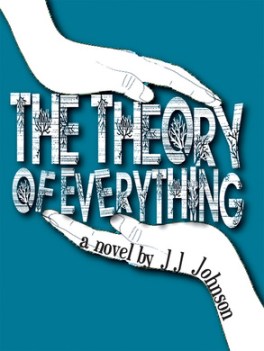
Book Review: The Theory of Everything by J. J. Johnson

Book Review: The Theory of Everything by J. J. Johnson

I stumbled across this sweet, sad young adult novel at my library, quite by chance, and just happened to take a peek inside. Once I saw the Venn diagrams, I was hooked!

The Theory of Everything is narrated by 15-year-old Sarah Jones, a typical teenager in many ways but one: Eight months earlier, her BFF Jamie was killed in a freak accident in the gym at school. Sarah, the only witness, was powerless to help or to save Jamie. Now, months later, it seems as though everyone’s patience with Sarah has worn thin. Shouldn’t she be over it by now? Sarah is lost, consumed by guilt and grief, and has been taken over, as she puts it, by the “snark box” that speaks for her, even when she knows snarkiness will only get her further into trouble.

Sarah’s parents are at wits’ end, her brother thinks she’s a freak, and her boyfriend, sweet and supportive Stenn, just wants her to open up and talk — but that’s the last thing Sarah wants to do. Instead, she skips classes, talks back, makes out with Stenn, and immerses herself in her nerdly pursuit of endless rewatchings of Star Wars and Battlestar Galactica. Sarah’s only true comfort comes from her loyal dog Ruby, but if Sarah doesn’t shape up soon, even Ruby may be taken away from her as her desperate parents search for some sort of leverage.

It may sound rather grim, but Sarah’s voice is honest and clear, and while she’s been through an awful tragedy, it’s hard not to feel a bit cheered by Sarah’s inner dialogue. Her snark box may be fully functional, but so is her wit, and Sarah’s approach to figuring out how to move forward often comes down to charts and diagrams, liberally scattered throughout the book.  We get plotted graphs of “Things Said To Parents & Likely Outcomes” (with outcomes ranging from stink-eye to counseling to jail), a pie chart on “Possibility that ghosts exist”, and a Venn diagram of “Things I Understand” (which includes chaos theory) and “Things I’ll Never Understand” (which includes “why Jamie died”).

photo a

The Theory of Everything does not offer easy solutions, and that’s only fitting. Sarah has a long journey ahead of her, and while she’s making progress, there is no magic wand that will make her all better. What we see in this book is a girl in transition, coping with one of the most awful and unfair situations imaginable, and yet having to find a way to deal, simply because not dealing is not an option.

It’s interesting to me to think about how different readers might be affected by this book in different ways. I would imagine that a teen would completely side with Sarah, and would agree with her that her parents are being pushy and unreasonable. I could sympathize with Sarah and understand why she would feel this way. At the same time, as a parent myself, I can only imagine how terribly helpless Sarah’s parents must feel, watching their daughter go through such horrible turmoil and feeling desperate to reach her at any cost. It’s a tribute to the author’s gifted storytelling that both perspectives feel realistic. A tragedy like this would of course have ripple effects that spread and continue. The Theory of Everything lets us see one girl’s struggle to understand her loss and to find a way to continue a life that’s missing its center.

Thursday Quotables: The Theory of Everything / The Shadowy Horses

tq7Welcome back to Thursday Quotables! This weekly feature is the place to highlight a great quote, line, or passage discovered during your reading each week.  Whether it’s something funny, startling, gut-wrenching, or just really beautifully written, Thursday Quotables is where my favorite lines of the week will be, and you’re invited to join in!

If you’d like to participate, it’s really simple:

  • Follow Bookshelf Fantasies, if you please!
  • Write a Thursday Quotables post on your blog. Try to pick something from whatever you’re reading now!
  • Link up via the linky below (look for the cute froggy face).
  • Make sure to include a link back to Bookshelf Fantasies in your post (http://www.bookshelffantasies.com).
  • Have fun!

tq5I’m cheating a bit this week. I just couldn’t make up my mind whether to go with a snarky quote or a more serious (and lovely) descriptive passage. So… why choose? This week, I’m going with two Thursday Quotables.

Here’s Quotable #1:

The cop clears his throat. “Please state what happened.” He looks me up and down; his eyes linger on my forehead (which is throbbing in pain, thank you very much) and — yep, there it is — he glances at my boobs, like he doesn’t mean to but he can’t help it. Dudes think they’re completely 007 about the boob eye-flick, but I can always tell. It’s a a gift.

Source:  The Theory of Everything
Author: J. J. Johnson
Peachtree Publishers, 2012

And Quotable #2:

A man was coming across the moor.

It might have been the fogged window, or the wild weather, or the rough and rolling landscape that, like all the Scottish Borderlands, held traces of the harsh and violent past — the echoed din of charging hooves, of chilling battle-cries and clashing broadswords. Whatever it was, it tricked my senses. The man, to my eyes, looked enormous, a great dark giant who moved over bracken and thorn with an effortless stride. He might have been a specter from a bygone age, a fearless border laird come to challenge our rude intrusion on his lands — but the illusion lasted only a moment.

Source:  The Shadowy Horses
Author: Susanna Kearsley
Sourcebooks Landmark, 2012 (originally published 1997)

What lines made you laugh, cry, or gasp this week? Do tell!

Link up, or share your quote of the week in the comments.

Wishlist Wednesday

Welcome to Wishlist Wednesday!

The concept is to post about one book from our wish lists that we can’t wait to read. Want to play? Here’s how:

  • Follow Pen to Paper as host of the meme.
  • Do a post about one book from your wishlist and why you want to read it.
  • Add your blog to the linky at the bottom of the post at Pen to Paper.
  • Put a link back to Pen to Paper somewhere in your post.
  • Visit the other blogs and enjoy!

My Wishlist Wednesday book is:

 Fangirl

Fangirl by Rainbow Rowell
(to be released September 2013)

From Goodreads:

A coming-of-age tale of fan fiction, family and first love.

Cath is a Simon Snow fan.

Okay, the whole world is a Simon Snow fan . . .

But for Cath, being a fan is her life — and she’s really good at it. She and her twin sister, Wren, ensconced themselves in the Simon Snow series when they were just kids; it’s what got them through their mother leaving.

Reading. Rereading. Hanging out in Simon Snow forums, writing Simon Snow fan fiction, dressing up like the characters for every movie premiere.

Cath’s sister has mostly grown away from fandom, but Cath can’t let go. She doesn’t want to.

Now that they’re going to college, Wren has told Cath she doesn’t want to be roommates. Cath is on her own, completely outside of her comfort zone. She’s got a surly roommate with a charming, always-around boyfriend, a fiction-writing professor who thinks fan fiction is the end of the civilized world, a handsome classmate who only wants to talk about words . . . And she can’t stop worrying about her dad, who’s loving and fragile and has never really been alone.

For Cath, the question is: Can she do this? Can she make it without Wren holding her hand? Is she ready to start living her own life? Writing her own stories?

Or will she just go on living inside somebody else’s fiction?

Why do I want to read this?

This just sounds perfect for me in so many ways! First, I’ve read Rainbow Rowell’s two other novels, Eleanor & Park and Attachments, in the past month or so, and while they’re quite different, I loved them both so much! (Click on the links if you’d like to read my reviews…)

And then, of course, the plot of Fangirl just sounds right up my alley. I’m imagining the Simon Snow series to be somewhat akin to Harry Potter — and who can’t relate to obsessing over characters, dressing up, waiting for movie premieres??? Plus, the deeper story of sisters growing up and growing apart sounds quite lovely, and I know that I love the way this author writes. All in all, Fangirl is a book that I just can’t wait to read!

So what are you doing on Thursdays and Fridays? Come join me for my regular weekly features, Thursday Quotables and Flashback Friday! You can find out more here — come share the book love!

Book Review: The Shadowy Horses by Susann Kearsley

Book Review: The Shadowy Horses by Susanna Kearsley

The Shadowy HorsesVerity Grey is a 29-year-old freelance archaeologist, newly resigned from the British Museum and ready for a new assignment. When invited to interview for a secret new project in the Scottish Borderlands, Verity is intrigued… and intrigue turns to shock when she finds out the purpose of the dig. Peter Quinnell, considered by many to have detoured from the straight path of sanity in the wake of personal tragedies, is on the hunt for the fabled Ninth Roman Legion, which disappeared without a trace centuries earlier somewhere in the Northern British Isles. Peter thinks he’s found the Ninth at last, and he wants Verity on his team. His evidence? The say-so of a psychic 8-year-old boy, who reports seeing the ghostly figure of “The Sentinel”, a lonely Roman soldier who wanders the moors, beckoning young Robbie to discover his secrets.

Naturally, Verity joins the dig, and we are quickly wrapped up in both the archaeological explorations and the interpersonal dramas of the team. Verity has never put much stock in the supernatural, but she can’t shrug off the strange sounds she hears at night, the unexplained cold breezes that she encounters in warm rooms, or the uncanny ability that Robbie displays in reading her thoughts and predicting events. Also drawing Verity in is local boy turned archaeologist David Fortune, whose brawny good looks and easy charm are awfully hard to ignore. Just wait until that man puts on a kilt!

The premise sounded quite interesting to me, but unfortunately, I have to say that the book as a whole didn’t quite work for me the way I’d hoped. It should have been fascinating: I’ve always been interested in the story of the Ninth Roman Legion, and expected to get much deeper into their story in The Shadowy Horses. Disappointingly, that wasn’t the case. While the fate of the Ninth is explored, the discoveries at the dig didn’t strike me as earth-shattering or definitive, and I wish there had been more time spent on the character of the Sentinel.

Likewise, the relationships among the members of the team, while interesting, didn’t feel particularly high-stakes to me. By the time the climax of the book rolled around, with a dramatic turn of events and a potential calamity, I never really felt that the main characters were truly in peril, and the revelations of secrets and betrayals were not at all surprising.

Still, The Shadowy Horses does have a lot going for it. First of all, Susanna Kearsley is a gorgeous writer, and she is a master when it comes to conveying the mysteries of the British Isles, evoking the wildness of the landscapes and the beauty of the moors and coasts. I also enjoyed the insider’s peek into the world of archaeological digs, learning about the tools and methodologies of the scientists involved and seeing how a project of this nature might unfold. The characters are nicely developed, and I was interested in getting to know them — and truly wished them all their happy endings.

The Shadowy Horses is the fourth book I’ve read by Susanna Kearsley, and while good, I just didn’t feel that it measures up to her other books. Perhaps I simply missed the “time-slip” elements for which she is known, which lend her books their heightened urgency and intense romance. Susanna Kearsley has a new book due out in June — The Firebird — which I understand includes characters from both The Shadowy Horses and her beautiful novel The Winter Sea. While The Shadowy Horses fell a bit flat for me, that does not at all mean that I won’t be checking out this author’s future writing. I really look forward to reading The Firebird as soon as it becomes available in the US — and if you’ve never read anything by this gifted author, I’d suggest starting with The Winter Sea or Marianna.

Top Ten Tuesday: Top Ten Books When I Need Something Light and Fun

Top 10 Tuesday newTop Ten Tuesday is a meme hosted by The Broke and the Bookish, featuring a different top 10 theme each week.

This week’s theme is Top Ten Books When You Need Something Light and Fun. This was a harder list to put together than I’d anticipated! I now realize that most of my go-to books for re-reading, straight from my shelf of favorites, are not at all light and fun. Dark, sad, dramatic, intense — yes. Light and fun? Not so much.

With a bit of struggle, here’s what I’ve come up with for my top 10 this week:

Soulless (Parasol Protectorate, #1)

1) Soulless by Gail Carriger: The first book in the Parasol Protectorate series is full of quippy dialogue, romance, supernatural hijinks, and is a Victorian comedy of manners to boot. Even when the characters are in peril, it’s light-hearted and humorous.

Bloodsucking Fiends (A Love Story, #1)

2) Bloodsucking Fiends by Christopher Moore: Or really, anything by Christopher Moore. Lust lizards? Stupidest angels? Sequined love nuns? Talking fruit bats? He cracks me up, every time.

Harry Potter and the Sorcerer's Stone (Harry Potter, #1)

3) Harry Potter and the Sorcerer’s Stone by J. K. Rowling: II’ve read the entire Harry Potter series about a gazillion times by now, and these books always make me smile. Of course, there are a lot of dark and terrible times ahead for Harry, but especially in book one (and really, throughout the series), the darkness is offset by the wonder of it all. Harry, Ron, and Hermione are adorable as younger children, and wonderful heroes as they grow up. I can’t imagine ever getting tired of this world.

The Hitchhiker's Guide to the Galaxy (Hitchhiker's Guide to the Galaxy, #1)

4) The Hitchhiker’s Guide to the Galaxy by Douglas Adams.The adorableness of this series cannot be overrated. Besides, 42!

The Princess Bride

5) The Princess Bride by William Goldman: I love the movie and I love the book. Either one will cheer me up on a bad day. It’s all about the twu wuv, people.

Pride and Prejudice

6) Pride and Prejudice by Jane Austen: The Regency-era snarkiness, the sass and spine of Elizabeth Bennet, and the idiocy of the various other Bennet women are worth revisiting, time after time.

Storm Front (The Dresden Files, #1)

7) The Dresden Files by Jim Butcher: Look, bad stuff happens in this series, to be sure. And yet, Harry Dresden — Chicago’s only professional wizard — is just a total smart-ass of a bad-ass, and is so much fun to hang out with. This is one series that has not overstayed its welcome (cough *Sookie* cough). No matter how the plot twists and turns, it’s always great to spend time with Harry.

The Sleep Book

8) The works of Dr. Seuss: This may be more for my 10-year-old than for me, although I confess to being a total fan. Whenever my son, who considers himself quite grown-up these days, has a tough day or feels a bit sick, out comes the Dr. Seuss. Our go-to favorites are The Sleep Book and Did I Ever Tell You How Lucky You Are?, but really, you just can’t go wrong with a good dose of Seuss on a bad day.

Tempest Rising (Jane True, #1)

9) The Jane True series by Nicole Peeler.  As with #7, bad stuff does indeed happen in this urban fantasy series, but Jane is just such an amazing heroine that these book can totally cheer me up and make me laugh.

The Hobbit (Middle-earth Universe)

10) The Hobbit by J. R. R. Tolkien: I love the Lord of the Rings books (oh, Aragorn…), but The Hobbit is a winner in terms of light, fun reading. Nothing like a thrilling quest, with good guys, questionable guys, wizards, dashing heroics, and piles of gold to brighten up a day!

Trying to put together this list has shown me that I need to read more happy books. Any suggestions? Let me know the books you can count on when you need a big serving of cheer!

If you enjoyed this post, please consider following Bookshelf Fantasies. Thanks for stopping by!

The Monday agenda 5/6/2013

MondayAgendaNot a lofty, ambitious to-be-read list consisting of 100+ book titles. Just a simple plan for the upcoming week — what I’m reading now, what I plan to read next, and what I’m hoping to squeeze in among the nooks and crannies.

How did I do with last week’s agenda?

A Spear of Summer Grass by Deanna Raybourn: Finished it; enjoyed it; reviewed it. My review is here.

Ask The Passengers: Done! My review is here.

Read but not reviewed:

Far in the Wilds by Deanna Raybourn: A prequel to A Spear of Summer Grass. This novella provides the backstory for one of the main characters, and is worth checking out if you’ve read Spear.

Interview with the Vampire: Claudia’s Story by Anne Rice and Ashley Marie Witter. This graphic novel retells events from Interview from the perspective of Claudia, the child vampire. Fans of Anne Rice’s books may want to read this as a side-note to the novels, but I wouldn’t recommend it in place of reading Interview with the Vampire.

Fresh Catch:

I managed not to buy any new books this week, although I did pick up a used copy of this book after a book club friend recommended it:

See? Real self-restraint this week. No guarantee that will last, however.

What’s on my reading agenda for the coming week?

I wrote a bit of a blogging manifesto for myself over the weekend (you can read it here), in which I reminded myself to put reading ahead of blogging — in other words, read the books I really want to read, rather than picking books based on what might work well as blog posts. There are so many other sources of stress in my life. Reading shouldn’t be one of them. So, onward! With a fresh outlook, I hope.

That said, here’s where I stand in terms of a reading agenda for the coming week. I’m about midway through The Shadowy Horses by Susanna Kearsley, and I’m enjoying it very much. I decided it was finally time to make it a priority, even though it’s been on my shelf for months now, because the author has new book due out soon and I’ve heard that at least one of the characters from The Shadowy Horses will be showing up.

After much internal debate about continuing to buy brand-new hardcovers when I already have so many unread books in my house (you see where this is going, don’t you?), I finally broke down and ordered myself a copy of Joe Hill’s new novel, NOS4A2. It should be arriving on Tuesday, and I plan to start reading it the second it arrives.

Since NOS4A2 is 700+ pages, I’m guessing that will fill up my reading agenda very nicely this week, thank you very much.

But, if I do have any random down-time, I’ll continue my slow but steady read-through of Much Ado About Nothing. I’m aiming for a scene each day — not too ambitious, but it’s still not always happening. I don’t feel a great sense of urgency about this, but I would like to become more familiar with Shakespeare’s comedies, and this is a good start.

My son and I are approaching the end of The Magician’s Nephew by C. S. Lewis. We’re in Narnia and have met Aslan. Looking good. And seeming likely that we’ll continue with the Narnia books after this one is done.

So many book, so little time…

That’s my agenda. What’s yours? Add your comments to share your bookish agenda for the week.

Book Review: Ask the Passengers by A. S. King

Book Review: Ask the Passengers by  A. S. King

Astrid Jones is a smart, funny girl who you can easily imagine having an amazing life in New York, hanging out in the Village perhaps, exploring the city with quirky and artsy friends. Unfortunately for Astrid, she does not live in the city. Born a New Yorker, Astrid and her family moved to Unity Valley, Pennsylvania — quintessential small-town USA — when she was 10 years old, and has been stuck in a rut ever since.

In Unity Valley, and in Astrid’s own family, the only way to fit in is to fit — no rough edges, nothing to make you stand out, no unusual traits. And if you’re the member of a minority group? Well, may the gods of uniformity help you then. The small-minded gossip of the town regularly calls out the ethnic minorities, the eccentrics, and the generally suspect, and there is no mercy when it comes to the rumor mill and the shunning and humiliations that can result.

Astrid, at age 17, mostly keeps her head down and gets by. She hides a vital secret for her two best friends, Kristina and Justin, the high school’s golden couple, but Astrid has a major secret of her own. On the weekends at her part-time job, Astrid’s friendship with Dee has moved from casual comfort to hot-and-heavy make-out sessions, and Astrid likes it quite a bit. But is she gay? She’s not sure, and she’s tired of all the pressure — pressure from her parents to fit in, pressure from Dee to take a stand and come out, pressure from the high school in-crowd to just be normal, have a boyfriend, and not be so weird.

To clear her head, Astrid has the unusual habit of going out into her backyard, lying down on the picnic table, and watching the airplanes fly overhead. As each one passes, Astrid focuses on sending her love to the passengers — not just to say hi, but to send her own love away from her to a place where it might be safe. Astrid can’t share anything with her controlling parents or her too-perfect sister; she can’t open up to her best friend; and she can’t share her doubts and confusion with Dee without Dee taking it as a statement on their relationship. So Astrid sends her love to the passengers overhead, the only people she can love freely and without consequence, and for a while, it helps her.

The rest of the time, the table just sits here with nothing to do. So I lie on it and I look at the sky. I see shapes in the clouds by day and shooting stars by night. And I send love to the passengers inside the airplanes… [But] it feels good to love a thing and not expect anything back. It feels good to not get an argument or any pushiness or any rumors or any bullshit. It’s love without strings. It’s ideal.

Astrid gets by for a while, but things do reach a crisis point eventually, and finally Astrid is pushed far enough that she has to take big risks and take a stand. When she blows up, she does so rather spectacularly, and it’s particularly wonderful to see the fall-out of her explosion.

Ask the Passengers is a quick-paced story, told in the first-person from Astrid’s perspective, so that we see inside her thoughts and fears, and really get a chance to see a smart girl try to take control of her life and at the same time do the right thing. Astrid is willing to come out when it feels right — but how does she know if she’s really gay? Maybe she doesn’t like girls in general, just Dee? And if she’s not sure, is it cowardice to remain hidden, or is it bravery to be committed to speaking nothing but the truth? Is the pressure from Dee to come out any different from the pressure from Astrid’s family to be “normal”? There are some important questions asked here about tolerance and acceptance. At one point, the high school has a mandatory Tolerance Day, complete with pep rally and inspirational speakers — but the day is so clearly aimed at Astrid and her friends that it really just serves to isolate them even more.

Interspersed throughout Astrid’s tale is snippets from different airplane flights. As Astrid sends her love to the passengers overhead, we get small segments throughout the book of different passengers on different planes, who make life-changing decisions, face up to hard truths, or simply find some inner strength to face their problems. The implication is that Astrid’s love has reached them and affected them in some way. Magical thinking, perhaps, but it’s a nice idea — or perhaps it’s only coincidence, and the magic is simply in drawing lines from one person in crisis to another, so that the author is showing the reader that none of us are alone, that everyone has risks to take and decisions to make, and that owning up to our own thoughts and feelings may be the bravest step a person can take.

I had not heard of Ask the Passengers until last week, when it was announced that this book was the winner of the 2012 Los Angeles Times Book Prize for Young Adult Literature. A well-deserved piece of recognition, in my opinion. Ask the Passengers is an important book that doesn’t feel preachy, with valuable messages for teens struggling to figure out who they are and where they fit in — and an important lesson as well for the adults in teens’ lives about the incalculable value of support and love without judgement or conditions.