Take A Peek Book Review: The Darkest Part of the Forest by Holly Black

“Take a Peek” book reviews are short and (possibly) sweet, keeping the commentary brief and providing a little peek at what the book’s about and what I thought. This week’s “take a peek” book:
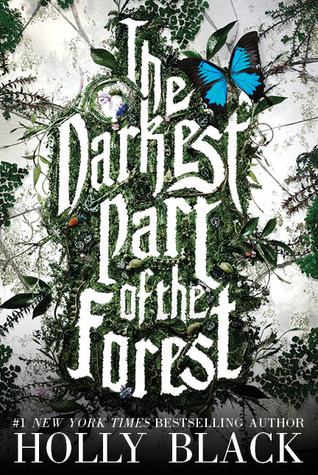
darkest part

Synopsis:

(via Goodreads)

Children can have a cruel, absolute sense of justice. Children can kill a monster and feel quite proud of themselves. A girl can look at her brother and believe they’re destined to be a knight and a bard who battle evil. She can believe she’s found the thing she’s been made for.

Hazel lives with her brother, Ben, in the strange town of Fairfold where humans and fae exist side by side. The faeries’ seemingly harmless magic attracts tourists, but Hazel knows how dangerous they can be, and she knows how to stop them. Or she did, once.

At the center of it all, there is a glass coffin in the woods. It rests right on the ground and in it sleeps a boy with horns on his head and ears as pointed as knives. Hazel and Ben were both in love with him as children. The boy has slept there for generations, never waking.

Until one day, he does…

As the world turns upside down, Hazel tries to remember her years pretending to be a knight. But swept up in new love, shifting loyalties, and the fresh sting of betrayal, will it be enough?

My Thoughts:

I find myself not quite knowing what to say about this unusual, lovely book. I love the juxtaposition of the modern world, with its IPods and high school parties, alongside the hidden world of the Folk who live in the deep, dark forest. In fact, the opening lines create such a magical aura that it’s a bit jarring to realize that this story is set in a 21st century real-world town with ordinary teens who drive cars, drink beer in the woods, go to football games, buy vintage clothing, and have all the usual rivalries, gossip, and tensions you’d see in any young adult novel.

And yet, in the town of Fairfold, residents know that there are other beings in the forest, and it’s best to be wary. Every child knows the rules, such as never saying “thank you” to a fairy or eating any food offered. It’s just tourists, flocking to what’s known as a kitschy destination with cutesy, magic-themed main street shops, who get into trouble, finding their money replaced by leaves or, in more recent years, being subjected not just to harmless pranks but to actual life-threatening danger.

Hazel and Ben have grown up with the stories and know the ropes. They’re also each crazily infatuated with the sleeping prince in the glass coffin in the woods, and have concocted all sorts of fantasies about him and his world. As the story progresses, we learn much more about Hazel and her secrets, and what she’s done to help her brother, despite all the warnings and scary-sounding rhymes.

While the book is a bit odd at first, introducing plot points as facts already known (so that I kept having to flip back and say, “wait, when did that happen?”), it eventually settles into a logic and rhythm that work. The everyday lives alongside the magical, and the writing too can veer from the commonplace to the enchanted in the blink of an eye.

I loved the strange interplay between waking life and dreams, and I especially loved how traditional fairy tale gender roles are turned on their heads. A girl is the wielder of a powerful sword, defending family and all those who need her strength. A boy can find true love by waking a sleeping prince.

Meanwhile, there are changelings, goblins, a terrifying Alderking, and a creature so consumed by the loss of her true love that she literally becomes a monster.

In The Darkest Part of the Forest, author Holly Black creates a spell-binding tale of sibling love, bravery and devotion, with language that weaves its own magical enchantment.

_________________________________________

The details:

Title: The Darkest Part of the Forest
Author: Holly Black
Publisher: Little, Brown Books for Young Readers
Publication date: January 13, 2015
Length: 336 pages
Genre: Young adult fantasy
Source: Purchased
Book Review: The Infinite Sea by Rick Yancey

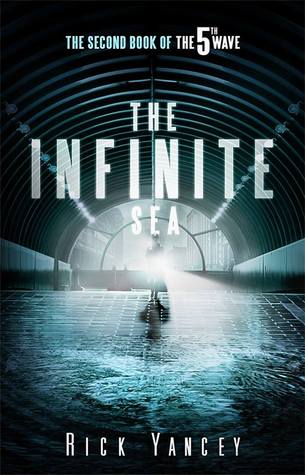
infinite seaThis is the second book in a series, so here come the warnings:

SPOILER ALERT: This is the follow-up book to The 5th Wave. Events from The 5 Wave will be discussed! So, need I say it? If you haven’t read The 5th Wave, now would be a good time to look away. (Better yet, go get a copy of The 5th Wave! It’s good.)

KINDA SPOILER-ISH ALERT: There are some elements from The Infinite Sea that I’ll have to talk about in order to write any sort of review. I’ll try not to go into a tremendous amount of detail, but if you prefer to know nothing about what happens, well, here’s another good time to look away.

And that concludes the housekeeping portion of this post. Moving on…

In The 5th Wave, the subject matter is nothing less than the destruction of the human race at the hands of alien invaders. Over the course of an apocalyptic few months, 98% of Earth’s population has been killed in all sort of horrifying ways. The story focuses on a handful of survivors, each on their own, trying not only to stay alive themselves, but to save or sustain the people they love.

The Infinite Sea picks up pretty much right after the big, blow-out ending of The 5th Wave. Our little band of survivors is hunkered down in an old, abandoned motel, waiting for whatever comes next, listening to the rats in the walls. (The rats are important — more on this later.)

What else? Well, that’s mostly it.

In The 5th Wave, our main three point of view characters are Cassie, Ben, and Evan. Each has his or her own intense story to tell, with a unique viewpoint on the events unfolding. In The Infinite Sea, the perspective expands to include chapters narrated by several other characters. Does this help broaden the view of life after the invasion? Not really.

It’s not that I wasn’t interested in what happened in The Infinite Sea. I was. But at the same time, the story somehow feels narrow, almost claustrophobic.

Part of what really impressed me in The 5th Wave was the epic scale. As seen through the eyes of our POV characters, the destruction is devastatingly huge, yet also intimate in that the impact of the invasion is highly personal. Family members die cruel, bloody deaths. Trusted adults betray in horrible, mind-breaking, soul-damaging ways. Safe havens turn out to be hell on earth. Humans yearn for companionship, but safety lies only in isolation. The loss each character experiences, especially Cassie, is enormous not just for the character, but because of what it means for the entirety of human life.

Compared to all that, The Infinite Sea feels small. In a most literal sense, it is: Going by my physical copies of both books,  The Infinite Sea is about 150 pages shorter than The 5th Wave. The invasion is still underway, but not much has changed. We spend all of this second book holed up with our group of characters, waiting for the next awful thing to happen. The relationships barely move forward, and they have very little to do other than hide and speculate – and talk and talk and talk.

The endless talk is yet another piece that works less well for me in The Infinite Sea. In The 5th Wave, the language is often highly dramatic, much more figurative than you might expect out of the mouths of teens dealing with disaster, but somehow it matches the grand tone of the entire book. Sadly, in The Infinite Sea, the language tends toward an overuse of imagery and metaphor, and rather than feeling epic, it ends up sounding like borderline mumbo-jumbo.

I understood. In the safe room, a billion upraised faces populating the infinite, and the eyes that sough mine, and the question in those eyes too horrible to put into words, Will I live? It’s all connected. The Others understood that, understood it better than most of us. No hope without faith, no faith without hope, no love without trust, no trust, without love. Remove one and the entire human house of cards collapses.

It’s all about a search for meaning in disaster, but the discussions go in circle upon circle: There are rats in the walls. Are we the rats? Is the Earth the inhabited house the aliens want to move into? Why not kill all the rats? Why leave some rats alive? There’s the rock problem: Why not just use a big rock (i.e., a meteor) to wipe out all life? Why embed aliens inside the humans? Why play all the mind games? Why, why, why… this books amounts to a never-ending litany of characters discussing “why” — but unfortunately, we end with little more understanding than we had at the beginning of the book.

Another problem: In what felt like a baffling shift to me, the entire second half of the book is focused on Ringer, a character in a supporting role in The 5th Wave. We barely know her; we never saw her point of view in the first book. An awful lot of space is devoted to Ringer’s experience, trapped and cut off from the other characters, and it’s a weird shift in emphasis. Cassie was established in The 5th Wave as our primary character, yet she and the rest of her entourage are absent for almost half of this book. Ringer’s story adds some knowledge to the mix, but it’s kind of jarring to have the book split like this, with two stories that don’t fit together.

The Infinite Sea is clearly the bridge book in this trilogy. We need to get from the introduction of the disaster in The 5th Wave to the final resolution in the 3rd, yet-to-be-published book, but other than as a connection from point A to point B, The Infinite Sea adds very little to the world-building or the story arc of the series. By the end of this second book, I would have expected to understand much more about the reasons for the invasion and the strategies employed by the invaders. Instead, the only real progress is that the characters are beginning to understand that there’s a lot that they don’t know, that there has to be more to what to the invaders want, and that there are major pieces of the strategy that remain to be figured out.

The more I write about The Infinite Sea, the more I realize how unsatisfying I found it. With very little story progression or character growth and very little in the way of unraveling the mysteries of the alien plan, it’s very difficult to point out much that’s gained by reading The Infinite Sea, other than a reshuffling of the chessboard and a set-up for a finale. Perhaps this series should have been two power-house books instead of a trilogy with a tepid middle. I’m hoping that the final book, supposedly to be released in September, will blow the story out of the water.

The 5th Wave was amazing. I suppose if you want to find out what happens next, you have to read The Infinite Sea. But unless something is revealed early on in book #3 that demonstrates how the events of #2 matter, I’d say that The Infinite Sea is a mostly unimportant interlude that comes nowhere near to matching the power and scale of The 5th Wave. Proceed with caution — or perhaps wait until the release of the 3rd book and read it as an introduction to #3. Read on its own, as the eagerly anticipated sequel to a fantastic first book, The Infinite Sea disappoints.

_________________________________________

The details:

Title: The Infinite Sea
Author: Rick Yancey
Publisher: Putnam Juvenile
Publication date: September 14, 2014
Length: 320 pages
Genre: Young adult/science fiction
Source: Purchased

Thursday Quotables: 100 Sideways Miles

quotation-marks4

Welcome back to Thursday Quotables! This weekly feature is the place to highlight a great quote, line, or passage discovered during your reading each week.  Whether it’s something funny, startling, gut-wrenching, or just really beautifully written, Thursday Quotables is where my favorite lines of the week will be, and you’re invited to join in!

100 Sideways Miles

100 Sideways Miles by Andrew Smith
(published September 2, 2014)

Two little snippets that give a good sense of the weird, wonderful language of this hard-to-define book. First, from early on, setting the stage for the entire story:

A story involving alien visitors from outer space, an epileptic kid who doesn’t really know where he came from, knackeries and dead horses falling a hundred sideways miles, abandoned prisons, a shadow play, moons and stars, and jumping from a bridge into a flood should probably begin with a big explosion in the sky about fourteen billion years ago. After all, the whole story is rather biblical, isn’t it?

Poof!

But it doesn’t.

And another from later in the book — just a little moment in a more action-focused sequence that captures the quirkiness that I love about this author’s writing style:

There was a phone with a dial in the room. It had a cord, too. I wondered if I would actually have the nerve to call my dad with it in the morning and confess I’d “lost” my cell phone. If I didn’t check in soon, I was certain Dad would be notifying the FBI or Homeland Security, or whatever agency is actually in charge of apprehending interstate fugitive epileptic kids who probably came from some other planet.

What lines made you laugh, cry, or gasp this week? Do tell!

If you’d like to participate in Thursday Quotables, it’s really simple:

  • Write a Thursday Quotables post on your blog. Try to pick something from whatever you’re reading now. And please be sure to include a link back to Bookshelf Fantasies in your post (http://www.bookshelffantasies.com), if you’d be so kind!
  • Leave your link in the comments — or, if you have a quote to share but not a blog post, you can leave your quote in the comments too!
  • Visit other linked blogs to view their Thursday Quotables, and have fun!

Book Review: Breathe, Annie, Breathe by Miranda Kenneally

Breathe Annie BreatheIn Breathe, Annie, Breathe, the main character is a 17-year-old girl facing one of life’s cruelest moments: The boy she loved, her boyfriend of three years, died in a tragic accident. Annie’s whole life had revolved around Kyle. The two were inseparable, and so long as Annie had Kyle, she didn’t need other friends or anything else in her life.

As we meet Annie, Kyle has been dead for about six months, and Annie can barely function. Somehow she’s arrived at the idea that to honor Kyle’s memory, she’ll run the marathon he’d wanted to run but didn’t live long enough to accomplish. Annie is not a runner, however, so she joins a training program where, over the course of six months, she’ll push her body and mind into shape for the upcoming October marathon.

At first, she’s in constant pain and doesn’t believe she can do it. But her stubborn determination that she has to do this for Kyle keeps her moving forward. And then, on the trail, she encounters Jeremiah, the adrenaline-junkie brother of her running coach, and she feels something that she never thought she’d feel again. Sparks fly. It doesn’t hurt that he’s gorgeous and muscle-y, and seems instantly drawn to Annie as well.

Stop rolling your eyes! My description might make this book sound run-of-the-mill, but it’s not. True, on the surface, it’s “poor bereaved girl learns to love again”, and that’s been done before. But there are many elements that make Breathe, Annie, Breathe a cut above typical YA fare.

For starters, Annie herself is an interesting, conflicted, smart girl who doesn’t always make good choices. She’s the daughter of a single mom, Annie’s dad having walked out before she can even remember, and she, her mom, and her brother live in a trailer park. And that’s totally okay — Annie doesn’t feel shame, and the trailer park isn’t the stereotypical redneck, trashy place that you see in so many books and movies.

Because of her low economic status, Annie has to work for whatever she wants. She sees herself as weak many times, but it takes a lot of strength and commitment to do what she’s doing. The only way she can afford her running program is through hard work. Every shift at the restaurant matters; every bit of her tip money is accounted for, whether it’s her running gear, her living expenses for college the next year, or the cost of her school books. Annie doesn’t begrudge her mother anything or resent anyone — this is just her life, and she deals with it.

For another thing, Kyle is never torn down or criticized. In many books, the heroine finally moves on when she realizes that the dead boyfriend/lover/husband isn’t as perfect as she’s made him out to be. Not here. Kyle wasn’t perfect, but neither was Annie. Their relationship had flaws, but Annie does not for a moment stop wishing that they could have had the life they’d dreamed of. She moves forward by cherishing her memories of Kyle while also setting her sights on a life that no longer revolves around him.

From the early descriptions, I thought Jeremiah would be the bad-boy-saved-by-a-good-girlfriend stereotype, but that’s also not the case. Jeremiah is a great guy, a Southern gentleman, whose only flaw is his need to do extreme sports, to the extent that he’s been hurt so many times that his mother has kicked him out unless he promises to slow it down. He treats Annie with the utmost respect, and there’s never a doubt that he’ll be good to her and for her.

An added element that really makes this book a treat is the community it’s set in. Miranda Kenneally’s books take place in small-town Tennessee, with a rural setting, a close-knit community, and a Southern sensibility that involves hospitality and good manners. Characters from her previous novels show up in minor roles in Breathe, Annie, Breathe — but it doesn’t matter if you’ve read those books or not. It’s like getting a visit from old friends, which makes it fun if you recognize them, but their backstories don’t contribute to the plot of Breathe, Annie, Breathe in any way that would be confusing to someone unfamiliar with them.

I really enjoyed Breathe, Annie, Breathe. Annie’s emotional journey is portrayed with sensitivity, and her struggles and conflicts feel real. The guilt she feels over her attraction toward Jeremiah, the growing awareness that she needs to rebuild her life, reconnect with the friends she lost over the years by her own negligence, and think about what she truly wants for her future — all seem realistic and are easy to relate to. Meanwhile, Annie’s running journey is the backbone of the story, and it’s fascinating and inspiring to see how a person can transform herself if she’s willing to commit and throw herself into it.

Although categorized as young adult fiction, I’m not entirely sure that that’s the right place for this book. It skews a little older than YA, covering both the end of high school and the start of college. The sexual content is somewhat more explicit than I’ve seen in a lot of the contemporary YA that I’ve read lately, all of which seem to be more focused on flirting, popularity, and high school drama rather than on actual relationships with emotional and physical connections.

I’ve read one other book by Miranda Kenneally, Racing Savannah (reviewed here last year), and after reading Breathe, Annie, Breathe, I’d like to read more. Her books center on girls striving for success in typically male-dominated athletic pursuits, while at the same time sorting out their lives, their dreams, and their relationships.

In Breathe, Annie, Breathe, the story is quick-moving, but doesn’t skimp on emotional challenges or character development. Annie is a terrific main character, and readers will be cheering for her to succeed, in running and in rebuilding her life. The book tackles the subject of terrible loss without becoming maudlin; instead, the loss is acknowledged and honored in a way that feels appropriate and respectful. I recommend Breathe, Annie, Breathe — and Miranda Kenneally’s work in general — for readers who enjoy their YA a little on the older side.

A final, personal note: I hate to say it, but I’m mostly a couch potato at this point, with my exercise routine limited to long walks on the weekends and not much else. I loved reading about Annie’s training, though — and this book has made me start thinking that I should break out my old running shoes and give it another go!

_________________________________________

The details:

Title: Breathe, Annie, Breathe
Author: Miranda Kenneally
Publisher: Sourcebooks Fire
Publication date: July 15, 2014
Length: 306 pages
Genre: Young adult contemporary fiction
Source: Library

Take A Peek Book Review: The Lonely Hearts Club by Elizabeth Eulberg

“Take a Peek” book reviews are short and (possibly) sweet, keeping the commentary brief and providing a little peek at what the book’s about and what I thought. This week’s “take a peek” book:

Lonely Hearts Club

Synopsis:

(via Goodreads)

Love is all you need… or is it? Penny’s about to find out in this wonderful debut.

Penny is sick of boys and sick of dating. So she vows: no more. It’s a personal choice. . .and, of course, soon everyone wants to know about it. And a few other girls are inspired. A movement is born: The Lonely Hearts Club (named after the band from Sgt. Pepper). Penny is suddenly known for her nondating ways . . . which is too bad, because there’s this certain boy she can’t help but like. . . .

My Thoughts:

I’ve read and completely enjoyed Elizabeth Eulberg’s two most recent books, Revenge of the Girl With the Great Personality and Better Off Friends. When I happened to stumble across her debut, The Lonely Hearts Club, at the library this week, I thought I’d give it a try.

Elizabeth Eulberg excels at portraying the ups and downs of the high school pecking order. Her female characters tend to question the norm and make their own way. Penny isn’t a revolutionary, though — she’s just a girl who’s been dumped on and duped by one too many jerky boys. She’s not looking to start a movement, but by taking a stand for herself, she sets the stage for a lot of soul-searching.

Suddenly, the girls at school begin to realize that being with a boy who treats you badly is not actually better than not having a boyfriend at all. Penny and her small circle rediscover the value of having friends to rely on, friends who put their friends first and don’t dump them the second a boy comes calling (or texting).

It isn’t preachy, though: No one here is saying that boys are bad, or that feeling pretty and popular is shallow, or that strong girls should never flirt or care about dating. It’s really about balance, and the takeaway here seems to be that girls have the right to expect to be treated with respect, to decide whether they want a relationship or to go it alone, to pursue what makes them happy and not just what makes them popular.

One great little tidbit that you don’t get from the synopsis: Penny’s parents are Beatles fanatics. Penny’s full name is Penny Lane Bloom, and her older sisters are Rita (Lovely Rita) and Lucy (in sky with diamonds…). Mom and Dad are quirky and hip, occasionally embarrassing, but also unabashedly pro-independence and nonconformity in their daughters — so, for example, it’s no surprise that they take Penny’s side against the principal who tries to crush the club. So what if they call her “Penny Lane” in public? They’re still great parents.

A teeny example — following Penny’s disclosure that she’s in a club:

“Penny started it. It’s called The Lonely Hearts Club,” Rita chimed in.

“Oh, oh, Penny Lane, that’s so, so wonderful!” Mom put her hand up to her chest, thrilled that I’d named something after the Beatles, although she had no idea what the Club stood for. I could’ve started a club called the Yellow Submariners that went out in the ocean and clubbed baby seals and they still would’ve been proud.

“Kiddo, it’s so great you’re taking an interest in your heritage. Goo goo g’joob!” Dad beamed.

The writing is cute and clever, with snappy dialogue that never feels too over-the-top or that it’s trying to hard to be hip. The story is fast-paced, and this is a quick, zippy read.

I’d happily recommend The Lonely Hearts Club to teens, parents of teens, anyone who enjoys contemporary YA, and — of course — to Beatles fans. I understand the sequel (We Can Work It Out) is coming soon, and I’ve already put in my request for it at the library.

_________________________________________

The details:

Title: The Lonely Hearts Club
Author: Elizabeth Eulberg
Publisher: Point
Publication date: 2010
Length: 290 pages
Genre: Young adult contemporary fiction
Source: Library

Wishing & Waiting on Wednesday: The Alex Crow

There’s nothing like a Wednesday for thinking about the books we want to read! My Wishing & Waiting on Wednesday post is linking up with two fabulous book memes, Wishlist Wednesday (hosted by Pen to Paper) and Waiting on Wednesday (hosted by Breaking the Spine).

This week’s pick:The Alex Crow

The Alex Crow by Andrew Smith
(to be released March 10, 2015 )

Synopsis via Goodreads:

Once again blending multiple story strands that transcend time and place, Grasshopper Jungle author Andrew Smith tells the story of 15-year-old Ariel, a refugee from the Middle East who is the sole survivor of an attack on his small village. Now living with an adoptive family in Sunday, West Virginia, Ariel’s story of his summer at a boys’ camp for tech detox is juxtaposed against those of a schizophrenic bomber and the diaries of a failed arctic expedition from the late nineteenth century. Oh, and there’s also a depressed bionic reincarnated crow. 

This sounds crazy and out-there… and given how much I loved Grasshopper Jungle, I can’t wait to read it!

What are you wishing for this Wednesday?

Looking for some bookish fun on Thursdays? Come join me for my regular weekly feature, Thursday Quotables. You can find out more here — come play!

♥♥♥♥♥♥♥♥

Do you host a book blog meme? Do you participate in a meme that you really, really love? I’m building a Book Blog Meme Directory, and need your help! If you know of a great meme to include — or if you host one yourself — please drop me a note on my Contact page and I’ll be sure to add your info!

Book Review: I’ll Give You the Sun by Jandy Nelson

I'll Give You the SunIn this unusual and affecting young adult novel, colors explode off the page, ghosts of dead relatives give sassy advice and float off the ground, and a girl’s hair smells like “sad flowers”.

I’ll Give You the Sun is the story of twins Noah and Jude and the tumultuous, tragic events that propel their lives onto unexpected trajectories in their teen years. Noah and Jude are an inseparable, mind-melded duo up until age 13. They’re so close that they can never play Rochambeau — they always choose the same option: rocks/rocks, scissors/scissors, paper/paper. But then their lives explode into pain, jealousy, and hurt, and nothing is the same.

The story is told in two voices and in two timelines. Noah narrates the 13-year-old pieces of the story. Noah is a gifted artist, who paints in his head when he doesn’t have paper at hand. His imagination is wild and bold, and he sees the world as art constantly. He’s also a misfit, picked on and bullied by the local “surftards”, the older, cooler surfer boys who dominate the teen social life in their small Northern California town. When a new boy, Brian, moves in next door, Noah falls instantly and utterly  in love, and is in a constant, euphoric torment as he spends all his time with Brian, best of friends — yet wondering if he’s interpreting Brian’s reactions correctly.

Jude, at 13, is an aspiring artist too, creating wild sand sculptures on the beach that get washed away as the tides change. But when their mother seems to home in on Noah as the gifted one, Jude turns away and focuses on becoming a hellion of a teen girl, wearing too much make-up, too short skirts, and flirting excessively with boys who are not going to treat her well.

From meeting Jude through Noah’s eyes, we jump to Jude’s piece of the story, when she is 16, enrolled in a prestigious art school for sculpture, worried that her dead mother is haunting her, and in desperate need of a way out of her misery. From a 13-year-old sex kitten, Jude has become a girl in hiding, dressed in baggy tshirts and jeans with her hair cropped short and hidden under a hat. Jude worries about Noah, who’s the epitome of normalcy, running cross-country, hanging out and drinking with the in-crowd as his public high school, and not doing a shred of art.

What happened to these two? How did their lives goes so completely off the rails? What cataclysmic event caused the 13-year-olds we knew to become 16-year-olds we can barely recognize?

To say that it’s complicated is an understatement.

As the plot moves forward, we get bits and pieces of story from both Noah and Jude, and come to understand both the terrible loss they’ve suffered and the crushing guilt each bears. Noah and Jude each feel responsible for what’s happened, but they don’t talk about it with each other. Each feels that they deserve whatever punishment comes their way; each feels the need to atone and make amends, but both feel that they’ve already screwed up and are beyond forgiveness.

I won’t give away much more of the plot. Suffice it to say that as new people enter their lives, Noah and Jude each learn more about what they did and didn’t do, what else contributed to the events in their family’s life, and start to understand why and how their lives changed so dramatically.

I’ll Give You the Sun is a celebration of the artistic impulse, the need to create and make, the innate ability to see the world in colors, shapes, and textures that the rest of us miss out on. There’s a sense of magic in the air, as Jude converses with her dead grandmother and observes her folk superstitions about love and healing. The writing is full of imagery, letting us inside the brains of two characters whose senses inform everything they see and do:

I start to run, start to turn into air, the blue careening off the sky, careening after me, as I sink into green, shades and shades of it, blending and spinning into yellow, freaking yellow, then head-on colliding into the punk-hair purple of lupine: everywhere.

flourish-31609_1280The sky’s overflowing with orange clouds and each time one floats down, Brian bats is back up like a balloon. I watch him hypnotize the girls as he does the fruit in the trees, the clouds in the sky, as he did me.

flourish-31609_1280Sometimes now, I swear I can see sound, the dark green howling wind, the crimson crush of rain – these sound-colors swirling around my room while I lie on my bed thinking about Brian. His name, when I say it aloud: azul.

In terms of pacing, I found myself a little impatient at first. After a relatively short Noah section to start the book, there’s next a very lengthy Jude section, and I just didn’t feel that I knew her well enough to care that much or spend that much time with her — I wanted more Noah! Eventually, by mid-book, the stories seem to reach a better balance, each one absorbing in its own way, so that I didn’t mind bouncing between the two time lines. I think it was at this point that the threads connecting the two sides of the story become clearer, so that in a way we end up in a detective role, seeking the clues to the mystery of how before turned into after for these two unique but matched people.

By the end, I was deeply moved by the story and the way Noah and Jude lost and then found each other again. With a cast of interesting and unusual supporting characters, the world of I’ll Give You the Sun feels full and well developed. It’s interesting to see the lines of connection between the different players, and how each played a part both in the earlier events and in how Jude and Noah finally find a way forward.

If you enjoy your fiction with a touch of magic and wild flights of imagination, you’ll love the writing in I’ll Give You the Sun. I know I did. With unusually lovely language and a plot full of heart-wrenching emotion, this book should be savored for its sounds and textures as well as for its plot.

_________________________________________

The details:

Title: I’ll Give You the Sun
Author: Jandy Nelson
Publisher: Dial
Publication date: September 16, 2013
Length: 371 pages
Genre: Young adult fiction
Source: Library

Thursday Quotables: I’ll Give You the Sun

quotation-marks4

Welcome back to Thursday Quotables! This weekly feature is the place to highlight a great quote, line, or passage discovered during your reading each week.  Whether it’s something funny, startling, gut-wrenching, or just really beautifully written, Thursday Quotables is where my favorite lines of the week will be, and you’re invited to join in!


I'll Give You the Sun

I’ll Give You the Sun by Jandy Nelson
(published September 16, 2014)

Since there are two different narrators, I thought I’d include two different passages. Here’s the first:

Before leaving school I consorted with The Oracle: Google. Internet searches are better than tea leaves or a tarot deck. You put in your question: Am I a bad person? Is this headache a symptom of an inoperable brain tumor? Why won’t my mother’s ghost speak to me? What should I do about Noah? Then you sort through the results and determine the divination.

And another:

I slowly turn to Brian, who’s staring at me with his squinting eyes, not saying anything. Why isn’t he saying anything? Maybe I used up all the words? Maybe he’s too freaked out that I lied, then unlied, then started a psychotic art history lesson? Why didn’t I stay on the roof? I need to sit down. Making friends is supremely stressful. I swallow a few hundred times.

I love the two distinct voices who tell this story. I haven’t gotten very far, but I’m already so impressed with the crazy imagery that keeps flying off the page. I can’t wait to see where this all goes.

What lines made you laugh, cry, or gasp this week? Do tell!

If you’d like to participate in Thursday Quotables, it’s really simple:

  • Write a Thursday Quotables post on your blog. Try to pick something from whatever you’re reading now. And please be sure to include a link back to Bookshelf Fantasies in your post (http://www.bookshelffantasies.com), if you’d be so kind!
  • Leave your link in the comments — or, if you have a quote to share but not a blog post, you can leave your quote in the comments too!
  • Visit other linked blogs to view their Thursday Quotables, and have fun!

Review & Reaction: Winger by Andrew Smith

WingerSpeechless.

That was my first reaction after finishing this powerful book at 1 am last night. After a restless night’s sleep in which I couldn’t stop thinking about this book, I thought I should at least attempt to capture a few words about my reaction to Winger.

All I knew ahead of time was what the blurbs told me: Winger is the story of Ryan Dean West, a 14-year-old eleventh-grader attending a posh boarding school in the Pacific Northwest. Ryan Dean (both parts are his first name — he does not go by just Ryan) has a tendency to get into trouble, as evidenced by his placement in O-Hall (Opportunity Hall), the dorm for kids on disciplinary lockdown, for his junior year. Despite being super-smart (hence being two years ahead in school), Ryan Dean considers himself a loser, a little kid hanging with kids two years older than him, never quite grown up enough to really fit in.

Ryan Dean thinks about girls and sex constantly, when he’s not thinking about rugby. Rugby is the center of his life at PM (Pine Mountain). All students are required to play a team sport, and playing wing on the rugby team, Ryan Dean is part of a greater whole, where’s he’s valued, has mates, and is really good at what he does. His small size doesn’t matter — he’s fast, and he throws himself into it with gleeful passion.

Meanwhile, Ryan Dean is madly in love with his best friend Annie, shares an awful dorm room with a dense and menacing large rugby player named Chas, and is determined to get out of O-Hall as soon as possible so he can pick up with his normal life back in the regular dorms.

But there’s so much more to this chunky book, and before I go any further, take note!

SPOILERS: While I won’t discuss specifics, I think this book is best read without knowing too much ahead of time, so look away if you haven’t read the book! From here on out, I’ll be referencing the book’s ending, not in terms of what happens, but in terms of impact and weight, and you’re really better off not seeing this part before reading the book.

Look away now.

I mean it.

Are you gone?

Good.

Moving on…

Winger is light-hearted and funny and heart-warming and utterly charming for about 80% of the journey. I absolutely adored Ryan Dean and his messy life. He’s not the loser he thinks he is. He charms everyone around him, when he’s not pissing them off. He’s obviously smart to the point of brilliance, draws amazing comics, and has a sense of humor that’s just killer. He may be on the little side for a junior, but the girls seem to like him just fine. He’s a terrific athlete, and isn’t afraid to throw himself physically into any conflict (as evidenced by his array of bruises, cuts, stitches, and general state of injury at all times).

Ryan Dean has a big heart, and is a good friend. Even when he’s mad or not quite doing what he should, he’s a decent guy. And I so want things to work out for him.

And then there’s the end of the book, which hit me like a freight engine. I was destroyed. Seriously, utterly destroyed. I could not believe where this book went, seemingly out of nowhere, although of course, the warning signs are all there. And the sense of complete shock and out-of-the-blue tragedy are what Ryan Dean must be experiencing as well. There’s nothing in the earlier parts of this book that warned me to expect such an awful turn of events, and I was simply horrified beyond belief by the way this story ended.

Which is not to say that it’s not a wonderful and beautiful book. It is. But it also knocked me for a complete loop, and here I am, 24 hours later, unable to stop thinking about it.

The writing in this book is empathetic and full of respect for the characters. I felt that the author captured the heart of the story so well, making me see inside the world of this unusual 14-year-old — a pretty remarkable feat, considering I’m nowhere near 14 and I’ve never been a teen-age boy. Still, I could feel Ryan Dean’s joy and pain, and glory with him in the true friendships he forms along his journey. That the end of the book is devastating in no way detracts from the overall success of Winger; and there’s a certain character who is so wonderful and noble and good that he’ll remain with me for a long, long time to come.

I read and loved Andrew Smith’s Grasshopper Jungle last year, and I’ve requested a copy of 100 Sideways Miles from the library. At this point, I think I’ll read whatever he writes! I love the humor, the courage, and the heart of his characters, and have found the two books I’ve read by him to be compelling, enjoyable, and thoroughly unique reads.

Okay, final note: I just saw on Goodreads that there’s a sequel coming this year! Stand-Off will be published in September, and will focus on Ryan Dean’s senior year. To which I say… where do I sign up?

_________________________________________

The details:

Title: Winger
Author: Andrew Smith
Publisher: Simon & Schuster
Publication date: May, 2013
Length: 439 pages
Genre: Young adult fiction
Source: Library

Series Binge: The Lunar Chronicles by Marissa Meyer

lunar_collage2

Curse you, Marissa Meyer! (Okay, not really).

This is why I hold back. This is why I don’t let myself start new series. Because THIS happens. I read one book. Do I stop? No. I keep going. And before I know it, I’ve read three novels, three short stories, and I’m pulling my hair out over the fact that THERE ARE NO MORE BOOKS. For now.

Last week, I wrote a review of Cinder. And since then, I gobbled up Scarlet and Cress, plus the stories Glitches, The Little Android, and The Queen’s Army.

For those who aren’t familiar with the series, here’s the general idea: In a world set at some point far into the future, over a hundred years since the end of World War Four, planet Earth is divided into large commonwealths who live at peace with one another — but the Earthen peace is threatened by hostilities from Luna. The moon was settled and colonized generations earlier, and over the generations, the Lunar population has developed its own characteristics, most notably the ability to control bioelectricity — basically, the ability to control actions, perceptions, and emotions of others. This makes Lunars very dangerous and very scary to “normal” Earthens.

The Lunar Chronicles books take classic fairy tales and plunk them down in this futuristic landscape, creating a mash-up that’s surprisingly original — and which surprised me by how good it really is.

Cinder herself (think Cinderella) is our #1 heroine, a lowly cyborg mechanic who’s discovered to have a secret connection to the Lunar world. When she catches the eye of Prince Kai, heir to the throne of the Eastern Commonwealth, a chain of events is set into motion that makes Cinder the planet’s most-wanted fugitive.

By the 2nd book, Cinder is joined in her struggle by Scarlet (Red Riding Hood), the farm girl whose grandmother was involved in a royal deception many years earlier. Scarlet is tracked by bioengineered super-soldier Wolf — but she can’t quite tell if he’s the man of her dreams, or the most dangerous thing she’s ever encountered.

In book 3, Cress (Rapunzel) enters Cinder’s world. Cress has been trapped on a satellite in Earth orbit for seven years, completely alone (and with no sharp objects, hence no haircuts). Cress is a master hacker under the control of the Lunar high command, but her true sympathies lie with Cinder and her ragtag band… and the daring, wise-ass space captain Carswell Thorne who comes along to rescue Cress.

And now? Two more books are scheduled for release in 2015: Fairest, focusing on Luna’s evil Queen Levana, comes out in January, and Winter will be released in November. Both relate to the Snow White story — the queen’s version and then the princess’s.

Why do I love these books? Many reasons, but for starters:

In many fairy tale retellings, the fairy tale structure is too obvious. Sure, maybe the story is set in a different time, but the overall story is preserved and presented more or less intact. In The Lunar Chronicles, the fairy tale framework is a supporting structure, but doesn’t dominate or force the story into a shape that restricts the characters or action in any way. So yes, in Cinder, there’s an unloved stepsister, a ball, and a handsome prince — but beyond that, there’s a plague, the second-class citizen status of cyborgs, and geopolitical maneuvering that goes way beyond a rags-to-riches love story.

Likewise, in Scarlet, we have a girl in a red hoodie seeking her grandmother and menaced by a wolf — but also a secret army, mind control, a Big Brother-ish tracking system, and desperate fugitives. In Cress, there’s a girl with long hair locked away, and a dashing hero who is blinded in the rescue attempt — but also space chases, gun battles, kidnappings, and royal subterfuge. The through-stories are never obscured by the fairy tale structure, so Cinder remains the key person of interest throughout the following books, even though the titles would indicate that they’re not about her.

What maybe doesn’t work for me quite as much is the over-emphasis on romance and coupledom. Clearly, with fairy tales as their base, the romance will not be ignored. Still, is it truly necessary for each book to match up its main character with her soulmate? This, I think, is where the fairy tale retelling maybe gets in the way a bit. With so much action, with the intrigue of this sci-fi world — full of new mechanical wonders, genetic mutations and manipulations, and political danger and strategy — we don’t necessarily need so many supercouples. By the end of Cress, there are three clearly defined couples — all of whom seem to have achieved instant soulmate status — and the love story of Winter has been more than hinted at as well.

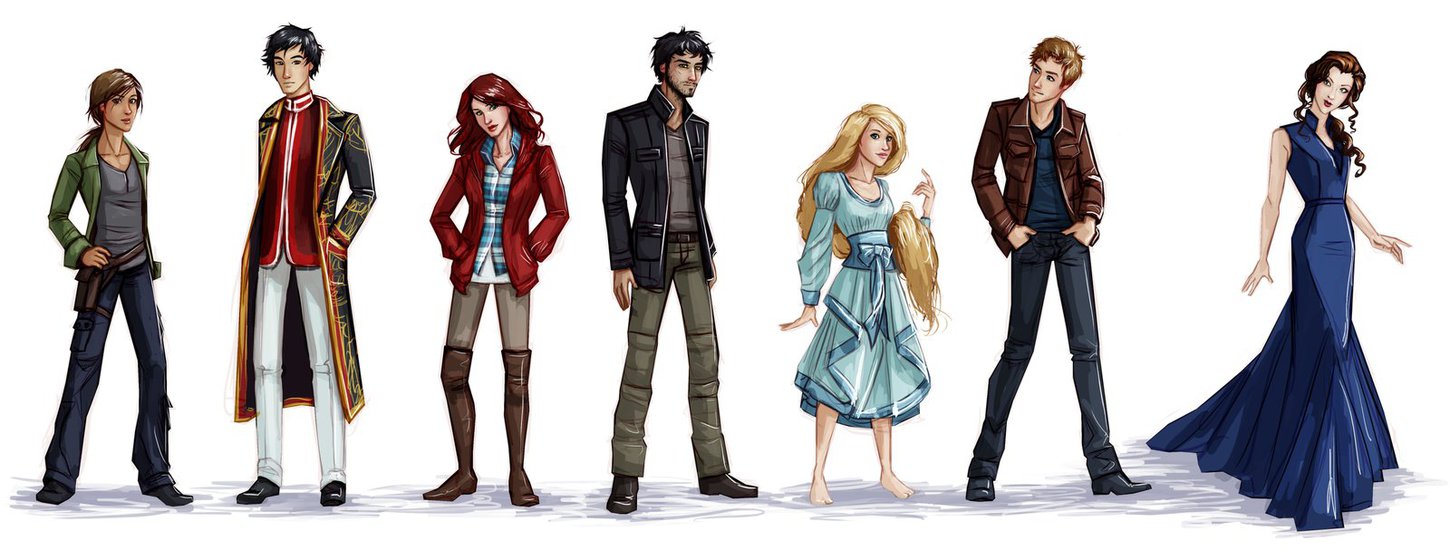
There is some amazing fan art out there. This one is from http://lostie815.deviantart.com/art/Lunar-Chronicles-Characters-421566528 -- check it out, there's lots more!

There is some amazing fan art out there. This one is from http://lostie815.deviantart.com/art/Lunar-Chronicles-Characters-421566528 — check it out, there’s lots more!

The super-coupledom is really a minor issue, though. I’d call it a gnat-sized irritant in the midst of an absolute smorgasbord of sci-fi, futuristic, female-powered adventure. I love the ultra-imaginative world-building in this series, the distinctive voices of the characters, and the way that the shifting narrative viewpoints add on top of one another to keep expanding our knowledge of this world and all its hidden nooks and crannies.

If you’re a curmudgeonly old hold-out (like I was until about a week ago), resisting the hype and refusing to give in to yet another YA series craze… well, come on! If I can do it, so can you! Sure, I’m a little bent out of shape about having to wait for more, but *sigh* I’m sure I can find other books to read in the meantime.

And hey, if I need a dose of more of the Lunar Chronicles, I’m sure there are a thousand or so Pinterest boards to lose a few hours to.

Final note: The three short stories are all available free online, and are definitely worth checking out. Of the three, The Little Android actually broke my heart just a little. It’s a stand-alone, in that it does not include any characters from the main novels, but it is set in the same world. And it just happens to be a retelling of The Little Mermaid — the non-Disney version, which is one of the saddest fairy tales ever.

Don’t say I never did anything for you. Here are the links to the stories:
Glitches
The Little Android
The Queen’s Army

And now, back to my resolution not to start any more series!

Until the next irresistible one comes along…