Book Review: The Truth About Us by Janet Gurtler

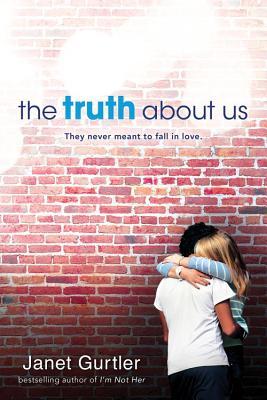
Truth About Us17-year-old Jess has what might seem to be an ideal life: She lives in a huge house in an upscale neighborhood, drives an Audi, and is sent out shopping for whatever she likes, parents’ credit card in hand. She goes to the best parties, where she and her bestie Nance get over-the-top drunk and flirt (and then some) with the best boys. Jess’s party-girl persona is a cover, though — a way for Jess to escape the worries and sorrows that have plagued her ever since a family tragedy two years earlier.

That doesn’t stop her from going too far, and when Jess is busted for daytime drinking, topless sunbathing, and a ridiculously expensive impulse buy on EBay, she’s sentenced to a horrible fate: Jess’s dad forces her to commit to daily “volunteer” work at the local soup kitchen. But Daaaaaad… you can practically hear her whining. So unfair.

Little by little, Jess comes to see the value in what she’s doing. Sure, the shelter is in a seedy part of town, serving lunch to all sorts of homeless riff-raff. And yes, the rest of the shelter volunteer crew and staff look at her as a spoiled little rich girl who’ll never fit in, unable to even walk to the corner bus stop without an escort. But when Jess meets the gorgeous Flynn and his adorable little brother, who come regularly for lunch and then stay to lend a hand, Jess’s heart begins to melt. Not only is she falling for Flynn hard, but she’s also made friends with an old man named Wilf, a widower and the shelter’s benefactor whose grumpy exterior hides the soul of a true romantic… and Wilf can’t resist imparting his own words of wisdom to Jess, including the lesson that love is worth fighting for.

There’s a lot that gets in the way of Jess and Flynn’s exploding feelings. Jess’s dad may want her to learn a lesson by working at the shelter, but he certainly doesn’t want her socializing with a poor boy from a bad neighborhood. Jess’s friends don’t understand why she doesn’t want to drink, flirt, and hook up the way she used to. Flynn’s mother isn’t a fan of Jess, either; to her, Jess is slumming and will only hurt Flynn. But as the summer progresses, Jess and Flynn grow closer, and Jess finally starts to open up about the sadness that threatens to rip her own family apart.

The Truth About Us tackles the subjects of privilege and economic challenges in a thoughtful and sensitive manner. Jess does really seem to have it all — but as the book shows us, even a perfect exterior can hide fractures and difficulty. Granted, Jess never has to worry about the roof over her head or where her next meal is coming from, so I wouldn’t say that her struggles and Flynn’s are equivalent. Still, the story forces readers to acknowledge that pain comes in many forms, and people don’t just get handed happiness alongside their gold credit cards and expensive electronics.

There are moments when the subject becomes a bit clunky:

I use the computer in Dad’s office to go online, and most of the time end up googling things like poverty. My eyes are open to a lot of things I didn’t know about being poor. I always knew my family had money, but it always seemed like everyone else did too.

Googling poverty? It’s really that foreign a concept to her? It’s hard to keep rooting for Jess in certain moments, even though ultimately we know that her heart is in the right place.

The romance in The Truth About Us is perhaps meant to be more of a “forbidden love” than it really seems. Jess’s friends are horrified that she’d get involved with a poor boy. Both Jess’s dad and Flynn’s mother are opposed to the relationship, but they come around eventually. Flynn’s own sense of responsibility toward his mother and brother keep him away from Jess for a time, but we know that these two feel instantly connected and that they’re fated to be together. The obstacles never appear to be truly insurmountable, and it’s not really a surprise when they manage to work things out.

This review perhaps sounds less positive than I actually feel about the book. The writing is witty and sensitive, and I liked the cast of characters very much. The secondary characters, especially Wilf and Jess’s former best friend Penny, are good people with a lot of heart. The story of the disintegration of Jess’s family and their slow steps toward healing is terribly sad, and it’s easy to see how Jess’s life became such a mess. She’s clearly a decent person who means well, cares for others, and wants to make a difference — and once she fights her way out from under her rich girl persona, she starts to grow into the person she wants to be.

I did feel that the realities of homelessness and poverty were a little sugar-coated, and that Jess didn’t see the truth of just how bad things could really be. However, The Truth About Us does show that it’s possible for people from such drastically different worlds to connect in a meaningful way, once they get past their preconceptions and prejudices. I haven’t seen many YA books confronting these issues, and the author should be commended for tackling the topic of economic disadvantage and differences in a way that will hopefully open readers’ eyes.

For more by this author, check out my review of her terrific previous novel, 16 Things I Thought Were True.

_________________________________________

The details:

Title: The Truth About Us
Author: Janet Gurtler
Publisher: Sourcebooks Fire
Publication date: April 7, 2015
Length: 304 pages
Genre: Young adult fiction
Source: Review copy courtesy of Sourcebooks Fire via NetGalley

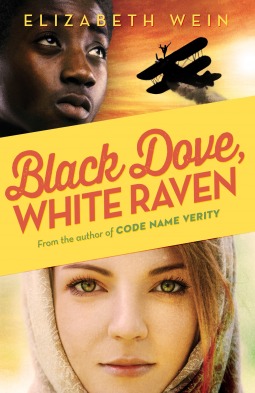
Take A Peek Book Review: Black Dove, White Raven by Elizabeth Wein

“Take a Peek” book reviews are short and (possibly) sweet, keeping the commentary brief and providing a little peek at what the book’s about and what I thought.


Black Dove White Raven 2

Synopsis:

(via Goodreads)

Rhoda and Delia are American stunt pilots who perform daring aerobatics to appreciative audiences. But while the sight of two girls wingwalking – one white, one black – is a welcome novelty in some parts of the USA, it’s an anathema in others. Rhoda and Delia dream of living in a world where neither gender nor ethnicity determines their life. When Delia is killed in a tragic accident, Rhoda is determined to make that dream come true. She moves to Ethiopia with her daughter, Em, and Delia’s son, Teo.

Em and Teo have adapted to scratching a living in a strange land, and feel at home here; but their parents’ legacy of flight and the ability to pilot a plane places them in an elite circle of people watched carefully by the Ethiopian emperor, Haile Selassie, who dreams of creating an air force for his fledgling nation. As Italy prepares for its invasion of Ethiopia, Em and Teo find themselves inextricably entangled in the crisis — and they are called on to help.

My Thoughts:

Sigh. I was so looking forward to this book, having absolutely loved (and been emotionally wrecked by) Code Name Verity and Rose Under Fire, also by Elizabeth Wein. Sadly, this new book simply does not measure up.

The synopsis is a bit misleading, for starter. Delia’s accident happens quite early in the story, and we get only a few glimpses of Rhoda and Delia’s friendship and flying adventures. Most of the book takes place in Ethiopia, after Rhoda brings Teo and Em there to start a new life. The book is told via Emilia and Teo’s flight logs, as they record their flying lessons plus their impressions of everything going on around them. While there are interesting snippets, in many ways the overall story feels disjointed and choppy. I didn’t feel that Rhoda’s plans were clearly established, and the ups and downs of their life in Ethiopia are conveyed in choppy episodes that don’t add up to a cohesive whole.

As an added distraction, the book seems to presuppose a certain amount of knowledge of the history of Ethiopia in the 1930s — and I’d guess that most of the target audience would have not the slightest clue. (I relied on Wikipedia to get a basic foundation for appreciating the geopolitics of the time, but how many YA readers would take the time to do this?)

There are some very interesting moments in Black Dove, White Raven, along with a series of dramatic and horrifying events toward the end of the book, but mostly it was a long haul that lacked a real sense of rhythm and flow.

_________________________________________

The details:

Title: Black Dove, White Raven
Author: Elizabeth Wein
Publisher: Electric Monkey
Publication date: March 5, 2015
Length: 480 pages
Genre: Historical fiction/young adult fiction
Source: Purchased

Thursday Quotables: Black Dove, White Raven

quotation-marks4

Welcome back to Thursday Quotables! This weekly feature is the place to highlight a great quote, line, or passage discovered during your reading each week.  Whether it’s something funny, startling, gut-wrenching, or just really beautifully written, Thursday Quotables is where my favorite lines of the week will be, and you’re invited to join in!

NEW! Thursday Quotables is now using a Linky tool! Be sure to add your link if you have a Thursday Quotables post to share.

Black Dove White Raven 2

Black Dove, White Raven by Elizabeth Wein
(published March 5, 2015)

A peek inside the newest book from the author of the amazing Code Name Verity:

Black and white, night and day, that’s what people used to say. On the ground, when people were watching, Momma and Delia milked that contrast for all they could get. But on their own and in the sky they never paid any mind to black and white — they were just two crazy people who loved flying.

One more:

We laughed like cackling chickens. It doesn’t take much when you’re five.

And then the plane started to move and soon it was bumping over the grass and then, without me or Teo even realising what was going on, we were flying. We were so little we couldn’t see out of the cockpit. All we could see was Momma’s arms in the straps over our heads and the upper wing like a big sail and the blue sky all around us, and all we could hear was the engine and the wind singing in the wires. And Delia was flying.

That is my earliest memory.

What lines made you laugh, cry, or gasp this week? Do tell!

If you’d like to participate in Thursday Quotables, it’s really simple:

  • Write a Thursday Quotables post on your blog. Try to pick something from whatever you’re reading now. And please be sure to include a link back to Bookshelf Fantasies in your post (http://www.bookshelffantasies.com), if you’d be so kind!
  • Click on the linky button (look for the cute froggie face) below to add your link.
  • After you link up, I’d love it if you’d leave a comment about my quote for this week.
  • Be sure to visit other linked blogs to view their Thursday Quotables, and have fun!

Wishing & Waiting on Wednesday: Weightless

There’s nothing like a Wednesday for thinking about the books we want to read! My Wishing & Waiting on Wednesday post is linking up with two fabulous book memes, Wishlist Wednesday (hosted by Pen to Paper) and Waiting on Wednesday (hosted by Breaking the Spine).

This week’s pick:

24464167

Weightless by Sarah Bannan
(to be released June 30, 2015 )

When 15-year-old Carolyn moves from New Jersey to Alabama with her mother, she rattles the status quo of the junior class at Adams High School. A good student and natural athlete, she’s immediately welcomed by the school’s cliques. She’s even nominated to the homecoming court and begins dating a senior, Shane, whose on again/off again girlfriend Brooke becomes Carolyn’s bitter romantic rival. When a video of Carolyn and Shane making out is sent to everyone, Carolyn goes from golden girl to slut, as Brooke and her best friend Gemma try to restore their popularity. Gossip and bullying hound Carolyn, who becomes increasingly private and isolated. When Shane and Brooke—now back together—confront Carolyn in the student parking lot, injuring her, it’s the last attack she can take.

Sarah Bannan’s deft use of the first person plural gives Weightless an emotional intensity and remarkable power that will send you flying through the pages and leave you reeling.

I’ll admit it: The pretty summer colors and imagery on the cover are what initially attracted me to this book, but the synopsis drew me right in as well. I’m intrigued, and hope to get a copy (maybe an ARC?) in time for those glorious summer reading months…

What are you wishing for this Wednesday?

Looking for some bookish fun on Thursdays? Come join me for my regular weekly feature, Thursday Quotables. You can find out more here — come play!

♥♥♥♥♥♥♥♥

Do you host a book blog meme? Do you participate in a meme that you really, really love? I’m building a Book Blog Meme Directory, and need your help! If you know of a great meme to include — or if you host one yourself — please drop me a note on my Contact page and I’ll be sure to add your info!

Book Review: Flat-Out Love by Jessica Park

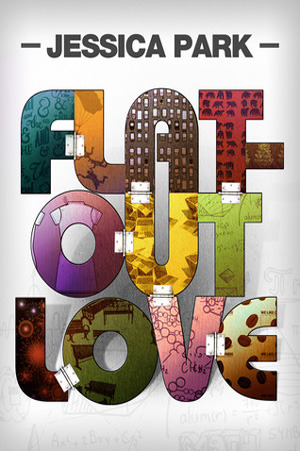
Flat-Out LoveIn Flat-Out Love, college freshman Julie learns an important life lesson: Never rent an apartment sight-unseen via Craigslist.

When Julie arrives in Boston from small-town Ohio to start her college adventure, she’s in for a rude awakening. The apartment she’s rented (and paid for via cashier’s check — not smart) doesn’t exist… although there is a bustling burrito place at the same address. Left on the sidewalk with all of her suitcases and no place to go, Julie is taken in by the family of her mother’s college roommate, although the two have been out of touch for years.

Julie is welcomed into their large home, and despite the family’s oddities, finds it warm and comfortable. Odd? You bet… especially the life-size cardboard cut-out that the youngest, 13-year-old Celeste, takes with her wherever she goes. Flat Finn looks just like real Finn, the absent oldest brother who, Julie is told, is busy traveling the world on a non-stop adventure combining volunteer work and thrill-seeking. Flat Finn sits at the dinner table with the family, comes in the car to drive Celeste to and from school, and watches over Celeste when she sleeps at night.

When it turns out that there simply are no affordable apartments to be had and the dorms are all full, Julie’s temporary refuge turns into a permanent arrangement for the year. The family loves having Julie around, and she forms a tight friendship with middle brother Matt, a self-proclaimed geek studying at MIT who lives at home and seems to be Celeste’s main caretaker. Meanwhile, Julie also finds Finn on Facebook and strikes up an online friendship with him… which turns into a flirtation… which turns into a whole lot more.

But why is Celeste so socially awkward and friendless? Why are the parents almost never around? What IS up with Flat Finn, and why will no one explain to Julie? What it with all the underlying weirdness?

Flat-Out Love is a fast-paced read filled with humor as well as sorrows. The Watkins family members clearly have secrets and painful incidents in their past, but author Jessica Park handles it all with a light touch. There’s no needless melodrama here — we see everything through Julie’s eyes, with a mixture of amusement, bafflement, and frustration. Julie truly cares about the family, and is able to slowly gain Celeste’s trust and help bring her out of her shell, and yet she’s still kept in the dark about all of the reasons for the family’s problems, up to and including Flat Finn.

There’s a love triangle, which in many books is enough to send me running for the hills, but it’s actually handled quite well here. Julie spends almost every day with Matt and has a close connection with him, but Finn is the one who makes her feel more, despite never having met him.

An underlying story about Julie’s absentee father and their strained relationship is underdeveloped and feels rather tangential to the whole story. Other than that, the author does a nice job of capturing the excitement of the freshman year experience, including new friends, a new city, the chance to break away from the social pressures of high school and start fresh, and the joy of finding classes and professors who inspire you.

I did pretty much guess the family secret right away (really, it wasn’t hard), but that in no way detracts from the enjoyment of the story — and I still found myself gobbling up the final chapters to get all the details and see how it would all turn out.

The dialogue is funny and breezy, and I liked the little touches such as Facebook status updates from the different characters and ongoing commentary on Matt’s choice of geeky T-shirts.

I was interested to note that Flat-Out Love was self-published via Amazon. I always assume that self-published books won’t appeal to me, but Flat-Out Love showed me that I should perhaps expand my horizons a bit!

I definitely recommend Flat-Out Love. It’s a great choice for anyone looking for a quick and light read that mixes quirky humor with real emotion. I understand there’s a companion novella (Flat-Out Matt) and a sequel (Flat-Out Celeste), and I hope to track down both.

_________________________________________

The details:

Title: Flat-Out Love
Author: Jessica Park
Publisher: Amazon Children’s Publishing
Publication date: 2011
Length: 389 pages
Genre: Young adult contemporary fiction
Source: Library

Take A Peek Book Review: Fairest: Levana’s Story by Marissa Meyer

“Take a Peek” book reviews are short and (possibly) sweet, keeping the commentary brief and providing a little peek at what the book’s about and what I thought. This week’s “take a peek” book:

Fairest_Cinder

Synopsis:

(via Goodreads)

In this stunning bridge book between Cress and Winter in the bestselling Lunar Chronicles, Queen Levana’s story is finally told.

Mirror, mirror on the wall,
Who is the fairest of them all?

Fans of the Lunar Chronicles know Queen Levana as a ruler who uses her “glamour” to gain power. But long before she crossed paths with Cinder, Scarlet, and Cress, Levana lived a very different story – a story that has never been told . . . until now.

My Thoughts:

This slim novel is sure to please fans of the Lunar Chronicles books, finally giving us the backstory of just how Queen Levana ended up so crazy evil. Of course, it will also frustrate fans of the Lunar Chronicles, being so short and including a tease for the next (and final) novel in the series, Winter, due out in November.

In Fairest, we learn about Levana’s horrific childhood with her cruel and deranged sister Channary, and see how Levana, to a certain extent, never stood a chance of being a decent, well-adjusted person. The Lunar ability to create glamours and hide one’s true face is put to full use, as Levana uses a series of mind-tricks in her desperate search for love and happiness. But love that is coerced isn’t love, and Levana’s path from her teen years until the point when her story meshes with the Cinder timeline can be seen as one long, twisted, downward spiral.

There are places where I felt pity for Levana, perhaps even understanding. How could someone raised as she was be expected to turn out with any hint of a moral compass? Still, the sympathy is pretty quickly destroyed as Levana’s mad quest leads her to greater and greater acts of horrifying cruelty and devastation.

The hardcover edition of Fairest includes the first three chapters of Winter, which I decided not to read. I’d rather wait until I have the entire book in my hands!

Fairest answers a lot of questions about Levana’s past and the history of Lunar-Earthen politics and war. If you’ve read the first three books in the series, you’ll absolutely want to read Fairest as well. And for anyone who hasn’t given this series a try yet… jump on board! I was very late to the party, thinking that all the hype around the series couldn’t really hold up, but I was — happily — proven wrong. I really love this series, and can’t wait to read the conclusion… despite hating the idea of getting to the end!

Want to know more? Read my posts on Cinder and my Lunar Chronicles series binge.

_________________________________________

The details:

Title: Fairest: Levana’s Story
Author: Marissa Meyer
Publisher: Feiwel & Friends
Publication date: January 27, 2015
Length: 222 pages
Genre: Young adult/science fiction
Source: Library

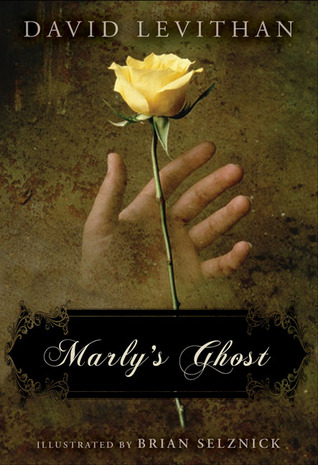
Book Review: Marly’s Ghost by David Levithan

Marly's GhostIf you ask me, David Levithan can pretty much do no wrong. I’ve now read at least a handful of books either written or co-written by this author, and I’ve love just about all of them.

I recently came across a review of Marly’s Ghost over at Chrissi Reads, and my curiosity was immediately piqued.

Marly’s Ghost was originally published in 2005, but it looks like a new edition is being published in the UK by Egmont Publishing.

This slim novel is a retelling of A Christmas Carol by Charles Dickens, and it’s a retelling in the truest sense of the word. The original story doesn’t just provide a launching pad for a new idea; instead, Marly’s Ghost faithfully follows the original, practically scene by scene, but transposes it into a modern love story that’s both incredibly sad and unexpectedly uplifting.

In Marly’s Ghost, Ben is bitterly mourning the death of his beloved girlfriend Marly, who died four months earlier after a long and painful battle with cancer. Marly was the center of Ben’s world, and without her, he sees no point in anything. He pushes away his friends, sees only bleakness in everything around him, and has a special sort of derision for Valentine’s Day. Marly’s death, to Ben, is proof that love is a crock. It can’t last, it only breaks you when it’s gone, and it can’t be worth pursuing if it only leads to pain.

On the eve of Valentine’s Day, when Ben has once again cruelly rebuffed his best friend’s attempts to connect and has needlessly lashed out at a couple in the early stages of love, he retreats to his room to surround himself with his loss and seek isolation. But his isolation is shattered when Marly’s ghost appears, weighed down by chains forged from a charm bracelet containing every memento of their time together. Ben’s grief is holding her and not letting her find peace. Marly warns Ben that he will be visited by three spirits… and, well, if you’ve ever read or seen a production of A Christmas Carol, you have a pretty good idea of what’s to come.

Ben is visited by the spirits of Valentine’s Day past, present, and future, and each shows Ben a piece of himself and illuminates his effect on those around him. Above all else, Marly wanted Ben to promise not to give up, and the spirits have come to hold him to his promise.

This slim novel brought me to tears at various points. It’s a terribly sad story of loss and suffering, made worse by the characters’ young ages, and yet it’s a pleasure to read as well. David Levithan refers to this book as a “remix” of A Christmas Carol, and that’s an apt description. He sticks to the basics of the original story, but turns it into something new and emotionally rich. The modern-day characters fit easily into the framework of the classic story, and Ben’s transformation from bitterness to hope is believable and lovely.

The book is further enhanced by black and white illustrations by the masterful Brian Selznick, who models his drawings on the illustrations found in the original edition of A Christmas Carol.

I recommend this book highly, for fans of the author and illustrator, for those who love A Christmas Carol, or for anyone who enjoys a well-written, honest look at love and loss. I borrowed this book from the library, but I think I need to own a copy for myself! Marly’s Ghost, along with David Levithan’s The Lover’s Dictionary, proves that in the hands of a gifted author, good things really do come in small packages.

With thanks to Chrissi for inspiring me to track down a copy of this book!

_________________________________________

The details:

Title: Marly’s Ghost
Author: David Levithan
Publisher: Penguin
Publication date: Originally published 2005
Length: 208 pages
Genre: Young adult fiction
Source: Library

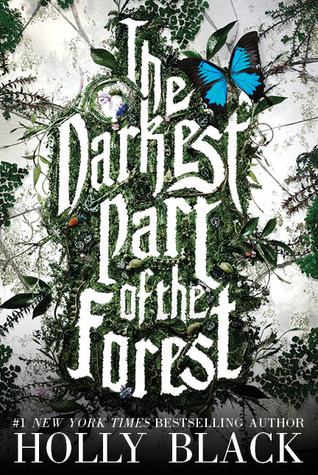
Thursday Quotables: The Darkest Part of the Forest

quotation-marks4

Welcome back to Thursday Quotables! This weekly feature is the place to highlight a great quote, line, or passage discovered during your reading each week.  Whether it’s something funny, startling, gut-wrenching, or just really beautifully written, Thursday Quotables is where my favorite lines of the week will be, and you’re invited to join in!

darkest part

The Darkest Part of the Forest by Holly Black
(published January 13, 2015)

First, the opening paragraph:

Down a path worn into the woods, past a stream and a hollowed-out log full of pill bugs and termites, was a glass coffin. It rested right on the ground, and in it slept a boy with horns on his head and ears as pointed as knives.

And later:

Back then, it hadn’t seemed weird to Hazel to have the same imaginary boyfriend as her brother.

They were in love with him because he was a prince and a faerie and magical and you were supposed to love princes and faeries and magic people. They loved him the way they’d loved Beast the first time he swept Belle around the dance floor in her yellow dress. They loved him as they loved the Eleventh Doctor with his bow tie and his flippy hair and the Tenth Doctor with his mad laugh. They loved him as they loved lead singers of bands and actors in movies, loved him in such a way that their shared love brought them closer together.

It wasn’t like he was real. It wasn’t like he could love them back. It wasn’t like he’d ever have to choose.

Except now he’d woken. That changed everything.

What lines made you laugh, cry, or gasp this week? Do tell!

If you’d like to participate in Thursday Quotables, it’s really simple:

  • Write a Thursday Quotables post on your blog. Try to pick something from whatever you’re reading now. And please be sure to include a link back to Bookshelf Fantasies in your post (http://www.bookshelffantasies.com), if you’d be so kind!
  • Leave your link in the comments — or, if you have a quote to share but not a blog post, you can leave your quote in the comments too!
  • Visit other linked blogs to view their Thursday Quotables, and have fun!

Take A Peek Book Review: The Darkest Part of the Forest by Holly Black

“Take a Peek” book reviews are short and (possibly) sweet, keeping the commentary brief and providing a little peek at what the book’s about and what I thought. This week’s “take a peek” book:

darkest part

Synopsis:

(via Goodreads)

Children can have a cruel, absolute sense of justice. Children can kill a monster and feel quite proud of themselves. A girl can look at her brother and believe they’re destined to be a knight and a bard who battle evil. She can believe she’s found the thing she’s been made for.

Hazel lives with her brother, Ben, in the strange town of Fairfold where humans and fae exist side by side. The faeries’ seemingly harmless magic attracts tourists, but Hazel knows how dangerous they can be, and she knows how to stop them. Or she did, once.

At the center of it all, there is a glass coffin in the woods. It rests right on the ground and in it sleeps a boy with horns on his head and ears as pointed as knives. Hazel and Ben were both in love with him as children. The boy has slept there for generations, never waking.

Until one day, he does…

As the world turns upside down, Hazel tries to remember her years pretending to be a knight. But swept up in new love, shifting loyalties, and the fresh sting of betrayal, will it be enough?

My Thoughts:

I find myself not quite knowing what to say about this unusual, lovely book. I love the juxtaposition of the modern world, with its IPods and high school parties, alongside the hidden world of the Folk who live in the deep, dark forest. In fact, the opening lines create such a magical aura that it’s a bit jarring to realize that this story is set in a 21st century real-world town with ordinary teens who drive cars, drink beer in the woods, go to football games, buy vintage clothing, and have all the usual rivalries, gossip, and tensions you’d see in any young adult novel.

And yet, in the town of Fairfold, residents know that there are other beings in the forest, and it’s best to be wary. Every child knows the rules, such as never saying “thank you” to a fairy or eating any food offered. It’s just tourists, flocking to what’s known as a kitschy destination with cutesy, magic-themed main street shops, who get into trouble, finding their money replaced by leaves or, in more recent years, being subjected not just to harmless pranks but to actual life-threatening danger.

Hazel and Ben have grown up with the stories and know the ropes. They’re also each crazily infatuated with the sleeping prince in the glass coffin in the woods, and have concocted all sorts of fantasies about him and his world. As the story progresses, we learn much more about Hazel and her secrets, and what she’s done to help her brother, despite all the warnings and scary-sounding rhymes.

While the book is a bit odd at first, introducing plot points as facts already known (so that I kept having to flip back and say, “wait, when did that happen?”), it eventually settles into a logic and rhythm that work. The everyday lives alongside the magical, and the writing too can veer from the commonplace to the enchanted in the blink of an eye.

I loved the strange interplay between waking life and dreams, and I especially loved how traditional fairy tale gender roles are turned on their heads. A girl is the wielder of a powerful sword, defending family and all those who need her strength. A boy can find true love by waking a sleeping prince.

Meanwhile, there are changelings, goblins, a terrifying Alderking, and a creature so consumed by the loss of her true love that she literally becomes a monster.

In The Darkest Part of the Forest, author Holly Black creates a spell-binding tale of sibling love, bravery and devotion, with language that weaves its own magical enchantment.

_________________________________________

The details:

Title: The Darkest Part of the Forest
Author: Holly Black
Publisher: Little, Brown Books for Young Readers
Publication date: January 13, 2015
Length: 336 pages
Genre: Young adult fantasy
Source: Purchased

Book Review: The Infinite Sea by Rick Yancey

infinite seaThis is the second book in a series, so here come the warnings:

SPOILER ALERT: This is the follow-up book to The 5th Wave. Events from The 5 Wave will be discussed! So, need I say it? If you haven’t read The 5th Wave, now would be a good time to look away. (Better yet, go get a copy of The 5th Wave! It’s good.)

KINDA SPOILER-ISH ALERT: There are some elements from The Infinite Sea that I’ll have to talk about in order to write any sort of review. I’ll try not to go into a tremendous amount of detail, but if you prefer to know nothing about what happens, well, here’s another good time to look away.

And that concludes the housekeeping portion of this post. Moving on…

In The 5th Wave, the subject matter is nothing less than the destruction of the human race at the hands of alien invaders. Over the course of an apocalyptic few months, 98% of Earth’s population has been killed in all sort of horrifying ways. The story focuses on a handful of survivors, each on their own, trying not only to stay alive themselves, but to save or sustain the people they love.

The Infinite Sea picks up pretty much right after the big, blow-out ending of The 5th Wave. Our little band of survivors is hunkered down in an old, abandoned motel, waiting for whatever comes next, listening to the rats in the walls. (The rats are important — more on this later.)

What else? Well, that’s mostly it.

In The 5th Wave, our main three point of view characters are Cassie, Ben, and Evan. Each has his or her own intense story to tell, with a unique viewpoint on the events unfolding. In The Infinite Sea, the perspective expands to include chapters narrated by several other characters. Does this help broaden the view of life after the invasion? Not really.

It’s not that I wasn’t interested in what happened in The Infinite Sea. I was. But at the same time, the story somehow feels narrow, almost claustrophobic.

Part of what really impressed me in The 5th Wave was the epic scale. As seen through the eyes of our POV characters, the destruction is devastatingly huge, yet also intimate in that the impact of the invasion is highly personal. Family members die cruel, bloody deaths. Trusted adults betray in horrible, mind-breaking, soul-damaging ways. Safe havens turn out to be hell on earth. Humans yearn for companionship, but safety lies only in isolation. The loss each character experiences, especially Cassie, is enormous not just for the character, but because of what it means for the entirety of human life.

Compared to all that, The Infinite Sea feels small. In a most literal sense, it is: Going by my physical copies of both books,  The Infinite Sea is about 150 pages shorter than The 5th Wave. The invasion is still underway, but not much has changed. We spend all of this second book holed up with our group of characters, waiting for the next awful thing to happen. The relationships barely move forward, and they have very little to do other than hide and speculate – and talk and talk and talk.

The endless talk is yet another piece that works less well for me in The Infinite Sea. In The 5th Wave, the language is often highly dramatic, much more figurative than you might expect out of the mouths of teens dealing with disaster, but somehow it matches the grand tone of the entire book. Sadly, in The Infinite Sea, the language tends toward an overuse of imagery and metaphor, and rather than feeling epic, it ends up sounding like borderline mumbo-jumbo.

I understood. In the safe room, a billion upraised faces populating the infinite, and the eyes that sough mine, and the question in those eyes too horrible to put into words, Will I live? It’s all connected. The Others understood that, understood it better than most of us. No hope without faith, no faith without hope, no love without trust, no trust, without love. Remove one and the entire human house of cards collapses.

It’s all about a search for meaning in disaster, but the discussions go in circle upon circle: There are rats in the walls. Are we the rats? Is the Earth the inhabited house the aliens want to move into? Why not kill all the rats? Why leave some rats alive? There’s the rock problem: Why not just use a big rock (i.e., a meteor) to wipe out all life? Why embed aliens inside the humans? Why play all the mind games? Why, why, why… this books amounts to a never-ending litany of characters discussing “why” — but unfortunately, we end with little more understanding than we had at the beginning of the book.

Another problem: In what felt like a baffling shift to me, the entire second half of the book is focused on Ringer, a character in a supporting role in The 5th Wave. We barely know her; we never saw her point of view in the first book. An awful lot of space is devoted to Ringer’s experience, trapped and cut off from the other characters, and it’s a weird shift in emphasis. Cassie was established in The 5th Wave as our primary character, yet she and the rest of her entourage are absent for almost half of this book. Ringer’s story adds some knowledge to the mix, but it’s kind of jarring to have the book split like this, with two stories that don’t fit together.

The Infinite Sea is clearly the bridge book in this trilogy. We need to get from the introduction of the disaster in The 5th Wave to the final resolution in the 3rd, yet-to-be-published book, but other than as a connection from point A to point B, The Infinite Sea adds very little to the world-building or the story arc of the series. By the end of this second book, I would have expected to understand much more about the reasons for the invasion and the strategies employed by the invaders. Instead, the only real progress is that the characters are beginning to understand that there’s a lot that they don’t know, that there has to be more to what to the invaders want, and that there are major pieces of the strategy that remain to be figured out.

The more I write about The Infinite Sea, the more I realize how unsatisfying I found it. With very little story progression or character growth and very little in the way of unraveling the mysteries of the alien plan, it’s very difficult to point out much that’s gained by reading The Infinite Sea, other than a reshuffling of the chessboard and a set-up for a finale. Perhaps this series should have been two power-house books instead of a trilogy with a tepid middle. I’m hoping that the final book, supposedly to be released in September, will blow the story out of the water.

The 5th Wave was amazing. I suppose if you want to find out what happens next, you have to read The Infinite Sea. But unless something is revealed early on in book #3 that demonstrates how the events of #2 matter, I’d say that The Infinite Sea is a mostly unimportant interlude that comes nowhere near to matching the power and scale of The 5th Wave. Proceed with caution — or perhaps wait until the release of the 3rd book and read it as an introduction to #3. Read on its own, as the eagerly anticipated sequel to a fantastic first book, The Infinite Sea disappoints.

_________________________________________

The details:

Title: The Infinite Sea
Author: Rick Yancey
Publisher: Putnam Juvenile
Publication date: September 14, 2014
Length: 320 pages
Genre: Young adult/science fiction
Source: Purchased