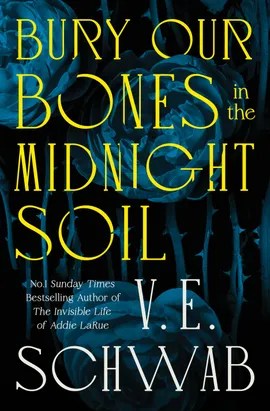
Book Review: Bury Our Bones in the Midnight Soil by V. E. Schwab

Title: Bury Our Bones in the Midnight Soil
Author: V. E. Schwab
Publisher: Tor
Publication date: June 10, 2025
Length: 544 pages
Genre: Fantasy/historical
Source: Purchased
Rating:

Rating: 5 out of 5.

From V. E. Schwab, the #1 New York Times bestselling author of The Invisible Life of Addie LaRue: a new genre-defying novel about immortality and hunger.

This is a story about hunger.
1532. Santo Domingo de la Calzada.
A young girl grows up wild and wily—her beauty is only outmatched by her dreams of escape. But María knows she can only ever be a prize, or a pawn, in the games played by men. When an alluring stranger offers an alternate path, María makes a desperate choice. She vows to have no regrets.

This is a story about love.
1827. London.
A young woman lives an idyllic but cloistered life on her family’s estate, until a moment of forbidden intimacy sees her shipped off to London. Charlotte’s tender heart and seemingly impossible wishes are swept away by an invitation from a beautiful widow—but the price of freedom is higher than she could have imagined.

This is a story about rage.
2019. Boston.
College was supposed to be her chance to be someone new. That’s why Alice moved halfway across the world, leaving her old life behind. But after an out-of-character one-night stand leaves her questioning her past, her present, and her future, Alice throws herself into the hunt for answers . . . and revenge.

This is a story about life—
how it ends, and how it starts.

Bury Our Bones in the Midnight Soil is the vampire book I didn’t know I needed. In this hefty, intricate book, author V. E. Schwab weaves together three characters’ voices and experiences, spanning centuries, to create an epic tale of love, need, hunger, and regret.

We open with Maria, a girl growing up in 16th century Spain, whose only possible future is getting married and having babies. As a young woman, she finds a way to ensure a promising marriage to a viscount, then realizes that her marriage is not the path to freedom that she’d anticipated. After meeting a mysterious, youthful widow with an apothecary shop near her husband’s estate, she’s given the key to a new life.

Charlotte, in 19th century England, is sent to her aunt’s home in London for the Season, mainly to learn how to be a proper, marriageable young woman after being caught kissing her best friend. Charlotte finds the etiquette and corsets equally restrictive, and none of the men she encounters at the endless balls interest her — but the beautiful widow Sabine is intriguing, and their friendship blooms into something much more.

Alice is a modern-day Harvard freshman, attending college in Boston far from her home in Scotland, hoping to reinvent herself after leaving behind painful family secrets. But Alice is still the shy, isolated girl she’s always been, even in her new setting, until she attends a party and decides to be bold — and ends up completely transformed in ways she neither anticipated nor consented to.

Never walk alone at night, they tell you, if you’re a girl.

And it isn’t fair.

Because the night is when the world is quiet.

The night is when the air is clear.

This is a vampire story, and it doesn’t take a huge leap of imagination on the reader’s part to understand how these characters’ stories connect. The beauty lies in seeing it all unfold. Each character’s past is carefully established, pieced out bit by bit in overlapping timelines and alternating chapters. There are elements kept hidden, only revealed as the story progresses, and these work especially well to explain events we may think we understand — but may not have the entire picture of.

Alice may be the most sympathetic of the main characters. She’s given no choice in what happens to her, and her rage and dismay are completely understandable. Of course, we could also consider Maria and Charlotte as not particularly having choices either: They make the decisions that propel them into their new lives — but each is so hemmed in by society’s restrictions that a radical departure is the only way to free themselves.

We may expect Sabine to be the villain of the piece, and she does many villainous things… but she’s not at all one-dimensional. No matter how terrible her later actions are, we never lose some sense of compassion for her. We know her backstory, and know what she’s experienced. There’s a reason (multiple reasons) she becomes who she becomes; we may hate what she does, but we know how she got there.

Without giving away any further plot points, I’ll just point out that the writing in Bury Our Bones in the Midnight Soil is lush and delicious, vivid enough to want to sink into, dreamy and evocative, yet also propulsive. This is a long book, but it never lags. I always wanted to know more, and hated to have to pause when real life pulled me away.

I read the author’s debut adult novel, The Invisible Life of Addie LaRue, several years ago, and loved it. Bury Our Bones in the Midnight Soil is another beautiful, imaginative story that’s a completely immersive reading experience. I haven’t read any of the author’s young adult novels or series, but I know I need to!

I enjoyed every moment of my reading journey through the world of Bury Our Bones in the Midnight Soil, and found myself fascinated by the characters, their lives, and their choices. Don’t miss this incredible book!

Purchase linksAmazon – Bookshop.orgLibro.fm
Disclaimer: When you make a purchase through one of these affiliate links, I may earn a small commission, at no additional cost to you.

Shelf Control #344: The Book of V. by Anna Solomon

Shelves final

Welcome to Shelf Control — an original feature created and hosted by Bookshelf Fantasies.

Shelf Control is a weekly celebration of the unread books on our shelves. Pick a book you own but haven’t read, write a post about it (suggestions: include what it’s about, why you want to read it, and when you got it), and link up! For more info on what Shelf Control is all about, check out my introductory post, here.

Want to join in? Shelf Control posts go up every Wednesday. See the guidelines at the bottom of the post, and jump on board!

***Question for Shelf Control participants: I currently go ahead and add the links for participants’ posts as they’re shared in the comments or via pingbacks. Does this work for you, or would you prefer a system where you add your own links (such as via InLinkz or similar)? Please let me know!**

Title: The Book of V.
Author: Anna Solomon
Published: 2020
Length: 320 pages

What it’s about (synopsis via Goodreads):

Anna Solomon’s kaleidoscopic novel intertwines the lives of a Brooklyn mother in 2016, a senator’s wife in 1970s Washington, D.C., and the Bible’s Queen Esther, whose stories of sex, power and desire overlap and ultimately converge—showing how women’s roles have and have not changed over thousands of years.

Lily is a mother and a daughter. And a second wife. And a writer, maybe? Or she was going to be, before she had children. Now, in her rented Brooklyn apartment, she’s grappling with her sexual and intellectual desires while also trying to manage her roles as a mother and a wife.

Vivian Barr seems to be the perfect political wife, dedicated to helping her charismatic and ambitious husband find success in Watergate-era Washington D.C. But one night he demands a humiliating favor, and her refusal to obey changes the course of her life—along with the lives of others.

Esther is a fiercely independent young woman in ancient Persia, where she and her uncle’s tribe live a tenuous existence outside the palace walls. When an innocent mistake results in devastating consequences for her people, she is offered up as a sacrifice to please the king, in the hopes that she will save them all.

Following in the tradition of The Hours and The Red TentThe Book of V. is a bold and contemporary investigation into the enduring expectations and restraints placed on women’s lives.

How and when I got it:

I bought the Kindle edition of this book late in 2020.

Why I want to read it:

This is my second week in a row with a historical fiction pick for Shelf Control! So why this particular book?

Dual timeline narratives seem to be everywhere when it comes to historical fiction, particularly novels that focus on women’s lives and societal roles. I can’t say I’ve ever come across a split timeline combining modern women’s lives with Queen Esther before now!

I’ve always loved the story of Queen Esther — as a child, we learned the simplistic version about a good and beautiful queen saving her people. We never did give much thought to the previous queen, Vashti, except to consider her the “bad” queen who came before Esther. Of course, as an adult, I’ve enjoyed more nuanced views of the tale, and especially learning about Vashti as a feminist icon!

The idea of Esther/Vashti as ancient counterparts to contemporary women’s experiences sounds… weird??? But also potentially fascinating. On the surface, it seems like a stretch to me — but I remain interested in seeing how the author balances and contrasts the two stories, and wonder whether it works well or feels forced.

I do think I’ll read this one — maybe I’ll time it just right and read it in time for the holiday of Purim!

What do you think? Would you read this book?

Please share your thoughts!


__________________________________

Want to participate in Shelf Control? Here’s how:

  • Write a blog post about a book that you own that you haven’t read yet.
  • Add your link in the comments or link back from your own post, so I can add you to the participant list.
  • Check out other posts, and…

Have fun!

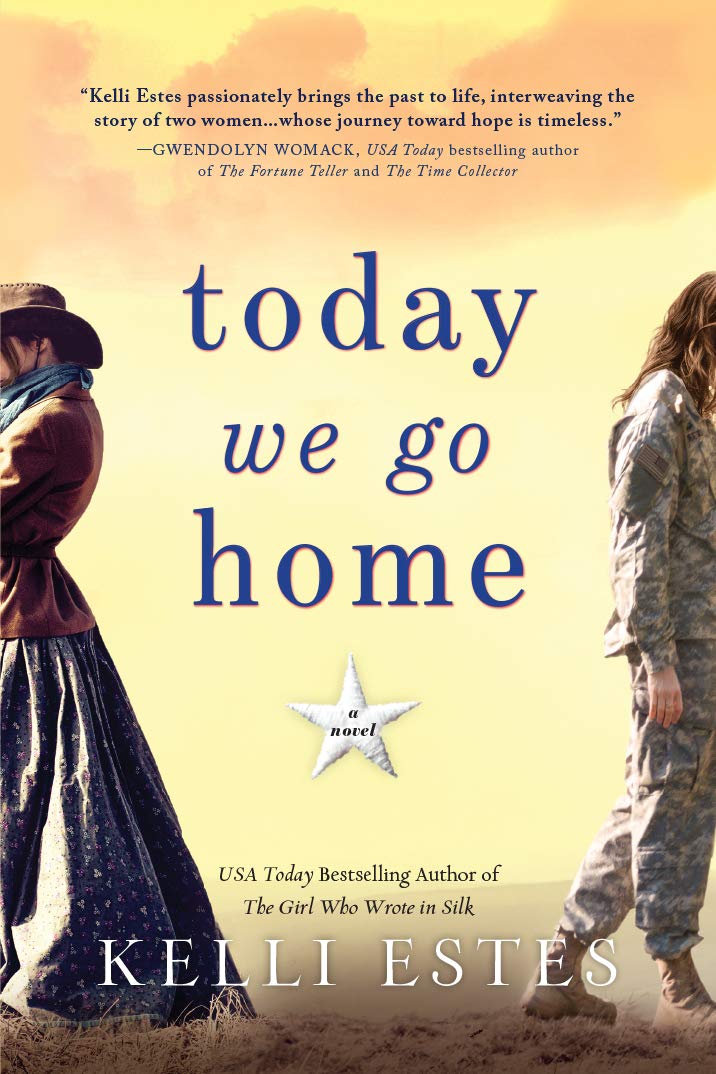
Book Review: Today We Go Home by Kelli Estes

Seattle, Washington
Larkin Bennett has always known her place, whether it’s surrounded by her loving family in the lush greenery of the Pacific Northwest or conducting a dusty patrol in Afghanistan. But all of that changed the day tragedy struck her unit and took away everything she held dear. Soon after, Larkin discovers an unexpected treasure—the diary of Emily Wilson, a young woman who disguised herself as a man to fight for the Union in the Civil War. As Larkin struggles to heal, she finds herself drawn deeply into Emily’s life and the secrets she kept.

Indiana, 1861
The only thing more dangerous to Emily Wilson than a rebel soldier is the risk of her own comrades in the Union Army discovering her secret. But in the minds of her fellow soldiers, if it dresses like a man, swears like a man, and shoots like a man, it must be a man. As the war marches on and takes its terrible toll, Emily begins to question everything she thought she was fighting for.

Today We Go Home took my breath away.

In this dual timeline novel, we follow two separate but interwoven and related threads. The main character in the contemporary timeline is Larkin Bennett, a US Army veteran who receives a medical discharge after being wounded in action in Afghanistan, now suffering from PTSD and the tremendous guilt she feels over the death of her best friend. And as Larkin explores her friends’ personal effects, she finds a family treasure — the diary of Emily Wilson, who fought as a man in the Civil War. Through these two remarkable women, we see devotion to duty and family, as well as the toll that war takes on a person’s soul.

Larkin’s story is moving and tragic. She was never happier than in service to her country, and felt a calling to the military. Her best moments were when she and her friend Sarah were side by side, whether in college, in training, or in Kandahar. But Larkin, when we meet her, is emotionally destroyed by her experiences, turning to alcohol to numb herself and drown out the memories that haunt her every moment.

Larkin’s family is supportive (can I mention how much I love her grandmother and cousins?), and they do what they can to help, but there’s just so much that Larkin has to process on her own, and she resists reaching out for professional help. Her growing obsession with Emily’s diary gives her a purpose, and the more she reads, the more determined she becomes to both tell the stories of military women and to find out more about the real Emily Wilson.

Meanwhile, Emily’s story is equally powerful. After her father and oldest brother ride off to join the Indiana regiment heading to support the Union cause, Emily is left behind on the farm with her younger brother Ben, expected to just wait at home and be content with “women’s work”. When their father is killed and their brother takes ill, they set off to go take care of their brother, and from there, they decide to enlist. Emily is both called to serve and determined to protect Ben at all costs, and together, they join their late father’s regiment and learn to become soldiers.

Emily takes the name Jesse and poses as Ben’s brother, knowing that she must keep her gender a secret. She finds that she’s actually good at soldiering, and starts to love the freedom that comes from being seen as male — the freedom to work, to speak her mind, to not hide her skills, to pursue what she wants.

She would never again settle for a life where her every action, even her thoughts, were controlled by someone else. From now on, no matter where life took her, she would live on her own terms.

The threat of discovery is always present, and the true meaning of going to war doesn’t really sink in until the regiment enters its first battle and Emily gets a close-up view of shooting at the enemy and being shot at.

The general shook his head. “I will not send you back to the field. You can no longer impersonate a soldier, do you understand me?”

Emily had to look away from his accusing glare. She had not been impersonating a soldier. She had been a soldier. “Yes, sir.”

The author does an amazing job of weaving together these two stories. Some dual timeline books feel forced, or as if one only exists as a frame for the other. Not so here. You know it’s a well-done approach when both halves of the story feel so compelling that you hate to leave each one to switch to the other. When an Emily section would end, I’d want more… but then I’d get re-involved in Larkin’s story, and couldn’t imagine wanting to read anything else but her story.

Kelli Estes has clearly done a tremendous amount of research into both women serving in the Civil War and into the plight of today’s veterans, especially the staggering rate of PTSD and suicide among women veterans. She provides a list of reference materials as well as information on support for veterans at the end of the book, and is definitely doing a great service herself by calling attention to the issues confronting today’s combat veterans.

She set the diary aside, thinking about Emily’s struggles. They were timeless. Even now, over a hundred and fifty years later, female veterans faced many of the same challenges that Emily did: being seen as inferior because of her gender, not being able to find work after being discharged from the military, earning less than men, becoming homeless.

Some of the social commentary is really spot-on, such as Larkin’s anger over the general lack of interest and awareness she encounters once back in the US. To Larkin, she was serving in Afghanistan to protect the United States, yet most Americans seem indifferent or unaware of what’s going on there and the sacrifices being made by American service men and women. Likewise, she is understandably infuriated when a clueless man, who spots her wearing an Army t-shirt, asks her whether it’s her father or her brothers who served, failing to recognize the very real service of hundreds of thousands of women.

Today We Go Home is beautifully written and is so very powerful. I tore through this book probably faster than I should have, because I just couldn’t get enough of either Emily or Larkin and had to know how their stories would turn out. The emotional impact is strong and real. By the end, I felt such sorrow for their experiences, and yet hopeful and uplifted as well. And while Emily’s story is set in the past, Larkin’s story has an urgency to it, knowing that brave men and women are still facing the unbelievable struggles that come with serving in war settings and then coming back home afterward.

Don’t miss this amazing book. This goes on my list of top books for 2019.

Other reading resources:

For more on women in the Civil War, I highly recommend two excellent novels:

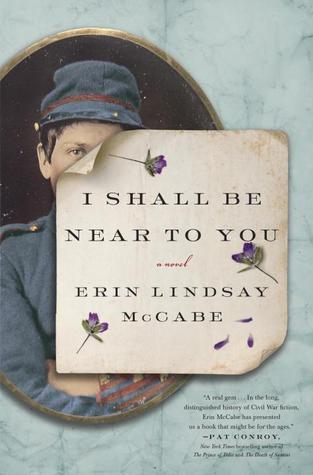
  • I Shall Be Near To You by Erin Lindsay McCabe (review)
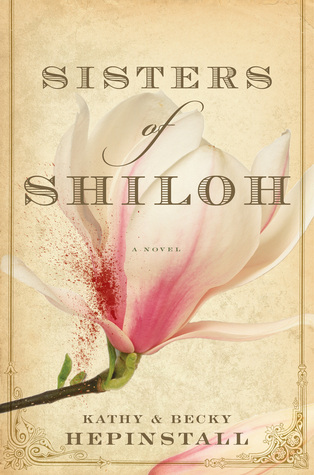
  • Sisters of Shiloh by Kathy & Becky Hepinstall (review)

I don’t think I’ve read any other novels recently about contemporary women serving in the military, but I’d love some suggestions!

_________________________________________

The details:

Title: Today We Go Home
Author: Kelli Estes
Publisher: Sourcebooks Landmark
Publication date: September 3, 2019
Length: 401 pages
Genre: Contemporary/historical fiction
Source: Review copy courtesy of the publisher via NetGalley