Thursday Quotables: All The Birds In The Sky

quotation-marks4

Welcome back to Thursday Quotables! This weekly feature is the place to highlight a great quote, line, or passage discovered during your reading each week.  Whether it’s something funny, startling, gut-wrenching, or just really beautifully written, Thursday Quotables is where my favorite lines of the week will be, and you’re invited to join in!

NEW! Thursday Quotables is now using a Linky tool! Be sure to add your link if you have a Thursday Quotables post to share.

All the Birds

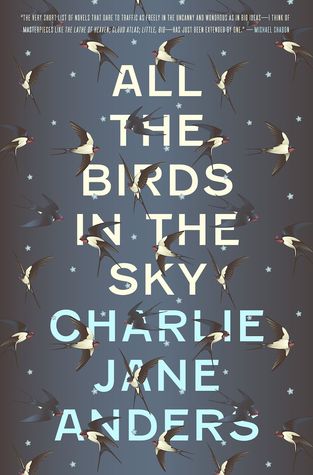
All the Birds in the Sky by Charlie Jane Anders
(published 2016)

I’m about 25 pages from the end of this odd, sweet, fascinating book about a mad scientist, a witch, and the end of the world. The writing can be beautiful and sad, but it also includes some weirdly funny bits, like this:

Theodolphus had not eaten ice cream since the poisoning at the mall, and he didn’t deserve any now. Ice cream was for assassins who finished their targets. Still, he kept imagining how ice cream would taste, how it would melt on his tongue and release layers of flavor. He no longer trusted ice cream, but he needed ice cream.

What lines made you laugh, cry, or gasp this week? Do tell!

If you’d like to participate in Thursday Quotables, it’s really simple:

  • Write a Thursday Quotables post on your blog. Try to pick something from whatever you’re reading now. And please be sure to include a link back to Bookshelf Fantasies in your post (http://www.bookshelffantasies.com), if you’d be so kind!
  • Click on the linky button (look for the cute froggie face) below to add your link.
  • After you link up, I’d love it if you’d leave a comment about my quote for this week.
  • Be sure to visit other linked blogs to view their Thursday Quotables, and have fun!

Book Review: Lock In by John Scalzi

lock inSynopsis:

(via Goodreads)

Not too long from today, a new, highly contagious virus makes its way across the globe. Most who get sick experience nothing worse than flu, fever and headaches. But for the unlucky one percent – and nearly five million souls in the United States alone – the disease causes “Lock In”: Victims fully awake and aware, but unable to move or respond to stimulus. The disease affects young, old, rich, poor, people of every color and creed. The world changes to meet the challenge.

A quarter of a century later, in a world shaped by what’s now known as “Haden’s syndrome,” rookie FBI agent Chris Shane is paired with veteran agent Leslie Vann. The two of them are assigned what appears to be a Haden-related murder at the Watergate Hotel, with a suspect who is an “integrator” – someone who can let the locked in borrow their bodies for a time. If the Integrator was carrying a Haden client, then naming the suspect for the murder becomes that much more complicated.

But “complicated” doesn’t begin to describe it. As Shane and Vann began to unravel the threads of the murder, it becomes clear that the real mystery – and the real crime – is bigger than anyone could have imagined. The world of the locked in is changing, and with the change comes opportunities that the ambitious will seize at any cost. The investigation that began as a murder case takes Shane and Vann from the halls of corporate power to the virtual spaces of the locked in, and to the very heart of an emerging, surprising new human culture. It’s nothing you could have expected.


My Thoughts:

This book is crazy, and I mean that in the best way possible. I absolutely love the world created here, some 25 years or so into the future, where Hadens are now a part of society and the definition of being a person has changed dramatically.

Hadens are those who are in the long-term, seemingly irreversible “lock in” phase of Haden’s syndrome. Their bodies are alive and their minds are fully functional, but they have lost the ability to control or manage their voluntary systems. An entire industry has sprung up around the vast number of Hadens, resulting in the creation of neural networks and “threeps”. Hadens are implanted with a neural network in their brains, which gives them the ability to control a robotic form (known as a “threep”, named for C3PO) that moves in the “normal” world as an avatar of sorts. The body is still the actual person, but the threep is also a manifestation of the person, and conducts business and goes about life just the same as anyone else.

Battles have sprung up over Haden rights, government funding of Haden resources, and the issue of Haden separatism and culture. And what makes this book amazing and so fascinating is that this is all background to the actual plot — which revolves around a dead body, a murder investigation, and a newbie FBI agent, who just happens to be one of the most famous Hadens, thanks to a celebrity father and his early years as a Haden poster-child.
UnlockedOn top of the terrific plot and world-building, the writing is a treat. John Scalzi provides complex technical and medical details, but makes it comprehensible and accessible through the characters’ dialogue. The exposition feels natural, not like a lecture. On top of that, the characters are fully fleshed out, have distinct personalities, and some can be awfully funny, especially main character Chris Shane.

My reading tip is that before reading Lock In, it’s well worth your time to check out the novella that John Scalzi released just prior to the publication of Lock In. It’s called Unlocked: An Oral History of Haden’s Syndrome, and provides background on the onset, diagnosis, treatment, and political ramification of the disease. It’s utterly fascinating, and adds a lot to the understanding of Lock In, letting us jump right into the events of the novel without needing a whole lot of time or pages devoted to backstory.

Final word: Lock In is a bizarre and original science fiction/crime thriller mash-up, and I just loved it. My conclusion is that I haven’t read nearly enough John Scalzi yet in my life, and I need to fix that ASAP.

Oh, and a final, final world: While this book appears to be a stand-alone and I have no reason to think that it’s not, I could easily see an ongoing series revolving around Agents Shane and Vann and their crime-fighting adventures in a post-Haden world. John Scalzi, pretty please?

_________________________________________

The details:

Title: Lock In
Author: John Scalzi
Publisher: Tor Books
Publication date: August 26, 2014
Length: 336 pages
Genre: Science fiction
Source: Purchased

Thursday Quotables: Lock In

quotation-marks4

Welcome back to Thursday Quotables! This weekly feature is the place to highlight a great quote, line, or passage discovered during your reading each week.  Whether it’s something funny, startling, gut-wrenching, or just really beautifully written, Thursday Quotables is where my favorite lines of the week will be, and you’re invited to join in!

NEW! Thursday Quotables is now using a Linky tool! Be sure to add your link if you have a Thursday Quotables post to share.

lock in

Lock In by John Scalzi
(published 2014)

This science fiction/crime story is so weird and fun! I mean, how can you not love a book where this is a “normal” conversation with a real estate agent:

“Will your body be physically present, and if so, will you need a room for a caretaker?” she asked.

“My body and its caretaking are already squared away,” I said. “I won’t be needing space for either. At least not right away.”


What lines made you laugh, cry, or gasp this week? Do tell!

If you’d like to participate in Thursday Quotables, it’s really simple:

  • Write a Thursday Quotables post on your blog. Try to pick something from whatever you’re reading now. And please be sure to include a link back to Bookshelf Fantasies in your post (http://www.bookshelffantasies.com), if you’d be so kind!
  • Click on the linky button (look for the cute froggie face) below to add your link.
  • After you link up, I’d love it if you’d leave a comment about my quote for this week.
  • Be sure to visit other linked blogs to view their Thursday Quotables, and have fun!

Shelf Control #18: Lock In

Shelves final

Welcome to the newest weekly feature here at Bookshelf Fantasies… Shelf Control!

Shelf Control is all about the books we want to read — and already own! Consider this a variation of a Wishing & Waiting post… but looking at books already available, and in most cases, sitting right there on our shelves and e-readers.

Want to join in? See the guidelines and linky at the bottom of the post, and jump on board! Let’s take control of our shelves!

cropped-flourish-31609_1280-e1421474289435.png

My Shelf Control pick this week is:

lock inTitle: Lock In
Author: John Scalzi
Published: 2014
Length: 336 pages

What it’s about (synopsis via Goodreads):

Not too long from today, a new, highly contagious virus makes its way across the globe. Most who get sick experience nothing worse than flu, fever and headaches. But for the unlucky one percent – and nearly five million souls in the United States alone – the disease causes “Lock In”: Victims fully awake and aware, but unable to move or respond to stimulus. The disease affects young, old, rich, poor, people of every color and creed. The world changes to meet the challenge.

A quarter of a century later, in a world shaped by what’s now known as “Haden’s syndrome,” rookie FBI agent Chris Shane is paired with veteran agent Leslie Vann. The two of them are assigned what appears to be a Haden-related murder at the Watergate Hotel, with a suspect who is an “integrator” – someone who can let the locked in borrow their bodies for a time. If the Integrator was carrying a Haden client, then naming the suspect for the murder becomes that much more complicated.

But “complicated” doesn’t begin to describe it. As Shane and Vann began to unravel the threads of the murder, it becomes clear that the real mystery – and the real crime – is bigger than anyone could have imagined. The world of the locked in is changing, and with the change comes opportunities that the ambitious will seize at any cost. The investigation that began as a murder case takes Shane and Vann from the halls of corporate power to the virtual spaces of the locked in, and to the very heart of an emerging, surprising new human culture. It’s nothing you could have expected.


How I got it:

I bought it.

When I got it:

Earlier this year, as soon as the paperback version was released.

Why I want to read it:

Because it sounds amazing! I’ve had my eye on this book ever since the pre-release publicity for it started, and I made myself wait for the 2015 paperback release before actually buying a copy. I’ve only read one other John Scalzi book before (Redshirts), but I know he’s an amazing writer and I’m pretty sure that Lock In will be a great choice for me!

__________________________________

Want to participate in Shelf Control? Here’s how:

  • Write a blog post about a book that you own that you haven’t read yet.
  • Add your link below!
  • And if you’d be so kind, I’d appreciate a link back from your own post.
  • Check out other posts, and have fun!

For more on why I’ve started Shelf Control, check out my introductory post here, or read all about my out-of-control book inventory, here.

And if you’d like to post a Shelf Control button on your own blog, here’s an image to download (with my gratitude, of course!):

Shelf Control

Shelf Control #16: Lexicon

Shelves final

Welcome to the newest weekly feature here at Bookshelf Fantasies… Shelf Control!

Shelf Control is all about the books we want to read — and already own! Consider this a variation of a Wishing & Waiting post… but looking at books already available, and in most cases, sitting right there on our shelves and e-readers.

Want to join in? See the guidelines and linky at the bottom of the post, and jump on board! Let’s take control of our shelves!

cropped-flourish-31609_1280-e1421474289435.png

My Shelf Control pick this week is:

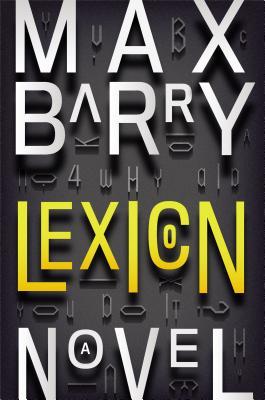
LexiconTitle: Lexicon
Author: Max Barry
Published: 2013
Length: 390 pages

What it’s about (synopsis via Goodreads):

At an exclusive school somewhere outside of Arlington, Virginia, students aren’t taught history, geography, or mathematics–at least not in the usual ways. Instead, they are taught to persuade. Here the art of coercion has been raised to a science. Students harness the hidden power of language to manipulate the mind and learn to break down individuals by psychographic markers in order to take control of their thoughts. The very best will graduate as “poets”, adept wielders of language who belong to a nameless organization that is as influential as it is secretive.

Whip-smart orphan Emily Ruff is making a living running a three-card Monte game on the streets of San Francisco when she attracts the attention of the organization’s recruiters. She is flown across the country for the school’s strange and rigorous entrance exams, where, once admitted, she will be taught the fundamentals of persuasion by Bronte, Eliot, and Lowell–who have adopted the names of famous poets to conceal their true identities. For in the organization, nothing is more dangerous than revealing who you are: Poets must never expose their feelings lest they be manipulated. Emily becomes the school’s most talented prodigy until she makes a catastrophic mistake: She falls in love.

Meanwhile, a seemingly innocent man named Wil Jamieson is brutally ambushed by two strange men in an airport bathroom. Although he has no recollection of anything they claim he’s done, it turns out Wil is the key to a secret war between rival factions of poets and is quickly caught in their increasingly deadly crossfire. Pursued relentlessly by people with powers he can barely comprehend and protected by the very man who first attacked him, Wil discovers that everything he thought he knew about his past was fiction. In order to survive, must journey to the toxically decimated town of Broken Hill, Australia, to discover who he is and why an entire town was blown off the map.

As the two narratives converge, the shocking work of the poets is fully revealed, the body count rises, and the world crashes toward a Tower of Babel event which would leave all language meaningless. Max Barry’s most spellbinding and ambitious novel yet, Lexicon is a brilliant thriller that explores language, power, identity, and our capacity to love–whatever the cost.


How I got it:

It’s been on my “want” list for a while, and I finally came across a copy at a used book store.

When I got it:

Earlier this year.

Why I want to read it:

I remember reading a review when this book was first released, and it sounded like just the sort of odd read that occasionally appeals to me. A novel that has the use of language and poetry as secret powers sounds like such fun. I really do want to read it… soon!

__________________________________

Want to participate in Shelf Control? Here’s how:

  • Write a blog post about a book that you own that you haven’t read yet.
  • Add your link below!
  • And if you’d be so kind, I’d appreciate a link back from your own post.
  • Check out other posts, and have fun!

For more on why I’ve started Shelf Control, check out my introductory post here, or read all about my out-of-control book inventory, here.

And if you’d like to post a Shelf Control button on your own blog, here’s an image to download (with my gratitude, of course!):

Shelf Control

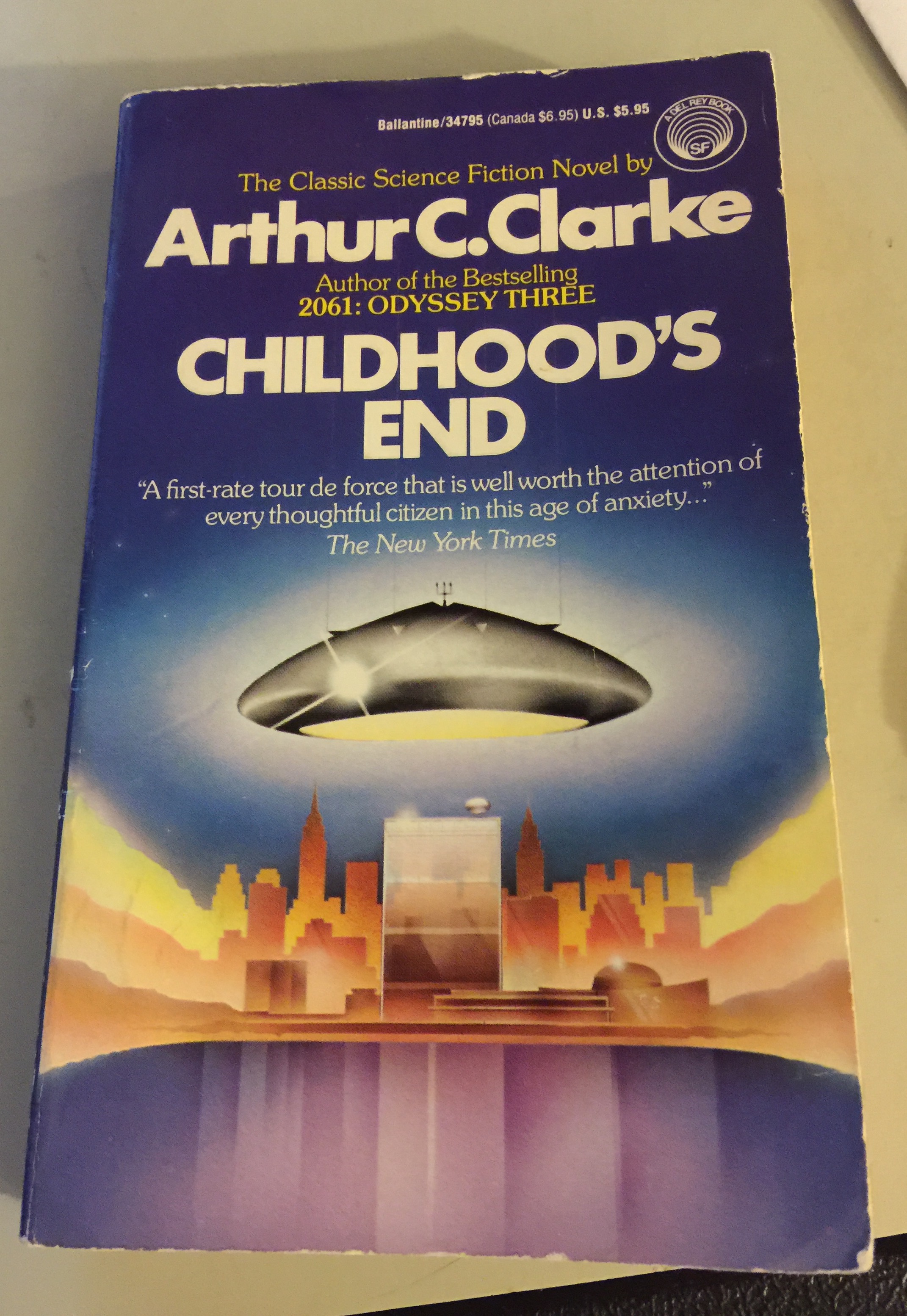
Take A Peek Book Review: Childhood’s End by Arthur C. Clarke

“Take a Peek” book reviews are short and (possibly) sweet, keeping the commentary brief and providing a little peek at what the book’s about and what I thought.

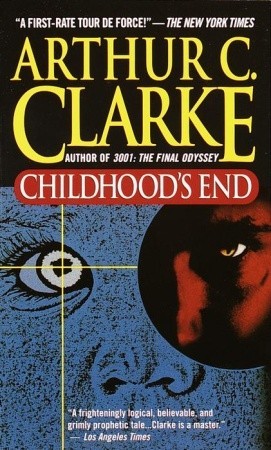
Childhoods End


Synopsis:

(via Goodreads)

The Overlords appeared suddenly over every city–intellectually, technologically, and militarily superior to humankind. Benevolent, they made few demands: unify earth, eliminate poverty, and end war. With little rebellion, humankind agreed, and a golden age began.

But at what cost? With the advent of peace, man ceases to strive for creative greatness, and a malaise settles over the human race. To those who resist, it becomes evident that the Overlords have an agenda of their own. As civilization approaches the crossroads, will the Overlords spell the end for humankind… or the beginning?


My Thoughts:

I’m so glad to have read this sci-fi classic! I recently watched the incredibly well-done TV version of Childhood’s End (a three-part mini-series on Syfy), and couldn’t wait to read the original novel for more insights and explanations.

Where to start? The book differs from the TV show in many ways, but the overall storyline remains more or less the same. In some ways, the book has fewer big, dramatic set-pieces, and we get less involved with certain characters or places. The book is a story of all of Earth and the fate of mankind. It’s fascinating to see the evolving relationship between the humans and Overlords, and what this relationship will mean for the next chapter of life on Earth.

The writing is intelligent and though-provoking. We see the events unfold through many different characters’ perspectives, and come to understand the role of the Overlords as well as the way Earth’s inhabitants grow over the years from fear to acceptance, curiosity to complaisance.

The moment of the Overlords’ arrival, as seen by an astrophysicist, is an early indication this book is really something special:

He felt no regrets as the work of a lifetime was swept away. He had labored to take man to the stars, and, in the moment of success, the stars — the aloof, indifferent stars — had come to him. This was the moment when history held its breath, and the present sheared asunder from the past as an iceberg splits from its frozen, parent cliffs, and goes sailing out to sea in lonely pride. All that the past ages had achieved was as nothing now: only one thought echoed and re-echoed through Reinhold’s brain:

The human race was no longer alone.

If you’re interested in classic science fiction, this is a great place to start. While it was written in 1953, Childhood’s End really does not feel dated. As an aside, at least one small moment where a character expressed dissatisfaction with what passes for the arts in this golden age seems quite prescient:

Do you realize that every day something like five hundred hours of radio and TV pour out over the various channels? If you went without sleep and did nothing else, you could follow less than a twentieth of the entertainment that’s available at the turn of a switch! No wonder that people are becoming passive sponges — absorbing but never creating. Did you know that the average viewing time per person is now three hours a day? Soon people won’t be living their own lives any more. It will be a full-time job keeping up with the various family serials on TV!

Childhood’s End is fascinating, beautifully written, and with so much food for thought and discussion. Highly recommended!

_________________________________________

The details:

Title: Childhood’s End
Author: Arthur C. Clarke
Publisher: Del Rey
Publication date: 1953
Length: 212 pages
Genre: Science fiction
Source: Purchased
Take A Peek Book Review: The Man in the High Castle by Philip K. Dick

“Take a Peek” book reviews are short and (possibly) sweet, keeping the commentary brief and providing a little peek at what the book’s about and what I thought.

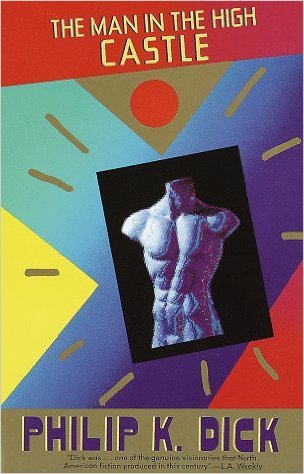
Man in the High Castle


Synopsis:

(via Goodreads)

It’s America in 1962. Slavery is legal once again. The few Jews who still survive hide under assumed names. In San Francisco the I Ching is as common as the Yellow Pages. All because some 20 years earlier the United States lost a war, and is now occupied jointly by Nazi Germany and Japan.

This harrowing, Hugo Award-winning novel is the work that established Philip K. Dick as an innovator in science fiction while breaking the barrier between science fiction and the serious novel of ideas. In it Dick offers a haunting vision of history as a nightmare from which it may just be possible to awake.

My Thoughts:

The world created by Philip K. Dick in The Man in the High Castle is fascinating, horrible, and mundane all at the same time. A lot of people just go about their daily lives, accepting the fact that the war has been won by the Axis powers and that the United States is now under Japanese and Nazi control.

I was inspired to read this book after watching the Amazon series. Call me shallow, but I enjoyed the series much more. Maybe I just didn’t get the book. There’s also the letdown factor, as the plotlines are dramatically different than what I’d already seen (for example, New York isn’t ever shown here and there’s no John Smith). Also, it’s quite a different thing to have a bootleg novel in circulation speculating on a different outcome from the war, as happens in the book, versus newsreel footage on film showing an Allied victory, as in the TV show.

There are some thought-provoking elements here, mainly about how easily people adapt to going along with whatever the governing principles say they need to do. The average people in San Francisco aren’t in active rebellion; they accept their world and focus on functioning within it. Another concept is the factor of “historicity” — does an object have value in and of itself, or does value come from knowing the history of it? Intriguing subplots revolve around the Japanese fascination with American historical artifacts and the odd way in which the Americans are complicit in cannibalizing their own pasts. Additionally, the speech of the characters is oddly choppy, with awkward vocabulary usage and phrasing, as if the Americans have become so deeply subserviant to Japanese rule that they’ve even adapted the Japanese style of speaking English.

I’ll be honest and say that I think a lot of the meaning of this book may have gone right over my head. Then again, the incessant references to the I Ching drove me a bit batty, and some of the ways in which the Nazis have changed and destroyed the world seem just too far-fetched. Not the atrocities which, tragically, are quite believable, but things like draining the Mediterranean and turning it into farmland.

I think I’d need to put a lot more thought and effort into puzzling out the layers of this book in order to fully appreciate it, and I’m afraid that I’m just not willing to put in the work to do so. This book isn’t dull, and parts are truly fascinating. It’s not a simple read, and not one that I’d likely recommend to anyone looking for casual entertainment, but for those who enjoy speculative fiction that requires effort on the part of the reader, it’s likely to be a rewarding read.

For my thoughts on the Amazon series of The Man in the High Castle, check out my post here.

_________________________________________

The details:

Title: The Man in the High Castle
Author: Philip K. Dick
Publisher: Vintage
Publication date: 1962
Length: 259 pages
Genre: Speculative/science fiction
Source: Purchased

Shelf Control #13: Childhood’s End

Shelves final

Welcome to the newest weekly feature here at Bookshelf Fantasies… Shelf Control!

Shelf Control is all about the books we want to read — and already own! Consider this a variation of a Wishing & Waiting post… but looking at books already available, and in most cases, sitting right there on our shelves and e-readers.

Want to join in? See the guidelines and linky at the bottom of the post, and jump on board! Let’s take control of our shelves!

cropped-flourish-31609_1280-e1421474289435.png

My Shelf Control pick this week is:

imageTitle: Childhood’s End
Author: Arthur C. Clarke
Published: 1953
Length: 218 pages

What it’s about (synopsis via Goodreads):

Without warning, giant silver ships from deep space appear in the skies above every major city on Earth. Manned by the Overlords, in fifty years, they eliminate ignorance, disease, and poverty. Then this golden age ends–and then the age of Mankind begins….

How I got it:

Found it on the $1 table at my library’s annual sale.

When I got it:

A few years ago.

Why I want to read it:

I’m a sci-fi fan, but I’m pretty deficient when it comes to classic science fiction. I’ve never read anything by Arthur C. Clarke, and I really need to fix that. Plus (and just coincidentally), there’s a TV version of this coming up, and it looks pretty great!

__________________________________

Want to participate in Shelf Control? Here’s how:

  • Write a blog post about a book that you own that you haven’t read yet.
  • Add your link below!
  • And if you’d be so kind, I’d appreciate a link back from your own post.
  • Check out other posts, and have fun!

For more on why I’ve started Shelf Control, check out my introductory post here, or read all about my out-of-control book inventory, here.

And if you’d like to post a Shelf Control button on your own blog, here’s an image to download (with my gratitude, of course!):

Shelf Control

Grand Beginnings: The Man in the High Castle

Amazon has unveiled its newest original series, and it’s something you really need to see!

The Man in the High Castle debuted this past week, and all 10 episodes are now available for streaming (free for Amazon Prime subscribers). I’ve watched two episodes so far, and I’m hooked.

Adapated from a 1960s book by sci-fi master Philip K. Dick, The Man in the High Castle has as its premise the concept that the United States lost World War II. As the show opens, it’s 1962, and the US is divided into three parts: The eastern half of the country is under the rule of the Nazi Reich, the west coast is controlled by Japan, and a neutral zone runs between the two along the Rockies.

Two episodes in, I’m finding the series disturbing, detailed, and utterly absorbing. I won’t go too far into the plot at this point, since I have so much yet to see and have no idea where this is all going.

What I do want to share is the opening title sequence, which is just perfectly chilling. Check it out:

Are you watching The Man in the High Castle? Do you intend to?

If you’ve given it a try already, please let me know what you think!


Shelf Control #8: Genesis

Shelves final

Welcome to the newest weekly feature here at Bookshelf Fantasies… Shelf Control!

Shelf Control is all about the books we want to read — and already own! Consider this a variation of a Wishing & Waiting post… but looking at books already available, and in most cases, sitting right there on our shelves and e-readers.

Want to join in? See the guidelines and linky at the bottom of the post, and jump on board! Let’s take control of our shelves!

cropped-flourish-31609_1280-e1421474289435.png

My Shelf Control pick this week is:

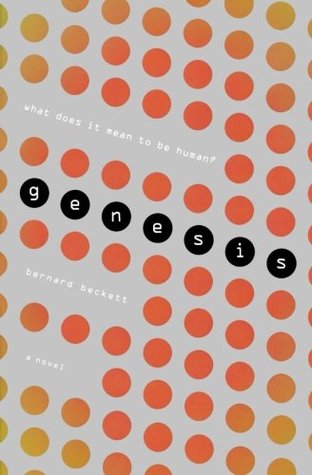
Genesis

This is what my copy looks like, except shiny and silvery.

Title: Genesis
Author: Bernard Beckett
Published: 2005
Length: 150 pages

What it’s about (synopsis via Goodreads):

A stunning debut novel that’s as rich in ideas as it is in suspense, destined to become a modern classic of post-apocalyptic literature.

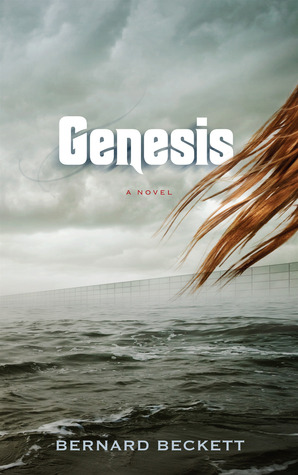
Genesis 2

Another version. More apocalypse, less sci-fi?

Anax thinks she knows history. Her grueling all-day Examination has just begun, and if she passes, she’ll be admitted into the Academy—the elite governing institution of her utopian society. But Anax is about to discover that for all her learning, the history she’s been taught isn’t the whole story. And the Academy isn’t what she believes it to be. In this brilliant novel of dazzling ingenuity, Anax’s examination leads us into a future where we are confronted with unresolved questions raised by science and philosophy. Centuries old, these questions have gained new urgency in the face of rapidly developing technology. What is consciousness? What makes us human? If artificial intelligence were developed to a high enough capability, what special status could humanity still claim? Outstanding and original, Beckett’s dramatic narrative comes to a shocking conclusion.

How I got it:

I bought it!

When I got it:

Oh, it’s been years. I couldn’t even begin to guess when I brought this one home.

Why I want to read it:

I think it popped up on a book site as a “because you read THAT, you might also like THIS” listing. And when I checked it out on Goodreads and saw all the 5-star reviews, I just knew I needed a copy!

__________________________________

Want to participate in Shelf Control? Here’s how:

  • Write a blog post about a book that you own that you haven’t read yet.
  • Add your link below!
  • And if you’d be so kind, I’d appreciate a link back from your own post.
  • Check out other posts, and have fun!


For more on why I’ve started Shelf Control, check out my introductory post here, or read all about my out-of-control book inventory, here.

And if you’d like to post a Shelf Control button on your own blog, here’s an image to download (with my gratitude, of course!):

Shelf Control