Shelf Control #16: Lexicon

Shelves final

Welcome to the newest weekly feature here at Bookshelf Fantasies… Shelf Control!

Shelf Control is all about the books we want to read — and already own! Consider this a variation of a Wishing & Waiting post… but looking at books already available, and in most cases, sitting right there on our shelves and e-readers.

Want to join in? See the guidelines and linky at the bottom of the post, and jump on board! Let’s take control of our shelves!

cropped-flourish-31609_1280-e1421474289435.png

My Shelf Control pick this week is:

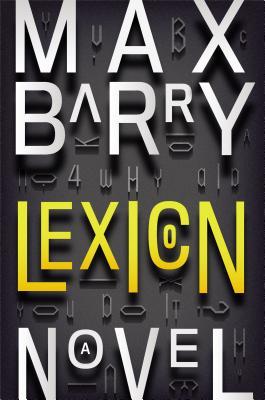
LexiconTitle: Lexicon
Author: Max Barry
Published: 2013
Length: 390 pages

What it’s about (synopsis via Goodreads):

At an exclusive school somewhere outside of Arlington, Virginia, students aren’t taught history, geography, or mathematics–at least not in the usual ways. Instead, they are taught to persuade. Here the art of coercion has been raised to a science. Students harness the hidden power of language to manipulate the mind and learn to break down individuals by psychographic markers in order to take control of their thoughts. The very best will graduate as “poets”, adept wielders of language who belong to a nameless organization that is as influential as it is secretive.

Whip-smart orphan Emily Ruff is making a living running a three-card Monte game on the streets of San Francisco when she attracts the attention of the organization’s recruiters. She is flown across the country for the school’s strange and rigorous entrance exams, where, once admitted, she will be taught the fundamentals of persuasion by Bronte, Eliot, and Lowell–who have adopted the names of famous poets to conceal their true identities. For in the organization, nothing is more dangerous than revealing who you are: Poets must never expose their feelings lest they be manipulated. Emily becomes the school’s most talented prodigy until she makes a catastrophic mistake: She falls in love.

Meanwhile, a seemingly innocent man named Wil Jamieson is brutally ambushed by two strange men in an airport bathroom. Although he has no recollection of anything they claim he’s done, it turns out Wil is the key to a secret war between rival factions of poets and is quickly caught in their increasingly deadly crossfire. Pursued relentlessly by people with powers he can barely comprehend and protected by the very man who first attacked him, Wil discovers that everything he thought he knew about his past was fiction. In order to survive, must journey to the toxically decimated town of Broken Hill, Australia, to discover who he is and why an entire town was blown off the map.

As the two narratives converge, the shocking work of the poets is fully revealed, the body count rises, and the world crashes toward a Tower of Babel event which would leave all language meaningless. Max Barry’s most spellbinding and ambitious novel yet, Lexicon is a brilliant thriller that explores language, power, identity, and our capacity to love–whatever the cost.


How I got it:

It’s been on my “want” list for a while, and I finally came across a copy at a used book store.

When I got it:

Earlier this year.

Why I want to read it:

I remember reading a review when this book was first released, and it sounded like just the sort of odd read that occasionally appeals to me. A novel that has the use of language and poetry as secret powers sounds like such fun. I really do want to read it… soon!

__________________________________

Want to participate in Shelf Control? Here’s how:

  • Write a blog post about a book that you own that you haven’t read yet.
  • Add your link below!
  • And if you’d be so kind, I’d appreciate a link back from your own post.
  • Check out other posts, and have fun!

For more on why I’ve started Shelf Control, check out my introductory post here, or read all about my out-of-control book inventory, here.

And if you’d like to post a Shelf Control button on your own blog, here’s an image to download (with my gratitude, of course!):
Shelf Control

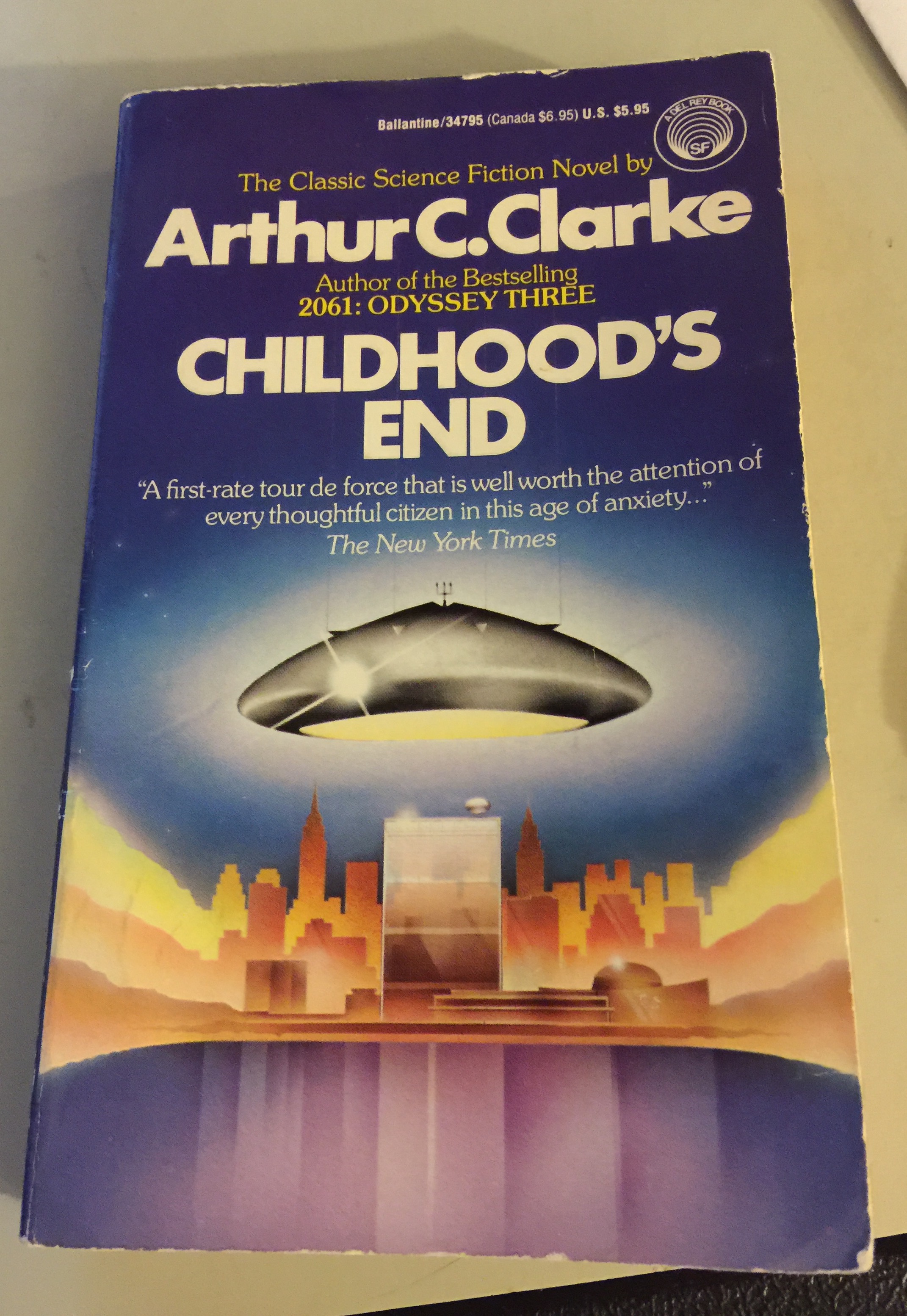
Take A Peek Book Review: Childhood’s End by Arthur C. Clarke

“Take a Peek” book reviews are short and (possibly) sweet, keeping the commentary brief and providing a little peek at what the book’s about and what I thought.

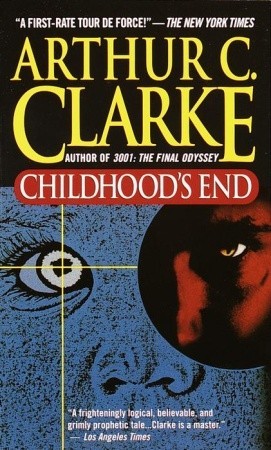
Childhoods End


Synopsis:

(via Goodreads)

The Overlords appeared suddenly over every city–intellectually, technologically, and militarily superior to humankind. Benevolent, they made few demands: unify earth, eliminate poverty, and end war. With little rebellion, humankind agreed, and a golden age began.

But at what cost? With the advent of peace, man ceases to strive for creative greatness, and a malaise settles over the human race. To those who resist, it becomes evident that the Overlords have an agenda of their own. As civilization approaches the crossroads, will the Overlords spell the end for humankind… or the beginning?


My Thoughts:

I’m so glad to have read this sci-fi classic! I recently watched the incredibly well-done TV version of Childhood’s End (a three-part mini-series on Syfy), and couldn’t wait to read the original novel for more insights and explanations.

Where to start? The book differs from the TV show in many ways, but the overall storyline remains more or less the same. In some ways, the book has fewer big, dramatic set-pieces, and we get less involved with certain characters or places. The book is a story of all of Earth and the fate of mankind. It’s fascinating to see the evolving relationship between the humans and Overlords, and what this relationship will mean for the next chapter of life on Earth.

The writing is intelligent and though-provoking. We see the events unfold through many different characters’ perspectives, and come to understand the role of the Overlords as well as the way Earth’s inhabitants grow over the years from fear to acceptance, curiosity to complaisance.

The moment of the Overlords’ arrival, as seen by an astrophysicist, is an early indication this book is really something special:

He felt no regrets as the work of a lifetime was swept away. He had labored to take man to the stars, and, in the moment of success, the stars — the aloof, indifferent stars — had come to him. This was the moment when history held its breath, and the present sheared asunder from the past as an iceberg splits from its frozen, parent cliffs, and goes sailing out to sea in lonely pride. All that the past ages had achieved was as nothing now: only one thought echoed and re-echoed through Reinhold’s brain:

The human race was no longer alone.

If you’re interested in classic science fiction, this is a great place to start. While it was written in 1953, Childhood’s End really does not feel dated. As an aside, at least one small moment where a character expressed dissatisfaction with what passes for the arts in this golden age seems quite prescient:

Do you realize that every day something like five hundred hours of radio and TV pour out over the various channels? If you went without sleep and did nothing else, you could follow less than a twentieth of the entertainment that’s available at the turn of a switch! No wonder that people are becoming passive sponges — absorbing but never creating. Did you know that the average viewing time per person is now three hours a day? Soon people won’t be living their own lives any more. It will be a full-time job keeping up with the various family serials on TV!

Childhood’s End is fascinating, beautifully written, and with so much food for thought and discussion. Highly recommended!

_________________________________________

The details:

Title: Childhood’s End
Author: Arthur C. Clarke
Publisher: Del Rey
Publication date: 1953
Length: 212 pages
Genre: Science fiction
Source: Purchased

Take A Peek Book Review: The Man in the High Castle by Philip K. Dick

“Take a Peek” book reviews are short and (possibly) sweet, keeping the commentary brief and providing a little peek at what the book’s about and what I thought.

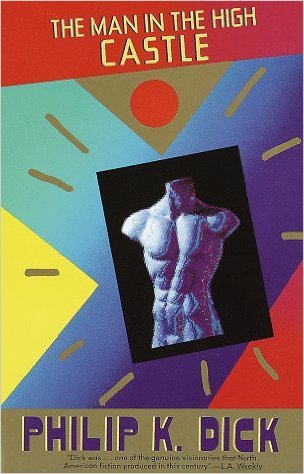
Man in the High Castle


Synopsis:

(via Goodreads)

It’s America in 1962. Slavery is legal once again. The few Jews who still survive hide under assumed names. In San Francisco the I Ching is as common as the Yellow Pages. All because some 20 years earlier the United States lost a war, and is now occupied jointly by Nazi Germany and Japan.

This harrowing, Hugo Award-winning novel is the work that established Philip K. Dick as an innovator in science fiction while breaking the barrier between science fiction and the serious novel of ideas. In it Dick offers a haunting vision of history as a nightmare from which it may just be possible to awake.

My Thoughts:

The world created by Philip K. Dick in The Man in the High Castle is fascinating, horrible, and mundane all at the same time. A lot of people just go about their daily lives, accepting the fact that the war has been won by the Axis powers and that the United States is now under Japanese and Nazi control.

I was inspired to read this book after watching the Amazon series. Call me shallow, but I enjoyed the series much more. Maybe I just didn’t get the book. There’s also the letdown factor, as the plotlines are dramatically different than what I’d already seen (for example, New York isn’t ever shown here and there’s no John Smith). Also, it’s quite a different thing to have a bootleg novel in circulation speculating on a different outcome from the war, as happens in the book, versus newsreel footage on film showing an Allied victory, as in the TV show.

There are some thought-provoking elements here, mainly about how easily people adapt to going along with whatever the governing principles say they need to do. The average people in San Francisco aren’t in active rebellion; they accept their world and focus on functioning within it. Another concept is the factor of “historicity” — does an object have value in and of itself, or does value come from knowing the history of it? Intriguing subplots revolve around the Japanese fascination with American historical artifacts and the odd way in which the Americans are complicit in cannibalizing their own pasts. Additionally, the speech of the characters is oddly choppy, with awkward vocabulary usage and phrasing, as if the Americans have become so deeply subserviant to Japanese rule that they’ve even adapted the Japanese style of speaking English.

I’ll be honest and say that I think a lot of the meaning of this book may have gone right over my head. Then again, the incessant references to the I Ching drove me a bit batty, and some of the ways in which the Nazis have changed and destroyed the world seem just too far-fetched. Not the atrocities which, tragically, are quite believable, but things like draining the Mediterranean and turning it into farmland.

I think I’d need to put a lot more thought and effort into puzzling out the layers of this book in order to fully appreciate it, and I’m afraid that I’m just not willing to put in the work to do so. This book isn’t dull, and parts are truly fascinating. It’s not a simple read, and not one that I’d likely recommend to anyone looking for casual entertainment, but for those who enjoy speculative fiction that requires effort on the part of the reader, it’s likely to be a rewarding read.

For my thoughts on the Amazon series of The Man in the High Castle, check out my post here.

_________________________________________

The details:

Title: The Man in the High Castle
Author: Philip K. Dick
Publisher: Vintage
Publication date: 1962
Length: 259 pages
Genre: Speculative/science fiction
Source: Purchased

Shelf Control #13: Childhood’s End

Shelves final

Welcome to the newest weekly feature here at Bookshelf Fantasies… Shelf Control!

Shelf Control is all about the books we want to read — and already own! Consider this a variation of a Wishing & Waiting post… but looking at books already available, and in most cases, sitting right there on our shelves and e-readers.

Want to join in? See the guidelines and linky at the bottom of the post, and jump on board! Let’s take control of our shelves!

cropped-flourish-31609_1280-e1421474289435.png

My Shelf Control pick this week is:

imageTitle: Childhood’s End
Author: Arthur C. Clarke
Published: 1953
Length: 218 pages

What it’s about (synopsis via Goodreads):

Without warning, giant silver ships from deep space appear in the skies above every major city on Earth. Manned by the Overlords, in fifty years, they eliminate ignorance, disease, and poverty. Then this golden age ends–and then the age of Mankind begins….

How I got it:

Found it on the $1 table at my library’s annual sale.

When I got it:

A few years ago.

Why I want to read it:

I’m a sci-fi fan, but I’m pretty deficient when it comes to classic science fiction. I’ve never read anything by Arthur C. Clarke, and I really need to fix that. Plus (and just coincidentally), there’s a TV version of this coming up, and it looks pretty great!

__________________________________

Want to participate in Shelf Control? Here’s how:

  • Write a blog post about a book that you own that you haven’t read yet.
  • Add your link below!
  • And if you’d be so kind, I’d appreciate a link back from your own post.
  • Check out other posts, and have fun!

For more on why I’ve started Shelf Control, check out my introductory post here, or read all about my out-of-control book inventory, here.

And if you’d like to post a Shelf Control button on your own blog, here’s an image to download (with my gratitude, of course!):
Shelf Control

Grand Beginnings: The Man in the High Castle

Amazon has unveiled its newest original series, and it’s something you really need to see!

The Man in the High Castle debuted this past week, and all 10 episodes are now available for streaming (free for Amazon Prime subscribers). I’ve watched two episodes so far, and I’m hooked.

Adapated from a 1960s book by sci-fi master Philip K. Dick, The Man in the High Castle has as its premise the concept that the United States lost World War II. As the show opens, it’s 1962, and the US is divided into three parts: The eastern half of the country is under the rule of the Nazi Reich, the west coast is controlled by Japan, and a neutral zone runs between the two along the Rockies.

Two episodes in, I’m finding the series disturbing, detailed, and utterly absorbing. I won’t go too far into the plot at this point, since I have so much yet to see and have no idea where this is all going.

What I do want to share is the opening title sequence, which is just perfectly chilling. Check it out:

Are you watching The Man in the High Castle? Do you intend to?

If you’ve given it a try already, please let me know what you think!


Shelf Control #8: Genesis

Shelves final

Welcome to the newest weekly feature here at Bookshelf Fantasies… Shelf Control!

Shelf Control is all about the books we want to read — and already own! Consider this a variation of a Wishing & Waiting post… but looking at books already available, and in most cases, sitting right there on our shelves and e-readers.

Want to join in? See the guidelines and linky at the bottom of the post, and jump on board! Let’s take control of our shelves!

cropped-flourish-31609_1280-e1421474289435.png

My Shelf Control pick this week is:

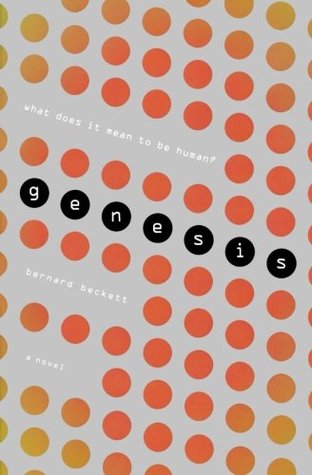
Genesis

This is what my copy looks like, except shiny and silvery.

Title: Genesis
Author: Bernard Beckett
Published: 2005
Length: 150 pages

What it’s about (synopsis via Goodreads):

A stunning debut novel that’s as rich in ideas as it is in suspense, destined to become a modern classic of post-apocalyptic literature.

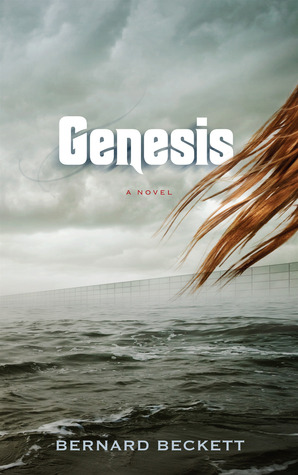
Genesis 2

Another version. More apocalypse, less sci-fi?

Anax thinks she knows history. Her grueling all-day Examination has just begun, and if she passes, she’ll be admitted into the Academy—the elite governing institution of her utopian society. But Anax is about to discover that for all her learning, the history she’s been taught isn’t the whole story. And the Academy isn’t what she believes it to be. In this brilliant novel of dazzling ingenuity, Anax’s examination leads us into a future where we are confronted with unresolved questions raised by science and philosophy. Centuries old, these questions have gained new urgency in the face of rapidly developing technology. What is consciousness? What makes us human? If artificial intelligence were developed to a high enough capability, what special status could humanity still claim? Outstanding and original, Beckett’s dramatic narrative comes to a shocking conclusion.

How I got it:

I bought it!

When I got it:

Oh, it’s been years. I couldn’t even begin to guess when I brought this one home.

Why I want to read it:

I think it popped up on a book site as a “because you read THAT, you might also like THIS” listing. And when I checked it out on Goodreads and saw all the 5-star reviews, I just knew I needed a copy!

__________________________________

Want to participate in Shelf Control? Here’s how:

  • Write a blog post about a book that you own that you haven’t read yet.
  • Add your link below!
  • And if you’d be so kind, I’d appreciate a link back from your own post.
  • Check out other posts, and have fun!


For more on why I’ve started Shelf Control, check out my introductory post here, or read all about my out-of-control book inventory, here.

And if you’d like to post a Shelf Control button on your own blog, here’s an image to download (with my gratitude, of course!):
Shelf Control

Book Review: The Martian by Andy Weir

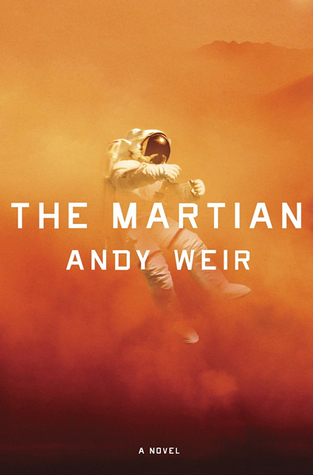
martianThis is yet another book that makes me want to write a review that simply says:

Loved it. Read this book.

But that’s not terribly helpful, is it? Unless you trust me so very much that you’re willing to take my word for it, just because. No? Okay, I’ll tell you just what I loved about this smart, funny, dramatic, and utterly entertaining book.

As you’d guess from the cover image, The Martian is the story of an astronaut. Mark Watney is part of a crew of astronauts participating in NASA’s third manned exploration of Mars. Six days into their mission, a massive dust storm prompts an evacuation of the planet, during which Mark is struck by flying debris and believed to be dead. With only minutes to spare before their emergency launch, the mission leader makes the tough call to leave Mark’s body and get the heck off the planet. The world mourns.

Surprise! Mark isn’t dead… but he may be soon. Mark is the sole human on all of Mars, left with the mission’s habitation structure and equipment, a 100-something day food supply, and no means of communication or rescue. The next mission to Mars won’t arrive for another four years. So what’s Mark to do? He has no intention of giving up, and sets about figuring just what it will take to breathe, drink water, and not starve to death in the years he’ll have to wait before he has a shot at returning to Earth.

When NASA finally realizes, thanks to satellite imagery, that they left a very much alive Mark behind, the entire world becomes obsessed with Mark’s survival, and it takes all the brains of NASA and then some, plus the determination of Mark’s crewmates, to figure out a rescue plan with any chance of success.

Ultimately, though, it’s all up to Mark and his incredible brain. As with all NASA missions, the crew members serve multiple roles, and Mark is the mission’s botanist/mechanical engineer. With his knowledge of botany, Mark figures out how to grow crops to sustain himself when the stored food runs out, and with his engineering skills, he’s able to jerry-rig solutions whenever equipment breaks — which is often.

You’d think a book in which the main character spends time calculating the square footage of arable soil needed to produce enough calories for survival or figuring out how to use rocket fuel to create water might get a little weighed down by science-speak… but you’d be dead wrong. I’ve never been more fascinating by geeky science talk. Stuff like this:

I can create the O2 easily enough. It takes twenty hours for the MAV fuel plant to fill its 10-liter tank with CO2. The oxygenator can turn it into the O2, then the atmospheric regulator will see the O2 content in the Hab is high, and pull it out of the air, storing it in the main O2 tanks. They’ll fill up, so I’ll have to transfer O2 over to the rovers’ tanks and even the space suit tanks as necessary.

The point is, the narration here is super-smart yet super engaging. Mark is in battle for survival — but he’s so extremely funny that even in his direst of straits, there’s plenty to make you laugh. Everything that can go wrong, does go wrong, and half the fun is seeing how crazily creative Mark’s solutions are.

One thing I learned after reading The Martian is that author Andy Weir created his own programming in order to figure out things like trajectories and orbits, and his need to make sure that the science works results in a book that’s full of compelling and weird details — which, strangely, don’t weigh down the narrative, but instead let us feel like we’re right there next to Mark, trying to figure out how to rig a heat supply without blowing things up. (I loved Entertainment Weekly’s recent write-up about Andy Weir – check it out here.)

Bottom line? I loved this book. With never a dull moment, The Martian is a treat for the brain as well as providing plenty of laughs along with true suspense and a nail-biting battle for survival. Mark’s voice is what makes reading The Martian such a fun experience, so I’ll leave you with a few choice selections from the logs of astronaut Mark Watney:

If you asked every engineer at NASA what the worst scenario for the Hab was, they’d all answer “fire”. If you asked them what the result would be, they’d answer “death by fire.”

About the e-mails that come pouring in once the world realizes Mark is alive:

One of them was from my alma mater, the University of Chicago. They say once you grow crops somewhere, you have officially “colonized” it. So technically, I colonized Mars.

In your face, Neil Armstrong!

In other news, it’s seven sols till the harvest, and I still haven’t prepared. For starters, I need to make a hoe. Also, I need to make an outdoor shed for the potatoes. I can’t just pile them up outside. The next major storm would case the Great Martian Potato Migration.

The airlock’s on its side, and I can hear a steady hiss. So either it’s leaking or there are snakes in here. Either way, I’m in trouble.

If you at all enjoy reading about space exploration, scientific discoveries, or incredibly inventive men with senses of humor, read The Martian!

_________________________________________

The details:

Title: The Martian
Author: Andy Weir
Publisher: Broadway Books
Publication date: 2014
Length: 369 pages
Genre: Science fiction
Source: Purchased

Book Review: Prototype by M. D. Waters

PrototypeEarlier this year, I was blown away reading Archetype by M. D. Waters, a sci-fi novel set a few hundred years in the future and focusing on the desperate measures a male-dominated society takes to reverse declining fertility rates. Did I mention the scorching hot sex scenes? Because yeah, there are those too, mixed in amidst the hospital labs and surveillance tech firms and art gallery openings (don’t ask).

In a particularly wise move, Dutton has given readers the gift of a speedy resolution, publishing the sequel, Prototype, only a few months after the first book, and I couldn’t be happier. There’s nothing I hate more* than finishing a terrific book and then holding my breath for the years it takes for the sequel to come out… by which point I’ll have either lost interest or forgotten all the details and stopped caring.

*Okay, I do hate world hunger, war, and a few other things more, but you get what I mean, right?

How do I write about Prototype without revealing any spoilers from Archetype? Very, very carefully.

In Prototype, we follow main character Emma’s journey of self-discovery as she attempts to recover from the horrifying events and revelations of the first book. And… well, damn it all, I really can’t write much of anything about this book, can I?

Emma is a terrific main character, and her world and its secondary characters are well developed and quite believable. An especially exciting sequence is set on “San Francisco Island”, and I loved every bit of the descriptions of the floating cities, intricate roadways, and newly created terrain. But that’s just a drop in the bucket.

Do you enjoy science fiction, love stories, lots of sexy times, and tons of adrenaline-fueled action sequences? How about mad scientists, illegal experiments, revolutionaries trying to free the oppressed, and a male lead who’s almost too perfect?

Well, then. All you need to know is that Prototype is the book for you. I re-read Archetype so I’d be able to go full-steam ahead into Prototype, and I highly recommend reading the two books in a row. The books flow together seamlessly and tell one complete story, and it’s hard to slow down and draw breath anywhere past page 15 or so of the first book or before the final page of the second.

Check out Archetype and Prototype. You won’t be sorry… but don’t blame me for your sleepless nights.

Want to know more? Here’s my review of Archetype.

_________________________________________

The details:

Title: Prototype
Author: M. D. Waters
Publisher: Dutton Adult
Publication date: July 24, 2014
Length: 372 pages
Genre: Science fiction
Source: Review copy courtesy of Dutton

Thursday Quotables: Prototype

quotation-marks4

Welcome back to Thursday Quotables! This weekly feature is the place to highlight a great quote, line, or passage discovered during your reading each week.  Whether it’s something funny, startling, gut-wrenching, or just really beautifully written, Thursday Quotables is where my favorite lines of the week will be, and you’re invited to join in!


Prototype (Archetype #2)

Prototype by M. D. Waters
(published July 24, 2014)

He pulls back, robbing me of his mouth. Various paint colors adorn his luminescent skin. “I need you,” he says, his voice deep and husky.

“Need” is exactly the word to describe this situation. Need to feel loved. Wanted. Whole. There is also a need to turn back the clock and forget the last two years ever happened. Forget that I was ever lost to him, in body and in mind. A need to make love as if this could be the last time.

If you thought a sci-fi clone story couldn’t be sexy, think again!

What lines made you laugh, cry, or gasp this week? Do tell!

If you’d like to participate in Thursday Quotables, it’s really simple:

  • Write a Thursday Quotables post on your blog. Try to pick something from whatever you’re reading now. And please be sure to include a link back to Bookshelf Fantasies in your post (http://www.bookshelffantasies.com), if you’d be so kind!
  • Leave your link in the comments — or, if you have a quote to share but not a blog post, you can leave your quote in the comments too!
  • Visit other linked blogs to view their Thursday Quotables, and have fun!

Flashback Friday: House of Stairs

ffbutton2Flashback Friday is a weekly tradition started here at Bookshelf Fantasies, focusing on showing some love for the older books in our lives and on our shelves. If you’d like to join in, just pick a book published at least five years ago, post your Flashback Friday pick on your blog, and let us all know about that special book from your reading past and why it matters to you. Don’t forget to link up!

My Flashback Friday pick this week:

House of Stairs

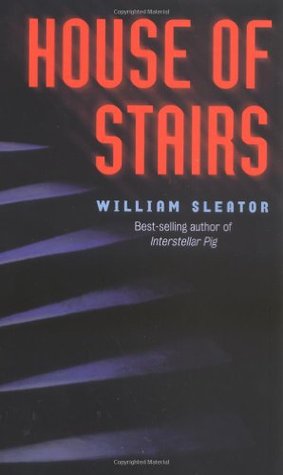
House of Stairs by William Sleator
(published 1974)

Synopsis (Goodreads):

Peter. Lola. Blossom. Abigail. Oliver. Five sixteen-year-old orphans. One by one, they are brought to a place that is unlike anything any of them has ever known. It’s not a prison, not a hospital. It has no walls, no ceilings, no floor. Nothing but endless flights of stairs leading nowhere – except back to the red machine. The five will learn to love the machine, will let it rule their lives. But will they let it kill their souls?

House of StairsCan I just tell you how freaked out by this book I was when I was a kid? It’s a totally bizarre tale of psychological conditioning — and I loved it. Five teens trapped in a weird place that just consists of stairs going every which way, plus a single machine that dispenses food… but only if you do what it wants. Yikes! It’s not very long, but it certainly has stayed with me all these years.

House of StairsWhen my daughter was the right age, I gave it to her to read, and she was blown away too. And now that my son is in middle school, it’s come back off the shelf again… and we’re trying to convince him that he just has to read this book!

A note on the covers: I think I actually prefer the older, slightly cheesy versions for House of Stairs. The one above just lacks any personality… versus these older ones with bad hair, odd clothes, and lots of drama.

Have you read House of Stairs? Or anything else by William Sleator?

What’s your favorite flashback book this week?

Note from your friendly Bookshelf Fantasies host: To join in the Flashback Friday fun:

  • Grab the Flashback Friday button
  • Post your own Flashback Friday entry on your blog (and mention Bookshelf Fantasies as the host of the meme, if you please!)
  • Leave your link in the comments below
  • Check out other FF posts… and discover some terrific hidden gems to add to your TBR piles!

♥♥♥♥♥♥♥♥

Do you host a book blog meme? Do you participate in a meme that you really, really love? I’m building a Book Blog Meme Directory, and need your help! If you know of a great meme to include — or if you host one yourself — please drop me a note on my Contact page and I’ll be sure to add your info!