Take A Peek Book Review: Career of Evil by Robert Galbraith

“Take a Peek” book reviews are short and (possibly) sweet, keeping the commentary brief and providing a little peek at what the book’s about and what I thought.

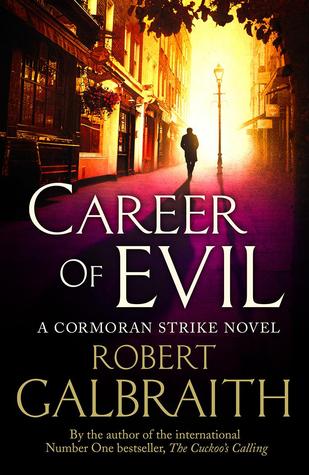
Career of Evil

Synopsis:

(via Goodreads)

When a mysterious package is delivered to Robin Ellacott, she is horrified to discover that it contains a woman’s severed leg.

Her boss, private detective Cormoran Strike, is less surprised but no less alarmed. There are four people from his past who he thinks could be responsible – and Strike knows that any one of them is capable of sustained and unspeakable brutality.

With the police focusing on the one suspect Strike is increasingly sure is not the perpetrator, he and Robin take matters into their own hands, and delve into the dark and twisted worlds of the other three men. But as more horrendous acts occur, time is running out for the two of them…

Career of Evil is the third in the highly acclaimed series featuring private detective Cormoran Strike and his assistant Robin Ellacott. A fiendishly clever mystery with unexpected twists around every corner, it is also a gripping story of a man and a woman at a crossroads in their personal and professional lives.

Cormoran Strike is back, with his assistant Robin Ellacott, in a mystery based around soldiers returning from war.

My Thoughts:

Does it still need to be explained that Robert Galbraith is a pen name for J. K. Rowling? Are we all clear by now?

Good. Moving on.

The Cormoran Strike series keeps getting better and better! In this third installment, the murderer strikes particularly close to home. As Cormoran and Robin sift through the clues, they bring up a host of nightmares from each of their pasts. Meanwhile, all the attention means that their business is on the brink of failure thanks to all the negative publicity, and the threat posed by the unknown murderer is scary and unpredictable. Neither of them are safe, but neither wants to back down.

Meanwhile, we get occasional chapters told from the psycho killer’s point of view, and boy, are they disturbing! His obsession and cold-blooded determination to kill and mutilate is just horrific to read, especially as it’s all so matter of fact.

Beyond the murder mystery, which is complicated to the extreme, one of the delights of this book is seeing the relationship between Cormoran and Robin continue to unfold and deepen. Their trust in one another leads them to open up in ways that they haven’t previously, even as their unacknowledged feelings and fears lead to misunderstandings, anger, and near disaster for their partnership.

In general, I enjoyed Career of Evil very much, perhaps even more than the second book in the series, which just struck me as overdone in some ways. My one quibble is the same quibble I often have with J. K. Rowling’s writing: She seems to take inordinate amounts of pleasure in describing unsavory or sad sack characters as being just completely repulsive physically, with stringy hair or dandruff or body odor or any number of other unattractive qualities:

“The man on the door was squat and neckless… ”

“Tempest, whose black bob had certainly been dyed and who wore thick, square black-rimmed spectacles, was his physical opposite: pale, dumpy and doughy, her small, deep-set eyes like raisins in a bun.”

“He turned his head and Strike saw scalp shining through the thinning roots…”

“Eyebrows as thick and bushy as tiger moth caterpillars overhung her puffy eyes.”

It gets to be too much after a while, in my humble opinion.

Actually, I had one more quibble with Career of Evil: The tiny detail that finally enables Cormoran to have the major breakthrough and solve the mystery is… a tiny detail, so trivial that I find it close to impossible to believe that this man would have noticed and identified this teensy element and have the entire solution hinge upon that discovery. The rest of the mystery’s resolution worked for me, but that one thing — no.

Other than that, though, I’m really having a great time reading the Cormoran Strike books, and hope there are many more to come. This book’s mystery is solved by the end, but the door is still open for more adventures and complications for Cormoran and Robin and their partnership.

Added bonus: It’s so exciting to know that BBC is developing a Cormoran Strike Mysteries TV show!

Finally, a reading tip: This is a big, densely plotted book with (it feels like) a thousand characters and backstories to keep straight. The lives and details of the various suspects can easily blend together, and I found myself constantly having to flip backwards and forwards in the book to keep straight which clue went with which suspect. Keeping it all in order is part of the challenge and the fun — but I’d recommend saving this book for a time when you know you’ll have minimal distractions and plenty of concentration!

_________________________________________

The details:

Title: Career of Evil
Author: Robert Galbraith (J. K. Rowling)
Publisher: Mulholland Books
Publication date: October 20, 2015
Length: 489 pages
Genre: Mystery
Source: Purchased

Audiobook Review: A Cold Day for Murder by Dana Stabenow

Cold Day 2This review refers to the audiobook edition of A Cold Day for Murder by Dana Stabenow, book #1 in the Kate Shugak mystery series.

In A Cold Day for Murder, author Dana Stabenow gives us a chilly introduction to life in the Alaska Bush… and I mean that in the best way possible.

The book opens with a wonderful set piece — two men on a snowmobile crossing miles of undeveloped, snow-covered land on their way to a remote homestead, so cold that ice cracks off their faces as they talk. Their destination is the home of Kate Shugak, a former investigator for the Anchorage DA’s office, now living in self-imposed isolation way out in the middle of nowhere. The men are Kate’s former boss and lover, Jack Morgan, and an ill-prepared FBI man, dressed in a fancy suit and dress shoes under his snowsuit. Their goal? To convince Kate to resume her crazy talent for investigating and help them look into the case of a missing park ranger and the agent who went looking for him, now also missing.

Kate is 30-years-old, an Alaska native with strong family ties to the nearby Niniltna Park region and its tiny settlements. She’s also emotionally and physically damaged, having suffered a major injury on her last case in Anchorage. Kate is reluctant and hostile, but ultimately agrees to help out when she hears that the missing agent is someone she dated on and off and whom she first introduced to the park. She feels responsible, so she embarks (with her enormous dog Mutt) to visit the neighboring homesteads, the town of Niniltna, the local roadhouse — only place to get a drink in the area short of flying to Anchorage — and various relatives and townsfolk, most of whom she’s known all her life.

I sometimes struggle to keep my attention in focus when I listen to audiobooks, but in this case, no struggle was required. I quickly became fascinated by the characters, the mystery, the setting, and the amazing descriptions. Kate is a terrific heroine — talented, sharp, tough as nails, but with a vulnerability stemming from both her own wounds and from her deep connections to every single person whom she faces as she attempts to collect clues.

The townsfolk are exactly what you’d hope for: Quirky and odd, devoted to their little patch of land, fiercely proud, gruff and lovable. They’re an interesting mix of natives, immigrants from “Outside” who came and never left, government officials, and tribal elders. Beneath the frontier attitudes, there’s passion and politics, which prove to be quite a volatile mix.

The issues in the missing persons case involve more conflicts than you might think possible — the conflict between developers, miners, and “greenies”, the urge to open the Park to all versus the locals’ desire to preserve things as they are, the demands of the tribal elders trying to maintain their community versus the aimlessness of the young who desperately seek a way out. With a deft touch, the author introduces us to all of these elements through the people Kate encounters, but it’s never heavy-handed.

The mystery itself is multi-layered, and Kate’s investigation turns up all sorts of bad apples and surprise twists before it’s all sorted out.

As you can see, I enjoyed A Cold Day for Murder very much. I’m not generally much of a mystery reader, but the plot and the characters really grabbed me from the very beginning and kept me hooked.

Will I continue with the series? There are 20 Kate Shugak novels published so far, and that seems like an awful lot to bite off. I don’t feel the need to consume them all at once in a massive binge… but I do think I’ll dip back into this series in between other books and slowly work my way forward.

Teeny confession: I’m more than a little bit in love with Alaska, so reading a book series centered on Alaskan lives and highlighting the gorgeous natural terrain and animals of Alaska is a big thrill for me.

Fun fact: Dana Stabenow won the 1993 Edgar Award for best paperback original for A Cold Day for Murder. And in the Kindle version, at least, she tells a very amusing story of herself as a young author flying from Alaska to New York City for the award ceremony. Read it, if you get a chance!

And a final note on the audiobook: Two thumbs up for narrator Marguerite Gavin! She does a remarkable job of giving the various characters distinct voices that absolutely suit them. Truly a very fun and engaging listening experience — you can hear a sample here via Audible.

_________________________________________

The details:

Title: A Cold Day for Murder
Author: Dana Stabenow
Narrator: Marguerite Gavin
Publisher: Various print editions available
Publication date: 1992
Length: 212 pages (print edition); 5 hours 31 minutes (audiobook)
Genre: Mystery
Source: Download via Audible

Book Review: The Silkworm by Robert Galbraith

Here’s a quick look at the 2nd book in Robert Galbraith’s detective series:

(Okay, we all know the author is J. K. Rowling, right?)

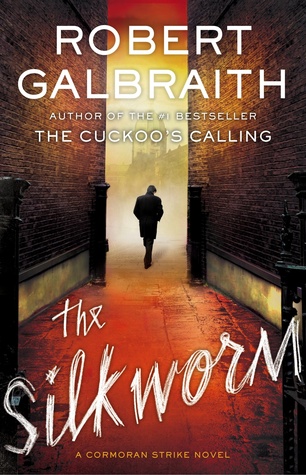
The Silkworm (Cormoran Strike, #2)Synopsis (Goodreads):

When novelist Owen Quine goes missing, his wife calls in private detective Cormoran Strike. At first, Mrs. Quine just thinks her husband has gone off by himself for a few days—as he has done before—and she wants Strike to find him and bring him home.

But as Strike investigates, it becomes clear that there is more to Quine’s disappearance than his wife realizes. The novelist has just completed a manuscript featuring poisonous pen-portraits of almost everyone he knows. If the novel were to be published, it would ruin lives—meaning that there are a lot of people who might want him silenced.

When Quine is found brutally murdered under bizarre circumstances, it becomes a race against time to understand the motivation of a ruthless killer, a killer unlike any Strike has encountered before…

J. K. Rowling made quite a stir when news of her authorship of the pseudonymously published mystery book, The Cuckoo’s Calling, was leaked last year. Rowling said in several interviews that she wanted the experience of being a new writer, outside the glare of the intense media scrutiny that follows her every move. The Cuckoo’s Calling was Rowling’s 2nd book for adults (after The Casual Vacancy), written in her post-Potter years — and once author Robert Galbraith was revealed to be Rowling, sales of The Cuckoo’s Calling skyrocketed. I enjoyed The Cuckoo’s Calling quite a bit; you can read my review here.

In this second Galbraith book (of a reportedly 7-book series), we pick right back up with detective Cormoran Strike, a truly wonderful character and probably the best element of these books. Strike is a big man, fearsome to behold, despite his missing leg stemming from a war injury suffered during his army service in Afghanistan. Strike is smart, obstinate, and unswerving once on the scent of a clue. He makes enemies fairly easily, and has gained notoriety in the wake of the high-profile murder he solved in The Cuckoo’s Calling. He’s also the illegitimate son of a superstar rocker, and the press loves to dwell on all the sordid details that Strike would just as soon ignore.

In the months since his brush with fame, Strike finds himself in high demand to solve cases for the rich and powerful, usually involving infidelity and general skeeviness, and perhaps that’s why he feels both pity and interest when sad-sack Leonora Quine shows up in his office asking for his help. At first, it’s a missing person case, as Leonora’s author husband has disappeared — and unlike his previous periods of hiding out and sulking, he hasn’t shown up again. As Strike begins to dig, he discovers that Owen Quine is a not terribly successful writer whose newest unpublished work skewers allies and enemies alike. There are a lot of powerful people who’d like to make sure this book never sees the light of day — and once Quine’s mutilated body is discovered, all of the book’s subjects become murder suspects.

Plot-wise, The Silkworm teeters on the edge of being overly complicated. There are dates, times, objects, motives, and secrets to unravel, on top of which, the plot synopsis for Quine’s book is a seemingly coded key to each of the main players and their hidden shames and scandals. My main complaint about The Silkworm has to do with Quine’s writing. Honestly, it’s every bit as terrible as it’s supposed to be, and his book is so heavily symbolic that only the most inside of insiders could possibly have any clue who the people being lambasted might be. I just couldn’t quite buy the idea that this awful manuscript by a washed-up, one-hit-wonder of an author could generate that much attention and kick off such a publishing world crisis.

The Silkworm is densely plotted and moves forward at an incredibly fast pace — so even though it felt a bit more convoluted than strictly necessary, I still couldn’t look away. When Strike finally solves the murder, we more or less just have to take his word for it. Yes, it’s all explained, but I’m not sure that I believe that even the brilliant Cormoran Strike could really make the intuitive leap necessary to put it all together.

Still, I enjoyed spending more time with Cormoran Strike and his terrific assistant Robin Ellacott quite a bit. They’re both fantastic characters, and the book is at its most engaging when we follow their interplay and their own inner lives and struggles. The murder mystery is twisted and suspenseful, but eventually it starts to feel like a bit too much. Full disclosure: I’m not much of a mystery fan in general, so my opinion of the case and its resolution is probably colored by that. I’d love to hear what people who are bigger mystery/thriller fans have to say about The Silkworm!

Do I recommend The Silkworm? Yes! Will I read more by Robert Galbraith? Absolutely yes! I’m really looking forward to the next installment in the Cormoran Strike series, mostly for the pleasure of spending time with Strike himself — although we all know that Rowling/Galbraith can spin a good yarn, and I’m always up for seeing whatever she chooses to do next.

_________________________________________

The details:

Title: The Silkworm
Author: Robert  Galbraith (aka J. K. Rowling)
Publisher: Mulholland Books/Little, Brown and Company
Publication date: June 24, 2014
Length: 455 pages
Genre: Mystery
Source: Purchased


Thursday Quotables: The Silkworm

quotation-marks4

Welcome back to Thursday Quotables! This weekly feature is the place to highlight a great quote, line, or passage discovered during your reading each week.  Whether it’s something funny, startling, gut-wrenching, or just really beautifully written, Thursday Quotables is where my favorite lines of the week will be, and you’re invited to join in!


The Silkworm (Cormoran Strike, #2)

 The Silkworm by Robert Galbraith
(published June 24, 2014)

Preoccupied with his own comfort, a mixture of football and murder on his mind, it did not occur to Strike to glance down into the snowy street where shoppers, undeterred by the freezing weather, were gliding in and out of the music stores, the instrument makers and the cafés. Had he done so, he might have seen the willowy, hooded figure in the black coat leaning against the wall between numbers six and eight, staring up at his flat. Good though his eyesight was, however, he would have been unlikely to spot the Stanley knife being turned rhythmically between long, fine fingers.

How’s that for creating a mood and building suspense? I’m loving this fast-paced, intricate mystery from she-who-must-not-be-named.

What lines made you laugh, cry, or gasp this week? Do tell!

If you’d like to participate in Thursday Quotables, it’s really simple:

  • Write a Thursday Quotables post on your blog. Try to pick something from whatever you’re reading now. And please be sure to include a link back to Bookshelf Fantasies in your post (http://www.bookshelffantasies.com), if you’d be so kind!
  • Leave your link in the comments — or, if you have a quote to share but not a blog post, you can leave your quote in the comments too!
  • Visit other linked blogs to view their Thursday Quotables, and have fun!

Book Review: The Farm by Tom Rob Smith

Book Review: The Farm by Tom Rob Smith

The FarmFamily loyalties, secrets and conspiracies, and questions about mental health lie at the center of the new novel The Farm by author Tom Rob Smith. In this compulsively readable book, the reader is left to wonder just what is true and what is delusion, and unraveling the hints and clues makes for a reading experience that’s hard to walk away from once started.

In The Farm, 20-something Daniel lives in a beautiful apartment in London, supported by his older boyfriend Mark — the boyfriend that he just never seems to find the right time to mention to his parents, especially now that they’ve retired from their gardening business and moved to a farm in Sweden. Although Daniel remembers his childhood as peaceful and happy, he’s drifted away from his parents in recent years, allowing miles and his own secret to create a distance that becomes harder and harder to bridge.

As the story opens, Daniel receives a shocking phone call from his father, telling him that his mother Tilde is in the hospital, having suffered a mental collapse, and is now institutionalized and being treated for a psychotic episode. No sooner does Daniel get off the phone to arrange for a flight to Sweden than he gets another call, this one from his mother, pleading with Daniel not to believe his father’s lies and informing him that she’s on her way to London, where she’ll explain everything.

Tilde’s arrival rocks Daniel to the core. His always cheerful, together mother arrives looking bedraggled and spouting wild comments about conspiracies and crimes. She claims to have proof — a battered leather satchel that she won’t allow out of her grasp. She warns Daniel that they must not allow his father to find them, as he and his partners in crime are determined to lock her away and discredit her as part of their own cover-up.

What’s Daniel to do? His mother’s tales sound too wild to be believed, yet there’s something there that compels him to listen. She’s clearly unstable, and as she displays her evidence and lays out her story, she does sound unhinged — but her tale has enough rationality in it that Daniel can’t dismiss it outright. As Tilde goes further and further into her story, it’s clear that something unexpected happened in Sweden, and that the peaceful country retirement went very wrong, very quickly. But every shred of Tilde’s evidence can be explained away, so who is to be believed? Is Tilde a sick woman, in need of commitment to a mental facility for her own well-being? Or is she a woman who’s been set up to take the fall in order to keep a dark underbelly of depraved acts hidden from view?

Reading The Farm, we’re as torn as Daniel. Much of what Tilde says has a ring of truth, and obviously she believes wholeheartedly in what she’s saying. There are enough errant facts to indicate that something was amiss in the small Swedish community where the couple had hoped to make their home. And yet, Tilde’s wild distractions, her grasping for meaning in small inconsequentialities, leave us to wonder whether Daniel’s father might have been right all along.

I won’t spoil anything by going into an explanation of how it all works out. Daniel’s task is to unravel his mother’s stories before his father shows up to have her committed again, and it’s up to Daniel to figure out where the truth lies. The reader is along for the ride, seeing the bits and pieces as Daniel does, and over the course of the book, trying to fit together the puzzle pieces in order to see the greater whole.

The Farm has a darkness to it, woven in among the domestic details of a seemingly simple life. The empty landscapes of remote Sweden have a sinister overtone, and even the supposed richness of the land and the nearby river betray Tilde, as nothing works out for her as she’d envisioned. The purity of self-sustaining country life that she’d dreamed of is nothing but illusion, and the remoteness of the farm doesn’t shield Tilde and her husband Chris from the pressures and politics of the local farming community and its more influential members. The writing conveys the bleakness and isolation of the farm, the stark beauty of the Swedish countryside adding an element of mythical danger with its deep, dark forests.

There’s a darkness, too, in the depiction of Daniel’s happy family. He remembers a perfect childhood in which his parents never argued or showed signs of the slightest disagreement. He also believed his parents to be completely happy. Sure, some oddities are there — Daniel grew up without siblings or any relatives, his mother being estranged from the parents in Sweden whom she’d left decades earlier. As Daniel uncovers the secrets and lies within his parents’ marriage, he also is forced to confront his own need for secrecy and accept his role in creating the emotional chasms between him and his parents that allowed this crisis to go so far without his knowledge.

The author keeps us on our toes. Like Daniel, we spend much of the book listening to Tilde try to convince us that what she thinks happened is what really happened. The writing here shifts between Daniel’s observations of his mother’s behavior and longer segments in which we hear Tilde’s first person account. This is the unreliable narrator device at its best, serving to keep us off-balance, torn between wanting to believe and knowing something is just… off.

I enjoyed The Farm very much. It’s a quick read, and really impossible to put down once you start. I couldn’t stop thinking about Tilde’s story, knowing that what she says can’t be entirely true, yet knowing too that there must be an answer as to why she believes what she believes — and that even if she is unreliable, there’s enough that’s questionable in her tale to show that something isn’t right at the farm. Perhaps the big, dark secrets and the unraveling of the mysteries weren’t quite as huge as I’d expected; still, the truth that emerges is devastating in its own quiet way. The ending of The Farm is entirely satisfying, true to the characters and adding a sad logic to all of the events we’d heard about.

_________________________________________

The details:

Title: The Farm
Author: Tom Rob Smith
Publisher: Grand Central Publishing
Publication date: June 3, 2014
Length: 368 pages
Genre: Mystery/thriller
Source: Review copy courtesy of Grand Central Publishing via NetGalley

At a Glance: The No. 1 Ladies’ Detective Agency by Alexander McCall Smith

At a Glance: The No. 1 Ladies’ Detective Agency by Alexander McCall Smith

The No. 1 Ladies' Detective Agency  (No. 1 Ladies' Detective Agency #1)

What it’s about (via Goodreads):

Precious Ramotswe in Botswana sits in the shade and ponders the wisdom of her cattle farmer father, observes her neighbors, and cares for employers and subjects with humor. A clinic doctor has two different personalities depending on the day of the week. A Christian sect member vanishes. A witch doctor may have the bones of a kidnapped boy in his magic kit.

And from the back of the book:

This first novel in Alexander McCall Smith’s widely acclaimed The No. 1 Ladies’ Detective Agency series tells the story of the delightfully cunning and enormously engaging Precious Ramotswe, who is drawn to her profession to “help people with the problems in their lives.” Immediately upon setting up shop in a a small storefront in Gaborone, she is hired to track down a missing husband, uncover a con man, and follow a wayward daughter. But the case that tugs at her heart, and lands her in danger, is that of a missing eleven-year-old boy, who may have been snatched by witch doctors.

What I thought:

The No. 1 Ladies’ Detective Agency has been on my “must-get-to-eventually” list for a long, long time. I’m not much of a mystery fan, and were it not for a couple of book challenges this year, I might not have picked this one up for a while yet.

In any case, I’m glad that I did. Precious Ramotswe is a charming, wise, and good-natured character, a strong woman operating in a man’s world, who holds her own and then some. She gets results for her clients — not through strong-arm tactics, but by using what she sees as a woman’s gifts: her keen observations, her patience, her understanding of people, and most importantly, her insights into what people ask for and what they really want.

Along the way, we learn a great deal about life in Botswana, and get a feel for the country’s rhythms, its people, and its landscapes. Mma Ramotswe loves her country, and through her eyes, we see its beauty and its pleasures.

The small mysteries Mma Ramotswe solves are puzzles of  human nature, and her approach (which she credits both to Agatha Christie and to a private detective manual which she uses as a guide) is simply to follow her heart and her brain to figure out what all these interesting people are up to.

All in all, I’m quite glad that I read this book. The first in a series of 15 books (with more to come, I presume), The No. 1 Ladies’ Detective Agency makes a great start by introducing a lead character and a setting that are both quite remarkable. As I’ve mentioned, I’m not normally much of a mystery reader, so while I don’t intend to continue with the series right away, that’s not a knock against the series, just a function of my own reading preferences.

For those who enjoy “cozy” mysteries and want to try an unusual setting, I’d recommend giving The No. 1 Ladies’ Detective Agency a try. In its own understated way, it’s quite a fun and engaging read.

_________________________________________

The details:

Title: The No. 1 Ladies’ Detective Agency
Author: Alexander McCall Smith
Publisher: Anchor Books
Publication date: 1998
Length: 235 pages
Genre: Mystery
Source: Purchased

Book Review: After I’m Gone by Laura Lippman

Book Review: After I’m Gone by Laura Lippman

After I'm GoneSecrets, lies, and obsessive love lie at the heart of this new mystery novel by Laura Lippman. Felix Brewer, a wealthy but not quite legitimate businessman, flees the country in 1976 rather than face a prison sentence, leaving behind the wife he loves, three daughters, and a young, devoted mistress. When the mistress is reported missing in 1986, the natural assumption is that she’s finally gone to join Felix. But when her remains are discovered years later in a local park, it’s clear that Julie Saxony has been murdered. The investigation goes nowhere for 15 years, until retired detective Roberto “Sandy” Sanchez pulls the cold case file and starts to dig… and notices connections that had been missed the first time around.

The story starts with Felix’s escape, and then moves forward over time, through all the years since his disappearance, focusing not on Felix himself but on the shattered lives of those he left behind. He’d intended to provide for the family financially, but the money never surfaced, and his wife Bambi and her daughters live in the years since always on the verge of ruin. Meanwhile, Julie was given ownership of one of Felix’s businesses and expanded from there into a restaurant and B&B — so did she have the missing money? And would someone have killed to get hold of it?

We follow Sandy’s investigation into the meager pieces of evidence and the random witnesses who might have new light to shed on the past, while in alternating chapters, we learn what’s become of Bambi, her sad and troubled daughters, and their families as well. The clues start to pile up, and as Sandy remarks, the murderer in a cold case is usually someone whose name appears in the original investigation file. Nobody connected to the Brewer mystery has led a spotless life. Greed, callousness, disappointment, and bitterness all play a part. As close as Bambi and the girls are, each one is hiding secrets from the others, in misguided attempts to protect their loves ones from unpleasant truths or to avoid letting their mother down.

In a way, this book is quite sad. Bambi truly loved her husband and he adored her as well, but she spends most of her adulthood alone, scrounging to maintain the life she wanted for her daughters, and always suffering the indignities of her abandonment. The daughters have issues, to say the least: Trust issues, feeling like their father ruined their lives, the constant air of scandal surrounding the family, worry for their mother — and later, relationship problems, marital difficulties, and the pain of knowing that their father chose a life of exile rather than doing time and then resuming life amidst his family.

The mystery itself is clever and confounding. There are red herrings galore. At several points, I thought I had it all figured out… but mostly, I was dead wrong. (I will pat myself on the back and say that I did in fact pick the killer — but I got the circumstances and motivation completely wrong, so I suppose it was mostly a lucky guess!) The book covers quite a big chunk of time, dipping in and out of the family’s life over a span of 35 years, but it doesn’t feel like too much. Instead, we get samplings of what Bambi and the daughters go through at various points in their lives post-Felix, with glimpses of Julie as well, and it’s just enough to start connecting dots and figuring out which pieces fit together — and where and when the true secrets are hidden.

Sandy is a good investigator with a sorrowful backstory, and if I had any quibbles about this book, it’s that perhaps too much time is spent on Sandy’s history. It really has no bearing on the mystery itself, other than to humanize the law enforcement side of the story, and I could have done with less focus on him and more on the Brewer family, who truly fascinated me. I had the sense, based on the wrap-up, that the author intends to introduce Sandy into future mysteries involving her ongoing character Tess Monaghan. Since I’ve never read anything by this author before, this aspect didn’t matter to me, but I’m sure it will be exciting for fans of the Tess Monaghan series.

Overall, I found After I’m Gone terrific, suspenseful, and smart. I’m not usually a big fan of mystery or crime fiction, but this book had everything I need to really enjoy a good read: engaging characters, unusual plot twists, startling and unexpected scenarios, and some plain old great writing. I tore through this book as quickly as I could, and felt really irritated every time little things like sleep got in the way. If you like books that grab you and don’t let go, check out After I’m Gone!

_________________________________________

The details:

Title: After I’m Gone
Author: Laura Lippman
Publisher: William Morrow
Publication date: February 11, 2014
Length: 352 pages
Genre: Mystery
Source: Review copy courtesy of William Morrow and TLC Book Tours

Book Review: Joyland by Stephen King

Book Review: Joyland by Stephen King

Joyland

Don’t let the pulp fiction sensationalism of the cover fool you: Joyland is, at heart, quite a lovely and nostalgic book.

Devin Jones is one heartbroken 21-year-old in the summer of 1973. No sooner does he take a job at a North Carolina beachside amusement park than his long-term girlfriend — his first love — dumps him for another guy. By letter. Left to lick his wounds, Devin immerses himself in the carny world. He learns the Talk, gets a crash-course on how to be a ride-jockey, and spends sweltering days “wearing the fur” — that is, dressed up as Howie the Happy Hound, mascot of Joyland, dancing the hokey-pokey with delighted crowds of kiddies.

Joyland is a sweet non-Disney-fied world of fun — non-corporate, old-timey, with an ancient owner who really just wants everyone to be happy. There’s a shadow beneath Joyland’s wholesome facade. Rumor has it that a ghost haunts the Horror House, ever since the murder of Linda Gray four years earlier. The crime was never solved, and so Linda waits… for justice, for vengeance, for recognition, for release. Or so the story goes.

Meanwhile, Devin finds friends and a place to forget his sorrows for a while, and come fall, when he should be returning to college, he makes the decision to join the year-round staff of Joyland and stick around for a while. Despite his deep-down loneliness, Dev finally begins to come out of his shell, thanks mostly to the unexpected connection he finds with a beautiful but isolated woman and her wheelchair-bound son. But he can’t quite shake his interest in the fate of Linda Gray, and the more he digs, the more he realizes that the murderer might still be around — perhaps even at Joyland.

So what did I think?

I guess it goes without saying that Stephen King can write. I mean, he could probably write a computer technical manual and you’d either be in tears or screaming in terror by the end. In Joyland, King’s writing is full of his trademark sense of longing for a time gone by. The story is told by Devin from the vantage point of a man in his sixties, looking back at a pivotal moment in his younger days, the summer in which he left behind his childhood innocence for good. We are immersed in the experience of a young man in love, and can feel his longing and his pain with each step, with each memory, with each sad song playing on Dev’s record player in his boarding house room. The writing is down-to-earth and yet lovely at the same time:

I’m not sure anybody ever gets completely over their first love, and that still rankles. Part of me still wants to know what was wrong with me. What I was lacking. I’m in my sixties now, my hair is gray and I’m a prostate cancer survivor, but I still want to know why I wasn’t good enough for Wendy Keegan.

The murder mystery itself is only a small part of the book. Devin’s compulsion to solve the murder is a thread that connects his experiences, but in actuality I’d say only about 25% or so of the plot really focuses on the crime and the ghost. Much more important is Dev’s involvement at Joyland, the friends he makes, and the bond he forms with Annie and Mike Ross. There’s a Summer of ’42 vibe in parts of the story (if you’ve seen the movie, you’ll know what I mean — I hope). Granted, Joyland takes place 30+ years later than the movie, but there are similar themes: innocent boy, one perfect summer, mysterious (beautiful) older woman… well, I won’t elaborate, but that’s what I kept thinking of as certain events developed in Joyland.

As for the murder, the climax is exciting — but feels a bit well-worn as well. The location, the circumstances, even the weather all feel a bit familiar, like something out of a drive-in flick from a few decades ago. Maybe that’s what Stephen King was shooting for? After all, the story is truly heavy on the nostalgia, with a wistful sensibility for the time and place it portrays. So perhaps the ending was designed to feel old-timey as well, in keeping with the overall mood and setting of the book? Something to ponder, anyway. The identity of the murderer wasn’t terribly shocking, if you go with the assumption (as I did) that he would have to be either a character we’d already met or someone closely connected to Joyland. I won’t give anything away here, but I will say that by the time the murderer is revealed, there really was only one other person it could possibly have been. Still, it unfolded in a believably scary and threatening way, and I enjoyed every bit of the big reveal and its aftermath.

Overall, Joyland is a terrific read. Devin makes a sympathetic, insightful narrator, and through his eyes, Joyland — which I suspect would appear a bit corny and shabby if we saw it on our own — appears to be a place of wonder and delight. The sensation of first love and first heartbreak are rendered with painful vividness, as is the simple pleasure to be found spending time in the company of good friends, walking on a deserted beach, or making a child smile.

My only quibble with this book is about the cover. Published by the Hard Case Crime division of Titan Books, the cover — with the tagline of “Who dares enter the FUNHOUSE OF FEAR?” — seems to promise a very different book than what Joyland actually delivers. The cover art is terrific — oh, that red-head in the little green dress! What horrors has she witnessed? Who is chasing her through the park? What did she photograph that’s so shocking? The problem is, none of these questions are relevant in the slightest, and the picture only has the vaguest of connections to the actual events in the book.

I’m no designer or artist (so be nice!), but I started playing around with old-timey amusement park photos, and I think either of these might do more justice to the actual story of Joyland:

ferris-wheel-4468_640 ferris-wheel-100234_640_2

Sure, neither screams “Stephen King” at you — which the real cover surely does, in its own way. Still, I think I’d have liked this book a smidge better if my expectations were more in line with the reality of the book from the start. Joyland is not pulp fiction, and it’s not even that much of a crime story. It’s nostalgic fiction about the end of innocence and the farewell to first love; it’s about growing up and confronting life; and it’s about people and connections.

Cover quibbles aside, Joyland is a perfect summer read. It’s quick, it’s absorbing, and really, what says summer more than a beachside amusement park?

Book Review: A Small Death in the Great Glen by A. D. Scott

Book Review: A Small Death in the Great Glen by A. D. Scott

A Small Death in the Great GlenThe staff of the Highland Gazette produces the same little newspaper week in, week out. Classifieds on the front page, sporting and racing results on the inside, updates on farming, women’s club meetings, and the like filling up the rest of the four-page spread. Certainly no investigative reporting, nothing controversial, nothing that the “big city” papers in Edinburgh or Glasgow might cover. But when a young boy is found dead in a canal, the new editor-in-chief demands more from the small team of reporters, and they soon become enmeshed in an investigation that threatens the stability of their insular town.

Set in the the Scottish Highlands in the mid-1950s, A Small Death in the Great Glen is a murder mystery, but at the same time is a compelling portrait of a time and place. Ten years after World War II, the effects of the war are still being felt. An abused wife tries to live with her husband’s rage and frustration, recognizing that he came home from war different from the person she’d married. The Italian immigrant who runs the town’s café (with the only cappuccino machine in the Highlands!) is accepted by the community — but with limits. When a Polish sailor jumps ship in the harbor at the same time that the boy’s murder occurs, the strangers in town are immediately suspect, and the underlying mistrust of foreigners — even those who’ve lived and worked alongside the townsfolk for a decade — lead to ugliness and division.

The focal point of the story is Joanne Ross, who shocks her family by taking a part-time job at the paper as a typist — women are supposed to be at home! What next, wearing trousers? Joanne needs escape from her bitter home life, and finds it at the Gazette, where she is pushed to think for herself and actually write newsworthy content. As Joanne grows professionally, she has to face facts about her marriage and make choices that, in the mid-1950s, are not at all easy for a woman with two small children.

The mystery at the heart of A Small Death in the Great Glen is compelling and has several surprising twists. The history and mythology of the Highlands come into play, as do the various factions and prejudices beneath the surface of a seemingly harmonious town.

Apart from the investigation of the murder itself, there were really two elements in this book that gave me the greatest enjoyment. First is the setting itself: I’m a sucker for Scotland, particularly the Highlands, and this book is filled with descriptions of the glens and braes, the rocky terrain, the natural surroundings, that are so vivid that I could practically feel it.

Pleasure came from the small things; tickling for trout, watching the birds, the eagle hunting, stalking the deer. Cloudscapes of great beauty highlighted the four-seasons-in-one-day phenomenon that was called weather in Scotland, but often it was dreich for days, sometimes weeks, on end.

(My Thursday Quotables selection for this week is from A Small Death in the Great Glen. See it here for another snippet of description of the Highland landscape.)

The second element that really elevates this book above a standard mystery is the glimpse into the inner workings of a small community, at once tight-knit and full of resentments and judgments. Thanks in large part to my obsession with Diana Gabaldon’s Outlander series, I have a familiarity with the Highlands of centuries past; A Small Death in the Great Glen is a lovely insight into 20th century Scotland and what life would have been like for people in the post-war era of that time.

I don’t usually read mysteries, but I’m glad that the Highlands setting drew me to this book. I enjoyed the people, the relationships, the investigation, and the portrait of the intermingled communities that make up the society of this small Scottish town. When I first picked up A Small Death in the Great Glen, I hadn’t realized that it’s the first book in a series. Two more are currently available, with another due for publication later this year. No worries, though: A Small Death in the Great Glen stands on its own just fine. If you enjoy mysteries — or, like me, just want a little taste of the Highlands, give this one a try!

As for me, I’m looking forward to reading the next book, A Double Death on the Black Isle, next time I crave a visit to Scotland.

Wishlist Wednesday

Welcome to Wishlist Wednesday!

The concept is to post about one book from our wish lists that we can’t wait to read. Want to play? Here’s how:

  • Follow Pen to Paper as host of the meme.
  • Do a post about one book from your wishlist and why you want to read it.
  • Add your blog to the linky at the bottom of the post at Pen to Paper.
  • Put a link back to Pen to Paper somewhere in your post.
  • Visit the other blogs and enjoy!

My Wishlist Wednesday book is:

 A Small Death in the Great Glen

A Small Death in the Great Glen by A. D. Scott

From Amazon:

In the Highlands of 1950s Scotland, a boy is found dead in a canal lock. Two young girls tell such a fanciful story of his disappearance that no one believes them. The local newspaper staff—including Joanne Ross, the part-time typist embroiled in an abusive marriage, and her boss, a seasoned journalist determined to revamp the paper—set out to uncover and investigate the crime. Suspicion falls on several townspeople, all of whom profess their innocence. Alongside these characters are the people of the town and neighboring glens; a refugee Polish sailor; an Italian family whose café boasts the first known cappuccino machine in the north of Scotland; and a corrupt town clerk subverting the planning laws to line his own pocket.

Together, these very different Scots harbor deep and troubling secrets underneath their polished and respectable veneers—revelations that may prevent the crime from being solved and may keep the town firmly in the clutches of its shadowy past.

Why do I want to read this?

I’ll be honest — they had me at Scottish Highlands. I’m a sucker for this setting, although most of my Highlands fiction tends to take place centuries in the past, with an emphasis on dashing men in kilts. I’ve yet to read a book set in Scotland within a more contemporary time frame — as soon as I spotted this one in a bookstore, I knew it was for me. The story itself sounds intriguing — local drama and deception, a tragic and suspicious death, a melting pot of townspeople and immigrants. Great ingredients for what I hope will be a terrific mystery!

Quick note to Wishlist Wednesday bloggers: Come on back to Bookshelf Fantasies for Flashback Friday! Join me in celebrating the older gems hidden away on our bookshelves. See the introductory post for more details, and come back this Friday to add your flashback favorites!