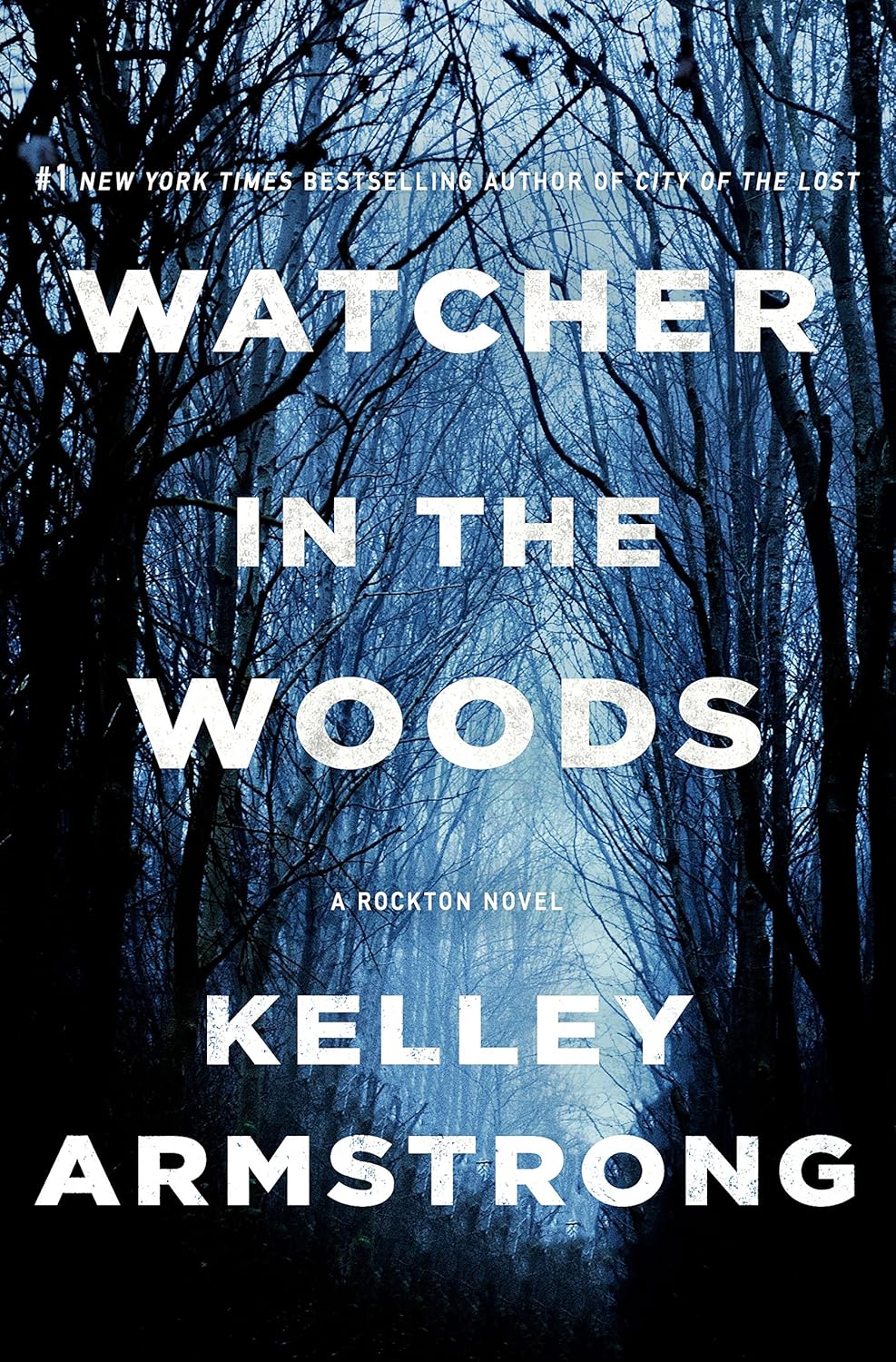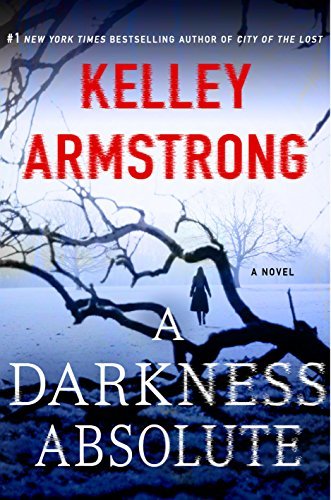
Book Review: City of the Lost (Rockton, #1) by Kelley Armstrong

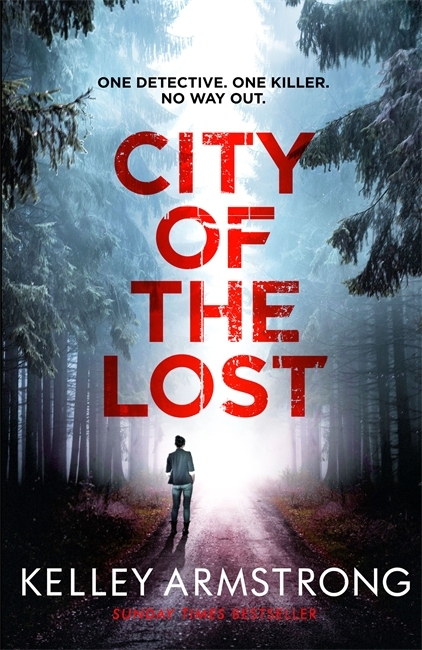
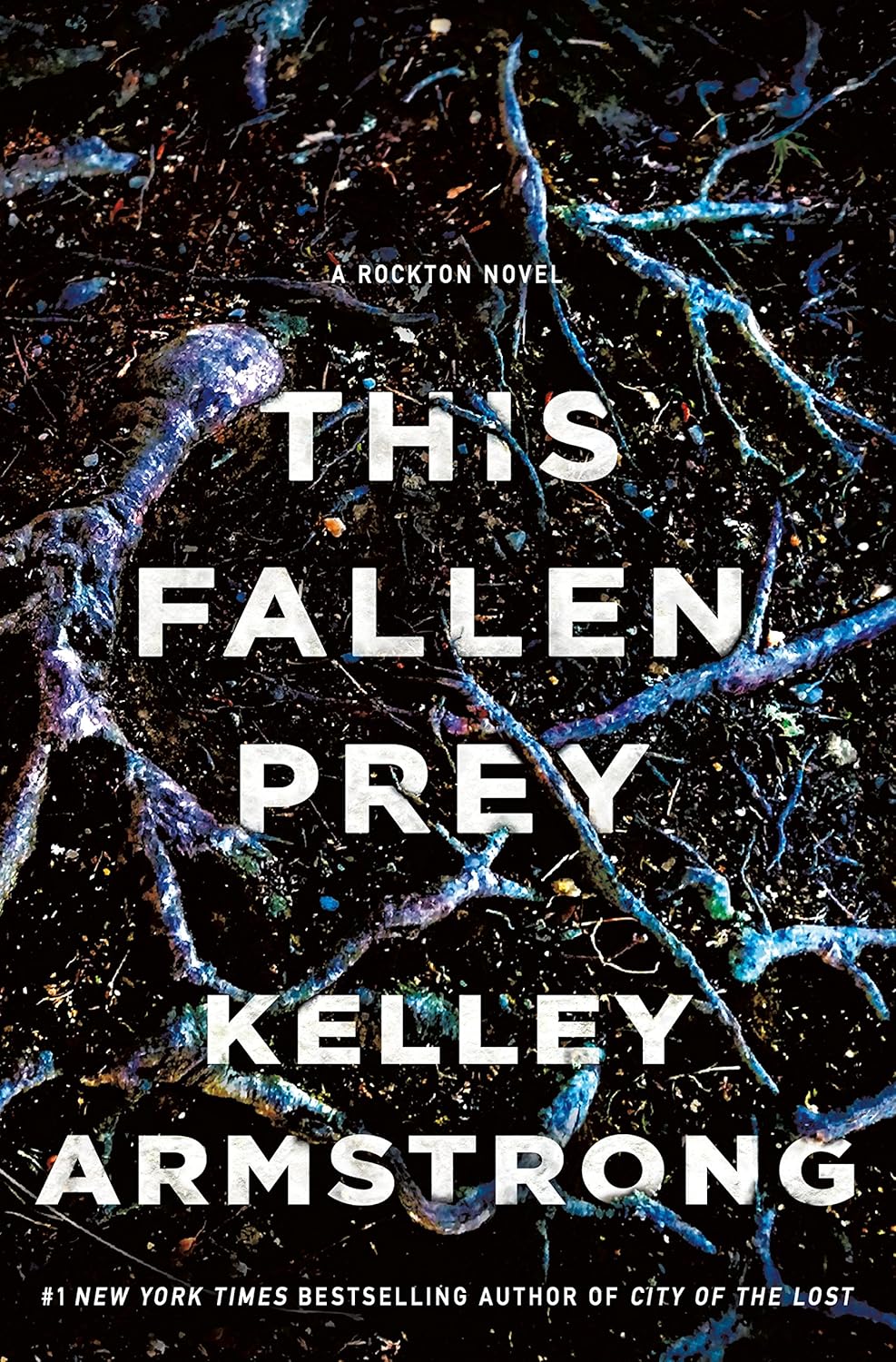
Title: City of the Lost
Series: Rockton, #1
Author: Kelley Armstrong
Publisher: Minotaur Books
Publication date: May 3, 2016
Length: 412 pages
Genre: Thriller/mystery
Source: Library
Rating:

Rating: 4.5 out of 5.

Casey Duncan is a homicide detective with a secret: when she was in college, she killed a man. She was never caught, but he was the grandson of a mobster and she knows this crime will catch up to her. Casey’s best friend, Diana, is on the run from a violent, abusive ex-husband. When Diana’s husband finds her, and Casey herself is attacked shortly after, Casey knows it’s time for the two of them to disappear again.

Diana has heard of a domestic violence support town made for people like her, a town that takes in people on the run who want to shed their old lives. You must apply to live in Rockton and if you’re accepted, it means walking away entirely from your old life, living off the grid in the wilds of Canada: no cell phones, no Internet, no mail, no computers, very little electricity, and no way of getting in or out without the town council’s approval. As a murderer, Casey isn’t a good candidate, but she has something they want; she’s a homicide detective, and Rockton has just had its first real murder. She and Diana are in. However, soon after arriving, Casey realizes that the identity of a murderer isn’t the only secret Rockton is hiding – in fact, she starts to wonder if she and Diana might be in even more danger in Rockton than they were in their old lives.

An edgy, gripping crime novel from a bestselling urban fantasy writer, City of the Lost boldly announces a major new player in the crime fiction world.

Kelley Armstrong has become an auto-buy author for me, and I’ve been loving her recent series (A Rip Through Time and A Stitch in Time) and stand-alones. I hadn’t had the opportunity to explore her extensive backlist until now… and now that I’ve started, I can’t wait to keep going!

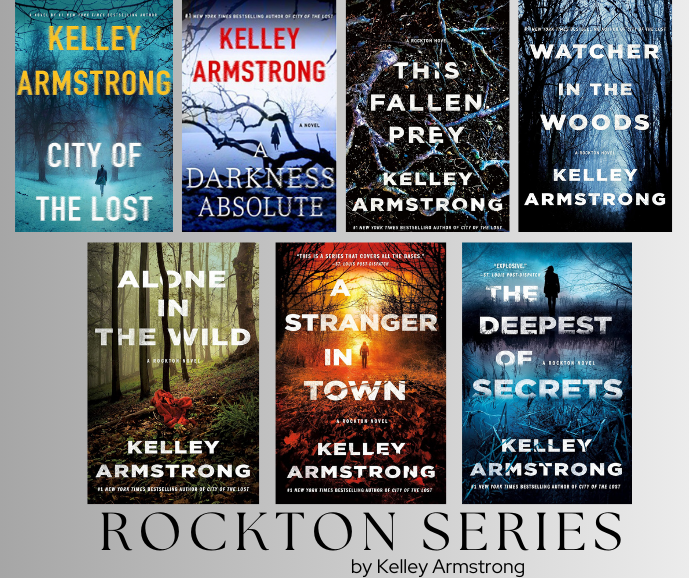
City of the Lost is the first book in the 7-book Rockton series. The premise is certainly unique: There’s a remote town — Rockton, population 200 — located in the wilds of Canada’s Yukon territory. It’s home to those fleeing danger who need complete isolation from the outside world, but it also offers shelter to some with questionable pasts who need a way to hide out and start over. There are no navigable roads in or out — new residents arrive by bush plane, and can only leave the same way. Relocating to Rockton is a serious commitment.

The books opens with a bang:

“I killed a man,” I say to my new therapist.

Detective Casey Duncan has a huge secret that’s been weighing on her for the past twelve years. After a brutally violent attack left Casey with permanent physical and psychological scars, she went to confront the ex-boyfriend whose actions brought about the attack (and who abandoned her to her attackers). During the confrontation, she shot and killed him, although that hadn’t been her intention. While she’s essentially gotten away with the killing, she’s always known that it could catch up to her at any point.

Meanwhile, her best friend Diana has been assaulted yet again by her cruel, abusive ex-husband, and she and Casey fear that they’ll never fully be rid of him. When Diana hears about a town where people can disappear, she proposed that they both go and get the protection they so desperately need. Casey is hesitant, but she realizes that this is the best possible solution for Diana. After an intense screening process, they’re in, but with a catch: The selection process easily unearthed Casey’s secret, but because they need a detective, they’ll let her in — only for a six-month stay.

Casey and Diana’s relocation to Rockton introduces them to a world that’s truly apart from everything they’ve known. And while Diana immediately immerses herself in the social life available to her as one of the small number of women in town, Casey gets right to work under the direction of Sheriff Eric Dalton. Dalton is brusque, demanding, and no-nonsense, and while he initially did not want Casey in his town, he quickly realizes how skilled and valuable she is.

Dalton and the town are in desperate need of Casey’s talents, as dead bodies begin cropping up. At first, it’s assumed that missing Rockton residents have simply wandered off into the woods and perhaps met with accidents, but as gruesome corpses are found, it becomes apparent that a killer is at work. Everyone in town is a potential suspect, and to make matters worse, Casey soon discovers that many of Rockton’s residents are actually more dangerous than she’s been led to believe.

The murder mystery and thriller elements are detailed and complex, with plenty of misleading clues and confusing trails of evidence. For a very small town, Rockton has a lot of characters to introduce, and my one complaint about City of the Lost is that it became difficult at various points to keep all the random people and their backstories straight.

That aside, the drama and tension escalate effectively throughout the story, and I loved seeing the different pieces come together. For me, when I read a mystery series, I enjoy the particular crime to be solved in each book, but what really holds my interest and attention is the character development that connects the books. City of the Lost is only the first book, but I can tell already that the characters are going to keep me coming back for more.

Casey herself is a terrific, imperfect, complex main character, and she has fabulous chemistry with Sheriff Eric Dalton. Even before personal chemistry comes into the mix, they’re amazing as partners, butting heads constantly while also building rock-solid respect for one another as professionals. Seeing them together, for me, is the high point of the story.

Beyond Casey and Eric, there are plenty of side characters who add depth to the story and help create a picture of a full society in this little town. And while the murders do get solved, there is clearly more to uncover in terms of people’s secrets and bigger picture questions about the council that runs Rockton from afar.

City of the Lost is a fantastic way to start a series! After just one book, I can say with certainty that I’m hooked and need more. Fortunately, there are six more books to explore in the main series, and I understand that a spin-off series, Haven’s Rock, includes two books so far, with a third due out in 2025. .

I’m going to try to take my time and not do a series binge… but it’s incredibly tempting to barge straight ahead! I’m looking forward to continuing the Rockton series. Next up: Darkness Absolute.

Book Review: Rough Pages (Evander Mills, #3) by Lev AC Rosen

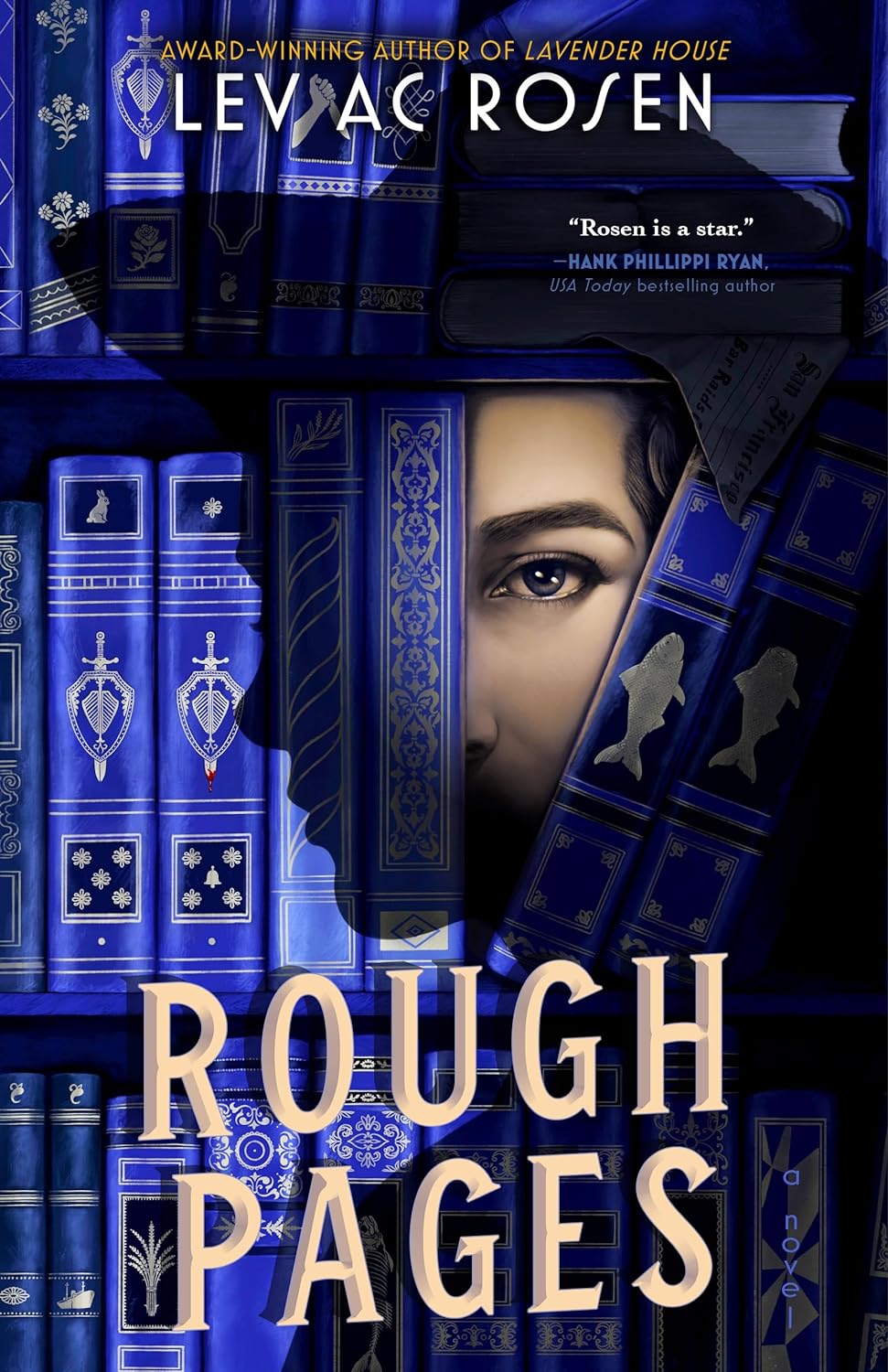
Title: Rough Pages
Series: Evander Mills, #3
Author: Lev AC Rosen
Publisher: Forge Books
Publication date: October 1, 2024
Length: 272 pages
Genre: Historical fiction/mystery
Source: Review copy courtesy of the publisher via NetGalley
Rating:

Rating: 4.5 out of 5.

Private Detective Evander “Andy” Mills has been drawn back to the Lavender House estate for a missing person case. Pat, the family butler, has been volunteering for a book service, one that specializes in mailing queer books to a carefully guarded list of subscribers. With bookseller Howard Salzberger gone suspiciously missing along with his address book, everyone on that list, including some of Andy’s closest friends, is now in danger.

A search of Howard’s bookstore reveals that someone wanted to stop him and his co-owner, Dorothea Lamb, from sending out their next book. The evidence points not just to the Feds, but to the Mafia, who would be happy to use the subscriber list for blackmail.

Andy has to maneuver through both the government and the criminal world, all while dealing with a nosy reporter who remembers him from his days as a police detective and wants to know why he’s no longer a cop. With his own secrets closing in on him, can Andy find the list before all the lives on it are at risk?

Set in atmospheric 1950s San Francisco, Rough Pages asks who is allowed to tell their own stories, and how far would you go to seek out the truth.

Author Lev AC Rosen takes us back once again to the world of San Francisco in the 1950s — a time and place where being gay could get someone threatened, beaten, fired, or even killed, for no greater offense than simply being themselves.

This is true for main character Andy (Evander) Mills, an ex-cop brutally expelled from the police force after being caught in a raid on a gay club. He was lucky to escape with a severe beating and broken ribs; he’s been warned that if his story ever goes public, his life in on the line.

As the 3rd book in this outstanding series opens, Andy is invited back to Lavender House, the setting (and title) of the first book. At Lavender House, a chosen family of gay couples lives a secluded life and have recently adopted a child (under the pretense of being a straight family). Their happy home is at risk — one member of the household is a subscriber to a queer book delivery service, and the man who runs the service is missing, along with his mailing list. If that list gets into the wrong hands, every single person on it could be in danger, including the family at Lavender House, who face the very real threat of losing their child.

As Andy looks into the missing bookseller, he discovers connections to the local mob. Would they have had a reason to kill Howard? What would they do with the list? Or is it possible that Howard has been arrested for crimes related to his use of the postal service for mailing queer books? And if so, who will they come after next?

The more Andy digs, the more risks he discovers, including risks to himself. A reporter has latched onto his investigation, and seems poised to expose his past with the police force. The police chief has made it clear to Andy that if the story of a gay cop ever gets out, he’ll see to it personally that Andy’s life will be destroyed, along with the lives of everyone he cares about. And yet, there’s a truth to be found about Howard’s disappearance — and if Andy doesn’t find out what really happened, the people he loves will never be safe.

Lev AC Rosen is a stellar writer who has a gift for writing in a multitude of genres. I’ve loved his YA books, especially Emmett and Camp, his steampunk debut novel All Men of Genius, and of course, I’m loving this queer noir detective series.

In the Evander Mills series, tightly woven, intriguing mysteries drive the plot, but the evocation of 1950s San Francisco is what truly elevates the books and makes them unique. The characters are well-defined and cover a range of personalities, expressions, identities, and statuses, yet come together to give a vibrant picture of gay life in that era.

In Rough Pages, the mystery itself is expertly laid out, with plenty of misleading clues, shady suspects, and what-ifs. An added treat for book lovers is how central the bookstore is, not only to the mystery plot but also to the depiction of a community. As Howard and other characters illustrate, it matters who gets to tell their stories. For readers, these shared stories may be the key to understanding themselves and realizing for the very first time that they’re not alone. While some of Howard’s approaches may strike us as risky or foolish, perhaps naively trusting to a false sense of safety, what he tries to do with his book subscription service is a beautiful thing. The stacks of letters from subscribers demonstrates the impact of books, and their power to change lives.

Rough Pages is a terrific read on so many levels. I recommend the series as a whole, and suggest starting at the beginning with Lavender House in order to get the full picture of the characters and the setting. I look forward to the next installment in the series!

Just For Fun: A puzzle with a murderous twist

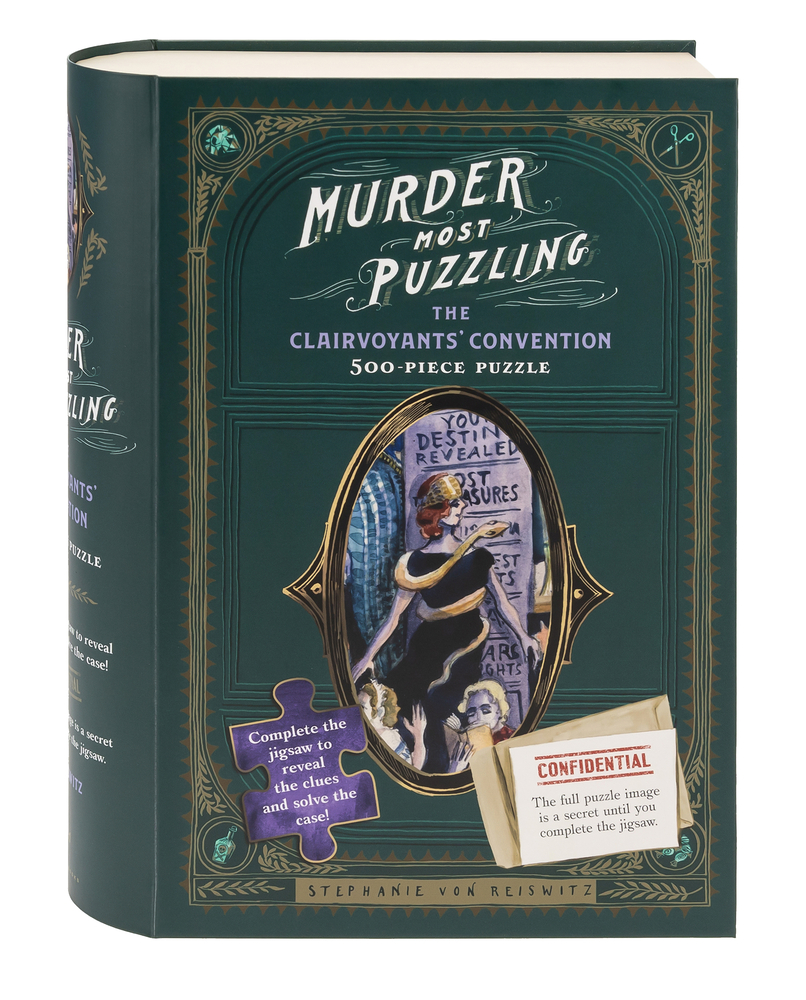
Murderous Most Puzzling: The Clairvoyants’ Convention
500 Pieces
Chronicle Books

My amazing daughter gives amazing gifts… and this terrific puzzle is a recent example! She actually gave this to me last year, but the mood finally struck this weekend and I decided to dig in. So much fun!

This is a jigsaw with a twist. The inside cover of the box provides the setup to a mystery: Someone has been murdered at a convention of clairvoyants! The detective in charge needs our help — but to solve the mystery, we first have to solve the puzzle!

As a low-key puzzle snob (sorry…), I was wondering whether a 500-piece puzzle would be much of a challenge, since I usually stick to 1000 pieces or more. I needn’t have worried! The trick here is that there’s no picture provided as a guide, so the puzzle is solved without anything to refer to. I’m definitely not used to doing puzzles that way, and it was really a great brain challenge.

In the end, the finished puzzle is gorgeous to look at, with terrific artwork, bright colors, and so many interesting little details.

But wait! Once the puzzle is done, there’s still a mystery to solve! I’m not usually very good at deciphering visual clues, but after looking at the puzzle for a while, stepping away for a bit, and then coming back to it, I thought I had my answer.

There’s an envelope provided, but don’t open it until you’re ready for a clue (or you’re totally stuck, and need help). Opening the envelope halfway provides a clue… and then, fully opened, provides the full picture of the puzzle as well as the answer to the mystery.

I guessed correctly (*patting myself on the back*), although I wasn’t sure that what I guessed was going to be the right answer… but it was!

This was a really fun puzzle experience, and I had a blast doing it!

Beyond the puzzle image and the mystery challenge, I also appreciated the quality of the puzzle itself. The pieces are well-cut and sturdy, no fraying or split edges, and the fit is satisfying and precise. The puzzle comes in a book-shaped box that looks very cute on a bookshelf!

The puzzle creator, Stephanie Von Reiswitz, has a book of visual puzzles available, as well as another mystery-themed jigsaw puzzle… which may tempt me at some point down the line. It looks adorable!

Affiliate link: Buy now at Bookshop.org

Book Review: Middletide by Sarah Crouch

Title: Middletide
Author: Sarah Crouch
Publisher: Atria Books
Publication date: June 11, 2024
Length: 288 pages
Genre: Thriller/mystery
Source: Review copy courtesy of the publisher via NetGalley
Rating:

Rating: 2.5 out of 5.

In this gripping and intensely atmospheric debut, disquiet descends on a small town after the suspicious death of a beautiful young doctor, with all clues pointing to the reclusive young man who abandoned the community in chase of big city dreams but returned for the first love he left behind. Perfect for fans of All Good People Here and Where the Crawdads Sing

One peaceful morning, in the small, Puget Sound town of Point Orchards, the lifeless body of Dr. Erin Landry is found hanging from a tree on the property of prodigal son and failed writer, Elijah Leith. Sheriff Jim Godbout’s initial investigation points to an obvious suicide, but upon closer inspection, there seem to be clues of foul play when he discovers that the circumstances of the beautiful doctor’s death were ripped straight from the pages of Elijah Leith’s own novel.

Out of money and motivation, thirty-three-year-old Elijah returns to his empty childhood home to lick the wounds of his futile writing career. Hungry for purpose, he throws himself into restoring the ramshackle cabin his father left behind and rekindling his relationship with Nakita, the extraordinary girl from the nearby reservation whom he betrayed but was never able to forget.

As the town of Point Orchards turns against him, Elijah must fight for his innocence against an unexpected foe who is close and cunning enough to flawlessly frame him for murder in this scintillating literary thriller that seeks to uncover a case of love, loss, and revenge.

In this new mystery, a man returns to the small town he left behind long ago, to hide out from the world after the failure of the novel he spent ten years writing. Elijah’s family cabin in Point Orchards has been slowly deteriorating since his father’s death years earlier. Bit by bit, Elijah brings the cabin and its land back to life, eventually taking pride in managing to live off the land — raising chickens, growing and canning his own vegetables, even learning to bake bread.

But the one element of his former life that he can’t face is the girl he left behind. When he left for college, he promised to return to Nakita, but never did, lured instead by the shiny promise of a book deal. Now both in their mid-thirties, Elijah and Nakita have faced more in their lives than they’d ever imagined, and the question is, can they find a way to forgive past wrongs and reconnect, possibly even fall in love once again?

The framing of the story is a suspicious death: The town doctor, the beautiful, tragic Erin Landry, is found hanged on Elijah’s property. It looks like a suicide, but circumstances just don’t add up. As the local sheriff investigates, signs start to point to Elijah himself as the perpetrator, especially once it’s discovered that his novel lays out a very similar death, in which a murder is set up to appear to be a suicide.

Chapters in Middletide alternate between the investigation into Erin’s death and the earlier years of Elijah’s return to Point Orchards and his attempts to start fresh and rebuild his life. Eventually, the two timelines merge into one, as the book culminates in a courtroom drama.

I probably could have saved myself some earlier false theories if I’d read the synopsis above, which makes it clear that Elijah is, in fact, innocent. (There’s room to doubt that at some points in the story.) But really, the answer to the murder mystery is about as obvious as it gets — I guessed the overall solution pretty early on, and was correct in just about every way.

To put it bluntly, this is not a great story. Elijah comes off as arrogant in some key scenes, even when we’re meant to like and understand him. His shallow emotional responses undercut our investment in him and make it harder to root for him to find happiness with Nakita.

“You have no clue what it feels like to have your entire future drop out from beneath your feet without warning. You can’t possibly imagine how devastating that is.”

“Actually, I can,” Elijah shot back “I know what it’s like to have to start over from scratch after the life you thought you were meant for doesn’t pan out, remember?”

“Doesn’t pan out? Elijah, my husband was shot in the head and died at thirty-five years old. Where do you get the nerve to compare that to your failed writing career?”

The author includes a note at the beginning stating that Nakita’s tribal affiliation and reservation are fictional inventions, inspired by real indigenous nations. Which, fine, except Nakita’s heritage and the relationship between the town and the reservation don’t actually matter much in Middletide. I excepted this aspect to be more developed, but really, the impact on the plot is minimal and the characters are underdeveloped.

The courtroom scenes feel almost like an afterthought. For anyone who’s ever watched a lawyer show on TV, the trial is not structured as we’d expect. The prosecution calls a few witnesses, then the defense immediately jumps in with a witness, but the prosecution never rests, and as far as I could see, there was no discovery before the trial. Hey, I’m no lawyer… but I’ve seen enough courtroom dramas to know that this didn’t go the way it should. And don’t get me started on Elijah’s lawyer not actually being a lawyer…

Here’s a spoilery bit, so skip this next paragraph if you care about avoiding spoilers:

One key piece of evidence is the diary found at Erin’s house. The entries all start with “Dear Diary” and seriously, do you know of any adult women who actually write in their diaries that way? It’s supposed to be written by a mature professional woman, and she’s writing as if she’s in middle school? Don’t get me started on the non-existent chain of custody for evidence either. Well, okay, in one scene, the deputy hands the diary to Elijah to look at in his jail cell. Excuse me, what? That’s a key piece of evidence, and you’re just handing it to the accused to paw through?

End of spoilers…

On the positive side, Middletide is relatively short (under 300 pages) and goes by quickly, so reading this book isn’t a huge time commitment. It moves quickly, and kept me turning the pages, although by midway through, I was tearing through it mostly to prove myself right rather than out of any real engagement with the characters.

As negatives, though, in addition to the implausibility of the legal case, the convoluted timeline (those chapters set in the past and the present mush together and are annoying to track), and the predictability of the outcome, the writing can be clunky and/or not well considered. For example:

On the day his editor called and read him that horrible review he had flung open his bedroom window in a fit of rage and dropped the orange typewriter to the sidewalk three stories below.

I suppose this is meant to show us a possible violent side of Elijah, but I just had to laugh. The guy was living in San Francisco at the time — no way did he throw his typewriter out a third-floor window in the middle of the city and not end up arrested for killing or injuring a pedestrian.

Also, it’s mentioned that his publishers had high expectations for his book’s success, but apparently this one very bad review absolutely sank it, and the book only sold 48 copies. What? If the book only sold 48 copies, then it wasn’t just one bad review that was responsible. This makes no sense to me.

As I mentioned already, there are scenes where it is very hard to like Elijah. While perhaps that’s meant to create suspicion or doubt, in actuality it just leaves us with a main character whose self-centeredness makes us not particularly want the very likable love interest to subject herself to being with him.

And so on. I could give more examples, but I’ll stop here.

Middletide is a murder mystery with a hollow center. On the one hand, it did keep me interested enough to speed through to the end — but on the other hand, I didn’t buy into the characters, found the mystery utterly predicable, and felt the courtroom drama was rushed and not believable. I expected a much better reading experience.

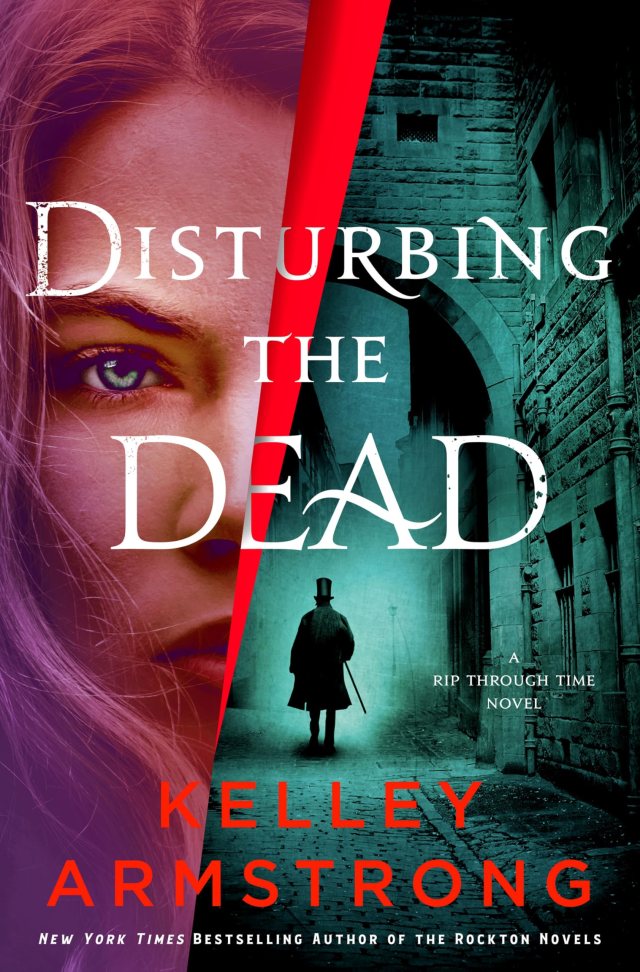
Book Review: Disturbing the Dead (A Rip Through Time, #3) by Kelley Armstrong

Title: Disturbing the Dead
Series: A Rip Through Time, #3
Author: Kelley Armstrong
Publisher: Minotaur Books
Publication date: May 7, 2024
Length: 352 pages
Genre: Historical fiction/mystery
Source: Review copy courtesy of the publisher via Netgalley
Rating:

Rating: 5 out of 5.

Disturbing the Dead is the latest in a unique series with one foot in the 1890s and the other in the present day. The A Rip Through Time crime novels are a genre-blending, atmospheric romp from New York Times bestselling author Kelley Armstrong.

Victorian Scotland is becoming less strange to modern-day homicide detective Mallory Atkinson. Though inhabiting someone else’s body will always be unsettling, even if her employers know that she’s not actually housemaid Catriona Mitchell, ever since the night both of them were attacked in the same dark alley 150 years apart. Mallory likes her job as assistant to undertaker/medical examiner Dr. Duncan Gray, and is developing true friends―and feelings―in this century.

So, understanding the Victorian fascination with death, Mallory isn’t that surprised when she and her friends are invited to a mummy unwrapping at the home of Sir Alastair Christie. When their host is missing when it comes time to unwrap the mummy, Gray and Mallory are asked to step in. And upon closer inspection, it’s not a mummy they’ve unwrapped, but a much more modern body.

Kelley Armstrong is rapidly becoming a must-read author for me. Disturbing the Dead is the 3rd book in her excellent A Rip Through Time series… and I’ve also been head-over-heels for the A Stitch in Time series (of which I’ve read half so far). While both series have a timeslip/time travel element, they are completely different in tone and focus… and I’m loving them both.

A Stitch in Time has a romantic focus, with a woman slipping through a “stitch” that allows her to travel back and forth between our world and the Victorian era. Each book in the series has a different woman as the main character, but in all cases, travel back and forth is possible, and the characters must learn to fit in and blend in where they land, while also sorting out the complications of love across time.

In the A Rip Through Time series, a different core concept comes into play. 21st century detective Mallory Atkinson accidentally gets pulled through a rip in time during a visit to Edinburgh. When she is attacked and strangled in a dark alley — and the same thing happens to a young housemaid in the exact same place but in the 19th century — Mallory’s consciousness ends up inhabiting the housemaid’s body.

(There’s a lot more to it, so check out my review of the first book for more details).

Fortunately for Mallory, Catriona is employed as a servant in the home of eccentrics, a brother and sister who are devoted to science and social reform. Dr. Duncan Grey is an undertaker and the unofficial coroner of the Edinburgh police force; his sister Isla is a widow known for her independent thinking and her skills in the chemistry lab. Over the course of the first two books, they come to understand that the person they knew as Catriona isn’t actually Catriona any longer. They befriend Mallory, and her knowledge of 21st century police work and forensics quickly makes her an integral part of the household.

Here in Disturbing the Dead, six months have passed since Mallory’s appearance in their midst. Mallory has been promoted and is now officially Duncan’s assistant. Besides Duncan and Isla, police detective (and close family friend) Hugh McCreadie is also in on Mallory’s secret. Together, this group uses Mallory’s advanced knowledge to carry out investigations and apply a more rigorous scientific approach to Victorian era police work.

The action kicks off with an invitation to a mummy unwrapping. Egyptian artifacts and archaeology are all the rage, and Sir Alistair Christie is hosting a party to share his latest find. When the mummy is unwrapped, however, a very fresh corpse is discovered inside, and Mallory and Duncan find themselves once more in the thick of a complicated murder investigation.

The mystery is the driving force of the novel, and it’s a good one, with plenty of subjects, clues, motives, and red herrings. There’s also a very entertaining side plot about a pulp writer who’s started publishing lurid accounts of Mallory and Duncan’s exploits, much to their embarrassment (and Mallory’s annoyance, as the writer portrays her as an empty-headed girl whose main function is to look impressed — and sexy — while Duncan makes all the discoveries).

One of the many delights of the series is seeing Mallory being herself in the 19th century. Unlike the situation facing the characters in the Stitch in Time series, Mallory doesn’t need to make an effort to conceal herself or blend while amongst her friends. Yes, she must adapt to the time by dressing in corsets and adopting the appropriate social customs, but at home, her speech and knowledge are full of 21st century expressions, swearing, and casual sharing of unknown facts.

“Like people in my world who still think you can catch the common cold — or catarrh — by going out in cold weather, despite the fact we’ve known for generations that it’s caused by a virus.”

“Catarrh is caused by… what?” Gray says.

“Whoops. Sorry. Spoilers. Moving right along…”

She’s just so much fun, and scenes of her with Isla and Duncan are always a delight.

He opens his hand to reveal a derringer pistol. I may let out the kind of noise others make on seeing a puppy.

There a shocking development in the latter half of the book that left me gasping and dismayed. I did not see that coming! The author does a fabulous job of making the situation (no spoilers!) vivid and real, and yet also manages to pull off a great resolution to this particular twist.

Overall, Disturbing the Dead is a fantastic addition to a great series, and I can’t wait for more! Highly recommended — but definitely start at the beginning of the series.

Book Review: The River We Remember by William Kent Krueger

Title: The River We Remember
Author: William Kent Krueger
Publisher: Atria Books
Publication date: September 5, 2023
Length: 421 pages
Genre: Historical fiction
Source: Purchased
Rating:

Rating: 4.5 out of 5.

On Memorial Day in Jewel, Minnesota, the body of wealthy landowner Jimmy Quinn is found floating in the Alabaster River, dead from a shotgun blast. The investigation falls to Sheriff Brody Dern, a highly decorated war hero who still carries the physical and emotional scars from his military service. Even before Dern has the results of the autopsy, vicious rumors begin to circulate that the killer must be Noah Bluestone, a Native American WWII veteran who has recently returned to Jewel with a Japanese wife. As suspicions and accusations mount and the town teeters on the edge of more violence, Dern struggles not only to find the truth of Quinn’s murder but also put to rest the demons from his own past.

Caught up in the torrent of anger that sweeps through Jewel are a war widow and her adolescent son, the intrepid publisher of the local newspaper, an aging deputy, and a crusading female lawyer, all of whom struggle with their own tragic histories and harbor secrets that Quinn’s death threatens to expose.

The River We Remember was my book group’s pick for April, and we were fortunate enough to have a zoom chat with the author. I myself was late in finishing, so I attended the chat having only read half the book… but that’s okay. He was gracious and engaging, the group avoided giving spoilers on the central mystery, and all in all, it was a wonderful event. And then I finished the book the next day!

OUR LIVES AND the lives of those we love merge to create a river whose current carries us forward from our beginning to our end. Because we are only one part of the whole, the river each of us remembers is different, and there are many versions of the stories we tell about the past. In all of them there is truth, and in all of them a good deal of innocent misremembering.

In The River We Remember, a Minnesota community is rocked by the violent death of one of its leading residents. Jimmy Quinn was not loved — not by a long shot — but as the biggest landowner in the area, he was powerful, connected, and in many cases, someone to fear. Lots of people would have had grudges, resentment, even hostility, but was his death murder, suicide, or just a gruesome accident?

The story unfolds through the eyes of multiple characters living in the small town of Jewel. Chief among these is Sheriff Brody Dern, a veteran of WWII with visible and invisible scars and a complicated personal life. At various points, though, we see through the eyes of many different people — there’s a sense of the community being the true main character. All the people we meet — deputies, a diner owner, teen boys, local farmers, a lawyer, a reporter — are connected and have histories that weave together, with their actions affecting one another in an intricate chain of events.

The mystery of Jimmy Quinn’s death is the central plot thread of the novel, but as this unfolds, we encounter themes around war and survival, guilt, growing up with violence, generational trauma, and the ripple effects of hate, bigotry, and racism. There’s also the concept of home — what makes a community, a piece of land, or even a specific person feel like home? Where do people find belonging?

I won’t go further into plot details, but will sum up by saying that while the mystery has a satisfying resolution, the true beauty of this book is the outstanding character depictions. Each of the people we meet are distinct and have complex inner lives that come into play as they interact. The whole is emotional and evocative, allowing the reader to experience the time and place of the story in a way that feels authentic and powerful.

Simply put, The River We Remember is a beautiful novel. This is my third book by this author (I also loved his two other stand-alones, This Tender Land and Ordinary Grace), and I look forward to starting his long-running Cork O’Connor series.

Book Review: Disappearance of a Scribe (Eye of Isis, #2) by Dana Stabenow

Title: Disappearance of a Scribe
Series: Eye of Isis, #2
Author: Dana Stabenow
Publisher: Head of Zeus
Publication date: January 18, 2022
Length: 272 pages
Genre: Historical fiction
Source: Purchased
Rating:

Rating: 4 out of 5.

The second in the trilogy of Ancient Egyptian crime novels that began with 2018’s Death of an Eye.

Two Alexandrian fishermen come across a horrifying sight – the body of a skeleton floating upright at the bottom of the sea, anchored in place by a cement weight around his feet. In Alexandria’s rough-and-tumble construction trade they call that ‘being fitted with a pair of Rhakotis sandals’ and what’s worse, he’s the second such victim in two years.

Queen Cleopatra is busy rebuilding her city after the Alexandrian War and these murders are not to be allowed to interfere with this primary task, so she charges Tetisheri, her new Eye of Isis, with the task of finding out who these men were, when they were murdered, and, above all, why.

Dana Stabenow’s fascinating Eye of Isis historical mystery series continues with Disappearance of a Scribe… and it’s just as intriguing as the first book!

Main character Tetisheri, whom we met in book #1, is the Queen’s Eye, the secret investigator who reports directly to Cleopatra and acts on her behalf. She’s also a member of Alexandria’s upper class, partnering with her uncle in a lucrative import business, and as such, is well connected throughout the tangled layers of Alexandrian society.

The mystery in Disappearance of a Scribe circles around two bodies found at sea, anchored by what we’d consider “cement shoes”. Who these people are, who killed them, and why, are Tetisheri’s focus, and as she digs into this shocking crime, she uncovers corruption among the city’s influential builders and ends up in danger herself.

The mystery is unraveled piece by piece, and it’s quite exciting to see Tetisheri chase down leads in a time and place where modern forensics and detective techniques are unknown. If you’d told me ahead of time that a major piece of the story centers on construction materials, I probably would have responded with a very rude yawn… but actually, the story is very interesting, and I appreciated seeing how differently the priorities and rules of this society work in contrast to our own.

I would have liked to see a little bit more happening on Tetisheri’s home front — I do enjoy the brief glimpses we get of her personal life — as well as more with Cleopatra herself directly involved. Still, the scenes we do get with Cleopatra are wonderful, and I love how her power and charisma shine through with every sentence she utters.

In some ways, I was able to enjoy Disappearance of a Scribe even more than I did Death of an Eye, since this time around, I was already familiar with many of the names and places in the story, and felt more comfortable with the basic structure of the politics and alliances of Alexandria at that time.

Tetisheri is a terrific character, and I can’t wait to see what’s next for her. I shouldn’t be the least bit surprised that I enjoy these books — the author’s Kate Shugak series is an absolute favorite, and I read these Egyptian mysteries secure in the knowledge that as a reader, I’m in very good hands.

Next up: Book #3, Theft of an Idol:

Book Review: A Grave Robbery (Veronica Speedwell, #9) by Deanna Raybourn

Title: A Grave Robbery
Series: Veronica Speedwell, #9
Author: Deanna Raybourn
Publisher: Berkley
Publication date: March 12, 2024
Length: 336 pages
Genre: Historical fiction
Source: Review copy courtesy of the publisher via NetGalley
Rating:

Rating: 4.5 out of 5.

Veronica and Stoker discover that not all fairy tales have happy endings, and some end in murder, in this latest historical mystery from New York Times bestselling and Edgar Award–nominated author Deanna Raybourn.

Lord Rosemorran has purchased a wax figure of a beautiful reclining woman and asks Stoker to incorporate a clockwork mechanism to give the Rosemorran Collection its own Sleeping Beauty in the style of Madame Tussaud’s. But when Stoker goes to cut the mannequin open to insert the mechanism, he makes a gruesome discovery: this is no wax figure. The mannequin is the beautifully preserved body of a young woman who was once very much alive. But who would do such a dreadful thing, and why?

Sleuthing out the answer to this question sets Veronica and Stoker on their wildest adventure yet. From the underground laboratories of scientists experimenting with electricity to resurrect the dead in the vein of Frankenstein to the traveling show where Stoker once toured as an attraction, the gaslit atmosphere of London in October is the perfect setting for this investigation into the unknown. Through it all, the intrepid pair is always one step behind the latest villain—a man who has killed once and will stop at nothing to recover the body of the woman he loved. Will they unmask him in time to save his next victim? Or will they become the latest figures to be immortalized in his collection of horrors?

Veronica Speedwell is back! This outing — another potentially deadly investigation with her lover and partner Stoker — provides everything fans of this series love: Dastardly deeds, scheming scientists, Victorian scandal, and lots of sexy bantering.

As she and Stoker happily work on their ongoing commission to catalog and restore their patron Lord Rosemorran’s vast collection of natural wonders, a new challenge comes their way. Lord Rosemorran has purchased a waxwork of a lovely young woman, and to entertain his rambunctious youngest daughter, wants Stoker to add a mechanical element to give the illusion of breathing, as seen in a famous attraction at Madame Tussaud’s.

The promise of a new case to investigate becomes apparent once Stoker starts his work and discovers that this is no waxwork, but the meticulously preserved body of a young woman who was once very much alive. But who was she, and how did she come to be in this condition?

The more Veronica and Stoker learn, the more questions arise. It appears that this may be the body of a young woman who was found drowned in a river some fifteen years earlier, but that fact does not provide clues to her identity or shed light on the mystery of how such an impeccable work of preservation was carried out.

The details of their investigation are as delicious as readers can rightfully expect in this series, as we descend into worlds of mortuaries, mad scientists, and questionable examples of *ahem* anatomical study aides.

Through it all, Veronica and Stoker remain as wonderfully intertwined and perfectly in tune as ever, enjoying their restorative bouts of “congress” (as Veronica calls it) while also engaging as equal partners at a time when women are expected to be submissive.

It has been my experience that the male of the species, though often thoroughly illogical, can — when encouraged to sit quietly and think hard — be guided into a position of sense.

Veronica defers to no one and never backs down. She’s a smart, confident woman of science, and demands to be treated as such at all times. She never hesitates to call Stoker out, including his tendency toward anti-social behavior:

“Thanks to you, I speak to entirely too many people, entirely too often.”

“Exactly. You were practically a hermit when I met you.

“I was not a hermit,” he said through gritted teeth. “I was a professional man with work that I was actually permitted to do rather than being dragged into murder investigations because I had not yet met a woman whose very raison d’être seems to be falling over dead bodies.”

Author Deanna Raybourn seems to be having oodles of fun with these stories and characters. Her descriptions sparkle, and the quips, insults, and banter fly with zingy style. Even little throwaway lines are pure delight:

“That is the most preposterous load of plangent poppycock I have ever heard.”

I do hope she’ll continue writing Veronica Speedwell stories for many years to come. Each year’s new installment is something to savor… but sadly, they’re such fast, absorbing reads that I come to the end almost too quickly. And now, it’s another long year of waiting for the next adventure!

I’ll wrap up with words borrowed from my reviews of earlier books in the series:

If you haven’t yet had the pleasure, start with book #1, A Curious Beginning. There’s a very good chance you’ll want to continue!

This series has become one of my favorites. Don’t miss it.

Book Review: Over Sea, Under Stone (The Dark is Rising, #1) by Susan Cooper

Title: Over Sea, Under Stone
Series: The Dark is Rising, #1
Author: Susan Cooper
Publisher: Aladdin
Publication date: 1965
Length: 196 pages
Genre: Middle grade
Source: Library
Rating:

Rating: 3.5 out of 5.

“I DID NOT KNOW THAT YOU CHILDREN WOULD BE THE ONES TO FIND IT. OR WHAT DANGER YOU WOULD BE PUTTING YOURSELVES IN.”

Throughout time, the forces of good and evil have battled continuously, maintaining the balance . Whenever evil forces grow too powerful, a champion of good is called to drive them back. Now, with evil’s power rising and a champion yet to be found, three siblings find themselves at the center of a mystical war.

Jane, Simon, and Barney Drew have discovered an ancient text that reads of a legendary grail lost centuries ago. The grail is an object of great power, buried with a vital secret. As the Drews race against the forces of evil, they must piece together the text’s clues to find the grail — and keep its secret safe until a new champion rises.

And another synopsis from a different edition:

On holiday in Cornwall, the three Drew children discover an ancient map in the attic of the house that they are staying in. They know immediately that it is special. It is even more than that — the key to finding a grail, a source of power to fight the forces of evil known as the Dark. And in searching for it themselves, the Drews put their very lives in peril. This is the first volume of Susan Cooper’s brilliant and absorbing fantasy sequence known as The Dark Is Rising.

The Dark is Rising sequence has been on my to-read list for quite a while now — and I could have sworn that I’d already read the first book, Over Sea, Under Stone. But here’s what actually happened: I started this book over ten years ago with my (then) young son, soon after we finished reading Harry Potter together. We were looking for another adventure/fantasy series to dig into… but apparently, Over Sea, Under Stone didn’t quite catch his attention as a read-aloud. So, while I thought we’d read the whole book, I realized this time around that we actually only read the first few chapters.

In any case…

I’ve been curious about this five-book series, which is considered a modern classic in the middle grade/children’s fantasy genre, dealing with Arthurian legends and other elements of Celtic mythology.

Finally, I decided to commit to the first book, and I’m glad I did.

Over Sea, Under Stone is the story of a trio of siblings — Simon, Jane, and Barney Drew — and the quest they find themselves pulled into while on a family holiday in Cornwall. There, staying in a curious old house with their Great-Uncle Merry (who’s not biologically an uncle at all, but has been considered part of the family for as long as anyone can remember), the children find a crumbling old manuscript and map, and decide it has the makings of an exciting adventure.

But as the children seek clues, darker forces seem determined to interfere. A variety of creepy and menacing people take interest in the children’s explorations, and soon begin to actively try to capture the map for themselves.

With Merry’s guidance, the children come to realize that the map likely dates back to the time of King Arthur, and if only they can decipher its clues, they may find a relic of incomparable value and power.

Over Sea, Under Stone is a rollicking good adventure, with moments of danger and menace, great bravery, and funny moments too. Of course, the children and the time period might seem terribly old-fashioned to today’s children, but putting that aside, the book is a fast-paced quest story with high stakes and suspenseful action sequences.

This book was originally envisioned as a stand-alone and works perfectly well as such, with a satisfying ending — but it also leaves the door wide open for more to come.

For me personally, I’m not in a phase where I’m feeling particularly drawn to children’s fiction, so while I enjoyed Over Sea, Under Stone and can wholeheartedly recommend it, I’m not inclined to continue the series at the moment. I think the first book is a great reading experience, and I’m guessing the rest of the series is as well! Maybe I’ll eventually pick up the next book, but for now, I’m happy with having read Over Sea, Under Stone, and will leave it at that.

Book Review: Death of an Eye (Eye of Isis, #1) by Dana Stabenow

Title: Death of an Eye
Series: Eye of Isis, #1
Author: Dana Stabenow
Publisher: Head of Zeus
Publication date: December 6, 2018
Length: 254 pages
Genre: Historical fiction
Source: Purchased
Rating:

Rating: 4 out of 5.

ALEXANDRIA, 47 BC. For three centuries, the House of Ptolemy has governed the Kingdom of Egypt. Cleopatra – seventh of her name – rules from Alexandria, that beacon of commerce and learning that stands between the burning sands of the desert and the dark waters of the Middle Sea. But her realm is beset by ethnic rivalries, aristocratic feuds and courtly intrigues . Not only that, she must contend with the insatiable appetite of Julius Caesar who needs Egyptian grain and Egyptian gold to further his ambitions. The world is watching the young Queen, waiting for a misstep …

And now her most trusted servant – her Eye – has been murdered and a vast shipment of newly minted coin stolen. Cleopatra cannot afford for the coins to go unrecovered or the murderers unpunished, so she asks childhood friend, Tetisheri Nebenteru, to retrace the dead Eye’s footsteps. Tetisheri will find herself plunged into the shadowy heart of Alexandria . As she sifts her way through a tangle of lies and deceit, she will discover that nothing can be taken at face value, that she can’t trust anyone – not even the Queen herself .

As a devoted fan of Dana Stabenow’s Kate Shugak series, I was curious to see what her non-Kate/non-Alaska books were like. Fortunately, my book group selected Death of an Eye as our February read, which was the perfect opportunity for me to finally read a book I’ve had my eye on for quite a while.

In this historical novel, the main character is a young woman named Tetisheri, the niece and business partner of a successful merchant in Alexandria at the time of Cleopatra’s reign. Tetisheri was close to Cleopatra as a child, and when the queen finds herself in need of a trusted ally, she calls on Tetisheri.

Cleopatra’s “eye” — a person unknown to any but the queen herself, authorized by her to carry out investigations on her behalf — has been murdered while investigating a crime that could spell disaster for Cleopatra. The queen asks Tetisheri to take on the role of Eye and track down both the murderer and the solution to the earlier crime. As she does so, Tetisheri is herself subject to danger, and must also contend with the slippery politics of Alexandrian and Roman nobility.

Once I began wrapping my head around the people, places, and culture, I was quickly immersed in both the historical setting and the crime story. I really know next to nothing about this time period or the society of Alexandria, apart from film and TV depictions and classic dramas (yes, I’ve read both Caesar and Cleopatra and Antony and Cleopatra, but both were a very long time ago).

The Cleopatra we meet in Death of an Eye is not the Elizabeth Taylor version. Here, she’s a young, strong-willed, and incredibly intelligent ruler, struggling to maintain her throne despite the machinations of her co-ruler and brother Ptolemy XIV and his minions, while also pregnant with Julius Caesar’s child and making every effort to stay in his favor. Cleopatra is interested in science and logic, and cares for her people, but has very few whom she can actually trust.

Tetisheri is not a historical figure; rather, she’s a citizen of Alexandria who, as a monetarily secure merchant, has access to many levels of society, but doesn’t personally wield much power. Having survived a cruel marriage, she makes it her mission to rescue enslaved women and give them the means to start new lives. Tetisheri is smart and dedicated, and while she’s not entirely happy about her assignment from Cleopatra, she’s loyal to the queen and determined to see the investigation through.

I really enjoyed Death of an Eye. As I mentioned, it’s not a setting or period that I’m very familiar with, so there was a pretty steep learning curve at the beginning, and all the way through I found myself confusing people and place names. (Helpfully, there’s both a map and a cast of characters list at the front of the book — and I used both quite a lot). The plot is intricate but not hard to follow, and I found myself more and more interested in the mystery as the various pieces came together toward the end of the book.

While the central mystery of Death of an Eye is solved by the end, Tetisheri’s involvement with Cleopatra is by no means concluded, and her personal life — including a love interest — is left very much open-ended. Fortunately, there are two more books in the Eye of Isis series currently available, with a 4th book planned for 2025.

Books 1 – 3; currently available