I quickly learned, while reading Brood, that my habit of picking up a book whenever I sit down for a bite to eat is maybe not always the best idea. Because — ick. This book would be best read on an empty stomach. Preferably in broad daylight.
That is, assuming that most people would be squicked out by rat infestations, contemplation of which human body parts are edible, and random eviscerations. But, you know, if you’re okay with all that, then by all means, enjoy this book with a hamburger or something.
Brood is the sequel to last year’s Breed, Chase Novak’s horror-filled cautionary tale about the unintended consequences of medical experimentation and the narcissistic need of 1%ers to reproduce, fertility problems be damned.
[Caution: This review includes spoilers related to Breed. You’ve been warned.]
In Breed, ultra-wealthy Alex and Leslie Twisden have everything money can buy, except the ability to produce offspring. At the end of their quest for legitimate treatment, they turn to a hush-hush supposed miracle cure available through a shady doctor in Eastern Europe.
This is not a good idea.
Much mayhem ensues. It’s not pretty. But hey, they do at least have kids!
RIP, Alex and Leslie. And lots of cats and dogs and mice.
In Brood, the offspring — twins Adam and Alice — are 12 years old, and as the story picks up, their aunt Cynthia has just finalized adoption papers, bringing them back home after two years stuck in the foster system. The twins are small for their age, suffering from massive eating disorders, and not at all used to shelter, comfort, and parental love. Cynthia, previously childless, has the idea that she can be a true mother to the twins, and through the power of unconditional love, give them the normal adolescence they deserve and create an ideal home for their little family of three. She’s wrong, of course.
Meanwhile, packs of feral children roam Central Park, a new drug called Zoom is making the rounds of wealthy people looking for their next kick, and a shady research firm is paying a whack-job weirdo to kidnap the wild kids for non-voluntary medical research.
Brood is a quick read. Also a really gross read. (My Goodreads updates: 21%: Ew. 46%: Ew. 92%: Ew.) The action is heavy-duty, animalistic, stalkery/threatening, and — it bears repeating — gross. There’s a lot of time spent on Cynthia’s mental state, which isn’t actually as interesting as the author seems to think it is. Characters are introduced and then dropped. There’s follow-through from Breed, but not consistently.
Some interesting questions are raised about what it means to be human. The science is a bit iffy, but we don’t really know what that fertility treatment actually entailed, so sure, why not have a new breed of children with unknown DNA patterns, unpredictable development, unconventional appetites, and an undefined step along the evolutionary ladder?
Plus, the idea of preteens running on all fours through the streets of Manhattan? Kind of cool, to be honest.
Last year, after writing a review of Breed, I also wrote a post outlining what I saw as the major lingering questions. Brood ties up some, but not all, of the loose ends left at the end of Breed, which makes me wonder: Is there another installment planned? Or did the author simply feel that some story elements weren’t worth pursuing in the sequel? Brood ends with some finality, but with enough wiggle room left for there to be more yet to come.
Meanwhile, the blood, guts, and rats make Brood a singularly revolting piece of reading. Definitely not for the squeamish. But if you read Breed and remain curious about the fate of all those feral kids, by all means, give Brood a try. For people who enjoy their horror on the chewy side, it’s an *engrossing* (sorry) read.
_________________________________________
The details:
Title: Brood
Author: Chase Novak
Publisher: Mulholland Books
Publication date: October 7, 2014
Length: 320 pages
Genre: Horror
Source: Review copy courtesy of Mulholland Books via NetGalley
Welcome to the October (Halloween!) pick for the Fields & Fantasies book club! Each month or so, in collaboration with my wonderful co-host Diana of Strahbary’s Fields, we’ll pick one book to read and discuss. Today, we’re looking at Horns by Joe Hill:
Synopsis (Goodreads):
Ignatius Perrish spent the night drunk and doing terrible things. He woke up the next morning with a thunderous hangover, a raging headache . . . and a pair of horns growing from his temples.
At first Ig thought the horns were a hallucination, the product of a mind damaged by rage and grief. He had spent the last year in a lonely, private purgatory, following the death of his beloved, Merrin Williams, who was raped and murdered under inexplicable circumstances. A mental breakdown would have been the most natural thing in the world. But there was nothing natural about the horns, which were all too real.
Once the righteous Ig had enjoyed the life of the blessed: born into privilege, the second son of a renowned musician and younger brother of a rising late-night TV star, he had security, wealth, and a place in his community. Ig had it all, and more—he had Merrin and a love founded on shared daydreams, mutual daring, and unlikely midsummer magic.
But Merrin’s death damned all that. The only suspect in the crime, Ig was never charged or tried. And he was never cleared. In the court of public opinion in Gideon, New Hampshire, Ig is and always will be guilty because his rich and connected parents pulled strings to make the investigation go away. Nothing Ig can do, nothing he can say, matters. Everyone, it seems, including God, has abandoned him. Everyone, that is, but the devil inside. . . .
Now Ig is possessed of a terrible new power to go with his terrible new look—a macabre talent he intends to use to find the monster who killed Merrin and destroyed his life. Being good and praying for the best got him nowhere. It’s time for a little revenge. . . . It’s time the devil had his due. . . .
My two cents:
Want to know a secret about Joe Hill’s Horns?
At its heart, Horns is a love story. A tragic one, to be sure, but lovely enough in its own way to bring tears to my eyes. Not what I expected when I picked this horror novel to enjoy during the spooky month of October.
In Horns, Ig Perrish lost the love of his life when his one-and-only Merrin was savagely raped and murdered a year earlier. Ig is widely believed to be guilty of the crime, but the case was dismissed without ever clearing his name. Ig is now a pariah, despised by all, wandering aimlessly through the shambles of his life… until the day he wakes up semi-drunk and quite hungover, and finds horns growing out of his head.
The horns are quite real, and seem to give Ig the power of persuasion: People who encounter Ig tell him their deepest, darkest secrets, and with just a nudge, Ig can get them to act on their impulses. Oh, and he seems to attract snakes as well. Meanwhile, with the ability to see inside people’s minds simply by touching them, he’s now privy to new information about Merrin’s murder, and is well on his way to tracking down her killer and making him pay.
Is Ig the devil? Is he evil? How can we explain the horns, Ig’s fondness for pitchforks, his imperviousness from fire?
The symbolism here is rich. Ig and Merrin are presented as true soul mates. When Ig loses Merrin, has he also lost his soul?
Horns is dark and scary — although the scariest element isn’t the supernatural side, but rather, the look inside the very disturbed brain of the murderer. Meanwhile, Ig and Merrin’s love story is pure tragedy — the story of a true and selfless love that is cruelly destroyed by forces outside the lovers’ control.
Written by Joe Hill, son of the legendary Stephen King, Horns feels very much like a King family novel. As in many King books, there are thematic repetitions throughout, a slow reveal of the major event with many hints and glimpses, hidden meanings in everyday objects, and the familiar (yet always scary) concept of people giving into their own worst impulses and letting their ids guide their behaviors.
Horns is a perfect read for the frightful month of October, and I can’t wait to check out the movie version starring Dan Radcliffe! (Scroll down for a peek at the trailer… )
And now for the interactive portion of our program — a Q&A between Diana and me.
Warning: SPOILERS from this point forward. Proceed at your own risk!
Diana: What are your thoughts on Ig’s spiral into demonhood?
Lisa: I thought the author struck a great balance between humor and horror. I loved how the power of the horns meant that no one really looked twice — it was more like “oh, hey, you have horns on your head, and here’s what going on in my own twisted mind”. Ig’s transformation was a living illustration of his inner demons taking over his life, but I like that he didn’t exactly turn evil; he just became focused on vengeance and got the power he needed to attain it.
Diana: Rapes are always a sensitive subject in books and other forms of media. What were your thoughts on Merrin’s rape?
Lisa: Disturbing and awful to read about, of course. I’m glad that we knew up front what had happened to Merrin, rather than having it turn up later as a surprise. The author showed the brutality and violence of the rape, while showing the twisted mind of the attacker and the sick way in which he justified his actions. It really made my heart break for Merrin, to know the terror and pain she suffered at the end.
Diana: During Ig’s Fire Sermon as he discussed what happened to Merrin I couldn’t help but think about all the times that rape was used by the Greco Roman gods as a punishment. I’ve been studying a lot of these myths so I couldn’t help but make the parallels.
This question has to be asked because it’s just this kind of book: What disturbed you the most?
Lisa: See above — knowing what Merrin went through in her final moments was the most disturbing, although I have to say that seeing inside so many people’s minds was pretty creepy too. And of course, getting an inside view into the mind of a soulless sociopath was absolutely chilling.
What did you find the most disturbing?
Diana: By the time we get to the rape scene I already felt like I was wallowing in the mud so by the time we got to the really nitty gritty the stuff that was going on didn’t disturb me as much. The thing that made me squirm was every time a snake died. I have some as pets and it’s kind of like dogs in movies for me. I cringed every time one of them got hurt or died. I am worse when it comes to dogs in movies. The moment the dog dies I’m out, people could be dropping like flies but the moment the dog gets offed I am out.
The people around Ig were pretty horrible. Were there any redeeming qualities for you? Or do you think Joe Hill did too good of a job making us hate pretty much everyone but Ig?
Lisa: I didn’t hate everyone but Ig! Granted, most of the people were pretty despicable. But I did think his brother had redeeming qualities. He really loved Ig and Merrin too, but got too caught up in his own fear and cowardice to do the right thing. And I felt sorry for Glenna. I couldn’t hate her at all; in fact, I was hoping that she’d manage to come out of it all with some sort of happy ending. She was just a poor girl who never caught a break, and I thought she was pitiable, but not unlikeable.
Was there anyone you liked at all? Anyone who was less awful than the rest?
Diana: I liked Terry. He redeemed himself to me by the end. I agree with you on Glenna, she just couldn’t catch a break. I like her and Terry’s ending.
How do you feel about Lee’s relationship to Merrin? Do you think at some level he was justified in thinking she had feelings for him? Or do you think Lee was just a sociopath that couldn’t comprehend any normal relationship cues?
Lisa: The second option, for sure! Lee is a sociopath, and yes, he misread Merrin’s intentions, but that’s not her fault. He put on a good act and fooled a lot of people, always doing what society expected of him and looking like the perfect former sinner, a poster child for salvation — but inside, he was just twisted and beyond hope.
Diana: One of the things that he reminded me of is the recent shootings just outside of Santa Barbara and Seattle. Both of those young men acted out because they believed they were jaded by other young women. Lee really speaks to our need as a society to take a better stance in regards to mental health.
Lisa: What do you make of the treehouse? Why was it important?
Diana: The treehouse felt like it was their personal palace or safe place as you say. I like to think that they are living happily in that treehouse.
Lisa: How did you feel when you found out the big secret Merrin was keeping from Ig?
Diana: In a way it was a bit of deus ex machina, she wanted to push him away because she was sick. It was like Joe Hill wanted to make sure that we walked away liking her, or that no one reading it felt like she had it coming. (which for the record no one deserves Merrin’s fate) It is possible that she just could have gotten afraid of commitment, afraid to leave the US, I’m sure it happens all the time. On the other hand, it added to the tragedy and the parallels I made earlier with the Greek Myths and her rape, the poor girl got what she asked for, a quick way out.
Lisa: Have you read other books by Joe Hill? If so, how do you rank Horns in comparison? And if not, would you want to read more by this author?
Diana: This is my very first Joe Hill book. I am excited to discover this new to me author!
Lisa: Do you consider Horns a horror novel? Would you recommend it only to horror fans, or are there other types of reader who should check it out as well?
Diana: If we go by what Joe defined horror as, as being rooted in sympathy then yes this is a horror novel. I personally am not a horror fan, I am a thriller fan and overall this fit within the thriller genre. I do have to say, this is the first time I have simultaneously swooned and be creeped out by an ending to a book.
Lisa: Ultimately, would you describe Ig as a good person? Why or why not?
Diana: I can’t describe Ig as either good or bad…he’s just human. It’s very true to life. In stories it’s easy to say whose the good guy or whose the bad guy but in our own lives can we really point out who the good guys and the bad guys are? Ig is just like us.
And that wraps it up! Thanks, Diana! It’s a pleasure talking books with you! Let’s do this again next month…
_________________________________________
The details:
Title: Horns
Author: Joe Hill
Publisher: William Morrow
Publication date: 2010
Length: 368 pages
Genre: Horror
Source: Purchased
_________________________________________
Intrigued? Read the book for sure — but you might also want to check out the movie version:
Next for Fields & Fantasies:
Our November book will be Hello From the Gillespies by Monica McInerney.
Welcome back to Thursday Quotables! This weekly feature is the place to highlight a great quote, line, or passage discovered during your reading each week. Whether it’s something funny, startling, gut-wrenching, or just really beautifully written, Thursday Quotables is where my favorite lines of the week will be, and you’re invited to join in!
Warning: This week’s selection is not for the squeamish! If you have an aversion to all things icky, look away now.
Brood by Chase Novak
(published October 7, 2014)
RestorePro’s workers, decked out in muck boots, respirators, and HAZMAT suits, had swooped in. Of course, the worst thing about the cleanup was the blood, the hair, the fur, and the bones, and the teeth, the parts of bodies for which neither Alex nor Leslie had a taste — they both eschewed ears, and found feet as a rule inedible.
The sequel to Breed is proving to be just as disturbing and disgusting as the first book… and what does it say about me that I’ve read 25% and I’m enjoying it very much so far?
Happy Halloween!
What lines made you laugh, cry, or gasp this week? Do tell!
If you’d like to participate in Thursday Quotables, it’s really simple:
Write a Thursday Quotables post on your blog. Try to pick something from whatever you’re reading now. And please be sure to include a link back to Bookshelf Fantasies in your post (http://www.bookshelffantasies.com), if you’d be so kind!
Leave your link in the comments — or, if you have a quote to share but not a blog post, you can leave your quote in the comments too!
Visit other linked blogs to view their Thursday Quotables, and have fun!
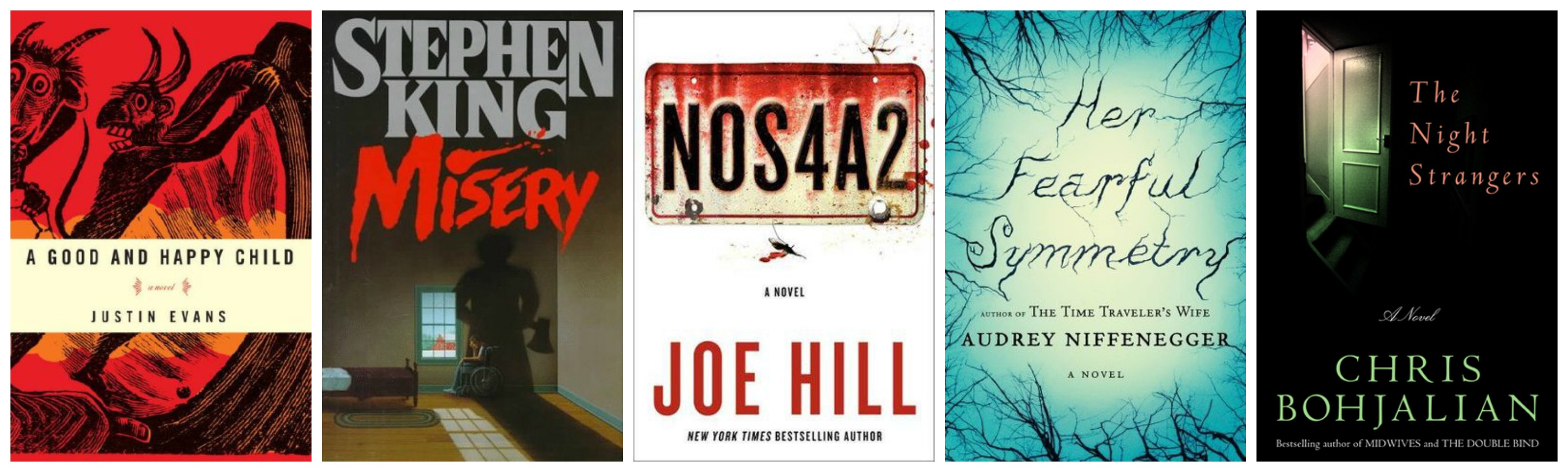
Top Ten Tuesday is a meme hosted by The Broke and the Bookish, featuring a different top 10 theme each week. This week, we’re talking about books for getting into the Halloween spirit. With a pinch of ghosts, a dash of terror, and a few other supernatural creatures to add some chills and thrills, here are my top 10:
1) A Good and Happy Child by Justin Evans: What’s Halloween without a little possession?
2) Misery by Stephen King: Really, just about any Stephen King book could fit on this list. I love that Misery manages to be terror-inducing without the slightest shred of the supernatural. Just a crazy woman with an axe…
3) NOS4A2 by Joe Hill. Like father, like son… I could just as easily put Horns or Heart-Shaped Box on this list, although NOS4A2 has the scariest evil dude that I’ve encountered lately.
4) Her Fearful Symmetry by Audrey Niffenegger: Because sometimes you just need a good ghost story. Bonus points for taking place next to (and in) an awesome cemetery.
5) The Night Strangers by Chris Bohjalian: Another fabulous ghost story. Absolutely a five-star read.
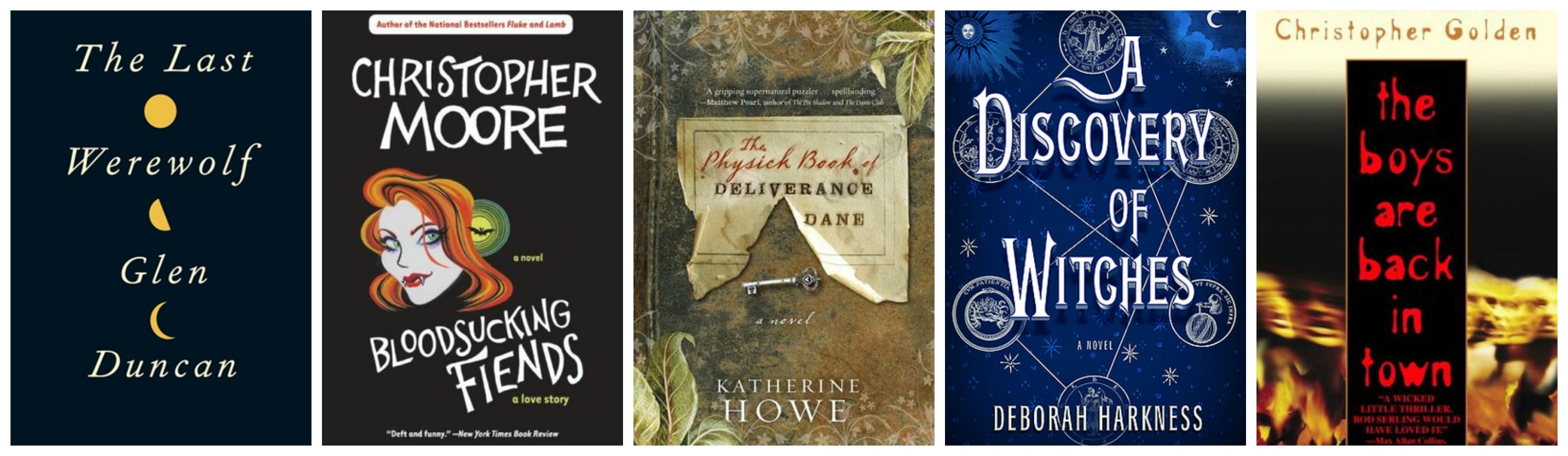
6) The Last Werewolf by Glen Duncan: Blood, guts, gore, and existentialism. Quite the introspective murderous werewolf.
7) Bloodsucking Fiends by Christopher Moore: When you prefer your vampires with silliness and laughter. A great San Francisco setting doesn’t hurt a bit.
8) The Physick Book of Deliverance Dane by Katherine Howe: Smart witches, example #1.
9) A Discovery of Witches by Deborah Harkness: Smart witches, example #2. Plus, you know, a sexy vampire — and there are even trick-or-treaters.
10) And finally, The Boys Are Back in Town by Christopher Golden: For those who like a straight-up over-the-top horror fest:
What books put you in the Halloween mood?
Share your links, and I’ll come check out your top 10!
If you enjoyed this post, please consider following Bookshelf Fantasies! And don’t forget to check out our regular weekly feature, Thursday Quotables. Happy reading!
♥♥♥♥♥♥♥♥
Do you host a book blog meme? Do you participate in a meme that you really, really love? I’m building a Book Blog Meme Directory, and need your help! If you know of a great meme to include — or if you host one yourself — please drop me a note on my Contact page and I’ll be sure to add your info!
Welcome back to Thursday Quotables! This weekly feature is the place to highlight a great quote, line, or passage discovered during your reading each week. Whether it’s something funny, startling, gut-wrenching, or just really beautifully written, Thursday Quotables is where my favorite lines of the week will be, and you’re invited to join in!
Horns by Joe Hill
(published 2010)
The problem with thinking that his horns were nothing but an especially persistent and frightening delusion, a leap into madness that had been a long time coming, was that he could only deal with the reality in front of him. It did no good to tell himself that it was all in his head if it went on happening anyway. His belief was not required; his disbelief was of no consequence. The horns were always there when he reached up to touch them. Even when he didn’t touch them, he was aware of the sore, sensitive tips sticking out into the cool riverside breeze. They had the convincing and literal solidity of bone.
What lines made you laugh, cry, or gasp this week? Do tell!
If you’d like to participate in Thursday Quotables, it’s really simple:
Write a Thursday Quotables post on your blog. Try to pick something from whatever you’re reading now. And please be sure to include a link back to Bookshelf Fantasies in your post (http://www.bookshelffantasies.com), if you’d be so kind!
Leave your link in the comments — or, if you have a quote to share but not a blog post, you can leave your quote in the comments too!
Visit other linked blogs to view their Thursday Quotables, and have fun!
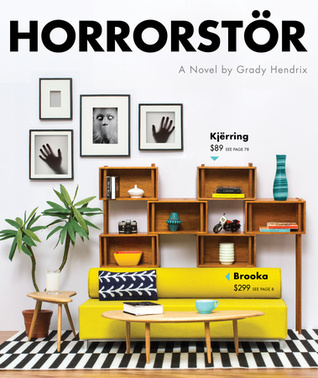
You’ll be forgiven for mistaking this unusual novel for an Ikea catalog. That’s the whole point, after all.
This square, chunky book features the Swedish design elements we know so well, where pieces of furniture have unpronounceable names and the product is really a lifestyle, not just individual items to buy. Glancing at Horrorstör quickly, you’ll see a floor map of the showroom, a guide to ordering and assembly, and even a job announcement… only the tiniest bit ominous, perhaps:
It’s Not Just a Job.
It’s the Rest of Your Life.
Hmmmm.
Welcome to Horrorstör, and the world of Orsk. Orsk is a US-based company acknowledged to be a cheap knock-off version of Ikea. At Orsk, you can buy a Brooka sofa or a Liripip wardrobe, enjoy meatballs in the cafe and let the children play, then stroll through the market floor, picking up a cart full of impulse buys before finally hitting the registers. The whole point of Orsk is to immerse the consumer, to make the process slightly disorienting, to ensure that no one just comes in and buys a chair, but rather, walks through the entire showroom viewing all the various lifestyles available for purchase.
Main character Amy is a floor partner, showing up each day to her low-paying hourly job, resentfully not quite buying the corporate-speak that is the foundation of the Orsk experience. In her early 20s, Amy is a bit of a mess, with no career plan, no drive, and no money to fall back on. She needs Orsk, even if she doesn’t want to. Her manager, Basil, is the embodiment of everything she hates. He’s drunk the Kool-Aid, and spouts inspirational drivel like “Way to live the ethos, man!”
On the verge of being fired, Amy is instead offered one last chance to prove she has what it takes: Basil needs her to stay at night after closing, along with him and one other Orsk employee. Weird things have been happening overnight in the store — stray acts of vandalism, damaged products — and no one can figure out how. The trio plan to spend the night in the empty Orsk establishment, patrolling the floors and keeping an eye out, with the goal of catching someone in the act and becoming company heroes — and maybe even getting a shot at the next step up the corporate ladder.
Joined by two other Orsk partners, Matt and Trinity, who sneak in to shoot a Ghost Hunters-style video, the night gets off to a bumpy start as Amy spots creepy graffiti in the women’s room and later encounters a rat. And that’s only the beginning. An ill-advised seance unleashes a true influx of terror, and the nightmare begins, full of creeps and horrors galore, and threatening not just the employees’ jobs but also their sanity and even their lives.
A scream ripped through the dark. Ruth Anne’s scream.
This place is tricking you, she reminded herself. That’s what it does does.
Orsk is all about scripted disorientation.
It wants you to surrender to a programmed experience.
Horrorstör starts off as satire, but about midway shifts into truly scary horror. Suddenly, the featured products in the “catalog” shift: No longer just couches and seating units, the products are suddenly reconfigured Orsk items that double as torture devices. Orsk is built on the remains of a horrifying prison run by a deranged warden, and as the penitents come out of the walls to ensnare new prisoners for reform, Amy and the rest are in a fight for survival.
It’s an odd tonal shift, but somehow it works. I’m not sure that I’ll ever look at an Ikea store the same way again. If you enjoy your horror stories with a touch of sarcasm and snark, check out Horrorstör — althought I’d recommend reading it during daylight hours, with a teddy bear to hug and a fully charged cell phone nearby, just in case.
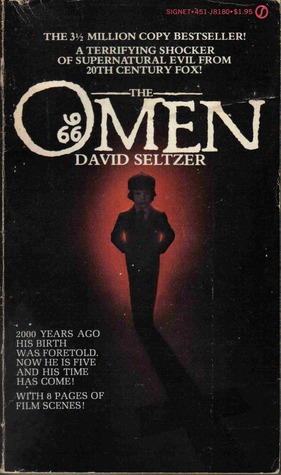
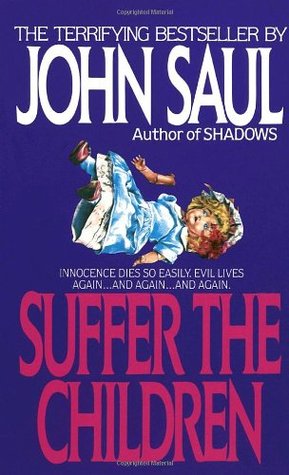
Top Ten Tuesday is a meme hosted by The Broke and the Bookish, featuring a different top 10 theme each week. For this week’s top 10, the topic is Top Ten All Time Favorite Books in X Genre — pick a genre, and write about whatever books you love. I was drawing a blank until a friend and I ended up discussing The Omen (yes, it just happened to come up in conversation), and that’s when I decided to make my list about all those amazing 1970s horror books with awesome covers:
1) The Omen by David Seltzer
2) The Exorcist by William Peter Blatty
3) Harvest Home by Thomas Tryon
4) Audrey Rose by Frank De Felitta
5) ‘Salem’s Lot by Stephen King
6) Suffer the Children by John Saul
7) The Amityville Horror by Jay Anson
And three more books that — while not truly horror — certainly are horrifying in their own way, and are iconic works of the 1970s:
8) Jaws by Peter Benchley
9) The Stepford Wives by Ira Levin
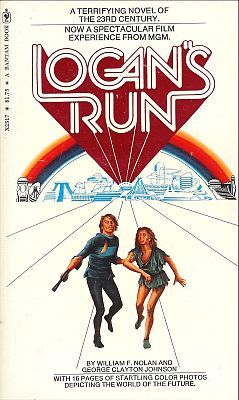
10) Logan’s Run by William F. Nolan
What genre did you pick this week? Share your links, and I’ll come check out your top 10!
If you enjoyed this post, please consider following Bookshelf Fantasies! And don’t forget to check out our regular weekly features, Thursday Quotables and Flashback Friday. Happy reading!
♥♥♥♥♥♥♥♥
Do you host a book blog meme? Do you participate in a meme that you really, really love? I’m building a Book Blog Meme Directory, and need your help! If you know of a great meme to include — or if you host one yourself — please drop me a note on my Contact page and I’ll be sure to add your info!
Welcome back to Thursday Quotables! This weekly feature is the place to highlight a great quote, line, or passage discovered during your reading each week. Whether it’s something funny, startling, gut-wrenching, or just really beautifully written, Thursday Quotables is where my favorite lines of the week will be, and you’re invited to join in!
Harrowgate by Kate Maruyama 47North, 2013
Two coffins. One large, blonde wood, absolutely covered in white-and-cream-colored roses and Easter lilies and calla lilies, surrounded by green leaves of various shapes and sizes. They make the coffin look as if its organs have exploded out of its center and now lie in twisted tendrils, draping down its sides. Next to it, a small white coffin, barely visible for its matching disembowelment of flowers.
Creepy enough for ya? If you’d like to know more about Harrowgate, check out my review here.
What lines made you laugh, cry, or gasp this week? Do tell!
If you’d like to participate in Thursday Quotables, it’s really simple:
Write a Thursday Quotables post on your blog. Try to pick something from whatever you’re reading now. And please be sure to include a link back to Bookshelf Fantasies in your post (http://www.bookshelffantasies.com), if you’d be so kind!
Click below (next to the cute froggy face) to link up your post! And be sure to visit other linked blogs to view their Thursday Quotables too.
Have a quote to share but not a blog post? Leave your quote in the comments.
A horror story that is really a tale of love and loss, Harrowgate surprised me with its deep emotional impact and sheer hypnotic pull.
As Harrowgate opens, geologist Michael is rushing home to his pregnant wife Sarah. He’d been out in the field on a remote assignment, and after receiving a cryptic message about an emergency, it has taken him close to two weeks to navigate the Jeep rides and multiple airplane transfers that finally bring him to his New York apartment building. Unable to reach his wife or anyone else, Michael is unsure what to expect. It’s early for the baby to arrive, but surely not so early as to be dangerous. Or is it? Michael is relieved to arrive home and find his wife and healthy son waiting for him — but his bliss is tempered by the presence of an odd stranger, a doula named Greta, who seems to have some sort of hold over Sarah.
At first, Sarah insists that Michael shouldn’t touch the baby — but soon after, Greta urges Michael to be with Sarah and baby Tim as much as possible, to not leave the apartment for any reason, not even to pick up diapers or groceries. Greta’s encouragement sounds more like a warning or a threat, though, and there’s something not quite right about this person who just keeps showing up.
Questions begin to pile up: Why doesn’t Sarah want Michael to answer the phone or go out? Why does the doorman give him such pitying looks? Is Sarah so exhausted by new motherhood that she hasn’t noticed the refrigerator full of spoiled food?
The answers, as they come, are chilling and awful. Michael uncovers the truth about his family’s tenuous grip on happiness — but knows too that this happiness has a dark side, and that his ability to hold onto his family may be slipping away.
To go into any further plot details would be a huge disservice, as Harrowgate is a book to be explored and savored, best enjoyed without any advance knowledge of what is really going on. Looming dread and dismay permeate the book, and while this isn’t a gore-filled horror novel, it does leave the reader thoroughly spooked.
There’s something so creepy about horror stories revolving around birth and babies. Perhaps it’s the contrast of joy and innocence with the darkness looming on the other side. I’ve heard this book compared to Rosemary’s Baby or Breed, but beyond the New York setting and the strange events around a birth, the storylines have little in common.
What Harrowgate actually put me in mind of the most, while reading, was The Silent Land by Graham Joyce, one of my very favorite books. In both, there’s a central story of love that should be perfect — except the reader can feel the edge of something wrong surrounding everything joyful that happens.
And there is quite a lot of joy in Harrowgate, despite the fact that it’s also very, very sad. At its core, Harrowgate is a love story. The love between Michael and Sarah, and the love they both feel for their baby Tim, creates a power in the little haven inside their apartment that keeps the rest of the world at bay.
While I wish the ending has explained things a little more clearly, I was mostly satisfied with the wrap-up. The emotional depths explored in this book carry such strong notes of tragedy and relentless loss, and yet the journey Michael takes in exploring how very much he loves his wife and child is also quite lovely to read.
You don’t have to be a horror fan to enjoy Harrowgate. For anyone who enjoys a touch of creepy gothic mystery set within a familiar landscape, I’d recommend giving Harrowgate a try. Well-written and compelling, this brief novel sucked me in and made it impossible to quit reading before the end.
_________________________________________
The details:
Title: Harrowgate
Author: Kate Maruyama
Publisher: 47North
Publication date: 2013
Genre: Horror
Source: Borrowed from a friend
In the small town of Coventry, Massachusetts, falling snow does not bring a winter wonderland. In a devastating blizzard, eighteen people from Coventry die tragically through accidents or simply getting lost in the blinding storm. Twelve years later, another blizzard is on the way — but heavy snows and winds are not all that’s coming to town. As the storm builds, the dead begin to return. What do they want? And who will survive this time around?
In Christopher Golden’s Snowblind, the darkening skies are ominous, and it quickly becomes clear that no one is safe. For the love of all things great and good, stay inside, people of Coventry! But even staying indoors offers no guarantees against the storm: There are bad things out there in the wind and snow, and all they need is one small crack, one little draft, to slip inside the house and come for you.
Reminiscent of the scope of a Stephen King novel, in the early chapters we meet a sprawling array of characters, including police officers and school teachers, auto mechanics and thrill-seeking teens, and children just old enough to want to hide their fears, but young enough to know that the faces they see out in the storm are real.
The first part of the book, set during the first blizzard, is excellent. We don’t know what’s coming — but it’s clear that whatever it is, it’ll be bad. As we meet the characters and then see them, one after another, head out into the snow, the tension builds. Something is out there, and it’s deadly. Reading these chapters, I was on the edge of my seat — and despite living far away from any hint of winter weather, I couldn’t help jumping a bit whenever I heard the wind blow outside.
About a third of the way in, the action jumps to twelve years later, and here I felt the story sagged a bit. It’s interesting to see what’s become of the survivors of the earlier blizzard and how they’ve moved on — or not — with their lives. Children have grown into damaged young adults; a young woman who’d lost her love is now bitter, middle-aged, and prone toward overindulging on her nightly glasses of wine; a couple has never quite gotten past their guilt and memories from years earlier; and a rookie cop is now a detective who swears he won’t let another kid die on his watch. And yet, there’s quite a lot of build-up before the new storm arrives, and the action grinds more or less to a halt in places in favor of exploring the characters’ emotional states.
The final storm and conclusion isn’t quite as scary as I would have liked. The set-up is terrific, but the explanation of what really happened in the storm and the characters’ struggles to survive don’t convey quite the level of terror that a book like this really needs. Perhaps the climax is too scattered: because we’re tracking so many storylines, there’s no one scene or focus that really shouts “this is it!”
I liked Snowblind very much, and thought the initial set-up and early scenes were excellent — just the right mix of character introduction, impending threat, and disastrous outcome. Because there are no answers at that point, just the sense that something VERY BAD is out in the blizzard, it’s scary indeed to read. Unfortunately, the rest of the book doesn’t quite live up to the earlier section, and the conclusion didn’t feel like a very satisfying pay-off, fright-wise.
Of course, I had the benefit of reading Snowblind from the comfort of my warm home, on a day with clear blue, sunny skies. Had I been reading it with all of this month’s winter storms brewing outside, I might not have maintained quite such a level of calm. If you read Snowblind, stay warm, and watch out for drafts! And if you hear scratching on your roof, don’t worry: It’s PROBABLY just the wind.
_________________________________________
The details:
Title: Snowblind
Author: Christopher Golden
Publisher: St. Martin’s Press
Publication date: January 21, 2014
Genre: Horror
Source: Review copy courtesy of St. Martin’s Press via NetGalley
 I quickly learned, while reading Brood, that my habit of picking up a book whenever I sit down for a bite to eat is maybe not always the best idea. Because — ick. This book would be best read on an empty stomach. Preferably in broad daylight.









 Bookshelf Fantasies