
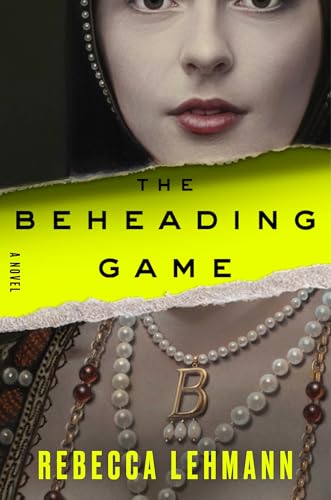
Title: The Beheading Game
Author: Rebecca Lehmann
Publisher: Crown
Publication date: March 26, 2026
Length: 320 pages
Genre: Historical fiction / alternate history
Source: Purchased
Rating:
Disgraced. Beheaded. And out for revenge…
We all know what happened to Henry VIII’s second wife, Anne Boleyn. But what if she woke up the day after her execution and took it upon herself to seek justice?
“Nobody was surprised at Anne’s conviction. The world loves to put a woman in her place.”The Beheading Game begins in the hours after Anne Boleyn’s beheading, when she wakes to find herself unceremoniously in an arrow chest, her head wrapped in linen at her knees. Discarded by King Henry VIII for not being able to give him a male heir, reviled by Cromwell for being too smart for her own good, and executed based on trumped-up charges, Anne escapes the tower, sews her head back on, and sets out on a quest for vengeance.
Traveling in the guise of a commoner, with the help of a prostitute, Anne navigates the London streets she never before walked and soon realizes how little she knew about life in the real world. If Kelly Link had teamed up with Hilary Mantel, the result might be The Beheading Game. An epic journey through the wilds of British royal history and a prescient reminder that “mouthy” women have always been punished, The Beheading Game finally allows one of history’s most maligned women a chance to tell her side of the story.
The Beheading Game has one of the most out-there approaches to telling the story of Anne Boleyn. In a nutshell: We all know that Anne was beheaded… but what if somehow she managed to survive? Not by avoiding the execution itself, but by managing to function (somewhat) normally afterward?
The Beheading Game opens soon after Anne’s execution, as she comes to awareness of herself, finds herself in a box, and realizes that the thing she’s feeling bumping the back of her head is her knee. She’s been beheaded, true, but she’s somehow still there. Getting herself out of the box, holding her head in front of her so she can see, she escapes the Tower, finds a boat to get herself across the Thames, and then proceeds to figure out what the hell is going on, and what her options are.
Holding her head the whole time is awkward, so Anne’s first order of business is to steal a sewing basket and reattach her head to her neck. Miraculously (or magically), her neck seals itself back together around her stitches, and she can once again breathe, eat, and drink. Covering the very obvious scar with a piece of silk belonging to her daughter Elizabeth (which she’d kept with her for her execution), Anne sets out to make her way through the poor sections of London. Her goal? Kill Henry before he can marry Jane Seymour, in order to make sure Elizabeth’s claim to the throne remains intact.
Anne’s privileged life as Queen does her little good in this new situation, as she’s wholly incapable of speaking civilly to ordinary people or fending for herself. Fortunately, she encounters a sympathetic prostitute named Alice who buys Anne’s story of being a noblewoman on the run from an abusive husband (true, after all!). Alice agrees to help Anne get back to the palace, and the two venture through dangerous streets and past suspicious guards to get Anne closer to her goal.
All this is the quest/adventure side of the story, fantastical in its own way, as the beheaded queen walks incognito through crowds of commoners, keeping her scar covered and attempting (not particularly successfully) to blend in. Magical elements and creatures come into play as well, as Anne receives assistance from unexpected sources.
At the same time, the story is told through Anne’s point of view, and so as her journey unfolds, we also hear her version of her early days, her courtship with Henry, her role in his divorce from Katherine, her string of miscarriages, and how the king ultimately chose to discard her in favor of a more pliable woman who (he hoped) might give him sons.
It’s fascinating to get this view of Anne’s life — to see her intelligence, her belief that Henry valued her opinions as well as her body, and her misplaced sense of permanence once she becomes Queen.
Why should she hide the light of her intelligence? Perhaps Henry’s greatest betrayal had been when he stopped loving her for her intellect and started hating her for it, when he started telling her to hold her tongue, not to speak out of turn, when he told her that she had one job, to make him a male heir, and until she did that she should shut her mouth, when he stopped visiting her in her chambers, stopped talking to her, stopped laughing at her witticisms, when he said to her, upon her anger over his affairs, “You must shut your eyes and endure as well as more worthy persons, and you ought to know that it is in my power to humble you again in a moment more than I have exalted you.” She had thought he was a different sort of man, a man who could recognize and receive her for her mind and spirit, not just for her body and the heirs it could produce. But she could see that she was wrong.
For me, the most engaging elements of this book were the sections devoted to Anne’s reminiscences — her memories of the glorious early days with Henry, the painful arguments and distance from him that came later, and of course, the bitter betrayal of being not only cast aside, but put to death, for the crime of being a woman whose husband no longer wanted her.
Of course, a beheaded and reanimated Anne Boleyn isn’t necessarily a reliable narrator. She’s angry, bitter, regretful, and frustrated. Even while realizing that her independent and outspoken nature contributed to her loss of favor with Henry and the dislike so many at court felt for her, she’s still quite adamant when it comes to her opinions about Katherine, the legitimacy of Henry’s first marriage, and much more.
The magical elements offer an entertaining hook, and the idea of a reanimated Anne Boleyn is truly bonkers. Still, I didn’t quite buy her dawning social justice awareness regarding royalty and nobility, or her ability to actually interact in any way with commoners. I also didn’t love the book’s ending, which dramatically rewrites history.
Overall, though, The Beheading Game is lively, unusual, and full of interesting twists, while also providing an interesting perspective on the actual Anne Boleyn’s life and death. Recommended for those with an interest in Tudors… so long as you don’t mind a bit of magical creativity added to to your historical fiction.

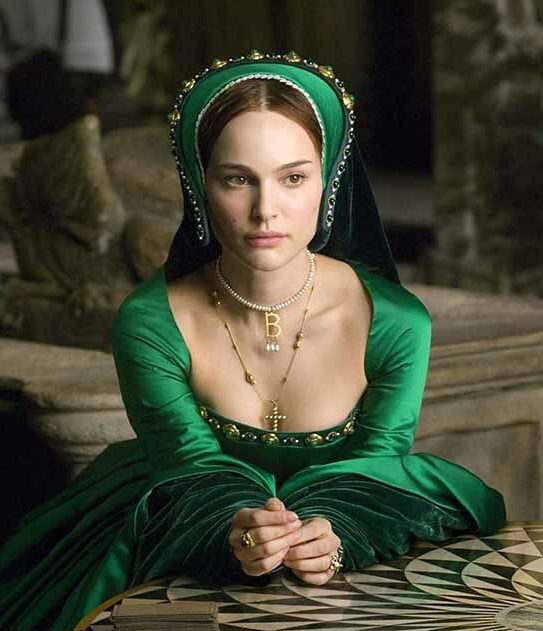
Reader’s note: Reading The Beheading Game left me hungry for a rewatch of The Tudors (and/or the musical Six). So I thought I’d close with a look at a few film and stage versions of Anne Boleyn:
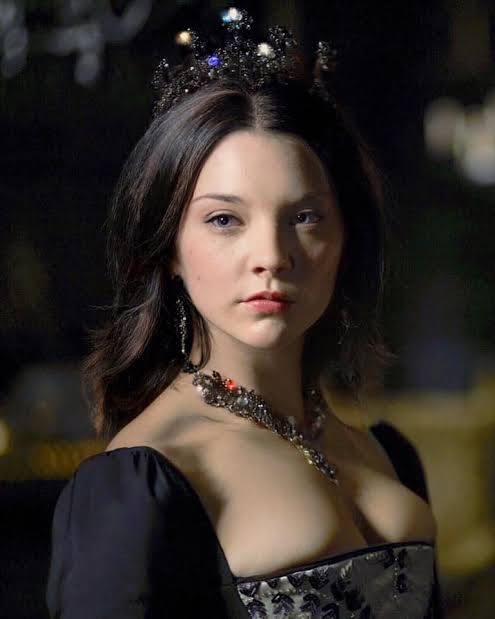


- The Tudors (Natalie Dormer)
- Six! The Musical
- Anne of the Thousand Days (Genevieve Bujold)
- The Other Boleyn Sister (Natalie Portman)
For other reading about Anne Boleyn, I found this list, which has a few titles I’ve read already, and one or two I may want to explore (including Alison Weir’s historical novel Anne Boleyn: A King’s Obsession). Do you have any books about Anne Boleyn to recommend?
Purchase links: Amazon – Bookshop.org – Libro.fm
Disclaimer: When you make a purchase through one of these affiliate links, I may earn a small commission, at no additional cost to you.

