Book Review: The Bell in the Fog by Lev AC Rosen

Title: The Bell in the Fog
Author: Lev AC Rosen
Publisher: Forge Books
Publication date: October 10, 2023
Length: 261 pages
Genre: Historical fiction/mystery
Source: Review copy courtesy of the publisher via NetGalley
Rating:

Rating: 4 out of 5.

The Bell in the Fog , a dazzling historical mystery by Lev AC Rosen, asks―once you have finally found a family, how far would you go to prove yourself to them?

San Francisco, 1952. Detective Evander “Andy” Mills has started a new life for himself as a private detective―but his business hasn’t exactly taken off. It turns out that word spreads fast when you have a bad reputation, and no one in the queer community trusts him enough to ask an ex-cop for help.

When James, an old flame from the war who had mysteriously disappeared, arrives in his offices above the Ruby, Andy wants to kick him out. But the job seems to be a simple case of blackmail, and Andy’s debts are piling up. He agrees to investigate, despite everything it stirs up.

The case will take him back to the shadowy, closeted world of the Navy, and then out into the gay bars of the city, where the past rises up to meet him, like the swell of the ocean under a warship. Missing people, violent strangers, and scandalous photos that could destroy lives are a whirlpool around him, and Andy better make sense of it all before someone pulls him under for good.

Last year’s Lavender House was an unexpected delight — a taught, page-turning mystery set in the bad old days of 1950s San Francisco, a time especially dangerous for a closeted gay cop whose life is almost destroyed after he’s brutally outed.

In The Bell in the Fog, we continue the story of Andy Mills, now an ex-cop working as a private investigator from his office and apartment located above Ruby’s, a gay nightclub whose owner decides to give Andy a home and a chance at a fresh start. Andy is trying to pay his way and establish himself as a detective, but it’s hard to earn the trust of the wary gay community, which has every reason to mistrust and fear the police.

When Andy’s ex-lover from his Navy days shows up in his office, his life gets even more complicated, as unwelcome memories and feelings bubble up from his past. James is now a naval officer up for promotion, but he’s being blackmailed by a casual lover and has everything to lose. Reluctantly, Andy accepts the case, and is soon immersed in the search for a missing person, the blackmail photos, and the person pulling the strings.

Author Lev AC Rosen once again expertly manages to tell a compelling, intricate mystery story while also painting a picture of a particular time and place in history. Through Andy’s experiences, we see the sharply dangerous life of the underground gay community as well as the joys and love of found family. The mystery itself is well-constructed, with danger, plenty of red herrings, and plot twists galore.

The range of people that Andy interacts with presents yet another view into the time period, as we get to know drag performers, closeted lovers, wannabe stars, and various allies and enemies. Andy himself is a wonderful character, carrying the weight of past persecution and guilt, looking to rebuild a life, and figuring out where he fits in in his new chosen community. I loved seeing the through-lines and connections to Lavender House, and enjoyed Andy’s ongoing soul-searching and journey toward strength and self-acceptance.

Overall, The Bell in the Fog is a terrific mystery as well as a moving portrait of gay life in the 1950s. It’s a page-turner with heart — highly recommended! I hope there will be much more to come in this series.

.

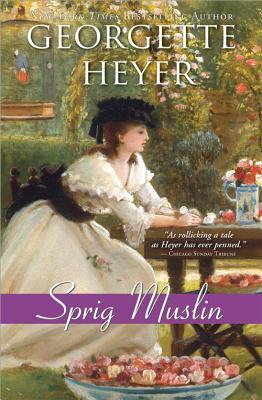
Book Review: Sprig Muslin by Georgette Heyer

Title: Sprig Muslin
Author: Georgette Heyer
Publisher: Sourcebooks Casablanca
Publication date: 1956
Length: 298 pages
Genre: Historical fiction/romance
Source: Purchased
Rating:

Rating: 4.5 out of 5.

A dashing man of honor…

En route to propose to his sensible acquaintance Lady Hester, Sir Gareth Ludlow finds young, pretty Amanda wandering unattended and knows it is his duty to bring her back to her family. This turns out to be a challenge as Amanda seems to possess an imagination as intriguing as it is dangerous.

A shocking refusal…

Lady Hester stuns both him and her family when she refuses him. At her age, no one would expect her to turn down such an eligible suitor. But Lady Hester has met the indomitable Amanda. How can the quiet, intelligent Hester hope to compete with such a lively young lady?

After finishing Georgette Heyer’s Cotillion, I felt like my appetite for her books was reignited, and turned to Sprig Muslin, a paperback I’d picked up a few years ago. I’m so happy I did! Sprig Muslin is silly, sweet-natured, fun — and a refreshing contrast to some of Heyer’s more dramatic books about rakes and rogues and dashing men with terrible reputations.

In Sprig Muslin, the two anchors of the story are good-natured, respectable adults who nonetheless find themselves caught up in a whirlwind of shenanigans. Sir Gareth Ludlow, at age 35, is fashionable, well-off, and after losing his fiancée in a tragic accident many years earlier, still single. It’s time for him to take a wife and start producing heirs.

Sir Gareth decides to propose to Lady Hester Theale, a kind, intelligent woman he’s been friends with all his life. Lady Hester, at age 29, is on the shelf and seemingly content with her lot, although she does seem to get bossed around by her overbearing brother and sister-in-law quite a bit. Hester is appalled to learn that Sir Gareth has declared his intentions to her father and is en route to propose to her; although she won’t give a reason, she definitely does not want this proposal.

Sir Gareth’s plans are interrupted when he stops for refreshment along the way and discovers a young girl on the verge of trouble. Amanda, not quite 17, has apparently run away and is determined to remain at large. Clearly belonging to an upper class family, she states that she intends to marry an up-and-coming soldier, and by running away, she intends to force her grandfather to give his consent. Amanda is headstrong and passionate, and Gareth realizes that his duty is to see her safely returned to her family rather than leaving her to make her way unchaperoned and without an actual plan.

There’s a hitch, however: Amanda refuses to name her family, where they live, or even who her soldier fiancé is. She spins story upon story, and while initially thankful that Gareth seems willing to help her, she soon realizes that he’s going to keep her from her schemes, and attempts to get away from him too.

Thus begins a madcap series of escapades, as Amanda creates one fabulous story after another to explain her situation, drawing in Gareth and then others met along the way. Each tale leads to further complications, and before too long even Hester is drawn into Amanda’s web of stories and fake identities.

Sprig Muslin is utterly delightful. As Amanda’s stories get more and more inventive, various bystanders take on roles, and her tales result in all sorts of rescue attempts, misguided escapes, and even a daring kidnap attempt that goes disastrously wrong. It’s all quite ludicrous, and so very, very enjoyable.

As with all Georgette Heyer books, the unusual words and expressions make the reading experience extra entertaining — here are a few from Sprig Muslin that I highlighted:

  • nodcock (fool or idiot)
  • marplot (one who ruins a plan through meddling)
  • bosky (drunk)
  • daffish (stupid, silly)
  • spinney (small area of trees and bushes)
  • gammon (trick)
  • nonesuch (a person or thing unrivaled or unequaled)
  • gaby (a foolish person)
  • elbow-crooker (drinker)
  • bobbery (a squabble, a noisy disturbance)
  • humdudgeon (loud complaint or noise)
  • flat (as in, “A flat, my child, is one who is easily duped”)

And as for phrases, can’t beat:

  • a fashionable fribble
  • a real top-of-the-trees, slap up to the echo (top-of-the-trees = someone of high esteem)
  • chuffy thing to do
  • in the petticoat line (associating with women of “easy virtue)

While I always enjoy Georgette Heyer’s books, Sprig Muslin may have just become my new favorite. It’s so good-natured, and the sense of fondness for Kitty’s exploits makes this a sweet read. I came away from it really appreciating all the main characters, and had plenty of giggles along the way. If you’re looking for a GH book but aren’t crazy about rakish men being cast as heroes, Sprig Muslin is a great choice!

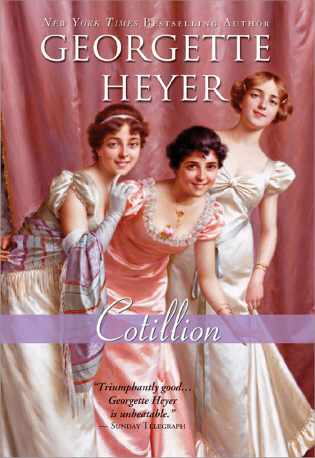
Book Review: Cotillion by Georgette Heyer

Title: Cotillion
Author: Georgette Heyer
Publisher: Sourcebooks Casablanca
Publication date: 1953
Length: 355 pages
Genre: Historical fiction/romance
Source: Purchased
Rating:

Rating: 4 out of 5.

Almost an heiress
Country-bred, spirited Kitty Charings is on the brink of inheriting a fortune from her eccentric guardian — provided that she marries one of his grand-nephews. Kitty has spent her secluded life pining for the handsome, rakish Jack, who is well aware of her attachment.

A plan of her own
But when Jack fails to respond to his great-uncle’s ultimatum, Kitty hatches a strategy of her own — a counterfeit betrothal to mild-mannered Freddy Standen (who neither needs nor wants the money).

A most unlikely hero
And when Kitty’s generous heart leads to all sorts of unintended troubles, there is only one man who can rescue her from more than one dreadful fix, pick up the pieces of her plotting and in the process, win her heart…

Cotillion is a light-hearted addition to Georgette Heyer’s huge collection of Regency romances, and it’s a silly read that still manages to surprise.

Main character Kitty is the ward of a grumpy, gouty, rich old man who has named her his heiress — but only if she marries one of her many eligible cousins-by-adoption. Great-uncle Matthew summons the lot of them to his gloomy estate, but not all show up: Jack, the dashing rake whom Kitty has loved since girlhood, has declined the invitation.

Several others do arrive as ordered — Lord Biddenden, the oldest cousin — already married and there to keep an eye on things; Lord Dolphinton, the sweet but slow-witted Earl of an Irish estate (and apparently Irish nobility isn’t considered nearly as impressive as English nobility); Hugh, a rector who’s entirely too upright and stodgy to suit Kitty… and then there’s Freddy, a “Pink” of the ton, a nice guy who likes Kitty well enough but has no interest in Great-uncle Matthew’s schemes (and as an eldest son, doesn’t need the money that comes with marrying Kitty).

Kitty is stuck — she’ll get nothing if she doesn’t marry one of the cousins, and she’s more than a little heart-broken that Jack hasn’t come to her rescue. She’s been raised in this boring home with no opportunity for society, and is desperate for at least a taste of what’s she’s missing before resigning herself to a life working as a governess or a chambermaid. What Kitty wants above all else is the chance to spend time in London — even just a month would be a treat! And so she comes up with a scheme — she asks Freddy to “offer” for her and enter into a fake betrothal. If they were betrothed, it would be proper for him to take her to London to stay with his family and introduce her to society. If they don’t publicly announce the betrothal, there will be no harm in calling it off after a month. Kitty feels quite sure that after that small taste of fun and freedom, she’ll be ready to face the rest of her life.

Freddy is a friendly, affable sort and agrees to the plan, which soon gets even more complicated. Freddy’s mother is unavailable to chaperone, so he installs her with his married sister, who’s quite a lot of fun, and soon Kitty is enjoying fashion, parties and outings. She also can’t refrain from befriending unusual people and wanting to help them, and before long, she’s caught up in the affairs of two different couples who seem to have all the odds stacked against them — but Kitty is determined to sort out their challenges and get them all a happy ending.

A note on the title: According to an essay on Tor.com:

A cotillion is a Regency dance where you change partners, and Georgette Heyer’s Cotillion is a Regency Romance where everybody twirls and faces their partners and ends up in a happy set of not-entirely predictable couples. 

What’s more, a cotillion is a dance for four couples, and that’s pretty apt for this book.

Cotillion is quite a fun read. Sure, I could quibble with the terribly sexist attitudes portrayed here, but they’re a product of their time — so I can despise the seemingly admirable rake who’s known for his string of mistresses without despising the book itself.

Reading Georgette Heyer’s Regency books is a lesson in idioms, slang, and speech patterns. Freddy in particular speaks without including subjects in his sentences:

“Thing is,” said Freddy, recognizing his cue, “never thought my uncle would permit it. Thought it was useless to approach him. As soon as I read his letter — bespoke a chaise and came at once! Trust you’ll allow me to speak to him in the morning.”

And here are just a few of the words or phrases I had to stop, highlight, and look up:

  • objurgations (harsh reprimands or criticisms)
  • retroussé (a nose that turns up at the tip)
  • wear the willow (to grieve a death)
  • fustian (pompous or pretentious speech)
  • out-and-outer (possessing a particular quality to an extreme degree)
  • bamming (hoaxing, tricking, cheating)
  • percipience (perceptiveness)
  • gudgeon (a credulous or easily fooled person)
  • Joliffe-shallow (type of hat)
  • cognomen (nickname)
  • cicisbeo (the professed gallant or lover of a woman)
  • havey-cavey (dubious, shady)

And as for dialogue, here are a few choice selections:

“Dashed bacon-brained notion to take into your to your cockloft!”

Jack’s too downy to play cards with a leg. But he ain’t a flat either.

When I go into wedded shackles in will be in my own time, and in my own fashion.

Kitty’s adventures are not to be taken terribly seriously. Having read a bunch of GH’s Regency romances already, I was sure from the start that I knew where the story was going, but — surprise!! — about midway through I realized that my expectations were way off base, and the way it all worked out really charmed me. (I’ve seen a few Goodreads reviews say that the surprise is most effective if you’ve read at least a few other Heyer romances first — and that makes sense to me!)

I can’t say that Cotillion is my favorite of Georgette Heyer’s books, but I’m certainly glad to have read it, and found it really entertaining the whole way through.

Any Georgette Heyer fans out there? Which of her books do you recommend? This is #8 for me, and I’ll happily read more (although I think about 1 or 2 per year is probably the most I can handle).

Book Review: California Golden by Melanie Benjamin

Title: California Golden
Author: Melanie Benjamin
Publisher: Delacorte Press
Publication date: August 8, 2023
Length: 368 pages
Genre: Historical fiction
Source: Review copy courtesy of the publisher via NetGalley
Rating:

Rating: 3.5 out of 5.

Two sisters navigate the turbulent, euphoric early days of California surf culture in this dazzling saga of ambition, sacrifice, and longing for a family they never had, from the New York Times bestselling author of The Aviator’s Wife

Southern California, 1960s: endless sunny days surfing in Malibu, followed by glittering neon nights at Whisky A-Go-Go. In an era when women are expected to be housewives, Carol Donelly is breaking the mold as a legendary female surfer struggling to compete in a male-dominated sport–and her daughters, Mindy and Ginger, bear the weight of her unconventional lifestyle.

The Donnelly sisters grow up enduring their mother’s absence–physically, when she’s at the beach, and emotionally, the rare times she’s at home. To escape questions about Carol’s whereabouts–and chase their mom’s elusive affection–they cut school to spend their days in the surf. From her first time on a board, Mindy shows a natural talent, but Ginger, two years younger, feels out of place in the water.

As they grow up and their lives diverge, Mindy and Ginger’s relationship ebbs and flows. Mindy finds herself swept up in celebrity, complete with beachside love affairs, parties at the Playboy Club, and USO tours to Vietnam. Meanwhile, Ginger–desperate for a community of her own–is tugged into the vibrant counterculture of drugs and cults. Through it all, their sense of duty to each other survives, as the girls are forever connected by the emotional damage they carry from their unorthodox childhood.

A gripping, emotional story set at a time when mothers were expected to be Donna Reed, not Gidget, California Golden is an unforgettable novel about three women living in a society that was shifting as tempestuously as the breaking waves.

Content warning: Parental neglect, child abandonment, partner abuse, cults, violence.

In California Golden, a legacy of neglectful parenting leads sisters Mindy and Ginger to the Southern California surf culture of the 1960s. Ignored and starved for affection by their mother Carol, whose own dreams were cut short by an unplanned pregnancy and the marriage that followed, the sisters throw themselves into surfing as a way to follow their mother and make sure she doesn’t abandon them completely. But while Mindy takes to surfing almost instinctively and displays a huge talent for it, Ginger struggles to keep up.

Over time, Mindy becomes a champion surfer, a surfing stand-in for the stars of beach party movies, and a spokesmodel for sponsors keen to have her sunny good looks and popularity attached to their brands. As Mindy becomes more involved with the club and music scene, Ginger instead gets caught up in the personal aura of a self-proclaimed “Surf God”, a charismatic beach bum who deplores surfing’s commercialization and who demands absolute devotion.

As years go by, Mindy and Ginger are pulled farther and farther apart by their different worlds — Mindy immersed in celebrity and stardom, while Ginger falls deeper into an abusive, all-encompassing relationship that leaves her powerless and penniless.

Meanwhile, Carol seems to live in her own world, always resentful of the sacrifices she had to make for the sake of motherhood, and wanting more than anything to reclaim her own body and her own passions.

With the Vietnam War ramping up and the surfing craze finally passing its peak, the lives of these three women intersect again and again, not always in ways that they’d expected or wanted.

Through these characters, California Golden shows the incredibly strong pressure (and hypocritical stances) imposed on women of the late 1950s and 1960s — to fit in, to become wives and mothers, to put men and children first, and to always do it with a smile. Carol is a hard person to sympathize with, but when later in the book, we get more of the story of her younger years, it’s clear that she faced a no-win situation where every last ounce of agency was stripped away from her. It’d hard to feel sorry for a neglectful mother, but at least we get to see how she ended up where she did.

The dynamic between Mindy and Ginger is complicated and sad, and it’s excruciating to see Ginger become pulled further and further into abuse, neglect, and a cult-like life revolving around drug smuggling and obedience.

The depiction of SoCal surf culture is evocative, although Mindy’s time in the music and celebrity life of the Sunset Strip feels somewhat repetitive of other books set in that era — the surf elements feel new and fresh, but the rest less so.

I appreciated the web of relationships and connections, but would have liked certain romantic connections to have more time to grow and breathe, and a conflict over racism isn’t especially well developed. I got the sense at various points that this book was trying to cram in too many iconic elements of the 1960s, sometimes to the point of overwhelming the central focus on the sisters and their mother.

The chapters focused on Mindy and Ginger’s childhood are so hard to read, so that when we do finally get the opportunity late in the book to learn about events from Carol’s perspective, it’s too late to salvage much in the way of good feelings toward her… but at least we get the chance to understand, even if we don’t condone or feel much empathy.

Reading California Golden, it’s impossible not to be grateful for reliable birth control and freedom of choice, endangered as that may be. If you want to convince someone that pregnancy and childbirth are traumatic, you might want to give them a copy of this book.

After a slow start (hampered by some weird chronology early on), the book begins to pick up steam — so while I wasn’t sure about it at first, by the midpoint, I was hooked and couldn’t put the book down. While I eventually got very caught up in the characters’ lives, I felt the ending tried to shoe-horn in too much, and left me with questions that I couldn’t ignore, despite the deliberate emotional fireworks.

Overall, I found California Golden entertaining, but questioned some of the plot choices, and didn’t feel that certain 1960s touchpoints added anything new or fresh to the book. It’s an interesting work of historical fiction, and for anyone interested in the era, it’s worth checking out.

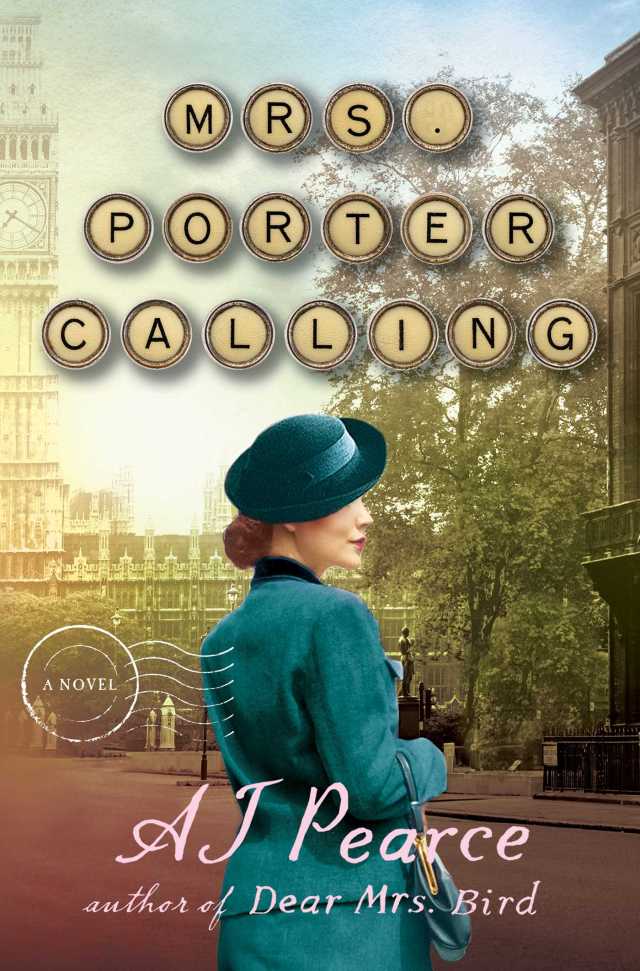
Book Review: Mrs. Porter Calling by AJ Pearce

Title: Mrs. Porter Calling
Author: AJ Pearce
Publisher: Scribner
Publication date: August 8, 2023
Length: 320 pages
Genre: Historical fiction
Source: Review copy courtesy of the publisher via NetGalley
Rating:

Rating: 4 out of 5.

London, April 1943. A little over a year since she married Captain Charles Mayhew and he went away to war, Emmy Lake is now in charge of “Yours Cheerfully,” the hugely popular advice column in Woman’s Friend magazine. Cheered on by her best friend Bunty, Emmy is dedicated to helping readers face the increasing challenges brought about by over three years of war. The postbags are full and Woman’s Friend is thriving.

But Emmy’s world is turned upside down when glamorous socialite, the Honorable Mrs. Cressida Porter, becomes the new publisher of the magazine, and wants to change everything the readers love. Aided by Mrs. Pye, a Paris-obsessed fashion editor with delusions of grandeur, and Small Winston, the grumpiest dog in London, Mrs. Porter fills the pages with expensive clothes and frivolous articles about her friends. Worst of all, she announces that she is cutting the “Yours Cheerfully” column and her vision for the publication’s future seems dire. With the stakes higher than ever, Emmy and her friends must find a way to save the magazine that they love.

Emmy Lake is back! Mrs. Porter Calling is the third in a series of books about a magazine journalist and her group of close friends and colleagues, navigating life on the homefront in WWII-era London. In the first two books, Dear Mrs. Bird and Yours Cheerfully, we see Emmy land a job at Woman’s Friend magazine, where she eventually takes over the advice column, seeing it as her mission to offer compassionate, practical advice to women in need. Over the course of these two books, she also meets and marries a lovely man, and supports her best friend through horrible loss and recovery.

As Mrs. Porter Calling opens, the year is 1943, and Emmy continues her work at Woman’s Friend as well as with the fire service, which monitors and responds to disasters caused by air raids. Emmy’s beloved husband Charles is off on the front lines, the couple having had only a few short days together following their wedding before his deployment. Emmy shares a home with her best friend Bunty, and they lead busy, productive lives — they’ve learned to adapt and carry on, despite the constant fear and rationing.

Emmy’s professional life is thrown into a tailspin when the magazine’s owner dies. He’s bequeathed ownership to his niece, who turns out to be a spoiled upper-class woman who feigns delight with the magazine, provided they implement just a few of her “tiny ideas”. She finds the current version “A Bit Mis” — miserable — and decides that what the readers really need is more stories that are pleasant. Rather than focus on food columns about how to make good meals with limited rations or knitting/sewing clothing when supplies aren’t available, she wants glamour, fashion, and a focus on the beautiful lives of her own class. The staff of the magazine is appalled — this is not what their readers rely on them for — but having no choice, the magazine is changed to Mrs. Porter’s standards, and of course, readership and then advertising drop off. Soon, the future of Woman’s Friend is in doubt, and Emmy and her colleagues become desperate to save it.

Meanwhile, at home, Emmy and Bunty welcome a woman with three young children into their home, and soon their days are filled with activity and joyful chaos — but the realities of war are always present, and soon enough Emmy’s woes at the magazine are eclipsed by a more personal tragedy.

I enjoyed Mrs. Porter Calling so much! Mrs. Porter herself is an insidiously vapid character who acts sweetly haughty, until she hits the team with her “ideas”, all with the most saccharine of smiles and eyelash batting. As Emmy reflects:

I was beginning to feel as if I was being run over by a steamroller made from petals and kittens. It was delightful, but also somewhat immobilizing.

Beyond the work crises, where we can’t help but root for the underdogs — the hardworking, dedicated team of Woman’s Friend — the book delves sensitively into the lives of the women and children struggling to make ends meet on the home front.

“Don’t worry, Em, we’ll do what all the other women in Britain are doing.”

“What’s that?” I said.

“Cope,” said Bunty.

Again and again, Emmy, Bunty, and their circle of friends show what true bravery is, as well as devotion and determination.

While there’s sorrow and conflict in Mrs. Porter Calling, there’s a chipper, upbeat air that carries the story along — the “Keep Calm and Carry On” attitude that lets the characters find happiness even in the darkest of days. I loved the found family aspect of the characters’ lives — despite fears for loved ones on the battlefield or sorrow for those lost, they bond together to get through it all, and clearly show how love and friendship can mend broken hearts.

“War’s bad enough as it is. Imagine if you’re trying to get through this on your own.”

The Emmy Lake books are emotional, entertaining, and heart-warming. I recommend starting at the beginning of the series, and continuing on from there. I understand there’s at least one more book planned, and also read a comment by the author that she hopes to continue writing books that will take Emmy and friends through to the end of the war. I hope that’s the case! I’d really love to see more of Emmy’s story (and will be waiting to see what I hope will be a happy ending for her once the war ends).

Book Review: The Personal Librarian by Marie Benedict and Victoria Christopher Murray

Title: The Personal Librarian
Authors: Marie Benedict and Victoria Christopher Murray
Publisher: Berkley
Publication date: June 29, 2021
Length: 347 pages
Genre: Historical fiction
Source: Purchased

Rating: 3 out of 5.

The remarkable, little-known story of Belle da Costa Greene, J. P. Morgan’s personal librarian—who became one of the most powerful women in New York despite the dangerous secret she kept in order to make her dreams come true, from New York Times bestselling author Marie Benedict and acclaimed author Victoria Christopher Murray.

In her twenties, Belle da Costa Greene is hired by J. P. Morgan to curate a collection of rare manuscripts, books, and artwork for his newly built Pierpont Morgan Library. Belle becomes a fixture on the New York society scene and one of the most powerful people in the art and book world, known for her impeccable taste and shrewd negotiating for critical works as she helps build a world-class collection.

But Belle has a secret, one she must protect at all costs. She was born not Belle da Costa Greene but Belle Marion Greener. She is the daughter of Richard Greener, the first Black graduate of Harvard and a well-known advocate for equality. Belle’s complexion isn’t dark because of her alleged Portuguese heritage that lets her pass as white—her complexion is dark because she is African American.

The Personal Librarian tells the story of an extraordinary woman, famous for her intellect, style, and wit, and shares the lengths to which she must go—for the protection of her family and her legacy—to preserve her carefully crafted white identity in the racist world in which she lives.

The Personal Librarian is a fictionalized depiction of the life of historical figure Belle da Costa Greene, a powerful figure in the New York art and rare book world of the early 20th century. A novel about Belle should have been powerful, but instead, it left me cold (and very tempted to DNF).

The set-up is intriguing: Belle’s family is Black, and her father is a renowned, outspoken figure in the fight for racial equality, justice, and civil rights. Yet (according to the novel), her mother realizes that her light-skinned children will have a better shot at successful lives, free from the rampant racism, violence, and segregation of their time, if they pass as white.

From her teens onward, Belle presents herself socially and professionally as white, and uses an invented Portuguese ancestor (and the invented name “da Costa”) as a way to explain her darker complexion. She makes connections while working at the Princeton library that lead her to J. P. Morgan, whose driving ambition is to create an unrivaled personal library full of rare and valuable treasures. When he hires Belle as his personal librarian, her ascent to influence, social acceptance, and power in the world of collectors and dealers gets its start.

Belle’s story should have been fascinating, but I have a feeling I would have been better off reading a biography rather than reading this novel. Too much is invented or assumed. Belle’s internal musings on race and identity provide the background for her decisions and actions throughout the book, but given that the real-life Belle destroyed all her papers and letters before her death, we can’t actually know what she was thinking or feeling.

There’s a romance (of sorts) with a married man that lasts for years of Belle’s life, and this is documented in real life through her letters to him (which he kept, while she destroyed any letters that she’d received) — but the fictionalized version of this story makes assumptions and adds incidents that apparently are not established by more than speculation.

Beyond the question of fact versus fiction, I simply did not enjoy the writing. I felt at arm’s length from Belle throughout, and frankly, I was often bored. The writing is surface-level, jumps ahead by months at a time, and didn’t let me feel connected to Belle as a person. Her emotions are understandable only because we’re told what she’s feeling, not because they’re tangible in any way.

Reading this book made me ponder a bit too about what I appreciate in historical fiction — and what I don’t. In general, I think I appreciate historical fiction more when it focuses on ordinary/unknown people in historical settings, even up to and including brushes with or relationships with real people, rather than taking a historical figure and inventing thoughts and feelings for them that may be nothing more than speculation. I’m sure this factors into why I didn’t especially care for The Personal Librarian.

As I’ve mentioned, Belle herself seems like a fascinating historical figure. You can read more about her via the Morgan Library & Museum’s website, here. I’ve given The Personal Librarian three stars — I’m glad that this book introduced me to Belle’s life, even if it didn’t particularly work for me as a reading experience.

Book Review: The Matchmaker’s Gift by Lynda Cohen Loigman

Title: The Matchmaker’s Gift
Author: Lynda Cohen Loigman
Publisher: St. Martin’s Press
Publication date: September 20, 2022
Length: 320 pages
Genre: Contemporary/historical fiction
Source: Review copy courtesy of the publisher via NetGalley

Rating: 4.5 out of 5.

From Lynda Cohen Loigman, the bestselling author of The Two-Family House and The Wartime Sisters, comes a heartwarming story of two extraordinary women from two different eras who defy expectations to utilize their unique gift of seeing soulmates in the most unexpected places in The Matchmaker’s Gift.

Is finding true love a calling or a curse?

Even as a child in 1910, Sara Glikman knows her gift: she is a maker of matches and a seeker of soulmates. But among the pushcart-crowded streets of New York’s Lower East Side, Sara’s vocation is dominated by devout older men—men who see a talented female matchmaker as a dangerous threat to their traditions and livelihood. After making matches in secret for more than a decade, Sara must fight to take her rightful place among her peers, and to demand the recognition she deserves.

Two generations later, Sara’s granddaughter, Abby, is a successful Manhattan divorce attorney, representing the city’s wealthiest clients. When her beloved Grandma Sara dies, Abby inherits her collection of handwritten journals recording the details of Sara’s matches. But among the faded volumes, Abby finds more questions than answers. Why did Abby’s grandmother leave this library to her and what did she hope Abby would discover within its pages? Why does the work Abby once found so compelling suddenly feel inconsequential and flawed? Is Abby willing to sacrifice the career she’s worked so hard for in order to keep her grandmother’s mysterious promise to a stranger? And is there really such a thing as love at first sight?

I’m not always a fan of dual timelines in historical fiction, but in the case of The Matchmaker’s Gift, this approach absolutely works.

In one timeline, we follow the story of Sara Glickman, a woman who emigrates to the United States in 1910 with her family, settling on New York’s Lower East Side. Sara realizes at age 10 that she has an unusual gift — she can “see” when two people are a match. First, she helps her sister find her bashert (soulmate, destined true love, the one that’s meant to be), and soon after, realizes she can see these connections for others as well.

The shadchanim (matchmakers) of the New York Jewish community are outraged — a young, unmarried girl has no business meddling in their business and potentially stealing their customers and their income. Sara swears to her father that she’ll give up matchmaking, but she’s unable to entirely ignore her calling and the good that she brings about.

In the other timeline (in the 1990s), we meet Sara’s granddaughter Abby, an associate in a prestigious divorce law firm who grew up scarred by her own parents’ divorce and is determined to make sure other women have the support her own mother lacked. When Abby learns of her beloved grandmother’s death, she’s grief-stricken — but she’s also inspired by Sara’s journals, which provide meticulous records of all the matches Sara made over the years. She’s also a little freaked out, though, when she starts seeing the same sort of connections that her grandmother once saw.

There’s so much to love about The Matchmaker’s Gift. In Sara’s part of the story, not only do we get to know what a strong and dedicated person she is, but we also get a beautifully written depiction of life in the Jewish community of the Lower East Side in the early 20th century. The characters, the environment, the traditions — all are brought lovingly to life.

Abby’s storyline, while more modern and perhaps less picturesque, still vibrates with a sense of New York in that time period. Abby interacts with characters from various walks of life through her work and through unexpected connections that come about after her grandmother’s passing, and it’s fascinating to see all the various ways that these people intersect and overlap.

I was particularly moved when Abby discovers that Sara came back to her matchmaking vocation in the postwar years of the late 1940s, when rabbis came to her to ask her help with making sure the Jewish people could survive after the devastation of the Holocaust. Sara saw it as her mission to bring together refugees and survivors, and it’s so powerful to read about. In fact, I wish this section of the story was explored in more detail — it’s not central to the plot, more something that’s filled in as a piece of Sara’s history, but it’s really beautiful.

Also very powerful is the information that later on in her life, Sara’s gift occasionally led her to see damaged connections, allowing her recognize an abusive marriage and help the woman escape and start over. Again, I might have liked to see more of this element of Sara’s gift, but the fact that’s it’s included at all made a big impression.

On a funny note, reading this book made me think of the Netflix series Jewish Matchmaking, and in the author’s notes, she mentions having consulted with Aleeza Ben Shalom — who is the host of the Netflix series!

Overall, I found The Matchmaker’s Gift to be very readable, engaging, and touching. Highly recommended!

Book Review: The Woman Beyond the Sea by Sarit Yishai-Levi

Title: The Woman Beyond the Sea
Author: Sarit Yishai-Levi
Translated by: Gilah Kahn-Hoffmann
Publisher: Amazon Crossing
Publication date: March 21, 2023 (originally published in Hebrew in 2019)
Print length: 413 pages
Genre: Historical fiction
Source: Purchased

Rating: 3.5 out of 5.

A mesmerizing novel about three generations of women who have lost each other—and the quest to weave them back into a family.

An immersive historical tale spanning the life stories of three women, The Woman Beyond the Sea traces the paths of a daughter, mother, and grandmother who lead entirely separate lives, until finally their stories and their hearts are joined together.

Eliya thinks that she’s finally found true love and passion with her charismatic and demanding husband, an aspiring novelist—until he ends their relationship in a Paris café, spurring her suicide attempt. Seeking to heal herself, Eliya is compelled to piece together the jagged shards of her life and history.

Eliya’s heart-wrenching journey leads her to a profound and unexpected love, renewed family ties, and a reconciliation with her orphaned mother, Lily. Together, the two women embark on a quest to discover the truth about themselves and Lily’s own origins…and the unknown woman who set their stories in motion one Christmas Eve.

Content warning: Suicide, rape, childhood neglect and abandonment

Sarit Yishai-Levi is the author of The Beauty Queen of Jerusalem, an immersive novel about a Sephardic family in 20th century Israel, which has been adapted into an addictive Netflix series (and just when are we getting season 3???).

In her new novel, The Woman Beyond the Sea, we open in the 1970s with Eliya, a woman in her mid-20s who has been used and then dumped by her self-centered husband. Eliya completely falls apart, and her parents Shaul and Lily are at a loss about how to help her.

Lily herself is a strange and troubled woman. Abandoned at a convent as a newborn, she was raised by nuns with no knowledge of her past, no family and no connections. After running away from the convent as a teen, she bounces from one temporary living arrangement to another until she finally meets Shaul, a man who adores her and offers her a future that she never thought she’d have. But Lily, raised without love or family, doesn’t know how to trust or give love, and after experiencing a particularly harsh tragedy, is unable to raise Eliya with a mother’s love.

The cycle of strangled feelings and alienation continue until Eliya is able, after enduring her own psychological crises, to bridge the distance between herself and her mother. After great struggle, Eliya and Lily finally join together to understand Lily’s past and to search for the answers that have always been missing.

The Woman Beyond the Sea is quite intense emotionally, and the two women, Eliya and Lily, are not kind to themselves or to each other. It’s disturbing to see how much hurt they carry internally and the ways they hurt one another.

My reactions to this book are mixed. I loved the setting and the time period, loved seeing Tel Aviv through the characters’ experiences, loved the elements of culture that permeate the characters’ lives.

I didn’t love the writing style — although I wonder if some of this is a translation issue. Originally published in Hebrew, there are phrases and expressions that feel clunky or awkward here in English — but I know just enough Hebrew to pick up occasional moments where certain colloquial expressions in the original language might have felt more natural. (Sadly, I definitely do not have enough Hebrew to read an entire novel!)

Beyond the translation issues, the storytelling itself is not in a style that particularly works for me. Especially in the first half, chapters are painfully long (30 – 60 pages), and the narrative jumps chronologically within a character’s memories — so a character remembering her early married life will interrupt these thoughts to remember something from her school days, and then perhaps interrupt yet again for an earlier memory before coming back to the original set of thoughts. It’s confusing and often hard to follow, and kept me from feeling truly connected to the characters until much later in the book.

There’s a terrific twist and big reveal late in the book that really redeemed the reading experience for me and pulled me in completely. Truly fascinating, although I can’t say a single thing about it without divulging things better not known in advance.

Still, even this high point in the book is offset by some unforgivably cruel shaming and harsh judgments about actions taken to survive and situations outside of a character’s control. Again, I don’t want to reveal details, but I was really angered by the words used by certain characters and found their reactions totally unacceptable and awful.

Overall, there’s a compelling story at the heart of The Woman Beyond the Sea and I always wanted to know more. And yet, the problematic elements and weirdly structured storytelling left me frustrated too often to rate this book higher than 3.5 stars.

A note on content warnings: I don’t typically include these, but felt the topics of suicide and rape need to be called out in advance, for readers who are triggered by or prefer to avoid these topics.

Book Review: The Poisoner’s Ring (A Rip Through Time, #2) by Kelley Armstrong

Title: The Poisoner’s Ring
Series: A Rip Through Time
Author: Kelley Armstrong
Publisher: Minotaur Books
Publication date: May 23, 2022
Length: 352 pages
Genre: Historical fiction/mystery
Source: Review copy courtesy of the publisher via Netgalley
Rating:

Rating: 4 out of 5.

Edinburgh, 1869: Modern-day homicide detective Mallory Atkinson is adjusting to her new life in Victorian Scotland. Her employers know she’s not housemaid Catriona Mitchell―even though Mallory is in Catriona’s body―and Mallory is now officially an undertaker’s assistant. Dr. Duncan Gray moonlights as a medical examiner, and their latest case hits close to home. Men are dropping dead from a powerful poison, and all signs point to the grieving widows… the latest of which is Gray’s oldest sister.

Poison is said to be a woman’s weapon, though Mallory has to wonder if it’s as simple as that. But she must tread carefully. Every move the household makes is being watched, and who knows where the investigation will lead.

The Poisoner’s Ring is the 2nd book in Kelley Armstrong’s A Rip Through Time series, and while there’s a murder-mystery plot that’s complicated and compelling, I think a reader would be completely lost if they try to start here without reading the first book.

But the first book was great, so why not start at the beginning???

To recap as simply as possible, the plotof A Rip Through Time has to do with a modern-day detective who gets pulled through a rip in time while visiting Edinburgh and ends up in the 19th century. Mallory’s inner self now inhabits the 19-year-old body of housemaid Catriona… and she presumes that Catriona must be stuck inside Mallory’s body in the 21st century. (There’s a lot more to it, so check out my review for more details).

Here in book #2, The Poisoner’s Ring, about a month has passed since the events of the last book. Mallory hasn’t figured out how to get back to her own time, so she’s still stuck in a strange time and a strange body. Fortunately, Catriona’s employer, Dr. Duncan Gray and his widowed sister Isla know the truth about Mallory, and accept her. Even better, they’re both scientists, and they’re fascinated by what Mallory can teach them about advances in forensics and chemistry.

It’s an odd and consistently entertaining juxtaposition. Mallory finds herself about 10 years younger than her true age, in a much more delicate body, stuck wearing petticoats and corsets, yet in full possession of her true skills and knowledge. She has to learn to defend herself in this weaker, daintier body, and must learn to curb her natural instincts in order to fit in, at least on a surface level, in this Victorian setting. Chasing a perp down the streets just isn’t ladylike and is sure to attract unwanted attention… not to mention just how challenging she finds running and fighting in a corset.

The plot of The Poisoner’s Ring centers around a series of deaths that appear to be murder by poison. There are rumors of a poisoner’s ring — basically, an urban myth about unhappy wives referring one another to a source for illegal poison which they then use to kill their husbands. Since none of the victims appear to be connected, it’s a clever scheme… but Mallory isn’t buying it. As she, Duncan, and Isla dig deeper, they discover all sorts of secrets and misdeeds, but unfortunately, Duncan and Isla’s oldest sister ends up implicated as well. As the saying goes… now it’s personal.

This book is a delight, as is the first in the series. There’s something so completely delicious about having this 21st century detective mouthing off to her confidantes, with all of her modern-day attitude and know-how coming out of the mouth of a delicate young (and formerly illiterate and untrustworthy) housemaid.

The murder plot itself is complicated, maybe more so than really suits my reading tastes, but that’s more a matter of my preferred types of fiction than a knock against this book. After a certain point, I stopped trying very hard to keep all the various suspects and conspirators straight, and just enjoyed it for the sake of seeing Mallory in action, as well as the other main characters, who are also quite interesting and fun to spend time with.

I love Mallory’s dialogue and her inner thoughts — so amazingly out of place for where she finds herself. Her wry observations never fail to amuse:

The public house is, like most things in Victorian Edinburgh, both what I expect and not what I expect. My visual renderings of scenes like this all come from Hollywood, where’ I’m going to guess that — unless it’s a mega-budget movie — there’s a standard-issue “Victorian pub” on a soundstage somewhere.

… [T]here’s the boy just ahead of us, who has coming running from a shop a few blocks over, where he is employed to read the paper to the workers. They chip in to buy a newspaper and pay him a small wage to sit at a table and read aloud while they work. The Victorian version of a radio newscast… complete with child labor.

(I won’t give the context for this one, since it’s a bit of a plot spoiler, but I love the idea:)

It’s the Victorian equivalent of a deepfake.

The Poisoner’s Ring is a terrific 2nd book that builds on the promise of the 1st. Our main character continues to be a fish-out-of-water, surviving and thriving on her wits and 21st century know-how, stuck where she doesn’t want to be — but while stuck, making a life for herself. Because Mallory’s circumstances remain unresolved as of the end of this book, I can only assume that there will be more to come in this series, and I am here for it!

Highly recommended, and as I keep saying — starting with book #1 is a must!

Book Review: To Swoon and To Spar (The Regency Vows, #4) by Martha Waters

Title: To Swoon and To Spar
Series: The Regency Vows, #4
Author: Martha Waters
Publisher: Atria
Publication date: April 11, 2023
Length: 336 pages
Genre: Historical fiction/romance
Source: Review copy courtesy of the publisher via NetGalley
Rating:

Rating: 4 out of 5.

The Regency Vows series returns with this story about a viscount and his irascible new wife who hopes to chase her husband from their shared home so that she can finally get some peace and quiet—only to find that his company is not as onerous as she thought.

Viscount Penvale has been working for years to buy back his ancestral home, Trethwick Abbey, from his estranged uncle. And so he’s thrilled when his uncle announces that he is ready to sell but with one major caveat—Penvale must marry his uncle’s ward, Jane Spencer.

When the two meet in London, neither is terribly impressed. Penvale finds Jane headstrong and sharp-tongued. Jane finds him cold and aloof. Nevertheless, they agree to a marriage in name only and return to the estate. There, Jane enlists her housekeeper for a scheme: to stage a haunting so that Penvale will return to London, leaving her to do as she pleases at Trethwick Abbey. But Penvale is not as easily scared as his uncle and as their time together increases, Jane realizes that she might not mind her husband’s company all that much.

The Regency Vows series is a fun, upbeat set of stories centered around a circle of friends who have decidedly non-traditional love stories in a time when social rules are everything. Four books in, the series continues in its lively approach, this time focusing on a marriage of convenience that (surprise, surprise) turns into a true romantic match.

The first three books focused on three close friends — Violet, Diana, and Emily — each getting their own story of love, bickering, bargains, sexytimes, and total devotion, plus healthy doses of their friendship, which really makes the books stand out. Yes, they’re romances, but the women’s relationships with one another are just as important as the love stories.

Here in book #4, To Swoon and To Spar, the story shifts to Diana’s brother, Lord Penvale — close to his sister, very good friends with all of his sister’s friends’ husbands, but not particularly looking for love or marriage. Since childhood, his one goal (or should we say, obsession?) has been to buy back his family’s estate from his greedy uncle.

At long last, the uncle is ready to sell, but there’s a catch: He wants to be rid not only of the Cornwall estate, but also his ward, a serious young woman named Jane whose late father served with him in the Navy. If Penvale wants Trethwick, he’ll have to marry Jane. Penvale wants the estate, and Jane wants to be rid of her guardian. The match seems to offer both what they want, and after a very sensible discussion, they agree to move forward.

Penvale does not know that Jane is secretly plotting to drive him away from Trethwick. She doesn’t hate Penvale and has no malicious motivation — she’s simply very shy and introverted, and would rather be left alone at the beloved mansion in Cornwall to enjoy the huge library and the gorgeous views, without a pesky husband to contend with.

Needless to say, all does not go according to plan, and Penvale is not nearly as gullible as Jane had hoped. And as is true with all of the pairings in this series, sparks fly, and before long, the dry, sensible all-business marriage threatens to turn into a true meeting of hearts and minds.

While the ghost story aspect is very silly (maybe even ridiculous), it’s still cute to read, and I liked both Penvale and Jane as characters. Early on, I missed the rest of the friend circle and their banter and antics, but eventually they do show up, and dial up the fun to eleven.

Jane is quite prickly, and at first I thought she was one of these typical strong-willed heroines that we’ve seen so many times, where unpleasantness is meant to be a sign of her independence and proto-feminism. But in actuality, so much of Jane’s unfriendliness can be attributed to her social awkwardness and intense shyness, and it makes her so relatable and lovable.

The writing is jaunty and witty, and made me giggle throughout the book, such as…

Jane meant to make an elegant, stately departure at this juncture, but at that moment, she came to learn a truth — perhaps not universally acknowledged but undeniable all the same: It is impossible for a lady to extract herself from straddling a gentleman’s lap with anything approaching grace.

Of course, I knew for sure that Jane was a woman after my own heart when she (irritably) explains to a visitor:

“I like to reread books from time to time,” Jane added. “I wouldn’t expect you to understand.”

Since this is a romance, I suppose it’s a requirement that there’s a major falling out between Penvale and Jane that drives them apart prior to the inevitable happy ending. The misunderstanding and separation felt like the weakest links in the story to me, as both seemingly smart characters jumped to miserably unfounded conclusions — but fortunately, this unhappy phase wasn’t dragged out for too long.

To Swoon and To Spar is an entertaining, silly, joyful addition to a sweet series, and I look forward to seeing which couple will take center stage next time around. I have my guesses… but we’ll have to wait and see!