Book Review: Songs for the Broken-Hearted by Ayelet Tsabari

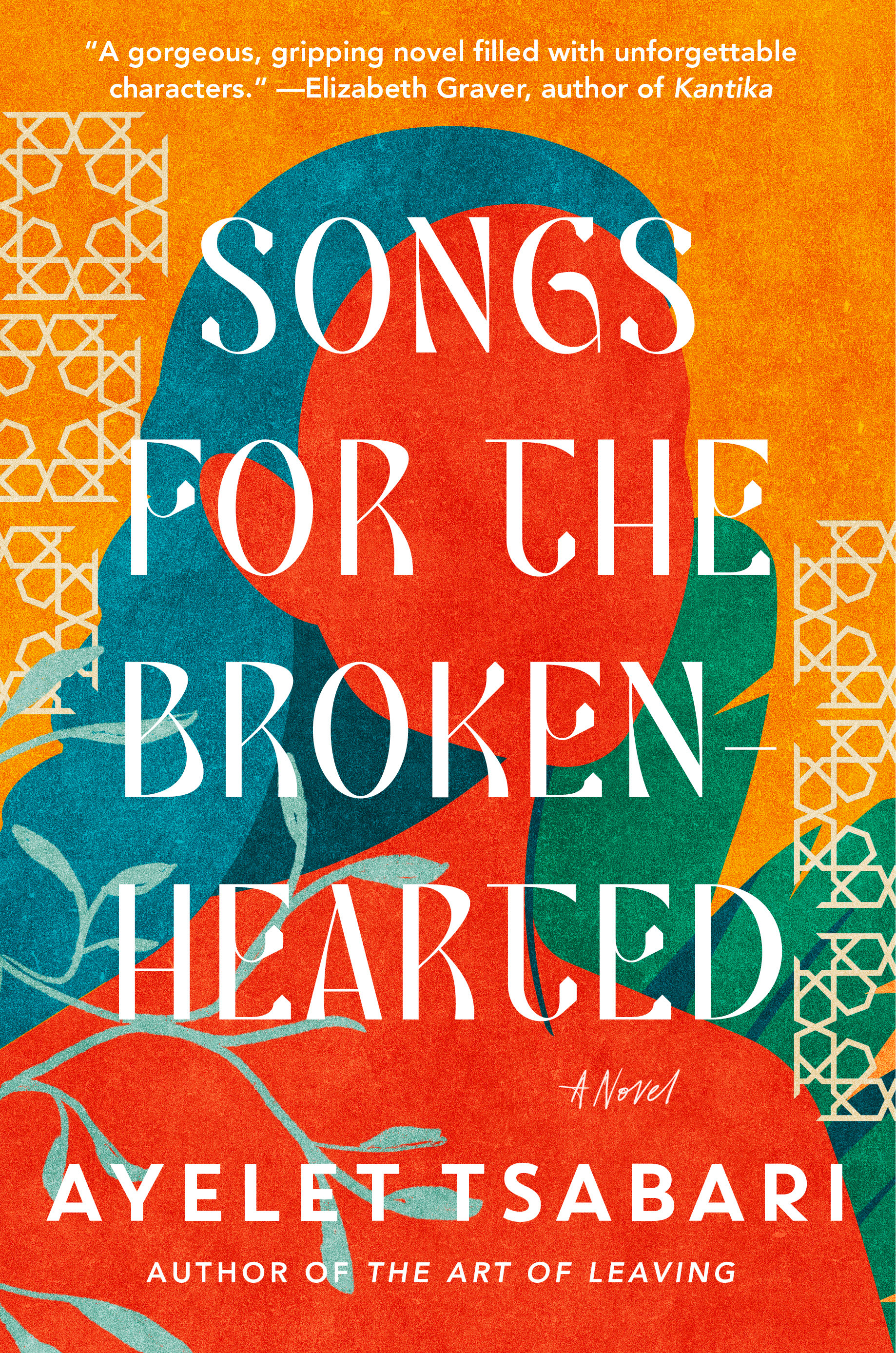
Title: Songs for the Broken-Hearted
Author: Ayelet Tsabari 
Publisher: Random House
Publication date: September 10, 2024
Length: 352 pages
Genre: Historical fiction
Source: Review copy courtesy of the publisher via NetGalley
Rating:

Rating: 5 out of 5.

A young Yemeni Israeli woman learns of her mother’s secret romance in a dramatic journey through lost family stories, revealing the unbreakable bond between a mother and a daughter—the debut novel of an award-winning literary voice.

“A gorgeous, gripping novel filled with unforgettable characters.”—Elizabeth Graver, author of Kantika

1950. Thousands of Yemeni Jews have immigrated to the newly founded Israel in search of a better life. In an overcrowded immigrant camp in Rosh Ha’ayin, Yaqub, a shy young man, happens upon Saida, a beautiful girl singing by the river. In the midst of chaos and uncertainty, they fall in love. But they weren’t supposed to; Saida is married and has a child, and a married woman has no place befriending another man.

1995. Thirty-something Zohara, Saida’s daughter, has been living in New York City—a city that feels much less complicated than Israel, where she grew up wishing that her skin was lighter, that her illiterate mother’s Yemeni music was quieter, and that the father who always favored her was alive. She hasn’t looked back since leaving home, rarely in touch with her mother or sister, Lizzie, and missing out on her nephew Yoni’s childhood. But when Lizzie calls to tell her their mother has died, she gets on a plane to Israel with no return ticket.

Soon Zohara finds herself on an unexpected path that leads to shocking truths about her family—including dangers that lurk for impressionable young men and secrets that force her to question everything she thought she knew about her parents, her heritage, and her own future.

Songs for the Broken-Hearted is a beautiful look into women’s lives, intergenerational misunderstandings and traumas, and the hidden histories of women’s communities and their art. Above all, it’s the story of a woman processing grief over the loss of a mother she never fully knew, learning more about herself through learning about her mother’s life.

It’s 1995, and Zohara is on a break from her doctoral program in New York, vacationing in Thailand, when she’s summoned back home to Israel with the news that her mother Saida has died. The youngest daughter in this Yemeni Israeli family, Zohara has felt disconnected from her homeland and her family, and has never really known her mother in a deep way.

Upon her return, Zohara is confronted by just how much she may have missed, as she begins to learn more about Saida’s role within the family and community, and discovers tapes of her beautiful singing. As Zohara eventually learns, Saida wrote her own songs — and within the world of Yemeni Jewish women, singing is the art form that allows expression, creativity, and emotion, especially important for the immigrant generation who arrived in Israel with limited or no knowledge of Hebrew and were illiterate, as learning was the domain of men.

Through Zohara, we learn more about the history of the Yemeni community within Israel, and as we meet others in her family, we also see the extreme political upheaval of the time. The Oslo accords had only recently been signed, and while Yitzhak Rabin is seen as a hero by some, there’s an increasingly strident and violent opposition building, deeply opposed to the planned concessions of the peace process.

Meanwhile, interspersed with Zohara’s experiences, we have chapters sets in 1950, told from the perspective of Yakub, a young man who meets Saida in the immigrant camp to which they’re assigned upon arrival in Israel from Yemen. Amidst the squalor and deprivations of the camp and the discrimination experienced by the new immigrants, Yakub and Saida find an unexpected connection, as he hears her singing by the river, and they bond over their love of words.

Through Yakub and Saida’s story, as well as the dominant storyline focused on Zohara, we get an inside view of the experience of Yemeni immigrants to Israel, including the horrifying (and real) events surrounding the disappearance of Yemeni children and other children of Jewish immigrants from Arab countries. And yet, there’s also the uplifting elements as we see more of the Yemeni culture, from food to music to family traditions, language, observances, and more.

Songs for the Broken-Hearted is truly a beautiful book, telling a powerful story about family connections and secrets, and showing how grief in its many forms can change the course of individual lives and carry down through generations.

Zohara’s story is affecting, and while it can be frustrating as a reader to see this smart woman make unwise choices, we can easily understand how her loss turns her life upside down and leads her down unexpected paths. Grief also leads to renewed hope, as only through her loss does Zohara come to discover and then immerse herself in the world of women’s songs that was so important to Saida. Through these songs and the community of women who keep them alive, Zohara finds new meaning, learns deeper truths about her mother, and even manages to reignite the passion missing from her academic life.

As Zohara reimmerses herself in family, she also reengages with Israel itself, and is there to witness the upheaval and divisions that culminate in Rabin’s assassination. It’s very heavy, and for readers familiar with that chapter of history, the inevitability of the coming violence can be very painful to experience alongside the characters.

What I loved most about Songs for the Broken-Hearted is the tangible, evocative way the author shares the Yemeni culture. References to specific foods and spices, particular singers and pieces of music — all bring this world to life in a way that feels immersive and immediate.

Songs for the Broken-Hearted is powerful on so many levels, and is an absorbing work of fiction that pulls the reader in right from the start. I loved the cultural aspects as well as the exploration of family bonds, the relationships between mothers and children, and the process of grief and healing.

Highly recommended.

Songs for the Broken-Hearted is author Ayelet Tsabari’s debut novel. She’s previously published a collection of stories (The Best Place on Earth), and a memoir, The Art of Leaving, which I’d especially like to read.

For a taste of Yemeni women’s music, check out the samples below (or search for Yemenite music by Ofra Haza or Gila Beshari, as a starting place — there’s much more available with a bit of looking):

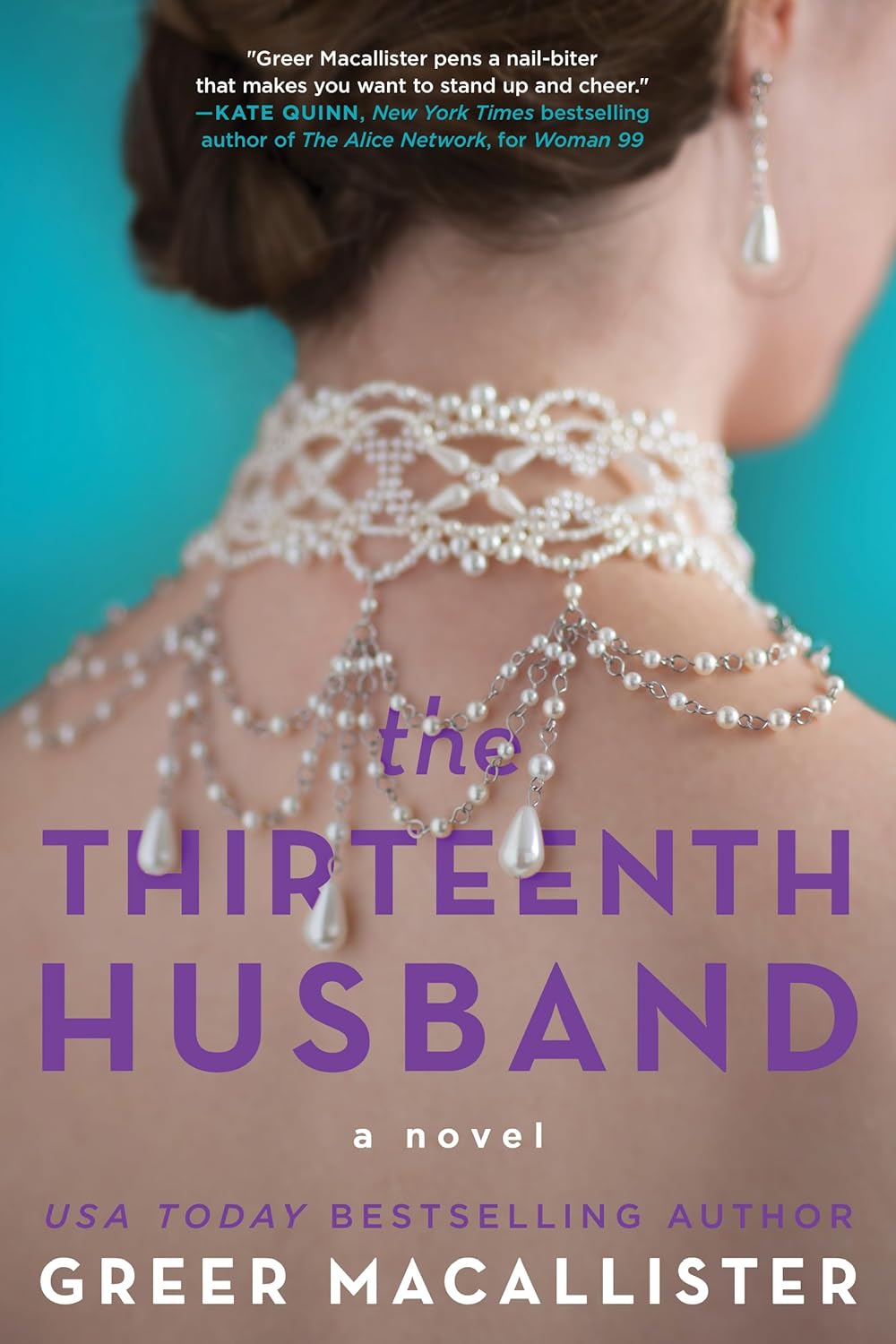
Book Review: The Thirteenth Husband by Greer Macallister

Title: The Thirteenth Husband
Author: Greer Macallister
Publisher: Sourcebooks Landmark
Publication date: August 6, 2024
Length: 336 pages
Genre: Historical fiction
Source: Review copy courtesy of the publisher via NetGalley
Rating:

Rating: 4 out of 5.

Based on a real woman from history, The Seven Husbands of Evelyn Hugo meets The Haunting of Hill House in this fictional tell-all narrated by the glamorous Aimee Crocker, revealing everything from her mischievous days in German finishing school to dinners with Hawaiian royalty to lavish Astor parties in Manhattan. But behind Aimee’s public notoriety, there’s private pain.

When Aimee is ten years old, as the night dips into the witching hour, the Woman in White appears to her. Minutes later, Aimee’s father is dead—and Aimee inherits a fortune. But the Woman in White never really leaves Aimee, appearing as a sinister specter before every tragedy in her life. Despite Aimee’s wealth, her cross-continental travels, and her increasingly shocking progression through husbands, Aimee is haunted by the unidentifiable Woman’s mysterious motivations.  

Tearing through millions of dollars, four continents, and a hearty collection of husbands, real-life heiress Aimee Crocker blazed an unbelievable trail of public scandal, private tragedy, and the kind of strong independent woman the 1880s had never seen. Her life was stranger than fiction and brighter than the stars, and she whirled through her days as if she was being chased by something larger than herself. Greer Macallister brilliantly takes us into her world and spins a tale that you won’t soon forget.

I’d never heard of Aimee Crocker before coming across this new historical novel by talented author Greer Macallister — but I suppose if I’d been around in the 1880s, there’d be no avoiding her. I get the feeling Aimee Crocker was Paris Hilton or Kardashian-level tabloid fodder back in her day. Her every move was analyzed, gossiped over, and fed through the scandal and rumor mill.

Amy (as she was originally named) was the daughter of an extremely wealthy man, and at age 10, upon her father’s death, inherited $10 million — in today’s economy, that would be equivalent to upwards of $275 million.

Amy was never exactly sedate, but in her earlier years, it seemed her mother at least attempted to keep her in line with society expectations. As portrayed in The Thirteenth Husband, Amy marries her first husband after he wins her in a poker game (well, he wins the right to propose to her) — and Amy, always up for adventure, decides to go along with it.

She’s quite the free spirit, as we see over and over again throughout The Thirteenth Husband. Not only does Amy divorce her husband at a time when being a  divorcée is considered shameful, she remarries, travels the world, takes and discards lovers, loses custody of her child in an ugly court case, gets tattooed, and embraces Buddhism, spiritualism, and even the occult.

Images of Amy (miscellaneous sources via Google)

The Thirteenth Husband is written as a first-person account of Amy’s life, through her ups and downs and many marriages. Her life is very much influenced by her interactions with a ghostly presence who visits her in her dreams and seems to offer warnings of loss and disaster. These dream visits propel Amy to seek out palm readers, mediums, and other spiritualists throughout her life, as she seeks the key to understanding her purpose and the hidden messages from the Woman in White.

It’s an interesting character study, as well as a look at the life of someone who refuses to play by society’s rules — and the good and bad outcomes that she faces as a result. Of course, it’s her millions that give her the freedom to behave as she does — someone without that huge fortune (and the power it conveys) could never have gotten away with these types of escapades.

She does make very questionable choices about men and marriage, and in fact (or at least, in the fictionalized version of her life), she only truly marries for love once out of all her relationships. (And no, she doesn’t actually have thirteen husbands… but there’s a reason for the book’s title).

I enjoyed The Thirteenth Husband, but it didn’t quick click for me as a flowing narrative. Amy herself is fascinating, of course, but the book feels very episodic. Each episode is interesting, especially when we learn that many of the most sensational events actually occurred in real life (such as a deadly train crash on her first honeymoon and the kidnapping of her daughter during her divorce proceedings). Still, each episode ends and the story moves on, and it can be difficult to see the connections between parts of her life or how they change her over time.

I’m glad to have read The Thirteenth Husband, and appreciated reading the author’s notes on sources and where she embellished versus sticking to the documented history. It’s also fun to learn that Amy herself was an author! During her lifetime, she published both a book of stories (which she refers to as “fantasies”) and a memoir (which has a defiant name that I love).

  • Moon-Madness and Other Fantasies is free to read/download via Project Gutenberg. (It’s quite short — I read it in one sitting, and was enchanted get a glimpse of Aimee’s imagination)
  • And I’d Do It Again: Aimee’s memoir, available through the usual new and used book sources. I definitely want to read it! Especially based on this preview of the opening pages:

I’m so glad to have been introduced to this remarkable woman through The Thirteenth Husband!

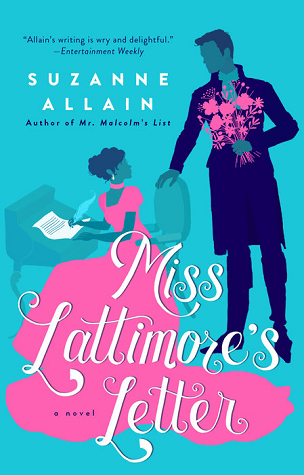
Book Review: Miss Lattimore’s Letter by Suzanne Allain

Title: Miss Lattimore’s Letter
Author: Suzanne Allain
Publisher: Berkley
Publication date: August 10, 2021
Length: 256 pages
Genre: Historical fiction
Source: Library
Rating:

Rating: 4 out of 5.

The woman who never made a match of her own is making matches for everyone else in this hilarious comedy of manners from the author of Mr. Malcolm’s List.

Sophronia Lattimore had her romantic dreams destroyed years ago and is resigned to her role as chaperone for her cousin. Still, she cannot sit idly by when she becomes aware that a gentleman is about to propose to the wrong woman. She sends him an anonymous letter that is soon the talk of the town, particularly when her advice proves to be correct. Her identity is discovered and Sophie, formerly a wallflower, becomes sought after for her “expert” matchmaking skills.

One person who seeks her out is the eligible and attractive Sir Edmund Winslow. As Sophie assists Sir Edmund in his pursuit of a wife, she wishes she could recommend herself as his bride. However, she vows to remain professional and uninvolved while aiding him in his search (especially since the gentleman surely does not return her affections).

Three unexpected arrivals soon show up at Sophie’s door—the man who once broke her heart, a newlywed who is dissatisfied with the match Sophie made for her, and the man madly in love with Sophie’s cousin—all wanting her attention. But when her onetime beau and Sir Edmund both appear to be interested in her, Sophie can’t figure out if she’s headed for another broken heart­­ or for the altar. How can she be expected to help other people sort out their romantic lives when her own is such a disaster?

After thoroughly enjoying The Ladies Rewrite the Rules, released earlier in 2024, I was eager to read more by author Suzanne Allain. I was glad to find Miss Lattimore’s Letter at the library — this 2021 novel is yet another gem of a Regency romance, with an empowered woman steering her own course rather than sitting back and letting life pass her by.

When we meet Sophie — Sophronia — she’s a 28-year-old spinster chaperoning her younger cousin Cecilia through the social season. Sophie once had a chance at marriage, but that fell through — and now she’s fated to sit with the older ladies, wear dull dresses, and watch the pretty young women enjoy their shining moments.

All this changes when Sophie accidentally overhears a private conversation, from which she learns that two impending engagements are between couples who each secretly wish to be with someone else. Sophie thinks that someone should set these people straight before it’s too late… and then decides that that “someone” might as well be her. She writes an anonymous letter, and it works: The couples realign, and the people involved end up with the ones they truly love.

Sophie’s anonymity doesn’t last long, and she’s soon being hailed as a genius matchmaker… even though she didn’t actually do anything but write a letter. Still, she finds herself once again a person generating interest in society, being asked to dance, and suddenly thought of as more than an over-the-hill spinster. When she catches the eye of a kind and witty gentleman, she’s more than a little interested, but the reappearance of the man who broke her heart so many years earlier brings unexpected complications.

Miss Lattimore’s Letter is an utterly engaging read. Yes, making matches and pursuing romances are quite central, but much of the fun is in seeing the friendships and alliances formed between Sophie and the various people in her orbit. It’s delightful to see Sophie take control of her own life, offer advice to women who feel pressured to choose money and titles over true connection, and remain true to herself even while finding a way to allow love back into her life.

The writing is clever and warm-hearted, and there are nods both to Jane Austen and to the joys of being a bookworm, which absolutely appealed to my book-loving little soul.

By the end of the morning, a morning spent in traversing the room back and forth in earnest conversation, the two young ladies were quite pleased at having made the acquaintance of someone who seemed destined to become a friend. They even had that most important characteristic of all in common: they counted the same books among their favorites.

While romance is always at the forefront of the story, I loved that the friendships between the women are treated as relationships that matter, and it’s lovely to see the trust that developments once the women open up to one another and speak honestly.

Sophie’s love triangle is perhaps a bit annoying — clearly, we know who she’s meant to be with, and which of the two men is basically a cad. Still, it’s fun watching it all play out… and we know Sophie is smart enough to make the right choice.

Sophie found it quite astonishing that she had gone eight-and-twenty years without being kissed by even one gentleman and had now been kissed by two different ones in the span of as many days. 

Miss Lattimore’s Letter is a joyful book with a memorable lead character and very clever storytelling. It made me laugh and kept me interested enough to read it straight through in one day. For Regency romance fans, this book is a treat. Don’t miss it!

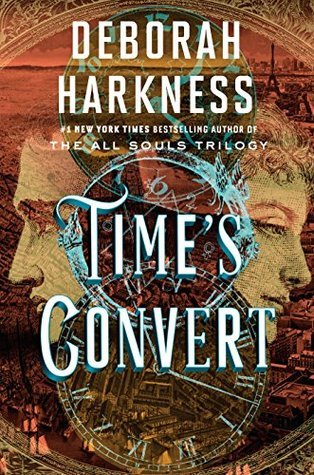
Book Review: Time’s Convert (All Souls, #4) by Deborah Harkness

Title: Time’s Convert
Series: All Souls
Author: Deborah Harkness
Publisher: Viking
Publication date: September 18, 2018
Length: 436 pages
Genre: Supernatural/contemporary/historical fiction
Source: Purchased
Rating:

Rating: 4 out of 5.

From the #1 New York Times bestselling author of A Discovery of Witches, a novel about what it takes to become a vampire.

Set in contemporary Paris and London, and the American colonies during the upheaval and unrest that exploded into the Revolutionary War, a sweeping story that braids together the past and present.

On the battlefields of the American Revolution, Matthew de Clermont meets Marcus MacNeil, a young surgeon from Massachusetts, during a moment of political awakening when it seems that the world is on the brink of a brighter future. When Matthew offers him a chance at immortality and a new life, free from the restraints of his puritanical upbringing, Marcus seizes the opportunity to become a vampire. But his transformation is not an easy one and the ancient traditions and responsibilities of the de Clermont family clash with Marcus’s deeply-held beliefs in liberty, equality, and brotherhood.

A passionate love story and a fascinating exploration of the power of tradition and the possibilities for change, Time’s Convert will delight fans of the All Souls trilogy and all readers of magic, the supernatural, and romance.

I adored the world of Deborah Harkness’s All Souls books back when I first read them, and gobbled up each book in the original trilogy as soon as they were released. At the time of the 3rd book’s publication, it seemed like the story had reached its conclusion. But then, in 2018, the author released a fourth book, Time’s Convert, to continue the story and expand the world of All Souls even further. Naturally, I couldn’t resist, and bought a copy right away… and there it sat on my bookshelf for six years!

With the announcement of a new book in the series coming this summer, I realized it was finally time to dive back in. Fortunately, having recently watched the TV adaptation of A Discovery of Witches, I wasn’t going in cold, which ended up being a very good thing. This is a big, sprawling, complicated fictional world, and without the reminders provided by watching the series, I probably would have been lost.

The framing of Time’s Convert is a human-to-vampire transformation. Phoebe Taylor, the human beloved by Matthew’s son Marcus Whitmore, is ready to be reborn as a vampire in order to truly unite with Marcus and spend eternity with him. Making a vampire is serious business, with many terrible ways it can go wrong, and the de Clermont clan is taking no chances. Under the supervision of elder family members Miriam and Freyja, Phoebe’s rebirth will be carefully controlled and monitored each step of the way.

Unfortunately for Marcus, part of the process means that he cannot see Phoebe again until she is 90 days old as a vampire — infant vampires are too unpredictable and impulsive to make good choices, and Phoebe must actually choose to be with Marcus before they are officially mated. This leaves Marcus with a summer of anxious waiting, and he passes the time with Matthew and Diana, who hope to support him and ease his obsessive revisiting of the old memories that plague him.

Meanwhile, Matthew and Diana are dealing with potential crises of their own. Their toddler twins, Becca and Philip, are something unheard of in their world — a melding of vampire and witch genetics. Both display unusual traits, and raise alarms for others in the family, who worry that their powers, if not placed under tight control, could spell disaster for them all.

The book shifts focus between the three main plotlines: Phoebe’s transformation, Marcus’s history, and Matthew, Diana, and the twins.

Phoebe’s story is fascinating. We’ve never spent this kind of time in the series on the day to day ritual and challenges of vampire infancy and development. Through Phoebe, we learn all sorts of interesting bits and pieces about vampire appetites, food sources, sensitivity to light and sound, and more.

Marcus’s story is truly the heart of Time’s Convert, taking up more space than the other two plotlines. We go back to colonial New England, where we see Marcus’s life as the son of a cruel, domineering father, and what he must do to break free. Eventually, Marcus leaves home to join the revolution, and is present at the battle of Bunker Hill as well as with Washington’s forces in Pennsylvania and elsewhere. He learns about healing and becomes a surgeon, although without the means to get a formal education in medicine. Dying of one of the rampant fevers in a military camp, Marcus is offered the chance for new life by Matthew, and the next phase of his life begins.

We spend the next large chunk of time with Marcus in Paris, where he becomes embroiled with Marat, Danton, and other leaders of the French revolution. Only through the intervention of the de Clermont patriarch is Marcus finally forced to leave Paris before the Terror of the revolution ensnares him. From there, Marcus’s life continues in Edinburgh, New Orleans, and elsewhere, and finally leads him to where we know him in the present day.

As for Diana and Matthew, it’s quite interesting to see them grapple with understanding their children’s powers. They must struggle with raising their children as they wish while also addressing the concerns and even demands of the family’s leader, who wants them controlled no matter what. Also, there’s a very cute griffin!

Time’s Convert is under 500 pages, but it feels much longer. It’s jam-packed with people, places, historical events, and the internal mythology of the series. Many chapters and interludes move quickly, but there’s an overall heaviness to the reading experience — there’s just so much to take in.

The Marcus sections seem to move the slowest, especially before his vampire transformation. Until that point, it’s straight-up historical fiction set during the American revolution, which is fine, but not really what I come to the All Souls books to experience. Once Matthew gets involved, things pick up quite a bit, and the sections set in Paris and New Orleans are much more engaging as well.

Overall, I’m very happy to have returned to the world of All Souls! Part of me wishes I’d taken the time to reread the first three books before reading Time’s Convert — but honestly, who has the time? If I’d waited to do a reread, chances are I never would have gotten to Time’s Convert.

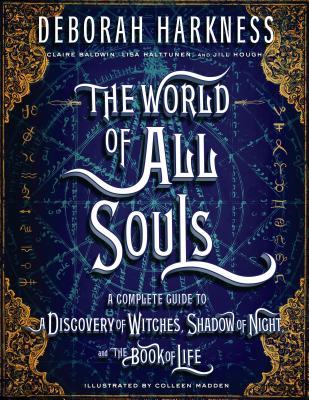
Being familiar with the details of the earlier books in the series is crucial for appreciating Time’s Convert and making sense of the complicated interconnectedness of the details and plot points. As I mentioned, the TV adaptation of the trilogy is a great shortcut — it’s not perfectly faithful to the books, but it’s close enough to provide an immersion back into that world. Another wonderful resource is The World of All Souls, a reference book (also released in 2018) that includes detailed synopses, character information, maps, and more. I kept it handy throughout this past week while reading Time’s Convert.

The next book in the series, The Black Bird Oracle, will be released in July 2024. I’ve already preordered my copy, and can’t wait to get started!

Synopsis (Goodreads):

Diana Bishop journeys to the darkest places within herself—and her family history—in the highly anticipated fifth novel of the beloved #1 New York Times bestselling All Souls series.

Deborah Harkness first introduced the world to Diana Bishop, Oxford scholar and witch, and vampire geneticist Matthew de Clairmont in A Discovery of Witches. Drawn to each other despite long-standing taboos, these two otherworldly beings found themselves at the center of a battle for a lost, enchanted manuscript known as Ashmole 782. Since then, they have fallen in love, traveled to Elizabethan England, dissolved the Covenant between the three species, and awoken the dark powers within Diana’s family line.

Now, Diana and Matthew receive a formal demand from the Congregation: They must test the magic of their seven-year-old twins, Pip and Rebecca. Concerned with their safety and desperate to avoid the same fate that led her parents to spellbind her, Diana decides to forge a different path for her family’s future and answers a message from a great-aunt she never knew existed, Gwyneth Proctor, whose invitation simply reads: It’s time you came home, Diana.

On the hallowed ground of Ravenswood, the Proctor family home, and under the tutelage of Gwyneth, a talented witch grounded in higher magic, a new era begins for Diana: a confrontation with her family’s dark past, and a reckoning for her own desire for even greater power—if she can let go, finally, of her fear of wielding it.

Book Review: Shelterwood by Lisa Wingate

Title: Shelterwood
Author: Lisa Wingate
Publisher: Ballantine Books
Publication date: June 4, 2024
Length: 368 pages
Genre: Historical fiction
Source: Review copy courtesy of the publisher via NetGalley
Rating:

Rating: 3 out of 5.

From the #1 New York Times bestselling author of Before We Were Yours comes a sweeping novel inspired by the untold history of women pioneers who fought to protect children caught in the storm of land barons hungry for power and oil wealth.

Oklahoma, 1909
. Eleven-year-old Olive Augusta Radley knows that her stepfather doesn’t have good intentions toward the two Choctaw girls boarded in their home as wards. When the older girl disappears, Ollie flees to the woods, taking six-year-old Nessa with her. Together they begin a perilous journey to the rugged Winding Stair Mountains, the notorious territory of outlaws, treasure hunters, and desperate men. Along the way, Ollie and Nessa form an unlikely band with others like themselves, struggling to stay one step ahead of those who seek to exploit them . . . or worse.

Oklahoma, 1990. Law Enforcement Ranger Valerie Boren O’dell arrives at Horsethief Trail National Park seeking a quiet place to balance a career and single parenthood. But no sooner has Valerie reported for duty than she’s faced with local controversy over the park’s opening, a teenage hiker gone missing from one of the trails, and the long-hidden burial site of three children deep in a cave. Val’s quest to uncover the truth wins an ally among the neighboring Choctaw Tribal Police but soon collides with old secrets and the tragic and deadly history of the land itself.

In this emotional and enveloping novel, Lisa Wingate traces the story of children abandoned by the law and the battle to see justice done. Amid times of deep conflict over who owns the land and its riches, Ollie and Val traverse the wild and beautiful terrain, each leaving behind one life in search of another.

In Shelterwood, the newest novel by the bestselling author of Before We Were Yours, a dual timeline narrative traces events in Oklahoma in 1909 and 1990, eventually revealing threads that bind the two story arcs together.

In 1909, the story focuses on 11-year-old Olive (Ollie), whose stepfather terrorizes her and the two young orphaned Choctaw girls that live with her family, while her mother is lost to the fog of opium addiction. When the stepfather’s sexual abuse of the older girl, Hazel, leads to her disappearance, and he turns his attention to young Nessa, Ollie orchestrates their escape.

In 1990, Valerie is a park ranger who has relocated with her young son Charlie to Oklahoma for the opening of the new Horsethief Trail National Park. She’s looking for a fresh start for the two of them after her husband’s death, but almost immediately she becomes embroiled in local controversies, as bodies are found in the park and a local girl comes to Val for help.

What connects the two stories is the subject of land rights and manipulation. In 1909, robber barons and other powerful men force adoptions, marriages, or guardianships on native orphans in order to claim their land rights. In 1990, corrupt businesses encroach on both park land and ancestral native land for illegal profits. In both timelines, those without power find themselves fighting for survival as well as to maintain their independence and heritage.

The 1909 story follows Ollie and Nessa as they desperately struggle to avoid detection, hiding out in the wild in a place they call Shelterwood and creating a small community with other cast-off, runaway, or abandoned children. And in 1990, as Val digs into a potential missing persons case, she uncovers patterns of abuse and theft that go back decades.

Each storyline has interesting elements, but I found the 1909 chapters more compelling, as they paint a picture of the societal fractures and political pressures of the era. It was interesting to see real historical figures, such as politician and activist Kate Barnard, interacting with the local community, and to see how the hotly debated topics of child labor laws and land rights so directly impact Ollie, Nessa, and the other children.

Val’s story takes a while to find its footing, but ultimately there’s a good payoff in terms of resolving the missing person case and making the connection back to the 1909 plot.

Somehow, though, I found myself mostly disengaged from the characters. On the surface, their situations are interesting and challenging — and yet, I never felt emotionally invested or that I got to know them on a deeper level.

Part of the problem for me was a lack of information. In both timelines, we’re dropped straight into the action, and have to piece together what the historical context means for the characters. Starting the book without much familiarity with that particular time and place, it was often confusing to sort out the reasons for the various conditions and the political forces at play. I don’t always love flat-out exposition in novels, but this book could have used some more establishment of context in order to more firmly ground the story.

I was interested enough to stick with the book all the way to the end, but found myself a bit checked out for chunks of the story. I’m glad I saw it through, but was left feeling a bit flat about the overall experience.

Still, it was eye-opening to learn more about life in both 1909 and 1990 Oklahoma, and I appreciated how the two timelines fit together in the end. I could see this being a good book group pick for people who enjoy historical fiction set in the 20th century.

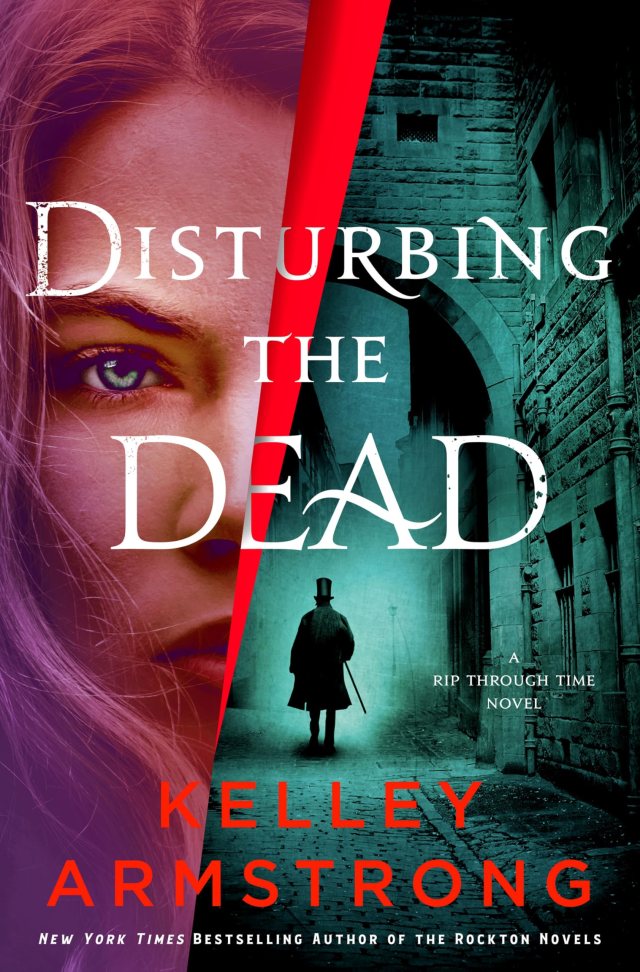
Book Review: Disturbing the Dead (A Rip Through Time, #3) by Kelley Armstrong

Title: Disturbing the Dead
Series: A Rip Through Time, #3
Author: Kelley Armstrong
Publisher: Minotaur Books
Publication date: May 7, 2024
Length: 352 pages
Genre: Historical fiction/mystery
Source: Review copy courtesy of the publisher via Netgalley
Rating:

Rating: 5 out of 5.

Disturbing the Dead is the latest in a unique series with one foot in the 1890s and the other in the present day. The A Rip Through Time crime novels are a genre-blending, atmospheric romp from New York Times bestselling author Kelley Armstrong.

Victorian Scotland is becoming less strange to modern-day homicide detective Mallory Atkinson. Though inhabiting someone else’s body will always be unsettling, even if her employers know that she’s not actually housemaid Catriona Mitchell, ever since the night both of them were attacked in the same dark alley 150 years apart. Mallory likes her job as assistant to undertaker/medical examiner Dr. Duncan Gray, and is developing true friends―and feelings―in this century.

So, understanding the Victorian fascination with death, Mallory isn’t that surprised when she and her friends are invited to a mummy unwrapping at the home of Sir Alastair Christie. When their host is missing when it comes time to unwrap the mummy, Gray and Mallory are asked to step in. And upon closer inspection, it’s not a mummy they’ve unwrapped, but a much more modern body.

Kelley Armstrong is rapidly becoming a must-read author for me. Disturbing the Dead is the 3rd book in her excellent A Rip Through Time series… and I’ve also been head-over-heels for the A Stitch in Time series (of which I’ve read half so far). While both series have a timeslip/time travel element, they are completely different in tone and focus… and I’m loving them both.

A Stitch in Time has a romantic focus, with a woman slipping through a “stitch” that allows her to travel back and forth between our world and the Victorian era. Each book in the series has a different woman as the main character, but in all cases, travel back and forth is possible, and the characters must learn to fit in and blend in where they land, while also sorting out the complications of love across time.

In the A Rip Through Time series, a different core concept comes into play. 21st century detective Mallory Atkinson accidentally gets pulled through a rip in time during a visit to Edinburgh. When she is attacked and strangled in a dark alley — and the same thing happens to a young housemaid in the exact same place but in the 19th century — Mallory’s consciousness ends up inhabiting the housemaid’s body.

(There’s a lot more to it, so check out my review of the first book for more details).

Fortunately for Mallory, Catriona is employed as a servant in the home of eccentrics, a brother and sister who are devoted to science and social reform. Dr. Duncan Grey is an undertaker and the unofficial coroner of the Edinburgh police force; his sister Isla is a widow known for her independent thinking and her skills in the chemistry lab. Over the course of the first two books, they come to understand that the person they knew as Catriona isn’t actually Catriona any longer. They befriend Mallory, and her knowledge of 21st century police work and forensics quickly makes her an integral part of the household.

Here in Disturbing the Dead, six months have passed since Mallory’s appearance in their midst. Mallory has been promoted and is now officially Duncan’s assistant. Besides Duncan and Isla, police detective (and close family friend) Hugh McCreadie is also in on Mallory’s secret. Together, this group uses Mallory’s advanced knowledge to carry out investigations and apply a more rigorous scientific approach to Victorian era police work.

The action kicks off with an invitation to a mummy unwrapping. Egyptian artifacts and archaeology are all the rage, and Sir Alistair Christie is hosting a party to share his latest find. When the mummy is unwrapped, however, a very fresh corpse is discovered inside, and Mallory and Duncan find themselves once more in the thick of a complicated murder investigation.

The mystery is the driving force of the novel, and it’s a good one, with plenty of subjects, clues, motives, and red herrings. There’s also a very entertaining side plot about a pulp writer who’s started publishing lurid accounts of Mallory and Duncan’s exploits, much to their embarrassment (and Mallory’s annoyance, as the writer portrays her as an empty-headed girl whose main function is to look impressed — and sexy — while Duncan makes all the discoveries).

One of the many delights of the series is seeing Mallory being herself in the 19th century. Unlike the situation facing the characters in the Stitch in Time series, Mallory doesn’t need to make an effort to conceal herself or blend while amongst her friends. Yes, she must adapt to the time by dressing in corsets and adopting the appropriate social customs, but at home, her speech and knowledge are full of 21st century expressions, swearing, and casual sharing of unknown facts.

“Like people in my world who still think you can catch the common cold — or catarrh — by going out in cold weather, despite the fact we’ve known for generations that it’s caused by a virus.”

“Catarrh is caused by… what?” Gray says.

“Whoops. Sorry. Spoilers. Moving right along…”

She’s just so much fun, and scenes of her with Isla and Duncan are always a delight.

He opens his hand to reveal a derringer pistol. I may let out the kind of noise others make on seeing a puppy.

There a shocking development in the latter half of the book that left me gasping and dismayed. I did not see that coming! The author does a fabulous job of making the situation (no spoilers!) vivid and real, and yet also manages to pull off a great resolution to this particular twist.

Overall, Disturbing the Dead is a fantastic addition to a great series, and I can’t wait for more! Highly recommended — but definitely start at the beginning of the series.

Book Review: The River We Remember by William Kent Krueger

Title: The River We Remember
Author: William Kent Krueger
Publisher: Atria Books
Publication date: September 5, 2023
Length: 421 pages
Genre: Historical fiction
Source: Purchased
Rating:

Rating: 4.5 out of 5.

On Memorial Day in Jewel, Minnesota, the body of wealthy landowner Jimmy Quinn is found floating in the Alabaster River, dead from a shotgun blast. The investigation falls to Sheriff Brody Dern, a highly decorated war hero who still carries the physical and emotional scars from his military service. Even before Dern has the results of the autopsy, vicious rumors begin to circulate that the killer must be Noah Bluestone, a Native American WWII veteran who has recently returned to Jewel with a Japanese wife. As suspicions and accusations mount and the town teeters on the edge of more violence, Dern struggles not only to find the truth of Quinn’s murder but also put to rest the demons from his own past.

Caught up in the torrent of anger that sweeps through Jewel are a war widow and her adolescent son, the intrepid publisher of the local newspaper, an aging deputy, and a crusading female lawyer, all of whom struggle with their own tragic histories and harbor secrets that Quinn’s death threatens to expose.

The River We Remember was my book group’s pick for April, and we were fortunate enough to have a zoom chat with the author. I myself was late in finishing, so I attended the chat having only read half the book… but that’s okay. He was gracious and engaging, the group avoided giving spoilers on the central mystery, and all in all, it was a wonderful event. And then I finished the book the next day!

OUR LIVES AND the lives of those we love merge to create a river whose current carries us forward from our beginning to our end. Because we are only one part of the whole, the river each of us remembers is different, and there are many versions of the stories we tell about the past. In all of them there is truth, and in all of them a good deal of innocent misremembering.

In The River We Remember, a Minnesota community is rocked by the violent death of one of its leading residents. Jimmy Quinn was not loved — not by a long shot — but as the biggest landowner in the area, he was powerful, connected, and in many cases, someone to fear. Lots of people would have had grudges, resentment, even hostility, but was his death murder, suicide, or just a gruesome accident?

The story unfolds through the eyes of multiple characters living in the small town of Jewel. Chief among these is Sheriff Brody Dern, a veteran of WWII with visible and invisible scars and a complicated personal life. At various points, though, we see through the eyes of many different people — there’s a sense of the community being the true main character. All the people we meet — deputies, a diner owner, teen boys, local farmers, a lawyer, a reporter — are connected and have histories that weave together, with their actions affecting one another in an intricate chain of events.

The mystery of Jimmy Quinn’s death is the central plot thread of the novel, but as this unfolds, we encounter themes around war and survival, guilt, growing up with violence, generational trauma, and the ripple effects of hate, bigotry, and racism. There’s also the concept of home — what makes a community, a piece of land, or even a specific person feel like home? Where do people find belonging?

I won’t go further into plot details, but will sum up by saying that while the mystery has a satisfying resolution, the true beauty of this book is the outstanding character depictions. Each of the people we meet are distinct and have complex inner lives that come into play as they interact. The whole is emotional and evocative, allowing the reader to experience the time and place of the story in a way that feels authentic and powerful.

Simply put, The River We Remember is a beautiful novel. This is my third book by this author (I also loved his two other stand-alones, This Tender Land and Ordinary Grace), and I look forward to starting his long-running Cork O’Connor series.

Book Review: The Evolution of Annabel Craig by Lisa Grunwald

Title: The Evolution of Annabel Craig
Author: Lisa Grunwald
Publisher: Random House
Publication date: April 16, 2024
Length: 320 pages
Genre: Historical fiction
Source: Review copy courtesy of the publisher via NetGalley
Rating:

Rating: 4.5 out of 5.

A young Southern woman sets out on a journey of self-discovery as the infamous 1925 Scopes Trial tests her faith and her marriage in this moving novel from the author of Time After Time and The Irresistible Henry House.

“Lisa Grunwald is a national treasure. . . . An essential American story from a master craftsman.”—Adriana Trigiani, New York Times bestselling author of The Good Left Undone

I had never questioned a miracle, witnessed a gunfight, or seen a dead body. . . . I had thought I knew exactly what I wanted and what I didn’t. Before the summer was over, all that and much more would change.

Annabel Hayes—born, baptized, and orphaned in the sleepy conservative town of Dayton, Tennessee—is thrilled to find herself falling quickly and deeply in love with George Craig, a sophisticated attorney newly arrived from Knoxville. But before the end of their first year of marriage, their lives are beset by losses. The strain on their relationship is only intensified when John T. Scopes is arrested for teaching Charles Darwin’s theory of evolution at the local high school.

Foreshadowing today’s culture wars, the trial against Scopes is a spectacle unlike any the country has seen. William Jennings Bryan—a revered Southern politician—joins the prosecution, pitting himself and his faith against the renowned defense attorney Clarence Darrow. Journalists descend in a frenzy, thrusting the town and its citizens into the national spotlight. And when George joins the team defending Scopes, Annabel begins to question both her beliefs and her vows.

As the ongoing trial divides neighbor against neighbor, it also divides the Craigs in unexpected ways. But in the midst of these conflicts—one waged in an open courtroom, the other behind closed doors—Annabel will discover that the path to her own evolution begins with the courage to think for herself.

Happy Book Birthday to this wonderful historical novel! The Evolution of Annabel Craig is the story of one woman’s personal awakening (and yes, there are references to The Awakening by Kate Chopin), set in the midst of one of the pivotal societal earthquakes of the early 20th century.

Prior to reading The Evolution of Annabel Craig, I’d had a vague familiarity with the “Scopes Monkey Trial” — I knew it centered around a battle between evolutionists and creationists. Beyond that, though, I didn’t actually know much of anything — not even where the event took place or what the name “Scopes” represented.

In this fascinating novel, Annabel Craig is the readers’ eye and ears in the town of Dayton, Tennessee as their quiet little community gets turned upside down. In 1925, the State of Tennessee passed the Butler Act, making it a criminal offense to teach evolution in public schools. The leading citizens of Dayton realize they had a potential goldmine on their hands — why not challenge the law in their own town, and reap the reward of the inevitable news coverage that would bring them tourism and an economic boom? The town leaders recruit John Scopes, a high school football coach who’d subbed for a science teacher earlier in the year. Since the standard biology textbook included a few pages on Darwin and evolution, Scopes must have taught evolution in the school. The fact that Scopes doesn’t actually remember covering evolution didn’t matter — he agrees to be the town’s test subject, and to be arrested for violating the Butler Act.

Beyond the details of the Scopes trial itself, The Evolution of Annabel Craig is truly Annabel’s story. The daughter of strawberry farmers who were very much in love, Annabel finds herself orphaned as a teen, with only her faith and the kindness of her community to sustain her. A steady churchgoer, Annabel never questions the Bible or her religion, and her belief in God is central to who she is as a person.

When Annabel marries the handsome young lawyer who sweeps her off her feet, she finds partnership and love, even though George isn’t as committed to church attendance as Annabel is, and has even been seen to doze off a time or two. Their perfect marriage begins to show strain after a disastrous court case leaves George distraught, and cracks between the couple start to grow larger.

The tensions are only exacerbated when George is offered a place on the Scopes defense team, where he’ll work alongside the illustrious Clarence Darrow, a well-known agnostic. Annabel can’t understand how George can stand against faith like this, but she also finds herself swept up in the town’s excitement, especially once a journalist — a woman! — is housed with Annabel and George, and once Annabel’s photography hobby shows promise of becoming a profession.

The trial itself is fascinating. I loved the chapters showing the developing split in Dayton, as the devout Christians and the followers of science square off and stake their claims. The arrival of expert witnesses adds another layer of interest, and I particularly enjoyed a brief scene showing Annabel in conversation with a visiting rabbi.

Beyond the historical context and the details of the trial, Annabel’s journey is wonderful, heartbreaking, and empowering. She’s devastated by the breakdown of her marriage, left at sea once she’s forced to question the absolutes she’s been raised to believe, crushed to have close friends turn on her for being on what they see as the wrong side. Through it all, Annabel starts to question her place in the world and to ponder what she truly wants, while also refusing to be cowed into abandoning the faith that’s sustained her.

Author Lisa Grunwald crafts a story that weaves together the personal and political, as we see the unfolding courtroom drama while getting to know a seemingly ordinary woman whose life is much richer and deeper than others might assume. Annabel is a wonderful character, sympathetic and strong, but also very much a flesh-and-blood, flawed person who tries to find the right way forward.

I highly recommend The Evolution of Annabel Craig. The historical details are fascinating, and so are the people — especially Annabel — at the heart of the story. Don’t miss it.

Note: Lisa Grunwald’s previous novel, Time After Time was one of my favorite books of 2020. If you haven’t read it, drop everything and grab a copy! Now I need to explore even more of her books…

Travel reading wrap-up: A batch of mini-reviews — March 2024

Laundry is done and (almost) put away, suitcases are stored, and I’m settling back into being home after a terrific week away with family.

And of course, I have book reviews to share! The idea of writing individual posts for all of these is way too daunting, so once again, here’ a wrap-up of what I read on my vacation.


The Red Notebook by Antoine Laurain: At a slim 159 pages, this was a quick but absorbing little novel that was a perfect choice for beachside reading. When a bookseller finds a discarded handbag on the streets of Paris, he feels compelled to find its owner. Her ID is missing, but the odds and ends inside provide clues that he follows, not really understanding why he feels drawn to this mystery woman or why it’s so important to him that he find her. Meanwhile, the bag’s owner has her own set of experiences, and seeing how the two inch closer to discovering once another is fascinating.

Beautiful written and thoughtful, this is a moving and lovely reading experience.

Rating:

Rating: 4.5 out of 5.

The Bookseller of Inverness by S. G. MacLean: My book group’s pick for March is this immersive historical novel, set in Inverness in the 1750s. There’s a mystery to be solved, which introduces us to the dangerous world of Jacobites and spies in post-Culloden Inverness. The central character is a bookseller, (and how could that not be awesome?), and I really enjoyed the intricate plotting, the danger and intrigue, and the cast of characters.

Rating:

Rating: 4 out of 5.


The Secret Countess by Eva Ibbotson: I adored this riches-to-rags-to-riches story of a lovely Russian Countess whose family loses everything when they flee the Russian revolution. Anna is a delightful character with a sparkling personality. Her quest to support her now impoverished family by working as a housemaid on a grand estate is the stuff of fairy tales and has a Cinderella-esque flavor, while also being uniquely its own story. The dialogue and writing simply glow. It’s sweet, funny, and utterly charming. And now, I must find more of this author’s books to read!

Rating:

Rating: 5 out of 5.

Camp by L. C. Rosen: Loved, loved, loved this adorable, funny, touching YA novel about a boy in love… who decided that this summer at Camp Outland will be the summer the boy of his dream finally falls for him — even if he has to change everything about himself to make it happen. There’s so much more to it than preaching a lesson of never change yourself to get a boyfriend or if you lie about who you are, then how he can he actually love the real you?

I’m not the least bit surprised by how much I enjoyed this book, since this author is just so consistently great. (Also, any book set at a summer camp immediately has an edge when it comes to winning my nostalgic heart.) Camp includes memorable characters embodying many different facets of a supportive and loving LGBTQIA+ community. Beyond the hijinks and central romance, the characters are given room to talk about themselves and issues of identity and belonging, and I just loved them all so much. Plus, there’s oodles of awesome musical theater… so a big win all the way around!

Rating:

Rating: 5 out of 5.

What do you know? I loved every book I read on this trip!

Save

Save

Save

Save

Book Review: Disappearance of a Scribe (Eye of Isis, #2) by Dana Stabenow

Title: Disappearance of a Scribe
Series: Eye of Isis, #2
Author: Dana Stabenow
Publisher: Head of Zeus
Publication date: January 18, 2022
Length: 272 pages
Genre: Historical fiction
Source: Purchased
Rating:

Rating: 4 out of 5.

The second in the trilogy of Ancient Egyptian crime novels that began with 2018’s Death of an Eye.

Two Alexandrian fishermen come across a horrifying sight – the body of a skeleton floating upright at the bottom of the sea, anchored in place by a cement weight around his feet. In Alexandria’s rough-and-tumble construction trade they call that ‘being fitted with a pair of Rhakotis sandals’ and what’s worse, he’s the second such victim in two years.

Queen Cleopatra is busy rebuilding her city after the Alexandrian War and these murders are not to be allowed to interfere with this primary task, so she charges Tetisheri, her new Eye of Isis, with the task of finding out who these men were, when they were murdered, and, above all, why.

Dana Stabenow’s fascinating Eye of Isis historical mystery series continues with Disappearance of a Scribe… and it’s just as intriguing as the first book!

Main character Tetisheri, whom we met in book #1, is the Queen’s Eye, the secret investigator who reports directly to Cleopatra and acts on her behalf. She’s also a member of Alexandria’s upper class, partnering with her uncle in a lucrative import business, and as such, is well connected throughout the tangled layers of Alexandrian society.

The mystery in Disappearance of a Scribe circles around two bodies found at sea, anchored by what we’d consider “cement shoes”. Who these people are, who killed them, and why, are Tetisheri’s focus, and as she digs into this shocking crime, she uncovers corruption among the city’s influential builders and ends up in danger herself.

The mystery is unraveled piece by piece, and it’s quite exciting to see Tetisheri chase down leads in a time and place where modern forensics and detective techniques are unknown. If you’d told me ahead of time that a major piece of the story centers on construction materials, I probably would have responded with a very rude yawn… but actually, the story is very interesting, and I appreciated seeing how differently the priorities and rules of this society work in contrast to our own.

I would have liked to see a little bit more happening on Tetisheri’s home front — I do enjoy the brief glimpses we get of her personal life — as well as more with Cleopatra herself directly involved. Still, the scenes we do get with Cleopatra are wonderful, and I love how her power and charisma shine through with every sentence she utters.

In some ways, I was able to enjoy Disappearance of a Scribe even more than I did Death of an Eye, since this time around, I was already familiar with many of the names and places in the story, and felt more comfortable with the basic structure of the politics and alliances of Alexandria at that time.

Tetisheri is a terrific character, and I can’t wait to see what’s next for her. I shouldn’t be the least bit surprised that I enjoy these books — the author’s Kate Shugak series is an absolute favorite, and I read these Egyptian mysteries secure in the knowledge that as a reader, I’m in very good hands.

Next up: Book #3, Theft of an Idol: