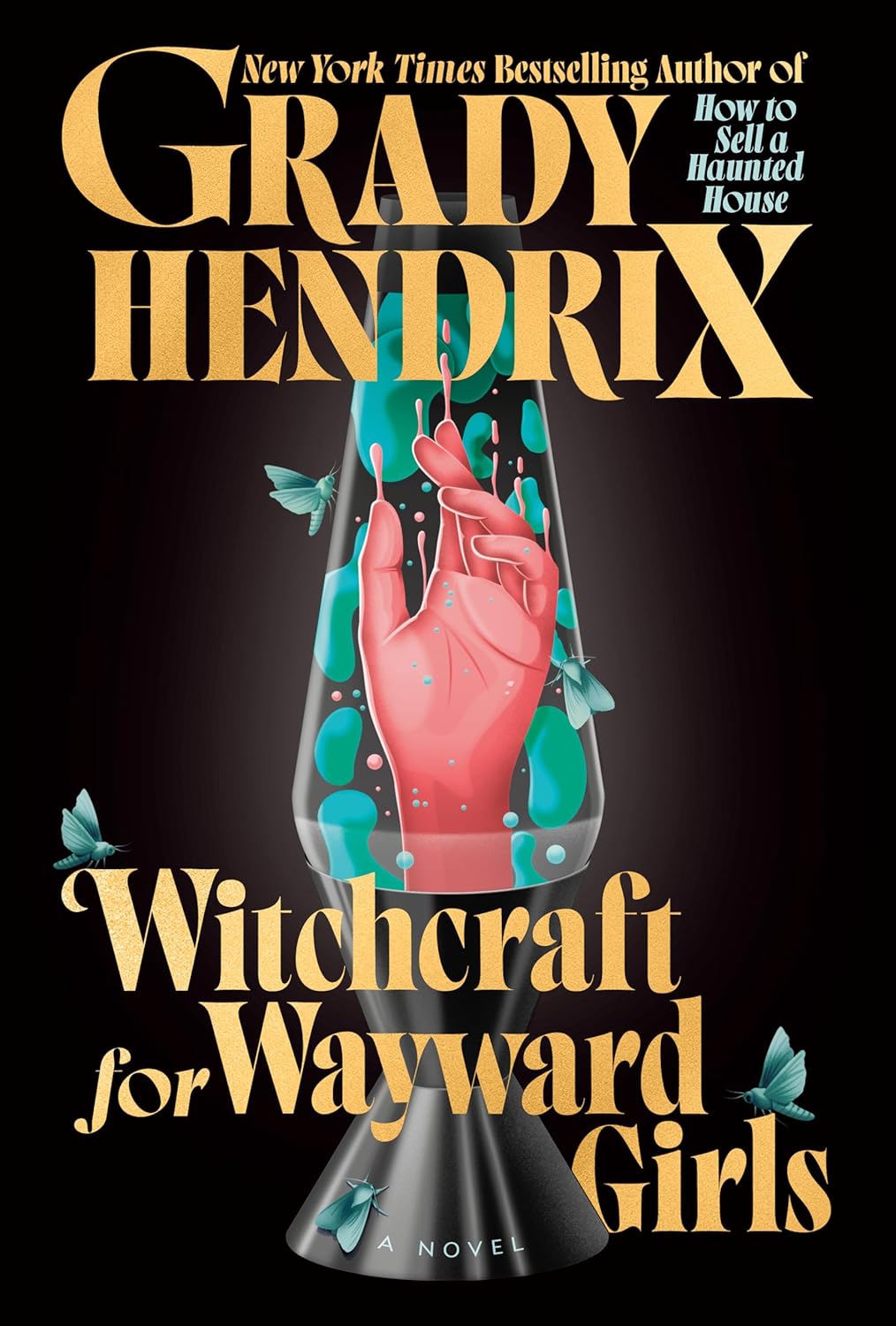
Book Review: Witchcraft for Wayward Girls by Grady Hendrix

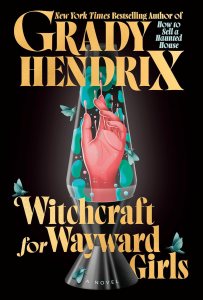
Title: Witchcraft for Wayward Girls
Author: Grady Hendrix
Publisher: Berkley
Publication date: January 14, 2025
Length: 482 pages
Genre: Horror
Source: Purchased
Rating:

Rating: 5 out of 5.

There’s power in a book…

They call them wayward girls. Loose girls. Girls who grew up too fast. And they’re sent to the Wellwood Home in St. Augustine, Florida, where unwed mothers are hidden by their families to have their babies in secret, give them up for adoption, and most important of all, to forget any of it ever happened.

Fifteen-year-old Fern arrives at the home in the sweltering summer of 1970, pregnant, terrified and alone. Under the watchful eye of the stern Miss Wellwood, she meets a dozen other girls in the same predicament. There’s Rose, a hippie who insists she’s going to find a way to keep her baby and escape to a commune. And Zinnia, a budding musician who knows she’s going to go home and marry her baby’s father. And Holly, a wisp of a girl, barely fourteen, mute and pregnant by no-one-knows-who.

Everything the girls eat, every moment of their waking day, and everything they’re allowed to talk about is strictly controlled by adults who claim they know what’s best for them. Then Fern meets a librarian who gives her an occult book about witchcraft, and power is in the hands of the girls for the first time in their lives. But power can destroy as easily as it creates, and it’s never given freely. There’s always a price to be paid…and it’s usually paid in blood.

Grady Hendrix writes marvelously inventive horror novels, with psychological and physical terrors around every corner. Here in Witchcraft for Wayward Girls, the greatest horror is not in the supernatural elements, but in the treatment of the pregnant teens sent in disgrace to the Wellwood Home.

“You are here because you acted like a barnyard animal,” Miss Wellwood said. “You took the glory of your womanhood and threw it in the mud.”

The girls at the home are young, and at the complete mercy of their families, the staff of the home, and the doctors. They are never allowed to forget just how awful they are, how little they matter, and how little control they have over anything that happens to their bodies. They are all utterly ignorant as well — they know what they did to get pregnant, but have no idea what childbirth actually entails.

“You all don’t need to worry yourselves about what’s going to happen when you go to the hospital,” he said. “Because it’s none of your business. You just do what the doctors say and you’ll be fine.”

Fern is distraught when her father angrily bustles her off the home and leaves her there without even a good-bye. “Fern” isn’t even her name — all girls are given new names upon arrival, to preserve anonymity and to make the entire experience as separate from their real lives as possible. All Fern wants is to go home, to forget this ever happened, and to get back to her school, her friends, and the senior play.

But the harsh realities of pregnancy are impossible to ignore, especially once Fern witnesses another girl go into early labor in the bathroom and has to face the awful truth of what lies ahead for her. When the biweekly book mobile shows up, Fern asks the librarian for a book on what really happens during childbirth — which would be considered contraband at the home, where pleasant middle grade books seem to be the only allowed reading material.

The book the librarian passes along is anything but benign children’s fiction. Instead, she hands Fern is a hidden copy of a book titled How to Be a Groovy Witch (how awesome is that?!?!). The book’s contents are mostly incomprehensible, but Fern, Rose, Zinnia, and Holly are able to figure out a spell to cure Zinnia’s unrelenting morning sickness… by transferring it to someone else, with shockingly effective results.

The girls are drawn in by the lure of witchcraft and the power it promises, not seeing until it’s too late that nothing is given for free.

In this world there is one truth: everything has a price, and every price must be paid. Perhaps you will not pay it today, maybe you can put it off until tomorrow, but one day there will be a knock at your door in the middle of the night, a voice in the darkness beside your bed, a letter laid upon the table when you believe yourself to be alone, and it will contain a bill that must be paid, and you will pay it in blood.

Witchcraft for Wayward Girls is an absolutely compelling read. It’s a little on the longer side, but it flies by. The girls’ terror and helplessness feel palpable, and the book is a stark reminder of how far we’ve come in so many ways… and how awful it would be to move backward.

There are several gross-out scenes resulting from the girls’ spells, as well as scenes of supernatural power and strange, other-worldly phenomena. Some parts can be truly scary. And yet, the most horrifying scene is a hospital delivery. Nothing goes wrong medically, but it’s a detailed, horrible depiction of what labor and delivery in the 1970s entailed for so many women. That, to me, is the truly disturbing part of this book. Well, that, plus the girls’ utter lack of agency, the casual cruelty of the adults controlling them, and the soul-crushing sense of shame forced on them from every direction.

They said she could go back to her old life. They said it wouldn’t hurt. They said she’d never have to think about it again. They lied.

I loved the girls’ character development, and how each of them struggles to find strength to face their own particular hell. The girls’ power truly lies in their connection and support of one another, even more so than in the gifts they discover through the book and the librarian’s coven. Despite their individual suffering, they still find joy and friendship, as they band together to take back control and figure out how to survive.

Witchcraft for Wayward Girls is a moving, powerful, absorbing read. The depiction of the historical time and place feels spot-on. 1970s slang and attitudes provide some needed moments of fun and entertainment, despite the overall seriousness of the subject matter. (It’s shocking to see the pregnant girls constantly smoking cigarettes… but hey, it’s 1970!)

Grady Hendrix writes terrific horror, always with unique, clever twists and set-ups. I believe I have one more of his books yet to read (and I’m looking forward to it!); meanwhile, I’m thrilled that I finally got my hands on Witchcraft for Wayward Girls. Highly recommended.

For more by this author:
Horrorstör
My Best Friend’s Exorcism
Paperbacks from Hell: The Twisted History of ’70s and ’80s Horror Fiction
We Sold Our Souls
The Final Girl Support Group
The Southern Book Club’s Guide to Slaying Vampires

Purchase linksAmazon – Audible audiobook – Bookshop.org – Libro.fm
Disclaimer: When you make a purchase through one of these affiliate links, I may earn a small commission, at no additional cost to you.
Book Review: The Auctioneer by Joan Samson

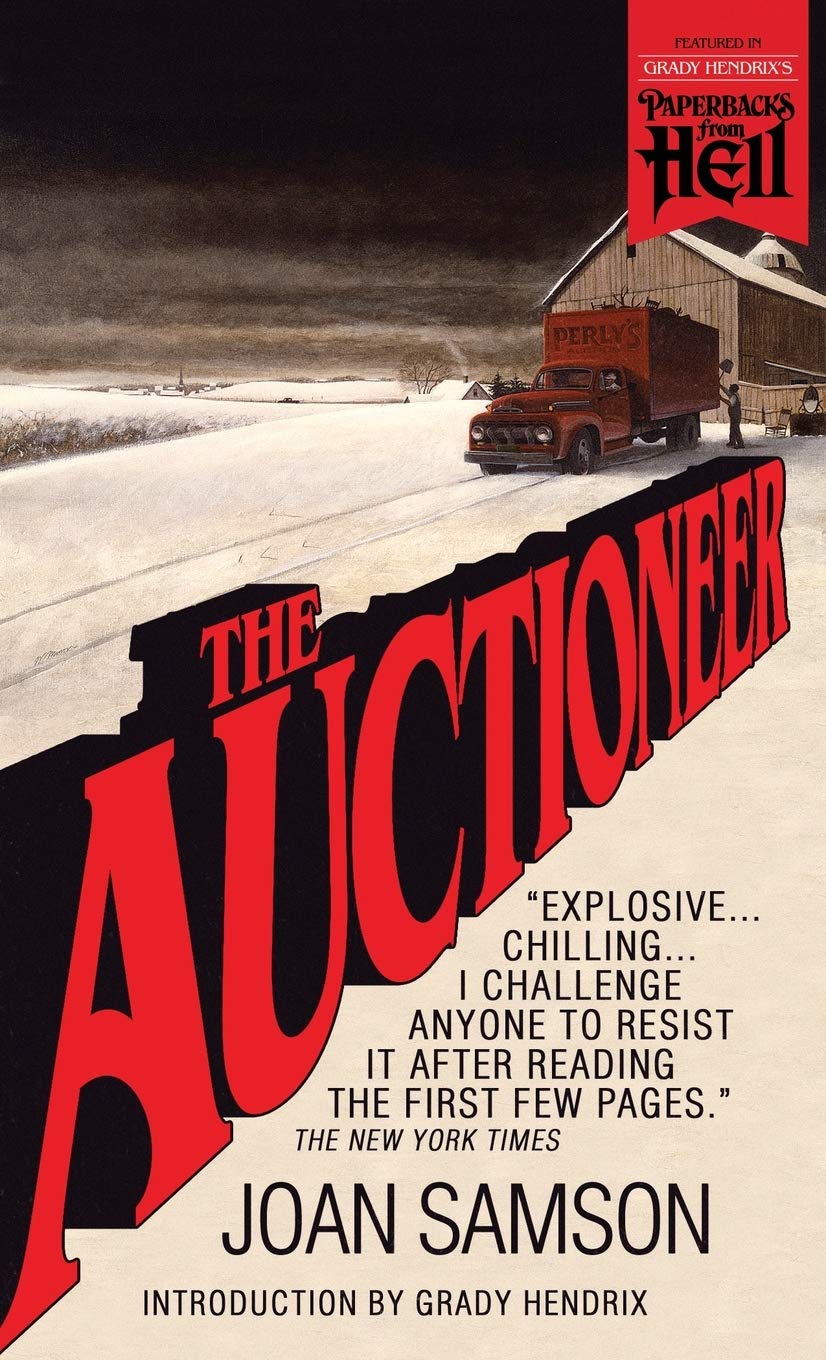
Title: The Auctioneer
Author: Joan Samson
Publisher: Valancourt Books
Publication date: 1976
Length: 235 pages
Genre: Thriller/horror
Source: Purchased
Rating:

Rating: 4.5 out of 5.

One of the finest and best-selling horror novels of the 1970s returns at last to chill a new generation of readers.

In the isolated farming community of Harlowe, New Hampshire, where life has changed little over the past several decades, John Moore and his wife Mim work the land that has been in his family for generations. But from the moment the charismatic Perly Dunsmore arrives in town and starts soliciting donations for his auctions, things begin slowly and insidiously to change in Harlowe. As the auctioneer carries out his terrible, inscrutable plan, the Moores and their neighbors will find themselves gradually but inexorably stripped of their possessions, their freedom, and perhaps even their lives…

A chilling masterpiece of terror whose sense of creeping menace and dread increases page by page, Joan Samson’s The Auctioneer (1975) is a rediscovered classic of 20th-century fiction. With echoes of Shirley Jackson’s ‘The Lottery’ and Stephen King’s Needful Things, Samson’s novel returns to print at last in this long-awaited new edition, which features an introduction by Grady Hendrix (Horrorstör, Paperbacks from Hell).

The Auctioneer is a 1970s horror classic — perhaps forgotten by most, but seemingly gaining yet another round of readers thanks to its inclusion in Grady Hendrix’s excellent non-fiction book Paperbacks from Hell. I seem to remember seeing a copy of The Auctioneer in my parents’ house as a child, and though I’d never read it, that sinister cover image has always stayed with me.

Finally, at least partially motivated by my 20th Century Decades Challenge, I decided to pick up The Auctioneer and see why it’s remained a horror touchstone for so many years. And I’m so glad I did.

The Auctioneer is set in the rural New Hampshire town of Harlowe, populated by old-time farming families who collectively exemplify small-town life. Sure, you could go 30 miles or so down the road to find a big-box outlet for your essentials, but why do that when you can visit the local general store, a messy jumble of odds and ends where you can buy what you need and catch up on the local gossip?

Perhaps more tourists from Boston and other cities have shown up in recent years for summer getaways in the country, but life more or less goes on as it always has, until Perly Dunsmore shows up in Harlowe. He’s a charismatic man in his 40s, full of charm and friendliness, who suggests holding a country auction to raise money for the sheriff’s department, a one-man operation that has almost nothing to do most of the time. The town is eager to show support, and Perly and the sheriff make their way from house to house, farm to farm, collecting donations for items to be auctioned.

The auction is a success, with city folk coming from miles away to bid on country collectibles and antiques. With the proceeds of the auction, the town is able to add a deputy. But it doesn’t stop there: Each Thursday, Perly or one of his representatives — a growing number, as Harlowe hires more and more deputies — makes the rounds to collect more items to donate.

Our point-of-view characters are the members of the Moore household, John, Mim, their young daughter Hildie, and Jim’s mother, called Ma by the family. The Moores have farmed their lovely piece of land for generations. At first, it’s easy to part with an unneeded chair or spare wagon wheels collecting dust in the barn. But the collections and auctions keep going, and John and Mim quickly come to dread the Thursday visits. Soon, they’re giving up cookware, furniture, tools — even the water pump eventually goes — and the family is left living in a way reminiscent of earlier days, with no heat, electricity, telephones, or running water.

Why don’t the families refuse? Those who do are threatened. The deputies who show up are armed, and rumors begin to fly about families who’ve left town in the dead of night, or suffered serious injuries, or ended up accidentally shot in a hunting incident. The violence is not explicit: No one physically attacks John or Mim — instead, there’s an insidious undertone of what terrible things could happen to those who oppose the auctions.

Meanwhile, in an almost allegorical thread throughout the book, we see the city dwellers flocking to Harlowe for a taste of country living, yearning to capture something they’ve never had, dreaming of old-time values and quality of life that they imagine a town like Harlowe might provide. These interlopers show up week after week, spending money to buy pieces of this dream, but never stopping to wonder where these wonderful finds are coming from.

The sinister nature of Perly’s auctions creeps up on the reader.

“Just remember this,” he said in a deep voice that cut neatly through the confusion. “Whatever I’ve done, you’ve let me do.”

This isn’t out-and-out horror with blood on the page. Instead, it’s a slowly building dread, fueled by fear and distrust and complacency. John and Mim talk of fleeing, yet never quite bring themselves to do it, even when they have nothing left to lose but the lives of their family members. In a community turned against itself, where neighbors are complicit in the darkness dismantling their town, individuals can’t quite bring themselves to separate from the crowd and take action.

It’s hard to describe why The Auctioneer works as well as it does. Readers may stop and question why the town goes along with Perly so willingly; why no one objects for far too long; why people give up what matters to them rather than fighting back. A sense of isolation and helplessness pervades the story — there’s no place to turn for help, so the entire town becomes easy prey for one man with the power of persuasion.

The Auctioneer is a disturbing read, one that will keep readers awake at night pondering how it all could happen — but the story is built so carefully that we can see it all unfold and believe that it’s all possible. This is a gem from the past that should certainly be read by horror fans today — it’s a fascinating look at an earlier age of the genre, as well as an outstanding story in its own right.

Interested in learning more?

For a fascinating look at how the novel was received back when it was first published, check out this review from the New York Times archive.

About the author:

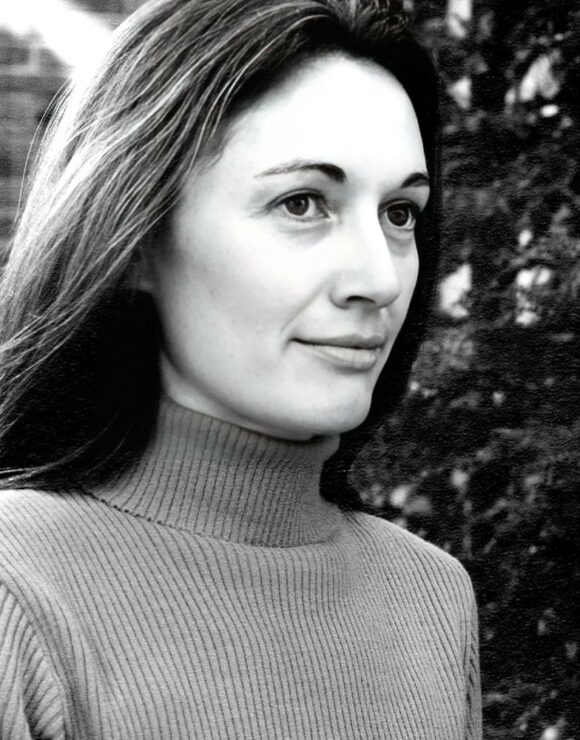
Joan Samson

Joan Samson (1938-1976) is the author of the bestselling novel, The Auctioneer. It is Samson’s first and only novel, published just before her death in 1976 at the age of 38. 

Purchase linksAmazon – Bookshop.org 
Disclaimer: When you make a purchase through one of these affiliate links, I may earn a small commission, at no additional cost to you.

Top Ten Tuesday: Top ten books on my TBR list for winter 2024/2025

snowy10

Top Ten Tuesday is a meme hosted by That Artsy Reader Girl, featuring a different top 10 theme each week. This week’s topic is Books on My Winter 2024-2025 to-Read List.

I’ll have a slew of new releases and ARCs to read from about February onward, but before then, I’m going to try to focus on books I’ve been meaning to get to for a while… with maybe one or two new releases mixed in as well.

My top 10 books on my winter TBR:

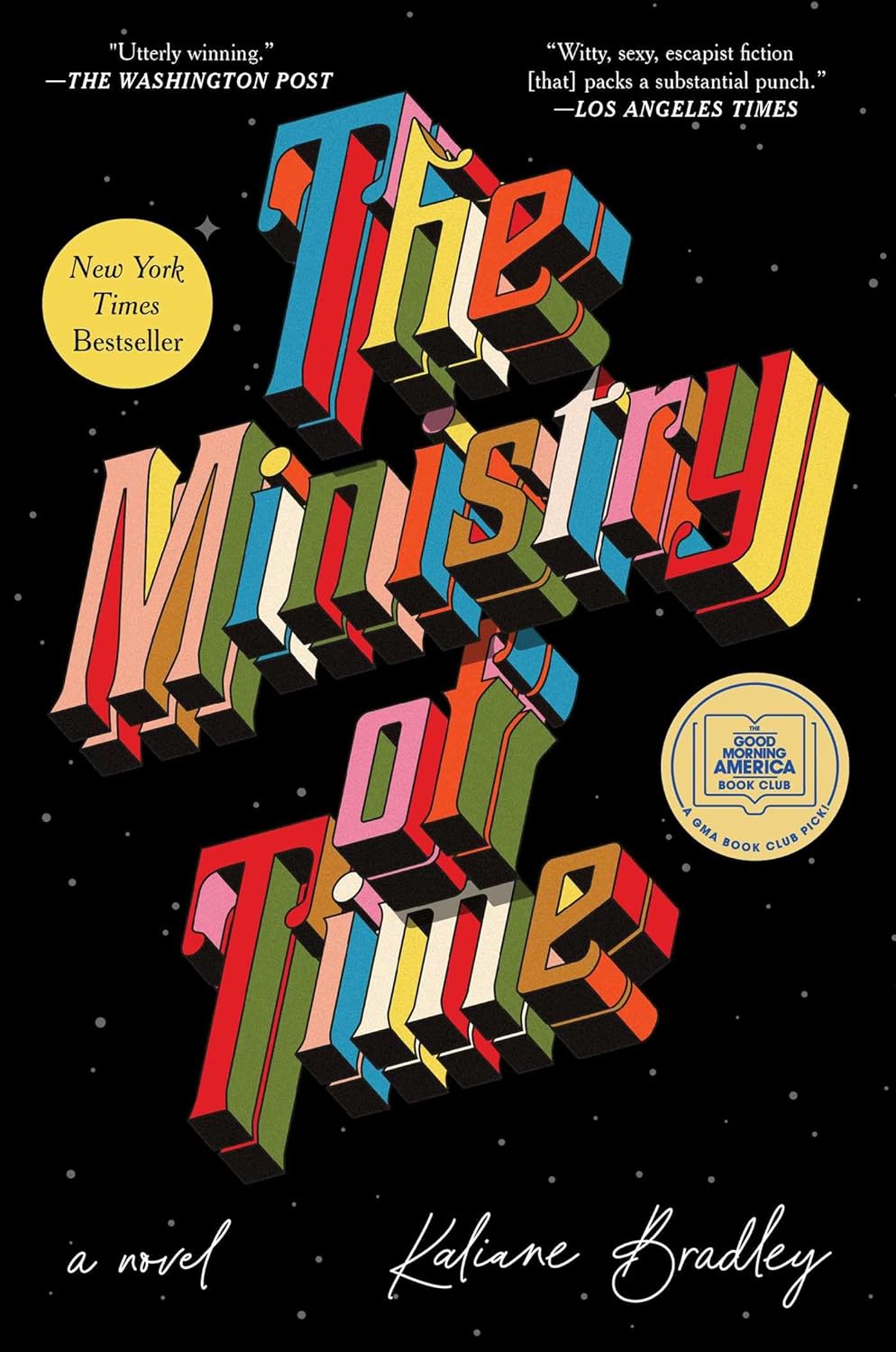
  1. The Ministry of Time by Kaliane Bradley: I keep saying this is a priority read, and yet I still haven’t read it! I’d like to get to it before the end of 2024… but the clock is ticking.
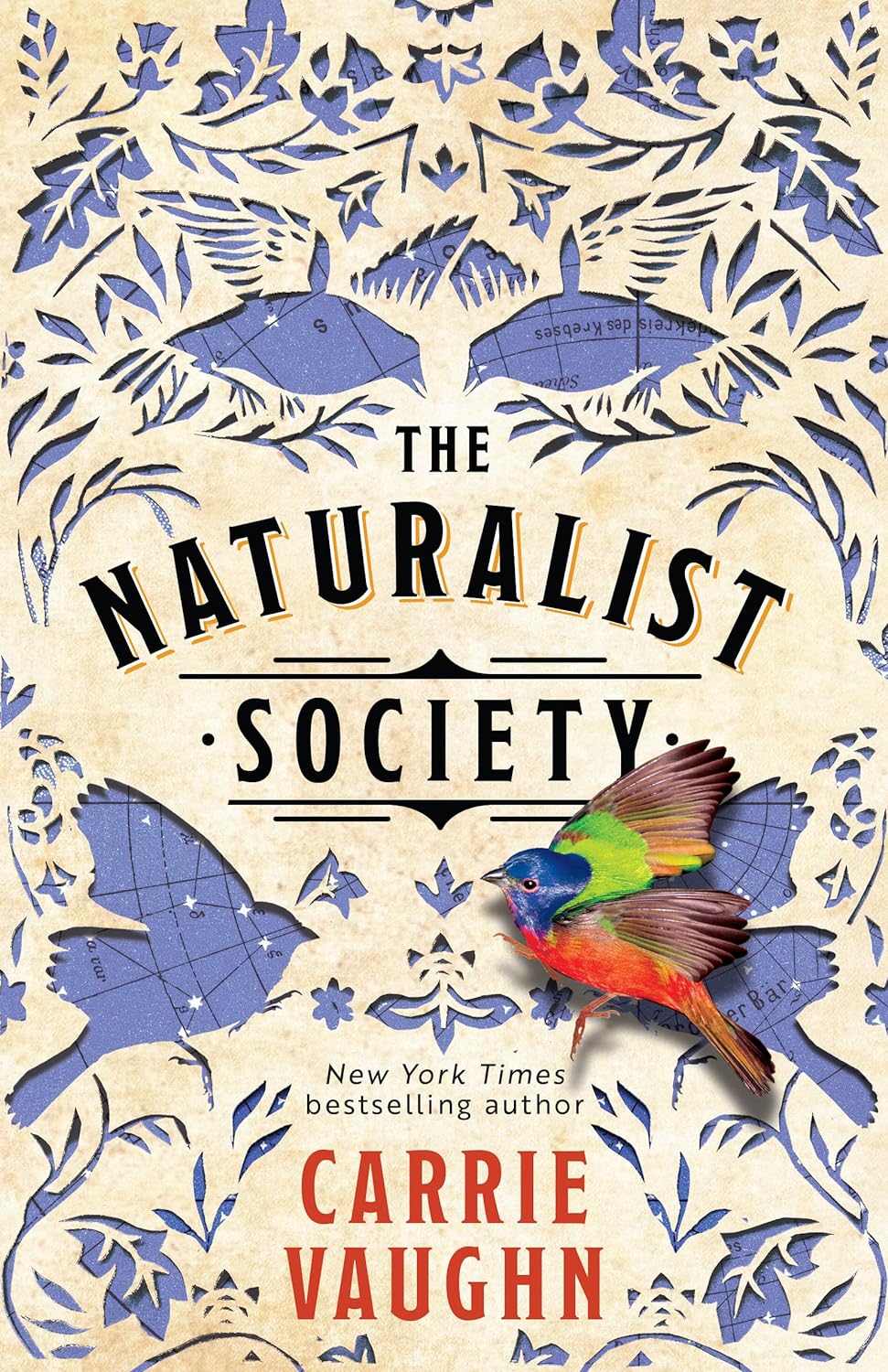
  2. The Naturalist Society by Carrie Vaughn: A new release from a favorite author! I haven’t seen any chatter about it yet, but it sounds so interesting.
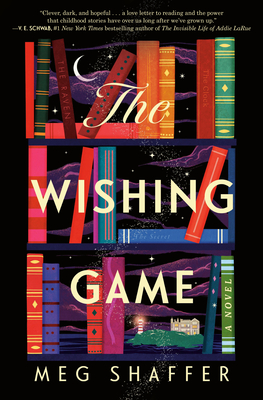
  3. The Wishing Game by Meg Shaffer: Another one I’ve been wanting to get to. I loved this author’s more recent book, The Lost Story.
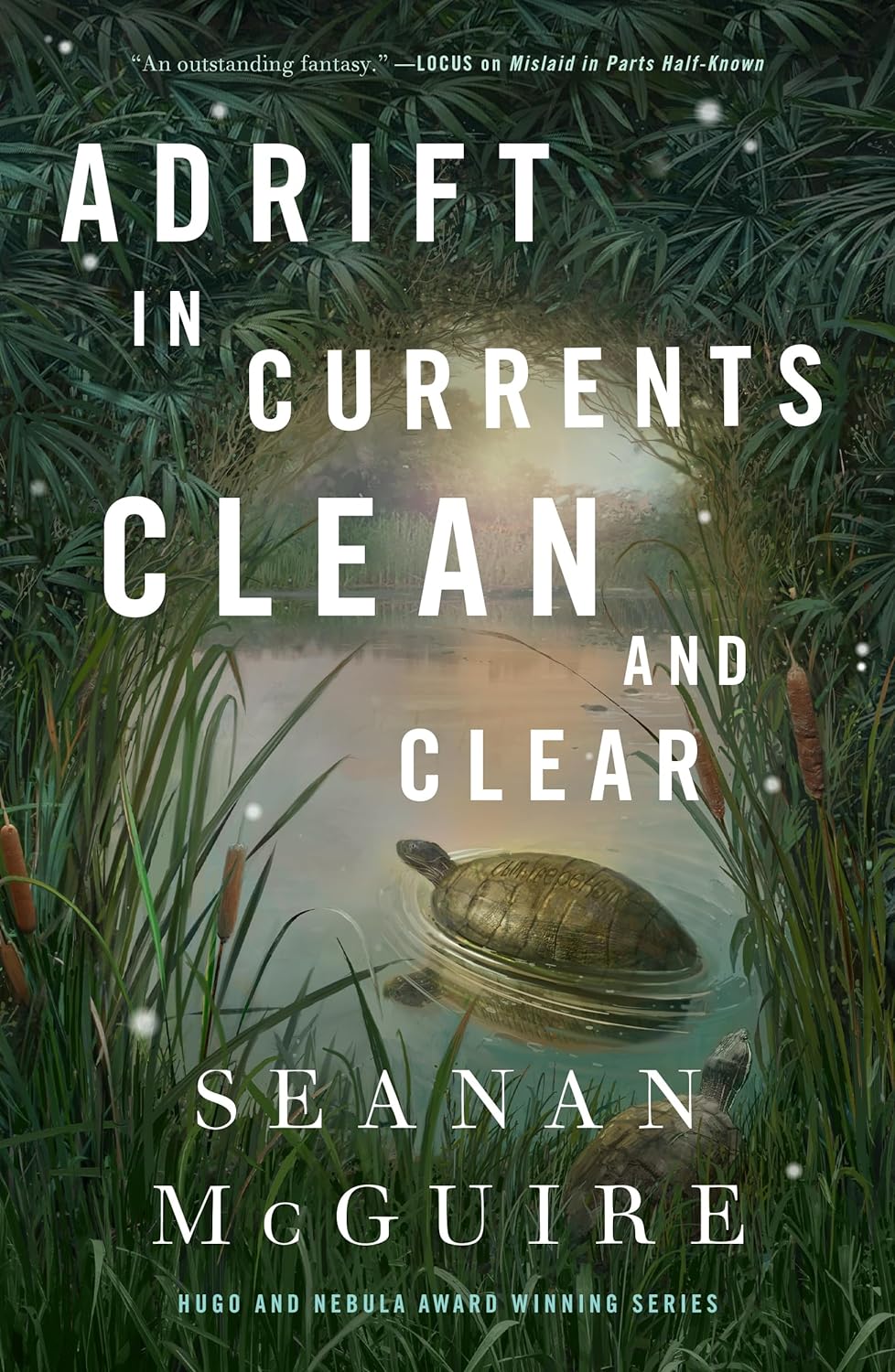
  4. Adrift in Currents Clean and Clear by Seanan McGuire: The 10th Wayward Children book will be released in January. I’m always up for another book in this series.
  5. Witchcraft for Wayward Girls by Grady Hendrix: Upcoming new release for January. I love the sound of it.
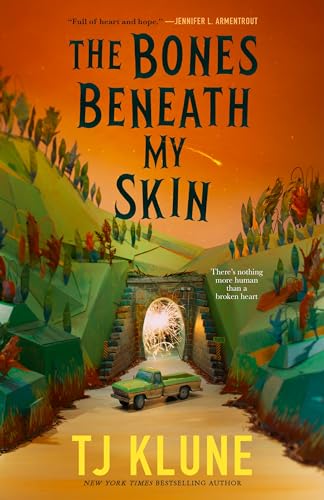
  6. The Bones Beneath My Skin by TJ Klune: This backlist title is being reissued (with a gorgeous new cover) in Februrary — meanwhile, I have the Kindle version, and can’t wait to dive in.
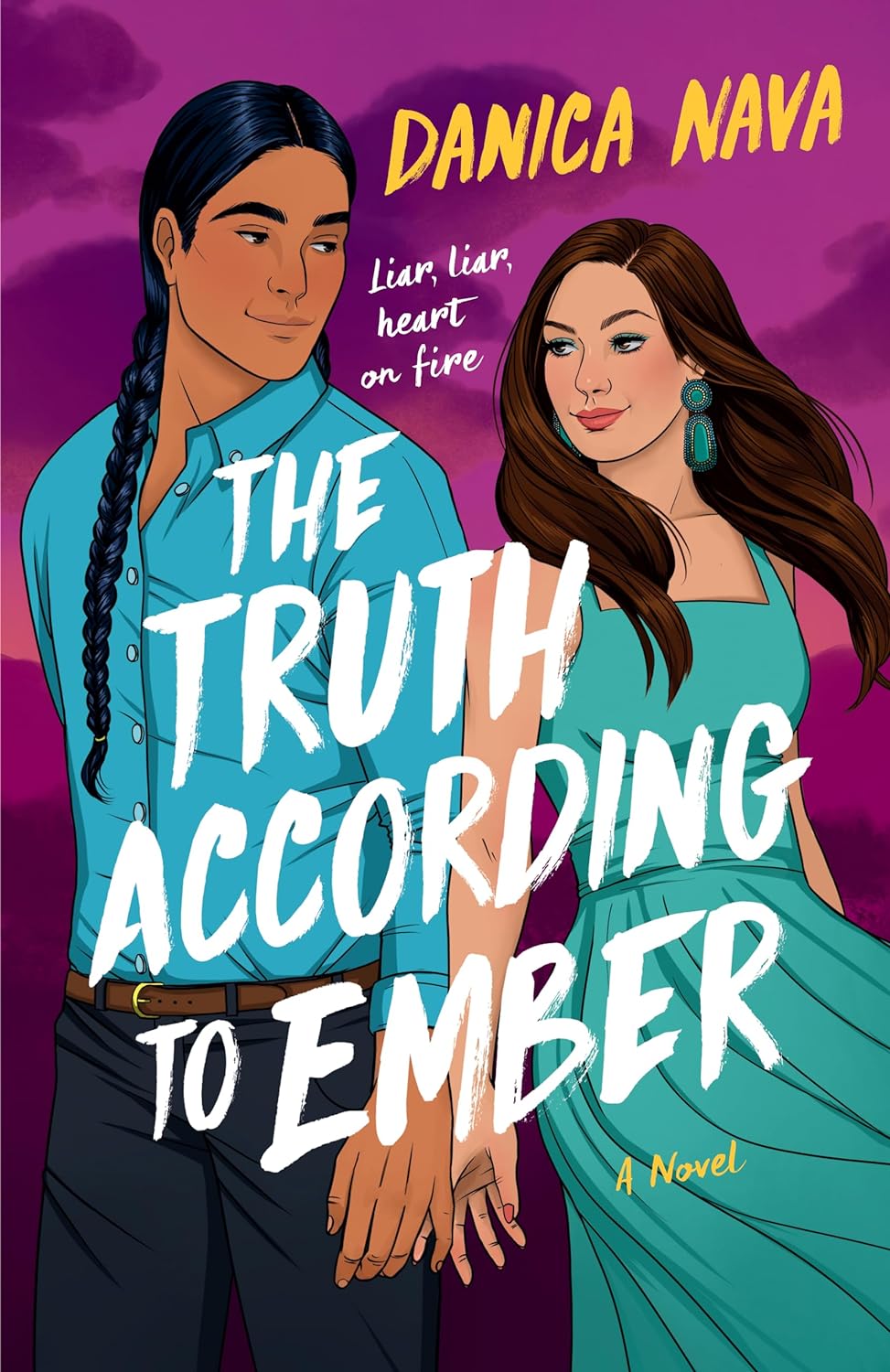
  7. The Truth According to Ember by Danica Nava: My library hold is (finally) almost ready!
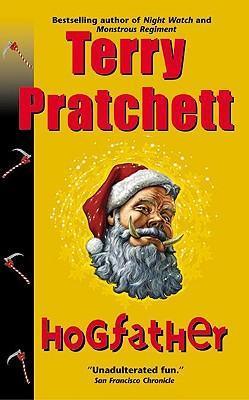
  8. Hogfather by Terry Pratchett: It’s been a while since I’ve picked up a Discworld book, but this one seems like a great choice for this time of year!
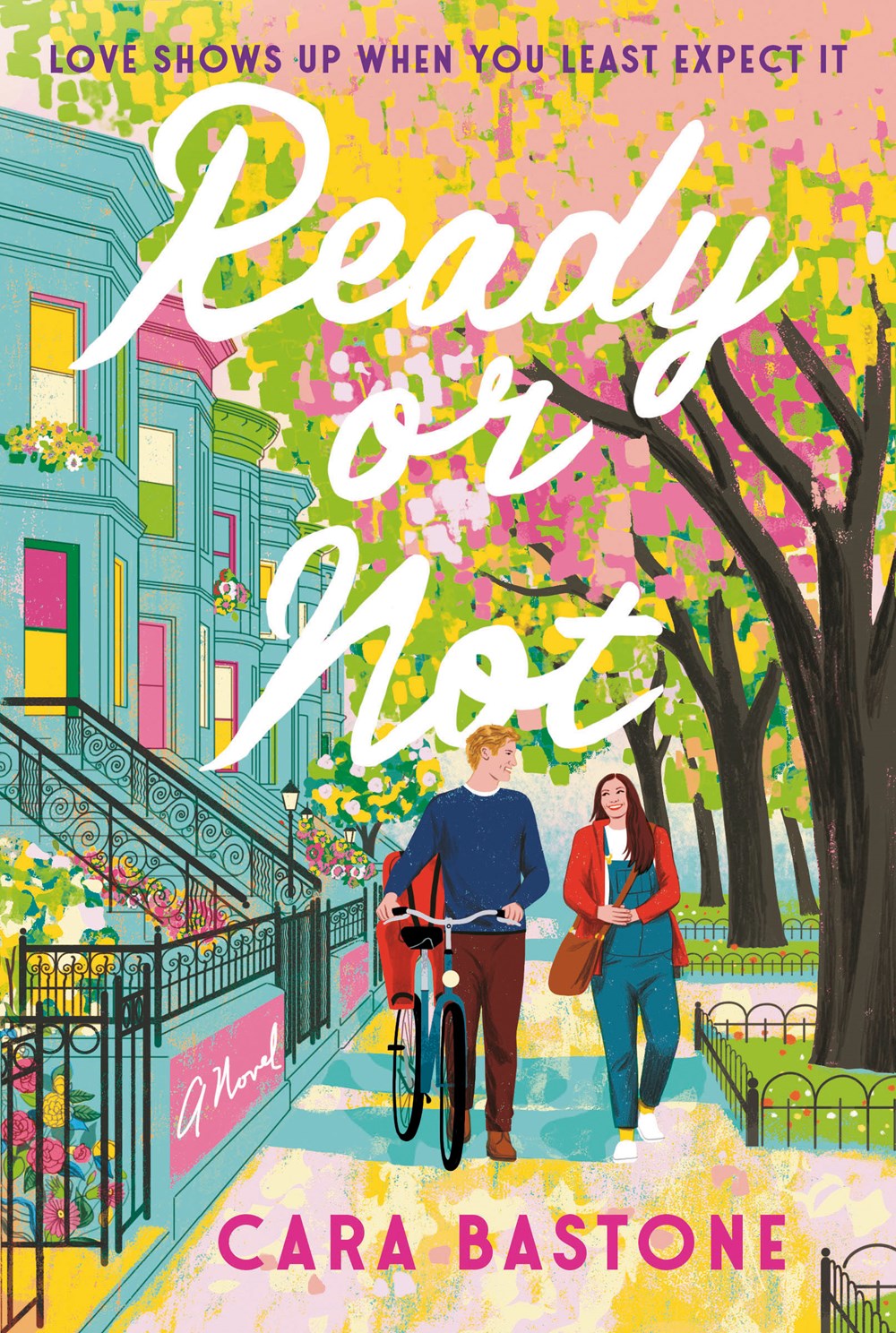
  9. Ready or Not by Cara Bastone: I stumbled across a description of this romance, and it caught my attention… and was available from the library when I went looking for it.
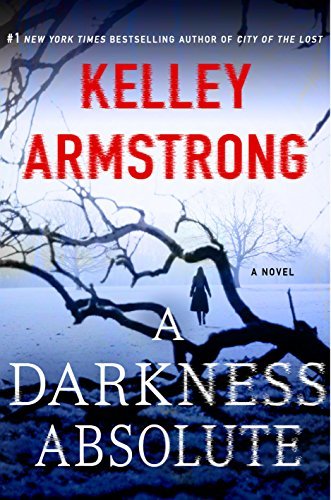
  10. A Darkness Absolute by Kelley Armstrong: This is the 2nd book in the Rockton series; I’m about 50% through with book #1 (City of the Lost), and I know I’ll want to keep going!

What books will be keeping you warm this winter? Share your links, and I’ll come check out your top 10!

Audiobook Review: We Sold Our Souls by Grady Hendrix

The hardcover edition

Title: We Sold Our Souls
Author: Grady Hendrix
Narrator: Carol Monda
Publisher: Quirk Books
Publication date: September 18, 2018
Print length: 336 pages
Audio length: 9 hours, 1 minute
Genre: Horror
Source: Purchased
Rating:

Rating: 5 out of 5.

In the 1990s, heavy metal band Dürt Würk was poised for breakout success — but then lead singer Terry Hunt embarked on a solo career and rocketed to stardom as Koffin, leaving his fellow bandmates to rot in rural Pennsylvania.

Two decades later, former guitarist Kris Pulaski works as the night manager of a Best Western – she’s tired, broke, and unhappy. Everything changes when she discovers a shocking secret from her heavy metal past: Turns out that Terry’s meteoric rise to success may have come at the price of Kris’s very soul.

This revelation prompts Kris to hit the road, reunite with the rest of her bandmates, and confront the man who ruined her life. It’s a journey that will take her from the Pennsylvania rust belt to a Satanic rehab center and finally to a Las Vegas music festival that’s darker than any Mordor Tolkien could imagine. A furious power ballad about never giving up, even in the face of overwhelming odds, We Sold Our Souls is an epic journey into the heart of a conspiracy-crazed, paranoid country that seems to have lost its very soul…where only a girl with a guitar can save us all.

As the book’s back cover proclaims:

METAL NEVER RETREATS. METAL NEVER SURRENDERS. METAL NEVER DIES.

We Sold Our Souls is about horror and metal and creativity and determination. It’s a little crazy, pretty freaking dark, and has some really icky moments… and yet, I found myself just loving this audiobook.

And hey, I’m not even a metal fan! But reading this book made me wish there was a soundtrack to go with it.

In We Sold Our Souls, we meet middle-aged Kris Pulaski — broken down, hopeless, leading a dead-end life. Once upon a time, she was a rising star along with her bandmates in Dürt Würk. But that was a long time ago, and she hasn’t even picked up a guitar in six years. But when Kris spots a billboard proclaiming the return of Koffin for one last tour, everything changes. Fired up by rage, Kris sets out to reconnect with her old bandmates and reclaim a piece of her past.

For Kris and the rest of Dürt Würk, success was once within reach. They were opening for Slayer, finally moving from seedy dive bars into the world of arena rock concerts — but then their lead singer Terry Hunt betrayed them all, convincing them all to sign contracts that guaranteed his own mega stardom but left them all in the dust. The problem is, Kris can’t quite remember what happened on “contract night”, and neither can anyone else. What really went on during the hours they all lost that night?

The answer is right there in the book’s title, but how they got there and what happens next makes this book so entertaining and hypnotic.

Dürt Würk’s mythology as Terry Hunt’s failed first band includes the story of their never-released album Troglodyte, rumored to have been a masterpiece yet supposedly destroyed and buried forever. As Kris sets on a quest to stop Terry and the evil fueling his success, it’s the music and lyrics of Troglodyte that give her the strength and courage to keep going, and she’s convinced that Troglodyte holds the key to finally getting back what was stolen from her.

I loved reading about Kris’s musical journey, from teaching herself guitar in her basement as a teenager, playing until her fingers bled, through building a band and launching their career. We really get to feel the rush of finding oneself in music, feeling the emotions and rage and beauty pour out through their songs.

The book is sprinkled throughout with the lyrics to the Troglodyte tracks, and hearing them recited in the audiobook (alas, not sung or with music to go with) made the experience a total treat. It’s dark, dark, dark, but oddly fascinating.

Black Iron Mountain is cold, cold, cold
The language they speak is old, old, old
And their lies are made of gold

Iron rain is falling
On the bodies of the slain
The Blind King keeps calling
Trapped inside a coffin made of pain

There are a few scenes that made me want to squirm right out of my body, being very gross and disturbing (and boy is that weird to listen to), but on the whole, the horror is more often expressed through slow builds and unseen terror than through outright gore (although there’s that too). Needless to say, maybe not a good choice if you’re squeamish.

The narrator’s voice comes across as raspy and a bit damaged, kind of how I’d imagine Kris would sound after all those years of hard living. The plot zips along, cleverly intercutting radio interviews about Koffin and Dürt Würk with scenes following Kris’s journey toward either vengeance or redemption.

I admit to being a tiny bit confused by a few things toward the end, but that’s okay. Overall, this book cast a spell on me and completely sucked me in. And look, I’ll never be a metal fan, but I am very much a fan of Kris Pulaski, guitar goddess extraordinaire!

We Sold Our Souls is a lot of fun — I’ve had a copy on my shelves for a few years now, and I’m glad I finally gave it a chance.

The paperback cover – so awesome that I want this edition too!

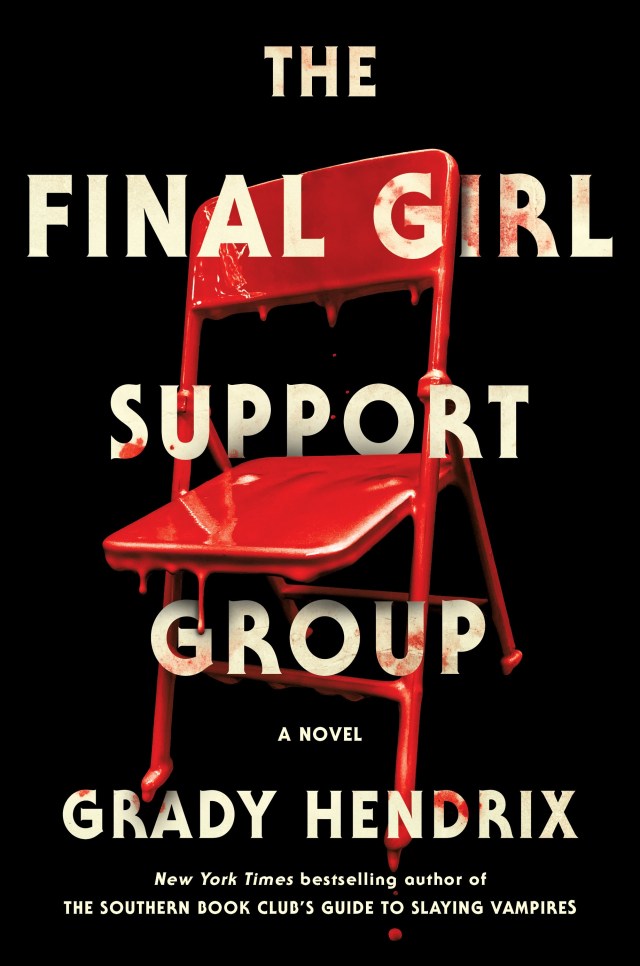
Book Review: The Final Girl Support Group by Grady Hendrix

Title: The Final Girl Support Group
Author: Grady Hendrix
Publisher: Berkley
Publication date: July 13, 2021
Length: 352 pages
Genre: Horror
Source: Purchased
Rating:

Rating: 3.5 out of 5.

A fast-paced, thrilling horror novel that follows a group of heroines to die for, from the brilliant New York Times bestselling author of The Southern Book Club’s Guide to Slaying Vampires.

In horror movies, the final girl is the one who’s left standing when the credits roll. The one who fought back, defeated the killer, and avenged her friends. The one who emerges bloodied but victorious. But after the sirens fade and the audience moves on, what happens to her?

Lynnette Tarkington is a real-life final girl who survived a massacre twenty-two years ago, and it has defined every day of her life since. And she’s not alone. For more than a decade she’s been meeting with five other actual final girls and their therapist in a support group for those who survived the unthinkable, putting their lives back together, piece by piece. That is until one of the women misses a meeting and Lynnette’s worst fears are realized–someone knows about the group and is determined to take their lives apart again, piece by piece.

But the thing about these final girls is that they have each other now, and no matter how bad the odds, how dark the night, how sharp the knife, they will never, ever give up.

The Final Girl Support Group is set in our contemporary world, but with one key change: Remember all those slasher movies of the 80s and 90s? The ones where seemingly unstoppable madmen stalk groups of victims through the woods or at summer camps, using increasingly bizarre weapons to kill and kill and kill? In the world of The Final Girl Support Group, those movies are film adaptations of real-life murder sprees. The surviving Final Girl of each horrific act of murder sells her franchise rights, and the film versions make them into pop culture superstars… and highly scrutinized attractions for all sorts of stalkers and murder fans and other dangerous folks.

As the book opens, the support group is meeting, although after 16 years, it’s unclear to some of the members why they continue to meet. Nothing changes, and they devolve into bickering, yet they all need the group in their lives. For the women in the group, their lives after their incidents have taken different paths, yet none can be said to be truly healthy or normal. One woman is a junkie, one married for wealth and lives a pampered life surrounded by security walls and cameras, one, confined to a wheelchair, is a political activist, and our narrator Lynnette lives a life of absolute paranoia and devotion to safety. Only Dani, living in a long-term relationship on a remote ranch, and Adrienne, who runs a camp for victims of violence at the same site where she was once a Final Girl, seem to be anywhere close to living truly fulfilled lives.

When Adrienne fails to show for group the day after news coverage shows a new massacre at her camp, the group is fearful and soon learns the worst — Adrienne has been tracked down and murdered. They all flee, each seeking some form of safety. For Lynnette, she knows in her bones that nowhere is truly safe. She has countless escape routes and backup plans, but when all fail her, she has to go on the run and start to rely on people besides herself, something she’s never been willing to do.

The Final Girl Support Group is a horror story in which we learn, in bits and pieces, about the horrific scenes of violence that each of these women survived as young girls. It’s also a story of escape, with a road trip thrown in, and a story of friendship and connection, as this group of women — who have only their victimhood in common — are thrown together despite mistrust and even outright dislike to try to defeat the ultimate bad guy.

I tore through the book pretty quickly, but I’m not sure that it truly worked for me. The story is somewhat disjointed — we learn about each woman’s particular horror story over the course of the novel, but having the details doled out as they were kept me from truly understanding their experiences as we meet them. I never felt particularly connected to some of the characters, and actually found it confusing to keep them all and their particular traumas straight.

Lynnette is fascinating, although being inside her mind can be exhausting. I wish we’d learned more about her awful history earlier in the book as well. There seem to be a lot of barriers before I could feel like I had a good grasp on who she is and, more importantly, what happened to make her the way she is.

The book includes media snippets in between chapters, talking about the Final Girl movie phenomenon or including excerpts of articles about the girls or pieces of their police interrogations. These are fun, but again, something about the pacing and the way information is included made the overall narrative feel confusing to me.

I did really like the overall concept — that slasher movies are basically depictions of real events, and that certain franchises get sequels because in their real lives, the bad guys keep coming back, over and over and over. For a Final Girl, it’s never really over.

The Final Girl Support Group builds to a fast-paced, dramatic sequel that feels worthy of a scary slasher movie scene all its own.

I’ve read most of Grady Hendrix’s other novels (there just one I still need to read!), and I’ve loved them all so far. He writes bizarre, quirky, weird horror, and it’s usually right up my alley. The Final Girl Support Group didn’t quite work for me the same way his other books have. I got caught up in the story, but always felt like I was missing something. I recommend it, but not quite as much as, for example, Horrorstor or The Southern Book Club’s Guide to Slaying Vampires.

**********

Through affiliate programs, I may earn commissions from purchases made when you click through these links, at no cost to you.

Buy now at Amazon – Book Depository – Bookshop.org

Shelf Control #213: We Sold Our Souls by Grady Hendrix

Shelves final

Welcome to Shelf Control — an original feature created and hosted by Bookshelf Fantasies.

Shelf Control is a weekly celebration of the unread books on our shelves. Pick a book you own but haven’t read, write a post about it (suggestions: include what it’s about, why you want to read it, and when you got it), and link up! For more info on what Shelf Control is all about, check out my introductory post, here.

Want to join in? Shelf Control posts go up every Wednesday. See the guidelines at the bottom of the post, and jump on board!

cropped-flourish-31609_1280-e1421474289435.pngTitle: We Sold Our Souls
Author: Grady Hendrix
Published: 2018
Length: 337 pages

What it’s about (synopsis via Goodreads):

In the 1990s, heavy metal band Dürt Würk was poised for breakout success — but then lead singer Terry Hunt embarked on a solo career and rocketed to stardom as Koffin, leaving his fellow bandmates to rot in rural Pennsylvania.

Two decades later, former guitarist Kris Pulaski works as the night manager of a Best Western – she’s tired, broke, and unhappy. Everything changes when she discovers a shocking secret from her heavy metal past: Turns out that Terry’s meteoric rise to success may have come at the price of Kris’s very soul.

This revelation prompts Kris to hit the road, reunite with the rest of her bandmates, and confront the man who ruined her life. It’s a journey that will take her from the Pennsylvania rust belt to a Satanic rehab center and finally to a Las Vegas music festival that’s darker than any Mordor Tolkien could imagine. A furious power ballad about never giving up, even in the face of overwhelming odds, We Sold Our Souls is an epic journey into the heart of a conspiracy-crazed, paranoid country that seems to have lost its very soul…where only a girl with a guitar can save us all.

How and when I got it:

I bought it as a new release in 2018.

Why I want to read it:

If you happened to stumble across my blog earlier this week, you may have seen my review of Grady Hendrix’s newest book, The Southern Book Club’s Guide to Slaying Vampires. I loved it, just like I’ve loved everything I’ve read by this author. And even though I bought a copy of We Sold Our Souls, I just never got around to reading it — maybe the heavy metal theme turned me off a bit, but for whatever reason, it’s still there on my shelf, unread. And that just won’t do.

Grady Hendrix’s book are always unique and strange and thoroughly entertaining. I’ve heard this one is great! Clearly, I have to fill in the gap in my reading by getting to this book ASAP.

What do you think? Would you read this book? 

Please share your thoughts!

__________________________________

Want to participate in Shelf Control? Here’s how:

  • Write a blog post about a book that you own that you haven’t read yet.
  • Add your link in the comments!
  • If you’d be so kind, I’d appreciate a link back from your own post.
  • Check out other posts, and…

Have fun!

Book Review: The Southern Book Club’s Guide to Slaying Vampires by Grady Hendrix

Title: The Southern Book Club’s Guide to Slaying Vampires
Author: Grady Hendrix
Publisher: Quirk
Publication date: April 7, 2020
Length: 400 pages
Genre: Horror
Source: Purchased
Rating:

Rating: 5 out of 5.

Fried Green Tomatoes and Steel Magnolias meet Dracula in this Southern-flavored supernatural thriller set in the ’90s about a women’s book club that must protect its suburban community from a mysterious and handsome stranger who turns out to be a blood-sucking fiend.

Patricia Campbell had always planned for a big life, but after giving up her career as a nurse to marry an ambitious doctor and become a mother, Patricia’s life has never felt smaller. The days are long, her kids are ungrateful, her husband is distant, and her to-do list is never really done. The one thing she has to look forward to is her book club, a group of Charleston mothers united only by their love for true-crime and suspenseful fiction. In these meetings, they’re more likely to discuss the FBI’s recent siege of Waco as much as the ups and downs of marriage and motherhood.

But when an artistic and sensitive stranger moves into the neighborhood, the book club’s meetings turn into speculation about the newcomer. Patricia is initially attracted to him, but when some local children go missing, she starts to suspect the newcomer is involved. She begins her own investigation, assuming that he’s a Jeffrey Dahmer or Ted Bundy. What she uncovers is far more terrifying, and soon she–and her book club–are the only people standing between the monster they’ve invited into their homes and their unsuspecting community.

Let me just get this out of the way: I LOVED this book. The setting is perfect, the community and marital dynamics are spot-on, and the creep factor is through the roof. Grady Hendrix does it again!

Here’s the situation: Patricia Campbell lives with her husband and two children in the Old Village, a neighborhood in Mount Pleasant, South Carolina — just across the bridge from Charleston — where everyone knows each other and looks out for one another, where an unknown car is immediately noticed, where no one locks their doors because it’s safe, and anyway, not really in line with standards of Southern hospitality.

[Fun fact: I once lived in Mount Pleasant for a couple of years, a long time ago, so the setting here just thrilled me to bits and pieces.]

The women of Old Village are mothers and housewives, and when Patricia and a few others realize that a “literary” book club isn’t to their taste (i.e., none of them actually read Cry, The Beloved Country and get roundly shamed for it), they form their own club — focused on true crime stories and bestselling thrillers. And they love it. The women bond over Helter Skelter and The Stranger Beside Me, and they also become best of friends.

The community’s placid life is disrupted when Patricia is attacked by her elderly neighbor Ann Savage. It’s brutal and frightening, and results in Patricia’s earlobe being bitten off. Ann dies, but her visiting nephew James Harris decides to stay and settle in the neighborhood — and his appearance starts a chain of strange and eerie events.

Note: The Goodreads blurb (above) describes James Harris as “artistic and sensitive”. He’s not.

Patricia becomes more and more suspicious of James, but he’s quickly insinuated himself into the lives of the families of Old Village, including becoming business partners with most of the husbands, investing with them in a real estate development that promises huge payoffs. And when Patricia tries to sound the alarm after witnessing a horrifying act, her psychiatrist husband treats her like she’s crazy, and then forces her to choose: Either give up this nonsense about James, or give up her marriage and family.

The Southern Book Club’s Guide to Slaying Vampires is a horror story, a snapshot of a time and place (1990s upscale South), and a snide commentary on women’s voices and the men who ignore them. The women in this story are all smart, but all subservient to their husbands — all of whom are the providers and the decision-makers. It’s particularly telling that the small, intimate, enjoyable book group gets completely turned upside down once the men decide they need to step in — turning into a gathering of 40+ people, reading Tom Clancy books and completely ignoring the opinions and preferences of the women who actually started it all.

There’s also pretty harsh critique of the insularity of the privileged. So long as the bad things are happening to other people’s children — particularly, to the children of a poor black community — the people of Old Village don’t seem to be too bothered. There’s an “it can’t happen here” attitude that only Patricia seems to have an issue with. For the husbands especially, the deaths and disappearances have nothing to do with their own lives, and in any case, the accusations that Patricia makes sound ridiculous, and perhaps more importantly, could cause problems with their business investment, and well… we can’t have that.

Don’t forget, though, that this is a horror novel, despite the snark and the humor. I like horror, and I don’t have a problem with blood and gore… but that said, there were two scenes in this book that absolutely CREEPED ME THE EFF OUT. I just don’t do well with creepy-crawlies, and these two scenes were intense and GROSS. (Okay, yes, I still loved the book, but HELLO? NIGHTMARE MATERIAL!)

Grady Hendrix does an amazing job of pulling this story together, making the relationships touching and real while also being creepy and scary — and then having the women save the day through their own version of brutal kick-assery. It’s a great read, thoroughly enjoyable… but maybe not for the squeamish.

I have one more of Grady Hendrix’s books on my shelf still to read, but so far, I’ve loved everything of his that I’ve read.

Check out my reviews of his previous books:
Horrorstor
My Best Friend’s Exorcism
Paperbacks from Hell (non-fiction)

Book Review: Paperbacks from Hell: The Twisted History of ’70s and ’80s Horror Fiction by Grady Hendrix

Take a tour through the horror paperback novels of the 1970s and ’80s . . . if you dare. Page through dozens and dozens of amazing book covers featuring well-dressed skeletons, evil dolls, and knife-wielding killer crabs! Read shocking plot summaries that invoke devil worship, satanic children, and haunted real estate! Horror author and vintage paperback book collector Grady Hendrix offers killer commentary and witty insight on these trashy thrillers that tried so hard to be the next Exorcist or Rosemary’s Baby. It’s an affectionate, nostalgic, and unflinchingly funny celebration of the horror fiction boom of two iconic decades, complete with story summaries and artist and author profiles. You’ll find familiar authors, like V. C. Andrews and R. L. Stine, and many more who’ve faded into obscurity. Plus recommendations for which of these forgotten treasures are well worth your reading time and which should stay buried.


A must for horror fans. This book traces the history of all sorts of insane horror trends from the 70s and 80s, and makes some fascinating connections between the crises of the times (inflation, environmental issues, HIV/AIDS) and the rise and fall of horror publishing themes and crazes. The author’s commentary is often snarky and truly funny — but the real highlight of Paperbacks from Hell is the amazing assortment of cheesy, disgusting, disturbing book covers. Some are iconic (Jaws, The Omen, Flowers in the Attic), and some just head-shakingly awful — but put them all together, and it’s a truly entertaining look back at horror’s not-so-distant past.

Take a look at just a small sampling of the amazing books featured in Paperbacks from Hell:

_________________________________________

The details:

Title: Paperbacks from Hell: The Twisted History of ’70s and ’80s Horror Fiction
Author: Grady Hendrix
Publisher: Quirk
Publication date: September 19, 2017
Length: 256 pages
Genre: Horror/non-fiction
Source: Review copy courtesy of Quirk Books

Save

Save

Save

Save

Save

Save

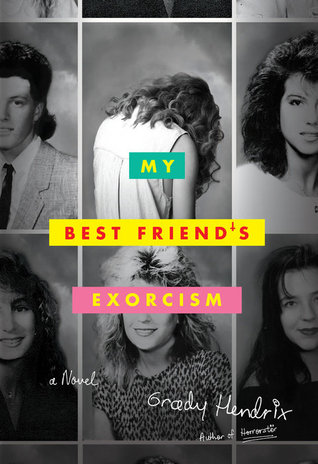
Book Review: My Best Friend’s Exorcism by Grady Hendrix

My Best Friends ExorcismThis goofy, spooky, surprisingly touching novel by the author of the amazing Horrorstör (reviewed here; you know, the book that looks like an Ikea catalog!) hit just the right spot for me this week. It’s an entertaining, light read that also contains moments of horror, deeply icky things, and a descent into either madness or evil, depending on how you look at it.

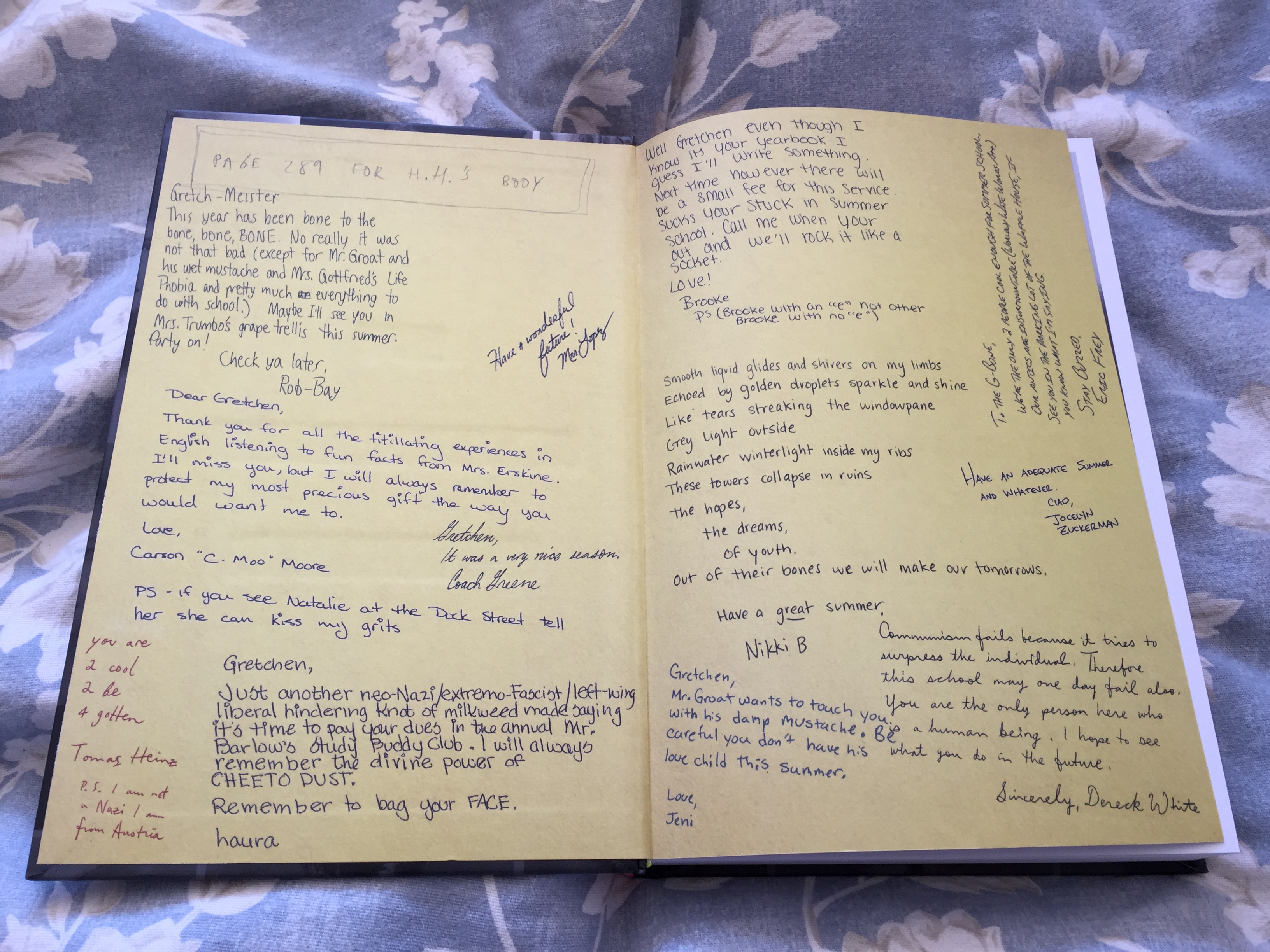
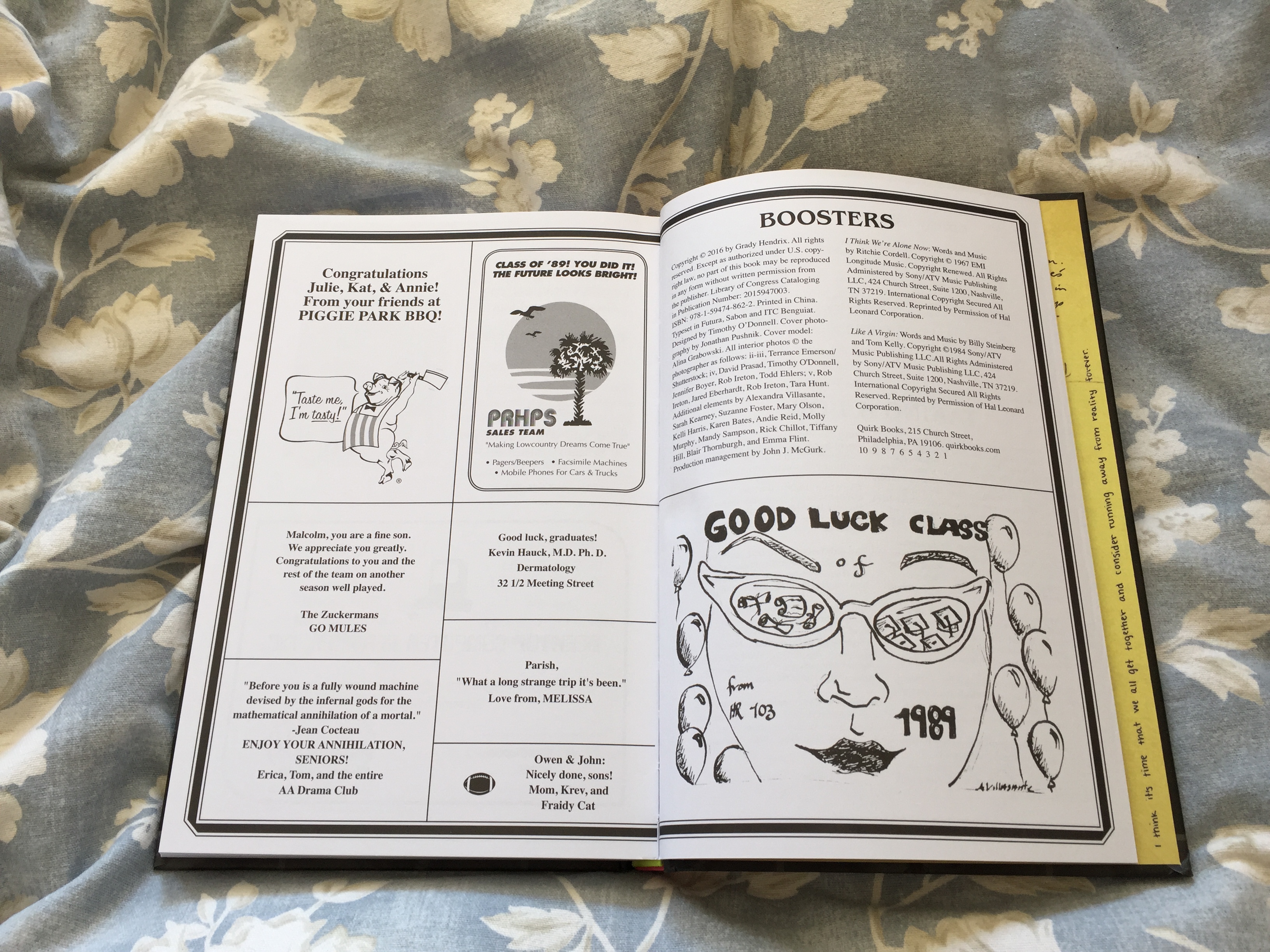
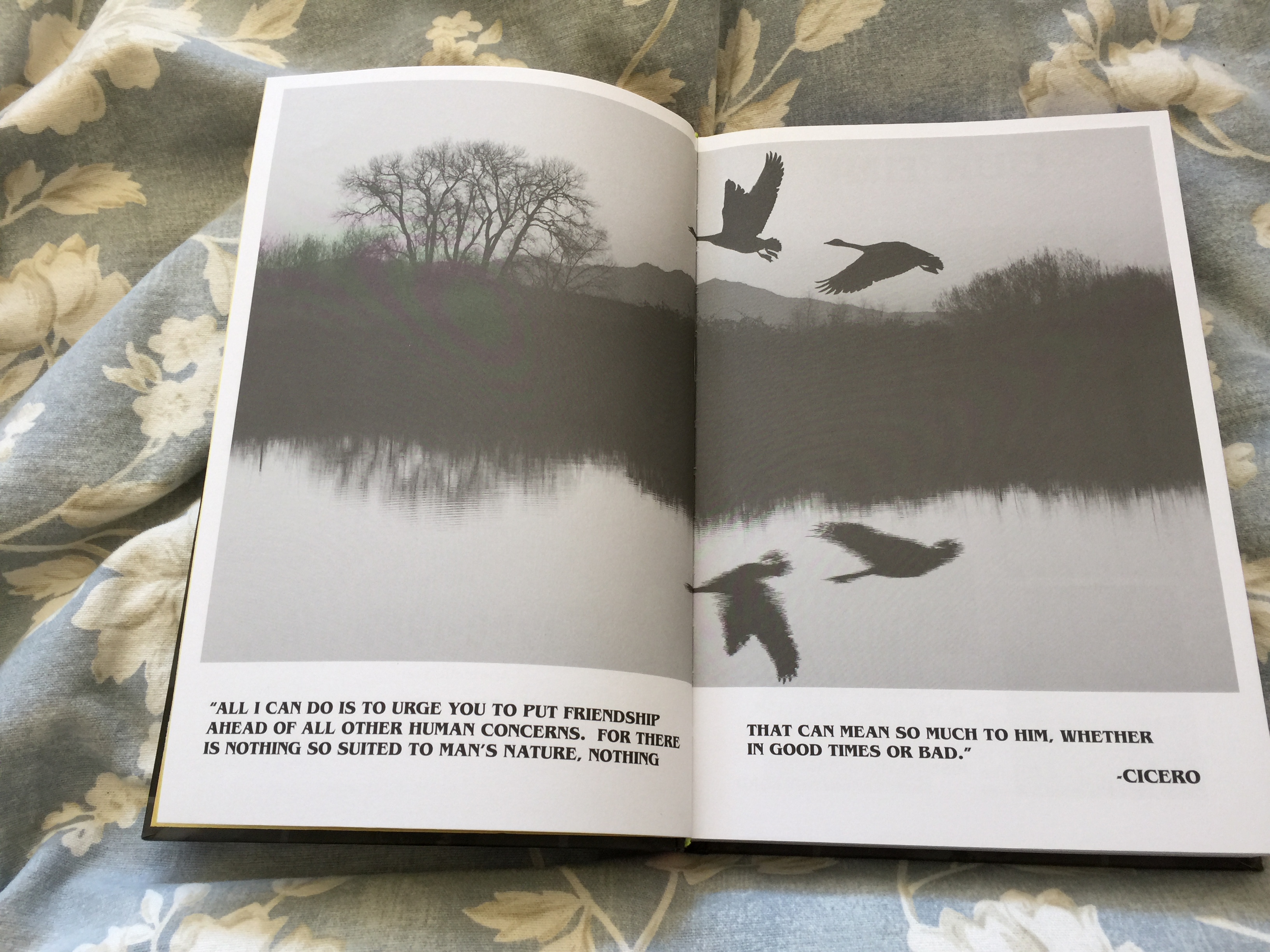
The inside covers and pages at front and back mimic a high school yearbook, and it’s pretty hilarious. We see a combination of silly in-jokes, clueless teacher signatures, and even the standard, meaningless “have a great summer!”.

MBFE takes place in the 1980s, and takes full advantage of the music and clothing to create an air of nostalgia that’s fun and a bit cringe-worthy. E.T. posters and roller rinks and Merit Menthols abound. Kids worry about getting VD, and Geraldo Rivera airs an explosive exposé of satanism.

The best friends of the title are Abby and Gretchen. Abby is from a poor family, but her BFFs are part of the old-money Charleston elite. They attend a ritzy private school (Abby on scholarship), where the student handbook is the Bible. An upright life is expected, although money buys a certain amount of latitude for the more privileged students.

imageAbby and Gretchen have been best friends since fourth grade, and their closest circle includes two more rich girls, Margaret and Glee. They’re all spoiled and lazy (except Abby, who works non-stop to afford the things she can’t expect from her do-nothing parents), and one bored summer evening, something goes wrong. After taking an exploratory hit of acid (which does nothing for any of the girls), Gretchen decides to skinny deep in the river… and disappears into the woods, only to be found the next morning, naked, covered with mud, and offering no explanation for what’s happened.

imageThings get weird. Gretchen withdraws into herself. She stops bathing and changing her clothes. She shuts out her friends and begins to alienate everyone. Abby is the only one who refuses to be pushed away, but when she tried to get help for Gretchen, she ends up shunned herself. And things go from bad to worse, as the people around Gretchen begin to have weird and dangerous and scary developments in their lives.

Author Grady Hendrix nails the gross and disturbing bits, from disgusting smells to suicidal flocks of birds to horrible skin outbreaks. I suppose for teen girls, bad acne could be supposed to be demonic! But beneath the horror elements, there’s also a compelling story about friendship and devotion, and the lengths to which best friends will go to save one another.

The 80s vibe is pitch-perfect, with extra points for excellent use of the Go-Gos and Phil Collins lyrics.

image

I read My Best Friend’s Exorcism all in one day, and really just had a great time with it. The grosser, ickier moments are balanced out by Abby’s internal strength and resourcefulness, her dedication to saving Gretchen, and the spot-on depiction of high school cruelty and power plays. The Charleston setting is a nice plus too.

This is a horror spoof, and there’s plenty of humor, but really — take me seriously when I say that if you tend to be squeamish about things like tapeworms, cadaver labs, and horrible skin conditions, you might want to skip this one. But, if you enjoy the horror genre and don’t mind when things get squicky for the sake of a good story, check it out!

_________________________________________

The details:

Title: My Best Friend’s Exorcism
Author: Grady Hendrix
Publisher: Quirk Books
Publication date: May 17, 2016
Length: 336 pages
Genre: Horror
Source: Review copy courtesy of Quirk Books

Book Review: Horrorstör by Grady Hendrix

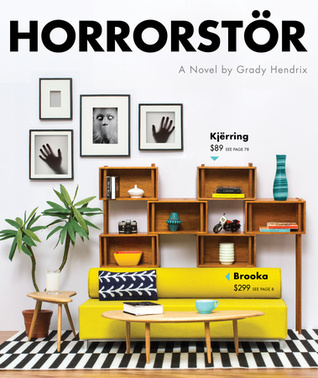
HorrorstorYou’ll be forgiven for mistaking this unusual novel for an Ikea catalog. That’s the whole point, after all.

This square, chunky book features the Swedish design elements we know so well, where pieces of furniture have unpronounceable names and the product is really a lifestyle, not just individual items to buy. Glancing at Horrorstör quickly, you’ll see a floor map of the showroom, a guide to ordering and assembly, and even a job announcement… only the tiniest bit ominous, perhaps:

It’s Not Just a Job.

It’s the Rest of Your Life.

Hmmmm.

Welcome to Horrorstör, and the world of Orsk. Orsk is a US-based company acknowledged to be a cheap knock-off version of Ikea. At Orsk, you can buy a Brooka sofa or a Liripip wardrobe, enjoy meatballs in the cafe and let the children play, then stroll through the market floor, picking up a cart full of impulse buys before finally hitting the registers. The whole point of Orsk is to immerse the consumer, to make the process slightly disorienting, to ensure that no one just comes in and buys a chair, but rather, walks through the entire showroom viewing all the various lifestyles available for purchase.

Main character Amy is a floor partner, showing up each day to her low-paying hourly job, resentfully not quite buying the corporate-speak that is the foundation of the Orsk experience. In her early 20s, Amy is a bit of a mess, with no career plan, no drive, and no money to fall back on. She needs Orsk, even if she doesn’t want to. Her manager, Basil, is the embodiment of everything she hates. He’s drunk the Kool-Aid, and spouts inspirational drivel like “Way to live the ethos, man!”

On the verge of being fired, Amy is instead offered one last chance to prove she has what it takes: Basil needs her to stay at night after closing, along with him and one other Orsk employee. Weird things have been happening overnight in the store — stray acts of vandalism, damaged products — and no one can figure out how. The trio plan to spend the night in the empty Orsk establishment, patrolling the floors and keeping an eye out, with the goal of catching someone in the act and becoming company heroes — and maybe even getting a shot at the next step up the corporate ladder.

Joined by two other Orsk partners, Matt and Trinity, who sneak in to shoot a Ghost Hunters-style video, the night gets off to a bumpy start as Amy spots creepy graffiti in the women’s room and later encounters a rat. And that’s only the beginning. An ill-advised seance unleashes a true influx of terror, and the nightmare begins, full of creeps and horrors galore, and threatening not just the employees’ jobs but also their sanity and even their lives.

A scream ripped through the dark. Ruth Anne’s scream.

This place is tricking you, she reminded herself. That’s what it does does.

Orsk is all about scripted disorientation.

It wants you to surrender to a programmed experience.

Horrorstör starts off as satire, but about midway shifts into truly scary horror. Suddenly, the featured products in the “catalog” shift: No longer just couches and seating units, the products are suddenly reconfigured Orsk items that double as torture devices. Orsk is built on the remains of a horrifying prison run by a deranged warden, and as the penitents come out of the walls to ensnare new prisoners for reform, Amy and the rest are in a fight for survival.

It’s an odd tonal shift, but somehow it works. I’m not sure that I’ll ever look at an Ikea store the same way again. If you enjoy your horror stories with a touch of sarcasm and snark, check out Horrorstör — althought I’d recommend reading it during daylight hours, with a teddy bear to hug and a fully charged cell phone nearby, just in case.

_________________________________________

The details:

Title: Horrorstor
Author: Grady Hendrix
Publisher: Quirk Books
Publication date: September 23, 2014
Length: 256 pages
Genre: Horror/satire
Source: Review copy courtesy of Quirk Books