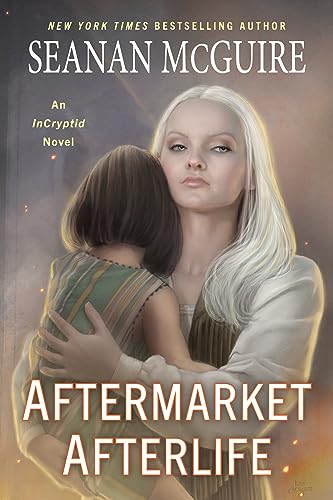
Book Review: Aftermarket Afterlife (InCryptid, #13) by Seanan McGuire

Title: Aftermarket Afterlife
Series: Incryptid, #13
Author: Seanan McGuire
Publisher: DAW
Publication date: March 5, 2024
Length: 368 pages
Genre: Urban fantasy
Source: Review copy courtesy of the publisher via NetGalley
Rating:

Rating: 4 out of 5.

Seanan McGuire’s New York Times -bestselling and Hugo Award-nominated urban fantasy InCryptid series continues with the thirteenth book following the Price family, cryptozoologists who study and protect the creatures living in secret all around us

Mary Dunlavy didn’t intend to become a professional babysitter. Of course, she didn’t intend to die, either, or to become a crossroads ghost. As a babysitting ghost, she’s been caring for the Price family for four generations, and she’s planning to keep doing the job for the better part of forever.

With her first charge finally back from her decades-long cross-dimensional field trip, with a long-lost husband and adopted daughter in tow, it’s time for Mary to oversee the world’s most chaotic family reunion. And that’s before the Covenant of St. George launches a full scale strike against the cryptids of Manhattan, followed quickly by an attack on the Campbell Family Carnival.

It’s going to take every advantage and every ally they have for the Prices to survive what’s coming—and for Mary, to avoid finding out the answer to a question she’s never wanted to know: where does a babysitting ghost go when she runs out of people to take care of?

In the 13th installment in the weird and wonderful world of Seanan McGuire’s InCryptid series, the Price-Healy family is back… and things are not going well at all.

My recap from the previous book in the series still holds true:

The InCryptid series is a big, sprawling, interconnected story about the varied and sundry members of the Price/Healy clan — humans (mostly) who specialize in cryptozoology, the study and preservation of non-human people who live among us here on Earth. The arch-enemies of the Price gang (and all non-human species) is the Covenant, a powerful organization dedicated to hunting down and eliminating all cryptids — ostensibly to protect humans, but really, at this point, it’s more from deeply ingrained hatred and a desire to rid the world of everything non-human.

The series covers a lot of ground, and as it’s progressed, different family members have had the starring roles in different books. We’ve had books mainly focused on siblings Verity, Alex, and Antimony, and also their cousin Sarah, and their grandparents Alice and Thomas, but Aftermarket Afterlife is the first book where the family babysitter, Mary Dunlavy, is in the central role.

Up to now, Mary has been a featured side character, always present one way or another in the family’s lives, but usually never in more than a few key scenes from book to book. In Aftermarket Afterlife, we’re finally able to experience the Price-Healy clan through Mary’s eyes, and it’s a fascinating journey.

Mary died about a hundred years earlier, but that hasn’t stopped her from carrying out her duties as the family’s babysitter. She may be a ghost, but she’s good at her job! By appearance, she’s a teen girl (with startling white hair and eerie eyes), and her afterlife’s purpose is caring for the children of the Price family… even when those children are now fully grown and have children of their own. Mary can assume solid form (so she can tend the children in her care), but can also discorporate to pass through other dimensions. Most important among her ghostly abilities, she can hear when one of her children calls for her no matter where they are, and can instantly blink out from wherever she is and appear by their side.

In Aftermarket Afterlife, the Covenant is amping up their attacks on cryptid locations in North America, zeroing in on known and suspected allies of the Price clan. It’s only a matter of time before they find the family’s secret compound outside of Portland. The Prices are seemingly outnumbered, but they don’t give up easily, and soon Mary becomes essential to the family’s plan to take the fight to the Covenant.

“Hi. I’m the babysitter. And you scared my kids.”

This book starts a bit slowly, as Mary blips from one point to another, gathering intel and figuring out where everyone is. Pretty much all the family members we’ve come to know over the course of the series show up in this one, so there’s a lot of setting the scene before the action before more sharply focused. By the midpoint, however, it’s full speed ahead. The family suffers some tragic losses, and as they’re left reeling, Mary’s role as caregiver becomes even more important.

I do love this series, although thirteen books in, there is a LOT to remember and keep track of. As the various characters have changed and evolved over the series, and different higher powers have come and gone, the underlying mythology has gotten even more complicated.

“I liked it better when we weren’t all wrapped up in gods and weird divinities,” said Sam.

Honestly, same. There are more godly beings affecting the world of the Incryptid series, and it can be a little mind-boggling at times.

Aftermarket Afterlife is a particularly entertaining outing — I really enjoyed Mary as narrator. Her worldview, as a ghost, is of course quite different from that of the living family members.

You might think being dead would make death easier for me to deal with. You would be so very wrong.

I won’t go too far into plot details. For those who’ve kept up with the series, you’ll want to see it unfold without knowing much in advance. For those unfamiliar with the series, this is all likely sounding like gibberish anyway!

Aftermarket Afterlife is another terrific adventure with the Price-Healy family. I loved getting to see so many of my favorite characters once again, and really enjoyed getting to know Mary so much more through this story. The book ends with the family essentially in the middle of a war against the Covenant, and I can’t wait to see what happens next.

As with other books in the Incryptid series, this one includes a novella at the end, Dreaming of You in Freefall, which takes place shortly after the events of Aftermarket Afterlife. There’s absolutely nothing I can say about it without divulging a major spoiler from the main book — but trust me, it’s a really good one, and you’ll want to read it right away.

The Incryptid series is not one to jump into at a random point. There’s so much backstory to learn, so many family members, and so many types of cryptids, as well as an overarching plot that’s been building from the beginning of the series. I do hope more people will read the Incryptid books… but if you do decide to give them a try, start with book #1, Discount Armageddon.
**Save

Save

Save

Save

Save

Save

Save

Book Review: The Parliament by Aimee Pokwatka

Title: The Parliament
Author: Aimee Pokwatka
Publisher: Tordotcom
Publication date: January 16, 2024
Length: 361 pages
Genre: Horror/fantasy
Source: Review copy courtesy of the publisher via NetGalley
Rating:

Rating: 4.5 out of 5.

The Birds meets The Princess Bride in this tale of friendship, responsibility, and the primal force of nature.

“Murder owls are extreme,” Jude said. “What’s more extreme than murder owls?”

Madeleine Purdy is stuck in her home town library.

When tens of thousands of owls descend on the building, rending and tearing at anyone foolish enough to step outside, Mad is tasked with keeping her students safe, and distracted, while they seek a solution to their dilemma.

Perhaps they’ll find the inspiration they seek in her favorite childhood book, The Silent Queen….

With food and fresh water in low supply, the denizens of the library will have to find a way out, and soon, but the owls don’t seem to be in a hurry to leave…

The Parliament is a story of grief and missed opportunities, but also of courage and hope.

And of extremely sharp beaks.

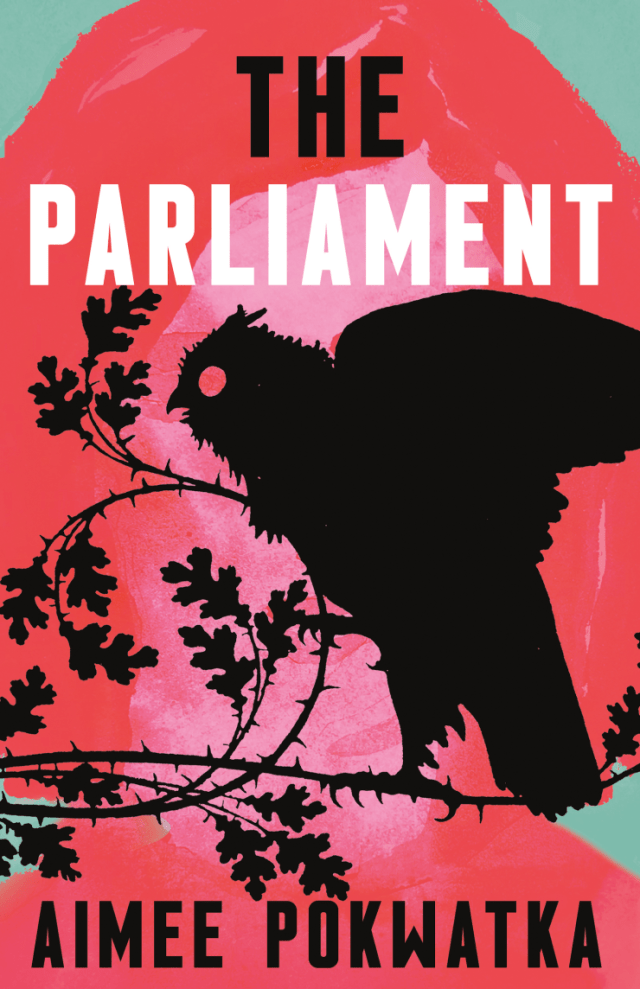
Awww, look at the cute owl on the cover!

Kidding. That’s a murder owl. Not cute!

And ignore what the synopsis says about The Princess Bride — that might seem to indicate that this book is full of whimsy and silliness, and it’s nothing of the sort.

Let’s get back to the murder owls.

When Mad Purdy agrees to teach a kids’ chemistry workshop — making bath bombs — as a favor to her former best friend who works at the local library in their hometown, she has no idea what she’s in for. She’s already moved away to put distance between herself and the site of her worst memories, but in the name of friendship, agrees to do this one thing.

But that one thing, meant to just be one brief event, turns into days of waking nightmares, as the library is surrounded by millions of tiny owls. Maybe one on its own is cute. This swarm is far from it, as the trapped inhabitants learn after watching the owls descend on the first person to venture outside. It isn’t pretty.

Mad expected to be in and out in one hour, boundaries firmly in place. Instead, she’s thrust into the role of protector, keeping the kids physically and emotionally safe, or as safe as they can be, given that food, water, and medicine are running out, and the outside world seems to have no clue how to rescue them.

To keep the kids distracted, Mad begins to read to them from her favorite book, The Silent Queen — which seems to show up in the library just when needed. No one has ever heard of it before, but for Mad, it was a lifesaver through the worst days of trauma during her childhood. The story of a young queen who isolates herself in a tower, but finally has to step out of her safe zone to save her people, may seem a little on the nose, but it doesn’t feel heavy-handed. The story gives the kids something to focus on, and meanwhile starts forcing Mad out of her own inner fortress.

The Parliament can be terribly frightening, and while there are several scenes of gruesome attacks when a few people are foolish enough to venture outside, much of the horror is psychological. The people inside the library are trapped, cut off (there’s no wifi or cell service, thanks to the owl swarm), and utterly reliant on one another and whatever scraps of supplies they can scavenge. Meanwhile, the few attempts at solutions that come from outside the library seem doom to failure, and worse, put the people inside the library in even greater danger.

This book is fascinating, and the story-within-a-story approach (chapters of The Silent Queen alternate with chapters focusing on the library) keeps us on the edge of our seats with both pieces of the narrative. The Silent Queen reads like a fairy tale/fantasy quest, and it’s both lovely and dramatic. The main story, within the library itself, conveys all the terror and claustrophobia of being trapped with a bunch of strangers, with a clock ticking and no rescue on the way.

Mad herself survived a terrible incident at age eleven, and that’s impacted every aspect of her life ever since. She’s taught herself a thousand useless, random tricks and survival skills, but at the expense of allowing herself to connect with others or let anyone really know her. This may make her the perfect person for helping the children in the library, but she has to get past her own trauma before she can truly start connecting with them.

My only quibble with The Parliament, and it’s a minor one, is that there are too many adult characters in the library to keep track of. We have Mad and her best friend Farrah and her former friend and love interest Nash, but there are also librarians and a book group and some seniors and, well, they start blurring together. Ultimately, I was more interested in the kids as individuals than in the glimpses we get of the adults, and so I didn’t bother trying to keep most of them straight in my mind. Like I said, this is a pretty minor issue, and ultimately didn’t keep me from being totally engrossed in the book.

Overall, The Parliament is a fascinating read, and once I started, I just couldn’t stop. The main story and the fantasy story within it work together in complicated and surprising ways, and as the tension ratchets up, I was on the edge of my seat. The author does a terrific job of keeping the action intense and frightening, while also letting us inside the characters’ experiences and providing a look at the long-lasting effects of trauma and survivor’s guilt.

Highly recommended.

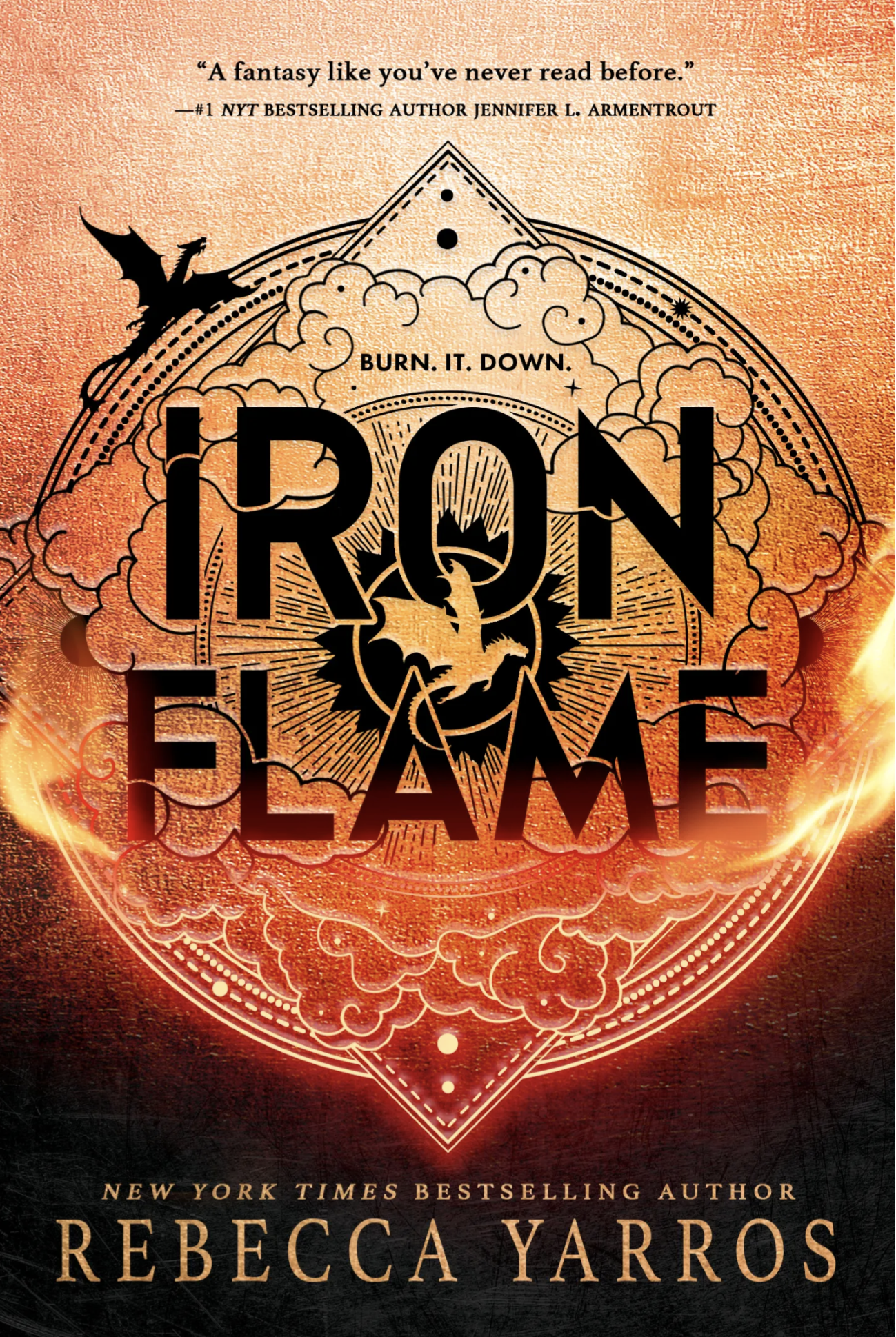
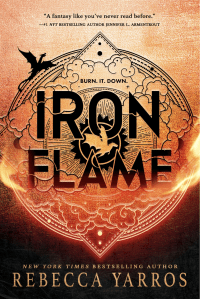
Book Review: Iron Flame by Rebecca Yarros

Title: Iron Flame
Series: The Empyrean, #2
Author: Rebecca Yarros
Publisher: Entangled Publishing
Publication date: November 7, 2023
Length: 884 pages (Kindle edition)
Genre: Fantasy
Source: Purchased

Rating: 2.5 out of 5.

“The first year is when some of us lose our lives. The second year is when the rest of us lose our humanity.” —Xaden Riorson

Everyone expected Violet Sorrengail to die during her first year at Basgiath War College—Violet included. But Threshing was only the first impossible test meant to weed out the weak-willed, the unworthy, and the unlucky.

Now the real training begins, and Violet’s already wondering how she’ll get through. It’s not just that it’s grueling and maliciously brutal, or even that it’s designed to stretch the riders’ capacity for pain beyond endurance. It’s the new vice commandant, who’s made it his personal mission to teach Violet exactly how powerless she is–unless she betrays the man she loves.

Although Violet’s body might be weaker and frailer than everyone else’s, she still has her wits—and a will of iron. And leadership is forgetting the most important lesson Basgiath has taught her: Dragon riders make their own rules.

But a determination to survive won’t be enough this year.

Because Violet knows the real secret hidden for centuries at Basgiath War College—and nothing, not even dragon fire, may be enough to save them in the end.

TL;DR version of a review: It’s Fourth Wing, but with torture!

Okay, there isn’t necessarily torture throughout the ENTIRE book, but there’s enough. And really, this book is basically the same as the first in the series, just… more.

In my review of Fourth Wing, I shared my unpopular opinion (liked, didn’t love it), and now I’m back with what I’m sure is an unpopular opinion of Iron Flame. This time around, I can’t even truly say that I liked the book.

(You’d be justified in asking why I bothered with the 2nd in a series if I didn’t love the 1st. The answer is — I was interested enough that I wanted to see what happened next… but I don’t think I’ll be repeating the experience when the 3rd book comes out).

Iron Flame picks up immediately after the events of Fourth Wing, continuing the story of Violet Sorrengail, her true love Xaden, their dragons, their war college, the evil secrets kept by their government, and a scary outside force that threatens everything. I’m not going to bother going deeper into the plot than that — there’s lots of action, lots of opaque talk about magical history, runes, wards, etc, and romantic complications that feel very unnecessary.

Violet and Xaden are madly in love in that heightened, desperate, dramatic way that’s a staple of fantasy romance, but they have some deep failures in their ability to communicate (which is ironic, considering that their dragons’ mating bond gives the two of them the ability to speak mind to mind). Violet resents Xaden keeping secrets, but he’s clearly keeping the secrets in order not to endanger other people, which is reasonable for a rebellion leader — especially since Violet is in frequent contact with someone who can read minds through touch, and can’t be guaranteed to avoid him. Yet Violet considers the secret-keeping a deal-breaker, and the couple spend much too much time holding themselves apart, feeling all sorts of tormented yearning (and unfulfilled lust).

As in Fourth Wing, this book feels mostly like YA, but with explicit sex scenes that aren’t the least bit sexy. And I’m sorry, but is the use of the word “claiming” in regard to kissing supposed to be hot? As in:

The feel of his tongue flicking against mine, then claiming, stroking, is a flame to a tinderbox, and I catch fire.

I vote no.

The writing overall is uneven, full of f-bombs and modern-speak in a way that’s jarring in a fantasy world of dragons and swords and runes. This bit made me laugh:

“… And then I’d kick his ass, partially because that’s what I do when someone challenges me, and more importantly for implying there’s any other future besides the one where you and I are endgame.”

Shouldn’t that be #endgame? The book often feels like it’s missing hashtags, or the fantasy-world equivalent of texts and TikTok.

One thing I did appreciate — there’s a point in the book where Violet and her squad are talking with gryphon riders from across the border, supposed enemies who’ve become secret allies. And it turns out in their training, if they fail… they go do something else. One of the things that irritated me no end in Fourth Wing is the acceptance that cadets trying to become dragon riders die throughout their time at the war college — death weeds out the people who aren’t strong enough to succeed. It makes no sense — surely all these talented young adults could better serve their country by joining other branches of the military, rather than dying or being killed by one another?

Maren nods, then points between Sloane and me. “And before you ask, it’s you all who are the weird ones, killing cadets on your conscription day.”

I draw back, letting her words sink in.

“Technically, they’re candidates,” Sloane mutters. “We’re only cadets once we cross.”

“Well, I guess that makes it better,” Maren quips sarcastically.

Okay, clearly, this book didn’t work for me. It’s overly long — it often feels like we’re experiencing every single day right alongside Violet, from breakfast to getting dressed to what she reads and studies.

There’s also the issue of just how much of a chosen one Violet is. She’s the most powerful rider, she has the most powerful signet (magical ability), she’s bonded with not one but two dragons, she’s in the most extremely passionate relationship with the hottest guy, she’s the only one who reads just the right archaic language to figure out the key to saving the kingdom… it goes on and on and on.

The worldbuilding continues to be inconsistent and opaque. Lots of terms and concepts get thrown around (wielding, imbuing, signets, runes, wards) but not necessarily clearly explained or used consistently, new rules seem to pop up out of nowhere for how various magical elements work, and the geopolitics remain as muddy as in the first book.

My final complaint (although yes, I could keep going) is that action sequences are not particularly well written. I found so many of the battle and adventure/quest scenes hard to follow — there always felt like pieces were missing and that the spatial relationships (especially during in-flight dragon battles) didn’t make sense.

I realized by the middle of the book that I just wasn’t enjoying it, but having made it that far, I was determined to finish. And I did, but it was quite a slog to get to the end. As with Fourth Wing, this book ends on a cliffhanger revelation… but by that point, I’d stopped caring.

I can’t see myself continuing with the series. I’m mildly curious about how it might work out, but not enough to subject myself to another 600 – 800 page tome. Maybe I’ll just wait for someone else to read it and give me a recap!

I know these books have legions of devoted fans… clearly, that doesn’t include me.

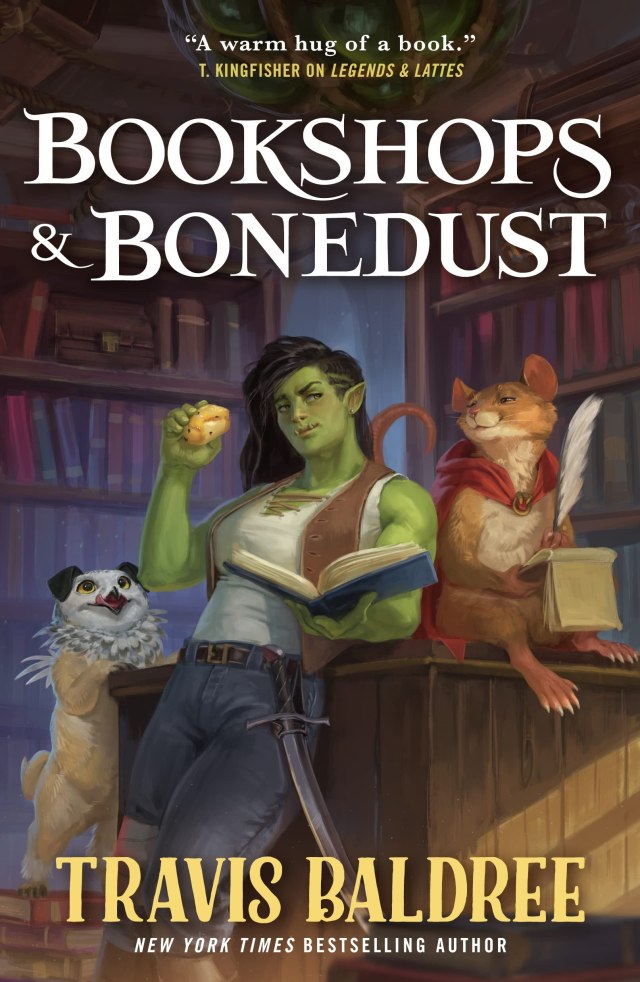
Book Review: Bookshops & Bonedust by Travis Baldree

Title: Bookshops & Bonedust
Author: Travis Baldree
Publisher: Tor Books
Publication date: November 7, 2023
Length: 352 pages
Genre: Fantasy
Source: Review copy courtesy of the publisher via NetGalley
Rating:

Rating: 4 out of 5.

When an injury throws a young, battle-hungry orc off her chosen path, she may find that what we need isn’t always what we seek.

In Bookshops & Bonedust, a prequel to Legends & LattesNew York Times bestselling author Travis Baldree takes us on a journey of high fantasy, first loves, and second-hand books.

Viv’s career with the notorious mercenary company Rackam’s Ravens isn’t going as planned.

Wounded during the hunt for a powerful necromancer, she’s packed off against her will to recuperate in the sleepy beach town of Murk—so far from the action that she worries she’ll never be able to return to it.

What’s a thwarted soldier of fortune to do?

Spending her hours at a beleaguered bookshop in the company of its foul-mouthed proprietor is the last thing Viv would have predicted, but it may be both exactly what she needs and the seed of changes she couldn’t possibly imagine.

Still, adventure isn’t all that far away. A suspicious traveler in gray, a gnome with a chip on her shoulder, a summer fling, and an improbable number of skeletons prove Murk to be more eventful than Viv could have ever expected.

I adored Legends & Lattes, and so I was thrilled to get a chance to read the author’s next book, a prequel called Bookshops & Bonedust. Is cozy fantasy a genre already? Because if it wasn’t before, thanks to Travis Baldree, it definitely is now.

In Bookshops & Bonedust, we spend time once again with Viv, the hero of Legends & Lattes. Here, she’s much younger, just starting out in her career as a mercenary. She’s big, strong, and can wield a saber with ease — but unfortunately, lacks the experience to know when to hold back, and ends up gravely injured. The head of her crew plants Viv in a nowhere town to recuperate, with a vague promise to come pick her up once she’s healed and they’re passing back through.

At first, Viv is frustrated and bored, as well as in pain from her serious leg wound. She’s unable to perform at the physical level she’s used to, and the town has absolutely nothing going on. While hobbling around the outskirts on her crutches and feeling miserable, she comes two establishments of note: The Sea-Song Bakery, giving off the most delicious smells, and a decrepit, dusty old bookstore called Thistleburr, owned by a rattkin named Fern and her gryphet companion, who seems primarily to want to bite Viv.

Viv would naturally have just moved on, but Fern — wise in way of a seasoned bookseller — convinces Viv to try one of her books. Viv scoffs… but then devours the book, and is back for more. An unlikely friendship springs up between the two, and since Viv has time on her hands, before too long she’s made it her mission to help Fern spruce up the shop and drum up fresh business.

Viv’s peaceful, if temporary, life in Murk is interrupted by the appearance of a suspicious-looking stranger, and before too long she’s back to battling necromancers. Meanwhile, she accumulates a variety of new friends and allies — plus a very sweet love interest — and coincidentally becomes an avid reader as well.

Bookshops & Bonedust is oodles of fun. I love how the author weaves current fads into his stories — so here, for example, in an effort to catch the eye of would-be book browsers, Fern packages books in plain wrappers and writes keywords on the outside (“Swordfights. Beheadings. Betrayals”). It’s a blind date with a book! If you think this is a cute idea in our own world’s bookstores, just wait until you see it in this fantasy setting.

For me, Legends & Lattes will always be #1, but Bookshops & Bonedust is a great follow-up, with the same spirit of adventure and coziness that made the first book such a treat. Fans of Legends & Lattes will absolutely want to read this book… and given that this is a prequel, it’s a perfectly fine starting place for anyone new to the overarching world of the series.

Perfect for lovers of bookstores, pastries… and orcs with swords.

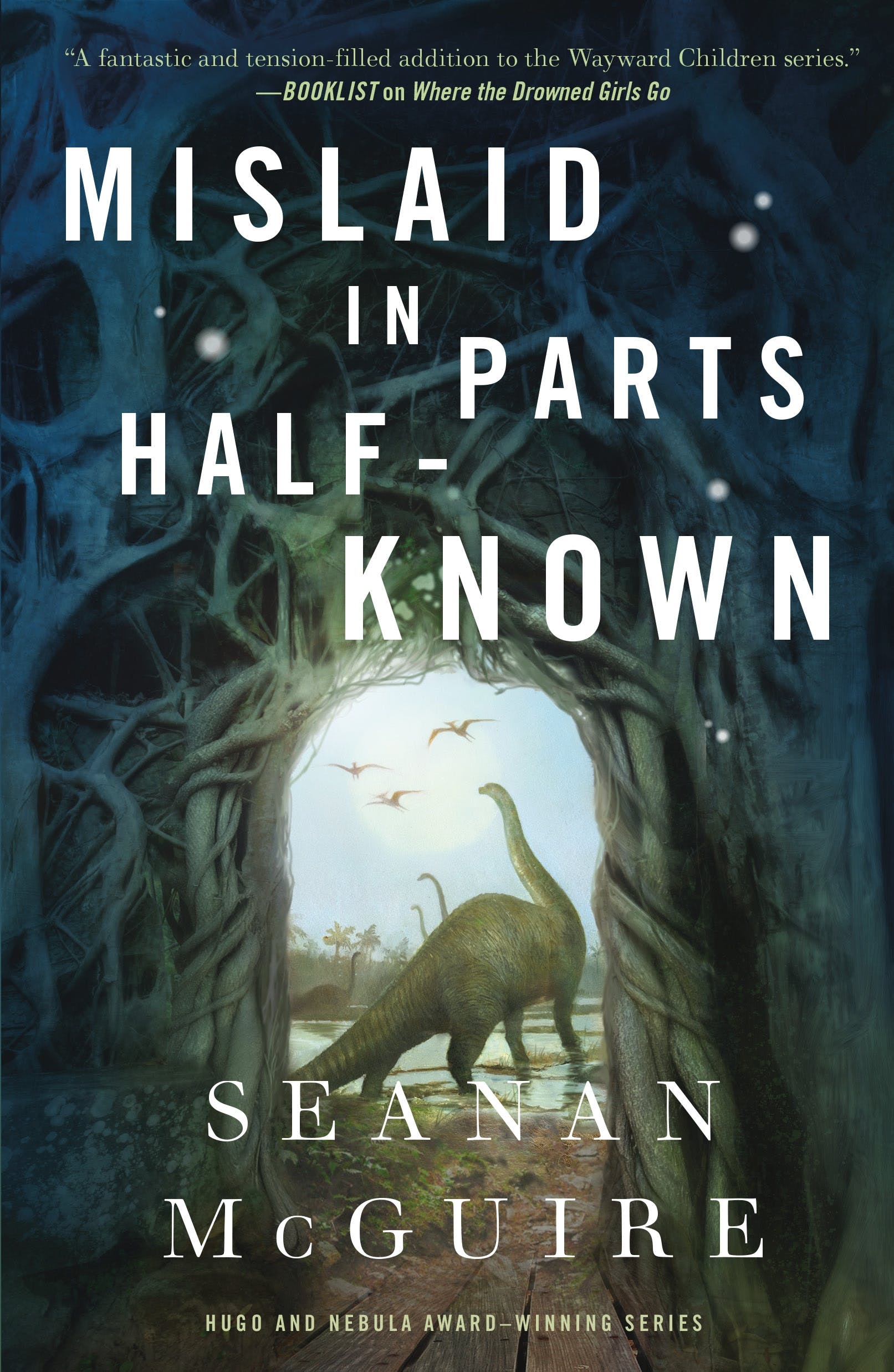
Book Review: Mislaid in Parts Half-Known (Wayward Children, #9) by Seanan McGuire

Title: Mislaid in Parts Half-Known
Series: Wayward Children, #9
Author: Seanan McGuire
Publisher: Tor
Publication date: January 9, 2024
Length: 160 pages
Genre: Fantasy
Source: Review copy courtesy of the publisher

Rating: 4.5 out of 5.

Dinosaurs and portals, and a girl who can find both in the latest book in the Hugo and Nebula Award-Winning series.

Antsy is the latest student to pass through the doors at Eleanor West’s School for Wayward Children.

When her fellow students realize that Antsy’s talent for finding absolutely anything may extend to doors, she’s forced to flee in the company of a small group of friends, looking for a way back to the Shop Where the Lost Things Go to be sure that Vineta and Hudson are keeping their promise.

Along the way, temptations are dangled, decisions are reinforced, and a departure to a world populated by dinosaurs brings untold dangers and one or two other surprises!

A story that reminds us that finding what you want doesn’t always mean finding what you need.

What can you say about the 9th book in a series? Other than that’s it’s terrific, of course! The book opens with a paragraph that beautifully sums up the overarching plot of the series:

Children of the doors know about being mislaid. They are well-acquainted with stepping through an opening or following a passage that should lead from here to there, and finding themselves someplace entirely else, someplace entirely new. It is possibly their only truly unifying experience, the one thing they have so completely in common that there’s no need to even question it: once upon a time, they took an impossible step, opened an impossible portal, and ended up in a terribly, horribly possible place.

As the newest Wayward Children book, Mislaid in Parts Half-Known keeps the overarching storylines of the series moving forward while introducing some new twists, rules, and situations for the characters to deal with. Some of the installments in the series have more of a stand-alone feel, although they’re all connected, but this is not one of those. Mislaid is absolutely a sequel, mainly in regard to book #8 and its main character Antsy, but it also continues the stories of several other characters, and it’s helpful (I’d even say critical) to be familiar with them.

The previous book, Lost in the Moment and Found, focused on a young girl named Antsy, who runs away from a dangerous situation in her home and finds herself in the world of a store that’s actually a nexus point between worlds. Antsy’s new home in the store is mostly delightful — she’s safe, after all, and has the opportunity to visit countless new worlds through the portal doors that appear and disappear. But, as she discovers by the end of the book, there’s a price to be paid, and the book ends with Antsy returning, quite changed, to her home world and finding her way to Eleanor West’s Home for Wayward Children.

In Mislaid in Parts Half-Known, Antsy is settling in at the school, but doesn’t actually quite fit. She’s actually much younger than the other students, and their portal worlds are all so different that she can’t seem to connect with many of them. When a particularly dangerous student threatens Antsy’s safety, she and a handful of others escape through another door and begin a new quest.

Readers of the prior books in the series will be familiar with Antsy’s companions — Sumi, Kade, Christopher, Cora and a few newer faces too. As they flee, they’re also searching for possibilities. Most of the students yearn to return “home” — that is, to their lost worlds beyond the doors — and Antsy has the unique ability to find any door. So if they can actually go home, should they?

There are some interesting discussions about what it means to be sure about a choice, and how they’ll know when or if they’re ready, as well as conversations about whether someone truly still belongs in the place they consider home. These introspective bits are lovely, as the various characters get a chance to shine and express themselves, even in the midst of fleeing from dangerous goblins and dinosaurs.

Yes, dinosaurs. The cover doesn’t lie! The group does visit a primeval world populated by dinosaurs, and it’s amazing. I’m not going into further detail — read it and find out!

The challenge I had with this book, as hinted at earlier, is keeping track of the characters. Yes, I’ve read the entire series so far, but since they’re released at a rate of one per year, it’s been a few years since I’ve thought about some of these characters. Thank goodness there are wikis out there! I definitely had to go look up some backstories. At some point, rereading the whole series from the beginning might be a good idea!

If you’ve been curious about the Wayward Children series, I would recommend against starting with this book. It won’t make any sense! It’s such a great series, though, that I would strongly recommend picking up a copy of Every Heart a Doorway — I bet you’ll want to keep going!

I really enjoyed Mislaid in Parts Half-Known. It ends with certain characters spinning off into new directions, and leaves much still to be discovered in the wider world of the school. I can’t wait to find out where Wayward Children goes next.

Book Review: Fourth Wing by Rebecca Yarros

Title: Fourth Wing
Series: The Empyrean, #1
Author: Rebecca Yarros
Publisher: Entangled Publishing
Publication date: May 2, 2023
Length: 528 pages
Genre: Fantasy
Source: Purchased

Rating: 3.5 out of 5.

Enter the brutal and elite world of a war college for dragon riders from USA Today bestselling author Rebecca Yarros

Twenty-year-old Violet Sorrengail was supposed to enter the Scribe Quadrant, living a quiet life among books and history. Now, the commanding general—also known as her tough-as-talons mother—has ordered Violet to join the hundreds of candidates striving to become the elite of Navarre: dragon riders.

But when you’re smaller than everyone else and your body is brittle, death is only a heartbeat away…because dragons don’t bond to “fragile” humans. They incinerate them.

With fewer dragons willing to bond than cadets, most would kill Violet to better their own chances of success. The rest would kill her just for being her mother’s daughter—like Xaden Riorson, the most powerful and ruthless wingleader in the Riders Quadrant.

She’ll need every edge her wits can give her just to see the next sunrise.

Yet, with every day that passes, the war outside grows more deadly, the kingdom’s protective wards are failing, and the death toll continues to rise. Even worse, Violet begins to suspect leadership is hiding a terrible secret.

Friends, enemies, lovers. Everyone at Basgiath War College has an agenda—because once you enter, there are only two ways out: graduate or die

Unpopular opinion time: I liked Fourth Wing, but didn’t love it. Based on the hype, as well as its dominance of the bestseller lists, I guess I just expected… more.

In Fourth Wing, Violet Sorrengail is the youngest daughter of the feared General Sorrengail, who heads the Basgiath War College and also directly oversaw the execution of the members of a failed rebellion six years earlier. Violet’s older brother and sister both ended up as dragon riders, like their mother, but Violet — petite and with painful joints prone to injury — seemed destined to join the Scribe Quadrant, like her father. In fact, Violet longed to become a scribe, but after her father’s death, her mother had other plans for her.

Forced into the Rider Quadrant. Violet undergoes challenge after challenge, where failure means not merely disqualification from rider status, but death. Ultimately, as our heroine, it’s not surprising that she overcomes the odds, stays alive, and finds a way to triumph. Her journey from frail misfit to powerful rider and wielder of magic is a story of perseverance, strong allies, determination, and intelligence.

Meanwhile, Violet almost immediately becomes embroiled in a sort-of love triangle. She’s thrown together with her childhood best friend Dain, who cares for her but doesn’t seem to fully see her — but then there’s Xaden, the dangerous, fiercely attractive son of an executed rebel leader. Xaden is Violet’s wingleader, and Violet thinks he wants her dead. Or does he?

First, what I enjoyed about Fourth Wing:

  • DRAGONS: The dragons here are awesome. The rider candidates must be chosen by a dragon. Those not chosen to bond often end up dead. The dragons themselves are terrific characters, and (trying carefully not to give anything away), the dragons that feature in Violet’s story are particularly spectacular.
  • The overarching plot: Once the dragons enter the picture, the plot itself picks up and becomes engrossing. The challenges, Violet’s journey, the struggles, the dangers — all of it escalates and intensifies in the latter half of the book.
  • The hints at a larger story to tell: We only learn about the history of Navarre through what Violet sees and knows. What we do find out seems like it could be fascinating, but clearly there are secrets that she isn’t privy to.

My overall enjoyment of Fourth Wing was broken up by elements that either annoyed or distracted me.

Spoilers ahead!

My quibbles:

  • Info-dumping: Early on, to keep her mind off the life-threatening danger of her first challenge, Violet recites the history and geography of Navarre** in her head. It’s a strange way for readers to learn the basics, and in fact, felt too transparently like the author was saying, oh hey, I know y’all need to understand the backstory here, so I’m going to shoehorn it in while Violet’s in mortal danger.
  • World-building: Related to the point above, the world building is incomplete and unsatisfying. We get spoon-fed bits and pieces of information about the rebellion, about border skirmishes, about the continual threat to Navarre (and hence the need for an army of dragon riders), but it’s all a little loose and ill-defined.
  • Love triangle: Ugh. Need I explain this one? Fortunately, the triangular bit is resolved fairly easily, but the push-pull between the gorgeous bad boy and the (also gorgeous, but in a more expected way) boy next door feels very been there, done that. Is there any question at all about who wins in this equation? Not for a second.

Plus a few other issues that bothered me:

Is this YA? What even is this book? It’s on the adult fiction bestseller lists and is marketed as adult fiction. But honestly, it reads very heavily as YA. Other than the fact that the characters are in their 20s and that there are explicit sex scenes, this could be a variant on typical YA tropes: A magical school/college, the underdog discovering great powers, magical creatures, powerful adults forcing younger people to potentially fight to the death…

I found the writing good during action sequences, but then certain phrases and word choices pulled me straight out of the story — simply too modern to fit in a fantasy world:

Even the diagonal scar that bisects his left eyebrow and marks the top corner of his cheek only makes him hotter.

Sometime in the last year, Dain Aetos went from attractive and cute to gorgeous.

With a name like Sorrengail, I bet you were the first to volunteer this year.” “I was more like volun-told.”

And especially:

“I know, right?”

I think my biggest issue with Fourth Wing is the life-or-death stakes facing students in the Riders Quadrant. Every step of their journey — including their literal first steps, across a narrow parapet to gain access to the quadrant — has a strong risk of death involved. The stakes are explained as a winnowing process: Someone who lacks the physical skill and strength to survive the college is unlikely to be chosen by a dragon or to survive the intensity of riding, wielding channeled magical powers, and aerial combat.

Part of this winnowing includes the risk of death at the hands of fellow students: These people fight to hurt, to maim, and at times, to kill. And it’s all allowed, with few exceptions. Cross the parapet, or fall to your death. Win at sparring, or potentially have your neck snapped. Make it up the vertical obstacle course, or (again) fall to your death. As a certain other fantasy book puts it, you win or you die.

And I kept asking myself: Why? This is a county in a constant state of war. Why allow this waste of resources? If someone washes out as a rider, why is death the only option? After all, the college also includes training for healers, scribes, and infantry. Wouldn’t it make more sense to demote people to a different path rather than have so many of the country’s youth simply end up dead?

Quibbles aside, I did find myself — somewhat unwillingly — pulled into the story and unable to put this book down. After an uneven start, Fourth Wing hooked me by about the 30% mark, and of course, dragons make it all so much better.

The YA-but-with-sex nature of the storytelling and the success-or-death stakes continued to bother me throughout, but once I stopped paying attention to these annoyances and just went with the plot, it really flowed. I enjoyed the character development, the battle scenes, and especially, Violet and the interplay with dragons.

The book has an extremely open-ended ending — it just stops, and nothing is tied up. As the first in a series, I suppose that’s not too surprising, but I still wasn’t expecting it when I turned to the next page after a cliff-hanger chapter ending and saw that I was done. Fortunately, the next book in the series, Iron Flame, will be released in early November — and according to Goodreads, there are expected to be five books in all.

Hopefully, the next book(s) will expand on the world-building and add more structure and information to what we already know. I may have had mixed feeling about Fourth Wing, but I certainly want to see what happens next! As of now, I’m definitely planning to read Iron Flame as soon as I can get my hands on a copy.

Iron Flame: Release date November 7, 2023

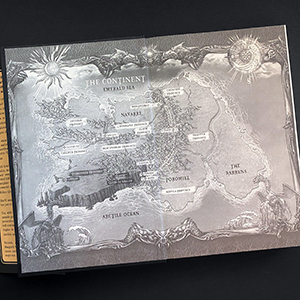
**Reading note: I read Fourth Wing in Kindle format. There’s a map of Basgiath provided at the start, which is somewhat helpful. BUT, when I visited a bookstore this week after finishing the book and happened to pick up a hardcover edition (because PRETTY), I saw that the end papers include a map of Navarre and its surrounding areas. That would have been so helpful to have before reading the book!! Why isn’t it included in the Kindle edition? Here’s an image (via Amazon) of the inside cover of Fourth Wing — haven’t found an officially available PDF of the map online yet, although plenty of fan sites and Etsy sellers have copies available.

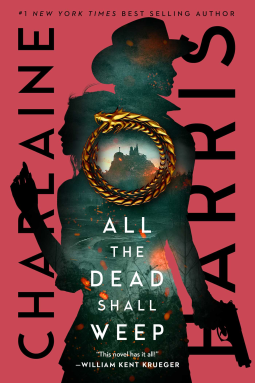
Book Review: All the Dead Shall Weep (Gunnie Rose, #5) by Charlaine Harris

Title: All the Dead Shall Weep
Series: Gunnie Rose, #5
Author: Charlaine Harris
Publisher: Saga Press
Publication date: September 5, 2023
Length: 256 pages
Genre: Fantasy / speculative fiction
Source: Review copy courtesy of the publisher via NetGalley
Rating:

Rating: 3.5 out of 5.

Sisters Lizbeth Rose and Felicia as well as brother Eli and Peter, are reunited in Texoma only to break apart before the Wizard’s Ball held in San Diego, which will determine all their fates.

Following the murderous events of the Serpent of Heaven, Lizbeth Rose is awaiting the arrival of her sister Felicia and her husband’s younger brother Eli in Texoma. Both needed to leave the seat of the Holy Russian Empire in San Diego after Felicia’s burgeoning wizardly power in death magic became the reason for kidnapping and assassination attempts from her mother’s family of high-powered wizards in Mexico.

Yet bad news has traveled ahead of them, as Eli is called back to San Diego, taking Peter along with him, splitting them apart in more ways than one as their enemies’ plans for revenge come to fruition.

If you’d asked me a year ago, I’d have said that I had no interest in getting involved in yet another fantasy series. Times change! I read book one of the Gunnie Rose series, An Easy Death, in February of this year, and since then have inhaled the rest of the available books. As you can imagine, I was delighted to get my hands on a copy of All the Dead Shall Weep, the newest release in this terrific series.

Quick refresher/overview: The Gunnie Rose series takes place in an alternate world in which the United States fractured during the 1930s. The continent is now divided into separate, independent countries, among them the Holy Russian Empire (our California and Oregon), New America, Dixie, Britannia, and Texoma (our Texas and Oklahoma), home to main character Lizbeth Rose.

Lizbeth is a “gunnie”, a talented sharpshooter for hire who earns a living protecting people and cargo. Over the course of the series, she’s met and fallen in love with Eli Savarova, an aristocrat from the HRE and a gifted “grigori”, a term used for Russian magicians. In this world, magic is real and powerful, and while in some circles grigoris are esteemed, in Texoma, they are generally feared.

The first three books in the series are told from Lizbeth’s point of view, and book four switched to Lizbeth’s sister Felicia as narrator. Here in book 5, Lizbeth and Felicia both narrate, each getting their own chapters to lead us through the story.

Lizbeth and Eli are settled in Texoma, enjoying married life in her small town, earning a modest living and trying to fit in. When Felicia and Peter, Eli’s brother, come for a visit, things start getting more complicated. A previously unknown militia group shows up in town with lots of firepower, and end up causing harm and danger to the family. Following these events, Eli departs with Peter without much of an explanation, and Lizbeth is left to believe that Eli has left her to return to his more privileged, comfortable life in the Holy Russian Empire.

Meanwhile, Felicia, who has astounding magical powers of her own, is being courted by eligible partners from the most elite magical families, and this leads to even more danger for all involved.

It’s challenging to sum up the overarching plot of this particular installment in the series, because it often felt like it lacked one. There are several high-adventure set pieces, and some connecting threads, but I was puzzled throughout about what the main point was and where the story was going. In some ways, this book feels like a bridge between plot developments — we spend time with the characters and certain things happen, but it feels largely like set-up for other major events yet to come.

All the Dead Shall Weep is shorter than the previous books, and I found myself somewhat less engaged by the plot. However, I do love these characters and find the world of the Gunnie Rose series to be fascinating, so spending time on this book was a nice treat despite the slightly less propulsive plot.

Obviously, with an ongoing series like this, the 5th book is not the right place for a new reader to start — definitely begin with An Easy Death if you’re interested! While this particular book wasn’t as great as some of the others, I still enjoyed it, and absolutely can’t wait for the expected huge payoff in book #6, which I hope will come along soon!

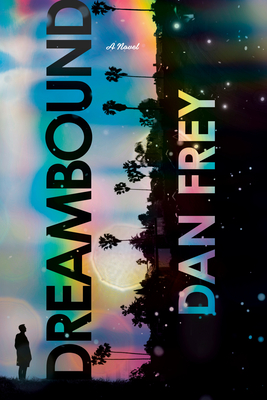
Book Review: Dreambound by Dan Frey

Title: Dreambound
Author: Dan Frey
Publisher: Del Rey
Publication date: September 12, 2023
Length: 400 pages
Genre: Contemporary fiction / fantasy
Source: Review copy courtesy of the publisher via NetGalley
Rating:

Rating: 4.5 out of 5.

In this thrilling contemporary fantasy novel, a father must uncover the secret magical underbelly of Los Angeles to find his daughter, who has seemingly disappeared into the fictional universe of her favorite fantasy series.

When Byron Kidd’s twelve-year-old daughter vanishes, the only clue left behind is a note claiming she’s taken off to explore the Hidden World, a magical land from a series of popular novels. She is not the only child to seek out this imaginary realm in recent years, and Byron—a cynical and hard-nosed reporter—is determined to discover the whereabouts of dozens of missing kids.

Byron secures a high-profile interview with Annabelle Tobin, the eccentric author of the books, and heads off to her palatial home in the Hollywood Hills. But the truth Byron discovers is more fantastical than he ever could have dreamed.

As he uncovers locations from the books that seem to be bleeding into the real world, he must shed his doubts and dive headfirst into the mystical secrets of Los Angeles if he ever hopes to reunite with his child. Soon Byron finds himself on his own epic journey—but if he’s not careful, he could be the next one to disappear…

Told through journal entries, transcripts, emails, and excerpts from Tobin’s novels, Dreambound is a spellbinding homage to Los Angeles and an immersive and fast-paced story of how far a father will go—even delving into impossible worlds—to save his daughter.

Dan Frey’s previous novel The Future Is Yours was a fantastic read, so I jumped at the chance to read his newest, Dreambound. I’m happy to report that Dreambound absolutely lives up to my high expectations!

In this new book, told through the main character’s investigation notebook and email exchanges, Byron Kidd’s world falls apart when his 12-year-old daughter Liza disappears. A note left tucked inside one of her favorite books, a volume in the massively popular Fairy Tale fantasy series, indicates that she’s left voluntarily. With no leads, no sightings, and nothing to go one, the case quickly goes cold, and Liza’s parents are left to cope in their own ways — her mother escapes into rituals of mourning and therapy, and Byron, an investigative journalist, decides to pursue the one lead they do have: the Fairy Tale fandom and its secrets.

Internet rumors draw connections between other missing children cases, all of which seem to be tied to Fairy Tale in some way. Yet when Byron tries to pursue this angle, he’s told that he’s chasing conspiracy theories, and warned not to let his grief and despair tarnish his professional reputation.

But Byron is convinced that he’s onto something, and heads to Los Angeles, where a single ping from Liza’s cell phone was detected after her disappearance. Through manipulation and subterfuge, he manages to get an interview with the author of Fairy Tale, Annabelle Tobin, whose sixth and final book in the series has been long delayed and who lives a reclusive life in her secluded Hollywood Hills mansion.

Things get weirder and weirder — is there truly a “hidden world” that these missing children have managed to get to? Or is the fandom so overly immersed in the fictional Fairy Tale world that predators and traffickers have been able to lure young readers with false promises?

Early on, Dreambound establishes the power of reading and the lure of imagination and fantasy. Byron, wrapped up in his obsessive need to find Liza, contemplates whether he made a fundamental mistake as a parent:

Then I’ll tell you who I am. I’m the guy who can’t sleep, wondering what I did wrong. Wondering how I could have possibly prevented this. Wondering if I made a mistake by teaching her to read, or giving her those stupid, dangerous books.

As all readers know, books have power. For a little while, at least, books transport us to new worlds and new ways of thinking. But Dreambound suggests that there’s more: What if the shared belief of enough readers is enough to make these fantasy worlds manifest within our own? What if what happened to the missing children isn’t shared delusion, but the literal opening of a portal to the hidden world, accessed through the power of believing it to be real?

I mean, what is magic if not a way to transform the world through the power of our thoughts? What are books if not spells? What are stories if not the most powerful and mysterious force known to man?

Dreambound is complicated and mind-bendy, taking us deep into Byron’s investigation through his notes, embedded transcripts of conversations and interviews, and the stories Byron encounters through a mysterious book called (naturally) The Hidden World. To others, Byron may seem to have been driven mad by his loss — but as he digs deeper, the clues he discovers lead him to startling discoveries and unexpected allies, and impel him onward even while outside forces want to stop him.

Annabelle Tobin seems an obvious stand-in for a certain real-world author of a blockbuster, bestselling series of children’s books and movies which have so indelibly changed our pop culture reference points. Not to get too meta, but it’s hard not to draw parallels when reading lines such as this in an email from her editor:

Right now, your work is being tarnished and overshadowed by a public conversation that we’ve lost control over.

Still, Annabelle differs in key ways, ends up being more sympathetic than I’d originally believed, and has unique secrets that we can only assume are not shared with her real-world counterpart.

I loved the adventure, the unraveling of clues, and the emphasis on the role of books and fantasy in our lives, as well as the underlying mythos in which beliefs shared across enough people gain power to stand on their own. Byron is not always a likable person (some of his tactics are fairly despicable), but he can be forgiven his crueler moments for the sake of his devotion to getting his daughter to safety, no matter what he has to sacrifice.

At points, I wished that the glimpses of the world of the Fairy Tale series went more in-depth. I do love a good story-within-a-story plot device, and in this case, the bits we do see of the Fairy Tale fantasy world seem very alluring — it’s easy to see, based on these snippets, how they might generate such a devoted fan base.

Still, the point is not the Fairy Tale series itself, but its effect on its readers — particularly those still young or open enough to both understand the real world in which they live yet still hold out hope that fictional ideals might somehow be true.

The concepts here are wonderful, the plot is convoluted and twisty, and the fantasy elements are immersive and imaginative. Dreambound is a compelling, entertaining read that kept me turning the pages until way past my bedtime. Don’t miss it!

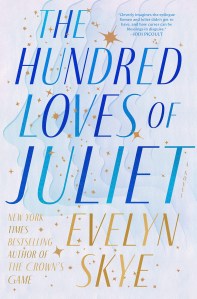
Book Review: The Hundred Loves of Juliet by Evelyn Skye

Title: The Hundred Loves of Juliet
Authors: Evelyn Skye
Publisher: Del Rey
Publication date: August 1, 2023
Length: 337 pages
Genre: Contemporary fiction / fantasy
Source: Review copy courtesy of the publisher via NetGalley

Rating: 3.5 out of 5.

A woman discovers that she is part of a legendary love story that spans lives, years, and continents in this modern-day reimagining of Romeo and Juliet.

I may go by Sebastien now, but my name was originally Romeo. And hers was Juliet.

It’s a frosty fairytale of an evening in small-town Alaska when Helene and Sebastien meet for the first time. Except it isn’t the first time. You already know that story, though it didn’t happen quite as Shakespeare told it.

To Helene, Sebastien is the flesh-and-blood hero of the love stories she’s spent her life writing. But Sebastien knows better—Helene is his Juliet, and their story has always been the same. He is doomed to find brief happiness with her over and over, before she dies, and he is left to mourn.

Albrecht and Brigitta. Matteo and Amélie. Jack and Rachel. Marius and Cosmina. By any name, no matter where and when in time, the two of them are drawn together, and it always ends in tragedy.

This time, Helene is determined that things will be different. But can these star-cross’d lovers forge a new ending to the greatest love story of all time?

The Hundred Loves of Juliet takes the classic tragedy of Romeo and Juliet as inspiration for a modern-day love story that spans centuries.

After leaving her awful — manipulative, cheating, gaslighting — husband, Helene Janssen decides to create a new life for herself, and relocates to a small town in Alaska to recover her equilibrium and work on her novel. A professional journalist, Helene is eager to see if she can turn the snippets of stories she’s written all her life into an actual book.

Since middle school, Helene has had a vividly detailed imaginary hero at the center of her stories and daydreams. Whether as a nobleman at Versailles, a Swiss clockmaker, or trekking across the Sahara, the same man repeatedly appears in all her scenarios, and she knows everything about him — his appearance, his voice, even his quirky habits and gestures.

Imagine Helene’s shock when, on her first night in Alaska, the man from her stories shows up in the restaurant where she’s having dinner. He’s not just similar to her character — every detail matches up exactly. But when Helene approaches Sebastien, who’s clearly much beloved by the town and seems like kindness itself — he rudely rebuffs her and makes it clear that he doesn’t want to know her.

We soon learn more from Sebastien’s point-of-view, and what a story he has to tell! Sebastien is only his latest identity. Originally, he was Romeo Montague. Yes, that Romeo. And he lets us know just what Shakespeare got wrong. Juliet did die, shockingly and tragically, just a few short days after their secret marriage — but Romeo survived. Since then, he’s been cursed with immortality, and doomed to meet, fall in love with, and then lose reincarnations of Juliet, over and over again across the long centuries.

Each time he meets a new version of Juliet, he hopes things will be different, but each time, she dies — sometimes within days, sometimes after they begin a life together, but no Juliet has lasted more than two years after they meet. This time, he’s determined to save Helene — whom he immediately recognizes as Juliet — by staying out of her life. If he needs to run away from his life in Alaska in order to avoid her, he will… but when Helene is stranded near his home during a blizzard, he has no choice but to offer her shelter, and his carefully constructed walls can’t last once they begin to spend time together.

In many ways, The Hundred Lives of Juliet is highly enjoyable. Thanks to the alternating POV sections, we see the past vignettes as well as the current storyline unfold from both Helene’s and Sebastien’s perspectives, which helps us understand why they behave as they do. The rules of their curse aren’t clear-cut or consistent, and even Romeo/Sebastien isn’t entirely sure why things happen the way they do. Were they cursed by Mercutio’s dying words:

A plague o’ both your houses

Or is there some other reasons why Sebastien seems to live forever, while Juliet lives through sequential lives, always destined to die tragically at a young age?

There’s an undeniable tension that builds as the story progresses. Once Helene and Sebastien give in to the inevitability of their love, we can feel the clock ticking on their happiness. We know that all Juliets die, so there’s a sense of held breath — what will go wrong? This tension pulled me in and kept me reading, to the point where I just couldn’t stop until I reached the end.

At the same time, not everything here works well. We read Helene’s story vignettes scattered throughout the book, and there isn’t a particularly kind way to say that they feel pretty clichéd and stale. Not to mention, yes, Romeo has lived for about 700 years, but it still feels unlikely that his adventures would take him to quite that many new lives around the world.

On top of this, Helene’s novel-writing project is centered on turning her vignettes into a cohesive whole — but since it turns out that all of these stories are actually depictions of past lives she’s lived with Sebastien, how is that actually creative writing, and isn’t this all supposed to be a secret? (Also, I was amused that one of Helene’s first errands in Alaska is a trip to the local bookstore to buy a book about how to write a novel — is that really all it takes? A good how-to book?)

There’s a suspense element toward the end of the book involving a looming threat to Sebastien and Helene, as his secret is on the verge of being revealed (and they fear that if the truth gets out, he’ll be locked away in a government research facility forever — again, this feels very clichéd to me). However, the danger is dealt with pretty quickly in a way that is almost a deus ex machina solution, and I didn’t love anything about this part of the story.

Not to be overly nitpicky, but one scene in the first half of the book made me consider walking away from it all. Sebastien warns Helene not to go wandering around his house at night, she compares the warning to Belle being barred from the west wing in Beauty & the Beast, and he responds by calling her “childlike”. Okay, agreed, that’s rude… but she responds to the “childlike” comment by slapping him. SLAPPING him!?! Who does that? To a stranger who’s giving you shelter from a dangerous storm, and who may not be as polite as we’d like, but who has a right to set limits on where a guest goes in his home? Wow, I did not like this scene at all, and it made me think less of Helene as a person.

I’ve gone into greater details on what I didn’t like about the book, but the fact remains that I read the whole thing in about 24 hours, so clearly there was plenty that I did like! Helene and Sebastien’s struggles to make sense of their connection and to understand the past were very compelling, and the key concepts of the story are unique. I had a hard time suspending my disbelief, but ultimately decided to just go with it (immortality! reincarnation!) and not worry about whether every last bit made sense.

Overall, The Hundred Loves of Juliet is a compelling read despite its flaws, and I appreciated the momentum that builds over the course of the novel. It’s definitely more than a bit melodramatic, but considering this is a retelling/reimagining of Romeo and Juliet, I suppose melodrama is allowed!

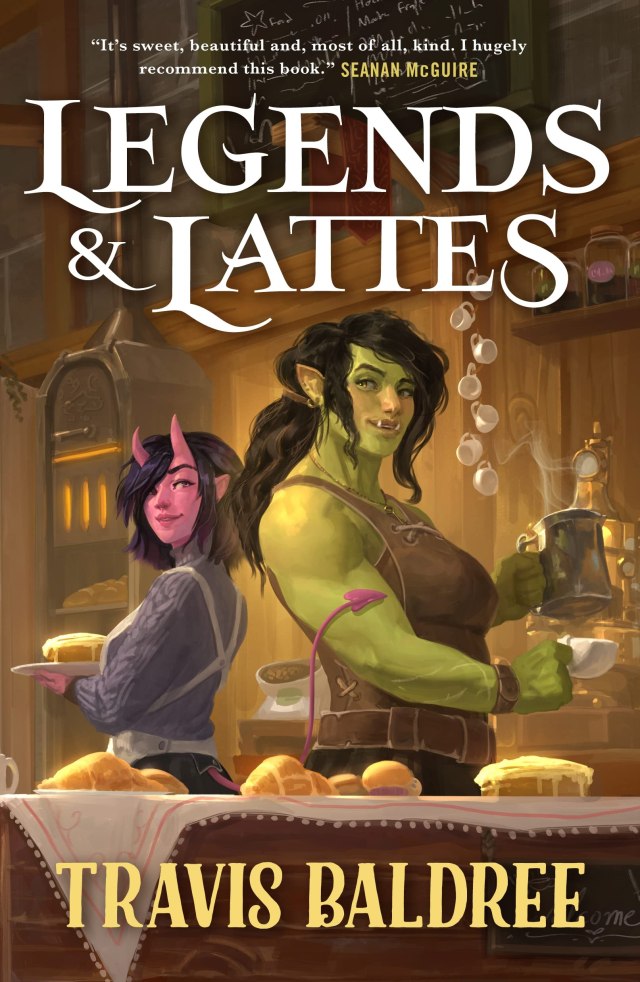
Book Review: Legends & Lattes by Travis Baldree

Title: Legends & Lattes
Author: Travis Baldree
Publisher: Tor Books
Publication date: February 22, 2022
Length: 294 pages
Genre: Fantasy
Source: Purchased
Rating:

Rating: 5 out of 5.

A NOVEL OF HIGH FANTASY AND LOW STAKES

After a lifetime of bounties and bloodshed, Viv is hanging up her sword for the last time.

The battle-weary orc aims to start fresh, opening the first ever coffee shop in the city of Thune. But old and new rivals stand in the way of success—not to mention the fact that no one has the faintest idea what coffee actually is.

If Viv wants to put the blade behind her and make her plans a reality, she won’t be able to go it alone.

But the true rewards of the uncharted path are the travelers you meet along the way. And whether drawn together by ancient magic, flaky pastry, or a freshly brewed cup, they may become partners, family, and something deeper than she ever could have dreamed.

After hearing raves about Legends & Lattes ever since its release, I finally gave it a try… and absolutely loved it. What a treat!

Viv is an orc who’s ready to put down her sword, leave behind her life of violence, and try something completely new — opening a coffee shop in the city of Thune, where no one has ever even heard of coffee. With the earnings from her sword-for-hire work saved up over her lifetime, she buys a run-down property, enlists the help of a talented builder, and hires a barista (after explaining what a barista is).

She sat back on the flagstones and rolled the bean between her thumb and forefinger. “I told you I came across it in Azimuth, and I remember following the smell to the shop. They called it a café. People just sat around drinking it from these little ceramic cups, and I had to try it, and … it was like drinking the feeling of being peaceful. Being peaceful in your mind. Well, not if you have too much, then it’s something else.”

The people of Thune don’t know how badly they need coffee in their lives… but with the help of clever marketing (free samples!) and the addition of freshly-baked cinnamon rolls, soon the line is out the door and the cafe’s business is booming.

I absolutely adored this book, from the wonderful main characters to the clever nods to coffee culture (such as the introduction of lattes, iced coffee, and to-go cups, as well as open mic events and the annoyance of a customer who comes to study all day but never buys anything).

Of course, there are conflicts too, as when a former colleague of Viv’s suspects that she’s hidden an object of great magical power from the rest of their crew, and is willing to take dire steps to take it from her.

I’m keeping this review short, because there’s so much pleasure to be had in discovering the joys of Legends & Lattes without expecting anything ahead of time. This is a gentle, lovely fantasy tale (with coffee!!), and while there are moments of danger and despair, the overarching themes of friendship and support are what make this book shine.

Don’t miss it!