
Book Review: The Sirens by Emilia Hart

Title: The Sirens
Author: Emilia Hart
Publisher: St. Martin’s Press
Publication date: April 1, 2025
Length: 352 pages
Genre: Fantasy
Source: Purchased (hardcover); eARC via NetGalley
Rating:

Rating: 5 out of 5.

A story of sisters separated by hundreds of years but bound together in more ways than they can imagine

2019: Lucy awakens in her ex-lover’s room in the middle of the night with her hands around his throat. Horrified, she flees to her sister’s house on the coast of New South Wales hoping Jess can help explain the vivid dreams that preceded the attack—but her sister is missing. As Lucy waits for her return, she starts to unearth strange rumours about Jess’s town—tales of numerous missing men, spread over decades. A baby abandoned in a sea-swept cave. Whispers of women’s voices on the waves. All the while, her dreams start to feel closer than ever.

1800: Mary and Eliza are torn from their loving home in Ireland and forced onto a convict ship heading for Australia. As the boat takes them farther and farther away from all they know, they begin to notice unexplainable changes in their bodies.

A breathtaking tale of female resilience, The Sirens is an extraordinary novel that captures the sheer power of sisterhood and the indefinable magic of the sea.

After reading author Emilia Hart’s debut novel Weyward last fall, I knew I’d read whatever she wrote next. I’m happy to report that The Sirens more than lives up to expectations, and is a beautiful, compelling story that matches the greatness of Weyward.

The Sirens follows two different sets of women across two different timelines. Our main viewpoint throughout is Lucy, a college student who’s had to deal with a strange skin ailment all her life, which leaves her with scars and marks across her body. When she wakes from a sleepwalking episode to discover that she’s attempting to strangle someone, she flees.

Lucy decides to seek shelter with her older sister Jess, whom she’s always loved, but who’s distanced herself from Lucy and their parents. Jess lives in Comber Bay, a small seaside village in New South Wales. Comber Bay has a certain notoriety thanks to a popular podcast focused on a string of disappearances in the town — over the past few decades, eight different men, seemingly with nothing in common, have vanished without a trace.

When Lucy arrives at Jess’s last known address — Cliff House, a ramshackle, dilapidated old house perched precariously over the wild sea — Jess is not there, although her keys, car, and phone are. With few options, Lucy settles in to wait for Jess’s return. She’s intrigued and disturbed by Jess’s paintings, depicting two young women and an old sailing ship. The paintings are beautiful, but the women in them exactly match the sisters Lucy sees in a series of recurring dreams. How is this possible?

Meanwhile, in 1800, sisters Mary and Eliza have been sentenced to transportation to Australia, leaving behind their home and beloved father in Ireland. Two of eighty women convicts crammed into the prison hold onboard the Naiad, they’re subjected to a terrifying sea journey in horrific conditions, with barely enough food or water to sustain them. Mary and Eliza are devoted to one another, terrified by their experiences and the rumors of what await them all in Australia, and desperate for survival. As they bond with the other women on the ship, the sense of community sustains them — but Mary is also concerned by the physical changes she and Eliza seem to be experiencing, and can’t help but wonder over what this might mean for them.

Without giving anything away, I’ll just say that the connections between Lucy and Jess’s story and Mary and Eliza’s becomes clear over time. What unfolds is a story of women living through harsh but recognizable experiences, yet also a tale filled with fantastical elements that add a haunting sense of beauty and magic to the overall feel of the novel.

The writing here is absolutely gorgeous. With every chapter, the author provides insights into the characters’ lives and inner turmoil, but also shows us the beauty of their surroundings, especially the sea, cliffs, and caves of Comber Bay.

I loved the two sets of sisters — each pair has their own special relationship and shared trauma, and obviously the different eras they live in play a huge role in what they go through, yet their stories also share common elements and resonate one to the other across time.

Reading The Sirens is an immersive experience that’s powerful, emotional, and practically hypnotic. I hated to pull away and put the book down, and was sad at the end, not because of unhappiness with the concluding chapters, but because I didn’t want to leave these characters and their world.

The Sirens is a must-read. Don’t miss it!

Purchase linksAmazon – Bookshop.org
Disclaimer: When you make a purchase through one of these affiliate links, I may earn a small commission, at no additional cost to you.
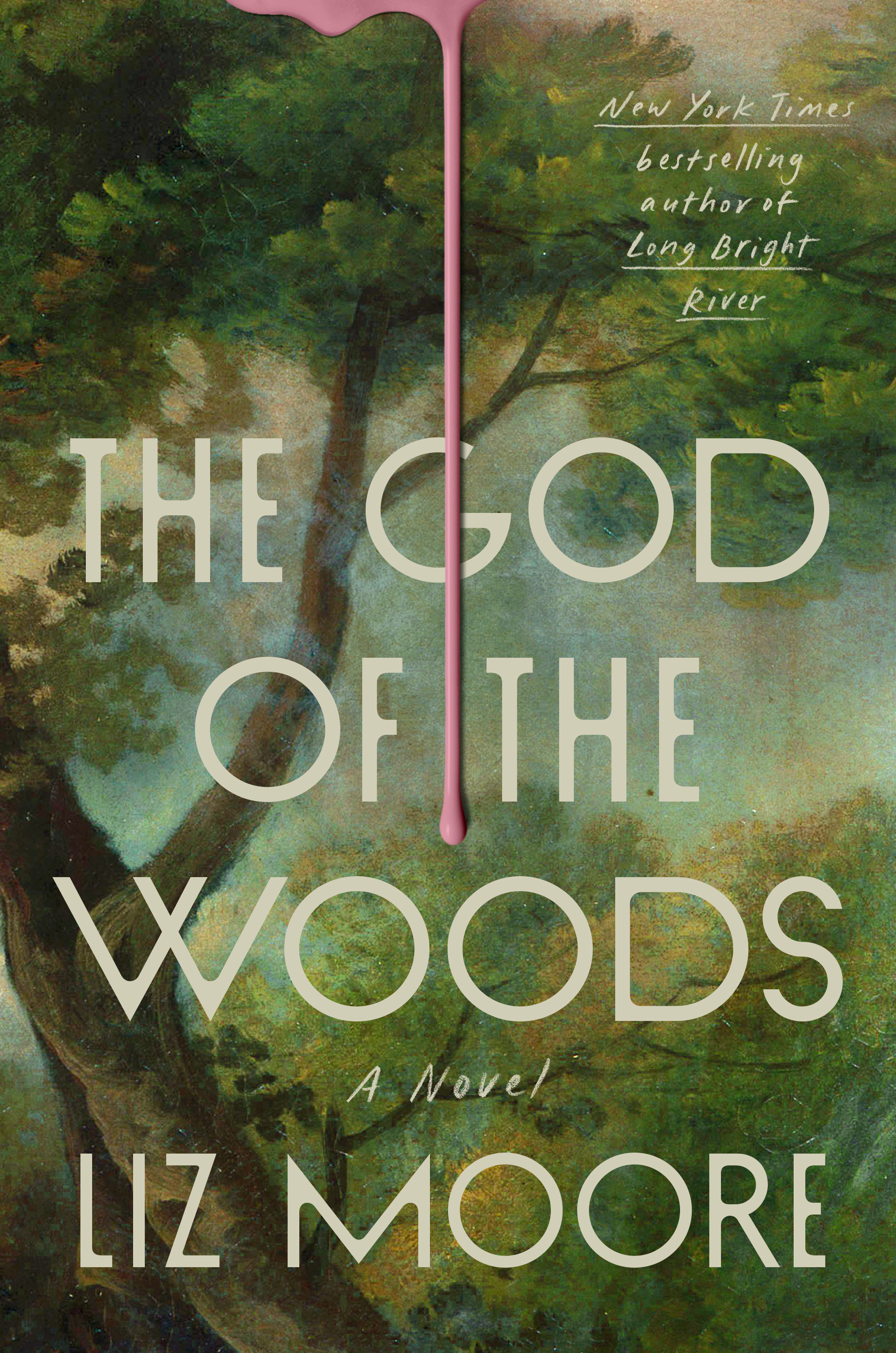
Book Review: The God of the Woods by Liz Moore

Title: The God of the Woods
Author: Liz Moore
Publisher: Riverhead Books
Publication date: July 2, 2024
Length: 490 pages
Genre: Mystery/thriller
Source: Library
Rating:

Rating: 5 out of 5.

When a teenager vanishes from her Adirondack summer camp, two worlds collide.

Early morning, August 1975: a camp counselor discovers an empty bunk. Its occupant, Barbara Van Laar, has gone missing. Barbara isn’t just any thirteen-year-old: she’s the daughter of the family that owns the summer camp and employs most of the region’s residents. And this isn’t the first time a Van Laar child has disappeared. Barbara’s older brother similarly vanished fourteen years ago, never to be found.

As a panicked search begins, a thrilling drama unfolds. Chasing down the layered secrets of the Van Laar family and the blue-collar community working in its shadow, Moore’s multi-threaded story invites readers into a rich and gripping dynasty of secrets and second chances. It is Liz Moore’s most ambitious and wide-reaching novel yet.

In The God of the Woods, an intricate timeline and multiple points of view bring to vivid life the story of missing children, a privileged family, and its influence over the working class people who depend upon them for their livelihoods.

The story opens at Camp Emerson, a summer camp located on the grounds of the Van Laar Preserve. The Van Laar family bought this vast property in the Adirondacks from loggers several generations back, and have turned it into their mountain getaway. Their huge house, named Self-Reliance, dominates the hilltop overlooking the lake; down the hill, the staff of the camp tend to the children of wealthy families each summer.

In the summer of 1975, 13-year-old Barbara Van Laar attends camp for the first time. She’s an independent-minded, punk rock-loving teen who’s happy to be out from under her parents’ control for the eight weeks of camp, and she quickly bonds with one of the other new girls in her cabin. But in August, Barbara’s counselor wakes up to discover that Barbara’s bed is empty, and fears the worst.

Fourteen years earlier, the first Van Laar child — named Peter (Peter IV, to be exact) but known as Bear, also went missing from the Van Laar Preserve and was never found, despite a huge search. Now, fears run high that the same fate has befallen Barbara, and news that a notorious serial killer has escaped prison and is on the lam in the Adirondacks only adds to the searchers’ desperation.

But there is so much more to the story than a missing person’s case. As each chapter begins, a different date is highlighted, and the narrative jumps between the 1950s, 1960s, and 1970s, as well as between different points in that fateful summer of 1975. The story is not told chronologically; confusing at first, but ultimately, adding to the depth of the character portrayals and giving readers plenty of clues and red herrings to chew over.

Beyond the dual mysteries surrounding Bear and Barbara, the book also is a portrait of the deep divide between haves and have-nots. The Van Laars are seemingly untouchable. They and their wealthy, powerful friends control the area, providing the only source of employment for the nearest small town since the paper factory shut down years earlier. No one can afford to get on the Van Laars’ bad side, even if it means looking away when bad things happen.

I was hesitant to pick up The God of the Woods, not sure that the genre and writing would appeal to me, based on comments I’d read here and there. I’m so glad I got past my concerns and gave it a try. After some initial struggles with the jumps between timelines, I became more comfortable with the book’s structure and ended up finding the chronology fascinating. As for the writing itself, it’s tense and illuminating, and doesn’t drag a bit — those 500 pages absolutely flew by.

With so many point-of-view characters, it may feel almost overwhelming at first to keep track of them all, but ultimately, having so many perspectives — some accurate, some not — on the events of 1975 as well as the earlier disappearance, only adds to the depth of the story. The depiction of the Van Laars and their guests, lounging about in satin pajamas even when a child goes missing, is a chilling portrait of cold power and indifference. And then there’s the setting itself, the beautiful, dangerous forests of the Adirondacks — where campers are taught to immediately sit down and start yelling if they realize they’re lost. The Van Laar home may seem luxurious and civilized, but it’s surrounded by wilderness, which ultimately holds more power than the people who come there.

My only quibble with this book is that the title seems like an odd choice to me. Yes, it’s somewhat clearer by the end, but generally speaking, it seems pretty disconnected from the overall story. On the other hand, the cover is brilliant. It’ll make more sense once you read the book!

I can’t say enough good things about The God of the Woods. By the time I passed the halfway mark, I couldn’t put it down and wanted nothing more than uninterrupted time to read straight through to the end. Don’t miss this well-written, thought-provoking, surprising, twisty book!

Book Review: Shelterwood by Lisa Wingate

Title: Shelterwood
Author: Lisa Wingate
Publisher: Ballantine Books
Publication date: June 4, 2024
Length: 368 pages
Genre: Historical fiction
Source: Review copy courtesy of the publisher via NetGalley
Rating:

Rating: 3 out of 5.

From the #1 New York Times bestselling author of Before We Were Yours comes a sweeping novel inspired by the untold history of women pioneers who fought to protect children caught in the storm of land barons hungry for power and oil wealth.

Oklahoma, 1909
. Eleven-year-old Olive Augusta Radley knows that her stepfather doesn’t have good intentions toward the two Choctaw girls boarded in their home as wards. When the older girl disappears, Ollie flees to the woods, taking six-year-old Nessa with her. Together they begin a perilous journey to the rugged Winding Stair Mountains, the notorious territory of outlaws, treasure hunters, and desperate men. Along the way, Ollie and Nessa form an unlikely band with others like themselves, struggling to stay one step ahead of those who seek to exploit them . . . or worse.

Oklahoma, 1990. Law Enforcement Ranger Valerie Boren O’dell arrives at Horsethief Trail National Park seeking a quiet place to balance a career and single parenthood. But no sooner has Valerie reported for duty than she’s faced with local controversy over the park’s opening, a teenage hiker gone missing from one of the trails, and the long-hidden burial site of three children deep in a cave. Val’s quest to uncover the truth wins an ally among the neighboring Choctaw Tribal Police but soon collides with old secrets and the tragic and deadly history of the land itself.

In this emotional and enveloping novel, Lisa Wingate traces the story of children abandoned by the law and the battle to see justice done. Amid times of deep conflict over who owns the land and its riches, Ollie and Val traverse the wild and beautiful terrain, each leaving behind one life in search of another.

In Shelterwood, the newest novel by the bestselling author of Before We Were Yours, a dual timeline narrative traces events in Oklahoma in 1909 and 1990, eventually revealing threads that bind the two story arcs together.

In 1909, the story focuses on 11-year-old Olive (Ollie), whose stepfather terrorizes her and the two young orphaned Choctaw girls that live with her family, while her mother is lost to the fog of opium addiction. When the stepfather’s sexual abuse of the older girl, Hazel, leads to her disappearance, and he turns his attention to young Nessa, Ollie orchestrates their escape.

In 1990, Valerie is a park ranger who has relocated with her young son Charlie to Oklahoma for the opening of the new Horsethief Trail National Park. She’s looking for a fresh start for the two of them after her husband’s death, but almost immediately she becomes embroiled in local controversies, as bodies are found in the park and a local girl comes to Val for help.

What connects the two stories is the subject of land rights and manipulation. In 1909, robber barons and other powerful men force adoptions, marriages, or guardianships on native orphans in order to claim their land rights. In 1990, corrupt businesses encroach on both park land and ancestral native land for illegal profits. In both timelines, those without power find themselves fighting for survival as well as to maintain their independence and heritage.

The 1909 story follows Ollie and Nessa as they desperately struggle to avoid detection, hiding out in the wild in a place they call Shelterwood and creating a small community with other cast-off, runaway, or abandoned children. And in 1990, as Val digs into a potential missing persons case, she uncovers patterns of abuse and theft that go back decades.

Each storyline has interesting elements, but I found the 1909 chapters more compelling, as they paint a picture of the societal fractures and political pressures of the era. It was interesting to see real historical figures, such as politician and activist Kate Barnard, interacting with the local community, and to see how the hotly debated topics of child labor laws and land rights so directly impact Ollie, Nessa, and the other children.

Val’s story takes a while to find its footing, but ultimately there’s a good payoff in terms of resolving the missing person case and making the connection back to the 1909 plot.

Somehow, though, I found myself mostly disengaged from the characters. On the surface, their situations are interesting and challenging — and yet, I never felt emotionally invested or that I got to know them on a deeper level.

Part of the problem for me was a lack of information. In both timelines, we’re dropped straight into the action, and have to piece together what the historical context means for the characters. Starting the book without much familiarity with that particular time and place, it was often confusing to sort out the reasons for the various conditions and the political forces at play. I don’t always love flat-out exposition in novels, but this book could have used some more establishment of context in order to more firmly ground the story.

I was interested enough to stick with the book all the way to the end, but found myself a bit checked out for chunks of the story. I’m glad I saw it through, but was left feeling a bit flat about the overall experience.

Still, it was eye-opening to learn more about life in both 1909 and 1990 Oklahoma, and I appreciated how the two timelines fit together in the end. I could see this being a good book group pick for people who enjoy historical fiction set in the 20th century.

Take A Peek Book Review: A Fall of Marigolds by Susan Meissner

“Take a Peek” book reviews are short and (possibly) sweet, keeping the commentary brief and providing a little peek at what the book’s about and what I thought.

Synopsis:

(via Goodreads)

A beautiful scarf, passed down through the generations, connects two women who learn that the weight of the world is made bearable by the love we give away….

September 1911. On Ellis Island in New York Harbor, nurse Clara Wood cannot face returning to Manhattan, where the man she loved fell to his death in the Triangle Shirtwaist Fire. Then, while caring for a fevered immigrant whose own loss mirrors hers, she becomes intrigued by a name embroidered onto the scarf he carries …and finds herself caught in a dilemma that compels her to confront the truth about the assumptions she’s made. Will what she learns devastate her or free her?

September 2011. On Manhattan’s Upper West Side, widow Taryn Michaels has convinced herself that she is living fully, working in a charming specialty fabric store and raising her daughter alone. Then a long-lost photograph appears in a national magazine, and she is forced to relive the terrible day her husband died in the collapse of the World Trade Towers …the same day a stranger reached out and saved her. Will a chance reconnection and a century-old scarf open Taryn’s eyes to the larger forces at work in her life?

My Thoughts:

While A Fall of Marigolds held my attention, I couldn’t quite love this book. For one thing, I’m really getting tired of the split timeline narrative that seems to be everywhere these days, especially when the two timelines are connected by some artifact of one sort or another — a painting, a diary, a doll, etc. It’s a plot device that’s becoming all too prevalent in historical fiction when the author wants a contemporary hook. In A Fall of Marigolds, it’s a colorful scarf that features in both the 1911 and 2011 stories, but the linkage between the two feels forced at times.

It’s too bad, because I might have enjoyed the book more if it had just told one story or the other. Either is compelling, and the book does contain some very dramatic and emotional moments. 9/11 is still part of our collective psyches, and it’s impossible to read Taryn’s part of the story, which includes her eyewitness experience of watching the towers fall, and not be overwhelmed by memories and feelings.

Likewise, the story of the nurses of Ellis Island and their work with infectious immigrants, as well as the story of the Triangle Shirtwaist Fire, is powerful and moving. But the lives of the fictional characters can’t really measure up to the terror and power of the real events. Clara’s experiences, and her fixation on the man who died in the fire in particular, seem rather lightweight when looking at the broader extent of the tragedy. Her story is enlivened by her interactions with the immigrant she nurses through scarlet fever and her dilemma regarding his own losses and secrets, but I couldn’t buy the essential premise of her part of the story and Clara’s view on love and destiny.

The entire plot of A Fall of Marigolds seems to rest quite a bit on the characters coming to terms with events outside of their control. For both Taryn and Clara, they’re left to sort out whether things were meant to happen, or whether their own actions were somehow to blame for outcomes that could otherwise have been avoided. Clara’s need to figure out whether her love for the man she barely knew was real is vital to her, but her fixation on the loss of what might have been begins to feel overblown as the story progresses. On the other hand, Taryn’s guilt over surviving and the loss of her husband feel quite real, and her story gets a pay-off that is bittersweet yet satisfying.

Parts of this book are quite good, but as a whole, there’s some essential element missing. And as I said, the overall structure doesn’t work for me in general — I really would not have started this book, knowing it was a “two-women-from-two-different-eras-linked-by-one-special-thing” kind of story, were it not a book group pick. I’m glad to have read it, but knowing now that most of this author’s works have a similar two-timeline structure, I don’t think I’ll be seeking out more of her books.

_________________________________________

The details:

Title: A Fall of Marigolds
Author: Susan Meissner
Publisher: NAL
Publication date: January 1, 2014
Length: 394 pages
Genre: Contemporary/historical fiction
Source: Purchased

Save

Save

Save