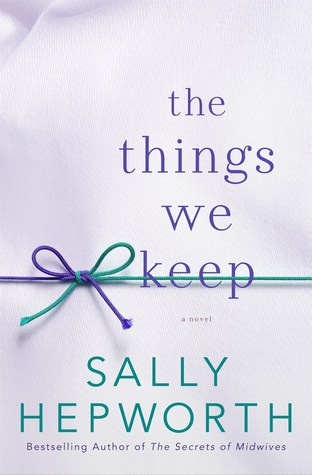
Book Review: The Things We Keep by Sally Hepworth

The Things We KeepLove, loss, and connection are the threads that bind together this moving story set in a residential home for seniors.

Anna Forster, age 38, knows that her early-onset Alzheimer’s can only get worse, especially after seeing her mother deteriorate rapidly with the same condition years earlier. With her own agreement, Anna’s twin Jack checks her into Rosalind House, a small private care facility that can keep her safe and provide for her needs. As an added bonus, there is one other younger resident there, so Anna won’t be alone among the elderly.

Luke (or Young Guy, as Anna thinks of him, having lost her ability to master names) is suffering from a different type of early-onset dementia that impacts his speech and language abilities — but despite their challenges, the two quickly connect and form a bond that strengthens day to day.

Meanwhile, in another plot thread, Eve Bennett is newly widowed, a young single mother struggling to provide for her daughter after the scandal of her husband’s involvement in a massive Ponzi scheme costs them everything. Eve had gone to culinary school years earlier before marrying Richard, and she falls back on her cooking skills in order to secure a job as cook and housekeeper at Rosalind House. As Eve tries to rebuild her life, she’s increasingly drawn to Anna and Luke, now forcibly kept apart by the facility’s staff. What has happened to require them to be locked into their rooms at night? And why does Anna, in a rare moment of lucidity, grab Eve’s hand and ask for help?

Told through the points of view of Anna, Eve, and Eve’s young daughter Clementine, the shifting narrative voices unite to paint a picture of this world that can only be partially seen and understood by any one of the three.

Anna’s voice is the most compelling, and by necessity, also the least reliable. Anna is relatively coherent when she first arrives at Rosalind House, but as her disease worsens, her narration develops gaps as well. She loses individual words, cannot tell which door leads to a closet and which to the hallway, and has less and less tolerance for noise or sudden, unexpected stimuli. As she narrates the story of her time at the home, the reader is drawn into the horror and terror of a young woman feeling her mind slip away, wanting desperately to hold onto what matters, but knowing that she’s in a losing war against time.

No one trusts anything I say. If I point out, for example, that the toast is burning or that it’s time for the six o’clock news, people marvel. How about that? Is is time for the six o’clock news. Well done, Anna.

At the beginning, I was reluctant to switch over to the Eve chapters, not quite seeing the point of her storyline or why we needed this plot thread, reminiscent of both the real-life Bernie Madoff scandal and the movie Blue Jasmine. Bit by bit, though, I was drawn into Eve’s story as well, coming to care about her and her daughter and their struggle to move forward and rebuild. Beyond that, it ‘s quickly apparent that Eve is a necessary key to the plot as a whole, and a very clever choice on the part of the author. Because of Anna’s condition, we can’t get a full picture of events from her alone. Eve provides another set of eyes and ears, a caring and sensitive witness to Anna and Luke’s story, and ultimately, a catalyst for helping them hold onto the shreds of happiness they’ve managed to find amidst their own personal tragedies.

The timeline of the plot weaves back and forth between past and present, with Anna’s story beginning with her arrival at Rosalind House, and Eve’s starting fifteen months later. Between the two, we start to learn what happened to Anna and Luke, with Eve’s current interactions with them finally filling in some of the blanks.

The Things We Keep is heartbreaking yet not altogether bleak. Seeing Anna’s decline is painful, and I can only imagine the horror of watching this strong, vibrant young woman slowly lose herself to a disease that can’t be stopped. At the same time, her connection with Luke is lovely and unexpected, and I couldn’t help being moved by this surprising discovery of grace in the middle of loss.

I also appreciated the wider cast of characters. The other residents of Rosalind House form a background of moments of friendship, love, beauty, and sorrow, as we learn more about their lives, their loves, and what they still cherish. As one of the elderly residents explains to Eve:

“When you get to my age [ … ] you don’t waste time with regrets. In the end, you just remember the moments of joy. When all is said and done, those are the things we keep.”

The Things We Keep is a sad story, beautifully told. While the tragedy of Anna’s decline can’t be lessened, there are rays of hope and joy, both as Anna’s story comes to an end and as Eve and her daughter finally arrive at a new beginning.  I highly recommend this book, and look forward to reading the author’s previous novel, The Secrets of Midwives.

_________________________________________

The details:

Title: The Things We Keep
Author: Sally Hepworth
Publisher: St. Martin’s Press
Publication date: January 19, 2016
Length: 352 pages
Genre: Contemporary fiction
Source: Review copy courtesy of the publisher via NetGalley
Save

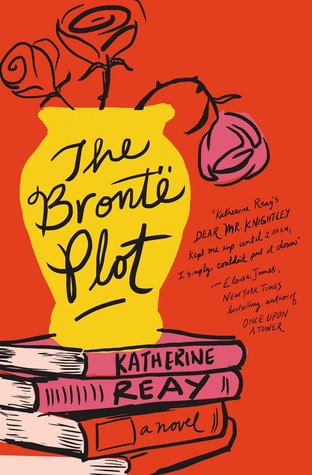
Wishing & Waiting on Wednesday: The Brontë Plot

There’s nothing like a Wednesday for thinking about the books we want to read! My Wishing & Waiting on Wednesday post is linking up with two fabulous book memes, Wishlist Wednesday (hosted by Pen to Paper) and Waiting on Wednesday (hosted by Breaking the Spine).

My most wished-for book this week is:

Bronte

The Brontë Plot by Katherine Reay
(to be released November 3, 2015)

Synopsis via Goodreads:

Lucy Alling makes a living selling rare books, often taking suspicious measures to reach her goals. When her unorthodox methods are discovered, Lucy’s secret ruins her relationship with her boss and her boyfriend James—leaving Lucy in a heap of hurt, and trouble. Something has to change; she has to change.

In a sudden turn of events, James’s wealthy grandmother Helen hires Lucy as a consultant for a London literary and antiques excursion. Lucy reluctantly agrees and soon discovers Helen holds secrets of her own. In fact, Helen understands Lucy’s predicament better than anyone else.

As the two travel across England, Lucy benefits from Helen’s wisdom, as Helen confronts the ghosts of her own past. Everything comes to a head at Haworth, home of the Brontë sisters, where Lucy is reminded of the sisters’ beloved heroines, who, with tenacity and resolution, endured—even in the midst of change.

Now Lucy must go back into her past in order to move forward. And while it may hold mistakes and regrets, she will prevail—if only she can step into the life that’s been waiting for her all along.

I’ve read Katherine Reay’s two previous novels, Dear Mr. Knightley (review) and Lizzy and Jane (review), and really like the way she incorporates themes from classic novels into contemporary stories. I’m really looking forward to The Brontë Plot!

What are you wishing for this Wednesday?

Looking for some bookish fun on Thursdays? Come join me for my regular weekly feature, Thursday Quotables! You can find out more here — come share the book love!

♥♥♥♥♥♥♥♥

Do you host a book blog meme? Do you participate in a meme that you really, really love? I host a Book Blog Meme Directory, and need your help! If you know of a great meme to include — or if you host one yourself — please drop me a note on my Contact page and I’ll be sure to add your info!

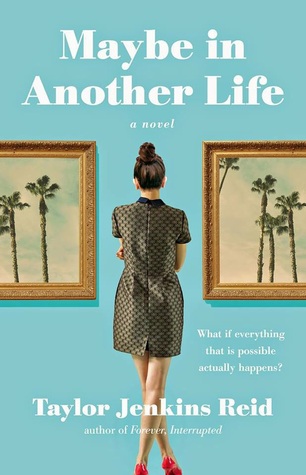
Book Review: Maybe in Another Life by Taylor Jenkins Reid

Maybe in Another LifeAre our lives determined by fate? Or is it all just a matter of chance?

Is there just one person in all the world that we’re meant to be with? Or is life more of a multiple-choice quiz, where different answers may be correct in different circumstances?

In Maybe in Another Life, the characters say one thing, but their lives and actions give a very different message.

Hannah Martin, age 29, has lived anywhere and everywhere, but has no idea where she truly belongs. After a go-nowhere disastrous affair in New York ends, Hannah moves back “home” to Los Angeles, to reunite with her best friend Gabby, pick up the pieces, and start from scratch.

And maybe, just maybe, rekindle an old flame with her high school sweetheart Ethan.

On their first night out on the town, Hannah faces a moment of truth: Should she go home with Ethan and see what happens… or call it a night, head back to Gabby’s place, and spend the night alone? At the moment of decision, the narrative of Maybe in Another Life splits.

From this moment on, we follow two separate narrative threads in alternating chapters. In one, Hannah does go home with Ethan, their dormant feelings are rekindled, and they begin to work through what an adult relationship might look like. In the other, Hannah turns Ethan down, continues on the way home with Gabby, and is struck by a hit-and-run driver, resulting in serious injuries and a lengthy hospital stay.

In both versions of Hannah’s life, she’s confronted with choices. What does her future hold? How do you know if you’re meant to be with someone? How do you recognize a soulmate? What do you give up for a relationship, and what are the deal-breakers?

Likewise, in both versions, Hannah tries to puzzle out the question of destiny and predetermination:

“You think things are meant to be?” I ask her. For some reason, I think I’ll feel better if things are meant to be. It gets me off the hook, doesn’t it? If things are meant to be, it means I don’t have to worry so much about consequences and mistakes. I can take my hands off the wheel. Believing in fate is like living on cruise control.

Hannah has been so busy searching for the perfect life and what she’s “meant” to do, who she’s “meant” to love, that she’s never fully engaged with her options anywhere she’s been.

“Doesn’t it scare you?” I ask her. “To think that you might have gone in the wrong direction? And missed the life you were destined for?”

Hannah’s life is so messy that she has to believe there are other forces at play:

“I mean, I think I have to believe that life will work out the way it needs to. If everything that happens in the world is just a result of chance and there’s no rhyme or reason to any of it, that’s just too chaotic for me to handle. I’d have to go around questioning every decision I’ve ever made, every decision I will ever make. If our fate is determined with every step we take… it’s too exhausting. I’d prefer to believe that things happen as they are meant to happen.

Ironically, the split narrative demonstrated that it is all random, and that every decision changes the course of events. Towards the end of the book, a party guest talks about the multiverse theory, in which every decision leads to multiple universes in which all possible outcomes exist. From the moment Hannah decides to go home with Ethan — or not to go home with Ethan — she has two different parallel lives. In both lives, she confronts pain and difficult choices, finds a soulmate, faces hard truths, and finally sets off on the path toward professional fulfillment as well as a life filled with love.

The lovely thing about Maybe in Another Life is that both halves of the story feel right! Neither of Hannah’s two lives is 100% easy, but both feel real and both seem like valid outcomes. In both, Hannah begins to grow, take chances, and own up to the decisions she’s made that lead her to this point. Both feel like the absolutely right thing for her, and she wouldn’t have it any other way.

I really enjoyed the writing in Maybe in Another Life, which maintains a light touch even in heavy situations. Hannah herself is a person with a lot of room to grow, but she’s self-knowing enough to own up to her mistakes and want to make better choices. And through it all, she’s got a great sense of humor, is a devoted friend, and knows that she needs to finally do something with her life.

The author gives Hannah certain quirks and habits that are both charming and make her feel like an individual, rather than a stock character. In particular, Hannah’s need to always have her hair in a high bun and her constant craving for cinnamon rolls are recurring motifs, and to my surprise, the repetition is actually pretty charming (rather than annoying, as it so easily could have been).

I liked the double narrative, although occasionally I lost track of which event happened in which version of Hannah’s life. No matter, though: Both halves of the story contain ups and downs, loves lost and found, and the true and deep friendship between Hannah and Gabby, which is a key element of the entire story. It’s not often that contemporary novels emphasize the huge difference a good friendship between women can make, while also dealing with romantic entanglements and all sorts of other drama. But here, it’s crystal clear that the bond between Hannah and Gabby is the most important element for both women, grounding them in such a way that they’re able to make their life decisions from a position of strength and support.

Maybe in Another Life is a very quick read. It’s light, but heartfelt. Not sugary, not glossing over the hard stuff, Maybe in Another Life shows a young woman dealing with real life… and the way every decision has consequences. This book is quite fun to read, and yet manages to be emotionally real even amidst all the jokes about cinnamon rolls.

_________________________________________

The details:

Title: Maybe in Another Life
Author: Taylor Jenkins Reid
Publisher: Washington Square Press
Publication date: July 7, 2015
Length: 352 pages
Genre: Adult contemporary fiction
Source: Review copy courtesy of the publisher via NetGalley

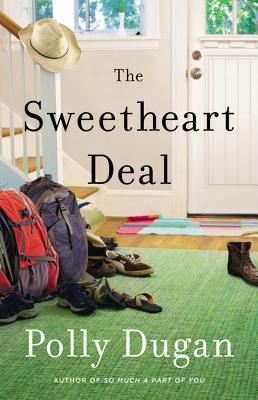
Book Review: The Sweetheart Deal by Polly Dugan

Sweetheart Deal

Synopsis:

(via Goodreads)

The poignant story of what happens when a woman who thinks she’s lost everything has the chance to love again.

Leo has long joked that, in the event of his death, he wants his best friend Garrett, a lifelong bachelor, to marry his wife, Audrey. One drunken night, he goes so far as to make Garrett promise to do so. Then, twelve years later, Leo, a veteran firefighter, dies in a skiing accident.

As Audrey navigates her new role as widow and single parent, Garrett quits his job in Boston and buys a one-way ticket out west. Before long, Audrey’s feelings for Garrett become more than platonic, and Garrett finds himself falling for Audrey, her boys, and their life together in Portland. When Audrey finds out about the drunken pact from years ago, though, the harmless promise that brought Garrett into her world becomes the obstacle to his remaining in it.

My Thoughts:

I feel like I’ve read at least 4 or 5 contemporary novels about young widows in the last fews years, and while The Sweetheart Deal is the latest, it’s certainly not the least.

When Audrey’s firefighter husband Leo dies in a tragic ski accident, she’s left alone with three boys to raise. But not entirely alone: Years early, celebrating the Y2K New Year with quite a lot of booze, Leo made his best friend Garrett sign an agreement saying he’d marry Audrey if anything ever happened to Leo.

Audrey never knew about the deal, but Garrett has never forgotten. So when Leo dies, Garret drops everything in his own life to support Audrey and the boys, moving into their guest room and committing to finishing the addition to the house that Leo left half-built.

Needless to say, eventually Audrey emerges from her devastating grief to find comfort and the hint of new love in Garrett’s arms. But will the drunken promise from all those years ago come between them? Dunh, dunh, dunh….

The Sweetheart Deal is actually quite engaging, and I felt that the author did a very good job of portraying how the different family members deal with such a shocking loss. Different characters narrate different chapters, so we see events from the perspective of Audrey and Garrett, as well as each of the boys. It’s interesting to see how the kids come into the story, how their feelings complicate matters, and how Garrett very selflessly immerses himself in doing whatever he can for Leo’s family.

While Audrey has a best friend as well, it’s the friendship between Leo and Garrett that really drives the story. Friends since boyhood, they’re bonded in a way that we don’t often see in female-centric contemporary love stories, where the main friend relationship is usually between women. Garrett’s feelings here are intense and conflicted: He loved Leo truly and faithfully, would do anything for him, and sincerely wants to protect and assist Leo’s family. His feelings for Audrey grow out of his grief and devotion, and he deals with heaping helpings of guilt as well.

Audrey’s initial bereavement is realistic and heartbreaking, and she is really to be admired for her strength in caring for her boys even as she falls apart inside. There’s no suggestion at all that she wasn’t madly in love with her husband. Instead, we see a woman who suffers a great loss trying to figure out if she’s entitled to any future happiness, and trying to understand if what she wants is wrong for herself, for her children, and for the memory of her husband.

The characters are all Catholic and their faith does come into play, but not in a way that feels heavy-handed. Audrey’s religion guides her actions, and she gains strength and insight through the counsel she receives from her priest – but I never felt alienated by the religious aspects or that they took away from the story.

Ultimately, the romance with the husband’s best friend feels deserved and well-developed, given the odd backstory and the guilt everyone feels.

The Sweetheart Deal is a sweet, moving, sad, and finally uplifting love story that deals with challenges that feel all too real. The plot is not complicated, but by focusing on an everyday family and its crisis, the book remains grounded and is quite accessible.

I think, if I hadn’t recently read other books about widows in their 20s or 30s finding their way back to love, I might have been more moved by The Sweetheart Deal, so perhaps it’s not really fair to even mention the other books. I did like this book a lot, and readers who haven’t read other books with similar set-ups should find it fresh and engaging.

The Sweetheart Deal is a quick read, but it hits the sentiment right on the nose and strikes a good balance between grief and hope. Recommended for readers who enjoy contemporary fiction focusing on family and marriage.

_________________________________________

The details:

Title: The Sweetheart Deal
Author: Polly Dugan
Publisher: Little, Brown and Company
Publication date: May 19, 2015
Length: 320 pages
Genre: Adult contemporary fiction
Source: Review copy courtesy of the publisher via NetGalley

Book Review: Blue Stars by Emily Gray Tedrowe

blue starsThe Blue Star service flag: A simple flag, displayed in a window to indicate a family with a member serving in the US military during wartime. In Blue Stars, author Emily Gray Tedrowe introduces us to two women whose lives are turned upside down and inside out by their experiences dealing with their loved ones’ service and the aftermath of devastating, life-changing injuries.

The two main characters are Ellen and Lacey, and on the surface, they couldn’t be more different. Ellen is a midwestern college professor specializing in the works of Edith Wharton. Widowed many years earlier, Ellen has two children — a daughter in her late teens who is full of rebellion and sarcasm, and a son in graduate school. Ellen also has a ward, having become legal guardian to Mike, a young man befriended by Ellen’s son as a teen, whom Ellen took in, took under her wing, and made part of the family.

Lacey is a working-class mom in New York, married to army reserves officer Eddie, but not particularly happy in her marriage. Lacey married Eddie after a long string of go-nowhere relationships, needing stability and meaning in her life and a father for her son Otis. Lacey thrives in the tight-knit circle of army wives and their non-stop projects and activities, but she also drinks too much and hides her secret dissatisfaction with a husband whom she married in haste.

As the book opens, it’s 2005, and Mike and Eddie are both preparing for a 15-month deployment to Iraq. Mike has just enlisted in the Marines, much to Ellen’s dismay, and Eddie is being sent overseas as well. All too soon, though, Ellen and Lacey each receive the news they dread: Their loved ones have been injured, and will be brought to Walter Reed Medical Center in Washington DC for treatment.

Mike has lost a foot due to a grenade. Eddie has lost an eye, most of the vision in his other eye, and has suffered severe head trauma. Ellen and Lacey uproot their lives and, for months and months, become permanent fixtures at Walter Reed, overseeing their soldiers’ care, dealing with bureaucracy, substandard housing, and the patients’ distressing physical conditions. The horrors of war are driven home by seeing the extent of the damage to these formerly healthy men, as well as by seeing the other patients and their families. And to add one horror upon another, the women and families there are pretty much on their own, fighting for benefits, living on pennies, scrambling to make ends meet, and desperate for any shred of hope.

The relationship between Ellen and Lacey is at the heart of this touching novel. In a “normal” world, these two would never meet, much less become friends. Yet through their shared experiences, each finds in the other something she desperately needs. Ellen represents calm and order to Lacey, instilling the belief in Lacey that she’s worth more than she thinks. And in Lacey, Ellen finds a woman who isn’t afraid to speak out, to confront hard truths, and to bring people together.

I found both women very inspirational, in their own ways. Lacey is a mess in so many ways, and it’s hard to approve of much of her behavior early on, yet she displays a courage and loyalty that are quite remarkable. Ellen, too, has to deal with her own feelings of inadequacy, yet her devotion to Mike never wavers for a moment, despite the often brutal emotional toll taken by dealing with a man traumatized by PTSD and haunted by his war experience.

We all know that war is hell, and there are countless war novels that focus on the front lines. Here, in Blue Stars, it’s the home front that’s the focus, and the book does an outstanding job of showing that the misery and trauma don’t stop just because a soldier’s battle days are over… and that the trauma and pain are felt in myriad ways by the families back home as well. The military families described in Blue Stars aren’t idealized or seen through a rosy filter. They have faults, and we see them, but we also see the dedication, courage, and sheer determination that help them stand by their wounded soldiers.

My only frustration with Blue Stars is that I wished to know more about Mike himself and his experiences, but of course that would have been a different book. We get to know Mike through Ellen’s eyes, and it’s Ellen’s experience of Mike’s war — and by extension, Ellen and her family’s war as well — that’s the essence of this book. Blue Stars is about the ravages of war, on individuals and families, and about what it takes to rebuild a life — the life of the wounded soldier, and the life of the damaged family.

Reading about the badly wounded soldiers, so young and so full of promise, is moving and tragic. I was filled with anger over their pointless suffering, and filled with admiration for the tough parents, spouses, children, girlfriends and boyfriends, who give 110% for the sake of their loved ones’ recovery. Blue Stars is a moving and powerful novel — not always pleasant, but an important and emotionally rich look at the lives of military families, the power of friendship, and the many ways that love and commitment make a difference.

_________________________________________

The details:

Title: Blue Stars
Author: Emily Gray Tedrowe
Publisher: St. Martin’s Press
Publication date: February 17, 2015
Length: 352 pages
Genre: Contemporary fiction
Source: Review copy courtesy of the publisher via NetGalley
 

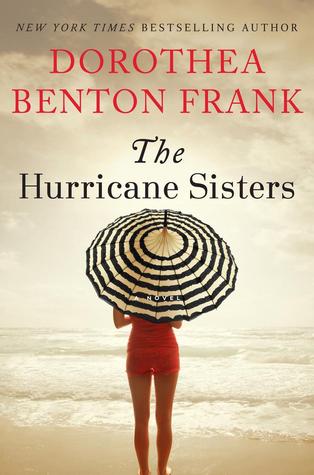
Blog Tour & Book Review: The Hurricane Sisters by Dorothea Benton Frank

I’m delighted to be participating in the blog tour celebrating the paperback release of The Hurricane Sisters by Dorothea Benton Frank.

Hurricane Sisters

Synopsis:

Hurricane season begins early and rumbles all summer long, well into September. Often people’s lives reflect the weather and The Hurricane Sisters is just such a story.

Once again Dorothea Benton Frank takes us deep into the heart of her magical South Carolina Lowcountry on a tumultuous journey filled with longings, disappointments, and, finally, a road toward happiness that is hard earned. There we meet three generations of women buried in secrets. The determined matriarch, Maisie Pringle, at eighty, is a force to be reckoned with because she will have the final word on everything, especially when she’s dead wrong. Her daughter, Liz, is caught up in the classic maelstrom of being middle-age and in an emotionally demanding career that will eventually open all their eyes to a terrible truth. And Liz’s beautiful twenty-something daughter, Ashley, whose dreamy ambitions of her unlikely future keeps them all at odds.

Luckily for Ashley, her wonderful older brother, Ivy, is her fierce champion but he can only do so much from San Francisco where he resides with his partner. And Mary Beth, her dearest friend, tries to have her back but even she can’t talk headstrong Ashley out of a relationship with an ambitious politician who seems slightly too old for her.

Actually, Ashley and Mary Beth have yet to launch themselves into solvency. Their prospects seem bleak. So while they wait for the world to discover them and deliver them from a ramen-based existence, they placate themselves with a hare-brained scheme to make money but one that threatens to land them in huge trouble with the authorities.

So where is Clayton, Liz’s husband? He seems more distracted than usual. Ashley desperately needs her father’s love and attention but what kind of a parent can he be to Ashley with one foot in Manhattan and the other one planted in indiscretion? And Liz, who’s an expert in the field of troubled domestic life, refuses to acknowledge Ashley’s precarious situation. Who’s in charge of this family? The wake-up call is about to arrive.

The Lowcountry has endured its share of war and bloodshed like the rest of the South, but this storm season we watch Maisie, Liz, Ashley, and Mary Beth deal with challenges that demand they face the truth about themselves. After a terrible confrontation they are forced to rise to forgiveness, but can they establish a new order for the future of them all?

Frank, with her hallmark scintillating wit and crisp insight, captures how a complex family of disparate characters and their close friends can overcome anything through the power of love and reconciliation. This is the often hilarious, sometimes sobering, but always entertaining story of how these unforgettable women became The Hurricane Sisters.

My Thoughts:

In The Hurricane Sisters, we meet three generations of Southern women, including dynamo matriarch Maisie, her daughter Liz, and granddaughter Ashley. All three have secrets, all three have struggles.

Maisie is the quintessential 80-year-old who’s lived long enough to tell it like it is. Her romantic relationship with (gasp!) a younger man, the 65-year-old who was originally hired to be her driver, scandalizes Liz and Clayton, but their own relationship isn’t exactly a bed of roses. Maisie is the absolute life of the party in this book — she’s feisty, opinionated, funny, and full of passion. She’s also not afraid to tell the hard truths and give out some pretty stern advice, which is exactly what some of these confused family members need.

When Ashley becomes infatuated with a rising state politican, everyone in the family warns her to watch out. In Charleston, anyone of good family knows everyone else’s business, and Porter Galloway has an unsavory reputation that’s only whispered at. Meanwhile, on the surface, he’s all Southern charm and good looks, and Ashley is too swept up in her dreams of being the next Jackie O. to take the warnings seriously.

Of course, the various threads all come together in interesting and unexpected ways… and of course, Maisie is right about everything!

The dark thread throughout this mostly upbeat novel is violence against women. Liz is a fundraiser for a women’s shelter, and through her pitches to prospective donors, we learn some of the bleak and staggering facts about the incredibly high numbers of domestic violence cases in the US, as well as the fact that South Carolina is among the worst on record in terms of domestic homicide and violence. It’s not exactly a surprise when a certain character is revealed to be abusive, but it’s still startling and harrowing to read and to see how easily this person manages to hide in plain sight and continue carrying out abusive acts in relationship after relationship.

I was annoyed initially to see Ashley’s naiveté, especially knowing her mother’s work. But I think this book makes a very good point, that it’s one thing to know academically what abuse is and what it looks like, and quite another thing to recognize it in real life without prettying it up with denial and excuses. I won’t go into too much detail here as I don’t want to give away any major plot points, but let’s just say that what I initially thought was a too-light response to terrible acts turns into major empowerment as the family comes together to make sure that abusive behavior is not swept under the rug.

I ended up loving all of the family relationships, the intricacies of their connections and interdependence, and the various ways they all misunderstand one another. By hearing the story from mulitple points of view, we’re treated to the inside scoop on why an action that one family member finds incomprehensible actually makes complete sense and has a totally different meaning when explained by someone else.

An especially delightful component of this book is the lush description of the Charleston area. The author does a splendid job of conveying the beauty of the Lowcountry, and made me absolutely mad with nostalgia (I lived in Charleston once upon a time for a couple of years) and dying for a return visit.

If you enjoy books that include family drama, quirky characters, and humorous dialogue — but aren’t afraid to tackle more serious subjects as well — definitely check out The Hurricane Sisters. Now available in paperback, it’s a slice of Southern fiction that I think would make a great beach read this summer.

About the Author:

Dorothea-Benton-FrankNew York Times bestselling author Dorothea Benton Frank was born and raised on Sullivans Island, South Carolina. She is the author of many New York Times bestselling novels, including Lowcountry Summer and Return to Sullivans Island. She resides in the New York area with her husband.

Find her on the web at www.dotfrank.com, and connect with her on Facebook and Twitter.

_________________________________________

The details:

Title: The Hurricane Sisters
Author: Dorothea Benton Frank
Publisher: William Morrow
Publication date: 2014 (paperback released April 7, 2015)
Length: 320 pages
Genre: Adult contemporary fiction
Source: Review copy courtesy of TLC Book Tours

tlc logoFor further information, stop by TLC Book Tours to view other blog tour hosts.


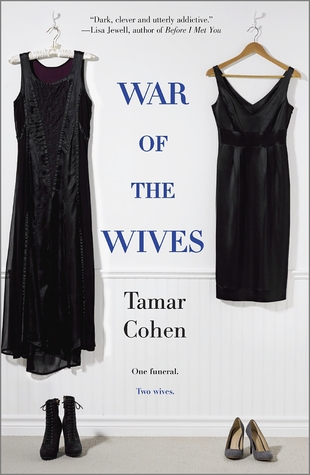
Book Review: War of the Wives by Tamar Cohen

War of the WivesSelena and her husband have been happily married for close to thirty years and have three children. Lottie and her husband have been married for seventeen years and have one teen-aged daughter. Both women wish their husband could be home more often, but understand that his demanding job is important to him. Both look forward to the moment when he walks back in the door after his latest business trip to Dubai.

And both show up as the newly bereaved widow when Simon Busfield is laid to rest after a fatal drowning.

Yes, Simon was a busy guy. He lived in London with Selena in a beautiful, posh home, keeping Selena in fashionable clothing and expensive getaways to their house in Tuscany. Simon also lived with Lottie in a smaller flat, after living with her in Dubai for most of their marriage. Wife #1 knew nothing of wife #2, and vice versa. But an untimely death lets out all the secrets, and to say that chaos ensues is an understatement.

I’ll be honest: My first thought upon reading the synopsis was “Hmm. Sounds like a Lifetime movie.” I’m pleased to say that War of the Wives is a lot more than that.

In War of the Wives, author Tamar Cohen skillfully gives each wife a voice that’s distinct and true. We often get both women’s viewpoints on the same situation, and it’s enlightening to see how two people can interpret a statement or gesture so very differently. In what must be a very difficult feat, the author creates two sympathetic characters, almost daring us to take sides. And the truth is, it’s really impossible. Neither woman is culpable. Lottie didn’t know she was sleeping with a married man. Neither intentionally set out to steal the other’s husband. The guilty party here is Simon, but he’s no longer around to blame, so of course it’s the women who have to pick up the pieces.

There’s plenty of pain and remorse, doubts and anger. Both women remember Simon as a loving husband and father. Was one life a lie? Can Simon be faulted for loving both of his families so much that he couldn’t give either up? (Of course he can! Selfish beast.)

Selena and Lottie are wrecked not just emotionally, but financially too. The homes, the lifestyles, the luxuries all have to go. The legalities and taxes and mortgages are so intertwined that neither woman can walk away from the other, and so they have to navigate their post-Simon lives together, hating it every step of the way.

I do feel that the title of the book is a bit misleading. When I first saw the title War of the Wives, I expected cat fights, public scenes of bitchiness, scheming and nastiness. But that’s not what happens. The book ultimately is less about two women battling each other and more about them figuring out how their lives took such wrong turns and how to rebuild.

There’s a mystery here too: Simon died under suspicious circumstances — did he really just fall into the river, or did he commit suicide? Or was he pushed? Just what sort of shady business dealings was he involved in? Who keeps sending Selena all these random spam texts and emails? Who broke into Lottie’s flat? It all comes together by the end, and it definitely was not what I expected… which is a very good thing.

I love a book that keeps me guessing, that gives me plenty of clues but none that make an outcome obvious. The inner lives of Selena and Lottie are fascinating to read about, and I was invested in both women, their struggles to rebuild, to be good mothers, and to stand on their own two feet. Because they really were the victims of their husband’s deceptions, it’s easy to relate to both women and want both to find happiness and get a fresh start.

War of the Wives is a compulsively readable novel with a dark streak amidst the scenes of domesticity. I enjoyed the writing, the characters, and the unexpected plot twists. Author Tamar Cohen does a great job of taking a melodramatic, seemingly made-for-TV set-up and giving it an original spin that keeps the reader guessing.

Final note: Tamar Cohen is a new-to-me author, but I’ve now heard from other bloggers that she has some other can’t-miss books as well — and I’m looking forward to checking them out!

_________________________________________

The details:

Title: War of the Wives
Author: Tamar Cohen
Publisher: Mira
Publication date: January 27, 2015 (originally published in UK in 2012)
Length: 384 pages
Genre: Adult contemporary fiction
Source: Review copy courtesy of Mira via NetGalley


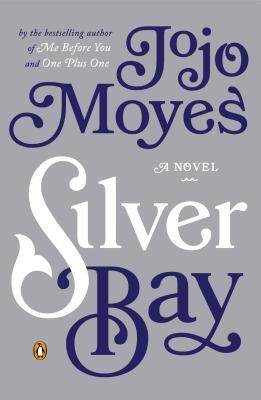
Book Review: Silver Bay by Jojo Moyes

Silver BaySilver Bay is an older work by bestselling author Jojo Moyes, originally published in 2007 and re-released in the US in fall of 2014. And while Silver Bay is perhaps not quite as tear-inducing as Me Before You, it certainly fits in with the author’s talent for portraying unusual relationships full of tragedy and redemption.

Silver Bay is a sleepy little coastal town in Australia, known for its harbor full of marine life, its ramshackle old hotels, and its whale-watching expeditions. Liza and her daughter Hannah live in Liza’s aunt Kathleen’s inn, which has been in her family for over 70 years. Liza keeps to herself, takes tourists out on her boat, and socializes each evening on the front porch of the inn with the other “whale chasers”.

But then Englishman Mike Dormer shows up on a secret mission, exploring Silver Bay as a possible development site for a luxury resort. Mike’s job is to secure the location and smooth out any local resistance to the plan so that his wheeler-dealer boss can pin down the venture capitalists’ money and make boatloads of money himself. Mike doesn’t count on the connection he starts to feel for the small town, the local folks, and most especially, for Liza herself.

But Liza has her own secrets too, and she’s not looking for love or anything like it. What’s more, when the truth about Mike’s mission comes to light, Liza, Kathleen, and all of the Silver Bay people feel betrayed by Mike… but his own beliefs have been shaken as well. Ultimately, it’s up to Mike to reverse the damage done and try to save not just the town, but the friendships that have come to matter so much to him.

I found the beginning of Silver Bay a bit slow. The book has multiple narrators, and after a brief introduction told by Kathleen, we spend the first long chapter of the book looking through the eyes of 10-year-old Hannah. This did not feel like a wise choice to me; it’s a book for adults, and the child viewpoint was by necessity somewhat weak and narrow. Once Mike is introduced, the story opens up in scope, and as I got a bit further into it, I was hooked.

The storyline itself isn’t particularly unique. I feel like I’ve seen the basic footprint of the story in other books or movies: Small town, outside big business coming to ruin things, quirky locals banding together to fight the good fight, etc. The love story too proceeds along mostly predictable lines. Of course, Mike falls in love with Liza. Of course, her secret, tragic past keeps her from being able to open up. Of course, Mike’s business dealings threaten all of the relationships he’s built.

All that being said, there’s a lot going for Silver Bay as well. There are some truly delightful supporting characters, especially tough old Aunt Kathleen and her would-be beau Nino, fellow whale-chasers Greg, Yoshi, and Lance, and even Liza’s daughter Hannah, who ultimately takes a big hand in helping to save the town.

What would a Jojo Moyes book be without a tragedy? Yes, the secret from Liza’s past that eventually comes to light is awful and terribly sad… and yes, I did get a bit teary in the final third of the book. The author does a masterful job of giving just enough hints along the way to let us know that the secret is a doozy, and once revealed, it’s impossible not to feel for Liza and her sad story.

Again, I saw the ending coming from about a mile away, but that’s okay. Having a pretty good idea of how it would all work out didn’t detract from my enjoyment of the book. It’s a quick read, and after the first several chapters, it’s a book that will pull you in and make you care.

This isn’t my favorite Jojo Moyes book, but it’s a good choice for fans who’ve read all of her more recent novels and want more.

Interested in this author? Check out my reviews of other books by Jojo Moyes:
The Girl You Left Behind
One Plus One
The Ship of Brides
Me Before You
The Last Letter From Your Lover

_________________________________________

The details:

Title: Silver Bay
Author: Jojo Moyes
Publisher: Penguin Books
Publication date: Originally published in UK in 2007
Length: 338 pages
Genre: Contemporary fiction
Source: Library

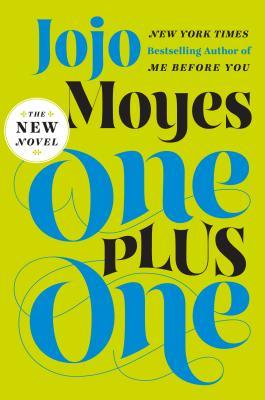
Book Review: One Plus One by Jojo Moyes

Book Review: One Plus One by Jojo Moyes

One Plus OneThis is either the happiest sad book I’ve ever read, or the saddest happy book. Either way, it brought me to tears while making me laugh… and either way, I simply loved it.

In One Plus One, we meet single mom Jess Thomas, in her late twenties, working as many jobs as possible to support her two kids, and just not getting by. The bills are stacking up, and there are always more. Plus, stepson Nicky is getting bullied and beaten up and daughter Tanzie is a math genius who should be in private school — but private school is simply out of reach financially.

There were lots of awful things about the father of your children leaving: the money issues, the suppressed anger on behalf of your children, the way most of your coupled-up friends now treated you as if you were some kind of potential husband stealer. But worse than that, worse than the endless, bloody exhausting financial and energy-sapping struggle, was that being a parent on your own when you were totally out of your depth was actually the loneliest place on earth.

And then there’s Ed Nicholls, software success story with oodles of money who makes a seriously bad decision while breaking up with a crush from his college days and ends up embroiled in an insider trading investigation that could cost him everything.

Worlds collide. Jess cleans Ed’s house and has never been more than the unseen cleaner to him — but when his world starts falling apart, he happens to come across Jess and her kids stranded on the side of the road, and in a burst of do-gooder repentance, decides to offer to drive them to Scotland for a math Olympiad competition that may provide Tanzie with the funds to get to the school she needs.

And thus ensues one of the funniest, most uncomfortable, and unluckiest road trips in literary road trip history. Car sickness, food poisoning, big drooly dogs, and cows in the road all play a part in Ed and Jess’s big adventure. Yet along the way, some miraculous things occur. Jess has time with her kids, for the first time in years, in which she has nothing else to do and nowhere else to be. Nicky starts to smile again. Tanzie has a shot at the maths future she so craves. And Ed and Jess go from prickly antagonism to spiky friendship to maybe something more.

Jess is a ridiculously optimistic person who just doesn’t give up, even when her kids are falling apart and she’s down to her last few pounds. She believes that things will get better. She believes that good people eventually wind up getting the good fortune they deserve.

She wondered whether being able to sound cheerful about things that made her want to kick something was her superpower.

But when one thing after another goes wrong and she sees her children getting a raw deal — again — even Jess’s unfailingly sunny outlook starts to wear thin. Ed certainly knows better. He knows that bad stuff happens, like it or not, and that momentary weakness can lead to ruin. The question is, can he and Jess somehow change their fates and find a way toward happier times?

As Tanzie muses:

The law of probability combined with the law of large numbers states that to beat the odds, sometimes you have to repeat an event an increasing number of times in order to get you to the outcome you desire. The more you do, the closer you get. Or, as I explain it to Mum, basically, sometimes you just have to keep going.

The chemistry between Ed and Jess is delightful, going from silent dislike to grudging acceptance to a reluctant attraction and then some. These two smart, lonely, often disappointed people manage to forge a connection during their few short days stuffed in a car together, and between their hurt and their sense of humor, a spark starts to catch:

Mr. Nicholls nodded toward the candle and the plates. And then he looked up at Jess and he was no longer scowling. “This is actually the best pie and chips I’ve ever eaten in a weird bed-and-breakfast somewhere I’ve never heard of on the north Yorkshire moors.”

One Plus One moves effortlessly between points-of-view, so that we hear from Jess, Ed, Nicky, and Tanzie. Each has a unique and compelling voice; each voices his or her slightly different take on matters without feeling forced or artificial. The author skillfully weaves together these characters into one cohesive whole. There’s momentum and there’s real emotion. While many of the escapades along the way are kind of goofy, underlying it all is a story of good people caught up in situations in which it feels like the whole world is against them. How do you stay good when you can never catch a break? When no matter what, things don’t work out?

There aren’t easy answers here for any of the characters, but somehow, by putting them all together, one plus one does add up to so much more than it should. The group dynamics are fabulous, and each character in this lovely novel feels like a real person. The reader can’t help but feel invested in them, individually and as a part of their interwoven relationships.

I’ve read one book by Jojo Moyes previously, her historical novel The Girl You Left Behind (reviewed here last September). I may be the last person on the planet who hasn’t read the author’s bestseller Me Before You, and I plan to remedy that as soon as possible. Jojo Moyes is absolutely gifted at writing that gets to the heart and soul of her characters, bringing them to life in a way that lets readers feel as though they’re meeting real people, not fictional creations. One Plus One is a contemporary novel that conveys warmth and connection through characters who are sympathetic and likeable. You want Jess and Ed to succeed, and you want Nicky and Tanzie to be happy.  Not every novel can make you care quite so much. One Plus One is a quiet book in many ways, but one that I recommend wholeheartedly.

_________________________________________

The details:

Title: One Plus One
Author: Jojo Moyes
Publisher: Pamela Dorman Books
Publication date: July 1, 2014
Length: 384 pages
Genre: Contemporary fiction
Source: Review copy courtesy of Pamela Dorman Books via NetGalley

Book Review: Goodnight June by Sarah Jio

Book Review: Goodnight June by Sarah Jio

Goodnight JuneWhat does this cover remind you of?

If you immediately started reciting “In the great green room there was a telephone and a red balloon and a picture of the cow jumping over the moon…”, then you’re definitely in tune with the central motif of Goodnight June.

Goodnight June is a contemporary novel about a young woman finding her way and reconnecting with her family’s past. June Anderson, age 34, is a high-powered New York banker who specializes in foreclosing on small businesses. She’s perfected the art of ruthless dedication to the bank’s best interests and is eminently successful — yet she’s also lonely, sad, and on the verge of physical disaster thanks to skyrocketing blood pressure. When June learns that her great-aunt Ruby has passed away and left her her beloved Seattle children’s bookstore, June heads west to settle the estate, dispose of the assets, and make her way back to her intense New York job as quickly as possible.

But then something happens. As June reenters the world of Bluebird Books, she starts to remember the years spent there with Ruby, and bit by bit, the bookstore and her family memories draw her in and demand her attention.

Everyone has a happy place, the scene that comes into view when you close your eyes and let your mind transport you to the dot on the globe where life is cozy, safe, warm. For me, that place is the bookstore, with its emerald green walls and the big picture windows that, at night, frame the stars twinkling above. The embers in the fireplace burn the color of a setting orange sun, and I’m wrapped in a quilt, seated in a big wingback chair reading a book.

Slowly, June discovers clues to her aunt’s secret life, starting with what may be the literary find of the century: Ruby was apparently best of friends with children’s author Margaret Wise Brown, and the two carried on a deep, emotional, soul-baring correspondence for many years. Before her death, Ruby had hidden letters in various books around the store, creating a scavenger hunt leading June on a journey of discovery and revelation.

As June is drawn into her aunt’s past, she meets the gorgeous restaurant owner next door, rediscovers her love of children’s books, and begins to consider making peace with her estranged sister. And out of all this grows June’s determination to save the bookstore from the bankers who want to shut it down — by publicizing Ruby’s role in inspiring author “Brownie” to write her masterpiece, Goodnight Moon.

I’m a sucker for books about bookstores, and from that perspective, Goodnight June was quite fun to read. Through June’s childhood memories, as well as the reminiscences of various community members who come together to save Bluebird Books, we hear over and over again the impact that reading can have on a child:

I think of what he said a moment ago, about wishing he could love reading again, and I remember something Ruby said to parents who claimed their children wouldn’t read, and to bored-looking teenagers sulking through the door with their younger siblings:

“All is takes is one book.”

On the other hand, none of the various story threads concerning June’s experiences, her family relationships, and her love life offer much to sink one’s teeth into. I found all of the personal aspects of the plot entertaining yet entirely predictable. Love with the cute guy next door? Check. Misunderstandings about an ex? Check. Tragic reconciliation with an estranged sibling? Check. Red herrings in the search for an unknown family member? Check. I can’t say that there was much of anything in this book that was a surprise, so that while it was a pleasant read that kept my interest, it didn’t require much thought or engagement. Even the places that were clearly designed to wring tears or provoke an emotional response were telegraphed far in advance — so unfortunately, my eyes remained dry and my heartstrings remained unplucked.

The fictional correspondence with Margaret Wise Brown was interesting to the extent that it presented some of the better known aspects of the author’s life, but in many ways were hard to believe, particularly as they’re designed to support the plot thread of the book which credits Ruby with providing “Brownie” with not only the inspiration for Goodnight Moon, but even some of the key phrases and imagery. Somehow, this didn’t feel creative to me. Rather than feeling like a tribute to the great contributions of Margaret Wise Brown, in some ways Goodnight June actually felt like it was diminishing her work by giving a fictional character that much influence over a real-life work of art.

All this to say that while I enjoyed reading Goodnight June as light entertainment, it didn’t feel particularly fresh or exciting, and I did have a problem with key pieces of the premise. But, thumbs up for showcasing the vital importance of children’s books and children’s bookstores! The pieces of Goodnight June that focus on the role of books in children’s lives were for me the most moving. Unfortunately, the storyline about the actual characters was too predictable to truly appeal to me.

_________________________________________

The details:

Title: Goodnight June
Author: Sarah Jio
Publisher: Plume
Publication date: May 27, 2014
Length: 320 pages
Genre: Contemporary fiction
Source: Review copy courtesy of Plume via NetGalley