Book Review: The Jackal’s Mistress by Chris Bohjalian

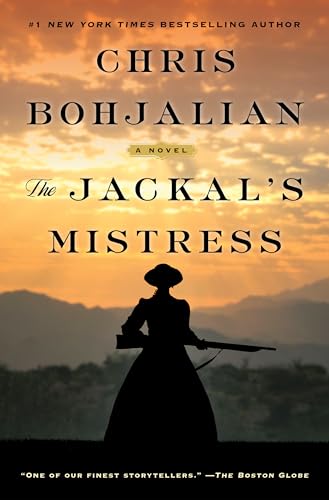
Title: The Jackal’s Mistress
Author: Chris Bohjalian
Publisher: Doubleday Books
Publication date: March 11, 2025
Length: 336 pages
Genre: Historical fiction
Source: Review copy courtesy of the publisher via NetGalley
Rating:

Rating: 5 out of 5.

In this Civil War love story, inspired by a real-life friendship across enemy lines, the wife of a missing Confederate soldier discovers a wounded Yankee officer and must decide what she’s willing to risk for the life of a stranger, from the New York Times bestselling author of such acclaimed historical fiction as Hour of the Witch and The Sandcastle Girls.

Virginia, 1864—Libby Steadman’s husband has been away for so long that she can barely conjure his voice in her dreams. While she longs for him in the night, fearing him dead in a Union prison camp, her days are spent running a gristmill with her teenage niece, a hired hand, and his wife, all the grain they can produce requisitioned by the Confederate Army. It’s an uneasy life in the Shenandoah Valley, the territory frequently changing hands, control swinging back and forth like a pendulum between North and South, and Libby awakens every morning expecting to see her land a battlefield. 

And then she finds a gravely injured Union officer left for dead in a neighbor’s house, the bones of his hand and leg shattered. Captain Jonathan Weybridge of the Vermont Brigade is her enemy—but he’s also a human being, and Libby must make a terrible decision: Does she leave him to die alone? Or does she risk treason and try to nurse him back to health? And if she succeeds, does she try to secretly bring him across Union lines, where she might negotiate a trade for news of her own husband? 

A vivid and sweeping story of two people navigating the boundaries of love and humanity in a landscape of brutal violence, The Jackal’s Mistress is a heart-stopping new novel, based on a largely unknown piece of American history, from one of our greatest storytellers.

Chris Bohjalian is a prolific author — The Jackal’s Mistress is his 25th novel!! — and while he’s such a great writer that every single book is engrossing, it’s his historical fiction novels that truly draw me in and leave me in awe. Fortunately for me, his 2025 new release is historical fiction, set in the Shenandoah Valley of Virginia during the final year of the Civil War. Put simply: It’s excellent.

And the writing is gorgeous — every description brings the scene to life:

Jonathan Weybridge sat on a camp stool atop the crest of a small hill and watched the elegant tendrils of fog in the ravine, the steepled tips of the fir trees piercing the misty clouds like the finials of a wrought-iron fence.

Libby Steadman, at age 25, works tirelessly at her farm’s gristmill, able to keep herself, her 12-year-old niece Jubilee, and freed married couple Joseph and Sally fed by selling grain to the Confederate army. Libby’s husband Peter freed his family’s slaves immediately after he inherited the farm from this father, but he’s still enough of a Southerner to have joined the rebel army. Now, in the fall of 1864, all Libby knows is that Peter was wounded and taken to a Union prison, but it’s been month since she’s had word of him. The household is in constant peril from marauders, rangers, and deserters, not to mention the battles they can hear from not too far away, and Libby is barely holding on most days.

Jonathan Weybridge is a captain with the Vermont Brigade; he’s a former professor who’d prefer to be home with his wife and sons, his books and students, but ends up fighting on the side of what he knows to be right and just. After a fierce battle, he’s severely wounded, and as the Union army leaves the territory, he’s left behind — abandoned to what will surely be a slow, painful death.

By chance, Sally stumbles across Jonathan, and Libby makes a risky choice. She does what she can only hope a Northern woman might do for Peter: She decides to bring Jonathan back to her own home and see if his life can be saved.

It’s highly doubtful at the start. He’s lost a leg and several fingers on one hand. After days of suffering, with no food or medicine, he’s emaciated, in pain, and has untended, bloody injuries that may never heal. Libby is stubborn, though, and she’s determined to keep him alive.

The story of The Jackal’s Mistress is built around thoughtful character development, and rooted in a firm sense of the time and place in which it’s set. Readers can feel the danger from moment to moment. Hearing hoofbeats is enough to set one’s heart racing — any visitor can mean potential disaster, whether by outright violence or the threat of unintended discovery of the household’s secret. The risk Libby takes is profound, and endangers every one under her roof: Sally and Joseph, although free, are subject to much harsher laws, and would likely be hanged on the spot; Libby would be considered a traitor; and of course, Joseph, at best, would be taken prisoner, although given the state of his health, death is the likely outcome.

[He] has met men like Morgan before. On the surface, they were civilized. And, perhaps, without war they would have remained that way. But war gave them permission to be who they really were, men who were comfortable killing all the kindness and magic and beauty in the world, men whose souls were bleak and, therefore, dangerous.

We’re never asked to sympathize with the Southern cause, and yet, we can feel pity for Libby, caught up in a war she doesn’t believe in, trying to save her home and maintain the far-fetched hope of seeing her husband again someday, and not being able to count on the goodwill of neighbors or the army supposedly fighting for her own side to keep her safe. Her bravery is off the charts, yet believable: She’s an ordinary woman who chooses to do extraordinary things because it’s what she feels she must do.

Jonathan is a wonderful character as well. We feel his pain as well as his helplessness. He’s a man of peace, devoted to literature and education, caught up in terrible violence. He cares about the men under his command, misses his family, and yearns for the end of war. The descriptions of his suffering and helplessness are terrible to read, which is a sign of just how powerfully written this book is. As Jonathan begins to recover, he’s able to interact with Libby and the other members of the household, and each interaction has a spark of life and engagement that bring new facets of the characters’ balancing acts into focus.

The Jackal’s Mistress provides a finely woven blend of introspection, character development, and action sequences. It works remarkably well, and brings to life a handful of people caught up in a terrible time, making choices of conscience that could doom them all at any moment. The book is fascinating, moving, and thought-provoking. It’s impossible to put down

The author’s notes explain the real-life people whose story inspired The Jackal’s Mistress, and provides an interesting look at his research and some recommended resources for further reading. Don’t skip the notes when you finish the novel!

I’d rank The Jackal’s Mistress as one of Chris Bohjalian’s best. While his contemporary thrillers are always compelling, twisty reads, it’s his historical novels that truly capture my imagination and my heart. I highly recommend The Jackal’s Mistress — but you really can’t go wrong with any of his books!

For more historical fiction by this author, check out a few of my favorites:

Book Review: So Many Beginnings: A Little Women Remix by Bethany C. Morrow

Title: So Many Beginnings
Author: Bethany C. Morrow
Publisher: Feiwel Friends
Publication date: September 7, 2021
Length: 304 pages
Genre: Historical fiction
Source: Library
Rating:

Rating: 4.5 out of 5.

Four young Black sisters come of age during the American Civil War in So Many Beginnings, a warm and powerful YA remix of the classic novel Little Women by national bestselling author Bethany C. Morrow.

North Carolina, 1863. As the American Civil War rages on, the Freedmen’s Colony of Roanoke Island is blossoming, a haven for the recently emancipated. Black people have begun building a community of their own, a refuge from the shadow of the old life. It is where the March family has finally been able to safely put down roots with four young daughters:

Meg, a teacher who longs to find love and start a family of her own.

Jo, a writer whose words are too powerful to be contained.

Beth, a talented seamstress searching for a higher purpose.

Amy, a dancer eager to explore life outside her family’s home.

As the four March sisters come into their own as independent young women, they will face first love, health struggles, heartbreak, and new horizons. But they will face it all together.

So Many Beginnings takes the classic Little Women story outline and turns it into something new and unexpected — truly a remix, rather than a retelling.

As the author explained during an interview with NPR:

Were you one of those people who read Little Women over and over when you were young, and was that part of the reason you agreed to write your new book?

I want to start by saying I have no recollection of reading the original.

Seriously? And you didn’t read it before you started writing?

I had no intention of reading it. As I told the editor, it would not matter. I am writing a story about four Black girls in 1863. It does not matter what a group of white girls was doing; that has no bearing on it. I will say that I, like a lot of people my age, was very in love with the 1994 film adaptation, so if there’s any similarity, I would expect it to be closer to a couple of elements from that film. Basically, Little Women is considered historical fiction, but as a Black woman, I have been excluded from that narrative. It seems like the kind of property that no matter how many times it’s revisited, it’s the same. It’s for white girls.

Read the full interview at https://www.npr.org/sections/codeswitch/2021/09/12/187316369/little-women-remixed-but-not-reimagined

Here, the March family is recently freed from enslavement, living in the Freedmen’s Colony of Roanoke Island off the coast of North Carolina. While the father is away working with the Corinth Freedmen’s Colony, Mammy and her four daughters live together in a life full of love, but not without struggle.

The sisters are absolutely devoted to one another and to Mammy, but they’re each very different. Their lives are full of work and often frustrations. Being free does not mean being truly in control of their lives or free from discrimination and otherness, as is made plain by the white missionaries and Union soldiers who control so much of the day-to-day life of the people of Roanoke.

I don’t believe I’ve ever read a book told from the perspective of formerly enslaved young women, and the writing here is incredibly powerful in showing the impact on the sisters’ worldview, sense of self, and need for true liberation. The book absolutely shows that even those abolitionists devoted to emancipation weren’t necessarily devoted to the concept of equality. While the term micro-aggression wouldn’t have existed at the time, the concept itself is very plainly evident in even the most well-meaning but still hurtful of exchanges. As Meg and Jo discuss:

“…So why does it enrage me?”

“Because,” Jo told her. “They’re only ever speaking for us, and about us. Rarely with us. Even when they have our best interest in mind, how could they know it without our input? The person who believes they know best, still, in some small way in some interior place they’ve yet to interrogate, does not truly comprehend equality…”

So Many Beginnings preserves many of the characteristics of the March sisters, but with shifts in meaning and importance. Amy is not a spoiled, obnoxious brat here (yes, my anti-Amy bias is showing!) — instead, Amethyst, called Amy, is cherished and protected. As the youngest child, she doesn’t remember enslavement the way the older sisters do, and the family is determined to help her hold onto the joy of innocence for as long as possible, even if that means indulging her and not making demands of her. Beth is really interesting here as well. While still sickly, she’s also inspired by a higher purpose and an ambition that propel her forward. Meg and Jo too, while sticking to some basic framework (Meg dreams of marriage, Jo uses her words to change the world), have a completely different set of experiences and motivations. The characters are each unique and fascinating.

I was not aware of the American Colonization Society or of the history of Roanoke Island before reading this book, and it’s eye-opening to realize how much of the American past is still not discussed in meaningful ways. Hopefully, So Many Beginnings will bring awareness and stimulate discussions amongst its readers, particularly within its target YA audience.

So Many Beginnings is a powerful, moving, and lovely novel. I enjoyed both the Little Women framework and the new take on the story, and most especially, the March sisters themselves.

Highly recommended.

**********

Through affiliate programs, I may earn commissions from purchases made when you click through these links, at no cost to you.

Buy now at Amazon – Book Depository – Bookshop.org

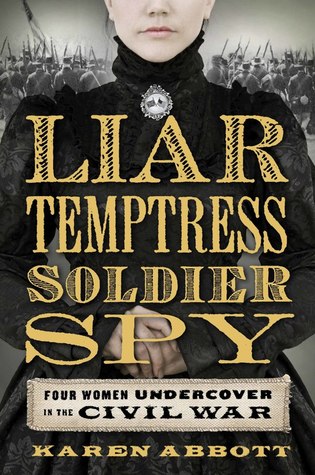
Shelf Control #262: Liar, Temptress, Soldier, Spy: Four Women Undercover in the Civil War by Karen Abbott

Shelves final

Welcome to Shelf Control — an original feature created and hosted by Bookshelf Fantasies.

Shelf Control is a weekly celebration of the unread books on our shelves. Pick a book you own but haven’t read, write a post about it (suggestions: include what it’s about, why you want to read it, and when you got it), and link up! For more info on what Shelf Control is all about, check out my introductory post, here.

Want to join in? Shelf Control posts go up every Wednesday. See the guidelines at the bottom of the post, and jump on board!

Title: Liar, Temptress, Soldier, Spy: Four Women Undercover in the Civil War
Author: Karen Abbott
Published: 2014
Length: 513 pages

What it’s about (synopsis via Goodreads):

Karen Abbott, the New York Times bestselling author of Sin in the Second City and “pioneer of sizzle history” (USA Today), tells the spellbinding true story of four women who risked everything to become spies during the Civil War.

Karen Abbott illuminates one of the most fascinating yet little known aspects of the Civil War: the stories of four courageous women—a socialite, a farmgirl, an abolitionist, and a widow—who were spies.

After shooting a Union soldier in her front hall with a pocket pistol, Belle Boyd became a courier and spy for the Confederate army, using her charms to seduce men on both sides. Emma Edmonds cut off her hair and assumed the identity of a man to enlist as a Union private, witnessing the bloodiest battles of the Civil War. The beautiful widow, Rose O’Neale Greenhow, engaged in affairs with powerful Northern politicians to gather intelligence for the Confederacy, and used her young daughter to send information to Southern generals. Elizabeth Van Lew, a wealthy Richmond abolitionist, hid behind her proper Southern manners as she orchestrated a far-reaching espionage ring, right under the noses of suspicious rebel detectives.

Using a wealth of primary source material and interviews with the spies’ descendants, Abbott seamlessly weaves the adventures of these four heroines throughout the tumultuous years of the war. With a cast of real-life characters including Walt Whitman, Nathaniel Hawthorne, General Stonewall Jackson, detective Allan Pinkerton, Abraham and Mary Todd Lincoln, and Emperor Napoleon III, Liar, Temptress, Soldier, Spy draws you into the war as these daring women lived it.

Liar, Temptress, Soldier, Spy contains 39 black & white photos and 3 maps. 

How and when I got it:

I bought a Kindle edition at least 5 years ago.

Why I want to read it:

I seem to have a backlog of non-fiction books! I can’t help it — I hear about a book that sounds interesting, and despite knowing my less-than-stellar track record when it comes to reading non-fiction, I just can’t resist adding yet another to my overflowing bookshelves.

I remember reading about Liar, Temptress, Soldier, Spy when it came out. I’ve read several novels set during the Civil War period, and have loved the ones centering on women taking on unusual roles, whether by dressing as men in order to serve in the army or finding other ways to serve the country, often through avenues that defy the gender norms of the time. So what better than to read about real-life women who risked themselves in order to serve a greater cause?

I did actually start this book via audiobook several years back and ended up not getting past the first few chapters. I found the audiobook really hard to follow, because it was too easy to miss the key names or places and then become completely lost. I have a feeling this will work much better for me in print.

What do you think? Would you read this book?

Please share your thoughts!


__________________________________

Want to participate in Shelf Control? Here’s how:

  • Write a blog post about a book that you own that you haven’t read yet.
  • Add your link in the comments or link back from your own post, so I can add you to the participant list.
  • Check out other posts, and…

Have fun!

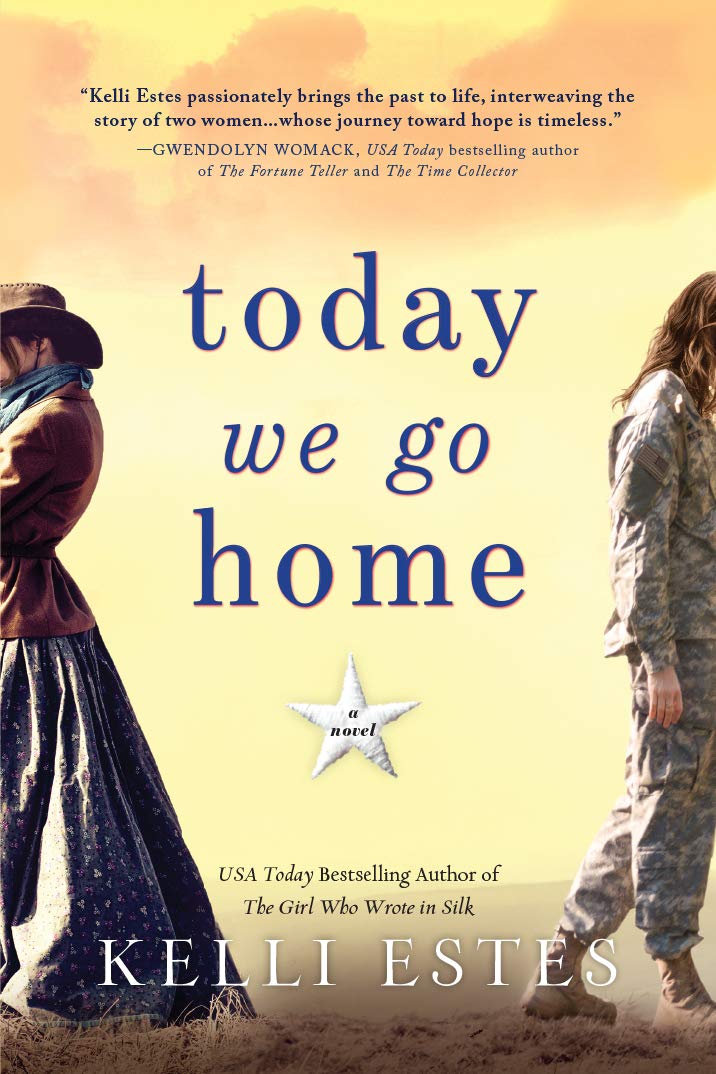
Book Review: Today We Go Home by Kelli Estes

Seattle, Washington
Larkin Bennett has always known her place, whether it’s surrounded by her loving family in the lush greenery of the Pacific Northwest or conducting a dusty patrol in Afghanistan. But all of that changed the day tragedy struck her unit and took away everything she held dear. Soon after, Larkin discovers an unexpected treasure—the diary of Emily Wilson, a young woman who disguised herself as a man to fight for the Union in the Civil War. As Larkin struggles to heal, she finds herself drawn deeply into Emily’s life and the secrets she kept.

Indiana, 1861
The only thing more dangerous to Emily Wilson than a rebel soldier is the risk of her own comrades in the Union Army discovering her secret. But in the minds of her fellow soldiers, if it dresses like a man, swears like a man, and shoots like a man, it must be a man. As the war marches on and takes its terrible toll, Emily begins to question everything she thought she was fighting for.

Today We Go Home took my breath away.

In this dual timeline novel, we follow two separate but interwoven and related threads. The main character in the contemporary timeline is Larkin Bennett, a US Army veteran who receives a medical discharge after being wounded in action in Afghanistan, now suffering from PTSD and the tremendous guilt she feels over the death of her best friend. And as Larkin explores her friends’ personal effects, she finds a family treasure — the diary of Emily Wilson, who fought as a man in the Civil War. Through these two remarkable women, we see devotion to duty and family, as well as the toll that war takes on a person’s soul.

Larkin’s story is moving and tragic. She was never happier than in service to her country, and felt a calling to the military. Her best moments were when she and her friend Sarah were side by side, whether in college, in training, or in Kandahar. But Larkin, when we meet her, is emotionally destroyed by her experiences, turning to alcohol to numb herself and drown out the memories that haunt her every moment.

Larkin’s family is supportive (can I mention how much I love her grandmother and cousins?), and they do what they can to help, but there’s just so much that Larkin has to process on her own, and she resists reaching out for professional help. Her growing obsession with Emily’s diary gives her a purpose, and the more she reads, the more determined she becomes to both tell the stories of military women and to find out more about the real Emily Wilson.

Meanwhile, Emily’s story is equally powerful. After her father and oldest brother ride off to join the Indiana regiment heading to support the Union cause, Emily is left behind on the farm with her younger brother Ben, expected to just wait at home and be content with “women’s work”. When their father is killed and their brother takes ill, they set off to go take care of their brother, and from there, they decide to enlist. Emily is both called to serve and determined to protect Ben at all costs, and together, they join their late father’s regiment and learn to become soldiers.

Emily takes the name Jesse and poses as Ben’s brother, knowing that she must keep her gender a secret. She finds that she’s actually good at soldiering, and starts to love the freedom that comes from being seen as male — the freedom to work, to speak her mind, to not hide her skills, to pursue what she wants.

She would never again settle for a life where her every action, even her thoughts, were controlled by someone else. From now on, no matter where life took her, she would live on her own terms.

The threat of discovery is always present, and the true meaning of going to war doesn’t really sink in until the regiment enters its first battle and Emily gets a close-up view of shooting at the enemy and being shot at.

The general shook his head. “I will not send you back to the field. You can no longer impersonate a soldier, do you understand me?”

Emily had to look away from his accusing glare. She had not been impersonating a soldier. She had been a soldier. “Yes, sir.”

The author does an amazing job of weaving together these two stories. Some dual timeline books feel forced, or as if one only exists as a frame for the other. Not so here. You know it’s a well-done approach when both halves of the story feel so compelling that you hate to leave each one to switch to the other. When an Emily section would end, I’d want more… but then I’d get re-involved in Larkin’s story, and couldn’t imagine wanting to read anything else but her story.

Kelli Estes has clearly done a tremendous amount of research into both women serving in the Civil War and into the plight of today’s veterans, especially the staggering rate of PTSD and suicide among women veterans. She provides a list of reference materials as well as information on support for veterans at the end of the book, and is definitely doing a great service herself by calling attention to the issues confronting today’s combat veterans.

She set the diary aside, thinking about Emily’s struggles. They were timeless. Even now, over a hundred and fifty years later, female veterans faced many of the same challenges that Emily did: being seen as inferior because of her gender, not being able to find work after being discharged from the military, earning less than men, becoming homeless.

Some of the social commentary is really spot-on, such as Larkin’s anger over the general lack of interest and awareness she encounters once back in the US. To Larkin, she was serving in Afghanistan to protect the United States, yet most Americans seem indifferent or unaware of what’s going on there and the sacrifices being made by American service men and women. Likewise, she is understandably infuriated when a clueless man, who spots her wearing an Army t-shirt, asks her whether it’s her father or her brothers who served, failing to recognize the very real service of hundreds of thousands of women.

Today We Go Home is beautifully written and is so very powerful. I tore through this book probably faster than I should have, because I just couldn’t get enough of either Emily or Larkin and had to know how their stories would turn out. The emotional impact is strong and real. By the end, I felt such sorrow for their experiences, and yet hopeful and uplifted as well. And while Emily’s story is set in the past, Larkin’s story has an urgency to it, knowing that brave men and women are still facing the unbelievable struggles that come with serving in war settings and then coming back home afterward.

Don’t miss this amazing book. This goes on my list of top books for 2019.

Other reading resources:

For more on women in the Civil War, I highly recommend two excellent novels:

  • I Shall Be Near To You by Erin Lindsay McCabe (review)
  • Sisters of Shiloh by Kathy & Becky Hepinstall (review)

I don’t think I’ve read any other novels recently about contemporary women serving in the military, but I’d love some suggestions!

_________________________________________

The details:

Title: Today We Go Home
Author: Kelli Estes
Publisher: Sourcebooks Landmark
Publication date: September 3, 2019
Length: 401 pages
Genre: Contemporary/historical fiction
Source: Review copy courtesy of the publisher via NetGalley

Terrifying two-fer: Our War and Wanderers, two all-too-believable versions of our world (and its future)

Over the past two weeks, I read two gripping, enthralling, un-put-downable books that scared the pants off me. These two books are quite different, but each presents a vision of our world that’s utterly terrifying because it’s so utterly possible.

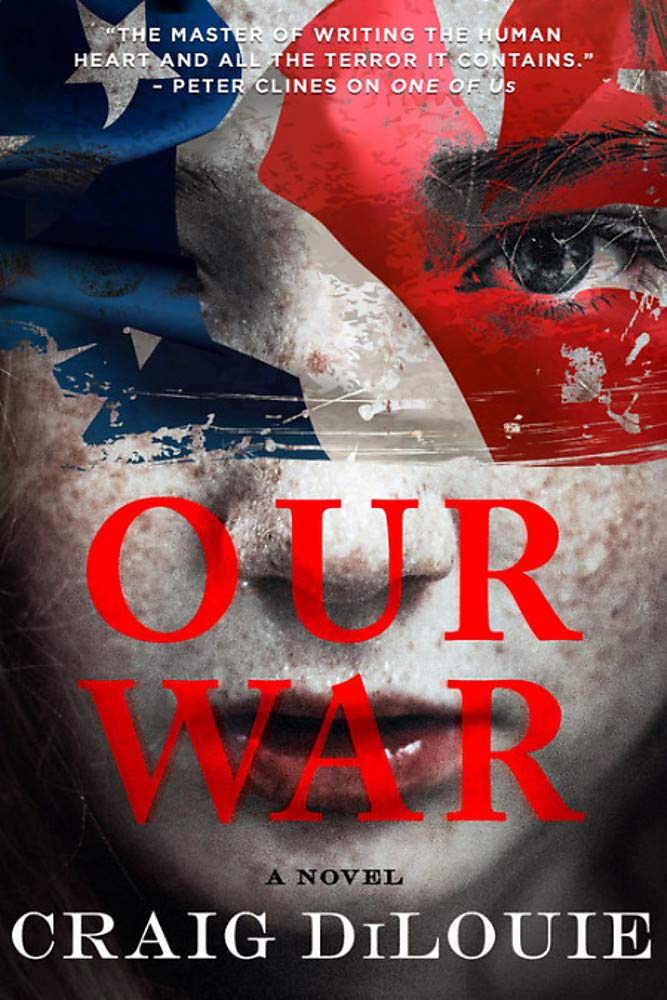
Title: Our War
Author: Craig DiLouie
Publisher: Orbit
Publication date: August 20, 2019
Length: 400 pages
Genre: Speculative fiction
Source: Review copy courtesy of the publisher 

A prescient and gripping novel of a second American civil war, and the children caught in the conflict, forced to fight.

When the president of the United States is impeached, but refuses to leave office, the country erupts into civil war.

10-year-old Hannah Miller, an orphan living in besieged Indianapolis, has joined a citizen’s militia. She had nowhere else to go. And after seeing the firsthand horrors of war, she’s determined to fight with the Free Women militia.

Hannah’s older brother, Alex, is a soldier too. But he’s loyal to the other side. After being separated from Hannah, he finds a home in a group calling themselves The Liberty Tree militia.

When a UNICEF worker and a reporter discover that both sides are using child soldiers, they set out to shine a light on something they thought could never happen in the United States. But it may be too late because even the most gentle children can find that they’re capable of horrific acts.

Where to even start describing this powerful and upsetting book? It feels all too real, as an increasingly factionalized and radicalized America is plunged into a brutal civil war. Sides are drawn — and armed. It’s deadly serious, and as is sadly the norm in armed conflicts, children are the ones who are caught in the middle, starving, orphaned, witnessing death and brutality that no child should have to see,

Hannah is one of several POV characters; others include a hard-charging journalist pursuing her next great story, an inexperienced but determined UNICEF representative, the militia leader who takes in Hannah’s bother Alex, and Alex himself. Each shares their unique viewpoint on the war and its impact, and through each, we see the futility of the armed conflict and the seeming hopelessness of any attempt to find a resolution.

The political situation in Our War is, honestly, not so far different from our own current situation. It’s scarily easy to imagine these events evolving from where we stand today.

As a reporter, Aubrey had always been shocked by the right wing’s war on facts. They regularly vilified anybody in fact-based professions, from scientists to doctors. They generated and consumed propaganda and called anything else fake. For them, reality wasn’t as interesting as a good simple narrative that had them righteously and perpetually enraged.

At first, I found it confusing to keep track of which side was which, but I think that’s part of the point. After all, your view of whether someone is a patriot or a rebel may depend very much on which side of the line you yourself are standing on.

The writing here is raw and shocking and immediate, and makes for a completely gripping read. Above all, the children caught in the middle are the ultimate victims here, and seeing the war through Hannah’s eyes is truly gut-wrenching.

Title: Wanderers
Author: Chuck Wendig
Publisher: Del Rey Books
Publication date: July 9, 2019
Length: 800 pages
Genre: Speculative fiction
Source: Purchased

A decadent rock star. A deeply religious radio host. A disgraced scientist. And a teenage girl who may be the world’s last hope. In the tradition of The Stand and Station Eleven comes a gripping saga that weaves an epic tapestry of humanity into an astonishing tale of survival.

Shana wakes up one morning to discover her little sister in the grip of a strange malady. She appears to be sleepwalking. She cannot talk and cannot be woken up. And she is heading with inexorable determination to a destination that only she knows. But Shana and are sister are not alone. Soon they are joined by a flock of sleepwalkers from across America, on the same mysterious journey. And like Shana, there are other “shepherds” who follow the flock to protect their friends and family on the long dark road ahead.

For on their journey, they will discover an America convulsed with terror and violence, where this apocalyptic epidemic proves less dangerous than the fear of it. As the rest of society collapses all around them–and an ultraviolent militia threatens to exterminate them–the fate of the sleepwalkers depends on unraveling the mystery behind the epidemic. The terrifying secret will either tear the nation apart–or bring the survivors together to remake a shattered world.

This massive, 800 page book seemed like a huge reading undertaking… but once I started, I savored every word, paragraph, and chapter. Did it need to be this huge? Why, yes. Yes, it did.

Wanderers is truly epic in scope. What starts as a weird local event — a sleepwalking girl who can’t be woken or stopped — turns into something huge and eerie (and to some, horribly frightening) as Nessie is joined by more and more sleepwalkers in her journey across America. Escorted by family members and friends who look after them, the flock moves endlessly forward. Meanwhile, the CDC scrambles to find out why, and right-wing militiamen, politicians, and conservative rabblerousers see the flock as a harbinger of end-times, and use their existence as an excuse to ramp up their hateful, violent rhetoric, whipping their public into a frenzy.

Just what is causing the sleepwalking phenomenon is revealed over time, as is the connection to a money-hungry tycoon’s mysterious death. The weirdness of the sleepwalking is leavened by the beauty of the human interactions and interconnectedness as we get to know the various shepherds, their motivations and fears, and their own sense of running out of time.

Parts of this book are terrifying. Strangely (or not), I was much more disturbed by the human evil and hate-mongering than by the pandemic threat to all of humanity. Nature, science, possible extinction — these just are, without good or evil. Instead, it’s the people of Wanderers who inspire admiration for their bravery, sacrifice, and wisdom, as well as despair over the cruelty that people display toward one another.

This book takes our current crises related to climate change, increasingly drug-resistant bacteria and viruses, and hate-filled politics, and spins these into a tale that feels prophetic, cautionary, and disturbingly real. Wanderers forces the reader to ask “what if”… and then see how the scenario plays out in full, grisly, technicolor detail.

I suppose I should add, if not already clear, that this book contains violence and cruelty and should be approached cautiously (or not at all) by anyone who may find themselves triggered.

That said, I just loved so many of the characters, felt completely invested in their journeys and ordeals, and could not stop reading. At the risk of sounding incredibly corny, reading Wanderers made me feel like I’d been on a journey too. A terrific read.

I want to note that Craig DiLouie and Chuck Wendig are both new-to-me authors, although they’ve been on my radar for a while now thanks to friends’ recommendations. Having read these two books, I definitely want more! Please let me know if you have suggestions for me!

Side note: I have so much more I’d love to say about both of these books, but with my arm and hand in a cast for several more weeks, typing is a challenge — so I’m keeping this on the short side. Bottom line: Both of these books are 5-star reads for me. I can’t recommend them highly enough!