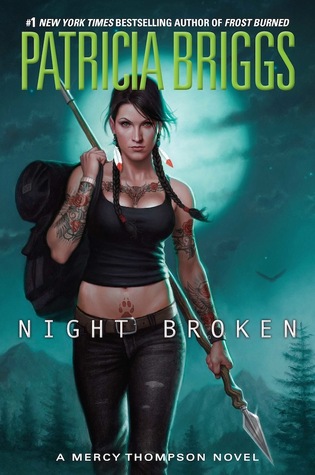
Book Review: Night Broken by Patricia Briggs

Book Review: Night Broken by Patricia Briggs

Night Broken (Mercy Thompson, #8)

You know how some series outstay their welcome? Well, as far as I’m concerned, Mercy Thompson can stay as long as she wants! In Patricia Briggs’s inventive and engrossing urban fantasy series, Mercy Thompson is the heroine extraordinaire. She fixes cars, kicks butt, bakes amazing chocolate chip cookies, and shifts into coyote form at will. Being married to the Alpha of the local werewolf pack means life is never boring, and she manages to hold her own among all the big, bad (but with hearts-of-gold) wolves, as well as with all the various and sundry supernatural beings that populate the Washington Tri-Cities area.

In Night Broken, the 8th in the series, Mercy faces a truly scary adversary: her husband’s ex-wife. Christy is a human who has perfected the art of manipulating everyone around her by eliciting sympathy for poor little her, and when she acquires a psycho stalker, of course she comes to the pack for protection. Mercy grits her teeth and tries to stay calm, but between Christy’s attempts to take over her home and the dangerous creature that threatens all their lives, it’s no wonder she’s feeling a wee bit tense.

Night Broken continues the author’s winning streak, providing a mix of exciting action and danger while also showcasing Mercy’s emotional side and her struggles and challenges. Having come so far with her, it’s lovely to see Mercy making her way in the pack and enjoying her rare private moments with her oh-so-sexy husband Adam and her stepdaughter Jesse.

I truly loved this newest addition to one of my favorite series — my only complaint being that I read it within two days of its publication, and now I have to wait again!

Obviously, anyone who hasn’t read a Mercy book yet should start at the beginning. If you enjoy urban fantasy with tough, smart women at the lead, this is a series not to be missed!

A final note: For a tiny taste of Night Broken, check out tomorrow’s Thursday Quotables post here at Bookshelf Fantasies!

And if you want to know more about the Mercy books, you can also check out my review of the 7th in the series, Frost Burned.

_________________________________________

The details:

Title: Night Broken (Mercy Thompson, #8)
Author: Patricia Briggs
Publisher: Ace Hardcover
Publication date: March 11, 2014
Length: 341 pages
Genre: Urban fantasy
Source: Purchased

Book Review: The Opposite of Maybe by Maddie Dawson

Book Review: The Opposite of Maybe by Maddie Dawson
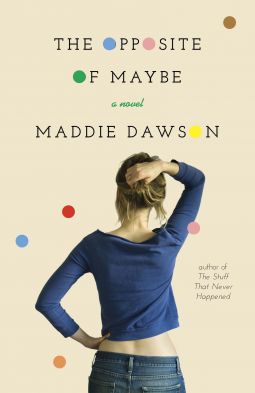
Rosie and Jonathan are “that” couple — you know, the ones whose lives are massively entertaining to their friends because they just never seem to do things the normal way. While all the rest of their friends were busy getting married, buying houses, and having kids, Rosie and Jonathan stuck to their free-spirited artistic ways, keeping things loose, not needing the standard-issue adult lives that everyone else has. Their escapades become the stuff of legends — when the circle of friends gets together for drinks, nothing makes the crowd laugh more than reminiscing over Rosie and Jonathan stories and the crazy shenanigans that ensue.

But at age 44 and after 15 years together, Rosie isn’t so sure that the free and easy life is really a choice any more — maybe it’s just a mask for an inability to grow up? Rosie was a poet and Jonathan a potter when they met, but now Rosie mixes in teaching community college ESL classes with her writing, and Jonathan has completely given up pottery-making for his newest obsession, collecting antique teacups. (Seriously, teacups.) When Jonathan is contacted by another collector and offered the opportunity to partner on a new teacup museum (seriously, a teacup museum), he’s ready to uproot their lives in Connecticut and move to San Diego in pursuit of his dream… and expects Rosie to share the excitement.

It’s not quite so clear for Rosie, though. For starters, her eccentric, cranky grandmother. Soapie is eighty-eight, falls down a lot, and seems to be losing her edge. Soapie raised Rosie since the age of three, when Rosie’s mother died in a freak accident. Rosie can’t stop worrying about Soapie — even though Soapie insists she’s fine and wishes Rosie would stop fussing. Finally, Jonathan convinces Rosie to move to San Diego, and despite years in agreement that they didn’t need to get married like everyone else, he even proposes and gets Rosie to believe things can work. But then, a last-minute teacup emergency (seriously, a teacup emergency!) means the cancellation of wedding plans, and Rosie finally snaps, sending Jonathan off to San Diego on his own, and moves back into Soapie’s large house, envisioning some quiet time to lick her wounds and act as her grandmother’s caretaker.

And Rosie really is wounded, despairing over what her life amounts to:

If a film crew followed her around, what would they see? Nothing. She might as well be dying, for all she’s accomplished. She never had a family, she never owned a house, she never even bought a brand-new car, had a disastrous love affair with an inappropriate person, or even dyed her hair some ghastly shade of red. How does this happen, that you get to be forty-four and you don’t have anything — not even an ill-advised tattoo — to show for it?

The hitch in Rosie’s short-term plan is that Soapie doesn’t really need her. There’s a charming gardener named Tony who’s already moved in and is doing a great job of keeping Soapie on her feet and looked after, and Soapie’s long-time love George is by her side every evening, drinking and dancing and being a perfect courtly (and, as Soapie puts it, “ardent”) suitor (after visiting his wife Louise, suffering from advanced Alzheimer’s, each afternoon at the nursing home). Before long, this odd foursome has formed a family unit of sorts, and Rosie’s eyes are opened to new and fresh possibilities.

Oh, and minor detail? What Rosie takes for early menopause turns out to be a very unexpected pregnancy… and Jonathan most adamantly does not want to be a father. And then there’s sweet Tony, who adores pregnant women, babies, children, people in general, and pretty much everything about life. Rosie wants to give Jonathan a chance to redeem himself, to become a part of their baby’s life, and to prove his commitment to their relationship — but at what cost? Why is Rosie the one who always has to give things up? Soapie insists that Rosie needs to find her “joie de vivre” — and just maybe, the baby, the new crazy family she’s found, and even Tony can help her find that spark again, but is it the right path for her?

The Opposite of Maybe is a refreshingly charming look at adult life and adult dilemmas. Rosie is a terrific character: a woman who’s spent far too long accepting that her life is the way it should be, rather than questioning whether it’s enough. She’s smart and funny, full of passion, and when she finally gets a backbone, she’s actually quite remarkable. Tony is just a big sweetie — younger than Rosie, sexy (of course), struggling to establish a routine with his 5-year-old son in the wake of a divorce, and one lovely, loving guy. Soapie, too, is a treat, verging perhaps on the stereotype of the crazy, tough old lady with a heart of gold, but with her own secrets and a zest for life that is undiminished by the insults of old age and failing health.

It’s lovely to see the shifting definitions of family as portrayed in The Opposite of Maybe. Clearly, a blood tie is not the be-all and end-all. Jonathan may be the baby’s biological father, but he’s so clearly not daddy material. As Soapie, George, Rosie, and Tony open their home to all the friends and strays who populate their lives, they’re surrounded by chaos, fun, and connections that help to root Rosie more firmly in their Connecticut home.

The writing is clever and quirky, and I really got a kick out of the dialogue, particularly between Rosie and Tony, who make each other laugh even while driving each other crazy. (Tony has the habit of misusing words and mangling the English language, which after a while one suspects is done deliberately just to get a rise out of English-teacher Rosie).

The author portrays the indignities of being pregnant at 44 with both compassion and hilarity: In one scene, Rosie is befriended by a nice young mother and taken to see the local playground where the mommies congregate. When she tells her new friend her age, the woman replies, “Wow, that is seriously so brave of you! Forty-four! I just hope I’m still having sex when I’m that age!” Thud. Not only that, but she also kindly adds as she’s leaving, “This is like the place where everybody comes between naps. Sometimes the grandmothers come, too, ha ha! You’ll like them.”

My only quibble with The Opposite of Maybe is the character of Jonathan. He’s a hapless, well-meaning guy who can’t see beyond the end of his own nose (or his teacups) — and after a while, I simply could not see why Rosie would persist in trying to make things work with him. Even when he commits to trying to be the man Rosie needs, he’s just so clearly NOT, and Rosie is far too smart to go along for as long as she does, thinking that Jonathan can change and that the life she wants is possible with him. It’s a staple of romantic fiction that the female lead doesn’t see what’s so obvious to the reader — the dull guy who needs convincing is just NEVER Mr. Right in this kind of story, and the wrong-on-paper guy with the heart of gold usually is oh-so-right. Given that, the outcome of the love story here is all too certain from the get-go. Jonathan just isn’t the guy for Rosie, and keeping him in the role of the primary man in her life feels like an artificial means of stretching out the romantic complications and uncertainties.

Still, I found The Opposite of Maybe a completely delightful and engaging read. There are moments of real sorrow and emotion, as well as humor and joy that feel deserved and organic. Fast-paced and entertaining, I gobbled this book up in about 24 hours, and just didn’t want to put it down before the end. If you enjoy reading about flawed but lovable adults facing real-life choices, with writing that’s zippy and full of fun, don’t miss The Opposite of Maybe.

_________________________________________

The details:

Title: The Opposite of Maybe
Author: Maddie Dawson
Publisher: Broadway Books
Publication date: April 8, 2014
Length: 400 pages
Genre: Adult contemporary fiction
Source: Review copy courtesy of Broadway Books via NetGalley

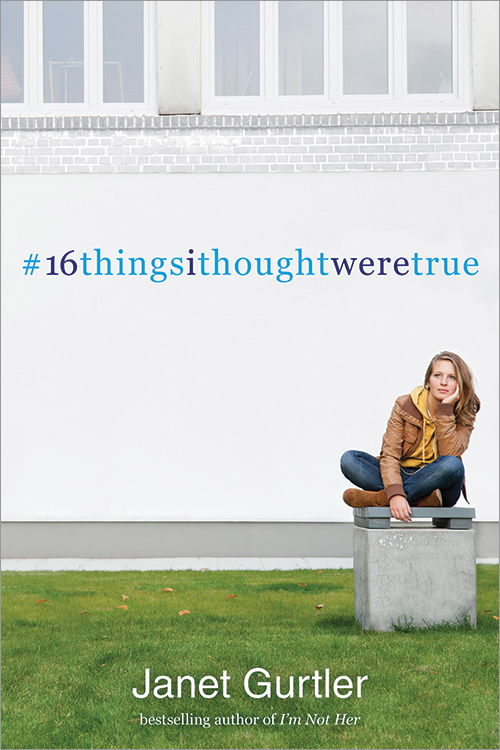
Blog Tour, Author Q&A, & Review: 16 Things I Thought Were True by Janet Gurtler

Thank you, Sourcebooks, for inviting me to be a part of the blog tour celebrating the release of 16 Things I Thought Were True!

16things

16 Things I Thought Were True
By Janet Gurtler
Sourcebooks Fire
Release date: March 4, 2014

Heart attacks happen to other people #thingsIthoughtweretrue
When Morgan’s mom gets sick, it’s hard not to panic. Without her mother, she would have no one—until she finds out the dad who walked out on her as a baby isn’t as far away as she thought…

Adam is a stuck-up, uptight jerk #thingsIthoughtweretrue
Now that they have a summer job together, Morgan’s getting to know the real Adam, and he’s actually pretty sweet…in a nerdy-hot kind of way. He even offers to go with her to find her dad. Road trip, anyone?

5000 Twitter followers are all the friends I need #thingsIthoughtweretrue
With Adam in the back seat, a hyper chatterbox named Amy behind the wheel, and plenty of Cheetos to fuel their trip, Morgan feels ready for anything. She’s not expecting a flat tire, a missed ferry, a fake girlfriend…and that these two people she barely knew before the summer started will become the people she can’t imagine living without.

I’m thrilled to be participating in the blog tour for this terrific young adult novel! Author Janet Gurtler was kind enough to play along for a brief Q&A:

Did you have an “Amy” in your life as a teen?

I didn’t really have an Amy in my life as a teen, but I met an Amy when I was traveling a while ago. She was this great kid, a teen girl, who had no filter and she was so adorable and cracked me up and I knew I had to fictionalize her.  Amy was really fun to write.

What can you tell us about your best friend from your teen years? How did you meet? What qualities made him/her so special?
Well, I moved in grade 7 and then again in grade 11 so I had a few different best friends. My best friend in high school was a girl named Rosalyn. We met at high school, but became close when we started working together (kind of like Amy and Morgan) We used to laugh. Oh how we could laugh. We were both kind of insecure dorky kids who wanted to be much more popular than we were. We had unrequited crushes on boys together too. I mostly loved her loyalty and the way we could gab for hours about anything. And the laughing!

Morgan spends so much of this book glued to her phone and tracking her Twitter followers. Do you think teens in earlier generations had anything equivalent? Did you?

Oh man, if I was a teen in today’s world I would have LOVED social media. I was really quite shy, though I tried hard to hide it and I think it’s much easier to be a little bolder online.  I don’t really feel like I had anything like that. I was a teen in the 80’s so that was before cell phones were even around!!!

What was your inspiration for 16 Things?
Mainly I wanted to tell the story of a girl who was finding more comfort from her online world than the real world.  I wanted to show how being overexposed online could send someone into hiding, and ironically one of the best places to hide….is online.

Did you always know you wanted to write? How did you get started?
I’ve loved writing since I was in the sixth grade. It’s always been my passion and the way I love to express myself.  I started writing books after my son was born. I’d always wanted to do that (write a book) and I did it while he napped. And then I was hooked. He’s 13 now!

What advice would you give to girls today who are interested in writing?

Keep writing! Read a lot and write a lot. Write stories, and journals and letters and whatever else you want to write. And the reading. That’s important too, because it teaches you what resonates with you and what you might feel best about writing.

What are you working on now? What will we see next from you?

I am currently writing my sixth Sourcebooks Fire book! It’s called THE TRUTH ABOUT US. It’s more of a YA romance, about a girl and a boy she’s forbidden to be with. She comes from a family with money and is forced to work at a soup kitchen for the summer  (for her bad behavior) and he is a guest at the soup kitchen.  Of course, no one wants them to be together.

And just for fun: If you were going on a road trip and you were in charge of snacks, what are the must-haves?

Caramel popcorn. Diet coke. And chewing gum. And then we’re good to go!!!!

Thank you, Janet, for taking the time to answer my questions!

♦♦♦♦♦♦♦♦♦♦

My thoughts:

16 Things I Thought Were True is a funny, engaging young adult novel that throws in a wrenching twist toward the end that was a real punch in the guts for me. A book that starts out with a girl obsessing over her number of Twitter followers while cringing at the thought of the awful viral video her friend posted — of her dancing in her underwear — sounds pretty light and fluffy, doesn’t it?

As they say, don’t judge a book by its cover… or in this case, by its use of hashtags.

Morgan’s story seems straightforward: As her mother prepares for heart surgery, she finally reveals to Morgan the name of her biological father, whom Morgan believes to have abandoned her before she was even born. Meanwhile, Morgan is deeply embarrassed by her online notoriety, and faces social ostracism by the teens she works with at the amusement park over summer break. But two of her coworkers seem to see more in her than she does herself: Bubbly, quirky Amy, who talks non-stop and seems to never get embarrassed about anything, and nerdy cute Adam, a manager at work who’s the same age as Morgan… and who’s actually kinda hot once she takes a closer look.

With Amy and Adam pushing and pulling, Morgan puts into motion a plan to find her bio-dad and confront him for walking out on her all those years ago. Thus ensues an epic road trip, filled with junk food, a flat tire, whales, scary cows, and sweet old ladies who (inexplicably) are staying at the same hostel. Amy and Adam push Morgan to rethink the things she always believed, face and share some hard truths, open up a bit, and do the things she’s been afraid to do. Oh, and also? Maybe put down the phone once in a while, stop worrying about her number of followers, and dare to be the kind of person she wants to be in real life, not just with her anonymous internet friends.

Amy is probably the loveliest character I’ve encountered in fiction in quite some time. Her constantly chipper, no-filters personality seems potentially annoying at first, but you just can’t help falling in love with her bubbliness and her absolute commitment to embracing everything life throws in her path. Don’t we all wish we had a friend like Amy? She’s simply adorable. Adam ends up being quite a great guy as well, not just in terms of boyfriend-worthiness, but also as a decent person, a caring individual, and a devoted friend.

The ending seemed to come out of nowhere and totally caught me by surprise. Wow. I won’t say more about it, except that it’s powerful and unforgettable.

What I initially thought might be just a teen romp with cautionary warnings about living life online ends up being a story with a more serious message about true friendship, being honest with yourself and with others, and looking beyond the surface to find the real value of the people in your life. I truly enjoyed Morgan’s journey throughout 16 Things I Thought Were True, and look forward to reading more by this author.

____________________________________________

About the Author:

jgurtlerJanet Gurtler lives in Calgary Alberta, near the Canadian Rockies, with her husband and son and a chubby Chihuahua named Bruce. She does not live in an Igloo or play hockey, but she does love maple syrup and says “eh” a lot. (From the author’s website: http://www.janet-gurtler.com)

Book Review: The Husband’s Secret by Liane Moriarty

Book Review: The Husband’s Secret by Liane Moriarty

The Husband's SecretThe Husband’s Secret is one tricky book. It lulls you into thinking that it’s some sort of chick-lit look at married life and motherhood, with its opening chapter introducing a powerhouse of a woman, Cecilia Fitzpatrick, who is perfect at just about everything: She’s president of the PTA of her kids’ Sydney private school, a Tupperware saleswoman par excellence (her not-always-the-swiftest husband doesn’t realize that she actually out-earns him at this point), has her daily routine down to a science, bakes, cleans, and is always just 100% on time, appropriate, and slightly better than everyone else — but never enough so that you’d hate her for it.

Then there’s Tess O’Leary, whose Melbourne-based life is about to implode after her husband and her first cousin/best friend/business partner confide to her — in oh-so-supportive tones — that they’ve fallen in love, but they’re sure the three of them can make it all work out for the best.

And poor, sad Rachel Crowley, the school secretary, harbors secret hatreds and sorrows stemming back 28 years — back to the day that her teen-age daughter Janie was murdered by an unknown assailant in a crime that remains unsolved.

These three women’s lives intersect and collide with unexpected and life-changing results in The Husband’s Secret  — which I stopped thinking of as chick-lit and realized was just a terrifically well-written contemporary novel by the time I’d read 20 pages or so.

The ball really starts rolling when Cecilia stumbles across a letter from her husband, John-Paul, to be read after his death. The issue, though, is that John-Paul is still very much alive. Cecilia might have just left it alone, tucked away in the file with their wills, until she sees his extreme reaction to her mentioning that she found the letter. Knowing that he’s hiding something potentially explosive (is he gay? is he a child predator? does he have a mistress or second wife somewhere?), Cecilia rushes to open the letter… and what she reads is beyond anything she might have expected, a secret so shocking that their lives will never be the same. And then, of course, Cecilia must not only deal with new truths about the man she thought she knew, but must also decide what to do with this information — which impacts her family’s future, her daughters’ well-being, and the lives of others as well.

The secrets in this novel weigh heavily on the secret-keepers. Knowledge can be a burden, and the characters are in constant struggles to decide what’s right and what’s wrong. But what if what’s right for yourself might be completely wrong for your children? What if you share what you know, and even more lives are ruined? What good is the truth, if it doesn’t ease suffering but only leads to new and different suffering?

There are no easy answers. It seems simple, at first, to judge Cecilia and make assumptions about what she should do. I can’t say that I think she’s correct — but the author skillfully guides us through Cecilia’s thoughts and emotions, so we readers truly understand why her actions unfold as they do, whether we agree or disagree.

Tess’s story was a little less compelling for me, as it relates only tangentially to the other main storylines, and yet her dilemmas are real and potentially life-changing as well. Is it worse that her husband and cousin didn’t actually have an affair? They say they’re in love, but out of respect for Tess, haven’t allowed themselves to sleep together, and it’s the purity of it all that really drives Tess mad — if it had just been a sleazy little affair, perhaps it would be easier to get past. But what does it mean for Tess, all this silent longing and noble sacrifice, and can she reclaim her marriage, if not for herself, then for the sake of the family she and her husband have starting building with their son?

Throughout it all, the writing simply sparkles — and it’s the humor and wit of the writing, which shines through in a myriad of small but telling moments, that lulls you into thinking that this is a light, almost comedic domestic tale before the shocks, deep emotions, and tragic outcomes take over.

A few prime examples — one for each of the three main women:
(and for more, see this week’s Thursday Quotables post, where I share a few other favorite lines from this book):

Tess:

Tess thought about how Will had once told her that he hated walking behind a woman late at night, in case she heard his footsteps and thought he was an ax murderer. “I always want to call out, ‘Its all right, I’m not an ax murderer!'” he said. “I’d run for my life if someone called that out to me,” Tess had told him. “See we can’t win,” said Will.

Cecilia:

All these years there had been a Tupperware container of bad language sitting off to the side in her head, and now she’d opened it and all those crisp, crunchy words were lovely and fresh, ready to be used.

Rachel:

Lauren was the perfect daughter-in-law. Rachel was the perfect mother-in-law. All that perfection hiding all that dislike.

Reading The Husband’s Secret was one of those random odd reading experiences for me, where I went in with one set of expectations, only to realize I had it completely wrong. For whatever reason, I seemed to have remembered reading something about this book comparing it to Gone Girl, and never realized that I must have confused this with another book I’d picked up at about the same time. So, I started The Husband’s Secret expecting a dark, twisted novel full of psychological warfare and endless mindgames… and then, after reading about Tupperware, school projects, and Easter bonnets, started feeling like I was reading something suspiciously like “chick lit” — only to be startled as I went along by the depth of the characters, the seriousness and sadness underlying all the brisk, shiny writing, and the ultimate tragedy of the lives forever changed, for better or worse, by secrets kept and shared.

Australian author Liane Moriarty has crafted a real and honest look into the souls of three women with three very different lives. It’s impossible to read The Husband’s Secret without coming to care deeply about the characters. Agree or disagree with their decisions and actions, you’ll still wish these women well and feel both hope and sorrow for their experiences. I ended the book very satisfied with how the story wraps up, and yet wishing I could know more about the rest of these women’s lives. That, to me, is the sign of a successful novel: A plot that satisfies and engages throughout, wraps up without cliffhangers or loose ends, and leaves you wanting to stay in the characters’ company for just a bit longer.

I definitely recommend The Husband’s Secret… and look forward to reading more by this author.

_________________________________________

The details:

Title: The Husband’s Secret
Author: Liane Moriarty
Publisher: Amy Einhorn Books/Putnam
Publication date: 2013
Length: 394 pages
Genre: Adult contemporary fiction
Source: Purchased

Book Review: Better Off Friends by Elizabeth Eulberg

Book Review: Better Off Friends by Elizabeth Eulberg

Better off Friends

A little like When Harry Met Sally for teens, Better Off Friends asks the question, “Is it really possible for a boy and a girl to be just friends?”

Macallan (yes, she’s named for the whiskey) and Levi just click from the very start, when Levi moves from California to Wisconsin right at the start of 7th grade. He’s the new kid worried about fitting in and making friends. Macallan has troubles of her own, still recovering from her mother’s shocking death in a car accident the previous year. Yet somehow, these two get each other, moving quickly from the discovery of a shared loved for a (fictitious) BBC comedy to best friend status, finishing each others’ sentences, being relatively unsufferable to those trying to get a word in edgewise, fitting into each others’ families, and really connecting in the way only true friends can.

Their friendship continues, with its share of ups and downs, into high school. They manage to survive the awful fall-out from Levi dating Macallan’s best girl friend, as well as a variety of other awkward moments that might break up a less solid friendship. But Levi and Macallan are totally strong and inseparable — until things start to fall apart. As Levi finally gets what he always thought he wanted — guy friends, success in sports, a crowd to hang out with — he has less time and attention for Macallan. Meanwhile, she’s realizing that friendship with Levi isn’t quite as easy or comfortable as it was in their younger days.

For years, people have always assumed that these two were “together” — and they really can be quite frightful when they’re on a roll with their in-jokes, ignoring everyone else around them, completely oblivious to their other friends, or even their current boyfriend or girlfriend. An attempt at a double-date is never repeated, after it ends disastrously (and also somewhat hilariously).

But when Levi finally starts to wonder what it is that he feels for Macallan, their friendship enters rocky territory, to the point where it looks doubtful that they can survive it at all. Plagued by doubts and worries and serious miscommunication, Levi and Macallan each have to decide whether it’s worth pursuing something more… or whether they really are better off friends.

How many times have you seen a character in a book or movie use the excuse “I don’t want to ruin our friendship” as a reason for not going out with someone? Totally lame, right? Well, in Better Off Friends, not ruining the friendship is the crux of the problem, and it’s not at all lame. I loved seeing how much Levi and Macallan care about each other and how vital their friendship is for both of them. Neither of them can stand the idea of ruining it… but their inability to be honest and take a risk may destroy the friendship anyway.

Told in alternating voices, we get to hear in first-person perspective from both Macallan and Levi the history of their friendship and to see how it grows and changes over the years. Each chapter ends with a bit of banter between the two. It comes across like a recounting of their history, so that after Macallan tells the story of the first time she met Levi, we hear a few choice comments from Levi –usually snarky and funny — telling what he thinks of Macallan’s version of events. It’s a nice touch, and it lets the reader know that they’re in this together and enjoying the tales from their past. It does also remove a little element of suspense: Since the story is told as the two of them looking back on their shared history, there’s really no fear that they won’t end up at least as friends, if not more.

Insta-love seems to be all too common in YA fiction these days. They meet, they exchange five words, they looks into each others’ eyes — and BAM! It’s true, deep, soul-scorching love. (It definitely helps if one is from the wrong side of the tracks, or has a troubled past, or is hiding a deep, dark secret). Better Off Friends is like the antidote to insta-love: When romance finally becomes a possibility, it’s after years of friendship and a true, deep connection. We feel like the characters have earned it; love feels organic for these two, and not something forced on a pair of characters in order to fit a formula.

In fact, Better Off Friends is so far from formulaic that reading it feels like a breath of fresh air. Other than the fact that a main character has lost a parent at a young age, nothing in this book feels like a retread of what’s trendy in teen fiction at the moment. I enjoyed the originality of the characters and the care and detail devoted to letting us get to know them. Their struggles to pursue their own interests and passions, balance these with school and home demands, and figure out how to still be a good friend felt realistic and appropriate for their ages, and it was interesting to see how the two grow over the years from nervous middle school kids to confident high school juniors.

Last year, I read Revenge of the Girl With the Great Personality by Elizabeth Eulberg, and loved the honest way in which the author approached the problems and challenges of a terrific main character. (You can check out my review here.) After reading Better Off Friends, I’m adding Elizabeth Eulberg to my list of incredibly talented YA writers whose work I’ll always want to check out.

If you enjoy contemporary young adult fiction with main characters you can care about, definitely give Better Off Friends a try!

_________________________________________

The details:

Title: Better Off Friends
Author: Elizabeth Eulberg
Publisher: Scholastic
Publication date: February 25, 2014
Length: 288 pages
Genre: Young adult contemporary
Source: Review copy courtesy of Scholastic via NetGalley

Book Review: See Jane Run by Hannah Jayne

Book Review: See Jane Run by Hannah Jayne

See Jane Run17-year-old Riley lives a comfortable life with her loving (although stiflingly overprotective) parents, until the day she accidentally discovers a birth certificate for a girl named Jane tucked away inside her own baby book — a baby book that seems to start when Riley is three years old. Riley and her best friend Shelby laugh it off at first, coming up with goofy, ridiculous explanations, but as weird coincidences and creepy occurrences start to pile up, Riley becomes more and more convinced that her parents are hiding a secret.

With the help of the school bad boy, J. D. (who is, of course, hot but misunderstood), Riley sets off to find out more about Jane O’Leary — but comes up blank. There are no records, and an Internet search comes up with no results. But someone seems to know that Riley is searching, and what started out as a puzzle takes on a much more sinister tone. Is Riley being watched? Are her parents lying? Are they even really her parents? Who can be trusted? With each clue, Riley’s seemingly safe world crumbles a bit more, until real danger intrudes and threatens not just Riley, but everyone she cares about.

See Jane Run in many ways feels like a throwback to the late 1980s/early 1990s. Adult readers who grew up in those years will instantly be reminded of Caroline B. Cooney’s A Face on the Milk Carton (which is referenced in promotional materials for See Jane Run), as well as Lois Duncan’s Don’t Look Behind You. As in both of these books, the main character in See Jane Run finds herself forced to confront questions about her own identity, where she belongs, and whether she can rely on her parents — either for safety or for the truth.

The clues in See Jane Run mount quickly, and it’s not too difficult to see where the story is going — or so we’re led to believe, until a last-minute twist changes the outcome and makes the ending both more surprising and more disturbing than we might have expected.

Riley herself is not all that inspiring a main character. She flips back and forth between taking an active approach and letting events wash over her, and she seems to be oddly inexperienced for a girl of 17. Her parents keep her isolated, but this doesn’t entirely make sense. They live in a remote new neighborhood that’s still under development, perhaps in an effort to avoid the prying eyes of neighbors — yet Riley attends public school, has a best friend, and goes about her life during the day, so she’s not exactly unknown either. Riley’s mother gives her an anti-anxiety pill each morning, but Riley isn’t allowed to see the bottle. But why? And why does she not think twice about this and all the other weirdness about her parents until the events in this book?

Then there’s the issue of J.D. He’s got a reputation as a juvenile delinquent, but Riley sees something special in him and he seems to really like Riley. Or is there something darker and creepier going on? As with many other YA novels, the Riley/J.D. plot thread feels somewhat like an obligatory attempt to squeeze a romance into a story that doesn’t really need one.

See Jane Run is a fast read, although the pacing is a bit uneven. Scenes of great excitement and danger move along well, but there are also chapters that feel like a slog through malls, diners, and endless car or train rides. Overall, the book held my interest, despite explanations that felt rushed and unsatisfying and a not-quite-convincing wrap-up.

I suppose you could write a whole essay on why teen girls are drawn to books about false identities and parents hiding the truth from their children. Is it the danger? The sense that parents can’t be trusted? Maybe it’s the need to remake oneself during the teen years that makes the idea of a secret other life so appealing. In any case, it seems that this type of story will always be intriguing to young adult readers, and See Jane Run fits nicely on the shelf with those earlier thrillers.

_________________________________________

The details:

Title: See Jane Run
Author: Hannah Jayne
Publisher: Sourcebooks Fire
Publication date: January 7, 2014
Length: 288 pages
Genre: Young adult contemporary
Source: Review copy courtesy of Sourcebooks Fire via NetGalley

Book Review: Archetype by M. D. Waters

Book Review: Archetype by M. D. Waters

ArchetypeSay you wake up in a hospital room with no memories. You’re told you’ve been in a terrible accident. There’s an incredibly handsome man sitting by your bedside, pledging his love and saying he’ll see you through your recovery. He’s your husband, after all. And he’s going to get you the very best of care, because he loves you with all his heart.
Be afraid. Be very afraid.

Well, that’s my take-away, in any case, after reading this scary, suspenseful, and altogther un-put-downable first novel by the very talented M. D. Waters. In this science fiction thriller, main character Emma wakes up in a high-tech hospital with no memories, surrounded by an elite medical team and with a very sexy man by her side, who only wants her to get better so they can continue their perfect lives together.

Problems? Well, there are the nightmares, for a start. Emma wakes in horrible trauma each night after dreaming of being trapped in a tank of water, unable to communicate, and watching a strange man who seems to be consumed by anger and grief. And that’s not all. On the nights without nightmares, there are other dreams: dreams of a beautiful beach, the arms of an unseen lover, and words of undying passion and commitment. And still more: dreams of battle, explosions, weapons, and danger. Are these delusions? Simple nightmares? Products of a damaged brain? Or is Emma starting to remember something — something that her husband wants to keep hidden?

Far be it from me to give anything away — but suffice it to say that all is not as it seems. Archetype takes place a couple of hundred years in the future, in a world quite similar to ours… but with much more pervasive technology, a United States that has divided into two separate countries following a civil war, a fertility crisis resulting in some very paternalistic laws around reproduction, and young women kept in restrictive Women’s Training Centers until age 18, when they are either bought and paid for by wealthy men who want families or assigned to a more menial role of support and subservience.

And yet, Emma’s husband Declan seems to really love her, and lavishes her with affection, patience, gifts, a lovely mountain home, and an art studio in which to pursue her newly awakened compulsion to paint landscapes. Declan is one hot guy, and just happens to be incredibly rich and powerful as well. Emma can’t help but be drawn to him, and there’s a connection between the two that just steams up the pages.

There’s more, lots more, but I absolutely want you all to experience Archetype for yourselves! I gobbled this book up within the space of 24 hours, because I just could not look away. And when I stopped for little things like eating or sleeping, I swear I kept turning over all the puzzles of the plot in my brain. There are so many clues, and so much to tease apart. What really happened to Emma? What do those dreams represent? Can Declan be trusted? Who is the mystery lover that Emma may or may not remember? There’s danger, there’s mystery, there’s passion, and there’s enough new and bizarre medical technology to make a sci-fi geek purr with contentment.

I loved the scientific and medical twists and turns, the strange new world of this alternate America, and of course, I loved Emma herself. She may be confused, but she’s not weak or a pushover, and it’s just thrilling to see her take control and try to outsmart everyone, stay ten steps ahead, and figure out how to survive — all without knowing whether anything she believes about herself or her life is actually true.

Normally, this is where you’d hear me complain about a book with a “to-be-continued” ending. Well, not this time. Yes, Archetype ends with a shocker of a cliffhanger, and yes, I’m dying to know more. But — thank you, thank you, thank you — the sequel, Prototype, will be out in July 2014! Now that’s some smart publishing! Anyone who reads Archetype will be practically salivating over the prospect of  a speedy sequel.

Archetype is one crazy roller coaster ride of a thrill, and plenty smart too. Read this book! But be prepared to lose sleep until you get to the very end.

_________________________________________

The details:

Title: Archetype
Author: M. D. Waters
Publisher: Dutton
Publication date: February 6, 2014
Length: 384 pages
Genre: Science fiction (adult)
Source: Review copy courtesy of Dutton

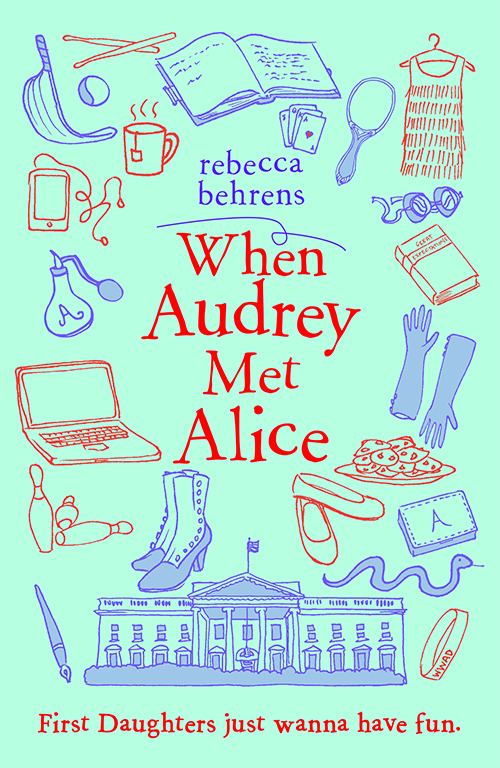
Blog Tour, Guest Post, & Review: When Audrey Met Alice by Rebecca Behrens

Thank you, Sourcebooks, for inviting me to part of the blog tour celebrating the release of When Audrey Met Alice!

image002

WHEN AUDREY MET ALICE
By Rebecca Behrens
Sourcebooks Jabberwocky
February 2014
Ages 9 -12

First daughters just want to have fun.

Thirteen-year-old First Daughter Audrey Rhodes is convinced that living in the White House is like being permanently grounded. While her parents are off saving the world, Audrey Rhodes spends most of her time pining for friends back home, sulking about security restrictions, and suppressing the crush she’s developing on Quint, her only DC friend. After the Secret Service cancels the party she planned, Audrey is ready to give up and become a White House hermit.  What good is having your own bowling alley if you don’t have anyone to play with?

Audrey is ready to give up and spend the next four years totally friendless—until she discovers Alice Roosevelt’s hidden diary beneath the floorboards and starts asking herself…What Would Alice Do? But not everyone is on board with Audrey’s attempts to be more like Alice—especially not her mother’s super-stern Chief of Staff. Will meeting Alice bring Audrey happiness—like the freedom to attend the school trip and possibly a First Boyfriend—or a host of new problems?

The former First Daughter’s outrageous antics give Audrey a ton of ideas for having fun…and get her into more trouble than she can handle. A fun, smart middle grade debut that brings a fascinating historical character to vibrant life and showcases relatable tween issues like fitting in, first crushes, and finding your own way, the White House hijinks of these First Daughters is a story readers won’t want to miss!

I’m thrilled to be participating in the blog tour for this terrific new book aimed at middle grade readers! Author Rebecca Behrens was kind enough to share her thoughts on a question I posed:

What would Alice find most confusing about the lives of girls in the 21st century?

Here’s Rebecca’s response:

Photo from Wikipedia: Roosevelt family in 1903 with Quentin on the left, TR, Ted, Jr., “Archie”, Alice, Kermit, Edith, and Ethel.

It’s only been a little over a century since Alice Roosevelt moved into the White House and became perhaps the most famous girl of the turn of the century. But how times have changed! What would Alice find most confusing about the lives of girls in the 21st century?

Alice lived at a time when girls weren’t allowed to go out with dates, and they had to have chaperones even at dances. According to Alice, “There were always watchful eyes to check on one. Woe betide the girl who emerged from the conservatory at a dance with her hair slightly disheveled. As one’s hair tended to fall down at the best of times it was frightfully difficult trying to keep up appearances.” Alice would be surprised by the dating girls do today—but I think she’d consider it a great thing. From an early age, Alice was fixated on finding a husband, because that was her ticket out of her parents’ home and into the world. If she watched a show like Girls, I think she’d be amazed (and occasionally shocked) at the romantic lives of young women. But she would love how young women can live independently, and how much agency they have in their romantic lives.

Athletics for young women weren’t common in Alice’s youth. She had fun roughhousing with her siblings, swimming, and she reportedly did some yoga—but girls didn’t play on soccer teams or run track. I think Alice would be shocked by all of the athletic opportunities for girls today. Considering what a vivacious person she was—and competitive—Alice would want to start competing, too.

Alice roosevelt color 3.jpg

Photo from Wikipedia: Alice Lee Roosevelt, hand-tinted photograph taken approximately 1903

Considering how strict and modest social standards for clothing were at the turn of the century, Alice would probably find some recent fashion trends bizarre. “Buttoned-up” was the style, literally—Alice wasn’t allowed to visit a friend’s home anymore after that girl emerged from a car with a couple buttons undone! Jeggings and flip flops would seem very revealing and casual to Alice. Clothes in Alice’s time were meant to be lasting and beautiful. Alice wouldn’t know what to think about ironic fashion choices, like trucker hats or grandpa sweaters—anything that wasn’t meant to last and impress would seem like a waste of money. But I think Alice would always understand when someone uses clothing to make a statement, like Miley Cyrus or Lady Gaga. After all, Alice herself was an early fashion icon—the most popular dress color when she lived in the White House was “Alice Blue,” after the shade of her eyes—and she loved the attention that brought.

Alice once said of her beloved Auntie Bye that if Bye had been a man, she would have been president, not her brother Theodore. At the turn of the century, there were very limited opportunities for women in politics and government—women couldn’t even vote yet! I think Alice would be surprised and thrilled about the number of female lawmakers today.

Finally, when Alice was a teenager, part of her fame came from her sharp wit and her willingness to be outspoken. Most of her peers were seen and not heard. I think Alice would find the many ways that girls can make their voices heard today—online and off—a little confusing, and a lot refreshing.

My thoughts:

When Audrey Met Alice is such a delight! The author does a wonderful job of weaving together a modern girl’s life and the diary of Alice Roosevelt, making both pieces of the story equally engaging and charming. Audrey is a bright, friendly 8th-grader who loves her parents, but she’s isolated from peers and even from her mom and dad once they move into “1600”. Hurray for progress — it’s Audrey’s mom who is President, and her dad — in addition to “First Gent” responsibilities — is a scientist whose research is intense and time-consuming. It’s hard to find time to just chill as a family when you’re busy running the country and trying to cure cancer — but that means that Audrey is left to wander the halls and miss her old life. Sure, the kids at her new school seem friendly at first — but do they like her for herself, or do they just want the glamor of hanging out with the First Daughter?

When Audrey stumbles across a hidden diary belonging to Teddy Roosevelt’s outspoken daughter Alice, Audrey finds inspiration both for improving her own life — and for getting into even further mischief. Alice wants to help her father and be a part of his world, but she also craves adventure and excitement, and she’s not one to listen just because she’s told to behave a certain way. As Audrey reads in Alice’s diary:

… my father simply said, “I can either run the country or I can control Alice, but I can’t possibly do both.”

Audrey’s scrapes may seem tame in comparison to some of Alice’s more out-there escapades (such as wearing a green garter snake around her neck at state dinners or being photographed betting on horses at a time when girls did not do such things), but then again, Alice didn’t have non-stop Secret Service protection, sneaky paparazzi, and ubiquitous social media scrutiny to contend with.

Alice preaches the mantra of “To Thine Own Self Be True”, and proclaims that she is someone who wants to “eat up the world”. As the book progresses, Audrey starts to think in terms of WWAD? — What Would Alice Do? — and becomes determined to find a way to be a good daughter and at the same time make a difference and be true to herself.

My review in short? I loved this book! Audrey is an easy-to-relate-to main character. She has the same hopes, fears, and worries as a typical girl her age — but as the President’s daughter, she has to deal with middle-school drama with Secret Service agents at her side and state protocol officials looking over her shoulder. Audrey narrates with humor and self-awareness; she’s not faultless, and she knows when she messes up — but she means well, and it’s fun to see her apply her WWAD philosophy in ways that are surprising, funny, and with decidedly unpredictable outcomes.

I highly recommend When Audrey Met Alice. I think this would be a terrific read for middle school and young high school students. It’s well-written and a lot of fun — and might even inspire a girl or two to think more about the power of girls to change the world!

____________________________________________

For more information, visit the Sourcebooks page for When Audrey Met Alice, where you’ll find additional resources about the real Alice Roosevelt, including downloadable material for kids and for educators,

About the Author:

Rebecca Behrens grew up in Wisconsin, studied in Chicago, and now lives with her husband in New York City, where she works as a production editor for children’s books. She loves writing and reading about girls full of moxie and places full of history. When Audrey Met Alice is her first book. Visit her online at www.rebeccabehrens.com.

Book Review: Midwinterblood by Marcus Sedgwick

Book Review: Midwinterblood by Marcus Sedgwick

Midwinterblood

Synopsis:

Seven stories of passion and love separated by centuries but mysteriously intertwined—this is a tale of horror and beauty, tenderness and sacrifice.

An archaeologist who unearths a mysterious artifact, an airman who finds himself far from home, a painter, a ghost, a vampire, and a Viking: the seven stories in this compelling novel all take place on the remote Scandinavian island of Blessed where a curiously powerful plant that resembles a dragon grows. What binds these stories together? What secrets lurk beneath the surface of this idyllic countryside? And what might be powerful enough to break the cycle of midwinterblood? From award-winning author Marcus Sedgwick comes a book about passion and preservation and ultimately an exploration of the bounds of love.

I first heard about Midwinterblood almost a year ago, when I read Eoin Colfer’s fabulous review of it in the New York Times and just knew I had to read it. I bought myself a copy immediately, and then one thing and another happened… and every time a Top 10 Tuesday topic came along focused on top TBR books, I always had Midwinterblood right at the top… and suddenly, here I am, almost a full year later, and I’ve only now read the book. And could kick myself for waiting so long.

In case you missed the news, Midwinterblood has just been named the winner of the 2014 Michael L. Printz Award for Excellence in Young Adult Literature. And all I can say is, well done, you award givers, you!

In Midwinterblood, seven connected tales moves backward chronologically from 2073 to days too long ago to have a date attached. In each story, the same characters meet — in different bodies and in different relationships — always seeking and finding, always sharing a deep bond that’s both familiar and mysterious. Always, there’s an Eric and a Merle — sometimes in love, sometimes a brother and sister, sometimes unrelated except by an unusual friendship.

The lead story, “Midsummer Sun”, sets the tone, as a reporter named Eric Seven journeys to a remote island to investigate rumors of a strange and powerful plant and its impact upon the lives of the islanders. Upon arrival at the island, Eric meets a young woman named Merle, as well as the island’s elders, and he quickly realizes that things on the island are a bit strange. But just as quickly, that becomes unimportant to Eric, as it’s his meeting with Merle that consumes all of his thoughts:

Eric Seven does not believe in love at first sight.

He corrects himself.

Even in that moment, the moment that it happens, he feels his journalist’s brain make a correction, rubbing out a long-held belief, writing a new one in its place.

He did not believe in love at first sight. He thinks he might do so now.

From the first page, it’s clear that there’s something dark and disturbing under the surface, and by the end of the first story — like a nightmare come to life — an ominous mood, full of loss and sacrifice, has been set that carries through the rest of the book.

Midwinterblood

What a beautiful cover! The paperback will be released in April 2014.

In subsequent stories, we meet an archaeologist uncovering both the remains of a Viking tomb and a remnant of a 20th century war; a painter and the small girl who befriends him; twins who hear a ghost story; a Viking king’s young children; and a king and queen from so long ago that their story feels almost mythical. Through each tale, the two lost souls find each other all over again:

One night, as they parted, Erik whispered something precious to Merle.

“Say that you will never leave me,” he said, holding her hands.

“I shall never leave you,” said Merle.

“Is it so easy to say?” Erik asked, surprised.

“It is, since it is you I speak of,” Merle answered. “I will never leave you. No matter what happens, or where you go, or what you do. I will never leave you.”

“But it might not be so easy,” Erik said. “Our love is forbidden. It might become impossible for us to be together.”

Merle shook her head.

“I will find a way,” she said. “I will always find a way.”

It’s hard to describe the mood that takes hold while reading this book. It’s beautiful and hypnotic, with writing that hints and flows, casting a spell of magic and loss and a love that lasts forever. Midwinterblood is not a long book, but every page and every line is carefully constructed to serve the whole, so that reading this book feels like living inside a dream at times.

I’m puzzled as to why this book is defined as young adult. I certainly can’t see any reason for it. Still, I suppose it’s a good thing, seeing how Midwinterblood just won the Printz Award.

I absolutely recommend Midwinterblood. It’s beautiful and sad, creepy and lovely, and altogether different from anything else I’ve read.

Midvinterblot by Carl Larsson. This painting was an inspiration for the author and figures into some of the stories.

Midvinterblot by Carl Larsson. This painting was an inspiration for the author and figures into some of the stories.

_________________________________________

The details:

Title: Midwinterblood
Author: Marcus Sedgwick
Publisher: Roaring Brook Press
Publication date: February 5, 2013
Length: 272 pages
Genre: Young adult
Source: Purchased


Book Review: The Splendour Falls by Susanna Kearsley

Book Review: The Splendour Falls by Susanna Kearsley

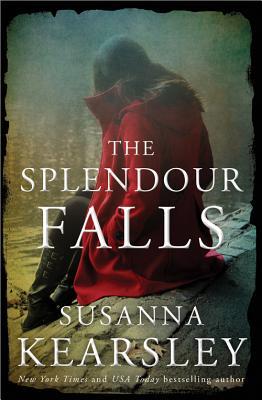
The Splendour FallsEmily Braden has lost her faith in romantic love and fairy tale endings, but she does love a good story. When her cousin Harry, a renowned historian who tends to be a bit flaky when it comes to reliability, invites her to accompany him on a research trip, she’s hesitant to accept. But clearly, everyone else in her family thinks she needs a bit of excitement, so she reluctantly agrees to meet him in Chinon, France — for a trip that turns out to be the opposite of routine or ordinary.

Centuries earlier, young Queen Isabelle was besieged at the Chinon chateau by enemies of her husband King John, and rumor has it that Isabelle’s treasure is still hidden somewhere within the tunnels under the town. Not only that, but in the more recent history of World War II, a second treasure was supposedly hidden after an ill-fated romance ended in tragedy. Now the myths surrounding both treasures impact Chinon’s townspeople as well as the tourists staying at Emily’s hotel — and an accidental death just may turn out to be a clue in some sinister happenings, all of which tie back to the history of Chinon itself.

The Splendour Falls was originally published in 1995, and was just reissued this month with a beautiful new cover to match the author’s most recent books. I’m a big fan of Susanna Kearsley, and I rank her novels The Winter Sea, The Rose Garden, and The Firebird among my favorite books.

Sadly, while interesting, The Splendour Falls just isn’t in the same league as some of these others. The plot of The Splendour Falls has a meandering feel to it. Things happen, and Emily is carried along by plans and events, but it’s not until quite late in the book that the plot takes on any sense of urgency. At that point, the book shifts gears and becomes a mystery, with danger lurking around every corner and Emily’s life possibly on the line. But until then, we just follow Emily on her travels, as she meets other hotel guests, explores Chinon, and wonders about what’s going on in everyone else’s life.

Emily herself is a bit of a cipher. We know she’s 29, that she’s lost her trust in the permanence of love and marriage after her parents’ divorce, and that she’s afraid of caves and enclosed spaces. What does she do for a living? Well, something with her family’s business, but it’s not clear what (and doesn’t seem important). No career interests or passions are ever mentioned.

There’s a love story in The Splendour Falls, but I didn’t find it convincing in the slightest. We know who Emily’s love interest is because she describes her first sight of him in quite epic tones, but she barely spends any time with the guy and I didn’t get a sense of any true chemistry between the two — certainly no more of a connection than Emily has with any of the other hotel residents whom she befriends.

The Splendour Falls does boast a beautiful sense of place. The town of Chinon is intricately described, so that I felt the narrow, winding streets and dramatic views really lived and breathed in the pages of the book. More than anything, reading The Splendour Falls made me desperately want to book a trip to the Loire Valley, stat!

It’s disappointing when a book by a beloved author doesn’t live up to expectations. In this case, I’m reminding myself that The Splendour Falls is actually from much earlier in the author’s career, and perhaps that’s why it doesn’t have the romantic magic or sweeping grandeur of her later books. I’m still glad to have read it — but for anyone looking for a first experience with Susanna Kearsley’s beautiful writing, I’d recommend starting elsewhere.

_________________________________________

The details:

Title: The Splendour Falls
Author: Susanna Kearsley
Publisher: Sourcebooks Landmark
Publication date: January 14, 2014 (originally published 1995)
Length: 384 pages
Genre: Adult contemporary
Source: Purchased