Book Review: Ghost Train to New Orleans by Mur Lafferty

Book Review: Ghost Train to New Orleans by Mur Lafferty

The Ghost Train to New Orleans (The Shambling Guides, #2)Ghost Train to New Orleans is the second book in the Shambling Guides series — and if you enjoyed the first book, you’ll want to read this one as well.

The series, which starts with The Shambling Guide to New York (reviewed here), tells the story of Zoe Norris, a nice ordinary travel writer who takes a job working for a publisher that specializes in travel guides for the non-human set. Be warned: The proper term for these folks is “coterie” — definitely do not refer to them as monsters! Among Zoe’s colleagues are vampires, zombies, incubi and succubi, goddesses and dragons… and it seems that every time Zoe turns a corner, she discovers some new type of coterie, much to her amazement.

In Ghost Train to New Orleans, Zoe and her team head off to the Big Easy (via the titular Ghost Train — which is in fact quite literally a ghost train). Their mission is to write their next travel book — but first, they need to survive. Among the big revelations here is the fact that Zoe is no mere human: She’s a rare human coterie known as a citytalker — and again, take that term literally. Zoe has the ability to form a psychic (or spiritual) bond with a city, so that the city can speak to her. The problem is, Zoe has has no training on how to use her gift, and could badly use a mentor before she gets into her usual heaps of trouble.

The tongue-in-cheek narration that provides a lot of the series’ charm is back in book 2:

She liked her coworkers, mostly, but was always acutely aware that many saw her as a meal they weren’t allowed to touch.

Also back is the vast array of scary creatures who might possibly want to help Zoe, but who are just as likely to put her in mortal danger. Added to that, Zoe’s boyfriend is on the verge of zombiehood, her closest ally, a water sprite, is missing, and her previous mentor has formed a seemingly permanent melding with the city of New York, and it’s clear to see that Zoe needs to stay on her toes.

In Ghost Train to New Orleans, the mythology of the series is further developed, with new and different supernatural beings, a lot of historical backstory for citytalkers like Zoe, and some new rules regarding ghosts, possessions, demons, and more. New Orleans itself adds a nice flavor, and it’s quite fun to see city landmarks woven into the fabric of the coterie world. Likewise, the author quite inventively works Hurricane Katrina into the supernatural narrative in a way that feels organic to the story, so that the damage to New Orleans is integral to the ability of the city to communicate with Zoe — and factors into just how the city treats Zoe once they’ve connected.

The narrative zooms along from one action sequence to another, and Zoe’s perspective is as wry and snarky as always. Even when lives are at stake, the tone is zippy and energetic, and never veers too long into serious or weighty territory without a well-placed smart-ass comment or two to steer things back into the quirky groove.

I did notice quite a few instances of awkward phrasings and wording errors (for example, the use of “ascent” in a place where only “descent” actually makes sense), and had to wonder whether it was the writing or the editing that was problematic — was there a rush to publication that resulted in these types of seemingly careless errors? I normally wouldn’t make too much of this sort of thing, but it happens enough in Ghost Train to actually be distracting, and therefore is worth noting.

Putting that aside, Ghost Train to New Orleans is a good follow-up installment, and succeeds at maintaining the through-story while introducing new elements and laying the groundwork for future adventures. Some answers are provided, but even more new dilemmas and mysteries are introduced, and that’s just the right mix for a 2nd book in what appears to be an open-ended, ongoing series. I’m intrigued enough — and having enough fun — that I’ll be back for more. I didn’t see anything on the author’s website confirming a 3rd book, but based on the wrap-up of Ghost Train, it’s clear that there are more travels in store for Zoe and her team… and I’d guess lots more trouble (and scary new coterie) as well.

_________________________________________

The details:

Title: Ghost Train to New Orleans
Author: Mur Lafferty
Publisher: Orbit
Publication date: March 4, 2014
Length: 352 pages
Genre: Urban fantasy
Source: Library


Book Review: The Mapmaker’s Daughter by Laurel Corona

Book Review: The Mapmaker’s Daughter by Laurel Corona

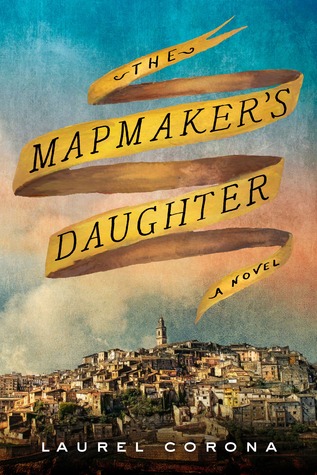
The Mapmaker's DaughterIn Sevilla, Spain in 1432, Amalia Cresques is the young daughter of a famous cartographer, whose own father was renowned for his cartography skills as well. But the family has a secret: Amalia, her sisters, and her parents conceal their Jewish heritage by living as conversos — Jews who have converted to Catholicism for the sake of survival, but who secretly practice their own religion in hiding. Amalia makes sure to be seen with dirty hands as the Jewish Sabbath approaches on Friday afternoons and buys pork and ham at the butcher shop, so that no prying neighbors can accuse the family of “Judaizing”, a crime that carries harsh punishments if caught.

In The Mapmaker’s Daughter, we follow Amalia from 1432, when she is a little girl of six, through 1492 when, as an old woman, she and her remaining family must leave the land they love as part of the Jewish expulsion from Spain ordered by King Ferdinand and Queen Isabella. Along the way, we view the life of this one woman as well as the shared experiences of the Jews of Spain and Portugal — experiences including forced conversions, hidden identities, persecution, scapegoating, ghettos, and finally banishment.

Amalia is raised from an early age to cherish her heritage, but at the same time to keep it as her most closely guarded secret. Once she and her father move to Portugal in order to accept a court appointment, Amalia begins to explore what it might mean to be more open about her religion, and ultimately finds refuge with an openly Jewish family, the Abravanels, who are esteemed by the Jewish community and who have a great influence at court. With the Abravanels, Amalia is able to embrace the rhythms and rituals of Jewish life, as well as to find a place as an adopted daughter and cherished family member.

And yet, danger is never far away. The fear of persecution is ever-present, and the risks become even greater as Torquemada’s Inquisition grows in power, threatening everyone and everything dear to Amalia.

The Mapmaker’s Daughter covers a period of history that’s both fascinating and frightening. Already familiar with the general history of the time, I still found much to learn from this book. As with all good historical fiction, The Mapmaker’s Daughter makes real events tangible by introducing us to them through the eyes of a character we care about a great deal, which only serves to heighten the impact of the great and awful circumstances that Amalia encounters.

Amalia herself is an interesting character, strong in her convictions, aching for love and connection, never giving up on her inner truths even when they put her at great risk. Desperate for passion and belonging, Amalia’s love life is not easy, but does lead to some remarkable adventures and experiences. Amalia serves as her father’s right hand during her youth, and becomes a skilled polyglot and translator, later an adept poet and tutor, and refuses to take the easier paths available to women at that time. Above all, Amalia believes in her own personal family heritage as well as the heritage of the Jewish people, and holds on to her family’s great atlas, created by her father and grandfather, as a symbol of where she came from and her family’s roots in Spain.

The story as a whole is quite interesting and moving, and yet I found it hard at times to feel emotionally connected. Perhaps this is because the earliest parts of the book are told through the eyes of Amalia as a very young girl, starting at age six, and her narrative voice doesn’t feel entirely true for her age. The pacing of the novel is somewhat problematic: We spend quite a lot of time on Amalia’s childhood, youth, and 20s, then rush through the remainder of her life in the last quarter of the book. This ending section is crammed full of relatives and descendants, children’s children, marriages and pursuits, and it just feels like a lot.

The Mapmaker’s Daughter is filled with historical figures — not just the nobility who are a more well-known part of the historical record, but also the characters who people Amalia’s life. The Cresques were in fact a well-known family of cartographers, and their masterwork, the Catalan Atlas, is considered one of the most important sets of maps of the period. Likewise, the Abravanels were a real family of Jewish scholars, philosophers, and royal advisers, and played a key role in the fate of the Jews of Spain and Portugal during this period. I only wish that I had had this information prior to reading the novel, rather than finding out via the extras at the end of the book. I think knowing which characters are in fact real people would have helped make the impact of the story even stronger.

Overall, I enjoyed reading The Mapmaker’s Daughter very much. The author brings to life a chapter of history that may not be well known today, but which is certainly powerful and frightening. Using such an unusual and admirable woman as a main character helps make the plight of the Jews feel real in a much more visceral way, perhaps, than just reading a straightforward history. Despite my reservations about the book’s structure and certain issues around the narrative flow, I’m very glad to have read The Mapmaker’s Daughter, and recommend it for fans of historical fiction, particularly those who enjoy reading about time periods less heavily represented in popular literature and learning about the struggles of real people.

________________________________________

The details:

Title: The Mapmaker’s Daughter
Author: Laurel Corona
Publisher: Sourcebooks Landmark
Publication date: March 1, 2014
Length: 360 pages
Genre: Historical fiction
Source: Review copy courtesy of Sourcebooks Landmark via Netgalley

Blog Tour, Author Q&A, & Giveaway: The Summer I Wasn’t Me by Jessica Verdi

Thank you, Sourcebooks Fire, for inviting me to be a part of the blog tour celebrating the release of The Summer I Wasn’t Me!

(And psssst — don’t miss the link for the giveaway at the bottom of the page!)
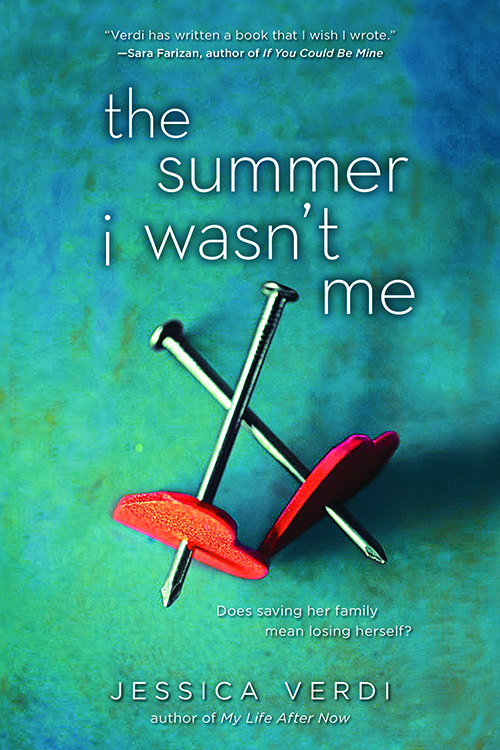
summeriwasn't

The Summer I Wasn’t Me
By Jessica Verdi
Sourcebooks Fire
Release date: April 1, 2014

Lexi has a secret…

Ever since her mom found out she was in love with a girl, seventeen-year-old Lexi’s afraid that what’s left of her family is going to fall apart for good.

You are on the road to truth. Help is on the way.

The road signs leading to New Horizons summer camp promise a new life for Lexi—she swears she can change. She can learn to like boys. But denying her feelings is harder than she thinks. And when she falls heads over heels for one of her fellow campers, Lexi will have to risk her mother’s approval for the one person who might love her no matter what.

I’m thrilled to be participating in the blog tour for this terrific young adult novel! Author Jessica Verdi was kind enough to answer my rambling questions for a Q&A:

What inspired you to write this particular story?

When I was toying with ideas for the topic of my second novel, this story really called out to me. I’ve always been fascinated by these so-called conversion camps, places where religious leaders claim they can turn gay kids straight. There is no doubt in my mind that they’re claiming to do the impossible, and that telling LGBTQ kids there’s something wrong with them is nothing short of abuse, but the root behind these camps actually, in a twisted way, stems from a good place. The parents who send their kids to these programs truly believe their children are on the wrong path in life and that they will go to hell if they don’t make a change. These parents are desperate to “save” their kids, in their own misguided way. This is something that has long intrigued me, and a world I knew I wanted to explore in the book.

But it all came together for me when, funnily enough, I was listening to Lady Gaga’s song “Hair.” The chorus of that song goes, “I just want to be myself and I want you to love me for who I am.” And I started thinking about all the kids who aren’t loved for who they are, and that made me so sad. And I knew I had to tell Lexi’s story.

How did you come up with the concept for New Horizons?

Sadly, New Horizons isn’t a concept I came up with on my own. These camps do exist, and have for quite some time. Every single “exercise” or “technique” they use in the book (the role playing, the Father Wound discussions, the gender teachings…) is a real method that came from my research. California and New Jersey have recently outlawed the use of reparative therapy on youths, but there are still 48 states (in our own country alone) to go.

What message would you hope your readers would take from this story?

On a very basic level, I hope Lexi’s story will help readers to know that they are perfect the way they are. And if someone is telling you otherwise (whether they’re criticizing your sexuality, your appearance, your disability, your hobbies and interests, or anything else) they’re the ones who have to take a long, hard look at themselves, and maybe start to make some new choices, not you.

A few about writing:

When did you first realize you wanted to be a writer?

It actually took me a little while before I knew I wanted to be a writer. When I was 27 (5 years ago) I got the idea for a novel. I was pursuing an acting career in New York at the time, and once I started putting the story in my head down on paper, it all clicked for me—this was the way I was really meant to be using my creativity. There’s something so personal and free about writing that you don’t get in acting. When you’re an actor, you have to audition for roles, you have to wait for someone to cast you in something in order for you to even get permission to start. But when you’re writing, you can still be creative, a storyteller, an entertainer, but you get to do it on your own terms.

How did you get started?

After I finished that first novel, I knew it wasn’t quite good enough and I needed to learn more, so I applied for graduate school. In 2010 I started the MFA program in Writing for Children at The New School, and by graduation in 2012 I had an agent and a book deal!

What advice would you give teens who are interested in writing?

Just do it. I think we all get better with each book we write, and the only way to really develop your skills is to just keep writing and writing. I was also once given a great piece of advice that I’ll pass on here: Finish what you start. You often don’t know what a story really is until you get to the end of the first draft and can step away from it, look at it, and see the pieces fall together. Then you go back and revise, and it almost always ends up working better (and usually much differently) than you could have imagined when you started. But you won’t really know until you get to the end, so keep going! If it’s a project you’re really interested in and excited about, don’t give up at page 40 when it gets hard. You might be giving up on something amazing.

And on a lighter note:

What book(s) influenced you the most as a teen?

I’ll never forget the first time I read Wicked by Gregory Maguire. I was in high school, and thought it was a masterpiece (I still do). The writing is stunning, the story is dark and political and raw, and I was so inspired by how Maguire was able to take something so concretely ingrained in the collective consciousness and turn it into something new, making us all question what we thought we knew about Oz all along. I think everyone should read this book—and no, seeing the musical won’t suffice. Sure, the songs are great, but the story has been so drastically altered it barely resembles the book.

Which part of the New Horizons dress code would you have the most trouble with?

Hahaha great question! Um, all of it? 🙂 I’m not a huge fan of pink, and nightgowns are just the worst. But most of all, I’d hate someone telling me what I have to wear. Uniforms, dress codes, black tie events… those things have never exactly gelled well with me. Like Lexi, I like having freedom in how I present myself to the world.

What’s your Monopoly strategy?

Play eagerly for ten minutes and then get super bored and wish someone would just win already so the game can end. Hahaha

Thank you, Jessica, for taking the time to answer my questions!

♦♦♦♦♦♦♦♦♦♦

My thoughts:

The Summer I Wasn’t Me takes a surprisingly nuanced approach to a topic that could easily have been handled in a judgmental or even scornful way.

After all, who here thinks a “degayifying” camp is a good idea? The thought of sending a bunch of teens to spend a summer “learning” to be straight, learning how to deny their own feelings and sublimate everything they want into a bizarrely old-fashioned view of “normal” is really abhorrent (well, certainly to me it is).

And yet, in The Summer I Wasn’t Me, it’s not that simple.

Main character Lexi has a very good reason for wanting to attend New Horizons. For her, it’s a last-ditch chance to reconnect with her mother and salvage what’s left of her family. After her father’s death, Lexi watched and suffered as her mother drowned in grief, and discovering that Lexi is gay has sent her over the edge. Misguided or not, Lexi firmly believes that if she can turn herself into the daughter her mother needs, they can be close again and rebuild their relationship.

But as we progress up the mountain, hints that this place is not quite as natural as it first seemed begin to emerge. The tree branches above us have been pruned back from the road. The narrow strip of grass that buffers the road from the tree line has been cropped. Flowers sprout in patterns too perfect to be accidental.

Someone has gone to a lot of trouble to manipulate the raw landscape into some preconceived idea of what nature should look like. Goosebumps trickle across the back of my neck as I realize that’s exactly what they’re going to do to me too.

Others have their own reasons for being at New Horizons as well. Carolyn came out to her family a while ago, and her parents are totally supportive — but after getting her heart not just broken but positively mauled by the girl she loved, Carolyn is convinced that if she allows herself to become involved only with boys, she’ll never risk getting hurt that way ever again. For Matthew, who is happily involved in a great relationship with a boy and completely comfortable in his own skin, attending New Horizons is part of an ultimatum from his father: Complete the program, or don’t bother coming home.

The camp program itself is awful, with its emphasis on traditional gender roles so over the top that girls are required to dress in pink and boys in blue. A camper’s gayness is attributed to the fact that her mother dresses in a “mannish” style and her father didn’t assert himself enough as the head of the household, resulting in the girl’s “confusion” about what men and women are supposed to be.

But as author Jessica Verdi shows, it’s too simplistic to laugh at the teens who come to New Horizons, either hoping to change their lives or being forced into going through the program. They all have wounds to heal, they all have something at stake, and they’re all trying to make the best of a bad situation.

I loved the view into Lexi’s psyche, as we see her struggles and come to understand why this girl from a small Southern town would feel the need to at least try to be straight — even while knowing deep-down that she’ll be lying to herself and everyone around her if she succeeds. Lexi is smart and caring, yearning for love yet also desperate to do whatever it takes to help her mother, even if it means completely denying herself.

The further we get into the book, the more we come to understand the characters, their needs, and how they ended up in this place. Even for those we might feel are misguided, it’s hard not to empathize and to feel indignant on their behalf.

The only discordant note for me in The Summer I Wasn’t Me is the introduction of a plot thread concerning corruption and sexual coercion among the camp administration. In my opinion, this just muddies the waters. While an interesting twist, it felt a bit tangential to the main point of the story. The emphasis of the book is on the teens participating in the program and what they get out of it — which may not have anything to do with what the program is designed to do. I felt that the point about the futility of the program and the needless humiliations it imposes is made strongly just by means of seeing how the summer is managed and the types of activities that the campers are required to engage in; it’s not necessary to have a sexual predator involved in order to show that the camp is a bad idea and does not have a chance of achieving its goals.

But that’s a minor quibble in a book that overall is spot-on in its message and absolutely full of heart.

I found The Summer I Wasn’t Me to be moving, well-constructed and nicely paced, with fully fleshed-out characters facing unique and varied challenges. I came to care for them all a great deal, and the subject matter is dealt with honestly and compassionately. I certainly recommend this book highly, for adult and teen readers, and hope that it will have great success in inspiring conversations and sensitivity amongst its readers. Most of all, I hope this fine book lands in the hands of a teen who really needs it, to see that life is full of options and that love and acceptance starts with loving and accepting oneself.


Giveaway time!

To enter the giveaway for a copy of The Summer I Wasn’t Me, click on the link below:

a Rafflecopter giveaway

____________________________________________

About the Author:

jessica verdiJessica Verdi lives in Brooklyn, NY, and received her MFA in Writing for Children from The New School. She loves seltzer, Tabasco sauce, TV, vegetarian soup, flip-flops, tattoos, and her dog. Jessica is also the author of My Life After Now.
At a Glance: The No. 1 Ladies’ Detective Agency by Alexander McCall Smith

At a Glance: The No. 1 Ladies’ Detective Agency by Alexander McCall Smith

The No. 1 Ladies' Detective Agency  (No. 1 Ladies' Detective Agency #1)

What it’s about (via Goodreads):

Precious Ramotswe in Botswana sits in the shade and ponders the wisdom of her cattle farmer father, observes her neighbors, and cares for employers and subjects with humor. A clinic doctor has two different personalities depending on the day of the week. A Christian sect member vanishes. A witch doctor may have the bones of a kidnapped boy in his magic kit.

And from the back of the book:

This first novel in Alexander McCall Smith’s widely acclaimed The No. 1 Ladies’ Detective Agency series tells the story of the delightfully cunning and enormously engaging Precious Ramotswe, who is drawn to her profession to “help people with the problems in their lives.” Immediately upon setting up shop in a a small storefront in Gaborone, she is hired to track down a missing husband, uncover a con man, and follow a wayward daughter. But the case that tugs at her heart, and lands her in danger, is that of a missing eleven-year-old boy, who may have been snatched by witch doctors.

What I thought:

The No. 1 Ladies’ Detective Agency has been on my “must-get-to-eventually” list for a long, long time. I’m not much of a mystery fan, and were it not for a couple of book challenges this year, I might not have picked this one up for a while yet.

In any case, I’m glad that I did. Precious Ramotswe is a charming, wise, and good-natured character, a strong woman operating in a man’s world, who holds her own and then some. She gets results for her clients — not through strong-arm tactics, but by using what she sees as a woman’s gifts: her keen observations, her patience, her understanding of people, and most importantly, her insights into what people ask for and what they really want.

Along the way, we learn a great deal about life in Botswana, and get a feel for the country’s rhythms, its people, and its landscapes. Mma Ramotswe loves her country, and through her eyes, we see its beauty and its pleasures.

The small mysteries Mma Ramotswe solves are puzzles of  human nature, and her approach (which she credits both to Agatha Christie and to a private detective manual which she uses as a guide) is simply to follow her heart and her brain to figure out what all these interesting people are up to.

All in all, I’m quite glad that I read this book. The first in a series of 15 books (with more to come, I presume), The No. 1 Ladies’ Detective Agency makes a great start by introducing a lead character and a setting that are both quite remarkable. As I’ve mentioned, I’m not normally much of a mystery reader, so while I don’t intend to continue with the series right away, that’s not a knock against the series, just a function of my own reading preferences.

For those who enjoy “cozy” mysteries and want to try an unusual setting, I’d recommend giving The No. 1 Ladies’ Detective Agency a try. In its own understated way, it’s quite a fun and engaging read.

_________________________________________

The details:

Title: The No. 1 Ladies’ Detective Agency
Author: Alexander McCall Smith
Publisher: Anchor Books
Publication date: 1998
Length: 235 pages
Genre: Mystery
Source: Purchased

Book Review: Visible City by Tova Mirvis

Book Review: Visible City by Tova Mirvis

Visible City

In Visible City, people hidden away inside their own little worlds slowly emerge and find connection. On New York’s Upper West Side, thousands of people go about their lives, passing each other on streets and in cafes, yet never really seeing or being seen.

Nina is a stay at home mother with two young children, having given up a law career in order to embrace full-time motherhood. Yet she finds herself at loose ends, and has taken to gazing at the windows of the building across the street, watching the lives of other people and imaging what their stories might be. She’s particularly fascinated by a couple in their fifties, who spend each night side by side on their couch reading books, seemingly enjoying their time alone but together. Nina wonders what their marriage is like, how they’ve reached this level of quiet contentment — until one night, instead of the couple, she sees a younger woman and her lover, who seem both angry and full of passion. What is their connection to the older couple, and how do they fit into the story Nina has composed about the world she watches from her windows?

Bit by bit, we meet the others who circle through Nina’s view: There are Leon and Claudia, the couple from across the street, each experiencing professional challenges while at the same time caring for their daughter Emma, whose return to their home sparks concern and confusion. There’s Emma herself, on the run from her academic dissatisfaction and from the engagement that she may no longer want. There’s Nina’s husband Jeremy, who puts in long hours at his law firm while yearning for excitement and discovery. There’s Wendy, mother of twins, who is so tightly wound and outwardly perfect that she just might explode one of these days.

All these lives and more intersect and collide. Each person is the center of his or her own life, and as each chapter unfolds, we see how the people in the background of one scene have equally compelling stories, passions, and pursuits of their own.

The action is rather minimal, unfolding in small vignettes roughly centered around a new building going up in the neighborhood and its impact on the residents — yet that’s only incidental. Mostly, Visible City is about the people, all of whom seem to have a core of unhappiness in their lives. In a city of millions of people, these characters all have an unfulfilled desire to be known, to be truly seen, to reveal their true natures and break free of the strictures of their seemingly fine lives. No one is happy; each is hiding a secret desire or fear; frustration, loneliness, and alienation seem to rule the universe that these characters inhabit.

I’ll be honest — there was only so far I could bring myself to care about any of this. For the most part, Visible City felt like yet another story of well-off New Yorkers dealing with the type of woes that plague people who don’t really have a lot to worry about: Motherhood is hard. My dissertation doesn’t really interest me any more. Visible City is all about people who have pretty good lives, but are still unhappy. If ever a group of people deserved the hashtag “first world problems” applied to their lives, this one does.

I’ve enjoyed this author’s previous novels, particularly The Ladies Auxiliary, but somehow never felt particularly drawn in or engaged by Visible City. The writing is elegant and thoughtful, but ultimately the subject matter left me cold.

Visible City should appeal to readers who enjoy contemplative novels with a focus on internal reflection. For those who prefer their reads more plot- or action-driven (and apparently, I fall into this category), this probably isn’t the book for you.

_________________________________________

The details:

Title: Visible City
Author: Tova Mirvis
Publisher: Houghton Mifflin Harcourt
Publication date: March 18, 2014
Length: 256 pages
Genre: Adult contemporary
Source: Review copy courtesy of Houghton Mifflin Harcourt via Netgalley

Book Review: The Storied Life of A. J. Fikry by Gabrielle Zevin

Book Review: The Storied Life of A. J. Fikry by Gabrielle Zevin

18293427When I finished reading this book and then went back and looked at the book blurb:

In the spirit of The Guernsey Literary and Potato Peel Pie Society and The Unlikely Pilgrimage of Harold Fry, Gabrielle Zevin’s enchanting novel is a love letter to the world of books – and booksellers – that changes our lives by giving us the stories that open our hearts and enlighten our minds.

… my first thought was “Damn.” Because in my head, I wanted to say something about this being a love letter to book lovers, and it’s already been said. Double damn.

But really, how can I complain — when I have just read a book that I LOVED so, so much?

The Storied Life of A. J. Fikry is one of those quiet, unassuming books that you think will be sweet and pleasant — and then BAM! It sneaks up on you, grabs you by the heart, and makes you feel so many feels.

A. J. Fikry, when we first meet him, is a sad, lonely man. A. J. owns Island Books, the one and only bookstore on Alice Island, a short ferry ride away from Hyannis, Massachusetts. The store is not doing very well, and neither is A. J. Since his wife’s death almost two years earlier, A. J. is drifting through his life, drinking himself into oblivion once a week, being grumpy to his customers, and just not finding a reason to care.

All that changes when a drunken night during which a valuable Poe manuscript goes missing triggers a bizarre chain of events which leads to the discovery of a toddler abandoned in the bookstore — who soon becomes the center of A. J.’s life.

As A. J. starts waking up to the possibility of a happy future, his business picks up as well, and little by little Island Books becomes the center of bookish activity on the island. My favorite bookish happening is the Chief’s Choice book club, started by the local police chief and consisting of a book group for cops — which no cop really can decline to participate in, since the chief is the one organizing it.

Meanwhile, a very persistent sales rep from a small publishing company seems to make a very large impression on A. J., and their business relationship slowly blooms into something more, with lots of awkwardness and false starts, but always with a shared passion for books.

Can I just say yet again how much I loved this book? Excuse me for gushing, but The Storied Life of A. J. Fikry seems tailor-made for anyone whose life revolves around reading. (Yes, that includes me, and I suspect it includes anyone reading this review!) Amidst the story of A. J.’s personal journey is a meditation on reading and how a life can be shaped and measured by the books read along the way. So much of what I feel about reading is encapsulated here, and it’s simply beautiful to meet so many characters who feel this way too.

The writing is clever without being forced, yet I found myself laughing out loud at various points, such as :

Ismay has stylishly cut, spiky red hair, pale skin and eyes, long, spindly limbs. All her features are a little too large, her gestures a little too animated. Pregnant, she is like a very pretty Gollum.

Or:

Lambiase is recently divorced. He had married his high school sweetheart, so it took him a long time to realize that she was not, in fact, a sweetheart or a very nice person at all.

And yet, even with the humorous tone always present beneath the surface, the emotions are real and visceral:

A. J. watches Maya in her pink party dress, and he feels a vaguely familiar, slightly intolerable bubbling inside of him. He wants to laugh out loud or punch a wall. He feels drunk or at least carbonated. Insane. At first, he thinks this is happiness, but then he determines it’s love. Fucking love, he thinks. What a bother. It’s completely gotten in the way of his plan to drink himself to death, to drive his business to ruin. The most annoying thing about it is that once a person gives a shit about one thing, he finds he has to start giving a shit about everything.

Ultimately, though, what I love most about this wonderful book (and yes, I pretty much loved it all) is what is has to say to about readers and their reading passions:

When she told me it was her favorite, it suggested to me strange and wonderful things about her character that I had not guessed, dark places that I might like to visit.

People tell boring lies about politics, God, and love. You know everything you need to know about a person from the answer to the question: What is your favorite book?

Don’t miss out: Read The Storied Life of A. J. Fikry. Filled with beauty and sorrow, love and humor, and an abiding love for books and readers, this book was an unexpected delight for me — and apparently is now one of those books: Books that fill you up with so much emotion and enjoyment that you want to run right out and start putting copies in people’s hands.

_________________________________________

The details:

Title: The Storied Life of A. J. Fikry
Author: Gabrielle Zevin
Publisher: Algonquin Books
Publication date: April 1, 2014
Length: 230 pages
Genre: Adult contemporary
Source: Review copy courtesy of Algonquin Books via Netgalley

Book Review: The Shambling Guide to New York City by Mur Lafferty

Book Review: The Shambling Guide to New York City by Mur Lafferty

The Shambling Guide to New York CityVisiting a new city can be so hard. How do you know if a hotel is right for you? What are the must-see attractions? Which restaurants serve entrails and hedgehogs?

Fear not, Underground Publishing is here to help! In Mur Lafferty’s delightful The Shambling Guide to New York City, there’s another side to the city — and the about-to-be-published guide book covers it all.

Zoe Norris, travel book writer, has moved home to NYC after leaving her previous job in disgrace after a disastrous affair with her boss — who left out little details like being married when he seduced Zoe. Now unemployed, Zoe stumbles across an ad for a job opening with a new travel publishing company. Sounds perfect — except every time she tries to apply for the position, she’s told that she’s not right for the company. Indignant, Zoe pursues the job with even more determination (Hey, is this discrimination? What about Equal Employment Opportunity laws?), but gets a shocking awakening when she lands the job and learns the truth: Underground Publishing caters to the supernatural world, here known as “coterie” (watch out — the term “monsters” is considered highly offensive), and Zoe will be the only human employee.

Zoe’s coworkers are a veritable menagerie of coterie: Her boss Phil is a scary vampire, the writers are zombies (who are pretty great guys so long as they have a steady supply of brains), and then there’s the water sprite and the death goddess who become Zoe’s strongest allies at the office.

As Zoe navigates her new work life, it’s an eye-opening experience, to say the least. Coterie are all around, but most humans are too oblivious to see what’s right in front of them. And as if “normal” supernatural life wasn’t enough to take in, a new threat has emerged, and the zombies are getting a little… hungry.

Plus, Zoe’s next-door neighbor is awfully cute but seems to be keeping secrets, and unfortunately, has seen Zoe in some rather compromising conditions. (Important to note: The coterie workplace doesn’t have sexual harassment laws, so if your coworker is an incubus who makes you want to rip off your and/or his clothes whenever you’re in the same room, you’re pretty much on your own.)

Meanwhile, Zoe isn’t just the helpless (and potentially tasty) human that her boss and colleagues believe her to be, and with the help of a strangely agile homeless woman, she’s getting a crash course in defensive weaponry and learning to kick coterie butt… just in case.

The Shambling Guide to New York City follows Zoe through her initiation into the hidden world of coterie, with selections from the guidebook interspersed between chapters. The writing is light and tongue-in-cheek, with the ironic, hip attitude that signals a fun romp through urban fantasy.

Early on, I commented that “there is a fine line between funny and dumb, and the book I’m reading is teetering on the brink.” Fortunately, the plot takes off fairly quickly, and it’s easy to become engaged in Zoe’s crash-course in survival among the coterie.

“Um,” she said, cursing her awkwardness. She should have been smoother, but she had never before stood in a sewer, dirty and bloodied, covered in demon gore, and attempted a first kiss. She didn’t know the etiquette.

With breezy humor and plenty of action, The Shambling Guide to New York City is an engaging and entertaining romp. There’s some serious sexytime in the mix (remember that incubus I mentioned?), quippy repartee, and an amusing array of creatures, demons, Public Works employees (you’ll see), and all sorts of undead and the otherwise non-human.

In terms of tone and pacing, I was reminded most of Nicole Peeler’s Jane True series (which I adore). If you’re a fan of urban fantasy, and like the idea of a human rising to the occasion in a non-human world (and really getting her grrrl power on), check out The Shambling Guide.

Meanwhile, I’m all in… and really looking forward to getting my hands on the newly released book 2, The Ghost Train to New Orleans. More Zoe and the gang? Yes, please!

_________________________________________

The details:

Title: The Shambling Guide to New York City
Author: Mur Lafferty
Publisher: Orbit
Publication date: 2013
Length: 350 pages
Genre: Urban fantasy
Source: Purchased

Book Review: Grasshopper Jungle by Andrew Smith

Book Review: Grasshopper Jungle by Andrew Smith

Grasshopper JungleWell, this is certainly one of the oddest books I’ve read in a long time.
In Grasshopper Jungle, we meet 16-year-old Austin Szerba, who lives in Ealing, Iowa and is very much in love with his girlfriend Shann… and with his best friend Robby. Austin spends much of his time either confused or horny, or both. Ealing is a dead-end town that dried up after its major business, McKeon Industries, shut its doors and left most of the Ealing residents unemployed — as a result of which, stores have shut down, people are constantly being foreclosed or evicted, and the entire town has a feeling of hopelessness.

And then one day, things take a decided turn for the apocalyptic. In a weird confluence of events, Austin and Robby get beaten up, some nasty boys steal a McKeon Industries artifact that contains a lethal mold, and a chain of events starts that leads to the end of the world as we know it. This particular end of the world takes the form of 6-foot-tall praying mantises with exoskeletons strong as armor who only want to do two things…

It’s up to Austin, Shann, and Robby to save the world — or not, maybe. Or possibly just figure out what the heck is going on and salvage what they can. Oh, and also figure out what their own little triangle means, and whether anything good can possibly come of it. And yeah, maybe repopulate the planet, if necessary.

Along the way, we get Austin’s family history, all the way back to his great-great-many times great-grandfather in Poland, his descendants and their twisted history, and all the little turns of fate or coincidence that lead them to Ealing, Iowa and a plague of unstoppable, lethal, giant insects.

Austin is an historian, recording everything in his notebooks with a commitment to honesty, while at the same time noting that all written history is, of necessity, an abbreviation. No one can ever record every single thing, so what we end up learning is the bits and pieces that the recorders felt most important, but not necessarily the entire truth.

In Austin’s version of history, we read about Presidents and testicles, agricultural experiments and cave paintings, the Rolling Stones and skateboards. We also learn about love and devotion, confusion and yearning, friendship and bravery, and how dangerous a crazy person with a science lab can be.

The writing is funny, random, and rather Vonnegut-like in places. Odd facts and figures are inserted here and there in Austin’s narrative, and he returns over and over again to repeat certain phrases and thoughts throughout the book. Chief among these:

It was not a good idea.

You know what I mean.

Nobody knew anything about it.

And then there’s the word used by Austin and Robby more than any other in the book, “uh”, followed by the closely related “um”, which are all-purpose responses appropriate for almost all occasions:

Shann squirmed in her seat. She said, “Uh. Am I wrong about something, or do you two boys actually know something more than I do about what he’s talking about?

I said, “Uh.”

Robby said, “Uh.”

Grasshopper Jungle is strange and hilarious, often disgusting, completely rambling, with odd flights of free association and bizarre facts, and a connect-the-dots feel to it that shows either that all life is connected and that the smallest moments may have huge meaning and consequences… or that everything is random and trivial, and that nothing we do matters in the long run. But not really — even in the midst of giant bugs destroying humankind and chowing down on everyone they encounter, there’s a sense of joyous celebration of life that keeps Grasshopper Jungle flying along despite the body parts and cataclysmic events.

Grasshopper Jungle is weird and wild, but utterly wonderful — in its own bug-infested, sex-obsessed, end-of-the-world way.

_________________________________________

The details:

Title: Grasshopper Jungle
Author: Andrew Smith
Publisher: Dutton Books
Publication date: February 11, 2014
Length: 388 pages
Genre: Young adult/science fiction
Source: Library

Book Review: Night Broken by Patricia Briggs

Book Review: Night Broken by Patricia Briggs

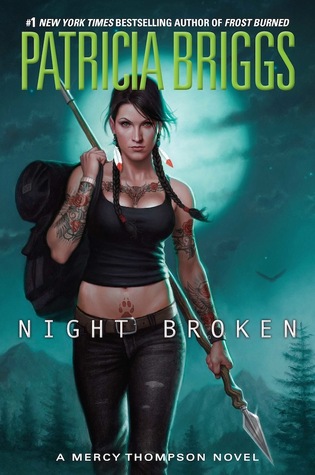
Night Broken (Mercy Thompson, #8)

You know how some series outstay their welcome? Well, as far as I’m concerned, Mercy Thompson can stay as long as she wants! In Patricia Briggs’s inventive and engrossing urban fantasy series, Mercy Thompson is the heroine extraordinaire. She fixes cars, kicks butt, bakes amazing chocolate chip cookies, and shifts into coyote form at will. Being married to the Alpha of the local werewolf pack means life is never boring, and she manages to hold her own among all the big, bad (but with hearts-of-gold) wolves, as well as with all the various and sundry supernatural beings that populate the Washington Tri-Cities area.

In Night Broken, the 8th in the series, Mercy faces a truly scary adversary: her husband’s ex-wife. Christy is a human who has perfected the art of manipulating everyone around her by eliciting sympathy for poor little her, and when she acquires a psycho stalker, of course she comes to the pack for protection. Mercy grits her teeth and tries to stay calm, but between Christy’s attempts to take over her home and the dangerous creature that threatens all their lives, it’s no wonder she’s feeling a wee bit tense.

Night Broken continues the author’s winning streak, providing a mix of exciting action and danger while also showcasing Mercy’s emotional side and her struggles and challenges. Having come so far with her, it’s lovely to see Mercy making her way in the pack and enjoying her rare private moments with her oh-so-sexy husband Adam and her stepdaughter Jesse.

I truly loved this newest addition to one of my favorite series — my only complaint being that I read it within two days of its publication, and now I have to wait again!

Obviously, anyone who hasn’t read a Mercy book yet should start at the beginning. If you enjoy urban fantasy with tough, smart women at the lead, this is a series not to be missed!

A final note: For a tiny taste of Night Broken, check out tomorrow’s Thursday Quotables post here at Bookshelf Fantasies!

And if you want to know more about the Mercy books, you can also check out my review of the 7th in the series, Frost Burned.

_________________________________________

The details:

Title: Night Broken (Mercy Thompson, #8)
Author: Patricia Briggs
Publisher: Ace Hardcover
Publication date: March 11, 2014
Length: 341 pages
Genre: Urban fantasy
Source: Purchased

Book Review: The Opposite of Maybe by Maddie Dawson

Book Review: The Opposite of Maybe by Maddie Dawson

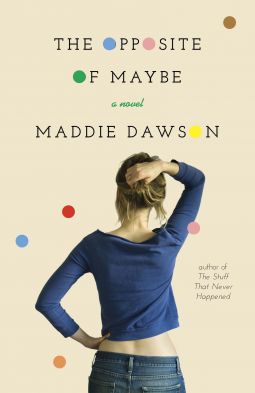
Rosie and Jonathan are “that” couple — you know, the ones whose lives are massively entertaining to their friends because they just never seem to do things the normal way. While all the rest of their friends were busy getting married, buying houses, and having kids, Rosie and Jonathan stuck to their free-spirited artistic ways, keeping things loose, not needing the standard-issue adult lives that everyone else has. Their escapades become the stuff of legends — when the circle of friends gets together for drinks, nothing makes the crowd laugh more than reminiscing over Rosie and Jonathan stories and the crazy shenanigans that ensue.

But at age 44 and after 15 years together, Rosie isn’t so sure that the free and easy life is really a choice any more — maybe it’s just a mask for an inability to grow up? Rosie was a poet and Jonathan a potter when they met, but now Rosie mixes in teaching community college ESL classes with her writing, and Jonathan has completely given up pottery-making for his newest obsession, collecting antique teacups. (Seriously, teacups.) When Jonathan is contacted by another collector and offered the opportunity to partner on a new teacup museum (seriously, a teacup museum), he’s ready to uproot their lives in Connecticut and move to San Diego in pursuit of his dream… and expects Rosie to share the excitement.

It’s not quite so clear for Rosie, though. For starters, her eccentric, cranky grandmother. Soapie is eighty-eight, falls down a lot, and seems to be losing her edge. Soapie raised Rosie since the age of three, when Rosie’s mother died in a freak accident. Rosie can’t stop worrying about Soapie — even though Soapie insists she’s fine and wishes Rosie would stop fussing. Finally, Jonathan convinces Rosie to move to San Diego, and despite years in agreement that they didn’t need to get married like everyone else, he even proposes and gets Rosie to believe things can work. But then, a last-minute teacup emergency (seriously, a teacup emergency!) means the cancellation of wedding plans, and Rosie finally snaps, sending Jonathan off to San Diego on his own, and moves back into Soapie’s large house, envisioning some quiet time to lick her wounds and act as her grandmother’s caretaker.

And Rosie really is wounded, despairing over what her life amounts to:

If a film crew followed her around, what would they see? Nothing. She might as well be dying, for all she’s accomplished. She never had a family, she never owned a house, she never even bought a brand-new car, had a disastrous love affair with an inappropriate person, or even dyed her hair some ghastly shade of red. How does this happen, that you get to be forty-four and you don’t have anything — not even an ill-advised tattoo — to show for it?

The hitch in Rosie’s short-term plan is that Soapie doesn’t really need her. There’s a charming gardener named Tony who’s already moved in and is doing a great job of keeping Soapie on her feet and looked after, and Soapie’s long-time love George is by her side every evening, drinking and dancing and being a perfect courtly (and, as Soapie puts it, “ardent”) suitor (after visiting his wife Louise, suffering from advanced Alzheimer’s, each afternoon at the nursing home). Before long, this odd foursome has formed a family unit of sorts, and Rosie’s eyes are opened to new and fresh possibilities.

Oh, and minor detail? What Rosie takes for early menopause turns out to be a very unexpected pregnancy… and Jonathan most adamantly does not want to be a father. And then there’s sweet Tony, who adores pregnant women, babies, children, people in general, and pretty much everything about life. Rosie wants to give Jonathan a chance to redeem himself, to become a part of their baby’s life, and to prove his commitment to their relationship — but at what cost? Why is Rosie the one who always has to give things up? Soapie insists that Rosie needs to find her “joie de vivre” — and just maybe, the baby, the new crazy family she’s found, and even Tony can help her find that spark again, but is it the right path for her?

The Opposite of Maybe is a refreshingly charming look at adult life and adult dilemmas. Rosie is a terrific character: a woman who’s spent far too long accepting that her life is the way it should be, rather than questioning whether it’s enough. She’s smart and funny, full of passion, and when she finally gets a backbone, she’s actually quite remarkable. Tony is just a big sweetie — younger than Rosie, sexy (of course), struggling to establish a routine with his 5-year-old son in the wake of a divorce, and one lovely, loving guy. Soapie, too, is a treat, verging perhaps on the stereotype of the crazy, tough old lady with a heart of gold, but with her own secrets and a zest for life that is undiminished by the insults of old age and failing health.

It’s lovely to see the shifting definitions of family as portrayed in The Opposite of Maybe. Clearly, a blood tie is not the be-all and end-all. Jonathan may be the baby’s biological father, but he’s so clearly not daddy material. As Soapie, George, Rosie, and Tony open their home to all the friends and strays who populate their lives, they’re surrounded by chaos, fun, and connections that help to root Rosie more firmly in their Connecticut home.

The writing is clever and quirky, and I really got a kick out of the dialogue, particularly between Rosie and Tony, who make each other laugh even while driving each other crazy. (Tony has the habit of misusing words and mangling the English language, which after a while one suspects is done deliberately just to get a rise out of English-teacher Rosie).

The author portrays the indignities of being pregnant at 44 with both compassion and hilarity: In one scene, Rosie is befriended by a nice young mother and taken to see the local playground where the mommies congregate. When she tells her new friend her age, the woman replies, “Wow, that is seriously so brave of you! Forty-four! I just hope I’m still having sex when I’m that age!” Thud. Not only that, but she also kindly adds as she’s leaving, “This is like the place where everybody comes between naps. Sometimes the grandmothers come, too, ha ha! You’ll like them.”

My only quibble with The Opposite of Maybe is the character of Jonathan. He’s a hapless, well-meaning guy who can’t see beyond the end of his own nose (or his teacups) — and after a while, I simply could not see why Rosie would persist in trying to make things work with him. Even when he commits to trying to be the man Rosie needs, he’s just so clearly NOT, and Rosie is far too smart to go along for as long as she does, thinking that Jonathan can change and that the life she wants is possible with him. It’s a staple of romantic fiction that the female lead doesn’t see what’s so obvious to the reader — the dull guy who needs convincing is just NEVER Mr. Right in this kind of story, and the wrong-on-paper guy with the heart of gold usually is oh-so-right. Given that, the outcome of the love story here is all too certain from the get-go. Jonathan just isn’t the guy for Rosie, and keeping him in the role of the primary man in her life feels like an artificial means of stretching out the romantic complications and uncertainties.

Still, I found The Opposite of Maybe a completely delightful and engaging read. There are moments of real sorrow and emotion, as well as humor and joy that feel deserved and organic. Fast-paced and entertaining, I gobbled this book up in about 24 hours, and just didn’t want to put it down before the end. If you enjoy reading about flawed but lovable adults facing real-life choices, with writing that’s zippy and full of fun, don’t miss The Opposite of Maybe.

_________________________________________

The details:

Title: The Opposite of Maybe
Author: Maddie Dawson
Publisher: Broadway Books
Publication date: April 8, 2014
Length: 400 pages
Genre: Adult contemporary fiction
Source: Review copy courtesy of Broadway Books via NetGalley