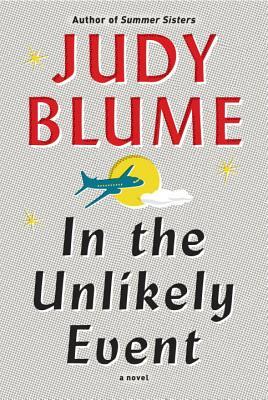
Book Review: In the Unlikely Event by Judy Blume

In the Unlikely EventWhen you think of historical fiction, if you’re like me, images of petticoats, palaces and kilts might fill your head. But how about fiction that tells a story of a more recent history? In Judy Blume’s new novel, In the Unlikely Event, the plot revolves around real events from the 1950s, and the effect is stunning.

If you didn’t grow up in New Jersey and weren’t around in the 1950s, you might be as shocked as I was to realize that the plane crashes that serve as a catalyst for the drama of this book actually happened. If these events weren’t actual documented history but rather a fictional invention, we’d all be shaking our heads and saying that’s it’s just too unbelievable.

The facts are these: In the winter of 1951 – 1952 in Elizabeth, New Jersey, three different planes crashed into the town within a span of three months. How is this even possible?

In the Unlikely Event shows us the horrifying plane crashes and the devastating effect on the residents of Elizabeth through the eyes of a large cast of characters, all of whom bear witness in one way or another.

The main character is 15-year-old Miri Ammerman, who lives with her mother Rusty, uncle Henry, and grandmother Irene. Miri’s best friend is Natalie Osner, daughter of the town’s very successful dentist. Each person is connected to other people, so that we meet the best friend of Natalie’s brother, the high school senior who assists in Dr. O’s office, the orphan boy who falls for Miri, the girlfriend of Miri’s uncle, and on and on in interlocking, expanding circles.

The time itself is exquisitely drawn in loving details, from the cashmere sweaters of the rich girls to the Lanz nightgowns that Miri’s friends all wear to sleep-overs, from 17-inch TVs to telephones with long cords — in all sorts of little ways, the author paints a picture of a particular era in American life. World War II is in the past, but not so distant as to be forgotten. American boys are serving in Korea. And air travel is new and fresh and glamorous. Airline stewardesses must be pretty, perky, flirty, and single. Traveling by air is a luxury, and going on an airplane is all part of the excitement.

And then the crashes start. As each plane crash occurs, the impact is felt more and more deeply by Miri and her circle of friends, family, and acquaintances. Boys at school claim it’s either UFOs or Commies behind the whole thing. One of Miri’s friends descends into mental illness and anorexia, consumed by thoughts of one of the dead airline passengers. People on the ground lose their lives as well as the passengers who fell from the sky, and the loss is random, tragic, and incomprehensible. Miri’s life changes in unpredictable ways, marriages disintegrate, friendships are changed forever, and indeed the entire community seems to lose its heart and its center.

In the midst of all this loss and suffering are some quintessential Judy Blume moments. The scenes of Miri and her friends bring back memories of the author’s classic books about preteen and teen girls, as they deal with their parents’ flaws, differences in economic status, pressure to fit in — and boys. Make-up and clothes, flirting and making out, worrying about going all the way and getting “in trouble”, fretting over missed periods — all of this is told in the voice we’ve trusted to portray young womanhood in so many earlier books, and it’s comforting and familiar here in her newest.

My only minor quibble with In the Unlikely Event is that we’re dropped into the world of Elizabeth and immediately introduced to just about every character in the story, and it’s a lot to track. Eventually, we get to know them all individually and it’s easier to understand who’s who and how they connect, but at the beginning, I found myself doing a lot of flipping backwards to figure out who a particular person was and where I’d seen them before.

Other than the early clutter of characters, the structure and richness of In the Unlikely Event works very, very well. The story is framed at the beginning and end by Miri traveling back to Elizabeth for a commemoration of that awful winter, 35 years later. It’s interesting and touching to see how all the people we followed in the 1950s have turned out, and how each has had his or her life changed and shaped by that one fateful year.

With detailed, evocative writing and characters whom we come to truly know and care for, In the Unlikely Event is a touching, compelling story that really holds a reader’s attention from start to finish. I’m very glad to have read it, and strongly recommend it.

End note: Way back when in my early days of blogging, I wrote a little salute to Judy Blume. Want to read it? You can find it here.

_________________________________________

The details:

Title: In the Unlikely Event
Author: Judy Blume
Publisher: Knopf
Publication date: June 2, 2015
Length: 397 pages
Genre: Adult fiction
Source: Library
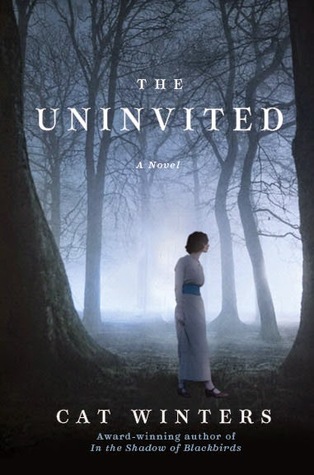
Blog Tour & Book Review: The Uninvited by Cat Winters

The Uninvited

I admit, I had seen a ghost or two.

I’m delighted to be participating in the blog tour celebrating The Uninvited, a new novel by Cat Winters. This is the author’s first book for adults, following two successful YA releases. Thank you, TLC Book Tours, for inviting me to participate!

Synopsis:

Twenty-five-year-old Ivy Rowan rises from her sickbed after being struck by the great influenza epidemic of 1918, only to discover that the world has been torn apart in just a few short days.

But Ivy’s lifelong gift—or curse—remains. She sees the uninvited ones—ghosts of loved ones who appear to her, unasked for and unwelcomed, for they always herald impending death. On that October evening in 1918, Ivy sees the spirit of her grandmother, rocking in her mother’s chair. An hour later, she learns her younger brother and father have killed a young German out of retaliation for the death in the Great War of Ivy’s other brother, Billy.

Horrified, she leaves home and soon realizes that the flu has caused utter panic and the rules governing society have broken down. Ivy is drawn into this new world of jazz, passion, and freedom, where people live for today, because they could be stricken by nightfall. She even enters into a relationship with the murdered German man’s brother, Daniel Schendel. But as her “uninvited guests” begin to appear to her more often, she knows her life will be torn apart once again, and terrifying secrets will unfold.

My thoughts:

The Uninvited crept up on me, little by little, until I was completely hooked. I wouldn’t say it has a slow start, because there’s certainly nothing about the pace to criticize. What I mean, really, is that it’s subtle and quiet to start with. The author sets the story in small-town Illinois, which should give the book a quaint, peaceful feel — except for the particular place in history chosen as the setting.

It’s October of 1918. Anti-German (and more generally, anti-foreigner) sentiment couldn’t be higher. The American Protection League is busy harassing outsiders into isolation and flight, spying on “good” Americans to make sure they’re behaving correctly, and inciting anger and violence in formerly friendly neighbors. While families lose husbands and sons to the Great War overseas, the horrible and deadly influenza pandemic strikes without warning, and the death toll mounts unbelievably quickly.

Ivy, the main character, is a young woman raised on a farm, frightened by her alcoholic, violent father, in mourning for her brother Billy, killed in the war. Hatred and fear are the overriding emotions all around her, but once she flees her family home to start fresh in town, she encounters friendship, passion, and love that she never expected. Ivy is an unusual character, really well defined, who seeks independence when she realizes how intolerable her family has become. She sets out to make a difference any way she can, and ends up driving an ambulance on a rogue mission to rescue the poor and unwanted flu victims who aren’t white or American enough to merit treatment in the one good hospital in town.

I loved Ivy’s backbone. She goes where she needs to go, stands up to creepy APL members, and chooses connection and physical intimacy despite all the reasons to stay away. She’s drawn to the wild jazz music she hears every night, which represents freedom and a new kind of society to her.

From setting the stage at the beginning, the author builds the tension and stakes as the story progresses. And then, bam! By about 3/4 of the way through the book, I suddenly found myself gobbling up every word, unable to look away.

Something happens along the way which changes the meaning of everything that came earlier, but I won’t say more than that. It’s enough to say that this is one of those books that’ll make you want to start all over again from the beginning once you’ve read it, to see what you missed the first time around and look at events from a different angle.

The Uninvited is a curious mix of historical fiction and ghost story, and the combination really works! The setting and time could not be more dramatic, and I loved the cast of characters, including memorable supporting characters (such as the frightened Red Cross volunteers and Ivy’s ex-suitor) in addition to Ivy herself and her sexy but aloof love interest Daniel.

Absolutely recommended for anyone with an interest in the time period, as well as anyone who enjoys well-developed characters and a plot that informs, moves, and surprises the reader. Okay, basically, recommended for everyone! I plan to read Cat Winters’s YA books as soon as I can, and I do hope she’ll continue writing more for adults as well.

Find out more:

Add to Goodreads badge
 
Purchase Links: Amazon | IndieBound | Barnes & Noble
 

About the Author:

Cat WintersCat Winters’s debut novel, In the Shadow of Blackbirds, was released to widespread critical acclaim. The novel has been named a finalist for the 2014 Morris Award, a School Library Journal Best Book of 2013, and a Booklist 2013 Top 10 Horror Fiction for Youth. Winters lives in Portland, Oregon, with her husband and two children.

Find out more about Cat at her website, and follow her on tumblrPinterestFacebook, and Twitter.

_________________________________________

The details:

Title: The Uninvited
Author: Cat Winters
Publisher: William Morrow Paperbacks
Publication date: August 11, 2015
Length: 368 pages
Genre: Adult fiction
Source: Review copy courtesy of TLC Book Tours

tlc logoFor further information, stop by TLC Book Tours to view other blog tour hosts.


Book Review: Maybe in Another Life by Taylor Jenkins Reid

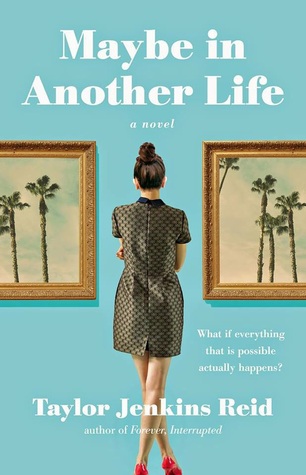
Maybe in Another LifeAre our lives determined by fate? Or is it all just a matter of chance?

Is there just one person in all the world that we’re meant to be with? Or is life more of a multiple-choice quiz, where different answers may be correct in different circumstances?

In Maybe in Another Life, the characters say one thing, but their lives and actions give a very different message.

Hannah Martin, age 29, has lived anywhere and everywhere, but has no idea where she truly belongs. After a go-nowhere disastrous affair in New York ends, Hannah moves back “home” to Los Angeles, to reunite with her best friend Gabby, pick up the pieces, and start from scratch.

And maybe, just maybe, rekindle an old flame with her high school sweetheart Ethan.

On their first night out on the town, Hannah faces a moment of truth: Should she go home with Ethan and see what happens… or call it a night, head back to Gabby’s place, and spend the night alone? At the moment of decision, the narrative of Maybe in Another Life splits.

From this moment on, we follow two separate narrative threads in alternating chapters. In one, Hannah does go home with Ethan, their dormant feelings are rekindled, and they begin to work through what an adult relationship might look like. In the other, Hannah turns Ethan down, continues on the way home with Gabby, and is struck by a hit-and-run driver, resulting in serious injuries and a lengthy hospital stay.

In both versions of Hannah’s life, she’s confronted with choices. What does her future hold? How do you know if you’re meant to be with someone? How do you recognize a soulmate? What do you give up for a relationship, and what are the deal-breakers?

Likewise, in both versions, Hannah tries to puzzle out the question of destiny and predetermination:

“You think things are meant to be?” I ask her. For some reason, I think I’ll feel better if things are meant to be. It gets me off the hook, doesn’t it? If things are meant to be, it means I don’t have to worry so much about consequences and mistakes. I can take my hands off the wheel. Believing in fate is like living on cruise control.

Hannah has been so busy searching for the perfect life and what she’s “meant” to do, who she’s “meant” to love, that she’s never fully engaged with her options anywhere she’s been.

“Doesn’t it scare you?” I ask her. “To think that you might have gone in the wrong direction? And missed the life you were destined for?”

Hannah’s life is so messy that she has to believe there are other forces at play:

“I mean, I think I have to believe that life will work out the way it needs to. If everything that happens in the world is just a result of chance and there’s no rhyme or reason to any of it, that’s just too chaotic for me to handle. I’d have to go around questioning every decision I’ve ever made, every decision I will ever make. If our fate is determined with every step we take… it’s too exhausting. I’d prefer to believe that things happen as they are meant to happen.

Ironically, the split narrative demonstrated that it is all random, and that every decision changes the course of events. Towards the end of the book, a party guest talks about the multiverse theory, in which every decision leads to multiple universes in which all possible outcomes exist. From the moment Hannah decides to go home with Ethan — or not to go home with Ethan — she has two different parallel lives. In both lives, she confronts pain and difficult choices, finds a soulmate, faces hard truths, and finally sets off on the path toward professional fulfillment as well as a life filled with love.

The lovely thing about Maybe in Another Life is that both halves of the story feel right! Neither of Hannah’s two lives is 100% easy, but both feel real and both seem like valid outcomes. In both, Hannah begins to grow, take chances, and own up to the decisions she’s made that lead her to this point. Both feel like the absolutely right thing for her, and she wouldn’t have it any other way.

I really enjoyed the writing in Maybe in Another Life, which maintains a light touch even in heavy situations. Hannah herself is a person with a lot of room to grow, but she’s self-knowing enough to own up to her mistakes and want to make better choices. And through it all, she’s got a great sense of humor, is a devoted friend, and knows that she needs to finally do something with her life.

The author gives Hannah certain quirks and habits that are both charming and make her feel like an individual, rather than a stock character. In particular, Hannah’s need to always have her hair in a high bun and her constant craving for cinnamon rolls are recurring motifs, and to my surprise, the repetition is actually pretty charming (rather than annoying, as it so easily could have been).

I liked the double narrative, although occasionally I lost track of which event happened in which version of Hannah’s life. No matter, though: Both halves of the story contain ups and downs, loves lost and found, and the true and deep friendship between Hannah and Gabby, which is a key element of the entire story. It’s not often that contemporary novels emphasize the huge difference a good friendship between women can make, while also dealing with romantic entanglements and all sorts of other drama. But here, it’s crystal clear that the bond between Hannah and Gabby is the most important element for both women, grounding them in such a way that they’re able to make their life decisions from a position of strength and support.

Maybe in Another Life is a very quick read. It’s light, but heartfelt. Not sugary, not glossing over the hard stuff, Maybe in Another Life shows a young woman dealing with real life… and the way every decision has consequences. This book is quite fun to read, and yet manages to be emotionally real even amidst all the jokes about cinnamon rolls.

_________________________________________

The details:

Title: Maybe in Another Life
Author: Taylor Jenkins Reid
Publisher: Washington Square Press
Publication date: July 7, 2015
Length: 352 pages
Genre: Adult contemporary fiction
Source: Review copy courtesy of the publisher via NetGalley

Take A Peek Book Review: All the Light We Cannot See by Anthony Doerr

“Take a Peek” book reviews are short and (possibly) sweet, keeping the commentary brief and providing a little peek at what the book’s about and what I thought.

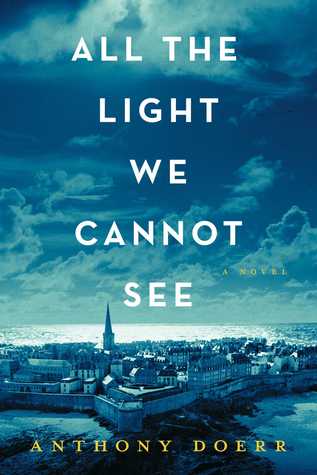
All the Light


Synopsis:

(via Goodreads)

Marie-Laure lives with her father in Paris near the Museum of Natural History, where he works as the master of its thousands of locks. When she is six, Marie-Laure goes blind and her father builds a perfect miniature of their neighborhood so she can memorize it by touch and navigate her way home. When Marie-Laure is twelve, the Nazis occupy Paris, and father and daughter flee to the walled citadel of Saint-Malo, where Marie-Laure’s reclusive great-uncle lives in a tall house by the sea. With them they carry what might be the museum’s most valuable and dangerous jewel.

In a mining town in Germany, the orphan Werner grows up with his younger sister, enchanted by a crude radio they find. Werner becomes an expert at building and fixing these crucial new instruments, a talent that wins him a place at a brutal academy for Hitler Youth, then a special assignment to track the resistance. More and more aware of the human cost of his intelligence, Werner travels through the heart of the war and, finally, into Saint-Malo, where his story and Marie-Laure’s converge.

My Thoughts:

I’m not sure I have anything new to add to the oodles of gushing reviews already written about this book. The writing is thoughtful and lovely, with surprising imagery and carefully crafted descriptions of the world inhabited by the characters. Despite the horrors of war, the book itself is beautiful, even when depicting horrific acts and circumstances.

It did take me a good third of the book to truly get into the back and forth approach to the narrative, with shifts in perspective, character focus, and timelines. That being said, I ended up completely enthralled by this book, and despite its length, felt that I would have wanted even more. The two main characters themselves, Marie-Laure and Werner, are both so well-developed that I came to care deeply about them and felt that I really understood them. Even Werner, who tacitly condones terrible acts by doing nothing to prevent them, has an inner life that makes him a very flawed but understandable character, and his life is tragic in its own way every bit as much as some of the more obviously heroic characters’ lives.

The setting and the supporting characters are all lovingly drawn, and the writing simply glows. This book is hard to describe, other than to call it a must-read.

_________________________________________

The details:

Title: All the Light We Cannot See
Author: Anthony Doerr
Publisher: Scribner
Publication date: May 6, 2014
Length: 531 pages
Genre: Historical fiction
Source: Purchased


Book Review: The Sweetheart Deal by Polly Dugan

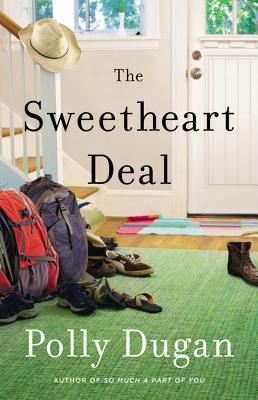
Sweetheart Deal

Synopsis:

(via Goodreads)

The poignant story of what happens when a woman who thinks she’s lost everything has the chance to love again.

Leo has long joked that, in the event of his death, he wants his best friend Garrett, a lifelong bachelor, to marry his wife, Audrey. One drunken night, he goes so far as to make Garrett promise to do so. Then, twelve years later, Leo, a veteran firefighter, dies in a skiing accident.

As Audrey navigates her new role as widow and single parent, Garrett quits his job in Boston and buys a one-way ticket out west. Before long, Audrey’s feelings for Garrett become more than platonic, and Garrett finds himself falling for Audrey, her boys, and their life together in Portland. When Audrey finds out about the drunken pact from years ago, though, the harmless promise that brought Garrett into her world becomes the obstacle to his remaining in it.

My Thoughts:

I feel like I’ve read at least 4 or 5 contemporary novels about young widows in the last fews years, and while The Sweetheart Deal is the latest, it’s certainly not the least.

When Audrey’s firefighter husband Leo dies in a tragic ski accident, she’s left alone with three boys to raise. But not entirely alone: Years early, celebrating the Y2K New Year with quite a lot of booze, Leo made his best friend Garrett sign an agreement saying he’d marry Audrey if anything ever happened to Leo.

Audrey never knew about the deal, but Garrett has never forgotten. So when Leo dies, Garret drops everything in his own life to support Audrey and the boys, moving into their guest room and committing to finishing the addition to the house that Leo left half-built.

Needless to say, eventually Audrey emerges from her devastating grief to find comfort and the hint of new love in Garrett’s arms. But will the drunken promise from all those years ago come between them? Dunh, dunh, dunh….

The Sweetheart Deal is actually quite engaging, and I felt that the author did a very good job of portraying how the different family members deal with such a shocking loss. Different characters narrate different chapters, so we see events from the perspective of Audrey and Garrett, as well as each of the boys. It’s interesting to see how the kids come into the story, how their feelings complicate matters, and how Garrett very selflessly immerses himself in doing whatever he can for Leo’s family.

While Audrey has a best friend as well, it’s the friendship between Leo and Garrett that really drives the story. Friends since boyhood, they’re bonded in a way that we don’t often see in female-centric contemporary love stories, where the main friend relationship is usually between women. Garrett’s feelings here are intense and conflicted: He loved Leo truly and faithfully, would do anything for him, and sincerely wants to protect and assist Leo’s family. His feelings for Audrey grow out of his grief and devotion, and he deals with heaping helpings of guilt as well.

Audrey’s initial bereavement is realistic and heartbreaking, and she is really to be admired for her strength in caring for her boys even as she falls apart inside. There’s no suggestion at all that she wasn’t madly in love with her husband. Instead, we see a woman who suffers a great loss trying to figure out if she’s entitled to any future happiness, and trying to understand if what she wants is wrong for herself, for her children, and for the memory of her husband.

The characters are all Catholic and their faith does come into play, but not in a way that feels heavy-handed. Audrey’s religion guides her actions, and she gains strength and insight through the counsel she receives from her priest – but I never felt alienated by the religious aspects or that they took away from the story.

Ultimately, the romance with the husband’s best friend feels deserved and well-developed, given the odd backstory and the guilt everyone feels.

The Sweetheart Deal is a sweet, moving, sad, and finally uplifting love story that deals with challenges that feel all too real. The plot is not complicated, but by focusing on an everyday family and its crisis, the book remains grounded and is quite accessible.

I think, if I hadn’t recently read other books about widows in their 20s or 30s finding their way back to love, I might have been more moved by The Sweetheart Deal, so perhaps it’s not really fair to even mention the other books. I did like this book a lot, and readers who haven’t read other books with similar set-ups should find it fresh and engaging.

The Sweetheart Deal is a quick read, but it hits the sentiment right on the nose and strikes a good balance between grief and hope. Recommended for readers who enjoy contemporary fiction focusing on family and marriage.

_________________________________________

The details:

Title: The Sweetheart Deal
Author: Polly Dugan
Publisher: Little, Brown and Company
Publication date: May 19, 2015
Length: 320 pages
Genre: Adult contemporary fiction
Source: Review copy courtesy of the publisher via NetGalley

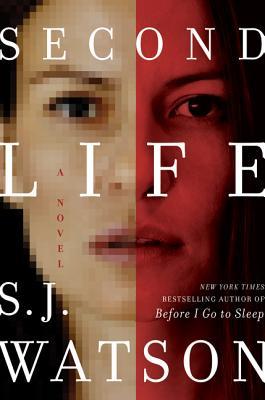
Blog Tour & Book Review: Second Life by S. J. Watson

Bookshelf Fantasies is participating in the blog tour for the release of Second Life, author S. J. Watson’s second novel following the huge hit Before I Go To Sleep.

Second Life

Synopsis:

From the New York Times bestselling author of Before I Go to Sleep, a sensational new psychological thriller about a woman with a secret identity that threatens to destroy her.

How well can you really know another person? How far would you go to find the truth about someone you love?

When Julia learns that her sister has been violently murdered, she must uncover why. But Julia’s quest quickly evolves into an alluring exploration of own darkest sensual desires. Becoming involved with a dangerous stranger online, she’s losing herself . . . losing control . . . perhaps losing everything. Her search for answers will jeopardize her marriage, her family, and her life.

A tense and unrelenting novel that explores the secret lives people lead; and the dark places in which they can find themselves, Second Life is a masterwork of suspense from the acclaimed S. J. Watson.

My thoughts:

In Second Life, Julia is a part-time professional photographer married to a successful surgeon named Hugh. Julia and Hugh have adopted the baby son born to her sister Kate, now grown into a teenage boy, Connor. Life is good — until Julia gets the horrifying news that Kate has been murdered, apparently the victim of a random mugging.

Distraught and wracked with guilt, Julia decides that there’s more to the story. She begins to dig into her sister’s life, uncovering bits and pieces of a world that her estranged sister never shared with her. Kate lived a free and easy life in Paris, and was an active participant in the “hook-up” lifestyle, meeting men online for cyber and real-world sexual encounters.

Julia decides that Kate’s hidden life must hold a clue to her murder, and begins to explore. But at some point, the exploration stops being about Kate, as Julia gets sucked into an online flirtation with a stranger that turns sexual, and before long, Julia is consumed by the affair she’s stumbled into.

We know early on that Julia has a history of addiction, involving both alcohol and heroin, and the temptation of a drink is ever-present in Julia’s mind as she deals with her guilt and grief over Kate’s death. It’s easy to see that she’s channeled her out-of-control emotions into yet another addiction, her obsession with the online world — and the seemingly perfect and sexy man she meets there.

Second Life spends a great deal of time detailing Julia’s headlong rush into an affair, and unfortunately, the emphasis on the seedy details of Julia’s seemingly willful endangerment of her marriage and family takes center stage for far too much of the book. For large sections, the mystery of Kate’s death is almost an afterthought. Julia throws herself completely into the affair, and the book bogs down in the sexual encounters and hotel trysts.

After a somewhat slow start, the book picks up momentum by about the halfway mark, as Julia starts to realize that her perfect lover is hiding all sorts of secrets from her, and as her affair starts to overshadow everything else in her life that she values. Eventually the pace quickens and the plot becomes more intriguing, as the dangers closing in on Julia become connected back to Kate, as well as to Julia’s hidden young adult past.

I hate to say it, but Second Life overall didn’t really work for me. The main plotline was highly unappealing, with its voyeuristic emphasis on the details of Julia’s infidelity. I understand that Julia was acting out her grief and loss, giving in to her addictive tendencies and flirting with danger to numb herself in some way from the pain of losing her sister. But I just couldn’t sympathize, and felt that her horrendous choices were so clearly illogical and bad for her family (including the son she claims to love so much) that the plot teetered on the edge of becoming completely implausible.

As my own personal bias, I think it’s only fair to add that a book about infidelity had better have a lot of other compelling elements going for it if it’s going to appeal to me in any way. Otherwise, it’s a turn-off — and that was the case for me with Second Life.

I did find myself hooked for the last 100 pages or so… until the abrupt and unsatisfying ending. I won’t say more about it, but the answers to the mystery were fairly prediction, and what’s more, the final scene was a lousy payoff for the tense build-up.

I really enjoyed Before I Go To Sleep and ended up recommending it to lots and lots of reader friends. Sadly, Second Life does not live up to the promise of the earlier book.

I usually try to find a reason to recommend or praise a book if I’m participating in a blog tour. While Second Life didn’t work for me, I could imagine that readers who are into thrillers and aren’t bothered by the subject matter the way I was might enjoy this book. If you read it and have a different opinion, please share your thoughts!

Find out more:

Add to Goodreads badge
 
Purchase Links: Amazon | IndieBound | Barnes & Noble
 

About the Author:

S-J-WatsonS. J. Watson was born in the Midlands and lives in London. His first novel was the award-winning Before I Go to Sleep, which has sold over four million copies in more than forty languages around the world. It was recently adapted into a major motion picture starring Nicole Kidman, Colin Firth, and Mark Strong.

Find out more about S.J. at his website, and follow him on Facebook and Twitter.

_________________________________________

The details:

Title: Second Life
Author: S. J. Watson
Publisher: Harper
Publication date: June 9, 2015
Length: 416 pages
Genre: Thriller
Source: Review copy courtesy of TLC Book Tours

tlc logoFor further information, stop by TLC Book Tours to view other blog tour hosts.

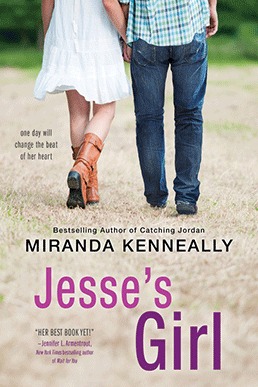
Take A Peek Book Review: Jesse’s Girl by Miranda Kenneally

“Take a Peek” book reviews are short and (possibly) sweet, keeping the commentary brief and providing a little peek at what the book’s about and what I thought.

Jesse's Girl

Synopsis:

(via Goodreads)

Everyone at Hundred Oaks High knows that career mentoring day is a joke. So when Maya Henry said she wanted to be a rock star, she never imagined she’d get to shadow *the* Jesse Scott, Nashville’s teen idol.

But spending the day with Jesse is far from a dream come true. He’s as gorgeous as his music, but seeing all that he’s accomplished is just a reminder of everything Maya’s lost: her trust, her boyfriend, their band, and any chance to play the music she craves. Not to mention that Jesse’s pushy and opinionated. He made it on his own, and he thinks Maya’s playing back up to other people’s dreams. Does she have what it takes to follow her heart—and go solo?

My Thoughts:

I wouldn’t normally pick up a book about a romance between a small town girl and the superstar she meets cute… but this is my third book by Miranda Kenneally, and I went into Jesse’s Girl expecting something special. And that’s exactly what I got.

Maya dresses goth/punk, loves 80s music (especially Madonna and Queen), and wants to spend her life rocking out with an awesome guitar. The band she started has kicked her out, though, and her dream of auditioning on Wannabe Rocker seems to be slipping away. But meeting Jesse opens her eyes to the idea of taking risks to get what she really wants, as well as seeing that celebrity and superstardom come at a price… and that the lives of the rich and famous can be awfully lonely without a loving family to back you up.

That may sound like a lot to pack into one young adult novel, but it works. The first half of the book is a “one special day” type of story, where Maya and Jesse start as semi-hostile strangers, have a ton of crazy adventures as they both break rules and defy expectations, and end up connected in ways that go way beyond the attraction they both feel.

Maya is shown as a strong girl who needs an even stronger infusion of confidence. She learns to open up, and in turn gets Jesse to start realizing that he doesn’t have to give up his own dreams in order to be loved.

Jesse and Maya are well-developed characters, with flaws as well as talents. I appreciate the economic diversity that the author features in her novels. Maya’s family is proudly working class, and every dollar counts. Maya can’t take anything for granted, and meets her financial challenges head on without shame. It’s interesting to see how she views Jesse’s financial success and life of creature comforts, and yet still values her messy, loud family with their beat-up cars more than anything money can buy.

Fans of Miranda Kenneally’s earlier books will be delighted by this return to Hundred Oaks, especially as favorite characters from earlier books show up here in supporting roles. Reading Jesse’s Girl makes me realize that I need to go back and read the three other books by this author that I’ve missed!

Jesse’s Girl is a moving story of teens finding their way, a tribute to the power of romance, and a nice spotlight on the unbelievable strength that a loving family and supportive friends can provide. I’m really impressed with the author’s ability to create characters who seem both familiar and fresh, as well as her engaging storytelling. I was really swept up in the fun and feelings of this book, and recommend it for anyone who enjoys a good contemporary tale… particularly if you like a bit of a Southern twang in your fiction!

Interested in this author? Check out my reviews of other books by Miranda Kenneally:
Racing Savannah
Breathe, Annie, Breathe

_________________________________________

The details:

Title: Jesse’s Girl
Author: Miranda Kenneally
Publisher: Sourcebooks Fire
Publication date: July 7, 2015
Length: 304 pages
Genre: Young adult contemporary fiction
Source: Review copy courtesy of the publisher via NetGalley

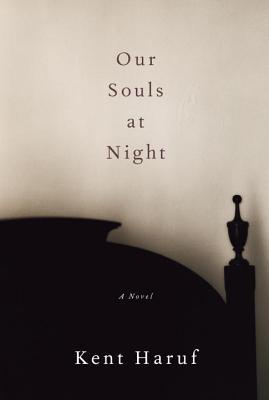
Book Review: Our Souls at Night by Kent Haruf

Our Souls At NightIt’s hard to describe this small, lovely book and explain what makes it just so special — but I’ll try.

In the small Colorado town of Holt, the setting for previous novels by Kent Haruf, Addie Moore lives alone. And around the corner is her neighbor Louis Waters. Both are widowed, and are in their 70s. Both seem to lack real human connection in their lives, although they certainly have friends and acquaintances.

One day, Addie shows up on Louis’s doorstep with a proposal.

I’m listening, Louis said.

I wonder if you would consider coming to my house sometimes to sleep with me.

What? How do you mean?

I mean we’re both alone. We’ve been by ourselves for too long. For years. I’m lonely. I think you might be too. I wonder if you would come and sleep in the night with me. And talk.

She asks him to come sleep with her at night. Not for sex, mind you. It’s the closeness she seeks. She wants someone to fall asleep with, to talk with in the dark, to make the nights a little less lonely. And after some thought, Louis agrees.

On the first night, Louis comes through the alley to Addie’s back door with his pajamas and toothbrush in a paper bag, but Addie tells him to come to the front door from now on, if he intends to continue. There will be no sneaking around.

And that’s really it. Small town folks talk, of course, and people seek to create gossip and scandal, but Addie and Louis will have none of it. They refuse to be ashamed, and they refuse to stop. In the night, they talk over their lives, their marriages, their children, the disappointments, the dreams, the pain and the joy. And from these nights, the two form an unusual intimacy, closer than most marriages, that seems like a true meeting of souls.

Just, wow. What a book.

Kent Haruf uses deceptively simple language to paint a gorgeous picture of the inner lives of common people. Our Souls at Night is a short book, under 200 pages, and much of it consists of dialogue between the two characters. Their speech, like their lives, is plain and unadorned. They’ve been through a lot over the course of the years, and they talk to each other directly and openly, no hiding or subterfuge. It’s as though, after all they’ve experienced and all the ups and downs of their lives up to this point, they’re dispensing with the bullshit and getting right to what matters.

This is a beautiful, elegant, graceful book. The writing is spare, pared down to the essentials. There’s nothing fancy about the characters, their speech patterns, or the story. It’s simply a powerful book about the connection between two people who manage to find happiness and true connection at a point in their lives when everyone expects them to simply behave and then fade away.

I read the author’s novel Plainsong years ago and remember that I ended up loving it for its stripped-down beauty. I’m sorry that I haven’t read more by this author, and I do intend to correct that. Our Souls at Night is Kent Haruf’s final novel, as he passed away in 2014 at the age of 71.

This book really swept me up and moved me, and I’d like to page through it for a while longer before I return it to the library. My immediate reaction, though, right after finishing the final pages, is just this: Our Souls at Night is lovely, and should not be missed.

_________________________________________

The details:

Title: Our Souls at Night
Author: Kent Haruf
Publisher: Knopf
Publication date: May 26, 2015
Length: 179 pages
Genre: Contemporary fiction
Source: Library

Book Review: Weightless by Sarah Bannan

Weightless


Synopsis:

(via Goodreads)

When 15-year-old Carolyn moves from New Jersey to Alabama with her mother, she rattles the status quo of the junior class at Adams High School. A good student and natural athlete, she’s immediately welcomed by the school’s cliques. She’s even nominated to the homecoming court and begins dating a senior, Shane, whose on again/off again girlfriend Brooke becomes Carolyn’s bitter romantic rival. When a video of Carolyn and Shane making out is sent to everyone, Carolyn goes from golden girl to slut, as Brooke and her best friend Gemma try to restore their popularity. Gossip and bullying hound Carolyn, who becomes increasingly private and isolated. When Shane and Brooke—now back together—confront Carolyn in the student parking lot, injuring her, it’s the last attack she can take.

Sarah Bannan’s deft use of the first person plural gives Weightless an emotional intensity and remarkable power that will send you flying through the pages and leave you reeling.


My Thoughts:

Weightless is a disturbing book, all the more so because it feels so real. There’s an air of distance created by the author’s use of a first-person plural narration. “We” observe everything that happens that junior year, and narrate the excitement generated by the arrival of a new girl into a town in which everyone has known each other literally all their lives. By using the “we” voice, the reader gets no closer to Carolyn and the other main players than the trio of girls whose viewpoint we share. The three telling the story are strictly B-list, always on the outside looking in, at once attracted by the inner circle and desperate for their attention, and at the same time wary of the way getting noticed can come with nasty results.

When you’re new, and when you’re a girl, it’s not so good to be good at something. Better to be average, to be barely visible, to make yourself scarce.

We don’t get to know Carolyn, and perhaps that’s the point. No one in this homogeneous town knows more than what they can see of her. It’s apparent that she has a history. There are the mysterious marks on her arms and torso, indicating that she’s a cutter. But she’s beautiful and smart, perfectly dressed and with an outsider’s flair, and everyone wants to be her friend — until being her friend becomes a liability.

The pressures of high school life are apparent. A thin girl is described as “rexy”, and that’s supposed to be a good thing. Hearing another girl throw up in a bathroom stall is barely worth noticing, it’s so commonplace. “We” are hyper-critical, but no more so than anyone else. There’s a constant emphasis on the right make-up and clothes, the gain or loss of a few pounds:

She looked skinnier than before and maybe we were jealous that she could keep on losing weight, and we wondered what it would be like to be so sick or so sad or mad or whatever it was she was, to be sick enough not to want to eat. It would be nice to be free of that, we thought.

The group narrating the story, and by extension, the entire student population, sees Carolyn’s transformation from new girl to most popular to object of hatred, and no one does a thing about it.

If we had realized what was happening, we might have stood up, shouted or at least cleared our throats.

“Cleared our throats”? The futility, the fear of interfering, the awe and admiration for the popular crowd — all lead to an absolute inability for anyone to break from the herd.

Weightless is a hard, sad, and powerful book. It drove home for me how insanely difficult it must be to navigate the teen years in an age when every private moment is fair game for public distribution via social media. The use of the first-person plural narration is a brilliant tactic that perfectly encapsulates some of the crazier aspects of the quest to fit in and be one of the crowd. If we’re not noticed, then we won’t be targeted — and Carolyn’s sad story is emblematic of what can happen when “we” dare to go our own way.

A final passage, narrating a hot air balloon ride, captures the outsider world view of the entire book:

We were at a distance from it and could see only what we needed to see. From here, we thought, if a car crashed, you wouldn’t hear it, and even if you did, it would look like a toy.

The outsider status of the narrative trio becomes at some point an excuse. We can’t do anything, because we’re not really involved. Or we do something we consider small, like spreading something via social media, fooling ourselves into believing that what we do doesn’t really matter very much, since we’re not truly included. Most especially, we can’t help. We’re too intimidated by Carolyn to offer true friendship, and we’re too scared of becoming pariahs to dare offending the popular girls. Sadly, the distance “we” maintain keeps the group from seeing Carolyn’s struggle as something real, something within reach; her crashing life is something observed from afar, like seeing a toy person falling to pieces rather than an actual, vulnerable human being.

As a final sad note, the author’s acknowledgements include a reference to a real case that at least partially inspired Weightless. For more information, check out this story about the Phoebe Prince case from 2010. (Note: If you’re thinking of reading Weightless, I’d suggest hold off on reading the article, as the events are similar enough to give a good idea of what happens in the book).

Wrapping it all up: I highly recommend Weightless. I’ve seen Weightless described as a book about bullying, but I think it’s much more than that. It’s a very well-written, disturbing, and unusual look at the cost of needing to fit in, and how an entire community can be culpable for making an individual suffer for stepping outside the lines of what’s considered acceptable.

_________________________________________

The details:

Title: Weightless
Author: Sarah Bannan
Publisher: St. Martin’s Griffin
Publication date: June 30, 2015
Length: 336 pages
Genre: Contemporary YA fiction
Source: Review copy courtesy of the publisher via NetGalley


Eragon: A book with the kiddo, & a book review with a twist

EragonThis started out as a straight-forward book review, but I think it’s now turning into more of a “Choose Your Own Adventure” deal. I wrote a review. Then I thought about a completely different angle. And thought I’d include both! So, choose which version you want to read, or read both! Either way, you’ll hear my mouthy opinion, for better or for worse.

Version #1:

Eragon (book #1 of the four-part Inheritance Cycle) is a good old-fashioned epic fantasy quest, filled with dragons, monsters, good guys and bad guys, swords with names, wise old mentors, and one very special young man who spends the book discovering that he may in fact be the Chosen One.

I’ve always enjoyed reading with my son, and now that he’s 12, our reading time has changed. We still hang out and read together, but we’re often looking for books that we can read in parallel, then chat about for a while. Eragon is LONG book, well over 500 pages in our paperback copy, and I’d say it took us close to five months to get through the whole thing. Because I wanted this to be a shared experience, I did not read ahead — and when we had days or even weeks when my kiddo was distracted or just not into it, we both went without.

Consequently, I think, my enjoyment of the story was already a bit lower than it might have been if I’d just read straight through. More on this later.

In terms of plot, Eragon more or less follows along well-trodden paths. We start with 15-year-old Eragon as an ordinary boy, being raised by his uncle on a simple farm. When Eragon finds a dragon egg, it sets in motion a series of life-changing events, some tragic, some full of promise.

When the egg finally hatches, out comes a cute baby dragon with whom Eragon immediately bonds. The two share a psychic link, and Eragon discovers that her name is Saphira, and that they can have full conversations in their heads. But there are dangerous foes who want the dragon too, and when Eragon’s uncle is brutally murdered, Eragon and Saphira flee for their lives, along with the town storyteller, an old man named Brom who has plenty of secrets and wisdom to share with Eragon.

There’s a road trip of sorts, as Ergaon, Saphira and Brom chase the bad guys who killed the uncle. More than that, though, Brom starts to teach Eragon about his true heritage and calling: Eragon is a Dragon Rider, one of an ancient line with magical powers, thought to be more or less extinct. The evil king Galbatorix would surely kill him if he could, and they spend much of the book moving from place to place, pursued by nasty creatures, always in danger, and busy making sure that Eragon is transformed from simple farm boy to magic-wielding powerhouse.

So. What did I think? Well, for starters, this is a tough book to read in small chunks. Eragon is highly detailed, and the telling of the backstory and mythology is uneven and occasionally awkward. Brom tells Eragon about the Riders and how the king became so evil in a single story, about three pages long, early on in the book — and yet this informs almost everything that comes later. Should a reader really be expected to keep all the details straight hundreds of pages later? It seems a bit daunting, especially considering that this is supposedly a kids’ book.

Reading it as I did, no more than a chapter at a time, sometimes with days in between, it was hard to maintain the flow of the story. But even so, I do think I might have felt similarly if I’d read it straight through. The chapters are long, and the entire plot is one episode of danger after another, often with very little natural flow between scenes or locations.

Much has been made of the fact that the author, Christopher Paolini, was only 15 when he wrote this book, which is utterly remarkable in terms of a teen literary phenomenon. It’s pretty mind-boggling to me that someone his age could create such a large, densely packed book. But should a book be judged by the age of its author, or on the merit of its content, plot, characters, and overall effect?

If I ignore what I know about the author, I’m less impressed. Much of the story feels derivative. Young apprentice, old mentor? Check. Newly discovered magical powers? Check. Coming of age due to the death of the hero’s family/support system? Check. Et cetera, et cetera, et cetera. Brom could be any one of a dozen or more wise, old, mysterious magical gurus from fantasy — Gandalf, Dumbledore, Obi-Wan Kenobi. There’s a magical elf girl, because of course there’s a magical elf-girl. Cities full of suspicious or untrustworthy residents. Dwarves, elves, mad kings… it’s like every fantasy epic, put into a blender and poured out into a new glass.

And then there’s the writing. Remember being in high school English classes, writing essays, and trying to use as many SAT-level words as possible in the attempt to impress your teacher with the power of your vocabulary, even if you had nothing much to say? Yeah. It’s like that. I stopped noticing quite so much after a while, but particularly early on, it’s irritating and distracting to be subjected to such overblown language constantly. The author’s approach seems to be: why use a one-syllable word when there’s a longer one that will do?

So did I enjoy Eragon? Yes and no. I enjoyed the experience of sharing it with my son, being able to talk about it with him, and seeing his less-jaded response to the plot and characters. He really liked it, which made me like it too. Left to my own devices, I’d probably say that it was at least a third longer than it needed to be, in dire need of editing, and overall a not terribly original remash of standard fantasy themes and plot elements.

Version #2:

I mentioned Obi-Wan Kenobi before, right? On further thought, a cup of tea and a shower later, I’ve started to think that the entire book of Eragon (and who knows, perhaps the rest of the Inheritance series as well) can be boiled down to “Star Wars with Dragons”.

We’ve got the story of a young man raised on a farm by his uncle. Parentage unknown. He unwittingly comes into possession of something sought after by the Empire. Agents of the Empire slaughter his uncle and destroy the farm. He has to flee. He receives a vision of a beautiful young woman who desperately needs his help. He is guided by an old man with mysterious knowledge and powers, who tells him that he himself has abilities he was unaware of, and that he belongs to a group with special abilities and — can we call magic “the force”? He begins to learn to use his powers and becomes a skilled flyer and fighter. His mentor ultimately dies, after setting the hero on his path. The hero allies himself with a rogue with a heart of gold, whose skills help him avoid capture…

Okay, it gets a bit murkier after that, since there’s no Death Star. But there is an epic battle at the end, and our hero emerges triumphantly, but with the knowledge that he needs further training in order to prepare for the challenges still to come. Which nicely sets us up for the next installment in the series.

So does this mean that Eragon’s father is really the evil king Galbatorix? It would fit. After all, Galbatorix was originally a Rider, before going mad from grief and pursuing total domination and dark powers.

Wow. Mind blown.

But do me a favor! If you’ve read the rest of the Inheritance series, don’t tell me if my Galbatorix theories are correct! I need to leave some mysteries to look forward to.

Wrapping it all up:

I tried to get my kiddo to contribute to this review, but apart from saying “it was good”, he wasn’t willing to play along. He does like my Star Wars theories! The kiddo, for all his middle-school cool, was actually pretty enthusiastic about the story, except for when it bogged down in chapters full of traveling from point A to point B to point C. He enjoyed it enough that he insisted that we start the second book, Eldest, right away… and so we have.

Sigh. We’re one chapter into Eldest so far, and I can tell we’re in for a long haul. 600+ pages! I don’t love this series so far, as you can probably tell, but it also hasn’t turned me off completely, and at this point, thanks to the kiddo, I’m involved enough to keep going. I’ve just got to see how it all works out!

And hey, who knows? Maybe there’ll be some Ewoks along the way.

_________________________________________

The details:

Title: Eragon (The Inheritance Cycle, book #1)
Author: Christopher Paolini
Publisher: Knopf Books for Young Readers
Publication date: 2002
Length: 528 pages
Genre: Fantasy (kids/teens)
Source: Purchased