Book Review: Sleeping Beauties by Stephen King and Owen King

In this spectacular father-son collaboration, Stephen King and Owen King tell the highest of high-stakes stories: what might happen if women disappeared from the world of men?

In a future so real and near it might be now, something happens when women go to sleep; they become shrouded in a cocoon-like gauze. If they are awakened, if the gauze wrapping their bodies is disturbed or violated, the women become feral and spectacularly violent; and while they sleep they go to another place. The men of our world are abandoned, left to their increasingly primal devices. One woman, however, the mysterious Evie, is immune to the blessing or curse of the sleeping disease. Is Evie a medical anomaly to be studied, or is she a demon who must be slain? Set in a small Appalachian town whose primary employer is a women’s prison, Sleeping Beauties is wildly provocative and gloriously absorbing.


Sleeping Beauties has one simple message:

Men bad. Women good.

It takes 702 pages to get there, but that does seem to be the point. Not that it’s not fun along the way, but subtle, this book ain’t.

In the town of Dooling, somewhere in the Appalachias, the women’s prison is the main local employer. Between the town and the prison, we meet a heap of characters — so many characters, in fact, that the book opens with a four-page listing of characters and their descriptions — which, believe me, is necessary if you want to make it through this massive book with any shred of sanity remaining intact. The vast cast of characters includes the sheriff and her husband (the prison psychiatrist), sheriff’s deputies, prison guards, prisoners, high school bullies, and all sorts of other townsfolk.

The onset of the Aurora plague (named for Sleeping Beauty in the fairy tales) is pretty fascinating stuff. Worldwide, women are falling asleep, and once they do, they become encased in a filmy cocoon. They sleep, seemingly permanently, in these cocoons unless someone foolish (usually a man) decides to try to get them out, in which case they awaken with homicidal intent, murder whoever disturbed them, and then fall back to sleep as the cocoon reestablishes itself around the sleepers.

Major freak-outs ensue. What’s causing this, and what can be done? While some women give in to the inevitable, others become determined not to sleep at all, turning to all sorts of legal and illegal stimulants to stay awake, from super-powered coffee to crystal meth. As the days wear on, regular life all but disappears, and the men who are left behind turn to violence and chaos.

Small town dynamics suddenly take on huge significance. Sides are drawn up, and to a certain extent, the law of the jungle takes over. Those who are strong, survive. The physically or mentally weaker of the men are pushed aside, and as power is extended to those who should never, ever have it, we can feel the threat-level creep up into the danger zone.

I can’t say I was ever bored while reading this book, but really, it’s much too big for its own good. “Overstuffed” is the word that came to mind, especially as I neared the halfway point and realized that the amount left would be equivalent to reading yet another full novel. I don’t think we need quite so many backstories for quite so many characters. Not all of it is important, and a more honed narrative might have helped the narrative feel sharper and more focused.

I’m not sure that the end makes a whole lot of sense, but I often feel that way with Stephen King books (and yes, I’m a big fan). There are many unanswered questions about the why and how of the Aurora plague. Why do we get the resolution that we get? Because we do. Why is this the answer to Aurora? Because it is.

Still, Sleeping Beauties is filled with small and big moments of adrenaline-pumping suspense, with everyday scenes carrying extraordinary hints of menace and violence. As is typical of King novels, the huge number of characters comes together to give us the flavor of the community — although I’ll be honest and admit that I stopped bothering to distinguish between handfuls of the more minor characters as the story progressed.

Overall, I enjoyed Sleeping Beauties, but don’t think it’s Stephen King’s best work by a long shot. The message, as I mentioned at the top of the review, is really pretty basic and obvious, and at times I felt like I was being beaten over the head by the senseless need for violence exhibited by men in crisis, especially as contrasted by the peace and cooperation shown on the women’s side of the equation.

For a look at how Stephen King and Owen King worked together on Sleeping Beauties, check out this piece in a recent Entertainment Weekly.

_________________________________________

The details:

Title: Sleeping Beauties
Author: Stephen King and Owen King
Publisher: Scribner
Publication date: September 26, 2017
Length: 702 pages
Genre: Horror/fantasy
Source: Purchased
Save

Save

Save

Save

Save

Save

Save

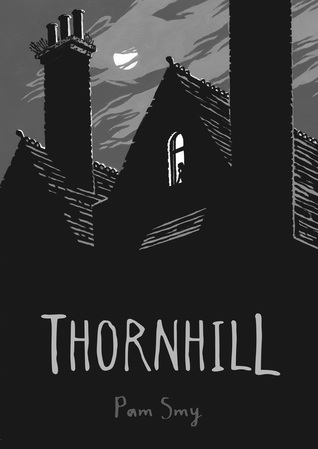
Book Review: Thornhill by Pam Smy

Parallel stories set in different times, one told in prose and one in pictures, converge as Ella unravels the mystery of the girl next door.

1982: Mary is a lonely orphan at the Thornhill Institute For Children at the very moment that it’s shutting its doors. When her few friends are all adopted or re-homed and she’s left to face a volatile bully alone, her revenge will have a lasting effect on the bully, on Mary, and on Thornhill itself.

2016: Ella has just moved to a new town where she knows no one. From her room on the top floor of her new home, she has a perfect view of the dilapidated, abandoned Thornhill Institute across the way, where she glimpses a girl in the window. Determined to befriend the girl, Ella resolves to unravel Thornhill’s shadowy past


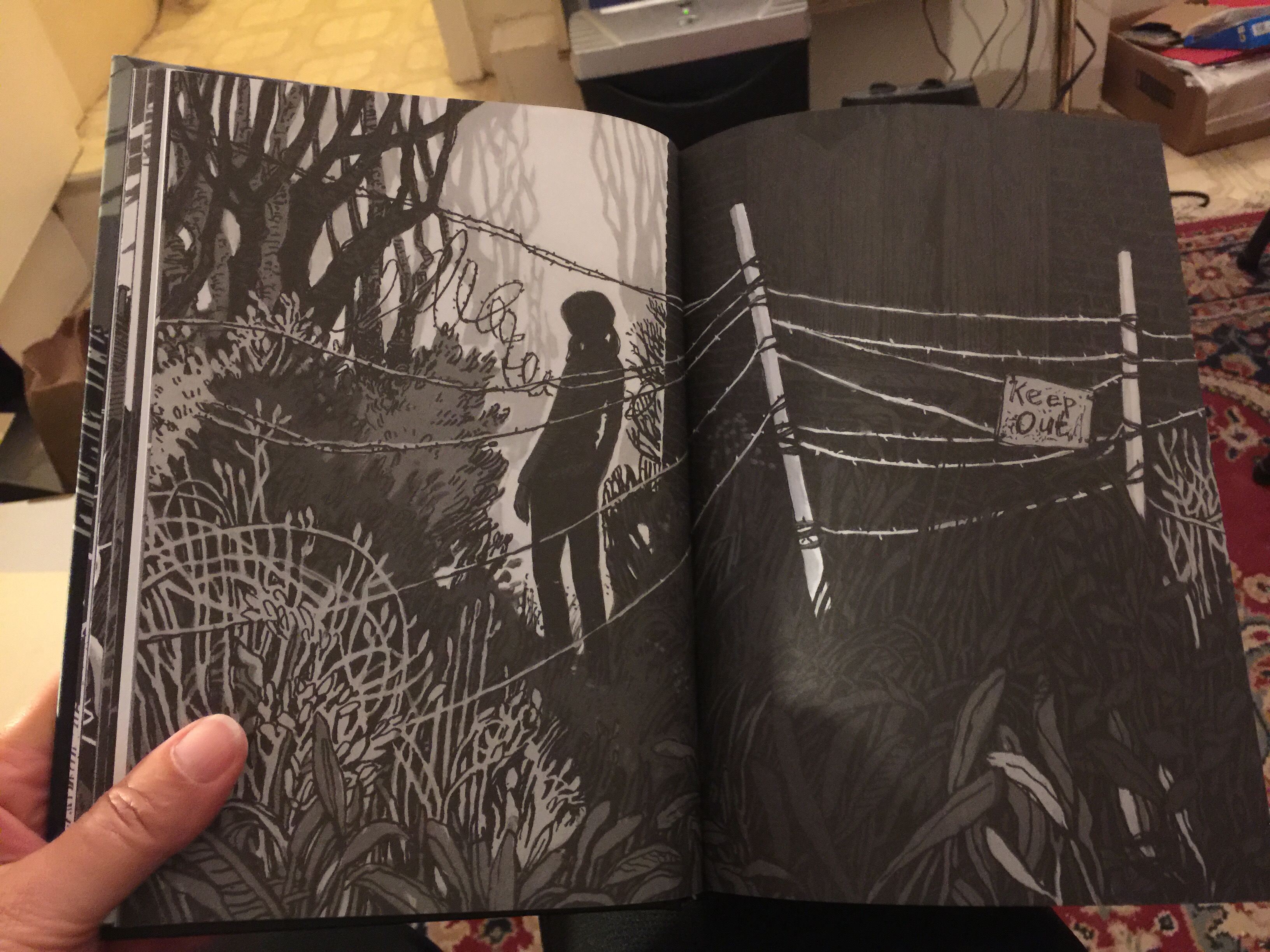
Oh my, this was a great read! Very much reminiscent of the style of Brian Selznick, Thornhill is told both in words, via Mary’s diary, and in pictures, via illustrations of Ella’s experiences. Author/illustrator Pam Smy does an incredible job of moving the story forward through the black and white illustrations from Ella’s world, which are stark and evocative and ever-so-ghostly.

The tale told through Mary’s diary is heartbreaking, and the first-person narrative is particularly effective. We see how Mary is an outcast even among outcasts, friendless in this home for unwanted girls, locking herself away in her own private sanctuary to escape the insidious, cruel attention of the house bully. Mary constructs a whole world for herself with her books and her carefully crafted puppets, but even this sanctuary ends up being violated. It’s wrenching to read of Mary’s pain, and all too easy to understand how her pain turns to anger and then to a burning need for revenge.

Meanwhile, Ella’s story is sad in its own way. Through the pictures on her walls, we come to understand that Ella’s mother has died and that she’s being raised in this new home and new town by a father who’s usually absent. No wonder Ella becomes fascinated by the spooky house she can see from her window and the mystery of the light she sees shining from the attic window.

Thornhill is a spooky, powerful, and quite definitely sad story of two girls from different times, bound together by loneliness. It’s haunting in all the right ways, and I simply loved the use of words and pictures to tell one complete story.

_________________________________________

The details:

Title: Thornhill
Author: Pam Smy
Publisher: Roaring Brook Press
Publication date: August 29, 2017
Length: 544 pages
Genre: Ghost story/illustrated/young adult
Source: Library

Save

Save

Save

Save

Save

Save

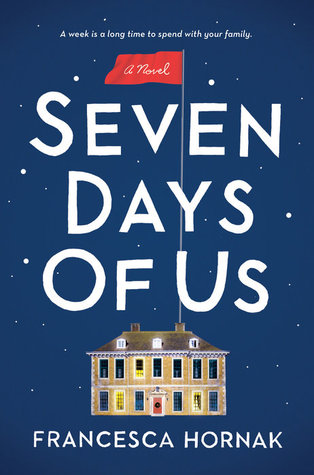
Take A Peek Book Review: Seven Days of Us by Francesca Hornak

“Take a Peek” book reviews are short and (possibly) sweet, keeping the commentary brief and providing a little peek at what the book’s about and what I thought.

Synopsis:

(via Goodreads)

A warm, wry, sharply observed debut novel about what happens when a family is forced to spend a week together in quarantine over the holidays…

It’s Christmas, and for the first time in years the entire Birch family will be under one roof. Even Emma and Andrew’s elder daughter—who is usually off saving the world—will be joining them at Weyfield Hall, their aging country estate. But Olivia, a doctor, is only coming home because she has to. Having just returned from treating an epidemic abroad, she’s been told she must stay in quarantine for a week…and so too should her family.

For the next seven days, the Birches are locked down, cut off from the rest of humanity—and even decent Wi-Fi—and forced into each other’s orbits. Younger, unabashedly frivolous daughter Phoebe is fixated on her upcoming wedding, while Olivia deals with the culture shock of being immersed in first-world problems.

As Andrew sequesters himself in his study writing scathing restaurant reviews and remembering his glory days as a war correspondent, Emma hides a secret that will turn the whole family upside down.

In close proximity, not much can stay hidden for long, and as revelations and long-held tensions come to light, nothing is more shocking than the unexpected guest who’s about to arrive…

My Thoughts:

Seven Days of Us is an entertaining, quick read about a family forced into isolation together — a perfect setting for secrets to emerge and for walls to come down. Phoebe and Olivia rediscover the sisterly affection that’s been absent since childhood; Andrew and Olivia finally come to understand one another’s obsessions and sacrifices; Emma and Andrew confront the iciness that’s taken hold in their marriage. Meanwhile, Phoebe’s fiancé crashes the quarantine, as does an American who ends up being the long-lost illegitimate son Andrew never knew he had.

The story moves along at a smart pace, with each character getting bits and pieces of the story. The main chapters focus on the seven days of quarantine, while within each day, there are sections devoted to the different characters, each section showing the time and the location within the house — which lends the narrative a claustrophobic air that’s appropriate for the involuntary intimacy and close quarters experienced by the family.

I do wish the author had included some sort of introduction explaining the quarantine rules. Why would a doctor treating epidemic patients be allowed back into England, passing through a major aiport, in order to go into quarantine with her family? Is this a normal protocol? Sure, readers could Google it, but it would have been helpful to have a bit of context, considering that this is the major plot driver of the entire book.

My interest never flagged, but certain plot developments (no spoilers here!) were completely obvious, and a tragic turn toward the end of the book seemed both jarring and unnecessary.

Overall, I recommend Seven Days of Us. It’s a pleasant, amusing story of family dynamics, and the ups and downs of the relationships between parents and children, between siblings, and between spouses definitely ring true.

_________________________________________

The details:

Title: Seven Days of Us
Author: Francesca Hornak
Publisher: Berkley
Publication date: October 17, 2017
Length: 368 pages
Genre: Contemporary fiction
Source: Review copy courtesy of the publisher via NetGalleySave

Save

Save

Save

Save

Save

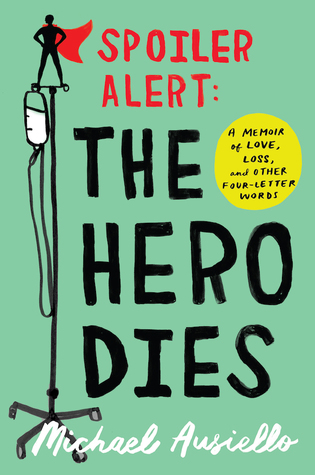
Book Review: Spoiler Alert: The Hero Dies by Michael Ausiello

In this evocative and gorgeously wrought memoir reminiscent of Rob Sheffield’s Love Is a Mixtape and George Hodgman’s Bettyville, Michael Ausiello—a respected TV columnist and co-founder of TVLine.com—remembers his late husband, and the lessons, love, and laughter that they shared throughout their fourteen years together.

For the past decade, TV fans of all stripes have counted upon Michael Ausiello’s insider knowledge to get the scoop on their favorite shows and stars. From his time at Soaps in Depth and Entertainment Tonight to his influential stints at TV Guide and Entertainment Weekly to his current role as co-founder of the wildly popular website TVLine.com, Michael has established himself as the go-to expert when it comes to our most popular form of entertainment.

What many of his fans don’t know, however, is that while his professional life was in full swing, Michael had to endure the greatest of personal tragedies: his longtime boyfriend, Kit Cowan, was diagnosed with a rare and very aggressive form of neuroendrocrine cancer. Over the course of eleven months, Kit and Michael did their best to combat the deadly disease, but Kit succumbed to his illness in February 2015.

In this heartbreaking and darkly hilarious memoir, Michael tells the story of his harrowing and challenging last year with Kit while revisiting the thirteen years that preceded it, and how the undeniably powerful bond between him and Kit carried them through all manner of difficulty—always with laughter front and center in their relationship. Instead of a tale of sadness and loss, Spoiler Alert: The Hero Dies is an unforgettable, inspiring, and beautiful testament to the resilience and strength of true love.

As an occasionally obsessed TV fan, I’ve been familiar with Michael Ausiello’s writing career for years. I avidly followed his “Ausiello Report” for scoops and spoilers on my favorite shows, enjoyed his fanboy goofiness and funny interludes, his Smurf obsessions, and his super witty writing style. When I saw that he had a book coming out this fall, I naturally assumed this might be a collection of his TV writing.

Spoiler alert: It’s not.

Spoiler Alert: The Hero Dies is a personal, painful, inspiring, heart-warming, and heart-breaking love story — Ausiello’s up-close memoir of the loss of his husband Kit after a short and intense battle with a devastating form of cancer.

Michael and Kit spent 13 years of their lives together, but this isn’t a sugar-coated fairy-tale version of perfect love and romance. Instead, it’s a warts-and-all look at a real relationship, filled with ups and downs, anger, laughter, challenges, and almost-breakups. It’s clear that Michael and Kit had an instant chemistry and loved each other deeply and passionately, but Ausiello doesn’t shy away from describing the less euphoric points of their relationship as well, such as Kit’s infidelities and Michael’s drinking.

Kit goes from strong, healthy and vital to a cancer patient in practically the blink of an eye. It’s wrenching to see Kit’s discomfort as it grows into pain, to see Michael’s helplessness at not being able to rescue the person he loves most in the world, and the growing realization that Kit is facing a death sentence, and quickly. And yet, there are moments of joy and beauty. Although they’d never considered marriage for themselves before, they practically turn the city upside down in a quest to get married before Kit starts chemo, and it’s funny and sweet and lovely.

I can’t say enough good things about this book, although I suppose I should warn readers that you’ll need heaps of Kleenex at the ready. The book has a lot of humor, for a book about cancer, and Michael and Kit themselves are funny people. I loved reading about their romance, their pet names for one another, all the silly little things that make up a life, and cried myself into a messy puddle as Kit weakened and they prepared themselves for loss.

Michael and Kit clearly had something special, and I appreciate how much of himself Michael was willing to share in putting together this lovely tribute to the man he loved. It’s practically a cliché to describe a book as a love letter to a person or place — but it’s just so apt in this case. Spoiler Alert: The Hero Dies is absolutely a love letter to Kit — funny, sweet, and utterly romantic, and so very tragic.

I so admire Michael Ausiello’s honesty and emotional openness in writing this book, and although I didn’t previously know anything about him except his professional persona, I do feel invested now in wishing him a life of happiness. Kit was clearly an incredibly special person, and I’m happy to have gotten to know him through this book.

_________________________________________

The details:

Title: Spoiler Alert: The Hero Dies
Author: Michael Ausiello
Publisher: Atria Books
Publication date: September 12, 2017
Length: 320 pages
Genre: Memoir
Source: Review copy courtesy of the publisher via NetGalley

Save

Save

Save

Save

Save

Audiobook Review: Venetia by Georgette Heyer


A young lady of beauty and intelligence facing an unbearable choice…

Venetia Lanyon is one of Georgette Heyer’s most memorable heroines. Beautiful, capable, and independent minded, her life on the family’s estate in the countryside is somewhat circumscribed. Then a chance encounter with her rakish neighbor opens up a whole new world for Venetia. Lord Damerel has built his life on his dangerous reputation, and when he meets Venetia, he has nothing to offer and everything to regret. As Venetia’s well-meaning family steps in to protect her from potential ruin, Venetia must find the wherewithal to take charge of her own destiny, or lose her one chance at happiness…

That’s it. It’s official. I’m a Georgette Heyer fangirl.

Venetia may well be my favorite Georgette Heyer book yet. It’s sweet, funny, clever, light, and adorable — in short, fluff, but super enjoyable fluff that’s perfectly entertaining without being cloying.

Venetia herself is a marvelous main character. She’s a bit unusual for a Regency romance heroine. At age 25 and unmarried, she’s perilously close to being “on the shelf”, but doesn’t seem particularly bothered by this. Venetia has lived all her life on her father’s country estate, more or less isolated from anything approaching society. Her father was a recluse, and her mother died when she was young. Ever since her father’s death some years earlier, Venetia lives at Undershaw with her younger brother Aubrey, running the estate until her other brother Conway returns from his military service and takes up the reins as heir.

Venetia and Aubrey are comfortable and happy. Aubrey is a budding scholar with his nose constantly in a book or ten, and at age 17, is soon to be off to Cambridge. While Venetia has two devoted suitors, she’s not in love with either, and is perfectly content to think of a future in which she sets up a household for herself and Aubrey and keeps things running for him while he’s busy with his studies.

This all changes, however, when the absentee lord of the neighboring estate returns home. Lord Damerel has a horrible reputation as a rake who once seduced and ran off with a married woman — and even though this happened nearly 20 years ago, he’s still not considered fit for decent society. He seems to enjoy his bad-boy status and his wild social life, though, and doesn’t exhibit any indication of wishing to reform

But then he meets Venetia! After a brief and sexually charged chance meeting, Venetia can’t shake thoughts of the devilish man next door, but doesn’t expect to see him again, as he never spends much time at his estate. Fate (or something) intervenes — Aubrey, who has a weak leg from a congenital hip problem, is thrown from his horse and injured, and is brought to Damerel’s estate, the closest shelter, for treatment. It’s clear that Aubrey needs to remain still and undisturbed in order to recuperate, and Damerel is a surprisingly generous and gracious host, insisting on caring for Aubrey for as long as needed.

Despite the disapproval of Venetia’s friends and would-be beaux, she becomes a daily visitor to Damerel’s estate, keeping company with Aubrey — but also becoming fast friends with Damerel. The friendship is a surprise and a delight for both of them. They discover that they can talk honestly and openly with one another in a way that they can’t with anyone else. They sit and talk for hours, and find themselves kindred spirits.

The complication, once they start to realize that what they feel goes beyond friendship, is that Damerel’s past has left him with a truly scandalous reputation. Venetia, on the other hand, is a virtuous girl who’s never been anywhere or done anything. Her aunt and uncle hope to arrange a suitable match for her with a respectable gentleman, but Venetia has other plans. Unfortunately for her, Damerel is so in love with her that he doesn’t want to ruin her, and decides to give her up rather than tarnish her in the eyes of society.

Oh, what fun! This business about reputations and scandal and — good gracious — what will everyone think? is just all so quaint and charming. Making a good match is really all that matters for a girl at that time, but Venetia is just rebel enough to not particularly care. She has money from her father’s bequest, enough to live comfortably without needing a wealthy husband to provide for her. She’s learned about life from books and is confident about her own abilities. She’s a devoted sister and a protector for Aubrey, has a good head for business as demonstrated by her management of Undershaw for many years, and feels that she’d be much happier living as a spinster than being trapped in a marriage that bores her to tears.

It’s refreshing to see a Regency heroine who knows her own mind so clearly. Venetia is never rude, not even when provoked, but she’s also no doormat. She’s honest with herself, understands what she truly desires, and is quite capable of scheming to get things to go her way. I was incredibly amused by her solution to her problems with Damerel, and her charming approach to manipulating those around her so that her plan is sure to be successful is just brilliant.

Once again, I simply loved the audiobook version of a Georgette Heyer novel. Phyllida Nash is a wonderful narrator, perfectly capturing the different tones and voices of the various characters. Not every female audiobook narrator can pull off a man’s voice with conviction, but Phyllida Nash is terrific, making Damerel growly and insinuating and absolutely rakish, while Venetia comes across as both innocent and clever.  Such fun!

I will say that the language in Georgette Heyer books can be a challenge at times, as she uses a lot of expressions and terms that are no longer used or not used in the same way, and it can be a bit of a puzzle trying to figure out the context. I do love how Venetia uses the term “idiotish” quite often (Damerel finds this amusing as well), and she and Aubry call each other “stoopid” with a certain degree of affection. I was thrown, though, early on in the book when Venetia is thinking about what she knows of Damerel’s reputation, and recalls how he was last in the country when he hosted an orgy at his estate a year or so prior to the current time in the book. An orgy??? I’m assuming the author is using the word in its older meaning, a drunken party with sexual excesses, rather than as what today’s pop culture would consider an orgy. Still, it’s rather startling toward the end of the book (spoiler ahead!) when Venetia tells Damerel that she doesn’t expect him to give up his orgies, and he asks her if she’d like to preside over them. Oh my.

I only “met” Georgette Heyer this year, but Venetia is now the 4th of her books that I’ve read, and it’s splendid. Like Arabella (review), Venetia would be a good starting point for anyone who hasn’t read Georgette Heyer before. It’s full of the style and wit and sheer silliness that makes her books so delightful.

_________________________________________

The details:

Title: Venetia
Author: Georgette Heyer
Narrator: Phyllida Nash
Publisher: Sourcebooks Casablanca
Publication date: Originally published 1949
Length (print): 375 pages
Length (audiobook): 12 hours, 36 minutes
Genre: Regency romance
Source: Purchased

Save

Save

Save

Save

Save

Save

Save

Save

Save

Save

Save

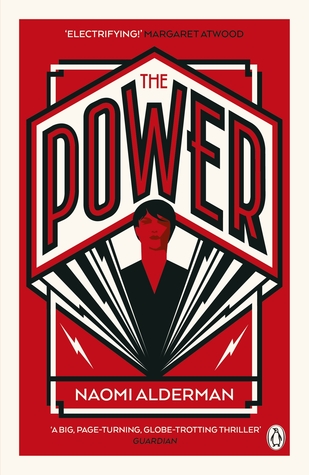
Take A Peek Book Review: The Power by Naomi Alderman

“Take a Peek” book reviews are short and (possibly) sweet, keeping the commentary brief and providing a little peek at what the book’s about and what I thought.


Synopsis:

(via Goodreads)

In The Power the world is a recognisable place: there’s a rich Nigerian kid who larks around the family pool; a foster girl whose religious parents hide their true nature; a local American politician; a tough London girl from a tricky family. But something vital has changed, causing their lives to converge with devastating effect. Teenage girls now have immense physical power – they can cause agonising pain and even death. And, with this small twist of nature, the world changes utterly.

This extraordinary novel by Naomi Alderman, a Sunday Times Young Writer of the Year and Granta Best of British writer, is not only a gripping story of how the world would change if power was in the hands of women but also exposes, with breath-taking daring, our contemporary world.

My Thoughts:

The Power won the Bailey Women’s Prize for Fiction for 2017. It’s a fascinating book. What would happen to our world if the power structure were suddenly flipped upside down? When women develop the power to inflict pain by channeling electricity from a newly developed physical anomaly, the rules and customs of society change rapidly, with men finding themselves on the receiving end of restrictive laws, sexual violence, and lack of political power.

The book is structured as a book-within-a-book, as a male writer many years in the future writes a novel imagining how this transition came about. As the letters between him and his editor make clear, his work is so far-fetched (in describing a male-dominated society) that’s it’s practically unimaginable. It’s an interesting take on a very different world order, positing a world that’s been run and controlled by females for thousands of years, so that a scenario with men in power — soldiers, police, political leaders — seems like fantasy.

Of course, it’s disturbing to think that physical power is the determining factor in how society is formed and structured. There’s no middle ground. Wouldn’t it be nice to think that a society of equals might be the result? In The Power, the world belongs to the strong — and with absolute power comes the corruption, abuses, and excesses that seem to inevitably grow out of a lopsided power relationship.

I couldn’t put this book down, and found the ending pretty shocking. I did wish to see through a wider lens at time — the focus on the main characters started to feel restrictive further into the story, and I would have liked to see how other parts of the world, especially more progressive urban or cultural centers, might have responded and developed as a result of the shift in power between genders. Still, it’s a totally absorbing book, and one that would be great food for discussion.

_________________________________________

The details:

Title: The Power
Author: Naomi Alderman
Publisher: Little, Brown and Company
Publication date: US release date: October 10, 2017 (published in UK in 2016)
Length: 400 pages
Genre: Science fiction
Source: PurchasedSave

Save

Save

Save

Book Review: South Pole Station by Ashley Shelby

Do you have digestion problems due to stress? Do you have problems with authority? How many alcoholic drinks do you consume a week? Would you rather be a florist or a truck driver?

These are some of the questions that determine if you have what it takes to survive at South Pole Station, a place with an average temperature of -54°F and no sunlight for six months a year. Cooper Gosling has just answered five hundred of them. Her results indicate she is sufficiently resilient for Polar life.

Cooper’s not sure if this is an achievement, but she knows she has nothing to lose. Unmoored by a recent family tragedy, she’s adrift at thirty and—despite her early promise as a painter—on the verge of sinking her career. So she accepts her place in the National Science Foundation’s Artists & Writers Program and flees to Antarctica—where she encounters a group of misfits motivated by desires as ambiguous as her own. There’s Pearl, the Machiavellian cook with the Pollyanna attitude; Sal, an enigmatic astrophysicist whose experiment might change the world; and Tucker, the only uncloseted man on the continent, who, as station manager, casts a weary eye on all.

The only thing the Polies have in common is the conviction that they don’t belong anywhere else. Then a fringe scientist arrives, claiming climate change is a hoax. His presence will rattle this already imbalanced community, bringing Cooper and the Polies to the center of a global controversy and threatening the ancient ice chip they call home.

A winning comedy of errors set in the world’s harshest place, Ashley Shelby’s South Pole Station is a wry and witty debut novel about the courage it takes to band together, even as everything around you falls apart.

That synopsis needs a little tweaking, I think. For starters, I don’t think I’d describe South Pole Station as a “comedy of errors”. While there are funny moments, I don’t think of this book as a comedy at all. The characters are quirky and odd, but the setting and the stakes become increasingly serious as the plot moves forward, and the individuals portrayed here all seem to have buried hurts in their pasts that they’re trying to escape from or figure out. So no, not a comedy.

Putting that aside, let me start by saying that I truly enjoyed South Pole Station. I seem to be fascinated by people who willingly walk away from society with the intent of spending months at a time in isolation at the farthest reaches of the planet. I’ve read a few novels and one memoir related to time at the Pole, and can’t help being intrigued by the special mindset it takes to make a commitment of that sort.

In South Pole Station, Cooper is going to Pole because she can’t quite be anywhere else. Her family life is raw after a devastating loss, she has no support systems and little hope for her art career, and latches on the NSF Artists and Writers program as if it’s her only lifeline. She feels compelled to go, both to prove something to herself, to lay her ghosts to rest, and to find something meaningful to give her purpose again.

At the Pole, she meets the scientists (Beakers) and support workers (Nailheads) who call the place home, as well as the odd group of artists on the same grant — an interpretive dancer, a historical novelist, and a literary novelist, among others. They’ve all come seeking inspiration, but they’re also expected to pull their weight, going through fire training and all the other essentials for survival in such a stark and inhospitable place.

The bonds that form among the people at Pole are strong, as are the gripes and grudges that quickly emerge among a group of argumentative, strong-willed people forced to live in extremely close quarters for extended periods of time. The dynamics can be insanely fun, but veer quickly to the dark side when their group understandings are threatened — as is the case when Frank Pavano, a climate “denier” arrives to conduct research that’s antithetical to everything the Polies believe in. Pavano, as we discover, is sponsored by big oil and by Republican Congressmen on a mission, and he’s ostracized and opposed at every turn by the hardcore Beakers and even the Nailheads. When there’s a terrible accident, it becomes a national scandal as headlines scream about bullying and harassment and the exclusion of diversity of opinions.

Be warned — there are heavy doses of science talk in this book, and I’ll admit that some of the talk about cosmology and quantum physics made my head spin. At the same time, that’s one of the book’s charms — it doesn’t talk down to its readers, and assumes we’ll all manage to keep up.

The characters are well developed and full of personality, from Cooper the artist to Sal the scientist to Denise the anthropologist and Doc Carla, the station’s one and only medical staffer. It’s great fun to see these oddballs bounce off each other, entertain each other, fight with each other, and fall in love with each other.

While Cooper is our main point-of-view character, we do get sections focusing on other characters’ backstories and inner workings, and these parts add to the richness of the story and enhance our understanding of the characters’ actions and motivations.

All in all, I found South Pole Station to be a captivating look at a unique social dynamic, as well as a story of interesting characters in a highly unusual situation. Oh, and add in politics and scientific discoveries and artwork, and it’s one book that really doesn’t fit any of the usual fictional trends or tropes.

A final note on my reading experience: This just goes to show how much damage a badly formatted ARC can do! I know we shouldn’t let formatting issues influence our reviews, but I can’t help but be turned off by a book that’s impossible to read. The finished, published version of South Pole Station includes emails and letters and other documents that enhance the story, but in the ARC version, these weren’t set off from the main text in any way, making it incredibly difficult to understand what went where. I DNF’d the ARC, and basically walked away from the book at 15%. Luckily, I happened across a copy at the library a few months later and decided to give it another chance, and I’m so glad I did! It’s sad to think that based on my initial reading experience, I would never have read this terrific novel.

Summing up my rambles… I thought South Pole Station was great! I love the setting, and had a lot of fun getting to know the characters. I was drawn into the scientific competitions and the political maneuvering, and felt the ups and downs of Cooper’s emotional journey. So yes, that would be a big thumbs-up recommendation!

_________________________________________

The details:

Title: South Pole Station
Author: Ashley Shelby
Publisher: Picador
Publication date: July 4, 2017
Length: 368 pages
Genre: Contemporary fiction
Source: Library

Save

Save

Save

Save

Save

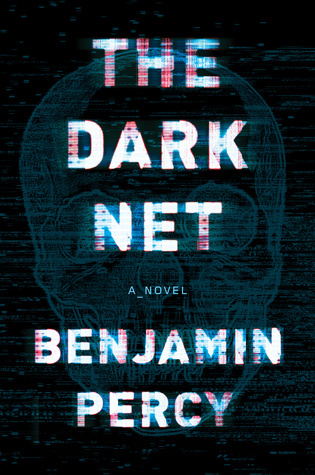
Take A Peek Book Review: The Dark Net by Benjamin Percy

“Take a Peek” book reviews are short and (possibly) sweet, keeping the commentary brief and providing a little peek at what the book’s about and what I thought.


Synopsis:

(via Goodreads)

Hell on earth is only one click of a mouse away…

The Dark Net is real. An anonymous and often criminal arena that exists in the secret far reaches of the Web, some use it to manage Bitcoins, pirate movies and music, or traffic in drugs and stolen goods. And now an ancient darkness is gathering there as well. This force is threatening to spread virally into the real world unless it can be stopped by members of a ragtag crew:

Twelve-year-old Hannah — who has been fitted with the Mirage, a high-tech visual prosthetic to combat her blindness– wonders why she sees shadows surrounding some people.

Lela, a technophobic journalist, has stumbled upon a story nobody wants her to uncover.

Mike Juniper, a one-time child evangelist who suffers from personal and literal demons, has an arsenal of weapons stored in the basement of the homeless shelter he runs.

And Derek, a hacker with a cause, believes himself a soldier of the Internet, part of a cyber army akin to Anonymous.

They have no idea what the Dark Net really contains.

Set in present-day Portland, The Dark Net is a cracked-mirror version of the digital nightmare we already live in, a timely and wildly imaginative techno-thriller about the evil that lurks in real and virtual spaces, and the power of a united few to fight back

My Thoughts:

This book wasn’t what I expected. I was looking forward to inventive techno-horror… but didn’t really get that until the final third of the book. Instead, we spend time with the main characters as they deal with the evil building up in Portland as the literal gates of Hell threaten to spill open and engulf the world. Parts of this book feel very 70s-throwback-ish, like The Omen with technology, as all sorts of demonic entities, including hellhounds and various gross and disgusting things come teeming out at people from dark corners… and it’s up to our ragtag bunch of misfit heroes to save the day.

In the final part of the book, we see how the forces of evil use the ubiquitous network of tech to infiltrate every person’s consciousness, providing a dire look at just how wired in and dependent we truly are (as if we had any doubt).

The Dark Net is a quick, sometimes gross, sometimes scary read that frightens more with its reflections on our lack of privacy in our cyber-dominated lives than by its invocation of demons and evil gaining world domination.

Interested in this author? See my review of The Dead Lands.

_________________________________________

The details:

Title: The Dark Net
Author: Benjamin Percy
Publisher: Houghton Mifflin Harcourt
Publication date: August 1, 2017
Length: 272 pages
Genre: Horror
Source: Library**

**Note: I originally received a review copy via NetGalley, but decided to wait to read a hard copy of the finished book instead.

**Save

Save

Save

Save

Save

Book Review: Love and Other Consolation Prizes by Jamie Ford

From the bestselling author of Hotel on the Corner of Bitter and Sweet comes a powerful novel, inspired by a true story, about a boy whose life is transformed at Seattle’s epic 1909 World’s Fair.

For twelve-year-old Ernest Young, a charity student at a boarding school, the chance to go to the World’s Fair feels like a gift. But only once he’s there, amid the exotic exhibits, fireworks, and Ferris wheels, does he discover that he is the one who is actually the prize. The half-Chinese orphan is astounded to learn he will be raffled off–a healthy boy “to a good home.”

The winning ticket belongs to the flamboyant madam of a high-class brothel, famous for educating her girls. There, Ernest becomes the new houseboy and befriends Maisie, the madam’s precocious daughter, and a bold scullery maid named Fahn. Their friendship and affection form the first real family Ernest has ever known–and against all odds, this new sporting life gives him the sense of home he’s always desired.

But as the grande dame succumbs to an occupational hazard and their world of finery begins to crumble, all three must grapple with hope, ambition, and first love.

Fifty years later, in the shadow of Seattle’s second World’s Fair, Ernest struggles to help his ailing wife reconcile who she once was with who she wanted to be, while trying to keep family secrets hidden from their grown-up daughters.

Against a rich backdrop of post-Victorian vice, suffrage, and celebration, Love and Other Consolations is an enchanting tale about innocence and devotion–in a world where everything, and everyone, is for sale.

Love and Other Consolation Prizes is a truly lovely look at memories, connections, and the complicated ways in which families are formed.

We meet Ernest as an adult in 1969, as the World’s Fair (with its brand-spanking-new Space Needle) is getting underway in Seattle. Ernest is living apart from his beloved wife Gracie because of a disorder that has stolen most of her memories and leaves her highly agitated whenever Ernest is around. As he sees the city preparing for the spectacle of the World’s Fair, he’s brought back to his memories of 1909, when he fell in love with two very different girls during a visit to the Alaska Yukon Pacific Expo, held at the very same place.

Ernest’s earliest memories are horrific — his life as a starving child in China whose mother gives him away because she knows she can’t care for him. He’s basically sold as chattel and carted across the sea to America, where he moves through a succession of charity homes and schools, always an outsider due to his interracial heritage. Equally horrible is the way in which his patron offers him off as a raffle prize, a humiliating experience for Ernest which ultimately leads to the happiest years of his life. As a 12-year-old servant in the Tenderloin brothel, he’s treated kindly and given a home, surrounded by the upstairs girls and the servants, all of whom shower him with love and make him feel for the very first time as if he truly belongs.

At the Tenderloin, he forms a deep attachment to both Fahn, a Japanese girl a few years older than him who works as a servant, and Maisie, the tomboy daughter of the house madam who seems destined to follow in her mother’s footsteps. The three of them form a tight-knit unit, and stick together through unexpected changes to their happy home.

Author Jamie Ford keeps us guessing until close to the end. We know that Ernest loved both girls as a young boy, and that he ended up married to one, but he manages to avoid revealing the answer without any unnecessary gimmicks. It works; both girls love Ernest and have special relationships with him. We can tell how much they all care for one another, with the purity of an adolescent friendship that hasn’t bloomed into outright romance.

Mixed in with Ernest’s memories of the early 20th century are scenes from 1969, as he begins to share pieces of his past with his grown daughter, revealing his own secrets but wanting to preserve his wife’s. As the novel progresses, the entire family is changed by some of the truths that begin to be revealed.

He drew a deep breath. Memories are narcotic, he thought. Like the array of pill bottles that sit cluttered on my nightstand. Each dose, carefully administred, use as directed. Too much and they become dangerous. Too much and they’ll stop your heart.

The writing in Love and Other Consolation Prizes is beautiful. Through rich descriptions, we get a true sense of Seattle in the early 20th century, with the flavors of its neighborhoods, the personalities and politics of its citizens, and the diversity and tensions springing from so many different people living in such close proximity to one another.

The descriptions of Ernest’s time at the Tenderloin really shine. The brothel isn’t tawdry; it’s an upscale establishment, frequented by the upper crust of Seattle society, with girls who receive dance, elocution, and Latin lessons in order to be able to entertain and converse intelligently with the clientele. The people of the Tenderloin are a family, and it’s only Madam Flora’s illness that brings an end to the idyllic days there.

Likewise, the more horrible aspects of Ernest’s past — the memories from China and the sea journey, especially — are painted for us in language evocative of the experiences as they would have been felt and remembered by a child. These sections of the book are upsetting and feel quite real, but since we know from the start that Ernest survived and ultimately thrived, the bad parts never overwhelm the more upbeat parts of the story.

I highly recommend Love and Other Consolation Prizes. As historical fiction, it succeeds in bringing the reader into the world of Seattle in both 1909 and 1969, tied together nicely by the World’s Fair at each of these two times. And as a story of human relationships and the complications of love, it simply shines. Love and Other Consolation Prizes is a gorgeously written book that tells a fascinating tale, and in my opinion, is one of 2017’s must-reads.

Interested in this author? Check out my review of his first novel, Hotel on the Corner of Bitter and Sweet.

_________________________________________

The details:

Title: Love and Other Consolation Prizes
Author: Jamie Ford
Publisher: Ballantine Books
Publication date: September 12, 2017
Length: 320 pages
Genre: Historical fiction
Source: Review copy courtesy of the publisher via NetGalley

Save

Save

Save

Save

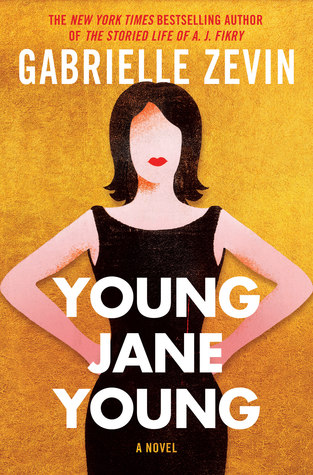
Book Review: Young Jane Young by Gabrielle Zevin

From the bestselling author of the beloved The Storied Life of A. J. Fikry comes another perfect fable for our times–a story about women, choices, and recovering from past mistakes.

Young Jane Young‘s heroine is Aviva Grossman, an ambitious Congressional intern in Florida who makes the life-changing mistake of having an affair with her boss‑‑who is beloved, admired, successful, and very married‑‑and blogging about it. When the affair comes to light, the Congressman doesn’t take the fall, but Aviva does, and her life is over before it hardly begins. She becomes a late‑night talk show punchline; she is slut‑shamed, labeled as fat and ugly, and considered a blight on politics in general.

How does one go on after this? In Aviva’s case, she sees no way out but to change her name and move to a remote town in Maine. She tries to start over as a wedding planner, to be smarter about her life, and to raise her daughter to be strong and confident. But when, at the urging of others, she decides to run for public office herself, that long‑ago mistake trails her via the Internet like a scarlet A. For in our age, Google guarantees that the past is never, ever, truly past, that everything you’ve done will live on for everyone to know about for all eternity. And it’s only a matter of time until Aviva/Jane’s daughter, Ruby, finds out who her mother was, and is, and must decide whether she can still respect her.

Gabrielle Zevin is an amazing writer, and in Young Jane Young, she captures the voices of the women narrators so well that it’s like hearing these very different people speak directly to us.

In turns narrated by Rachel (Aviva’s mother), Jane, her daughter Ruby, Embeth (the Congressman’s wife), and Aviva, we get a series of viewpoints and reactions to Aviva’s youthful mistake and how its consequences have persisted and affected all of their lives over the years.

Jane is grown-up Aviva, and she looks back on her 20s as if they were lived by a different person. She’s reinvented herself and left her past behind, but of course, nothing ever truly goes away. And to make a fresh start, she’s also left behind her mother, once her best friend, whom she equates with her shame and the insecurities of her past. Meanwhile, Ruby has no idea who her mother once was, and when the truth inevitably comes out, has to deal with the fallout in her own unique style.

The characters are each endearing in their own way. Rachel is a very Florida Jewish mother, who spends her mid-sixties with her best pal Roz, going to events at the local JCC and trying her hand at Internet dating. Jane is a savvy businesswoman whose success as a wedding planner stems in large part from her ability to empathize with the doubts and insecurities of her brides and to be there for them when they need her. Embeth is an interesting woman, who shows that there’s much more than meets the eye to the political wife who stands by her man. Ruby is a precocious, super smart girl who can’t fit in with her peers, but socializes flawlessly with the women of her mother’s world. And Aviva — young Jane Young — we get to know last of all, as we finally learn her take on the events that led to the affair with the Congressman, the ill-advised choices she made along the way, and the way scandal clings forever, courtesy of the Internet:

The discovery of your shame is one click away. Everyone’s is, not that that makes it any better. In high school, you read The Scarlet Letter, and it occurs to you that this is what the Internet is like. There’s that scene at the beginning where Hester Prynne is forced to stand in the town square for the afternoon. Maybe three or four hours. Whatever the time, it’s unbearable to her.

You will be standing in that square forever.

You will wear that “A” until you’re dead.

You consider your options.

You have no options.

Aviva compares her life to the Choose Your Own Adventure books that she enjoyed during childhood:

The way these books work is you get to the end of a section, and you make a choice, and then you turn to the corresponding page for that choice. You think how much these books are like life.

Except in Choose Your Own Adventure, you can move backward, and you can choose something else if you don’t like how the story turned out, or if you just want to know the other possible outcomes. You would like to do that, but you can’t. Life moves relentlessly forward. You turn to the next page, or you stop reading. If you stop reading, the story is over.

Ultimately, as Aviva narrates her choices and their outcomes, we see how she comes to the point where her only real option is reinvention — starting over as a new person, in a new place, and leaving her former story behind altogether.

Young Jane Young is witty, sad, entertaining, and unfortunately very real in what it has to say about women’s lives and women’s choices. Aviva made mistakes, to be certain — but she didn’t make them alone, and long past the point where she should be done paying, she still is stuck with the labels and judgments that she bears. Public opinion, sad to stay, still excuses the wealthy, well-positioned male in ways that it won’t for the young, foolish female. The disparity in the outcomes for Aviva and the Congressman are startling and upsetting, yet match quite well with what we all see in real-life public scandals and the apportionment of public shame.

I suppose, too, that Young Jane Young could serve as a sort of cautionary tale for people (especially women) on the cusp of their adult lives who don’t yet realize the permanence of certain choices and mistakes. But the book is much more than that. It shines a light on women’s relationships — the bonds of friendship, family, and compassion — and shows how vital these connections are in order to lead healthy lives. It shows the damage done, even without meaning to, by the constant judging that women endure over things — body size, clothing choices, etc — that really shouldn’t matter. It’s a bold feminist statement about the ongoing inequality in the public view, and how women are still held to different standards and face different consequences than their male counterparts.

I highly recommend Young Jane Young. Gabrielle Zevin creates people we care about, and she has a talent for making these character feel like people we might meet in our daily lives. I definitely laughed quite a bit while reading it (Rachel and Ruby in particular are terrifically funny people, even when experiencing moments that aren’t funny at all) — but also found myself sad and indignant and ready for a fight!

If you enjoy strong, entertaining, intelligent, vulnerable women leading the way, definitely check out Young Jane Young.

_________________________________________

The details:

Title: Young Jane Young
Author: Gabrielle Zevin
Publisher: Algonquin
Publication date: August 22, 2017
Length: 320 pages
Genre: Contemporary fiction
Source: Library

Save

Save

Save