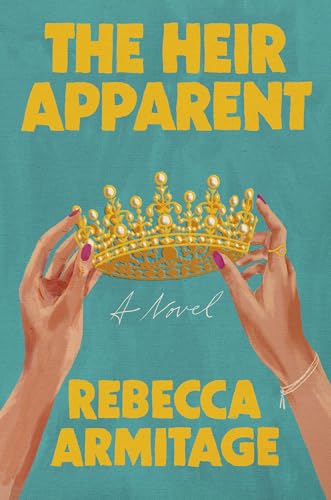
Book Review: The Heir Apparent by Rebecca Armitage

Title: The Heir Apparent
Author: Rebecca Armitage
Publisher: Cardinal
Publication date: December 2, 2025
Length: 409 pages
Genre: Contemporary fiction
Source: Library
Rating:

Rating: 5 out of 5.

An irresistible modern fairy tale about a British princess who must decide between her duty to her family—or to her own heart.

It’s New Year’s Day in Australia and the life Lexi Villiers has carefully built is working out nicely: she’s in the second year of her medical residency, she lives on a beautiful farm with her two best friends Finn and Jack, and she’s about to finally become more-than-friendly with Jack—when a helicopter abruptly lands.

Out steps her grandmother’s right-hand-man, with the tragic news that her father and older brother have been killed in a skiing accident. Lexi’s grandmother happens to be the Queen of England, and in addition to the shock and grief, Lexi must now accept the reality that she is suddenly next in line for the throne—a role she has publicly disavowed.

Returning to London as the heir apparent Princess Alexandrina, Lexi is greeted by a skeptical public not ready to forgive her defection, a grieving sister-in-law harboring an explosive secret, and a scheming uncle determined to claim the throne himself.

Her recent life—and Jack—grow ever more distant as she feels the tug of tradition, of love for her grandmother, and of obligation. When her grandmother grants her one year to decide, Lexi must choose her own destiny: will it be determined by an accident of birth—or by love?

The Heir Apparent is the newest pick for Reese’s Book Club, and it’s a great choice. Luckily for me, I was browsing my library’s website on the day this was announced, and was able to snag a copy right away.

Let’s start by talking about what this book isn’t, before I get into all the marvelous things it is. If all you’re going by are the cover and the blurb, you might be tempted to slot this book into the romance category, and that would be a mistake. Don’t be fooled by the “modern fairy tale” description — it’s really no such thing. This isn’t a story about a commoner suddenly discovering she’s secretly royal or getting swept away by a romance with a prince. In fact, while there is a love story embedded within the novel, it’s just one thread out of many that weave together to form a compelling whole.

I actually think the Australian cover and synopsis do a much better job of conveying the book’s tone and content:
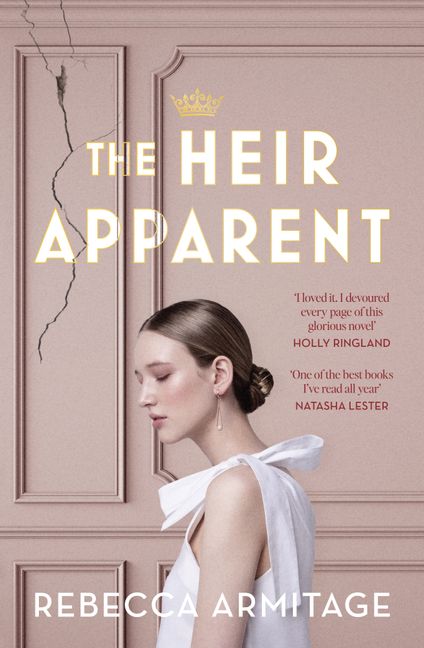
Lexi Villiers is a 29-year-old Englishwoman doing her medical residency in Hobart, working too hard, worried about her bank balance, and living with friends. It’s a good life, and getting even better, because as the dawn is breaking on New Year’s Day, Lexi is about to kiss the man she loves for the very first time. But by midnight, everything will change. Because Lexi is in fact not an ordinary young woman. She is Princess Alexandrina, third in line to the British throne – albeit estranged from the rest of her family and living in voluntary exile on the other side of the world. Following a terrible accident, Lexi finds herself the heir apparent. Called back to do her duty, she arrives in London to a Palace riven with power plays and media leaks, all the while guarding painful secrets of her own.

Doesn’t that sound very different?

In The Heir Apparent, Lexi is a medical resident in Tasmania, living in a shared cottage on a vineyard with her two closest friends, possibly about to admit the deep feelings she has for one of them. She’s also the granddaughter of Queen Eleanor of England, third in line to the throne after her father and twin (but two-minutes-older) brother Louis.

As the book opens, a helicopter arrives to inform Lexi that her father and brother have been killed in an avalanche while skiing in the Alps. Lexi is whisked back to England to take her place with the family for the elaborate rituals of mourning — and to take up her new position as heir apparent.

Lexi is all too aware of what this means. No more medical career, a life lived fully under the microscope of public (and paparazzi) scrutiny, the never-ending drama of palace intrigue and back-biting and scandalous leaks. And she should know, better than anyone: Her mother was the tragic Princess Isla, living in a loveless marriage while her husband pined (and carried on with) his first true love, eventually divorced, stripped of titles and protection, and the most gossiped about woman in the world. Lexi is still haunted by nightmares related to Isla’s tragic death when Lexi and Louis were teens. How can Lexi embrace a life that destroyed her mother so thoroughly?

At the same time, Lexi loves her grandmother and was raised with duty to the Crown as the highest calling. As Lexi navigates a return to life as a royal, she must weight the responsibilities and privileges hurtling toward her. The Queen gives her a year to make a decision: Accept her place as heir apparent and all that entails, or walk away permanently.

If the general outline of the royal family sounds familiar, but slightly changed, there’s a reason. In the world of The Heir Apparent, royal history veered from our own centuries earlier, when Barbara Villiers — historically, mistress to King Charles II — became Queen. Here, the royal family is of the House Villiers, and Barbara is revered as the strong, intelligent queen who created a dynasty.

And yet, the parallels to the real-life royal family are obvious, from the long-lived Queen Eleanor to the scandals surrounding Lexi’s parents’ marriage and divorce, to her mother’s heroism in visiting war-torn countries and speaking out for children, to the unending speculation surrounding Isla’s death. Lexi is in some ways a stand-in for a certain prince, as she walked away from her role as a working royal years earlier in order to achieve a life of her own far, far away, resulting in estrangement from her father and brother. And of course, the palace leaks and manipulations in the novel are quite as devious and inescapable as we’ve heard described over and over again in real life.

What I loved about The Heir Apparent is the inner look at what this life means to Lexi. It’s not cut and dried; she’s bound by tradition, love for family, and the respect for the Crown that’s been drilled into her since birth. At the same time, she’s seen just how poisonous such a life can be, as the secrets that haunted her closest family members led to pain and suffering, over and over again. Lexi is a complex character who’s fought hard to pursue a life of meaning, choosing service as a medical professional over the much loftier type of service life as a royal entails, and she’s found joy in it. But she can’t walk away, once she becomes the heir apparent, before truly giving this alternate life a chance, weighing whether she can be the future Queen that her grandmother expects, as the world watches to judge whether she succeeds or fails.

The book is structured around the events following the helicopter’s arrival, but interspersed chapters take us back to Lexi’s childhood, teen, and early adult years. Secrets are teased and slowly doled out. We know there’s more than Lexi is sharing about her past; we know she’s haunted by the family estrangement and how she cut ties with her brother over the past several years. But as we see in the chapters set earlier, they were once incredibly close. How their lives split and fell apart is key to understanding who Lexi is now, as are the rest of the secrets that eventually get revealed as the story progresses.

An underlying theme throughout The Heir Apparent, beyond the family drama and palace intrigue, is the overarching question about the role and relevancy of a monarchy in the modern age, as well as the dark side of the monarchy’s history of colonialism and empire. The author does not shy away from these aspects, and this subtext provides yet another layer to Lexi’s struggle to understand her role, what’s expected of her, and what her choices ultimately mean.

For those who enjoy the peek-behind-the-scenes vibe of royal-themed novels and movies, there’s plenty of that here as well, as we see Lexi poked, prodded, smoothed, painted, and shaped into a princess worthy of public display. The inner workings of palace life are revealed, with scenes involving the various aides and assistants and vastly complex protocols that control every inch and second of royal family life.

The Heir Apparent is certain to appeal to fans of The Crown. Those who read and enjoyed Prince Harry’s Spare will find certain emotional resonances here as well in areas where Lexi’s experiences feel achingly familiar. I’ll throw in a more offbeat reference too: The Heir Apparent strongly brought to mind The Goblin Emperor, which is a stellar example of fantasy genre storytelling and world-building. The Goblin Emperor revolves around a character so far down the line of succession that he’s considered worthless — until a freak accident kills off the Emperor and all of the older heirs. In that book as well as this one, the main characters must navigate finding themselves heir to the throne when it was absolutely never even considered a possibility. It’s fascinating to compare the parallels in these very different stories.

Summing it all up…

Well-written, emotional, and utterly gripping, The Heir Apparent tells a great story while also providing food for thought and an emotionally relatable main character. I felt completely invested in Lexi’s choice, battling with myself over what the right decision might be, and unable to put the book down before we finally learn what Lexi’s path will be.

Even for readers who don’t normally take an interest in royalty, the experiences of the main character here make for compelling reading. Highly recommended.

Resources and information:

Blog post via Reese’s Book Club: https://reesesbookclub.com/how-do-you-trust-your-loved-ones-when-every-secret-is-a-weapon/
Author bio: https://rebeccaarmitage.com/about/
NPR review: https://www.npr.org/2025/12/07/nx-s1-5600903/a-royal-romance-novel-with-the-british-throne-at-stake
Publishers Weekly review: https://www.publishersweekly.com/9781538776308

Purchase linksAmazon – AudibleBookshop.orgLibro.fm
Disclaimer: When you make a purchase through one of these affiliate links, I may earn a small commission, at no additional cost to you.
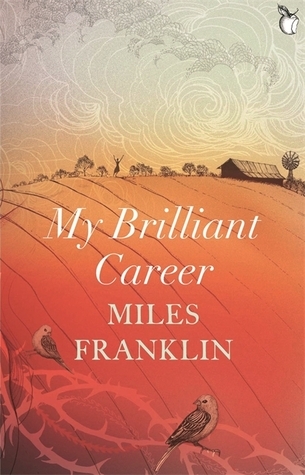
Book Review: My Brilliant Career by Miles Franklin (Classics Club Spin #42)

Title: My Brilliant Career
Author: Miles Franklin
Publication date: 1901
Length: 228 pages
Rating:

Rating: 4.5 out of 5.

The fierce, irreverent novel of aspiration and rebellion that is both a cornerstone of Australian literature and a feminist classic

Miles Franklin began the candid, passionate, and contrary My Brilliant Career when she was only sixteen, intending it to be the Australian answer to Jane Eyre . But the book she produced-a thinly veiled autobiographical novel about a young girl hungering for life and love in the outback-so scandalized her country upon its appearance in 1901 that she insisted it not be published again until ten years after her death.

And the synopsis from another edition:

Trapped on her parents’ farm in the hardscrabble Australian outback, sixteen-year-old Sybylla Melvyn loves the bush but not the toil it brings. She longs for refinement, and most of all she longs to achieve great things.

Suddenly she falls under the gaze of wealthy, handsome Harry Beecham and finds herself choosing between the conventional path of marriage and her plans for a ‘brilliant career’.

I don’t remember exactly how I became aware of My Brilliant Career, but once it caught my eye, I just knew I needed to add it to my Classics Club Spin list. I’m so glad that the most recent spin landed on this Australian classic!

This was life—my life—my career, my brilliant career! I was fifteen—fifteen! A few fleeting hours and I would be old as those around me.

In My Brilliant Career, teen-aged Sybylla has little to no say in her own life. One of many children, she experiences a severe downturn in her family’s fortunes when her father’s poor business decisions cause then to lose their vast land holdings and move to a smaller, less promising farm. Things go from bad to worse as their father continues to lose money and livestock, and then drink away what little money remains. When a drought leads to even more ruin, Sybylla is sent to live with her grandmother several days’ journey away, where she finally has the opportunity to explore music, books, and a more rewarding and enjoyable life.

While there, Sybylla catches the eye of a wealthy, attractive nearby landowner. We might expect a whirlwind romance to follow, but Sybylla absolutely does not fit the mold of a romantic heroine. She’s mean and dismissive, considers herself ugly, does not wish to be courted, and both yearns to awaken heightened emotions in her suitor and dreads declarations of love, repeatedly (and harshly) rejecting any talk of marriage. Sybylla doesn’t know exactly where her future lies, but she doesn’t see herself finding happiness as a respectable wife, and certainly doesn’t believe that she could make a husband happy, no matter how much he might believe he loves her.

My Brilliant Career is remarkable for its narrative tone, as well as for the unusualness of its main character and her decisions. This book is considered a groundbreaking classic of Australian fiction as well as of feminist literature. Published under a pseudonym when the author was just 21 years old, this debut novel was the first of many books and other writings to follow in the author’s career.

For more on the significance of My Brilliant Career: https://www.nma.gov.au/defining-moments/resources/my-brilliant-career

I loved the writing, especially Sybylla’s orneriness and humor. Her descriptions of her surroundings can be stunning, evoking the time and place with precision, and using Australian lingo that’s sure to both amuse and befuddle non-Australian readers.

Beyond that, Sybylla’s way of thinking is unique, and I loved the way she expresses herself:

I am afflicted with the power of thought, which is a heavy curse. The less a person thinks and inquires regarding the why and the wherefore and the justice of things, when dragging along through life, the happier it is for him, and doubly, trebly so, for her.

My mother is a good woman—a very good woman—and I am, I think, not quite all criminality, but we do not pull together. I am a piece of machinery which, not understanding, my mother winds up the wrong way, setting all the wheels of my composition going in creaking discord.

Girls! girls! Those of you who have hearts, and therefore a wish for happiness, homes, and husbands by and by, never develop a reputation of being clever. It will put you out of the matrimonial running as effectually as though it had been circulated that you had leprosy. So, if you feel that you are afflicted with more than ordinary intelligence, and especially if you are plain with it, hide your brains, cramp your mind, study to appear unintellectual—it is your only chance.

On making my first appearance before my lover, I looked quite the reverse of a heroine. My lovely hair was not conveniently escaping from the comb at the right moment to catch him hard in the eye, neither was my thrillingly low sweet voice floating out on the scented air in a manner which went straight to his heart, like the girls I had read of. On the contrary, I much resembled a female clown.

The ending of the book startled me, not because it ends with high drama, but rather because the character rejects what seems like her best prospect for change, and chooses to remain in the same family routine of working to scratch out a living on the land. I puzzled over the final chapter quite a bit and reread it several times before feeling satisfied that I got the point.

Overall, I’m really pleased that my most recent spin landed on My Brilliant Career. It makes me eager to explore more Australian fiction of the 20th century — please share any recommendations!

A reading note: I read this book via a free edition available for Kindle… and it was absolutely plagued with typos. If you’re considering reading My Brilliant Career, I’d recommend checking the library for a print edition or an e-book edition from a traditional publisher!

My Classics Club Spin book for fall 2025 will be…

Earlier in the week, I shared a post with my list of books for the newest Classics Club Spin challenge (see it here), and today, this spin’s number was announced. (For those keeping track, it’s CCSpin #42, and for me personally, #14!)

Hosted by The Classics Club blog, the Classics Club Spin is a reading adventure where participants come up with a list of classics they’d like to read, number them 1 to 20, and then read the book that corresponds to the “spin” number that comes up.

For CCSpin #42, the lucky number is:

And that means I’ll be reading:

My Brilliant Career by Miles Franklin
Published 1901

Synopsis:

The fierce, irreverent novel of aspiration and rebellion that is both a cornerstone of Australian literature and a feminist classic

Miles Franklin began the candid, passionate, and contrary My Brilliant Career when she was only sixteen, intending it to be the Australian answer to Jane Eyre . But the book she produced-a thinly veiled autobiographical novel about a young girl hungering for life and love in the outback-so scandalized her country upon its appearance in 1901 that she insisted it not be published again until ten years after her death.

And from another edition:

Trapped on her parents’ farm in the hardscrabble Australian outback, sixteen-year-old Sybylla Melvyn loves the bush but not the toil it brings. She longs for refinement, and most of all she longs to achieve great things.

Suddenly she falls under the gaze of wealthy, handsome Harry Beecham and finds herself choosing between the conventional path of marriage and her plans for a ‘brilliant career’.

My Brilliant Career has been on my to-read list for a few years now. I don’t recall exactly how I first came across this book, but I believe it’s thanks to stumbling across it on someone else’s blog! I’m always up for exploring more Australian fiction, and this early 20th century classic sounds like a book that’s right up my alley

For my 2025 spins, I’ve been focusing on 20th century literature — inspired by a reading challenge to read (at least) one book from each decade of the century. My Brilliant Career was originally published in 1901, and helps me check off one of my remaining decades!

I’m excited to start My Brilliant Career — probably in a few weeks, after I finish up a few more ARCs for upcoming new releases. The deadline to finish this spin book is December 21st, which gives me plenty of time. I’ll be back with my reaction before then.

What do you think of my spin result this time around?

Here’s my list of 20 titles for Classics Club Spin #42:

  1. The House on the Strand by Daphne DuMaurier
  2. The Story of My Life by Helen Keller
  3. A Damsel in Distress by P. G. Wodehouse
  4. The Ivy Tree by Mary Stewart
  5. This Rough Magic by Mary Stewart
  6. The Mysterious Affair at Styles by Agatha Christie
  7. White Fang by Jack London
  8. A Little Princess by Frances Hodgson Burnett
  9. The Secret Garden by Frances Hodgson Burnett
  10. The Mysterious Affair at Styles by Agatha Christie
  11. The Wonderful Wizard of Oz by L. Frank Baum
  12. Something Wicked This Way Comes by Ray Bradbury
  13. The Painted Veil by W. Somerset Maugham
  14. Frederica by Georgette Heyer
  15. The Return of the Soldier by Rebecca West
  16. The Left Hand of Darkness by Ursula K. Le Guin
  17. My Brilliant Career by Miles Franklin
  18. A Damsel in Distress by P. G. Wodehouse
  19. The House on the Strand by Daphne DuMaurier
  20. My Brilliant Career by Miles Franklin

My previous Classics Club Spin books:

Are you participating in this Classics Club Spin? If so, what book will you be reading?

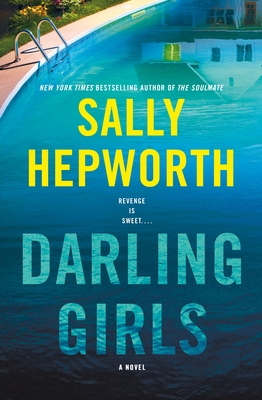
Book Review: Darling Girls by Sally Hepworth

Title: Darling Girls
Author: Sally Hepworth
Publisher: St. Martin’s Press
Publication date: April 23, 2024
Length: 368 pages
Genre: Thriller
Source: Review copy courtesy of the publisher via NetGalley (also won a copy in a Goodreads giveaway)
Rating:

Rating: 4 out of 5.

SISTERS, SECRETS, LOVE, AND MURDER… Sally Hepworth’s new novel has it all.

For as long as they can remember, Jessica, Norah, and Alicia have been told how lucky they are. As young girls they were rescued from family tragedies and raised by a loving foster mother, Miss Fairchild, on an idyllic farming estate and given an elusive second chance at a happy family life.

But their childhood wasn’t the fairy tale everyone thinks it was. Miss Fairchild had rules. Miss Fairchild could be unpredictable. And Miss Fairchild was never, ever to be crossed. In a moment of desperation, the three broke away from Miss Fairchild and thought they were free. Even though they never saw her again, she was always somewhere in the shadows of their minds. When a body is discovered under the home they grew up in, the foster sisters find themselves thrust into the spotlight as key witnesses. Or are they prime suspects?

A thrilling page-turner of sisterhood, secrets, love, and murder by New York Times bestselling author Sally Hepworth.

If you’ve read any books by Sally Hepworth, you know to expect twists, turns, and then even more twists. Darling Girls delivers them all, and packs in plenty of complex relationships and emotions as well.

In Darling Girls, we meet Jessica, Alicia, and Norah — a chosen family of sisters who came together through traumatic years as foster children. Despite the terrible experiences they endured as young teens, their relationship has been the bedrock of their years since then. Now adults, they’re all dysfunctional in different ways, but their sister bonds are the one constant that keeps them grounded.

When bones are found under the demolished home where they once lived, they’re summoned back to the town of Port Agatha to give statements to the police. What actually happened at Wild Meadows? Whose bones could they be? And are the sisters witnesses or suspects?

Through flashback chapters, we learn more about their childhood. Jessica was the first to be fostered with Miss Fairchild, a seemingly lovely woman whose farmhouse and grounds appear to be ideal for a small child. And at first, everything is perfect. Miss Fairchild dotes on Jessica, encourages her to call her “Mummy”, and never wants them to be apart. There are downsides, of course: When Jessica begins attending school and talking about new friends, she’s quickly shut down. No one is allowed to replace Mummy as the center of Jessica’s life.

Years later, when Miss Fairchild also takes in Norah and Alicia, Jessica’s world is abruptly changed yet again, as she’s reprimanded, punished, and pushed aside. But Miss Fairchild’s iron control is slipping — she hadn’t anticipated the girls’ bond or that they might start to question her rules and her methods.

It’s best not to know much more than that when reading Darling Girls. The characters are quite interesting — the sisters all have lasting scars from their years in the foster system, and their trauma manifests in different ways. The depiction feels realistic, and it’s sad and scary to read. At the same time, the chosen family is beautiful in its own way, and I loved seeing the unwavering support that Jessica, Norah, and Alicia provide to one another.

Being a Sally Hepworth book, I knew to expect to have my expectations up-ended, and that’s exactly what happened. I’m not a frequent thriller reader, but diving in every once in a while and going along for the roller coaster ride is quite fun.

As with all books by this author, Darling Girls is immersive and impossible to put down. It made me think, it gave me a few chills along the way, and it definitely kept me on my toes. Check it out!

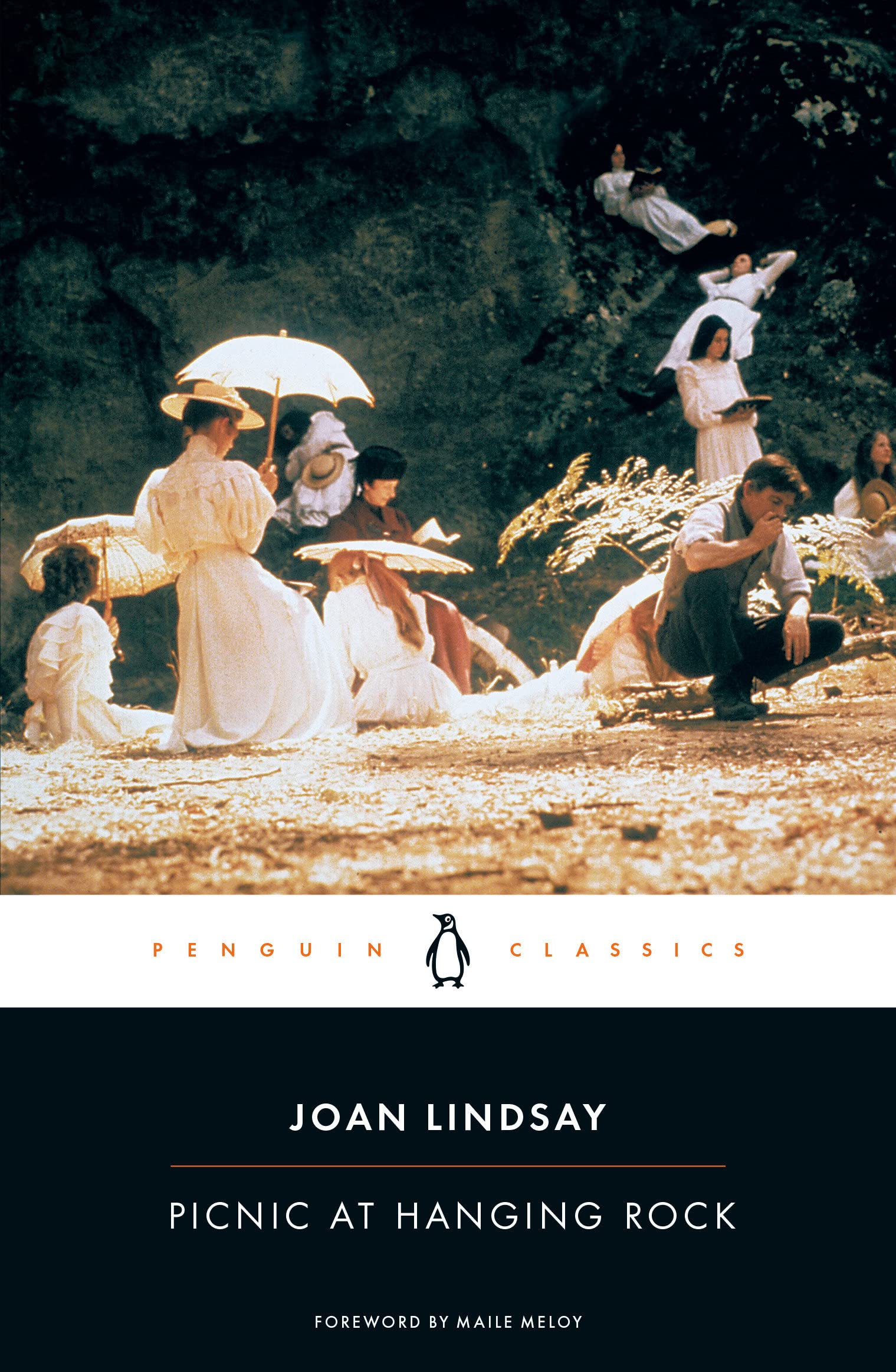
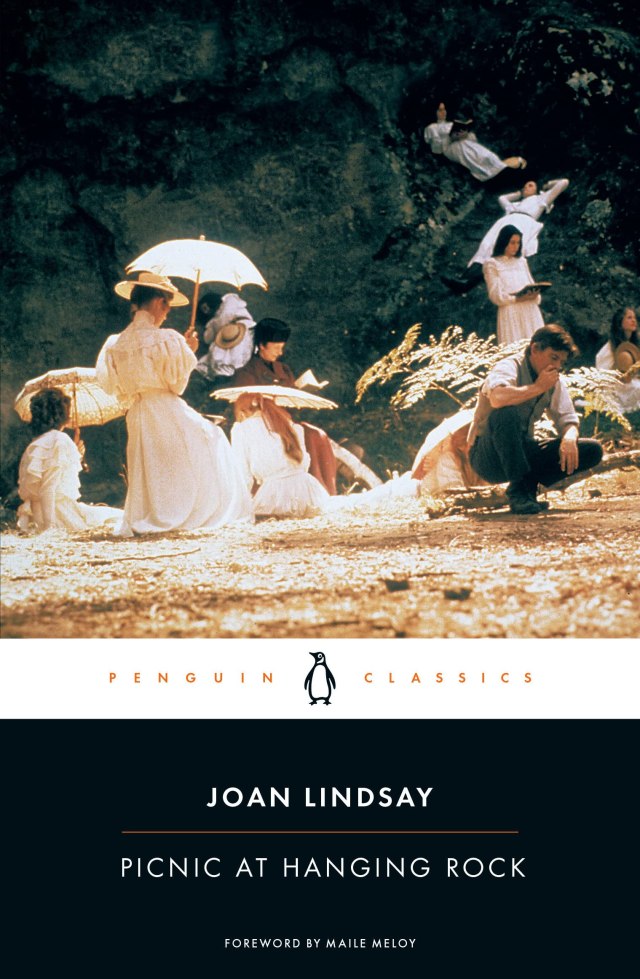
Picnic at Hanging Rock by Joan Lindsay: Book, movie, and TV (Classics Club Spin #33)

This was originally going to be a book review post dedicated to my newest Classics Club Spin book… but then I got carried away! Not only did I read the book, but I also watched the movie and TV mini-series versions as well. Read on for my thoughts on all three (or, for the tl;dr version, jump right to the end!)

Let’s start where all such things should start — the book:

Title: Picnic at Hanging Rock
Author: Joan Lindsay
Publication date: 1967
Length: 204 pages
Rating:

Rating: 4.5 out of 5.

Synopsis (Goodreads):

It was a cloudless summer day in the year 1900. Everyone at Appleyard College for Young Ladies agreed it was just right for a picnic at Hanging Rock. After lunch, a group of three girls climbed into the blaze of the afternoon sun, pressing on through the scrub into the shadows of the secluded volcanic outcropping. Farther, higher, until at last they disappeared. They never returned. . . .

Mysterious and subtly erotic, Picnic at Hanging Rock inspired the iconic 1975 film of the same name by Peter Weir. A beguiling landmark of Australian literature, it stands with Shirley Jackson’s We Have Always Lived in the Castle, Daphne du Maurier’s Rebecca, and Jeffrey Eugenides’ The Virgin Suicides as a masterpiece of intrigue.

Picnic at Hanging Rock is my most recent Classics Club Spin book. This is a book I’ve had my eye on for some time, so I was delighted when its number came up!

This 20th century Australian classic centers around the Appleyard College for Young Ladies, run by headmistress Mrs. Appleyard, a stiff and proper Englishwoman who enjoys the income afforded her by providing a fine finishing school education for the daughters of Australian society’s affluent families.

As the story opens, it’s Valentine’s Day, 1900, and the young women of Appleyard are setting out on a picnic, chaperoned by two teachers. It’s a hot day, and their destination lies hours away by horse-drawn carriage. After the excitement of receiving Valentine’s cards, emotions are running high. The girls are eager for adventure, yet must always remember the expectation that they behave like proper young ladies.

After a picnic at the foot of the towering Hanging Rock, as it’s almost time for the return journey, a few girls beg permission to take a short walk along the stream… and never return. Hours pass; finally, one of the party returns in terror, but with no explanation of what’s actually happened. No sign can be found of the three missing girls, and what’s more, it’s discovered that one of the teachers has also vanished. As night approaches, there’s no choice but to return to the school.

An intense manhunt follows, and while one girl is eventually found — but again, with no memories of what happened to her or the others — there’s no luck in finding the others. Rumors and intrigue spread; the incident becomes known as the College Mystery. Months pass, and the ripples of that fateful day spread and touch more and more people — and the enigmatic Mrs. Appleyard seems to slowly fall apart as well.

The writing in Picnic at Hanging Rock is lush and vivid. The depiction of Hanging Rock is stark, and the author carefully describes not just the rock formations themselves, but all the flora and fauna of the area as well. The contrast between the proper, buttoned-up, virginal girls and the wildness of their environment is vivid — while providing a simulated British boarding school environment, the school cannot help but also expose the girls to the dangerous, venomous, and treacherous landscapes all around them.

This book is quite famous for not actually answering the questions it raises. This isn’t a whodunnit with a big reveal at the end. We don’t know, and never find out, what truly happened to the missing girls. There’s another large question at the end that also doesn’t get answered. People appear in the story, and then fade from it, with the author pointing out at various points that this is where so-and-so’s role ends, and we hear no more from them.

A modern-day reader used to fast-paced thrillers and explosive plot twists might find this book slow, but I actually loved it. The mood builds slowly yet inexorably. There’s intrigue and dread, yet we also gets views of love and passion, disappointments and escapes, jealousies and fears. There’s an insidious sense of doom — from the day of the picnic, everything begins going downhill, even when the connections aren’t obvious.

There’s much debate about what happened to the girls. Were they attacked, murdered, kidnapped? Simply lost, perhaps fallen down a cliff? Were supernatural elements at play? An unpublished final chapter holds the key to the author’s original explanation, but even after reading about it, I think I’m happier with the book not providing answers to the mysteries.

I’m glad to have read Picnic at Hanging Rock. It’s a tautly-written, fairly short novel that contains great writing and creates an eerie, aching mood. Highly recommended.

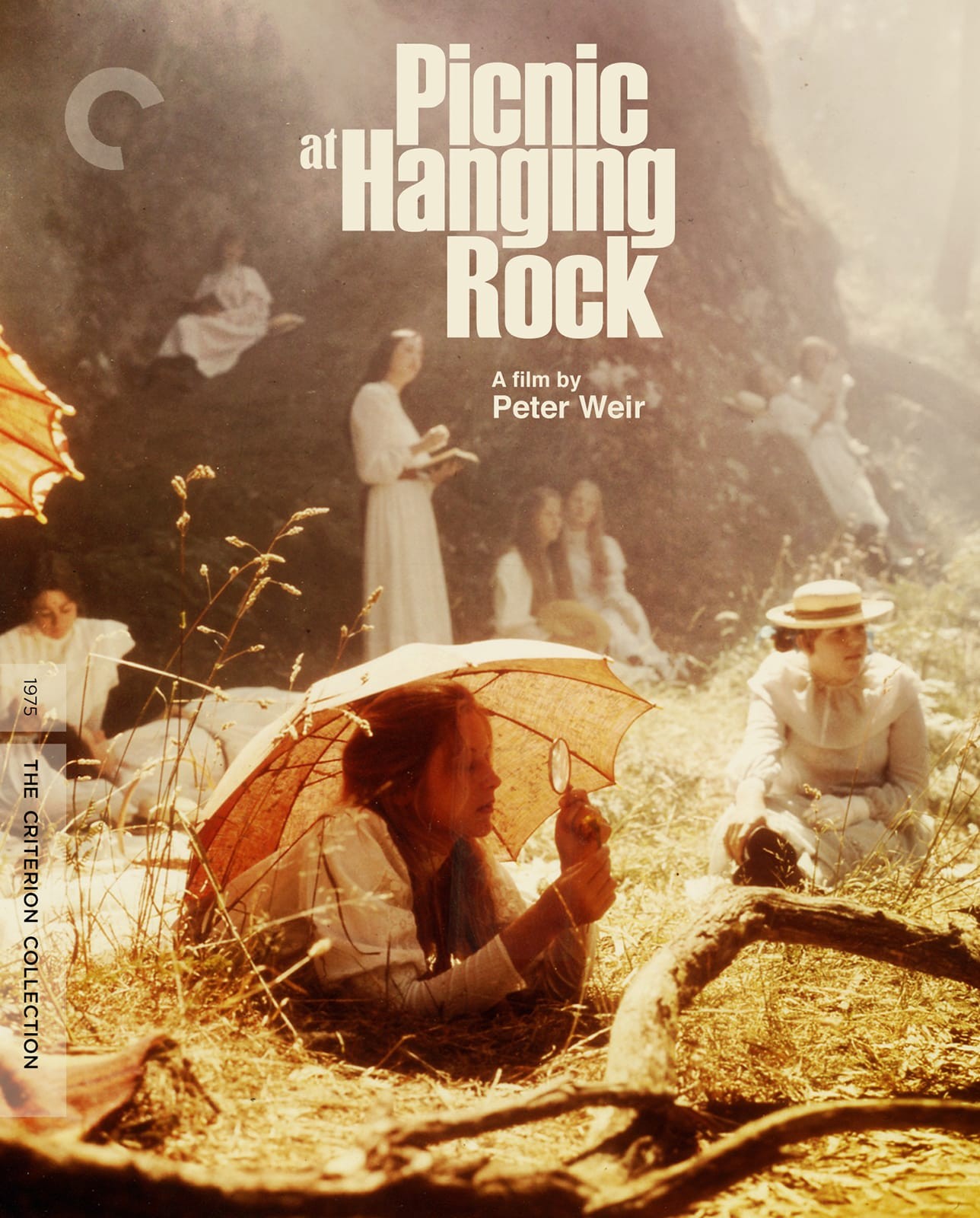
Next up, the first filmed version of Picnic at Hanging Rock:

Right after finishing the book, I watched the 1975 film by director Peter Weir, which is considered a movie masterpiece. At the time of its release, Vincent Canby of the New York Times wrote:

HORROR need not always be a long-fanged gentleman in evening clothes or a dismembered corpse or a doctor who keeps a brain in his gold fish bowl. It may be a warm sunny day. the innocence of girlhood and hints of unexplored sexuality that combine to produce a euphoria so intense it becomes transporting, a state beyond life or death. Such horror is unspeakable not because it is gruesome but because it remains outside the realm of things that can be easily defined or explained in conventional ways.

Read full review, here, and an opinion piece written in 2017, here.

The movie delivers on the mood of the book, from start to finish. It’s cinematic in scope and has a dreamlike quality, often focusing in on the girls’ faces, showing their beauty and their overpowering emotions. Emotion rules everything — the girls’ romantic passion while reading Valentine cards, the devotion of a younger girl to an older, the delight of peeling off gloves and shoes as soon as civilizing forces are left behind, and for the young men encountered at the picnic, the obsessive dreams that follow a mere glimpse of a girl of startling beauty.

We also clearly see the downside of these emotional states, as various group scenes turn hysterical or threatening, when heightened emotions turn the girls (or in another instance, local townsfolk) into menacing mobs.

The film captures the book’s contrasts between the British-style manners and rules of the school and the untamable nature of the Australian bush, with gorgeous shots of the girls in white dresses disappearing between stones or coming in contact with insects and lizards. There were times in the book where I couldn’t quite connect the physical descriptions of the landscape with an image in my mind, so seeing the settings in the movie was very powerful.

The movie is just as ambiguous as the book. There’s no attempt to provide answers or tie things up neatly. The point of the movie is the feelings it evokes.

For further reading, here’s an interview piece on the themes of the movie (but proceed with caution — there are plot spoilers): http://www.filmcritic.com.au/reviews/p/picnic_hanging.html

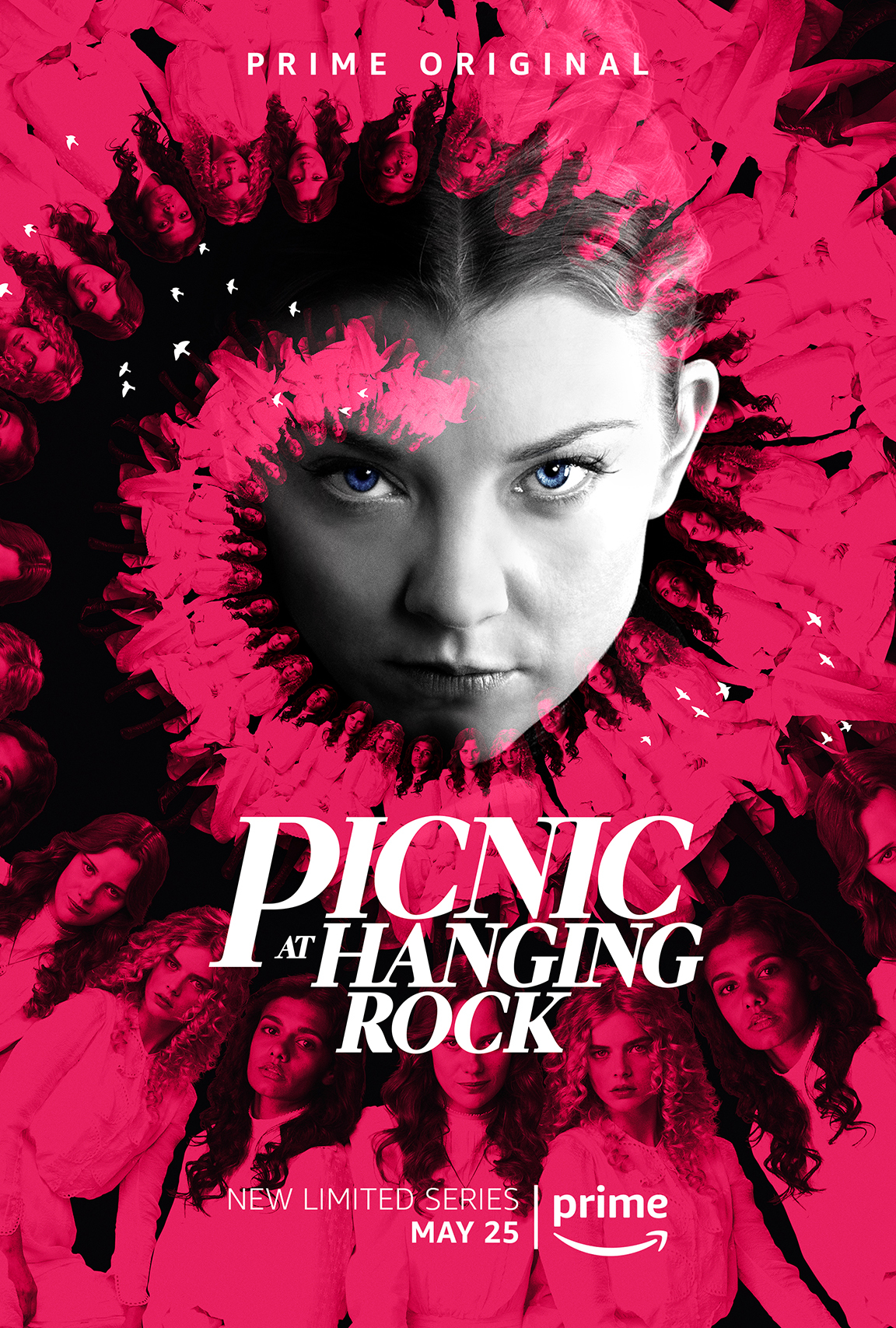
Finally, my 2nd viewing experience — the 2018 mini-series, currently streaming on Prime Video.

This six-episode TV mini-series stars Natalie Dormer as the domineering headmistress Mrs. Appleyard. Based on the key art alone, it’s clear that this version is going for a very different vibe.

According to the Variety review:

Joan Lindsay’s much-acclaimed 1967 Australian novel “Picnic At Hanging Rock” has already resulted in one stunning adaptation — Peter Weir’s 1975 film of the same name — so a second attempt, this time a television series, may already feel unnecessary. But it doesn’t take long for writers Beatrix Christian and Alice Addison to make the case for their own 2018 “Picnic,” a darker, more mysterious, and extended version that manages to feel updated for our time while still keeping the original 1900 setting.

In “Picnic At Hanging Rock,” the central mystery is laid out immediately: Four young women — three students and their teacher — suddenly vanish on Valentine’s Day, 1900, while on a school picnic at, well, Hanging Rock. The base premise is familiar to fans of crime series, but this is no ordinary drama; it’s eerie and haunting. It’s less dreamy (a quality frequently ascribed to the film) and more of a nightmare that you’ll be eager to dive into.

(For an additional critical take on this mini-series, check out the New York Times review, here.)

Over the course of six episodes, the bones of the plot of Picnic at Hanging Rock remain intact, but the mini-series expands just about every element, creating backstories for many characters, envisioning heaps more romantic entanglements, and showing scenes of events at the Rock that are eerie and perhaps even intriguing, but that don’t ultimately add a whole lot to the story.

The key change, of course, is the character of Mrs. Appleyard. It’s evident early on that she is not what she seems. Rather than an older widowed Englishwoman focused on the profitability of turning out refined young women, here, she’s a scheming con artist posing as a wealthy, respectable woman — but we’re treated to her hidden Cockney accent early on, and through flashbacks, learn much more of her character.

The girls in her care are sympathetic, much more diverse than in the 1975 movie, and more explicitly curious about their own sexuality as well as the eroticism of the untamed world beyond the confines of the school. The cruelty and abuse are much more explicit here as well, and certain subplots and side characters are completely extraneous, either there as deliberate sensationalism or as plot padding.

The middle few episodes sag, and I had to restrain myself from fast-forwarding, but by the end, I did want to see the wrap-up and how it all plays out. The mini-series keeps some (but not all) of the ambiguity of the source material, but the heavy focus on Mrs. Appleyard makes many of the other elements fade into the background, and some of the romantic entanglements seem to serve no purpose other than distraction.

I suppose I’m glad to have watched the mini-series — to satisfy my curiosity and for the sake of completion — but I would have been perfectly fine without it too.

But don’t let me talk you out of checking it out! Here’s the trailer — see if it piques your interest:

Back to the Classics Club Spin:

Yes, I ventured far afield, not just reading my chosen book, but watching two different adaptations as well. And to wrap it all up, I’ll simply say:

THE BOOK: Haunting, eerie, ambiguous, beautiful

THE 1975 MOVIE: Dreamlike and artistic, maybe not suited to 21st century moviegoer tastes, but as an older film, it’s lovely to see. Even when the plot gets lost amidst the gorgeous cinematography, the spell of the movie makes it worthwhile.

THE 2018 MINI-SERIES: OK if you like this sort of thing. It’s all a bit of a muddle, dreamy in parts and then crossing over into a campier gothic feel. (Maybe I’m alone in this reaction — has anyone else seen it?)

The biggest takeaway: Picnic at Hanging Rock is definitely worth reading, and I’m so glad I did.

Can’t wait for the next CCSpin!

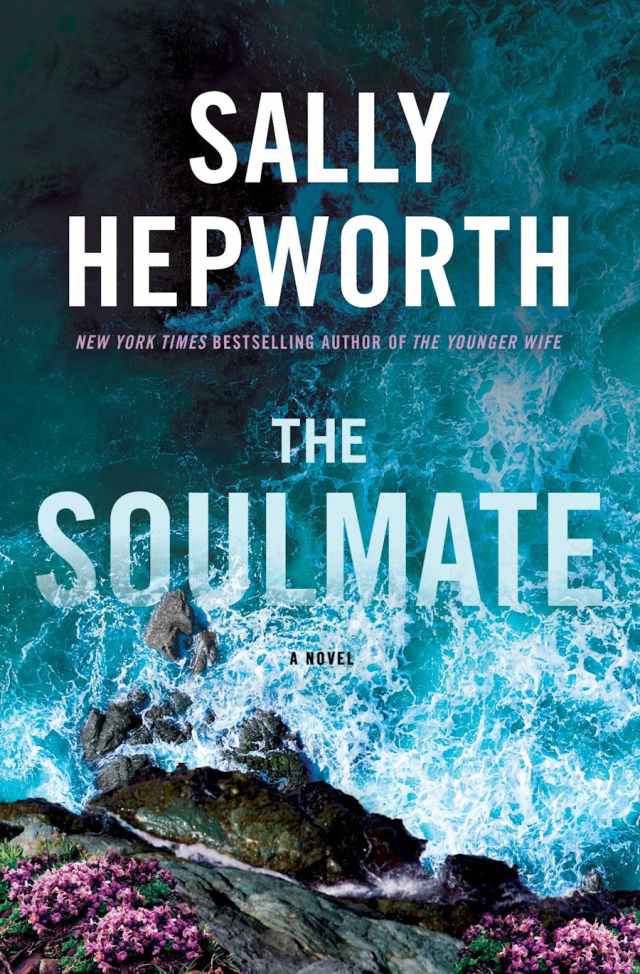
Book Review: The Soulmate by Sally Hepworth

Title: The Soulmate
Author: Sally Hepworth
Publisher: St. Martin’s Press
Publication date: April 4, 2023
Length: 336 pages
Genre: Thriller
Source: Review copy courtesy of the publisher via NetGalley
Rating:

Rating: 3 out of 5.

Get ready for a thrilling, addictive novel about marriage, betrayal, and the secrets that push us to the edge in Sally Hepworth’s The Soulmate.

There’s a cottage on a cliff. Gabe and Pippa’s dream home in a sleepy coastal town. But their perfect house hides something sinister. The tall cliffs have become a popular spot for people to end their lives. Night after night Gabe comes to their rescue, literally talking them off the ledge. Until he doesn’t.

When Pippa discovers Gabe knew the victim, the questions spiral…Did the victim jump? Was she pushed?

And would Gabe, the love of Pippa’s life, her soulmate…lie? As the perfect facade of their marriage begins to crack, the deepest and darkest secrets begin to unravel.

I’ve read all but one of Sally Hepworth’s novels by now, and when I look back at my ratings and reviews, I can see that her books are either big hits for me (especially The Good Sister and The Things We Keep) or so-so reads that I could have done without. Sadly, The Soulmate falls into the latter category.

Content warning: Suicide is a recurring topic in this book, as are mental health concerns, diagnoses, and treatments. I would not recommend this book for readers for whom these topics might be triggering.

In The Soulmate, two different women narrate a dramatic occurrence, what happened before, and what happens next. Oddly, one of these two women is already dead when we meet her as a narrator, and she tells her side of the story from her afterlife.

Pippa lives with her gorgeous, wonderful husband Gabe in a cottage by a cliff’s edge. It’s a beautiful location, but with a downside — the cliff facing their home is known locally as The Drop, and it’s a spot that’s known for its number of suicides. Once they move in, Gabe keeps an eye on the cliff, and in the year they’ve been there, has managed to talk seven different people away from the edge with his calm, caring approach. He’s a local hero.

But everything changes when a woman on the cliff doesn’t step away. Pippa comforts Gabe, assuring him that he did all he could. But something nags at Pippa — what she saw and the way Gabe described it to police don’t quite match up.

The woman who died is Amanda, and she shares her story as well, going back to the early days of her own marriage. As the story progresses, we see how Amanda and her husband Max are connected to Pippa and Gabe. There are dark secrets, and clearly there’s more to Amanda’s death than meets the eye.

I found the characters very hard to relate to or even care about. Pippa is the only decent one in the mix, although Amanda isn’t a bad person necessarily — but she does allow herself to turn a blind eye to all sorts of shady and criminal business dealings and enjoy the lifestyle funded by Max’s success.

The more we learn, the harder it is to fathom why Pippa would remain in her marriage, and it’s frustrating to see how her protective parents and sister wait until much too late to actually share with her what they observe.

The twists and turns in the plot felt like cheap shock devices to me, and the big reveal at the end did not satisfy me. Being vague here, but a fact that should have been redemptive doesn’t override the fact that some of these people did or were responsible for awful things.

I’m not typically a reader of thrillers, but once in a while, if the plot twists are new and surprising, the writing is great, and the characters can make me care, I’ll find myself enjoying them. Sadly, that isn’t the case here. Even the writing has some strange, jagged edges. For example, when Pippa is asked whether her two little girls are twins, she replies that they’re “Irish twins […] born less than a year apart”. Maybe it’s me, but I’ve never heard that phrase before, and there’s no reason for it — it feels derogatory, and a weird way to describe one’s own children.

Pippa is a lawyer, clearly very intelligent, yet she acts as if she has no clue about many things, including Gabe’s business dealings:

I never asked too many questions about his work. The truth was, I had only the most rudimentary understanding of what Gabe did, and when he talked about it I understood less rather than more.

Then there’s the whole issue of Amanda’s narration from the great beyond. It’s weird and off-putting; at the end she states that after death, she could now see “the whole scene unfurl” regarding events she hadn’t known prior to death — so death makes someone omniscient? Such a strange way to reveal backstory and secrets.

The Soulmate tries, I think, to illustrate deep truths about marriage, trust, and fidelity, but on the whole, it misses the mark. Yes, the book held my attention, but I felt that there were too many false notes and much too much obliviousness to make any of it believable.

I’ve given The Soulmate 3-stars, but that may be overly generous. It’s a quick, compelling read, but at the end of the day, I found it unsatisfying.

Save

Save

Save

Save

Save

Save

My Classics Club Spin book for spring 2023 will be…

Earlier this week, I shared a post with my list of books for the newest Classics Club Spin challenge (see it here), and today, this spin’s number was announced. (For those keeping track, it’s CC Spin #33, and for me personally, #5!)

Hosted by The Classics Club blog, the Classics Club Spin is a reading adventure where participants come up with a list of classics they’d like to read, number them 1 to 20, and then read the book that corresponds to the “spin” number that comes up.

For CCSpin #33, the lucky number is:

And that means I’ll be reading:

Picnic at Hanging Rock by Joan Lindsay (published 1967)

Synopsis:

It was a cloudless summer day in the year 1900. Everyone at Appleyard College for Young Ladies agreed it was just right for a picnic at Hanging Rock. After lunch, a group of three girls climbed into the blaze of the afternoon sun, pressing on through the scrub into the shadows of the secluded volcanic outcropping. Farther, higher, until at last they disappeared. They never returned. . . .

Mysterious and subtly erotic, Picnic at Hanging Rock inspired the iconic 1975 film of the same name by Peter Weir. A beguiling landmark of Australian literature, it stands with Shirley Jackson’s We Have Always Lived in the Castle, Daphne du Maurier’s Rebecca, and Jeffrey Eugenides’ The Virgin Suicides as a masterpiece of intrigue.

I’m so happy with this spin result! I haven’t read many Australian classics, and this is one that I’ve heard so much about over the years. And on a practical note, I was afraid that we’d land on one of my longer options this time — but this book is 204 pages (according to the edition in my Kindle library), and feels really doable!

What do you think of my newest spin book?

Here’s my list of 20 titles for Classics Club Spin #33:

  1. Frenchman’s Creek by Daphne DuMaurier
  2. Cranford by Elizabeth Gaskell
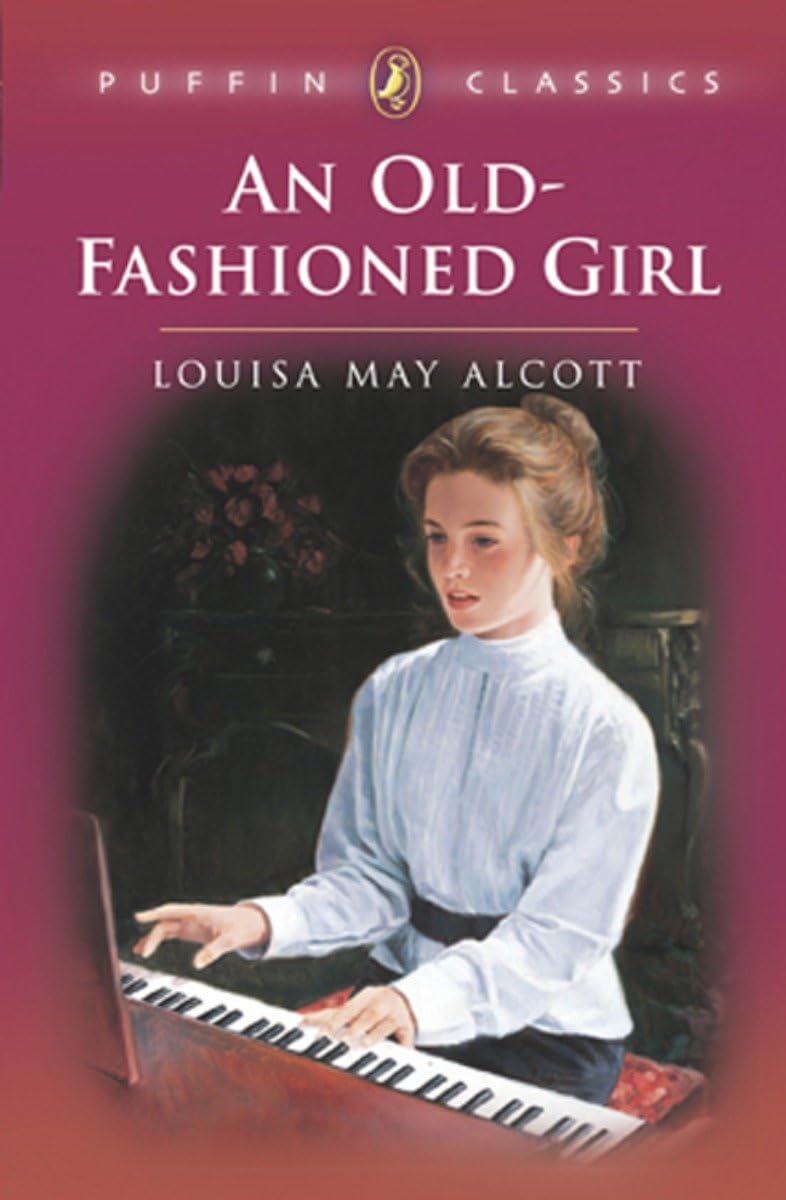
  3. An Old-Fashioned Girl by Louisa May Alcott
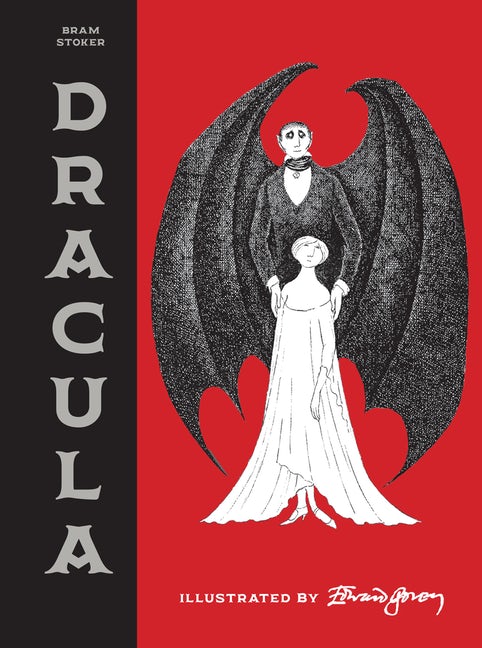
  4. Dracula by Bram Stoker
  5. Peony by Pearl Buck
  6. The Tenant of Wildfell Hall by Anne Bronte
  7. Pygmalion by George Bernard Shaw
  8. Howards End by E. M. Forster
  9. The Mysterious Affair at Styles by Agatha Christie
  10. I Capture the Castle by Dodie Smith
  11. Foundation by Isaac Asimov
  12. In Cold Blood by Truman Capote
  13. Herland by Charlotte Perkins Gilman
  14. The Painted Veil by W. Somerset Maugham
  15. Passing by Nella Larsen
  16. The Awakening by Kate Chopin
  17. The Sound of Waves by Yukio Mishima
  18. Picnic at Hanging Rock by Joan Lindsay
  19. The Left Hand of Darkness by Ursula K. Le Guin
  20. A Night to Remember by Walter Lord

My previous Classics Club Spin books:

Are you participating in this Classics Club Spin? If so, what book will you be reading?

Book Review: The Younger Wife by Sally Hepworth

Title: The Younger Wife
Author: Sally Hepworth
Publisher: St. Martin’s Press
Publication date: April 5, 2022
Length: 352 pages
Genre: Thriller/contemporary fiction
Source: Review copy courtesy of the publisher via NetGalley
Rating:

Rating: 3.5 out of 5.

THE HUSBAND

A heart surgeon at the top of his field, Stephen Aston is getting married again. But first he must divorce his current wife, even though she can no longer speak for herself.

THE DAUGHTERS

Tully and Rachel Aston look upon their father’s fiancée, Heather, as nothing but an interloper. Heather is younger than both of them. Clearly, she’s after their father’s money.

THE FORMER WIFE

With their mother in a precarious position, Tully and Rachel are determined to get to the truth about their family’s secrets, the new wife closing in, and who their father really is.

THE YOUNGER WIFE

Heather has secrets of her own. Will getting to the truth unleash the most dangerous impulses in all of them? 

I could not put this book down… and yet now that I’m done, I really don’t know what to think!

As the book opens, we’re at the wedding of Stephen and Heather. They make a beautiful couple, and everyone is so pleased that Stephen has found love again after going through the pain of his former wife’s slide into dementia. And how lovely that he thought to include his ex-wife in this special day! But after the vows, something goes wrong in the next room. There’s blood and an ambulance…

And that’s just the prologue!

From there, we go back some months to Heather’s first meeting with Stephen’s adult daughters, Tully and Rachel. Heather is actually younger than both of them, and they’re prepared to hate her. They’re none too pleased with their father either, but they’re trying to be supportive. He’s done right by their mother, finding her a good nursing home and excellent care, making sure there’s no worry about finances… so why shouldn’t he have the opportunity for love once again?

As the story unfolds, we get chapters from Tully, Rachel, and Heather’s perspectives. No one’s life is as perfect as it seems. Rachel, a magnificent baker, has been dealing with a trauma from her teens for almost 20 years. Tully, a suburban wife and mother, has anxiety through the roof and very unhealthy coping mechanisms. And Heather certainly has not shared the true story of her family’s sordid past.

Each of the three women evokes sympathy in her own way. For Tully and Rachel, they’re dealing not only with issues from their pasts, but also grieving the loss of a beloved mother, mourning a bit more with each visit to the nursing home and the realization that the woman who was so central to their lives has slipped away from them bit by bit. Heather’s childhood was awful, but she’s built a fresh start for herself, even as the occasional doubts about her perfect new life creep in.

It’s hard to say much without giving away key spoilers, so I’ll proceed with caution. As I mentioned, I simply couldn’t put this book down, and finished it over two days of intense reading. Not that that’s surprising — Sally Hepworth’s book always bring out the compulsive reader in me! With short, sharp chapters and fascinating POV characters, The Younger Wife sucked me in from page 1 and just never let me go.

And yet… I felt oddly flat after the end. I really and truly can’t say more, but the resolution left me confused and weirdly disappointed. I need to go back and poke around in earlier chapters to see if I missed anything and reexamine how the pieces fit together.

Do I recommend this book? Yes, but perhaps with tempered expectations. Sally Hepworth is a terrific teller of tales, and she creates fascinating, memorable characters. The Younger Wife did not move and engage my emotions the way The Good Sister did, but that’s a very high mark to meet.

The Younger Wife is a fast page-turner, and I enjoyed the reading experience. Now I just need to think about that ending some more…

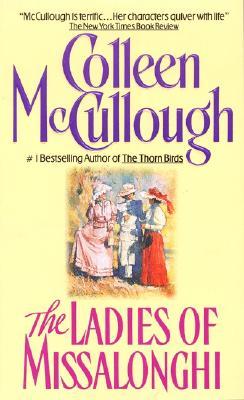
Book Review: The Ladies of Missalonghi by Colleen McCullough

Title: The Ladies of Missalonghi
Author: Colleen McCullough
Publisher: HarperCollins
Publication date: 1987
Length: 192 pages
Genre: Historical fiction
Source: Purchased
Rating:

Rating: 3.5 out of 5.

Sometimes fairy tales can come true–even for plain, shy spinsters like Missy Wright. Neither as pretty as cousin Alicia nor as domineering as mother Drusilla, she seems doomed to a quiet life of near poverty at Missalonghi, her family’s pitifully small homestead in Australia’s Blue Mountains. But it’s a brand new century–the twentieth–a time for new thoughts and bold new actions. And Missy Wright is about to set every self-righteous tongue in the town of Byron wagging. Because she has just set her sights on a mysterious, mistrusted, and unsuspecting stranger… who just might be Prince Charming in disguise.

After coming across a mention of The Ladies of Missalonghi online, I decided to give it a try once I saw the audiobook available via my library. This short book is enjoyable in many ways, but it also shows its age a bit, and has a troubling reputation as well. (See my quibbles section below…)

Set in the early 1900s in a small town in Australia, The Ladies of Missalonghi focuses on the sad little family living in a run-down house named Missalonghi on the shabby side of town. The town of Byron is dominated by the Hurlingford family, who own pretty much all of the desirable land and every local business. The nasty truth of the family is that thanks to an edict from its founding father who first established Byron, only males in the family inherit financially, while women descendents get a house and five acres of land. However, the houses and land have become worse and worse over the generations, and Hurlingford women who don’t marry well, become widowed, or (gasp) remain spinsters are doomed to a life of poverty and dependence.

Main character Missy Wright lives with her widowed mother Drusilla and her elderly aunt Octavia, and the three eke out the barest of livings. Missy is considered plain and unmarriageable, long past whatever youthful prime she might have had. To economize, the women dress in brown (appropriate for any occasion, and it doesn’t show dirt), have a very fixed routine of household chores, and rely on the condescending patronage of their richer relatives for meager treats and hand-outs.

When Missy meets a rough-hewn stranger and learns that he’s bought land in the adjacent valley, her imagination takes off — especially thanks to the romantic novels the town’s new librarian has been sharing with her. After a mild health scare, Missy decides to take matters into her own hands, throw off the burden of obedience and family deference, and pursue a life of adventure and love… even if she has to scheme and lie to get it.

While engaging in many ways, I do need to point out a few quibbles:

SPOILERS AHEAD

As I mentioned earlier, the book’s age shows in some of the depictions and dialogue. I don’t have a problem with historical fiction portraying an era’s inherent sexual inequalities, hang-ups, class issues, etc, but I actually feel that this book smacks a little too heavily of the 1980s. Published in 1987, The Ladies of Missalonghi has a love interest who’s the stereotypical bad boy in many ways, coming out with statements and attitudes that just wouldn’t fly today… and in historical fiction written now, I think authors tend to make their heroes a little less sexist/asshole-ish. If that makes any sense.

BIG SPOILER: There’s a weird supernatural element that’s revealed toward the end that makes no sense at all, bringing a ghost into the mix in the strangest way possible, then using that ghost as the explanation for Missy’s pursuit of freedom. Seriously, I don’t get it at all. The ghost in question appears as a real person to Missy, and provides Missy with books, legal documents, a new dress and hat, and even comes to tea at Missalonghi, where she interacts with Drusilla and Octavia. Again… I don’t get it.

Finally, I need to point out the plagiarism allegations that plague this book, specifically, that Colleen McCullough basically took the plot of The Blue Castle by L. M. Montgomery, tweaked it a bit and moved it to Australia, and published it as her own. Colleen McCullough denied the allegations, but suggested that “subconscious recollection” was at play — that she must have read the book at some point and inadvertently incorporated elements without realizing where they’d come from. The stories track so closely (with key differences being that Missy’s mother is kind and loving, and that Missy knows that her health crisis isn’t real and lies to her love interest) that it’s impossible to believe that the similarities are purely accidental.

Having read The Blue Castle recently, the shared plot elements are very obvious — and I have to say, if I had to choose between the two books, The Blue Castle wins hands-down.

END OF SPOILERY QUIBBLES

All that aside, there’s plenty to like about The Ladies of Missalonghi. There are some clever twists as Missy begins to assert herself, including her scheming to undermine the terrible male relatives who neglect and cheat the vulnerable women of the family. The descriptions of the setting are lovely, and there are moments of clever dialogue and sly social digs that make it fun.

The audiobook is narrated by Davina Porter, known to Outlander fans as the wonderful narrator of all Outlander series audiobooks, and she’s always a treat to listen to.

Overall, I’m not sorry to have read The Ladies of Missalonghi and I enjoyed listening to it, but the troublesome aspects make it a hard book to truly love.

And I have to say, the whole “marriage due to a medical crisis that turns out to be false” plot is handled much better in The Blue Castle, as is so much else about the basics of the plot.

Shelf Control #303: The Touch by Colleen McCullough

Shelves final

Welcome to Shelf Control — an original feature created and hosted by Bookshelf Fantasies.

Shelf Control is a weekly celebration of the unread books on our shelves. Pick a book you own but haven’t read, write a post about it (suggestions: include what it’s about, why you want to read it, and when you got it), and link up! For more info on what Shelf Control is all about, check out my introductory post, here.

Want to join in? Shelf Control posts go up every Wednesday. See the guidelines at the bottom of the post, and jump on board!

Title: The Touch
Author: Colleen McCullough
Published: 2003
Length: 624 pages

What it’s about (synopsis via Goodreads):

Not since “The Thorn Birds” has Colleen McCullough written a novel of such broad appeal about a family and the Australian experience as “The Touch.”At its center is Alexander Kinross, remembered as a young man in his native Scotland only as a shiftless boilermaker’s apprentice and a godless rebel. But when, years later, he writes from Australia to summon his bride, his Scottish relatives quickly realize that he has made a fortune in the gold fields and is now a man to be reckoned with.

Arriving in Sydney after a difficult voyage, the sixteen-year-old Elizabeth Drummond meets her husband-to-be and discovers to her dismay that he frightens and repels her. Offered no choice, she marries him and is whisked at once across a wild, uninhabited countryside to Alexander’s own town, named Kinross after himself. In the crags above it lies the world’s richest gold mine.

Isolated in Alexander’s great house, with no company save Chinese servants, Elizabeth finds that the intimacies of marriage do not prompt her husband to enlighten her about his past life — or even his present one. She has no idea that he still has a mistress, the sensual, tough, outspoken Ruby Costevan, whom Alexander has established in his town, nor that he has also made Ruby a partner in his company, rapidly expanding its interests far beyond gold. Ruby has a son, Lee, whose father is the head of the beleaguered Chinese community; the boy becomes dear to Alexander, who fosters his education as a gentleman.

Captured by the very different natures of Elizabeth and Ruby, Alexander resolves to have both of them. Why should he not? He has the fabled “Midas Touch” — a combination of curiosity, boldness and intelligence that he applies to every situation, and which fails him only when it comes to these two women.

Although Ruby loves Alexander desperately, Elizabeth does not. Elizabeth bears him two daughters: the brilliant Nell, so much like her father; and the beautiful, haunting Anna, who is to present her father with a torment out of which for once he cannot buy his way. Thwarted in his desire for a son, Alexander turns to Ruby’s boy as a possible heir to his empire, unaware that by keeping Lee with him, he is courting disaster.

The stories of the lives of Alexander, Elizabeth and Ruby are intermingled with those of a rich cast of characters, and, after many twists and turns, come to a stunning and shocking climax. Like “The Thorn Birds,” Colleen McCullough’s new novel is at once a love story and a family saga, replete with tragedy, pathos, history and passion. As few other novelists can, she conveys a sense of place: the desperate need of her characters, men and women, rootless in a strange land, to create new beginnings.

How and when I got it:

I’ve had a battered paperback on my shelf for years — I don’t remember specifically buying this book, but I’m guessing it came from a library sale at some point in the last 10 years.

Why I want to read it:

I’m sure I picked this book up solely based on the fact that it’s by Colleen McCullough. I will never forget the experience of reading The Thorn Birds for the first time! Since then, I’ve only read one other book by her, but once again, I was impressed by her ability to bring Australia to life on the page and to create such dynamic characters and epic plots.

In terms of The Touch, it sounds grand and sweeping and tragic — just how I like my historical fiction! I’m glad I just stumbled across my copy while reorganizing my shelves. It was a good reminder that (a) I own this book and (b) I do intend to read it!

The only other book I’ve read by Colleen McCullough is Morgan’s Run (published in 2000), but I’d welcome other recommendations!

And as for The Touch

What do you think? Would you read this book?

Please share your thoughts!


__________________________________

Want to participate in Shelf Control? Here’s how:

  • Write a blog post about a book that you own that you haven’t read yet.
  • Add your link in the comments or link back from your own post, so I can add you to the participant list.
  • Check out other posts, and…

Have fun!