
Book Review: Tell The Wolves I’m Home by Carol Rifka Brunt

Book Review: Tell The Wolves I’m Home by Carol Rifka Brunt
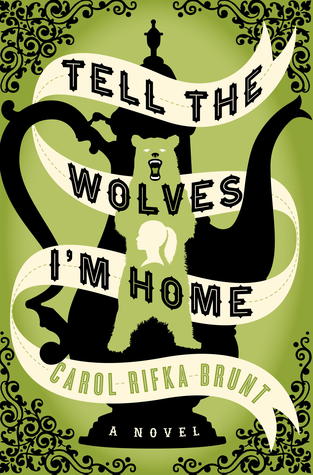
Tell The Wolves I’m Home, a first novel by Carol Rifka Brunt, defeated my best efforts to remain stoically dry-eyed while reading. What I expected to be a not-so-extraordinary family drama surprised me with its honest, emotional look at love and loss… and yes, there were tears.

Set in Manhattan and Westchester, New York in the mid-1980s, Tell The Wolves I’m Home is a look at one eventful spring in the life of 14-year-old June Elbus. As the book opens, June’s beloved uncle Finn has just died, an early casualty of the AIDS epidemic. Finn was not just June’s uncle, however; he was her godfather, her inspiration, and her first true love. Finn, a gifted artist, introduced June to everything she considers beautiful in her life — Mozart’s Requiem, visits to the Cloisters, an appreciation for the fine details all around her. June believes that the bonds between her and Finn are all-encompassing, but in the weeks following Finn’s death, June begins to realize that Finn had an entire life that she knew nothing about, and is forced to reexamine her relationship with Finn and its central role in her life.

As June reels through previously unimagined depths of loss, she is contacted by a stranger, Toby, who reveals himself to have had a key role in Finn’s life. Finn, before his death, left secret messages asking June to take care of Toby and Toby to take care of June, and as they try to honor Finn’s wishes, they find themselves connecting through shared bonds of loss, love and jealousy. June is shattered to realize how much she didn’t know about her uncle, as Toby struggles to let her in and to give dignity to June’s adolescent broken heart. As June mourns Finn and all she thinks she has lost, her older sister Greta acts out in her own brand of grief and loneliness in a desperate attempt to be understood and to reforge a connection before it’s too late.

The author does a wonderful job of capturing a particular time and place: New York, in the first throes of fear and ignorance about AIDS. Glancing references are made to Finn’s “special friend”, whom June’s parents consider a murderer — blaming him for Finn’s illness and death — and who is ostracized and banned from the funeral. June worries about catching AIDS from a kiss under the mistletoe; June’s sister is yelled at by their mother for using Finn’s chapstick. Other small details of life in the 80s bring the time to life: June wears her Gunne Sax dress in a desperate effort to isolate herself from the real world, as she hides out alone in the woods behind the school and pretends to live in the Middle Ages she so adores. Finn gives June cassette tapes of favorite music; June’s parents listen only to Greatest Hits albums (“it was like the thought of getting even one bum track was too much for them to handle”), and June has a fondness for “99 Luftballons” (the German version — much cooler sounding). June wears Bonne Belle lip gloss, and Greta has half of a “best friends” necklace, the other half of which some erstwhile best friend has long since discarded. It’s these small details and more which lend this book such a sense of nostalgic poignancy. At the same time, this coming-of-age story feels like it could be the story of any girl — or rather, every girl — growing up, seeing the human flaws in her parents, realizing that long-held truths may be illusions, finding and losing love, and coming to terms with a picture of one’s inner self which isn’t always so pretty.

Tell The Wolves I’m Home is a quiet, lovely book, a look backward that feels current and relevant, and a sad, sweet story of love and friendship. I’m so glad to have read it, and recommend it highly.

The Monday agenda

Not a lofty, ambitious to-be-read list consisting of 100+ book titles. Just a simple plan for the upcoming week — what I’m reading now, what I plan to read next, and what I’m hoping to squeeze in among the nooks and crannies.

So what’s on the agenda for this week?

From last week:

The Raven Boys by Maggie Stiefvater: I finished this one early in the week. Sadly, not all that impressed. (You can find out why here.)

Where’d You Go, Bernadette by Maria Semple: Done! Loved it. My review is here.

Drums of Autumn by Diana Gabaldon (group re-read): Two more engaging chapters. Almost done.

And this week’s new agenda:

I’m about 2/3 of the way through Tell The Wolves I’m Home by Carol Rifka Brunt. What a lovely, poignant story. I’ll finish and have a review up in the next few days.

Next, from my library pile, I plan to start either The Red House by Mark Haddon or Seating Arrangements by Maggie Shipstead.

Tiny aside: One of the benefits of having a school-aged child is learning all sorts of useful acronyms. At my son’s school (and probably lots of others), they have DEAR time — Drop Everything And Read — in which everyone stops all other work, picks a book, and reads without interruption for 15 – 20 minutes. When my older kids were that age, it was called Silent Sustained Reading (very cute to hear a 1st-grader say this, by the way).

How is this relevant to the Monday agenda? I expect to have a DEAR moment myself in the next day or two. In my case, this means that I’ll be dropping whatever else I’m reading or planning to read as soon as my copy of A Trail of Fire by Diana Gabaldon arrives. I’ll write more about this book, and why it’s a big deal, when my copy finally gets here… which should be tomorrow (fingers crossed).

My son and I are about half-way (!) through Half Magic by Edward Eager. I was pleasantly surprised when I offered him a stack of eight or nine books and he picked out this children’s classic. It’s been many years since I last read it, but it’s still thoroughly delightful.

Drums of Autumn by Diana Gabaldon: Chapters 64 and 65 this week. Emotional high points. The end is in sight.

So many book, so little time…

That’s my agenda. What’s yours? Add your comments to share your bookish agenda for the week.

Book Review: Where’d You Go, Bernadette by Maria Semple

Book Review: Where’d You Go, Bernadette by Maria Semple

Huh. I just now realized that I’ve been committing hyper-punctuation in regard to this book, whose title does in fact include a comma and an apostrophe, but not a question mark — which I have egregiously added in several tweets and emails. Mea culpa.

Be that as it may, I have to say that I just adored Where’d You Go, Bernadette. (See? No question mark). Author Maria Semple has crafted a social satire that is uproariously funny, hits on a ton of memes and flashpoints of today’s hyper-plugged in society, and yet is also quite touching and surprisingly sweet in places.

Given the title, it’s not a spoiler to say that the plot revolves around events leading up to the disappearance of 50-year-old Bernadette Fox, once a brilliant rising star in the world of architecture, now an eccentric, possibly agoraphobic mother and housewife, whose life is one long string of odd behaviors. Bernadette, her 15-year-old super-talented daughter Bee, and her workaholic Microsoft exec husband Elgin, live in a run-down former reform school for girls atop a Seattle hill. The house is falling apart at the seams, literally, as blackberry vines force their way up through the foundations and the damp ceilings and walls crumble around them. (Keep an eye on those blackberry vines — they’re key to some early developments that lead to a disaster at once appalling and hilarious.)

Bee attends the Galer Street School, described in its mission statement as “a place where compassion, academics, and global connectitude join together to create civic-minded citizens of a sustainable and diverse planet.” Children are graded on a scale of “Surpasses Excellence”, “Achieves Excellence”, and “Working Toward Excellence”. Bernadette is happy that her daughter is thriving, but hates everything about Seattle, including the meddling, fussy, over-involved parents of the school, whom she refers to as gnats. Things go from bad to worse when Bernadette’s neighbor Audrey hosts a prospective parents brunch at her home in an attempt to lure “Mercedes Parents” to their Suburu-level school. To say that Bernadette and Audrey don’t quite get along would be the understatement of the year.

Further complications: Bernadette has hired a virtual assistant named Manjula to handle all of her personal business by internet — everything from travel plans to prescriptions to ordering clothing and household repairs. Before you can say “identity theft”, Bernadette has provided Manjula with her entire family’s bank account numbers, birthdates, passport numbers, and social security numbers.

When Bee comes home one day with a report card full of S grades and a brochure for a trip to Antarctica, events and disasters begin to snowball. Neither parent says no, plans for this exotic trip are set in motion, and Bernadette soon begins to fear that she’s in way over her head. By the time the date of the trip rolls around, psychiatrists, FBI agents, Microsoft admins, school chums, and gardeners have all played a role in the unfolding crisis… and Bernadette disappears without a trace.

Precocious, talented, determined Bee is left behind to put the pieces together, and what we’ve been reading all along is Bee’s compilation of documents pertaining to these events. Where’d You Go, Bernadette is told via emails, faxes, school reports, letters, magazine articles, and captain’s logs; Bee has assembled everything she can that may shed light on her mother’s disappearance, and through quick thinking and connecting of dots, believes she may have found pieces of the puzzle that will lead to answers about her mother.

Let me just say that I enjoyed this book immensely. The writing is crisp and deft, and the author does an outstanding job of capturing some of the nuttiness that is so deeply ingrained in today’s world of helicopter parenting, the cult of self-esteem, the worship of tech, and the increasing isolation experienced by individuals in a world of constant “connectitude”. One character writes impassioned screeds about her Victims Against Victimhood support group, whose members TORCH one another (Time Out! Reality Check) when they speak in victim-lingo; Bernadette’s husband Elgie is revered because he gave the 4th-most watched TEDTalk ever; the school hosts a constant series of concerts and events featuring multiculturalism so extreme that it’s practically a religious devotion. This all rings true in a way that is both slightly sad and hilariously funny.

And yet, there is an underlying sweetness in much of this story as well. As the book unfolds, some of the most self-deluded characters find ways to acknowledge hard truths. The bad guys aren’t necessarily all that bad after all. What seems charming and eccentric is revealed to be a cover for deeper problems that must be addressed. The perfect schools may not be what all children need. Little by little, the beliefs held by the characters at the start of the book fall away, until just about all find their way toward something closer to honesty and decency.

My only quibble about Where’d You Go, Bernadette has to do with the last section of the book, which is told mostly through Bee’s narration and loses some of the oddball charm built into the stream of constant emails and faxes. At times, this section reads a bit too much like a travelogue and loses a bit of the punch provided throughout so much of the book. Still, this is a minor complaint; the book wraps up in a way that’s completely satisfying yet still surprising, and I walked away a) smiling and b) resolved to read whatever Maria Semple decides to write next.

If you enjoy quirky fiction with a bite, this is a book for you.

Flashback Friday: Snow Mountain Passage by James D. Houston

It’s time, once again, for Flashback Friday…

Flashback Friday is a chance to dig deep in the darkest nooks of our bookshelves and pull out the good stuff from way back. As a reader, a blogger, and a consumer, I tend to focus on new, new, new… but what about the old favorites, the hidden gems? On Flashback Fridays, I want to hit the pause button for a moment and concentrate on older books that are deserving of attention.

My rules — since I’m making this up:

  1. Has to be something I’ve (you’ve) read myself (yourself) — oh, you know what I mean!
  2. Has to still be available, preferably still in print
  3. Must have been originally published 5 or more years ago

Other than that, the sky’s the limit! Join me, please, and let us all know: what are the books you’ve read that you always rave about? What books from your past do you wish EVERYONE would read? Pick something from five years ago, or go all the way back to the Canterbury Tales if you want. It’s Flashback Friday time!

My pick for this week’s Flashback Friday:

Snow Mountain Passage by James D. Houston

(published 2002)

This week’s pick for Flashback Friday was published in 2002, but as historical fiction, tells a tale that goes back to 1846. Snow Mountain Passage is a fictional retelling of one of the most infamous chapters in American history, the story of the Donner Party.

When you hear the words “The Donner Party”, if you’re like most people, you immediately think of cannibalism. For many, that’s where their knowledge of the Donner Party starts and ends. But what really happened during that awful winter? Who were these people, stranded in the mountains and struggling to survive? How did they end up in this terrible predicament?

From Goodreads:

Snow Mountain Passage is a powerful retelling of our most dramatic pioneer story–the ordeal of the Donner Party. Through the eyes of James Frazier Reed, one of the group’s leaders, and the imagined “Trail Notes” of his daughter Patty, we journey along with the ill-fated group determined, at all costs, to make it to the California territory.

James Reed is a proud, headstrong, yet devoted husband and father. As he and his family travel in the “Palace Car,” a huge, specially built–and ultimately cumbersome–covered wagon, they thrill to new sights and cope with conflict and constant danger. Yet when a fight between Reed and another driver ends in death, Reed is exiled from the group and heads over the mountains alone. The fate of the other families, including Reed’s wife and four children, is sealed when they set out across a new, untested route through the Sierra–their final mountain pass. Arriving at the foothills just as the snows start to fall, they are left stranded for months–starving, freezing, and battling to survive–while Reed journeys across northern California, trying desperately to find means and men for a rescue party.

An extraordinary tale of pride and redemption, Snow Mountain Passage is a brilliantly imagined and grippingly told story straight from American history.

I was fascinated by the story and the characters, and amazed by how much I didn’t know about the Donner Party. The author invests the historical figures with life and personality, and does a thorough yet never boring job of laying out, step by step, all the choices and mistakes that led inevitably to tragedy.

If you enjoy historical fiction, or if you think you already know all there is to know about the Donner Party, check out Snow Mountain Passage. You may be surprised by how moving the story is. I certainly enjoyed this glimpse into California’s past… and now every time I drive over Donner Pass in the Sierras, I can’t help thinking about this book — and shivering, just a bit.

So, what’s your favorite blast from the past? Leave a tip for your fellow booklovers, and share the wealth. It’s time to dust off our old favorites and get them back into circulation! 

Note from your friendly Bookshelf Fantasies host: To join in the Flashback Friday bloghop, post about a book you love on your blog, and share your link below. Don’t have a blog post to share? Then share your favorite oldie-but-goodie in the comments section. Jump in!


Wishlist Wednesday

And now, for this week’s Wishlist Wednesday…

The concept is to post about one book from our wish lists that we can’t wait to read. Want to play? Here’s how:

  • Follow Pen to Paper as host of the meme.
  • Please consider adding the blog hop button to your blog somewhere, so others can find it easily and join in too! Help spread the word! The code will be at the bottom of the post under the linky.
  • Pick a book from your wishlist that you are dying to get to put on your shelves.
  • Do a post telling your readers about the book and why it’s on your wishlist.
  • Add your blog to the linky at the bottom of the post at Pen to Paper.
  • Put a link back to pen to paper (http://vogue-pentopaper.blogspot.com) somewhere in your post.
  • Visit the other blogs and enjoy!

My Wishlist Wednesday book is:

Small Damages by Beth Kephart

From Amazon:

It’s senior year, and while Kenzie should be looking forward to prom and starting college in the fall, she discovers she’s pregnant. Her determination to keep her baby is something her boyfriend and mother do not understand. So she is sent to Spain, where she will live out her pregnancy, and her baby will be adopted by a Spanish couple. No one will ever know.

Alone and resentful in a foreign country, Kenzie is at first sullen and difficult. But as she gets to know Estela, the stubborn old cook, and Esteban, the mysterious young man who cares for the horses, she begins to open her eyes, and her heart, to the beauty that is all around her, and inside her. Kenzie realizes she has some serious choices to make–choices about life, love, and home.

Lyrically told in a way that makes the heat, the colors, and the smells of Spain feel alive, Small Damages is a feast for the heart and the soul, and a coming-of-age novel not easily forgotten.

Why do I want to read this?

I remember reading about this book when it was released this past summer. The reviews were overwhelmingly positive, praising both the lovely writing and the quality of the story. I’m always fond of young adult fiction, and it’s nice to see a good YA novel released that’s set in the here and now — no supernatural forces, no unearthly creatures, no natural disasters, no dystopian governments. Just the story of a girl faced with tough decisions, having to figure out who she is, what matters, and what she wants.

Confession: This is one Wishlist Wednesday book that I actually own already. I picked this up a couple of months ago (thank you, Ebay!), but somehow I managed to lose track of it until this week. So, I solemnly swear, once I make my way through my huge tower of library books, that this will be next on my to-read list.

Happy Wednesday!

Quick note to Wishlist Wednesday bloggers: Come on back to Bookshelf Fantasies for Flashback Friday! Join me in celebrating the older gems hidden away on our bookshelves. See the introductory post for more details, and come back this Friday to add your flashback favorites!

Book Review: The Raven Boys by Maggie Stiefvater

Book Review: The Raven Boys by Maggie Stiefvater

The Raven Boys, book 1 in the new series The Raven Cycle, is the recent release by Maggie Stiefvater, highly praised author of The Scorpio Races and the best-selling series The Wolves of Mercy Falls. At least one unanswered question arises from reading this book: What exactly is a cycle? Is it different from a trilogy or a series? If there are two books in the cycle, would it be a bicycle? Inquiring minds want to know.

I’m a bit stumped by how to review this book, so I’ll just be blunt. It’s not good. I don’t even know where to begin enumerating all the many problems contained within its 408 pages.

Let’s start with the book’s focus — or lack of one. The dustjacket and promotional materials seem to cast Blue Sargent as the main character. Blue is certainly a main character, but there are a few others as well, none of whom exactly clamor for center stage. So, Blue — Blue is the 17-year-old daughter of a psychic who lives in a house full of female psychics. There’s a definite crunchy-granola-earth mother vibe going on there. Blue is not psychic herself, but she acts as a sort of amplifier — when she’s in contact with a psychic or a spirit, all powers are magnified, and the communication between mundane and spirit is clearer and louder. Blue has been told all her life that she’ll kill her true love with her first kiss (cheerful, right?), so she decided early on that there will be no kissing in her life. Easier said than done when you’re seventeen and suddenly have lots of very close, very attractive male friends.

Then there are the boys — the raven boys — who attend the ultra-exclusive Aglionby Academy, a prep school haven for the sons of the extremely, obscenely rich. As a rule, they are privileged, pampered, rude to locals, and self-absorbed. Blue crosses paths with the close-knit group formed by best friends Gansey, Adam, Ronan, and Noah when they come to her mother for a reading. The boys, we discover early on, are engaged in a quest, spear-headed by Gansey but with the involvement of all, to track the ley lines that run through their small Virginia town. Ley lines are focal lines of magical energy, and Gansey’s quest (which apparently he’s been pursuing all over the globe for the last several years, despite the fact that he’s only 17 years old) is to wake up the local ley line as a means of finding Glendower, an ancient king of Wales. Glendower’s bones were possibly transported to the New World centuries earlier and reburied somewhere mysterious… but he’s not really dead, just sleeping. Whoever wakes Glendower will be granted a favor, and each of the raven boys has his own reason for wanting – make that needing – this favor.

Does this make any sense? I read the book, and I’m still confused.

All of this business about ley lines and Glendower comes off as mystical mumbo-jumbo. Gansey is supposed to be a brilliant, manically inspired seeker dedicated to a higher cause, but his character never clicked for me. The quest itself is a muddle. Magical stuff happens, none of it very coherent. Blue gets involved, and there’s a lot of running around seeking the energy focal point, but mostly the plot just jumps from action to riddle to more action to… I don’t even know.

Stereotypes abound. Gansey is the spoiled son of a very wealthy family (he’s got a III at the end of his name, so you know he’s pure country club material). He shows his individuality by insisting upon driving a classic Camaro that’s always breaking down rather than taking one of his father’s pristine high-end vehicles. Ronan is the one with an edge, battling with his older brother, cutting classes, sporting a dangerous tattoo and shaved head — the brilliant loose cannon who must be controlled by his friends in order to avoid expulsion. Adam is the poor local kid, literally trailer park trash, who gets a scholarship to Aglionby as part of his own personal quest to escape the poverty and abuse he faces at home, but too proud to accept any help from his wealthy friends who truly love him. And then there’s Noah, whose circumstances are bizarrely told and, to me anyway, entirely unbelievable.

Blue herself is an enigma. We know that she likes to stand out as a weird girl, but we never see her go to school or talk to a single friend. Does she have any friends? Who knows?

I was at least 100 pages into the book before I could keep the boys straight. They all seemed rather indistinguishable, frankly. Blue’s connection with they boys seemed rushed — but then again, that ‘s my overall impression of the entire book. Rushed, messy, not very well thought-out, and with sentence structure issues that just cry out for a good copy editor… perhaps the goal was just to lay the foundation for the rest of the series, but even so, a first book in a series should be stellar.

I’ve actually read all of the author’s previous works, and have found them rather hit-or-miss. I didn’t care for her faerie books (Lament and Ballad), but I enjoyed the wolf books, particularly Shiver, the first in the trilogy. I also liked The Scorpio Races quite a bit, although with reservations about certain plot points. What I liked best about both Shiver and The Scorpio Races was the author’s use of language to create a mood. Shiver is simply permeated by a sense of tragic longing; you can feel the cold air, sense the loneliness of the winter months, feel the main character’s yearning for the wild unknown represented by the wolves. Likewise, in The Scorpio Races, the writing itself evokes life on a small, windswept island with few options and almost no way out; the effect is practically hypnotic, and lends the book much of its strength and grace.

Here in The Raven Boys, that powerful language conveying atmosphere and mood is missing. What’s left is a plot that’s far from compelling. Perhaps The Raven Cycle will improve and the story will start cohering in the subsequent books. I guess I’ll never know; this is one series that I don’t plan to continue reading.

Q&A with the kiddo: A kid’s-eye view of The Haunting of Granite Falls by Eva Ibbotson

Book Review: The Haunting of Granite Falls by Eva Ibbotson


From Amazon:

American millionaire Hiram C. Hopgood will stop at nothing to make his daughter, Helen, happy—even if it means buying her an ancient Scottish castle and shipping it back to Texas. Assembling the castle isn’t a problem for the oil tycoon . . . it’s the ghosts that worry him. Hopgood has made up his mind: the ghouls have got to go. But these spirits don’t spook so easily. Instead, they make their way to America, where they meet up with a magical severed hand and three fiendish, cross-dressing kidnappers for a Texas-sized adventure with a ghostly Scottish flair.

Proudly presenting Q&A with the kiddo, courtesy of my 10-year-old son, in which I ask my kiddo to describe a book he’s enjoyed recently and he gives his opinions, more or less unfiltered by mom.

Without further ado:

Q: What book do you want to talk about?

A: The Haunting of Granite Falls.

Q: What was it about?

A: [Note: The kiddo didn’t feel like giving a plot summary, so here’s the mom version: An American millionaire buys a Scottish castle for his sickly daughter, has the castle shipped to America to be rebuilt in the heart of Texas, and unintentionally gets a handful of castle ghosts to go with it. Scottish orphan Alex and the millionaire’s daughter Helen form a fast friendship, and need to call upon the ghosts for help when a dastardly kidnapping plot threatens their safety. Much mayhem ensues.]

Back to the kiddo:

Q: Who was your favorite character?

A: The Severed Hand [a ghostly disembodied hand who haunts the local cinema and the mineshafts underneath]. He’s really fun, he can cook, he’s an author, and he’s also a Hand of Glory.

Q: Who else did you like?

A: Flossie [the ghost of a 5-year-old girl, currently wreaking havoc as a poltergeist]. She’s really funny, and she messes up everything.

Q: What was your favorite part of the book?

A: When all the action was happening [towards the end] in the theater and in the mineshaft. [Note: A scary kidnapping in the mines, a daring rescue by the ghosts, much chasing about, shouting, scaring, and… heroic ghosts!]

Q: How would you describe the book overall?

A: Lots of cliffhangers. A tiny bit scary. Mostly funny, silly, weird, and mysterious.

Q: Who do you think would like the book?

A: My friends. If you have a sense of humor, you’ll like this book.

Q: Did you think this was a good reading level for you?

A: There were some words I didn’t understand [Note: that’s where moms come in handy], but otherwise it was fine. I probably could have read it on my own but it would have taken a lot longer.

Q: Would you want to read more books by this author?

A: It depends what they’re about.

Q: Would you want to read more ghost stories?

A: Maybe. It depends what kind. If they’re scary, then I wouldn’t want to read them before bed-time. That would give me nightmares.

Mom’s two cents: This was one book that we both could enjoy. It worked well as a read-aloud, but a kid who’s comfortable reading chapter books solo should be able to handle this one just fine. The kiddo and I found The Haunting of Granite Falls to have just the right combination of funny elements (a Viking ghost named Krok Fullbelly is good for all sorts of laughs) and dramatic action. 12-year-old Alex makes a fine hero as well, a nice mix of sensitivity and loyalty, with a dash of Scottish laird in him as well. I was a bit uncomfortable with the bad guys, who were more seriously threatening than I typically expect in a book aimed toward ages 8 – 12; in particular, the ringleader, a woman with many awful traits, among them a fondness for souvenirs of Hitler, was especially distasteful. Still, the book overall was a success. Author Eva Ibbotson has a delightful writing style, humorous and exciting, that really appeals to my son and keeps me entertained as well. We both give this one high marks.

So there you have it. We’ll be back with more book opinions from my kiddo, whenever I can get him to talk books again.

The Monday agenda

Not a lofty, ambitious to-be-read list consisting of 100+ book titles. Just a simple plan for the upcoming week — what I’m reading now, what I plan to read next, and what I’m hoping to squeeze in among the nooks and crannies.

Hurray for a sun-filled weekend, perfect for sitting on the back porch with a book firmly in hand. So what’s on the agenda for this week?

From last week:

Gone Girl by Gillian Flynn: Done! Wow, what a wild ride that was. My review is here.

The Raven Boys by Maggie Stiefvater: Just started this one yesterday… reserving judgement for now.

Drums of Autumn by Diana Gabaldon (group re-read): Great chapters, with summaries written by yours truly. It’s a nice bit of validation when one’s chapter summaries provoke a good discussion. Yet another reason why I love my online book group.

And this week’s new agenda:

I should be done with The Raven Boys in the next day or two.

I managed to come home with a fresh stack of library books again this weekend. Why do I always feel like I’m playing catch-up? Or maybe it’s more like Beat the Clock — can I read all of these books before time runs out?

Next up will be either Where’d You Go, Bernadette? by Maria Semple or Tell The Wolves I’m Home by Carol Rifka Brunt.

My son and I have made great progress on the book we started last week, and should be ready for something new in the next couple of days. I’m thinking Ella Enchanted or From The Mixed-Up Files of Mrs. Basil E. Frankweiler — but he may have a different opinion entirely.

Drums of Autumn by Diana Gabaldon: Chapters 62 and 63 this week. We’re within 100 pages of the end!

So many book, so little time…

That’s my agenda. What’s yours? Add your comments to share your bookish agenda for the week.

Survey: You don’t like the book you’re reading. Now what?

Has this happened to you? You start a new book — perhaps one by an author you’ve enjoyed previously, or a much-hyped book, for example — and it just doesn’t work for you. Maybe it’s the subject matter. Matter the characters are unrelatable. Maybe the writing itself just doesn’t grab you, or worse, maybe it’s just not good writing.

What do you do? I’m asking sincerely, since this is where I find myself once again. I’m about 100 pages into a new book (which shall remain nameless at this point), and despite my best intentions, I’m just not feeling it. The plot is pretty scattered, there are scads of characters who seem indistinguishable one from the other, and the whole thing seems like a bit of a directionless mess at this point. And yet, I hesitate to just drop it. I’ve read several other books by the same author, and I’ve really enjoyed some of them. The author is considered tops in her genre and typically gets all sorts of awards. So maybe it will improve. On the other hand, all those books I just brought home from the library aren’t going to read themselves, and life’s too short to waste on books I don’t enjoy.

For now, I’m sticking it out, although if this were school or work, I’d say it’s on its final warning.

So tell me:

Book Review: Gone Girl by Gillian Flynn

Book Review: Gone Girl by Gillian Flynn

This review is going to have to be brief, because there’s almost no way to talk about Gone Girl without giving something away, and really, the less you know ahead of time, the better.

Gone Girl is a thriller, but you could also describe it as an analysis of a marriage. What makes a couple tick? How do people know if they fit? What happens to a relationship when the initial excitement and spark have faded?

Nick and Amy Dunne are a beautiful couple — truly, they are. It’s emphasized from the beginning of Gone Girl how very attractive they each are; they’re the golden boy and girl, the ones who get noticed, never ones to fade into a crowd. Nick and Amy meet at a party in New York when they are both magazine writers. They have an exciting romance and a beautiful wedding; the perfect couple — smart, attractive, fun, and completely in tune with each other. When the economy tanks and the magazine business dries up, they are both laid off, and end up moving back to Nick’s boyhood hometown of Carthage, Missouri to care for his dying mother, but really more to lick their wounds and figure out what a next chapter in their lives might look like.

Amy is the daughter of two psychologists who are famous for their bestselling Amazing Amy series of children’s books, based on Amy’s own life, which makes her both a curiosity and a celebrity. Nick is the son of a woman-hating father who left his mother when Nick was 12; Nick’s father now resides in a care facility from which he regularly escapes in an Alzheimer-fueled fog of anger.

Gone Girl opens with Nick and Amy’s 5th anniversary, as Nick contemplates just how miserable he is… and then discovers that Amy has disappeared. Day by day, evidence begins to pile up suggesting that violence, perhaps murder, has occurred, and Nick is slowly painted into a corner as the prime suspect, with only his high-profile lawyer and his twin sister Go to defend him.

What really happened to Amy? Why does Nick talk so much about the shape of Amy’s skull and have visions of harming her? Is Nick really a killer, or just a not-very-good husband who’s a convenient target for police interest and public scorn?

Told in chapters that alternate between Nick’s narration and Amy’s diary, we hear bits and pieces of the story from both Nick and Amy’s points of view. Gillian Flynn does a fantastic job of creating unique voices for each character, and the portraits we receive are detailed, rich, and chilling. Supporting characters feel well-defined and true-to-life.

The author skewers the current cult of crime TV, sensationalism masquerading as journalism, and seemingly endless parades of murder suspects dominating cable programming at all hours of the day. Nick realizes quickly that he’ll be considered the prime suspect, because everyone knows from watching TV that it’s most likely that the husband did it. He knows how police investigations work, understands that a sympathetic detective is just trying to soften him up, and knows that he’ll look guilty if he asks for a lawyer too soon — because he’s seen it all on CSI. His lawyer points out to him that by the time a case goes to trial, it’s been all but decided already on the cable legal shows and on the Internet. Control the message, control the outcome of the trial. The behind-the-scenes look at how publicity and public relations dictate the course of a crime investigation is actually quite fascinating.

Ultimately, though, it is the mystery at the heart of Gone Girl that makes it such a compelling read. Understanding Nick and Amy’s psyches and their inner workings is key to understanding what has happened and how it will all play out. I couldn’t put it down, and the twists and turns kept me guessing until the end.

I did find the ending unsatisfying, not because it left loose ends or because it didn’t fit — but because it wasn’t the outcome I wanted. Which means that I was enmeshed enough in the story and the characters’ lives to really care about what happened, which in my view makes this book a terrific success.

Read Gone Girl if you enjoy a good mystery, and most especially if you like to be surprised. Believe me, you will be.
