The Monday Agenda 7/8/2013

MondayAgendaNot a lofty, ambitious to-be-read list consisting of 100+ book titles. Just a simple plan for the upcoming week — what I’m reading now, what I plan to read next, and what I’m hoping to squeeze in among the nooks and crannies.

I’m back, busily bustling through bunches of books (and amusing myself with alliteration, it would seem).

How did I do with last week’s agenda?

This is really a two-week check-in, since I was away (on a lovely vacation, thanks for asking!) and skipped a week of blogging. Here’s what I’ve read since my last update:

Vacation books:

The Eyre Affair by Jasper Fforde: Done! Loved it. My review is here.

Wolf Hall by Hilary Mantel: Done! My review is here.

A Small Death in the Great Glen by A. D. Scott: Done! My review is here.

Post-vacation reading:

The Ocean at the End of the Lane by Neil Gaiman: Done! Beautiful book. My review is here.

Saga, volumes 1 and 2 by Brian K. Vaughan and Fiona Staples: Amazing new graphic novel series from the author of Y: The Last Man, one of my favorites. I loved the two volumes of Saga, and can’t wait to read more.

Fresh Catch:

Well, I was away, after all, so the fresh catch collection is on the smallish side:

Saga, Volume 2When You Were HereThe Girl You Left BehindOpenly Straight

Yes, I did read Saga, volume 2 already, the second it reached my hot little hands! The other books are from a giveaway (When You Were Here — thank you, Perpetual Page-Turner!) and two ARCs that were just approved. Looking forward to all of them!

What’s on my reading agenda for the coming week?

I’ve just started Joyland by Stephen King, and I’m hooked!

Next up, one of my pending review copies, either Mist by Susan Krinard or The Book of Secrets by Elizabeth Joy Arnold.

Mist (Mist, #1)The Book of Secrets: A Novel

Plus, I’d really love to get to more of the books on my summer TBR list!

My kiddo is safely home from an “awesome” time at summer camp, and ready to resume our nightly reading tradition. We’re continuing our Narnia quest, and will be starting The Voyage of the Dawn Treader this week. Four books down, three to go!

boy1So many book, so little time…

That’s my agenda. What’s yours? Add your comments to share your bookish agenda for the week.

The 100 All-Time Greatest Novels… depending on who you ask.

Have you seen the newest issue of Entertainment Weekly? The cover proclaims that the double issue includes “The 100 All-Time Greatest” of all things EW-ish: movies, TV shows, albums, and yes, novels. It’s actually quite fun to read through, doing the quick mental “saw that”, “didn’t watch that”, “liked it”, “are you kidding me??” checklists.

Annoyingly, the EW website only provides the top 10 for each list, so you have to actually pick up the magazine or subscribe online to see their full top 100 list… or head to this website, which has helpfully listed the top 100 novels as selected by the EW editors.

So how did the EW editors do? Overall, I think it’s a pretty great list. Anna Karenina at #1? I suppose I could argue for any of several other great novels — but AK works too.

I was thrilled to see that the Harry Potter series made the top 10, and equally happy to see other fantasy favorites on the list, including His Dark Materials by Philip Pullman, The Hitchhiker’s Guide to the Galaxy by Douglas Adams, and The Hobbit by J. R. R. Tolkien.

By quick count, I’ve read 41 out of the 100 books listed. Of the ones I haven’t read, in many cases I’ve read other books by the same author, just not the specific one(s) listed. For example:

  • Charles Dickens: I haven’t read Great Expectations or Bleak House, which were listed (I know, I know…) — but A Tale of Two Cities, which wasn’t listed, is always on my personal top 100 list.
  • I have read Anna Karenina, but not War and Peace (#28) or the various other classic Russian novels that also made the list.
  • I’ve read Beloved (#9) and several other Toni Morrison books not on the list, but not Song of Solomon (#52).
  • Bring Up The Bodies (#79) by Hilary Mantel is on the list, but not Wolf Hall, which I recently read.
  • I could go on with Faulkner, Forster, and Bellow, but that’s enough of a sampling!

I do have to question the selection of The Hobbit but not the Lord of the Rings trilogy. In my mind, The Hobbit is fun but LOTR is a masterpiece.

I love that they included Are You There God? It’s Me, Margaret. by Judy Blume. I wrote a post early in my blogging days about the influence of this book on countless women who grew up during a certain time, wondering if girls today still read Judy Blume. For me and my friends, this was the book for pre-teen girls.

I don’t neccesarily put too much stock in any one “greatest of all time” list. It all comes down to perspective and opinion, after all. Still, I found EW’s top 100 to be a great representation of a mix of genres, eras, and authors, with everything from centuries-old classics to newer books from the last year or two.

So what do you think of EW’s selection of the 100 greatest novels of all-time? Any glaring omissions? Anything that just doesn’t deserve to be there?

For me, I’m feeling a bit inspired to check out a few of these titles that have always been “oh, gotta read it someday!” books for me. And it’s a terrific reminder of some books from my long-ago reading days that need a re-visit ASAP.

And for fun, check out their top movie and TV lists too. You may be pleasantly surprised!

Book Review: The Ocean At The End Of The Lane by Neil Gaiman

Book Review: The Ocean At The End Of The Lane by Neil Gaiman

The Ocean at the End of the Lane

This sad, sweet book is a reflective look back at childhood, a meditation on innocence and trust, and a sorrowful examination of what is lost in the process of growing up.

In The Ocean at the End of the Lane, the unnamed narrator, middle-aged and giving off a sad-sack vibe, returns to his childhood town for the funeral of one of his parents. Needing escape from the formalities and niceties involved in the official mourning process, he drives off toward the site of his ramshackle boyhood home, now a sparkling new housing subdivision, and then is drawn further down the lane. As he travels down the rough country road, memories start to spark — memories of a girl named Lettie, who befriended him at age seven and since moved away. To Australia, perhaps? He’s not sure, but upon arrival at Lettie’s family farm, memories of a pond (that she called an ocean) resurface, and soon, an entire hidden chapter from his childhood comes back to him.

There’s a sorrow that permeates the childhood memories, even before the main events of the story begin. The boy has a nice home and pleasant parents, but is a loner, constantly immersed in books and without any friends. The action kicks off after the boy’s lonely 7th birthday, for which his mother prepares a lovely party and invites the boys from school — but no one comes, which doesn’t surprise the boy:

They were not my friends, after all. They were just the people I went to school with.

This small, sad incident sets the tone for one of the book’s themes. Part of childhood and growing up is coming to understand that parents can’t always protect us from the bad stuff. Life is hard, and loving parents are not infallible. Much as they try, parents can’t keep out the disappointments and harshness that intrude from outside the walls of home.

Moving from the sadness of the failed birthday party, a different sort of world is quickly revealed. There’s an elemental sort of magic involved, and horrible creatures too. The boy’s life and family are threatened by what appears to be an unstoppable evil, masquerading as something lovely and lovable. The world itself seems to be at risk, and great sacrifice and bravery are required. We see it all through the eyes of a man remembering what it felt like to be a child, to be powerless and scared, and to have to carry on anyway.

Ocean is, simply put, quite beautiful. It’s also, in parts, just terrifying. I was reminded in some ways of Neil Gaiman’s Coraline. As with the Other Mother in Coraline, the boy in Ocean finds himself at the mercy of a parent who suddenly becomes “other”. Is there anything scarier than seeing one’s ultimate source of safety and love turn into a source of menace and actual danger? The writing here is magnificent, so that as a reader, I could feel the terror of facing harm at the hands of the person who should be a protector.

With his home no longer safe, the boy seeks protection from the Hempstock women, a trio who appear to be a grandmother, mother, and daughter — but who are in reality forces of nature, timeless and powerful, seemingly an eternal type of earth mothers. They have a gentleness about them that partners with their fierce protection of the boy and his world. They are fearless, facing down the “critters” that don’t belong, and carefully snipping time and events to remove the bad parts and make it all work out as it should. The Hempstock women have a purity and earthiness about them, living on their old-fashioned farm, where they drink milk fresh from the cow and eat rough, homemade bread. Even their food and clothes portray them as people out of time, embracing nature and simplicity, separate from the modern world around them.

Again, a Coraline reminder — as menacing creatures rip shreds of the world away, leaving an awful nothingness in those places, I was reminded of Coraline’s attempt to run away from the Other house and finding a world dissolving around the margins. Reality is less firm than we might think, apparently, and when the vast void shows through, it’s horrible to behold.

The narrator of Ocean contemplates sacrifice and its burden — and while it’s specific to the events of the story, it could also apply to the burden all of us might feel growing up aware of what our own parents’ sacrificed in order to give us a better life:

A flash of resentment. It’s hard enough being alive, trying to survive in the world and find your place in it, to do the things you need to do to get by, without wondering if the thing you just did, whatever it was, was worth someone having… if not died, then having given up her life. It wasn’t fair.

On the surface, the narrator is a typical middle-aged adult, beaten down by a life with mixed successes and failures, in which he’s made art, but has also had a challenging personal life and only occasional happiness. Somewhere lurking within him is a secret knowledge of a hidden reality, mostly lost to him but resurfacing on his occasional visits to the Hempstock farm. He represents, in many ways, any adult who has lost touch with childhood belief and imagination, who finds a hint of it resparked by revisiting its source — perhaps a certain place or a book or a favorite toy — and suddenly remembering the joy and pleasure of a child’s view of the world:

I do not miss childhood, but I miss the way I took pleasure in small things, even as greater things crumbled. I could not control the world I was in, could not walk away from things or people or moments that hurt, but I found joy in the things that made me happy. The custard was sweet and creamy in my mouth… [P]erhaps I was going to die that night and perhaps I would never go home again, but it was a good dinner, and I had faith in Lettie Hempstock.

At under 200 pages, Ocean is a spare, compact, poetic book, with a purity of language. The writing is elegant and simple; not a word is wasted, and there’s not a thing missing. Ocean is marketed as a book for adults, but despite the terror of certain parts, I think there’s an ageless appeal to it as well, so that it might also work for older children — although I don’t think they’d appreciate the bittersweet element of childhood remembered from a distance, which adds such beauty and sadness to the book.

This review is already longer than I’d intended, yet I don’t feel I can really do justice to this book. I wonder: Did I really understand it? Did I miss something important the author was trying to convey? Is the meaning I found here at all in line with the author’s intentions? I have no idea.

And yet…

In reading The Ocean at the End of the Lane, I found myself both shaken by the boy’s fear and moved by his innocent sense of trust and belief. Even when his parents fail him, the boy has an unshakeable belief in the power of simply holding the hand of someone he trusts, and it’s quite wonderful to behold.

There’s an aching beauty throughout, and something so incredibly sad in the figure of the man drawn back to the Hempstock pond at key moments of his life. Like all adults, he faces daunting questions: Did I measure up? Did I do with my life what I should have done? Was my life worth it? He doesn’t find easy answers, but his pilgrimages to the past seem to bring him peace at key times.

Ocean is a deep, lovely, contemplative work. I imagine that I’ll want to revisit this book repeatedly, to pull apart and tease out all its themes and all it has to offer. Neil Gaiman writes beautifully, with an enchantment to his words that’s an experience in and of itself. I leave you with a magical moment:

I have dreamed of that song, of the strange words to that simple rhyme-song, and on several occasions I have understood what she was saying, in my dreams. In those dreams I spoke that language too, the first language, and I had dominion over the nature of all that was real. In my dream, it was the tongue of what is, and anything spoken in it becomes real, because nothing said in that language can be a lie. It is the most basic building brick of everything. In my dreams I have used that language to heal the sick and to fly; once I dreamed I kept a perfect little bed-and-breakfast by the seaside, and to everyone who came to stay with me I would say, in that tongue, “Be whole,” and they would become whole, not be broken people, not any longer, because I had spoken the language of shaping.

Read The Ocean at the End of the Lane. It’s a unique experience, and one of the most beautifully crafted works I’ve read in a long time.
Flashback Friday: Dinner At The Homesick Restaurant

Flashback Friday is my own little weekly tradition, in which I pick a book from my reading past to highlight — and you’re invited to join in!

Here are the Flashback Friday book selection guidelines:

  1. Has to be something you’ve read yourself
  2. Has to still be available, preferably still in print
  3. Must have been originally published 5 or more years ago

Other than that, the sky’s the limit! Join me, please, and let us all know: what are the books you’ve read that you always rave about? What books from your past do you wish EVERYONE would read? Pick something from five years ago, or go all the way back to the Canterbury Tales if you want. It’s Flashback Friday time!

My pick for this week’s Flashback Friday:

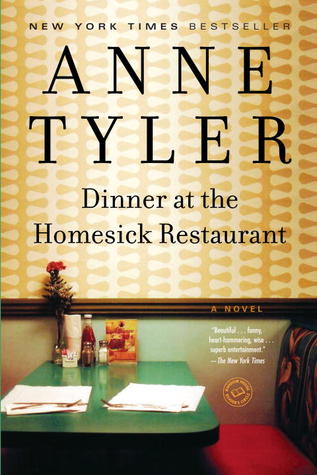
Dinner at the Homesick Restaurant

Dinner at the Homesick Restaurant by Anne Tyler

(first published 1982)

From Goodreads:

Pearl Tull is nearing the end of her life but not of her memory. It was a Sunday night in 1944 when her husband left the little row house on Baltimore’s Calvert Street, abandoning Pearl to raise their three children alone: Jenny, high-spirited and determined, nurturing to strangers but distant to those she loves; the older son, Cody, a wild and incorrigible youth possessed by the lure of power and money; and sweet, clumsy Ezra, Pearl’s favorite, who never stops yearning for the perfect family that could never be his own.

Now Pearl and her three grown children have gathered together again–with anger, hope, and a beautiful, harsh, and dazzling story to tell.

I went through a period in the 1980s/1990s when I just couldn’t get enough of Anne Tyler’s books, and this was the one that started it all for me. No matter the plot, Anne Tyler’s books tend to be about ordinary people just dealing with life, its joys and its disappointments, but full of warmth, honesty, and a fresh tone that makes her writing totally accessible. Soon after reading Dinner at the Homesick Restaurant, I also read A Slipping Down Life, The Accidental Tourist, and Searching for Caleb, and have read other books by this author in the years since.

What makes Anne Tyler’s books memorable are the flawed characters and the challenges and crises they face — some more successfully than others. Her books are not large in scope, but rather portray small slices of life that feel real and possible.

Note from your friendly Bookshelf Fantasies host: To join the Flashback Friday fun, write a blog post about a book you love (please mention Bookshelf Fantasies as the Flashback Friday host!) and share your link below. Don’t have a blog post to share? Then share your favorite oldie-but-goodie in the comments section. Jump in!

Book Review: A Small Death in the Great Glen by A. D. Scott

Book Review: A Small Death in the Great Glen by A. D. Scott

A Small Death in the Great GlenThe staff of the Highland Gazette produces the same little newspaper week in, week out. Classifieds on the front page, sporting and racing results on the inside, updates on farming, women’s club meetings, and the like filling up the rest of the four-page spread. Certainly no investigative reporting, nothing controversial, nothing that the “big city” papers in Edinburgh or Glasgow might cover. But when a young boy is found dead in a canal, the new editor-in-chief demands more from the small team of reporters, and they soon become enmeshed in an investigation that threatens the stability of their insular town.

Set in the the Scottish Highlands in the mid-1950s, A Small Death in the Great Glen is a murder mystery, but at the same time is a compelling portrait of a time and place. Ten years after World War II, the effects of the war are still being felt. An abused wife tries to live with her husband’s rage and frustration, recognizing that he came home from war different from the person she’d married. The Italian immigrant who runs the town’s café (with the only cappuccino machine in the Highlands!) is accepted by the community — but with limits. When a Polish sailor jumps ship in the harbor at the same time that the boy’s murder occurs, the strangers in town are immediately suspect, and the underlying mistrust of foreigners — even those who’ve lived and worked alongside the townsfolk for a decade — lead to ugliness and division.

The focal point of the story is Joanne Ross, who shocks her family by taking a part-time job at the paper as a typist — women are supposed to be at home! What next, wearing trousers? Joanne needs escape from her bitter home life, and finds it at the Gazette, where she is pushed to think for herself and actually write newsworthy content. As Joanne grows professionally, she has to face facts about her marriage and make choices that, in the mid-1950s, are not at all easy for a woman with two small children.

The mystery at the heart of A Small Death in the Great Glen is compelling and has several surprising twists. The history and mythology of the Highlands come into play, as do the various factions and prejudices beneath the surface of a seemingly harmonious town.

Apart from the investigation of the murder itself, there were really two elements in this book that gave me the greatest enjoyment. First is the setting itself: I’m a sucker for Scotland, particularly the Highlands, and this book is filled with descriptions of the glens and braes, the rocky terrain, the natural surroundings, that are so vivid that I could practically feel it.

Pleasure came from the small things; tickling for trout, watching the birds, the eagle hunting, stalking the deer. Cloudscapes of great beauty highlighted the four-seasons-in-one-day phenomenon that was called weather in Scotland, but often it was dreich for days, sometimes weeks, on end.

(My Thursday Quotables selection for this week is from A Small Death in the Great Glen. See it here for another snippet of description of the Highland landscape.)

The second element that really elevates this book above a standard mystery is the glimpse into the inner workings of a small community, at once tight-knit and full of resentments and judgments. Thanks in large part to my obsession with Diana Gabaldon’s Outlander series, I have a familiarity with the Highlands of centuries past; A Small Death in the Great Glen is a lovely insight into 20th century Scotland and what life would have been like for people in the post-war era of that time.

I don’t usually read mysteries, but I’m glad that the Highlands setting drew me to this book. I enjoyed the people, the relationships, the investigation, and the portrait of the intermingled communities that make up the society of this small Scottish town. When I first picked up A Small Death in the Great Glen, I hadn’t realized that it’s the first book in a series. Two more are currently available, with another due for publication later this year. No worries, though: A Small Death in the Great Glen stands on its own just fine. If you enjoy mysteries — or, like me, just want a little taste of the Highlands, give this one a try!

As for me, I’m looking forward to reading the next book, A Double Death on the Black Isle, next time I crave a visit to Scotland.

Book Review: The Eyre Affair by Jasper Fforde

Book Review: The Eyre Affair by Jasper Fforde

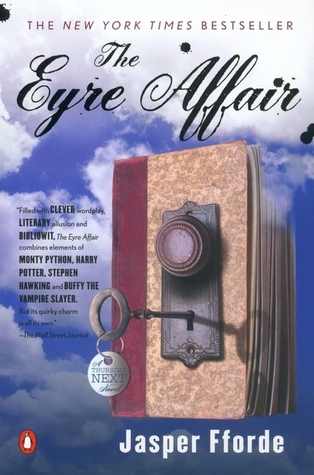
The Eyre Affair

As soon as I read the cover blurb for The Eyre Affair, I knew I was a goner. From The Wall Street Journal:

Filled with clever wordplay, literary allusion and bibliowit, The Eyre Affair combines elements of Monty Python, Harry Potter, Stephen Hawking and Buffy the Vampire Slayer. But its quirky charm is all its own.

I mean, come on! Was this book written just for me?

What’s it all about? I’ll borrow the Goodreads synopsis:

Welcome to a surreal version of Great Britain, circa 1985, where time travel is routine, cloning is a reality (dodos are the resurrected pet of choice), and literature is taken very, very seriously. England is a virtual police state where an aunt can get lost (literally) in a Wordsworth poem, militant Baconians heckle performances of Hamlet, and forging Byronic verse is a punishable offense. All this is business as usual for Thursday Next, renowned Special Operative in literary detection, until someone begins kidnapping characters from works of literature. When Jane Eyre is plucked from the pages of Brontë’s novel, Thursday must track down the villain and enter the novel herself to avert a heinous act of literary homicide.

In the world of Thursday Next, the hush-hush web of government intelligence includes SO-27, the branch of Special Operations focusing on Literary Detection. As a LiteraTec, Agent Next tracks down all sorts of nefarious literary criminals, but none so heinous as the mysterious mastermind who literally rewrites the world of fiction by altering original manuscripts. Add to the mix a Crimean War that’s raged for 150 years, Next’s ChronoGuard father who pops in and out whenever he’d like (usually with a history-changing agenda or two — like, say, the invention of the banana), a powerful corporation named Goliath that runs, well, everything, and a strange device called a Prose Portal that may be the key to finally winning the war… and you have a delightfully bizarre novel that plays with words and books in the strangest, twistiest of ways.

The glory is truly in the details. On a rare day off, Thursday attends the weekly performance of Richard III — which is this world’s stand-in for Rocky Horror. In a truly amazing sequence, we’re treated to the spectacle of full-on audience participation, including the donning of sunglasses, stamping and barking, and a wild battle scene in the aisles and entryway of the theater.

The whole audience erupted in unison:

“When is the winter of our discontent?”

“Now,” replied Richard with a cruel smile, “is the winter of our discontent…”

The Eyre Affair is filled with so many adorable details, it’s impossible to capture even a smidgen. Coin-operated mechanical devices on street corners recite verses of Shakespeare on demand. Taking an unpopular stance on the “who really wrote Shakespeare’s plays?” debate can lose you friends and has been known to start riots. Characters names include Victor Analogy, Braxton Hicks, Jack Schitt, and Acheron Hades. Guess who the bad guys are?

Possibly the only note that rang false for me in this book is the introduction of vampires and werewolves (in a chapter aptly titled “Spec-Ops 17: Suckers & Biters”. I mean, sure, in a novel in which bad performances of Shakespeare carry fines and John Milton conventions are commonplace, why not? Still, this piece of the story seems unnecessary and a bit out of place. While handled with humor, the inclusion of these over-used supernatural creatures is a clunky touch and is not in keeping with the overall off-beat originality of the storyline.

I leave you with the brief explanation provided for the department vacancy offered to Thursday:

Your post was held by Jim Crometty. He was shot dead in the old town during a bookbuy that went wrong.

How can you not love a book in which all of society is crazy about books? Where people from around the globe make pilgrimage to see the Jane Eyre manuscript? The Eyre Affair is silly, quirky, and an absolute delight.

Book Review: Wolf Hall by Hilary Mantel

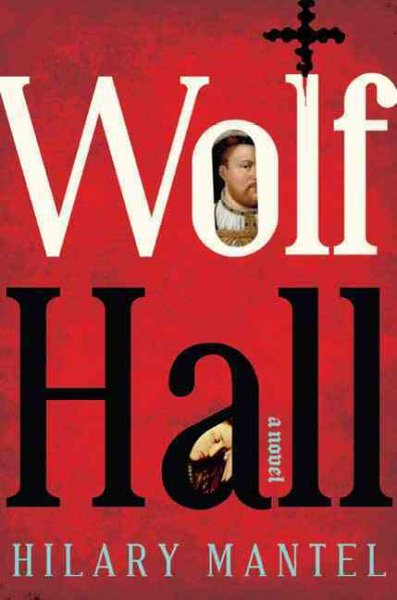
Winner of countless awards, among them the 2009 Man Booker Prize, Wolf Hall is well-known and highly esteemed. So why did it take me so many years to finally read it?

It’s a daunting book to begin, that’s for sure. In my paperback edition, the two pages of the Table of Contents are followed by five pages of the Cast of Characters, and then by two more pages containing family trees (the Tudors and the Yorkist Claimants, to be exact). Did I need to memorize the ancestries? Was I supposed to already know the paths of descent from Richard Duke of York and Owen Tudor? In general, when I see a book that requires that much supporting information up front, I want to run for the hills. Or pick up something simpler, at the very least.

In this case, I’d already vowed to read Wolf Hall during a vacation, and after committing to it publicly (well, okay, here on my blog), I felt a certain amount of pressure to see it through.

So — worth it? Yes, and here’s why:

Wolf Hall is the story of Thomas Cromwell, a man who rises from an obscure beginning as the son of a blacksmith to become one of the most powerful and influential advisers in the court of King Henry VIII. The entire book is told from Cromwell’s perspective; we see the people and players that he sees; we visit the inner chambers of the castle when he does. As Cromwell’s access increases, so does ours as readers. We only meet Henry when Cromwell does, and we see Anne Boleyn’s ascent at first from a distance, as bewildered by the king’s obsession with Anne as Cromwell is, then become more intimately involved as Cromwell becomes a key participant in the machinations needed to overthrow not just a marriage but an entire religious institution.

The Cromwell we come to know in Wolf Hall may or may not be entirely historically accurate. His rise to power is well-documented, but his early history and his inner life is not. Author Hilary Mantel gives Thomas Cromwell a depth and vibrancy that make him a sympathetic main character. We see him as a devoted family man, albeit as one who is often absent. Still, his devotion to his wife, his children, and his broad collection of wards and adoptees is shown to be his defining virtue. Likewise, he is committed to his patron, Cardinal Wolsey, and he forgets nothing — neither good nor bad — in his endless reckoning of favors owed and granted. Cromwell’s shrewdness and intelligence are clear. He is an intellectually gifted man who had a rough start in life, and so he is both gentleman and ruffian, a man who can out-think anyone he encounters, and at the same time a man to strike fear into the hearts of those who cross him.

Wolf Hall is a complicated book. This is not a bodice-ripper masquerading as history. The details can be overwhelming. There is an enormous number of players to keep straight, and it’s not enough to know who’s who; we readers also need to know the relations, the power dynamics, the titles, and the land holdings. This is not a love story. It’s about power, it’s about politics, it’s about playing a deadly game with the lives of the innocent and not-so-innocent at stake. Hilary Mantel piles detail upon detail, but never in a way that is incomprehensible — although, yes, it is a lot to keep track of.

Mantel’s prose is not straightforward. Sentences break off suddenly. A random example, from early on in the book:

They arrived on a Sunday, two vengeful grandees: the Duke of Norfolk a bright-eyed hawk, the Duke of Suffolk just as keen. They told the cardinal he was dismissed as Lord Chancellor, and demanded he hand over the Great Seal of England. He, Cromwell, touched the cardinal’s arm. A hurried conference. The cardinal turned back to them, gracious: it appears a written request from the king is necessary; have you one? Oh: careless of you. It requires a lot of face to keep so calm; but then the cardinal has face.

The pronouns throughout Wolf Hall are a bear to figure out. Mantel uses “he” throughout the book to refer to Cromwell, even when he is not the person most recently referenced. This drove me crazy at first. I’d have to stop and backtrack, realizing that the sentence I was reading was not about the person I thought it was about! Once I finally got that it’s all about Cromwell, all the time, the “he”s were a bit easier to decipher. But boy, did that throw me for a loop at the beginning.

Wolf Hall will not be for everyone. But I did enjoy it very much, although it was perhaps not the wisest choice for vacation reading. I typically choose books that require little commitment for my vacation reading — books I can easily swoop in and out of at a moment’s notice while doing other things. Wolf Hall is not one of these books. It requires concentration and thought, and while I definitely liked the challenge, it was a bit overwhelming at times.

The title itself is confusing, and only gains meaning toward the end of the book (unless you’re a total Tudor-era enthusiast and know the names of every estate in the realm). The challenge for an author writing about this era is in keeping a sense of suspense or surprise when the major events are so very well known. If you’ve read The Other Boleyn Girl or watched The Tudors, then you already know how the king’s efforts to divorce Katherine and marry Anne will work out. What keeps this book interesting is the writing itself, as well as the use of a lesser-known figure as its point-of-view character. Learning about Cromwell is fascinating; seeing the inner workings of the court through his eyes is enlightening, and keeps the familiar acts and players from seeming worn out or stale. Yes, I do know what happens — but it doesn’t matter. The portrayals of Cromwell, Henry, Anne, and the others are rich and nuanced, and kept me hooked.

Wolf Hall is the first book in a trilogy. Book 2, Bring Up The Bodies, is also a Man Booker Prize recipient. Book 3, The Mirror and The Light, is anticipated for publication in 2015, as far as I could tell. I plan to read Bring Up The Bodies later this summer, and as it covers the fall of Anne Boleyn, I fully expect to be engrossed.

I highly recommend Wolf Hall, although it definitely helps to have some knowledge of the Tudors ahead of time. And if you’ve watched Showtime’s version of The Tudors, I dare you to read this book and not picture Natalie Dormer every time Anne Boleyn is in a scene.

Thursday Quotables: A Small Death in the Great Glen

cooltext1045178755

Welcome back to Thursday Quotables! This weekly feature is the place to highlight a great quote, line, or passage discovered during your reading each week.  Whether it’s something funny, startling, gut-wrenching, or just really beautifully written, Thursday Quotables is where my favorite lines of the week will be, and you’re invited to join in!

If you’d like to participate, it’s really simple:

  • Follow Bookshelf Fantasies, if you please!
  • Write a Thursday Quotables post on your blog. Try to pick something from whatever you’re reading now.
  • Link up via the linky below (look for the cute froggy face).
  • Make sure to include a link back to Bookshelf Fantasies in your post (http://www.bookshelffantasies.com).
  • Have fun!

This week’s Thursday Quotable:

Joanne went into a dwam*, floating with the gull. Floating over the castle braes, over the river, across to the cathedral without a single wing movement, he (for it always seemed a him to her) drifted on toward the infirmary, back over to the war memorial, disappearing into the tangle of the Islands.

She could feel herself nestling into the shoulders of the gull, oily satin-smooth feathers smelling of fish. Up into the thermals they floated, taking in the river, the town, the hills, the mountains, the Great Glen, the faultline that fractured the Highlands. Peaks and scree-strewn ridgelines were mirrored in the ribbon of deep dark lochs. Glens clad in a  faded tartan of heather and bracken with splashes of green outlining abandoned crofts emptied by the Clearances** were cut deep by drunken burns and rivers. A fierce and stunning landscape; it made Joanne want to sing.

*Dwam: Scottish term for “daydream” or “reverie”.

**The Highland Clearances. See Wikipedia for info.

Source:  A Small Death in the Great Glen
Author: A. D. Scott
Atria, 2010

Sigh. I just love this description of the Scottish Highlands — one of my dream destinations!

What lines made you laugh, cry, or gasp this week? Do tell!

Link up, or share your quote of the week in the comments.

I’m baaaaack! Plus, a Wishlist Wednesday post.

Hey, all! Thanks for keeping up with Bookshelf Fantasies while I was away this past week. I’m back, frantically trying to wade through all the emails that have piled up, whilst simultaneously doing mountains of laundry and emptying my suitcases. I had a lovely vacation in Costa Rica (thanks for asking!), and will share some photos — as well as my reviews of the wonderful books I read while away — as soon as I catch my breath a bit more.

Meanwhile, I’m diving back in with a Wishlist Wednesday post!

Wishlist Wednesday: The concept is to post about one book from our wish lists that we can’t wait to read. Want to play? Here’s how:

  • Follow Pen to Paper as host of the meme.
  • Do a post about one book from your wishlist and why you want to read it.
  • Add your blog to the linky at the bottom of the post at Pen to Paper.
  • Put a link back to Pen to Paper somewhere in your post.
  • Visit the other blogs and enjoy!

My Wishlist Wednesday pick this week is:

Openly Straight

Openly Straight by Bill Konigsberg

From Goodreads:

Rafe is a normal teenager from Boulder, Colorado. He plays soccer. He’s won skiing prizes. He likes to write.And, oh yeah, he’s gay. He’s been out since 8th grade, and he isn’t teased, and he goes to other high schools and talks about tolerance and stuff. And while that’s important, all Rafe really wants is to just be a regular guy. Not that GAY guy. To have it be a part of who he is, but not the headline, every single time.

So when he transfers to an all-boys’ boarding school in New England, he decides to keep his sexuality a secret — not so much going back in the closet as starting over with a clean slate. But then he sees a classmate breaking down. He meets a teacher who challenges him to write his story. And most of all, he falls in love with Ben . . . who doesn’t even know that love is possible.

This witty, smart, coming-out-again story will appeal to gay and straight kids alike as they watch Rafe navigate being different, fitting in, and what it means to be himself.

Why do I want to read this?

I have a bit of burn-out when it comes to YA novels of the supernatural, otherworldly, or end-of-the-world, end-of-civilized-society varieties. But… I do love finding a YA novel that deals sensitively with contemporary issues, while at the same time telling the story of memorable individuals facing real-world challenges. Openly Straight sounds like it takes the coming out experience and flips it on its head. Is it possible to be so “out” that that’s all people see? Is it realistic to want to keep such a big part of yourself hidden, not out of shame but from a desire to be known for oneself without labels?

I’m really looking forward to seeing how the author tackles this subject — and how Rafe’s struggle to define himself, for himself, works out.

So what’s on your wishlist this week?

If you enjoyed this post, please consider following Bookshelf Fantasies! And don’t forget to check out our regular weekly features, Thursday Quotables and Flashback Friday. Happy reading!

The Monday Agenda 6/24/2013

MondayAgendaNot a lofty, ambitious to-be-read list consisting of 100+ book titles. Just a simple plan for the upcoming week — what I’m reading now, what I plan to read next, and what I’m hoping to squeeze in among the nooks and crannies.

True fact: I’m away and not actively blogging this week. Oh, the power and beauty of scheduling! Just because I’m off to parts known and unknown, it doesn’t mean I can’t post a Monday Agenda for this week.

How did I do with last week’s agenda?

Sea Change by S. M. Wheeler: DNF. I read about 30 pages or so, but it just never really clicked for me.

Fathomless by Jackson Pearce: Done! My review is here. Warning: Contains rants and spoilers.

The Horse and His Boy by C. S. Lewis: Done! My son and I have now read four Narnia books together, and plan to continue as soon as we’re back home. We loved The Horse and His Boy. We managed to squeeze in a quick Q&A With The Kiddo post on our Narnian adventures — you can see it here.

That’s it! It was a low-volume reading week, thanks to the typical pre-trip frenzy of packing, laundry, and last-minute dashes to the store for insect repellant and other such nonsense.

Fresh Catch:

Neil Gaiman! Plus, two paperbacks — bought cheap! — arrived from the UK this week. I’m so looking forward to reading all of these!

The Ocean at the End of the LaneRose Under FireThe 5th Wave (The Fifth Wave, #1)

Yes, I’ve already read (and loved!) The 5th Wave… and now I have my own copy!

What’s on my reading agenda for the coming week?

Instead of choosing my own vacation reading, I asked my blog visitors to do it for me! Based on my poll results, here’s what I’ll be reading in the next week and a half:

The Eyre Affair by Jasper Fforde

Wolf Hall by Hilary Mantel

A Small Death in the Great Glen by A. D. Scott

… and possibly Me Before You by Jojo Moyes, although I doubt I’ll fit all this into my not-as-long-as-I’d-like vacation.

Thank you to everyone who voted and offered an opinion (or two)! I’ll report back — when I get back!

boy1

So many book, so little time…

That’s my agenda. What’s yours? Add your comments to share your bookish agenda for the week.