Flashback Friday: The Caine Mutiny

Flashback Friday is my own little weekly tradition, in which I pick a book from my reading past to highlight — and you’re invited to join in!

Here are the Flashback Friday book selection guidelines:

  1. Has to be something you’ve read yourself
  2. Has to still be available, preferably still in print
  3. Must have been originally published 5 or more years ago

Other than that, the sky’s the limit! Join me, please, and let us all know: what are the books you’ve read that you always rave about? What books from your past do you wish EVERYONE would read? Pick something from five years ago, or go all the way back to the Canterbury Tales if you want. It’s Flashback Friday time!

My pick for this week’s Flashback Friday:

The Caine Mutiny

The Caine Mutiny by Herman Wouk

(published 1951)

From Goodreads:

The novel that inspired the now-classic film The Caine Mutiny and the hit Broadway play The Caine Mutiny Court-Martial, Herman Wouk’s boldly dramatic, brilliantly entertaining novel of life — and mutiny — on a Navy warship in the Pacific theater was immediately embraced, upon its original publication in 1951, as one of the first serious works of American fiction to grapple with the moral complexities and the human consequences of World War II. In the intervening half century, The Caine Mutiny has become a perennial favorite of readers young and old, has sold millions of copies throughout the world, and has achieved the status of a modern classic.

The Caine Mutiny is the book that brought us the iconic character of Captain Queeg, immortalized on film by Humphrey Bogart and famous for such gems as:

Aboard my ship, excellent performance is standard, standard performance is sub-standard, and sub-standard performance is not permitted to exist.

Is Queeg incompetent? Cowardly? Or mentally unbalanced, perhaps dangerously so? That’s the moral dilemma that the junior officers on board the Caine must confront, deciding whether the safety of their ship demands overthrowing their leader — or whether the fact that Queeg is a poor captain is irrelevant to the fact that military men must obey the chain of command, period.

The Caine Mutiny is an exciting, intelligent read — at once an accurate portrayal of the alternating dangers and boredom of life at sea, an exploration of the inner workings of men under pressure, and a rollicking tale of a band of brothers that isn’t quite as noble and self-sacrificing as most war movies might have us believe. Filled with storms at sea, wartime engagements, and plenty of legal drama, The Caine Mutiny is a modern classic of wartime fiction.

♥♥♥♥♥♥♥♥

Do you host a book blog meme? Do you participate in a meme that you really, really love? I’m building a Book Blog Meme Directory, and need your help! If you know of a great meme to include — or if you host one yourself — please drop me a note on my Contact page and I’ll be sure to add your info!

Book Review: The Girl You Left Behind by Jojo Moyes

Book Review: The Girl You Left Behind by Jojo Moyes

The Girl You Left BehindQuick: When you think of looted art and reparations, what do you think of? Nazi Germany? So do most of the bystanders in this novel, which mixes a modern courtroom drama and love story with a devastating glimpse back at a wartime tragedy, with a missing (perhaps stolen) painting serving as the focal point. The twist in The Girl You Left Behind is that the painting in question went missing during the German occupation of northern France during the first World War — but that doesn’t stop popular opinion from tarnishing the main character’s reputation by accusing her of exploiting Nazi theft for her own personal gain. To say it’s complicated is putting it mildly.

In The Girl You Left Behind, we follow two timelines. In 1916, we meet Sophie Lefevre, devoted wife of up-and-coming artist Edouard, who is serving on the front lines with the French forces battling the invading German army. Sophie has been left behind in her home village, helping her sister manage the family inn and struggling to survive with ever-dwindling rations and a hostile German battalion occupying the town. Beautiful young Sophie catches the eye of the German Kommandant, and he is mesmerized as well by Edouard’s portrait of Sophie, which hangs in a back hallway of the inn. Ultimately, Sophie is forced into a decision that pits her own life and honor against the survival of her family and her husband.

Meanwhile, in modern day London, young widow Liv Halston lives alone in a beautiful glass house built by her late husband David, a remarkable and renowned architect who died suddenly four years previously. On their honeymoon, David had bought a beautiful portrait of an enigmatic young woman as a gift for Liv, and this portrait is literally the only spot of color in Liv’s bleak world. Liv meets handsome, gallant Paul and finally feels a spark of life returning — but Paul is an ex-cop now specializing in tracking and returning works of art stolen during wartime. When he is hired by the Lefevre family to find their missing painting and realizes it’s in Liv’s possession, legal drama threatens their blossoming love — as well as David’s legacy and Liv’s reputation.

The Girl You Left Behind tells both parts of the story quite effectively. The first several chapters are devoted to Sophie, and it was somewhat wrenching to have to leave her once the narrative switched to the modern era. Likewise, Liv’s story is affecting and engrossing, and I soon wanted to know much more about this lonely woman and the husband she’d lost. Sophie and Liv are both strong women dealt a series of painful blows in horrible circumstances, and in both streams of the story we see how their personal strength informs their decisions and actions.

The moral dilemma posed is an interesting one. It would appear that the Lefevre descendants are seeking the painting for its monetary value alone, whereas Liv truly loves the painting and feels a connection and fondness for Sophie herself, despite knowing nothing about her story until the legal case gets underway. So who is right in this situation? Are the artist’s descendants entitled to the painting based on their assertion that it was stolen during wartime? Or, barring convincing evidence, is Liv entitled to keep this artwork that she cherishes, even knowing that it may have made its way to her through questionable circumstances?

The story is compelling and well thought-out, and the alternating timelines prolong the suspense and the mystery. We know that something terrible happened to Sophie; we know that the painting disappeared; but the how and why of these occurences is not revealed until close to the end of the book. Author Jojo Moyes gives just enough detail to keep us guessing (although I’ll admit that I’d made an assumption about a key revelation that turned out to be correct), and both pieces of the story wrap up in a way that feels both right and satisfying.

My only quibble with this book is that I wanted to know a bit more about the relatives who started the legal proceedings. They’re referred to as descendants of the Lefevre family, but the exact relationship to the artist isn’t revealed, and we never actually meet them other than seeing them on the other side of the courtroom. I would have liked to have seen their role in the story fleshed out. While it’s implied that they’re only in it for the money (and I suppose their motivation is immaterial if the painting is in fact rightfully theirs), it would have helped me view their side of the proceedings more sympathetically if I’d gotten to know them in any way.

That issue aside, I found The Girl You Left Behind to be quite moving and well thought out. It reveals a piece of history that doesn’t get much attention, while hammering home a universal truth about the horror of war and the irreparable damage done to so many lives. In the contemporary pieces of the story, The Girl You Left Behind is also emotionally involving and very interesting as well — as a legal drama, as a love story, and as a portrait of a woman who has to figure out how to live again.

I’ve been hearing a lot about Jojo Moyes this year, especially since the publication of her highly praised novel Me Before You. The Girl You Left  Behind is the first book I’ve read by this author, but it certainly won’t be the last. Jojo Moyes is a skilled storyteller with a great eye for capturing the small details that make a character feel real, and I look forward to exploring more of her work.

__________________________________________

The details:

Title: The Girl You Left Behind
Author: Jojo Moyes
Publisher: Penguin Group/Viking
Publication date: 2013
Genre: Historical/contemporary fiction
Source: Review copy courtesy of Penguin/Viking via NetGalley

Thursday Quotables: Doctor Sleep

quotation-marks4

Welcome back to Thursday Quotables! This weekly feature is the place to highlight a great quote, line, or passage discovered during your reading each week.  Whether it’s something funny, startling, gut-wrenching, or just really beautifully written, Thursday Quotables is where my favorite lines of the week will be, and you’re invited to join in!

From my current obsession:

The rational part of his mind told him she was just a fragment of unremembered bad dream that had followed him out of sleep and across the hall to the bathroom. That part insisted that if he opened the door again, there would be nothing there. But another part of him, the part that shone, knew better. The Overlook wasn’t done with him.

16130549

Source: Doctor Sleep
Author: Stephen King
Scribner, 2013

What lines made you laugh, cry, or gasp this week? Do tell!

If you’d like to participate, it’s really simple:

  • Write a Thursday Quotables post on your blog. Try to pick something from whatever you’re reading now. And please be sure to include a link back to Bookshelf Fantasies in your post (http://www.bookshelffantasies.com), if you’d be so kind!
  • Comment on this post with the link to your own Thursday Quotables post. Or… have a quote to share but not a blog post? Leave your quote in the comments!
  • Have fun!

Wishing & Waiting on Wednesday

Wednesday is a perfect day for a good book meme, and I thought I’d branch out a bit! I’ve been participating in Wishlist Wednesday, hosted by Pen to Paper, for over a year — and I’ve been wanting to jump into Waiting on Wednesday (hosted by Breaking the Spine) for a while now too. So why not do both?

Wishlist Wednesday is a place to highlight any book from our wish lists — old, new, not yet released — that we’re dying to read. Waiting on Wednesday focuses on upcoming new releases.

Some weeks, I’ll probably have two different books to wish and wait for… but this week, here’s one that works for both!

My wishlist book this week is:

Lair of Dreams (The Diviners, #2) by Libba Bray
(release date April 22, 2014)

From Goodreads:

After a supernatural showdown with a serial killer, Evie O’Neill has outed herself as a Diviner. Now that the world knows of her ability to “read” objects, and therefore, read the past, she has become a media darling, earning the title, “America’s Sweetheart Seer.” But not everyone is so accepting of the Diviners’ abilities…

Meanwhile, mysterious deaths have been turning up in the city, victims of an unknown sleeping sickness. Can the Diviners descend into the dreamworld and catch a killer?

Why do I want to read this?

Because I absolutely loved The Diviners, and can’t wait to see what happens next! Evie is a fabulous main character, and I love the 1920s New York setting. The Diviners was a perfect mix of creepy and absolutely snazzy — and I was just so excited to find out this week that book #2 has a title, a cover, and a release date!

Who else is excited about Lair of Dreams?

So what are you doing on Thursdays and Fridays? Come join me for my regular weekly features, Thursday Quotables and Flashback Friday! You can find out more here — come share the book love!

♥♥♥♥♥♥♥♥

Do you host a book blog meme? Do you participate in a meme that you really, really love? I’m building a Book Blog Meme Directory, and need your help! If you know of a great meme to include — or if you host one yourself — please drop me a note on my Contact page and I’ll be sure to add your info!

Top Ten Tuesday: Top Ten Best Sequels

fireworks2

Top Ten Tuesday is a meme hosted by The Broke and the Bookish, featuring a different top 10 theme each week.

This week’s theme is Top Ten Best Sequels Ever. According to the nice folks at Dictionary.com, a sequel is:

a literary work, movie, etc., that is complete in itself but continues the narrative of a preceding work

Well, that makes it tough. Do books in an ongoing series count? Some would, I suppose, although there are many that I wouldn’t call complete in themselves. I had originally thought to write a list of two book duos (duologies), but my brain came up short. So… giving it my best shot, here are my choices for the top 10 books that “continue the narrative of a preceding work” yet are complete in themselves as well. Or something along those lines.

1) Doctor Sleep by Stephen King: Cheating a bit here! I haven’t read it, obviously, since today (Tuesday) is the release date… but I’m excited to read this sequel to The Shining — and I’m so sure that it’ll be awesome, I’m making it #1 on my list!

2) You Suck and Bite Me by Christopher Moore. Well, I’ve never read a Christopher Moore book that I haven’t enjoyed (yup, I even like Island of the Sequined Love Nun!), but these two follow-ups to Bloodsucking Fiends are both funny and take the original story in all sorts of goofy directions.

3) War and Remembrance by Herman Wouk. On a more serious note, Herman Wouk’s The Winds of War is powerful on its own, but put it together with its sequel, War and Remembrance, and you have a devastating pair of novels that convey the terror and sorrow of the Holocaust through the experiences of one family. Unforgettable.

4) Harry Potter and the Goblet of Fire by J. K. Rowling. I love the entire series, but I’ve always felt that GoF has its own powerful adventure/thriller story to tell that makes it a tremendous read on its own. The TriWizard Tournament gives GoF a framework that functions beautifully in a way that makes this book less episodic than some of the others and more of a unified whole.

5) The Vampire Lestat by Anne Rice. Published nine years after Interview With The Vampire, The Vampire Lestat brought vampires back into pop culture in a big way, and kickstarted Anne Rice’s Vampire Chronicles series. By shifting the focus from Louis to Lestat, Rice added an element of fun — and rock-star glamour — that made The Vampire Lestat a must-read and really took the lead in making vampires sexy once again.

6) The Year of the Flood by Margaret Atwood. When I read Oryx and Crake, I never expected the story to continue… so I was thrilled when I found out about The Year of the Flood, which is both sequel and companion to Oryx and Crake. Likewise, when I read The Year of the Flood, I had no idea that a 3rd book was in the works… and now I have MaddAddam waiting to be read!

7) Changes by Jim Butcher. The Dresden Files series is huge at this point (14 books and counting), so it’s hard to pick any one volume to single out as a great sequel. But, I’m including Changes here because it really is one of the most memorable of the series, an incredibly suspenseful and thrilling installment that lives up to its title completely by serving as a total game-changer for all of the major characters. For me, Changes breathed fresh life into the series just when it needed it most, making it exciting and shocking all over again.

8) Talulla Rising by Glen Duncan. This sequel to The Last Werewolf shifts the story to a new narrator in a continuation that’s just as gory, thoughtful, and mind-boggling as the first book.

9) Dreamquake by Elizabeth Knox. I am so fond of this duology, which does not appear to be as well known as it should be. Dream Hunters introduces us to a world in which dreams are performed by super-stars in lavish opera halls. In Dreamquake, we learn more about the origins of these dreams and find the keys to understanding how and why this all came about. This is a powerful story, masterfully told in two compelling novels.

10) Parable of the Talents by Octavia Butler. Parable of the Sower introduces us to a not-too-distant future that’s horribly familiar, and Parable of the Talents takes that world and makes it even more awful. The characters are unforgettable, and in Parable of the Talents, we get a sequel just as moving and painful as the first book — if not more so.

What are your favorite sequels? Which are the best of the best?

If you enjoyed this post, please consider following Bookshelf Fantasies! And don’t forget to check out our regular weekly features, Thursday Quotables and Flashback Friday. Happy reading!

♥♥♥♥♥♥♥♥

Do you host a book blog meme? Do you participate in a meme that you really, really love? I’m building a Book Blog Meme Directory, and need your help! If you know of a great meme to include — or if you host one yourself — please drop me a note on my Contact page and I’ll be sure to add your info!


The Monday Agenda 9/23/2013

MondayAgendaNot a lofty, ambitious to-be-read list consisting of 100+ book titles. Just a simple plan for the upcoming week — what I’m reading now, what I plan to read next, and what I’m hoping to squeeze in among the nooks and crannies.

How did I do with last week’s agenda?

The Book of Lost Things (Mister Max #1)Two Boys KissingThe Girl You Left Behind

Mister Max: The Book of Lost Things by Cynthia Voigt: Done! My review is here.

Two Boys Kissing by David Levithan: Done! My review is here.

The Girl You Left Behind by Jojo Moyes: Currently reading, at about the half-way point. Very moving so far!

And in kids’ books:

Leven Thumps and the Gateway to Foo (Leven Thumps, #1)

My son and I have settled on our next read-aloud book. We’ve just started the first book in the Leven Thumps series by Obert Skye, which seems to have originally been titled Leven Thumps and the Gateway to Foo, but which now appears to be called just The Gateway. Whatever the title, we’re about 6 or 7 chapters into it, and it seems to be a fun if somewhat dark fantasy series. We’ll definitely read all of book 1 before we decide about the rest of the series.

 Fresh Catch:

In my quest to find books that will appeal to both my son and me, I picked up a couple of new (used) kids’ books plus a graphic novel for me:

Liesl & PoHouse of Secrets (House of Secrets, #1)Angel & Faith: Death and Consequences (Angel & Faith, #4)

What’s on my reading agenda for the coming week?

The Girl You Left BehindDoctor Sleep (The Shining, #2)The Incrementalists

First, I need to finish The Girl You Left Behind… by Tuesday, because…

Holey moley, I’m so excited for the release of Doctor Sleep by Stephen King! I finished my re-read of The Shining a couple of weeks ago, and have been on pins and needles waiting for Doctor Sleep ever since! I plan to start reading it the second it arrives.

If by any chance I have time left this week, then my next book will be The Incrementalists by Steven Brust and Skyler White, one of my recent Wishlist Wednesday picks.

AND — on top of all this reading goodness — coming this week is one of my very favorite events of the year: the Big Book Sale hosted by the Friends of the San Francisco Public Library. Hundreds of thousands of books for $3 or less! I’ll be attending the member preview on Tuesday night. What could be more fun than being in a huge room filled with books and surrounded by hundreds of crazy book lovers? Last year, I came home with 40 books and spent $80. Let’s see how I do this year!

So many book, so little time…

That’s my agenda. What’s yours? Add your comments to share your bookish agenda for the week.

boy1

Book Review: Two Boys Kissing by David Levithan

Book Review: Two Boys Kissing by David Levithan

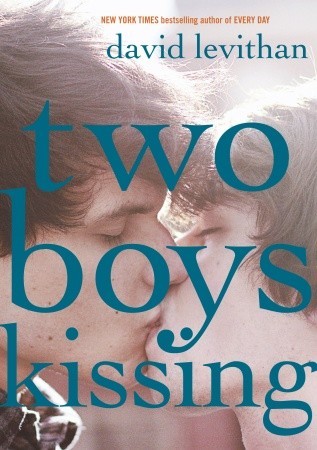
Two Boys KissingTo call Two Boys Kissing a young adult novel is to set limits on a book that truly transcends categories of genre and target demographics. You may as well describe Two Boys Kissing as poetry with a plot or a love song transcribed with paper and ink.

Two Boys Kissing is an ode to today’s generation of gay youth, narrated from beyond by a “Greek chorus” (as all the blurbs put it) composed of the voices of the generation of gay men lost to the plague years of the AIDS epidemic. Written throughout in the first-person plural voice, the narrative describes the hopes and fears of the people who came before — and expresses their love and good wishes for the youth of today.

The book is loosely constructed around the events that occur over the course of a weekend, as teens Harry and Craig decide to challenge the record for the world’s longest kiss. As these two boys attempt to kiss for 32 hours straight, with no breaks, no sitting down, no “propping” by any others, their friends gather round to cheer and support them — and bit by bit, they become a world-wide media sensation. Meanwhile, we also follow the story of five other boys who explore first love, family acceptance, fitting in and giving up, speaking up and knowing when to listen.

The writing here is lyrical and absolutely beautiful. I could open to pretty much any page and find a moving moment or a passage that just begs to be read out loud.

Sample #1:

We were once like you, only our world wasn’t like yours.

You have no idea how close to death you came. A generation or two earlier, you might be here with us.

We resent you. You astonish us.

Sample #2:

Around the world, screens light up. Around the world, words are flown through wires. Around the world, images are reduced to particles and, moments later, are perfectly reassembled. Around the world, people see these two boys kissing and find something there.

Sample #3:

Maybe this is why we like watching you so much. Everything is still new to you. We are long past the experience, although we witness new things all the time. But you. New is not just a fact. New can be an emotion.

I could go on and on, because everywhere in Two Boys Kissing are moments of beauty, perfect expressions of pain and loss, hope and love. This is a slim book, less than 200 pages, but every page has meaning and depth. There are no chapter breaks — it’s one long meditation and celebration, and as surprising and unconventional as it is, it truly works.

I believe that Two Boys Kissing will quickly become a very important book for teens. It confronts today’s climate head-on, provides a context for how we got to where we are today, and conveys it all with passion, compassion, and an unwillingness to back down or look away. I can easily see another and different audience for Two Boys Kissing as well — the older generation, gay and straight, that remembers the awful, early years of the AIDS epidemic and hears the voices of friends and loved ones, lost but never forgotten, in the words of the book’s chorus.

On top of all this, Two Boys Kissing tells a sweet and lovely story about a group of individuals. The named characters are finely drawn, with personalities and backstories that make them each unique and yet easily identifiable as real people going through real challenges.

You may read it for the events, for the love stories, for the heartbreak, for the elegance of the writing, or for the memories it evokes. Just read it.

__________________________________________

The details:

Title: Two Boys Kissing
Author: David Levithan
Publisher: Alfred A. Knopf
Publication date: 2013
Genre: Young Adult
Source: Library

Book Review: Mister Max: The Book of Lost Things by Cynthia Voigt

Book Review: Mister Max: The Book of Lost Things by Cynthia Voigt

The Book of Lost Things (Mister Max #1)There’s a lot to love in this middle-grade novel about a very smart boy looking for solutions. Max, age 12, is the son of two successful, larger-than-life parents who run their own theater company and bring their characters to life day after day. Max enjoys the show but likes his place on the sidelines — until a mysterious letter arrives offering Max’s parent a too-good-to-be-true opportunity for fame and fortune, which they immediately accept. Max and his parents are due to set sail from their unnamed town on a luxurious ocean-liner headed for India, but on the day of departure, Max shows up at the docks at the appointed time only to discover that his parents have gone already — and that the ship they were meant to board does not actually exist.

Left behind, Max determines that his best course is independence, so even though his grandmother (Grammie) wants to take him in and care for him in his parents’ absence, Max decides to live under his own roof and support himself by any means possible. (His house is right next door to Grammie’s, so it’s not that dramatic a separation, after all). But how can a 12-year-old survive on his own — and what happened to his parents? Max stumbles onto a good thing, realizing that by enacting the parts he’s seen his father play so many times, he can assume any persona he needs: town official, humble laborer, stuffy bureaucrat, ardent detective. Max is a chameleon, and as he slips into his different characters, he begins to solve problems for the townspeople he encounters, earning enough along the way to retain his independence and managing to help the people he cares for in different ways as well.

Mister Max is a charming book, with a main character who is good-hearted, caring, and endlessly inventive. Max does not have magical resources or superpowers; instead, he uses his wits and logic to find solutions and set things right, figuring out not only facts but reasons and motivations, and helping others to figure out what it is that they truly want and need.

My main quibble with Mister Max is that it lacks a certain urgency. Although Max’s parents’ disappearance is the catalyst for the book’s story line, this mystery mostly sits on the back burner for much of the book. It’s a problem for Max and a worry, but he spends much more of his time solving other people’s problems and worries. True, there isn’t much he can do and there aren’t many clues — but Max seems to mostly take a shrug-your-shoulders, get-on-with-it sort of approach to his current situation. It’s all very pragmatic, but I’m afraid at times the plot concerning the mystery of Max’s parents seems to get buried in all the other busy moments of Max’s independent life.

Still, it’s an entertaining and clever read, and refreshing in an old-fashioned sort of way. The specific time and place of the book’s setting isn’t revealed, but it appears to take place sometime in the early 1900s. Travel is by steamship, communication is conducted via letters and telegrams, and Max weaves his way through the streets of Old Town and New Town on his trusty bicycle. There’s a simplicity to the problems that Max is hired to solve, and his solutions are smart and simple — perhaps needing a 12-year-old’s eyes to see the clues and patterns that closed-minded adults might miss.

I do wonder how well this book will work for the intended audience, children ages 8 – 12. At 400 pages, this is a rather hefty book, and the pace is somewhat slow, particularly for kids more used to reading books about fantasy worlds or high-speed adventures. Still, the writing is engaging and the characterizations are funny, straight-forward, and evocative, so that within a few well-written lines, we clearly see into the heart of each new character we meet and understand what makes them all tick. Author Cynthia Voigt is adept at talking to children without talking down, and it’s obvious that she credits her reading audience with a great deal of intelligence. It’s whether young readers will have the patience to commit to such a lengthy, character driven book that I’m not so sure about.

I read this book after receiving a review copy, and needless to say, I can’t help but apply an adult perspective to the action and the plot. I’d like to try this one out on my 11-year-old and see what he thinks. I have a feeling that Mister Max is a more subtle read than he’s used to, but that doesn’t mean that he won’t enjoy it, if he gives it a fair chance… and I’d imagine this may be true for other kids his age as well. Mister Max feels like the kind of story that might have been more popular a generation ago, but I do believe kids today will enjoy it, if they can just stick with it long enough to get into the flow and rhythm of a different sort of storytelling.

Mister Max: The Book of Lost Things is apparently first in a series, and ends without resolving the central question: What happened to Max’s parents? I’ll be interested in seeing where the series goes and what happens next for Max.

__________________________________________

The details:

Title: Mister Max: The Book of Lost Things
Author: Cynthia Voight
Publisher: Knopf Books for Young Readers
Publication date: 2013
Genre: Middle Grade fiction
Source: Review copy courtesy of Knopf via NetGalley

Flashback Friday: The Crimson Portait

Flashback Friday is my own little weekly tradition, in which I pick a book from my reading past to highlight — and you’re invited to join in!

Here are the Flashback Friday book selection guidelines:

  1. Has to be something you’ve read yourself
  2. Has to still be available, preferably still in print
  3. Must have been originally published 5 or more years ago

Other than that, the sky’s the limit! Join me, please, and let us all know: what are the books you’ve read that you always rave about? What books from your past do you wish EVERYONE would read? Pick something from five years ago, or go all the way back to the Canterbury Tales if you want. It’s Flashback Friday time!

My pick for this week’s Flashback Friday:

9102

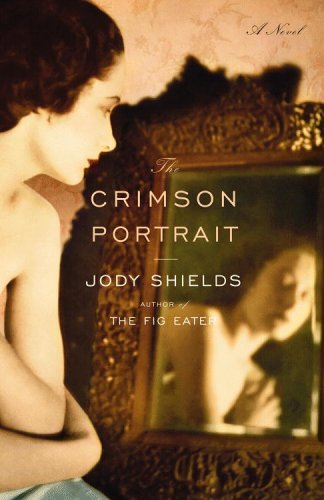
The Crimson Portrait by Jody Shields

(published 2006)

From Goodreads:

Spring 1915. On a sprawling country estate not far from London a young woman mourns her husband, fallen on the battlefields of what has been declared the first World War… But the isolated and eerie stillness in which she grieves is shattered when her home is transformed into a bustling military hospital to serve the war’s most irreparably injured. Disturbed by the intrusion of the suffering men and their caretakers, the young widow finds unexpected solace in the company of a wounded soldier whose face, concealed by bandages, she cannot see. Their affair takes an unexpected turn when fate presents her with an opportunity: to remake her lover with the unwitting help of a visionary surgeon and an American woman artist — in the image of her lost husband. Inspired by the little-known but extraordinary collaboration between artists and surgeons in the treatment of wounded men in the First World War, The Crimson Portrait peels back layers of suspense and intrigue to illuminate the abiding mysteries of identity and desire.

The Crimson Portrait is an atmospheric novel, creating the feeling of life during the Great War. I read this several years ago in the days before Downton Abbey, but now I can’t help but picture this book in a Downton-like setting, with stretchers full of hideously wounded young men filling the elegant rooms of the manor. In The Crimson Portrait, the wounded at this particular estate all suffer from facial injuries, from mild to complete disfigurement. We witness the early stages of facial reconstructive techniques, as doctors and artists work together to alleviate suffering and give these poor young soldiers a chance at something resembling a normal life. Meanwhile, the young widow of the estate sets in motion a plan to alleviate her heartbreak; it’s twisted and unhealthy, sure, but it’s also terribly sad and I couldn’t help but feel compassion for this young woman and her struggle to make sense of her loss.

I always find that WWI-era novels like this one, taking place in the most genteel of settings, pack a huge emotional punch, as they convey the utter horror of war and the mindless tragedy of the losses suffered — all in stark contrast to the lovely greenery of the English countryside. In The Crimson Portrait, we see the waste and ruin of a generation of young men, and the terrible, unending ache left to their survivors. It’s a beautifully written story, fascinating and sorrowful, and I recommend it for anyone interested in reading about that particular time in history.

♥♥♥♥♥♥♥♥

Do you host a book blog meme? Do you participate in a meme that you really, really love? I’m building a Book Blog Meme Directory, and need your help! If you know of a great meme to include — or if you host one yourself — please drop me a note on my Contact page and I’ll be sure to add your info!

Thursday Quotables: Two Boys Kissing

quotation-marks4

Welcome back to Thursday Quotables! This weekly feature is the place to highlight a great quote, line, or passage discovered during your reading each week.  Whether it’s something funny, startling, gut-wrenching, or just really beautifully written, Thursday Quotables is where my favorite lines of the week will be, and you’re invited to join in!


If you are a teenager now, it is unlikely that you knew us well. We are your shadow uncles, your angel godfathers, your mother’s or your grandmother’s best friend from college, the author of that book you found in the gay section of the library. We are characters in a Tony Kushner play, or names on a quilt that rarely gets taken out anymore. We are the ghosts of the remaining older generation. You know some of our songs.

We do not want to haunt you too somberly. We don’t want our legacy to be gravitas. You wouldn’t want to live your life like that, and you won’t want to be remembered like that, either. Your mistake would be to find our commonality in our dying. The living part mattered more.

We taught you how to dance.

Two Boys Kissing

Source: Two Boys Kissing
Author: David Levithan
Knopf Books for Young Readers, 2013

What lines made you laugh, cry, or gasp this week? Do tell!

If you’d like to participate, it’s really simple:

  • Write a Thursday Quotables post on your blog. Try to pick something from whatever you’re reading now. And please be sure to include a link back to Bookshelf Fantasies in your post (http://www.bookshelffantasies.com), if you’d be so kind!
  • Comment on this post with the link to your own Thursday Quotables post. Or… have a quote to share but not a blog post? Leave your quote in the comments!
  • Have fun!