Thursday Quotables: The Golem and the Jinni

quotation-marks4

Welcome back to Thursday Quotables! This weekly feature is the place to highlight a great quote, line, or passage discovered during your reading each week.  Whether it’s something funny, startling, gut-wrenching, or just really beautifully written, Thursday Quotables is where my favorite lines of the week will be, and you’re invited to join in!

15819028

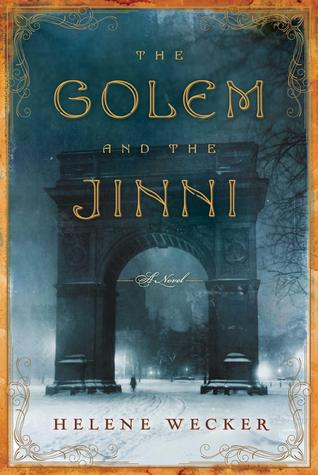
The Golem and the Jinni by Helene Wecker
HarperCollins, 2013

He was beginning to shiver, but he ignored it. Instead he turned and gazed up at the city that rose from the water’s edge, the enormous square buildings that reached far into the heavens, their windows set with perfect panes of glass. As fantastical as cities like ash-Sham and al-Quds had seemed from the caravan men’s tales, the Jinni doubted that they’d been half so wondrous or terrifying as this New York. If he must be marooned in an  unknown land, surrounded by a deadly ocean, and constrained to one weak and imperfect form, at least he’d ended up somewhere worth exploring.

Does anyone not love New York???

What lines made you laugh, cry, or gasp this week? Do tell!

If you’d like to participate in Thursday Quotables, it’s really simple:

  • Write a Thursday Quotables post on your blog. Try to pick something from whatever you’re reading now. And please be sure to include a link back to Bookshelf Fantasies in your post (http://www.bookshelffantasies.com), if you’d be so kind!
  • Click below (next to the cute froggy face) to link up your post! And be sure to visit other linked blogs to view their Thursday Quotables too.
  • Have a quote to share but not a blog post? Leave your quote in the comments.
  • Have fun!

Top Ten Tuesday: Top Ten Books I’d Love To Get As Gifts

snowy10

Top Ten Tuesday is a meme hosted by The Broke and the Bookish, featuring a different top 10 theme each week. This week’s topic is Top Ten Books I Wouldn’t Mind Santa Bringing Me. 

Sadly, my house is not on Santa’s route (and I promise, it’s not because I’ve been naughty this year!) Still, if some magical bearer of gifts happened to drop by, these are the books I’d be hoping for! As I did last year when this topic came up, I’m filling up my list with books that I’d love to receive, but for whatever reason — high price, feeling like too big an indulgence, a “nice to have” but not really a necessary book — I just most likely wouldn’t buy these for myself. (Ahem, secret gift givers — are you paying attention??)

1) Firefly: A Celebration by Joss Whedon

fireflyDescription: Titan’s three bestselling Firefly titles collected together at last, just in time for the 10th anniversary of Joss Whedon’s beloved series. This huge, 544 page full colour volume is simply one of the most lavish books ever produced for a TV show, and is presented in a foil-stamped leather-effect binding. Plus, as an exclusive bonus for this edition, a pocket at the back of the book contains 9 frameable photo prints of the cast, featuring rare and previously unseen images, and a facsimile of one of the prop banknotes used in the show.

2)Bone: Full Color One Volume Edition by Jeff Smith

bone slipcoverBone is one of my very favorite things ever. I love the artwork, the story, and the ridiculous stupid rat creatures. We have the 9 individual books, but I’m sure lusting after this all-in-one version. However… at about $100, this isn’t an edition I’m likely to buy unless I’m suddenly discovered by some long-lost wealthy relative… I can dream, can’t I?

3) The new Harry Potter collection:

potterDo I need another set of Harry Potter in my house? Well, no. But I’m so enchanted by the new cover artwork by Kazu Kibuishi… and this boxed set would look so pretty on my shelf…

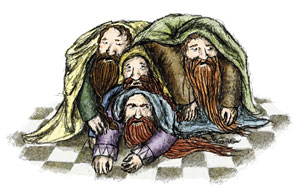
4) The Hobbit: Illustrated Edition by J. R. R. Tolkien; Illustrated by Jemima Catlin

Hobbit-Jemima-Catlin1Have you seen the images from this new illustrated edition of The Hobbit? Just gorgeous. This may be one book that I’ll end up treating myself to. Want, want, want.

Hobbit_Dwarves._V368536400_

5) I would be tickled pink to receive pretty much any book from the Barnes and Noble Collectible Editions library. Here are few that I especially covet… but really, I’d take ’em all if I could:

Dracula and Other Horror Classics (Barnes & Noble Collectible Editions)The Bronte Sisters: Three Novels (Barnes & Noble Collectible Editions)Anne of Green Gables (Barnes & Noble Collectible Editions)

6) Fosse by Sam Wasson:

Buying this 750 page book for myself would feel too over-the-top indulgent, especially given that I have a lousy track record when it comes to finishing non-fiction books. If I owned it, it might just sit on my shelf for umpteen years… but I’d like to at least page through it for a while! (I think this is why they invented libraries.)

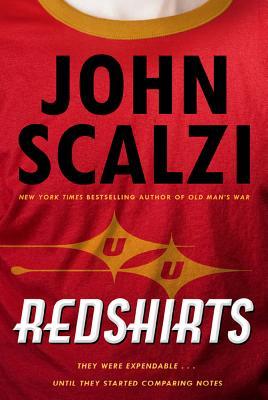
7 – 10) There are a whole bunch of books that I’ve read over the years, borrowed from friends or from the library, that I’d really like to read again — or at least have on my shelf for a rainy day. I can’t quite justify paying full price for these, but if a holiday elf wanted to drop one off, I’d be grateful!

LifeRedshirtsThe Snow ChildWonderstruck

And a bonus pick:

This isn’t a book, but it’s certainly bookish. Last year, I used a holiday gift card to treat myself to My Ideal Bookshelf by Thessaly La Force and Jane Mount. It’s an absolutely beautiful book, and I’ve had so much fun leafing through it and picking out all of my favorites. So this year, what I really covet is one of the prints available through the Ideal Bookshelf website. My only difficulty is in picking just one: Do I want:

Ideal Bookshelf 660: Girl Stars

Ideal Bookshelf 660: Girl Stars

or perhaps:

Ideal Bookshelf 629: Fantasy

Ideal Bookshelf 629: Fantasy

If I had unlimited dollars and unlimited wall space, I think I’d want them all! Or maybe totally splurge, and get a custom painting! (Check out the options here.)

So that’s my little holiday cheer list for whatever extra-special pixies are circling my house bearing gifts!

What are you hoping to find under your tree, in your stocking, or in the UPS driver’s hands this year? Whatever you’re wishing for, I wish you good health, good friends, lots of laughter, and amazing reading!

If you enjoyed this post, please consider following Bookshelf Fantasies! And don’t forget to check out our regular weekly features, Thursday Quotables and Flashback Friday. Happy reading!

♥♥♥♥♥♥♥♥

Do you host a book blog meme? Do you participate in a meme that you really, really love? I’m building a Book Blog Meme Directory, and need your help! If you know of a great meme to include — or if you host one yourself — please drop me a note on my Contact page and I’ll be sure to add your info!


The Monday Agenda 12/23/2013

MondayAgendaNot a lofty, ambitious to-be-read list consisting of 100+ book titles. Just a simple plan for the upcoming week — what I’m reading now, what I plan to read next, and what I’m hoping to squeeze in among the nooks and crannies.

How did I do with last week’s agenda?

Gathering StormThe Firebird (Slains, #2)Dear Mr. Knightley

Gathering Storm by Maggie Craig: I read this wonderful historical novel the previous week, but posted a review and Q&A with the author just this past week.

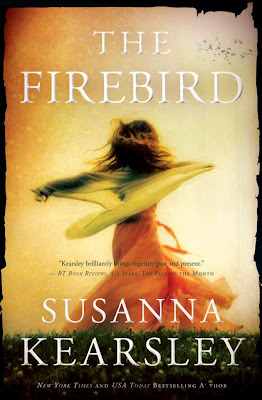
The Firebird by Susanna Kearsley: Done! Loved it. My review is here.

Dear Mr. Knightley by Katherine Reay: Done! My review is here.

What else happened this week in my reading life? Well, I freaked out a teensy bit about book genres. You can read all about it here.

Dinosaur SummerAnd in the realm of reading with my kiddo:

Dinosaur Summer by Greg Bear: This sci-fi book isn’t the easiest for reading aloud, but my son and I are committed to seeing it through. It’s interesting, but not necessarily what we expected.

Fresh Catch:

Two new books came my way this week — both of which I tracked down based on recommendations from other book bloggers. Plus, I picked up a Sara Zarr novel at the library, since I enjoyed Roomies so much.

The Fate of Mercy AlbanHowl's Moving Castle (Howl's Moving Castle, #1)How to Save a Life

What’s on my reading agenda for the coming week?

The Promise of Amazing15819028runaways

The Promise of Amazing by Robin Constantine: I’m looking forward to reading this ARC. The book’s release date is 12/31/2013.

The Golem and the Jinni by Helene Wecker: I’ve been wanting to read this book since the day it came out last spring! And now, with its paper release coming up at the end of this month, I’m finally committing to reading it. Plus, I’m scheduled to participate in the blog tour in January, so all systems are go!

One of my winter TBR top 10 picks is the Runaways graphic novel series. I’ve been hearing about it for years! Time to give it a try — and if I love volume 1, I’ll probably end up just plowing on through.

So many book, so little time…

That’s my agenda. What’s yours? Add your comments to share your bookish agenda for the week.

boy1

Book Review: Dear Mr. Knightley by Katherine Reay

Book Review: Dear Mr. Knightley by Katherine Reay

Dear Mr. KnightleyThis debut novel combines the wit of Austen with the gritty pluck of Bronte, but with a modern-day setting that adds several unexpected twists and a deeper level of truth and examination than I’d expected.

In Dear Mr. Knightley, main character Samantha (who goes by Sam) is a college grad on the verge of aging out of the support systems available to former foster kids. With the prodding of her mentor, Father John, who runs the group home in which she lives, Sam applies for a grant from an anonymous foundation. This grant will enable her to enroll in graduate school, and will cover all expenses while she pursues her degree. The only catch is that Sam must write a series of letters to her benefactor, who uses the pseudonym George Knightley, knowing it will appeal to Sam’s inner Austen-phile and keep his true identity a secret.

Sam’s life has not been easy, and she is plagued by self-doubt. She’s spent all her life feeling unloved and unwanted, and has hidden herself away in the pages of her beloved books. When anxious or faced with a need to connect with people, she hides behind her characters, quoting Lizzy Bennet or Emma or even Edmond Dantes — which lets her keep her walls intact, and ensures that anyone who tries to reach out to her will run in the opposite direction.

But once Sam receives her grant and starts her graduate program in journalism, she realizes that her walls are crumbling — and that she needs to let them. She can’t succeed as a writer if she keeps her heart hidden away; she can’t connect as a friend if she refuses to let anyone know her. As Sam narrates her tale via letters to Mr. Knightley, we witness her fears, her doubts, her pain, and her glimmers of joy. We delight with her when she sees new possibilities, but we can’t help but want to cry every time poor wounded Sam seems to be making another counter-productive decision based on insecurity and lack of confidence.

I enjoyed the writing style here very much. The entire book is told via Sam’s letters to Mr. Knightley, so it’s all first-person and very immediate. She writes from her heart to her anonymous correspondent, allowing herself the freedom in her letters to reveal herself in all the ways she’d never do with a real person. While occasionally seeming more naive than seems reasonable for a 23-year-old, I could suspend my disbelief based on the facts of Sam’s life. If she seems to have odd ideas about friendship, connection, and relationships, it’s understandable, given that she bounced from foster family to foster family, experienced disastrous encounters with her real parents, and finally ended up at the group home for the remainder of her teen and early adult years.

If you happened to read my blog yesterday (here), then you may have seen my mini-freak-out about finding out that a book I was reading was listed on Amazon as “Christian fiction”. This is the book that triggered all of that. And it’s puzzling to me. Had I not come across that designation on Amazon, I don’t think it would have occurred to me to think of this book as anything other than contemporary fiction. Yes, there were passages, especially toward the end, where Sam is encouraged toward “surrender” and finding joy in faith. But it’s not heavy-handed, I didn’t feel like the book itself was proselytizing in any way, and the references to characters’ faith and beliefs felt organic and reasonable within the context of the story. What I had feared might be a problem for me really wasn’t. So, after much ado about nothing, all’s well that ends well! (Sorry… )

The book is a quick read, but it’s not fluffy. It does seem that things always work out for Sam in a big way. Too sugar-coated, perhaps? Yes, it can seem like a fairy tale at points, the way the grants, the internships, the supportive people always come through just when needed. But that is balanced, for the most part, by a refusal to gloss over the harder parts of Sam’s life, so truly, even if it seems unlikely that things could work out so well in real life, there’s no doubt that Sam has earned all that comes her way by the end.

I mentioned earlier that I liked the writing style — and I really did, except for a certain phrasing oddity that kept jumping out at me: Whenever characters use the work “couple”, it’s phrased as “a couple papers”, “a couple internships”, “a couple days ago”. What happened to the “of”??? Is this a regional quirk, perhaps? I have no idea, but it really bugged me. This is a minor quibble, though; for the most part, I enjoyed Sam’s voice very much. Some epistolary novels seem forced, using the letter format as a gimmick that doesn’t always allow for fully fleshed-out storytelling. This is not the case in Dear Mr. Knightley: Through Sam’s letters, we get insight into her heart and mind in a way that might not have worked otherwise, and because we know that Sam herself is a skilled writer, it makes sense that her letters are so articulate and thoughtful.

If you’ve read the 1912 novel Daddy-Long-Legs by Jean Webster, then the secrets and resolution of Dear Mr. Knightley won’t be a surprise. But even knowing how it would work out, I still enjoyed the author’s skill in weaving the backbone of the older book into this fresh novel, finding a way to take a set of circumstances that might seem old-fashioned and apply them to a modern setting in a way that’s believable.

I’m glad that I didn’t let the genre issue keep me from exploring and enjoying this touching, delightful book. Skillfully weaving together threads of classic literature into a modern-day setting that rings true, Dear Mr. Knightley is a lovely look at the journey of a special young woman. I’m happy to have read it, and I’m happy to recommend it.

_________________________________________

The details:

Title: Dear Mr. Knightley
Author: Katherine Reay
Publisher: Thomas Nelson
Publication date: 2013
Genre: Contemporary fiction
Source: Review copy courtesy of Thomas Nelson via NetGalley

Genre confusion, part deux

Over a year ago, I wrote a post entitled Genre Confusion, in which I discussed the accidental discovery of a favorite book — which might never have happened if I’d been aware that the book often gets shelved under “romance”, which is not a genre that I typically read.

The issue becomes relevant for me again with a bizarre discovery I made yesterday — or is it a discovery at all?

I started a book fresh from my NetGalley queue and was enjoying the first little bit. Then I thought I’d double-check the page count, seeing as I have a whole lot of must-read books coming up and I want to make sure to pace myself. So I went on Amazon, looked up the book, and scrolled down to the detail section — where lo and behold, I see the books categorized as “Christian fiction”.

Whoa.

Don’t get me wrong: I have nothing against Christian fiction or its fans. But not being Christian myself nor the least bit spiritual or religious, I’m not drawn to books with a strongly faith-based or spiritual theme.

And after all, just as we all have our preferred genres, I think most of us have a list of what we won’t read as well. (For the record, mine includes courtroom dramas, extreme violence, and anything with shirtless males and/or cowboys on the cover. Or shirtless cowboys. Whatever). *

*I’d add erotica to the list, except — full disclosure — I did read the 50 Shades books. Can’t fall behind the pop culture zeitgeist, can we?

So… confusion. What to do about my current read?

I went back to NetGalley. Nope, no reference to this book being Christian fiction.

Went to the publisher’s website. Oops. They publish Bibles as well as works of inspirational fiction. Hmmm.

Went to the author’s website. She’s clearly someone of great faith — but also sounds like someone with a great literary background and a totally interesting life.

Did a Google search. Most of the early reviews for this book were by bloggers with faith-oriented blogs.

So what does this mean for me? I Googled the term “Christian fiction”. According to Wikipedia:

In North America, the Christian novel has evolved into a specific genre of its own, written explicitly by and for Christians of a particular type. Such a Christian novel does not have to involve an actual event or character in Bible history. A novel can be Christian in this sense merely because one of its characters either comes to a proper understanding of God and of man’s need for salvation from sin, or faces a crisis of his or her faith.

It goes on to say:

Deborah Bryan of the Kansas Library Association suggests that a Christian fiction writer must comply with certain restraints such as: (1) Accept the truthful authority of the Bible (2) Address dilemmas through faith in Jesus (3) Believe that Jesus died and rose for sins of all people (4) A writer is restricted from writing about certain “taboos.”. She also suggests that this genre of books typically promotes values, teaches a lesson, always has a happy ending (good prevails over evil in all books), adheres to a decency code (certain boundaries such as sexuality, strong language, and topics of such cannot be crossed), and that Christian fiction is created for defined boundaries within a particular community.

While the first paragraph above doesn’t necessarily present a problem for me, the definitions presented in the 2nd paragraph — if adhered to in a a work of fiction — would definitely make that fiction unreadable for me. Hence my current dilemma.

So far, I see nothing in the book that I’m reading that seems outside the realm of mainstream contemporary fiction. It’s the story of a young woman pursuing an education and trying to get past the traumatic events of her childhood. She also happens to be a young woman who immerses herself in classic literature as a way of shielding herself from engagement with the real world. And what I’ve read, I’ve liked. (Granted, I’ve only read about 15%, according to my Kindle — but so far, so good).

If the book continues along the path it’s on, then I think I’ll really enjoy it. I mean, I love main characters who obsess over books! What’s not to love? But if the storyline starts heading into a dogmatic, explicitly faith-based direction, then I may have a problem with it. And to a certain extent, I’d rather know now than invest more time only to be disappointed or turned off later.

And yet… if I hadn’t gone to the Amazon page, I’d have no worries and no preconceptions. So what to do?

In my earlier Genre Confusion post, I advocated for stepping outside of one’s comfort zones, exploring other shelves in the bookstore, and being open to books that sound intriguing, even if their defined genre isn’t in our go-to preferred list.

In keeping with that position, at least for now, I think I’m going to give my current read a bit more time. After all, I like what I’ve read so far, and prior to my Amazon encounter, I thought the synopsis made the book sound quite charming — and never would have known that this was considered “Christian fiction”.

Have you ever been shocked by a book’s genre? Did you ever find yourself reading a type of book that you’d swear you never read? Did you stick with it or drop it like a hot potato?

If you’ve ever had a “genre confusion” moment yourself, please share in the comments!

Book Review: The Firebird by Susanna Kearsley

Book Review: The Firebird by Susanna Kearsley

15942636Past and present mingle deliciously in the newest novel from Susanna Kearsley, whose “time-slip” novels such as Mariana, The Winter Sea, and The Rose Garden have amassed quite a devoted following. Her books tend to blend a modern-day storyline with a gripping historical thread, to create a whole that’s emotional, dramatic, and always steeped in meticulously researched historical detail.

In The Firebird, we open with main character Nicola Marter, a specialist in Russian art and artifacts with a very big secret: psychometry, the ability to “read” an object’s past by simply touching it. Nicola was raised from childhood to never reveal her gifts, lest she be branded a freak or subjected to abuse or discrimination. When a dying woman comes to Nicola’s office with a family heirloom, hoping it’s of enough value to enable her to enjoy what time is left to her, Nicola can tell by touching the small carved bird that it was a gift to the woman’s ancestor from Empress Catherine I of Russia — but sadly, there’s no other proof. And without proof, the object has no monetary value. Enlisting the aid of her former love interest and immensely gifted psychic Rob McMorran, Nicola is determined to help the poor woman, even if it means using her gifts to figure out the carving’s origins.

There’s much, much more to the story: As it turns out, the ancestor who received the gift from the Empress was a young woman named Anna, who was raised near Slains Castle in Scotland before ending up in St. Petersburg. Readers of The Winter Sea should now be sitting up and paying close attention: Yes, it’s that Anna! If you, like me, felt saddened and even upset by the resolution of The Winter Sea, fear not! The story isn’t over; in The Firebird, we learn much more about Anna, and it isn’t what you might have expected.

As Nicola and Rob begin to investigate, they use their gifts to sense the past wherever they travel. They start at Slains, and get an immersive view of Anna’s life in the cottage where she spends her early years before encroaching danger forces her to flee. Wherever Anna’s voyage takes her in her own time, Nicola and Rob follow in the present. The Firebird follows two storylines: The first focuses on Nicola and Rob, as they seek answers about Anna and at the same time tiptoe through the landmines of their relationship. The second is the story of Anna herself, following her from childhood through her late teens, as she grows into a young woman among the high-ranking military families of St. Petersburg.

As the narrative shifts between its two threads, it’s hard to say which storyline is the more compelling. I became caught up in Nicola and Rob’s exploration, their quest for hints of the past, and their attempts to bridge the gap in their attitudes towards their gifts. At the same time, whenever the story leaves Anna to return to the present, I kind of groaned a bit and had to grind my teeth in frustration. I didn’t want to leave her! Anna’s story is fraught with tension and danger, and so naturally the overriding drama resides in her part of the tale. Still, the two halves mesh nicely, mirroring and complementing one another very naturally and seamlessly.

Part of what makes Susanna Kearsley’s books so very good is her devotion to historical accuracy and source material. As her extensive (and fascinating) author’s notes make clear, almost all of the characters in Anna’s parts of the story were real people — which I found astounding, to be honest. I had no idea, reading The Firebird, that these people weren’t all completely fictional. It was amazing to me to discover how perfectly the author matched the historical figures’ lives with their fictional counterparts’ actions, motivations, beliefs, and family ties.

Anna’s story is set in the 1710s and 1720s, and the focus, even in St. Petersburg, is on the Jacobite supporters and their tireless work to support and restore their king. The intrigues and conspiracies are at the core of Anna’s story, and yet it’s Anna herself who is the true heart of The Firebird. From the young girl living in hiding to the young woman who yearns to belong, Anna is a character of strength, integrity, and unwavering devotion and loyalty.

Overall, I found The Firebird simply mesmerizing. I loved Anna’s story and how beautifully it ties back to the people and occurrences in The Winter Sea — and I was also completely drawn into Nicola and Rob’s quest, both for the truth about the carving and for the path back into one another’s lives and hearts.

Do you need to have read The Winter Sea in order to appreciate The Firebird? Yes and no. The Firebird is complete in and of itself, and absolutely can be read as a stand-alone novel. However, there is so much connection between the two books that I do feel that the reading experience would be greatly enriched by reading The Winter Sea prior to reading The Firebird. (In fact, I found myself wishing I’d taken the time to re-read The Winter Sea, as it had been several years since I read it and some of the details were quite fuzzy for me, to say the least.)

It should be noted as well that Rob appears as a child in an earlier novel, The Shadowy Horses (which I reviewed here). It’s worth reading The Shadowy Horses first if you want to get a picture of Rob’s early life and experiences, but unlike The Winter Sea, the plot itself does not tie in directly to the events in The Firebird.

I suppose it’s clear by now that I’m a big fan of Susanna Kearsley, and can recommend without hesitation anything that she’s written. The Firebird makes the fifth book by this author that I’ve read, and I’m very much looking forward to adding a sixth to my list when her 1995 novel The Splendour Falls is reissued in the US in January, 2014. What a great way to start the new year!

_________________________________________

The details:

Title: The Firebird
Author: Susanna Kearsley
Publisher: Sourcebooks Landmark
Publication date: 2013
Genre: Conteporary/Historical fiction
Source: Purchased

Gathering Storm: Q&A with author Maggie Craig

I’m thrilled to welcome author Maggie Craig to Bookshelf Fantasies for a Q&A about her newest novel, Gathering Storm.

What’s it all about? Read on…

Synopsis (Goodreads):

Gathering Storm

Jacobite Intrigue and Romance in 18th Century Edinburgh.

Edinburgh, Yuletide 1743, and Redcoat officer Robert Catto would rather be anywhere else on earth than Scotland. Seconded back from the wars in Europe to captain the city’s Town Guard, he fears his covert mission to assess the strength of the Jacobite threat will force him to confront the past he tries so hard to forget.

Christian Rankeillor, her surgeon-apothecary father and his apprentice Jamie Buchan of Balnamoon are committed supporters of the Stuart Cause. They’re hiding a Jacobite agent with a price on his head in Edinburgh Royal Infirmary, a hanging offence.

Meeting as enemies, Robert and Kirsty are thrown together as allies by the mysterious death of a young prostitute and their desire to help fugitive brother and sister Geordie and Alice Smart. They’re on the run from Cosmo Liddell, bored and brutal aristocrat and coal owner.

As they pick their way through a labyrinth of intrigue, Robert and Kirsty are increasingly drawn to each other. She knows their mutual attraction can go nowhere. He know his duty demands that he must betray her.

Bringing to life a time when Scotland stood at a crossroads in her history, Gathering Storm is the first in a suite of Jacobite novels by Scottish writer Maggie Craig, author of the ground-breaking and acclaimed Damn’ Rebel Bitches: The Women of the ’45.

Let’s talk to Maggie and find out more!mcbrolly1

Welcome, Maggie! I know you’ve written novels set in the 1800s and the 1900s, and now Gathering Storm, which opens in 1743. Do you have a favorite period to write about?

My heart belongs to the 18th century, the Jacobites of 1745 in particular. I find it a fascinating period of history. It was the Age of Reason and the beginning of the Enlightenment, yet men still marched out onto battlefields with swords in their hands. Gender politics were changing too. The relationship between 18th century men and women was shifting, allowing female characters more leeway in what they said and, to an extent, in how they acted.

What role does your non-fiction research and writing play in your fiction writing?

A huge one. While the main characters in my fiction are always imaginary – or so I think, I’m not always convinced they don’t tap me on the shoulder and insist I write their stories – I like to have them interact with real historical characters. Over years of research, those have become like friends to me. As anyone who reads Gathering Storm will surmise, I’m particularly fond of Duncan Forbes of Culloden, my hero’s mentor.

What inspired you to write Gathering Storm?

It started with the picture of a man’s face on the cover of a magazine. He was quietly handsome but he looked so sad. I put that picture up beside my computer and looked at it for a while, wondering what had made him unhappy. Then I sat down one day and started to free-write and before I knew where I was I was with Captain Robert Catto of the Town Guard of Edinburgh in pursuit of an illegal dissection.

I’m fascinated by some of the details of life in Edinburgh at that time. Were there really “underground” dissections and secret meetings of anatomists taking place at that time?

Absolutely. There was a strong religious objection to dissection because people believed in the resurrection of the body on the Day of Judgement, so you had to be whole for that. Anatomists were allowed to demonstrate dissection on the bodies of convicted felons who had been hanged, but only on a very limited number and only if the relatives did not claim the body. Edinburgh University was at the forefront of medical education in Europe in the 18th and 19th centuries and desperately needed more bodies for the students to learn from. That’s why Burke and Hare became active in the 1820s, robbing graves to meet the demand and then cutting out the hard work by simply murdering people. Anatomists paid good money for fresh corpses. Burke and Hare were caught when one medical student recognized the body lying on the slab as being the girl he’d been with the previous night, when she’d been fit and healthy.

You seem to have a great deal of sympathy for the terribly hard lives of the lower classes. What do you think readers would be surprised to know about women’s lives at that time?

I think working-class girls and women could be terribly vulnerable to young gentlemen who saw them as fair game. On a more positive note, readers might be surprised by how many women were active in business, running timber yards, shops and taverns. Sometimes that was because they were widows and had taken over the family business when their husbands died but many seemed to relish the opportunity.

Can you tell us a bit about your background — where you grew up, your family life, and how you became a writer?

I grew up in Glasgow, on the banks of the Clyde, the youngest of four children. My dad worked his way up through the railways to become a station master and we lived in the station house where he loved to tend his garden. He was a great story teller, as was my mother. We travelled all over Scotland on the train to visit relatives and my dad knew the history behind every stone. I learned about William Wallace, Robert the Bruce, Bonnie Prince Charlie, the Radicals of 1820 and the Red Clydesiders of the early 20th century at a very early age. One of my forebears on my father’s side was Robert Tannahill, the weaver-poet of Paisley. All my family write. We think it’s just what everybody does. I’ve been writing and publishing books for the past 15 years and now live in the north of Scotland with my Welsh husband Will and two cats. We have two lovely grown-up children and an equally lovely daughter-in-law from North Carolina who all live in Edinburgh so we spend a lot of time there.

What do you read for fun? What writers inspire you?

I love Nora Roberts. There’s nothing better in a snowy Scottish winter than reading about fabulously wealthy and beautiful people sipping cocktails in the Californian sunshine. I’ve always been inspired by Robert Louis Stevenson, Robert Burns, Daphne du Maurier and Dorothy L Sayers. I also love Diana Gabaldon, Barbara Erskine, Susanna Kearsley and Ian Rankin.

I understand that Gathering Storm is the first in a planned Jacobite suite of novels. What are you working on now, and what can we expect in this series?

My next book will be The Captain’s Lady, a time slip set between Glasgow and the West Highlands during the 1745 Jacobite Rising. Its main historical protagonist is Meg Wood, who makes a cameo appearance in Gathering Storm.  It’s a one-off story. I’m then going back to Robert and Kirsty, to continue telling their story.

Can you give us a hint about what lies in store for Robert and Christian (Kirsty)?

Trouble. Moral dilemmas. Physical danger. The entrance of a bad guy. Oh, and he is so bad. They’re going to have to wade their way through hell and high water but there will be tender moments and wee Geordie Smart will be there too.

Thank you, Maggie, for your time and terrific responses!

Other books by Maggie Craig:

Fiction:
The River Flows On
One Sweet Moment
When the Lights Come On Again
The Stationmaster’s Daughter
The Bird Flies High
A Star To Steer By
The Dancing Days

Non-Fiction:
When the Clyde Ran Red
Bare-Arsed Banditti: The Men of the ’45
Damn’ Rebel Bitches : The Women of the ’45

♦♦♦♦♦♦♦♦♦♦♦♦♦♦♦♦♦♦♦

My thoughts on Gathering Storm:

I very much enjoyed this historical novel, which focuses on the build-up  to the Jacobite rising of 1745 through the lens of a small group of people caught up in intrigue and conspiracies in Edinburgh. Taking place over the course of one very eventful week, Gathering Storm introduces us to both sides of the conflict through the individual characters who take center stage in the novel.

Captain Robert Catto is an enigmatic and conflicted main character, noble and full of purpose, yet also tormented by family secrets and a troubled past. He knows his duty and what he must do, but as he becomes more and more fascinated by Christian, it becomes harder for him to stand firm. Robert is also, it must be said, a man who does tend to give into his baser nature from time to time — so for those looking for the typical dashing, upright hero, Robert’s actions may not be at all what is expected.

Christian (Kirsty) is a strong-willed and intelligent young woman, who perhaps doesn’t realize when it might be best to not take a stand. She’s loyal to family and friends, but absolutely can think for herself and make her own decisions.

Because Gathering Storm takes place in a very compressed amount of time, it often has an intense, almost breathless feel to it, and the emotional connections happen quickly and unexpectedly. The action is quite compelling, and I liked the mix of politics, danger, and personal relationships.

Maggie Craig’s in-depth historical knowledge really shines through, giving Gathering Storm a ring of authenticity and a strong anchor in real events. For anyone interested in Scottish history, or for fans of historical fiction in general, I’d recommend giving Gathering Storm a try.

_________________________________________

The details:

Title: Gathering Storm
Author: Maggie Craig
Publisher: Alligin Books
Publication date: 2013
Genre: Historical fiction
Source: Received from the author

Thursday Quotables: The Firebird

quotation-marks4

Welcome back to Thursday Quotables! This weekly feature is the place to highlight a great quote, line, or passage discovered during your reading each week.  Whether it’s something funny, startling, gut-wrenching, or just really beautifully written, Thursday Quotables is where my favorite lines of the week will be, and you’re invited to join in!

15942636

The Firebird by Susanna Kearsley
Sourcebooks Landmark, 2013

“Hi,” he said. He didn’t say the word out loud — there wasn’t any way I would have heard him at that distance — but his voice still resonated clearly in my mind as though he’d spoken. It’s a hard thing to explain to anyone who’s never carried on a conversation that way, but to me it came as naturally as breathing. It was how my grandfather had realized I’d inherited his “gift,” when at the age of three I’d answered him at table, “When I’m sleeping,” and my mother, glancing up, had smiled and asked me what I meant by that, to which I had replied, “Granddad asked me if I ever would stop talking.” I could still see their exchange of glances; still recall the silence that had followed.

I’m about halfway through this lovely book, which combines historical fiction with a contemporary love story and mystery. Susanna Kearsley has quickly become one of my “auto-buy” authors, and The Firebird has me hooked!

Want to know more about The Firebird? Here’s the synopsis via Goodreads:

Nicola Marter was born with a gift: when she touches an object, she sometimes glimpses those who have owned it before. When the gallery she works in receives a wooden carving she can see the object’s history and knows that it was named after the Firebird, the mythical bird that inspires an old Russian fairytale, and was once owned by Russia’s famed Empress Catherine.

Nicola’s investigation into the Firebird’s origin draws her into the 1715 world of Anna Logan and leads her on a quest through Scotland, France and Russia, unearthing a tale of love and sacrifice, of courage and redemption.

What lines made you laugh, cry, or gasp this week? Do tell!

If you’d like to participate in Thursday Quotables, it’s really simple:

  • Write a Thursday Quotables post on your blog. Try to pick something from whatever you’re reading now. And please be sure to include a link back to Bookshelf Fantasies in your post (http://www.bookshelffantasies.com), if you’d be so kind!
  • Click below (next to the cute froggy face) to link up your post! And be sure to visit other linked blogs to view their Thursday Quotables too.
  • Have a quote to share but not a blog post? Leave your quote in the comments.
  • Have fun!

Wishing & Waiting on Wednesday

There’s nothing like a Wednesday for thinking about the books we want to read! My Wishing & Waiting on Wednesday post is linking up with two fabulous book memes, Wishlist Wednesday (hosted by Pen to Paper) and Waiting on Wednesday (hosted by Breaking the Spine).

This week’s pick:

One Plus One

One Plus One by Jojo Moyes
(to be released July 2014)

Synopsis via Goodreads:

One single mom. One chaotic family. One quirky stranger. One irresistible love story from the New York Times bestselling author of Me Before You

American audiences have fallen in love with Jojo Moyes. Ever since she debuted stateside, she has captivated readers and reviewers alike, and hit the New York Times bestseller list with the word-of-mouth sensation, Me Before You. Now, with One Plus One, she’s written another contemporary opposites-attract love story that reads like a modern-day Two for the Road.

Suppose your life sucks. A lot. Your husband has done a vanishing act, your teenage stepson is being bullied and your math whiz daughter has a once-in-a-lifetime opportunity that you can’t afford to pay for. That’s Jess’s life in a nutshell—until an unexpected knight-in-shining-armor offers to rescue them. Only Jess’s knight turns out to be Geeky Ed, the obnoxious tech millionaire whose vacation home she happens to clean. But Ed has big problems of his own, and driving the dysfunctional family to the Math Olympiad feels like his first unselfish act in ages . . . maybe ever.

One Plus One is Jojo Moyes at her astounding best. You’ll laugh, you’ll weep, and when you flip the last page, you’ll want to start all over again.

Everybody seemed to be raving about Me Before You by Jojo Moyes when it came out earlier this year… and I’m ashamed to say that I still haven’t read it! I did read The Girl You Left Behind recently (reviewed here in September ), and found both the contemporary and historical storylines to be incredibly moving and well written. One Plus One sounds completely different — but also like it could be quite a lot of fun. I’ve been wanting to read more by Jojo Moyes, and this new one seems like something I’d really enjoy.

What are you wishing for this Wednesday?

Looking for some bookish fun on Thursdays and Fridays? Come join me for my regular weekly features, Thursday Quotables and Flashback Friday! You can find out more here — come share the book love!

♥♥♥♥♥♥♥♥

Do you host a book blog meme? Do you participate in a meme that you really, really love? I’m building a Book Blog Meme Directory, and need your help! If you know of a great meme to include — or if you host one yourself — please drop me a note on my Contact page and I’ll be sure to add your info!

Top Ten Tuesday: Top Ten New-To-Me Authors I Read In 2013

snowy10

Top Ten Tuesday is a meme hosted by The Broke and the Bookish, featuring a different top 10 theme each week. This week’s topic is Top Ten New-To-Me Authors I Read In 2013. What fun! I “met” so many authors this year for the first time. Here are the best of the bunch:

Note: If you want to know more about any of the books mentioned here, click on the links to see my reviews.

The River of No ReturnEleanor & ParkThe Rosie Project

1) Bee Ridgway: One of my very favorite books of 2013 was Bee Ridgway’s debut novel The River of No Return. It’s time travel plus historical fiction plus secret societies plus mystery plus romance… seriously, just overall excellent and so worth reading! I can’t wait for the sequel!

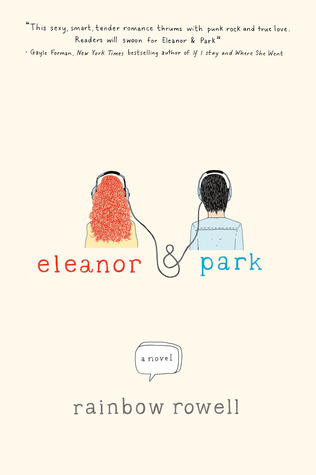
2) Rainbow Rowell: 2013 seems to have been the year of Rainbow Rowell! Eleanor & Park got everyone’s attention, and then we all gobbled up Attachments and Fangirl as well. Wonderful characters, wonderful writing!

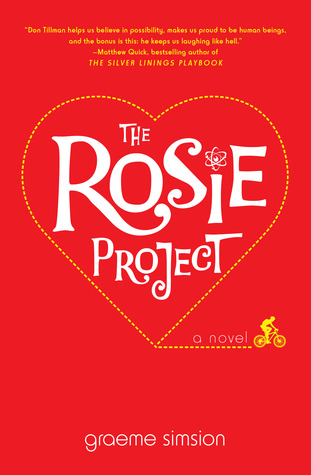
3) Graeme Simsion: The Rosie Project made me so happy! I happened to read this terrific books right in the midst of a bunch of particularly dark reading choices, and I then went on to pretty much force The Rosie Project into the hands of everyone I know.

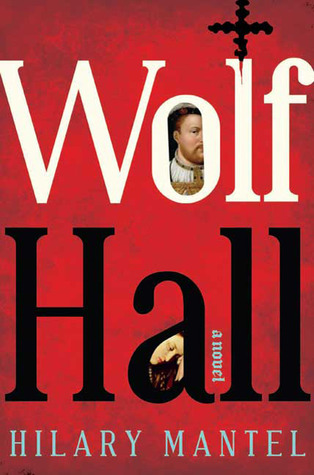
Wolf Hall (Thomas Cromwell, #1)Bring Up the Bodies (Thomas Cromwell, #2)The Eyre Affair (Thursday Next #1)

4) Hilary Mantel: Call me late to the party, but I’d never made time for Hilary Mantel’s award winning Tudor-era books until I went on vacation this past summer. Wolf Hall and Bring Up The Bodies are simply amazing literary accomplishments. And now I know what all the hoopla was about!

5) Jasper Fforde: Another one of those authors that I always thought I’d enjoy, but just never got around to… until this year! I finally read The Eyre Affair, and thought it was great fun. The Tuesday Next series is definitely one I’ll keep coming back to.

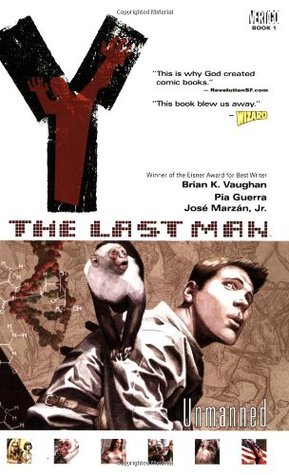
Y: The Last Man, Vol. 1: Unmanned (Y: The Last Man, #1)Saga, Volume 1Just One Day (Just One Day, #1)

6) Brian K. Vaughan: I’m just in awe. I love this man’s inventiveness and the skill he uses in laying out a complex story through the medium of graphic novels. Y: The Last Man is one of the best series I’ve ever read, and I really enjoyed the first two volumes in his new Saga series as well.

7) Gayle Forman: I loved Just One Day and Just One Year, and now really want to go back and read her earlier books, If I Stay and Where She Went.

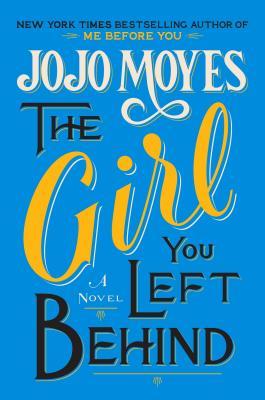
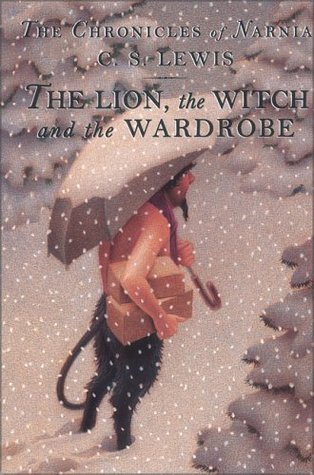
Mrs. Queen Takes the TrainThe Girl You Left BehindThe Lion, the Witch and the Wardrobe (Chronicles of Narnia, #1)

8) William Kuhn: Mrs. Queen Takes The Train is a delight. I look forward to whatever he writes next!

9) Jojo Moyes: The Girl You Left Behind was my first Jojo Moyes book, but it certainly won’t be my last! I’ve recently picked up copies of Me Before You and The Last Letter From Your Lover, and can’t wait to read them both.

10) C. S. Lewis: Talk about old school! Finally, I’ve been to Narnia. After a woefully deficient childhood, this was the year when I made up for what I was missing by reading the seven Narnia books with my son. And even though we probably could have skipped the last one, all in all I’d say the series was a big success for both of us.

Which authors did you discover in 2013?

I can’t wait to see who I’ll meet in 2014!

If you enjoyed this post, please consider following Bookshelf Fantasies! And don’t forget to check out our regular weekly features, Thursday Quotables and Flashback Friday. Happy reading!

♥♥♥♥♥♥♥♥

Do you host a book blog meme? Do you participate in a meme that you really, really love? I’m building a Book Blog Meme Directory, and need your help! If you know of a great meme to include — or if you host one yourself — please drop me a note on my Contact page and I’ll be sure to add your info!