Travel guidebooks: Still useful, or too old-school?

image

I seem to have done a lot of travel planning this year, between a mother-daughter trip to Alaska, a fun trip with kids to Orlando, and a grown-ups only trip (coming up next week!) to Canada with my hubby.

I still use travel books, but I wonder if they’re becoming relics of ye olden days.

Because on the one hand, anything and everything can be looked up online, right? For hotels, I usually got to TripAdvisor before anywhere else. Flights? Kayak. Cars? AAA, but I shop around. In terms of attractions, museums, sightseeing, etc, going straight to Google yields a ton of links. And then there are the travel publishers themselves, all of whom seem to have some sort of online version of their printed books.

So why do I bother scooping up travel books?

For starters, I like getting a picture of the scope of my travel plans. Online, I flit from one link to another, mostly by whim, ending up in random places for brief snippets of time. When I sit down with a travel guidebook, I slow down and take my time. I look at the maps to get an overview, and check out the table of contents to see what the major areas to consider are. I use my handy-dandy post-it flags to mark off anything that catches my eye, and then flip back and forth between maps and listings to see how much I can do in a day. My first time through, I’ll usually read the intro sections, which generally talk about peak experiences, best times to visit, and give sample itineraries. Once I have a general sense of what I think I want to do, then I go back and start getting more details on the must-sees and must-dos.

I tend not to go by the books for hotel and restaurants, although I do use their recommendations as a general guidepost for what areas of a city offer what type of accommodations, what neighborhoods to aim for depending on what type of trip it is, and to get a sense of what the overall feel of a given city or area is. (For actual bookings, it’s definitely time to use the various online travel booking sites — Booking.com has really been coming through for me lately!)

What books to use? To a certain extent, they all tend to cover the same ground. I mean, no one is going to publish a travel guide to Alaska and not devote a lot of pages to Denali. But different books have slightly different flavors. Of the ones I’ve used lately:

Frommer’s: I’ve found these a bit dull. Sure, they’ve got all the basics, but the few I’ve looked at recently haven’t been particularly eye-catching, and I didn’t find them fun to use.

Fodor’s: I’d been thinking of Fodors as pretty drab, but on my recent trip to Alaska, Fodors was the only book I could get before my trip that had a 2015 revised edition. I ended up liking it a lot. Lots of maps, color pictures throughout, interesting and well-written background pieces on history, native cultures, and nature, and well thought out features such as “Quintessential Alaska”, “If You Like”, and “Great Itineraries”. The planning sections were really helpful, and we found that their restaurant and lodging recommendations were very good choices that helped us narrow down our options quite well. Two thumbs up!

Lonely Planet: Most of the time, my favorite. If there’s a new-ish Lonely Planet available for a trip I’m planning, I’ll grab it. I like their sample itineraries, color maps, detailed guides to sights and itineraries, and overall find their attitude and suggestions very much in line with my style of travel. I like to go, try, see, and do — less emphasis on shopping and tourist crowds, more emphasis on being outdoors, trying local experiences, and exploring sites and neighborhoods to get a true feel of a destination.

Moon Guides: These are fun! They have a low-budget feel, being all black and white except for the intro pages, but they also have a slightly funky, adventurous tone that I like. Their guide to Yosemite was a real favorite, especially useful for figuring out which trails would be great experiences but also appropriate for the various family members in my group and their different preferences and abilities.

DK: I haven’t used these much, and tend to see them as too photo-heavy and too light on text, but I did really like their skinny little volume that I took on a trip to Barcelona (Top 10 Barcelona). The book is organized around top 10 lists, making it super easy to use and really helpful for planning, especially with a limited number of days.

Of course, there are reasons both for and against using travel guide books:

Pros:

  • All in one resource
  • Always accessible, even without a wifi connection
  • Can be highlighted, dog-eared, and bookmarked to your heart’s content
  • Usually organized in an easy to use way
  • Handy sample itineraries
  • Generally pretty easy to carry around
  • I like the random factor: Flipping through the pages may happen to reveal a roadside stop or small-town attraction that you’d never hear of otherwise.

Cons:

  • Another book to lug around
  • Limited to the contents, versus the endless links online
  • Still need online resources to make reservations, get directions, etc
  • Travel books tend to be pricey
  • Can become outdated quickly, especially for information like museum hours, prices, restaurants, and other variables that can change from year to year

There are work-arounds to some of the cons — for example, at my library’s big sale each year, there’s always a huge table full of used travel guides. If you don’t mind one that’s 5 – 10 years old, you can scoop ’em up for a dollar or two. Or for a free option, the library itself seems to have a huge selection. My library allows an initial check-out period of 3 weeks, so for short trips, that’s plenty of time to borrow a book, use it on the trip, and return it when I’m done.

For me, the books still win out over relying on electronic resources. Besides liking the tactile experiences of flipping pages, opening at random, and using bookmarks, there are a couple of other key factors. One crucial point in favor of physical books is the constant (and free) access — no need to worry about being near a wifi hub, or running up expensive data roaming charges when you’re traveling overseas. As a secondary notion,  I think there’s a potential safety factor as well, although I haven’t really dealt with this much: Would you feel safer consulting a guidebook on a street corner in a foreign city, or pulling out your tablet or smartphone to look up information? It could make a big difference if you’re traveling in an area known for opportunistic pickpockets.

I’ll continue carrying travel books in my backpack as I roam the world… and I hope I’ll have many more opportunities to travel in all the years to come!

How about you? Do you use hard-copy travel books, or do you rely on Kindles or smartphones to guide you on your way? And if you like using travel books, do you have any particular favorites? Share your thoughts and recommendations, please!

Thursday Quotables: Jesse’s Girl

quotation-marks4

Welcome back to Thursday Quotables! This weekly feature is the place to highlight a great quote, line, or passage discovered during your reading each week.  Whether it’s something funny, startling, gut-wrenching, or just really beautifully written, Thursday Quotables is where my favorite lines of the week will be, and you’re invited to join in!

NEW! Thursday Quotables is now using a Linky tool! Be sure to add your link if you have a Thursday Quotables post to share.

Jesse's Girl

Jesse’s Girl by Miranda Kenneally
(release date July 7, 2015 )

What happens when an ordinary girl meets a teen pop star?

The lighting is dim, and he doesn’t seem to notice I’m here, which is good, because I’ve moved from ogling the guitar to ogling him. Who wouldn’t? He was one of People magazine’s “50 Most Beautiful People,” and it is a truth universally acknowledged that you should stare at people who’ve made that list.
Of course, our main character isn’t the only one who notices Jesse. Here’s what happens when he steps outside his dressing room mid-snack, only to be surrounded by his adoring fans/groupies:
Before I can answer, the horde descends on him. It’s scarier than a zombie apocalypse.
“Shit,” he mutters.
“Oh my God, I love ketchup too!” a girl squeals at the bottle in his hand. “We have so much in common!”

Want to know more? Check out my review of Jesse’s Girl!

What lines made you laugh, cry, or gasp this week? Do tell!

If you’d like to participate in Thursday Quotables, it’s really simple:

  • Write a Thursday Quotables post on your blog. Try to pick something from whatever you’re reading now. And please be sure to include a link back to Bookshelf Fantasies in your post (http://www.bookshelffantasies.com), if you’d be so kind!
  • Click on the linky button (look for the cute froggie face) below to add your link.
  • After you link up, I’d love it if you’d leave a comment about my quote for this week.
  • Be sure to visit other linked blogs to view their Thursday Quotables, and have fun!

Wishing & Waiting on Wednesday: Hello, Goodbye, and Everything in Between

There’s nothing like a Wednesday for thinking about the books we want to read! My Wishing & Waiting on Wednesday post is linking up with two fabulous book memes, Wishlist Wednesday (hosted by Pen to Paper) and Waiting on Wednesday (hosted by Breaking the Spine).

Hello Goodbye

This week’s pick:
Hello, Goodbye, and Everything in Between by Jennifer E. Smith
(to be released September 1, 2015 )

On the night before they leave for college, Clare and Aidan only have one thing left to do: figure out whether they should stay together or break up. Over the course of twelve hours, they’ll retrace the steps of their relationship, trying to find something in their past that might help them decide what their future should be. The night will lead them to friends and family, familiar landmarks and unexpected places, hard truths and surprising revelations. But as the clock winds down and morning approaches, so does their inevitable goodbye. The question is, will it be goodbye for now or goodbye forever?

This new must-read novel from Jennifer E. Smith, author of The Statistical Probability of Love at First Sight, explores the difficult choices that must be made when life and love lead in different directions.

Sometimes, nothing will do but a good contemporary young adult romance, and Jennifer E. Smith’s books are perfect for that kind of mood! I always enjoy her characters and their dilemmas, and I’m really looking forward to this upcoming new release.

What are you wishing for this Wednesday?

Looking for some bookish fun on Thursdays? Come join me for my regular weekly feature, Thursday Quotables. You can find out more here — come play!

♥♥♥♥♥♥♥♥

Do you host a book blog meme? Do you participate in a meme that you really, really love? I’m building a Book Blog Meme Directory, and need your help! If you know of a great meme to include — or if you host one yourself — please drop me a note on my Contact page and I’ll be sure to add your info!

Blog Tour & Book Review: Second Life by S. J. Watson

Bookshelf Fantasies is participating in the blog tour for the release of Second Life, author S. J. Watson’s second novel following the huge hit Before I Go To Sleep.

Second Life

Synopsis:

From the New York Times bestselling author of Before I Go to Sleep, a sensational new psychological thriller about a woman with a secret identity that threatens to destroy her.

How well can you really know another person? How far would you go to find the truth about someone you love?

When Julia learns that her sister has been violently murdered, she must uncover why. But Julia’s quest quickly evolves into an alluring exploration of own darkest sensual desires. Becoming involved with a dangerous stranger online, she’s losing herself . . . losing control . . . perhaps losing everything. Her search for answers will jeopardize her marriage, her family, and her life.

A tense and unrelenting novel that explores the secret lives people lead; and the dark places in which they can find themselves, Second Life is a masterwork of suspense from the acclaimed S. J. Watson.

My thoughts:

In Second Life, Julia is a part-time professional photographer married to a successful surgeon named Hugh. Julia and Hugh have adopted the baby son born to her sister Kate, now grown into a teenage boy, Connor. Life is good — until Julia gets the horrifying news that Kate has been murdered, apparently the victim of a random mugging.

Distraught and wracked with guilt, Julia decides that there’s more to the story. She begins to dig into her sister’s life, uncovering bits and pieces of a world that her estranged sister never shared with her. Kate lived a free and easy life in Paris, and was an active participant in the “hook-up” lifestyle, meeting men online for cyber and real-world sexual encounters.

Julia decides that Kate’s hidden life must hold a clue to her murder, and begins to explore. But at some point, the exploration stops being about Kate, as Julia gets sucked into an online flirtation with a stranger that turns sexual, and before long, Julia is consumed by the affair she’s stumbled into.

We know early on that Julia has a history of addiction, involving both alcohol and heroin, and the temptation of a drink is ever-present in Julia’s mind as she deals with her guilt and grief over Kate’s death. It’s easy to see that she’s channeled her out-of-control emotions into yet another addiction, her obsession with the online world — and the seemingly perfect and sexy man she meets there.

Second Life spends a great deal of time detailing Julia’s headlong rush into an affair, and unfortunately, the emphasis on the seedy details of Julia’s seemingly willful endangerment of her marriage and family takes center stage for far too much of the book. For large sections, the mystery of Kate’s death is almost an afterthought. Julia throws herself completely into the affair, and the book bogs down in the sexual encounters and hotel trysts.

After a somewhat slow start, the book picks up momentum by about the halfway mark, as Julia starts to realize that her perfect lover is hiding all sorts of secrets from her, and as her affair starts to overshadow everything else in her life that she values. Eventually the pace quickens and the plot becomes more intriguing, as the dangers closing in on Julia become connected back to Kate, as well as to Julia’s hidden young adult past.

I hate to say it, but Second Life overall didn’t really work for me. The main plotline was highly unappealing, with its voyeuristic emphasis on the details of Julia’s infidelity. I understand that Julia was acting out her grief and loss, giving in to her addictive tendencies and flirting with danger to numb herself in some way from the pain of losing her sister. But I just couldn’t sympathize, and felt that her horrendous choices were so clearly illogical and bad for her family (including the son she claims to love so much) that the plot teetered on the edge of becoming completely implausible.

As my own personal bias, I think it’s only fair to add that a book about infidelity had better have a lot of other compelling elements going for it if it’s going to appeal to me in any way. Otherwise, it’s a turn-off — and that was the case for me with Second Life.

I did find myself hooked for the last 100 pages or so… until the abrupt and unsatisfying ending. I won’t say more about it, but the answers to the mystery were fairly prediction, and what’s more, the final scene was a lousy payoff for the tense build-up.

I really enjoyed Before I Go To Sleep and ended up recommending it to lots and lots of reader friends. Sadly, Second Life does not live up to the promise of the earlier book.

I usually try to find a reason to recommend or praise a book if I’m participating in a blog tour. While Second Life didn’t work for me, I could imagine that readers who are into thrillers and aren’t bothered by the subject matter the way I was might enjoy this book. If you read it and have a different opinion, please share your thoughts!

Find out more:

Add to Goodreads badge
 
Purchase Links: Amazon | IndieBound | Barnes & Noble
 

About the Author:

S-J-WatsonS. J. Watson was born in the Midlands and lives in London. His first novel was the award-winning Before I Go to Sleep, which has sold over four million copies in more than forty languages around the world. It was recently adapted into a major motion picture starring Nicole Kidman, Colin Firth, and Mark Strong.

Find out more about S.J. at his website, and follow him on Facebook and Twitter.

_________________________________________

The details:

Title: Second Life
Author: S. J. Watson
Publisher: Harper
Publication date: June 9, 2015
Length: 416 pages
Genre: Thriller
Source: Review copy courtesy of TLC Book Tours

tlc logoFor further information, stop by TLC Book Tours to view other blog tour hosts.

Top Ten Tuesday: Top Ten Books I’ve Read So Far in 2015

background-20737_1280

Top Ten Tuesday is a meme hosted by The Broke and the Bookish, featuring a different top 10 theme each week. This week’s topic is the Top Ten Books I’ve Read So Far In 2015. I love looking back over the year (or in this case, the first half of the year), and seeing the weird and wonderful mix of books that I’ve read.

My top 10 for the 1st half of 2015 includes some new releases, some books from a year or so ago, and some that go way, way back. In case you want to know why these books are on my top 10 list, I’m including the review links for any I’ve reviewed:

TTT 06302015 collage

1) Station Eleven by Emily St. John Mandel (review)

2) The Boston Girl by Anita Diamant (review)

3) The Light in the Ruins by Chris Bohjalian (review)

4) Inside the O’Briens by Lisa Genova (review)

5) The Bookseller by Cynthia Swanson (review)

6) Our Souls at Night by Kent Haruf (review)

7) Winger by Andrew Smith (review)

8) Emma by Jane Austen (re-read via audiobook; no review… but I loved it!)

9) Good Omens by Neil Gaiman and Terry Pratchett (review)

10) The Lunar Chronicles by Marissa Meyer (I read most of this series in late 2014, but since I read Fairest in 2015, it counts!) (review)

What are the best books you’ve read so far in 2015?

Share your links, and I’ll come check out your top 10!

If you enjoyed this post, please consider following Bookshelf Fantasies! And don’t forget to check out my regular weekly feature, Thursday Quotables. Happy reading!

♥♥♥♥♥♥♥♥

Do you host a book blog meme? Do you participate in a meme that you really, really love? I’m building a Book Blog Meme Directory, and need your help! If you know of a great meme to include — or if you host one yourself — please drop me a note on my Contact page and I’ll be sure to add your info!


Take A Peek Book Review: Jesse’s Girl by Miranda Kenneally

“Take a Peek” book reviews are short and (possibly) sweet, keeping the commentary brief and providing a little peek at what the book’s about and what I thought.

Jesse's Girl

Synopsis:

(via Goodreads)

Everyone at Hundred Oaks High knows that career mentoring day is a joke. So when Maya Henry said she wanted to be a rock star, she never imagined she’d get to shadow *the* Jesse Scott, Nashville’s teen idol.

But spending the day with Jesse is far from a dream come true. He’s as gorgeous as his music, but seeing all that he’s accomplished is just a reminder of everything Maya’s lost: her trust, her boyfriend, their band, and any chance to play the music she craves. Not to mention that Jesse’s pushy and opinionated. He made it on his own, and he thinks Maya’s playing back up to other people’s dreams. Does she have what it takes to follow her heart—and go solo?

My Thoughts:

I wouldn’t normally pick up a book about a romance between a small town girl and the superstar she meets cute… but this is my third book by Miranda Kenneally, and I went into Jesse’s Girl expecting something special. And that’s exactly what I got.

Maya dresses goth/punk, loves 80s music (especially Madonna and Queen), and wants to spend her life rocking out with an awesome guitar. The band she started has kicked her out, though, and her dream of auditioning on Wannabe Rocker seems to be slipping away. But meeting Jesse opens her eyes to the idea of taking risks to get what she really wants, as well as seeing that celebrity and superstardom come at a price… and that the lives of the rich and famous can be awfully lonely without a loving family to back you up.

That may sound like a lot to pack into one young adult novel, but it works. The first half of the book is a “one special day” type of story, where Maya and Jesse start as semi-hostile strangers, have a ton of crazy adventures as they both break rules and defy expectations, and end up connected in ways that go way beyond the attraction they both feel.

Maya is shown as a strong girl who needs an even stronger infusion of confidence. She learns to open up, and in turn gets Jesse to start realizing that he doesn’t have to give up his own dreams in order to be loved.

Jesse and Maya are well-developed characters, with flaws as well as talents. I appreciate the economic diversity that the author features in her novels. Maya’s family is proudly working class, and every dollar counts. Maya can’t take anything for granted, and meets her financial challenges head on without shame. It’s interesting to see how she views Jesse’s financial success and life of creature comforts, and yet still values her messy, loud family with their beat-up cars more than anything money can buy.

Fans of Miranda Kenneally’s earlier books will be delighted by this return to Hundred Oaks, especially as favorite characters from earlier books show up here in supporting roles. Reading Jesse’s Girl makes me realize that I need to go back and read the three other books by this author that I’ve missed!

Jesse’s Girl is a moving story of teens finding their way, a tribute to the power of romance, and a nice spotlight on the unbelievable strength that a loving family and supportive friends can provide. I’m really impressed with the author’s ability to create characters who seem both familiar and fresh, as well as her engaging storytelling. I was really swept up in the fun and feelings of this book, and recommend it for anyone who enjoys a good contemporary tale… particularly if you like a bit of a Southern twang in your fiction!

Interested in this author? Check out my reviews of other books by Miranda Kenneally:
Racing Savannah
Breathe, Annie, Breathe

_________________________________________

The details:

Title: Jesse’s Girl
Author: Miranda Kenneally
Publisher: Sourcebooks Fire
Publication date: July 7, 2015
Length: 304 pages
Genre: Young adult contemporary fiction
Source: Review copy courtesy of the publisher via NetGalley

The Monday Check-In ~ 6/29/2015

cooltext1850356879 My Monday tradition, including a look back and a look ahead — what I read last week, what new books came my way, and what books are keeping me busy right now. Plus a smattering of other stuff too.

What did I read last week?

Alex + AdaSecond LifeOur Souls At Night

Alex + Ada by Jonathan Luna and Sarah Vaughn: I loved this graphic novel! Just a really clever story about a lonely guy and a sentient AI android named Ada. I really can’t wait to see where this story goes next. Book #2 is next on my request list at the library!

Second Life by S. J. Watson: Finished right before the weekend. My thoughts will be posted on Wednesday, when I’m participating in the blog tour for this book.

Our Souls at Night by Kent Haruf: Done! A really gorgeous book. Check out my review, here.

Elsewhere on the blog:

I thought a lot this week about the ways in which information about an author can impact how we respond to a book. I’d love to hear other opinions on the topic! My post is here.

I also finally got around to posting pictures from my Harry Potter adventures in Florida. Check ’em out, here.

Fresh Catch:

One new book this week:

Dreams of the Golden Age

Looking forward to reading the sequel to After the Golden Age!

What will I be reading during the coming week?

Currently in my hands:
Jesse's Girl

I’ve read two books by Miranda Kenneally so far, and thought they were both terrific! I’m just getting started with her newest, but I have high hopes.

Now playing via audiobook:

Dirty Job

I should be done with the audiobook of A Dirty Job by Christopher Moore this week. It’s making me laugh at the most awkward moments… and sometimes, that’s just what I need.

Ongoing reads:

EldestABOSAAN&S

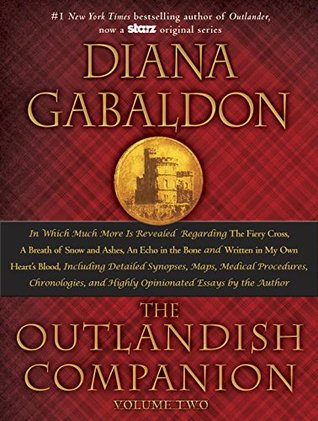
One with the kiddo, two with Outlander Book Club. All three should last a good long while.

So many book, so little time…

boy1


Greetings from Hogsmeade!

Earlier this month, I spent a wonderful week in Florida with my two kids. The highlight for us was – absolutely – enjoying the amazing Harry Potter attractions at Universal in Orlando. I thought y’all would appreciate seeing the photo highlights of our visit to Hogsmeade, Hogwarts, and Diagon Alley!

My wand. Yes, I have a wand. It chose me.

My wand. Yes, I have a wand. It chose me.


Being in Harry Potter heaven was sheer joy for the three of us… here’s a little taste:

(Click on any of the images to view as a slideshow)

Food for thought: Does the author matter?

Well, of course the author matters! We wouldn’t have books in our hands without authors!

But hold up. That’s not what I’m talking about.

What I’m really pondering is whether or how much the details of an author’s life influence our reactions to a book.

For the most part, I usually take the stance that once the author has released a book, the book should stand on its own and be judged on its own merits. It’s what’s in the book itself that counts. So if an author makes a statement that I think is ridiculous during an  interview, or if I find out that the author has a political stance that I object to, does it matter?

Well, sometimes. I don’t research authors’ personal views before deciding to read their books. In general, who cares? So long as the book appeals to me, touches me, or makes me think, I don’t particularly need to know more.

On the other hand, if I knew that a particular author was out there promoting hate, or had a bias or prejudice that he/she actively promotes, or uses the revenues from his/her books to fund something I find objectionable, then yes, I guess it does matter. Although… (and this just shows my ambivalence on the subject), I suppose a work-around on the funding issue might be to borrow the book from the library, rather than buying my own copy.

I’d like to think that the work of art stands on its own and can be appreciated even if the artist is abhorrent, but in practice, that doesn’t always work for me. I mean, if I find out that an author is a no-question-about-it homophobe or anti-Semite or racist, then I just really can’t.

And also, it’s not like an author’s bio or background is completely irrelevant. If someone writes about a complex medical issue, for example, knowing that the author has a Ph.D. in a relevant field might make me feel more confident that the scientific elements of the storyline are plausible. Knowing that Mary Doria Russell has a doctorate in anthropology helps me appreciate the fabulous work she’s done in The Sparrow, exploring issues related to first contact with unknown cultures, social structures and hierarchies, and the impact of exploration on native populations. (PS – I probably haven’t raved about The Sparrow for a while, so let me just take a moment to say READ THIS BOOK. It’s amazing.)

Anyway…

I’ve now wandered far afield from what started me thinking about this topic, which is my thoughts on reading Eragon by Christopher Paolini. You can check out my review here.

Christopher Paolini was about 15 when he wrote Eragon, so I’m guessing he must be somewhere around 30 by now. To what extent should reviewers take his age into account when writing about Eragon?

As a reader, if I knew nothing about the author, I’d be thinking that the book is pretty derivative, a giant mash-up of every standard fantasy trope, repackaged into an overlong book that lacks narrative flow and uses very awkward language. But — the author wrote this book when he was 15! According to author info found online, he originally wrote Eragon for his own entertainment, trying to create something he’d enjoy, and the book was self-published by his parents prior to being “discovered” and picked up by a major publisher, then achieving bestseller status.

Eragon was published in 2002. That’s a lot of years ago! So in reviewing Eragon today, in 2015, is it still relevant that the book was written by a teen? On the one hand, I say kudos are in order for the young man who wrote such a detailed and complicated story at such a young age. At the same time, if I were strictly considering whether I’d recommend the book, then the age of the author is irrelevant. What counts is the book itself, and whether I think others would enjoy it. Period.

Here’s another weird example: I really loved Before I Go To Sleep by S. J. Watson when I read it a couple of years ago, and just finished reading the author’s second novel, Second Life, this past week. All along, I’ve been under the impression these books were written by a woman, but only found out while preparing my blog tour post that this:

S-J-Watson… is S. J. Watson.

But does the author’s gender matter?

In this case, I’d have to say that it does have an impact on my impression of the books and my reaction to them. In both books, the main character is a woman going through hell. In the first book, she’s someone who loses her memory each day and is at the mercy of the people around her while she tries to figure out who she really is. In the second book, she’s a woman with a troubled past dealing with her sister’s murder and getting in way over her head with a creepy online hook-up.

Somehow, knowing that these books were written by a male author and not by a female, as I previously thought, makes the books feel ickier to me. Looking at them through this new lens, the women’s victimization becomes a lot starker and the overall tone strikes me as more sensationalized. This probably makes no rational sense, but I can’t help how I feel — and my feeling is that in Second Life, knowing that I’m reading a man’s idea of how a woman would feel about the horrible situation she’s in is much different from reading about a woman’s pain from a woman’s perspective. In addition, infidelity plays a big role in each book and leads to disaster for the main character — so in retrospect, now that I’m thinking about a male author, is the subtext in these books that women are somehow deserving of horrible fates because they explored their sexuality outside the bounds of marriage?

If I’d known ahead of time, I might have felt differently about the books while reading them. I just pulled my copy of Before I Go To Sleep off the shelf, and nowhere in the author bio or anywhere on the jacket copy is there a gender-specific pronoun used. Intentionally vague? Deceptive? I’m not saying that anyone necessarily set out to pull the wool over the readers’ eyes… but I do wonder why the books were published with just initials in the first place.

Should things like an author’s age or gender matter? Open to debate. But does it matter? Well, yes, I think it does.

In the case of Eragon, I can praise the efforts of a young author, even though I wouldn’t put it anywhere near the top of my list if I were setting out to recommend fantasy epics. In the case of Second Life and S. J. Watson — well, all I can say is that it clearly does matter to me, rightly or wrongly, and that I’m rethinking my reaction to the author’s books now that I know more about the author himself.

How about you? Has information about an author’s life ever changed the way you’ve felt about a book? I’d love to hear other perspectives!

Book Review: Our Souls at Night by Kent Haruf

Our Souls At NightIt’s hard to describe this small, lovely book and explain what makes it just so special — but I’ll try.

In the small Colorado town of Holt, the setting for previous novels by Kent Haruf, Addie Moore lives alone. And around the corner is her neighbor Louis Waters. Both are widowed, and are in their 70s. Both seem to lack real human connection in their lives, although they certainly have friends and acquaintances.

One day, Addie shows up on Louis’s doorstep with a proposal.

I’m listening, Louis said.

I wonder if you would consider coming to my house sometimes to sleep with me.

What? How do you mean?

I mean we’re both alone. We’ve been by ourselves for too long. For years. I’m lonely. I think you might be too. I wonder if you would come and sleep in the night with me. And talk.

She asks him to come sleep with her at night. Not for sex, mind you. It’s the closeness she seeks. She wants someone to fall asleep with, to talk with in the dark, to make the nights a little less lonely. And after some thought, Louis agrees.

On the first night, Louis comes through the alley to Addie’s back door with his pajamas and toothbrush in a paper bag, but Addie tells him to come to the front door from now on, if he intends to continue. There will be no sneaking around.

And that’s really it. Small town folks talk, of course, and people seek to create gossip and scandal, but Addie and Louis will have none of it. They refuse to be ashamed, and they refuse to stop. In the night, they talk over their lives, their marriages, their children, the disappointments, the dreams, the pain and the joy. And from these nights, the two form an unusual intimacy, closer than most marriages, that seems like a true meeting of souls.

Just, wow. What a book.

Kent Haruf uses deceptively simple language to paint a gorgeous picture of the inner lives of common people. Our Souls at Night is a short book, under 200 pages, and much of it consists of dialogue between the two characters. Their speech, like their lives, is plain and unadorned. They’ve been through a lot over the course of the years, and they talk to each other directly and openly, no hiding or subterfuge. It’s as though, after all they’ve experienced and all the ups and downs of their lives up to this point, they’re dispensing with the bullshit and getting right to what matters.

This is a beautiful, elegant, graceful book. The writing is spare, pared down to the essentials. There’s nothing fancy about the characters, their speech patterns, or the story. It’s simply a powerful book about the connection between two people who manage to find happiness and true connection at a point in their lives when everyone expects them to simply behave and then fade away.

I read the author’s novel Plainsong years ago and remember that I ended up loving it for its stripped-down beauty. I’m sorry that I haven’t read more by this author, and I do intend to correct that. Our Souls at Night is Kent Haruf’s final novel, as he passed away in 2014 at the age of 71.

This book really swept me up and moved me, and I’d like to page through it for a while longer before I return it to the library. My immediate reaction, though, right after finishing the final pages, is just this: Our Souls at Night is lovely, and should not be missed.

_________________________________________

The details:

Title: Our Souls at Night
Author: Kent Haruf
Publisher: Knopf
Publication date: May 26, 2015
Length: 179 pages
Genre: Contemporary fiction
Source: Library