Book Review: Never Always Sometimes by Adi Alsaid

Never Always SometimesNavigating high school is never easy. In the new YA novel Never Always Sometimes, best friends Dave and Julia decide at the end of their 8th grade year that they will not turn into high school clichés. They want to be unusual, true to themselves, outside of the pack mentality that takes over otherwise normal kids’ lives. So Dave and Julia create a “Nevers” list — all of the high school clichés they vow never to do.

Never be identified by where you eat lunch.

Never host or attend a beer party.

Never hook up with a teacher.

Never date your best friend.

After the 8th grade prologue, the book jumps forward to the end of senior year. Senioritis has definitely set in. College acceptances in hand, there’s only the tedium of continuing to attend classes for the reamining months until graduation. But then Dave finds the crumpled-up old copy of the Nevers list at the back of his locker, and an idea is born: Dave and Julia have made it all the way through high school without doing any of the things on their list — so what if they start doing them now, just for fun?

And so Dave and Julia embark on a wild few months of drunken house parties, hair dying, stalking a teacher, running for prom king, and otherwise breaking out of their own happy little world by embracing the “norms” of high school life.

Of course, there are glitches. Dave and Julia have spent all of high school as a complete entity of two. Best friends, whose lives absolutely revolve around one another. They’ve never needed anyone else, and so haven’t bothered with anyone else. They’re not unpopular, exactly — but they’ve also never admitted anyone else into their sphere. When they start their “nevers” project, they’re shocked to discover friendship, fun, and acceptance, and to discover that there are other people worth hanging out with.

The biggest problem of all, though, is that Dave has spent all of high school madly in love with Julia, but never acknowledging it. He’s never had reason to think she might return his feelings, and it’s the classic “wouldn’t want to ruin our friendship” situation, from Dave’s perspective. He’s never dated anyone else, because all he can see is Julia. Julia has dated a bit, but nothing serious — most likely because, at the end of the day, neither really needs anyone else in their lives.

Where it goes from here, well… jump down to the spoilers section if you really want to know. Let’s just say, while there are crazy antics and adventures galore, Dave and Julia also discover plenty of unintended consequences.

I really liked the characters of Dave and Julia. They’re smart and funny, and their banter and easy joking manner with one another is cute and fun. It’s plain to see that they fit together perfectly in their friendship. Their isolation from everyone else might be misguided, but then again, their little universe really does seem complete at times.

The overall arc of the story is engaging and fast-paced. There are emotional issues addressed: Dave’s mother died when he was nine, and I think he gets the warmth and affection from Julia that his still-mourning father and brother don’t really provide. Julia has a happy home life with her two dads, but she’s drawn to her absent bio-mom, who’s a special, free-spirited butterfly who sends postcards from around the world describing her unique and extraordinary experiences, but who’s never actually there for Julia in any real way. The crux of the “nevers” list and Julia’s devotion to it may come down to her unresolved feelings toward her mother — is she embracing this idea of being outside the social norms as a way to prove to herself that she’s worthy of her mother?

The idea of escaping clichés is explored in many ways in this books. Julia and Dave have managed to be outsiders throughout high school, but when they set out — ironically — to join the crowd, they discover that being apart from the crowd all this time deprived them of some legitimate fun as well. Maybe everything they scorned isn’t all bad — maybe there are people who might enhance their lives, instead of just being looked down upon as sheep.

SPOILERS FROM HERE ON OUT, SO AVERT YOUR EYES IF YOU DON’T WANT TO KNOW!

When Dave finally admits to Julia that he likes a girl he met at a party, Julia is hit over the head with the realization that she’s loved Dave all along. These two. Their timing sucks. Because Dave can finally have what he’s always wanted, but he’s not sure it’s actually what he wants anymore.

Dave and Julia do finally hook up, but only after he’s gotten involved with a sweet, popular, “normal” girl. The cliché, from countless YA novels, is the idea of best friends finally realizing (usually at the end of the book) that they’re actually perfect for each other romantically as well. That’s not the case here. They should be perfect together, but once they start sleeping together, Dave realizes that a romantic relationship with Julia actually doesn’t work for their friendship.

I’ll admit that I didn’t quite buy this scenario. Is it just a matter of timing? If Dave hadn’t started dating Gretchen, would things have worked with Julia? I’d almost have preferred to see it play out without the complication of another love interest, so it would be clearer whether Dave’s love for Julia was always just an unrealistic crush on a best friend, or if their connection really could have turned into a romantic connection too.

I feel the need to add that a sex scene that marks the turning point of the story was very odd — at least, it was to me. There’s a casual air to it that seemed out of place, especially for two characters for whom it’s so momentous an occasion in their history together, as well as given the fact that they’re both virgins at the time. In addition (and this may seem kind of nitpicky), there’s no mention in the scene as to whether they’re having protected or unprotected sex. If it’s not specified, do we assume it’s unprotected? I kept waiting for the other shoe to drop (metaphorically speaking), but this part of the equation was never mentioned. It felt to me like it would have been easy to include a reference to the character reaching for a condom, because otherwise, especially given the setting, the unplanned nature of the event, and the virginity of the two characters, it really seems like they just went for it without protection. And not that I feel that YA lit needs to get preachy, but I do think a quick mention of protection wouldn’t have hurt the scene at all and would have sent a positive message about responsibility and taking care of oneself.

I also had a bit of a hard time with the subplot of Julia trying to seduce her math teacher, awkwardly and jokingly, of course, but I found it hard to find this part funny. It just felt kind of weird and awful to me, but maybe that’s my adult brain taking over and criticizing the actions rather than seeing the hilarity of it (which clearly Julia was feeling).

I do want to mention that the writing in Never Always Sometimes is really a stand-out in the crowd of YA fiction. I just loved the author’s ability to paint pictures with language and to use clever word play to evoke a feeling or sum up a situation. For example, I loved this:

How Julia had felt something so deeply for so long without knowing it herself was a mystery. As if love was a fugitive harboring in an attic, hidden even from the people residing in the house.

This too:

Before, when Dave had dreamed about love, this is what it looked like:

It was lazy. Love was lazy as hell. Love laid around in bed, warm from the sheets and the sunlight pouring into the room. Love was too lazy to get up to close the blinds. Love was too comfortable to get up and go pee. Love took too many naps, it watched TV, but not really, because it was too busy kissing and napping. Love was also funny, which somehow made the bed more comfortable, the laughter warming the sheets, softening the mattress and the lovers’ skin.

END OF SPOILERS

Wrapping it all up, I did actually enjoy Never Always Sometimes very much. The balance between serious and funny was kept up very well throughout, and the story explores some interesting ideas about best friendship and trying so hard to be different that you end up missing out on so many good experiences along the way. Julia and Dave are both great characters, although since we spend a lot more of the story viewing events through Dave’s eyes, I felt as though I was playing catch-up a bit when the narrative shifts to Julia’s perspective.

As I mentioned, beyond the plot, I really enjoyed the author’s use of language and his writing style, and I’d love to read more of his work.

This is a fun read that has some good food for thought too. Recommended for anyone who enjoys contemporary YA fiction — and if you’re a parent to a teen, I could see this book generating some really good discussion, if you’re open to it.

_________________________________________

The details:

Title: Never Always Sometimes
Author: Adi Alsaid
Publisher: Harlequin Teen
Publication date: August 4, 2015
Length: 320 pages
Genre: Young adult contemporary fiction
Source: I won an ARC in a giveaway! Thank you to Krystal at Books Are My Thing!
Poldark!

Anyone else out there loving the glory of Poldark on PBS?

I mean, how can you resist?

Poldark

I haven’t seen the two-hour season finale yet (airing this coming Sunday), but as for the rest of the season so far, I’m loving it.

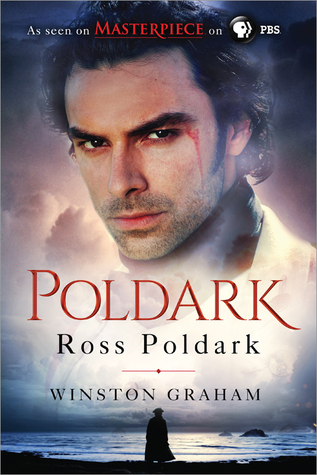
Ross PoldarkTo back up a bit, Poldark is adapted from a series of books by the late author Winston Graham (which were also made into a PBS series in the mid-1970s). Book 1, Ross Poldark, was published in 1945, and the author went on to write a total of twelve book in the Poldark saga. The books are historical fiction set in Cornwall, with the first book opening in 1783 as Captain Ross Poldark returns to his family home after fighting in the American Revolutionary War — on the losing side.

Ross finds much changed upon his return: His home is tumbling down and in terrible shape, his family’s copper mines are failing, the workers are starving, and his beloved Elizabeth has become engaged to marry his cousin Frances, who belongs to the wealthier part of the Poldark family. Ross deals with disappointment and hurt by throwing himself into the restoration of his estate and his mine, and eventually falls for the lower class girl he rescued from abuse and brought into his home as a servant.

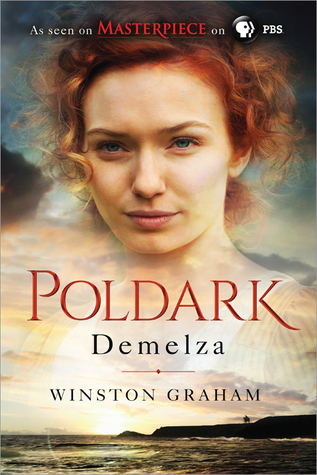
DemelzaDemelza is a breath of fresh air, not hung up on manners, full of impetuous good spirits, laughter, and a good heart. With Demelza’s love, Ross begins to find happiness finally, and the two make an unconventional couple who incite the gossip of the upper class throughout the area.

After watching the first episode of the TV series, I just knew I had to read the books. The 8-hour first season covers the content of books 1 (Ross Poldark) and 2 (Demelza), and I ended up reading both. Normally, I dislike reading books after seeing the TV or movie versions of a story, but in this case, it only added to my enjoyment. I found that I enjoyed the TV episodes best without knowing what was going to happen, but knowing what would happen didn’t at all detract from my enjoyment of the books.

The TV show is very faithful to the major plotlines of the books, with only slight changes here and there to heighten the on-screen drama. (For example, a character’s mine in the books fails due to a crumbling economy, whereas on TV, the character loses the mine in a card game.) Likewise, the show plays up the love triangle aspect of the plot more than the book does, although to be honest, it’s really not as big a factor as the early promos might have led us to believe.

The books were simply terrific! Even reading them after viewing the events on TV, the level of detail and beautiful writing in the books adds to what I already knew, so I was never bored or feeling like I was going over familiar ground. The writing is lovely, and the descriptions of landscapes, interior scenes, even clothing and candlelight, are so masterfully worded that there’s a sharply visual element to the words on the page. (See my Thursday Quotables post from last week, here, for an example of what I mean.)

poldark 3

The TV production is stunning to look at (and no, I don’t just mean the curls blowing in the breeze or the sultry, brooding stare). The sea and the fields, the hills, the farms — they’re all gorgeous. Of course, there are some episodes that feature about three too many scenes of Ross dramatically dashing off on his horse as the waves crash beside him… but that’s easy to forgive. It’s not all eye candy. The plot is engrossing, and the supporting characters are, by turn, sadly valiant (cousin Verity), tragically doomed (poacher Jim), and buffoonishly weak (ugh, cousin Frances). And don’t get me started on Jud and Prudie, Ross’s household servants who spend most of their time drinking, fighting, or drinking and fighting.

While there are moments of light and joy, and swoonishly romantic love scenes, the tone seems to get darker and darker as the season draws to a close. As I said, I haven’t seen the finale yet, but I have finished reading Demelza… and boy, it’s a doozy. No spoilers from me, but if the show is anywhere near as tragic, I’ll be a big soppy, weepy mess by the end.

My understanding is that Poldark has been a big success for Masterpiece, so I think we can feel confident that it’ll return for season 2 next year. Meanwhile, I already have copies of the next two books… and while I really should read other things for a while, I’m super tempted to dive right into book #3 (Jeremy Poldark — and no, I have no idea who Jeremy Poldark is), if for no other reason than to find out (I hope!) that there’s some sunshine heading back into the story.

Sigh. Are you watching? Have you read the books? What do you think?

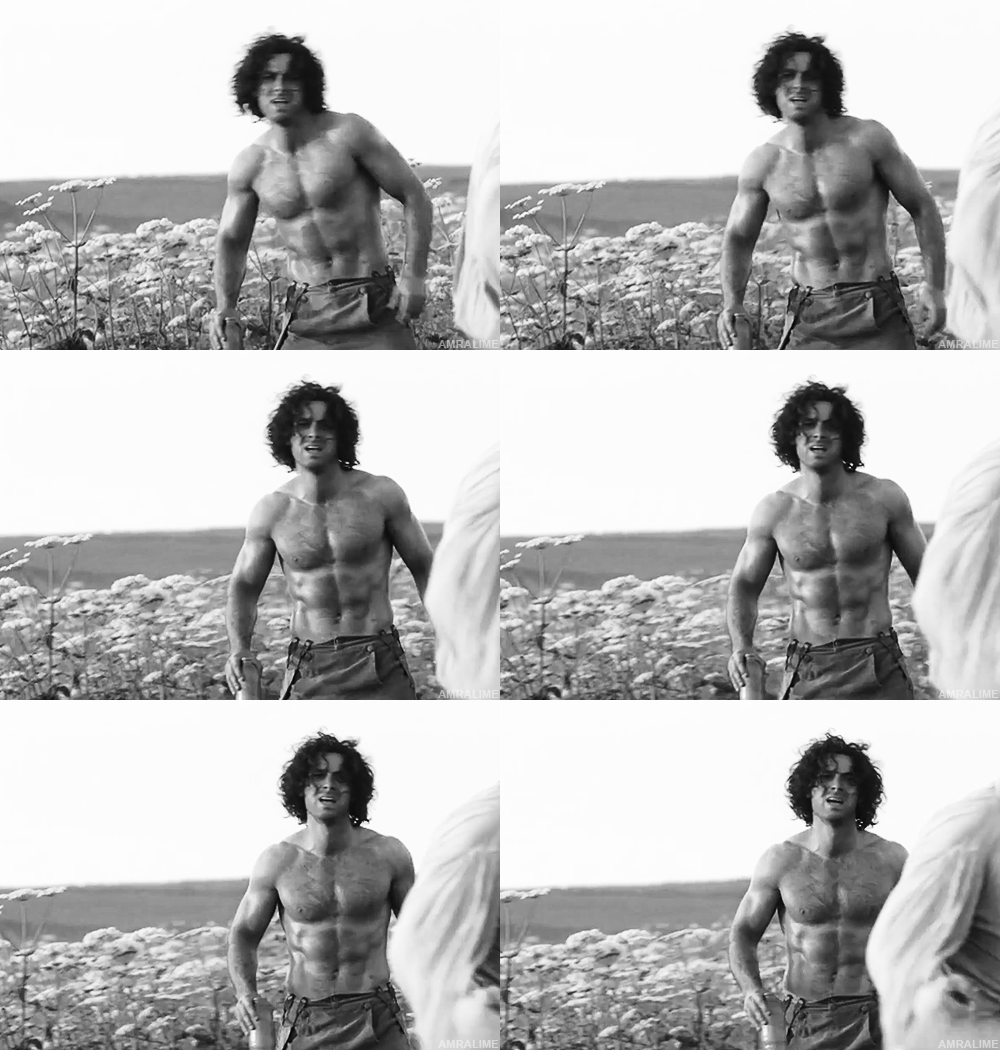
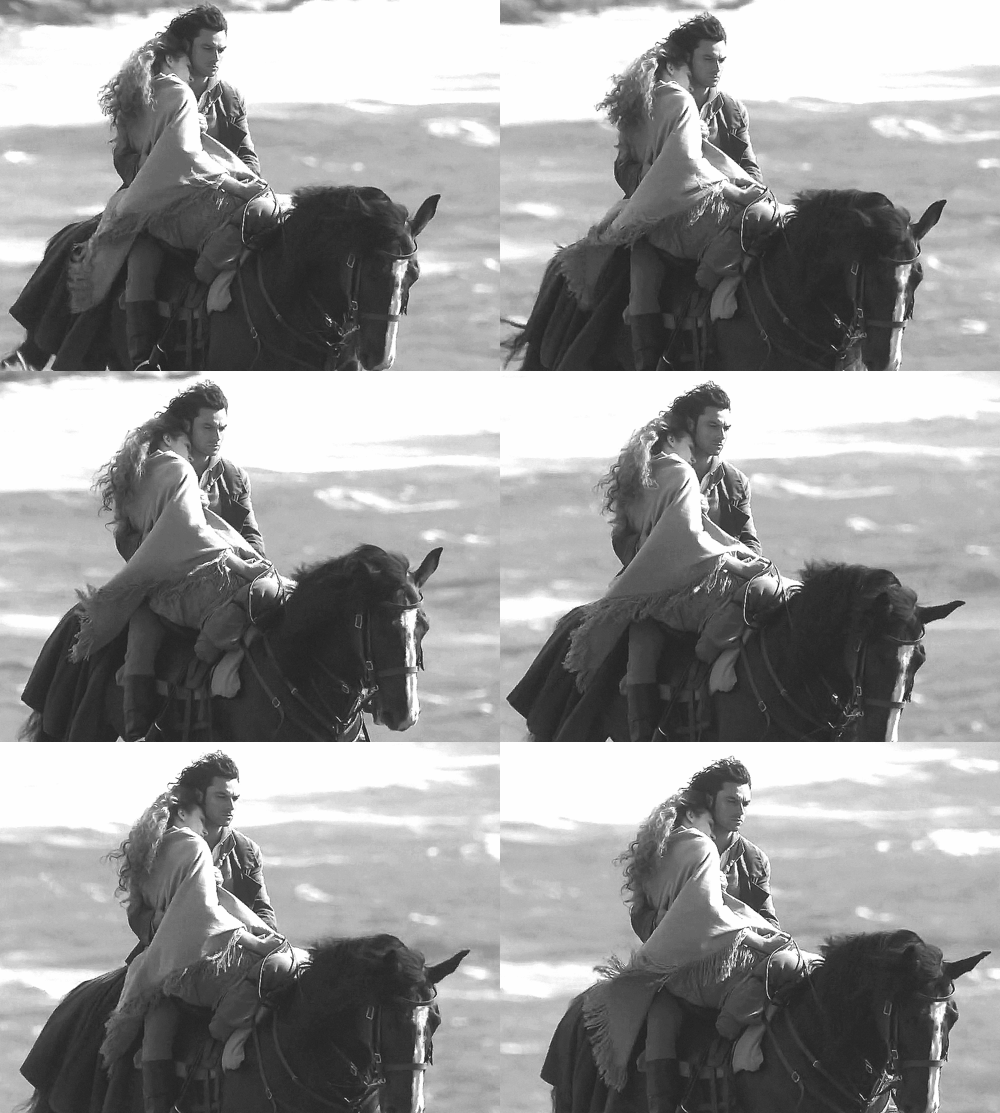
And yeah, I know I said it wasn’t all eye candy, but — seriously! How can they show this on TV and expect people not to paste it all over the internet?

poldark 2


Thursday Quotables: Never Always Sometimes

quotation-marks4

Welcome back to Thursday Quotables! This weekly feature is the place to highlight a great quote, line, or passage discovered during your reading each week.  Whether it’s something funny, startling, gut-wrenching, or just really beautifully written, Thursday Quotables is where my favorite lines of the week will be, and you’re invited to join in!

NEW! Thursday Quotables is now using a Linky tool! Be sure to add your link if you have a Thursday Quotables post to share.

Never Always Sometimes

Never Always Sometimes by Adi Alsaid
(upcoming release – August 4, 2015 )

I literally started this book an hour ago — and on the very first page, I found a description that I really like:

Dave looked up just as Julia was sitting down. She was wearing her usual: shorts, a plaid blue shirt over a tank top, the pair of flip-flops she loved so much that they were now made up of more duct tape than the original rubbery material. Her light brown hair was in a loose ponytail, two perfect strands looped around her ears. If the lights ever went out in her presence, Dave was pretty sure the brightness of her eyes would be more useful than a flashlight.
Don’t you just love that last sentence? It captures so perfectly how crazy this boy must be about this girl.

BONUS THURSDAY QUOTABLE!

I can’t resist adding one extra quote from a very different source.

I’m continuing my romp through Jane Austen’s novels, and this line from Mansfield Park really cracked me up today (spoken by an incredibly self-centered and self-satisfied character):

“Selfishness must always be forgiven, you know, because there is no hope of a cure.”

For whatever reason, listening to this bit via the audiobook was just too perfect.

What lines made you laugh, cry, or gasp this week? Do tell!

If you’d like to participate in Thursday Quotables, it’s really simple:

  • Write a Thursday Quotables post on your blog. Try to pick something from whatever you’re reading now. And please be sure to include a link back to Bookshelf Fantasies in your post (http://www.bookshelffantasies.com), if you’d be so kind!
  • Click on the linky button (look for the cute froggie face) below to add your link.
  • After you link up, I’d love it if you’d leave a comment about my quote for this week.
  • Be sure to visit other linked blogs to view their Thursday Quotables, and have fun!

Wishing & Waiting on Wednesday: The Guest Room

There’s nothing like a Wednesday for thinking about the books we want to read! My Wishing & Waiting on Wednesday post is linking up with two fabulous book memes, Wishlist Wednesday (hosted by Pen to Paper) and Waiting on Wednesday (hosted by Breaking the Spine).

My most wished-for book this week is:

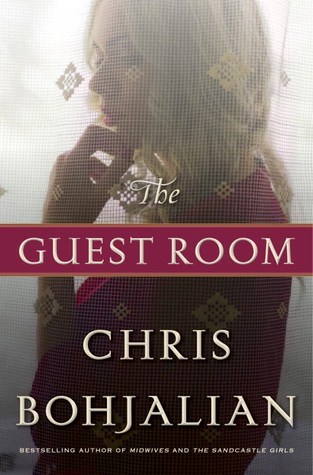
Guest Room

The Guest Room by Chris Bohjalian
(to be released January 5, 2016)

Synopsis via Goodreads:

When Richard Chapman offers to host his younger brother’s bachelor party, he expects a certain amount of debauchery. He sends his wife, Kristin, and young daughter off to his mother-in-law’s for the weekend, and he opens his Westchester home to his brother’s friends and their hired entertainment. What he does not expect is this: bacchanalian drunkenness, a dangerously intimate moment in his guest bedroom, and two naked women stabbing and killing their Russian bodyguards before driving off into the night. In the aftermath, Richard’s life rapidly spirals into a nightmare. The police throw him out of his home, now a crime scene; his investment banking firm puts him on indefinite leave; and his wife finds herself unable to forgive him for the moment he shared with a dark-haired girl in the guest room. But the dark-haired girl, Alexandra, faces a much graver danger. In one breathless, violent night, she is free, running to escape the police who will arrest her and the gangsters who will kill her in a heartbeat. A captivating, chilling story about shame and scandal, The Guest Room is a riveting novel from one of our greatest storytellers

This is my first Wishing & Waiting post in about a month — and what better way to jump back in than with a new book by Chris Bohjalian? It almost doesn’t matter what the plot is about — I just have complete faith that whatever he writes will be great!

What are you wishing for this Wednesday?

Looking for some bookish fun on Thursdays? Come join me for my regular weekly feature, Thursday Quotables! You can find out more here — come share the book love!

♥♥♥♥♥♥♥♥

Do you host a book blog meme? Do you participate in a meme that you really, really love? I’m building a Book Blog Meme Directory, and need your help! If you know of a great meme to include — or if you host one yourself — please drop me a note on my Contact page and I’ll be sure to add your info!

Top Ten Tuesday: Book lovers unite! Top ten characters who NEED to READ.

background-20737_1280

Top Ten Tuesday is a meme hosted by The Broke and the Bookish, featuring a different top 10 theme each week. This week’s topic is about characters who are book nerds, book worms, book lovers… you know, people like us!

My top 10, with links for the ones I’ve reviewed here at Bookshelf Fantasies:

1) Catherine Morland, Northanger Abbey: Sure, her tendency to get swept up in gothic novels leads to trouble (like suspecting her crush’s dad of dastardly deeds)… Still, she’s responsible for one of Jane Austen’s most quoted booklover lines:

NA quote

2) Tyrion Lannister, A Song of Ice and Fire: Tyrion credits at least a portion of his survival to wits gained through reading. “Sleep is good. And books are better.”

Wit & Wisdom

3) Jo March (and her sisters), Little Women: Is there anything better than the March sisters acting out the stories they read, or Jo’s own writing efforts? (Until Amy burns her stories. Curse you, Amy!)

Little Women

4) Leisel Meminger, The Book Thief: Does this even need explanation?

Book Thief

5) Mori Phelps, Among Others: A girl whose life revolves around interlibrary loans, and who has read pretty much every work of science fiction, ever. I love the fact that this book has its very own book list (put together by fans, I believe) of every book mentioned in the course of the story. See an assortment of bibliography links here on Jo Walton’s website.

Among Others

And some love for the bookstore owners (and workers):

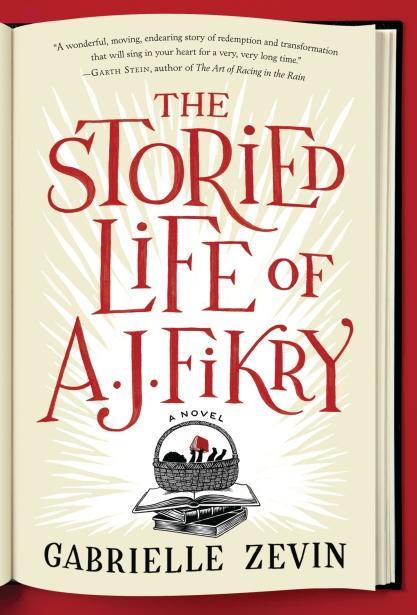
6) A. J. Fikry, The Storied Life of A. J. Fikry: A man whose entire life can be explained by the books he loves — and whose bookstore is everything I would want in my own bookstore. (review)

AJFikry

7) Chloe Sinclair, The Book of Secrets: Bookstore owner, with a secret past in which book-related clues hold the key to everything. (review)

book of secrets

8) June Andersen, Goodnight June: Owner of a children’s bookstore with a secret connection to Margaret Wise Brown. (review)

Goodnight June

9) Maggie Duprès, The Moment of Everything: More bookstores! Gotta love a character who turns from a high-tech job to running a dusty used book store. (review)

moment everything

10) Jane True, the Jane True series: Jane works in a bookstore with the fabulous name Read It and Weep, and when she’s not learning about her supernatural gifts, she’s busy selling books to the peculiar characters in her small Maine town.

janes2

What books about booklovers are on your list this week?

Share your link, and I’ll come check out your top 10!

If you enjoyed this post, please consider following Bookshelf Fantasies! And don’t forget to check out my regular weekly feature, Thursday Quotables. Happy reading!

♥♥♥♥♥♥♥♥

Do you host a book blog meme? Do you participate in a meme that you really, really love? I’m building a Book Blog Meme Directory, and need your help! If you know of a great meme to include — or if you host one yourself — please drop me a note on my Contact page and I’ll be sure to add your info!

The Monday Check-In ~ 7/27/2015

cooltext1850356879 My Monday tradition, including a look back and a look ahead — what I read last week, what new books came my way, and what books are keeping me busy right now. Plus a smattering of other stuff too.

What did I read last week?

Maybe in Another LifeGo Set A Watchman

Maybe in Another Life by Taylor Jenkins Reid: Done! My review is here.

Go Set A Watchman by Harper Lee: I read this book during the past week, and shared some thoughts about it here.

Elsewhere on the blog:

I shared some highlights and photos from my trip to the Canadian Rockies, here. (I know, I know… other people’s vacation pics!)

I also wrote a bit about revisiting Jane Austen’s books without really planning to. Check out My Year of Austen!

Fresh Catch:

One new book added to my toppling stacks this week:

Northanger Abbey 3

What will I be reading during the coming week?

Currently in my hands:
Demelza

Continuing on with the Poldark series by Winston Graham, I’m in the middle of the 2nd book, Demelza. The fact that the BBC production is so unbelievably gorgeous is definitely a contributing factor to my interest in these books! But really, I’m just truly enjoying the story.

Now playing via audiobook:

Sense and Sensibility 2Mansfield Park

My year of Austen audiobooks continues! I just finished Sense and Sensibility over the weekend, and I’m now starting Mansfield Park. I’m loving “re-reading” these books via audio.

Ongoing reads:

EldestABOSAAN&S

My kiddo and I have completely stalled out on our Eldest reading project. I should check to see if he’s still interested in continuing (because if he’s not, I’m not sure that I’ll bother with it either). Also ongoing, my two group reads with Outlander Book Club — two chapters per week from now until we’re done!

So many book, so little time…

boy1


Reaction: Go Set a Watchman by Harper Lee

Go Set A WatchmanThis isn’t a review, exactly. There’s certainly no shortage of reviews out there, for those who want to find them. I thought I’d just go ahead and share a few impressions, having finished the book today — if for no other reason than to get my thoughts straight.

So, background: I think everyone knows by now about the hoopla surrounding the discovery of this “lost” manuscript by Harper Lee. The debate continues to swirl around the question of whether the author truly wanted this book published, whether she’s in a position to be able to give full consent, and whether this book should have seen the light of day. Nevertheless, here it is.

To further recap the history, Go Set a Watchman was written before Harper Lee wrote her masterpiece, To Kill A Mockingbird. The story goes that Ms. Lee’s editor read Go Set a Watchman and then sent the author back to rewrite it, placing the emphasis on Jean Louise’s childhood and thus changing the setting from the 1950s to the 1930s… and the rewritten novel was To Kill a Mockingbird.

So really, Go Set A Watchman is neither a prequel nor a sequel — it’s a first draft.

In Go Set a Watchman, we see Mockingbird‘s Scout as a young woman in her mid-20s. Jean Louise is bright and independent (as you’d expect from knowing Scout), lives in New York, and at the outset of the story travels back to Maycomb, Alabama for her annual visit home.

Her beloved father Atticus is an old man with arthritis, still practicing law, but barely able to use his hands. His sister Alexandra has come to live with him and take care of his daily needs, and his brother Jack is around for company and conversation too. Atticus has taken on a younger lawyer to nurture in the early stages of his career, and this young lawyer, Henry Clinton, is Jean Louise’s devoted boyfriend. The housekeeper Calpurnia, who raised Scout and her brother Jem, has retired and moved back with her own family. And, sadly, Jem himself is dead, having died of a heart attack in his early twenties.

The action, such as there is, shifts between Jean Louise’s experiences during her visit and her vivid memories of her childhood, which are the sharpest and most enjoyable parts of the book. It’s easy to see why an astute editor wanted the author to expand the stories of Scout, Jem, and Atticus. In Go Set a Watchman, we get some new scenes of childhood, with an especially painful segment on Scout’s puberty and the terrible consequences of her misunderstanding how babies are made.

Atticus comes off as the offbeat, wise father we know and love in many of the scenes between him and Jean-Louise, and her Uncle Jack is really stellar as a slightly batty old man who loves to quote the classics, has a passion for Victorian literature, and somehow manages to sneak usable pearls of wisdom into his ramblings, quotations, and allusions.

So, onward to the controversy. I was actually on vacation the week that this book was released. I turned on the TV that morning, and every single morning talk show was busy proclaiming, more or less: UPROAR! ATTICUS FINCH IS A RACIST! ATTICUS FINCH WENT TO A KKK MEETING! And yeah, okay, that’s true, but I do feel as though many in the media were overly eager to swoop in on the sensationalistic aspects without context or clarity.

Yes, Atticus is a racist in Go Set A Watchman. He doesn’t hate African Americans, exactly – but in the wake of the Supreme Court’s 1950s-era decisions on desegregation, he is upset, to say the least. He sees African Americans as lesser, as children, not educated or developed enough to be able to handle the rights that states are now being forced to grant.

“Jean Louise,” he said. “have you ever considered that you can’t have a set of backward people living among people advanced in one kind of civilization and have a social Arcadia?”

After further explaining why they aren’t capable of fully participating in society with equal rights, he points out the practical and political drawbacks

“Honey… Use your head. When they vote, they vote in blocs.”

And still more:

“Honey, you do not seem to understand that the Negroes down here are still in their childhood as a people. You should know it, you’ve seen it all your life. They’ve made terrific progress in adapting themselves to white ways, but they’re far from it yet…

Jean Louise is furious and broken-hearted to discover the truth about Atticus’s beliefs. She feels that he pulled the wool over her eyes all her life, making her believe that he believed in one thing when the truth was something else.

“Jean Louise, I’m only trying to tell you some plain truths. You must see things as they are, as well as they should be.”

“Then why didn’t you show me things as they are when I sat on your lap? Why didn’t you show me, why weren’t you careful when you read me history and the things that I thought meant something to you that there was a fence around everything marked ‘White Only’?”

It’s Uncle Jack who prevents Jean Louise from fleeing Maycomb in anger, resolved never to return and never to see Atticus again. And this is the piece that I found the most affecting — Uncle Jack (after hitting Jean Louise across the face so hard that she almost loses consciousness, which was weird and disturbing), gets her to stop for a moment and to listen. He explains to her how, in essence, one of the hardest parts about becoming an adult is realizing that the perfect people from our childhoods are flawed humans like everyone else:

“… now you, Miss, born with your own conscience, somewhere along the line fastened it like a barnacle onto your father’s. As you grew up, when you were grown, totally unknown to yourself, you confused your father with God. You never saw him as a man with a man’s heart, and a man’s failings — I’ll grant you it may have been hard to see, he makes so few mistakes, but he makes ’em like all of us. You were an emotional cripple, leaning on him, getting the answers from him, assuming that your answers would always be his answers.”

In To Kill a Mockingbird, we see Scout’s coming of age tale, but Go Set a Watchman in its own way is Jean Louise’s coming of age. As Uncle Jack points out, she’s finally emerged into her own person, rather than the girl who confuses her father with God. And in recognizing this, she can find a way to keep Atticus and Maycomb in her heart and in her life, even if she sees actions and ideas that she hates. As Uncle Jack explains:

“… the time your friends need you is when they’re wrong, Jean Louise. They don’t need you when they’re right.”

There are some interesting ideas and points to be made, and some bear more thought, and I’m sure will be discussed for some time to come. The shattering of childhood idols is a major milestone, and Jean Louise faces the universal task of finding a way to love a flawed parent, despite how very strong those flaws are.

(I realize that I’m not really addressing Atticus’s views on race and segregation, and that’s because I don’t really think it’s necessary. If this book had been published in the 1950s, as originally intended by Harper Lee, I think the content would have been truly provocative. Here and now, it’s a window into a world that’s so clearly passed that I don’t really feel the need to spend time on Watchman‘s Atticus, why he feels the way he does, etc.)

I think, if this book existed in a universe that didn’t also contain Mockingbird, the message might be a more acceptable one about growing up, recognizing the imperfections of people we used to think perfect, and trying to find a way to move forward and fight for what’s right without having to completely disown the less savory parts of our family, our home, our past.

But the idea that it’s Atticus who’s shown to be so imperfect is certainly a hard one to swallow, given how for decades Atticus Finch has been pretty much everyone’s ideal of a perfect father as well as a noble and decent man. How do we reconcile the two?

For me, I decided to read Watchman, as much as I could, as a separate and distinct entity. As a story of a Southern-born girl coming home and facing hard truths, it’s interesting. The reminiscences of Southern childhood are as charming as they should be, and Jean Louise has that ornery, contrary streak that we’d expect of a girl who behaved so rambunctiously as a child.

I’m not a Mockingbird expert by a long shot, and I’d guess that those who are will have a lot more to say about Watchman than I do. I read Mockingbird once in high school (many years ago!) and once again earlier this year. And I love that book… and Go Set a Watchman doesn’t change that.

Go Set a Watchman is interesting as a glimpse into an author’s process, as well as providing a view of what Harper Lee’s intentions were when she first began writing a novel. Also of note, of course, is the fact that Go Set a Watchman has been published as is, unedited, and it shows. Especially in the first half of the book, the writing itself is inconsistent and there are rough patches which clearly would have been polished and refined if this book had been intended for publication. The action and pacing are also inconsistent, and the pieces set in modern-day Maycomb involving Jean Louise’s dates with Henry and her aunt’s social Coffee held in Jean Louise’s honor tend to drag a bit. There were definitely times where I felt as though I were reading a draft of a novel, rather than a novel itself.

The question of whether Go Set a Watchman is a good novel in and of itself is one that’s hard to answer. It simply can’t be read in a vacuum. It exists because Mockingbird exists, and we read it to see what it is in light of what we know about Harper Lee, to see how the characters we love from Mockingbird were treated in her first go-round.

So, no, for someone with no attachment to To Kill a Mockingbird or for someone who’s never read it, I wouldn’t say they should rush right out and read Watchman. There really isn’t a reason to, except to compare and contrast with Mockingbird.

Bottom line: There were parts of Watchman that I enjoyed, especially the memories of Scout’s childhood and adolescence. I found the conflict around Atticus’s racism and Jean Louise’s reaction to this discovery to be quite interesting, and some of the arguments and speeches made at the climax were really well-written and insightful. My best advice? Read this book to see what it is, see if you find any good food for thought in it, and see how you respond to the fuss being made over Atticus’s character. But hold onto everything you cherish about Mockingbird — there’s no need for that to be tarnished.

It’s almost like reading fan fiction or a sequel written by another author (kind of like how Scarlett by Alexandra Ripley is to Margaret Mitchell’s Gone With the Wind). You can read it to be informed about the pop culture happening of the moment, or as a piece of literary entertainment, or as a “what if” scenario. For me, I choose to see it as a “I suppose this is one way it could go” situation. I read this story of Atticus and Jean Louise, and found some interesting points, but in my mind, these are not the same Atticus and Jean Louise/Scout whom I already know. The Atticus and Scout from Mockingbird remain, for me, the “real” versions of themselves.

And that’s how I choose to think about it.

Thursday Quotables: Ross Poldark

quotation-marks4

Welcome back to Thursday Quotables! This weekly feature is the place to highlight a great quote, line, or passage discovered during your reading each week.  Whether it’s something funny, startling, gut-wrenching, or just really beautifully written, Thursday Quotables is where my favorite lines of the week will be, and you’re invited to join in!

NEW! Thursday Quotables is now using a Linky tool! Be sure to add your link if you have a Thursday Quotables post to share.

Ross Poldark

Ross Poldark by Winston Graham
(published 1945 )

I was originally going to go with a more action-oriented passage or quote, but this little paragraph caught my attention instead. I love how visual the description is:

The formal dance went on. The soft yellow candle light trembled over the colours of the dresses, the gold and cream, the salmon and the mulberry. It made the graceful and the beautiful more charming, the graceless and the ungainly tolerable; it smoothed over the tawdry and cast soft creamy-grey shadows becoming to all.

I really like the mood created, painting a picture of an enchanted evening. The rest of the paragraph is as follows:

The band scraped away, the figures pirouetted, moving and bowing and stepping, turning on heels, holding hands, pointing toes; the shadows intermingled and changed, forming and reforming intricate designs of light and shade, like some gracious depictment of the warp and woof of life, sun and shadow, birth and death, a slow interweaving of the eternal pattern.

Anyone else watching Poldark on TV? The landscape alone can make me sigh…

What lines made you laugh, cry, or gasp this week? Do tell!

If you’d like to participate in Thursday Quotables, it’s really simple:

  • Write a Thursday Quotables post on your blog. Try to pick something from whatever you’re reading now. And please be sure to include a link back to Bookshelf Fantasies in your post (http://www.bookshelffantasies.com), if you’d be so kind!
  • Click on the linky button (look for the cute froggie face) below to add your link.
  • After you link up, I’d love it if you’d leave a comment about my quote for this week.
  • Be sure to visit other linked blogs to view their Thursday Quotables, and have fun!

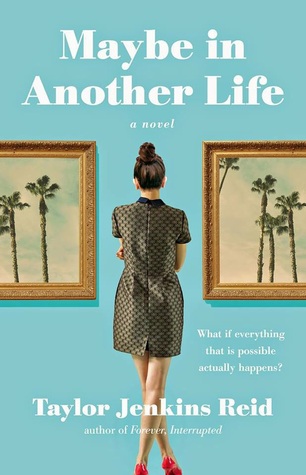
Book Review: Maybe in Another Life by Taylor Jenkins Reid

Maybe in Another LifeAre our lives determined by fate? Or is it all just a matter of chance?

Is there just one person in all the world that we’re meant to be with? Or is life more of a multiple-choice quiz, where different answers may be correct in different circumstances?

In Maybe in Another Life, the characters say one thing, but their lives and actions give a very different message.

Hannah Martin, age 29, has lived anywhere and everywhere, but has no idea where she truly belongs. After a go-nowhere disastrous affair in New York ends, Hannah moves back “home” to Los Angeles, to reunite with her best friend Gabby, pick up the pieces, and start from scratch.

And maybe, just maybe, rekindle an old flame with her high school sweetheart Ethan.

On their first night out on the town, Hannah faces a moment of truth: Should she go home with Ethan and see what happens… or call it a night, head back to Gabby’s place, and spend the night alone? At the moment of decision, the narrative of Maybe in Another Life splits.

From this moment on, we follow two separate narrative threads in alternating chapters. In one, Hannah does go home with Ethan, their dormant feelings are rekindled, and they begin to work through what an adult relationship might look like. In the other, Hannah turns Ethan down, continues on the way home with Gabby, and is struck by a hit-and-run driver, resulting in serious injuries and a lengthy hospital stay.

In both versions of Hannah’s life, she’s confronted with choices. What does her future hold? How do you know if you’re meant to be with someone? How do you recognize a soulmate? What do you give up for a relationship, and what are the deal-breakers?

Likewise, in both versions, Hannah tries to puzzle out the question of destiny and predetermination:

“You think things are meant to be?” I ask her. For some reason, I think I’ll feel better if things are meant to be. It gets me off the hook, doesn’t it? If things are meant to be, it means I don’t have to worry so much about consequences and mistakes. I can take my hands off the wheel. Believing in fate is like living on cruise control.

Hannah has been so busy searching for the perfect life and what she’s “meant” to do, who she’s “meant” to love, that she’s never fully engaged with her options anywhere she’s been.

“Doesn’t it scare you?” I ask her. “To think that you might have gone in the wrong direction? And missed the life you were destined for?”

Hannah’s life is so messy that she has to believe there are other forces at play:

“I mean, I think I have to believe that life will work out the way it needs to. If everything that happens in the world is just a result of chance and there’s no rhyme or reason to any of it, that’s just too chaotic for me to handle. I’d have to go around questioning every decision I’ve ever made, every decision I will ever make. If our fate is determined with every step we take… it’s too exhausting. I’d prefer to believe that things happen as they are meant to happen.

Ironically, the split narrative demonstrated that it is all random, and that every decision changes the course of events. Towards the end of the book, a party guest talks about the multiverse theory, in which every decision leads to multiple universes in which all possible outcomes exist. From the moment Hannah decides to go home with Ethan — or not to go home with Ethan — she has two different parallel lives. In both lives, she confronts pain and difficult choices, finds a soulmate, faces hard truths, and finally sets off on the path toward professional fulfillment as well as a life filled with love.

The lovely thing about Maybe in Another Life is that both halves of the story feel right! Neither of Hannah’s two lives is 100% easy, but both feel real and both seem like valid outcomes. In both, Hannah begins to grow, take chances, and own up to the decisions she’s made that lead her to this point. Both feel like the absolutely right thing for her, and she wouldn’t have it any other way.

I really enjoyed the writing in Maybe in Another Life, which maintains a light touch even in heavy situations. Hannah herself is a person with a lot of room to grow, but she’s self-knowing enough to own up to her mistakes and want to make better choices. And through it all, she’s got a great sense of humor, is a devoted friend, and knows that she needs to finally do something with her life.

The author gives Hannah certain quirks and habits that are both charming and make her feel like an individual, rather than a stock character. In particular, Hannah’s need to always have her hair in a high bun and her constant craving for cinnamon rolls are recurring motifs, and to my surprise, the repetition is actually pretty charming (rather than annoying, as it so easily could have been).

I liked the double narrative, although occasionally I lost track of which event happened in which version of Hannah’s life. No matter, though: Both halves of the story contain ups and downs, loves lost and found, and the true and deep friendship between Hannah and Gabby, which is a key element of the entire story. It’s not often that contemporary novels emphasize the huge difference a good friendship between women can make, while also dealing with romantic entanglements and all sorts of other drama. But here, it’s crystal clear that the bond between Hannah and Gabby is the most important element for both women, grounding them in such a way that they’re able to make their life decisions from a position of strength and support.

Maybe in Another Life is a very quick read. It’s light, but heartfelt. Not sugary, not glossing over the hard stuff, Maybe in Another Life shows a young woman dealing with real life… and the way every decision has consequences. This book is quite fun to read, and yet manages to be emotionally real even amidst all the jokes about cinnamon rolls.

_________________________________________

The details:

Title: Maybe in Another Life
Author: Taylor Jenkins Reid
Publisher: Washington Square Press
Publication date: July 7, 2015
Length: 352 pages
Genre: Adult contemporary fiction
Source: Review copy courtesy of the publisher via NetGalley

Oh Canada!

Canada 284

I’ve just returned from a 10-day vacation in the Canadian Rockies… and let me just say, it was glorious!

When it comes to vacations, I’m more of a mountain/lake/trail kind of traveler than a city/shopping/museum person… and even though I swear that I’d love to just go sit on a tropical beach for a week, chances are that after one day, I’d be lacing up my hiking boots and looking for a bit more action.

(Don’t get me wrong. I walk on forest trails. I don’t use ropes, hang by my hands or toes, or do anything at all scary or adventurous. I just like the great outdoors, okay? Blame all those summers spent at camp as a child.)

So… Canada. I love my son, but he definitely has limits when it comes to hiking, sightseeing, and in general, the stuff that his parents seem to find fun. Darling boy is off at three weeks of summer camp at the moment (camp is in the blood, I guess), so my hubby and I took advantage of this brief child-free moment in time to do what we wanted to do. And I’ve been dreaming of a vacation in the Rockies for years now. With the help of some good guidebooks, a Canadian coworker who gives great advice, and lots of gorgeous Pinterest photos as inspiration, we were off!

I learned a few things in Canada too:

1) I’m delicious… to mosquitoes. Our punishment for taking the wrong turn on a trail was being attacked by ravenous, blood-thirsty mosquitoes who I SWEAR were on a mission specifically to eat us.

2) Credit cards are great for avoiding the dreaded tourist fumble… in which you stand around trying to pay for something but not knowing which coin is worth a dollar and which is only 25 cents.

3) Stupid American, comment #1: There’s such a thing as Canadian cuisine! Did you know that? I most assuredly did not. It seems to consist of lots of meat, especially elk, bison, and caribou. My carnivore husband was impressed. (Me, I stuck to salads.)

4) Stupid American, comment #2: There’s such a thing as Canadian football! I had no idea, but apparently it’s a big deal. No, I don’t mean soccer. Good old football, with helmets and all. We happened to be in a pub with Thursday Night Football blaring on the TV all through our dinner. Good times!

5) I discovered that driving a big Jeep makes me feel rugged and outdoorsy. Rawr! I rule the road.

Canada 100

6) Best, best, best thing in the world? This:

Canada 130

Berry cider. 7% alcohol. Sweet and delicious, goes down like fizzy Kool-Aid, and then it kicks you in the head. Mmmmm. And pretty too.

Okay, long story short, we had a great time. I won’t bore you with further narrative… but I do want to share some photo highlights of the simply gorgeous places we went! As my husband started chanting as of about the 3rd day of our trip: Lakes! Mountains! Lakes! Mountains! You get the idea.

To view slide-show fashion, click on any image. Enjoy!

Sigh. Photos alone can’t do justice to the absolute beauty of the Canadian Rockies. If you’re considering going, hit me up for some “best of” tips! And if you’ve already been, please tell me what/where you loved the most!

And now… off to dream of my next vacation, wherever that might be!