Audiobook Review: Maisie Dobbs by Jacqueline Winspear

Maisie DobbsWhen we first meet Maisie Dobbs, it is 1929, and she is opening up her London office for the very first time. Maisie, a young woman of about 30, is going into business as a private investigator, thanks to the tutelage of her mentor, Maurice Blanche, and the sponsorship of her patroness, Lady Rowan.

Maisie is an extremely intelligent woman, reserved by nature, strikingly attractive — and it’s immediately apparent that this is a person who has been hurt deeply in her lifetime. That doesn’t stop Maisie, though. She is more than ready when her first client walks through her door, hiring her to investigate his wife’s long afternoons away from home and to determine if she’s being unfaithful.

What Maisie discovers is not infidelity, but yet another lost soul still bearing the wounds of the Great War that ended ten years earlier. As Maisie pursues the trail of clues, her memories of her own wartime experiences come flooding back, demanding to be faced after all this time.

Maisie Dobbs is constructed around a mystery — who is the man whose grave the client’s wife cries over, and why does his gravestone list only his first name? The solution to this case leads Maisie back into the world of wounded soldiers and the terrible sacrifices and pain suffered by those who made it back home.

At the heart of the book lies Maisie’s own story. As her investigation begins to relate to the war, the center third of the book shifts scene and time and takes us back to Maisie’s teen years, when she works as a housemaid in Lady Rowan’s home. Maisie’s eagerness to learn leads her to an education sponsored by Lady Rowan, eventually entering college at Cambridge before the harsh reality of war causes her to change path.

Maisie abandons her college studies and enrolls in nursing school, ultimately training as a battlefield nurse and getting sent to a field hospital on the frontlines in France. I won’t go into too much detail, other than to say that Maisie’s experiences there lead to a tragic loss that has haunted her ever since. And in investigating the case of the soldier’s grave, Maisie is finally forced into confronting her sad, painful history.

I picked up this book not knowing what to expect. I had heard of the Maisie Dobbs series, and thought this first book would be a more or less straightforward detective story. What really impressed me about Maisie Dobbs is how deep and layered the story is. While Maisie is indeed an investigator, the setting and the time period are gateways into an examination of the horrors and tragedies of the terrible losses suffered during World War I — and the ongoing pain and suffering experienced by those who came home to face a lifetime of disfigurement and isolation.

Through Maisie’s thoughts, we come to feel the terrible depth of the tragedy as experienced on a very personal level, and yet there’s also hope. While Maisie carries emotional wounds that will always be with her, she’s also creating a new life in a new era, using her brains and her inner strength to face life on her own terms.

The audiobook narrator, Rita Barrington, does a lovely job of capturing Maisie’s inner dialogue, as well as voicing the people in her life. She does an excellent older, aristocratic voice for Lady Rowan, and a cheeky, working class voice for Maisie’s assistant Billy. Even while narrating conversations between multiple characters, it wasn’t hard to follow or to figure out who was talking at any given time. I liked the clarity and sweetness of Maisie’s voice, and the gentleness with which she speaks to all, especially to wounded soldiers and others in need of her care.

According to Goodreads, there are 11 Maisie Dobbs novels currently in print, with a 12th scheduled for release in 2016. I don’t really know where the series will go from here: Will it be a more traditional mystery series, with a new case forming the focal point of each book? Will Maisie’s connections to the war continue to inform the storylines? I suppose I could read the synopses of the next few books in the series, but really, I’d rather just wait and find out for myself.

I’m quite sure that I’ll continue with this series, which has such a well-written start in this first book. The emotional depths of this novel make it an affecting and throught-provoking read. There’s something about WWI fiction that is utterly compelling and tragic, and I found myself very much enthralled by the character of Maisie Dobbs and her fascinating life. Hearing the voices of Maisie and the other characters, as portrayed in the audiobook, made the experience even richer, and I look forward to listening to the 2nd book as soon as possible.

_________________________________________

The details:

Title: Maisie Dobbs
Author: Jacqueline Winspear
Narrator: Rita Barrington
Publisher: Penguin
Publication date: January 1, 2003
Audiobook length: 10 hours, 1 minute
Printed book length: 309 pages
Genre: Historical fiction; crime/mystery series
Source: Audible
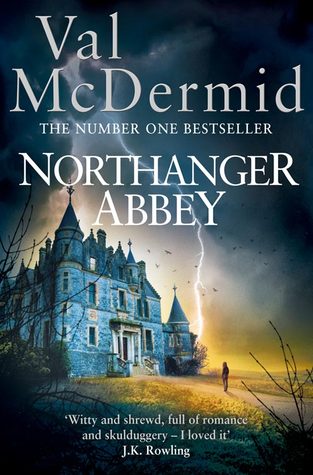
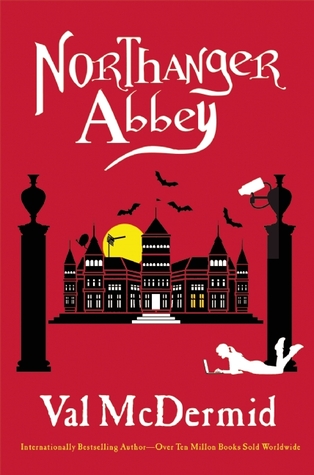
Book Review: Northanger Abbey by Val McDermid

Northanger Abbey 3This is my first Austen Project book, and I definitely want more!

For those not familiar with it, The Austen Project is a publishing concept that pairs up bestselling contemporary authors with the works of Jane Austen, with the goal of creating six reimagined versions of the classic novels.

Sense and Sensibility, written by Joanna Trollope, was published in 2013; Northanger Abbey by Val McDermid followed in 2014, and in June 2015, Emma by Alexander McCall Smith was released. Supposedly next will be a Pride and Prejudice reimagining by Curtis Sittenfeld, although it looks as though she may be departing from the formula a bit and publishing a novel with a different name (Eligible, to be released 2016).

I decided to start with Northanger Abbey because it’s fresh in my mind. I’d read the Austen version years ago, and listened to the audiobook while on vacation this summer. (As a result, I associate Northanger Abbey with a hike in the woods in the Canadian Rockies, which is really not a bad association at all!) Last week, I watched the 2007 Masterpiece version of Northanger Abbey, starring Felicity Jones (which is very good – check it out!).

Northanger Abbey is written by Val McDermid, a Scottish-born author best known for writing crime novels. I’d heard her name before, but had never read any of her works, since crime novels aren’t usually my thing. The book gets off to a promising start:

It was a source of constant disappointment to Catherine Morland that her life did not more closely resemble her books.

In this new version of NA, heroine Catherine Morland is now Cat Morland, a 17-year-old with a somewhat sheltered upbringing who’s invited to accompany the family’s wealthy friends, the Allens, not to Bath as in the original, but to the Edinburgh Fringe Festival. Cat’s a typical teen, living life out loud on Facebook and Twitter, and absolutely devoted to YA fiction, especially Twilight and anything supernatural, scary, and dramatic. Like, for instance, the (made-up) Hebridean Harpies series, which includes hot titles such as Kelpies of Kerrera, Shapeshifters of Shuna, and Banshees of Berneray.

Northanger Abbey 2In Edinburgh, Cat soon is befriended by Bella Thorpe, and develops a mad crush on Henry Tilney, her dancing partner at a Highland Ball. In the original, there’s talk of a country walk and an outing in the carriage; here, the young folks go for a hike or for a drive in John Thorpe’s convertible. Eventually, Cat is invited to spend time at the Tilney’s estate of Northanger Abbey, and Cat is completely enamored with the gothic romance of a creaky old mansion and its secrets (although she’s dismayed to discover that the family’s interior decorating mostly runs toward Swedish modernity).

As with the original, Cat’s fiction-influenced flights of fancy lead her to give free rein to her imagination. She gets shivery pleasure from her suspicions that the family is hiding deep, dark secrets… although it’s perhaps a bit surprising that here she imagines not just murder or family members being held captive in secret cells, but that there are vampires afoot!

I was surprised by just how well Northanger Abbey translates into the modern day, with this new edition reading like a particularly larky YA novel. The core elements — female friendship, people using each other for the sake of money and supposed connections, emotional manipulation, and parental interference — all work in a more modern setting. Likewise, the true friendship and romance that Cat finds with the Tilneys make sense here as well, and Val McDermid finds a way to portray the characters in a way that’s true to their origins while coming across as belonging in the contemporary setting. Even the isolation Cat feels at Northanger makes sense — there’s no wifi or cell signal! And if that’s not cause for fear and anxiety, especially for a 17-year-old girl, I don’t know what is.

Yes, Cat’s belief in vampires is quite silly, but in context, given Cat’s youth and her naivete, as well as her passion for supernatural romances, I was willing to accept it as a plot point.

I liked the writing style, although occasionally the texting and teen slang seemed a bit over the top. Then again, who am I to judge how British teens talk these days? The teen dialogue gives the book a fun, upbeat tone for the most part, although I thought I might throw something if Bella used the word “totes” one more time. (“But I bet you’re so busy having a totes lush time…”)

[Minor spoiler ahead!]

The only thing that seemed like too big a departure for me comes toward the end of the book. In the original, General Tilney abruptly kicks Catherine out of Northanger when he discovers that she’s not an heiress after all. I’d anticipated something similar here, as he constantly asks Cat about her connection to the Allens — so why wouldn’t finding out that her family isn’t wealthy and that she doesn’t have money connections have the same impact in this version? But no — what sets the General off in the new NA is gossip provided by John Thorpe, who whispers to the General that Cat is a lesbian, and rather than being a potential match for Henry, she’s actually interested in Eleanor. Okay, fine, the General is an uptight and old-fashioned dude, but throwing this into the mix seems a bit out of place/out of the blue. Given the narrative up to this point as well as the source material, having it still be all about the money would have been a better fit, in my humble opinion.

[End of spoilers]

Overall, I thought this reimagining of Northanger Abbey was quite fun. Would this work on its own for readers who haven’t read or aren’t familiar with the original? That I’m not sure of. It’s cute and quirky, but some of the plot developments might strike a reader as quite odd without knowing the framework provided by Jane Austen.

But for anyone who knows the original Northanger Abbey, this new tale is a fun, fluffy, diversion. I certainly had a good time with it, and I think it’s worth checking out!

_________________________________________

The details:

Title: Northanger Abbey
Author: Val McDermid
Publisher: HarperFiction
Publication date: March 27, 2014
Length: 358 pages
Genre: Fiction (adult/young adult)
Source: Purchased

BabyLit: Classics for Kids!

All together now: Awwwwwwww. Are these the cutest things or what?

image

Author Jennifer Adams and artist Alison Oliver have created the most adorable board books, sure to please every bookworm of a parent who’s just dying to share their love of literature with their little ones.

These two are the newest in their BabyLit series, and they’re totally precious. We have “Little Miss Austen” with Emma, teaching toddlers all about emotions with pages such as these:

Also featured are Emma being excited, Miss Taylor happy, and a very angry and red-faced Mr. Elton.

In the pirate world, we learn about shapes with “Little Master Louis Stevenson” and Treasure Island, with pictures of the Admiral Benbow inn, a treasure chest, Long John Silver, and a parrot, along with:

image

Have I used the words “adorable”, “cute”, and “precious” already? I’m running out of ways to say it. These board books are bright and colorful and are sure to catch the eyes of babies and toddlers… and meanwhile, bookloving adults can chuckle and appreciate that even if they’re too busy with diapers and bottles to sit and read, at least they can get a little flavor of the classics with the BabyLit books.

These are only two of the ADORABLE (yup, still using that word) books in the collection. Check out the BabyLit website for much, much more. Because all toddlers with taste need Moby Dick and Romeo and Juliet in board book form.

One more time: Awwwwwwww.

Thursday Quotables: Northanger Abbey (by Val McDermid)

quotation-marks4

Welcome back to Thursday Quotables! This weekly feature is the place to highlight a great quote, line, or passage discovered during your reading each week.  Whether it’s something funny, startling, gut-wrenching, or just really beautifully written, Thursday Quotables is where my favorite lines of the week will be, and you’re invited to join in!

NEW! Thursday Quotables is now using a Linky tool! Be sure to add your link if you have a Thursday Quotables post to share.

Northanger Abbey 3

Northanger Abbey by Val McDermid
(published March 27, 2014)

This modern retelling of Jane Austen’s first novel is pretty adorable, reimagining Catherine Morland as 17-year-old Cat, a teen girl with an overactive imagination thanks to her obsessive reading of Twilight and other vampire- and beasty-themed YA novels. Upon first view of Northanger:

“OMG,” Cat breathed. The abbey was vampire heaven.

Is it any wonder that she overreacts?

Before she could open the book, there was a clap of thunder so loud and close that Cat cried out in terror. The room was abruptly plunged into darkness and a second deafening thunderclap vibrated through the air. Cat curled into a ball and moaned softly. What terrible powers had her discovery unleashed?

The story is all quite cute, even in the quieter interludes, such as this one hanging out in the younger Tilneys’ rec room:

Cat pushed the door open and Henry looked up from a somewhat battered old guitar. He gave her a welcoming smile. “You found us. Ellie was afraid she hadn’t give you clear enough directions. Come in and join us. We like to think of this as the Slytherin common room.”

“Hardly,” Ellie said, rising from the comfy chintz sofa where she was sprawled. “When you’re around, it’s more like Hufflepuff. Typical lawyer, all hot air and bluster.”

This book is light and fluffy, and perfectly suits my short attention span right now.

What lines made you laugh, cry, or gasp this week? Do tell!

If you’d like to participate in Thursday Quotables, it’s really simple:

  • Write a Thursday Quotables post on your blog. Try to pick something from whatever you’re reading now. And please be sure to include a link back to Bookshelf Fantasies in your post (http://www.bookshelffantasies.com), if you’d be so kind!
  • Click on the linky button (look for the cute froggie face) below to add your link.
  • After you link up, I’d love it if you’d leave a comment about my quote for this week.
  • Be sure to visit other linked blogs to view their Thursday Quotables, and have fun!

When is a new book not a new book?

When it’s the same old story, just changed.

By now, everyone has heard the “big” new from the Twilight world, right?

Stephenie Meyer has chosen a somewhat odd way to celebrate the 10th anniversary of Twilight‘s publication: A rewritten version of the story, supposedly exactly the same as the original, but with all the genders swapped. So Bella becomes Beau, and Edward becomes Edythe… and I think supposedly she’s trying to prove everyone wrong who talked about Bella being a weak female?

Twi_new


According to Goodreads:

Celebrate the tenth anniversary of Twilight! This special double-feature book includes the classic novel, Twilight, and a bold and surprising reimagining, Life and Death, by Stephenie Meyer.

Packaged as an oversize, jacketed hardcover “flip book,” this edition features nearly 400 pages of new content as well as exquisite new back cover art. Readers will relish experiencing the deeply romantic and extraordinarily suspenseful love story of Bella and Edward through fresh eyes.

And from an article on PopSugar:

Part of the reason for the gender swap is that Meyer wants to prove that the character of Bella isn’t a “damsel in distress,” which is a commonly criticized element from the first book. She has also corrected some grammatical issues and word choices and altered some of the mythology for consistency.

I guess the “new” human character, Beau, will be sleep-stalked by Edythe and will find himself the weak, fragile one surrounded by a surreally beautifully undead family of vegetarian vampires. Yay, progress? Or something. (And maybe those grammatical issues and word choices could have been fixed without making fans buy an entirely new book?)

The book is 752 pages (!!!), and contains BOTH the original Twilight novel and the “new” version… and retails for $21.99 (Amazon lists it at $13.53). As of this moment, Life and Death is listed as the #1 bestselling book on Amazon.

Can anyone say “money grab”? Doesn’t Stephenie Meyer already have all the money?

I don’t know. This concept strikes me as utterly ridiculous, but then again, I’m not a die-hard fan of the original. (Yes, I read them all… and waited for the midnight release of the 4th book — but time passes and gives us the breathing space to reassess whether what we binge-read was actually, you know, good.)

I loved this piece on io9, which is mostly snarky but brings up some more serious points too. A snippet of snark:

Meyer says that writing this version was “fun, but also really fast and easy.” She totally used search and replace for the names, didn’t she?

News about this “reimagining” is all over the interwebs. Here are a few to check out:

This Tweet pretty much sums up my initial reaction to the Twilight news:

Does anyone actually plan on reading this? I don’t… although now that I’ve put together this post, maybe I should check it out. You know, for research purposes.

What do you think? Do you find the idea of a gender-swapped Twilight interesting — or is this a lame attempt to further cash in on a craze that we just wish would die already?

Shelf Control #4: Affinity

Shelves final

Welcome to the newest weekly feature here at Bookshelf Fantasies… Shelf Control!

Shelf Control is all about the books we want to read — and already own! Consider this a variation of a Wishing & Waiting post… but looking at books already available, and in most cases, sitting right there on our shelves and e-readers.

Want to join in? See the guidelines and linky at the bottom of the post, and jump on board! Let’s take control of our shelves!

cropped-flourish-31609_1280-e1421474289435.png

My Shelf Control pick this week is:

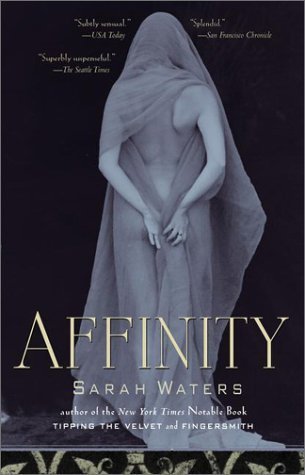
AffinityTitle: Affinity
Author: Sarah Waters
Published: 1999
Length: 352 pages

What it’s about (synopsis via Goodreads):

An upper-class woman recovering from a suicide attempt, Margaret Prior has begun visiting the women’s ward of Millbank prison, Victorian London’s grimmest jail, as part of her rehabilitative charity work. Amongst Millbank’s murderers and common thieves, Margaret finds herself increasingly fascinated by one apparently innocent inmate, the enigmatic spiritualist Selina Dawes. Selina was imprisoned after a séance she was conducting went horribly awry, leaving an elderly matron dead and a young woman deeply disturbed. Although initially skeptical of Selina’s gifts, Margaret is soon drawn into a twilight world of ghosts and shadows, unruly spirits and unseemly passions, until she is at last driven to concoct a desperate plot to secure Selina’s freedom, and her own.

How I got it:

I bought it.

When I got it:

At least 4 or 5 years ago.

Why I want to read it:

After reading Fingersmith, I was determined to read as many books by Sarah Waters as possible! Somehow, though, I never quite followed all the way through, and Affinity is one of the books I missed. I do have a copy, and a friend has been urging me to read it for years now. Spiritualists, asylums, Victorian London… sounds perfectly delicious.

__________________________________

Want to participate in Shelf Control? Here’s how:

  • Write a blog post about a book that you own that you haven’t read yet.
  • Add your link below!
  • And if you’d be so kind, I’d appreciate a link back from your own post.
  • Check out other posts, and have fun!


For more on why I’ve started Shelf Control, check out my introductory post here, or read all about my out-of-control book inventory, here.

And if you’d like to post a Shelf Control button on your own blog, here’s an image to download (with my gratitude, of course!):

Shelf Control

Cover Cousins #2

Everyone once in a while, a book cover will call to mind another for me… and when that happens, I think of them as Cover Cousins.

Here’s how I framed the concept for my first Cover Cousins post:

I love when I pick up a new book and am instantly reminded of another — not necessarily because the covers are the same, but more because there’s a common feeling to them, a style, a color pattern, an image. The connection may only be in my mind, but it’s something I really enjoy thinking about.

Here’s my newest set of Cover Cousins:


These two are quite different, but between the title fonts and the overall layout, including the flowers and plants around the edges, seeing Vengeance Road immediately made me thing of The Darkest Part of the Forest.

What do you think? Do see a connection, or is it all in my mind?

The Monday Check-In ~ 10/5/2015

cooltext1850356879 My Monday tradition, including a look back and a look ahead — what I read last week, what new books came my way, and what books are keeping me busy right now. Plus a smattering of other stuff too.

What did I read last week?

The HummingbirdThe Heart Goes LastYou're Never Weird

The Hummingbird by Stephen P. Kiernan: I participated in the blog tour for this book during the past week. You can see my review here.

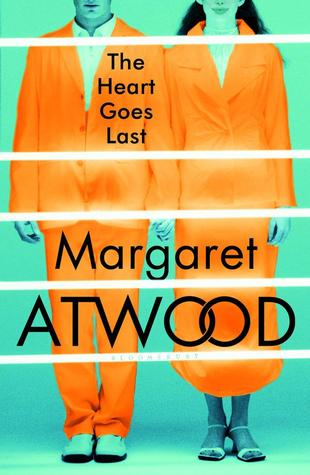
The Heart Goes Last by Margaret Atwood: Done! My review is here.

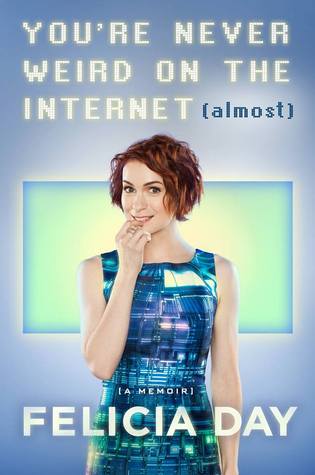
You’re Never Weird on the Internet (Almost) by Felicia Day: Such a great read! My review is here.

Elsewhere on the blog:

I wrote an update post about my Book Count adventures, looking at how many unread books are in my house and on my Kindle, how many new books I added, and how many I either read or gave away. Teensy-tiny baby steps of progress! You can read the post here.

Pop culture awesomeness:

I am so over-the-moon excited about season 3 of Black Sails! Okay, yes, we have to wait until January, but still… new trailer!

Fresh Catch:

Look what arrived this week!

Aeronauts WindlassBuffy s10 v3

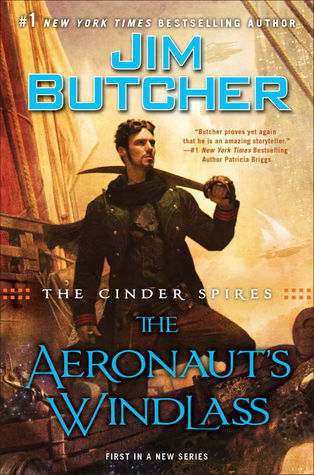
New Jim Butcher, new Buffy!

Granted, this is Buffy season 10, volume 3 — and I haven’t read any of season 9 yet. But still. New Buffy!

Also new this week:

OLs1v2

Outlander – season 1, volume 2! I know it’s not a book, but it’s bookish… and hey, it’s OUTLANDER, and it makes me happy!

What will I be reading during the coming week?

Currently in my hands:
Northanger Abbey 3

From my fall TBR list! I’m reading Northanger Abbey by Val McDermid (part of The Austen Project), and so far, I really like how the gothic flavor of the original works in a retelling about a modern-day teenager obsessed with Twilight and all things vampire.

Now playing via audiobook:

Dead in the WaterMaisie Dobbs

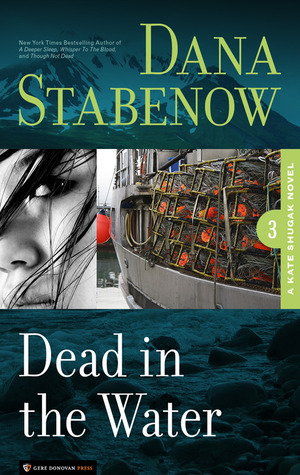
I finished Dead in the Water, the 3rd book in Dana Stabenow’s terrific Kate Shugak series. This one was great, and I guess I might as well admit that I’m officially hooked! Can’t wait to listen to book #4!

But first, I’m now listening to Maisie Dobbs by Jacqueline Winspear, and I’m really enjoying it so far. Audiobooks are turning out to be a good way for me to try genres, such as mysteries, that I don’t usually spend much time on.

Ongoing reads:

ABOSAAN&S

Moving right along! Two chapters per week for each book, as part of discussions with the Outlander Book Club. We’ll wrap up both in December!

So many book, so little time…

boy1

Book Review: You’re Never Weird on the Internet (Almost) by Felicia Day

You're Never WeirdBuffy fan? How about The Guild? Dr. Horrible? Eureka?

No?

Are you a fan of funny, smart writing? Women who are high-achieving but down-to-earth? Famous people who act like real people and seem to genuinely care?

Surely something above rings a bell. And in that case…

I feel perfectly confident that you’ll find something to love about Felicia Day’s memoir, You’re Never Weird on the Internet (almost).

Felicia Day doesn’t shy away from calling herself weird, and credits her weird upbringing for making her who she is today. Moving around from one southern town to another, Felicia never really had to fit in, because after a brief stint in school, she ended up being homeschooled throughout her childhood and teens — although, as she describes:

In retrospect — and not to be mean to anyone who parented me — it doesn’t seem like there was a clear plan going into the whole homeschooling thing.

But Felicia was into it anyway:

Also, homeschooling seemed like something an orphan would do, and I really wanted to be an orphan. Because let’s be real: they have it so good in kids’ literature! They’re sad but special, people love them against all odds, and they’re always guaranteed a destiny of greatness. The Secret Garden, The Wizard of Oz, Harry Potter? Orphanhood was a bucket list item for me!

In funny and honest detail, she describes her college career (double-majoring in music and math, on a violin scholarship!) and her subsequent move to LA to pursue an acting career, as well as an all-consuming obsession with World of Warcraft, generalized unhappiness and anxiety, and her creative breakthrough in writing and starring in the geek-magnet web series The Guild.

Felicia writes beautifully about the power of discovering the internet for the first time, and the awesome experience, especially for a loner, homeschooled girl, of discovering people to truly connect with in a fundamental way through the world of online gaming.

I know the story of my Dragon-hood may sound a little sad and weird and super geeky, but […] for a girl who was lonely and desperate for friends, that group of people was the most important social thing to happen to me growing up. I can’t imagine being as confident about my passion for geeky things today without that opportunity to connect with OTHER people who were saying, “Wow, I love those geeky things, too!”

She shares her self-doubts and her moments of mortification along with her successes and victories, and maintains such an appreciation for people’s investment and connection in her work that you just know she means it all. For example, explaining why she keeps all the fan art and creations that people have given her over the years:

Whether it was by someone volunteering to be an extra in our show, or part of the crew, or someone buying a DVD at a convention, or a superfan who tattooed our characters’ faces on her calf, my career has been built fan by fan. I wouldn’t trade that relationship, or collection of dolls of myself, for all the money and fame in the world.

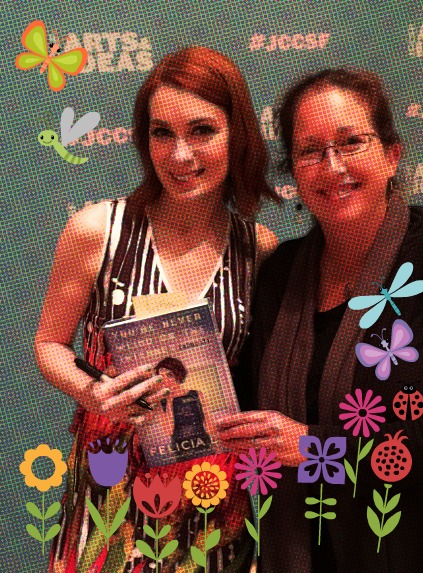
I was lucky enough to see Felicia speak back in August and got a signed book and everything!

Felicia is adorable, but I didn't like the way I looked in this pic... so I decided to decorate.

Felicia is adorable, but I didn’t like the way I looked in this pic… so I decided to decorate.

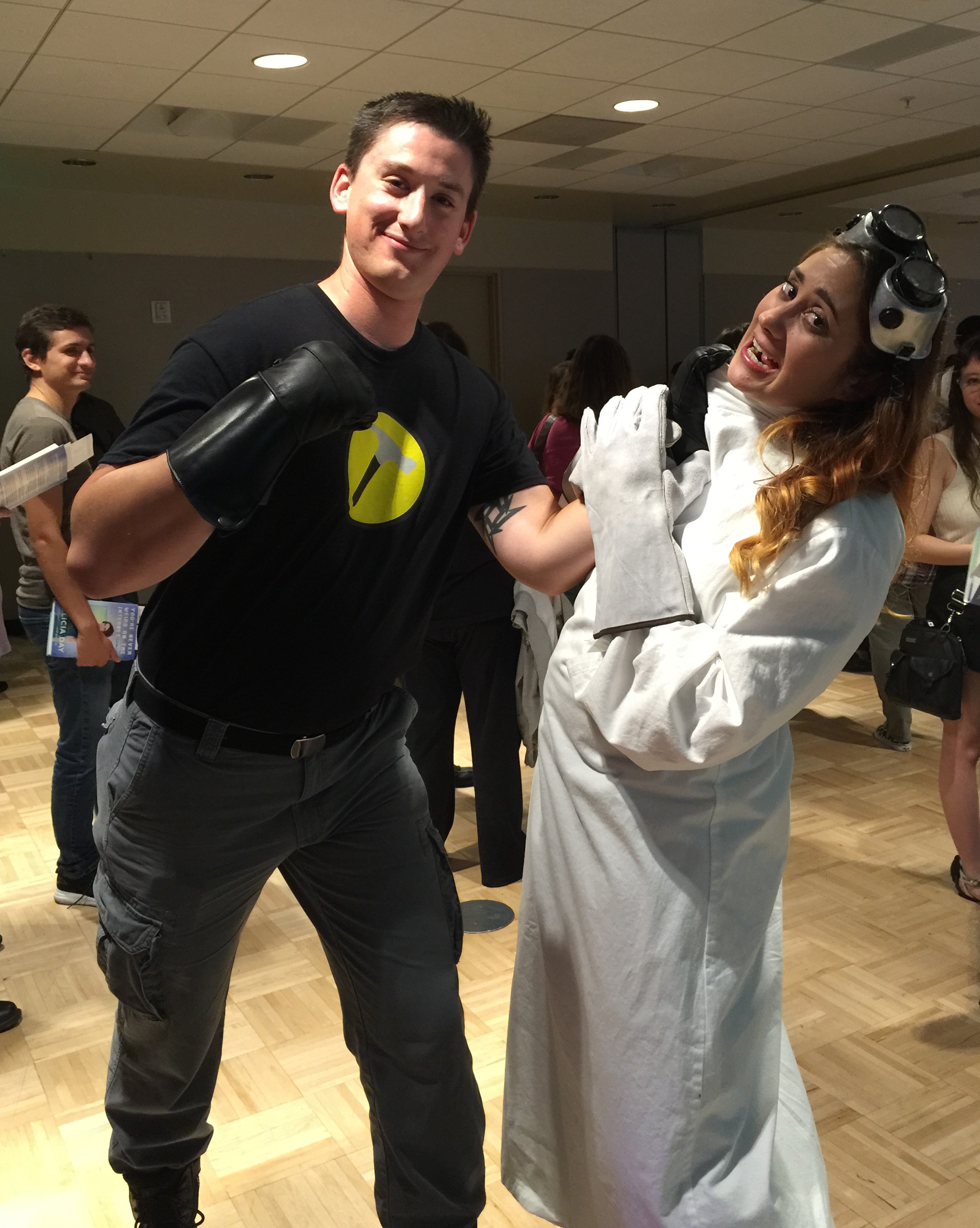
It was an amazing event, in a sold-out venue, filled with people of all sorts who all just happen to be big geeky fans. While most came in their street duds or at most, a Supernatural or Guild t-shirt, a few went all out, which was super delightful to see:

I love me some Dr. Horrible cosplay!

Felicia spent an hour on stage in front of an adoring crowd, and she was just as cute and smart and hilarious as you’d expect. (If you’re a fan, treat yourself by watching the video of her appearance!):

Getting back to the book itself, this isn’t a Hollywood tell-all. There’s no gossip here, no name-dropping, no parties/cocktails/living-the-good-life anecdotes. When Felicia does name names, it’s to thank and acknowledge the people who inspired or helped her.

Besides being a great read about an odd-ball girl making good on her own terms, You’re Never Weird is a message book. Felicia shares her own story not to say “look at me! I’m so great!”, but to share the idea that we’re all different, and we should pursue what excites us and makes us happy, no matter how odd or weird or dorky it might seem. And hey, whoever you are and whatever you’re into, there’s sure to be someone else out there who’s into it too:

It might be extremely dorky to point out, but who you are is singular. It’s science. No one else in existence has your point of view or exact genome (identical twins and clones, look for inspiration elsewhere, please). That is why we need people to share and help us understand one another better. And on a bigger level than just taking a selfie. (Not hating on selfies, but a few is enough. You look good from that angle; we get it.) We need the world to hear more opinions, give glimpses into more diverse subcultures. Are you REALLY into dressing your cat in handcrafted, historically authentic outfits? No problem, there are people out there who want to see that! Probably in excruciating details!

One of the things that makes You’re Never Weird on the Internet (Almost) so great to read is that first and foremost, you feel like you’re reading about a person.  A talented, awesome person, for sure, but still, someone recognizably human. Felicia Day’s writing style is chatty and full of good-natured humor, and she succeeds, I think, by making us all feel as though she’s someone we could hang out with, maybe play some video games or watch movies together. You just know that she’d be chill and awkward and non-judgmental, in all the best ways.

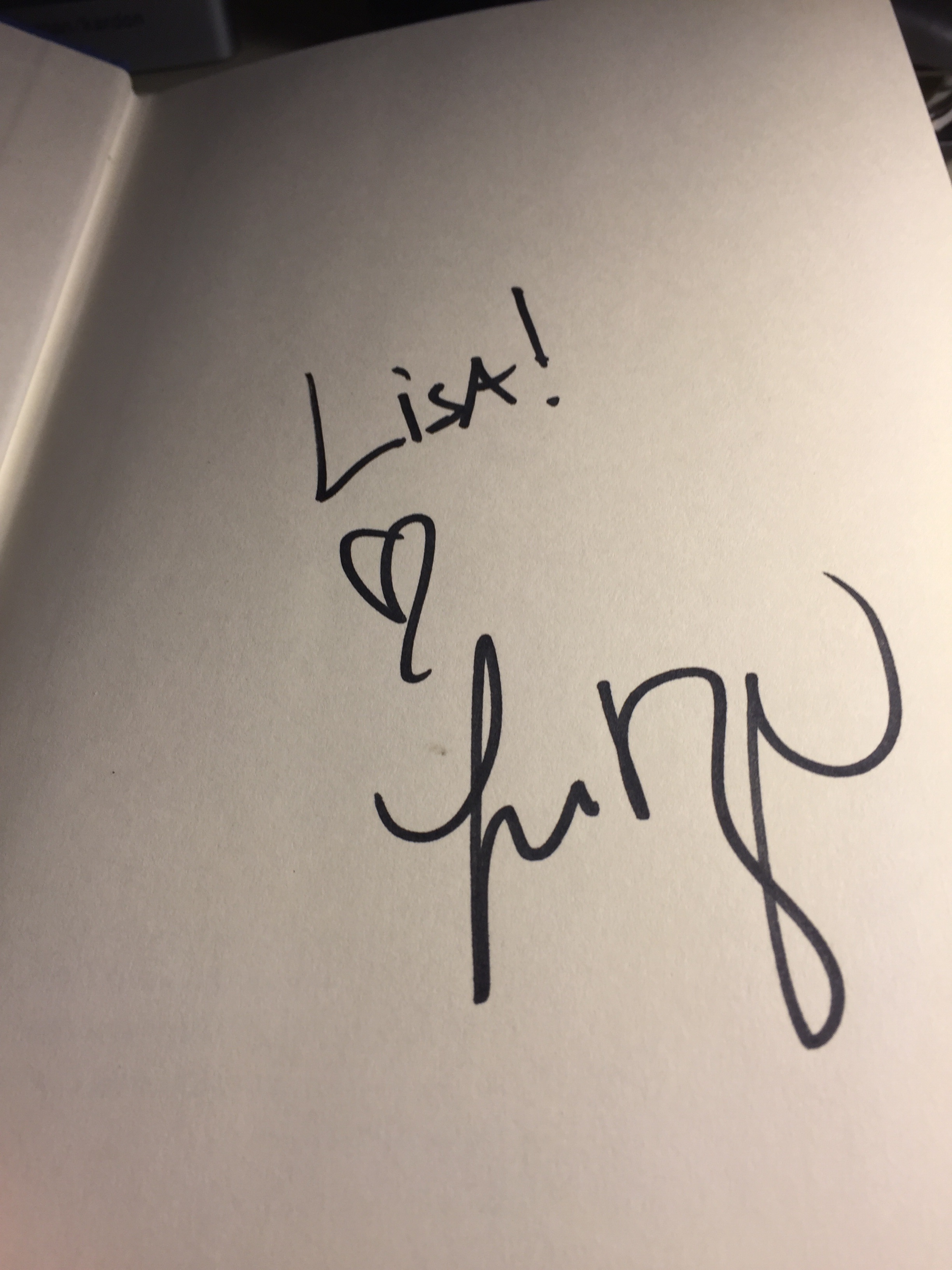
image

She signed my book! She signed my book!

If you consider yourself a geek, if you’ve ever felt lost in a crowd, if you had weird/unique hobbies, if you’ve ever felt a passion for something completely out there… well, I’m pretty sure you’ll find something in You’re Never Weird that will inspire you, or at the very least, make you smile or even chuckle for a while.

‘Scuse me, but I gotta go binge-watch The Guild right now.

_________________________________________

The details:

Title: You’re Never Weird on the Internet (Almost)
Author: Felicia Day
Publisher: Touchstone
Publication date: August 11, 2015
Length: 262 pages
Genre: Memoir
Source: Purchased

Book Review: The Heart Goes Last by Margaret Atwood

The Heart Goes LastThis is one tough book to describe.

The Heart Goes Last centers on main characters Stan and Charmaine, a married couple who are living in their car as of the beginning of the story. They’ve lost their jobs and their homes as the economy in the US Northeast has completely tanked. Charmaine works at a seedy bar to earn enough for them to buy fast food and gas, but that’s about it. Gas is essential, because even when locked into the car at night, crazy or desperate people may attack, break the windows, and try to rape or kill them, and being able to drive off in case of emergency is what keeps them alive. Life really sucks, and even though they both remember what it was like to be newlyweds in love, it’s getting harder and harder to keep any affection alive when life is just that awful.

Is it any wonder that they sign on, rather blindly, to the promise of a new and better life? Stan and Charmaine are seduced by an advertisement for an experimental town called Consilience. The Consilience project offers a house, safety, security, meaningful life, and the absence of fear and worry. After a quick visit within the gated walls of the town, they’re ready to sign up. The catch is that, once in, it’s permanent, but no worries! Charmaine is too entranced by the idea of a house, her own kitchen, and a cozy couch to even consider walking away, and to Stan, it sure sounds like a great alternative to quick, unsexy sex on the backseat of the car while watching out for attackers.

Once Stan and Charmaine have committed, we start to learn more. There’s a flip side to Consilience: Positron. Positron is a prison, and here’s the deal. For one month, Stan and Charmaine live in their cozy suburban house and go off to work at their pleasant jobs. Then comes switchover day, and the two go over to the Positron Prison, don orange prison garb, and become inmates for a month. Stan goes to the men’s ward, where he tends chickens, and Charmaine goes to the women’s ward, where she’s a medications officer. The prison is safe, filled with other happy Consilience residents, offering delicious food, meaningful work, and even a knitting circle in the evenings to pass the time. Meanwhile, Stan and Charmaine’s house is now occupied by their alternates. Half the town spends each month as residents, half as inmates, and then they switch. This way, the project provides housing and occupation for all, and everyone is happy. Be happy, damn it!

Perhaps picture-perfect suburbia isn’t all it’s cracked up to be:

The hedge trimmer emits a menacing whine, like a wasp’s nest. The sound gives him an illusion of power that dulls his sense of panic. Panic of a rat in a cage, with ample food and drink and even sex, though with no way out and the suspicion that it’s part of an experiment that is sure to be painful.

Things are as weird as they seem, and weirder. There’s sexual obsession and deception, nefarious corporate goons, weird sexual fetishes, secret medical procedures, and a recurring motif of blue knitted teddy bears. Of course this utopian refuge has a dark side, and of course Stan and Charmaine become deeply involved as puppets in the greater scheme of things. When I say things get weird, I really mean it.

By the end of the book, we’re in Vegas. There are hordes of Elvis and Marilyn impersonators, Blue Man Group rip-off artists, brain wipes, and sex/love slaves. And as word of the goings-on in Consilience/Positron is leaked to the greater public:

Instantly the social media sites are ablaze with outrage. Prison abuses! Organ-harvesting! Sex slaves created by neurosurgery! Plans to suck the blood of babies! […] Talk shows roister on into the night — they haven’t had this much fun in decades — and bloggers break out in flames.

I wish I could say that The Heart Goes Last was a great read, but unfortunately, I found it somewhat problematic. I was intrigued at the outset by the set-up, by the collapse of society, and by the way Stan and Charmaine’s marital issues tied into their dilemmas and decision-making about Consilience/Positron. Unfortunately, the book keeps veering off in new and disjointed directions, and by the time the Vegas elements come around, the storyline has passed the line from odd to ridiculous.

There are some truly eerie or disturbing sequences, but eventually, as one after another scenario unfolds, the whole thing loses its power and feels too scattered to be truly affecting. The goofiness of certain plot points (Elvis… Marilyn… the bear) makes the whole story somewhat farcical. While there are some kernels of deeper meaning in there about choice and the illusion of choice, the trade-off between security and free will, and whether unwavering love adds to or subtracts from actual happiness, the lack of overall coherence blunts the impact of all of these.

“Isn’t it better to do something because you’ve decided to? Rather than because you have to.”

“No, it isn’t,” says Charmaine. “Love isn’t like that. With love, you can’t stop yourself.” She wants the helplessness, she wants…

On top of the all-over-the-place plot, the fact is that dystopias are pretty much a dime a dozen these days, and it takes quite a lot to offer something new or startling. The idea of a perfect little town paired with a prison is interesting, especially as the town seems like something out of the movie Pleasantville (the only movies shown on Consilience TV are from the 1950s, and Doris Day is everyone’s darling) — but we’ve all read enough of these new society, perfect world set-ups to know that the people in charge have ulterior motives, there’s surveillance everywhere, and that a controlled world must be intrinsically corrupt at its core. Even though there are some clever and unexpected twists, at its most fundamental level, there isn’t anything all that fresh in the overarching concept.

Sadly, The Heart Goes Last was ultimately a let-down for me. I wouldn’t NOT recommend it, but it’s not Atwood’s best work either. I was never bored, exactly, but at some point, I just kind of rolled my eyes and decided to go with it.

_________________________________________

The details:

Title: The Heart Goes Last
Author: Margaret Atwood
Publisher: Nan A. Talese
Publication date: September 29, 2015
Length: 320 pages
Genre: Science fiction
Source: Review copy courtesy of the publisher via NetGalley